Effectiveness of Implantable Cardioverter-Defibrillator Therapy for Primary Prevention in Patients with Nonischemic Heart Failure with Reduced Ejection Fraction
Abstract
Background
Primary prevention with an implantable cardioverter-defibrillator (ICD) has become an increasingly debated strategy, with its role in patients with nonischemic heart failure with reduced ejection fraction (HFrEF) undergoing continued reassessment.
Objective
To summarize the available scientific evidence on the effectiveness of ICD therapy for primary prevention in patients with nonischemic HFrEF.
Methods
A rapid systematic review and meta-analysis was conducted in accordance with the recommendations of the Cochrane Rapid Reviews Methods Group and the Preferred Reporting Items for Systematic Reviews and Meta-Analyses statement. Statistical significance was defined as a two-sided p-value < 0.05. Searches were performed in the MEDLINE, Embase, and CENTRAL databases. Randomized controlled trials (RCTs) evaluating ICD implantation for primary prevention were included, with sudden cardiac death (SCD), cardiovascular mortality, and all-cause mortality as the primary outcomes.
Results
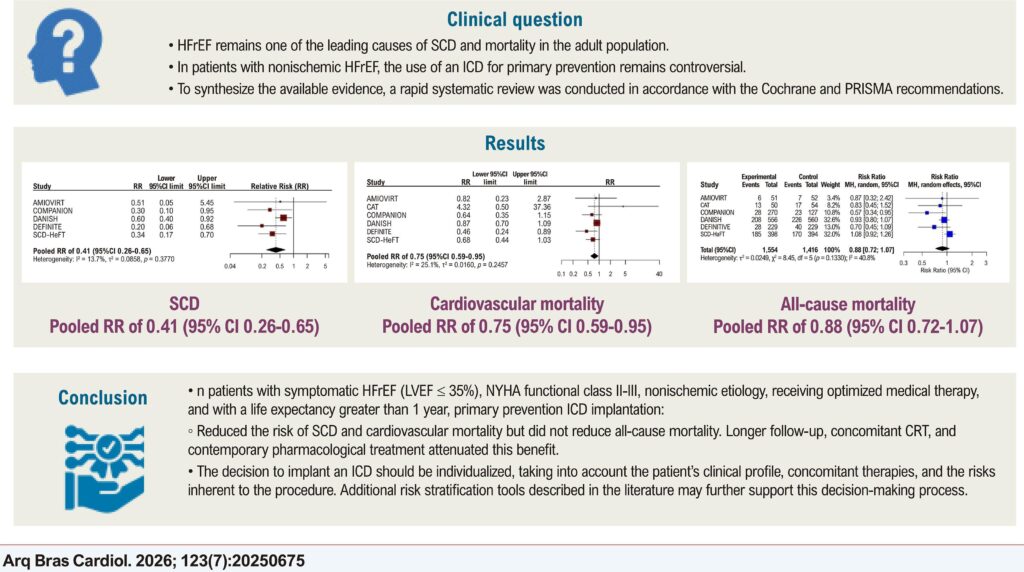
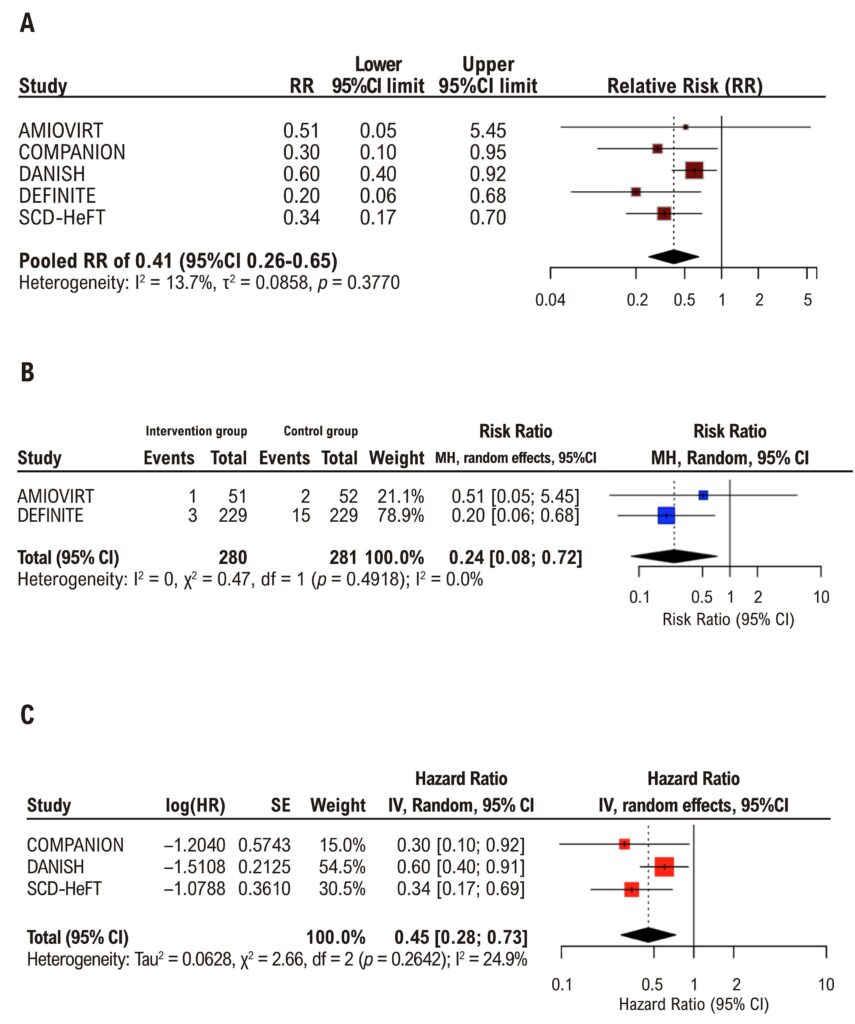
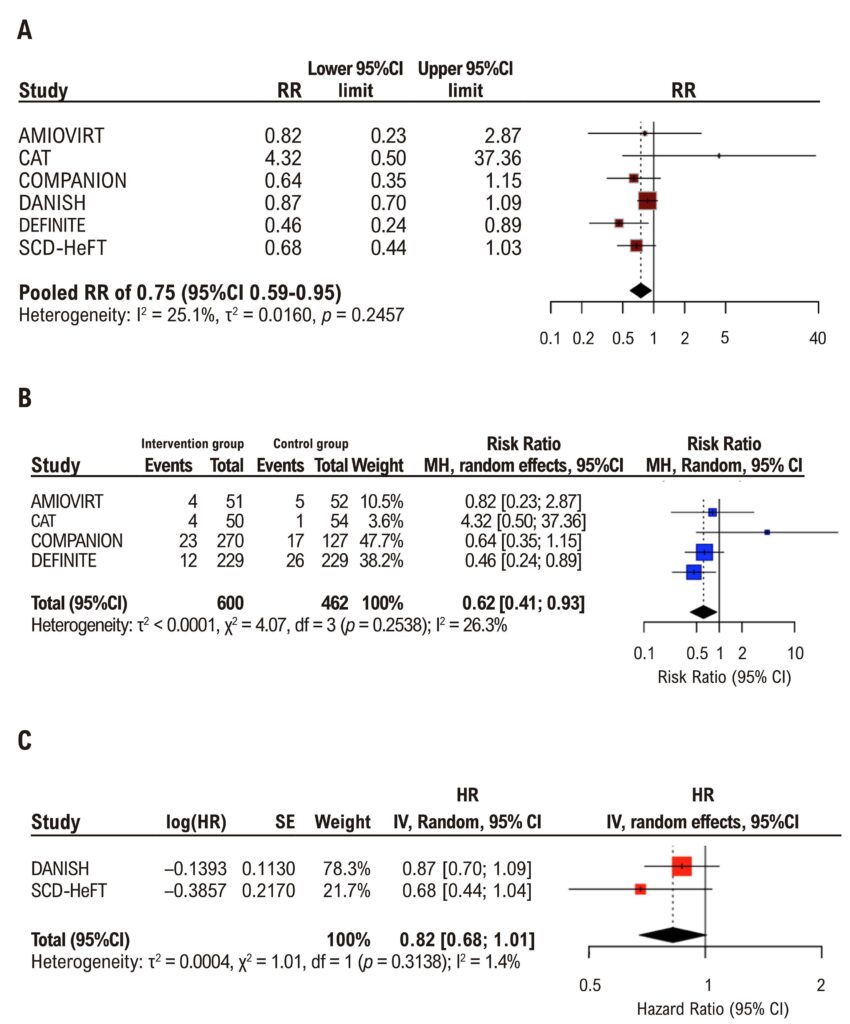
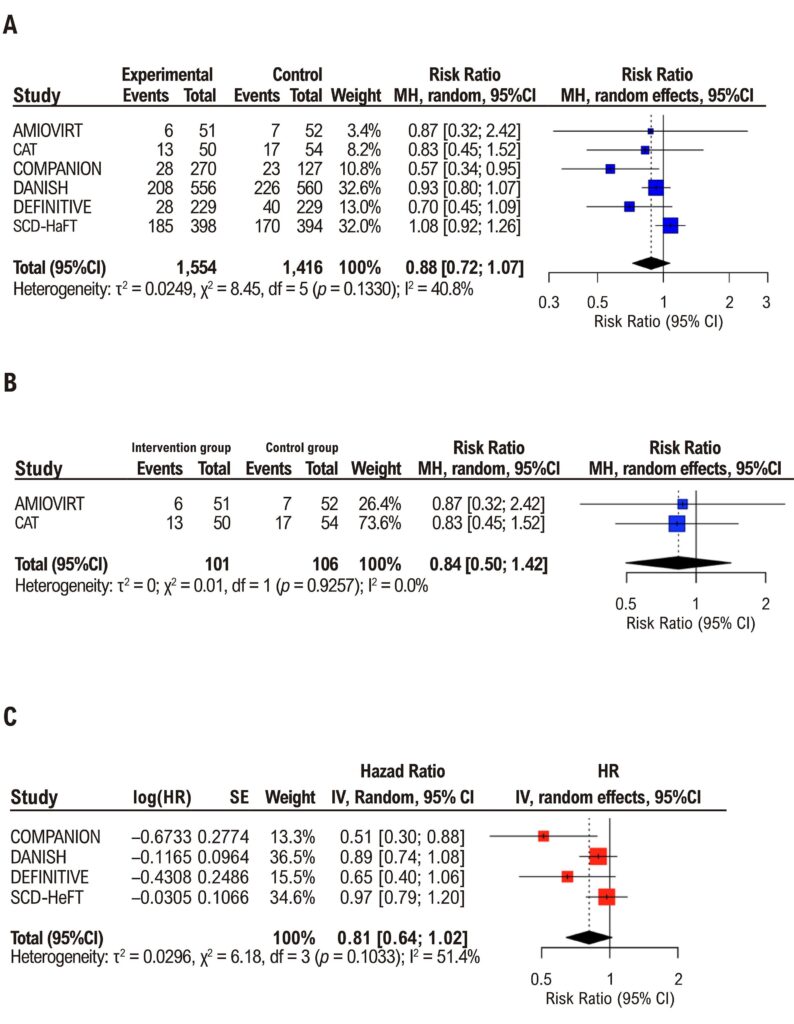
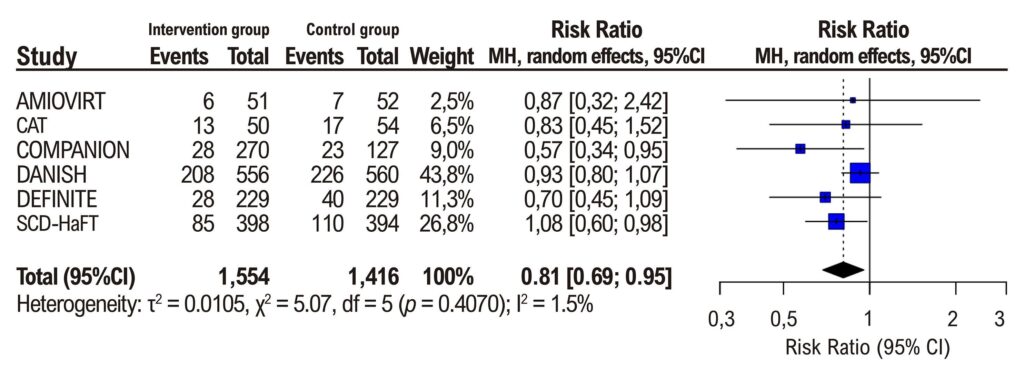
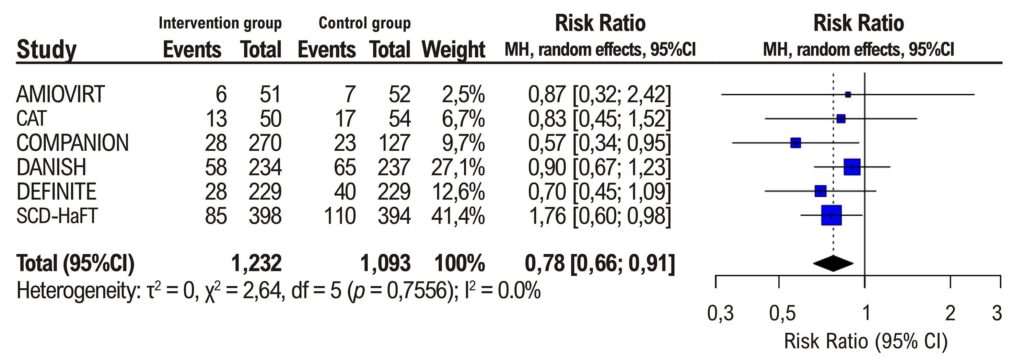
A total of 18 publications reporting daata from six pivotal RCTs were included. ICD therapy was associated with a statistically significant reduction in SCD (relative risk [RR] 0.41; 95%CI 0.26-0.65; high-certainty evidence) and cardiovascular mortality (RR 0.75; 95%CI 0.59-0.95; high-certainty evidence). For all-cause mortality, the primary analysis showed no statistically significant difference between groups (RR 0.88; 95%CI 0.72-1.07; moderate-certainty evidence). In the subgroup analysis, studies with shorter follow-up (< 6.8 years) demonstrated a significant reduction in all-cause mortality (RR 0.69; 95%CI 0.52-0.92).
Conclusion
In patients with nonischemic HFrEF, ICD therapy reduced SCD and cardiovascular mortality but did not significantly reduce all-cause mortality in the primary analysis. These findings support the use of ICD therapy when guided by individualized clinical assessment.
Images
Image gallery fullscreen viewer
Comments are moderated by the editorial team before publication. Discussions should be evidence-based and use scientific language. Conflicts of interest should be declared.