ABC Family Arquivos Brasileiros de Cardiologia International Journal of Cardiovascular Sciences ABC Heart Failure & Cardiomyopathy ABC Imagem Cardiovascular
Português English
ABC Family
Português English
  • About
    • About ABC Family
    • Internal Regulation
    • Editorial Board
    • Brazilian Society of Cardiology (SBC)
  • Issues
  • SBC Guidelines
  • Content
    • Videos
    • Podcasts
    • News
  • About
    • About ABC Family
    • Internal Regulation
    • Editorial Board
    • Brazilian Society of Cardiology (SBC)
  • Issues
  • SBC Guidelines
  • Content
    • Videos
    • Podcasts
    • News

ABC Family

  • ABC Family
  • Arquivos Brasileiros de Cardiologia
  • International Journal of Cardiovascular Sciences
  • ABC Heart Failure & Cardiomyopathy
  • ABC Imagem Cardiovascular
Search in

No content found.

Journals
Ordering
Article types
Others

  1. Home
  2. Keyword: Anticoagulants / adverse effects
Figure 1
ABC
Original Article

Anticoagulation Therapy in Patients with Non-valvular Atrial Fibrillation in a Private Setting in Brazil: A Real-World Study

Pedro Gabriel Melo de Barros e Silva et al. Henry Sznejder Rafael Vasconcellos Georgette M. Charles … Hugo Tannus F. Mendonca-Filho Jack Mardekian Rodrigo Nascimento Stephen Dukacz Manuela Di Fusco

Abstract

Background:

The safety and effectiveness of warfarin depend on anticoagulation control quality. Observational studies associate poor control with increased morbidity, mortality and healthcare costs.

Objectives:

To develop a profile of non-valvular atrial fibrillation (NVAF) patients treated with warfarin in a Brazilian private ambulatory and hospital setting, evaluate the quality of anticoagulation control, and its association with clinical and economic outcomes.

Methods:

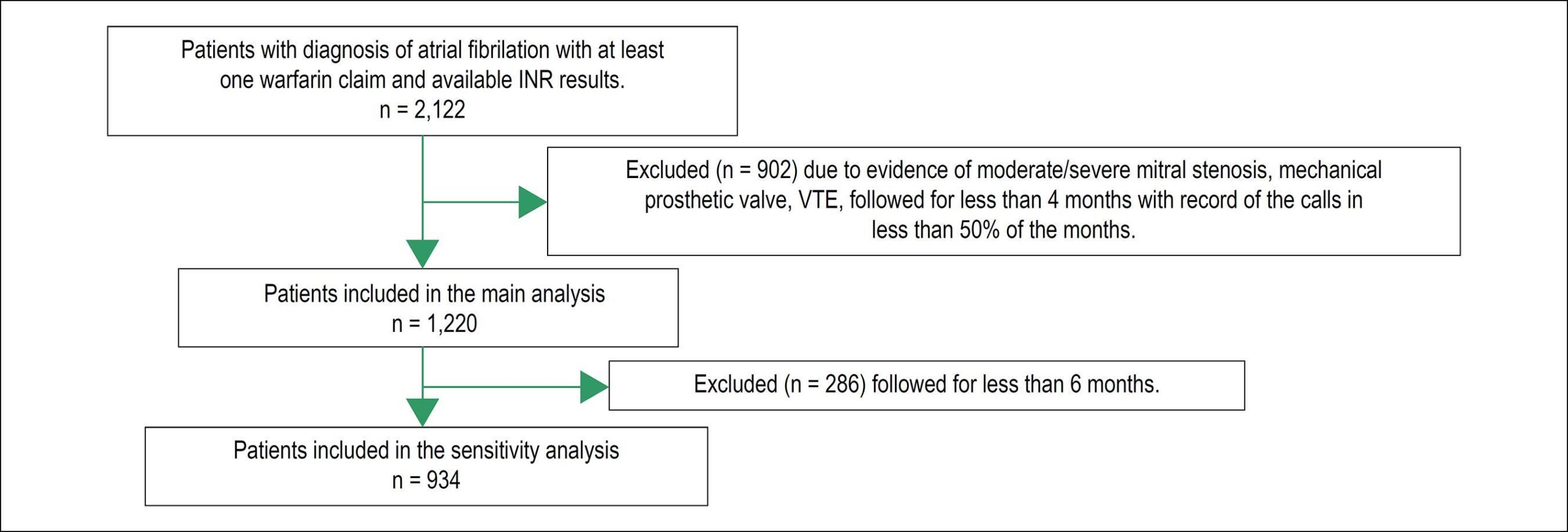
This retrospective study, through a private health insurance dataset in Brazil, identified NVAF patients treated with warfarin between 01 MAY 2014 to 30 APRIL 2016, described their anticoagulation management, and quantified disease-related costs. Data on demographics, clinical history, concomitant medication and time in therapeutic range (TTR) of international normalized ratio (INR) values were retrieved. Patients were grouped into TTR quartiles, with good control defined as TTR ≥ 65% (Rosendaal method). Major bleeds and all-cause direct medical costs were calculated and compared between good and poor control subgroups. P-values < 0.05 were considered statistically significant.

Results:

The analysis included 1220 patients (median follow-up: 1.5 years; IQR: 0.5-2.0). On average, each patient received 0.95 monthly INR measurements (mean INR: 2.60 ± 0.88, with 26.1% of values 3), (median TTR: 58%; IQR: 47-68%), (mean TTR: 56.6% ± 18.9%). Only 31% of patients were well-controlled (mean TTR: 78% ± 10%), with 1.6% having major bleeds within median follow-up, and direct medical costs per member per year (PMPY) of R$25,352(± R$ 37,762). Poorly controlled patients (69%) were associated with 3.3 times more major bleeds (5.3% vs. 1.6%; p < 0.01) and 40% higher costs (R$35,384 vs. R$25,352; p < 0.01).

Conclusions:

More than 60% of the patients were below the desired target and the associated costs were higher.
  • Anticoagulants / adverse effects
  • Atrial Fibrillation/comlications
  • Health Care Quality, Access and Evaluation
  • Hospitals, Private/economics
  • Warfarine/therapeutic use
Read Full Article
Creative Commons Attribution (CC BY) Creative Commons license
07/02/2020 DOI: 10.36660/abc.20180076
Figure 1
ABC
Original Article

Safety of Catheter Ablation of Atrial Fibrillation Under Uninterrupted Rivaroxaban Use

Márcio Augusto Silva et al. Guilherme Muller de Campos Futuro Erick Sessa Merçon Deborah Vasconcelos … Rovana Silva Agrizzi Jorge Elias Neto Ricardo Kuniyoshi

Abstract

Background:

Atrial fibrillation (AF) ablation under uninterrupted warfarin use is safe and recommended by experts. However, there is some controversy regarding direct-acting oral anticoagulants for the same purpose.

Objective:

To evaluate the safety of AF ablation under uninterrupted anticoagulation with rivaroxaban.

Methods:

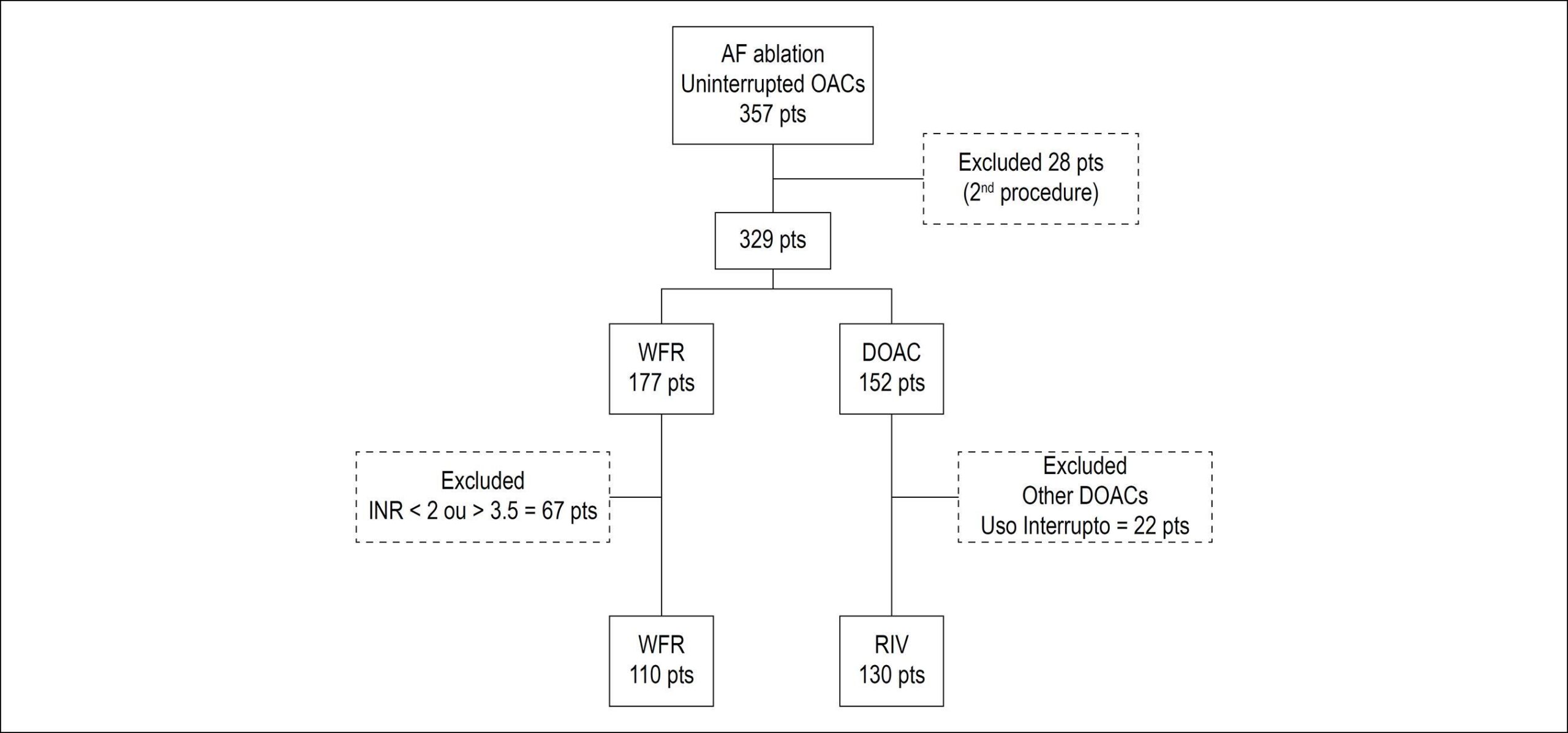
A series of 130 patients underwent AF radiofrequency ablation under uninterrupted rivaroxaban use (RIV group) and was compared to a control group of 110 patients under uninterrupted warfarin use (WFR group) and therapeutic International Normalized Ratio (INR). We analyzed death, rates of thromboembolic events, major and minor bleedings, activated clotting time (ACT) levels, and heparin dose in the procedure. The ablation protocol basically consisted of circumferential isolation of the pulmonary veins guided by electroanatomic mapping. It was adopted a statistical significance of 5%.

Results:

The clinical characteristics of the groups were similar, and the paroxysmal AF was the most frequent type (63% and 59%, RIV and WFR groups). A thromboembolic event occurred in the RIV group. There were 3 patients with major bleeding (RIV = 1 and WFR = 2; p = 0.5); no deaths. Basal INR was higher in the WFR group (2.5 vs. 1.2 ± 0.02; p < 0.0001), with similar basal ACT levels (123.7 ± 3 vs. 118 ± 4; p= 0, 34). A higher dose of venous heparin was used in the RIV group (9,414 ± 199 vs. 6,019 ± 185 IU; p < 0.0001) to maintain similar mean ACT levels during the procedure (350 ± 3 vs. 348.9 ± 4; p = 0.79).

Conclusion:

In the study population, AF ablation under uninterrupted rivaroxaban showed a safety profile that was equivalent to uninterrupted warfarin use with therapeutic INR.

  • Anticoagulants / adverse effects
  • Anticoagulants / therapeutic use
  • Atrial Fibrillation
  • Catheter Ablation/methods
  • Rivaroxaban /therapeitic use
Read Full Article
Creative Commons Attribution (CC BY) Creative Commons license
07/02/2020 DOI: 10.36660/abc.20180386 Views 2
Figure 1
IJCS
Original Article

Drug Interactions and Adverse Events in a Cohort of Warfarin Users Attending Public Health Clinics

Christiane de Fátima Colet et al. Tania Alves Amador Isabela Heineck

Abstract

Background:

Warfarin is an oral anticoagulant involved in important interactions with foods and other drugs.

Objectives:

To evaluate the occurrence of adverse events reported by warfarin users and their relationship with drug interactions.

Methods:

This was an open cohort, prospective study conducted in an 18-month period with warfarin users attending public health clinics of the city of Ijuí, Brazil. Data were collected by means of interviews administered at patients’ home every month. Patients’ responses were confirmed by review of medical records when patients sought medical care. Data were analyzed by descriptive statistics. Potential drug interactions were evaluated in a database and vitamin K consumption was quantified using a validated method.

Results:

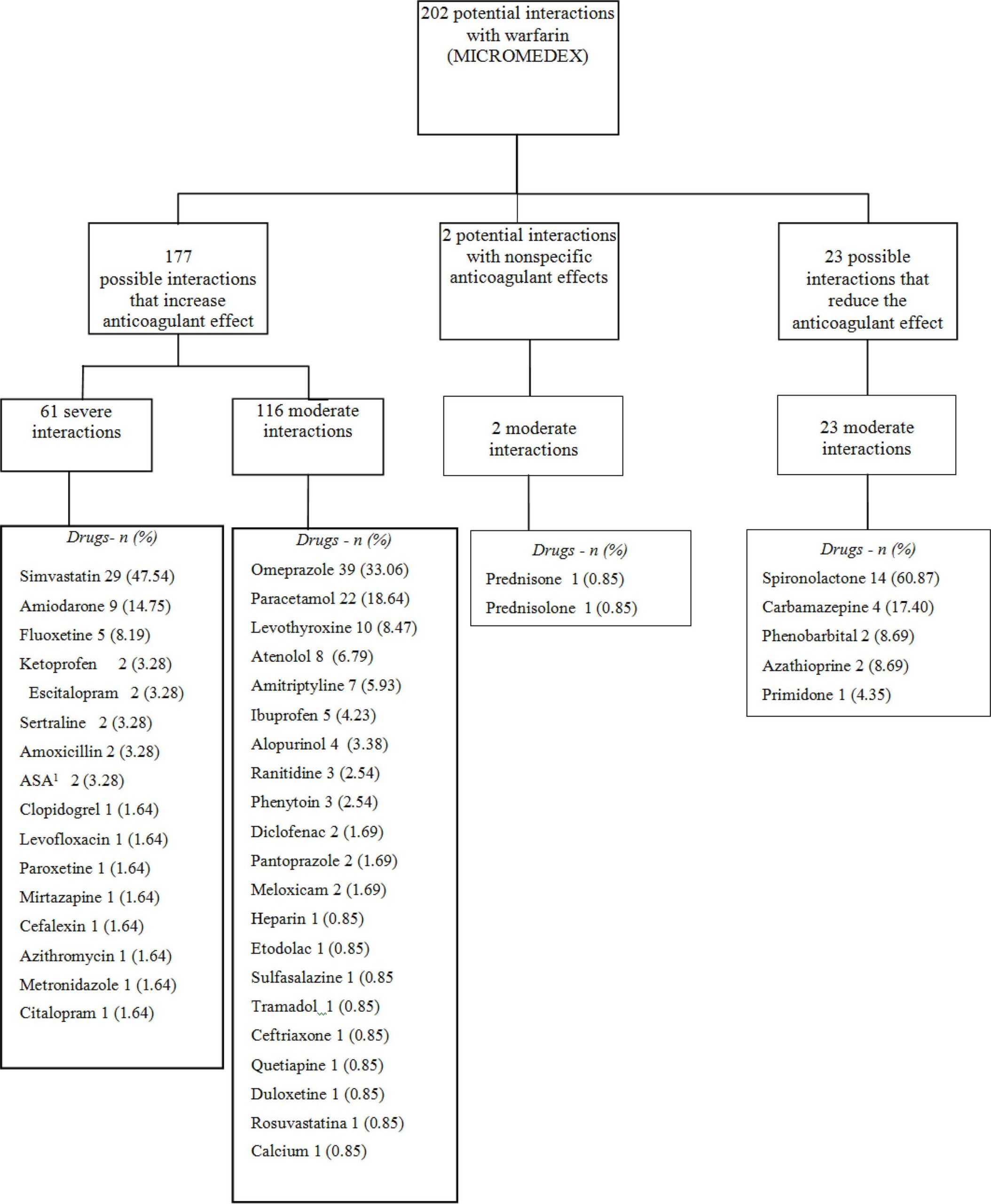
A total of 68 patients were followed-up; 63 completed the study and 5 died in the study period. Mean number of medications taken by the patients was 9.6 ± 4.5, and mean number of interactions involving warfarin was 2.91 ± 1.52. Most potential interactions increased the risk of bleeding, 61 of them severe interactions and 116 moderate interactions. Eighty-seven episodes of bleeding and 4 episodes of thrombosis were reported by a total of 37 and 4 patients, respectively. At the occurrence of these events, 56.5% of warfarin users were also taking omeprazole, 35.9% were taking simvastatin and 25.0% paracetamol. Most patients had a low vitamin K intake.

Conclusions:

A high frequency of potential interactions between warfarin and other drugs was detected, but a low intake of foods that could possibly affect the effects of warfarin was observed. Based on our results, it seems prudent to follow patients on warfarin therapy for drug-drug interactions, aiming to control adverse effects and to promote a safe and effective therapy.

  • Acetaminophen
  • Anticoagulants / adverse effects
  • Delivery Health Care/statistics & numeral data
  • Drug Incompatibility
  • drug interactions
  • Omeprazole
  • Pharmacovigilance
  • simvastatin
  • Vitamin K
  • Warfarin
Read Full Article
Creative Commons Attribution (CC BY) Creative Commons license
17/12/2018 DOI: 10.5935/2359-4802.20180091 Views 2
Figure 1
ABC
Original Article

SAMe-TT2R2 Score in the Outpatient Anticoagulation Clinic to Predict Time in Therapeutic Range and Adverse Events

Fernando Pivatto Júnior et al. Rafael Selbach Scheffel Lucas Ries Ricardo Roitman Wolkind … Roberta Marobin Sabrina Sigal Barkan Luís Carlos Amon Andréia Biolo

Abstract

Background:

The SAMe-TT2R2 score was developed to predict which patients on oral anticoagulation with vitamin K antagonists (VKAs) will reach an adequate time in therapeutic range (TTR) (> 65%-70%). Studies have reported a relationship between this score and the occurrence of adverse events.

Objective:

To describe the TTR according to the score, in addition to relating the score obtained with the occurrence of adverse events in patients with nonvalvular atrial fibrillation (AF) on oral anticoagulation with VKAs.

Methods:

Retrospective cohort study including patients with nonvalvular AF attending an outpatient anticoagulation clinic of a tertiary hospital. Visits to the outpatient clinic and emergency, as well as hospital admissions to the institution, during 2014 were evaluated. The TTR was calculated through the Rosendaal´s method.

Results:

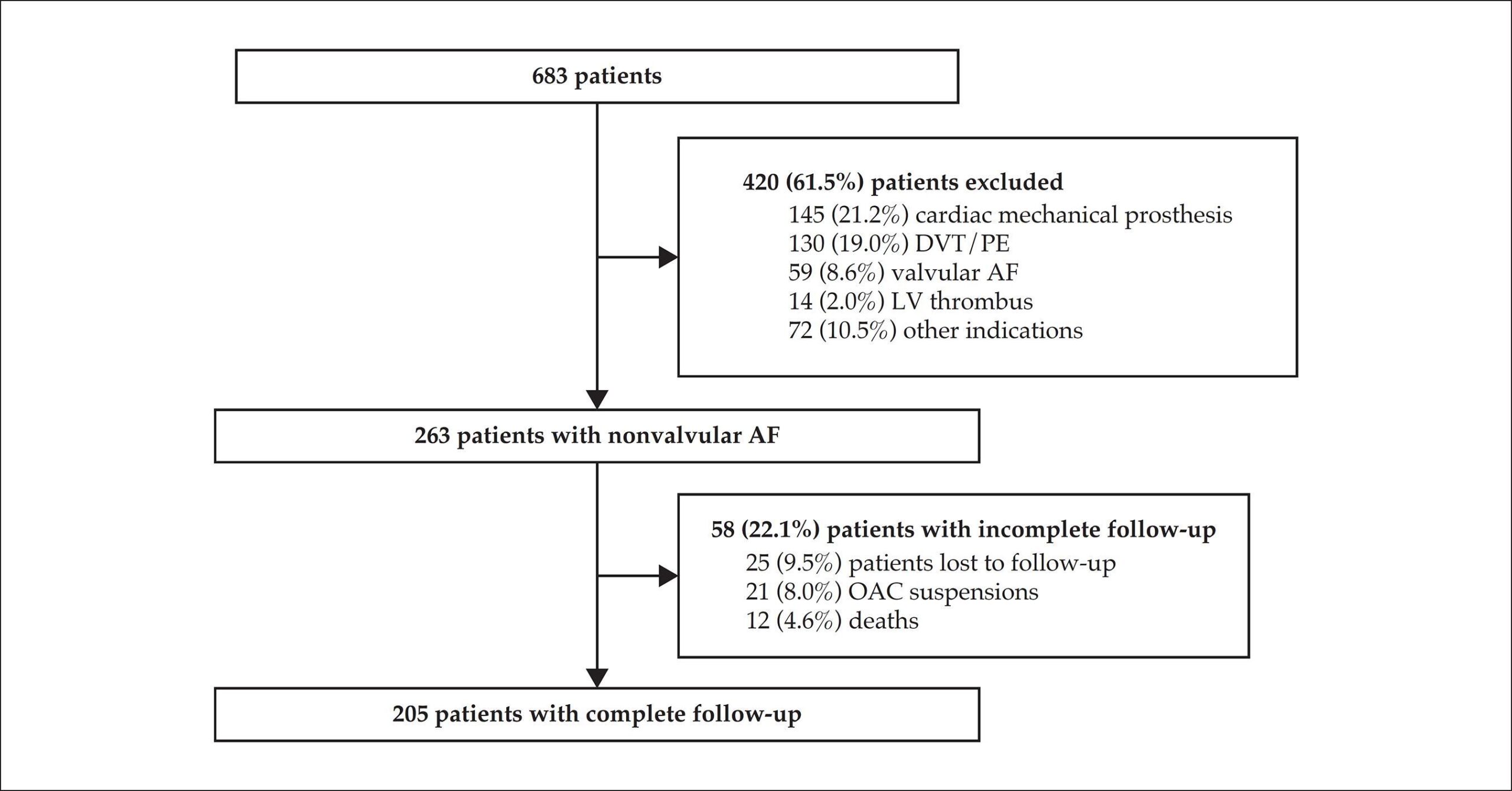
We analyzed 263 patients (median TTR, 62.5%). The low-risk group (score 0-1) had a better median TTR as compared with the high-risk group (score ≥ 2): 69.2% vs. 56.3%, p = 0.002. Similarly, the percentage of patients with TTR ≥ 60%, 65% or 70% was higher in the low-risk group (p < 0.001, p = 0.001 and p = 0.003, respectively). The high-risk group had a higher percentage of adverse events (11.2% vs. 7.2%), although not significant (p = 0.369).

Conclusions:

The SAMe-TT2R2 score proved to be effective to predict patients with a better TTR, but was not associated with adverse events.

  • Anticoagulants / adverse effects
  • Atrial Fibrillation
  • Decision Support Techniques
  • Phenprocoumon
  • Vitamin K
  • Warfarin
Read Full Article
Creative Commons Attribution (CC BY) Creative Commons license
01/04/2017 DOI: 10.5935/abc.20170052 Views 1
Figure 1
ABC
Original Article

Clinical Differences between Subtypes of Atrial Fibrillation and Flutter: Cross-Sectional Registry of 407 Patients

Eduardo Dytz Almeida et al. Raphael Boesche Guimarães Laura Siga Stephan Alexandre Kreling Medeiros … Katia Foltz Roberto Tofani Santanna Leonardo Martins Pires Marcelo Lapa Kruse Gustavo Glotz de Lima Tiago Luiz Luz Leiria

Introduction:

Atrial fibrillation and atrial flutter account for one third of hospitalizations due to arrhythmias, determining great social and economic impacts. In Brazil, data on hospital care of these patients is scarce.

Objective:

To investigate the arrhythmia subtype of atrial fibrillation and flutter patients in the emergency setting and compare the clinical profile, thromboembolic risk and anticoagulants use.

Methods:

Cross-sectional retrospective study, with data collection from medical records of every patient treated for atrial fibrillation and flutter in the emergency department of Instituto de Cardiologia do Rio Grande do Sul during the first trimester of 2012.

Results:

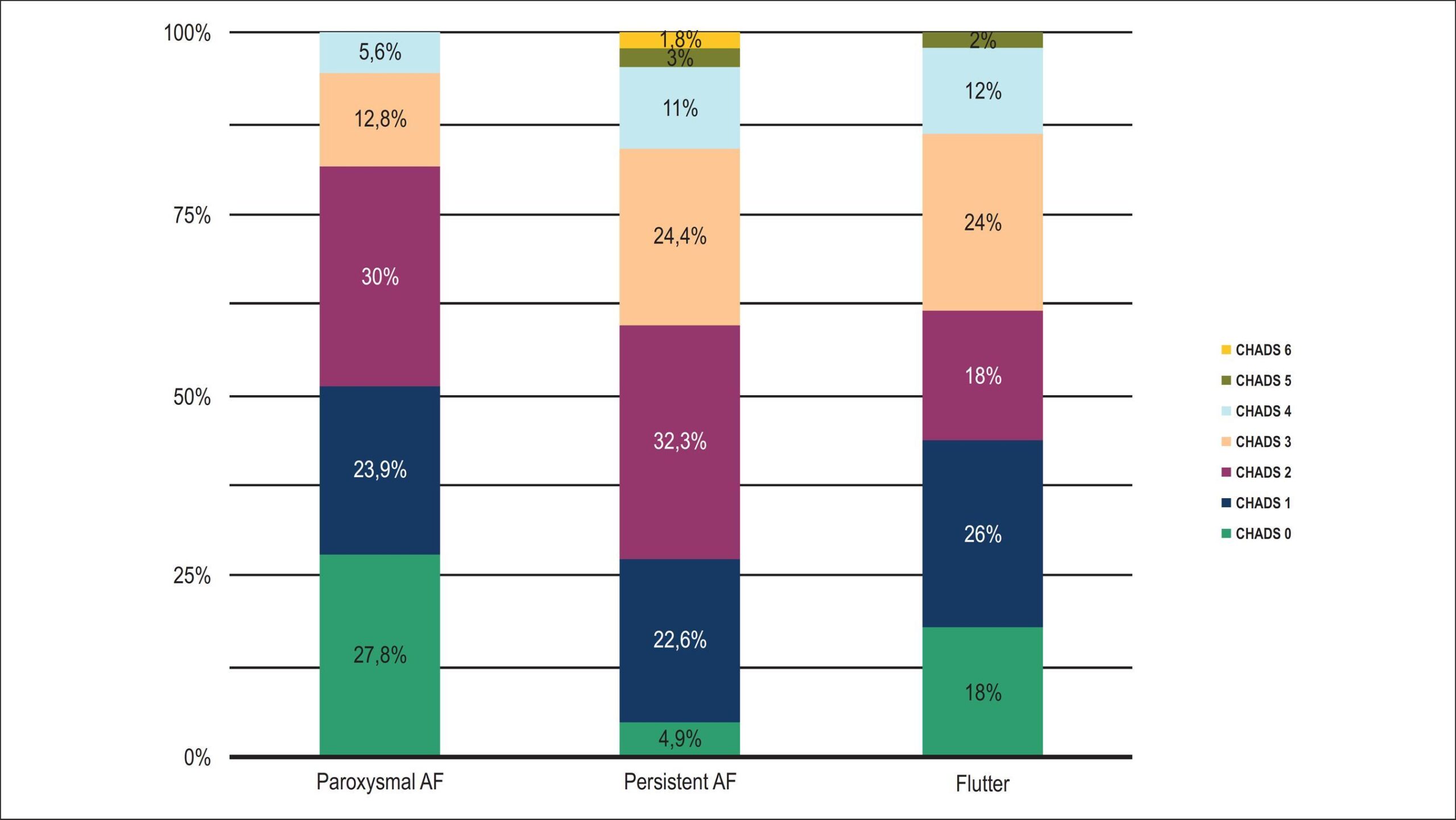
We included 407 patients (356 had atrial fibrillation and 51 had flutter). Patients with paroxysmal atrial fibrillation were in average 5 years younger than those with persistent atrial fibrillation. Compared to paroxysmal atrial fibrillation patients, those with persistent atrial fibrillation and flutter had larger atrial diameter (48.6 ± 7.2 vs. 47.2 ± 6.2 vs. 42.3 ± 6.4; p < 0.01) and lower left ventricular ejection fraction (66.8 ± 11 vs. 53.9 ± 17 vs. 57.4 ± 16; p < 0.01). The prevalence of stroke and heart failure was higher in persistent atrial fibrillation and flutter patients. Those with paroxysmal atrial fibrillation and flutter had higher prevalence of CHADS2 score of zero when compared to those with persistent atrial fibrillation (27.8% vs. 18% vs. 4.9%; p < 0.01). The prevalence of anticoagulation in patients with CHA2DS2-Vasc ≤ 2 was 40%.

Conclusions:

The population in our registry was similar in its comorbidities and demographic profile to those of North American and European registries. Despite the high thromboembolic risk, the use of anticoagulants was low, revealing difficulties for incorporating guideline recommendations. Public health strategies should be adopted in order to improve these rates.

  • Anticoagulants / adverse effects
  • Arrhythmias
  • Atrial Fibrillation
  • cardiac
  • Flutter Atrial
  • Stroke
Read Full Article
Creative Commons Attribution (CC BY) Creative Commons license
19/05/2015 DOI: 10.5935/abc.20150049 Views 1

How to cite this article

EndNote RIS

Electronic Document Format (Vancouver)

Silva PGMB, Sznejder H, Vasconcellos R, Charles GM, Mendonca-Filho HTF, Mardekian J, Nascimento R, et al. Anticoagulation Therapy in Patients with Non-valvular Atrial Fibrillation in a Private Setting in Brazil: A Real-World Study. Arquivos Brasileiros de Cardiologia 2020;114(3):457-66.

Electronic Document Format (ABNT)

Silva, Pedro Gabriel Melo de Barros e; Sznejder, Henry; Vasconcellos, Rafael; Charles, Georgette M.; Mendonca-Filho, Hugo Tannus F.; Mardekian, Jack; Nascimento, Rodrigo; Dukacz, Stephen; Fusco, Manuela Di. Anticoagulation Therapy in Patients with Non-valvular Atrial Fibrillation in a Private Setting in Brazil: A Real-World Study. Arquivos Brasileiros de Cardiologia, v. 114, n. 3, p. 457-466, Feb. 2020.

Electronic Document Format (APA)

Silva, P. G. M. B. , Sznejder, H., Vasconcellos, R., Charles, G. M., Mendonca-Filho, H. T. F., Mardekian, J., Nascimento, R., Dukacz, S., & Fusco, M. D. (2020). Anticoagulation Therapy in Patients with Non-valvular Atrial Fibrillation in a Private Setting in Brazil: A Real-World Study. Arquivos Brasileiros de Cardiologia, 114(3), 457-466.

Electronic Document Format (ISO)

Silva, Pedro Gabriel Melo de Barros e and Sznejder, Henry and Vasconcellos, Rafael and Charles, Georgette M. and Mendonca-Filho, Hugo Tannus F. and Mardekian, Jack and Nascimento, Rodrigo and Dukacz, Stephen and Fusco, Manuela Di. Anticoagulation Therapy in Patients with Non-valvular Atrial Fibrillation in a Private Setting in Brazil: A Real-World Study. Arquivos Brasileiros de Cardiologia [online]. 2020, vol. 114, n. 3, [cited 2026-10-14], pp. 457-466. Available from: <https://journals.cardiol.br/en/article/anticoagulation-therapy-in-patients-with-non-valvular-atrial-fibrillation-in-a-private-setting-in-brazil-a-real-world-study/>. ISSN 0066-782X

EndNote RIS

Electronic Document Format (Vancouver)

Silva MA, Futuro GMC, Merçon ES, Vasconcelos D, Agrizzi RS, Elias Neto J, Kuniyoshi R, et al. Safety of Catheter Ablation of Atrial Fibrillation Under Uninterrupted Rivaroxaban Use. Arquivos Brasileiros de Cardiologia 2020;114(3):435-42.

Electronic Document Format (ABNT)

Silva, Márcio Augusto; Futuro, Guilherme Muller de Campos; Merçon, Erick Sessa; Vasconcelos, Deborah; Agrizzi, Rovana Silva; Elias Neto, Jorge; Kuniyoshi, Ricardo. Safety of Catheter Ablation of Atrial Fibrillation Under Uninterrupted Rivaroxaban Use. Arquivos Brasileiros de Cardiologia, v. 114, n. 3, p. 435-442, Feb. 2020.

Electronic Document Format (APA)

Silva, M. A., Futuro, G. M. C., Merçon, E. S., Vasconcelos, D., Agrizzi, R. S., Elias Neto, J., & Kuniyoshi, R. (2020). Safety of Catheter Ablation of Atrial Fibrillation Under Uninterrupted Rivaroxaban Use. Arquivos Brasileiros de Cardiologia, 114(3), 435-442.

Electronic Document Format (ISO)

Silva, Márcio Augusto and Futuro, Guilherme Muller de Campos and Merçon, Erick Sessa and Vasconcelos, Deborah and Agrizzi, Rovana Silva and Elias Neto, Jorge and Kuniyoshi, Ricardo. Safety of Catheter Ablation of Atrial Fibrillation Under Uninterrupted Rivaroxaban Use. Arquivos Brasileiros de Cardiologia [online]. 2020, vol. 114, n. 3, [cited 2026-10-14], pp. 435-442. Available from: <https://journals.cardiol.br/en/article/safety-of-catheter-ablation-of-atrial-fibrillation-under-uninterrupted-rivaroxaban-use/>. ISSN 0066-782X

EndNote RIS

Electronic Document Format (Vancouver)

Colet CF, Amador TA, Heineck I. Drug Interactions and Adverse Events in a Cohort of Warfarin Users Attending Public Health Clinics. International Journal of Cardiovascular Sciences 2018;32(2):110-7.

Electronic Document Format (ABNT)

Colet, Christiane de Fátima; Amador, Tania Alves; Heineck, Isabela. Drug Interactions and Adverse Events in a Cohort of Warfarin Users Attending Public Health Clinics. International Journal of Cardiovascular Sciences, v. 32, n. 2, p. 110-117, Dec. 2018.

Electronic Document Format (APA)

Colet, C. F., Amador, T. A., & Heineck, I. (2018). Drug Interactions and Adverse Events in a Cohort of Warfarin Users Attending Public Health Clinics. International Journal of Cardiovascular Sciences, 32(2), 110-117.

Electronic Document Format (ISO)

Colet, Christiane de Fátima and Amador, Tania Alves and Heineck, Isabela. Drug Interactions and Adverse Events in a Cohort of Warfarin Users Attending Public Health Clinics. International Journal of Cardiovascular Sciences [online]. 2018, vol. 32, n. 2, [cited 2026-10-14], pp. 110-117. Available from: <https://journals.cardiol.br/en/article/drug-interactions-and-adverse-events-in-a-cohort-of-warfarin-users-attending-public-health-clinics/>. ISSN 2359-4802

EndNote RIS

Electronic Document Format (Vancouver)

Pivatto Júnior F, Scheffel RS, Ries L, Wolkind RR, Marobin R, Barkan SS, Amon LC, et al. SAMe-TT2R2 Score in the Outpatient Anticoagulation Clinic to Predict Time in Therapeutic Range and Adverse Events. Arquivos Brasileiros de Cardiologia 2017;108(4):290-6.

Electronic Document Format (ABNT)

Pivatto Júnior, Fernando; Scheffel, Rafael Selbach; Ries, Lucas; Wolkind, Ricardo Roitman; Marobin, Roberta; Barkan, Sabrina Sigal; Amon, Luís Carlos; Biolo, Andréia. SAMe-TT2R2 Score in the Outpatient Anticoagulation Clinic to Predict Time in Therapeutic Range and Adverse Events. Arquivos Brasileiros de Cardiologia, v. 108, n. 4, p. 290-296, Mar. 2017.

Electronic Document Format (APA)

Pivatto Júnior, F., Scheffel, R. S., Ries, L., Wolkind, R. R., Marobin, R., Barkan, S. S., Amon, L. C., & Biolo, A. (2017). SAMe-TT2R2 Score in the Outpatient Anticoagulation Clinic to Predict Time in Therapeutic Range and Adverse Events. Arquivos Brasileiros de Cardiologia, 108(4), 290-296.

Electronic Document Format (ISO)

Pivatto Júnior, Fernando and Scheffel, Rafael Selbach and Ries, Lucas and Wolkind, Ricardo Roitman and Marobin, Roberta and Barkan, Sabrina Sigal and Amon, Luís Carlos and Biolo, Andréia. SAMe-TT2R2 Score in the Outpatient Anticoagulation Clinic to Predict Time in Therapeutic Range and Adverse Events. Arquivos Brasileiros de Cardiologia [online]. 2017, vol. 108, n. 4, [cited 2026-10-14], pp. 290-296. Available from: <https://journals.cardiol.br/en/article/same-tt2r2-score-in-the-outpatient-anticoagulation-clinic-to-predict-time-in-therapeutic-range-and-adverse-events/>. ISSN 0066-782X

EndNote RIS

Electronic Document Format (Vancouver)

Almeida ED, Guimarães RB, Stephan LS, Medeiros AK, Foltz K, Santanna RT, Pires LM, et al. Clinical Differences between Subtypes of Atrial Fibrillation and Flutter: Cross-Sectional Registry of 407 Patients. Arquivos Brasileiros de Cardiologia 2015;105(1):3-10.

Electronic Document Format (ABNT)

Almeida, Eduardo Dytz; Guimarães, Raphael Boesche; Stephan, Laura Siga; Medeiros, Alexandre Kreling; Foltz, Katia; Santanna, Roberto Tofani; Pires, Leonardo Martins; Kruse, Marcelo Lapa; Lima, Gustavo Glotz de; Leiria, Tiago Luiz Luz. Clinical Differences between Subtypes of Atrial Fibrillation and Flutter: Cross-Sectional Registry of 407 Patients. Arquivos Brasileiros de Cardiologia, v. 105, n. 1, p. 3-10, May. 2015.

Electronic Document Format (APA)

Almeida, E. D., Guimarães, R. B., Stephan, L. S., Medeiros, A. K., Foltz, K., Santanna, R. T., Pires, L. M., Kruse, M. L., Lima, G. G. , & Leiria, T. L. L. (2015). Clinical Differences between Subtypes of Atrial Fibrillation and Flutter: Cross-Sectional Registry of 407 Patients. Arquivos Brasileiros de Cardiologia, 105(1), 3-10.

Electronic Document Format (ISO)

Almeida, Eduardo Dytz and Guimarães, Raphael Boesche and Stephan, Laura Siga and Medeiros, Alexandre Kreling and Foltz, Katia and Santanna, Roberto Tofani and Pires, Leonardo Martins and Kruse, Marcelo Lapa and Lima, Gustavo Glotz de and Leiria, Tiago Luiz Luz. Clinical Differences between Subtypes of Atrial Fibrillation and Flutter: Cross-Sectional Registry of 407 Patients. Arquivos Brasileiros de Cardiologia [online]. 2015, vol. 105, n. 1, [cited 2026-10-14], pp. 3-10. Available from: <https://journals.cardiol.br/en/article/clinical-differences-between-subtypes-of-atrial-fibrillation-and-flutter-cross-sectional-registry-of-407-patients/>. ISSN 0066-782X

  • About ABC Family
  • Internal Regulation
  • Editorial Board
  • Brazilian Society of Cardiology (SBC)

Issues

SBC Guidelines

  • Videos
  • Podcasts
  • News