ABC Family Arquivos Brasileiros de Cardiologia International Journal of Cardiovascular Sciences ABC Heart Failure & Cardiomyopathy ABC Imagem Cardiovascular
Português English
ABC Family
Português English
  • About
    • About ABC Family
    • Internal Regulation
    • Editorial Board
    • Brazilian Society of Cardiology (SBC)
  • Issues
  • SBC Guidelines
  • Content
    • Videos
    • Podcasts
    • News
  • About
    • About ABC Family
    • Internal Regulation
    • Editorial Board
    • Brazilian Society of Cardiology (SBC)
  • Issues
  • SBC Guidelines
  • Content
    • Videos
    • Podcasts
    • News

ABC Family

  • ABC Family
  • Arquivos Brasileiros de Cardiologia
  • International Journal of Cardiovascular Sciences
  • ABC Heart Failure & Cardiomyopathy
  • ABC Imagem Cardiovascular
Search in

No content found.

Journals
Ordering
Article types
Others

  1. Home
  2. Keyword: Pacemaker
Figure 1
ABC
Research Letter

Takotsubo Syndrome, Complete Heart Block, and Cardiac Arrest: A Clinical Challenge

Ana Abrantes et al. Catarina Gregório Miguel Raposo Nelson Cunha … Dulce Brito Fausto J. Pinto

Abstract

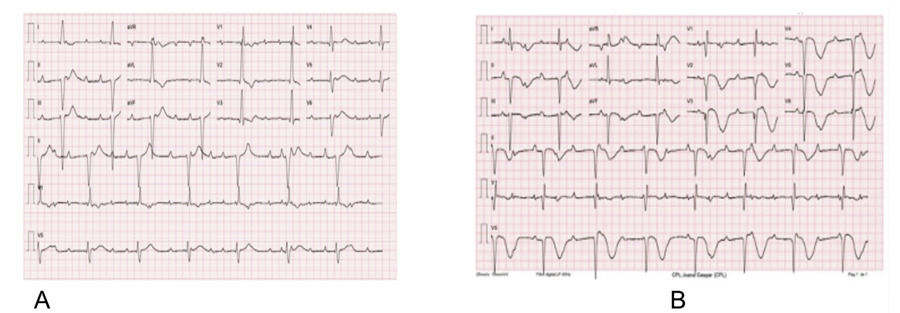
Complete atrioventricular block may be associated with Takotsubo syndrome, and the decision of device implantation in such patients is challenging. We present a case of a 76-year-old woman admitted after out-of-hospital cardiac arrest that was reverted after defibrillation treatment. Post-resuscitation electrocardiogram documented complete atrioventricular block, and echocardiogram revealed severe left ventricular dysfunction with apical ballooning. Coronary angiography excluded coronary artery disease, and Takotsubo syndrome was diagnosed based on clinical and imaging features. Atrioventricular block persisted despite normalization of left ventricular function; therefore, cardiac arrest was considered secondary to a ventricular arrhythmia induced by atrioventricular block, and a pacemaker, rather than an implantable cardioverter-defibrillator, was implanted. During follow-up, complete atrioventricular block persisted, with 99% of ventricular pacing observed upon device interrogation. This case supports that the stress of atrioventricular block may trigger Takotsubo syndrome, which is reinforced by the persistence of conduction abnormalities despite reversal of ventricular defects. Therefore, early implantation of a cardiac device should be carefully considered on a case-by-case basis.
  • Cardiac arrest
  • complete atrioventricular block
  • Pacemaker
  • Takotsubo syndrome
Read Full Article
Creative Commons Attribution (CC BY) Creative Commons license
09/01/2026 DOI: 10.36660/abc.20250245i Views 1
Figure 1
ABC
Research Letter

A Hybrid Approach of Simultaneous Extraction and Leadless Pacemaker Implantation in a Transvenous Lead Endocarditis Case

Helder Santos et al. André Grazina Mariana Santos Paulo Osório … Guilherme Portugal Ana Lousinha Bruno Valente Pedro Silva Cunha Mário Oliveira

Introduction

Symptomatic bradycardia treatment is based on the transvenous method of endocardial pacing. However, cardiac electronic implantable devices (CEID) are associated with a potential risk of complications, including infections, with an estimated rate of 0.5% with primary implants and 1–7 % with secondary interventions. CIED infections are associated with longer hospital length of stay, higher clinical costs and mortality rates. , According to guidelines, infective endocarditis related to CIED implicates complete removal of the system, followed by a period without intravascular therapy. – Nevertheless, most of the patients require CIED reimplantation, which is known to be associated with a risk of reinfection between 2 and 11%, particularly in cases with only partial removal of the initial device.

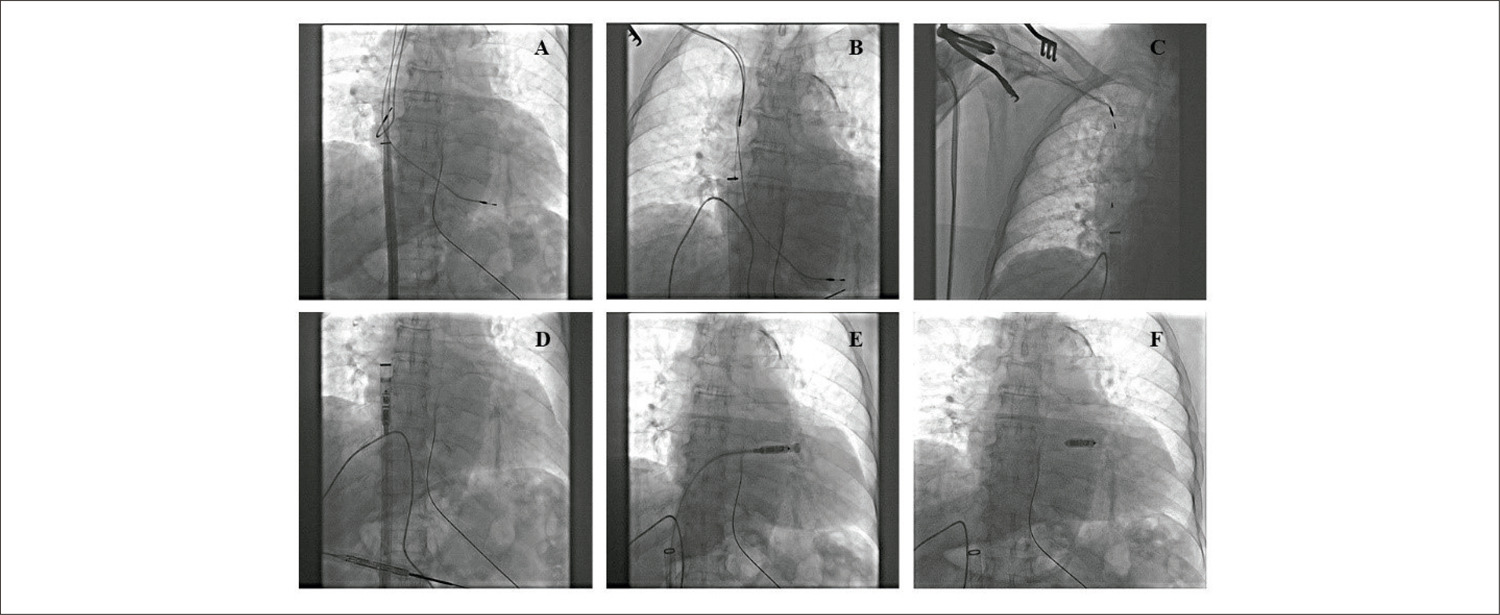
The PISA technique is a percutaneous procedure used with success in lead extraction of the CIED. This technique starts with the identification of the proximal portion of the lead. Then, a debridement is performed along the lead to achieve the site of venous insertion. Subsequently, a polypropylene dilator sheath is inserted and advanced externally up to the lead in rotational movements, while maintaining a light traction. Such movements will cause the release of adhesions around the lead, allowing, after the full advancement of the sheath, the entire lead removal.

[…]

  • Artificial/adverse effects
  • Artificial/methods
  • Bradycardia/complications
  • Cardiac pacing
  • Equipment and Supplies/instrumentation
  • Leadless Pacemaker
  • Method PISA
  • Pacemaker
  • Replantation
Read Full Article
Creative Commons Attribution (CC BY) Creative Commons license
27/02/2023 DOI: 10.36660/abc.20220091 Views 1
ABC
Editorial

Conduction Disturbances Associated with Transcatheter Aortic Valve Implantation: Challenge for another 20 Years?

Antonio Hélio Pozetti et al. Henrique Barbosa Ribeiro

Transcatheter aortic valve implantation (TAVI) is a well-established procedure for treating severe aortic stenosis in elderly patients, regardless of the surgical risk. Since its introduction two decades ago, there have been major technological advances in devices, which, combined with new implantation techniques, have brought significant reductions in periprocedural complication rates, leading to their greater adoption worldwide. However, the incidence of conduction disorders showed a modest reduction, remaining the most frequent complication after TAVI, – which contributes to the increase in hospital stay, costs and the worsening of short and long-term clinical outcomes. In addition, the approach to conduction disorders still varies greatly between centers, especially regarding the management of new left bundle branch block (LBBB), post-procedure advanced atrioventricular block (AVB) and previous right bundle branch block (RBBB), translated into variable rates of permanent pacemaker (PM) implantation. Among patients who received PM after TAVI, there is also great variability regarding their dependence (ventricular pacing) at follow-up.

In this journal edition, Pinto et al. evaluated the incidence of conduction disorders, predictors and the rate of PM dependence in a population of 340 consecutive patients undergoing TAVI. Conduction disorders occurred in more than 50% of post-procedure patients, with LBBB being the most frequent (32%), showing spontaneous resolution in 56% of them after 6 months. The overall PM implant rate was 18.5%, with prior RBBB being its main predictor. Among the patients who required PM, the main reasons were advanced AVB (60.3%), followed by LBBB with low-degree AVB (22%). Interestingly, there was a wide variation in the percentage of ventricular pacing among patients who received PM, being 83% in patients with advanced AVB (Advanced AVB and Mobitz Type II) and only 2% in those implanted with LBBB and low-degree AVB (first-degree AVB and Mobitz type I). – However, some aspects of this study deserve reflection.

[…]

  • Conduction Disturbances
  • Pacemaker
  • TAVI
Read Full Article
Creative Commons Attribution (CC BY) Creative Commons license
21/10/2022 DOI: 10.36660/abc.20220619
Graph 1
IJCS
Original Article

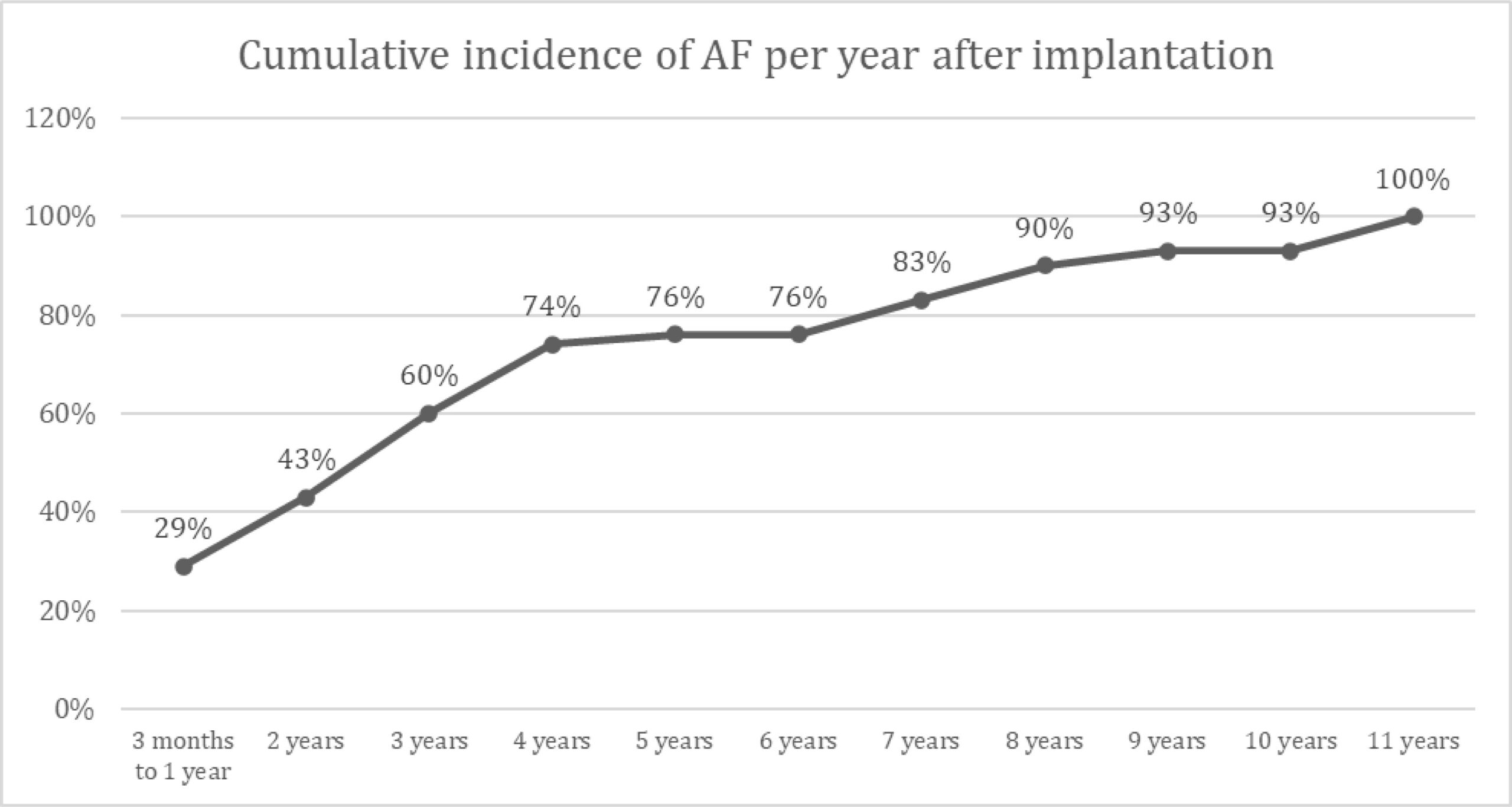
Prevalence of Atrial Fibrillation in Pacemaker Patients

Mario Augusto Cray da Costa et al. Jorge Felipe do Lago Pereira dos Santos Marcelo Derbli Schafranski

Abstract

Background:

Current pacemakers allow for the continuous recording of the occurrence of arrhythmic events. One of the most frequent arrhythmias after implantation of a device is atrial fibrillation (AF), an important risk factor for embolic events. The frequency of this arrhythmia in pacemaker patients has not been widely studied.

Objectives:

This study aimed to evaluate the prevalence, incidence, and predictors of the occurrence of AF in patients with double-chamber pacemakers and without a history of atrial fibrillation prior to implantation.

Methods:

A dynamic, retrospective, and prospective cohort study was carried out with 186 patients undergoing biannual follow-up of the double-chamber pacemaker, without previous AF, in a single service, between 2016 and 2018. Clinical data were collected from the medical records and the telemetry of the device and the prevalence, incidence rate, relative risk by univariate analysis (by chi-square), and risk ratio were calculated by multivariate analysis (by Cox regression); values of p<0.05 were considered significant.

Results:

There was a prevalence of 25.3% FA, with an incidence of 5.64 cases / 100 persons-year. The median time for the development of arrhythmia was 27.5 months. Multivariate analysis identified 5 statistically significant predictors: male gender, OR: 2.54 [1.04–6.15]; coronary artery disease, OR: 2.98 [1.20–7.41]; hypothyroidism, OR: 3.63 [1.46–9.07]; prior heart surgery, OR: 2.67 [1.01–7]; and left atrial enlargement, OR: 2.72 [1.25–5.92].

Conclusions:

The prevalence and incidence of AF in this population are high. Risk factors for AF were: male gender, coronary artery disease, hypothyroidism, prior heart surgery, and left atrial enlargement.

  • Arrhythmias
  • Artificial
  • Atrial Fibrillation
  • atrioventricular node
  • cardiac complications
  • Embolism
  • Hypertension
  • Pacemaker
  • Risk Factors
Read Full Article
Creative Commons Attribution (CC BY) Creative Commons license
11/02/2022 DOI: 10.36660/ijcs.20200113
Figura 1
ABC
Original Article

Effectiveness and Safety of Transvenous Removal of Cardiac Pacing and Implantable Cardioverter-defibrillator Leads in the Real Clinical Scenario

Roberto Costa et al. Katia Regina da Silva Elizabeth Sartori Crevelari Wagner Tadeu Jurevicius Nascimento … Marcia Mitie Nagumo Martino Martinelli Filho Fabio Biscegli Jatene

Abstract

Background

Transvenous lead extraction (TLE) of cardiac implantable electronic devices (CIED) is an uncommon procedure and requires specialized personnel and adequate facilities.

Objectives

To evaluate the effectiveness and safety of the removal of CIED leads and to determine risk factors for surgical complications and mortality in 30 days.

Methods

Prospective study with data derived from clinical practice. From January 2014 to April 2020, we included 365 consecutive patients who underwent TLE, regardless of the indication and surgical technique used. The primary outcomes were: success rate of the procedure, combined rate of major complications and intraoperative death. Secondary outcomes were: risk factors for major intraoperative complications and death within 30 days. Univariate and multivariate analysis were used, with a significance level of 5%.

Results

Procedure success rate was 96.7%, with 90.1% of complete success and 6.6% of clinical success. Major intraoperative complications occurred in 15 (4.1%) patients. Predictors of major complications were: lead dwelling time ≥ 7 years (OR = 3.78, p = 0.046) and change in surgical strategy (OR = 5.30, p = 0.023). Functional class III-IV (OR = 6.98, p <0.001), renal failure (OR = 5.75, p = 0.001), CIED infection (OR = 13.30, p <0.001), number of procedures performed (OR = 77.32, p <0.001) and major intraoperative complications (OR = 38.84, p <0.001) were predictors of 30-day mortality.

Conclusions

The results of this study, which is the largest prospective registry of consecutive TLE procedures in Latin America, confirm the safety and effectiveness of this procedure in the context of real clinical practice. (Arq Bras Cardiol. 2020; 115(6):1114-1124)

  • Cardiac Pacing, Artificial
  • Effectiveness
  • Electrodes, Implanted
  • Infection
  • Mortality
  • Pacemaker
  • Surgical complications
  • Transvenous lead extracion
Read Full Article
Creative Commons Attribution (CC BY) Creative Commons license
18/01/2021 DOI: 10.36660/abc.20200476 Views 1
Figure 1
ABC
Original Article

Usefulness of preoperative venography in patients with cardiac implantable electronic devices submitted to lead replacement or device upgrade procedures

Caio Marcos de Moraes Albertini et al. Katia Regina da Silva Joaquim Maurício da Motta Leal Filho Elizabeth Sartori Crevelari … Martino Martinelli Filho Francisco Cesar Carnevale Roberto Costa

Abstract

Background:

Venous obstructions are common in patients with transvenous cardiac implantable electronic devices, but they rarely cause immediate clinical problems. The main consequence of these lesions is the difficulty in obtaining venous access for additional leads implantation.

Objectives:

We aimed to assess the prevalence and predictor factors of venous lesions in patients referred to lead reoperations, and to define the role of preoperative venography in the planning of these procedures.

Methods:

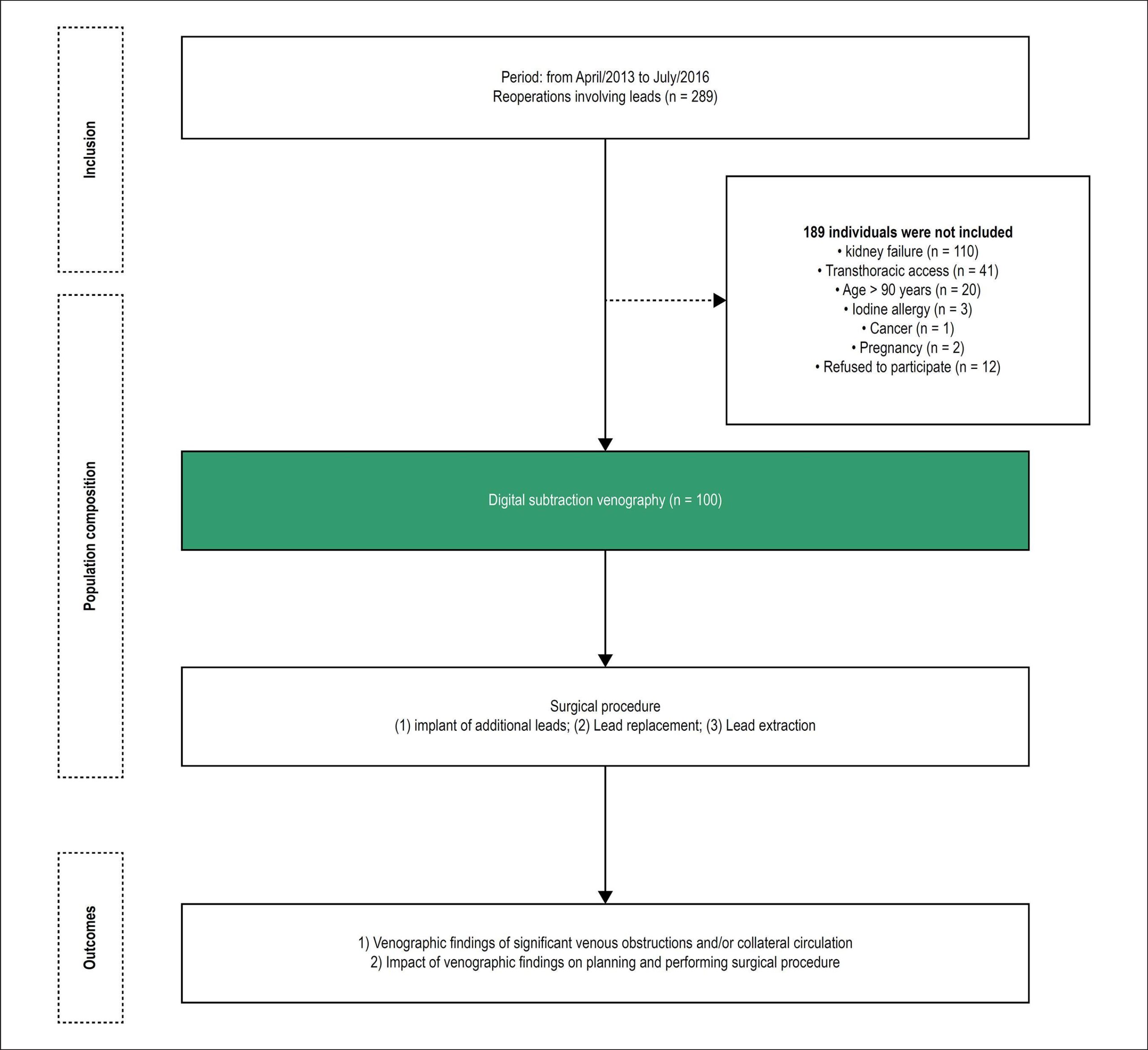
From April 2013 to July 2016, contrast venography was performed in 100 patients referred to device upgrade, revision and lead extraction. Venous lesions were classified as non-significant (< 50%), moderate stenosis (51-70%), severe stenosis (71-99%) or occlusion (100%). Collateral circulation was classified as absent, discrete, moderate or accentuated. The surgical strategy was defined according to the result of the preoperative venography. Univariate analysis was used to investigate predictor factors related to the occurrence of these lesions, with 5% of significance level.

Results:

Moderate venous stenosis was observed in 23%, severe in 13% and occlusions in 11%. There were no significant differences in relation to the device side or the venous segment. The usefulness of the preoperative venography to define the operative tactic was proven, and in 99% of the cases, the established surgical strategy could be performed according to plan.

Conclusions:

The prevalence of venous obstruction is high in CIED recipients referred to reoperations. Venography is highly indicated as a preoperative examination for allowing the adequate surgical planning of procedures involving previous transvenous leads.

  • extraction of leads
  • Implantable Defibrillators
  • Pacemaker
  • Phlebography
  • Risk Factors
  • venous stenosis
Read Full Article
Creative Commons Attribution (CC BY) Creative Commons license
21/09/2018 DOI: 10.5935/abc.20180164 Views 1
Is conventional cardiac pacing harmful in patients with normal ventricular function?
ABC
Artigo Original

Is conventional cardiac pacing harmful in patients with normal ventricular function?

Luiz Antonio Batista de Sá et al. Salvador Rassi Márcia Andery Ludovico Batista

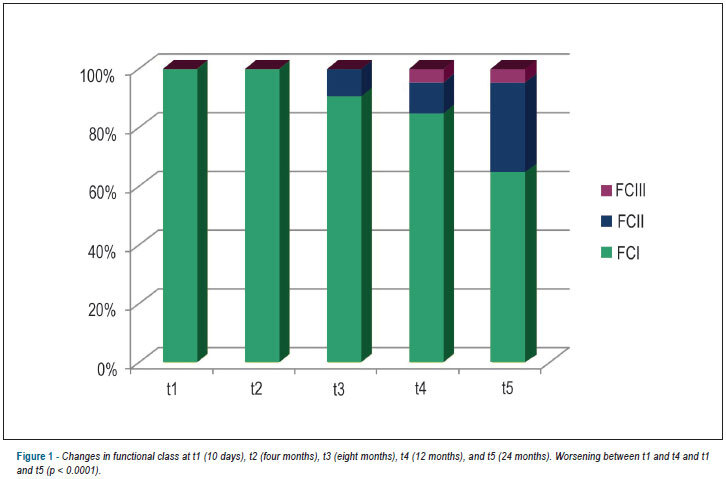
BACKGROUND: Right ventricular pacing may be deleterious in patients with left ventricular dysfunction, but in patients with normal function the impact of this stimulation triggering clinically relevant ventricular dysfunction is not fully established. OBJECTIVES: To evaluate the clinical, echocardiographic findings of patients with previously normal left ventricular function underwent implantation of a pacemaker. METHODS: Observational, cross-sectional study with 20 patients, who underwent implantation of pacemaker, prospectively followed-up, with the following inclusion criteria: normal left ventricular function defined by echocardiography and ventricular pacing higher than 90%. Were evaluated functional class (FC) (New York Heart Association), 6-minute walk test (6MWT), B-type natriuretic peptide (BNP), echocardiographic assessment (conventional and dyssynchrony parameters), and quality of life questionnaire (QLQ) (SF-36). The assessment was performed at ten days (t1), four months (t2), eight months (t3), 12 months (t4) and 24 months (t5). RESULTS: Conventional echocardiographic parameters and dyssynchrony parameters showed statistically significant variation over time. The 6MWT, FC, and BNP showed worsening at the end of two years. QLQ showed initial improvement and worsening at the end of two years. CONCLUSION: The implantation of conventional pacemaker was associated with worsening in functional class, worsening in walk test, increased BNP levels, increased duration of QRS, and worsening in some domains of the QLQ at the end of two years. There were no changes in echocardiography measurements (conventional and asynchrony measures).

  • Asynchrony
  • Chagas disease
  • Heart Failure
  • Pacemaker
  • Septal pacing
Read Full Article
Creative Commons Attribution (CC BY) Creative Commons license
22/10/2013 DOI: 10.5935/abc.20130205
Left ventricular synchrony and function in pediatric patients with definitive pacemakers
ABC
Artigo Original

Left ventricular synchrony and function in pediatric patients with definitive pacemakers

Michel Cabrera Ortega et al. Adel Eladio Gonzales Morejón Giselle Serrano Ricardo

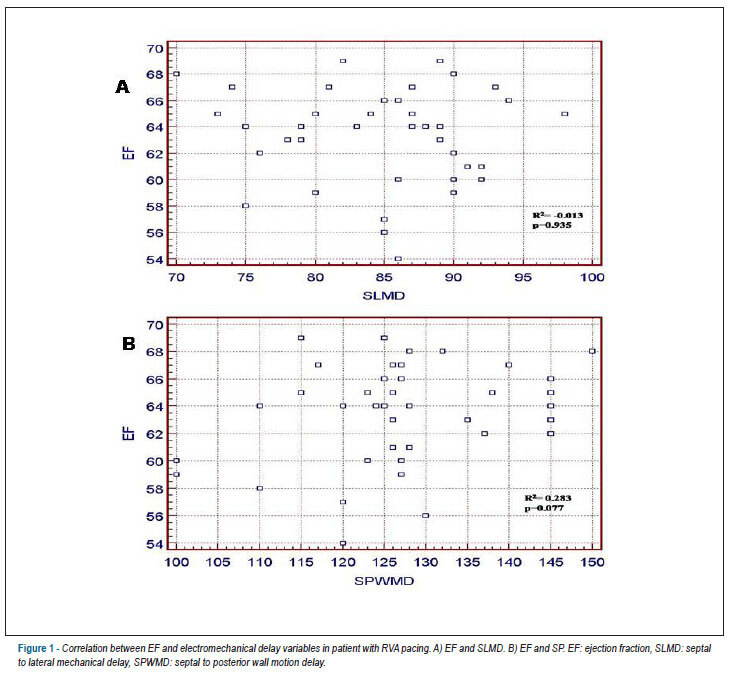
BACKGROUND: Chronic right ventricular pacing (RVP) induces a dyssynchronous contraction pattern,producing interventricular and intraventricular asynchrony. Many studies have shown the relationship of RVP with impaired left ventricular (LV) form and function. OBJECTIVE: The aim of this study was to evaluate LV synchrony and function in pediatric patients receiving RVP in comparison with those receiving LV pacing (LVP). METHODS:LV systolic and diastolic function and synchrony were evaluated in 80 pediatric patients with either nonsurgical or postsurgical complete atrioventricular block, with pacing from either the RV endocardium (n = 40) or the LV epicardium (n = 40). Echocardiographic data obtained before pacemaker implantation, immediately after it, and at the end of a mean follow-up of 6.8 years were analyzed. RESULTS: LV diastolic function did not change in any patient during follow-up. LV systolic function was preserved in patients with LVP. However, in children with RVP the shortening fraction and ejection fraction decreased from medians of 41% ± 2.6% and 70% ± 6.9% before implantation to 32% ± 4.2% and 64% ± 2.5% (p < 0.0001 and p < 0.0001), respectively, at final follow-up. Interventricular mechanical delay was significantly larger with RVP (66 ± 13 ms) than with LVP (20 ± 8 ms). Similarly, the following parameters were significantly different in the two groups: LV mechanical delay (RVP: 69 ± 6 ms, LVP: 30 ± 11 ms, p < 0.0001); septal to lateral wall motion delay (RVP: 75 ± 19 ms, LVP: 42 ± 10 ms, p < 0.0001); and, septal to posterior wall motion delay (RVP: 127 ± 33 ms, LVP: 58 ± 17 ms, p < 0.0001). CONCLUSION: Compared with RV endocardium, LV epicardium is an optimal site for pacing to preserve cardiac synchrony and function.

  • Artificial
  • Cardiac Pacing, Artificial
  • Child
  • Myocardial Contraction
  • Pacemaker
  • Ventricular Function, Left
Read Full Article
Creative Commons Attribution (CC BY) Creative Commons license
24/09/2013 DOI: 10.5935/abc.20130189
Biofilm on artificial pacemaker: fiction or reality?
ABC
Clinical Update

Biofilm on artificial pacemaker: fiction or reality?

Ana Paula Azevedo Santos et al. Evandro Watanabe Denise de Andrade

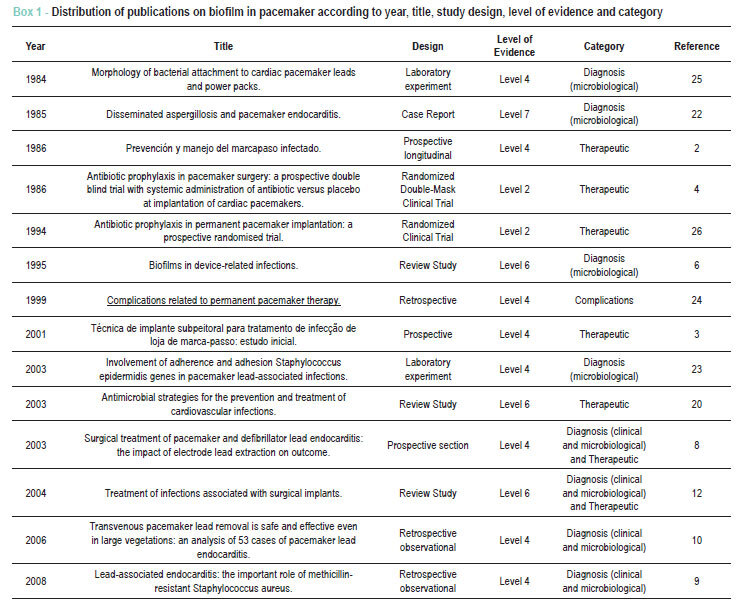
Cardiac pacing through cardiac pacemaker is one of the most promising alternatives in the treatment of arrhythmias, but it can cause reactions natural or complex reactions, either early or late. This study aimed to describe the scientific evidence on the risk of infection and biofilm formation associated with cardiac pacemaker. This is a study of integrative literature review. It included 14 publications classified into three thematic categories: diagnosis (microbiological and/or clinical), complications and therapy of infections. Staphylococcus epidermidis and Staphylococcus aureus were the microorganisms most frequently isolated. It was not possible to determine the incidence of infection associated with pacemakers, since the studies were generally of prevalence. In terms of therapy, the complete removal of pacemakers stood out, especially in cases of suspected biofilm. Still controversial is the use of systemic antibiotic prophylaxis in reducing the incidence of infection associated with implantation of a pacemaker

  • Artificial
  • biofilms
  • Pacemaker
  • prosthesis-related infections
Read Full Article
Creative Commons Attribution (CC BY) Creative Commons license
20/12/2011 DOI: 10.1590/S0066-782X2011001400018
Ventricular dyssynchrony and increased BNP levels in right ventricular apical pacing
ABC
Artigo Original

Ventricular dyssynchrony and increased BNP levels in right ventricular apical pacing

Cláudia Drummond Guimarães Abreu et al. Maria do Carmo Pereira Nunes Márcia Melo Barbosa Manoel Otávio Costa Rocha Antônio Luiz Pinho Ribeiro

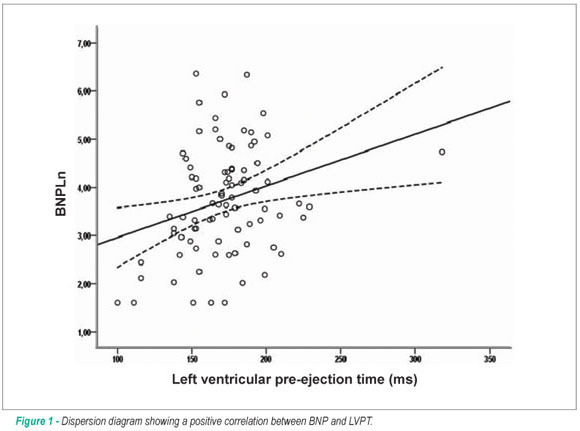
BACKGROUND: Long-term right ventricular apical pacing can cause ventricular dyssynchrony and, secondarily, neurohumoral alterations and increase in cardiac morbimortality. OBJECTIVE: To analyze ventricular dyssynchrony and its effects on BNP levels in patients with pacemakers and long-term right ventricular (RV) apex pacing. METHODS: Cross-sectional study of 85 patients with single or dual chamber pacemaker, NYHA functional class I or II and left ventricular ejection fraction (LVEF) > 35%. The dyssynchrony assessment was carried out using several echocardiographic techniques, including Tissue Synchronization Imaging (TSI), with the analysis of the 12 segments. BNP was measured at the same time when the echocardiogram was performed, but the examiner was blinded to the results. RESULTS: Forty-six women and 39 men, aged 58 ± 12 years, with Chagas’ disease (56%) and controlled hypertensive individuals (62%), were included in the study. LVEF was 52 ± 8% and the mean QRS duration was 139 ms (120-180 ms). BNP levels were altered in 36.5% of the sample (cutoff = 60 pg/ml). At the multivariate linear regression analysis, BNP was correlated with age (p = 0.024), LVEF (p < 0.0001) and left ventricular (LV) pre-ejection time (p = 0.009), which is an intraventricular dyssynchrony index. CONCLUSION: In clinically stable patients receiving conventional cardiac pacing, the intraventricular dyssynchrony was an independent predictor of BNP level increase after adjusted for age and LVEF.

  • Artificial
  • Echocardiography
  • Natriuretic Peptides
  • Pacemaker
  • Ventricular Dysfunction
Read Full Article
Creative Commons Attribution (CC BY) Creative Commons license
10/06/2011 DOI: 10.1590/S0066-782X2011005000070
Functional behavior of patients with conventional pacemakers undergoing cardiac resynchronization
ABC
Artigo Original

Functional behavior of patients with conventional pacemakers undergoing cardiac resynchronization

Rodrigo Tavares Silva et al. Martino Martinelli Filho Carlos Eduardo Batista de Lima Daniela Garcia Moreno Cabral Martins … Silvana Angelina Dorio Nishióka Anísio Alexandre Pedrosa Elizabeth Sartori Crevelari Roberto Costa Eduardo Argentino Sosa José Antonio Franchini Ramires

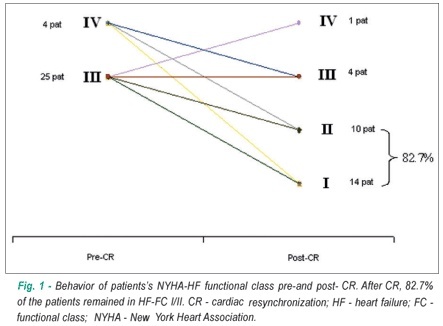
BACKGROUND: Cardiac resynchronization therapy (CRT) is an efficient treatment for patients with heart failure (HF), severe ventricular dysfunction and intraventricular block. Conventional pacemakers (CPM) implanted in the right ventricular apical area cause alterations in the normal sequence of cardiac activation similar to those induced by LBBB (left bundle-branch block). Therefore, patients with CPM and advanced HF could be candidates to undergo CRT, but as only small numbers of patients have been evaluated so far, definitive conclusions are lacking. OBJECTIVE: To assess the clinical and functional outcome of cardiac resynchronization therapy (CRT) in patients with conventional pacemakers. METHODS: Patients with CPM, who were in NYHA HF functional class III/IV class refractory to drug therapy, and left ventricular ejection fraction (LVEF) ) <35% underwent CRT. Patients’ clinical-functional behavior was assessed prospectively six months after the procedure. The improvement of one HF-functional class was set as an effective response to the procedure. The following was assessed: QRS duration (ECG), diastolic diameter (LVDd), left ventricular systolic diameter (LVSd) and LVEF seen on the echocardiogram. For the statistical analysis, Student’s paired t test and Spearman’s correlation were used. RESULTS: Twenty-nine patients (mean age 61.5) were evaluated. Of these, six were females, and chagasic cardiomyopathy was predominant. During the clinical follow-up of 22.7±13 months, 86.2% of the patients benefited from CRT. Within this group, the mean LVEF increased by 18% (p=0.013), QRS duration dropped by 11.8% (p=0.002) and no significant reduction in left ventricular intracavitary diameters was observed. CONCLUSION: CRT is effective for patients with CPM and advanced HF as it yields a high rate of response (86.2%), significantly improves LVEF and reduces QRS duration.

  • Artificial
  • Bundle Branch Block
  • Cardiac pacing
  • congestive
  • Heart Failure
  • Pacemaker
Read Full Article
Creative Commons Attribution (CC BY) Creative Commons license
28/04/2008 DOI: 10.1590/S0066-782X2008000200012 Views 1
The portuguese version, cross-cultural adaptation and validation of specific quality-of-life questionnaire - AQUAREL - for pacemaker patients
ABC
Artigo Original

The portuguese version, cross-cultural adaptation and validation of specific quality-of-life questionnaire – AQUAREL – for pacemaker patients

Bruna Guimarães Oliveira et al. Jorge Gustavo Velasquez Melendez Rozana Mesquita Ciconelli Leonor Garcia Rincón … Ana Amélia Soares Torres Lidiane Aparecida Pereira de Sousa Antônio Luiz Pinho Ribeiro

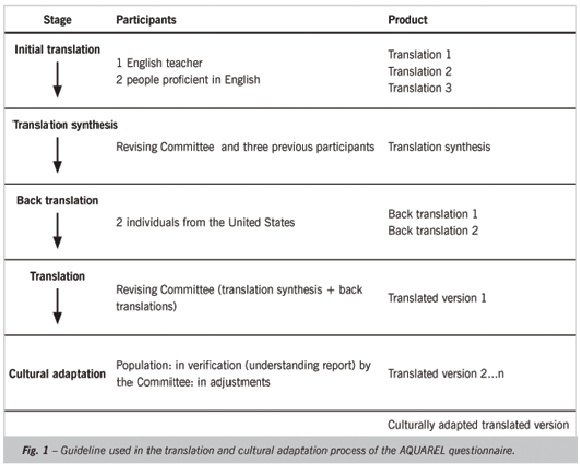
OBJECTIVE: To translate, to make the cultural adaptation and to evaluate reproducibility and validity of the Portuguese version of the AQUAREL (Assessment of QUAlity of life and RELated events) questionnaire, which is a specific tool to assess quality of life in pacemaker patients. METHODS: We evaluated 202 pacemaker patients: 63 patients during the cross-cultural adaptation stage and 139 during the reproducibility and validity evaluation stages. The questionnaire translation was reviewed repeatedly until > 85% of patients correctly understood the questions. Reproducibility of the final version was tested in 69 patients in whom the interview was performed twice by the same researcher. Validity was checked by the correlation between scores obtained in AQUAREL domains and those obtained in SF36 domains, in the functional class and the distance walked in the six-minute test. RESULTS: The internal consistency of AQUAREL was adequate, with Cronbach’s alpha coefficient varying between 0.59 and 0.85. Reproducibility was good, with high correlation coefficients (0.68-0.89) and random distribution of data in Bland and Altman plots, without systematic bias. A significant association was observed among AQUAREL domains and those obtained in SF36 domains and the functional class (p<0.01), although significant correlations with the distance walked in the six-minute test were not found. CONCLUSION: The Portuguese version of the AQUAREL questionnaire is easy and rapid to apply, and could be used as a specific questionnaire to assess quality of life in pacemaker patients.

  • cross-cultural adaptation
  • Pacemaker
  • Quality of life
  • translation
Read Full Article
Creative Commons Attribution (CC BY) Creative Commons license
28/09/2006 DOI: 10.1590/S0066-782X2006001500003
Technical aspects of coronary sinus catheterization based on the atrial component of the intracavitary electrogram and radiological anatomy during the implantation procedure of a biventricular pacemaker
ABC
Artigo Original

Technical aspects of coronary sinus catheterization based on the atrial component of the intracavitary electrogram and radiological anatomy during the implantation procedure of a biventricular pacemaker

Fernando Sérgio Oliva de Souza et al. Nicola Luciano Mortati Domingo Marcolino Braile Reinaldo Wilson Vieira … Salomon Ordinola Rojas Alessandre Caputo Rabelo Januário Manuel de Souza Sérgio Almeida de Oliveira

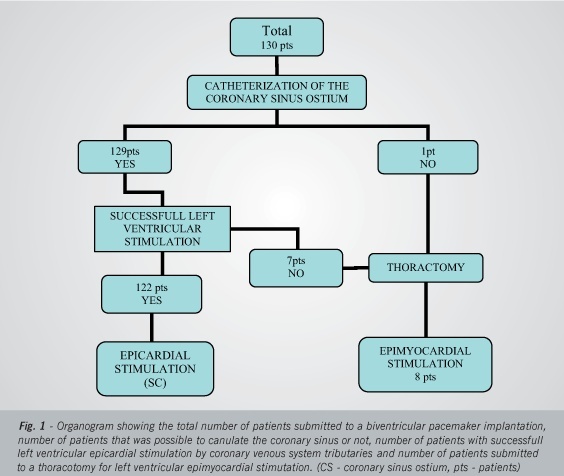
OBJECTIVE: To present a technical proposal based on the experience of 130 implantations using a simplified technique for coronary sinus catheterization, based on the atrial component of the intracavitary electrogram and radiological anatomy. METHODS: From October, 2001 to October, 2004, 130 biventricular pacemaker implantations were performed, using radiological anatomy and observation of the intracavitary electrogram, focusing on the atrial component. RESULTS: The implantation of the system using left ventricular pacing via coronary sinus was not possible in 8 patients. Difficulties on the cannulation of the coronary ostium were felt in 12 patients and difficulties of lead advancement through the coronary sinus were felt in 15 patients. The mean time of radioscopy utilization was 18.69 min. CONCLUSION: The implantation technique, using the atrial component morphology of the intracavitary electrogram and radiological anatomy showed to be workless, safe and effective for the cannulation of the coronary sinus ostium requesting reduced time of radioscopy.

  • congestive heart failure
  • Dilated Cardiomyopathy
  • Pacemaker
Read Full Article
Creative Commons Attribution (CC BY) Creative Commons license
25/04/2006 DOI: 10.1590/S0066-782X2006000400005
Right ventricular bifocal stimulation in the treatment of dilated cardiomyopathy with heart failure
ABC
Original Article

Right ventricular bifocal stimulation in the treatment of dilated cardiomyopathy with heart failure

José Carlos Pachón Mateos et al. Remy Nelson Albornoz Enrique Indalécio Pachón Mateos Vera Márcia Gimenez … Juán Carlos Pachón Mateos Maria Zélia Cunha Pachón Eusebio Ramos dos Santos Fº Paulo de Tarso Jorge Medeiros Marco Aurélio Dias da Silva Paulo Paredes Paulista José Eduardo Moraes Rêgo Sousa Adib Domingos Jatene

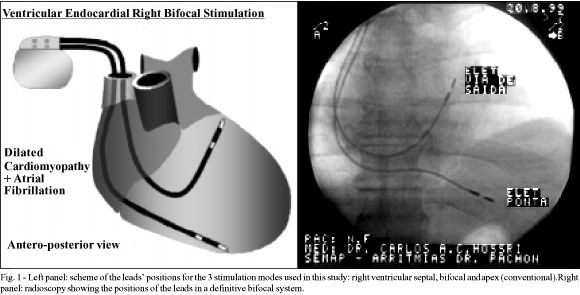
OBJECTIVE: To describe a new more efficient method of endocardial cardiac stimulation, which produces a narrower QRS without using the coronary sinus or cardiac veins. METHODS: We studied 5 patients with severe dilated cardiomyopathy, chronic atrial fibrillation and AV block, who underwent definitive endocardial pacemaker implantation, with 2 leads, in the RV, one in the apex and the other in the interventricular septum (sub pulmonary), connected, respectively, to ventricular and atrial bicameral pacemaker outputs. Using Doppler echocardiography, we compared, in the same patient, conventional (VVI), high septal (“AAI”) and bifocal (“DDT” with AV interval ~ 0) stimulation. RESULTS: The RV bifocal stimulation had the best results with an increase in ejection fraction and cardiac output and reduction in QRS duration, mitral regurgitation and in the left atrium area (p <= 0.01). The conventional method of stimulation showed the worst result. CONCLUSION: These results suggest that, when left ventricular stimulation is not possible, right ventricular bifocal stimulation should be used in patients with severe cardiomyopathy where a pacemaker is indicated.

  • multisite stimulation and heart failure
  • Pacemaker
Read Full Article
Creative Commons Attribution (CC BY) Creative Commons license
05/09/2000 DOI: 10.1590/S0066-782X1999001200003 Views 1
ABC
Original Article

Permanent and temporary pacemaker implantation after orthotopic heart transplantation

Fernando Bacal et al. Edimar A. Bocchi Marcelo L. C. Vieira Neusa Lopes … Luiz Felipe Moreira Alfredo Fiorelli Roberto Costa Martino Martinelli Noedir A. G. Stolf Giovanni Bellotti José Antonio F. Ramires

PURPOSE:To determine the indication for and incidence and evolution of temporary and permanent pacemaker implantation in cardiac transplant recipients. METHODS: A retrospective review of 114 patients who underwent orthotopic heart transplantation InCor (Heart Institute USP BR) between March 1985 and May 1993. We studied the incidence of and indication for temporary pacing, the relationship between pacing and rejection, the need for pemanent pacing and the clinical follow-up. RESULTS: Fourteen of 114 (12%)heart transplant recipients required temporary pacing and 4 of 114 (3.5%) patients required permanent pacing. The indication for temporary pacing was sinus node dysfunction in 11 patients (78.5%) and atrioventricular (AV) block in 3 patients (21.4%). The indication for permanent pacemaker implantation was sinus node dysfunction in 3 patients (75%) and atrioventricular (AV) block in 1 patient (25%). We observed rejection in 3 patients (21.4%) who required temporary pacing and in 2 patients (50%) who required permanent pacing. The previous use of amiodarone was observed in 10 patients (71.4%) with temporary pacing. Seven of the 14 patients (50%) died during follow-up. CONCLUSION: Sinus node dysfunction was the principal indication for temporary and permanent pacemaker implantation in cardiac transplant recipients. The need for pacing was related to worse prognosis after cardiac transplantation.

  • cardiac transplantation
  • Pacemaker
Read Full Article
Creative Commons Attribution (CC BY) Creative Commons license
05/09/2000 DOI: 10.1590/S0066-782X2000000100002 Views 1

How to cite this article

EndNote RIS

Electronic Document Format (Vancouver)

Abrantes A, Gregório C, Raposo M, Cunha N, Brito D, Pinto FJ. Takotsubo Syndrome, Complete Heart Block, and Cardiac Arrest: A Clinical Challenge. Arquivos Brasileiros de Cardiologia 2026;122(11):e20250245.

Electronic Document Format (ABNT)

Abrantes, Ana; Gregório, Catarina; Raposo, Miguel; Cunha, Nelson; Brito, Dulce; Pinto, Fausto J.. Takotsubo Syndrome, Complete Heart Block, and Cardiac Arrest: A Clinical Challenge. Arquivos Brasileiros de Cardiologia, v. 122, n. 11, e20250245, Jan. 2026.

Electronic Document Format (APA)

Abrantes, A., Gregório, C., Raposo, M., Cunha, N., Brito, D., & Pinto, F. J. (2026). Takotsubo Syndrome, Complete Heart Block, and Cardiac Arrest: A Clinical Challenge. Arquivos Brasileiros de Cardiologia, 122(11), e20250245.

Electronic Document Format (ISO)

Abrantes, Ana and Gregório, Catarina and Raposo, Miguel and Cunha, Nelson and Brito, Dulce and Pinto, Fausto J.. Takotsubo Syndrome, Complete Heart Block, and Cardiac Arrest: A Clinical Challenge. Arquivos Brasileiros de Cardiologia [online]. 2026, vol. 122, n. 11, [cited 2026-10-14], e20250245. Available from: <https://journals.cardiol.br/en/article/takotsubo-syndrome-complete-heart-block-and-cardiac-arrest-a-clinical-challenge/>. ISSN 0066-782X

EndNote RIS

Electronic Document Format (Vancouver)

Santos H, Grazina A, Santos M, Osório P, Portugal G, Lousinha A, Valente B, et al. A Hybrid Approach of Simultaneous Extraction and Leadless Pacemaker Implantation in a Transvenous Lead Endocarditis Case. Arquivos Brasileiros de Cardiologia 2023;120(2):e20220091.

Electronic Document Format (ABNT)

Santos, Helder; Grazina, André; Santos, Mariana; Osório, Paulo; Portugal, Guilherme; Lousinha, Ana; Valente, Bruno; Cunha, Pedro Silva; Oliveira, Mário. A Hybrid Approach of Simultaneous Extraction and Leadless Pacemaker Implantation in a Transvenous Lead Endocarditis Case. Arquivos Brasileiros de Cardiologia, v. 120, n. 2, e20220091, Feb. 2023.

Electronic Document Format (APA)

Santos, H., Grazina, A., Santos, M., Osório, P., Portugal, G., Lousinha, A., Valente, B., Cunha, P. S., & Oliveira, M. (2023). A Hybrid Approach of Simultaneous Extraction and Leadless Pacemaker Implantation in a Transvenous Lead Endocarditis Case. Arquivos Brasileiros de Cardiologia, 120(2), e20220091.

Electronic Document Format (ISO)

Santos, Helder and Grazina, André and Santos, Mariana and Osório, Paulo and Portugal, Guilherme and Lousinha, Ana and Valente, Bruno and Cunha, Pedro Silva and Oliveira, Mário. A Hybrid Approach of Simultaneous Extraction and Leadless Pacemaker Implantation in a Transvenous Lead Endocarditis Case. Arquivos Brasileiros de Cardiologia [online]. 2023, vol. 120, n. 2, [cited 2026-10-14], e20220091. Available from: <https://journals.cardiol.br/en/article/a-hybrid-approach-of-simultaneous-extraction-and-leadless-pacemaker-implantation-in-a-transvenous-lead-endocarditis-case/>. ISSN 0066-782X

EndNote RIS

Electronic Document Format (Vancouver)

Pozetti AH, Ribeiro HB. Conduction Disturbances Associated with Transcatheter Aortic Valve Implantation: Challenge for another 20 Years?. Arquivos Brasileiros de Cardiologia 2022;119(4):531-2.

Electronic Document Format (ABNT)

Pozetti, Antonio Hélio; Ribeiro, Henrique Barbosa. Conduction Disturbances Associated with Transcatheter Aortic Valve Implantation: Challenge for another 20 Years?. Arquivos Brasileiros de Cardiologia, v. 119, n. 4, p. 531-532, Oct. 2022.

Electronic Document Format (APA)

Pozetti, A. H., & Ribeiro, H. B. (2022). Conduction Disturbances Associated with Transcatheter Aortic Valve Implantation: Challenge for another 20 Years?. Arquivos Brasileiros de Cardiologia, 119(4), 531-532.

Electronic Document Format (ISO)

Pozetti, Antonio Hélio and Ribeiro, Henrique Barbosa. Conduction Disturbances Associated with Transcatheter Aortic Valve Implantation: Challenge for another 20 Years?. Arquivos Brasileiros de Cardiologia [online]. 2022, vol. 119, n. 4, [cited 2026-10-14], pp. 531-532. Available from: <https://journals.cardiol.br/en/article/conduction-disturbances-associated-with-transcatheter-aortic-valve-implantation-challenge-for-another-20-years/>. ISSN 0066-782X

EndNote RIS

Electronic Document Format (Vancouver)

Costa MAC, Santos JFLP, Schafranski MD. Prevalence of Atrial Fibrillation in Pacemaker Patients. International Journal of Cardiovascular Sciences 2022;35(3):373-81.

Electronic Document Format (ABNT)

Costa, Mario Augusto Cray da; Santos, Jorge Felipe do Lago Pereira dos; Schafranski, Marcelo Derbli. Prevalence of Atrial Fibrillation in Pacemaker Patients. International Journal of Cardiovascular Sciences, v. 35, n. 3, p. 373-381, Feb. 2022.

Electronic Document Format (APA)

Costa, M. A. C. , Santos, J. F. L. P. , & Schafranski, M. D. (2022). Prevalence of Atrial Fibrillation in Pacemaker Patients. International Journal of Cardiovascular Sciences, 35(3), 373-381.

Electronic Document Format (ISO)

Costa, Mario Augusto Cray da and Santos, Jorge Felipe do Lago Pereira dos and Schafranski, Marcelo Derbli. Prevalence of Atrial Fibrillation in Pacemaker Patients. International Journal of Cardiovascular Sciences [online]. 2022, vol. 35, n. 3, [cited 2026-10-14], pp. 373-381. Available from: <https://journals.cardiol.br/en/article/prevalence-of-atrial-fibrillation-in-pacemaker-patients/>. ISSN 2359-4802

EndNote RIS

Electronic Document Format (Vancouver)

Costa R, Silva KR, Crevelari ES, Nascimento WTJ, Nagumo MM, Martinelli Filho M, Jatene FB, et al. Effectiveness and Safety of Transvenous Removal of Cardiac Pacing and Implantable Cardioverter-defibrillator Leads in the Real Clinical Scenario. Arquivos Brasileiros de Cardiologia 2021;115(6):1114-2.

Electronic Document Format (ABNT)

Costa, Roberto; Silva, Katia Regina da; Crevelari, Elizabeth Sartori; Nascimento, Wagner Tadeu Jurevicius; Nagumo, Marcia Mitie; Martinelli Filho, Martino; Jatene, Fabio Biscegli. Effectiveness and Safety of Transvenous Removal of Cardiac Pacing and Implantable Cardioverter-defibrillator Leads in the Real Clinical Scenario. Arquivos Brasileiros de Cardiologia, v. 115, n. 6, p. 1114-1124, Jan. 2021.

Electronic Document Format (APA)

Costa, R., Silva, K. R. , Crevelari, E. S., Nascimento, W. T. J., Nagumo, M. M., Martinelli Filho, M., & Jatene, F. B. (2021). Effectiveness and Safety of Transvenous Removal of Cardiac Pacing and Implantable Cardioverter-defibrillator Leads in the Real Clinical Scenario. Arquivos Brasileiros de Cardiologia, 115(6), 1114-1124.

Electronic Document Format (ISO)

Costa, Roberto and Silva, Katia Regina da and Crevelari, Elizabeth Sartori and Nascimento, Wagner Tadeu Jurevicius and Nagumo, Marcia Mitie and Martinelli Filho, Martino and Jatene, Fabio Biscegli. Effectiveness and Safety of Transvenous Removal of Cardiac Pacing and Implantable Cardioverter-defibrillator Leads in the Real Clinical Scenario. Arquivos Brasileiros de Cardiologia [online]. 2021, vol. 115, n. 6, [cited 2026-10-14], pp. 1114-1124. Available from: <https://journals.cardiol.br/en/article/effectiveness-and-safety-of-transvenous-removal-of-cardiac-pacing-and-implantable-cardioverter-defibrillator-leads-in-the-real-clinical-scenario/>. ISSN 0066-782X

EndNote RIS

Electronic Document Format (Vancouver)

Albertini CMM, Silva KR, Leal Filho JMM, Crevelari ES, Martinelli Filho M, Carnevale FC, Costa R, et al. Usefulness of preoperative venography in patients with cardiac implantable electronic devices submitted to lead replacement or device upgrade procedures. Arquivos Brasileiros de Cardiologia 2018;111(5):686-9.

Electronic Document Format (ABNT)

Albertini, Caio Marcos de Moraes; Silva, Katia Regina da; Leal Filho, Joaquim Maurício da Motta; Crevelari, Elizabeth Sartori; Martinelli Filho, Martino; Carnevale, Francisco Cesar; Costa, Roberto. Usefulness of preoperative venography in patients with cardiac implantable electronic devices submitted to lead replacement or device upgrade procedures. Arquivos Brasileiros de Cardiologia, v. 111, n. 5, p. 686-696, Sep. 2018.

Electronic Document Format (APA)

Albertini, C. M. M., Silva, K. R. , Leal Filho, J. M. M., Crevelari, E. S., Martinelli Filho, M., Carnevale, F. C., & Costa, R. (2018). Usefulness of preoperative venography in patients with cardiac implantable electronic devices submitted to lead replacement or device upgrade procedures. Arquivos Brasileiros de Cardiologia, 111(5), 686-696.

Electronic Document Format (ISO)

Albertini, Caio Marcos de Moraes and Silva, Katia Regina da and Leal Filho, Joaquim Maurício da Motta and Crevelari, Elizabeth Sartori and Martinelli Filho, Martino and Carnevale, Francisco Cesar and Costa, Roberto. Usefulness of preoperative venography in patients with cardiac implantable electronic devices submitted to lead replacement or device upgrade procedures. Arquivos Brasileiros de Cardiologia [online]. 2018, vol. 111, n. 5, [cited 2026-10-14], pp. 686-696. Available from: <https://journals.cardiol.br/en/article/usefulness-of-preoperative-venography-in-patients-with-cardiac-implantable-electronic-devices-submitted-to-lead-replacement-or-device-upgrade-procedures/>. ISSN 0066-782X

EndNote RIS

Electronic Document Format (Vancouver)

Sá LAB, Rassi S, Batista MAL. Is conventional cardiac pacing harmful in patients with normal ventricular function?. Arquivos Brasileiros de Cardiologia 2013;101(6):545-53.

Electronic Document Format (ABNT)

Sá, Luiz Antonio Batista de; Rassi, Salvador; Batista, Márcia Andery Ludovico. Is conventional cardiac pacing harmful in patients with normal ventricular function?. Arquivos Brasileiros de Cardiologia, v. 101, n. 6, p. 545-553, Oct. 2013.

Electronic Document Format (APA)

Sá, L. A. B. , Rassi, S., & Batista, M. A. L. (2013). Is conventional cardiac pacing harmful in patients with normal ventricular function?. Arquivos Brasileiros de Cardiologia, 101(6), 545-553.

Electronic Document Format (ISO)

Sá, Luiz Antonio Batista de and Rassi, Salvador and Batista, Márcia Andery Ludovico. Is conventional cardiac pacing harmful in patients with normal ventricular function?. Arquivos Brasileiros de Cardiologia [online]. 2013, vol. 101, n. 6, [cited 2026-10-14], pp. 545-553. Available from: <https://journals.cardiol.br/en/article/is-conventional-cardiac-pacing-harmful-in-patients-with-normal-ventricular-function/>. ISSN 0066-782X

EndNote RIS

Electronic Document Format (Vancouver)

Ortega MC, Morejón AEG, Ricardo GS. Left ventricular synchrony and function in pediatric patients with definitive pacemakers. Arquivos Brasileiros de Cardiologia 2013;101(5):410-7.

Electronic Document Format (ABNT)

Ortega, Michel Cabrera; Morejón, Adel Eladio Gonzales; Ricardo, Giselle Serrano. Left ventricular synchrony and function in pediatric patients with definitive pacemakers. Arquivos Brasileiros de Cardiologia, v. 101, n. 5, p. 410-417, Sep. 2013.

Electronic Document Format (APA)

Ortega, M. C., Morejón, A. E. G., & Ricardo, G. S. (2013). Left ventricular synchrony and function in pediatric patients with definitive pacemakers. Arquivos Brasileiros de Cardiologia, 101(5), 410-417.

Electronic Document Format (ISO)

Ortega, Michel Cabrera and Morejón, Adel Eladio Gonzales and Ricardo, Giselle Serrano. Left ventricular synchrony and function in pediatric patients with definitive pacemakers. Arquivos Brasileiros de Cardiologia [online]. 2013, vol. 101, n. 5, [cited 2026-10-14], pp. 410-417. Available from: <https://journals.cardiol.br/en/article/left-ventricular-synchrony-and-function-in-pediatric-patients-with-definitive-pacemakers/>. ISSN 0066-782X

EndNote RIS

Electronic Document Format (Vancouver)

Santos APA, Watanabe E, Andrade D. Biofilm on artificial pacemaker: fiction or reality?. Arquivos Brasileiros de Cardiologia 2011;97(5):e113-20.

Electronic Document Format (ABNT)

Santos, Ana Paula Azevedo; Watanabe, Evandro; Andrade, Denise de. Biofilm on artificial pacemaker: fiction or reality?. Arquivos Brasileiros de Cardiologia, v. 97, n. 5, p. e113-e120, Dec. 2011.

Electronic Document Format (APA)

Santos, A. P. A., Watanabe, E., & Andrade, D. (2011). Biofilm on artificial pacemaker: fiction or reality?. Arquivos Brasileiros de Cardiologia, 97(5), e113-e120.

Electronic Document Format (ISO)

Santos, Ana Paula Azevedo and Watanabe, Evandro and Andrade, Denise de. Biofilm on artificial pacemaker: fiction or reality?. Arquivos Brasileiros de Cardiologia [online]. 2011, vol. 97, n. 5, [cited 2026-10-14], pp. e113-e120. Available from: <https://journals.cardiol.br/en/article/biofilm-on-artificial-pacemaker-fiction-or-reality/>. ISSN 0066-782X

EndNote RIS

Electronic Document Format (Vancouver)

Abreu CDG, Nunes MCP, Barbosa MM, Rocha MOC, Ribeiro ALP. Ventricular dyssynchrony and increased BNP levels in right ventricular apical pacing. Arquivos Brasileiros de Cardiologia 2011;97(2):156-62.

Electronic Document Format (ABNT)

Abreu, Cláudia Drummond Guimarães; Nunes, Maria do Carmo Pereira; Barbosa, Márcia Melo; Rocha, Manoel Otávio Costa; Ribeiro, Antônio Luiz Pinho. Ventricular dyssynchrony and increased BNP levels in right ventricular apical pacing. Arquivos Brasileiros de Cardiologia, v. 97, n. 2, p. 156-162, Jun. 2011.

Electronic Document Format (APA)

Abreu, C. D. G., Nunes, M. C. P., Barbosa, M. M., Rocha, M. O. C., & Ribeiro, A. L. P. (2011). Ventricular dyssynchrony and increased BNP levels in right ventricular apical pacing. Arquivos Brasileiros de Cardiologia, 97(2), 156-162.

Electronic Document Format (ISO)

Abreu, Cláudia Drummond Guimarães and Nunes, Maria do Carmo Pereira and Barbosa, Márcia Melo and Rocha, Manoel Otávio Costa and Ribeiro, Antônio Luiz Pinho. Ventricular dyssynchrony and increased BNP levels in right ventricular apical pacing. Arquivos Brasileiros de Cardiologia [online]. 2011, vol. 97, n. 2, [cited 2026-10-14], pp. 156-162. Available from: <https://journals.cardiol.br/en/article/ventricular-dyssynchrony-and-increased-bnp-levels-in-right-ventricular-apical-pacing/>. ISSN 0066-782X

EndNote RIS

Electronic Document Format (Vancouver)

Silva RT, Martinelli Filho M, Lima CEB, Martins DGMC, Nishióka SAD, Pedrosa AA, Crevelari ES, et al. Functional behavior of patients with conventional pacemakers undergoing cardiac resynchronization. Arquivos Brasileiros de Cardiologia 2008;90(2):151-6.

Electronic Document Format (ABNT)

Silva, Rodrigo Tavares; Martinelli Filho, Martino; Lima, Carlos Eduardo Batista de; Martins, Daniela Garcia Moreno Cabral; Nishióka, Silvana Angelina Dorio; Pedrosa, Anísio Alexandre; Crevelari, Elizabeth Sartori; Costa, Roberto; Sosa, Eduardo Argentino; Ramires, José Antonio Franchini. Functional behavior of patients with conventional pacemakers undergoing cardiac resynchronization. Arquivos Brasileiros de Cardiologia, v. 90, n. 2, p. 151-156, Apr. 2008.

Electronic Document Format (APA)

Silva, R. T., Martinelli Filho, M., Lima, C. E. B. , Martins, D. G. M. C., Nishióka, S. A. D., Pedrosa, A. A., Crevelari, E. S., Costa, R., Sosa, E. A., & Ramires, J. A. F. (2008). Functional behavior of patients with conventional pacemakers undergoing cardiac resynchronization. Arquivos Brasileiros de Cardiologia, 90(2), 151-156.

Electronic Document Format (ISO)

Silva, Rodrigo Tavares and Martinelli Filho, Martino and Lima, Carlos Eduardo Batista de and Martins, Daniela Garcia Moreno Cabral and Nishióka, Silvana Angelina Dorio and Pedrosa, Anísio Alexandre and Crevelari, Elizabeth Sartori and Costa, Roberto and Sosa, Eduardo Argentino and Ramires, José Antonio Franchini. Functional behavior of patients with conventional pacemakers undergoing cardiac resynchronization. Arquivos Brasileiros de Cardiologia [online]. 2008, vol. 90, n. 2, [cited 2026-10-14], pp. 151-156. Available from: <https://journals.cardiol.br/en/article/functional-behavior-of-patients-with-conventional-pacemakers-undergoing-cardiac-resynchronization/>. ISSN 0066-782X

EndNote RIS

Electronic Document Format (Vancouver)

Oliveira BG, Melendez JGV, Ciconelli RM, Rincón LG, Torres AAS, Sousa LAP, Ribeiro ALP, et al. The portuguese version, cross-cultural adaptation and validation of specific quality-of-life questionnaire – AQUAREL – for pacemaker patients. Arquivos Brasileiros de Cardiologia 2006;87(2):75-83.

Electronic Document Format (ABNT)

Oliveira, Bruna Guimarães; Melendez, Jorge Gustavo Velasquez; Ciconelli, Rozana Mesquita; Rincón, Leonor Garcia; Torres, Ana Amélia Soares; Sousa, Lidiane Aparecida Pereira de; Ribeiro, Antônio Luiz Pinho. The portuguese version, cross-cultural adaptation and validation of specific quality-of-life questionnaire – AQUAREL – for pacemaker patients. Arquivos Brasileiros de Cardiologia, v. 87, n. 2, p. 75-83, Sep. 2006.

Electronic Document Format (APA)

Oliveira, B. G., Melendez, J. G. V., Ciconelli, R. M., Rincón, L. G., Torres, A. A. S., Sousa, L. A. P. , & Ribeiro, A. L. P. (2006). The portuguese version, cross-cultural adaptation and validation of specific quality-of-life questionnaire – AQUAREL – for pacemaker patients. Arquivos Brasileiros de Cardiologia, 87(2), 75-83.

Electronic Document Format (ISO)

Oliveira, Bruna Guimarães and Melendez, Jorge Gustavo Velasquez and Ciconelli, Rozana Mesquita and Rincón, Leonor Garcia and Torres, Ana Amélia Soares and Sousa, Lidiane Aparecida Pereira de and Ribeiro, Antônio Luiz Pinho. The portuguese version, cross-cultural adaptation and validation of specific quality-of-life questionnaire – AQUAREL – for pacemaker patients. Arquivos Brasileiros de Cardiologia [online]. 2006, vol. 87, n. 2, [cited 2026-10-14], pp. 75-83. Available from: <https://journals.cardiol.br/en/article/the-portuguese-version-cross-cultural-adaptation-and-validation-of-specific-quality-of-life-questionnaire-aquarel-for-pacemaker-patients/>. ISSN 0066-782X

EndNote RIS

Electronic Document Format (Vancouver)

Souza FSO, Mortati NL, Braile DM, Vieira RW, Rojas SO, Rabelo AC, Souza JM, et al. Technical aspects of coronary sinus catheterization based on the atrial component of the intracavitary electrogram and radiological anatomy during the implantation procedure of a biventricular pacemaker. Arquivos Brasileiros de Cardiologia 2006;86(4):261-7.

Electronic Document Format (ABNT)

Souza, Fernando Sérgio Oliva de; Mortati, Nicola Luciano; Braile, Domingo Marcolino; Vieira, Reinaldo Wilson; Rojas, Salomon Ordinola; Rabelo, Alessandre Caputo; Souza, Januário Manuel de; Oliveira, Sérgio Almeida de. Technical aspects of coronary sinus catheterization based on the atrial component of the intracavitary electrogram and radiological anatomy during the implantation procedure of a biventricular pacemaker. Arquivos Brasileiros de Cardiologia, v. 86, n. 4, p. 261-267, Apr. 2006.

Electronic Document Format (APA)

Souza, F. S. O. , Mortati, N. L., Braile, D. M., Vieira, R. W., Rojas, S. O., Rabelo, A. C., Souza, J. M. , & Oliveira, S. A. (2006). Technical aspects of coronary sinus catheterization based on the atrial component of the intracavitary electrogram and radiological anatomy during the implantation procedure of a biventricular pacemaker. Arquivos Brasileiros de Cardiologia, 86(4), 261-267.

Electronic Document Format (ISO)

Souza, Fernando Sérgio Oliva de and Mortati, Nicola Luciano and Braile, Domingo Marcolino and Vieira, Reinaldo Wilson and Rojas, Salomon Ordinola and Rabelo, Alessandre Caputo and Souza, Januário Manuel de and Oliveira, Sérgio Almeida de. Technical aspects of coronary sinus catheterization based on the atrial component of the intracavitary electrogram and radiological anatomy during the implantation procedure of a biventricular pacemaker. Arquivos Brasileiros de Cardiologia [online]. 2006, vol. 86, n. 4, [cited 2026-10-14], pp. 261-267. Available from: <https://journals.cardiol.br/en/article/technical-aspects-of-coronary-sinus-catheterization-based-on-the-atrial-component-of-the-intracavitary-electrogram-and-radiological-anatomy-during-the-implantation-procedure-of-a-biventricular-pacemak/>. ISSN 0066-782X

EndNote RIS

Electronic Document Format (Vancouver)

Mateos JCP, Albornoz RN, Mateos EIP, Gimenez VM, Mateos JCP, Pachón MZC, Fº ERS, et al. Right ventricular bifocal stimulation in the treatment of dilated cardiomyopathy with heart failure. Arquivos Brasileiros de Cardiologia 2000;73(6):492-8.

Electronic Document Format (ABNT)

Mateos, José Carlos Pachón; Albornoz, Remy Nelson; Mateos, Enrique Indalécio Pachón; Gimenez, Vera Márcia; Mateos, Juán Carlos Pachón; Pachón, Maria Zélia Cunha; Fº, Eusebio Ramos dos Santos; Medeiros, Paulo de Tarso Jorge; Silva, Marco Aurélio Dias da; Paulista, Paulo Paredes; Sousa, José Eduardo Moraes Rêgo; Jatene, Adib Domingos. Right ventricular bifocal stimulation in the treatment of dilated cardiomyopathy with heart failure. Arquivos Brasileiros de Cardiologia, v. 73, n. 6, p. 492-498, Sep. 2000.

Electronic Document Format (APA)

Mateos, J. C. P., Albornoz, R. N., Mateos, E. I. P., Gimenez, V. M., Mateos, J. C. P., Pachón, M. Z. C., Fº, E. R. S., Medeiros, P. T. J., Silva, M. A. D. , Paulista, P. P., Sousa, J. E. M. R., & Jatene, A. D. (2000). Right ventricular bifocal stimulation in the treatment of dilated cardiomyopathy with heart failure. Arquivos Brasileiros de Cardiologia, 73(6), 492-498.

Electronic Document Format (ISO)

Mateos, José Carlos Pachón and Albornoz, Remy Nelson and Mateos, Enrique Indalécio Pachón and Gimenez, Vera Márcia and Mateos, Juán Carlos Pachón and Pachón, Maria Zélia Cunha and Fº, Eusebio Ramos dos Santos and Medeiros, Paulo de Tarso Jorge and Silva, Marco Aurélio Dias da and Paulista, Paulo Paredes and Sousa, José Eduardo Moraes Rêgo and Jatene, Adib Domingos. Right ventricular bifocal stimulation in the treatment of dilated cardiomyopathy with heart failure. Arquivos Brasileiros de Cardiologia [online]. 2000, vol. 73, n. 6, [cited 2026-10-14], pp. 492-498. Available from: <https://journals.cardiol.br/en/article/right-ventricular-bifocal-stimulation-in-the-treatment-of-dilated-cardiomyopathy-with-heart-failure/>. ISSN 0066-782X

EndNote RIS

Electronic Document Format (Vancouver)

Bacal F, Bocchi EA, Vieira MLC, Lopes N, Moreira LF, Fiorelli A, Costa R, et al. Permanent and temporary pacemaker implantation after orthotopic heart transplantation. Arquivos Brasileiros de Cardiologia 2000;74(1):09-12.

Electronic Document Format (ABNT)

Bacal, Fernando; Bocchi, Edimar A.; Vieira, Marcelo L. C.; Lopes, Neusa; Moreira, Luiz Felipe; Fiorelli, Alfredo; Costa, Roberto; Martinelli, Martino; Stolf, Noedir A. G.; Bellotti, Giovanni; Ramires, José Antonio F.. Permanent and temporary pacemaker implantation after orthotopic heart transplantation. Arquivos Brasileiros de Cardiologia, v. 74, n. 1, p. 09-12, Sep. 2000.

Electronic Document Format (APA)

Bacal, F., Bocchi, E. A., Vieira, M. L. C., Lopes, N., Moreira, L. F., Fiorelli, A., Costa, R., Martinelli, M., Stolf, N. A. G., Bellotti, G., & Ramires, J. A. F. (2000). Permanent and temporary pacemaker implantation after orthotopic heart transplantation. Arquivos Brasileiros de Cardiologia, 74(1), 09-12.

Electronic Document Format (ISO)

Bacal, Fernando and Bocchi, Edimar A. and Vieira, Marcelo L. C. and Lopes, Neusa and Moreira, Luiz Felipe and Fiorelli, Alfredo and Costa, Roberto and Martinelli, Martino and Stolf, Noedir A. G. and Bellotti, Giovanni and Ramires, José Antonio F.. Permanent and temporary pacemaker implantation after orthotopic heart transplantation. Arquivos Brasileiros de Cardiologia [online]. 2000, vol. 74, n. 1, [cited 2026-10-14], pp. 09-12. Available from: <https://journals.cardiol.br/en/article/permanent-and-temporary-pacemaker-implantation-after-orthotopic-heart-transplantation/>. ISSN 0066-782X

  • About ABC Family
  • Internal Regulation
  • Editorial Board
  • Brazilian Society of Cardiology (SBC)

Issues

SBC Guidelines

  • Videos
  • Podcasts
  • News