ABC Family Arquivos Brasileiros de Cardiologia International Journal of Cardiovascular Sciences ABC Heart Failure & Cardiomyopathy ABC Imagem Cardiovascular
Português English
ABC Family
Português English
  • About
    • About ABC Family
    • Internal Regulation
    • Editorial Board
    • Brazilian Society of Cardiology (SBC)
  • Issues
  • SBC Guidelines
  • Content
    • Videos
    • Podcasts
    • News
  • About
    • About ABC Family
    • Internal Regulation
    • Editorial Board
    • Brazilian Society of Cardiology (SBC)
  • Issues
  • SBC Guidelines
  • Content
    • Videos
    • Podcasts
    • News

ABC Family

  • ABC Family
  • Arquivos Brasileiros de Cardiologia
  • International Journal of Cardiovascular Sciences
  • ABC Heart Failure & Cardiomyopathy
  • ABC Imagem Cardiovascular
Search in

No content found.

Journals
Ordering
Article types
Others

  1. Home
  2. Keyword: ion channels
Figure 1
ABC
Research Letter

Survival in Patients with Brugada Phenocopy. Case Series

Luis Mariano De la Torre Fonseca et al. Robert Alarcón Cedeño Lileska Andreína Hernandez Bello Juan Díaz-Heredia … Diego Milton Pulla Quezada Rubén Andrés Guamán Castro Pablo Juan-Salvadores

Introduction

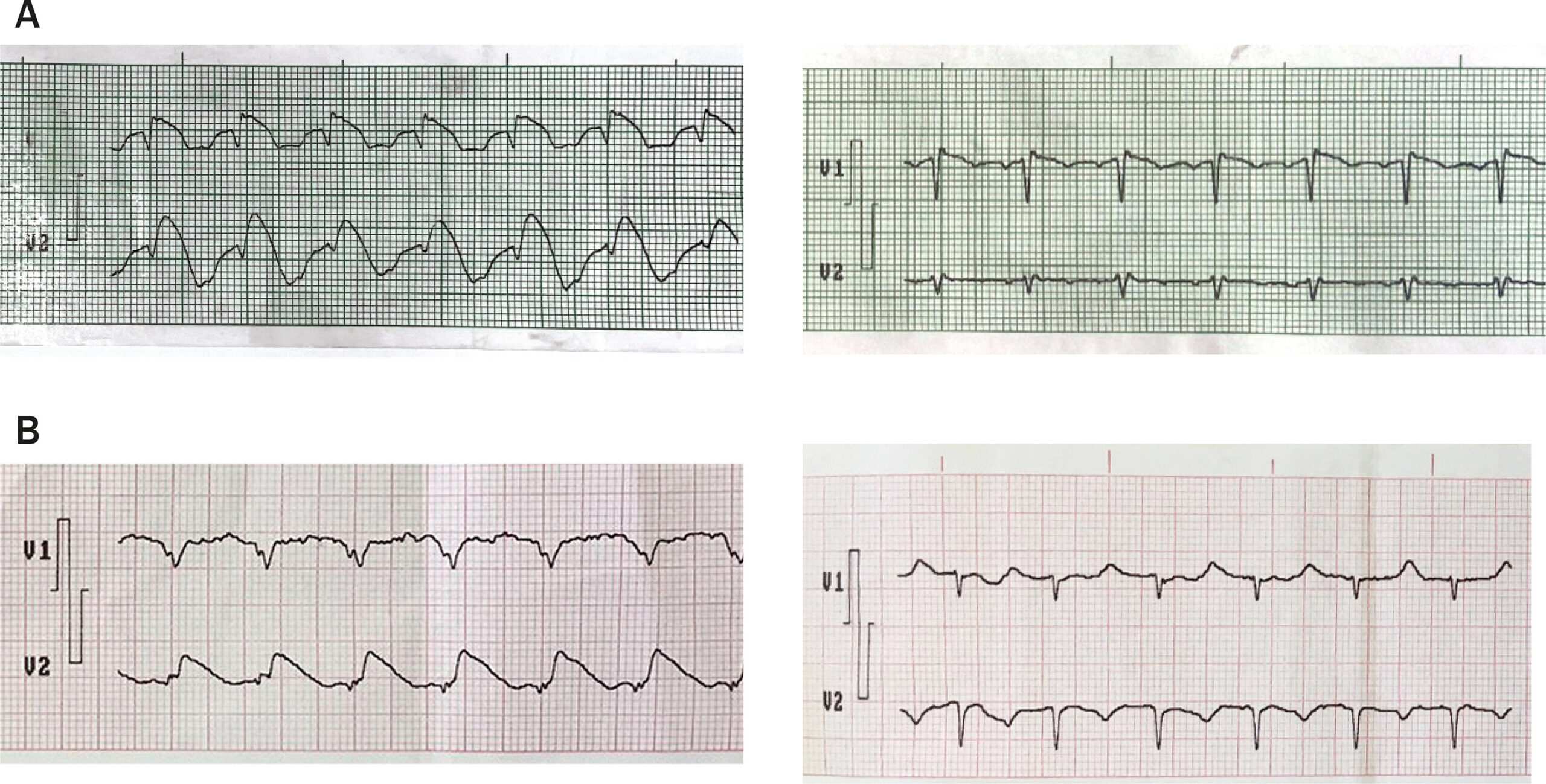
Brugada phenocopy (BP) refers to a situation in which the characteristic electrocardiographic patterns of Brugada syndrome (BS) are temporarily manifested, which are indistinguishable from the type 1 (coved) and 2 (saddleback) patterns of BS. Several additional criteria must be considered for an accurate diagnosis. These include the presence of an identifiable underlying cause, regression of the pattern once this cause is corrected, low pretest probability of BS, a negative result of a pharmacological induction test, and a negative genetic test.

Currently, the true mechanism that causes BP remains unknown. However, ST-segment elevation could be explained by the transmural gradient resulting from the loss of the action potential dome in the epicardium and not in the ventricular endocardium. This phenomenon originates from the transient increase in K outward currents (Ito) or the decrease in L-type Ca inward currents and peak Na currents in phase 1 of the action potential. Various reversible clinical conditions, such as disorders of the internal environment, mechanical compression, ischemia and pulmonary embolism, myocardial and pericardial diseases, among others, constitute its main etiologies.

[…]
  • Brugada Syndrome
  • Case Reports
  • ion channels
Read Full Article
Creative Commons Attribution (CC BY) Creative Commons license
31/03/2025 DOI: 10.36660/abc.20240526i
Successful improvement of frequency and symptoms of premature complexes after oral magnesium administration
ABC
Artigo Original

Successful improvement of frequency and symptoms of premature complexes after oral magnesium administration

Cristina Nádja Muniz Lima De Falco et al. Cesar Grupi Eduardo Sosa Maurício Scanavacca … Denise Hachul Sissy Lara Luciana Sacilotto Cristiano F. Pisani José A. F. Ramires Francisco Darrieux

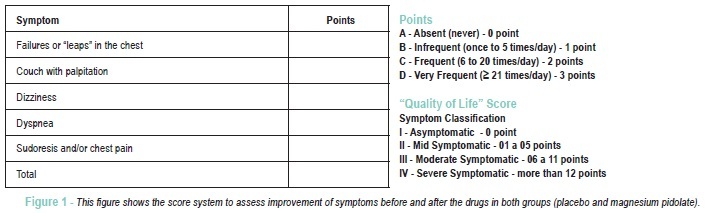
BACKGROUND: Premature ventricular and supraventricular complexes (PVC and PsVC) are frequent and often symptomatic. The magnesium (Mg) ion plays a role in the physiology of cell membranes and cardiac rhythm. OBJECTIVE: We evaluated whether the administration of Mg Pidolate (MgP) in patients with PVC and PsVC is superior to placebo (P) in improving symptoms and arrhythmia frequency. METHODS: Randomized double-blind study with 60 consecutive symptomatic patients with more than 240 PVC or PsVC on 24-hour Holter monitoring who were selected to receive placebo or MgP. To evaluate symptom improvement, a categorical and a specific questionnaire for symptoms related to PVC and PsVC was made. Improvement in premature complex density (PCD) per hour was considered significant if percentage reduction was >70% after treatment. The dose of MgP was 3.0 g/day for 30 days, equivalent to 260mg of Mg element. None of the patients had structural heart disease or renal failure. RESULTS: Of the 60 patients, 33 were female (55%). Ages ranged from 16 to 70 years old. In the MgP group, 76.6% of patients had a PCD reduction >70%, 10% of them >50% and only 13.4% <50%. In the P group, 40% showed slight improvement, <30%, in the premature complexes frequency (p < 0.001). Symptom improvement was achieved in 93.3% of patients in the MgP group, compared with only 16.7% in the P group (p < 0.001). CONCLUSION: Oral Mg supplementation decreases PCD, resulting in symptom improvement.

  • Arrhythmias
  • cardiac
  • ion channels
  • Magnesium
  • Ventricular Premature Complexes
Read Full Article
Creative Commons Attribution (CC BY) Creative Commons license
15/05/2012 DOI: 10.1590/S0066-782X2012005000043
Investigation of ion channel gene variants in patients with long QT syndrome
ABC
Artigo Original

Investigation of ion channel gene variants in patients with long QT syndrome

Ernesto Curty et al. Fernando Eugênio dos Santos Cruz Fabiane Santos Lima Jorge Luiz Albuquerque Coutinho … Rosane Silva Turán Peter Ürményi Antônio Carlos Campos Carvalho Edson Rondinelli

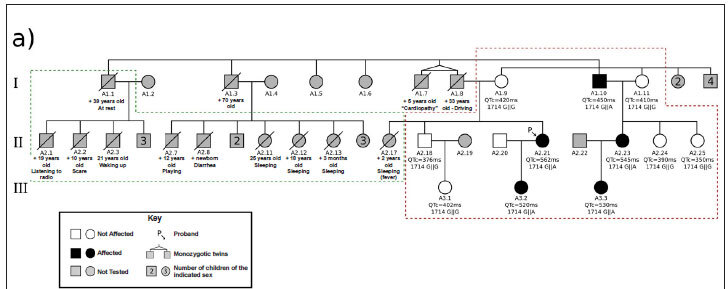
BACKGROUND: The long QT syndrome (LQTS) is an inherited arrhythmia syndrome with increased QT interval and risk of sudden death. Mutations in genes KCNQ1, KCNH2 and SCN5A account for 90% of cases with genotype determined, and genotyping is informative for genetic counseling and better disease management. OBJECTIVE: Molecular investigation and computational analysis of gene variants of KCNQ1, KCNH2 and SCN5A associated with LQTS, in families with the disease. METHODS: The coding regions of genes KCNQ1, KCNH2 and SCN5A in patients with LQTS and their family members were sequenced and analyzed using Geneious ProTM software. RESULTS: Two families with clinical criteria for LQTS were investigated. The proband of Family A had QTC = 562 ms, Schwartz Score = 5.5. The genotyping identified the G1714A mutation in the KCNH2 gene. QTC = 521 ± 42 ms was observed in family members carrying the mutation against QTC = 391 ± 21 ms for non-carriers. The proband of Family B had QTc = 551 ms, Schwartz Score = 5.5. The genotyping identified the G1600T mutation, in the same gene. The analysis of family members revealed QTC = 497 ± 42 ms in mutation carriers, compared with QTC = 404 ± 29 ms in non-carriers. CONCLUSION: Two gene variants previously associated with LQTS were found in two families clinically diagnosed with LQTS. The prolongation of the QT interval was observed in all family members carrying the mutations. A strategy was developed to identify variants of genes KCNQ1, KCNH2 and SCN5A, making it possible to train technical staff for future application to diagnosis routine.

  • Death, Sudden, Cardiac
  • ion channels
  • Long QT Syndrome
  • mutation
Read Full Article
Creative Commons Attribution (CC BY) Creative Commons license
04/02/2011 DOI: 10.1590/S0066-782X2011005000015

How to cite this article

EndNote RIS

Electronic Document Format (Vancouver)

Fonseca LMDT, Cedeño RA, Bello LAH, Díaz-Heredia J, Quezada DMP, Castro RAG, Juan-Salvadores P, et al. Survival in Patients with Brugada Phenocopy. Case Series. Arquivos Brasileiros de Cardiologia 2025;122(3):e20240526.

Electronic Document Format (ABNT)

Fonseca, Luis Mariano De la Torre; Cedeño, Robert Alarcón; Bello, Lileska Andreína Hernandez; Díaz-Heredia, Juan; Quezada, Diego Milton Pulla; Castro, Rubén Andrés Guamán; Juan-Salvadores, Pablo. Survival in Patients with Brugada Phenocopy. Case Series. Arquivos Brasileiros de Cardiologia, v. 122, n. 3, e20240526, Mar. 2025.

Electronic Document Format (APA)

Fonseca, L. M. D. T., Cedeño, R. A., Bello, L. A. H., Díaz-Heredia, J., Quezada, D. M. P., Castro, R. A. G., & Juan-Salvadores, P. (2025). Survival in Patients with Brugada Phenocopy. Case Series. Arquivos Brasileiros de Cardiologia, 122(3), e20240526.

Electronic Document Format (ISO)

Fonseca, Luis Mariano De la Torre and Cedeño, Robert Alarcón and Bello, Lileska Andreína Hernandez and Díaz-Heredia, Juan and Quezada, Diego Milton Pulla and Castro, Rubén Andrés Guamán and Juan-Salvadores, Pablo. Survival in Patients with Brugada Phenocopy. Case Series. Arquivos Brasileiros de Cardiologia [online]. 2025, vol. 122, n. 3, [cited 2026-10-14], e20240526. Available from: <https://journals.cardiol.br/en/article/survival-in-patients-with-brugada-phenocopy-case-series/>. ISSN 0066-782X

EndNote RIS

Electronic Document Format (Vancouver)

Falco CNMLD, Grupi C, Sosa E, Scanavacca M, Hachul D, Lara S, Sacilotto L, et al. Successful improvement of frequency and symptoms of premature complexes after oral magnesium administration. Arquivos Brasileiros de Cardiologia 2012;98(6):480-7.

Electronic Document Format (ABNT)

Falco, Cristina Nádja Muniz Lima De; Grupi, Cesar; Sosa, Eduardo; Scanavacca, Maurício; Hachul, Denise; Lara, Sissy; Sacilotto, Luciana; Pisani, Cristiano F.; Ramires, José A. F.; Darrieux, Francisco. Successful improvement of frequency and symptoms of premature complexes after oral magnesium administration. Arquivos Brasileiros de Cardiologia, v. 98, n. 6, p. 480-487, May. 2012.

Electronic Document Format (APA)

Falco, C. N. M. L. D., Grupi, C., Sosa, E., Scanavacca, M., Hachul, D., Lara, S., Sacilotto, L., Pisani, C. F., Ramires, J. A. F., & Darrieux, F. (2012). Successful improvement of frequency and symptoms of premature complexes after oral magnesium administration. Arquivos Brasileiros de Cardiologia, 98(6), 480-487.

Electronic Document Format (ISO)

Falco, Cristina Nádja Muniz Lima De and Grupi, Cesar and Sosa, Eduardo and Scanavacca, Maurício and Hachul, Denise and Lara, Sissy and Sacilotto, Luciana and Pisani, Cristiano F. and Ramires, José A. F. and Darrieux, Francisco. Successful improvement of frequency and symptoms of premature complexes after oral magnesium administration. Arquivos Brasileiros de Cardiologia [online]. 2012, vol. 98, n. 6, [cited 2026-10-14], pp. 480-487. Available from: <https://journals.cardiol.br/en/article/successful-improvement-of-frequency-and-symptoms-of-premature-complexes-after-oral-magnesium-administration/>. ISSN 0066-782X

EndNote RIS

Electronic Document Format (Vancouver)

Curty E, Cruz FES, Lima FS, Coutinho JLA, Silva R, Ürményi TP, Carvalho ACC, et al. Investigation of ion channel gene variants in patients with long QT syndrome. Arquivos Brasileiros de Cardiologia 2011;96(3):172-8.

Electronic Document Format (ABNT)

Curty, Ernesto; Cruz, Fernando Eugênio dos Santos; Lima, Fabiane Santos; Coutinho, Jorge Luiz Albuquerque; Silva, Rosane; Ürményi, Turán Peter; Carvalho, Antônio Carlos Campos; Rondinelli, Edson. Investigation of ion channel gene variants in patients with long QT syndrome. Arquivos Brasileiros de Cardiologia, v. 96, n. 3, p. 172-178, Feb. 2011.

Electronic Document Format (APA)

Curty, E., Cruz, F. E. S., Lima, F. S., Coutinho, J. L. A., Silva, R., Ürményi, T. P., Carvalho, A. C. C., & Rondinelli, E. (2011). Investigation of ion channel gene variants in patients with long QT syndrome. Arquivos Brasileiros de Cardiologia, 96(3), 172-178.

Electronic Document Format (ISO)

Curty, Ernesto and Cruz, Fernando Eugênio dos Santos and Lima, Fabiane Santos and Coutinho, Jorge Luiz Albuquerque and Silva, Rosane and Ürményi, Turán Peter and Carvalho, Antônio Carlos Campos and Rondinelli, Edson. Investigation of ion channel gene variants in patients with long QT syndrome. Arquivos Brasileiros de Cardiologia [online]. 2011, vol. 96, n. 3, [cited 2026-10-14], pp. 172-178. Available from: <https://journals.cardiol.br/en/article/investigation-of-ion-channel-gene-variants-in-patients-with-long-qt-syndrome/>. ISSN 0066-782X

  • About ABC Family
  • Internal Regulation
  • Editorial Board
  • Brazilian Society of Cardiology (SBC)

Issues

SBC Guidelines

  • Videos
  • Podcasts
  • News