ABC Family Arquivos Brasileiros de Cardiologia International Journal of Cardiovascular Sciences ABC Heart Failure & Cardiomyopathy ABC Imagem Cardiovascular
Português English
ABC Family
Português English
  • About
    • About ABC Family
    • Internal Regulation
    • Editorial Board
    • Brazilian Society of Cardiology (SBC)
  • Issues
  • SBC Guidelines
  • Content
    • Videos
    • Podcasts
    • News
  • About
    • About ABC Family
    • Internal Regulation
    • Editorial Board
    • Brazilian Society of Cardiology (SBC)
  • Issues
  • SBC Guidelines
  • Content
    • Videos
    • Podcasts
    • News

ABC Family

  • ABC Family
  • Arquivos Brasileiros de Cardiologia
  • International Journal of Cardiovascular Sciences
  • ABC Heart Failure & Cardiomyopathy
  • ABC Imagem Cardiovascular
Search in

No content found.

Journals
Ordering
Article types
Others

  1. Home
  2. Keyword: calcification
ABC
Editorial

Beyond Atherosclerosis: Mind the Valves in Chronic Kidney Disease

Sofia Cabral

Cardiovascular disease (CVD) remains the leading cause of morbidity and mortality among patients with chronic kidney disease (CKD), far surpassing the risk of progression to end-stage renal disease, and accounting for approximately 40% to 50% of all deaths in the advanced stages.– Growing attention has been directed toward the intersection of renal dysfunction and valvular heart disease (VHD), which plays a major role in the cardiovascular complications and adverse outcomes observed in this population., Valvular calcification, particularly affecting the aortic and mitral valves, is the hallmark manifestation of VHD in this setting, representing a highly prevalent, progressive, and prognostically significant process driven by disordered mineral metabolism, its crosstalk with persistent inflammation, and the toxic uremic milieu., Despite growing acknowledgment of its clinical impact, the biological underpinnings remain incompletely understood, even as emerging evidence begins to clarify the processes driving valvular calcification in CKD.

While several mechanistic pathways have been identified, robust clinical and laboratory markers that predict its development remain elusive. In this regard, the study by Conceição et al. offers valuable insight into the factors associated with valvular calcification, helping to address a relevant blind spot in current knowledge and underscoring the need for continued research into its clinical implications and underlying mechanisms in this high-risk population. Their systematic review was based on twenty observational studies involving 13,314 patients from varied geographic contexts, including individuals both on and off dialysis. Most were cross-sectional in design, with fewer cohort studies and a single case-control study, reflecting the predominantly descriptive and observational nature of the available evidence. The breadth of the population analyzed, combined with the methodological rigor adopted, offers a comprehensive overview of the existing body of evidence in this still underexplored domain. Among the thirty-eight risk factors identified, advanced age (tipically above 55 years),was the most consistently associated with valvular calcification, reported in half of the studies reviewed. These findings lend further support to the concept that ageing represents a major determinant in valvular degeneration in CKD, as it does in the broader context of age-related valve disease in the general population.

[…]

  • calcification
  • Cardiovascular risk
  • Chronic Kidney Disease
  • Valvular heart disease
Read Full Article
Creative Commons Attribution (CC BY) Creative Commons license
08/09/2025 DOI: 10.36660/abc.20250376i Views 1
Figure 1
ABC
Original Article

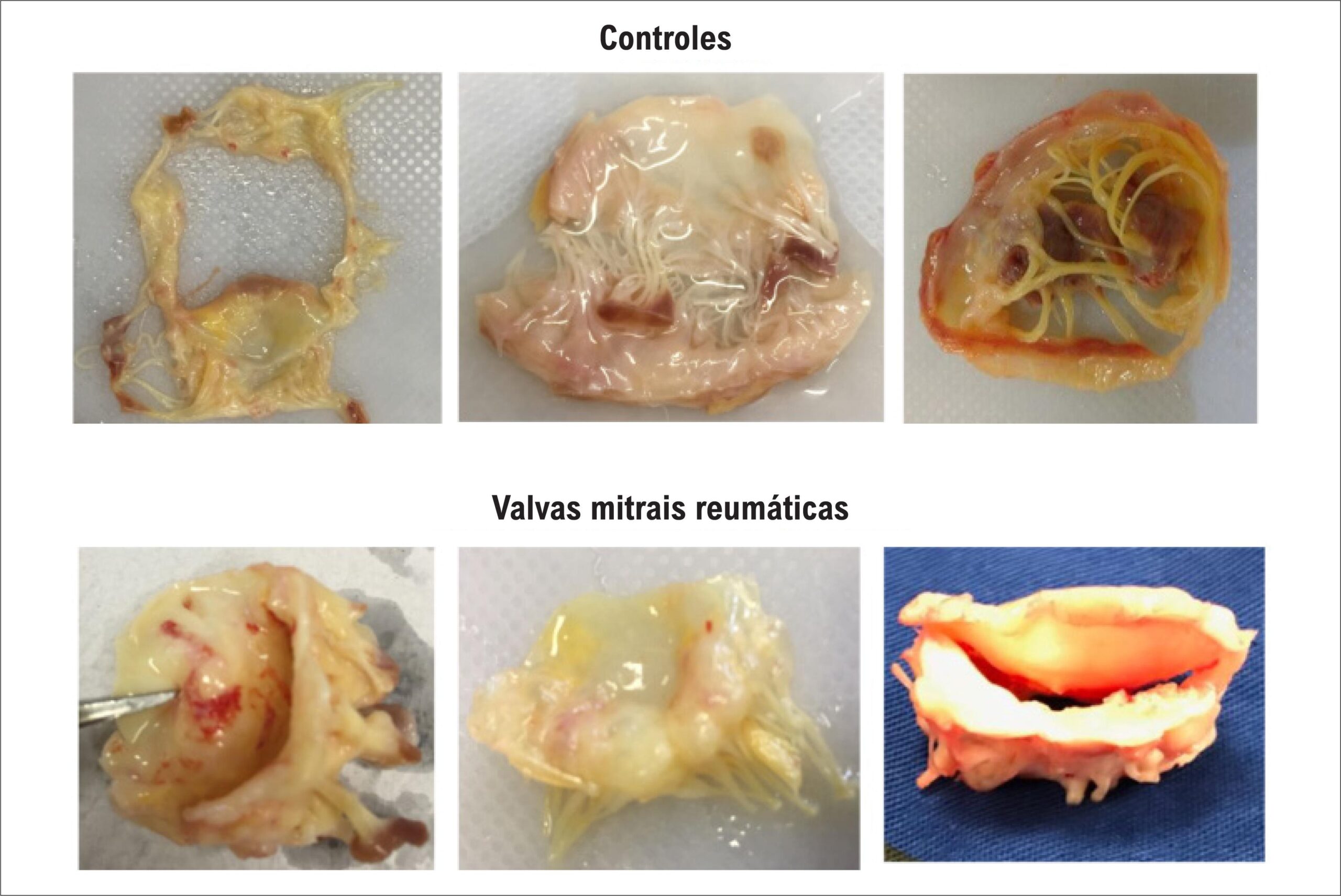
Histopathological Characterization of Mitral Valvular Lesions from Patients with Rheumatic Heart Disease

Nayana F. A. Gomes et al. Marcelo A. Pascoal-Xavier Livia S. A. Passos Thiago Mendonça Nunes Paula … João Marcelo de Souza Aguiar Felipe Vieira Guarçoni Maria Cecília Landim Nassif Claudio Leo Gelape Renato Braulio Paulo Henrique N. Costa Luiz Guilherme Passaglia Raquel Braga Martins Walderez O. Dutra Maria Carmo P. Nunes

Abstract

Background:

The underlying mechanisms by which rheumatic heart disease (RHD) lead to severe valve dysfunction are not completely understood.

Objective:

The present study evaluated the histopathological changes in mitral valves (MV) seeking an association between the pattern of predominant valvular dysfunction and histopathological findings.

Methods:

In 40 patients who underwent MV replacement due to RHD, and in 20 controls that underwent heart transplant, histological aspects of the excised MV were analyzed. Clinical and echocardiographic data were also collected. Histological analyses were performed using hematoxylin-eosin staining. Inflammation, fibrosis, neoangiogenesis, calcification and adipose metaplasia were determined. A p value<0.05 was considered to be statistically significant.

Results:

The mean age of RHD patients was 53±13 years, 36 (90%) were female, whereas the mean age of controls was 50±12 years, similar to the cases, with the majority of males (70%). The rheumatic valve endocardium presented greater thickness than the controls (1.3±0.5 mm versus 0.90±0.4 mm, p=0.003, respectively), and a more intense inflammatory infiltrate in the endocardium (78% versus 36%; p=0.004), with predominance of mononuclear cells. Moderate to marked fibrosis occurred more frequently in rheumatic valves than in control valves (100% vs. 29%; p<0.001). Calcification occurred in 35% of rheumatic valves, especially among stenotic valves, which was associated with the mitral valve area (p=0.003).

Conclusions:

Despite intense degree of fibrosis, the inflammatory process remains active in the rheumatic mitral valve, even at late disease with valve dysfunction. Calcification predominated in stenotic valves and in patients with right ventricular dysfunction.

  • calcification
  • Echocardiography/methods
  • Fibrosis
  • Histology
  • Inflammation
  • Mitral Valve Stenosis
  • Myocarditis
  • Rheumatic Disease
  • Rheumatic Fever
Read Full Article
Creative Commons Attribution (CC BY) Creative Commons license
23/04/2021 DOI: 10.36660/abc.20200154 Views 2
ABC
Letter to the Editor

Confounding Factors in the Analysis of the Relationship between Aortic Arch Calcification with a Non-Dipper Blood Pressure Pattern

Pedro Pereira Tenório et al. Carlos Alberto de Lima Botelho Filho Romero Henrique de Almeida Barbosa Johnnatas Mikael Lopes

Dear Editor,

We read the following article with great interest: “Aortic Arch Calcification on Routine Chest Radiography is Strongly and Independently Associated with Non-Dipper Blood Pressure Pattern”. In this study, the aim was to evaluate a possible relationship between aortic arch calcification on chest radiographs and the non-dipper blood pressure pattern. Altogether, 406 patients were analyzed and divided into two groups: dipper and non-dipper. Approximately 261 (64%) patients presented the pattern of non-dipper blood pressure, against 145 (36%) with dipper blood pressure. It was found that the non-dipper group presented a higher prevalence of aortic arch calcification (70% vs. 33%, p<0.0001).

[…]

  • Aorta, Thoracic
  • Blood Pressure
  • calcification
  • Prevalence Ratio
  • Thorax/radiography
Read Full Article
Creative Commons Attribution (CC BY) Creative Commons license
03/02/2021 DOI: 10.36660/abc.20200750 Views 2
ABC
Editorial

Aortic Arch Calcification on routine Chest Radiography is Strongly and Independently Associated with Non-Dipper Blood Pressure Pattern

Rui Póvoa

Arterial hypertension is the most prevalent chronic disease worldwide, and it is estimated that in Brazil, according to the Vigitel study of 2018, the Brazilian population has 24.7% of hypertensive individuals. It is the most important risk factor for all cardiovascular diseases, being one of the main factors responsible for stroke, coronary artery disease, heart failure, renal failure, and so on.

Blood pressure is not simply a biological phenomenon characterized by two numbers expressed in mmHg that reflect systolic and diastolic pressure. It is a multiform event resulting from the hydrodynamic action of a complex fluid that exerts force on a compliant vascular wall, with elastic properties governed by multiple forces arising from vascular structures (muscle cells, extracellular matrix, elastic fibers, etc.). This vector wave of blood follows the laws of sympathetic and parasympathetic interaction, varying more or less depending on the conditions of each patient. Therefore, the simple measurement of blood pressure in the office does not reflect the reality of the patient’s true daily life.

[…]

  • antihypertensive agents
  • Blood Pressure Monitoring, Ambulatory
  • calcification
  • Calcinosis
  • Cardiomyopathies
  • Heart Rate
  • Hypertension
  • Thoracic, Aorta/physiopathology
  • Ventricular Function, Left
Read Full Article
Creative Commons Attribution (CC BY) Creative Commons license
10/02/2020 DOI: 10.36660/abc.20190790 Views 1
Figure 1
ABC
Original Article

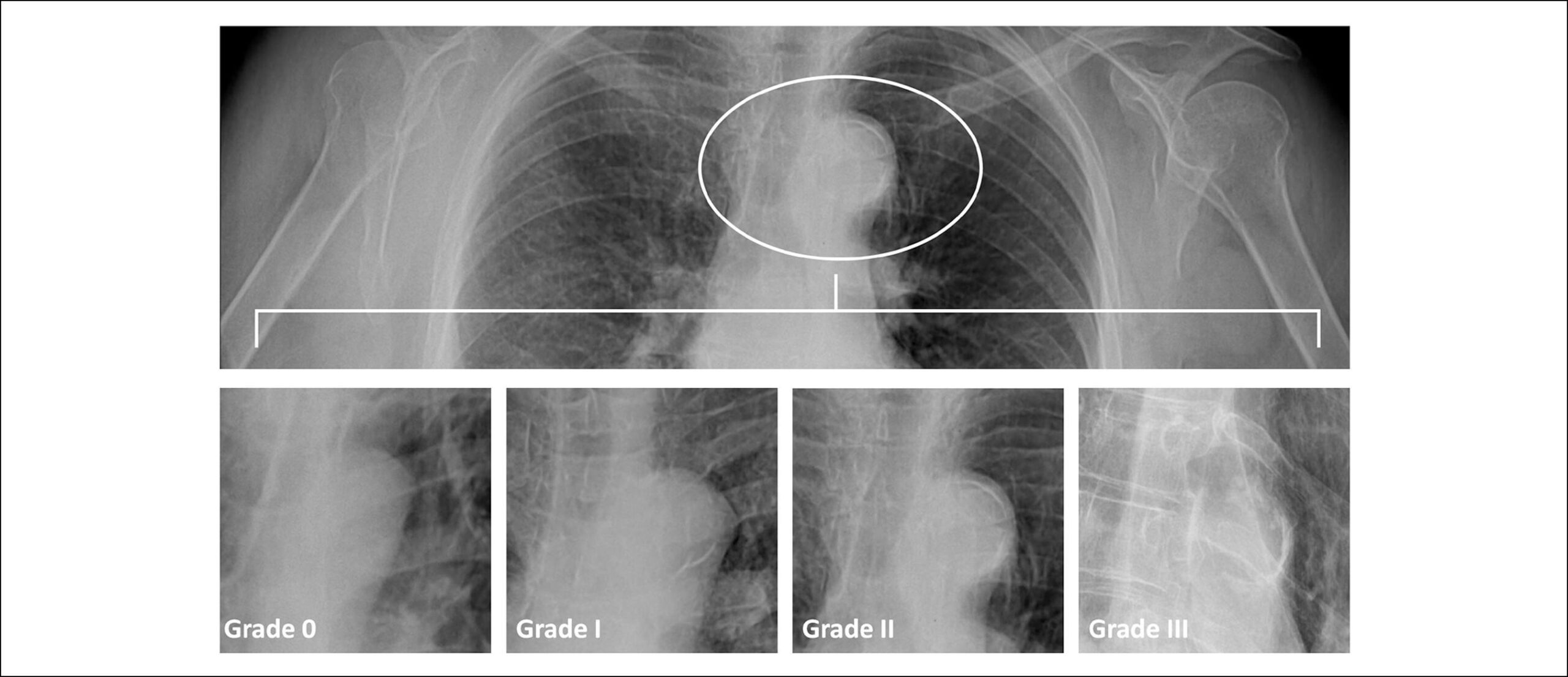
Aortic Arch Calcification on Routine Chest Radiography is Strongly and Independently Associated with Non-Dipper Blood Pressure Pattern

Adem Adar et al. Orhan Onalan Fahri Cakan Ertan Akbay Ekrem Karakaya

Abstract

Background:

Non-dipper blood pressure (NDBP) is one of the important causes of hypertension-related target organ damage and future cardiovascular events. Currently, there is no practical tool to predict NDBP pattern.

Objectives:

The aim of this study was to investigate the relationship between aortic arch calcification (AAC) on chest radiography and NDBP pattern.

Methods:

All patients referred for ambulatory BP monitoring test were approached for the study participation. NDBP was defined as the reduction of ≤10% in nighttime systolic BP as compared to the daytime values. AAC was evaluated with chest radiography and inter-observer agreement was analyzed by using kappa statistics. Univariate and multivariate logistic regression analysis was conducted to assess the association of AAC and NDBP pattern. A 2-tailed p-value < 0.05 was considered statistically significant.

Results:

A total of 406 patients (median age: 51.3) were included. Of these, 261(64%) had NDBP pattern. Overall, the prevalence of AAC was 230 (57%). Non-dipper group had significantly higher prevalence of AAC (70% vs. 33%, p < 0.0001) as compared to the dipper group. Presence of AAC was a strong and independent predictor of NDBP pattern (OR 3.919, 95%CI 2.39 to 6.42) in multivariate analysis.

Conclusions:

Presence of AAC on plain chest radiography is strongly and independently associated with the presence of NDBP pattern.

  • Antihypertensive Agents/therapeutic use
  • Blood Pressure Monitoring, Ambulatory
  • calcification
  • Calcinosis
  • Cardiomyopathies
  • Heart Rate
  • Hypertension/imaging diagnosis
  • Thoracic, Aorta/physiopathology
  • Ventricular Function,Left
Read Full Article
Creative Commons Attribution (CC BY) Creative Commons license
28/10/2019 DOI: 10.5935/abc.20190229 Views 1
Constrictive pericarditis with extensive calcification
ABC
Case Report

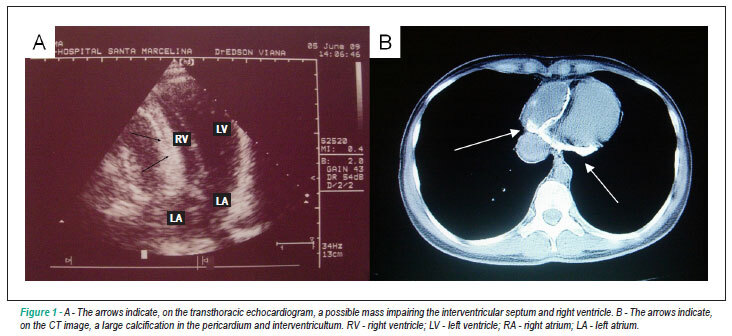
Constrictive pericarditis with extensive calcification

Marcelo Villaça Lima et al. Juliano Novaes Cardoso Cristina Martins dos Reis Cardoso Euler Cristovan Ochiai Brancalhão … Renan Prado Limaco Antonio Carlos Pereira Barretto

A patient with signs and symptoms of right heart failure of unknown etiology was referred to a referral hospital in the eastern area of the city of São Paulo with a diagnosis of calcified constrictive pericarditis and was treated by surgery. This pathology is characterized by an irreversible process of pericardium calcification, and surgery is the only alternative to control the symptoms and improve patients’ quality of life. This case drew special attention due to the extensive calcification involving the interventricular septum. The unusual aspect of the images has made the diagnosis difficult and raised doubts about the existence of an associated disease.

  • calcification
  • constrictive
  • Pericarditis
  • Pericardium
  • physiologic
Read Full Article
Creative Commons Attribution (CC BY) Creative Commons license
04/02/2011 DOI: 10.1590/S0066-782X2011000100018 Views 1
Detection of coronary artery disease based on the calcification index obtained by helical computed tomography
ABC
Original Article

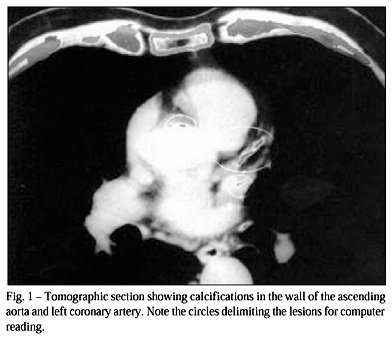
Detection of coronary artery disease based on the calcification index obtained by helical computed tomography

Carlos Jader Feldman et al. Domingos Vitola Nádia Schiavo

OBJECTIVE: To assess the relation between coronary artery disease and the calcification index on helical computed tomography. METHOD: We studied 22 patients (ages ranging from 40 to 70 years) who underwent coronary angiography because of chest pain suggestive of angina pectoris. Findings on coronary angiography were classified as follows: significant obstructive disease (stenosis > or = 50%), nonobstructive disease (stenosis <50%), and no disease. With no previous knowledge of the results of the coronary angiography and within 7 days, helical computed tomography of the chest was performed. Then, data of the coronary angiography were correlated with the calcification index obtained by helical computed tomography. RESULTS: The sensitivity of helical computed tomography to the presence of significant obstructive lesions on coronary angiography was 87.5%, specificity was 100%, and negative and positive predictive values were 75% and 100%, respectively. The mean calcification index was greater in patients with severe coronary lesions, mainly when involvement of 2 or 3 vessels occurred, than that in patients with no coronary artery disease or with nonobstructive coronary artery lesions (p<0.05). CONCLUSION: Helical computed tomography is an effective method for detecting and quantifying coronary artery calcification, and it has proved to be sensitive to and specific for the noninvasive diagnosis of coronary artery stenosis.

  • calcification
  • Computed Tomography
  • coronary arteries
  • Coronary Artery Disease
Read Full Article
Creative Commons Attribution (CC BY) Creative Commons license
08/01/2002 DOI: 10.1590/S0066-782X2000001200002 Views 1

How to cite this article

EndNote RIS

Electronic Document Format (Vancouver)

Cabral S. Beyond Atherosclerosis: Mind the Valves in Chronic Kidney Disease. Arquivos Brasileiros de Cardiologia 2025;122(8):e20250376.

Electronic Document Format (ABNT)

Cabral, Sofia. Beyond Atherosclerosis: Mind the Valves in Chronic Kidney Disease. Arquivos Brasileiros de Cardiologia, v. 122, n. 8, e20250376, Sep. 2025.

Electronic Document Format (APA)

Cabral, S. (2025). Beyond Atherosclerosis: Mind the Valves in Chronic Kidney Disease. Arquivos Brasileiros de Cardiologia, 122(8), e20250376.

Electronic Document Format (ISO)

Cabral, Sofia. Beyond Atherosclerosis: Mind the Valves in Chronic Kidney Disease. Arquivos Brasileiros de Cardiologia [online]. 2025, vol. 122, n. 8, [cited 2026-10-14], e20250376. Available from: <https://journals.cardiol.br/en/article/beyond-atherosclerosis-mind-the-valves-in-chronic-kidney-disease/>. ISSN 0066-782X

EndNote RIS

Electronic Document Format (Vancouver)

Gomes NFA, Pascoal-Xavier MA, Passos LSA, Paula TMN, Aguiar JMS, Guarçoni FV, Nassif MCL, et al. Histopathological Characterization of Mitral Valvular Lesions from Patients with Rheumatic Heart Disease. Arquivos Brasileiros de Cardiologia 2021;116(3):404-12.

Electronic Document Format (ABNT)

Gomes, Nayana F. A.; Pascoal-Xavier, Marcelo A.; Passos, Livia S. A.; Paula, Thiago Mendonça Nunes; Aguiar, João Marcelo de Souza; Guarçoni, Felipe Vieira; Nassif, Maria Cecília Landim; Gelape, Claudio Leo; Braulio, Renato; Costa, Paulo Henrique N.; Passaglia, Luiz Guilherme; Martins, Raquel Braga; Dutra, Walderez O.; Nunes, Maria Carmo P.. Histopathological Characterization of Mitral Valvular Lesions from Patients with Rheumatic Heart Disease. Arquivos Brasileiros de Cardiologia, v. 116, n. 3, p. 404-412, Apr. 2021.

Electronic Document Format (APA)

Gomes, N. F. A., Pascoal-Xavier, M. A., Passos, L. S. A., Paula, T. M. N., Aguiar, J. M. S., Guarçoni, F. V., Nassif, M. C. L., Gelape, C. L., Braulio, R., Costa, P. H. N., Passaglia, L. G., Martins, R. B., Dutra, W. O., & Nunes, M. C. P. (2021). Histopathological Characterization of Mitral Valvular Lesions from Patients with Rheumatic Heart Disease. Arquivos Brasileiros de Cardiologia, 116(3), 404-412.

Electronic Document Format (ISO)

Gomes, Nayana F. A. and Pascoal-Xavier, Marcelo A. and Passos, Livia S. A. and Paula, Thiago Mendonça Nunes and Aguiar, João Marcelo de Souza and Guarçoni, Felipe Vieira and Nassif, Maria Cecília Landim and Gelape, Claudio Leo and Braulio, Renato and Costa, Paulo Henrique N. and Passaglia, Luiz Guilherme and Martins, Raquel Braga and Dutra, Walderez O. and Nunes, Maria Carmo P.. Histopathological Characterization of Mitral Valvular Lesions from Patients with Rheumatic Heart Disease. Arquivos Brasileiros de Cardiologia [online]. 2021, vol. 116, n. 3, [cited 2026-10-14], pp. 404-412. Available from: <https://journals.cardiol.br/en/article/histopathological-characterization-of-mitral-valvular-lesions-from-patients-with-rheumatic-heart-disease/>. ISSN 0066-782X

EndNote RIS

Electronic Document Format (Vancouver)

Tenório PP, Botelho Filho CAL, Barbosa RHA, Lopes JM. Confounding Factors in the Analysis of the Relationship between Aortic Arch Calcification with a Non-Dipper Blood Pressure Pattern. Arquivos Brasileiros de Cardiologia 2021;116(1):158-9.

Electronic Document Format (ABNT)

Tenório, Pedro Pereira; Botelho Filho, Carlos Alberto de Lima; Barbosa, Romero Henrique de Almeida; Lopes, Johnnatas Mikael. Confounding Factors in the Analysis of the Relationship between Aortic Arch Calcification with a Non-Dipper Blood Pressure Pattern. Arquivos Brasileiros de Cardiologia, v. 116, n. 1, p. 158-159, Feb. 2021.

Electronic Document Format (APA)

Tenório, P. P., Botelho Filho, C. A. L., Barbosa, R. H. A., & Lopes, J. M. (2021). Confounding Factors in the Analysis of the Relationship between Aortic Arch Calcification with a Non-Dipper Blood Pressure Pattern. Arquivos Brasileiros de Cardiologia, 116(1), 158-159.

Electronic Document Format (ISO)

Tenório, Pedro Pereira and Botelho Filho, Carlos Alberto de Lima and Barbosa, Romero Henrique de Almeida and Lopes, Johnnatas Mikael. Confounding Factors in the Analysis of the Relationship between Aortic Arch Calcification with a Non-Dipper Blood Pressure Pattern. Arquivos Brasileiros de Cardiologia [online]. 2021, vol. 116, n. 1, [cited 2026-10-14], pp. 158-159. Available from: <https://journals.cardiol.br/en/article/confounding-factors-in-the-analysis-of-the-relationship-between-aortic-arch-calcification-with-a-non-dipper-blood-pressure-pattern/>. ISSN 0066-782X

EndNote RIS

Electronic Document Format (Vancouver)

Póvoa R. Aortic Arch Calcification on routine Chest Radiography is Strongly and Independently Associated with Non-Dipper Blood Pressure Pattern. Arquivos Brasileiros de Cardiologia 2020;114(1):118-9.

Electronic Document Format (ABNT)

Póvoa, Rui. Aortic Arch Calcification on routine Chest Radiography is Strongly and Independently Associated with Non-Dipper Blood Pressure Pattern. Arquivos Brasileiros de Cardiologia, v. 114, n. 1, p. 118-119, Feb. 2020.

Electronic Document Format (APA)

Póvoa, R. (2020). Aortic Arch Calcification on routine Chest Radiography is Strongly and Independently Associated with Non-Dipper Blood Pressure Pattern. Arquivos Brasileiros de Cardiologia, 114(1), 118-119.

Electronic Document Format (ISO)

Póvoa, Rui. Aortic Arch Calcification on routine Chest Radiography is Strongly and Independently Associated with Non-Dipper Blood Pressure Pattern. Arquivos Brasileiros de Cardiologia [online]. 2020, vol. 114, n. 1, [cited 2026-10-14], pp. 118-119. Available from: <https://journals.cardiol.br/en/article/aortic-arch-calcification-on-routine-chest-radiography-is-strongly-and-independently-associated-with-non-dipper-blood-pressure-pattern-2/>. ISSN 0066-782X

EndNote RIS

Electronic Document Format (Vancouver)

Adar A, Onalan O, Cakan F, Akbay E, Karakaya E. Aortic Arch Calcification on Routine Chest Radiography is Strongly and Independently Associated with Non-Dipper Blood Pressure Pattern. Arquivos Brasileiros de Cardiologia 2019;114(1):109-17.

Electronic Document Format (ABNT)

Adar, Adem; Onalan, Orhan; Cakan, Fahri; Akbay, Ertan; Karakaya, Ekrem. Aortic Arch Calcification on Routine Chest Radiography is Strongly and Independently Associated with Non-Dipper Blood Pressure Pattern. Arquivos Brasileiros de Cardiologia, v. 114, n. 1, p. 109-117, Oct. 2019.

Electronic Document Format (APA)

Adar, A., Onalan, O., Cakan, F., Akbay, E., & Karakaya, E. (2019). Aortic Arch Calcification on Routine Chest Radiography is Strongly and Independently Associated with Non-Dipper Blood Pressure Pattern. Arquivos Brasileiros de Cardiologia, 114(1), 109-117.

Electronic Document Format (ISO)

Adar, Adem and Onalan, Orhan and Cakan, Fahri and Akbay, Ertan and Karakaya, Ekrem. Aortic Arch Calcification on Routine Chest Radiography is Strongly and Independently Associated with Non-Dipper Blood Pressure Pattern. Arquivos Brasileiros de Cardiologia [online]. 2019, vol. 114, n. 1, [cited 2026-10-14], pp. 109-117. Available from: <https://journals.cardiol.br/en/article/aortic-arch-calcification-on-routine-chest-radiography-is-strongly-and-independently-associated-with-non-dipper-blood-pressure-pattern/>. ISSN 0066-782X

EndNote RIS

Electronic Document Format (Vancouver)

Lima MV, Cardoso JN, Cardoso CMR, Brancalhão ECO, Limaco RP, Barretto ACP. Constrictive pericarditis with extensive calcification. Arquivos Brasileiros de Cardiologia 2011;96(1):e7-e10.

Electronic Document Format (ABNT)

Lima, Marcelo Villaça; Cardoso, Juliano Novaes; Cardoso, Cristina Martins dos Reis; Brancalhão, Euler Cristovan Ochiai; Limaco, Renan Prado; Barretto, Antonio Carlos Pereira. Constrictive pericarditis with extensive calcification. Arquivos Brasileiros de Cardiologia, v. 96, n. 1, p. e7-e10, Feb. 2011.

Electronic Document Format (APA)

Lima, M. V., Cardoso, J. N., Cardoso, C. M. R., Brancalhão, E. C. O., Limaco, R. P., & Barretto, A. C. P. (2011). Constrictive pericarditis with extensive calcification. Arquivos Brasileiros de Cardiologia, 96(1), e7-e10.

Electronic Document Format (ISO)

Lima, Marcelo Villaça and Cardoso, Juliano Novaes and Cardoso, Cristina Martins dos Reis and Brancalhão, Euler Cristovan Ochiai and Limaco, Renan Prado and Barretto, Antonio Carlos Pereira. Constrictive pericarditis with extensive calcification. Arquivos Brasileiros de Cardiologia [online]. 2011, vol. 96, n. 1, [cited 2026-10-14], pp. e7-e10. Available from: <https://journals.cardiol.br/en/article/constrictive-pericarditis-with-extensive-calcification/>. ISSN 0066-782X

EndNote RIS

Electronic Document Format (Vancouver)

Feldman CJ, Vitola D, Schiavo N. Detection of coronary artery disease based on the calcification index obtained by helical computed tomography. Arquivos Brasileiros de Cardiologia 2002;75(6):476-80.

Electronic Document Format (ABNT)

Feldman, Carlos Jader; Vitola, Domingos; Schiavo, Nádia. Detection of coronary artery disease based on the calcification index obtained by helical computed tomography. Arquivos Brasileiros de Cardiologia, v. 75, n. 6, p. 476-480, Jan. 2002.

Electronic Document Format (APA)

Feldman, C. J., Vitola, D., & Schiavo, N. (2002). Detection of coronary artery disease based on the calcification index obtained by helical computed tomography. Arquivos Brasileiros de Cardiologia, 75(6), 476-480.

Electronic Document Format (ISO)

Feldman, Carlos Jader and Vitola, Domingos and Schiavo, Nádia. Detection of coronary artery disease based on the calcification index obtained by helical computed tomography. Arquivos Brasileiros de Cardiologia [online]. 2002, vol. 75, n. 6, [cited 2026-10-14], pp. 476-480. Available from: <https://journals.cardiol.br/en/article/detection-of-coronary-artery-disease-based-on-the-calcification-index-obtained-by-helical-computed-tomography/>. ISSN 0066-782X

  • About ABC Family
  • Internal Regulation
  • Editorial Board
  • Brazilian Society of Cardiology (SBC)

Issues

SBC Guidelines

  • Videos
  • Podcasts
  • News