ABC Family Arquivos Brasileiros de Cardiologia International Journal of Cardiovascular Sciences ABC Heart Failure & Cardiomyopathy ABC Imagem Cardiovascular
Português English
ABC Family
Português English
  • About
    • About ABC Family
    • Internal Regulation
    • Editorial Board
    • Brazilian Society of Cardiology (SBC)
  • Issues
  • SBC Guidelines
  • Content
    • Videos
    • Podcasts
    • News
  • About
    • About ABC Family
    • Internal Regulation
    • Editorial Board
    • Brazilian Society of Cardiology (SBC)
  • Issues
  • SBC Guidelines
  • Content
    • Videos
    • Podcasts
    • News

ABC Family

  • ABC Family
  • Arquivos Brasileiros de Cardiologia
  • International Journal of Cardiovascular Sciences
  • ABC Heart Failure & Cardiomyopathy
  • ABC Imagem Cardiovascular
Search in

No content found.

Journals
Ordering
Article types
Others

  1. Home
  2. Keyword: Survey and Questionnaires
Figure 1
ABC
Original Article

The Profile of the Brazilian Cardiologist – A Sample of Members of the Brazilian Society of Cardiology

Lucas Simonetto Faganello et al. Mauricio Pimentel Carisi Anne Polanczyk Tiago Zimerman … Marcus Vinicius Bolivar Malachias Oscar Pereira Dutra Leandro Ioschpe Zimerman

Abstract

Background:

Data from the international literature have shown changes in the profile of cardiologists and in their medical practices. However, there is no data on this in Brazilian cardiologists.

Objective:

To evaluate professional and personal characteristics of a sample of Brazilian cardiologists.

Methods:

This was a cross-sectional study; a questionnaire was sent by e-mail to cardiologists, active members of the Brazilian Society of Cardiology in 2017. The results were analyzed, and the level of significance set at p < 0.05.

Results:

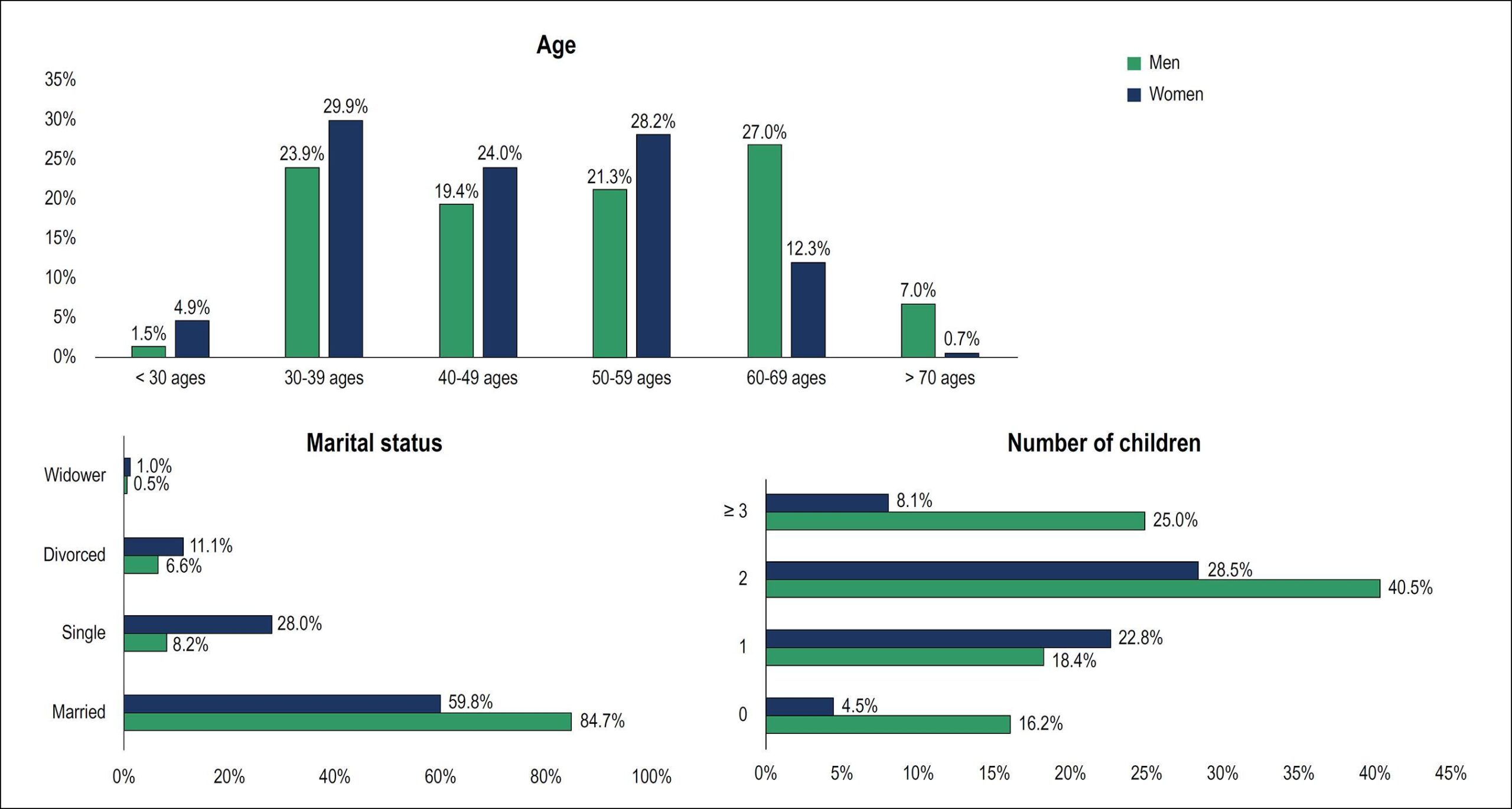
The questionnaire was sent to 13,462 cardiologists, with 2,101 (15.6%) respondents, mostly men (71.8% versus 28.2%). Age distribution and marital status were significantly different between the sexes (p < 0.001). The number of cardiologists without children was higher among women (40.5% versus 16.1%; p < 0.001). The most common place of work was the public hospital (46.5%), followed by private hospital (28.5%) and private office (21.1%). The office was the main place of work for 23.9% of men and 14% of women (p < 0.001), with predominance of individuals older than 50 years (31.7% versus 10.1%, respectively; p < 0.001). Most cardiologists (64.2%) worked more than 40 hours a week (69% of them men and 51.9% of the women; p < 0.001). Eighty-eight percent of the sample earned more than BRL 11,000 (US$ 3,473.43), and 66.5% of the men earned more than BRL 20,000 (US$ 6,315.32) per month, versus 31.2% of the women (p < 0.001). A high level of work-related stress was reported by 11.3% of respondents.

Conclusion:

Most cardiologists were men, who showed higher workload and higher income; 11.3% of the cardiologists perceived stress as a great deal.

  • Cardiologists
  • Demographic Data
  • Gender
  • Income
  • Quality of life
  • Survey and Questionnaires
Read Full Article
Creative Commons Attribution (CC BY) Creative Commons license
27/06/2019 DOI: 10.5935/abc.20190089 Views 1
ABC
Editorial

Evaluating Sodium Restriction in Heart Failure

Pedro Pimenta de Mello Spineti

Although salt and water retention plays a crucial role in heart failure (HF) pathophysiology, controversy still exists about dietary salt restriction in the treatment of HF patients. Small clinical studies have suggested that excessive sodium restriction (< 5 g of salt per day), as compared with normal-sodium diet (approximately 7 g of salt per day), may be associated with deleterious effects in patients with chronic HF, including increased neurohormonal activation, and higher hospitalization and mortality rates.,

A recent meta-analysis of nine studies involving 479 HF patients undergoing dietary sodium restriction was inconclusive for the recommendation of this strategy in hospitalized patients. None of the studies analyzed in the meta-analysis included hard endpoints such as all-cause death or cardiovascular mortality. However, a modest tendency for improvement of functional class was observed in outpatients undergoing sodium restriction intake. The author reinforces the need for randomized, prospective studies including large sample sizes, evaluating the effect of different regimens of sodium intake on relevant outcomes to build evidence base for detailed recommendations.

[…]

  • Diet Therapy
  • Diet-Sodium- Restricted/methods
  • Heart Failure/complications
  • Patient Compliance
  • Survey and Questionnaires
  • Treatment Adherence and Compliance
Read Full Article
Creative Commons Attribution (CC BY) Creative Commons license
01/02/2019 DOI: 10.5935/abc.20190017
ABC
Editorial

CADE-Q SV: Practical and Relevant in the Assessment of Patients with Cardiovascular Diseases regarding their Health Condition

Juliana Beust de Lima

Cardiovascular diseases (CVD) remain the leading cause of death worldwide. According to estimates by the World Health Organization (WHO), approximately 17.9 million individuals die per year due to this clinical condition. In Brazil, a registry of the Brazilian Society of Cardiology shows an increase in mortality over the years, affecting 383,961 individuals in 2017.

Considering the strong association of CVD with morbidity and mortality, as well as the impairment of functional capacity and quality of life shown by these patients, strategies aimed at minimizing these impairments and that can be shown to be cost-effective should be implemented. In this scenario, cardiovascular rehabilitation (CVR) is crucial and should be part of the overall treatment of CVD.

[…]

  • Cardiac Rehabilitation
  • Cardiovascular Diseases, mortality
  • Exercise
  • Health Education
  • physical fitness
  • Prevention and Control
  • Survey and Questionnaires
Read Full Article
Creative Commons Attribution (CC BY) Creative Commons license
01/12/2018 DOI: 10.5935/abc.20180236 Views 2
ABC
Original Article

Blood Pressure Treatment Adherence and Control after Participation in the ReHOT

Nathália Silva de Jesus et al. Armando da Rocha Nogueira Cacilda Oliveira Pachu Ronir Raggio Luiz Glaucia Maria Moraes de Oliveira

Abstract

Background:

Lack of adherence to pharmacological treatment is one of the main causes of low control rates in hypertension.

Objective:

To verify treatment adherence and associated factors, as well as blood pressure (BP) control in participants of the Resistant Hypertension Optimal Treatment (ReHOT) clinical trial.

Method:

Cross-sectional study including all 109 patients who had completed the ReHOT for at least 6 months. We excluded those participants who failed to respond to the new recruitment after three phone contact attempts. We evaluated the BP control by ambulatory BP monitoring (ABPM; controlled levels: 24-hour systolic and diastolic BP < 130 x 80 mmHg) and analyzed the patients' treatment adherence using the Morisky Medication Adherence Scale (MMAS) questionnaire validated by Bloch, Melo, and Nogueira (2008). The statistical analysis was performed with the software IBM SPSS statistics 21.0. We tested the normality of the data distribution with kurtosis and skewness. The variables tested in the study are presented with descriptive statistics. Comparisons between treatment adherence and other variables were performed with Student's t test for independent variables and Pearson's chi-square or Fisher's exact test. To conduct analyses among patients considering adherence to treatment and BP control, we created four groups: G0, G1, G2, and G3. We considered a 5% significance level in all tests.

Results:

During the ReHOT, 80% of the patients had good BP control and treatment adherence. Of 96 patients reevaluated in the present study, only 52.1% had controlled hypertension when assessed by ABPM, while 31.3% were considered adherent by the MMAS. Regarding other ABPM measures, we observed an absence of a nocturnal dip in 64.6% of the patients and a white-coat effect and false BP control in 23% and 12.5%, respectively. Patients’ education level showed a trend towards being a determinant factor associated with lack of adherence (p = 0.05). Resistant hypertension and number of medications were significantly associated with BP control assessed by ABPM (p = 0.009 and p = 0.001, respectively). Resistant hypertension was also significantly associated with group G0 (patients with no control or adherence, p = 0.012).

Conclusion:

There was a decrease in BP control and adherence measured by the MMAS after participation of at least 6 months in the ReHOT clinical trial.

  • antihypertensive agents
  • Arterial Pressure, Medication Adherence
  • Clinical Trial
  • Hypertension
  • Survey and Questionnaires
Read Full Article
Creative Commons Attribution (CC BY) Creative Commons license
01/11/2016 DOI: 10.5935/abc.20160165 Views 1

How to cite this article

EndNote RIS

Electronic Document Format (Vancouver)

Faganello LS, Pimentel M, Polanczyk CA, Zimerman T, Malachias MVB, Dutra OP, Zimerman LI, et al. The Profile of the Brazilian Cardiologist – A Sample of Members of the Brazilian Society of Cardiology. Arquivos Brasileiros de Cardiologia 2019;113(1):62-8.

Electronic Document Format (ABNT)

Faganello, Lucas Simonetto; Pimentel, Mauricio; Polanczyk, Carisi Anne; Zimerman, Tiago; Malachias, Marcus Vinicius Bolivar; Dutra, Oscar Pereira; Zimerman, Leandro Ioschpe. The Profile of the Brazilian Cardiologist – A Sample of Members of the Brazilian Society of Cardiology. Arquivos Brasileiros de Cardiologia, v. 113, n. 1, p. 62-68, Jun. 2019.

Electronic Document Format (APA)

Faganello, L. S., Pimentel, M., Polanczyk, C. A., Zimerman, T., Malachias, M. V. B., Dutra, O. P., & Zimerman, L. I. (2019). The Profile of the Brazilian Cardiologist – A Sample of Members of the Brazilian Society of Cardiology. Arquivos Brasileiros de Cardiologia, 113(1), 62-68.

Electronic Document Format (ISO)

Faganello, Lucas Simonetto and Pimentel, Mauricio and Polanczyk, Carisi Anne and Zimerman, Tiago and Malachias, Marcus Vinicius Bolivar and Dutra, Oscar Pereira and Zimerman, Leandro Ioschpe. The Profile of the Brazilian Cardiologist – A Sample of Members of the Brazilian Society of Cardiology. Arquivos Brasileiros de Cardiologia [online]. 2019, vol. 113, n. 1, [cited 2026-10-14], pp. 62-68. Available from: <https://journals.cardiol.br/en/article/the-profile-of-the-brazilian-cardiologist-a-sample-of-members-of-the-brazilian-society-of-cardiology/>. ISSN 0066-782X

EndNote RIS

Electronic Document Format (Vancouver)

Spineti PPM. Evaluating Sodium Restriction in Heart Failure. Arquivos Brasileiros de Cardiologia 2019;112(2):171-2.

Electronic Document Format (ABNT)

Spineti, Pedro Pimenta de Mello. Evaluating Sodium Restriction in Heart Failure. Arquivos Brasileiros de Cardiologia, v. 112, n. 2, p. 171-172, Jan. 2019.

Electronic Document Format (APA)

Spineti, P. P. M. (2019). Evaluating Sodium Restriction in Heart Failure. Arquivos Brasileiros de Cardiologia, 112(2), 171-172.

Electronic Document Format (ISO)

Spineti, Pedro Pimenta de Mello. Evaluating Sodium Restriction in Heart Failure. Arquivos Brasileiros de Cardiologia [online]. 2019, vol. 112, n. 2, [cited 2026-10-14], pp. 171-172. Available from: <https://journals.cardiol.br/en/article/evaluating-sodium-restriction-in-heart-failure/>. ISSN 0066-782X

EndNote RIS

Electronic Document Format (Vancouver)

Lima JB. CADE-Q SV: Practical and Relevant in the Assessment of Patients with Cardiovascular Diseases regarding their Health Condition. Arquivos Brasileiros de Cardiologia 2018;111(6):850-1.

Electronic Document Format (ABNT)

Lima, Juliana Beust de. CADE-Q SV: Practical and Relevant in the Assessment of Patients with Cardiovascular Diseases regarding their Health Condition. Arquivos Brasileiros de Cardiologia, v. 111, n. 6, p. 850-851, Nov. 2018.

Electronic Document Format (APA)

Lima, J. B. (2018). CADE-Q SV: Practical and Relevant in the Assessment of Patients with Cardiovascular Diseases regarding their Health Condition. Arquivos Brasileiros de Cardiologia, 111(6), 850-851.

Electronic Document Format (ISO)

Lima, Juliana Beust de. CADE-Q SV: Practical and Relevant in the Assessment of Patients with Cardiovascular Diseases regarding their Health Condition. Arquivos Brasileiros de Cardiologia [online]. 2018, vol. 111, n. 6, [cited 2026-10-14], pp. 850-851. Available from: <https://journals.cardiol.br/en/article/cade-q-sv-practical-and-relevant-in-the-assessment-of-patients-with-cardiovascular-diseases-regarding-their-health-condition/>. ISSN 0066-782X

EndNote RIS

Electronic Document Format (Vancouver)

Jesus NS, Nogueira AR, Pachu CO, Luiz RR, Oliveira GMM. Blood Pressure Treatment Adherence and Control after Participation in the ReHOT. Arquivos Brasileiros de Cardiologia 2016;107(5):437-45.

Electronic Document Format (ABNT)

Jesus, Nathália Silva de; Nogueira, Armando da Rocha; Pachu, Cacilda Oliveira; Luiz, Ronir Raggio; Oliveira, Glaucia Maria Moraes de. Blood Pressure Treatment Adherence and Control after Participation in the ReHOT. Arquivos Brasileiros de Cardiologia, v. 107, n. 5, p. 437-445, Oct. 2016.

Electronic Document Format (APA)

Jesus, N. S. , Nogueira, A. R., Pachu, C. O., Luiz, R. R., & Oliveira, G. M. M. (2016). Blood Pressure Treatment Adherence and Control after Participation in the ReHOT. Arquivos Brasileiros de Cardiologia, 107(5), 437-445.

Electronic Document Format (ISO)

Jesus, Nathália Silva de and Nogueira, Armando da Rocha and Pachu, Cacilda Oliveira and Luiz, Ronir Raggio and Oliveira, Glaucia Maria Moraes de. Blood Pressure Treatment Adherence and Control after Participation in the ReHOT. Arquivos Brasileiros de Cardiologia [online]. 2016, vol. 107, n. 5, [cited 2026-10-14], pp. 437-445. Available from: <https://journals.cardiol.br/en/article/blood-pressure-treatment-adherence-and-control-after-participation-in-the-rehot/>. ISSN 0066-782X

  • About ABC Family
  • Internal Regulation
  • Editorial Board
  • Brazilian Society of Cardiology (SBC)

Issues

SBC Guidelines

  • Videos
  • Podcasts
  • News