ABC Family Arquivos Brasileiros de Cardiologia International Journal of Cardiovascular Sciences ABC Heart Failure & Cardiomyopathy ABC Imagem Cardiovascular
Português English
ABC Family
Português English
  • About
    • About ABC Family
    • Internal Regulation
    • Editorial Board
    • Brazilian Society of Cardiology (SBC)
  • Issues
  • SBC Guidelines
  • Content
    • Videos
    • Podcasts
    • News
  • About
    • About ABC Family
    • Internal Regulation
    • Editorial Board
    • Brazilian Society of Cardiology (SBC)
  • Issues
  • SBC Guidelines
  • Content
    • Videos
    • Podcasts
    • News

ABC Family

  • ABC Family
  • Arquivos Brasileiros de Cardiologia
  • International Journal of Cardiovascular Sciences
  • ABC Heart Failure & Cardiomyopathy
  • ABC Imagem Cardiovascular
Search in

No content found.

Journals
Ordering
Article types
Others

  1. Home
  2. Keyword: hypertensive crisis
Strategic Use of Intravenous Medications to Protect Target Organs in Hypertensive Emergencies
IJCS
Review Article

Strategic Use of Intravenous Medications to Protect Target Organs in Hypertensive Emergencies

Mariana Costa Silva et al. Rubens Carmo Costa Filho Vanessa Estato

Abstract

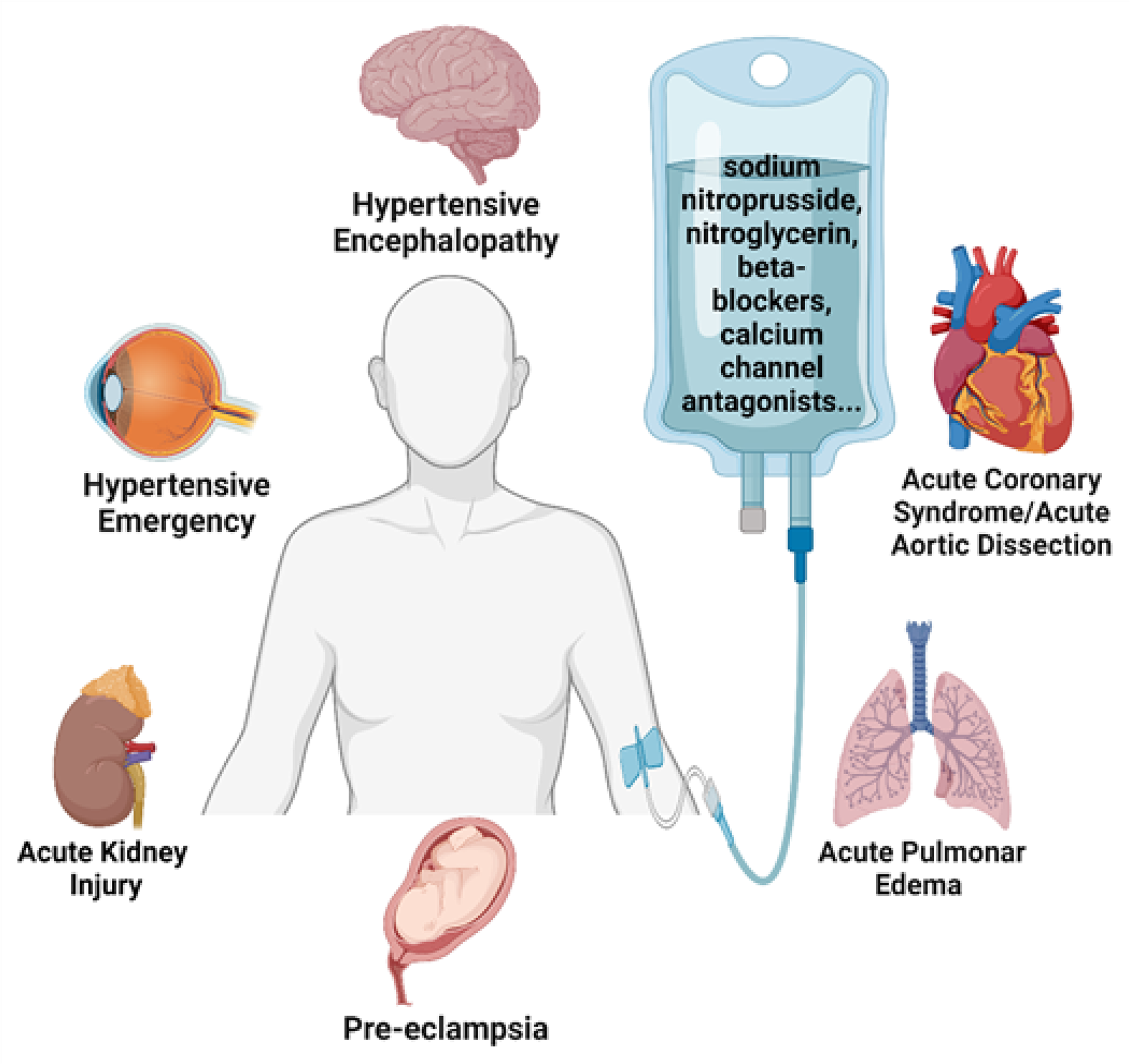
Hypertensive emergencies (HE) are life-threatening conditions triggered by sudden increases in blood pressure (BP) exceeding 180 mmHg systolic and/or 110 mmHg diastolic levels, often resulting in acute organ damage (AOD) and the risk of death. This article discusses contemporary practices in diagnosing and managing these episodes, emphasizing early recognition and immediate therapeutic intervention. It highlights the significance of a meticulous diagnostic assessment for appropriate clinical and therapeutic approaches, including detailed medical history, physical examination, and complementary investigations. Treatment focuses on the judicious use of intravenous antihypertensive agents such as sodium nitroprusside, nitroglycerin (NTG), beta-blockers, and calcium channel antagonists, stressing careful administration to prevent further harm. Individualization of treatment in HE is imperative and should be meticulously tailored to the patient’s clinical profile and main complications, notably hypertensive encephalopathy, acute pulmonary edema, acute coronary syndromes, acute aortic dissection, and preeclampsia. These conditions require differentiated approaches due to their severity. The article underscores the scarcity of randomized controlled clinical trials addressing all daily practice questions regarding managing HE. This is due to the complexity of available drugs, clinical conditions, adverse effects, and drug interactions in various scenarios. Consequently, clinical wisdom and careful observation remain pivotal in decision-making. It also addresses the complexity of accurately measuring BP in emergency settings, which can pose an additional diagnostic challenge. Finally, it emphasizes the need for new evidence to guide therapeutic practices in HE, aiming to improve patient care and clinical outcomes continuously.
  • Adrenergic beta-Antagonists
  • antihypertensive agents
  • calcium channel blockers
  • Cardiovascular Diseases
  • hypertensive crisis
Read Full Article
Creative Commons Attribution (CC BY) Creative Commons license
28/02/2025 DOI: 10.36660/ijcs.20240117
Prevalence of true hypertensive crises and appropriateness of the medical management in patients with high blood pressure seen in a general emergency room
ABC
Artigo Original

Prevalence of true hypertensive crises and appropriateness of the medical management in patients with high blood pressure seen in a general emergency room

Francisco das Chagas Monteiro Júnior et al. Fernando Antônio Costa Anunciação Natalino Salgado Filho Genise Mayara Alves da Silva … José Bonifácio Barbosa Pedro Antônio Muniz Ferreira Joyce Lages Natália Ribeiro Mandarino Wellington Santana da Silva Júnior Carolina Cipriano Monteiro

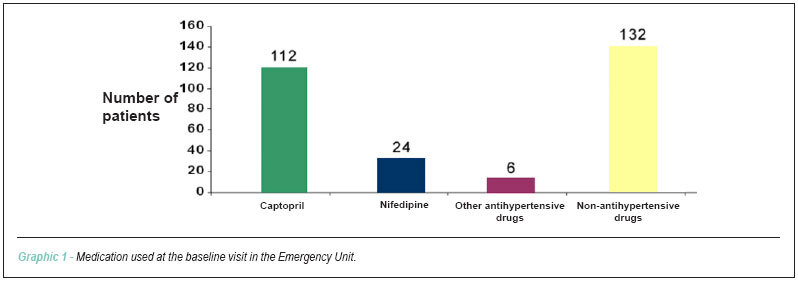
BACKGROUND: High blood pressure is a common reason for patients to seek an emergency room, and many of them may possibly be wrongly diagnosed with hypertensive crisis and, consequently, be inappropriately treated. OBJECTIVE: To analyze the cases of patients seen in a general emergency room because of high blood pressure as for meeting the criteria for the diagnosis of hypertensive crisis and the appropriateness of medical management. METHODS: Of the 1012 patients consecutively seen in a private referral general emergency room in the city of São Luís, State of Maranhão, between August and November 2003, 198 (19.56%) had a main diagnosis of high blood pressure in that visit. Of these, proper information could only be obtained from the patient charts of 169 patients; 54.4% of them were females with a mean age of 53.3 ± 15.2 years. Data regarding patients and the attendant physicians were collected, and each case was classified as an urgency, emergency or pseudohypertensive crisis; the medical management was classified as appropriate or inappropriate. We also sought to identify the factors associated with the medical management and with the use of antihypertensive medication. RESULTS: Criteria for the characterization of a hypertensive crisis were present in only 27 patients (16%), and all were classified as urgencies. Medical management was considered appropriate in 72 cases (42.6%), and was neither influenced by specialty (p=0.5) nor by the physician’s experience (p=0.9). Blood pressure levels, but not the presence or absence of symptoms, were predictive of the use of antihypertensive medication (p<0.001). CONCLUSION: In the population analyzed, less than one fifth of the patients seen in an emergency room with a presumed hypertensive crisis met defined criteria for this diagnosis. Medical management was considered appropriate in less than half of the occurrences.

  • Diagnosis
  • hypertensive crisis
  • medical management
  • Prevalence
Read Full Article
Creative Commons Attribution (CC BY) Creative Commons license
29/05/2008 DOI: 10.1590/S0066-782X2008000400006
Hypertensive crisis profile: prevalence and clinical presentation
ABC
Artigo Original

Hypertensive crisis profile: prevalence and clinical presentation

José Fernando Vilela Martin et al. Érika Higashiama Evandro Garcia Murilo Rizzatti Luizon José Paulo Cipullo

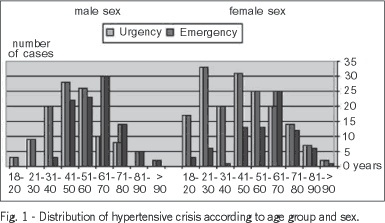
OBJECTIVE: To assess the prevalence of hypertensive crisis, related clinical findings, and the organic lesions involved. METHOD: This retrospective study comprised the analysis of the medical records of symptomatic patients with an elevation in diastolic blood pressure levels > 120 mmHg, who sought the emergency unit of a university-affiliated hospital over 12 months. Hypertensive urgency was characterized as the symptomatic elevation of blood pressure levels with no evidence of target-organ lesions, and hypertensive emergency was characterized as the symptomatic elevation of blood pressure levels with evidence of acute or ongoing target-organ lesion. RESULTS: This study comprised 452 patients with hypertensive crisis, accounting for 0.5% of all clinicosurgical emergencies, of which, 273 (60.4%) were hypertensive urgencies and 179 (39.6%) were hypertensive emergencies. Eighteen percent of the patients ignored their hypertensive condition. Smoking and diabetes were risk factors associated with the development of a hypertensive crisis in 1/4 and 1/5 of the patients, respectively. The patients with a hypertensive emergency were older (59.6±14.8 versus 49.9±18.6 years, p < 0.001) and had greater diastolic blood pressure (129.1±12 versus 126.6±14.4 mmHg, p < 0.05) than those with hypertensive urgencies. Ischemic stroke and acute pulmonary edema were the most common hypertensive emergencies, being in accordance with the most frequently found clinical manifestations of neurologic deficit and dyspnea. CONCLUSION: Hypertensive crises accounted for 0.5% of all emergency cases studied and for 1.7% of all clinical emergencies, hypertensive urgency being more common than hypertensive emergency. Ischemic stroke and acute pulmonary edema were the most frequent target-organ lesions in hypertensive emergencies.

  • hypertensive crisis
  • hypertensive emergency
  • hypertensive urgency
  • Prevalence
Read Full Article
Creative Commons Attribution (CC BY) Creative Commons license
17/08/2004 DOI: 10.1590/S0066-782X2004001400004 Views 2

How to cite this article

EndNote RIS

Electronic Document Format (Vancouver)

Silva MC, Costa Filho RC, Estato V. Strategic Use of Intravenous Medications to Protect Target Organs in Hypertensive Emergencies. International Journal of Cardiovascular Sciences 2025;38:e20240117.

Electronic Document Format (ABNT)

Silva, Mariana Costa; Costa Filho, Rubens Carmo; Estato, Vanessa. Strategic Use of Intravenous Medications to Protect Target Organs in Hypertensive Emergencies. International Journal of Cardiovascular Sciences, v. 38, e20240117, Feb. 2025.

Electronic Document Format (APA)

Silva, M. C., Costa Filho, R. C., & Estato, V. (2025). Strategic Use of Intravenous Medications to Protect Target Organs in Hypertensive Emergencies. International Journal of Cardiovascular Sciences, 38, e20240117.

Electronic Document Format (ISO)

Silva, Mariana Costa and Costa Filho, Rubens Carmo and Estato, Vanessa. Strategic Use of Intravenous Medications to Protect Target Organs in Hypertensive Emergencies. International Journal of Cardiovascular Sciences [online]. 2025, vol. 38, [cited 2026-10-14], e20240117. Available from: <https://journals.cardiol.br/en/article/strategic-use-of-intravenous-medications-to-protect-target-organs-in-hypertensive-emergencies/>. ISSN 2359-4802

EndNote RIS

Electronic Document Format (Vancouver)

Monteiro Júnior FC, Anunciação FAC, Salgado Filho N, Silva GMA, Barbosa JB, Ferreira PAM, Lages J, et al. Prevalence of true hypertensive crises and appropriateness of the medical management in patients with high blood pressure seen in a general emergency room. Arquivos Brasileiros de Cardiologia 2008;90(4):269-73.

Electronic Document Format (ABNT)

Monteiro Júnior, Francisco das Chagas; Anunciação, Fernando Antônio Costa; Salgado Filho, Natalino; Silva, Genise Mayara Alves da; Barbosa, José Bonifácio; Ferreira, Pedro Antônio Muniz; Lages, Joyce; Mandarino, Natália Ribeiro; Silva Júnior, Wellington Santana da; Monteiro, Carolina Cipriano. Prevalence of true hypertensive crises and appropriateness of the medical management in patients with high blood pressure seen in a general emergency room. Arquivos Brasileiros de Cardiologia, v. 90, n. 4, p. 269-273, May. 2008.

Electronic Document Format (APA)

Monteiro Júnior, F. C., Anunciação, F. A. C., Salgado Filho, N., Silva, G. M. A. , Barbosa, J. B., Ferreira, P. A. M., Lages, J., Mandarino, N. R., Silva Júnior, W. S. , & Monteiro, C. C. (2008). Prevalence of true hypertensive crises and appropriateness of the medical management in patients with high blood pressure seen in a general emergency room. Arquivos Brasileiros de Cardiologia, 90(4), 269-273.

Electronic Document Format (ISO)

Monteiro Júnior, Francisco das Chagas and Anunciação, Fernando Antônio Costa and Salgado Filho, Natalino and Silva, Genise Mayara Alves da and Barbosa, José Bonifácio and Ferreira, Pedro Antônio Muniz and Lages, Joyce and Mandarino, Natália Ribeiro and Silva Júnior, Wellington Santana da and Monteiro, Carolina Cipriano. Prevalence of true hypertensive crises and appropriateness of the medical management in patients with high blood pressure seen in a general emergency room. Arquivos Brasileiros de Cardiologia [online]. 2008, vol. 90, n. 4, [cited 2026-10-14], pp. 269-273. Available from: <https://journals.cardiol.br/en/article/prevalence-of-true-hypertensive-crises-and-appropriateness-of-the-medical-management-in-patients-with-high-blood-pressure-seen-in-a-general-emergency-room/>. ISSN 0066-782X

EndNote RIS

Electronic Document Format (Vancouver)

Martin JFV, Higashiama , Garcia E, Luizon MR, Cipullo JP. Hypertensive crisis profile: prevalence and clinical presentation. Arquivos Brasileiros de Cardiologia 2004;83(2):125-30.

Electronic Document Format (ABNT)

Martin, José Fernando Vilela; Higashiama, Érika; Garcia, Evandro; Luizon, Murilo Rizzatti; Cipullo, José Paulo. Hypertensive crisis profile: prevalence and clinical presentation. Arquivos Brasileiros de Cardiologia, v. 83, n. 2, p. 125-130, Aug. 2004.

Electronic Document Format (APA)

Martin, J. F. V., Higashiama, , Garcia, E., Luizon, M. R., & Cipullo, J. P. (2004). Hypertensive crisis profile: prevalence and clinical presentation. Arquivos Brasileiros de Cardiologia, 83(2), 125-130.

Electronic Document Format (ISO)

Martin, José Fernando Vilela and Higashiama, Érika and Garcia, Evandro and Luizon, Murilo Rizzatti and Cipullo, José Paulo. Hypertensive crisis profile: prevalence and clinical presentation. Arquivos Brasileiros de Cardiologia [online]. 2004, vol. 83, n. 2, [cited 2026-10-14], pp. 125-130. Available from: <https://journals.cardiol.br/en/article/hypertensive-crisis-profile-prevalence-and-clinical-presentation/>. ISSN 0066-782X

  • About ABC Family
  • Internal Regulation
  • Editorial Board
  • Brazilian Society of Cardiology (SBC)

Issues

SBC Guidelines

  • Videos
  • Podcasts
  • News