ABC Family Arquivos Brasileiros de Cardiologia International Journal of Cardiovascular Sciences ABC Heart Failure & Cardiomyopathy ABC Imagem Cardiovascular
Português English
ABC Family
Português English
  • About
    • About ABC Family
    • Internal Regulation
    • Editorial Board
    • Brazilian Society of Cardiology (SBC)
  • Issues
  • SBC Guidelines
  • Content
    • Videos
    • Podcasts
    • News
  • About
    • About ABC Family
    • Internal Regulation
    • Editorial Board
    • Brazilian Society of Cardiology (SBC)
  • Issues
  • SBC Guidelines
  • Content
    • Videos
    • Podcasts
    • News

ABC Family

  • ABC Family
  • Arquivos Brasileiros de Cardiologia
  • International Journal of Cardiovascular Sciences
  • ABC Heart Failure & Cardiomyopathy
  • ABC Imagem Cardiovascular
Search in

No content found.

Journals
Ordering
Article types
Others

  1. Home
  2. Keyword: Cardiac, Arrhythmia
ABC
Editorial

Applicability of Machine Learning Algorithms in the Diagnosis of Arrhythmias – How Long Until The Machine Starts Teaching Us?

Marcelo Martins Pinto Filho

The electrocardiogram (ECG), in clinical use since the early 1900s, remains a beloved tool for cardiologists, clinicians, and medical students. It is arguably the most important bedside instrument in cardiology, essential for managing arrhythmias and acute ischemic syndromes, as well as guiding electrophysiologic care. Still, advances in electrocardiography interpretation have been only modest in the last hundred years. Devices have become more portable, digital, and capable of longer recordings, but core interpretive principles remain rooted in early 20th-century methods. In recent years, this has been reshaped by the rise of computational technologies, especially artificial intelligence (AI). Tools such as deep neural networks (DNNs) and machine learning models (MLMs) are enabling a new era in ECG analysis, the AI-enhanced electrocardiography (AI-enhanced ECG).

In this issue of the ABC Cardiol, Guimarães do Nascimento et al. report on a systematic review of studies evaluating the applicability of AI-enhanced ECG in the diagnosis of cardiac arrhythmias. They included studies of different methodologies that addressed the role of AI-enhanced ECG in the detection of long-QT syndrome (LQTS) (one study), corrected QT interval (cQTi) (one study), and atrial fibrillation (AF) (eleven studies).

[…]

  • Artificial Intelligence
  • Cardiac, Arrhythmia
  • electrocardiogram
  • Machine Learning
  • Neural Network
Read Full Article
Creative Commons Attribution (CC BY) Creative Commons license
19/09/2025 DOI: 10.36660/abc.20250405i Views 2
Figure 1
IJCS
Editorial

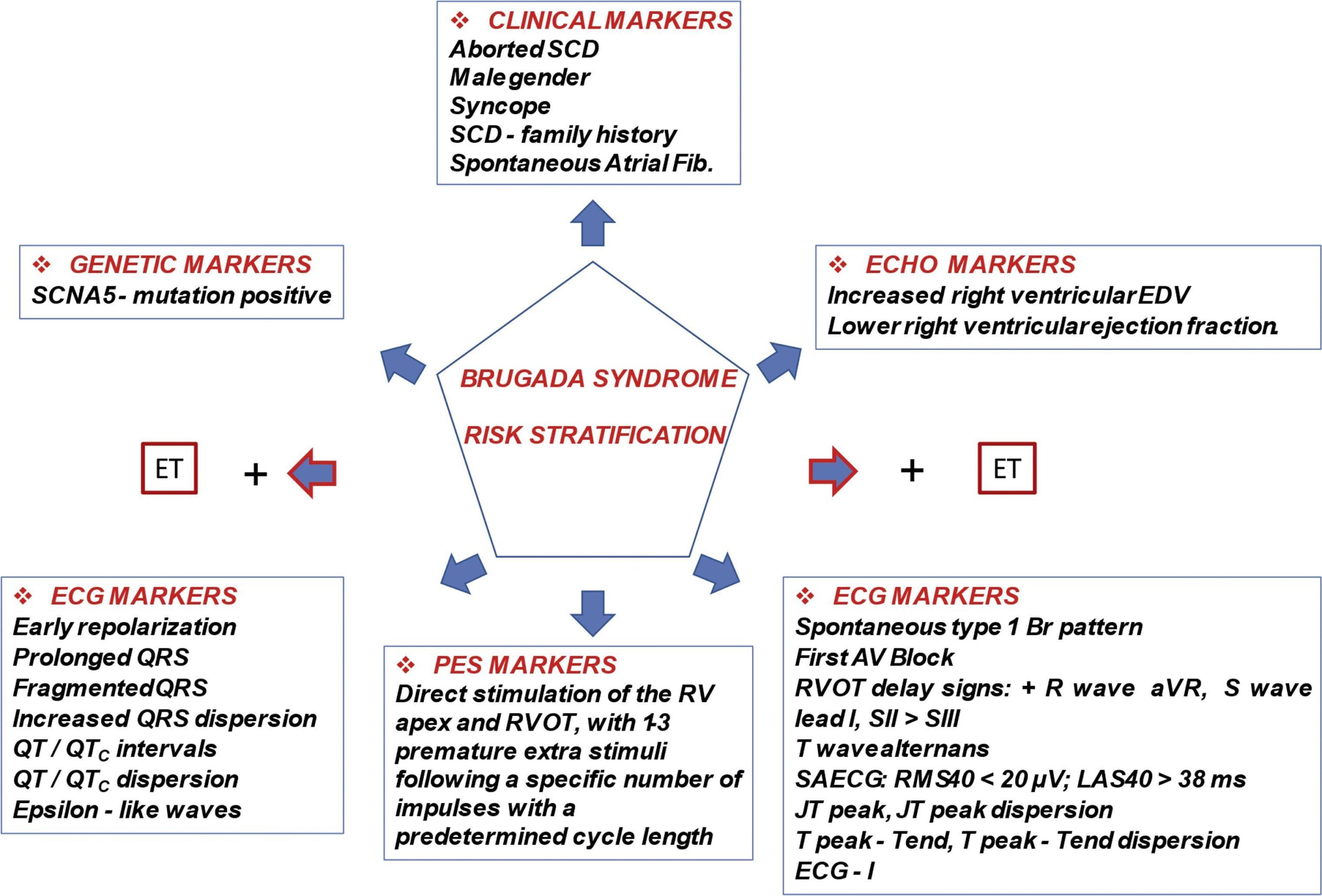
Adding the Exercise Test as a Tool in the Medical Decision-Making Process in Brugada Syndrome

Luiz Eduardo Mastrocola et al. Fábio Mastrocola

Introduction

Most cases of sudden cardiac arrest (SCA) and sudden cardiac death (SCD) are caused by ventricular tachyarrhythmias, with most of these associated with structural heart disease, particularly coronary heart disease. SCA is an uncommon occurrence in the apparently normal heart and accounts for only 5 to 10 percent of total cases.

[…]

  • Cardiac Syncope
  • Cardiac, Arrhythmia
  • Decision Clinical, Brugada Syndrome
  • Electrocardiograhy/methods
  • Exercise
  • Genetic
  • Heart Failure
Read Full Article
Creative Commons Attribution (CC BY) Creative Commons license
10/07/2023 DOI: 10.36660/ijcs.20230053 Views 1
Figure 1
ABC
Case Report

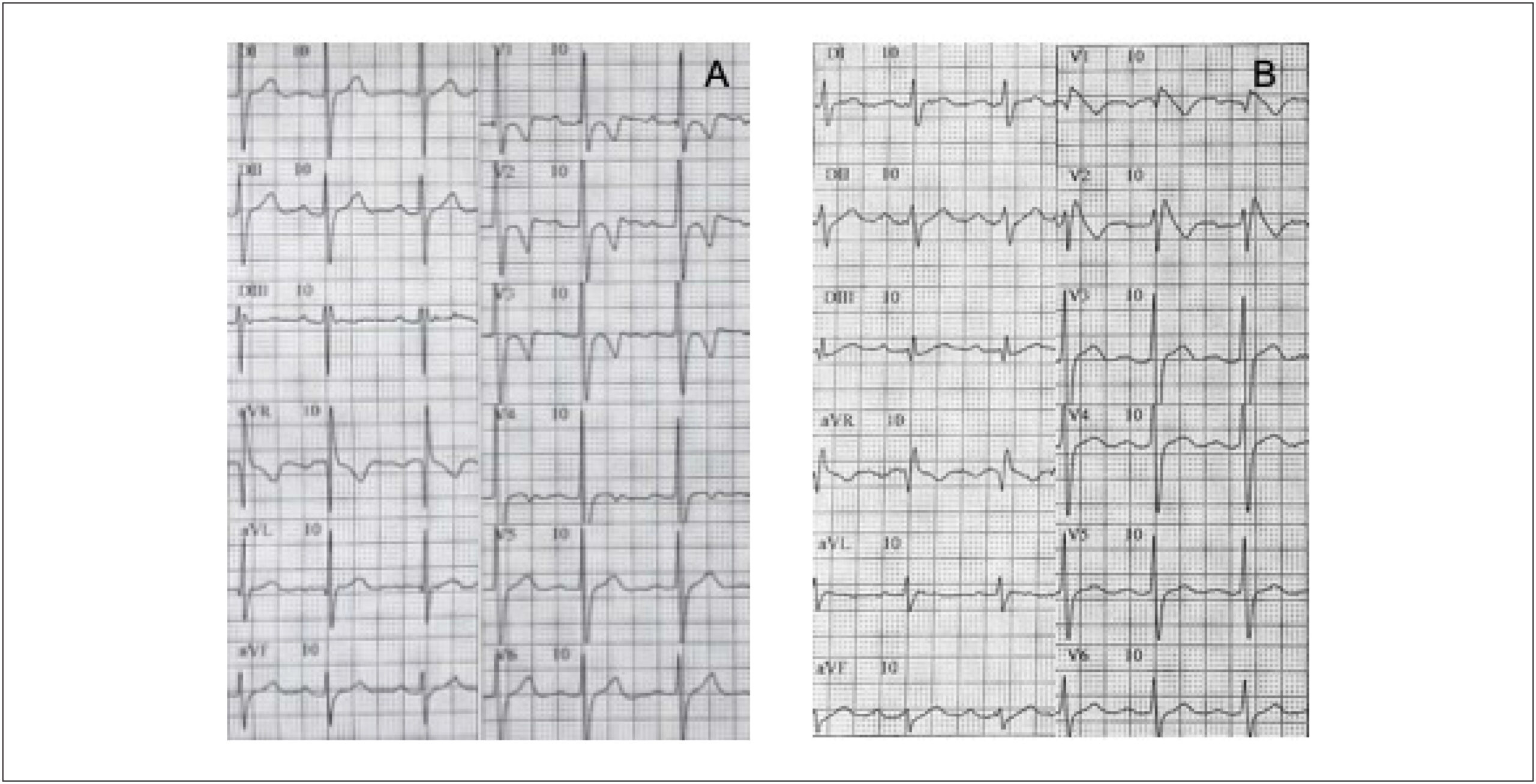
Life-Threatening Ventricular Arrhythmia Induced by Atrial Tachycardia in a Child with an SCN5A Mutation

Márcio Augusto Silva et al. Jorge Elias Neto Guilherme Muller de Campos Futuro Erick Sessa Merçon … Deborah Vasconcelos Ricardo Kuniyoshi

Introduction

Mutations in the SCN5A gene, encoding the cardiac Na+channel, can result in several life-threatening arrhythmias. These mutations have proven to be causative for inherited and primarily electrical diseases, including Brugada Syndrome (BrS), Long QT Syndrome, and other cardiac conduction disturbances., BrS, the most reported condition in this group of disorders, has typically been described in adult populations and related to approximately 20% of all sudden deaths (SD) in patients with apparently normal hearts.– Therefore, few reports have shown significant arrhythmic events (AE) caused by this mutation in childhood.

Atrial arrhythmias, as well as sick sinus syndrome (SSS), may be related to Na+channel abnormalities. In BrS, atrial arrhythmias are being diagnosed in up to 38% of patients and are related to worse prognosis.

[…]

  • Brugada Syndrome
  • Cardiac, Arrhythmia
  • Child
  • Syncope
Read Full Article
Creative Commons Attribution (CC BY) Creative Commons license
19/07/2021 DOI: 10.36660/abc.20200509 Views 2
Effects of stimulation with pulsatile continuous electrical current on atrial electrophysiological properties: experimental study of atrial fibrillation in dogs
ABC
Artigo Original

Effects of stimulation with pulsatile continuous electrical current on atrial electrophysiological properties: experimental study of atrial fibrillation in dogs

Dalmo Antonio Ribeiro Moreira et al. Amanda Guerra Moraes Rego Sousa Paulo Valente Elizabete Hosri Leone

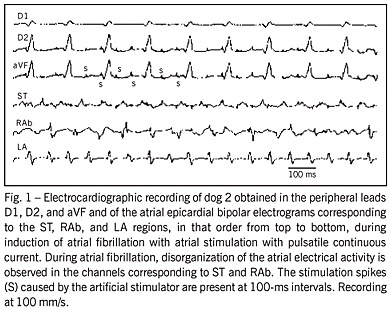
OBJECTIVE: To assess whether atrial stimulation with pulsatile continuous electrical current induces atrial fibrillation and to evaluate its effects on atrial electrophysiological properties as well as the atrial histological alterations. METHODS: Twenty-two dogs underwent right lateral thoracotomy and implantation of pacemaker electrodes in the sulcus terminalis (ST), in the right atrial appendix (RAb), and in the posteroinferior region of the left atrium (LA). A pair of electrodes was sutured to the right atrial appendix for stimulation with a 9-volt alkaline battery connected to a system (LM 555) that transforms the linear continuous energy of the battery into a pulsatile continuous current for 60 minutes. Atrial epicardial biopsy was performed before and after atrial stimulation. RESULTS: No differences were observed in the durations of the effective atrial refractory periods. The times of intra-atrial and interatrial conduction, as well as that of atrial extrastimuli, were prolonged. The duration of atrial electrograms was prolonged during sinus rhythm and programmed atrial stimulation; in 68% of the dogs, atrial fibrillation was induced and was sustained. Interstitial edema and bands of cellular contraction were observed in the subepicardium on optical microscopy, as were intense myofibrillar disorganization and an increase in the size of the mitochondria on electron microscopy. CONCLUSION: That technique of atrial stimulation induces atrial fibrillation and causes atrial changes that increase atrial vulnerability to the appearance of atrial fibrillation.

  • Atrial Fibrillation
  • Cardiac, Arrhythmia
  • electrophysiology
Read Full Article
Creative Commons Attribution (CC BY) Creative Commons license
13/12/2004 DOI: 10.1590/S0066-782X2004001900006
Isolation of the pulmonary veins in patients with permanent atrial fibrillation secondary to mitral valve disease
ABC
Artigo Original

Isolation of the pulmonary veins in patients with permanent atrial fibrillation secondary to mitral valve disease

Gustavo G. Lima et al. Renato A.K. Kalil Tiago L.L. Leiria Gustavo F. Vanni … Marcelo H. Miglioransa Daniel L. Faria-Corrêa Domingos Hatem Rogério Abrahão João R. Sant'Anna Paulo Prates Ivo A. Nesralla

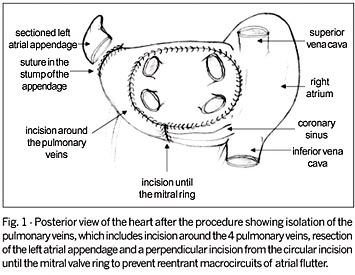
OBJECTIVE: To assess the efficacy of surgical isolation of the pulmonary veins for re-establishing sinus rhythm in patients with atrial fibrillation secondary to mitral valve disease. METHODS: Thirty-three (67% were women) patients with permanent atrial fibrillation and indication for surgical correction of the mitral valve underwent surgical isolation of the pulmonary veins. Their mean age was 56.3±10 years, preoperative NYHA functional class was 3.2±0.6, left atrial size was 5.5±0.9 cm, and ejection fraction was 61.3±13%. The surgical technique consisted of a circumferential incision surrounding the 4 pulmonary veins, excision of the left atrial appendage, and a perpendicular incision originating in the inferior margin of the circumferential incision isolating the pulmonary veins down to the mitral valve. Early arrhythmias were aggressively treated with cardioversion. RESULTS: The mean follow-up was 23.9±17 months, and 3 patients died in the postoperative period. Ten patients required electrical cardioversion in the postoperative period; 87% had sinus rhythm in the last medical visit, and 33% were using amiodarone. CONCLUSION: Isolation of the pulmonary veins associated with mitral valve surgery is an effective and safe technique for maintaining sinus rhythm in patients with permanent atrial fibrillation.

  • Atrial Fibrillation
  • Cardiac, Arrhythmia
  • maze procedure
Read Full Article
Creative Commons Attribution (CC BY) Creative Commons license
14/05/2004 DOI: 10.1590/S0066-782X2004000400005 Views 3

How to cite this article

EndNote RIS

Electronic Document Format (Vancouver)

Pinto Filho MM. Applicability of Machine Learning Algorithms in the Diagnosis of Arrhythmias – How Long Until The Machine Starts Teaching Us?. Arquivos Brasileiros de Cardiologia 2025;122(8):e20250405.

Electronic Document Format (ABNT)

Pinto Filho, Marcelo Martins. Applicability of Machine Learning Algorithms in the Diagnosis of Arrhythmias – How Long Until The Machine Starts Teaching Us?. Arquivos Brasileiros de Cardiologia, v. 122, n. 8, e20250405, Sep. 2025.

Electronic Document Format (APA)

Pinto Filho, M. M. (2025). Applicability of Machine Learning Algorithms in the Diagnosis of Arrhythmias – How Long Until The Machine Starts Teaching Us?. Arquivos Brasileiros de Cardiologia, 122(8), e20250405.

Electronic Document Format (ISO)

Pinto Filho, Marcelo Martins. Applicability of Machine Learning Algorithms in the Diagnosis of Arrhythmias – How Long Until The Machine Starts Teaching Us?. Arquivos Brasileiros de Cardiologia [online]. 2025, vol. 122, n. 8, [cited 2026-10-14], e20250405. Available from: <https://journals.cardiol.br/en/article/applicability-of-machine-learning-algorithms-in-the-diagnosis-of-arrhythmias-how-long-until-the-machine-starts-teaching-us/>. ISSN 0066-782X

EndNote RIS

Electronic Document Format (Vancouver)

Mastrocola LE, Mastrocola F. Adding the Exercise Test as a Tool in the Medical Decision-Making Process in Brugada Syndrome. International Journal of Cardiovascular Sciences 2023;36:e20230053.

Electronic Document Format (ABNT)

Mastrocola, Luiz Eduardo; Mastrocola, Fábio. Adding the Exercise Test as a Tool in the Medical Decision-Making Process in Brugada Syndrome. International Journal of Cardiovascular Sciences, v. 36, e20230053, Jul. 2023.

Electronic Document Format (APA)

Mastrocola, L. E., & Mastrocola, F. (2023). Adding the Exercise Test as a Tool in the Medical Decision-Making Process in Brugada Syndrome. International Journal of Cardiovascular Sciences, 36, e20230053.

Electronic Document Format (ISO)

Mastrocola, Luiz Eduardo and Mastrocola, Fábio. Adding the Exercise Test as a Tool in the Medical Decision-Making Process in Brugada Syndrome. International Journal of Cardiovascular Sciences [online]. 2023, vol. 36, [cited 2026-10-14], e20230053. Available from: <https://journals.cardiol.br/en/article/adding-the-exercise-test-as-a-tool-in-the-medical-decision-making-process-in-brugada-syndrome/>. ISSN 2359-4802

EndNote RIS

Electronic Document Format (Vancouver)

Silva MA, Elias Neto J, Futuro GMC, Merçon ES, Vasconcelos D, Kuniyoshi R. Life-Threatening Ventricular Arrhythmia Induced by Atrial Tachycardia in a Child with an SCN5A Mutation. Arquivos Brasileiros de Cardiologia 2021;117(1 suppl 1):19-22.

Electronic Document Format (ABNT)

Silva, Márcio Augusto; Elias Neto, Jorge; Futuro, Guilherme Muller de Campos; Merçon, Erick Sessa; Vasconcelos, Deborah; Kuniyoshi, Ricardo. Life-Threatening Ventricular Arrhythmia Induced by Atrial Tachycardia in a Child with an SCN5A Mutation. Arquivos Brasileiros de Cardiologia, v. 117, n. 1 suppl 1, p. 19-22, Jul. 2021.

Electronic Document Format (APA)

Silva, M. A., Elias Neto, J., Futuro, G. M. C., Merçon, E. S., Vasconcelos, D., & Kuniyoshi, R. (2021). Life-Threatening Ventricular Arrhythmia Induced by Atrial Tachycardia in a Child with an SCN5A Mutation. Arquivos Brasileiros de Cardiologia, 117(1 suppl 1), 19-22.

Electronic Document Format (ISO)

Silva, Márcio Augusto and Elias Neto, Jorge and Futuro, Guilherme Muller de Campos and Merçon, Erick Sessa and Vasconcelos, Deborah and Kuniyoshi, Ricardo. Life-Threatening Ventricular Arrhythmia Induced by Atrial Tachycardia in a Child with an SCN5A Mutation. Arquivos Brasileiros de Cardiologia [online]. 2021, vol. 117, n. 1 suppl 1, [cited 2026-10-14], pp. 19-22. Available from: <https://journals.cardiol.br/en/article/life-threatening-ventricular-arrhythmia-induced-by-atrial-tachycardia-in-a-child-with-an-scn5a-mutation/>. ISSN 0066-782X

EndNote RIS

Electronic Document Format (Vancouver)

Moreira DAR, Sousa AGMR, Valente P, Leone EH. Effects of stimulation with pulsatile continuous electrical current on atrial electrophysiological properties: experimental study of atrial fibrillation in dogs. Arquivos Brasileiros de Cardiologia 2004;83(spe):26-33.

Electronic Document Format (ABNT)

Moreira, Dalmo Antonio Ribeiro; Sousa, Amanda Guerra Moraes Rego; Valente, Paulo; Leone, Elizabete Hosri. Effects of stimulation with pulsatile continuous electrical current on atrial electrophysiological properties: experimental study of atrial fibrillation in dogs. Arquivos Brasileiros de Cardiologia, v. 83, n. spe, p. 26-33, Dec. 2004.

Electronic Document Format (APA)

Moreira, D. A. R., Sousa, A. G. M. R., Valente, P., & Leone, E. H. (2004). Effects of stimulation with pulsatile continuous electrical current on atrial electrophysiological properties: experimental study of atrial fibrillation in dogs. Arquivos Brasileiros de Cardiologia, 83(spe), 26-33.

Electronic Document Format (ISO)

Moreira, Dalmo Antonio Ribeiro and Sousa, Amanda Guerra Moraes Rego and Valente, Paulo and Leone, Elizabete Hosri. Effects of stimulation with pulsatile continuous electrical current on atrial electrophysiological properties: experimental study of atrial fibrillation in dogs. Arquivos Brasileiros de Cardiologia [online]. 2004, vol. 83, n. spe, [cited 2026-10-14], pp. 26-33. Available from: <https://journals.cardiol.br/article/effects-of-stimulation-with-pulsatile-continuous-electrical-current-on-atrial-electrophysiological-properties-experimental-study-of-atrial-fibrillation-in-dogs/>. ISSN 0066-782X

EndNote RIS

Electronic Document Format (Vancouver)

Lima GG, Kalil RA, Leiria TL, Vanni GF, Miglioransa MH, Faria-Corrêa DL, Hatem D, et al. Isolation of the pulmonary veins in patients with permanent atrial fibrillation secondary to mitral valve disease. Arquivos Brasileiros de Cardiologia 2004;82(4):337-41.

Electronic Document Format (ABNT)

Lima, Gustavo G.; Kalil, Renato A.K.; Leiria, Tiago L.L.; Vanni, Gustavo F.; Miglioransa, Marcelo H.; Faria-Corrêa, Daniel L.; Hatem, Domingos; Abrahão, Rogério; Sant’Anna, João R.; Prates, Paulo; Nesralla, Ivo A.. Isolation of the pulmonary veins in patients with permanent atrial fibrillation secondary to mitral valve disease. Arquivos Brasileiros de Cardiologia, v. 82, n. 4, p. 337-341, May. 2004.

Electronic Document Format (APA)

Lima, G. G., Kalil, R. A., Leiria, T. L., Vanni, G. F., Miglioransa, M. H., Faria-Corrêa, D. L., Hatem, D., Abrahão, R., Sant’Anna, J. R., Prates, P., & Nesralla, I. A. (2004). Isolation of the pulmonary veins in patients with permanent atrial fibrillation secondary to mitral valve disease. Arquivos Brasileiros de Cardiologia, 82(4), 337-341.

Electronic Document Format (ISO)

Lima, Gustavo G. and Kalil, Renato A.K. and Leiria, Tiago L.L. and Vanni, Gustavo F. and Miglioransa, Marcelo H. and Faria-Corrêa, Daniel L. and Hatem, Domingos and Abrahão, Rogério and Sant’Anna, João R. and Prates, Paulo and Nesralla, Ivo A.. Isolation of the pulmonary veins in patients with permanent atrial fibrillation secondary to mitral valve disease. Arquivos Brasileiros de Cardiologia [online]. 2004, vol. 82, n. 4, [cited 2026-10-14], pp. 337-341. Available from: <https://journals.cardiol.br/en/article/isolation-of-the-pulmonary-veins-in-patients-with-permanent-atrial-fibrillation-secondary-to-mitral-valve-disease/>. ISSN 0066-782X

  • About ABC Family
  • Internal Regulation
  • Editorial Board
  • Brazilian Society of Cardiology (SBC)

Issues

SBC Guidelines

  • Videos
  • Podcasts
  • News