ABC Family Arquivos Brasileiros de Cardiologia International Journal of Cardiovascular Sciences ABC Heart Failure & Cardiomyopathy ABC Imagem Cardiovascular
Português English
ABC Family
Português English
  • About
    • About ABC Family
    • Internal Regulation
    • Editorial Board
    • Brazilian Society of Cardiology (SBC)
  • Issues
  • SBC Guidelines
  • Content
    • Videos
    • Podcasts
    • News
  • About
    • About ABC Family
    • Internal Regulation
    • Editorial Board
    • Brazilian Society of Cardiology (SBC)
  • Issues
  • SBC Guidelines
  • Content
    • Videos
    • Podcasts
    • News

ABC Family

  • ABC Family
  • Arquivos Brasileiros de Cardiologia
  • International Journal of Cardiovascular Sciences
  • ABC Heart Failure & Cardiomyopathy
  • ABC Imagem Cardiovascular
Search in

No content found.

Journals
Ordering
Article types
Others

  1. Home
  2. Keyword: Hypercalcemia
Figure 1
ABC
Case Report

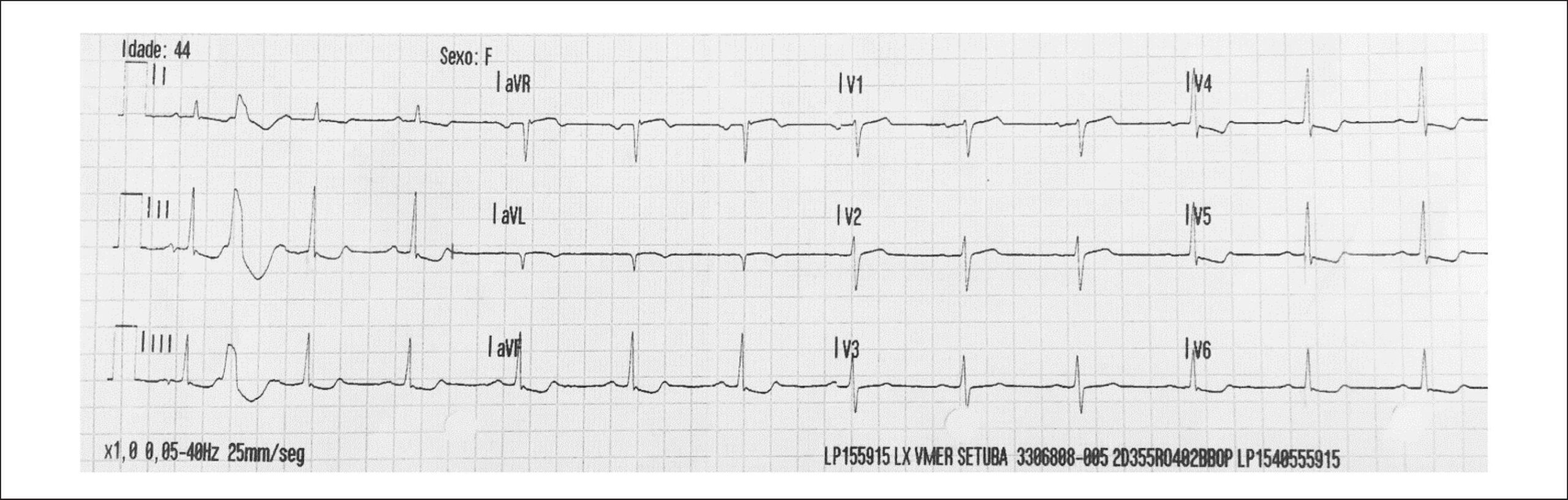
Primary Ventricular Fibrillation in a Patient with Mild Hypercalcemia

Rita Marinheiro et al. Leonor Parreira Pedro Amador Francisco Sardinha … Sara Gonçalves Sónia Serra

Introduction

An abnormally short QT interval can be caused by several situations such as hypercalcemia, hyperkalemia, acidosis, hyperthermia, effects of drugs like digitalis or congenital short QT syndrome (SQTS). Primary hyperparathyroidism (PHPT) can ultimately cause short QT interval since overproduction of parathyroid hormone (PTH) causes hypercalcemia. However, cardiac arrhythmias are uncommon and electrical storm has been rarely described in patients with hypercalcemia.

Secondary causes of short QT must be ruled out before considering the diagnosis of SQTS. First described in 2000, SQTS is a congenital primary electric disorder characterized by abnormally short corrected QT interval (QTc) on the surface electrocardiogram (ECG) that is associated with sudden cardiac death (SCD) in individuals with structurally normal heart. According to 2015 ESC Guidelines for the management of patients with ventricular arrhythmias, SQTS is diagnosed in the presence of a QTc ≤ 330 msec or it can be diagnosed in the presence of a QTc < 360 ms and one or more of the following factors: pathogenic mutation, family history of SQTS, family history of sudden death before 40 years old and/or survival of a ventricular tacchycardia (VT)/ ventricular fibrillation (VF) episode in the absence of heart disease.

[…]
  • Hypercalcemia
  • Shock, Cardiogenic
  • Syncope
  • Unconsciousness
  • Ventricular Fibrillation
Read Full Article
Creative Commons Attribution (CC BY) Creative Commons license
01/04/2018 DOI: 10.5935/abc.20180059
Myocardial dysfunction and abnormalities in intracellular calcium handling in obese rats
ABC
Artigo Original

Myocardial dysfunction and abnormalities in intracellular calcium handling in obese rats

Ana Paula Lima-Leopoldo et al. André S. Leopoldo Mário M. Sugizaki Alessandro Bruno … André F. Nascimento Renata A. M. Luvizotto Silvio A. de Oliveira Júnior Edson Castardeli Carlos R. Padovani Antonio C. Cicogna

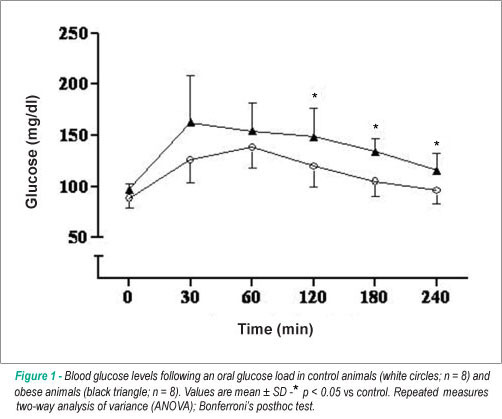
BACKGROUND: Several mechanisms have been proposed to contribute to cardiac dysfunction in obesity models, such as alterations in calcium (Ca2+) handling proteins and β-adrenergic receptors. Nevertheless, the role of these factors in the development of myocardial dysfunction induced by obesity is still not clear. OBJECTIVE: The purpose of this study was to investigate whether obesity induced by hypercaloric diets results in cardiac dysfunction. Furthermore, it was evaluated whether this functional abnormality in obese rats is related to abnormal Ca2+ handling and the β-adrenoceptor system. METHODS: Male 30-day-old Wistar rats were fed with standard food (C) and a cycle of five hypercaloric diets (Ob) for 15 weeks. Obesity was defined as increases in body fat percentage in rats. Cardiac function was evaluated by isolated analysis of the left ventricle papillary muscle under basal conditions and after inotropic and lusitropic maneuvers. RESULTS: Compared with the control group, the obese rats had increased body fat and glucose intolerance. The muscles of obese rats developed similar baseline data, but the myocardial responsiveness to post-rest contraction stimulus and increased extracellular Ca2+ were compromised. There were no changes in cardiac function between groups after β-adrenergic stimulation. CONCLUSION: Obesity promotes cardiac dysfunction related to changes in intracellular Ca2+ handling. This functional damage is probably caused by reduced cardiac sarcoplasmic reticulum Ca2+ ATPase (SERCA2) activation via Ca2+ calmodulin kinase.

  • Hypercalcemia
  • Obesity
  • Rats
  • receptors, adrenergic, beta
  • Ventricular Dysfunction
Read Full Article
Creative Commons Attribution (CC BY) Creative Commons license
13/05/2011 DOI: 10.1590/S0066-782X2011005000061 Views 1

How to cite this article

EndNote RIS

Electronic Document Format (Vancouver)

Marinheiro R, Parreira L, Amador P, Sardinha F, Gonçalves S, Serra S. Primary Ventricular Fibrillation in a Patient with Mild Hypercalcemia. Arquivos Brasileiros de Cardiologia 2018;110(4):393-6.

Electronic Document Format (ABNT)

Marinheiro, Rita; Parreira, Leonor; Amador, Pedro; Sardinha, Francisco; Gonçalves, Sara; Serra, Sónia. Primary Ventricular Fibrillation in a Patient with Mild Hypercalcemia. Arquivos Brasileiros de Cardiologia, v. 110, n. 4, p. 393-396, Mar. 2018.

Electronic Document Format (APA)

Marinheiro, R., Parreira, L., Amador, P., Sardinha, F., Gonçalves, S., & Serra, S. (2018). Primary Ventricular Fibrillation in a Patient with Mild Hypercalcemia. Arquivos Brasileiros de Cardiologia, 110(4), 393-396.

Electronic Document Format (ISO)

Marinheiro, Rita and Parreira, Leonor and Amador, Pedro and Sardinha, Francisco and Gonçalves, Sara and Serra, Sónia. Primary Ventricular Fibrillation in a Patient with Mild Hypercalcemia. Arquivos Brasileiros de Cardiologia [online]. 2018, vol. 110, n. 4, [cited 2026-10-14], pp. 393-396. Available from: <https://journals.cardiol.br/en/article/primary-ventricular-fibrillation-in-a-patient-with-mild-hypercalcemia/>. ISSN 0066-782X

EndNote RIS

Electronic Document Format (Vancouver)

Lima-Leopoldo AP, Leopoldo AS, Sugizaki MM, Bruno A, Nascimento AF, Luvizotto RAM, Oliveira Júnior SA, et al. Myocardial dysfunction and abnormalities in intracellular calcium handling in obese rats. Arquivos Brasileiros de Cardiologia 2011;97(3):232-40.

Electronic Document Format (ABNT)

Lima-Leopoldo, Ana Paula; Leopoldo, André S.; Sugizaki, Mário M.; Bruno, Alessandro; Nascimento, André F.; Luvizotto, Renata A. M.; Oliveira Júnior, Silvio A. de; Castardeli, Edson; Padovani, Carlos R.; Cicogna, Antonio C.. Myocardial dysfunction and abnormalities in intracellular calcium handling in obese rats. Arquivos Brasileiros de Cardiologia, v. 97, n. 3, p. 232-240, May. 2011.

Electronic Document Format (APA)

Lima-Leopoldo, A. P., Leopoldo, A. S., Sugizaki, M. M., Bruno, A., Nascimento, A. F., Luvizotto, R. A. M., Oliveira Júnior, S. A. , Castardeli, E., Padovani, C. R., & Cicogna, A. C. (2011). Myocardial dysfunction and abnormalities in intracellular calcium handling in obese rats. Arquivos Brasileiros de Cardiologia, 97(3), 232-240.

Electronic Document Format (ISO)

Lima-Leopoldo, Ana Paula and Leopoldo, André S. and Sugizaki, Mário M. and Bruno, Alessandro and Nascimento, André F. and Luvizotto, Renata A. M. and Oliveira Júnior, Silvio A. de and Castardeli, Edson and Padovani, Carlos R. and Cicogna, Antonio C.. Myocardial dysfunction and abnormalities in intracellular calcium handling in obese rats. Arquivos Brasileiros de Cardiologia [online]. 2011, vol. 97, n. 3, [cited 2026-10-14], pp. 232-240. Available from: <https://journals.cardiol.br/en/article/myocardial-dysfunction-and-abnormalities-in-intracellular-calcium-handling-in-obese-rats/>. ISSN 0066-782X

  • About ABC Family
  • Internal Regulation
  • Editorial Board
  • Brazilian Society of Cardiology (SBC)

Issues

SBC Guidelines

  • Videos
  • Podcasts
  • News