ABC Family Arquivos Brasileiros de Cardiologia International Journal of Cardiovascular Sciences ABC Heart Failure & Cardiomyopathy ABC Imagem Cardiovascular
Português English
ABC Family
Português English
  • About
    • About ABC Family
    • Internal Regulation
    • Editorial Board
    • Brazilian Society of Cardiology (SBC)
  • Issues
  • SBC Guidelines
  • Content
    • Videos
    • Podcasts
    • News
  • About
    • About ABC Family
    • Internal Regulation
    • Editorial Board
    • Brazilian Society of Cardiology (SBC)
  • Issues
  • SBC Guidelines
  • Content
    • Videos
    • Podcasts
    • News

ABC Family

  • ABC Family
  • Arquivos Brasileiros de Cardiologia
  • International Journal of Cardiovascular Sciences
  • ABC Heart Failure & Cardiomyopathy
  • ABC Imagem Cardiovascular
Search in

No content found.

Journals
Ordering
Article types
Others

  1. Home
  2. Keyword: Physical Examination
ABC
Editorial

Revisiting a Timeless Skill: The Physical Examination in the Age of Technology-Driven Medicine

Sofia Cabral

Over the past few decades, clinical practice has witnessed a profound transformation, driven by increasing reliance on advanced imaging, laboratory diagnostics, and, more recently, artificial intelligence (AI)-assisted tools. Once the cornerstone of medical practice, the physical examination (PE) is now being overshadowed by a growing dependence on technology. Although these innovations have undoubtedly enhanced diagnostic accuracy, they have also led to an unintended consequence—the gradual decline of bedside examination skills, as clinicians increasingly rely on them instead of direct PE. While these resources provide invaluable diagnostic insights, they also carry risks, including false positives, incidental findings, and overtesting. These factors not only contribute to unnecessary interventions and rising healthcare costs but may also amplify patient concerns. This shift away from hands-on assessment is also partly driven by the time constraints of modern clinical practice, further weakening PE skills. This decline of PE has fuelled ongoing debate—and even polarization—among clinicians over its relevance in contemporary healthcare., This issue permeates all fields of medicine, and cardiology is no exception to its challenges.

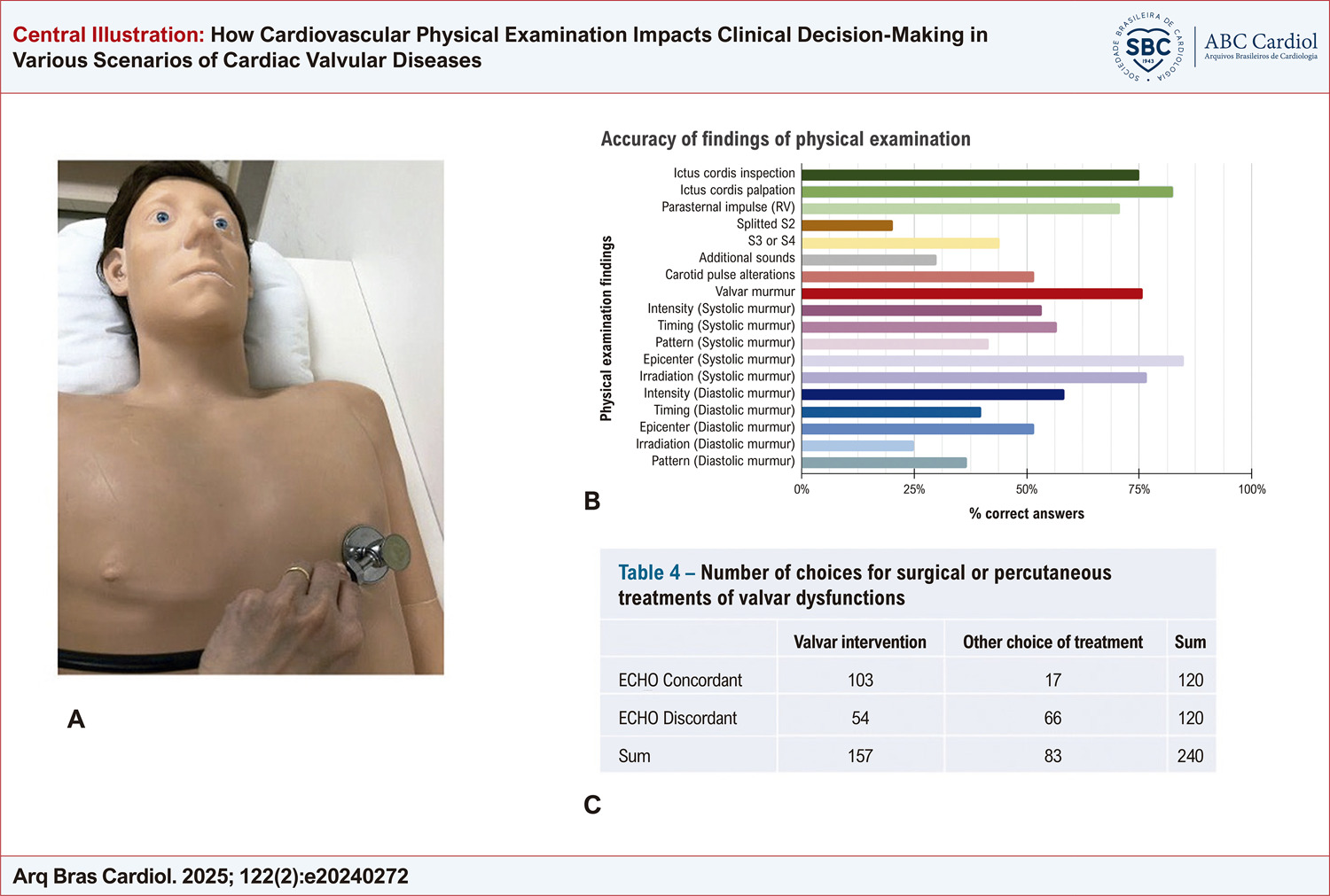
In their study, Teixeira et al. shed light on this pressing issue in modern medicine: the diminished emphasis on PE in clinical practice. This interventional study evaluated the impact of cardiovascular PE on clinical decision-making (CDM) in valvular disease scenarios. Sixty undergraduate students were exposed to four typical severe valvular disease scenarios (mitral stenosis [MS], mitral regurgitation [MR], aortic stenosis [AS], and aortic regurgitation [AR]), using a high-fidelity cardiopulmonary simulator in an objective structured clinical exam format. CDM-related questions were answered after reading the clinical synopsis and again after reviewing the echocardiogram (ECHO) report. Volunteers were randomly assigned to scenarios with or without PE before receiving an ECHO report, which was either consistent with symptoms and PE findings (Echo-concordant) or contained incomplete or misleading information (Echo-discordant). CDM was assessed based on responses regarding the type of valvular dysfunction, its etiology, confidence level in the diagnosis, requests for additional diagnostic tests, and treatment decisions. PE quality varied across valvular conditions, with systolic murmurs (AS, MR) recognized more accurately (>76%) than diastolic murmurs (MS, AR) (<60%), additional heart sounds (S3, S4) identified in 44% of cases, and MS showing the lowest detection accuracy. Overall diagnostic accuracy for identifying valvular dysfunction was high (kappa = 0.935, p<0.001), even when participants received ECHO-discordant reports. Volunteers who did not perform PE were less accurate in assessing the severity of valvular dysfunction after reviewing ECHO findings (p = 0.0047, kappa = 0.2887) and were less confident in their diagnosis. The confidence level in diagnosis increased only slightly (4%, p=0.03) after receiving ECHO reports in those who had the opportunity to conduct a PE. Surprisingly, a high number of complementary exams were requested regardless of PE performance, which influenced only the decision to perform cardiac catheterization. Final therapeutic decisions, however, were primarily guided by ECHO findings rather than PE (p=0.0607). This last result was somewhat expected and would likely occur in a postgraduate setting as well. Indeed, when evaluating the need for valvular intervention, a key consideration—besides symptomatic status—is assessing disease severity, which primarily depends on imaging or hemodynamic parameters.–

[…]
  • Clinical Decision – Making
  • Medical Education
  • Physical Examination
Read Full Article
Creative Commons Attribution (CC BY) Creative Commons license
28/04/2025 DOI: 10.36660/abc.20250124i Views 1
How Cardiovascular Physical Examination Impacts Clinical Decision-Making in Various Scenarios of Cardiac Valvular Diseases
ABC
Original Article

How Cardiovascular Physical Examination Impacts Clinical Decision-Making in Various Scenarios of Cardiac Valvular Diseases

Isabella Silveira Teixeira et al. Vinícius Lima Borges Natan Viola Henrique Turin Moreira … Antonio Pazin Filho André Schmidt José Antônio Marin-Neto Minna Moreira Dias Romano

Abstract

Background

Complementary diagnostic examinations have replaced the importance of Physical Examination (PE) in Clinical Decision-making (CDM).

Objective

To evaluate the impact of cardiovascular PE in scenarios of cardiac valvular diseases.

Methods

An interventional study with volunteers’ patients having or not having the opportunity to perform PE in scenarios of valvopathies. The PE was simulated in a high-fidelity cardiopulmonary simulator. Volunteers received questions about CDM before and after receiving an ECHO Concordant or ECHO Discordant report. Cohen´s kappa coefficient and square contingency tables compared diagnostic accuracy. ANOVA tests compared the number of requested tests; the significance level was set as p < 0.05.

Results

Sixty volunteers performed 239 clinical observations in 4 valvular dysfunctions. The diagnostic accuracy of valvular dysfunction was good (kappa = 0.935, p < 0.001). After receiving ECHO reports, the accuracy was worse without PE (p = 0.0047). The confidence level in diagnosis was 28.18% higher when PE was performed (p < 0.01). However, after receiving ECHO reports, diagnostic confidence levels were only 4% higher in the group with PE (p = 0.03). There were significantly more CATE requests when PE was not performed (p = 0.0326). The indication of valvular intervention was not related to having or not having the opportunity to perform PE (79 with PE vs 78 without PE, p = 0.0607), but was influenced by ECHO Concordant vs ECHO Discordant reports (p < 0.001).

Conclusions

Performing PE enhanced diagnosis confidence in valvulopathy scenarios and correct dysfunction grading. Treatment decisions were more based on ECHO reports than on PE when they were discordant, and requests for CATE increased when volunteers had no chance to perform PE.

  • Clinical Decision – Making
  • Echocardiography
  • Heart Valve Diseases
  • Physical Examination
Read Full Article
Creative Commons Attribution (CC BY) Creative Commons license
17/03/2025 DOI: 10.36660/abc.20240272i Views 3
Figure 1
ABCHF
Viewpoint

Is Your "Dry" Patient Really Not Congested? Physiological Basis and Clinical Use of Valsalva's Maneuver in Heart Failure

Renata R. T. Castro

Introduction

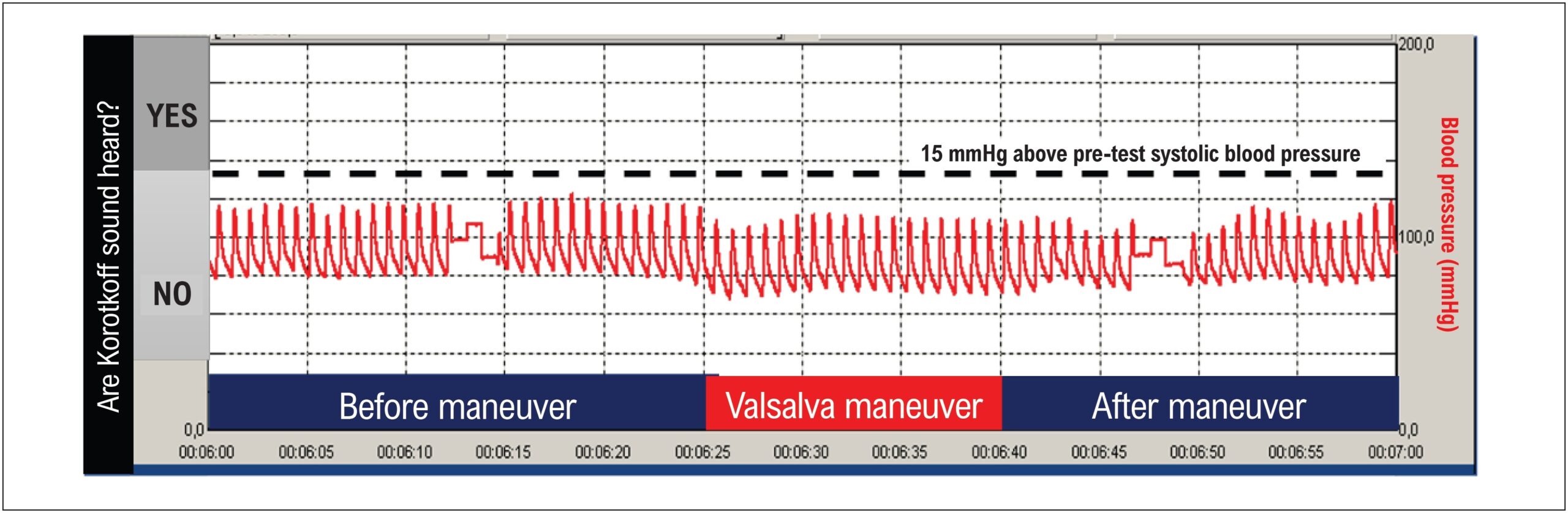
In 2003, Nohria et al. published a manuscript considered a game-changer in acute heart failure (HF) treatment. As by this manuscript, patients admitted with heart failure should be clinically classified into four hemodynamic profiles defined by the presence or absence of congestion and hypoperfusion. Congestion was defined by “recent history of orthopnea and/or physical exam evidence of rales, jugular venous distension, hepatojugular reflux, ascites, peripheral edema, left-ward radiation of the pulmonic heart sound, or a square wave blood pressure response to the Valsalva maneuver.”

More than 20 years after this publication, the Valsalva maneuver continues to be routinely used during clinical evaluation of patients admitted to the advanced heart failure service at the Brigham and Women’s Hospital (personal experience), where profiles were created and validated. However, despite the fact that clinical profile determination has become a routine procedure, few physicians have incorporated the Valsalva maneuver in their practices. To date, no study has compared the accuracy of the different clinical methods available for assessing congestion in patients with HF. Therefore, we should not categorize a patient as “dry” before all possibilities of congestion are excluded. It is possible that patients are being categorized as dry when, in fact, they have congestion that would only be identified by the Valsalva maneuver. Correct determination of hemodynamic profile is pivotal, as the existence of congestion and/or hypoperfusion guides the management of patients admitted with heart failure decompensation. This manuscript aims to review the physiological bases of the Valsalva maneuver, justifying and encouraging its use in clinical practice.

[…]

  • Heart Failure
  • Physical Examination
  • Valsalva Maneuver
Read Full Article
Creative Commons Attribution (CC BY) Creative Commons license
31/08/2024 DOI: 10.36660/abchf.20240039i Views 1
Figure 1
IJCS
Original Article

Quality of Life After Diagnosis of Neurally Mediated Reflex Syncope by Tilt Test

Claudia Madeira Miranda et al. Rose Mary Ferreira Lisboa da Silva Edson Del Amore Filho Izabela Maria Azeredo Nascimento Pedro Santos Carvalho

Abstract

Background:

Vasovagal syncope (VVS) results in impaired quality of life (QoL). The response during the head-up tilt test (HUTT) influences QoL and recurrence.

Objectives:

To analyze the influence of the type of HUTT response on QoL in patients with VVS and recurrence of events after the exam.

Methods:

The SF-36 and Impact of Syncope on Quality of Life (ISQL) questionnaires were applied over 12 months after the HUTT. Unpaired Student’s t test was used for differences between 2 groups of quantitative data with normal distribution. The recurrence of syncope episodes was analyzed using a Kaplan-Meier curve, and the log-rank test was applied to compare the curves regarding responses to the HUTT. Statistical significance was set at p value < 0.05.

Results:

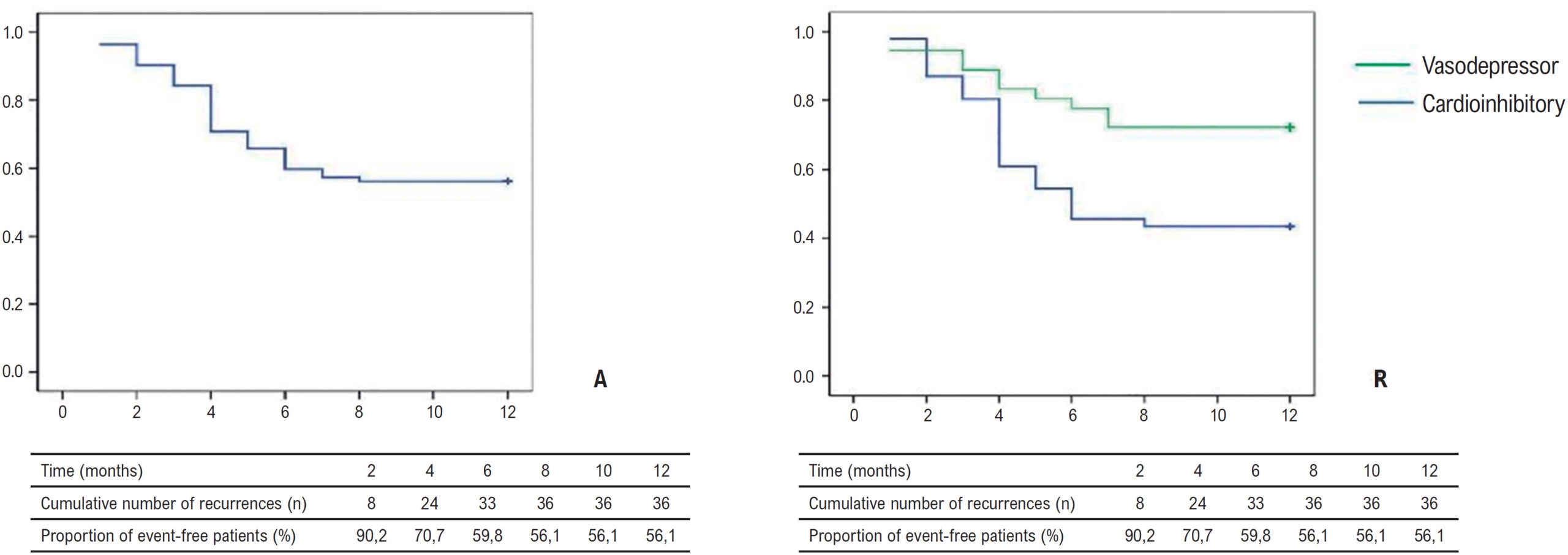
We analyzed 82 patients (43.7 years old), 69% with previous recurrence (2.8 prior episodes). Cardioinhibitory response occurred in 46 patients; vasodepressor response occurred in 36, and 85.4% of patients received non-pharmacological treatment after the HUTT. During clinical follow-up, 43.9% had recurrence, mainly young patients (35.7 years; p = 0.002). On the SF-36, the best score was in functional capacity in men (p = 0.04) and patients without prior trauma (p = 0.001). There were lower limitations due to pain in patients without prior trauma (p = 0.003) and patients without prodromes (p = 0.009). On the ISQL, there were better mean scores in men (p = 0.002) and in patients without prior trauma (p = 0.02). Patients with cardioinhibitory response had better SF-36 and ISQL scores (p < 0.001). There was greater VVS recurrence in the cardioinhibitory response group (log-rank p = 0.011; hazard ratio: 8.48; 95% confidence interval: 7.59 to 9.3) from the second to the fourth month, with stabilization in the eighth month after the HUTT, when compared to patients with vasodepressor response.

Conclusion:

The majority of patients with VVS reproduced during the HUTT under non-pharmacological treatment did not report worsening of QoL during clinical follow-up. Worse QoL was observed in non-young patients and in patients with vasodepressor response, and it was not influenced by recurrence after the HUTT.

  • Physical Examination
  • Quality of life
  • Syncope
Read Full Article
Creative Commons Attribution (CC BY) Creative Commons license
05/04/2024 DOI: 10.36660/ijcs.20230017 Views 1
Figure 1
ABC
Special Article

Executive Summary of the Guidelines on Stable Coronary Disease

Luiz Antonio Machado César et al. Antonio de Pádua Mansur João Fernando Monteiro Ferreira

Part I – Diagnosis and risk stratification

[…]

  • Atherosclerosis
  • Coronary Artery Disease
  • Diagnosis
  • Physical Examination
  • Risk Factors
Read Full Article
Creative Commons Attribution (CC BY) Creative Commons license
01/10/2015 DOI: 10.5935/abc.20150136 Views 1

How to cite this article

EndNote RIS

Electronic Document Format (Vancouver)

Cabral S. Revisiting a Timeless Skill: The Physical Examination in the Age of Technology-Driven Medicine. Arquivos Brasileiros de Cardiologia 2025;122(2):e20250124.

Electronic Document Format (ABNT)

Cabral, Sofia. Revisiting a Timeless Skill: The Physical Examination in the Age of Technology-Driven Medicine. Arquivos Brasileiros de Cardiologia, v. 122, n. 2, e20250124, Apr. 2025.

Electronic Document Format (APA)

Cabral, S. (2025). Revisiting a Timeless Skill: The Physical Examination in the Age of Technology-Driven Medicine. Arquivos Brasileiros de Cardiologia, 122(2), e20250124.

Electronic Document Format (ISO)

Cabral, Sofia. Revisiting a Timeless Skill: The Physical Examination in the Age of Technology-Driven Medicine. Arquivos Brasileiros de Cardiologia [online]. 2025, vol. 122, n. 2, [cited 2026-10-14], e20250124. Available from: <https://journals.cardiol.br/en/article/revisiting-a-timeless-skill-the-physical-examination-in-the-age-of-technology-driven-medicine/>. ISSN 0066-782X

EndNote RIS

Electronic Document Format (Vancouver)

Teixeira IS, Borges VL, Viola N, Moreira HT, Pazin Filho A, Schmidt A, Marin-Neto JA, et al. How Cardiovascular Physical Examination Impacts Clinical Decision-Making in Various Scenarios of Cardiac Valvular Diseases. Arquivos Brasileiros de Cardiologia 2025;122(2):e20240272.

Electronic Document Format (ABNT)

Teixeira, Isabella Silveira; Borges, Vinícius Lima; Viola, Natan; Moreira, Henrique Turin; Pazin Filho, Antonio; Schmidt, André; Marin-Neto, José Antônio; Romano, Minna Moreira Dias. How Cardiovascular Physical Examination Impacts Clinical Decision-Making in Various Scenarios of Cardiac Valvular Diseases. Arquivos Brasileiros de Cardiologia, v. 122, n. 2, e20240272, Mar. 2025.

Electronic Document Format (APA)

Teixeira, I. S., Borges, V. L., Viola, N., Moreira, H. T., Pazin Filho, A., Schmidt, A., Marin-Neto, J. A., & Romano, M. M. D. (2025). How Cardiovascular Physical Examination Impacts Clinical Decision-Making in Various Scenarios of Cardiac Valvular Diseases. Arquivos Brasileiros de Cardiologia, 122(2), e20240272.

Electronic Document Format (ISO)

Teixeira, Isabella Silveira and Borges, Vinícius Lima and Viola, Natan and Moreira, Henrique Turin and Pazin Filho, Antonio and Schmidt, André and Marin-Neto, José Antônio and Romano, Minna Moreira Dias. How Cardiovascular Physical Examination Impacts Clinical Decision-Making in Various Scenarios of Cardiac Valvular Diseases. Arquivos Brasileiros de Cardiologia [online]. 2025, vol. 122, n. 2, [cited 2026-10-14], e20240272. Available from: <https://journals.cardiol.br/en/article/how-cardiovascular-physical-examination-impacts-clinical-decision-making-in-various-scenarios-of-cardiac-valvular-diseases/>. ISSN 0066-782X

EndNote RIS

Electronic Document Format (Vancouver)

Castro RRT. Is Your “Dry” Patient Really Not Congested? Physiological Basis and Clinical Use of Valsalva’s Maneuver in Heart Failure. ABC Heart Fail Cardiomyop 2024;4(2):e20240039.

Electronic Document Format (ABNT)

Castro, Renata R. T.. Is Your “Dry” Patient Really Not Congested? Physiological Basis and Clinical Use of Valsalva’s Maneuver in Heart Failure. ABC Heart Fail Cardiomyop, v. 4, n. 2, e20240039, Nov. 2023.

Electronic Document Format (APA)

Castro, R. R. T. (2024). Is Your “Dry” Patient Really Not Congested? Physiological Basis and Clinical Use of Valsalva’s Maneuver in Heart Failure. ABC Heart Fail Cardiomyop, 4(2), e20240039.

Electronic Document Format (ISO)

Castro, Renata R. T.. Is Your “Dry” Patient Really Not Congested? Physiological Basis and Clinical Use of Valsalva’s Maneuver in Heart Failure. ABC Heart Fail Cardiomyop [online]. 2024, vol. 4, n. 2, [cited 2026-10-14], e20240039. Available from: <https://journals.cardiol.br/en/article/is-your-dry-patient-really-not-congested-physiological-basis-and-clinical-use-of-valsalvas-maneuver-in-heart-failure/>

EndNote RIS

Electronic Document Format (Vancouver)

Miranda CM, Silva RMFL, Amore Filho ED, Nascimento IMA, Carvalho PS. Quality of Life After Diagnosis of Neurally Mediated Reflex Syncope by Tilt Test. International Journal of Cardiovascular Sciences 2024;37:e20230017.

Electronic Document Format (ABNT)

Miranda, Claudia Madeira; Silva, Rose Mary Ferreira Lisboa da; Amore Filho, Edson Del; Nascimento, Izabela Maria Azeredo; Carvalho, Pedro Santos. Quality of Life After Diagnosis of Neurally Mediated Reflex Syncope by Tilt Test. International Journal of Cardiovascular Sciences, v. 37, e20230017, Apr. 2024.

Electronic Document Format (APA)

Miranda, C. M., Silva, R. M. F. L. , Amore Filho, E. D., Nascimento, I. M. A., & Carvalho, P. S. (2024). Quality of Life After Diagnosis of Neurally Mediated Reflex Syncope by Tilt Test. International Journal of Cardiovascular Sciences, 37, e20230017.

Electronic Document Format (ISO)

Miranda, Claudia Madeira and Silva, Rose Mary Ferreira Lisboa da and Amore Filho, Edson Del and Nascimento, Izabela Maria Azeredo and Carvalho, Pedro Santos. Quality of Life After Diagnosis of Neurally Mediated Reflex Syncope by Tilt Test. International Journal of Cardiovascular Sciences [online]. 2024, vol. 37, [cited 2026-10-14], e20230017. Available from: <https://journals.cardiol.br/en/article/quality-of-life-after-diagnosis-of-neurally-mediated-reflex-syncope-by-tilt-test/>. ISSN 2359-4802

EndNote RIS

Electronic Document Format (Vancouver)

César LAM, Mansur AP, Ferreira JFM. Executive Summary of the Guidelines on Stable Coronary Disease. Arquivos Brasileiros de Cardiologia 2015;105(4):328-3.

Electronic Document Format (ABNT)

César, Luiz Antonio Machado; Mansur, Antonio de Pádua; Ferreira, João Fernando Monteiro. Executive Summary of the Guidelines on Stable Coronary Disease. Arquivos Brasileiros de Cardiologia, v. 105, n. 4, p. 328-338, Sep. 2015.

Electronic Document Format (APA)

César, L. A. M., Mansur, A. P., & Ferreira, J. F. M. (2015). Executive Summary of the Guidelines on Stable Coronary Disease. Arquivos Brasileiros de Cardiologia, 105(4), 328-338.

Electronic Document Format (ISO)

César, Luiz Antonio Machado and Mansur, Antonio de Pádua and Ferreira, João Fernando Monteiro. Executive Summary of the Guidelines on Stable Coronary Disease. Arquivos Brasileiros de Cardiologia [online]. 2015, vol. 105, n. 4, [cited 2026-10-14], pp. 328-338. Available from: <https://journals.cardiol.br/en/article/executive-summary-of-the-guidelines-on-stable-coronary-disease/>. ISSN 0066-782X

  • About ABC Family
  • Internal Regulation
  • Editorial Board
  • Brazilian Society of Cardiology (SBC)

Issues

SBC Guidelines

  • Videos
  • Podcasts
  • News