ABC Family Arquivos Brasileiros de Cardiologia International Journal of Cardiovascular Sciences ABC Heart Failure & Cardiomyopathy ABC Imagem Cardiovascular
Português English
ABC Family
Português English
  • About
    • About ABC Family
    • Internal Regulation
    • Editorial Board
    • Brazilian Society of Cardiology (SBC)
  • Issues
  • SBC Guidelines
  • Content
    • Videos
    • Podcasts
    • News
  • About
    • About ABC Family
    • Internal Regulation
    • Editorial Board
    • Brazilian Society of Cardiology (SBC)
  • Issues
  • SBC Guidelines
  • Content
    • Videos
    • Podcasts
    • News

ABC Family

  • ABC Family
  • Arquivos Brasileiros de Cardiologia
  • International Journal of Cardiovascular Sciences
  • ABC Heart Failure & Cardiomyopathy
  • ABC Imagem Cardiovascular
Search in

No content found.

Journals
Ordering
Article types
Others

  1. Home
  2. Keyword: Autonomic Denervation
Syncope and Rhythm Disturbances as Common Clinical Manifestations in Amyloidosis
IJCS
Review Article

Syncope and Rhythm Disturbances as Common Clinical Manifestations in Amyloidosis

Nágela S. V. Nunes et al. Erivelton Nascimento Ronaldo Altenburg Gismondi Erito Marques de Souza Filho

Abstract

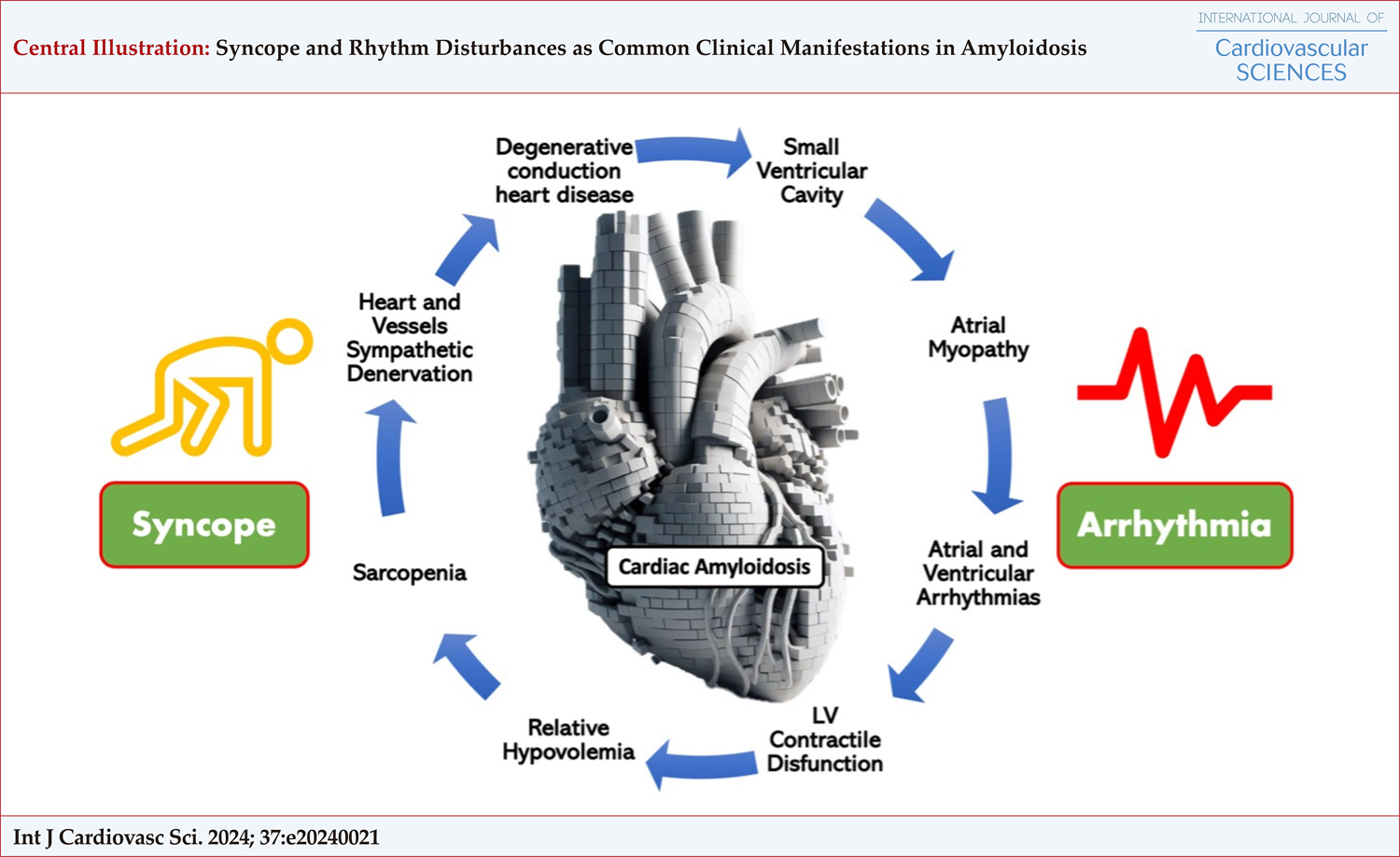
Amyloidosis results from deposition of insoluble fibrillar protein compounds in various organs, including the heart. Cardiac involvement occurs in both atria and ventricles, leading to restrictive cardiomyopathy, heart failure (HF), and arrhythmias. Five amyloid proteins affect cardiac tissue: light and heavy chain forms of immunoglobulin, transthyretin (TTR), apolipoprotein 1, and amyloid A. Approximately 95% of cardiac involvement stems from light chain of immunoglobulin and TTR deposition in heart. Chamber stiffness and rhythm disturbances occur in cardiac amyloidosis (CA), encompassing from HF to atrial and ventricular arrhythmias (VA), and both can compromise each other. It is known that conduction system disorders and VA increase sudden death risk, as amyloid infiltration, inflammation, and fibrosis alter myocardial electrophysiology. Beyond the heart, autonomous nerve systems suffer amyloid deposition, contributing to syncope manifestation and increasing the risk of death and poor prognosis. In this context, our review sheds light on the importance of recognizing syncope and rhythm disturbances as crucial markers in the early identification and management of CA, potentially offering avenues for prompt intervention and improved patient outcomes.
  • Autonomic Denervation
  • Cardiac Arrhythmias
  • Cardiac resynchronization-therapy devices
  • Familial Cerebral Amyloid Angiopathy
  • Syncope
Read Full Article
Creative Commons Attribution (CC BY) Creative Commons license
19/08/2024 DOI: 10.36660/ijcs.20240021 Views 1
Figure 1
ABC
Original Article

Relationship between Urinary Norepinephrine, Fibrosis, and Arrhythmias in Chronic Chagas Heart Disease with Preserved or Mildly Reduced Ejection Fraction

Eduardo Marinho Tassi et al. Emília Matos do Nascimento Marcelo Abramoff Continentino Basilio de Bragança Pereira Roberto Coury Pedrosa

Abstract

Background:

In Chronic Chagas Cardiomyopathy (CCC), studies are needed to identify arrhythmogenic risk factors in patients in which moderate to severe ventricular dysfunction is not present.

Objective:

To verify the correlation between frequent ventricular arrhythmias (PVC), left ventricular ejection fraction (LVEF), extension of fibrosis by cardiac magnetic resonance (CMR), and urinary norepinephrine measurement (NOREPI) in CCC with preserved or mildly compromised LVEF.

Methods:

The presence of ventricular extrasystoles > 30/h was analyzed on Holter. At CMR, LVEF and quantification of fibrosis mass were evaluated. The dosage of NOREPI was performed using the Muskiet method. The correlation coefficient matrix was calculated to measure the predictive ability of the variables to predict another variable, with p < 0.05 being considered significant.

Results:

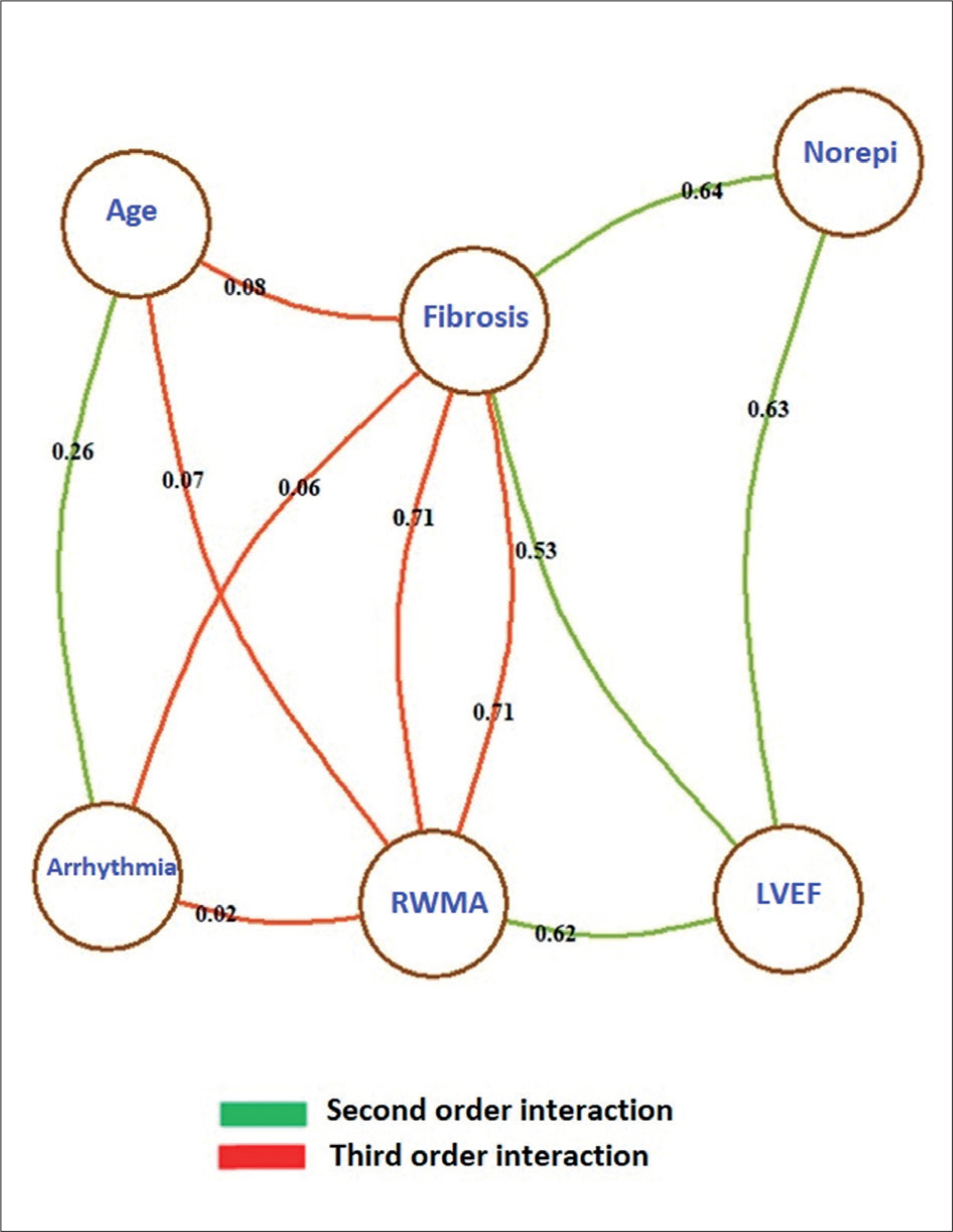
A total of 59 patients were included. The mean age was 57.9 + 10.94 years. PVC was detected in 28 patients. The fibrosis variable was inversely proportional to LVEF (R of −0.61) and NOREPI (R of −0.68). Also, the variable PVC was inversely proportional to LVEF (R of −0.33) and NOREPI (R of −0.27). On the other hand, LVEF was directly proportional to NOREPI (R of 0.83).

Conclusion:

In this sample, in patients with CCC with preserved or slightly reduced LVEF, integrity of the autonomic nervous system is observed in hearts with little fibrosis and higher LVEF despite the presence of traditional risk factors for sudden cardiac death. There is correlation between the levels of NOREPI, LVEF, and myocardial fibrosis, but not with PVC.

  • Autonomic Denervation
  • Cardiac Arrythmias
  • chagasic cardiomyopathy
  • Myocardial fibrosis
  • Norepinephrine
Read Full Article
Creative Commons Attribution (CC BY) Creative Commons license
11/07/2022 DOI: 10.36660/abc.20210400
Figure 4
IJCS
Review Article

Autonomic Innervation Evaluation in Cardiac Disease

Adriana Xavier de Brito et al. Adriana Glavam Ana Inês Bronchtein Paulo Henrique Rosado-de-Castro

Abstract

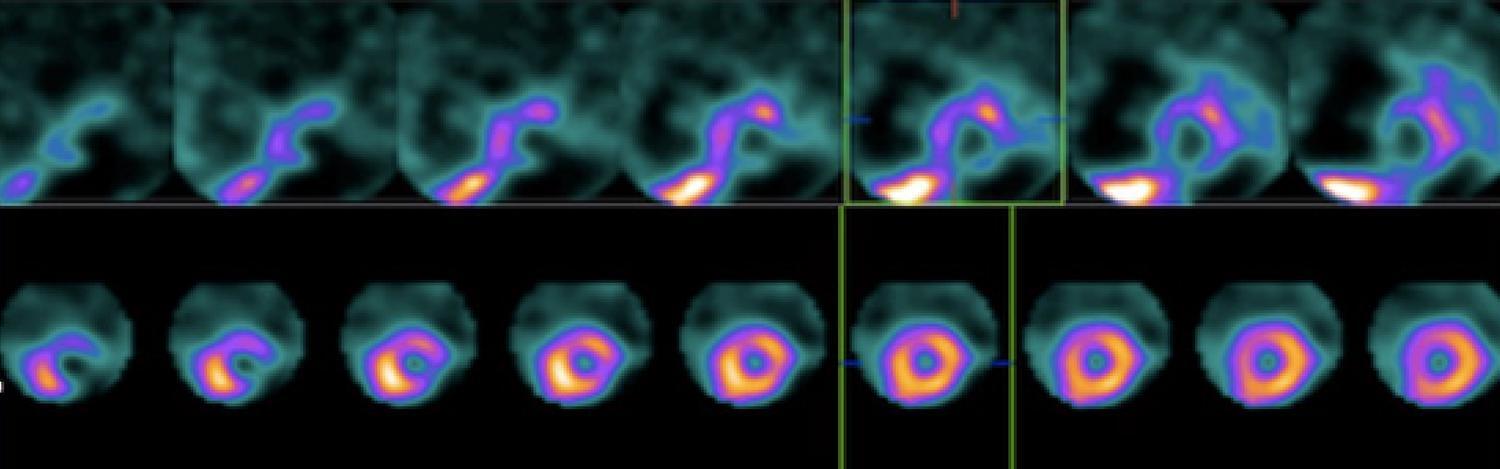
Cardiovascular diseases are among the leading causes of mortality and morbidity in the world. In different cardiac diseases, the neuronal function of the heart is impaired. Nevertheless, the development of a simple method to assess the autonomic effects on the heart and/or autonomic dysfunction is a challenge. The evaluation of autonomic innervation in cardiac diseases has helped to improve the knowledge of the pathophysiology of these conditions, as well as to provide information on their prognosis. Single photon emission computed tomography (SPECT) and positron emission tomography (PET) are currently the only imaging methods that allow in vivo assessment of cardiac innervation. The majority of SPECT and PET radiotracers evaluate sympathetic neuronal integrity using presynaptic imaging agents that are either labeled as endogenous transmitters or analogues. Postsynaptic imaging agents have also been developed to study sympathetic neuronal integrity, as well as tracers to investigate the parasympathetic nervous system. These methods may be used to analyze the innervation of the heart and allow for early detection of abnormalities caused by, for example, ischemia, heart failure, cardiomyopathies, cardiotoxicity, and arrhythmogenic disorders. This review provides an overview of cardiac innervation evaluation and their application in the assessment of heart disease.

  • Autonomic Denervation
  • Autonomic Nervous System
  • Diagnostic, IImaging
  • Heart Failure
  • Myocardial Ischemia
Read Full Article
Creative Commons Attribution (CC BY) Creative Commons license
07/07/2021 DOI: 10.36660/ijcs.20200171 Views 1
IJCS
Editorial

Identification of Preclinical Markers Related to Hereditary Diseases: Expanding the Horizons of the Study of Cardiac Autonomic Modulation

Nágela Nunes et al. Paulo R. Benchimol-Barbosa

The Autonomic Nervous System (ANS) consists of two opposite pathways (sympathetic and parasympathetic) that have action both on the atrial and ventricular myocardium, as well as on atrioventricular and sinus nodes, thus exerting influence on the variation of heart rate (HR). The increase in HR is a consequence of the greater action of the sympathetic pathway and the lower parasympathetic activity (vagal inhibition), while its reduction basically depends on predominance of vagal activity. The influence of ANS on the heart is dependent on information that departs, among others, from baroceptors, chemoreceptors, changes in the respiratory system, vasomotor system, renin-angiotensin-aldosterone system and thermoregulatory system.

The discovery of the relationship between ANS and mortality from cardiovascular diseases has led to several studies, which have proven the existence of reduced parasympathetic and increased sympathetic activity in several pathologies of the cardiovascular system. These findings made it necessary to develop quantitative markers of cardiac autonomic activity, and heart rate variability (HRV) is the most promising autonomic marker . Historically, their clinical interest arose in 1965, when Hon and Lee demonstrated a well-defined clinical application of HRV in the area of fetal distress monitoring. In 1977, Wolf et al., showed an association between low HRV and higher risk of mortality after acute myocardial infarction and Kleiger et al., in 1987, confirmed that HRV was a potent and independent predictor of mortality after acute myocardial infarction. In 1996, in an age-stratified cross-sectional study, Barbosa et al., reported >18 % per decade reduction in HRV in healthy adults and >25 % per decade reduction in subjects two years post-myocardial infarction with persevered left ventricular systolic function. Additionally, the authors observed that aging related HRV decrease was mainly related to reduction in spontaneous vagal activity. In 2002, Nunes studied HRV variability in preschool healthy children, defining normality ranges for HRV variables in this population.

[…]

  • Adolescent
  • Autonomic Denervation
  • Autonomic Nervous System/complications
  • Diabetes Mellitus/complications
  • Genetic Diseases, Inborn
Read Full Article
Creative Commons Attribution (CC BY) Creative Commons license
31/07/2020 DOI: 10.36660/ijcs.20200192 Views 2
Autonomic dysfunction and anti-M2 and anti-β1 receptor antibodies in Chagas disease patients
ABC
Artigo Original

Autonomic dysfunction and anti-M2 and anti-β1 receptor antibodies in Chagas disease patients

Clarissa Antunes Thiers et al. João Luis Barbosa Basílio de Bragança Pereira Emília Matos do Nascimento … José Hamilton do Nascimento Emiliano Horácio Medei Roberto Coury Pedrosa

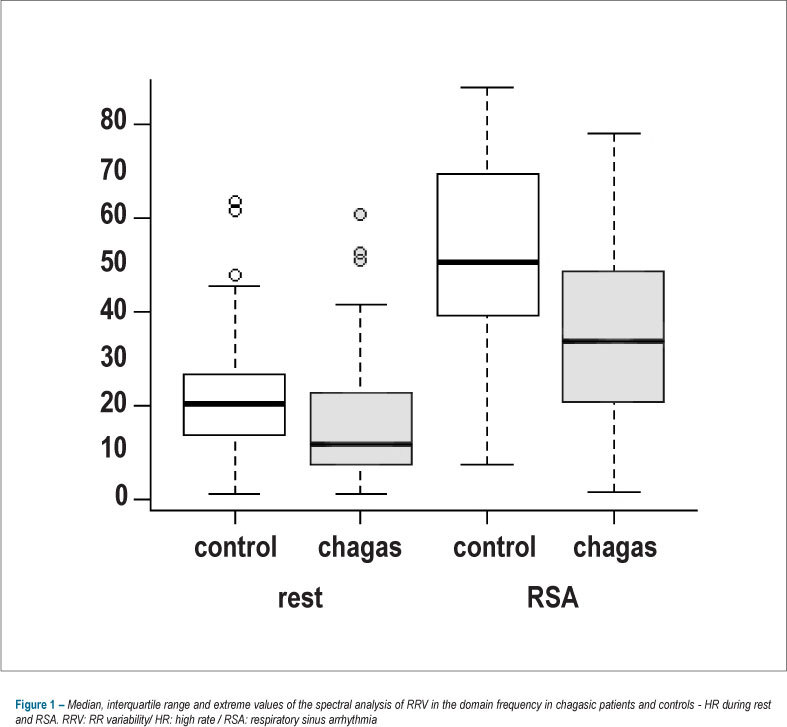
BACKGROUND: Sudden death is the leading cause of death in Chagas’ disease, affecting patients even in the early stages of the disease. The impairment of the autonomic nervous system in this disease has been recognized, as well as its potential as a trigger for malignant arrhythmias when associated with structural or metabolic changes. OBJECTIVE: We sought to identify, in Chagas patients with preserved systolic function, the impairment of the autonomic nervous system and its association with functionally active anti-m2 and anti-β1 receptor antibodies. METHODS: Using spectral analysis of RR variability during passive tilt test, chronic chagasic patients were compared with healthy controls matched for age. Subsequently, the association of autonomic dysfunction with functionally active antibodies with anti-m2 and anti-β1 action was investigated by the Langendorf method. RESULTS: We observed that patients with Chagas disease without ventricular dysfunction express parasympathetic activity against a vagal stimulus, however with less intensity compared to controls. Chagasic patients with anti-m2 or anti-β1 antibodies showed a further significant reduction of the vagal response during respiratory sinus arrhythmia, regardless of the presence of structural lesion. However, the association of both factors promoted response to vagal stimulation similar to that seen in Chagas disease without their presence. CONCLUSION: The lower vagal reserve in Chagas patients with preserved function was associated with functionally active anti-m2 or anti-β1 antibodies, and not with the presence of structural heart lesion.

  • Antibodies
  • Autonomic Denervation
  • Chagas disease
Read Full Article
Creative Commons Attribution (CC BY) Creative Commons license
13/07/2012 DOI: 10.1590/S0066-782X2012005000067 Views 1

How to cite this article

EndNote RIS

Electronic Document Format (Vancouver)

Nunes NSV, Nascimento E, Gismondi RA, Souza Filho EM. Syncope and Rhythm Disturbances as Common Clinical Manifestations in Amyloidosis. International Journal of Cardiovascular Sciences 2024;37:e20240021.

Electronic Document Format (ABNT)

Nunes, Nágela S. V.; Nascimento, Erivelton; Gismondi, Ronaldo Altenburg; Souza Filho, Erito Marques de. Syncope and Rhythm Disturbances as Common Clinical Manifestations in Amyloidosis. International Journal of Cardiovascular Sciences, v. 37, e20240021, Aug. 2024.

Electronic Document Format (APA)

Nunes, N. S. V., Nascimento, E., Gismondi, R. A., & Souza Filho, E. M. (2024). Syncope and Rhythm Disturbances as Common Clinical Manifestations in Amyloidosis. International Journal of Cardiovascular Sciences, 37, e20240021.

Electronic Document Format (ISO)

Nunes, Nágela S. V. and Nascimento, Erivelton and Gismondi, Ronaldo Altenburg and Souza Filho, Erito Marques de. Syncope and Rhythm Disturbances as Common Clinical Manifestations in Amyloidosis. International Journal of Cardiovascular Sciences [online]. 2024, vol. 37, [cited 2026-10-14], e20240021. Available from: <https://journals.cardiol.br/en/article/syncope-and-rhythm-disturbances-as-common-clinical-manifestations-in-amyloidosis/>. ISSN 2359-4802

EndNote RIS

Electronic Document Format (Vancouver)

Tassi EM, Nascimento EM, Continentino MA, Pereira BB, Pedrosa RC. Relationship between Urinary Norepinephrine, Fibrosis, and Arrhythmias in Chronic Chagas Heart Disease with Preserved or Mildly Reduced Ejection Fraction. Arquivos Brasileiros de Cardiologia 2022;119(1):3-11.

Electronic Document Format (ABNT)

Tassi, Eduardo Marinho; Nascimento, Emília Matos do; Continentino, Marcelo Abramoff; Pereira, Basilio de Bragança; Pedrosa, Roberto Coury. Relationship between Urinary Norepinephrine, Fibrosis, and Arrhythmias in Chronic Chagas Heart Disease with Preserved or Mildly Reduced Ejection Fraction. Arquivos Brasileiros de Cardiologia, v. 119, n. 1, p. 3-11, Jul. 2022.

Electronic Document Format (APA)

Tassi, E. M., Nascimento, E. M. , Continentino, M. A., Pereira, B. B., & Pedrosa, R. C. (2022). Relationship between Urinary Norepinephrine, Fibrosis, and Arrhythmias in Chronic Chagas Heart Disease with Preserved or Mildly Reduced Ejection Fraction. Arquivos Brasileiros de Cardiologia, 119(1), 3-11.

Electronic Document Format (ISO)

Tassi, Eduardo Marinho and Nascimento, Emília Matos do and Continentino, Marcelo Abramoff and Pereira, Basilio de Bragança and Pedrosa, Roberto Coury. Relationship between Urinary Norepinephrine, Fibrosis, and Arrhythmias in Chronic Chagas Heart Disease with Preserved or Mildly Reduced Ejection Fraction. Arquivos Brasileiros de Cardiologia [online]. 2022, vol. 119, n. 1, [cited 2026-10-14], pp. 3-11. Available from: <https://journals.cardiol.br/en/article/relationship-between-urinary-norepinephrine-fibrosis-and-arrhythmias-in-chronic-chagas-heart-disease-with-preserved-or-mildly-reduced-ejection-fraction/>. ISSN 0066-782X

EndNote RIS

Electronic Document Format (Vancouver)

Brito AX, Glavam A, Bronchtein AI, Rosado-de-Castro PH. Autonomic Innervation Evaluation in Cardiac Disease. International Journal of Cardiovascular Sciences 2021;34(6):702-13.

Electronic Document Format (ABNT)

Brito, Adriana Xavier de; Glavam, Adriana; Bronchtein, Ana Inês; Rosado-de-Castro, Paulo Henrique. Autonomic Innervation Evaluation in Cardiac Disease. International Journal of Cardiovascular Sciences, v. 34, n. 6, p. 702-713, Jul. 2021.

Electronic Document Format (APA)

Brito, A. X. , Glavam, A., Bronchtein, A. I., & Rosado-de-Castro, P. H. (2021). Autonomic Innervation Evaluation in Cardiac Disease. International Journal of Cardiovascular Sciences, 34(6), 702-713.

Electronic Document Format (ISO)

Brito, Adriana Xavier de and Glavam, Adriana and Bronchtein, Ana Inês and Rosado-de-Castro, Paulo Henrique. Autonomic Innervation Evaluation in Cardiac Disease. International Journal of Cardiovascular Sciences [online]. 2021, vol. 34, n. 6, [cited 2026-10-14], pp. 702-713. Available from: <https://journals.cardiol.br/en/article/autonomic-innervation-evaluation-in-cardiac-disease/>. ISSN 2359-4802

EndNote RIS

Electronic Document Format (Vancouver)

Nunes N, Benchimol-Barbosa PR. Identification of Preclinical Markers Related to Hereditary Diseases: Expanding the Horizons of the Study of Cardiac Autonomic Modulation. International Journal of Cardiovascular Sciences 2020;33(4):368-70.

Electronic Document Format (ABNT)

Nunes, Nágela; Benchimol-Barbosa, Paulo R.. Identification of Preclinical Markers Related to Hereditary Diseases: Expanding the Horizons of the Study of Cardiac Autonomic Modulation. International Journal of Cardiovascular Sciences, v. 33, n. 4, p. 368-370, Jul. 2020.

Electronic Document Format (APA)

Nunes, N., & Benchimol-Barbosa, P. R. (2020). Identification of Preclinical Markers Related to Hereditary Diseases: Expanding the Horizons of the Study of Cardiac Autonomic Modulation. International Journal of Cardiovascular Sciences, 33(4), 368-370.

Electronic Document Format (ISO)

Nunes, Nágela and Benchimol-Barbosa, Paulo R.. Identification of Preclinical Markers Related to Hereditary Diseases: Expanding the Horizons of the Study of Cardiac Autonomic Modulation. International Journal of Cardiovascular Sciences [online]. 2020, vol. 33, n. 4, [cited 2026-10-14], pp. 368-370. Available from: <https://journals.cardiol.br/en/article/identification-of-preclinical-markers-related-to-hereditary-diseases-expanding-the-horizons-of-the-study-of-cardiac-autonomic-modulation/>. ISSN 2359-4802

EndNote RIS

Electronic Document Format (Vancouver)

Thiers CA, Barbosa JL, Pereira BB, Nascimento EM, Nascimento JH, Medei EH, Pedrosa RC, et al. Autonomic dysfunction and anti-M2 and anti-β1 receptor antibodies in Chagas disease patients. Arquivos Brasileiros de Cardiologia 2012;99(2):732-9.

Electronic Document Format (ABNT)

Thiers, Clarissa Antunes; Barbosa, João Luis; Pereira, Basílio de Bragança; Nascimento, Emília Matos do; Nascimento, José Hamilton do; Medei, Emiliano Horácio; Pedrosa, Roberto Coury. Autonomic dysfunction and anti-M2 and anti-β1 receptor antibodies in Chagas disease patients. Arquivos Brasileiros de Cardiologia, v. 99, n. 2, p. 732-739, Jul. 2012.

Electronic Document Format (APA)

Thiers, C. A., Barbosa, J. L., Pereira, B. B., Nascimento, E. M. , Nascimento, J. H. , Medei, E. H., & Pedrosa, R. C. (2012). Autonomic dysfunction and anti-M2 and anti-β1 receptor antibodies in Chagas disease patients. Arquivos Brasileiros de Cardiologia, 99(2), 732-739.

Electronic Document Format (ISO)

Thiers, Clarissa Antunes and Barbosa, João Luis and Pereira, Basílio de Bragança and Nascimento, Emília Matos do and Nascimento, José Hamilton do and Medei, Emiliano Horácio and Pedrosa, Roberto Coury. Autonomic dysfunction and anti-M2 and anti-β1 receptor antibodies in Chagas disease patients. Arquivos Brasileiros de Cardiologia [online]. 2012, vol. 99, n. 2, [cited 2026-10-14], pp. 732-739. Available from: <https://journals.cardiol.br/en/article/autonomic-dysfunction-and-anti-m2-and-anti-%ce%b21-receptor-antibodies-in-chagas-disease-patients/>. ISSN 0066-782X

  • About ABC Family
  • Internal Regulation
  • Editorial Board
  • Brazilian Society of Cardiology (SBC)

Issues

SBC Guidelines

  • Videos
  • Podcasts
  • News