
| ABC
ABC Family Arquivos Brasileiros de Cardiologia International Journal of Cardiovascular Sciences ABC Heart Failure & Cardiomyopathy ABC Imagem Cardiovascular
Português English
ABC Family | ABC
Português English
  • About
    • About the Journal
    • Internal Regulation
    • Editors Section
    • Editorial Board
    • History
    • SBC Award
  • Instructions to Authors
    • Guidelines for Publication
    • Editorial Policy
    • Ethics Policy
    • Policy on the Use of Artificial Intelligence
    • Mandatory Publication Form
    • Publication Fee
  • Issues
  • SBC Guidelines
  • Abstracts
    • How to Publish an Abstract Supplement?
    • Supplements from the Brazilian Congress of Cardiology
  • About
    • About the Journal
    • Internal Regulation
    • Editors Section
    • Editorial Board
    • History
    • SBC Award
  • Instructions to Authors
    • Guidelines for Publication
    • Editorial Policy
    • Ethics Policy
    • Policy on the Use of Artificial Intelligence
    • Mandatory Publication Form
    • Publication Fee
  • Issues
  • SBC Guidelines
  • Abstracts
    • How to Publish an Abstract Supplement?
    • Supplements from the Brazilian Congress of Cardiology

ABC Family

  • ABC Family
  • Arquivos Brasileiros de Cardiologia
  • International Journal of Cardiovascular Sciences
  • ABC Heart Failure & Cardiomyopathy
  • ABC Imagem Cardiovascular
Search in

No content found.

Journals
Ordering
Article types
Others

  1. Home
  2. ABC
  3. Issues
  4. 2025, Volume 122, Number 6
Editorial

Brazilian Evidence Reinforces the Applicability of the H2FPEF and HFA-PEFF Scores in HFpEF

Pedro Silvio Farsky

Heart failure with preserved ejection fraction (HFpEF) remains a diagnostic challenge in modern cardiology. Representing approximately half of all heart failure cases, this condition presents with complex pathophysiology, often subjective diagnostic criteria, and more limited therapeutic options., In this context, the use of diagnostic scoring systems, such as H2FPEF and HFA-PEFF, has gained importance, providing clinicians with standardized and evidence-based tools to guide both diagnosis and risk stratification.,

A prospective study conducted at a Brazilian tertiary hospital provides relevant data on the applicability of these scores in our population. Conducted between March 2019 and December 2021, the study included 103 patients diagnosed with HFpEF, who were followed for approximately 2.4 years. In addition to clinical and echocardiographic characterization, all patients underwent exercise testing, and both the H2FPEF and HFA-PEFF scores were calculated. Patients were then categorized into intermediate- and high-probability groups according to the score points obtained and followed for the composite outcome of all-cause mortality and heart failure hospitalizations.

[…]

  • Diastolic Heart Failure
  • Prognosis
  • Risk Assessment
Read Full Article
Creative Commons Attribution (CC BY) Creative Commons license
29/08/2025 DOI: 10.36660/abc.20250361i Views 2
Editorial

Exploring the Naples Prognostic Score: A Key to Predicting New-Onset Atrial Fibrillation in STEMI Cases

Paulo Magno Martins Dourado

In the ever-evolving landscape of cardiac care, the Naples Prognostic Score (NPS) has emerged as a promising tool for predicting the onset of atrial fibrillation (AF) in patients experiencing ST-segment elevation myocardial infarction (STEMI). This innovative scoring system offers insights into patient outcomes and empowers healthcare providers to make real-time, informed decisions. Understanding and utilizing this score can enhance patient management and improve survival rates. Let us explore how the NPS transforms the approach to STEMI and AF prediction.

AF following STEMI is a rising concern in the field of cardiovascular medicine. The post-MI landscape presents myriad challenges, with AF significantly amplifying the risk of adverse outcomes for patients. A recent study highlighting the NPS brings new hope in the quest to predict and manage complications effectively after myocardial infarction. Recognizing the potential for early detection of new-onset AF (NOAF) —a condition associated with increased morbidity and mortality—enhances the quality of care delivered to STEMI patients undergoing primary percutaneous coronary intervention.

[…]

  • Atrial Fibrillation
  • Prognosis
  • ST Elevation Myocardial Infarction
Read Full Article
Creative Commons Attribution (CC BY) Creative Commons license
04/08/2025 DOI: 10.36660/abc.20250518i Views 2
Editorial

Alcohol Septal Ablation in Brazil: Insights from the BRASA Registry

Maria Antonieta Albanez A. de Medeiros Lopes et al. Mayara Viana Júlia Nóbrega Heitor N. Albanez A. de Medeiros Gláucia Maria Moraes de Oliveira

The Brazilian Multicenter Registry of Alcohol Septal Ablation (BRASA Registry), published in ABC Cardiol in 2025, represents a pivotal contribution to understanding the safety, efficacy, and real-world applicability of Alcohol Septal Ablation (ASA) in Brazil—a country marked by healthcare disparities and a high burden of cardiovascular diseases. This registry provides unprecedented data on ASA outcomes in Brazilian centers, reinforcing its role as a viable alternative to surgical myectomy in hypertrophic obstructive cardiomyopathy (HOCM).

Hypertrophic cardiomyopathy (HCM) is a common inherited cardiac disorder, historically associated with high morbidity and mortality. However, advances in diagnostic imaging, pharmacological therapies, and interventional techniques have transformed HCM into a treatable condition, with many patients now achieving near-normal life expectancy. Over the past two decades, mortality rates have declined dramatically—from 6% to 0.5% per year—largely due to early risk stratification, implantable cardioverter-defibrillators, and septal reduction therapies.

[…]

  • Alcohol Septal Ablation
  • Coronary Intervention
  • hypertrophic obstructive cardiomyopathy
Read Full Article
Creative Commons Attribution (CC BY) Creative Commons license
04/08/2025 DOI: 10.36660/abc.20250312i Views 1
Figure 1
Research Letter

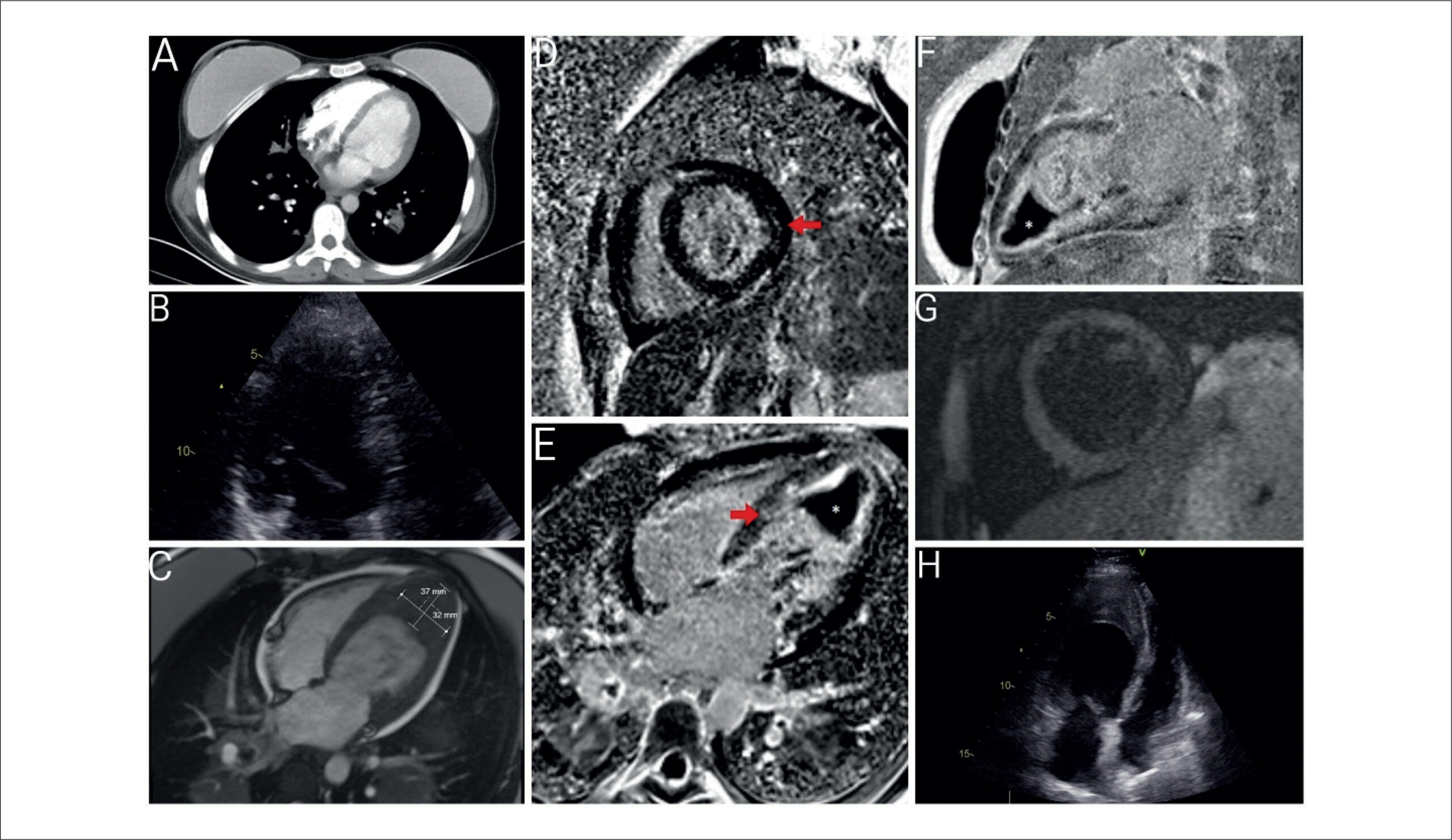
Surprising Cardiac Magnetic Resonance Imaging Findings: Rapidly Developing Intracardiac Thrombus with Endomyocardial Fibrosis

İrem Bilge Bulburu et al. Muhammet Gürdoğan Fethi Emre Ustabaşıoğlu Kenan Yalta

Introduction

Endomyocardial fibrosis (EMF) is a rare form of restrictive cardiomyopathy, particularly prevalent in tropical regions. This condition is commonly associated with peripheral blood hypereosinophilia, though it may also occur in the absence of such finding. In this report, we describe an unusual case of EMF linked to non-Hodgkin’s lymphoma without hypereosinophilia, accompanied by a rapidly developing intracardiac thrombus.

[…]

  • Cardio-Oncology
  • Echocardiography
  • Endomyocardial Fibrosis
Read Full Article
Creative Commons Attribution (CC BY) Creative Commons license
04/08/2025 DOI: 10.36660/abc.20250030i Views 1
Editorial

What is the Impact of Advancements in the Treatment of Heart Failure Patients on Mortality?

Lídia Ramalho Ribeiro Garcia et al. Fernanda Vitória Araújo da Silva João Marcos Bemfica Barbosa Ferreira

The article titled Survival Analysis and Factors Associated with Mortality in Heart Failure Patients in the ELSA-Brasil Cohort presents a significant case series on mortality in 251 patients diagnosed with heart failure in a Brazilian long-term outpatient follow-up cohort. The clinical profile associated with male individuals aged 70 and older, with left ventricular systolic dysfunction and the presence of comorbidities, showed poorer survival outcomes. Overall mortality after 12.3 years of follow-up was 19%. Among the classes of drugs known to reduce mortality in heart failure, patients in this study used beta-blockers, angiotensin-converting enzyme inhibitors (ACEIs), angiotensin receptor blockers (ARBs), and/or mineralocorticoid receptor antagonists. It is also worth noting that a minority of patients (6%) had an ejection fraction lower than 45%. Patient inclusion in the study occurred between 2008 and 2010.

In the past ten years, according to DATASUS, Brazil has recorded over 2.2 million hospitalizations due to heart failure (HF), with an increasing trend, especially between 2015 and 2025. The Southeast region accounted for most of these cases (42.13%), followed by the Northeast (22.6%), South (22.5%), while the North and Central-West regions accounted for 5.6% and 7.5%, respectively. There is a slight male predominance (51.8%), and the highest incidence is observed in individuals over 60 years old, reflecting an aging population and the association of HF with conditions such as hypertension, diabetes, and coronary artery disease.,

[…]

  • Heart Failure
  • Prognosis
  • Treatment
Read Full Article
Creative Commons Attribution (CC BY) Creative Commons license
04/08/2025 DOI: 10.36660/abc.20250329i
Editorial

Adherence and Performance in Cardiac Rehabilitation: The Role of Technological Innovation

Sevda Ece Kizilkilic et al. Juliana Goulart Prata Oliveira Milani Gerson Cipriano Jr. Paul Dendale Mauricio Milani

Cardiac rehabilitation (CR) plays a central role in secondary prevention of coronary artery disease (CAD) and is classified as a Class IA recommendation in guidelines. Yet, despite its proven benefits, participation rates remain disappointingly low. In response, telerehabilitation (TR) has gained attention as a practical alternative that offers similar improvements in clinical outcomes to traditional, center-based programs.

In parallel, artificial intelligence (AI) integration is growing in interest in healthcare due to its potential in different clinical settings. Among the various AI applications, natural language processing (NLP) is increasingly used across medical domains. However, its application in the context of CR to interpret patients’ subjective experiences remains limited.

[…]

  • Cardiac Rehabilitation
  • Telemedicine
Read Full Article
Creative Commons Attribution (CC BY) Creative Commons license
28/07/2025 DOI: 10.36660/abc.20250337i Views 1
Figure 1
Image

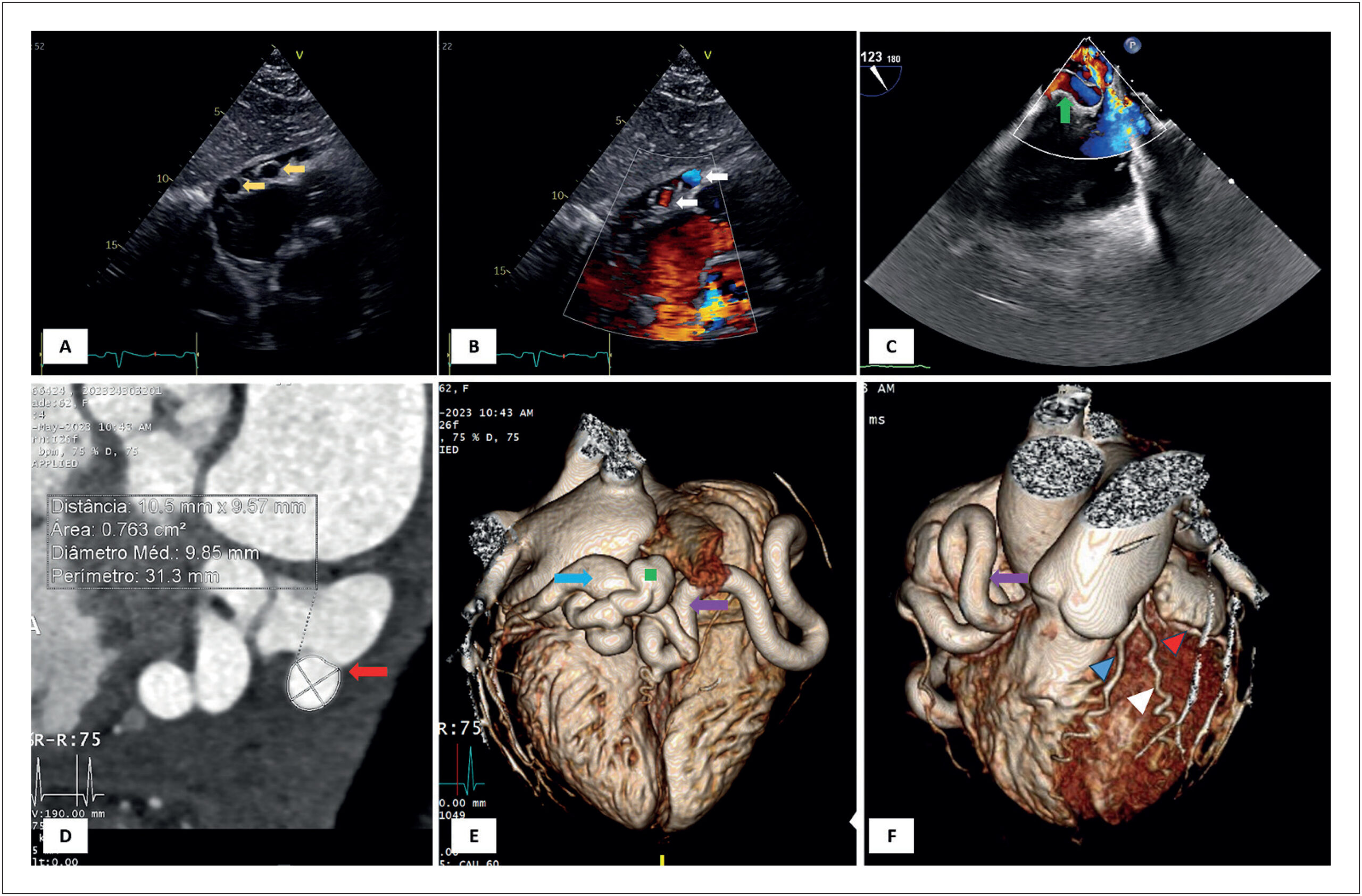
Silent Giant: Right Coronary Artery Ectasia with a Hidden Fistula to the Coronary Sinus in an Asymptomatic Patient

Inês Ferreira Neves et al. André Ferreira Inês Almeida Tânia Branco Mano Lídia de Sousa

A 62-year-old woman, asymptomatic and without significant medical history, was referred to a routine transthoracic echocardiogram (TTE). The TTE had no abnormal findings but showed, in subcostal view, three round images adjacent to the lateral wall of the right atrium. Color Doppler showed that these were apparently vascularized (, panels A and B, supplemental and ). A transesophageal echocardiogram showed a giant right coronary artery (RCA), apparently originating from the RCA ostium, with turbulent flow inside (, panel C, supplemental ). It was not possible to observe shunts or fistulae in this imaging modality. Given the suspicion of a fistula to the RCA, computed tomography coronary angiography was performed, showing an ectatic RCA with a normal origin, a diameter of 10,5 mm, and a tortuous trajectory, with fistulation to the coronary sinus in its final segment ( panels D to F). Right heart catheterization demonstrated a non-significant left-to-right shunt (Qp: Qs ratio of 1.60). Cardiac magnetic resonance imaging (MRI) had no evidence of perfusion defects during hyperemia, thus excluding the coronary “steal phenomenon”. After a multidisciplinary team discussion, since the patient was asymptomatic and the fistula had no hemodynamic significance, no invasive treatment was performed at this time.

Coronary arteriovenous fistulas are rare, with an incidence of 0.002%., The majority of these are congenital and asymptomatic at presentation. Coronary steal can lead to several complications, including ischemia., The treatment approach remains controversial. The presence of symptoms, significant left-right shunt, and large fistula are the most frequent indications for percutaneous or surgical approach.,

[…]

  • Arteriovenous Fistula
  • Congenital Heart Defects
  • Coronary sinus
  • Coronary Vessels
Read Full Article
Creative Commons Attribution (CC BY) Creative Commons license
28/07/2025 DOI: 10.36660/abc.20240574i
Figure 1
Research Letter

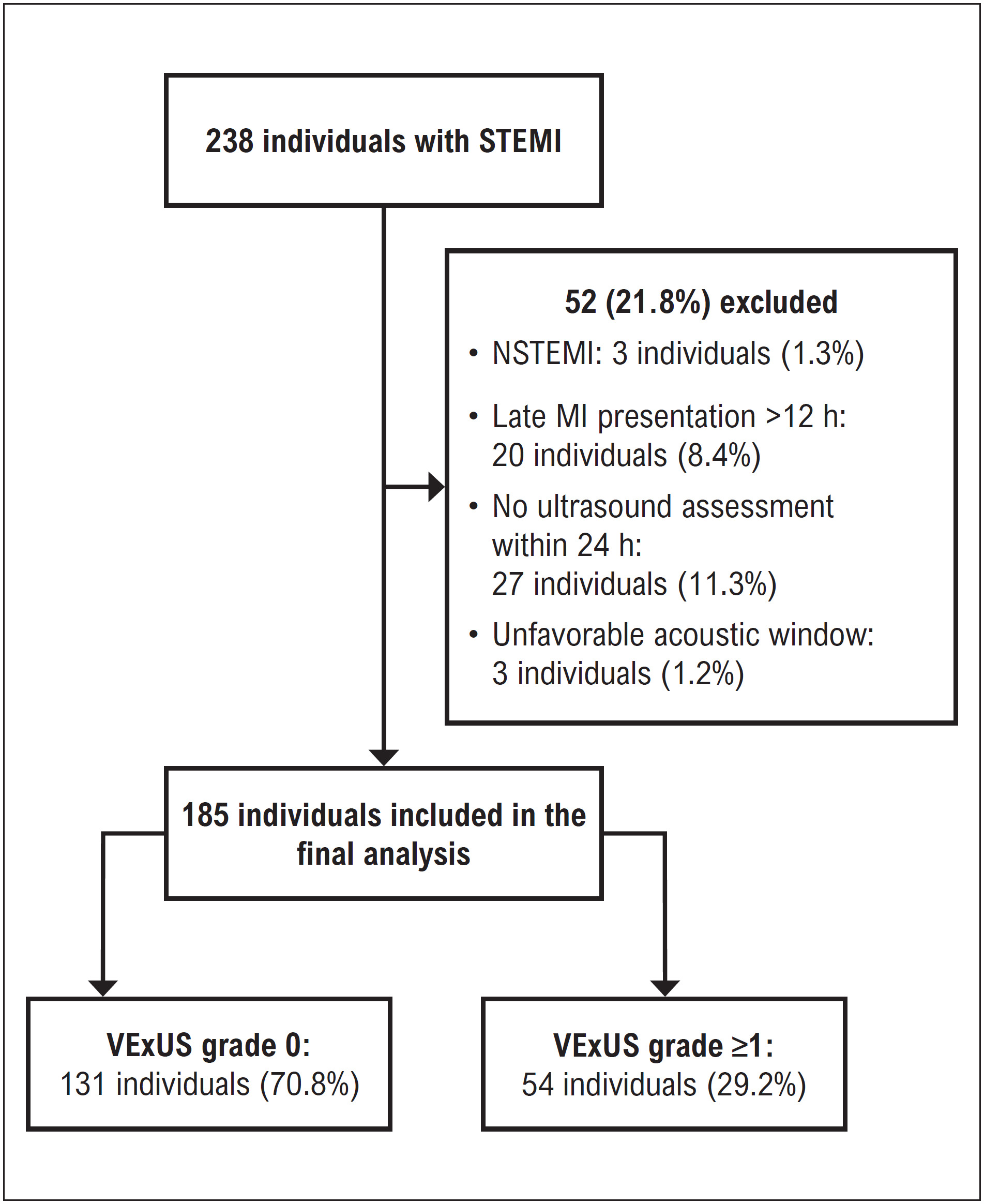
Venous Excess Ultrasound (VExUS) Score in Patients with ST-Elevation Myocardial Infarction to Predict In-Hospital Mortality

Guilherme Pinheiro Machado et al. Guilherme Heiden Telo João Pedro da Rosa Barbato Marina Petersen Saadi … Gustavo Neves de Araujo Angelo Chies Julia Carvalho da Silva Rodrigo Wainstein Marco Wainstein

Key points

[…]

  • Acute coronary syndrome
  • Acute Kidney Injury
  • Myocardial Infarction
Read Full Article
Creative Commons Attribution (CC BY) Creative Commons license
28/07/2025 DOI: 10.36660/abc.20250093i
Figure 1
Original Article

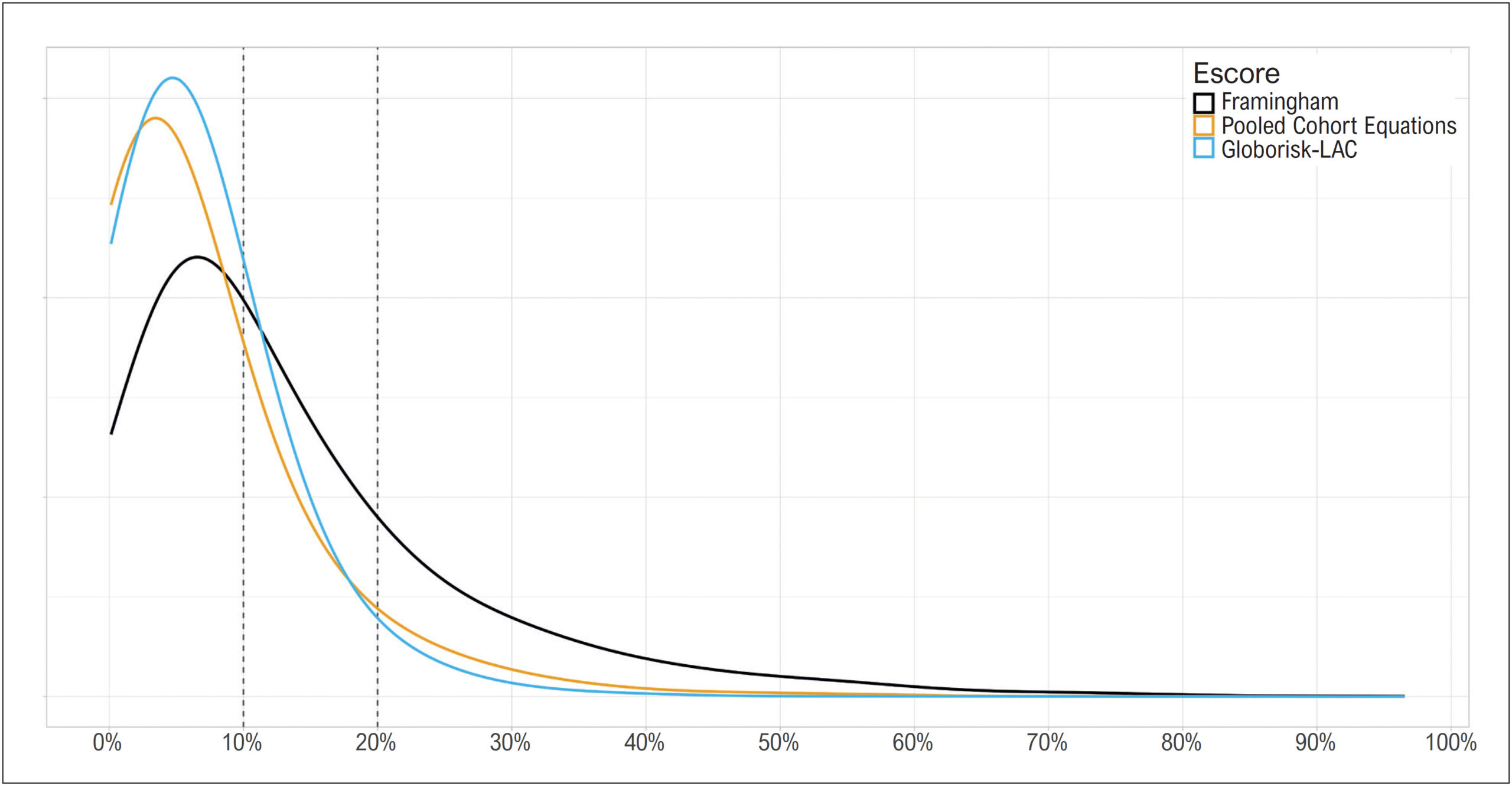
Agreement between Framingham, Pooled Cohort Equations, and Globorisk-LAC in the Estimation of Cardiovascular Risk in Brazil, 2013

Leonardo Ferreira Fontenelle et al. Thiago Dias Sarti Gabriela Callo Quinte Ana Paula Santana Coelho Almeida José Geraldo Mill

Abstract

Background

The Framingham risk score and Pooled Cohort Equations (PCE) have never been recalibrated for the Brazilian population. In contrast, the Globorisk-LAC score was recently derived using a methodology analogous to the PCE and has been recalibrated for Latin American countries.

Objectives

To describe the agreement between the Framingham, PCE, and Globorisk-LAC scores in estimating the 10-year cardiovascular risk in the Brazilian population.

Methods

This cross-sectional study used the three scores to estimate cardiovascular risk in participants aged 40 to 74 years without a history of cardiovascular disease based on data from the 2013 National Health Survey (PNS). The agreement was estimated as (i) the percentage of participants in which the risk estimated by one score was between 0.80 and 1.25 times the risk estimated by another score and (ii) based on the Gwet’s agreement coefficient (AC1) according to risk categories (low, intermediate, and high).

Results

A total of 4,416 participants were included from 8,952 participants from the PNS with a laboratory component. The median (interquartile range) of the estimated 10-year cardiovascular risk was 9.2% (5.1 to 17.8) according to the Framingham, 3.6% (1.7 to 8.2) according to the PCE, and 4.7% (2.8 to 8.1) according to the Globorisk-LAC. The risk estimated using the Framingham agreed with the Globorisk-LAC and PCE in 6.4% and 1.8% of the cases, respectively, whereas the PCE and Globorisk-LAC agreed in 34.7% of the cases. When considering the risk stratification, the respective AC1 values were 0.454, 0.489, and 0.874.

Conclusions

The three cardiovascular risk scores showed low levels of agreement with each other. The reasons for this disagreement suggests that Globorisk-LAC is a strong candidate to replace the Framingham in the Brazilian guidelines for dyslipidemia.

  • Brazil
  • Heart Disease Risk Factors
  • Risk Assessment
Read Full Article
Creative Commons Attribution (CC BY) Creative Commons license
28/07/2025 DOI: 10.36660/abc.20240405i Views 2
Association between Self-Care Behaviors and Inadequate Glycemic Control in ELSA-Brasil Participants with Type 2 Diabetes
Original Article

Association between Self-Care Behaviors and Inadequate Glycemic Control in ELSA-Brasil Participants with Type 2 Diabetes

Gisele de Souza Tupinambá et al. Odaleia Barbosa de Aguiar Bruno Pereira de Moura Maria Inês Schmidt … Maria Del Carmen Bisi Molina Rosane Harter Griep Maria de Jesus Mendes da Fonseca

Abstract

Background

Type 2 diabetes is a prevalent chronic condition, often associated with metabolic and cardiovascular complications.

Objective

This study aimed to evaluate the association between self-care behaviors, such as consumption of ultra-processed foods, vegetables, greens and fruits, physical activity, adherence to pharmacological treatment and smoking, and inadequate glycemic control in ELSA-Brasil participants with type 2 diabetes.

Methods

This is a cross-sectional study with 2,567 individuals, in which the associations between the variables of interest were analyzed by multiple logistic regression (p<0.05).

Results

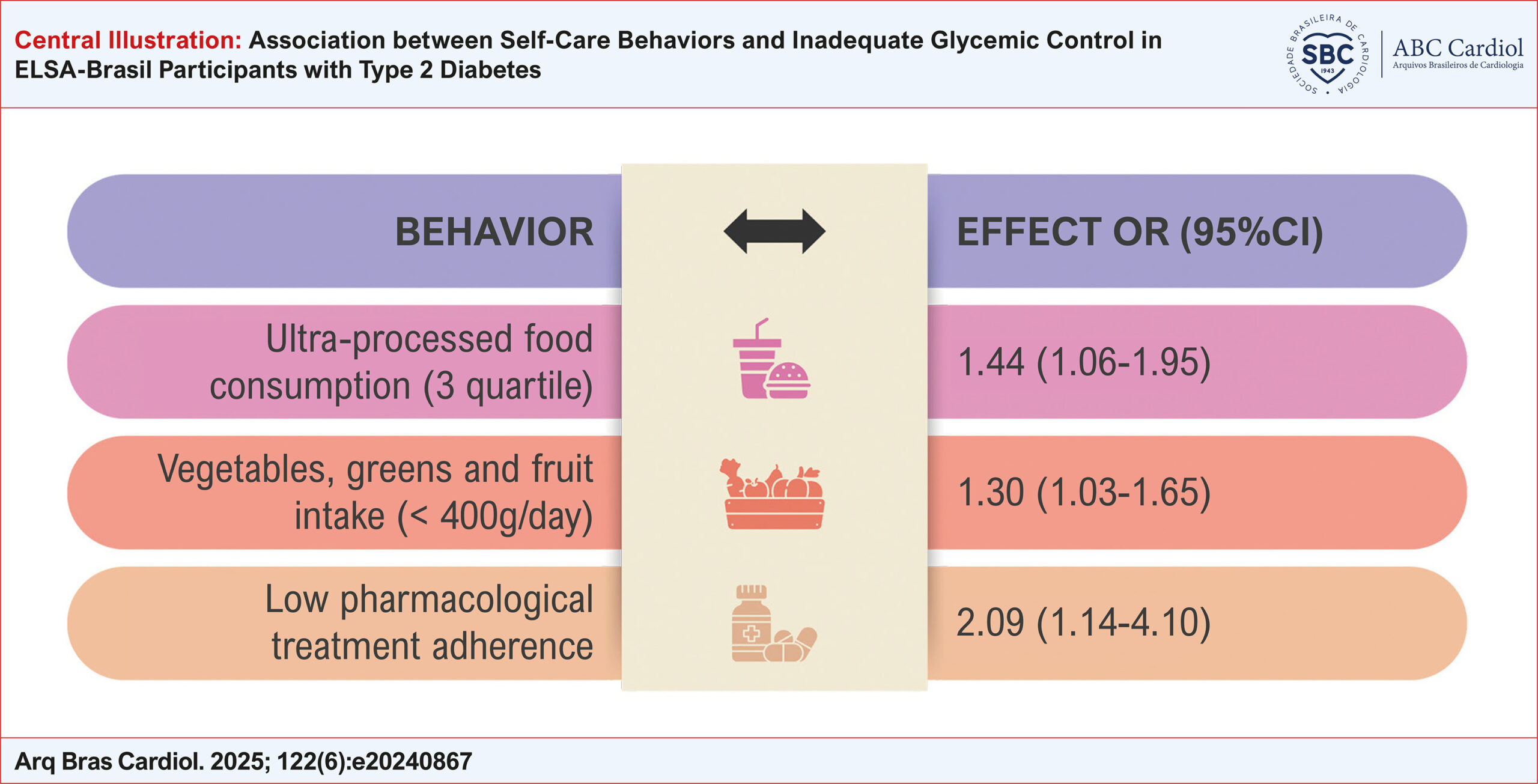
Adherence to pharmacological treatment was the only behavior consistently associated with inadequate glycemic control. Participants with low adherence were more than twice as likely to have inadequate levels of glycated hemoglobin (OR: 2.09; 95%CI 1.14–4.10). Consumption of ultra-processed foods and insufficient intake of leafy vegetables showed initial associations that did not remain significant after adjustments, suggesting the influence of additional factors, such as socioeconomic conditions.

Conclusion

These results reinforce the need for interventions that combine health education, self-care support and public policies aimed at equality of treatment access, contributing to glycemic control and the reduction of complications associated with type 2 diabetes.

  • Glycemic Control
  • medication adherence
  • Processed Food
  • Self-Care
  • Type 2 Diabetes Mellitus
Read Full Article
Creative Commons Attribution (CC BY) Creative Commons license
07/07/2025 DOI: 10.36660/abc.20240867i Views 1
Direct Oral Anticoagulants versus Aspirin for Secondary Stroke Prevention in Patients with Embolic Stroke of Undetermined Source: An Updated Systematic Review and Meta-Analysis of Randomized Controlled Trials
Review Article

Direct Oral Anticoagulants versus Aspirin for Secondary Stroke Prevention in Patients with Embolic Stroke of Undetermined Source: An Updated Systematic Review and Meta-Analysis of Randomized Controlled Trials

Juan Armando Talavera et al. Larissa Teixeira Thomaz Alexandre Costa Denilsa Navalha … Tathiane Brum Gibicoski Nicole Fernandez Jeffrey Healey Luciana Armaganijan Guilherme Dagostin de Carvalho

Abstract

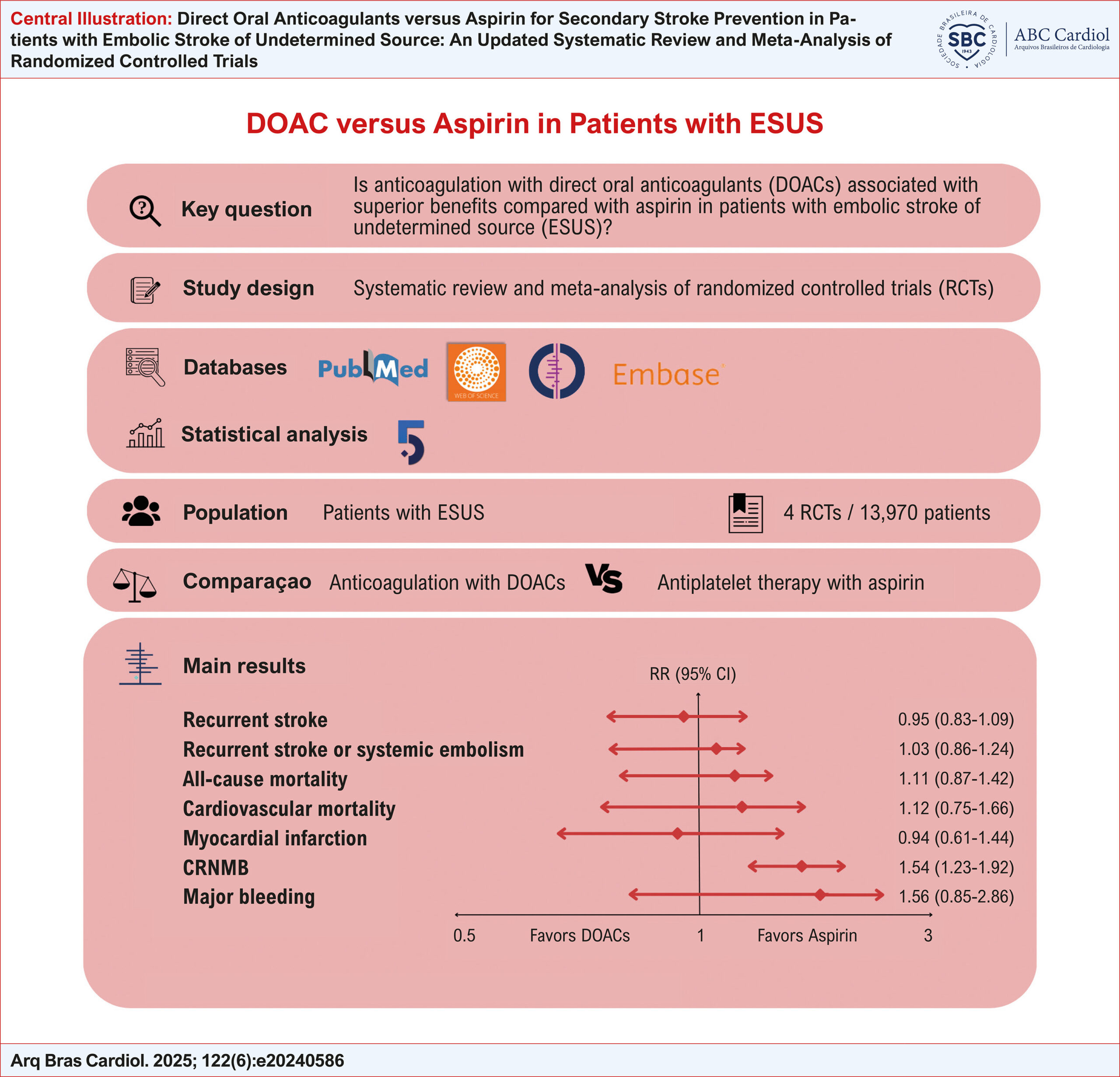
Embolic stroke of undetermined source (ESUS) accounts for around 20% of ischemic strokes. The ideal treatment for secondary prevention in ESUS remains unclear. This study aimed to perform a systematic review and meta-analysis of randomized controlled trials (RCTs) comparing the safety and efficacy of direct oral anticoagulants (DOACs) versus aspirin in patients with ESUS. A systematic search of PubMed, Embase, Cochrane, and Web of Science databases was conducted for eligible trials until March 2024. The primary outcome was recurrent stroke, while safety outcomes included major bleeding and clinically relevant non-major bleeding (CRNMB). Hazard ratios (HRs) with 95% confidence intervals (CIs) were calculated for analysis. Four RCTs were included, involving 13,970 patients, half of whom were randomized to the DOACs group. Over a mean follow-up of 16 months, DOACs did not significantly reduce recurrent stroke (HR: 0.95; 95% CI: 0.81-1.09; p=0.44), ischemic stroke (HR: 0.91; 95% CI: 0.79-1.06; p=0.23), all-cause mortality (HR: 1.11; 95% CI: 0.87-1.42; p=0.40), or major bleeding (HR: 1.56; 95% CI: 0.85%-2.86; p=0.15) compared to aspirin. However, DOACs were associated with a significantly higher risk of CRNMB (HR: 1.54; 95% CI: 1.23-1.92; p=0.0002). Subgroup analysis revealed no significant differences in stroke recurrence among patients with low or high CHA2-DS2-VASc scores. DOACs did not demonstrate superior efficacy over aspirin in preventing recurrent stroke among ESUS patients and were linked to an increased risk of CRNMB.

  • Anticoagulants
  • Embolic Stroke
  • Platelet Aggregation Inhibitors
Read Full Article
Creative Commons Attribution (CC BY) Creative Commons license
07/07/2025 DOI: 10.36660/abc.20240586i
Editorial

Hospitalizations and In-Hospital Mortality from Heart Failure in Brazil: An Updated Overview

Adriana Lopes Latado

Heart failure (HF) accounts for a growing burden of disease and healthcare costs both globally and in Brazil. It represents the final common pathway of several cardiovascular diseases, including specific and well-defined conditions such as ischemic heart disease. Prevalence and incidence data have shown progressive increases over recent decades, with the current HF prevalence estimated at 2.5% among U.S. adults, and projected to reach 3.0% by 2030., HF-related hospital admissions are also on the rise in the United States. Meanwhile, adjusted in-hospital mortality has declined, from 6.8% in 2002 to 4.9% in 2016, consistent across age groups, sex, and racial/ethnic categories.

In Brazil, the self-reported prevalence of HF is estimated at 1.1% among adults over 18 years old and 3.3% in individuals over 60. Regarding hospitalizations and in-hospital mortality, temporal trend studies indicate a decline in the number of HF-related admissions, with hospital mortality ranging from 9% to 17%, also showing a decreasing trend, especially over the past decade.,, However, national data remain scarce, with limitations in population representativeness and a need for regular updates.

[…]

  • Heart Failure
  • Hospital Mortality
  • Hospitalization
  • Prognosis
Read Full Article
Creative Commons Attribution (CC BY) Creative Commons license
04/07/2025 DOI: 10.36660/abc.20250284i Views 1
Figure 1
Editorial

Why Cardiology Can No Longer Ignore Sexual Health?

Ricardo Stein et al. Filipe Ferrari

Introduction

In an era of sophisticated diagnostics and personalized therapies, one aspect of patient care remains routinely overlooked: sexual health. Sexual activity (SA) is more than a source of pleasure; it is also a marker of vitality, intimacy, and emotional resilience.– For individuals with cardiovascular disease (CVD), the desire to resume SA often signals not only physical recovery but also emotional healing and renewed self-confidence. On the other hand, we encourage patients to walk, to eat better, and to take their medications. Nevertheless, when it comes to sex, silence prevails.

Although SA imposes cardiovascular demands comparable to moderate physical activity and is generally considered safe for most patients with stable CVD, many remain uncertain about when or how to resume sexual life after myocardial infarction (MI), coronary artery bypass graft surgery, and heart failure. They are left with unanswered questions because the topic is often met with discomfort or vague reassurances. Studies have consistently shown that patients want – and need – clear guidance on sexual functioning. However, cultural taboos, embarrassment, and lack of professional training continue to silence this conversation in clinical settings., In one study, only 16% of cardiologists routinely discussed sexual function, while 70% rarely or never offered guidance after MI. The most commonly cited barriers included time constraints, lack of privacy, and insufficient training.

[…]

  • Cardiovascular Diseases
  • Counseling
  • sexual behavior
Read Full Article
Creative Commons Attribution (CC BY) Creative Commons license
04/07/2025 DOI: 10.36660/abc.20250326i
Letter to the Editor

How to Improve Clinical Outcomes in Women with Atrial Fibrillation

Naoya Kataoka et al. Teruhiko Imamura

To the editor

Anticoagulation is a standard therapeutic approach for patients with atrial fibrillation (AF), requiring careful consideration of the balance between antithrombotic efficacy and the risk of hemorrhagic complications. The authors examined the rate of anticoagulant prescriptions among patients admitted to the emergency department with symptomatic AF, revealing a higher prevalence of non-prescription in women compared to men. This observation raises several important concerns.

[…]

  • Anticoagulation
  • Catheter Ablation
  • Stroke
Read Full Article
Creative Commons Attribution (CC BY) Creative Commons license
27/06/2025 DOI: 10.36660/abc.20250095i Views 1
Brazilian Multicenter Registry of Alcohol Septal Ablation for Patients with Symptomatic Hypertrophic Obstructive Cardiomyopathy – BRASA Registry
Original Article

Brazilian Multicenter Registry of Alcohol Septal Ablation for Patients with Symptomatic Hypertrophic Obstructive Cardiomyopathy – BRASA Registry

Pedro Jallad et al. Marilia Soliani Pedro Henrique Almeida Marins Fábio Fernandes … Edmundo Arteaga-Fernandez Vagner Madrini Pedro Lemos Neto Charles Mady Felix Ramires Alexandre A. Abizaid Fábio Sândoli de Brito Jr Henrique Barbosa Ribeiro

Abstract

Background

Alcohol septal ablation (ASA) is an alternative to surgical myectomy for patients with symptomatic hypertrophic obstructive cardiomyopathy (HOCM) and significant left ventricular (LV) outflow tract (LVOT) obstruction. Although widely studied worldwide, data on ASA outcomes in Brazil are still limited.

Objective

To assess the safety and effectiveness of ASA in symptomatic HOCM patients receiving optimal medical therapy using current techniques across multiple centers in Brazil.

Methods

Patients with HOCM and angina (classified by the Canadian Cardiovascular Society [CCS]) or dyspnea (classified by the New York Heart Association [NYHA]) class >II who did not respond to optimal medical treatment were included. The primary efficacy endpoint was defined as a reduction of more than 50% in the maximum resting LVOT gradient, with a final gradient <50 mmHg. Patients were classified as responders or nonresponders. A p-value <0.05 was considered statistically significant.

Results

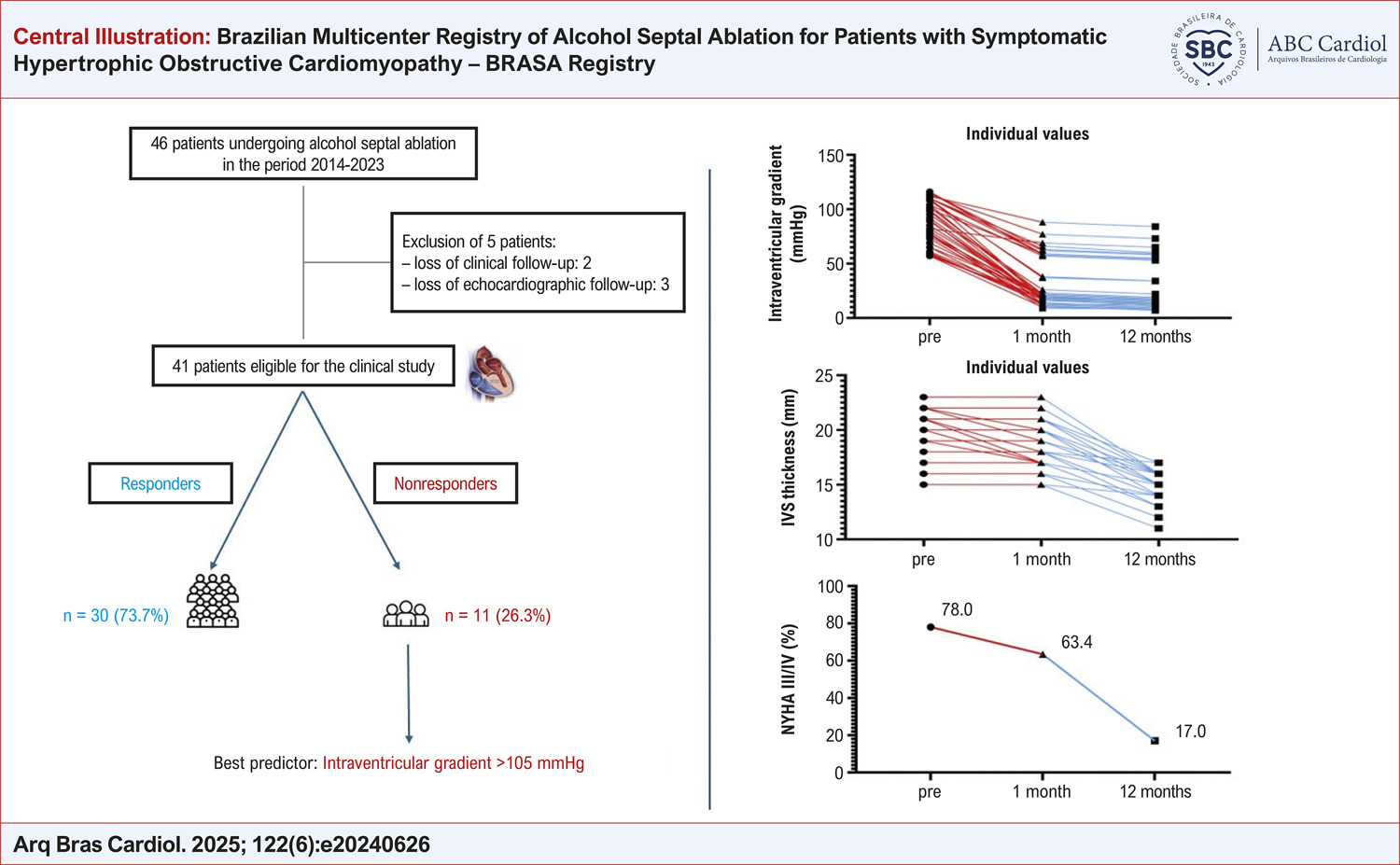
A total of 41 patients (median age 66.4 years; 73% female) underwent ASA. At baseline, 93.2% were in NYHA class III/IV or CCS class III/IV. The mean LV ejection fraction (LVEF) was 66.4%, and the mean LVOT gradient was 88.4 mmHg. After 12 months, 92.8% had improved to NYHA class I/II or CCS class I/II (p<0.01). The mean LVOT gradient dropped from 88.4 mmHg to 27.0 mmHg (p=0.003), and interventricular septum (IVS) thickness decreased from 19.3 mm to 14.7 mm (p=0.048). Responders had lower baseline gradients (73.4 vs 112.6 mmHg, p=0.04) and fewer hospitalizations (21.1% vs 82.4%, p=0.04). Complete atrioventricular block occurred in 16.7% of patients, and 4.8% required pacemakers. No deaths were reported during a median follow-up of 394 days. At the last in-person evaluation, 78.4% were in functional class I/II.

Conclusions

ASA is a safe, effective option for relieving symptoms in selected HOCM patients. It reduces LVOT gradient and septal thickness. Patients with higher baseline gradients were less likely to respond to the procedure.

  • Catheter Ablation
  • Hypertrophic Cardiomyopathy
  • Intervenção Coronária Percutânea
Read Full Article
Creative Commons Attribution (CC BY) Creative Commons license
27/06/2025 DOI: 10.36660/abc.20240626i Views 1
Editorial

Hypertension as another Facet of Passive Smoking

Gilson Soares Feitosa

Smoking and hypertension are recognized risk factors for the development of cardiovascular disease. Efforts have been made to clarify their potential harm, as well as the benefits resulting from their control among the general population.

Passive smoking has received less attention regarding its harmful role. Initially, the focus was on irritation of the rhino and nasopharynx, and only more recently, on lung-related problems and cardiovascular diseases.

[…]

  • arterial hypertension
  • Passive Smoking
  • smoking
Read Full Article
Creative Commons Attribution (CC BY) Creative Commons license
20/06/2025 DOI: 10.36660/abc.20250268i
Editorial

The ELSA-Brasil Study and Our Myocardial Deformation

Márcio S. M. Lima

The analysis of myocardial deformation (strain) using speckle tracking technology in echocardiography is no longer something new and innovative. Several years have passed since its validation. Compared to left ventricular (LV) ejection fraction, global longitudinal strain (GLS) is a more accurate assessment of systolic function, important in several situations, such as cardio-oncology, valvular heart disease, cardiomyopathies, and ischemic heart disease. It is more accurate and reproducible data, is closely correlated with prognosis, and is currently available in most echocardiogram machines. On the other hand, this analysis requires an adequate acoustic window, and the issue of inter-vendor variability must still be taken into account.

A highly significant step that brought the analysis of myocardial deformation to our Brazilian reality was taken in 2023 with the publication of the “Position Statement on the Use of Myocardial Strain in Cardiology Routines by the Brazilian Society of Cardiology’s Department Of Cardiovascular Imaging – 2023” in the Arquivos Brasileiros de Cardiologia journal. Several experts joined in the production of this important document that increased cardiologists’ knowledge about GLS. Published in the current issue of the Arquivos Brasileiros de Cardiologia, another step was taken through the ELSA-Brasil study. ELSA-Brasil is a broad epidemiological study with more than 15,000 public servants from universities and research institutions on cardiovascular diseases and diabetes, carried out in 6 Brazilian cities (São Paulo, Rio de Janeiro, Belo Horizonte, Vitória, Salvador, and Porto Alegre), with several publications in the literature. This time, the focus was on determining normal values for LVGLS and right ventricular free wall longitudinal strain (RVFWLS), that is, an investigation of myocardial deformation in our population.

[…]

  • Echocardiography
  • Longitudinal Studies
  • Ventricular Function
Read Full Article
Creative Commons Attribution (CC BY) Creative Commons license
20/06/2025 DOI: 10.36660/abc.20250265i Views 1
Left and Right Ventricular Strain in an Adult Brazilian Population from ELSA-Brasil Study: Reference Values and their Determinants
Original Article

Left and Right Ventricular Strain in an Adult Brazilian Population from ELSA-Brasil Study: Reference Values and their Determinants

Eduardo Gatti Pianca et al. Murilo Foppa Giulia Bevilacqua Schmitz Wilson Cañon-Montañez … Bruce Bartholow Duncan Angela Barreto Santiago Santos

Abstract

Background

Impaired left ventricular (LV) and right ventricular functions are important predictors of cardiovascular risk. Global longitudinal strain (GLS) provides superior sensitivity for assessing systolic function compared to traditional parameters, enhancing diagnostic accuracy in various cardiac conditions. However, GLS reference values in diverse populations are lacking.

Objectives

To establish reference values for LVGLS and right ventricular free wall longitudinal strain (RVFWLS) in a Brazilian multiethnic population without cardiovascular risk factors or disease. We also explore how clinical and echocardiographic factors influence GLS distribution, addressing a gap in global guidelines that often rely on data from homogeneous or geographically distant populations.

Methods

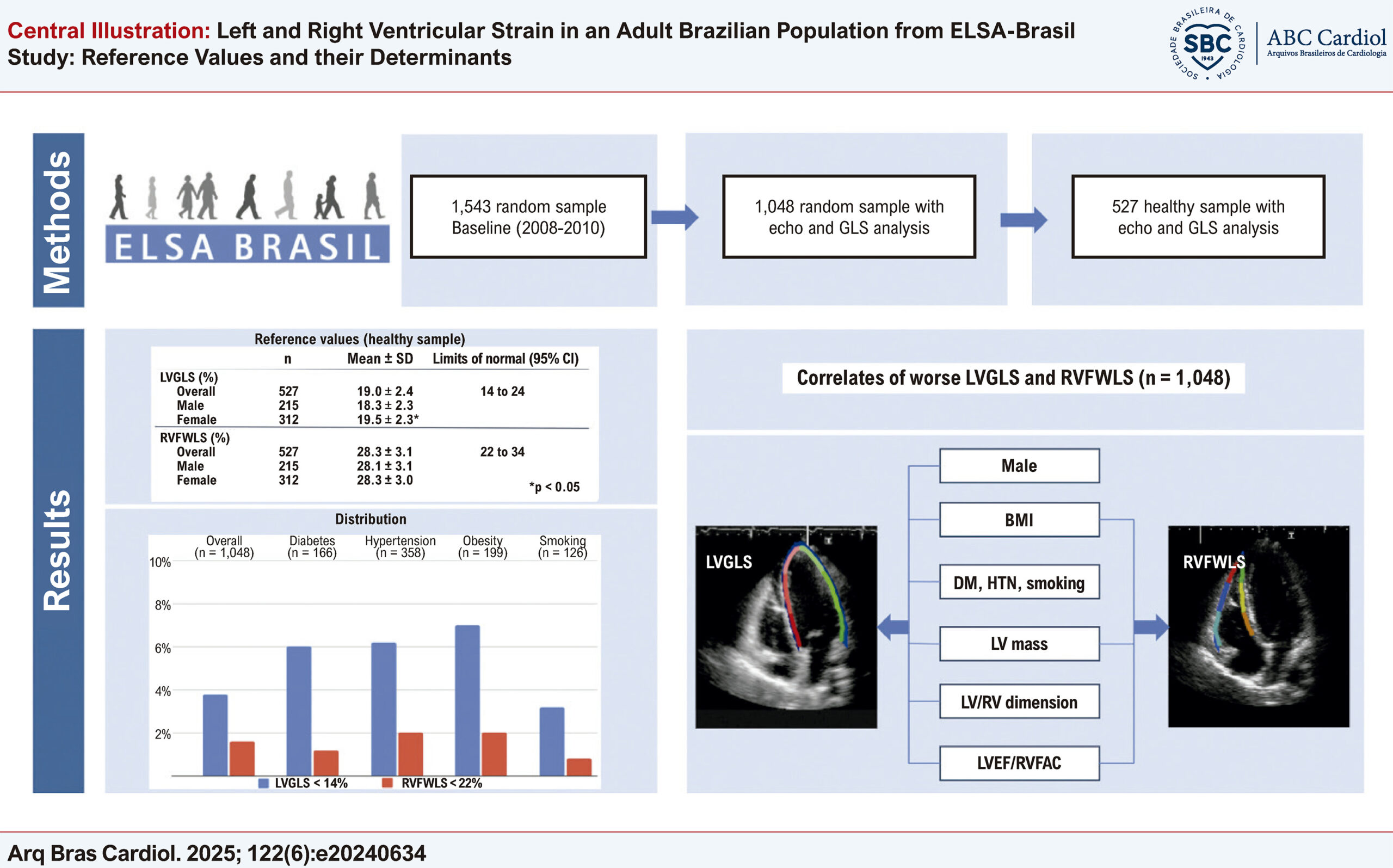
We included 1,048 participants from the ELSA-Brasil cohort who underwent echocardiography with GLS analysis. A healthy subsample (n = 527) was defined by excluding individuals with cardiovascular or renal disease, hypertension, or diabetes to establish GLS reference ranges. The prevalence of abnormal GLS was assessed, and factors associated with reduced LVGLS and RVFWLS were identified. Statistical significance was defined as p < 0.05.

Results

In the healthy subsample (mean age 50.2 years, 59% female), mean LVGLS was 19.0% (95% confidence interval: 14.3 to 23.8) and RVFWLS was 28.3% (95% confidence interval: 22.3 to 34.3). Females exhibited higher LVGLS and RVFWLS values than males, with no significant age-related differences. Abnormal LVGLS and RVFWLS were observed in 3.8% and 1.6% of participants, respectively. Lower LVGLS was associated with obesity, hypertension, and diabetes; reduced RVFWLS correlated with higher body mass index and LV mass.

Conclusions

We propose reference values for LVGLS and RVFWLS in a large Brazilian cohort, highlighting associations with cardiovascular comorbidities and ventricular structure.

  • Cohort Studies
  • Echocardiography
  • Global Longitudinal Strain
  • Heart Ventricles
  • Ventricular Function
Read Full Article
Creative Commons Attribution (CC BY) Creative Commons license
16/06/2025 DOI: 10.36660/abc.20240634i Views 1
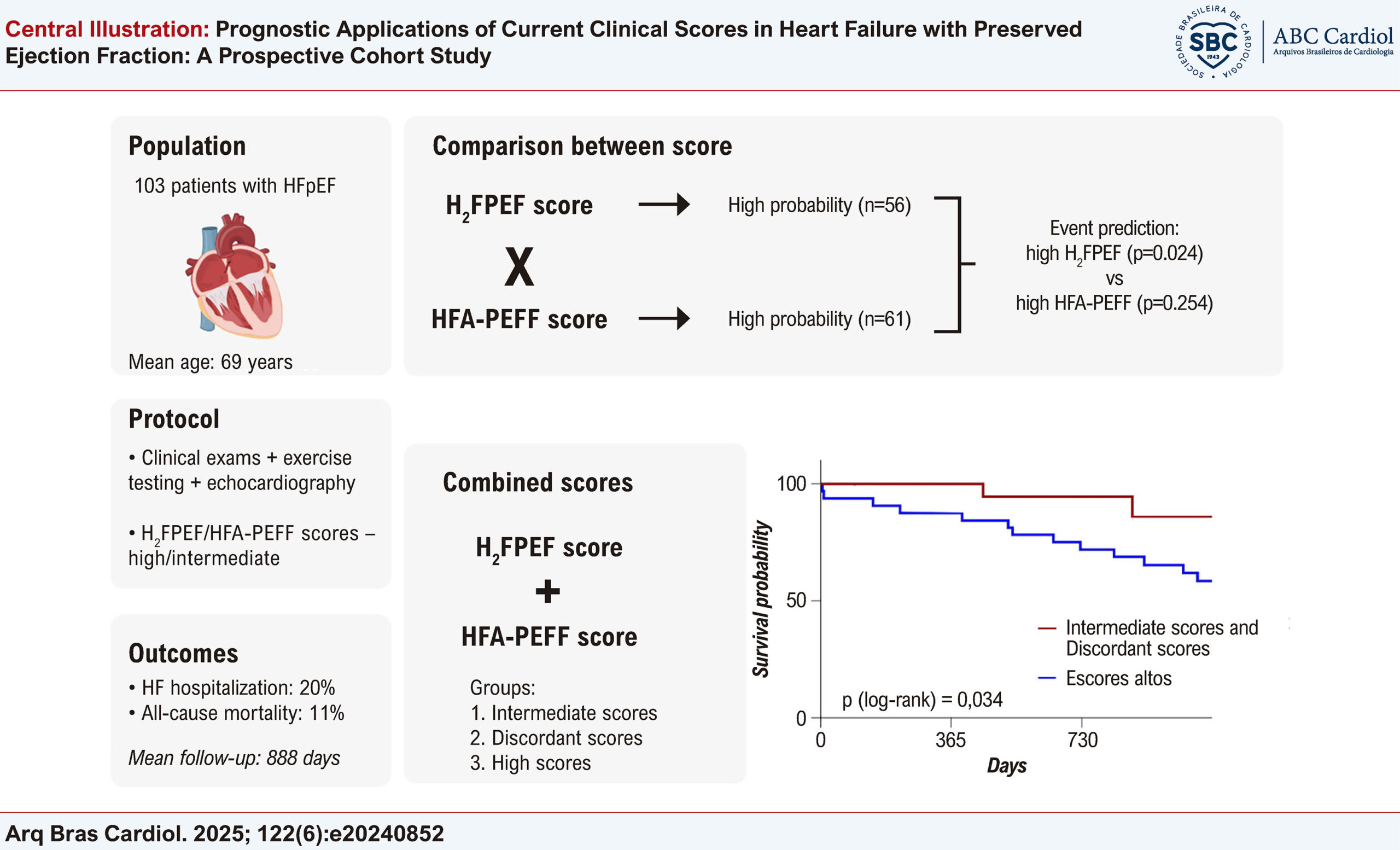
Prognostic Applications of Current Clinical Scores in Heart Failure with Preserved Ejection Fraction: A Prospective Cohort Study
Original Article

Prognostic Applications of Current Clinical Scores in Heart Failure with Preserved Ejection Fraction: A Prospective Cohort Study

Fernando Colares Barros et al. Jéssica Cristina de Cezaro Pietro Donelli Costa Giovanni Donelli Costa … Angela Barreto Santiago Santos Eduardo Gatti Pianca Willian Roberto Menegazzo Fernando Luís Scolari Anderson Donelli da Silveira

Abstract

Background

The H2FPEF and HFA-PEFF scores were developed to support the diagnosis of heart failure with preserved ejection fraction (HFpEF) and may also help predict cardiovascular outcomes.

Objective

To assess the prognostic value of these scores in a cohort of individuals with HFpEF.

Methods

This prospective study was conducted at a tertiary hospital in Brazil between March 2019 and December 2021. After clinical evaluation, echocardiography, and exercise testing, the H2FPEF and HFA-PEFF scores were calculated. Patients were classified into intermediate probability groups (H2FPEF: 2-5 points; HFA-PEFF: 2-4 points) and high probability groups (H2FPEF >5 points; HFA-PEFF >4 points). The primary outcome was a composite of all-cause mortality and hospitalizations due to HFpEF. Statistical significance was set at p<0.05.

Results

A total of 103 patients were followed for an average of 888 days (±291). The mean age was 69 years (±8.3), and 61% were women. Twenty-seven patients (26.2%) experienced primary outcomes, totaling 32 events—11 deaths and 21 hospitalizations due to HFpEF. In the receiver operating characteristic (ROC) curve analysis, the H2FPEF score showed better predictive ability for the outcomes (area under the curve [AUC]: 0.637, 95% CI: 0.518–0.756, p=0.035) compared to the HFA-PEFF score (AUC: 0.572, 95% CI: 0.448–0.696, p=0.270). In the Kaplan-Meier analysis, high-probability classification by both scores was significantly associated with the occurrence of outcomes (log-rank p=0.034), compared to the intermediate score group or patients with differing classifications between the two scores.

Conclusions

The H2FPEF score showed better performance than the HFA-PEFF score in predicting outcomes in patients with HFpEF. Findings from this contemporary study conducted in Brazil contribute to risk stratification in clinical practice.

  • Diagnosis
  • Heart Failure
  • Prognosis
Read Full Article
Creative Commons Attribution (CC BY) Creative Commons license
16/06/2025 DOI: 10.36660/abc.20240852i Views 1
The Impact of Technology-Based Cardiac Rehabilitation on Exercise Capacity and Adherence in Patients with Coronary Artery Disease: An Artificial Intelligence Analysis
Original Article

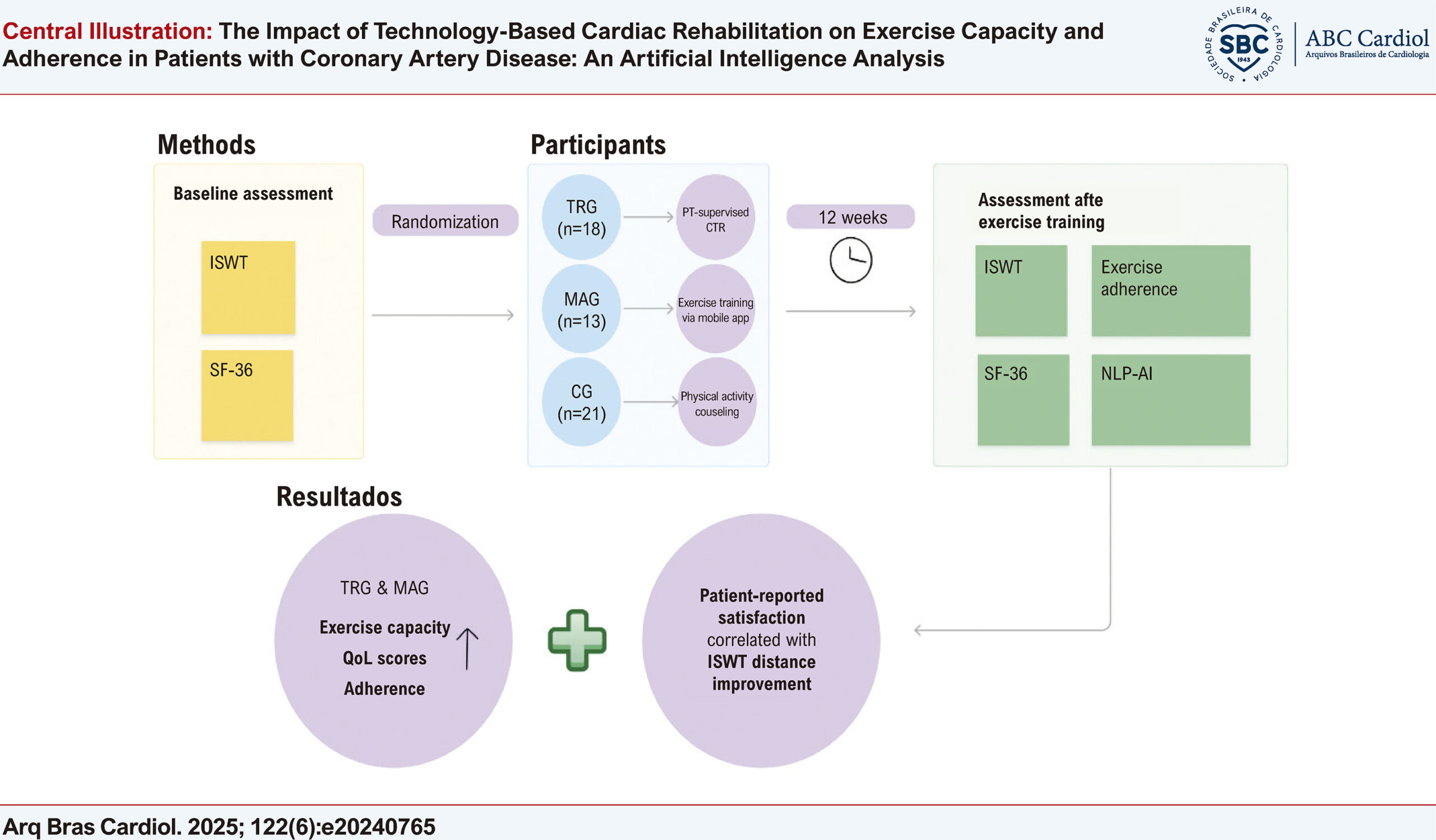
The Impact of Technology-Based Cardiac Rehabilitation on Exercise Capacity and Adherence in Patients with Coronary Artery Disease: An Artificial Intelligence Analysis

Dilara Saklica et al. Naciye Vardar-Yagli Melda Saglam Deniz Yuce … Ahmet Hakan Ates Hikmet Yorgun

Abstract

Background

Exercise training programs improve exercise capacity and quality of life (QoL) in patients with coronary artery disease (CAD). Although artificial intelligence (AI) has been used to design such programs, there are still few studies evaluating their effectiveness.

Objectives

This study compared the effects of technology-based and traditional programs for cardiac rehabilitation (CR) on exercise capacity and participation in patients with CAD using AI for data analysis.

Methods

A total of 52 patients with CAD were randomly assigned to three groups: i) telerehabilitation group (TRG) (n=18); ii) mobile application group (MAG) (n=13); and iii) control group (CG), which received only physical activity recommendations (n=21). TRG and MAG participants completed a 12-week program with calisthenic and resistance exercises three times a week. Exercise capacity was assessed using the Incremental Shuttle Walk Test (ISWT), and QoL was measured with the Short Form-36 (SF-36). Patient feedback was analyzed using a fine-tuned BERT-based natural language processing (NLP) model. Anomaly detection methods were applied to find mismatches between self-reported adherence and ISWT results. Statistical significance was set at p<0.05.

Results

Both TRG [44.4% female] (Δ=87.2±15.2 m) and MAG [50% female] (Δ=89.4±70.4 m) had significant ISWT improvements compared to CG [47.6% female] (Δ=10.9±28.2 m) (p=0.001). Adherence was higher in TRG (100%) and MAG (80%) than in CG (30%) (p<0.001). Patient-reported satisfaction, analyzed via NLP, showed a significant positive correlation with ISWT improvements (r=0.75, p<0.001). Findings show the potential of AI to support outcome assessment in CR.

Conclusions

Technology-based CR programs improve exercise capacity and adherence in patients with CAD, supporting the use of AI-driven tools. NLP analysis helped link patient feedback to exercise outcomes and detect inconsistencies, showing its value in enhancing CR evaluation.

  • Artificial Intelligence
  • Cardiac Rehabilitation
  • Coronary Artery Disease
  • Exercise
Read Full Article
Creative Commons Attribution (CC BY) Creative Commons license
06/06/2025 DOI: 10.36660/abc.20240765i Views 1
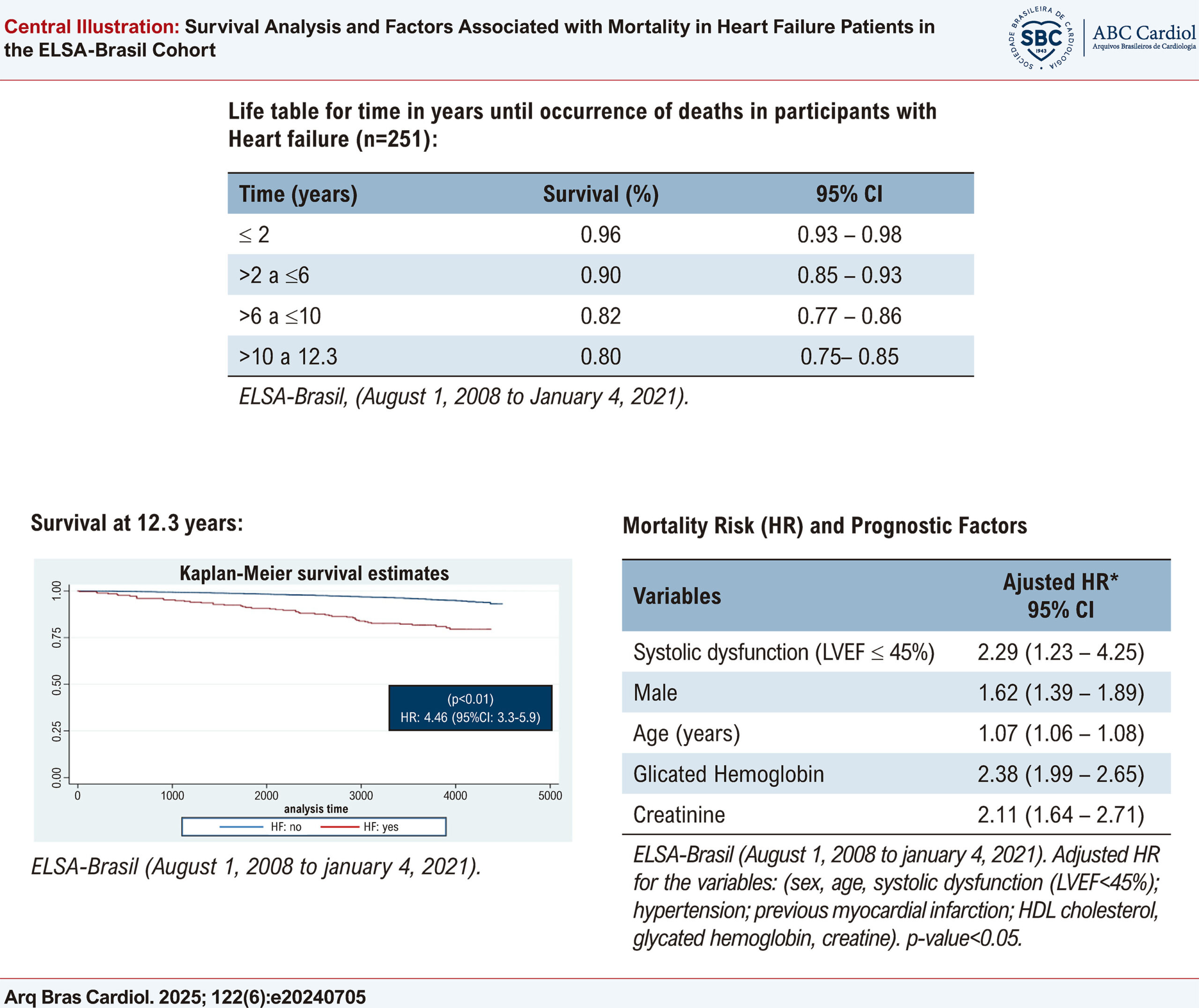
Survival Analysis and Factors Associated with Mortality in Heart Failure Patients in the ELSA-Brasil Cohort
Original Article

Survival Analysis and Factors Associated with Mortality in Heart Failure Patients in the ELSA-Brasil Cohort

Ana Paula de Oliveira Lédo et al. Sheila Maria Alvim Matos Maria da Conceição Almeida Luciana Pereira Fernandes Roque Aras

Abstract

Background

Heart failure (HF) is one of the leading causes of morbidity and mortality worldwide. Few studies have evaluated the survival and prognostic factors of patients with this condition in light of the therapeutic advances of recent decades.

Objectives

To describe the survival, possible factors associated with mortality, and clinical characteristics of participants with HF in the Brazilian Longitudinal Study of Adult Health (ELSA-Brasil).

Methods

The cohort followed 15105 participants from 2008 to 2023. Sociodemographic variables, laboratory tests, electrocardiogram, two-dimensional echocardiogram, lifestyle habits, comorbidities, and medication use were evaluated. Survival probability was estimated using Kaplan-Meier curves and log-rank tests. Cox regression modeling was used to calculate the crude and adjusted Hazard Ratios (HR) with their respective 95% confidence intervals. The significance criterion was p<0.05.

Results

During the inclusion phase, 251 participants with an HF diagnosis were selected (2008-2010). Over approximately 12.3 years of follow-up, 48 (19%) died. The overall survival of participants with HF at 2, 6, 10, and 12.3 years of follow-up was 96%, 89%, 82%, and 80%, respectively. The mortality risk was 4.5 times higher (HR: 4.46; 95% CI: 3.3–5.9) compared to the unaffected group (p<0.01), and even after applying an adjusted model, the mortality risk remained twice as high (HR: 1.77; 95% CI: 1.3–2.4). Variables associated with a worse prognosis included male sex, advanced age, systolic dysfunction (LVEF<45%), hypertension, diabetes mellitus, and chronic kidney disease.

Conclusion

We found high mortality among participants with HF in the ELSA-Brasil cohort.

  • Heart Failure
  • Mortality
  • Prognosis
  • Survival
Read Full Article
Creative Commons Attribution (CC BY) Creative Commons license
06/06/2025 DOI: 10.36660/abc.20240705i Views 1
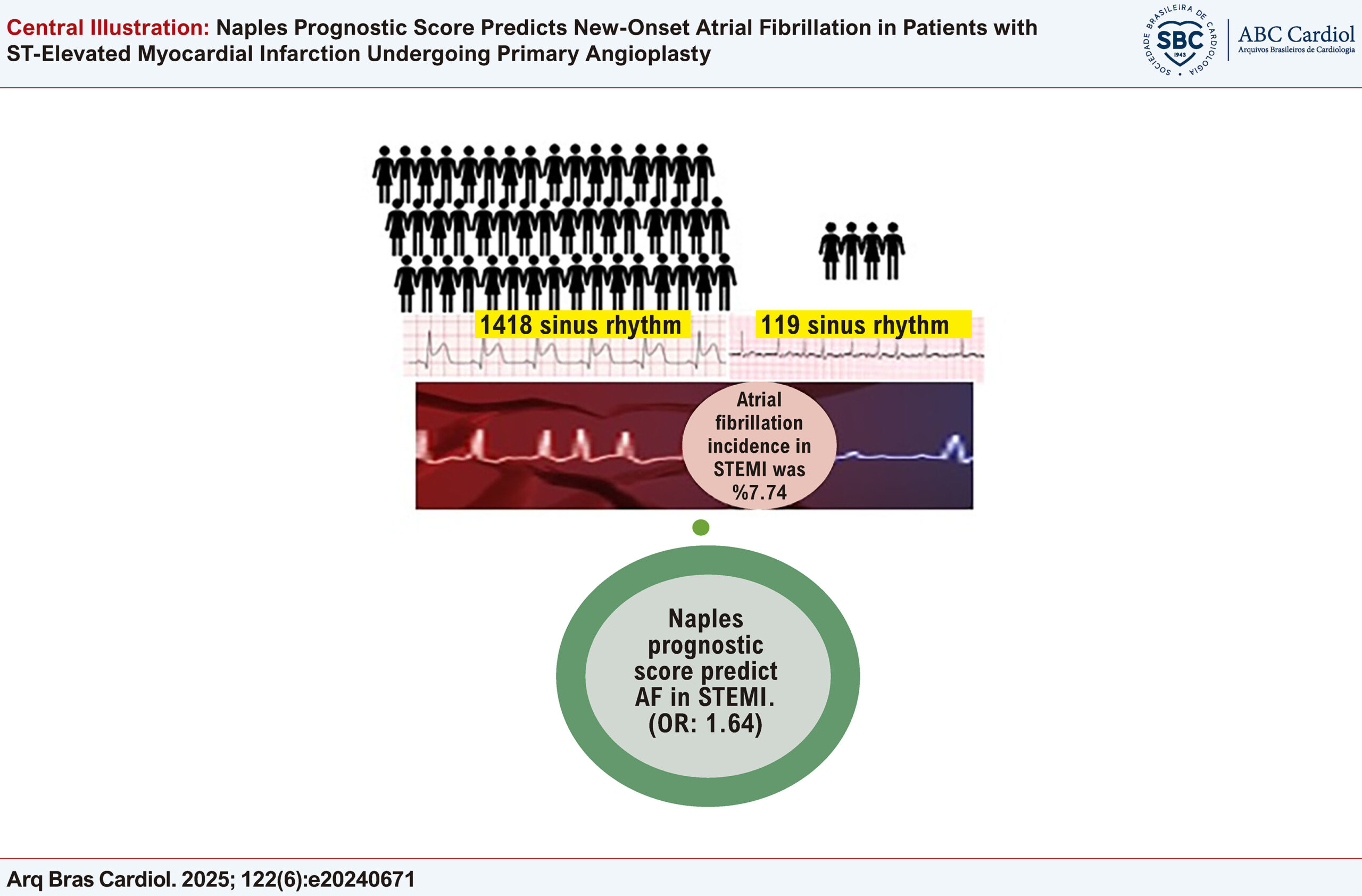
Naples Prognostic Score Predicts New-Onset Atrial Fibrillation in Patients with ST-Elevated Myocardial Infarction Undergoing Primary Angioplasty
Original Article

Naples Prognostic Score Predicts New-Onset Atrial Fibrillation in Patients with ST-Elevated Myocardial Infarction Undergoing Primary Angioplasty

Dogac Oksen et al. Sukru Arslan Muhammed Heja Gecit Esra Erturk Tekin … Veysel Oktay Okay Abaci

Abstract

Background

New-onset atrial fibrillation (NOAF) is a typical complication in patients with ST-segment elevated myocardial infarction (STEMI) patients undergoing primary percutaneous coronary intervention (pPCI). Previous studies have investigated inflammation as a NOAF predictor. The Naples prognostic score (NPS) is a novel marker of inflammation and nutritional status.

Objective

The objective of this study was to evaluate the predictive power of the NPS for NOAF.

Methods

This study enrolled 1537 consecutive STEMI who underwent pPCI. The patients who presented NOAF during hospital admission and those who remained in sinus rhythm (RSR) were compared in terms of baseline characteristics. Univariate and multivariate analyses were carried out to identify variables predicting NOAF development, and p< 0.05 was considered statistically significant.

Results

NOAF was detected in 7.74% (n: 119) of the participants. The mean age (67.03±13.48 vs 57.84±11.31; p <0.001) and NPS (2.53±1.17 vs 2.25±1.10, p=0.008) were significantly higher in the NOAF group. Multivariate analysis revealed age (Odds ratio [OR]: 1.045 for a year, 95% confidence interval [CI]: 1.019–1.071, p=0.001), NPS (OR: 1.645, 95% CI: 0.984–2.748, p=0.037) and left atrial dimensions (OR: 2.542 for cm, 95% CI: 1.488–4.342, p=0.001) as independent predictors of NOAF.

Conclusions

The NPS was an independent predictor of NOAF in STEMI patients, in addition to classical factors such as age and left atrial dimensions. This score, mostly related to an inflammatory burden, may help to predict NOAF incidence and select better potential therapies aimed at abating inflammation after myocardial infarction.

  • Angioplasty
  • Atrial Fibrillation
  • Myocardial Infarction
  • Prognosis
Read Full Article
Creative Commons Attribution (CC BY) Creative Commons license
06/06/2025 DOI: 10.36660/abc.20240671i Views 2
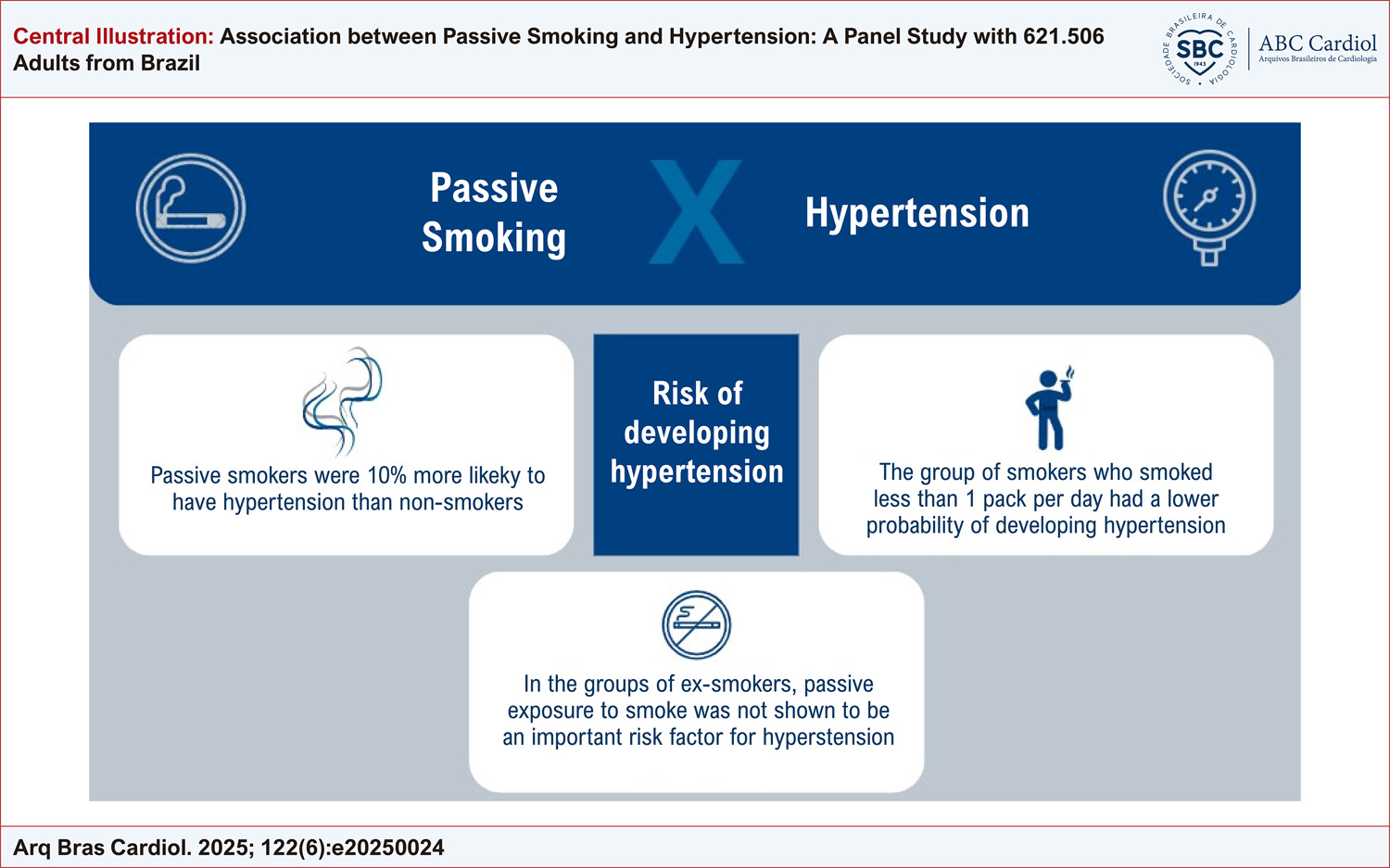
Association between Passive Smoking and Hypertension: A Panel Study with 621.506 Adults from Brazil
Original Article

Association between Passive Smoking and Hypertension: A Panel Study with 621.506 Adults from Brazil

Vicente Gabriel Winck Mattos et al. Gustavo Ianzer Moraes Laís Werneck de Azevedo Júlia Oleiro Mandeco … Elizabet Saes-Silva Carine Nascimento da Silva Samuel Carvalho Dumith

Abstract

Background

Passive smoking, which affects a large number of people, may create a predisposition to cardiovascular disease in a manner similar to active smoking. However, this relationship is poorly explored in the scientific literature.

Objectives

This study aimed to investigate the association between passive smoking and hypertension in an adult population in Brazil.

Methods

This panel study utilized data on the Brazilian population collected through a VIGITEL survey conducted between 2009 and 2021. The data were analyzed using Poisson regression with a 95% confidence interval (95%CI).

Results

The prevalence of hypertension in our population was 24.9% (95%CI 24.6-25.1), and passive smoking was observed in 16.3% (95%CI 16.0-16.5). The adjusted analysis revealed that passive smoking leads to a high risk of hypertension (PR=1.10; 95%CI 1.07 to 1.14), which was surprisingly close to the risk among heavy smokers (>1 pack or 20 cigarettes a day) (PR 1.09; 95%CI 1.06 to 1.13). Another noteworthy finding was the higher prevalence of hypertension among former smokers, highlighting associations that are poorly explained in the literature.

Conclusion

A significant association was found between passive smoking and hypertension, demonstrating that passive smokers are as prone to developing hypertension as heavy smokers. Therefore, we recommend a meta-analysis to consolidate the evidence on this subject and strengthen our findings.

  • Brazil
  • Hypertension
  • Tobacco Smoke Pollution
Read Full Article
Creative Commons Attribution (CC BY) Creative Commons license
02/06/2025 DOI: 10.36660/abc.20250024i Views 2
Temporal Trends of Hospital Admissions Due to Heart Failure in Brazil
Original Article

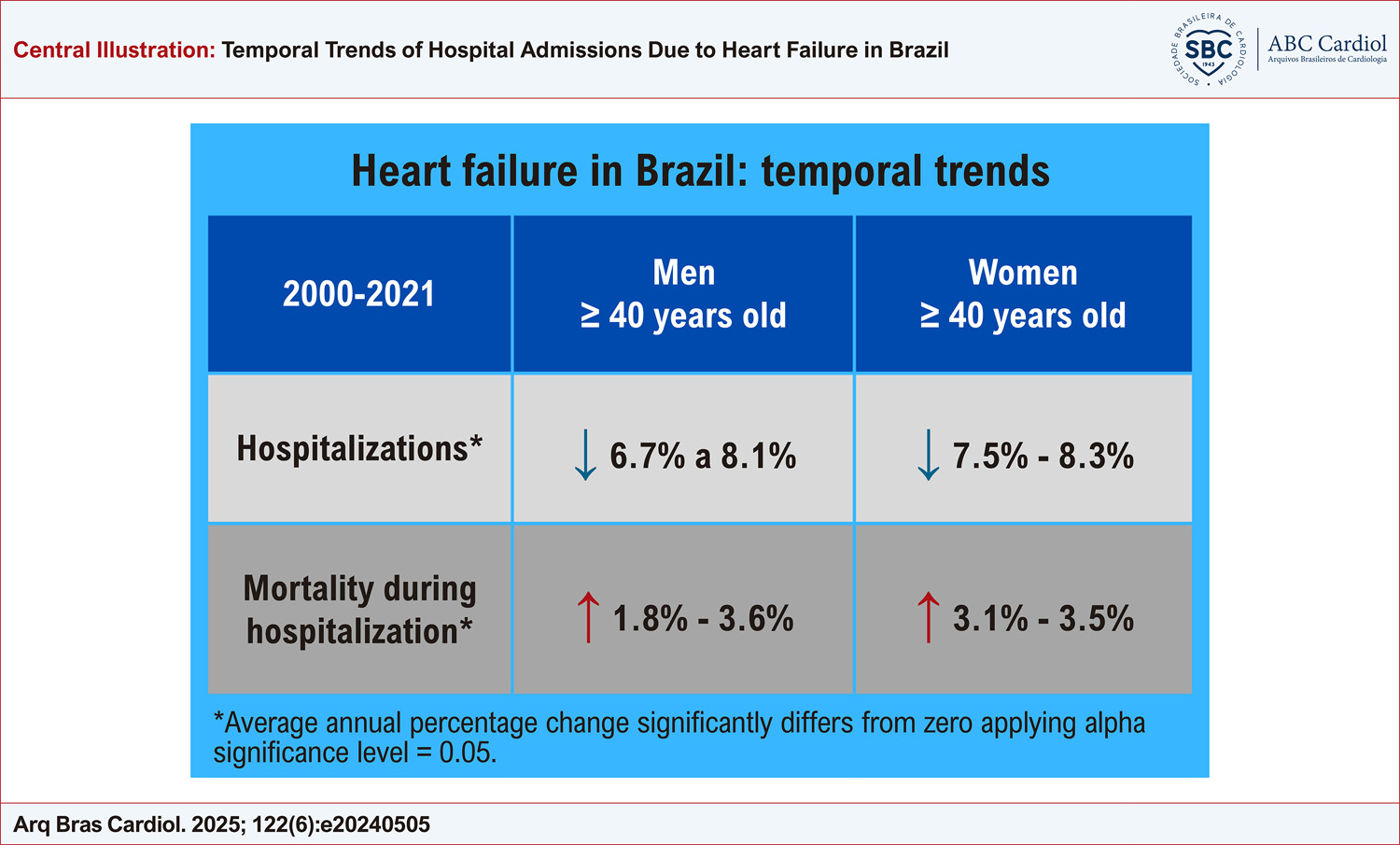
Temporal Trends of Hospital Admissions Due to Heart Failure in Brazil

José Marcos Girardi et al. Isadora Araújo Girardi Ana Clara Silva Nascimento Daniel Monteiro de Lauro Silva … Luisa Venture Gibaile Soares Sarah Alessandrini Lauriano Dias Sarah Quick Lourenço de Lima Flávia Araújo Girardi

Abstract

Background

Heart failure is a global pandemic that causes a significant reduction in quality of life, with an impact on hospital expenses. It is important to know the temporal trends of hospitalizations and mortality in order to outline coping strategies.

Objective

The objective of this study was to describe the temporal trends of hospitalizations due to heart failure and mortality during hospitalizations between 2000 and 2021 in Brazil.

Methods

We conducted a study on temporal trends in the rates of hospitalization and mortality during hospitalization, using data from the Department of Information Technology of the Brazilian Unified Health System, by means of joinpoint regression. We calculated the annual percentage change of the rates with respective 95% confidence intervals and alpha significance level of 0.05.

Results

We analyzed 2,851,437 hospitalizations in men and 2,749,424 hospitalizations in women between 2000 and 2021 in Brazil. Regarding hospitalization rates, there was an annual percentage decrease of 6.7% to 8.1% in men and a decrease of 7.5% to 8.3% in women. With respect to mortality rates, there was an annual percentage increase of 1.8% to 3.6% in men and an increase of 3.1% to 3.5% in women.

Conclusion

We observed a decrease in the rates of hospitalization due to heart failure and an increase in the mortality rates in all age ranges assessed, in both sexes, between 2000 and 2021 in Brazil. These findings may reflect better disease control and hospitalization only for more severe cases, but we emphasize the need for continued management of risk factors for the disease.

  • Heart Failure
  • Hospitalization
  • Mortality
Read Full Article
Creative Commons Attribution (CC BY) Creative Commons license
02/06/2025 DOI: 10.36660/abc.20240505i Views 2

How to cite this article

EndNote RIS

Electronic Document Format (Vancouver)

Farsky PS. Brazilian Evidence Reinforces the Applicability of the H2FPEF and HFA-PEFF Scores in HFpEF. Arquivos Brasileiros de Cardiologia 2025;122(6):e20250361.

Electronic Document Format (ABNT)

Farsky, Pedro Silvio. Brazilian Evidence Reinforces the Applicability of the H2FPEF and HFA-PEFF Scores in HFpEF. Arquivos Brasileiros de Cardiologia, v. 122, n. 6, e20250361, Aug. 2025.

Electronic Document Format (APA)

Farsky, P. S. (2025). Brazilian Evidence Reinforces the Applicability of the H2FPEF and HFA-PEFF Scores in HFpEF. Arquivos Brasileiros de Cardiologia, 122(6), e20250361.

Electronic Document Format (ISO)

Farsky, Pedro Silvio. Brazilian Evidence Reinforces the Applicability of the H2FPEF and HFA-PEFF Scores in HFpEF. Arquivos Brasileiros de Cardiologia [online]. 2025, vol. 122, n. 6, [cited 2026-10-14], e20250361. Available from: <https://journals.cardiol.br/en/article/brazilian-evidence-reinforces-the-applicability-of-the-h2fpef-and-hfa-peff-scores-in-hfpef/>. ISSN 0066-782X

EndNote RIS

Electronic Document Format (Vancouver)

Dourado PMM. Exploring the Naples Prognostic Score: A Key to Predicting New-Onset Atrial Fibrillation in STEMI Cases. Arquivos Brasileiros de Cardiologia 2025;122(6):e20250218.

Electronic Document Format (ABNT)

Dourado, Paulo Magno Martins. Exploring the Naples Prognostic Score: A Key to Predicting New-Onset Atrial Fibrillation in STEMI Cases. Arquivos Brasileiros de Cardiologia, v. 122, n. 6, e20250218, Aug. 2025.

Electronic Document Format (APA)

Dourado, P. M. M. (2025). Exploring the Naples Prognostic Score: A Key to Predicting New-Onset Atrial Fibrillation in STEMI Cases. Arquivos Brasileiros de Cardiologia, 122(6), e20250218.

Electronic Document Format (ISO)

Dourado, Paulo Magno Martins. Exploring the Naples Prognostic Score: A Key to Predicting New-Onset Atrial Fibrillation in STEMI Cases. Arquivos Brasileiros de Cardiologia [online]. 2025, vol. 122, n. 6, [cited 2026-10-14], e20250218. Available from: <https://journals.cardiol.br/en/article/exploring-the-naples-prognostic-score-a-key-to-predicting-new-onset-atrial-fibrillation-in-stemi-cases/>. ISSN 0066-782X

EndNote RIS

Electronic Document Format (Vancouver)

Lopes MAAAM, Viana M, Nóbrega J, Medeiros HNAA, Oliveira GMM. Alcohol Septal Ablation in Brazil: Insights from the BRASA Registry. Arquivos Brasileiros de Cardiologia 2025;122(6):e20250312.

Electronic Document Format (ABNT)

Lopes, Maria Antonieta Albanez A. de Medeiros; Viana, Mayara; Nóbrega, Júlia; Medeiros, Heitor N. Albanez A. de; Oliveira, Gláucia Maria Moraes de. Alcohol Septal Ablation in Brazil: Insights from the BRASA Registry. Arquivos Brasileiros de Cardiologia, v. 122, n. 6, e20250312, Aug. 2025.

Electronic Document Format (APA)

Lopes, M. A. A. A. M., Viana, M., Nóbrega, J., Medeiros, H. N. A. A. , & Oliveira, G. M. M. (2025). Alcohol Septal Ablation in Brazil: Insights from the BRASA Registry. Arquivos Brasileiros de Cardiologia, 122(6), e20250312.

Electronic Document Format (ISO)

Lopes, Maria Antonieta Albanez A. de Medeiros and Viana, Mayara and Nóbrega, Júlia and Medeiros, Heitor N. Albanez A. de and Oliveira, Gláucia Maria Moraes de. Alcohol Septal Ablation in Brazil: Insights from the BRASA Registry. Arquivos Brasileiros de Cardiologia [online]. 2025, vol. 122, n. 6, [cited 2026-10-14], e20250312. Available from: <https://journals.cardiol.br/en/article/alcohol-septal-ablation-in-brazil-insights-from-the-brasa-registry/>. ISSN 0066-782X

EndNote RIS

Electronic Document Format (Vancouver)

Bulburu B, Gürdoğan M, Ustabaşıoğlu FE, Yalta K. Surprising Cardiac Magnetic Resonance Imaging Findings: Rapidly Developing Intracardiac Thrombus with Endomyocardial Fibrosis. Arquivos Brasileiros de Cardiologia 2025;122(6):e20250030.

Electronic Document Format (ABNT)

Bulburu, İrem Bilge; Gürdoğan, Muhammet; Ustabaşıoğlu, Fethi Emre; Yalta, Kenan. Surprising Cardiac Magnetic Resonance Imaging Findings: Rapidly Developing Intracardiac Thrombus with Endomyocardial Fibrosis. Arquivos Brasileiros de Cardiologia, v. 122, n. 6, e20250030, Aug. 2025.

Electronic Document Format (APA)

Bulburu, B., Gürdoğan, M., Ustabaşıoğlu, F. E., & Yalta, K. (2025). Surprising Cardiac Magnetic Resonance Imaging Findings: Rapidly Developing Intracardiac Thrombus with Endomyocardial Fibrosis. Arquivos Brasileiros de Cardiologia, 122(6), e20250030.

Electronic Document Format (ISO)

Bulburu, İrem Bilge and Gürdoğan, Muhammet and Ustabaşıoğlu, Fethi Emre and Yalta, Kenan. Surprising Cardiac Magnetic Resonance Imaging Findings: Rapidly Developing Intracardiac Thrombus with Endomyocardial Fibrosis. Arquivos Brasileiros de Cardiologia [online]. 2025, vol. 122, n. 6, [cited 2026-10-14], e20250030. Available from: <https://journals.cardiol.br/en/article/surprising-cardiac-magnetic-resonance-imaging-findings-rapidly-developing-intracardiac-thrombus-with-endomyocardial-fibrosis/>. ISSN 0066-782X

EndNote RIS

Electronic Document Format (Vancouver)

Garcia LRR, Silva FVA, Ferreira JMBB. What is the Impact of Advancements in the Treatment of Heart Failure Patients on Mortality?. Arquivos Brasileiros de Cardiologia 2025;122(6):e20250329.

Electronic Document Format (ABNT)

Garcia, Lídia Ramalho Ribeiro; Silva, Fernanda Vitória Araújo da; Ferreira, João Marcos Bemfica Barbosa. What is the Impact of Advancements in the Treatment of Heart Failure Patients on Mortality?. Arquivos Brasileiros de Cardiologia, v. 122, n. 6, e20250329, Aug. 2025.

Electronic Document Format (APA)

Garcia, L. R. R., Silva, F. V. A. , & Ferreira, J. M. B. B. (2025). What is the Impact of Advancements in the Treatment of Heart Failure Patients on Mortality?. Arquivos Brasileiros de Cardiologia, 122(6), e20250329.

Electronic Document Format (ISO)

Garcia, Lídia Ramalho Ribeiro and Silva, Fernanda Vitória Araújo da and Ferreira, João Marcos Bemfica Barbosa. What is the Impact of Advancements in the Treatment of Heart Failure Patients on Mortality?. Arquivos Brasileiros de Cardiologia [online]. 2025, vol. 122, n. 6, [cited 2026-10-14], e20250329. Available from: <https://journals.cardiol.br/en/article/what-is-the-impact-of-advancements-in-the-treatment-of-heart-failure-patients-on-mortality/>. ISSN 0066-782X

EndNote RIS

Electronic Document Format (Vancouver)

Kizilkilic SE, Milani JGPO, Cipriano Jr. G, Dendale P, Milani M. Adherence and Performance in Cardiac Rehabilitation: The Role of Technological Innovation. Arquivos Brasileiros de Cardiologia 2025;122(6):e20250337.

Electronic Document Format (ABNT)

Kizilkilic, Sevda Ece; Milani, Juliana Goulart Prata Oliveira; Cipriano Jr., Gerson; Dendale, Paul; Milani, Mauricio. Adherence and Performance in Cardiac Rehabilitation: The Role of Technological Innovation. Arquivos Brasileiros de Cardiologia, v. 122, n. 6, e20250337, Jul. 2025.

Electronic Document Format (APA)

Kizilkilic, S. E., Milani, J. G. P. O., Cipriano Jr., G., Dendale, P., & Milani, M. (2025). Adherence and Performance in Cardiac Rehabilitation: The Role of Technological Innovation. Arquivos Brasileiros de Cardiologia, 122(6), e20250337.

Electronic Document Format (ISO)

Kizilkilic, Sevda Ece and Milani, Juliana Goulart Prata Oliveira and Cipriano Jr., Gerson and Dendale, Paul and Milani, Mauricio. Adherence and Performance in Cardiac Rehabilitation: The Role of Technological Innovation. Arquivos Brasileiros de Cardiologia [online]. 2025, vol. 122, n. 6, [cited 2026-10-14], e20250337. Available from: <https://journals.cardiol.br/en/article/adherence-and-performance-in-cardiac-rehabilitation-the-role-of-technological-innovation/>. ISSN 0066-782X

EndNote RIS

Electronic Document Format (Vancouver)

Neves IF, Ferreira A, Almeida I, Mano TB, Sousa L. Silent Giant: Right Coronary Artery Ectasia with a Hidden Fistula to the Coronary Sinus in an Asymptomatic Patient. Arquivos Brasileiros de Cardiologia 2025;122(6):e20240574.

Electronic Document Format (ABNT)

Neves, Inês Ferreira; Ferreira, André; Almeida, Inês; Mano, Tânia Branco; Sousa, Lídia de. Silent Giant: Right Coronary Artery Ectasia with a Hidden Fistula to the Coronary Sinus in an Asymptomatic Patient. Arquivos Brasileiros de Cardiologia, v. 122, n. 6, e20240574, Jul. 2025.

Electronic Document Format (APA)

Neves, I. F., Ferreira, A., Almeida, I., Mano, T. B., & Sousa, L. (2025). Silent Giant: Right Coronary Artery Ectasia with a Hidden Fistula to the Coronary Sinus in an Asymptomatic Patient. Arquivos Brasileiros de Cardiologia, 122(6), e20240574.

Electronic Document Format (ISO)

Neves, Inês Ferreira and Ferreira, André and Almeida, Inês and Mano, Tânia Branco and Sousa, Lídia de. Silent Giant: Right Coronary Artery Ectasia with a Hidden Fistula to the Coronary Sinus in an Asymptomatic Patient. Arquivos Brasileiros de Cardiologia [online]. 2025, vol. 122, n. 6, [cited 2026-10-14], e20240574. Available from: <https://journals.cardiol.br/en/article/silent-giant-right-coronary-artery-ectasia-with-a-hidden-fistula-to-the-coronary-sinus-in-an-asymptomatic-patient/>. ISSN 0066-782X

EndNote RIS

Electronic Document Format (Vancouver)

Machado GP, Telo GH, Barbato JPR, Saadi MP, Araujo GN, Chies A, Silva JC, et al. Venous Excess Ultrasound (VExUS) Score in Patients with ST-Elevation Myocardial Infarction to Predict In-Hospital Mortality. Arquivos Brasileiros de Cardiologia 2025;122(6):e20250093.

Electronic Document Format (ABNT)

Machado, Guilherme Pinheiro; Telo, Guilherme Heiden; Barbato, João Pedro da Rosa; Saadi, Marina Petersen; Araujo, Gustavo Neves de; Chies, Angelo; Silva, Julia Carvalho da; Wainstein, Rodrigo; Wainstein, Marco. Venous Excess Ultrasound (VExUS) Score in Patients with ST-Elevation Myocardial Infarction to Predict In-Hospital Mortality. Arquivos Brasileiros de Cardiologia, v. 122, n. 6, e20250093, Jul. 2025.

Electronic Document Format (APA)

Machado, G. P., Telo, G. H., Barbato, J. P. R., Saadi, M. P., Araujo, G. N. , Chies, A., Silva, J. C. , Wainstein, R., & Wainstein, M. (2025). Venous Excess Ultrasound (VExUS) Score in Patients with ST-Elevation Myocardial Infarction to Predict In-Hospital Mortality. Arquivos Brasileiros de Cardiologia, 122(6), e20250093.

Electronic Document Format (ISO)

Machado, Guilherme Pinheiro and Telo, Guilherme Heiden and Barbato, João Pedro da Rosa and Saadi, Marina Petersen and Araujo, Gustavo Neves de and Chies, Angelo and Silva, Julia Carvalho da and Wainstein, Rodrigo and Wainstein, Marco. Venous Excess Ultrasound (VExUS) Score in Patients with ST-Elevation Myocardial Infarction to Predict In-Hospital Mortality. Arquivos Brasileiros de Cardiologia [online]. 2025, vol. 122, n. 6, [cited 2026-10-14], e20250093. Available from: <https://journals.cardiol.br/en/article/venous-excess-ultrasound-vexus-score-in-patients-with-st-elevation-myocardial-infarction-to-predict-in-hospital-mortality/>. ISSN 0066-782X

EndNote RIS

Electronic Document Format (Vancouver)

Fontenelle LF, Sarti TD, Quinte GC, Almeida APSC, Mill JG. Agreement between Framingham, Pooled Cohort Equations, and Globorisk-LAC in the Estimation of Cardiovascular Risk in Brazil, 2013. Arquivos Brasileiros de Cardiologia 2025;122(6):e20240405.

Electronic Document Format (ABNT)

Fontenelle, Leonardo Ferreira; Sarti, Thiago Dias; Quinte, Gabriela Callo; Almeida, Ana Paula Santana Coelho; Mill, José Geraldo. Agreement between Framingham, Pooled Cohort Equations, and Globorisk-LAC in the Estimation of Cardiovascular Risk in Brazil, 2013. Arquivos Brasileiros de Cardiologia, v. 122, n. 6, e20240405, Jul. 2025.

Electronic Document Format (APA)

Fontenelle, L. F., Sarti, T. D., Quinte, G. C., Almeida, A. P. S. C., & Mill, J. G. (2025). Agreement between Framingham, Pooled Cohort Equations, and Globorisk-LAC in the Estimation of Cardiovascular Risk in Brazil, 2013. Arquivos Brasileiros de Cardiologia, 122(6), e20240405.

Electronic Document Format (ISO)

Fontenelle, Leonardo Ferreira and Sarti, Thiago Dias and Quinte, Gabriela Callo and Almeida, Ana Paula Santana Coelho and Mill, José Geraldo. Agreement between Framingham, Pooled Cohort Equations, and Globorisk-LAC in the Estimation of Cardiovascular Risk in Brazil, 2013. Arquivos Brasileiros de Cardiologia [online]. 2025, vol. 122, n. 6, [cited 2026-10-14], e20240405. Available from: <https://journals.cardiol.br/en/article/agreement-between-framingham-pooled-cohort-equations-and-globorisk-lac-in-the-estimation-of-cardiovascular-risk-in-brazil-2013/>. ISSN 0066-782X

EndNote RIS

Electronic Document Format (Vancouver)

Tupinambá GS, Aguiar OB, Moura BP, Schmidt MI, Molina MDCB, Griep RH, Fonseca MJM, et al. Association between Self-Care Behaviors and Inadequate Glycemic Control in ELSA-Brasil Participants with Type 2 Diabetes. Arquivos Brasileiros de Cardiologia 2025;122(6):e20240867.

Electronic Document Format (ABNT)

Tupinambá, Gisele de Souza; Aguiar, Odaleia Barbosa de; Moura, Bruno Pereira de; Schmidt, Maria Inês; Molina, Maria Del Carmen Bisi; Griep, Rosane Harter; Fonseca, Maria de Jesus Mendes da. Association between Self-Care Behaviors and Inadequate Glycemic Control in ELSA-Brasil Participants with Type 2 Diabetes. Arquivos Brasileiros de Cardiologia, v. 122, n. 6, e20240867, Jul. 2025.

Electronic Document Format (APA)

Tupinambá, G. S., Aguiar, O. B. , Moura, B. P. , Schmidt, M. I., Molina, M. D. C. B., Griep, R. H., & Fonseca, M. J. M. (2025). Association between Self-Care Behaviors and Inadequate Glycemic Control in ELSA-Brasil Participants with Type 2 Diabetes. Arquivos Brasileiros de Cardiologia, 122(6), e20240867.

Electronic Document Format (ISO)

Tupinambá, Gisele de Souza and Aguiar, Odaleia Barbosa de and Moura, Bruno Pereira de and Schmidt, Maria Inês and Molina, Maria Del Carmen Bisi and Griep, Rosane Harter and Fonseca, Maria de Jesus Mendes da. Association between Self-Care Behaviors and Inadequate Glycemic Control in ELSA-Brasil Participants with Type 2 Diabetes. Arquivos Brasileiros de Cardiologia [online]. 2025, vol. 122, n. 6, [cited 2026-10-14], e20240867. Available from: <https://journals.cardiol.br/en/article/association-between-self-care-behaviors-and-inadequate-glycemic-control-in-elsa-brasil-participants-with-type-2-diabetes/>. ISSN 0066-782X

EndNote RIS

Electronic Document Format (Vancouver)

Talavera JA, Teixeira L, Costa TA, Navalha D, Gibicoski TB, Fernandez N, Healey J, et al. Direct Oral Anticoagulants versus Aspirin for Secondary Stroke Prevention in Patients with Embolic Stroke of Undetermined Source: An Updated Systematic Review and Meta-Analysis of Randomized Controlled Trials. Arquivos Brasileiros de Cardiologia 2025;122(6):e20240586.

Electronic Document Format (ABNT)

Talavera, Juan Armando; Teixeira, Larissa; Costa, Thomaz Alexandre; Navalha, Denilsa; Gibicoski, Tathiane Brum; Fernandez, Nicole; Healey, Jeffrey; Armaganijan, Luciana; Carvalho, Guilherme Dagostin de. Direct Oral Anticoagulants versus Aspirin for Secondary Stroke Prevention in Patients with Embolic Stroke of Undetermined Source: An Updated Systematic Review and Meta-Analysis of Randomized Controlled Trials. Arquivos Brasileiros de Cardiologia, v. 122, n. 6, e20240586, Jul. 2025.

Electronic Document Format (APA)

Talavera, J. A., Teixeira, L., Costa, T. A., Navalha, D., Gibicoski, T. B., Fernandez, N., Healey, J., Armaganijan, L., & Carvalho, G. D. (2025). Direct Oral Anticoagulants versus Aspirin for Secondary Stroke Prevention in Patients with Embolic Stroke of Undetermined Source: An Updated Systematic Review and Meta-Analysis of Randomized Controlled Trials. Arquivos Brasileiros de Cardiologia, 122(6), e20240586.

Electronic Document Format (ISO)

Talavera, Juan Armando and Teixeira, Larissa and Costa, Thomaz Alexandre and Navalha, Denilsa and Gibicoski, Tathiane Brum and Fernandez, Nicole and Healey, Jeffrey and Armaganijan, Luciana and Carvalho, Guilherme Dagostin de. Direct Oral Anticoagulants versus Aspirin for Secondary Stroke Prevention in Patients with Embolic Stroke of Undetermined Source: An Updated Systematic Review and Meta-Analysis of Randomized Controlled Trials. Arquivos Brasileiros de Cardiologia [online]. 2025, vol. 122, n. 6, [cited 2026-10-14], e20240586. Available from: <https://journals.cardiol.br/en/article/direct-oral-anticoagulants-versus-aspirin-for-secondary-stroke-prevention-in-patients-with-embolic-stroke-of-undetermined-source-an-updated-systematic-review-and-meta-analysis-of-randomized-controlle/>. ISSN 0066-782X

EndNote RIS

Electronic Document Format (Vancouver)

Latado AL. Hospitalizations and In-Hospital Mortality from Heart Failure in Brazil: An Updated Overview. Arquivos Brasileiros de Cardiologia 2025;122(6):e20250284.

Electronic Document Format (ABNT)

Latado, Adriana Lopes. Hospitalizations and In-Hospital Mortality from Heart Failure in Brazil: An Updated Overview. Arquivos Brasileiros de Cardiologia, v. 122, n. 6, e20250284, Jul. 2025.

Electronic Document Format (APA)

Latado, A. L. (2025). Hospitalizations and In-Hospital Mortality from Heart Failure in Brazil: An Updated Overview. Arquivos Brasileiros de Cardiologia, 122(6), e20250284.

Electronic Document Format (ISO)

Latado, Adriana Lopes. Hospitalizations and In-Hospital Mortality from Heart Failure in Brazil: An Updated Overview. Arquivos Brasileiros de Cardiologia [online]. 2025, vol. 122, n. 6, [cited 2026-10-14], e20250284. Available from: <https://journals.cardiol.br/en/article/hospitalizations-and-in-hospital-mortality-from-heart-failure-in-brazil-an-updated-overview/>. ISSN 0066-782X

EndNote RIS

Electronic Document Format (Vancouver)

Stein R, Ferrari F. Why Cardiology Can No Longer Ignore Sexual Health?. Arquivos Brasileiros de Cardiologia 2025;122(6):e20250326.

Electronic Document Format (ABNT)

Stein, Ricardo; Ferrari, Filipe. Why Cardiology Can No Longer Ignore Sexual Health?. Arquivos Brasileiros de Cardiologia, v. 122, n. 6, e20250326, Jul. 2025.

Electronic Document Format (APA)

Stein, R., & Ferrari, F. (2025). Why Cardiology Can No Longer Ignore Sexual Health?. Arquivos Brasileiros de Cardiologia, 122(6), e20250326.

Electronic Document Format (ISO)

Stein, Ricardo and Ferrari, Filipe. Why Cardiology Can No Longer Ignore Sexual Health?. Arquivos Brasileiros de Cardiologia [online]. 2025, vol. 122, n. 6, [cited 2026-10-14], e20250326. Available from: <https://journals.cardiol.br/en/article/why-cardiology-can-no-longer-ignore-sexual-health/>. ISSN 0066-782X

EndNote RIS

Electronic Document Format (Vancouver)

Kataoka N, Imamura T. How to Improve Clinical Outcomes in Women with Atrial Fibrillation. Arquivos Brasileiros de Cardiologia 2025;122(6):e20250095.

Electronic Document Format (ABNT)

Kataoka, Naoya; Imamura, Teruhiko. How to Improve Clinical Outcomes in Women with Atrial Fibrillation. Arquivos Brasileiros de Cardiologia, v. 122, n. 6, e20250095, Jun. 2025.

Electronic Document Format (APA)

Kataoka, N., & Imamura, T. (2025). How to Improve Clinical Outcomes in Women with Atrial Fibrillation. Arquivos Brasileiros de Cardiologia, 122(6), e20250095.

Electronic Document Format (ISO)

Kataoka, Naoya and Imamura, Teruhiko. How to Improve Clinical Outcomes in Women with Atrial Fibrillation. Arquivos Brasileiros de Cardiologia [online]. 2025, vol. 122, n. 6, [cited 2026-10-14], e20250095. Available from: <https://journals.cardiol.br/en/article/how-to-improve-clinical-outcomes-in-women-with-atrial-fibrillation/>. ISSN 0066-782X

EndNote RIS

Electronic Document Format (Vancouver)

Jallad P, Soliani M, Marins PHA, Fernandes F, Arteaga-Fernandez E, Madrini V, Lemos Neto P, et al. Brazilian Multicenter Registry of Alcohol Septal Ablation for Patients with Symptomatic Hypertrophic Obstructive Cardiomyopathy – BRASA Registry. Arquivos Brasileiros de Cardiologia 2025;122(6):e20240626.

Electronic Document Format (ABNT)

Jallad, Pedro; Soliani, Marilia; Marins, Pedro Henrique Almeida; Fernandes, Fábio; Arteaga-Fernandez, Edmundo; Madrini, Vagner; Lemos Neto, Pedro; Mady, Charles; Ramires, Felix; Abizaid, Alexandre A.; Brito Jr, Fábio Sândoli de; Ribeiro, Henrique Barbosa. Brazilian Multicenter Registry of Alcohol Septal Ablation for Patients with Symptomatic Hypertrophic Obstructive Cardiomyopathy – BRASA Registry. Arquivos Brasileiros de Cardiologia, v. 122, n. 6, e20240626, Jun. 2025.

Electronic Document Format (APA)

Jallad, P., Soliani, M., Marins, P. H. A., Fernandes, F., Arteaga-Fernandez, E., Madrini, V., Lemos Neto, P., Mady, C., Ramires, F., Abizaid, A. A., Brito Jr, F. S. , & Ribeiro, H. B. (2025). Brazilian Multicenter Registry of Alcohol Septal Ablation for Patients with Symptomatic Hypertrophic Obstructive Cardiomyopathy – BRASA Registry. Arquivos Brasileiros de Cardiologia, 122(6), e20240626.

Electronic Document Format (ISO)

Jallad, Pedro and Soliani, Marilia and Marins, Pedro Henrique Almeida and Fernandes, Fábio and Arteaga-Fernandez, Edmundo and Madrini, Vagner and Lemos Neto, Pedro and Mady, Charles and Ramires, Felix and Abizaid, Alexandre A. and Brito Jr, Fábio Sândoli de and Ribeiro, Henrique Barbosa. Brazilian Multicenter Registry of Alcohol Septal Ablation for Patients with Symptomatic Hypertrophic Obstructive Cardiomyopathy – BRASA Registry. Arquivos Brasileiros de Cardiologia [online]. 2025, vol. 122, n. 6, [cited 2026-10-14], e20240626. Available from: <https://journals.cardiol.br/en/article/brazilian-multicenter-registry-of-alcohol-septal-ablation-for-patients-with-symptomatic-hypertrophic-obstructive-cardiomyopathy-brasa-registry/>. ISSN 0066-782X

EndNote RIS

Electronic Document Format (Vancouver)

Feitosa GS. Hypertension as another Facet of Passive Smoking. Arquivos Brasileiros de Cardiologia 2025;122(6):e20250268.

Electronic Document Format (ABNT)

Feitosa, Gilson Soares. Hypertension as another Facet of Passive Smoking. Arquivos Brasileiros de Cardiologia, v. 122, n. 6, e20250268, Jun. 2025.

Electronic Document Format (APA)

Feitosa, G. S. (2025). Hypertension as another Facet of Passive Smoking. Arquivos Brasileiros de Cardiologia, 122(6), e20250268.

Electronic Document Format (ISO)

Feitosa, Gilson Soares. Hypertension as another Facet of Passive Smoking. Arquivos Brasileiros de Cardiologia [online]. 2025, vol. 122, n. 6, [cited 2026-10-14], e20250268. Available from: <https://journals.cardiol.br/en/article/hypertension-as-another-facet-of-passive-smoking/>. ISSN 0066-782X

EndNote RIS

Electronic Document Format (Vancouver)

Lima MSM. The ELSA-Brasil Study and Our Myocardial Deformation. Arquivos Brasileiros de Cardiologia 2025;122(6):e20250265.

Electronic Document Format (ABNT)

Lima, Márcio S. M.. The ELSA-Brasil Study and Our Myocardial Deformation. Arquivos Brasileiros de Cardiologia, v. 122, n. 6, e20250265, Jun. 2025.

Electronic Document Format (APA)

Lima, M. S. M. (2025). The ELSA-Brasil Study and Our Myocardial Deformation. Arquivos Brasileiros de Cardiologia, 122(6), e20250265.

Electronic Document Format (ISO)

Lima, Márcio S. M.. The ELSA-Brasil Study and Our Myocardial Deformation. Arquivos Brasileiros de Cardiologia [online]. 2025, vol. 122, n. 6, [cited 2026-10-14], e20250265. Available from: <https://journals.cardiol.br/en/article/the-elsa-brasil-study-and-our-myocardial-deformation/>. ISSN 0066-782X

EndNote RIS

Electronic Document Format (Vancouver)

Pianca EG, Foppa M, Schmitz GB, Cañon-Montañez W, Duncan BB, Santos ABS. Left and Right Ventricular Strain in an Adult Brazilian Population from ELSA-Brasil Study: Reference Values and their Determinants. Arquivos Brasileiros de Cardiologia 2025;122(6):e20240634.

Electronic Document Format (ABNT)

Pianca, Eduardo Gatti; Foppa, Murilo; Schmitz, Giulia Bevilacqua; Cañon-Montañez, Wilson; Duncan, Bruce Bartholow; Santos, Angela Barreto Santiago. Left and Right Ventricular Strain in an Adult Brazilian Population from ELSA-Brasil Study: Reference Values and their Determinants. Arquivos Brasileiros de Cardiologia, v. 122, n. 6, e20240634, Jun. 2025.

Electronic Document Format (APA)

Pianca, E. G., Foppa, M., Schmitz, G. B., Cañon-Montañez, W., Duncan, B. B., & Santos, A. B. S. (2025). Left and Right Ventricular Strain in an Adult Brazilian Population from ELSA-Brasil Study: Reference Values and their Determinants. Arquivos Brasileiros de Cardiologia, 122(6), e20240634.

Electronic Document Format (ISO)

Pianca, Eduardo Gatti and Foppa, Murilo and Schmitz, Giulia Bevilacqua and Cañon-Montañez, Wilson and Duncan, Bruce Bartholow and Santos, Angela Barreto Santiago. Left and Right Ventricular Strain in an Adult Brazilian Population from ELSA-Brasil Study: Reference Values and their Determinants. Arquivos Brasileiros de Cardiologia [online]. 2025, vol. 122, n. 6, [cited 2026-10-14], e20240634. Available from: <https://journals.cardiol.br/en/article/left-and-right-ventricular-strain-in-an-adult-brazilian-population-from-elsa-brasil-study-reference-values-and-their-determinants/>. ISSN 0066-782X

EndNote RIS

Electronic Document Format (Vancouver)

Barros FC, Cezaro JC, Costa PD, Costa GD, Santos ABS, Pianca EG, Menegazzo WR, et al. Prognostic Applications of Current Clinical Scores in Heart Failure with Preserved Ejection Fraction: A Prospective Cohort Study. Arquivos Brasileiros de Cardiologia 2025;122(6):e20240852.

Electronic Document Format (ABNT)

Barros, Fernando Colares; Cezaro, Jéssica Cristina de; Costa, Pietro Donelli; Costa, Giovanni Donelli; Santos, Angela Barreto Santiago; Pianca, Eduardo Gatti; Menegazzo, Willian Roberto; Scolari, Fernando Luís; Silveira, Anderson Donelli da. Prognostic Applications of Current Clinical Scores in Heart Failure with Preserved Ejection Fraction: A Prospective Cohort Study. Arquivos Brasileiros de Cardiologia, v. 122, n. 6, e20240852, Jun. 2025.

Electronic Document Format (APA)

Barros, F. C., Cezaro, J. C. , Costa, P. D., Costa, G. D., Santos, A. B. S., Pianca, E. G., Menegazzo, W. R., Scolari, F. L., & Silveira, A. D. (2025). Prognostic Applications of Current Clinical Scores in Heart Failure with Preserved Ejection Fraction: A Prospective Cohort Study. Arquivos Brasileiros de Cardiologia, 122(6), e20240852.

Electronic Document Format (ISO)

Barros, Fernando Colares and Cezaro, Jéssica Cristina de and Costa, Pietro Donelli and Costa, Giovanni Donelli and Santos, Angela Barreto Santiago and Pianca, Eduardo Gatti and Menegazzo, Willian Roberto and Scolari, Fernando Luís and Silveira, Anderson Donelli da. Prognostic Applications of Current Clinical Scores in Heart Failure with Preserved Ejection Fraction: A Prospective Cohort Study. Arquivos Brasileiros de Cardiologia [online]. 2025, vol. 122, n. 6, [cited 2026-10-14], e20240852. Available from: <https://journals.cardiol.br/en/article/prognostic-applications-of-current-clinical-scores-in-heart-failure-with-preserved-ejection-fraction-a-prospective-cohort-study/>. ISSN 0066-782X

EndNote RIS

Electronic Document Format (Vancouver)

Saklica D, Vardar-Yagli N, Saglam M, Yuce D, Ates AH, Yorgun H. The Impact of Technology-Based Cardiac Rehabilitation on Exercise Capacity and Adherence in Patients with Coronary Artery Disease: An Artificial Intelligence Analysis. Arquivos Brasileiros de Cardiologia 2025;122(6):e20240765.

Electronic Document Format (ABNT)

Saklica, Dilara; Vardar-Yagli, Naciye; Saglam, Melda; Yuce, Deniz; Ates, Ahmet Hakan; Yorgun, Hikmet. The Impact of Technology-Based Cardiac Rehabilitation on Exercise Capacity and Adherence in Patients with Coronary Artery Disease: An Artificial Intelligence Analysis. Arquivos Brasileiros de Cardiologia, v. 122, n. 6, e20240765, Jun. 2025.

Electronic Document Format (APA)

Saklica, D., Vardar-Yagli, N., Saglam, M., Yuce, D., Ates, A. H., & Yorgun, H. (2025). The Impact of Technology-Based Cardiac Rehabilitation on Exercise Capacity and Adherence in Patients with Coronary Artery Disease: An Artificial Intelligence Analysis. Arquivos Brasileiros de Cardiologia, 122(6), e20240765.

Electronic Document Format (ISO)

Saklica, Dilara and Vardar-Yagli, Naciye and Saglam, Melda and Yuce, Deniz and Ates, Ahmet Hakan and Yorgun, Hikmet. The Impact of Technology-Based Cardiac Rehabilitation on Exercise Capacity and Adherence in Patients with Coronary Artery Disease: An Artificial Intelligence Analysis. Arquivos Brasileiros de Cardiologia [online]. 2025, vol. 122, n. 6, [cited 2026-10-14], e20240765. Available from: <https://journals.cardiol.br/en/article/the-impact-of-technology-based-cardiac-rehabilitation-on-exercise-capacity-and-adherence-in-patients-with-coronary-artery-disease-an-artificial-intelligence-analysis/>. ISSN 0066-782X

EndNote RIS

Electronic Document Format (Vancouver)

Lédo APO, Matos SMA, Almeida MC, Fernandes LP, Aras R. Survival Analysis and Factors Associated with Mortality in Heart Failure Patients in the ELSA-Brasil Cohort. Arquivos Brasileiros de Cardiologia 2025;122(6):e20240705.

Electronic Document Format (ABNT)

Lédo, Ana Paula de Oliveira; Matos, Sheila Maria Alvim; Almeida, Maria da Conceição; Fernandes, Luciana Pereira; Aras, Roque. Survival Analysis and Factors Associated with Mortality in Heart Failure Patients in the ELSA-Brasil Cohort. Arquivos Brasileiros de Cardiologia, v. 122, n. 6, e20240705, Jun. 2025.

Electronic Document Format (APA)

Lédo, A. P. O., Matos, S. M. A., Almeida, M. C., Fernandes, L. P., & Aras, R. (2025). Survival Analysis and Factors Associated with Mortality in Heart Failure Patients in the ELSA-Brasil Cohort. Arquivos Brasileiros de Cardiologia, 122(6), e20240705.

Electronic Document Format (ISO)

Lédo, Ana Paula de Oliveira and Matos, Sheila Maria Alvim and Almeida, Maria da Conceição and Fernandes, Luciana Pereira and Aras, Roque. Survival Analysis and Factors Associated with Mortality in Heart Failure Patients in the ELSA-Brasil Cohort. Arquivos Brasileiros de Cardiologia [online]. 2025, vol. 122, n. 6, [cited 2026-10-14], e20240705. Available from: <https://journals.cardiol.br/en/article/survival-analysis-and-factors-associated-with-mortality-in-heart-failure-patients-in-the-elsa-brasil-cohort/>. ISSN 0066-782X

EndNote RIS

Electronic Document Format (Vancouver)

Oksen D, Arslan S, Gecit MH, Tekin EE, Oktay V, Abaci O. Naples Prognostic Score Predicts New-Onset Atrial Fibrillation in Patients with ST-Elevated Myocardial Infarction Undergoing Primary Angioplasty. Arquivos Brasileiros de Cardiologia 2025;122(6):e20240671.

Electronic Document Format (ABNT)

Oksen, Dogac; Arslan, Sukru; Gecit, Muhammed Heja; Tekin, Esra Erturk; Oktay, Veysel; Abaci, Okay. Naples Prognostic Score Predicts New-Onset Atrial Fibrillation in Patients with ST-Elevated Myocardial Infarction Undergoing Primary Angioplasty. Arquivos Brasileiros de Cardiologia, v. 122, n. 6, e20240671, Jun. 2025.

Electronic Document Format (APA)

Oksen, D., Arslan, S., Gecit, M. H., Tekin, E. E., Oktay, V., & Abaci, O. (2025). Naples Prognostic Score Predicts New-Onset Atrial Fibrillation in Patients with ST-Elevated Myocardial Infarction Undergoing Primary Angioplasty. Arquivos Brasileiros de Cardiologia, 122(6), e20240671.

Electronic Document Format (ISO)

Oksen, Dogac and Arslan, Sukru and Gecit, Muhammed Heja and Tekin, Esra Erturk and Oktay, Veysel and Abaci, Okay. Naples Prognostic Score Predicts New-Onset Atrial Fibrillation in Patients with ST-Elevated Myocardial Infarction Undergoing Primary Angioplasty. Arquivos Brasileiros de Cardiologia [online]. 2025, vol. 122, n. 6, [cited 2026-10-14], e20240671. Available from: <https://journals.cardiol.br/en/article/naples-prognostic-score-predicts-new-onset-atrial-fibrillation-in-patients-with-st-elevated-myocardial-infarction-undergoing-primary-angioplasty/>. ISSN 0066-782X

EndNote RIS

Electronic Document Format (Vancouver)

Mattos VGW, Moraes GI, Azevedo LW, Mandeco JO, Saes-Silva E, Silva CN, Dumith SC, et al. Association between Passive Smoking and Hypertension: A Panel Study with 621.506 Adults from Brazil. Arquivos Brasileiros de Cardiologia 2025;122(6):e20250024.

Electronic Document Format (ABNT)

Mattos, Vicente Gabriel Winck; Moraes, Gustavo Ianzer; Azevedo, Laís Werneck de; Mandeco, Júlia Oleiro; Saes-Silva, Elizabet; Silva, Carine Nascimento da; Dumith, Samuel Carvalho. Association between Passive Smoking and Hypertension: A Panel Study with 621.506 Adults from Brazil. Arquivos Brasileiros de Cardiologia, v. 122, n. 6, e20250024, Jun. 2025.

Electronic Document Format (APA)

Mattos, V. G. W., Moraes, G. I., Azevedo, L. W. , Mandeco, J. O., Saes-Silva, E., Silva, C. N. , & Dumith, S. C. (2025). Association between Passive Smoking and Hypertension: A Panel Study with 621.506 Adults from Brazil. Arquivos Brasileiros de Cardiologia, 122(6), e20250024.

Electronic Document Format (ISO)

Mattos, Vicente Gabriel Winck and Moraes, Gustavo Ianzer and Azevedo, Laís Werneck de and Mandeco, Júlia Oleiro and Saes-Silva, Elizabet and Silva, Carine Nascimento da and Dumith, Samuel Carvalho. Association between Passive Smoking and Hypertension: A Panel Study with 621.506 Adults from Brazil. Arquivos Brasileiros de Cardiologia [online]. 2025, vol. 122, n. 6, [cited 2026-10-14], e20250024. Available from: <https://journals.cardiol.br/en/article/association-between-passive-smoking-and-hypertension-a-panel-study-with-621-506-adults-from-brazil/>. ISSN 0066-782X

EndNote RIS

Electronic Document Format (Vancouver)

Girardi JM, Girardi IA, Nascimento ACS, Silva DML, Soares LVG, Dias SAL, Lima SQL, et al. Temporal Trends of Hospital Admissions Due to Heart Failure in Brazil. Arquivos Brasileiros de Cardiologia 2025;122(6):e20240505.

Electronic Document Format (ABNT)

Girardi, José Marcos; Girardi, Isadora Araújo; Nascimento, Ana Clara Silva; Silva, Daniel Monteiro de Lauro; Soares, Luisa Venture Gibaile; Dias, Sarah Alessandrini Lauriano; Lima, Sarah Quick Lourenço de; Girardi, Flávia Araújo. Temporal Trends of Hospital Admissions Due to Heart Failure in Brazil. Arquivos Brasileiros de Cardiologia, v. 122, n. 6, e20240505, Jun. 2025.

Electronic Document Format (APA)

Girardi, J. M., Girardi, I. A., Nascimento, A. C. S., Silva, D. M. L., Soares, L. V. G., Dias, S. A. L., Lima, S. Q. L. , & Girardi, F. A. (2025). Temporal Trends of Hospital Admissions Due to Heart Failure in Brazil. Arquivos Brasileiros de Cardiologia, 122(6), e20240505.

Electronic Document Format (ISO)

Girardi, José Marcos and Girardi, Isadora Araújo and Nascimento, Ana Clara Silva and Silva, Daniel Monteiro de Lauro and Soares, Luisa Venture Gibaile and Dias, Sarah Alessandrini Lauriano and Lima, Sarah Quick Lourenço de and Girardi, Flávia Araújo. Temporal Trends of Hospital Admissions Due to Heart Failure in Brazil. Arquivos Brasileiros de Cardiologia [online]. 2025, vol. 122, n. 6, [cited 2026-10-14], e20240505. Available from: <https://journals.cardiol.br/en/article/temporal-trends-of-hospital-admissions-due-to-heart-failure-in-brazil/>. ISSN 0066-782X

Sede – Rio de Janeiro
Av. Marechal Câmara, 160
3º andar – Sala: 330 – Centro
Rio de Janeiro – CEP: 20020-907
Tel.: (55 +21) 3478-2700
ou (21) 99386-3961
E-mail: revista@cardiol.br

Sede – São Paulo
Alameda Santos, 705 – 11º andar
Cerqueira César | São Paulo
CEP: 01419-001
Tel.: (55 +11) 3411-5500
E-mail: revista@cardiol.br

  • About the Journal
  • Internal Regulation
  • Editors Section
  • Editorial Board
  • History
  • SBC Award

  • Guidelines for Publication
  • Editorial Policy
  • Ethics Policy
  • Policy on the Use of Artificial Intelligence
  • Mandatory Publication Form
  • Publication Fee

Issues

SBC Guidelines

  • How to Publish an Abstract Supplement?
  • Supplements from the Brazilian Congress of Cardiology