Left and Right Ventricular Strain in an Adult Brazilian Population from ELSA-Brasil Study: Reference Values and their Determinants
Abstract
Background
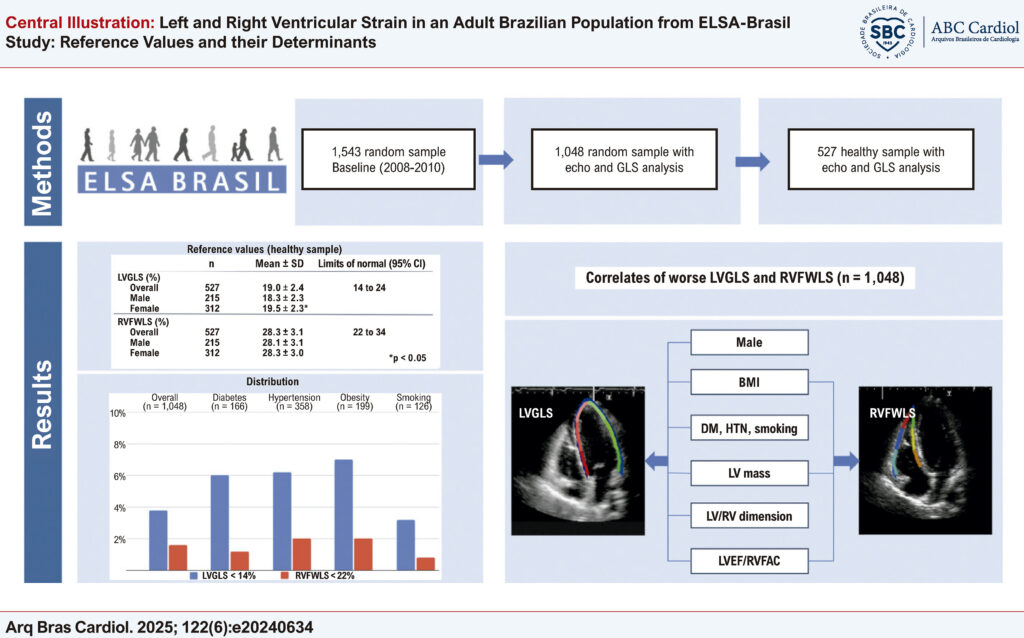
Impaired left ventricular (LV) and right ventricular functions are important predictors of cardiovascular risk. Global longitudinal strain (GLS) provides superior sensitivity for assessing systolic function compared to traditional parameters, enhancing diagnostic accuracy in various cardiac conditions. However, GLS reference values in diverse populations are lacking.
Objectives
To establish reference values for LVGLS and right ventricular free wall longitudinal strain (RVFWLS) in a Brazilian multiethnic population without cardiovascular risk factors or disease. We also explore how clinical and echocardiographic factors influence GLS distribution, addressing a gap in global guidelines that often rely on data from homogeneous or geographically distant populations.
Methods
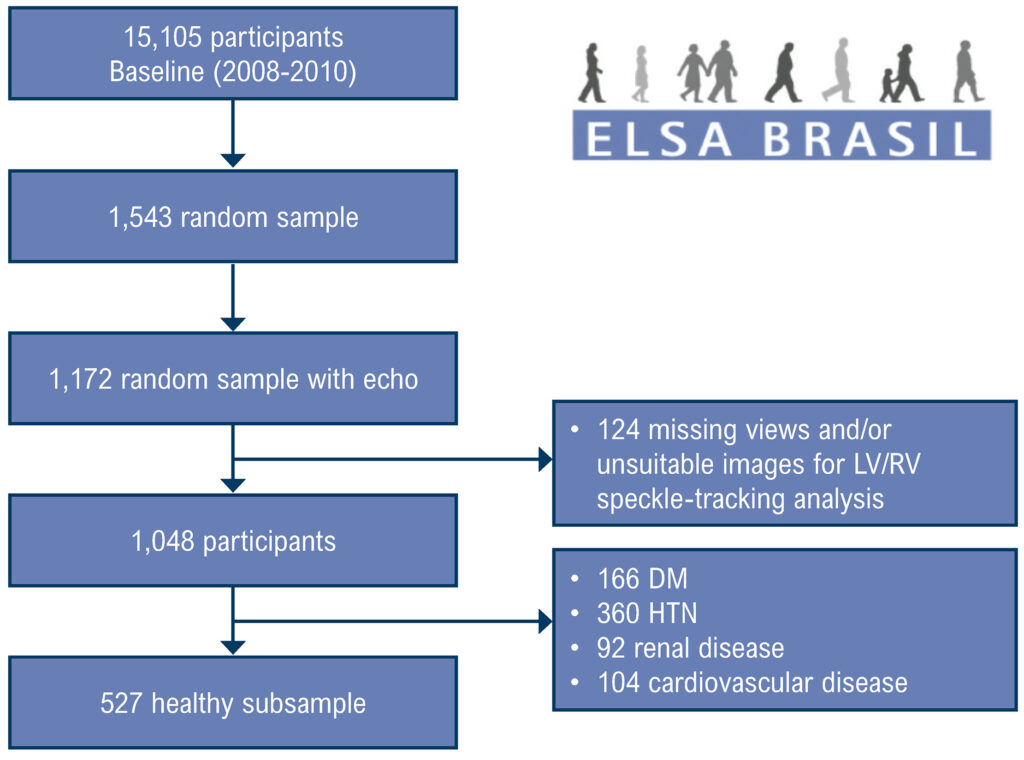
We included 1,048 participants from the ELSA-Brasil cohort who underwent echocardiography with GLS analysis. A healthy subsample (n = 527) was defined by excluding individuals with cardiovascular or renal disease, hypertension, or diabetes to establish GLS reference ranges. The prevalence of abnormal GLS was assessed, and factors associated with reduced LVGLS and RVFWLS were identified. Statistical significance was defined as p < 0.05.
Results
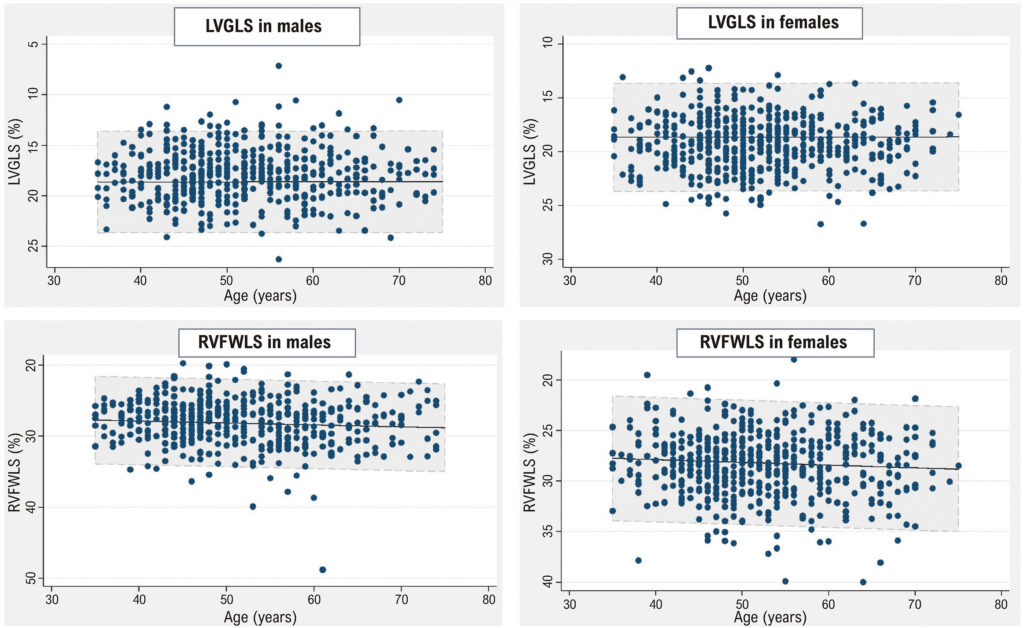
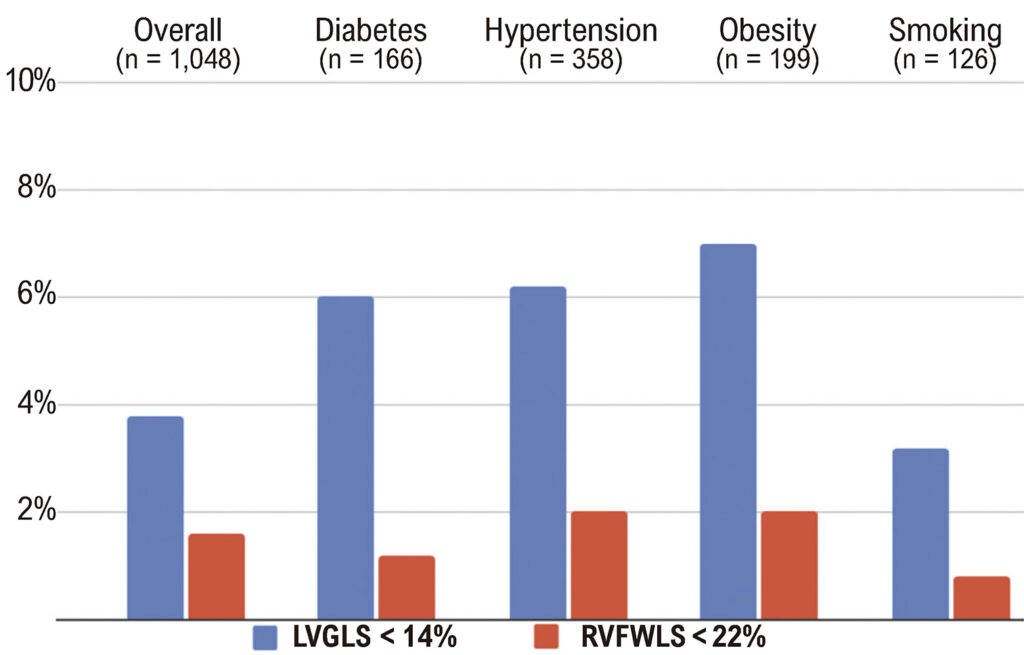
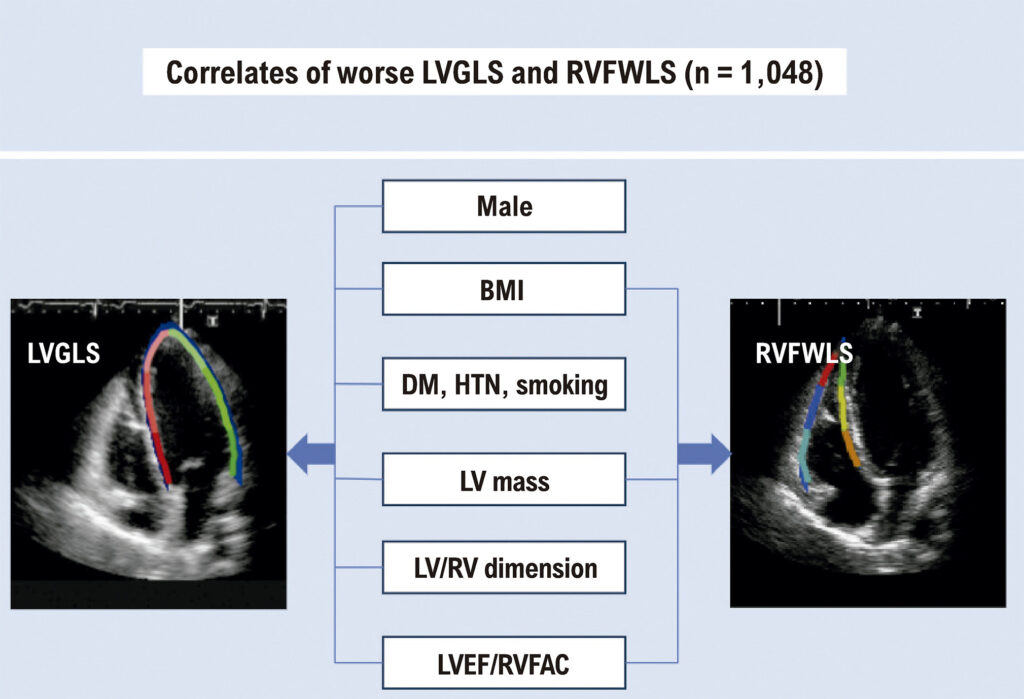
In the healthy subsample (mean age 50.2 years, 59% female), mean LVGLS was 19.0% (95% confidence interval: 14.3 to 23.8) and RVFWLS was 28.3% (95% confidence interval: 22.3 to 34.3). Females exhibited higher LVGLS and RVFWLS values than males, with no significant age-related differences. Abnormal LVGLS and RVFWLS were observed in 3.8% and 1.6% of participants, respectively. Lower LVGLS was associated with obesity, hypertension, and diabetes; reduced RVFWLS correlated with higher body mass index and LV mass.
Conclusions
We propose reference values for LVGLS and RVFWLS in a large Brazilian cohort, highlighting associations with cardiovascular comorbidities and ventricular structure.
Images
Image gallery fullscreen viewer
Comments are moderated by the editorial team before publication. Discussions should be evidence-based and use scientific language. Conflicts of interest should be declared.