ABC Family Arquivos Brasileiros de Cardiologia International Journal of Cardiovascular Sciences ABC Heart Failure & Cardiomyopathy ABC Imagem Cardiovascular
Português English
ABC Family
Português English
  • About
    • About ABC Family
    • Internal Regulation
    • Editorial Board
    • Brazilian Society of Cardiology (SBC)
  • Issues
  • SBC Guidelines
  • Content
    • Videos
    • Podcasts
    • News
  • About
    • About ABC Family
    • Internal Regulation
    • Editorial Board
    • Brazilian Society of Cardiology (SBC)
  • Issues
  • SBC Guidelines
  • Content
    • Videos
    • Podcasts
    • News

ABC Family

  • ABC Family
  • Arquivos Brasileiros de Cardiologia
  • International Journal of Cardiovascular Sciences
  • ABC Heart Failure & Cardiomyopathy
  • ABC Imagem Cardiovascular
Search in

No content found.

Journals
Ordering
Article types
Others

  1. Home
  2. Keyword: Platelet Aggregation Inhibitors
Direct Oral Anticoagulants versus Aspirin for Secondary Stroke Prevention in Patients with Embolic Stroke of Undetermined Source: An Updated Systematic Review and Meta-Analysis of Randomized Controlled Trials
ABC
Review Article

Direct Oral Anticoagulants versus Aspirin for Secondary Stroke Prevention in Patients with Embolic Stroke of Undetermined Source: An Updated Systematic Review and Meta-Analysis of Randomized Controlled Trials

Juan Armando Talavera et al. Larissa Teixeira Thomaz Alexandre Costa Denilsa Navalha … Tathiane Brum Gibicoski Nicole Fernandez Jeffrey Healey Luciana Armaganijan Guilherme Dagostin de Carvalho

Abstract

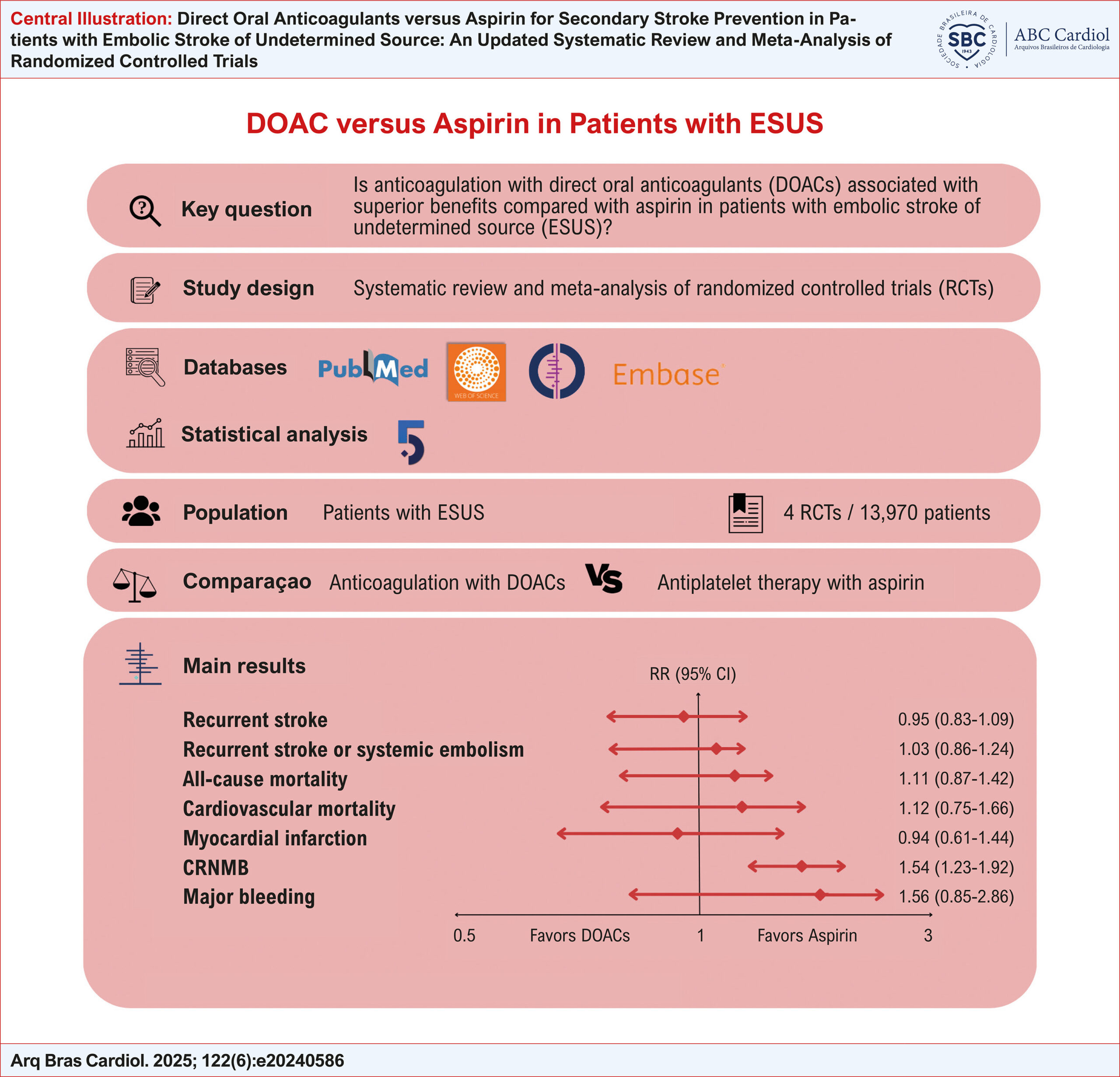
Embolic stroke of undetermined source (ESUS) accounts for around 20% of ischemic strokes. The ideal treatment for secondary prevention in ESUS remains unclear. This study aimed to perform a systematic review and meta-analysis of randomized controlled trials (RCTs) comparing the safety and efficacy of direct oral anticoagulants (DOACs) versus aspirin in patients with ESUS. A systematic search of PubMed, Embase, Cochrane, and Web of Science databases was conducted for eligible trials until March 2024. The primary outcome was recurrent stroke, while safety outcomes included major bleeding and clinically relevant non-major bleeding (CRNMB). Hazard ratios (HRs) with 95% confidence intervals (CIs) were calculated for analysis. Four RCTs were included, involving 13,970 patients, half of whom were randomized to the DOACs group. Over a mean follow-up of 16 months, DOACs did not significantly reduce recurrent stroke (HR: 0.95; 95% CI: 0.81-1.09; p=0.44), ischemic stroke (HR: 0.91; 95% CI: 0.79-1.06; p=0.23), all-cause mortality (HR: 1.11; 95% CI: 0.87-1.42; p=0.40), or major bleeding (HR: 1.56; 95% CI: 0.85%-2.86; p=0.15) compared to aspirin. However, DOACs were associated with a significantly higher risk of CRNMB (HR: 1.54; 95% CI: 1.23-1.92; p=0.0002). Subgroup analysis revealed no significant differences in stroke recurrence among patients with low or high CHA2-DS2-VASc scores. DOACs did not demonstrate superior efficacy over aspirin in preventing recurrent stroke among ESUS patients and were linked to an increased risk of CRNMB.
  • Anticoagulants
  • Embolic Stroke
  • Platelet Aggregation Inhibitors
Read Full Article
Creative Commons Attribution (CC BY) Creative Commons license
07/07/2025 DOI: 10.36660/abc.20240586i
ABC
Editorial

Saphenous Vein Graft Stenosis

Henrique Murad

Saphenous vein graft (SVG) stenosis or occlusion is the Achilles heel for a more liberal use of this type of graft in coronary artery bypass surgery (CABG) for myocardial revascularization.

During the first month after CABG, around 10% of SVG can be occluded due to surgical technique failure or thrombosis. At the end of the first year 15% of SVG can be occluded due to intimal hyperplasia. Perfect surgical technique, careful handling of the saphenous vein avoiding graft overdistension and aspirin use for life (or other antiplatelet agent) are important points for achieving a patent vein.

[…]

  • Atherosclerposis/prevention and control
  • Graft Occlusion Vascular/complications
  • Platelet Aggregation Inhibitors
  • Risk Factors
  • Thrombosis
Read Full Article
Creative Commons Attribution (CC BY) Creative Commons license
28/09/2020 DOI: 10.36660/abc.20200633
ABC
Editorial

High Residual Platelet Activity in Response to Acetylsalicylic Acid in Acute Coronary Syndrome: A New Challenge for Antiplatelet Treatment?

Dário C. Sobral Filho et al. José Gildo de Moura Monteiro Júnior

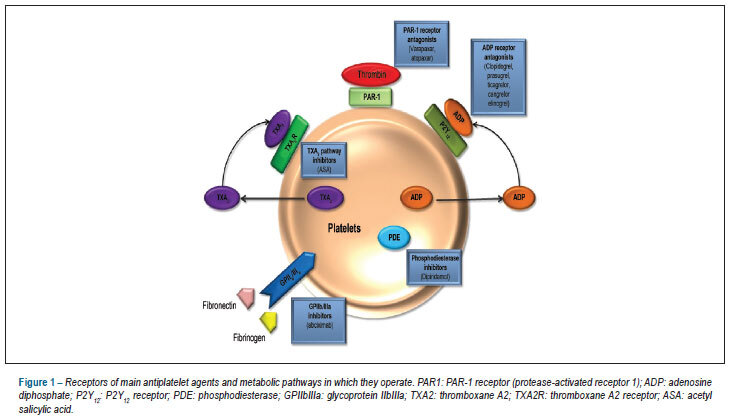
Cardiovascular diseases (CVD) are the leading cause of death in the world, with coronary heart disease being the main etiology, accounting in 2016 for 31% of global deaths. Myocardial infarction (MI) is usually due to changes in the arterial wall or thrombotic occlusion of a coronary vessel caused by the rupture of a vulnerable plaque., Instability in the atherosclerotic plaque is the result of local and systemic oxidative stress, thus leading to platelet activation and formation of aggregates in the circulation. The major function of platelets is as part of the homeostatic mechanism, halting blood loss after tissue trauma, but in oxidative conditions, they are associated with various CVD such as hypertension, heart failure, stroke, diabetes and atherosclerosis.

Previous studies have shown the importance of aspirin in reducing cardiovascular events in patients with coronary artery disease, hence the importance of anti-platelet aggregation in acute and chronic coronary syndromes.– However, in this issue of the Arquivos Brasileiros de Cardiologia, Dracoulakis et al. demonstrate the high residual variability in response to aspirin in patients with non-ST-elevation acute coronary syndrome, comparing acute and late phases, correlating with laboratory evaluation tests of platelet aggregation and the variation of inflammatory markers (C-reactive protein and interleukin-6). In this study, the authors demonstrate statistically significant differences in response to aspirin during the acute and late phases of acute coronary disease.

[…]

  • Acute coronary syndrome
  • aspirin/therapeutic use
  • Oxidative Stress
  • Plaque, Atherosclerosis
  • Platelet Aggregation Inhibitors
Read Full Article
Creative Commons Attribution (CC BY) Creative Commons license
10/10/2019 DOI: 10.5935/abc.20190199
ABC
Review Article

Antithrombotic strategy in the three first months following bioprosthetic heart valve implantation

André R. Durães et al. Milena A. O. Durães Luis C. L. Correia Roque Aras

Heart valve prosthesis unquestionably improve quality of life and survival of patients with severe valvular heart disease, but the need for antithrombotic therapy to prevent thromboembolic complications is a major challenge to clinicians and their patients. Of the articles analyzed, most were retrospective series of cases or historical cohorts obtained from the database. The few published randomized trials showed no statistical power to assess the primary outcome of death or thromboembolic event. In this article, we decided to perform a systematic literature review, in an attempt to answer the following question: what is the best antithrombotic strategy in the first three months after bioprosthetic heart valve implantation (mitral and aortic)? After two reviewers applying the extraction criteria, we found 1968 references, selecting 31 references (excluding papers truncated, which combined bioprosthesis with mechanical prosthesis, or without follow-up). Based on this literature review, there was a low level of evidence for any antithrombotic therapeutic strategy evaluated. It´s therefore interesting to use aspirin 75 to 100 mg / day as antithrombotic strategy after bioprosthesis replacement in the aortic position, regardless of etiology, for patients without other risk factors such as atrial fibrillation or previous thromboembolic event. In the mitral position, the risk of embolism, although low, is more relevant than in the aortic position, according to published series and retrospective cohorts comprised mostly of elderly non-rheumatic patients.

  • Fibrinolytic Agents
  • Heart Valve Prosthesis Implantation
  • Platelet Aggregation Inhibitors
  • Thromboembolism
Read Full Article
Creative Commons Attribution (CC BY) Creative Commons license
08/10/2013 DOI: 10.5935/abc.20130202 Views 1
Platelet antiaggregants in primary and secondary prevention of atherothrombotic events
ABC
Atualização

Platelet antiaggregants in primary and secondary prevention of atherothrombotic events

Marcos Vinícius Ferreira Silva et al. Luci Maria SantAna Dusse Lauro Mello Vieira Maria das Graças Carvalho

Atherothrombosis and its complications are currently the leading cause of worldwide mortality and its incidence is increasing . Platelets play an essential role in the pathogenesis of atherothrombotic events, justifying the use of antiplatelet agents in their prevention. Thus, it is essential to know the efficacy and safety profile of these drugs in primary and secondary prevention of atherothrombotic events. In this context, this review was performed with the aim of describing and summarizing the outcomes of the main trials involving the use of antiplatelet agents in the two levels of prevention, and evaluating the effectiveness and major adverse events related to therapy.

  • Angina Pectoris
  • Aspirin
  • Coronary Artery Disease
  • Myocardial Infarction
  • Platelet Aggregation Inhibitors
Read Full Article
Creative Commons Attribution (CC BY) Creative Commons license
05/07/2013 DOI: 10.5935/abc.20130122 Views 1
Resistance to clopidogrel: prevalence and associate variables
ABC
Artigo Original

Resistance to clopidogrel: prevalence and associate variables

Fabrício Braga da Silva et al. Gustavo Luiz Gouvêa de Almeida Junior Augusto Neno José Kezen … Milena Spelta Alessandra Godomiczer Renato Villela Bruno Hellmuth Sergio Salles Xavier Roberto Hugo da Costa Lins

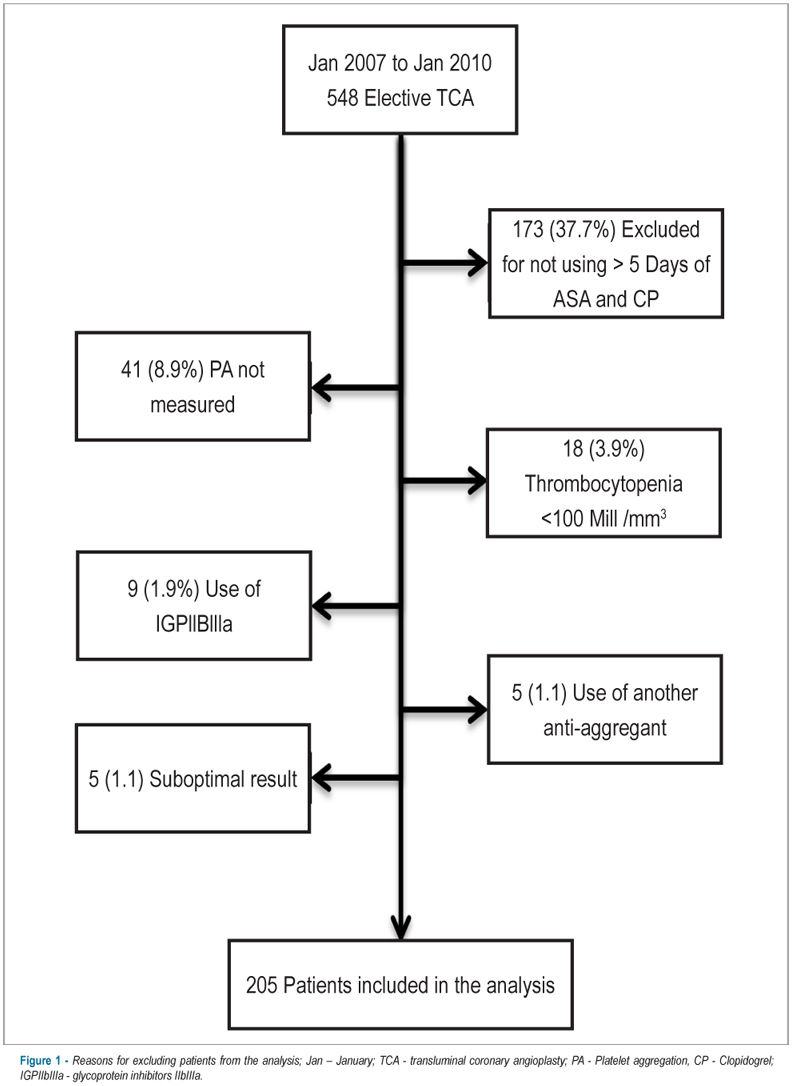
BACKGROUND: The dual antiplatelet therapy with acetylsalicylic acid (ASA) and clopidogrel is the cornerstone of treatment for patients undergoing angioplasty with coronary stent implantation. However, some of these patients, despite the use of aspirin and clopidogrel, are not effectively anti-aggregated, a phenomenon known as resistance to antiplatelet agents. Its prevalence, as well as the conditions associated with it, is unknown in our country. OBJECTIVE: To determine the prevalence of clopidogrel resistance, as well as variables associated with it. METHODS: Patients admitted for elective angioplasty in chronic use of ASA and clopidogrel between January 2007 and January 2010 were studied. One hour after the procedure, platelet aggregation was measured using optical aggregometry with adenosine diphosphate 5 mmoles / l as agonist. At that moment, in a cross-sectional cohort, we determined the prevalence of clopidogrel resistance, defined as the value of platelet aggregation > 43% and a logistic regression model to the variables associated with it. RESULTS: A total of 205 patients were analyzed (66.4 ± 11 years, 61.5% males). The prevalence of clopidogrel resistance was 38.5% (95% CI: 31.9 – 45.2%). Blood glucose (OR = 1.014; 95%CI: 1.004 – 1.023), previous myocardial infarction (OR = 2.320; 95%CI: 1.1103 – 4.892) and therapeutic response to ASA (OR = 1.057; 95%CI: 1.017 – 1.099) were the variables independently associated with clopidogrel resistance. CONCLUSION: The prevalence of clopidogrel resistance was high. Glycemia, acute myocardial infarction and response to ASA were variables associated with it. A better understanding of this phenomenon is necessary considering the new antiplatelet aggregant agents.

  • Angioplasty
  • balloon
  • coronary
  • Coronary Disease
  • drug resistance
  • Platelet Aggregation Inhibitors
  • Stents
Read Full Article
Creative Commons Attribution (CC BY) Creative Commons license
27/11/2012 DOI: 10.1590/S0066-782X2012005000107 Views 1
Combined rTPA and aspirin therapy for intracardiac thrombosis in neonates
ABC
Case Report

Combined rTPA and aspirin therapy for intracardiac thrombosis in neonates

Fernanda Almeida Tardin et al. Antônio Carlos Avanza Júnior Marcos Rogério Arantes Andião Sônia Maria Alves Andrade Rabello … Emília de Mattos Gouvêa Cristello Edna Cellis Vaccari Baltan Edelweiss Bussinguer Pereira Pegurin Norma Suely Oliveira

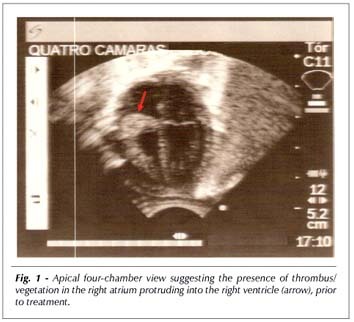
We describe a case of a very low birth weight premature female twin with intracardiac thrombosis. Her condition was consistent with neonatal sepsis, and she was treated with advanced life support, antibiotic therapy, parenteral nutrition, blood transfusion, and central venous catheterization. Infective endocarditis was suspected, and a large intracavitary thrombus was detected by two-dimensional Doppler echocardiography. Surgical procedure was not only technically difficult but also highly lethal, being contraindicated in some cases. Consequently, the use of the thrombolytic recombinant tissue-plasminogen activator (rTPA) associated with aspirin was the treatment of choice, and complete dissolution of the thrombus was achieved without adverse effects.

  • Aspirin
  • Fibrinolytic Agents
  • plasminogen
  • Platelet Aggregation Inhibitors
  • Thrombosis
Read Full Article
Creative Commons Attribution (CC BY) Creative Commons license
15/06/2007 DOI: 10.1590/S0066-782X2007000500026 Views 2

How to cite this article

EndNote RIS

Electronic Document Format (Vancouver)

Talavera JA, Teixeira L, Costa TA, Navalha D, Gibicoski TB, Fernandez N, Healey J, et al. Direct Oral Anticoagulants versus Aspirin for Secondary Stroke Prevention in Patients with Embolic Stroke of Undetermined Source: An Updated Systematic Review and Meta-Analysis of Randomized Controlled Trials. Arquivos Brasileiros de Cardiologia 2025;122(6):e20240586.

Electronic Document Format (ABNT)

Talavera, Juan Armando; Teixeira, Larissa; Costa, Thomaz Alexandre; Navalha, Denilsa; Gibicoski, Tathiane Brum; Fernandez, Nicole; Healey, Jeffrey; Armaganijan, Luciana; Carvalho, Guilherme Dagostin de. Direct Oral Anticoagulants versus Aspirin for Secondary Stroke Prevention in Patients with Embolic Stroke of Undetermined Source: An Updated Systematic Review and Meta-Analysis of Randomized Controlled Trials. Arquivos Brasileiros de Cardiologia, v. 122, n. 6, e20240586, Jul. 2025.

Electronic Document Format (APA)

Talavera, J. A., Teixeira, L., Costa, T. A., Navalha, D., Gibicoski, T. B., Fernandez, N., Healey, J., Armaganijan, L., & Carvalho, G. D. (2025). Direct Oral Anticoagulants versus Aspirin for Secondary Stroke Prevention in Patients with Embolic Stroke of Undetermined Source: An Updated Systematic Review and Meta-Analysis of Randomized Controlled Trials. Arquivos Brasileiros de Cardiologia, 122(6), e20240586.

Electronic Document Format (ISO)

Talavera, Juan Armando and Teixeira, Larissa and Costa, Thomaz Alexandre and Navalha, Denilsa and Gibicoski, Tathiane Brum and Fernandez, Nicole and Healey, Jeffrey and Armaganijan, Luciana and Carvalho, Guilherme Dagostin de. Direct Oral Anticoagulants versus Aspirin for Secondary Stroke Prevention in Patients with Embolic Stroke of Undetermined Source: An Updated Systematic Review and Meta-Analysis of Randomized Controlled Trials. Arquivos Brasileiros de Cardiologia [online]. 2025, vol. 122, n. 6, [cited 2026-10-14], e20240586. Available from: <https://journals.cardiol.br/en/article/direct-oral-anticoagulants-versus-aspirin-for-secondary-stroke-prevention-in-patients-with-embolic-stroke-of-undetermined-source-an-updated-systematic-review-and-meta-analysis-of-randomized-controlle/>. ISSN 0066-782X

EndNote RIS

Electronic Document Format (Vancouver)

Murad H. Saphenous Vein Graft Stenosis. Arquivos Brasileiros de Cardiologia 2020;115(3):545-6.

Electronic Document Format (ABNT)

Murad, Henrique. Saphenous Vein Graft Stenosis. Arquivos Brasileiros de Cardiologia, v. 115, n. 3, p. 545-546, Sep. 2020.

Electronic Document Format (APA)

Murad, H. (2020). Saphenous Vein Graft Stenosis. Arquivos Brasileiros de Cardiologia, 115(3), 545-546.

Electronic Document Format (ISO)

Murad, Henrique. Saphenous Vein Graft Stenosis. Arquivos Brasileiros de Cardiologia [online]. 2020, vol. 115, n. 3, [cited 2026-10-14], pp. 545-546. Available from: <https://journals.cardiol.br/en/article/saphenous-vein-graft-stenosis/>. ISSN 0066-782X

EndNote RIS

Electronic Document Format (Vancouver)

Sobral Filho DC, Monteiro Júnior JGM. High Residual Platelet Activity in Response to Acetylsalicylic Acid in Acute Coronary Syndrome: A New Challenge for Antiplatelet Treatment?. Arquivos Brasileiros de Cardiologia 2019;113(3):364-6.

Electronic Document Format (ABNT)

Sobral Filho, Dário C.; Monteiro Júnior, José Gildo de Moura. High Residual Platelet Activity in Response to Acetylsalicylic Acid in Acute Coronary Syndrome: A New Challenge for Antiplatelet Treatment?. Arquivos Brasileiros de Cardiologia, v. 113, n. 3, p. 364-366, Oct. 2019.

Electronic Document Format (APA)

Sobral Filho, D. C., & Monteiro Júnior, J. G. M. (2019). High Residual Platelet Activity in Response to Acetylsalicylic Acid in Acute Coronary Syndrome: A New Challenge for Antiplatelet Treatment?. Arquivos Brasileiros de Cardiologia, 113(3), 364-366.

Electronic Document Format (ISO)

Sobral Filho, Dário C. and Monteiro Júnior, José Gildo de Moura. High Residual Platelet Activity in Response to Acetylsalicylic Acid in Acute Coronary Syndrome: A New Challenge for Antiplatelet Treatment?. Arquivos Brasileiros de Cardiologia [online]. 2019, vol. 113, n. 3, [cited 2026-10-14], pp. 364-366. Available from: <https://journals.cardiol.br/en/article/high-residual-platelet-activity-in-response-to-acetylsalicylic-acid-in-acute-coronary-syndrome-a-new-challenge-for-antiplatelet-treatment/>. ISSN 0066-782X

EndNote RIS

Electronic Document Format (Vancouver)

Durães AR, Durães MAO, Correia LCL, Aras R. Antithrombotic strategy in the three first months following bioprosthetic heart valve implantation. Arquivos Brasileiros de Cardiologia 2013;101(5):466-72.

Electronic Document Format (ABNT)

Durães, André R.; Durães, Milena A. O.; Correia, Luis C. L.; Aras, Roque. Antithrombotic strategy in the three first months following bioprosthetic heart valve implantation. Arquivos Brasileiros de Cardiologia, v. 101, n. 5, p. 466-472, Oct. 2013.

Electronic Document Format (APA)

Durães, A. R., Durães, M. A. O., Correia, L. C. L., & Aras, R. (2013). Antithrombotic strategy in the three first months following bioprosthetic heart valve implantation. Arquivos Brasileiros de Cardiologia, 101(5), 466-472.

Electronic Document Format (ISO)

Durães, André R. and Durães, Milena A. O. and Correia, Luis C. L. and Aras, Roque. Antithrombotic strategy in the three first months following bioprosthetic heart valve implantation. Arquivos Brasileiros de Cardiologia [online]. 2013, vol. 101, n. 5, [cited 2026-10-14], pp. 466-472. Available from: <https://journals.cardiol.br/en/article/antithrombotic-strategy-in-the-three-first-months-following-bioprosthetic-heart-valve-implantation/>. ISSN 0066-782X

EndNote RIS

Electronic Document Format (Vancouver)

Silva MVF, Dusse LMS, Vieira LM, Carvalho MG. Platelet antiaggregants in primary and secondary prevention of atherothrombotic events. Arquivos Brasileiros de Cardiologia 2013;100(6):e78-84.

Electronic Document Format (ABNT)

Silva, Marcos Vinícius Ferreira; Dusse, Luci Maria SantAna; Vieira, Lauro Mello; Carvalho, Maria das Graças. Platelet antiaggregants in primary and secondary prevention of atherothrombotic events. Arquivos Brasileiros de Cardiologia, v. 100, n. 6, p. e78-e84, Jul. 2013.

Electronic Document Format (APA)

Silva, M. V. F., Dusse, L. M. S., Vieira, L. M., & Carvalho, M. G. (2013). Platelet antiaggregants in primary and secondary prevention of atherothrombotic events. Arquivos Brasileiros de Cardiologia, 100(6), e78-e84.

Electronic Document Format (ISO)

Silva, Marcos Vinícius Ferreira and Dusse, Luci Maria SantAna and Vieira, Lauro Mello and Carvalho, Maria das Graças. Platelet antiaggregants in primary and secondary prevention of atherothrombotic events. Arquivos Brasileiros de Cardiologia [online]. 2013, vol. 100, n. 6, [cited 2026-10-14], pp. e78-e84. Available from: <https://journals.cardiol.br/en/article/platelet-antiaggregants-in-primary-and-secondary-prevention-of-atherothrombotic-events/>. ISSN 0066-782X

EndNote RIS

Electronic Document Format (Vancouver)

Silva FB, Almeida Junior GLG, Neno A, Kezen J, Spelta M, Godomiczer A, Villela R, et al. Resistance to clopidogrel: prevalence and associate variables. Arquivos Brasileiros de Cardiologia 2012;99(6):1135-41.

Electronic Document Format (ABNT)

Silva, Fabrício Braga da; Almeida Junior, Gustavo Luiz Gouvêa de; Neno, Augusto; Kezen, José; Spelta, Milena; Godomiczer, Alessandra; Villela, Renato; Hellmuth, Bruno; Xavier, Sergio Salles; Lins, Roberto Hugo da Costa. Resistance to clopidogrel: prevalence and associate variables. Arquivos Brasileiros de Cardiologia, v. 99, n. 6, p. 1135-1141, Nov. 2012.

Electronic Document Format (APA)

Silva, F. B. , Almeida Junior, G. L. G. , Neno, A., Kezen, J., Spelta, M., Godomiczer, A., Villela, R., Hellmuth, B., Xavier, S. S., & Lins, R. H. C. (2012). Resistance to clopidogrel: prevalence and associate variables. Arquivos Brasileiros de Cardiologia, 99(6), 1135-1141.

Electronic Document Format (ISO)

Silva, Fabrício Braga da and Almeida Junior, Gustavo Luiz Gouvêa de and Neno, Augusto and Kezen, José and Spelta, Milena and Godomiczer, Alessandra and Villela, Renato and Hellmuth, Bruno and Xavier, Sergio Salles and Lins, Roberto Hugo da Costa. Resistance to clopidogrel: prevalence and associate variables. Arquivos Brasileiros de Cardiologia [online]. 2012, vol. 99, n. 6, [cited 2026-10-14], pp. 1135-1141. Available from: <https://journals.cardiol.br/en/article/resistance-to-clopidogrel-prevalence-and-associate-variables/>. ISSN 0066-782X

EndNote RIS

Electronic Document Format (Vancouver)

Tardin FA, Avanza Júnior AC, Andião MRA, Rabello SMAA, Cristello EMG, Baltan ECV, Pegurin EBP, et al. Combined rTPA and aspirin therapy for intracardiac thrombosis in neonates. Arquivos Brasileiros de Cardiologia 2007;88(5):e121-3.

Electronic Document Format (ABNT)

Tardin, Fernanda Almeida; Avanza Júnior, Antônio Carlos; Andião, Marcos Rogério Arantes; Rabello, Sônia Maria Alves Andrade; Cristello, Emília de Mattos Gouvêa; Baltan, Edna Cellis Vaccari; Pegurin, Edelweiss Bussinguer Pereira; Oliveira, Norma Suely. Combined rTPA and aspirin therapy for intracardiac thrombosis in neonates. Arquivos Brasileiros de Cardiologia, v. 88, n. 5, p. e121-e123, Jun. 2007.

Electronic Document Format (APA)

Tardin, F. A., Avanza Júnior, A. C., Andião, M. R. A., Rabello, S. M. A. A., Cristello, E. M. G., Baltan, E. C. V., Pegurin, E. B. P., & Oliveira, N. S. (2007). Combined rTPA and aspirin therapy for intracardiac thrombosis in neonates. Arquivos Brasileiros de Cardiologia, 88(5), e121-e123.

Electronic Document Format (ISO)

Tardin, Fernanda Almeida and Avanza Júnior, Antônio Carlos and Andião, Marcos Rogério Arantes and Rabello, Sônia Maria Alves Andrade and Cristello, Emília de Mattos Gouvêa and Baltan, Edna Cellis Vaccari and Pegurin, Edelweiss Bussinguer Pereira and Oliveira, Norma Suely. Combined rTPA and aspirin therapy for intracardiac thrombosis in neonates. Arquivos Brasileiros de Cardiologia [online]. 2007, vol. 88, n. 5, [cited 2026-10-14], pp. e121-e123. Available from: <https://journals.cardiol.br/en/article/combined-rtpa-and-aspirin-therapy-for-intracardiac-thrombosis-in-neonates/>. ISSN 0066-782X

  • About ABC Family
  • Internal Regulation
  • Editorial Board
  • Brazilian Society of Cardiology (SBC)

Issues

SBC Guidelines

  • Videos
  • Podcasts
  • News