| ABC
ABC Family Arquivos Brasileiros de Cardiologia International Journal of Cardiovascular Sciences ABC Heart Failure & Cardiomyopathy ABC Imagem Cardiovascular
Português English
ABC Family | ABC
Português English
  • About
    • About the Journal
    • Internal Regulation
    • Editors Section
    • Editorial Board
    • History
    • SBC Award
  • Instructions to Authors
    • Guidelines for Publication
    • Editorial Policy
    • Ethics Policy
    • Policy on the Use of Artificial Intelligence
    • Mandatory Publication Form
    • Publication Fee
  • Issues
  • SBC Guidelines
  • Abstracts
    • How to Publish an Abstract Supplement?
    • Supplements from the Brazilian Congress of Cardiology
  • About
    • About the Journal
    • Internal Regulation
    • Editors Section
    • Editorial Board
    • History
    • SBC Award
  • Instructions to Authors
    • Guidelines for Publication
    • Editorial Policy
    • Ethics Policy
    • Policy on the Use of Artificial Intelligence
    • Mandatory Publication Form
    • Publication Fee
  • Issues
  • SBC Guidelines
  • Abstracts
    • How to Publish an Abstract Supplement?
    • Supplements from the Brazilian Congress of Cardiology

ABC Family

  • ABC Family
  • Arquivos Brasileiros de Cardiologia
  • International Journal of Cardiovascular Sciences
  • ABC Heart Failure & Cardiomyopathy
  • ABC Imagem Cardiovascular
Search in

No content found.

Journals
Ordering
Article types
Others

  1. Home
  2. ABC
  3. Issues
  4. 2024, Volume 121, Number 7
Editorial

A Fresh Glimpse on Chest X-Ray: Revealing Significance of Aortic Arch Calcifications for Stroke Recurrence

José Ribeiro

The global impact of cardiovascular disease continues to be significant, despite improvements in diagnosis and treatment. The epidemiological significance and associated clinical outcomes emphasize the importance of risk stratification and preventive measures.

In the realm of medical diagnostics, every subtle observation holds the potential to unlock crucial insights into the prognosis and management of various health conditions. One such observation that has garnered attention is the presence of calcification in the aortic arch as detected on chest X-ray. While traditionally viewed as a marker of cardiovascular risk, recent studies have ignited a debate on whether aortic arch calcification (AAC) could serve as an independent predictor of recurrent stroke.

[…]

  • Diagnostic Imaging
  • Heart Disease Risk Factors
  • Mass Chest X-Ray
  • Stroke
  • Thoracic aorta
Read Full Article
Creative Commons Attribution (CC BY) Creative Commons license
22/11/2024 DOI: 10.36660/abc.20240404i Views 1
Editorial

Advancing the Use of Direct Oral Anticoagulants in Left Ventricular Thrombus Management

Pedro E. P. Carvalho

Direct oral anticoagulants (DOACs) are preferred over Vitamin K Antagonists (VKAs) in numerous clinical scenarios, such as preventing thromboembolic events in patients with atrial fibrillation and treating venous thromboembolism.– In contrast, DOACs are contraindicated in patients with mechanical heart valves, valvular AF due to mitral stenosis, and antiphospholipid syndrome.– In patients with left ventricular thrombus (LVT), however, the efficacy and safety of DOACs remain uncertain.

LVT is a common complication following an acute myocardial infarction (MI). The incidence of LVT post-acute MI has declined due to increased primary percutaneous coronary intervention (PCI) and advanced antithrombotic therapies. In the primary PCI era, LVT incidence is up to 6.3% in STEMI patients, rising to 19.2% in those with anterior STEMI and reduced left ventricular ejection fraction. Data from the SWEDEHEART registry indicated an incidence as high as 38%, suggesting underestimation and the need for follow-up to assess LVT formation in these patients. In addition, the choice of imaging modality significantly impacts LVT detection, with cardiac magnetic resonance having higher sensitivity compared with echocardiography. Therefore, there is an unmet need for LVT prevention, detection, and treatment.

[…]

  • Factor Xa Inhibitors
  • Myocardial Infarction
  • Venous Thromboembolism
Read Full Article
Creative Commons Attribution (CC BY) Creative Commons license
22/11/2024 DOI: 10.36660/abc.20240409i Views 1
Inflammatory Hematological Indices, Cardiovascular Disease and Mortality: A Narrative Review
Review Article

Inflammatory Hematological Indices, Cardiovascular Disease and Mortality: A Narrative Review

Marcela Aparecida Lopes Nascimento et al. Leticia Gonçalves Resende Ferreira Taluane Vívian Gomes Alves Danyelle Romana Alves Rios

Abstract

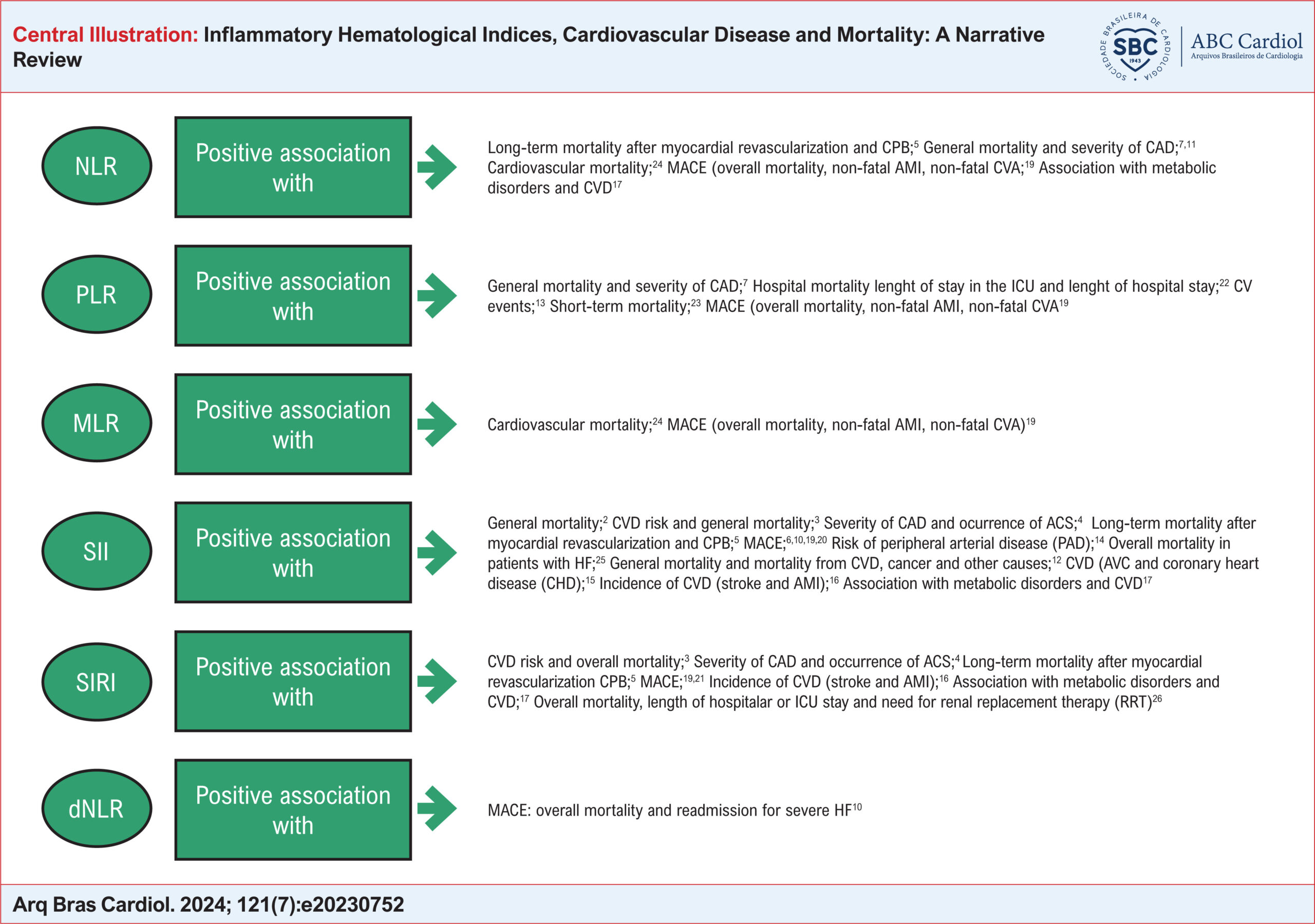
Cardiovascular diseases (CVDs) are the leading cause of death worldwide, which generates a significant economic burden of billions per year on the healthcare system. Chronic inflammation is known for its importance in the pathogenesis of atherosclerosis and CVDs. Currently, inflammatory hematologic indices, obtained through the results of the complete blood count (CBC), have been characterized as potential prognostic factors for mortality in CVD. These indexes are calculated from neutrophil, lymphocyte, platelet, and monocyte counts, are easily accessible, have simple calculations, and have low cost, which facilitates their application in practice.

The aim of this paper was prepare a synthesis of studies that investigated the relationship of inflammatory hematologic indices with cardiovascular risk and mortality.

The search was been conducted in PubMed, Scopus, Embase, Web of Science, and Virtual Health Library (VHL) databases. Studies that investigated the association between inflammatory hematologic indices with cardiovascular risk and mortality were been selected.

1,470 studies were obtained in the search, with only 23 being eligible. We found that the hematological index most associated with overall mortality, cardiovascular events, and cardiovascular mortality was the systemic immune-inflammation index (SII) followed by the systemic inflammatory response index (SIRI).

The hematological inflammatory indices proved advantageous for screening and identifying patients who have high cardiovascular risk and mortality risk, and may be useful in directing the treatment of these patients, obtaining information about prognosis, and improving risk stratification.

  • Blood Cell Count
  • Cardiovascular Diseases
  • Risk Factors
Read Full Article
Creative Commons Attribution (CC BY) Creative Commons license
22/11/2024 DOI: 10.36660/abc.20230752i Views 1
Editorial

Hypertension and Cardiovascular Risk: Direct Association with Blood Pressure Values

Rui Póvoa

Hypertension (AH) is one of the main risk factors for cardiovascular (CV) diseases, mainly stroke, coronary artery disease, heart failure, and peripheral vascular insufficiency. Adequate control of blood pressure (BP) levels significantly reduces the appearance of all these harmful events.

As BP is a continuous biological variable, the definition of normality is not yet a universal consensus. The latest Brazilian AH guideline published in 2020 considers individuals with BP ≥140/90 mmHg (systolic/diastolic) to be hypertensive. However, we know that CV risk begins to increase at BP values well below those considered normal.

[…]

  • Aged
  • Cardiovascular Diseases
  • Hypertension
Read Full Article
Creative Commons Attribution (CC BY) Creative Commons license
13/09/2024 DOI: 10.36660/abc.20240459i Views 1
Editorial

Pulmonary Arterial Hypertension and Cardioprotective Interventions

Elida Paula Benquique Ojopi et al. Carolina Rodrigues Tonon Katashi Okoshi Marina Politi Okoshi

The normal pulmonary vasculature is a low-pressure system compared with the systemic vasculature. Pulmonary hypertension is characterized by a mean pulmonary artery pressure higher than 25 mmHg. The primary pathophysiological process of pulmonary hypertension is a restriction of blood flow through the pulmonary circulation, which leads to increased pulmonary vascular resistance and eventual failure of the right ventricle. Pulmonary hypertension may be idiopathic (PAH) or aconsequence of chronic diseases, including left-sided heart failure, parenchymal lung diseases, and thromboembolic disease.

Pathological structural and functional changes of the ventricles are known as cardiac remodeling, which is associated with a poor prognosis in PAH. Currently, no specific treatment is recommended for PAH-induced cardiac remodeling.

[…]

  • Antioxidants
  • Homeostasis
  • Pulmonary Arterial Hypertension
  • Right Ventricular Dysfunction
Read Full Article
Creative Commons Attribution (CC BY) Creative Commons license
13/09/2024 DOI: 10.36660/abc.20240445i
Editorial

Diuretic in Decompensated Heart Failure: With or Without Salt?

Wolney de Andrade Martins

Acute or decompensated heart failure (HF) syndrome is a common cause of admission to emergency rooms or HF clinics. Patients often present in profile “B” of the hemodynamic classification and have low therapeutic adherence as the cause of their decompensation. In this clinical situation, the use of high-dose intravenous loop diuretics has been the mainstay of treatment over the last five decades. It does not change the long-term prognosis of the underlying disease, but it moves the patient from the acute crisis to outpatient compensation.

There are many issues involved in diuretic therapy for decongestion. There are questions about doses; continuous infusion or bolus; parameters for complete decongestion; and care to avoid hypovolemia. Resistance to diuretics and sodium craving are mechanisms present in more severe and chronic patients, making decongestion even more challenging. Fortunately, some solutions to the problems mentioned above have been proposed and tested.

[…]

  • Diuretics
  • Heart Failure
  • Hypertonic Saline Solution
Read Full Article
Creative Commons Attribution (CC BY) Creative Commons license
26/08/2024 DOI: 10.36660/abc.20240393i Views 1
Figure 1
Case Report

Transient Ischemic Attack in a Patient with Vascular Kinking of the Subclavian and Right Common Carotid Arteries – A Case Report

Katia Gleicielly Frigotto et al. Washington Luiz Batista da Costa Lais Antonucci Ferreira Daniela Roberta Alves Silva … Giovana Salviano Braga Garcia Luciano de Figueiredo Aguiar Bruno de Souza Paolino

Introduction

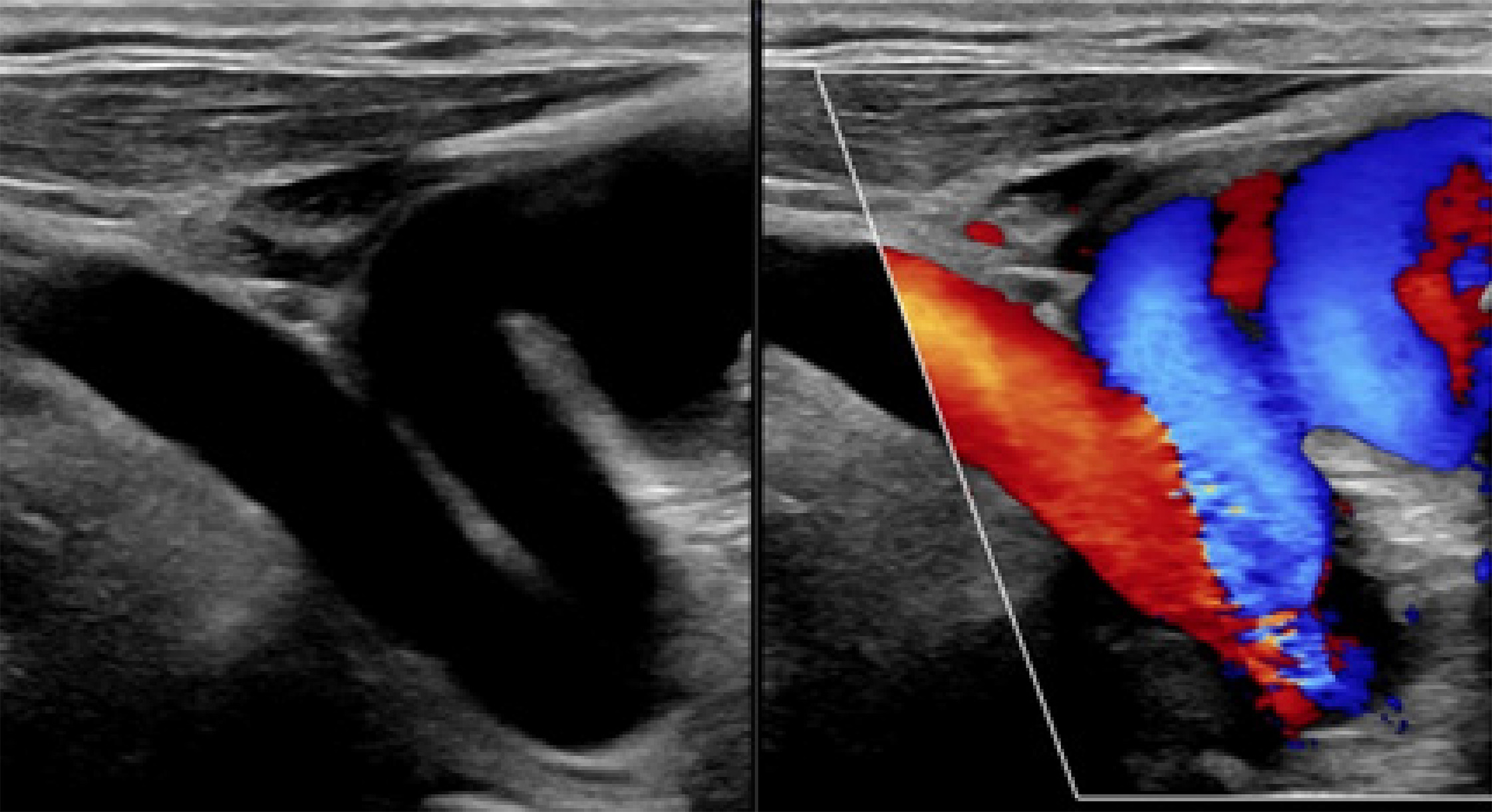
Vascular kinking is a vascular angular change where an acute angle is formed in an artery. Both embryogenic and acquired causes can lead to this change. Studies indicate that atherosclerosis, hypertension, and aging are significant contributors to carotid abnormalities. Other factors such as trauma, congenital causes, or inflammatory diseases are uncommon and typically associated with atherosclerosis. Congenital factors may manifest clinically later in life, being exacerbated by conditions like systemic arterial hypertension (SAH), diabetes mellitus (DM), dyslipidemia, smoking, rheumatological disorders, and heart diseases.

There are two types of kinking. The first one being congenital, most prevalent in women in their late 40s and early 50s, being clinically significant in advanced age. The second type is linked to atherosclerotic risk factors, such as SAH, dyslipidemia, DM, and smoking. However, determining the exact role of carotid abnormalities in causing ischemic symptoms is challenging due to their frequent association with atherosclerotic lesions in vessel walls.

[…]

  • Cerebrovascular Disorders
  • Transient Ischemic Attack
  • Vascular Diseases
Read Full Article
Creative Commons Attribution (CC BY) Creative Commons license
26/08/2024 DOI: 10.36660/abc.20230520i Views 1
Figure 1
Case Report

Unveiling Arrhythmogenic Right Ventricular Cardiomyopathy in Scleroderma

Mehmet Rasih Sonsöz et al. Uğur Ozan Demirhan Cemal Bes

Introduction

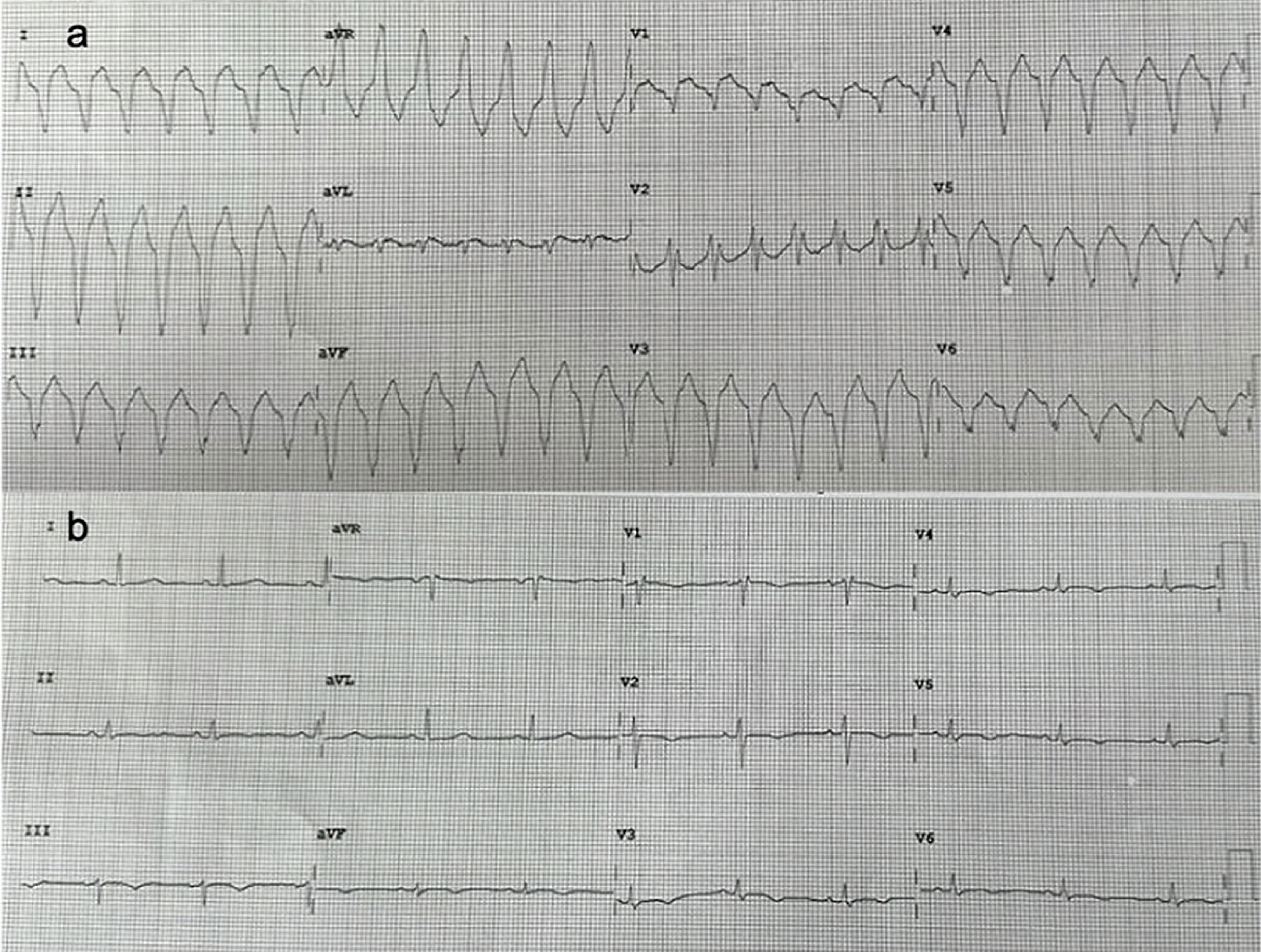
Systemic sclerosis (SSc) patients commonly report exertional dyspnea and pulmonary hypertension should be first suspected, as the prevalence in these patients is reported to be 5-19% and it is associated with worse clinical outcomes. Additional differential diagnosis includes congenital left-to-right shunt and arrhythmogenic right ventricular cardiomyopathy (ARVC) when right ventricular dilatation and systolic dysfunction are present. Our case concerns an elderly lady with SSc who was initially diagnosed with precapillary pulmonary hypertension.

[…]

  • Arrhythmogenic right ventricular dysplasia;
  • Echocardiography
  • Pulmonary Hypertension
  • Systemic Scleroderma
  • Ventricular tachycardia
Read Full Article
Creative Commons Attribution (CC BY) Creative Commons license
26/08/2024 DOI: 10.36660/abc.20230815i Views 1
Figure 1
Viewpoint

Advancing the Diagnosis and Management of Heart Failure with Preserved Ejection Fraction: A Call for Exercise Hemodynamics

Renato de Aguiar Hortegal et al. Fausto Feres

Introduction

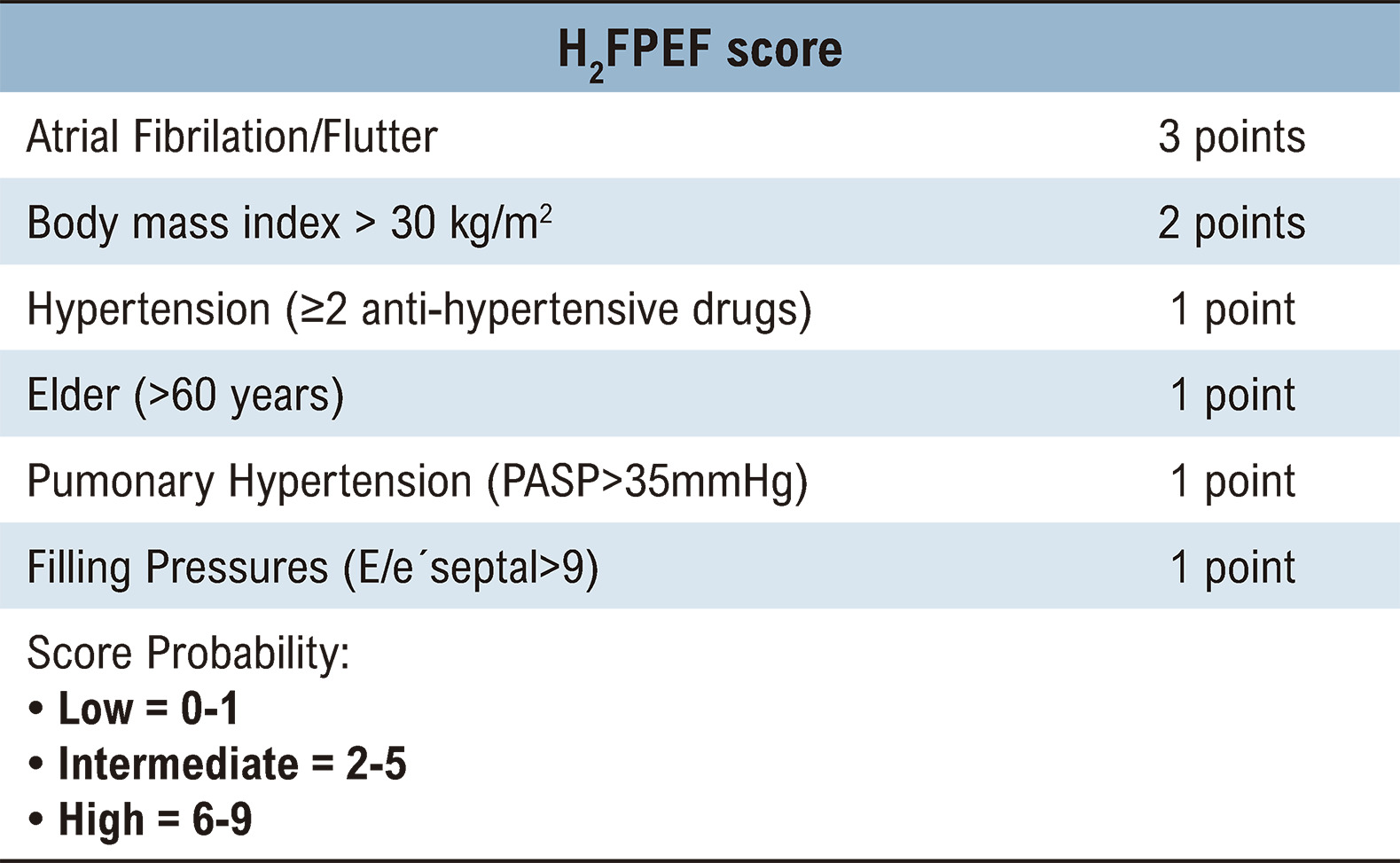
Heart failure (HF) is a progressive medical condition that affects approximately 1-3% of adults, with a significant increase in prevalence in older age groups. More than half of HF patients have a left ventricular ejection fraction (LVEF) of ≥ 50%, known as heart failure with preserved ejection fraction (HFpEF). While the overall number of HF cases seems to be stable or even declining, the incidence of HFpEF continues to rise. HFpEF patients differ significantly from those with reduced ejection fraction regarding pathophysiology, diagnostic evaluation, and treatment. The idiosyncratic pathophysiological heterogeneity and multiorgan dysfunction in addition to diverse clinical presentation will require tailored approaches for this population.

Taking these aspects into account, a specialized unit catering to the HFpEF population was founded in October 2020 at the Instituto Dante Pazzanese de Cardiologia, a tertiary and quaternary public healthcare center located in São Paulo, Brazil. To date, this facility has successfully conducted over 5000 outpatient visits, predominantly for patients presenting dyspnea on exertion.

[…]

  • Echocardiography
  • Heart Failure
  • Heart Function Tests
Read Full Article
Creative Commons Attribution (CC BY) Creative Commons license
26/08/2024 DOI: 10.36660/abc.20230845i Views 2
Figure 1
Research Letter

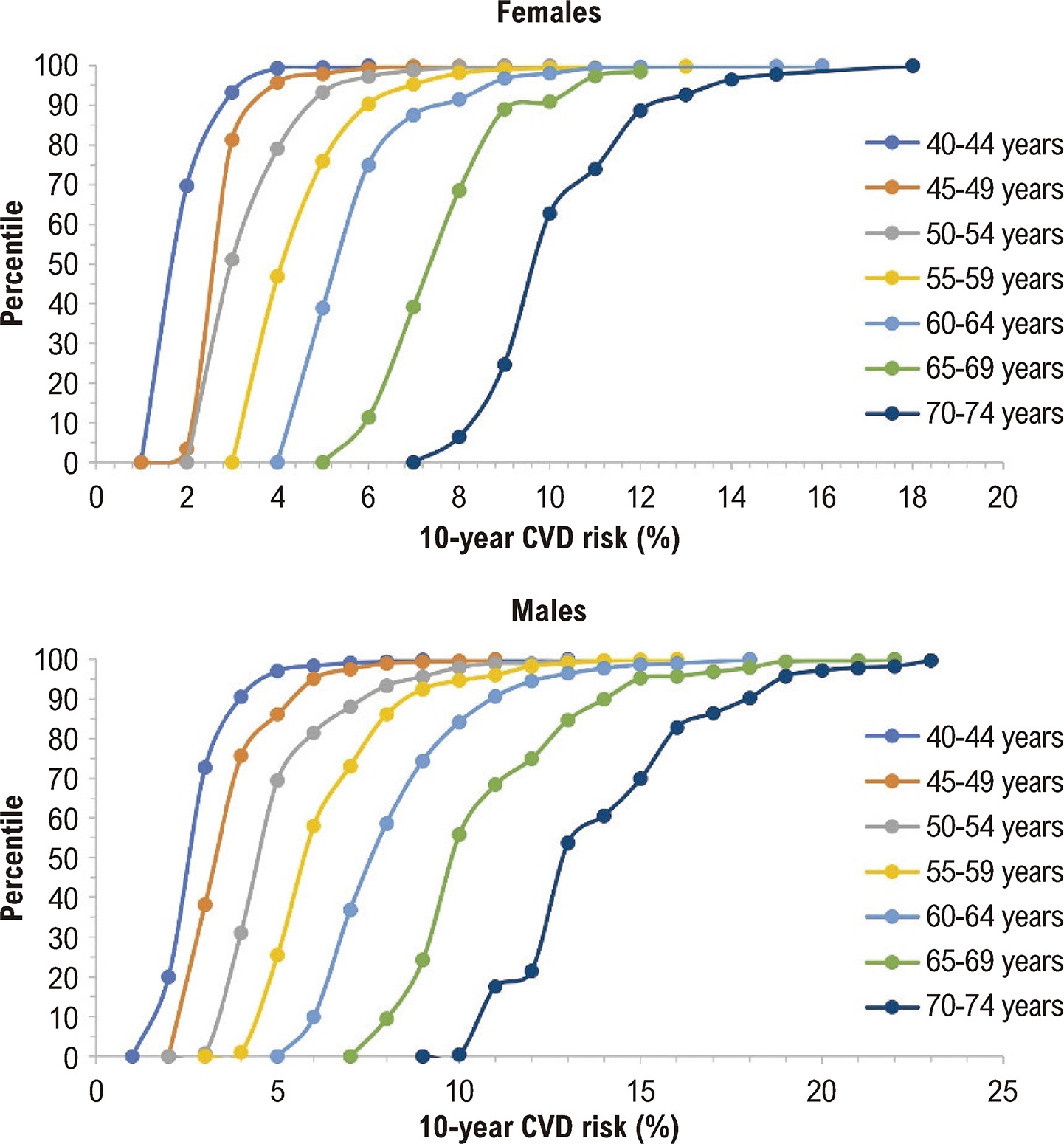
The WHO Cardiovascular Disease Risk (Non-Laboratory-Based) in a Selected Brazilian Population: Percentiles of Distribution And Agreement With Laboratory-Based Scores

Fernando Yue Cesena et al. Giuliano Generoso Itamar de S. Santos Alexandre C. Pereira … Marcio S. Bittencourt Raul D. Santos Paulo A. Lotufo Isabela M. Benseñor

Introduction

In 2019, the World Health Organization (WHO) published revised charts for estimating the 10-year risk of cardiovascular disease (CVD). Two models are proposed: one based on laboratory tests including plasma total cholesterol and presence or absence of diabetes mellitus as predictors, and another based on the body mass index (BMI). In low-resource and office settings, when cholesterol levels and information on diabetes are not available, the BMI-based score can be used.

In a previous study, we determined laboratory-based percentiles of the WHO CVD risk distribution, according to sex and age, in the Brazilian Longitudinal Study of Adult Health (ELSA-Brasil) baseline population. These percentiles were associated with the calculated risk of atherosclerotic CVD up to 75 years, regardless of the estimated 10-year risk. Expressing the risk percentile has been proposed to increase risk awareness and improve adherence to preventive measures.–

[…]

  • body mass index
  • Cardiovascular Diseases
  • Heart Disease Risk Factors
  • Risk Assessment
  • World Health Organization
Read Full Article
Creative Commons Attribution (CC BY) Creative Commons license
26/08/2024 DOI: 10.36660/abc.20240002i
Figure 1
Case Report

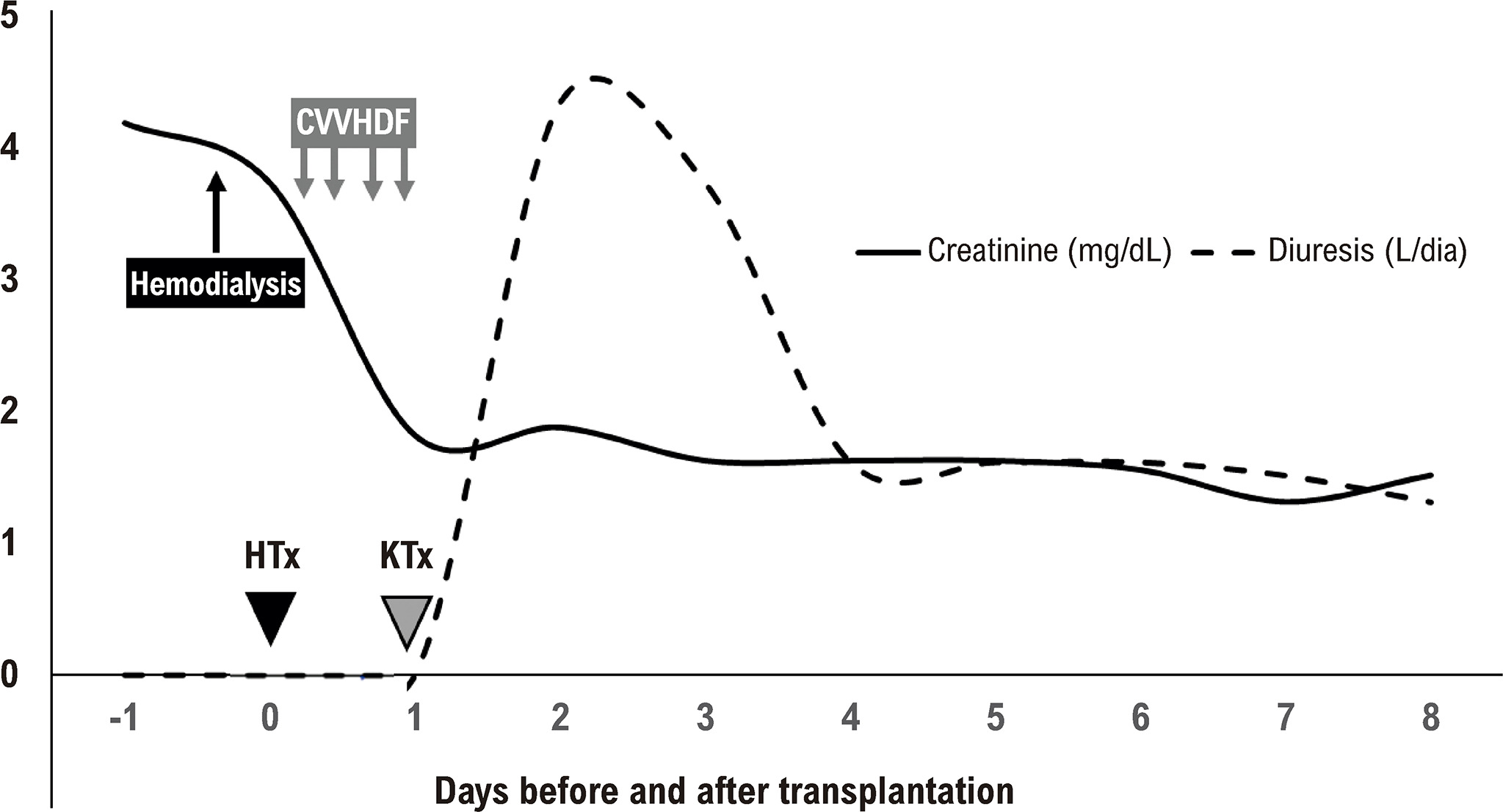
Staged Heart-Kidney Transplantation with Renal Pulsatile Preservation: A Viable Approach for Combined Transplantation

Arthur Gus Manfro et al. Rodrigo Fontanive Franco Roberto Ceratti Manfro Nadine Clausell Livia Adams Goldraich

Introduction

Isolated heart and kidney transplants have become routine procedures for addressing end-stage organ failure. Notably, renal dysfunction is frequently observed in patients with advanced heart failure (HF), significantly impacting the prognosis of heart transplantation. Conversely, advanced HF is common in patients with end-stage renal disease (ESRD), often impairing kidney transplantation. Consequently, many centers are adopting combined heart and kidney transplantation (HKTx) as the standard of care for those patients. The progress in this field has led to a substantial increase in multiorgan transplants over the last decade. Despite the growth in HKTx, uncertainties persist regarding the preferred surgical sequence. In Brazil, while a significant number of isolated heart and kidney transplants are performed annually, only a few combined HKTx have been documented., Considering the advancements in the field, it is anticipated that combined transplants will become more commonplace shortly. Here, we present a case report of a staged HKTx with renal pulsatile perfusion preservation.

[…]

  • Heart Transplantation
  • Kidney Transplantation
  • Organ Preservation
Read Full Article
Creative Commons Attribution (CC BY) Creative Commons license
26/08/2024 DOI: 10.36660/abc.20240007i Views 1
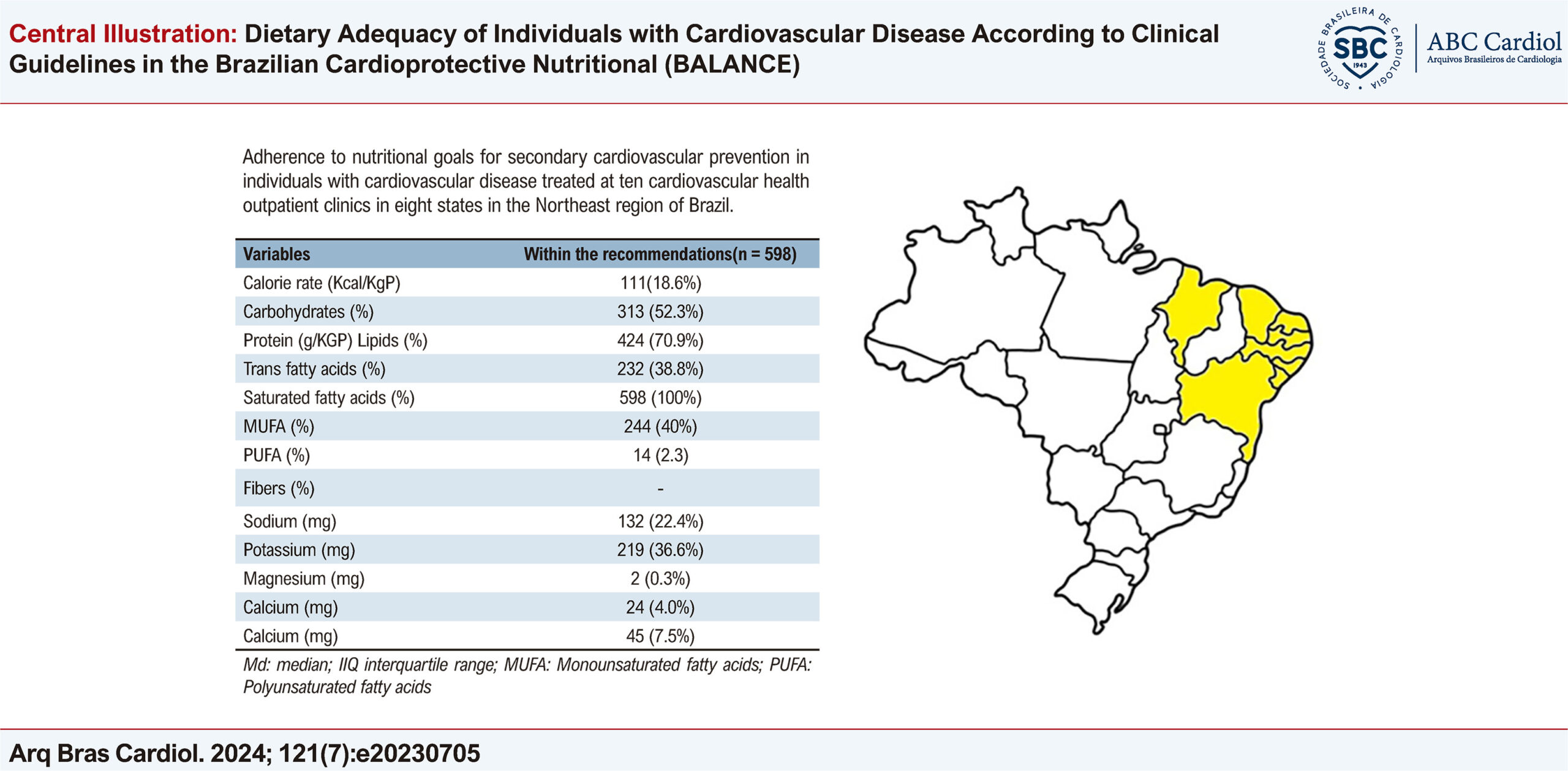
Dietary Adequacy of Individuals with Cardiovascular Disease According to Clinical Guidelines in the Brazilian Cardioprotective Nutritional (BALANCE)
Original Article

Dietary Adequacy of Individuals with Cardiovascular Disease According to Clinical Guidelines in the Brazilian Cardioprotective Nutritional (BALANCE)

Luciana Brito et al. Viviane Sahade Aline Marcadenti Camila Ragne Torreglosa … Bernardete Weber Ângela Cristine Bersch-Ferreira Isa Galvão Rodrigues Antônio Carlos Sobral Sousa Adriana Barros Gomes Josilene Maria Ferreira Pinheiro Sandra Mary Lima Vasconcelos Daniele Maria de Oliveira Carlos José Albuquerque de Figueiredo Neto Clenise de Farias Dantas Carla Daltro

Abstract

Background

Achieving nutritional goals established by scientific societies is a constant challenge and not always achieved.

Objective

To investigate the dietary adequacy of individuals with cardiovascular disease (CVD), participants in the Cardioprotective Brazilian Food Program residing in the Northeast region of Brazil, according to the recommendations of the Brazilian Society of Cardiology (SBC).

Methods

Cross-sectional analysis with data from the study implementing the Brazilian Cardioprotective Diet (DICA BR), which evaluated individuals with CVD treated in specialized cardiovascular health centers in eight states in the Northeast region. Food consumption was obtained by 24-hour dietary records and dietary adequacy followed SBC recommendations. Values of p < 0.05 were considered significant.

Results

647 patients were studied, with a mean (standard deviation) age of 63.1 (9.4) years, 50.2% of whom were female. When evaluating food intake, a low adequacy of carbohydrates (52.3%), proteins (70.9%), lipids (38.8%), and fiber (22.4%) was observed. It was observed that the majority of women consumed a low-protein diet (59.2%) and the elderly had a greater inadequacy in carbohydrate consumption (52.6%). Regarding sodium intake, men had a higher intake (72.9%), while the elderly showed a 13% reduction. Furthermore, it was shown that men ate more fiber (28.1%) and individuals with higher education had a high consumption of saturated fatty acids (70.5%).

Conclusions

Most individuals did not achieve the recommended dietary therapy goals for secondary cardiovascular prevention. The findings of the present study reinforce the need to implement structured strategies to encourage healthy eating habits in these individuals.

  • Atherosclerosis
  • Cardiovascular Diseases
  • Diet
  • Eating
  • Secondary Prevention
Read Full Article
Creative Commons Attribution (CC BY) Creative Commons license
26/08/2024 DOI: 10.36660/abc.20230705i Views 2
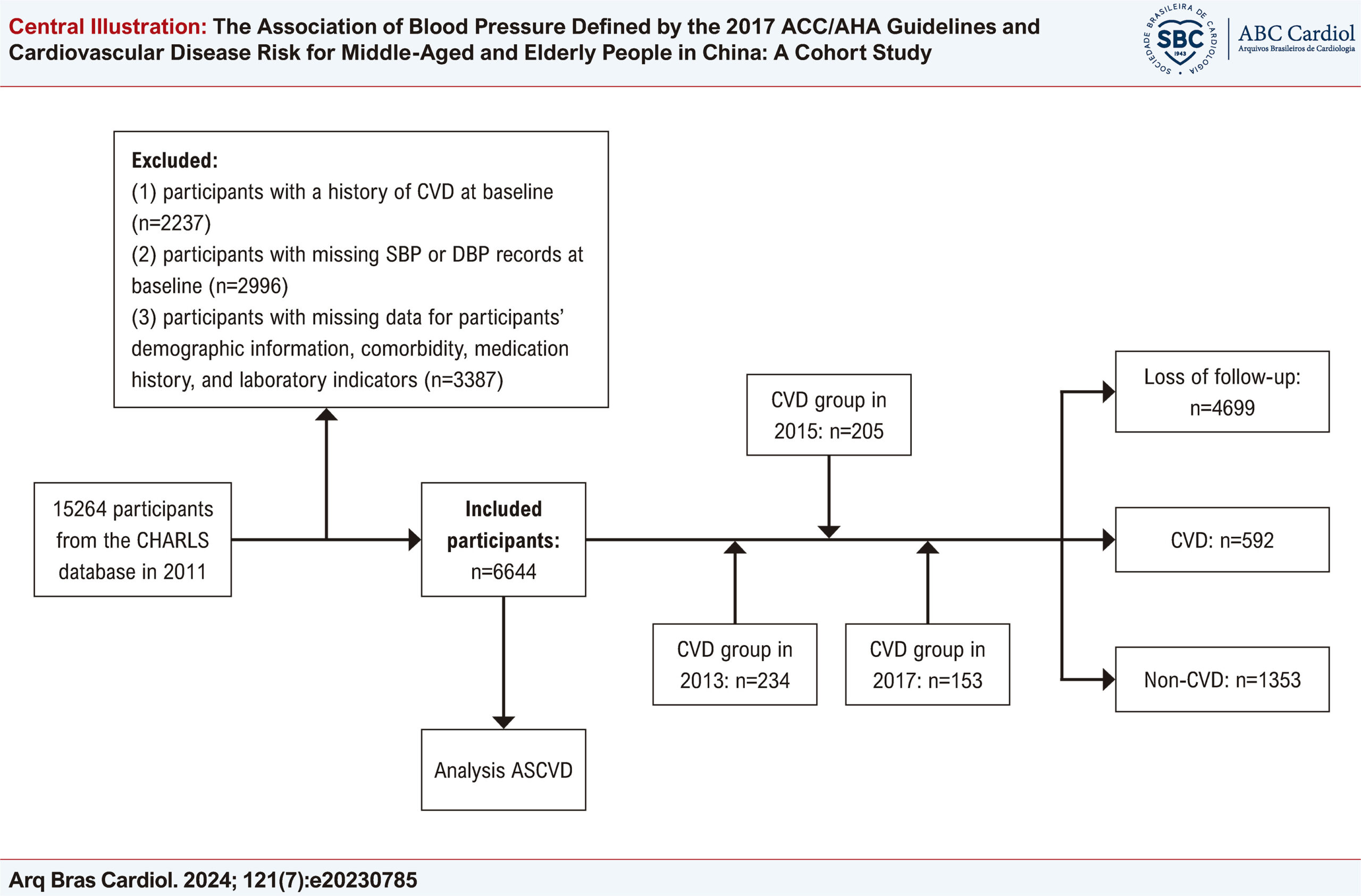
The Association of Blood Pressure Defined by the 2017 ACC/AHA Guidelines and Cardiovascular Disease Risk for Middle-Aged and Elderly People in China: A Cohort Study
Original Article

The Association of Blood Pressure Defined by the 2017 ACC/AHA Guidelines and Cardiovascular Disease Risk for Middle-Aged and Elderly People in China: A Cohort Study

Qingyang Lu et al. Haijing Xie Xuefeng Gao

Abstract

Background

Cardiovascular disease (CVD) is a series of diseases affecting the heart or blood vessels.

Objectives

To assess the relationship between blood pressure (BP) levels defined by the 2017 American College of Cardiology/American Heart Association (ACC/AHA) guideline and CVD/atherosclerotic cardiovascular disease (ASCVD) risk for middle-aged and elderly people in China.

Methods

A total of 6,644 middle-aged and elderly people from the China Health and Retirement Longitudinal Study (CHARLS) were finally included. According to the 2017 ACC/AHA guideline, all subjects were divided into four groups: normal BP, elevated BP, stage 1 hypertension, and stage 2 hypertension. The outcome of this study was considered as the risk of CVD and ASCVD. Univariate and multivariate COX regression models were adopted to examine the relationship of the 2017 ACC/AHA BP classification with the risk of CVD. Univariate and multivariate logistic regression models were used to investigate the association between BP levels and ASCVD risk. Subgroup analyses based on age, gender, and use of antihypertensive drugs were performed. P<0.05 was accepted as statistically significant.

Results

After adjusting all covariates, compared to middle-aged and elderly patients with normal BP, we found that patients with stage 1/2 hypertension were associated with a higher risk of CVD, separately. Simultaneously, we also observed a positive association between individuals with elevated BP, stage 1 hypertension, stage 2 hypertension, and higher ASCVD risk in the fully adjusted model. The result of subgroup analyses implied that the relationship between stage 1/2 hypertension and CVD/ high ASCVD was robust in different ages and genders, and participants without using antihypertensive drugs.

Conclusion

BP classification under the 2017 ACC/AHA BP guidelines may apply to the Chinese population.

  • Aged
  • Cardiovascular Diseases
  • Hypertension
  • middle aged
Read Full Article
Creative Commons Attribution (CC BY) Creative Commons license
23/08/2024 DOI: 10.36660/abc.20230785i Views 1
Letter to the Editor

High-Sensitivity Troponin in Non-Cardiac Surgery

Can Özkan

Dear Editor,

I read with great interest the article entitled “Addition of High-Sensitivity Troponin to Perioperative Risk Assessment Improves the Predictive Ability of Death in Non-Cardiac Surgery Patients” by Gomes et al. the prevalence of myocardial injury is higher in high-risk patients, including those with cardiovascular, surgical, and clinical risks. They also reported that the occurrence of non-cardiac surgical myocardial injury in the population not considered high-risk cannot be overlooked and leads to high mortality in this population. In long-term follow-up, the prognosis of high-risk patients without myocardial injury is worse compared to high-risk patients without myocardial injury. Some comments may be useful.

[…]

  • Acute coronary syndrome
  • Myocardial Contusions
  • Troponin
Read Full Article
Creative Commons Attribution (CC BY) Creative Commons license
19/08/2024 DOI: 10.36660/abc.20240312i
Levosimendan and Atrial Fibrillation: A Meta-Analysis of Randomized Controlled Trials
Original Article

Levosimendan and Atrial Fibrillation: A Meta-Analysis of Randomized Controlled Trials

Huan Wan et al. Jihua Feng Pan Ji Wei Chen Jianfeng Zhang

Abstract

Background

Atrial fibrillation (AF) is a prevalent complication associated with levosimendan; however, it remains uncertain whether there are any disparities in the effects of levosimendan on non-postoperative and postoperative AF.

Objectives

This study aimed to evaluate the levosimendan effect on non-postoperative and postoperative AF by conducting a meta-analysis of randomized control trials (RCTs).

Methods

PubMed, Embase, Cochrane Library, and other databases were searched. Pairs of reviewers identified RCTs that compared levosimendan and placebo or other therapies, and the results reported AF events data. Random effects models were used (at a significance level of 5%).

Results

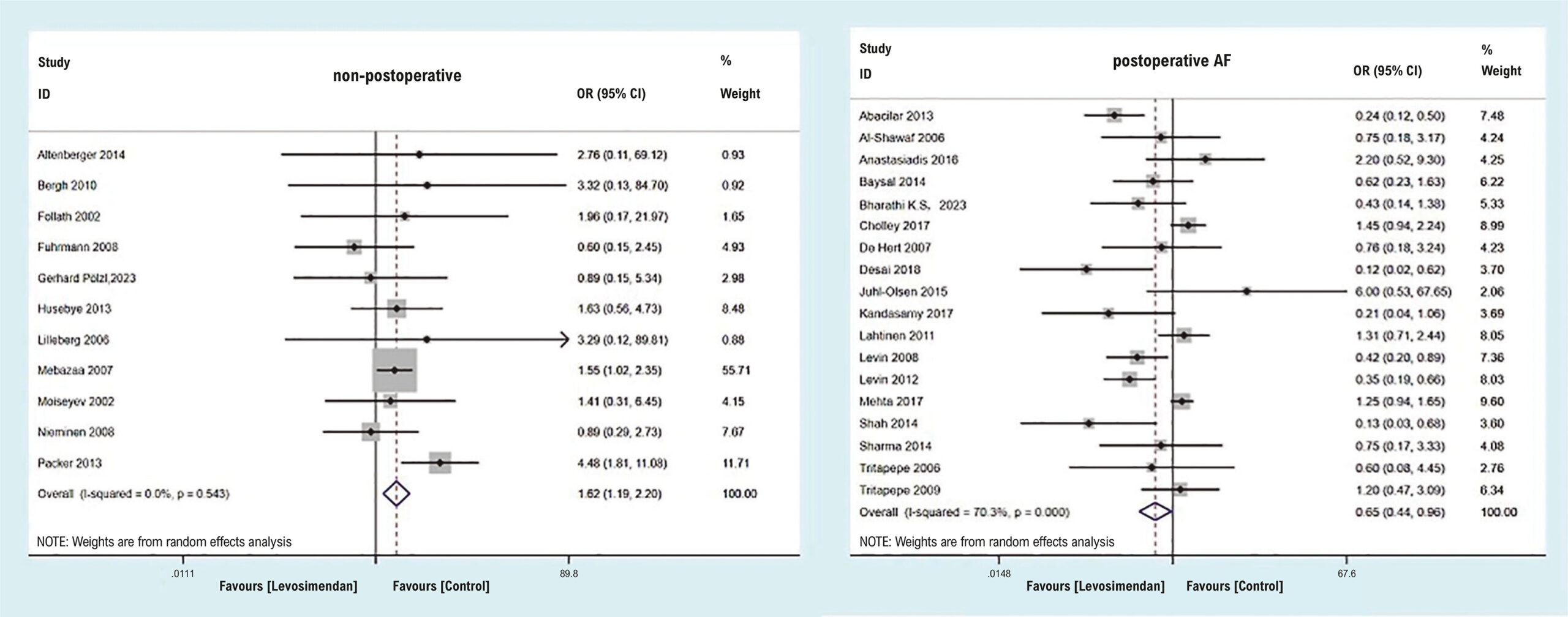
Twenty-nine eligible trials comprising 6550 participants were included, eleven of which evaluated the non-postoperative AF incidence, and 18 included postoperative AF. The analysis revealed that levosimendan elevated the AF risk significantly in the non-postoperative group (OR, 1.62; 95% CI: 1.19-2.20; p=0.002) and reduced the AF incidence in the postoperative group (OR, 0.65; 95% CI: 0.44-0.96; p=0.03). AF occurrence decreased more significantly in patients who used levosimendan after cardiac surgery (OR, 0.53; 95% CI: 0.32-0.88; p=0.02) than in patients who used levosimendan before cardiac surgery (OR, 0.67; 95% CI: 0.42-1.06; p=0.09). Moreover, The AF risk was significantly elevated by levosimendan large bolus dose (bolus dose≥12 μg/kg) (OR, 1.44; 95% CI: 1.10-1.88; p=0.004) and decreased by small bolus dose of levosimendan (bolus dose<12 μg/kg) (OR, 0.64; 95% CI: 0.34-1.20; p=0.16).

Conclusion

Levosimendan was linked to an increased non-postoperative AF incidence. The employment of levosimendan was effective in preventing postoperative AF.

  • Atrial Fibrillation
  • Network Meta-Analysis
  • Simendan
Read Full Article
Creative Commons Attribution (CC BY) Creative Commons license
19/08/2024 DOI: 10.36660/abc.20230856i Views 1
Editorial

Promotion of Healthy Diets to Address Cardiovascular Diseases in Brazil: The Importance of Nutritional Guidelines and Public Policies

Laís Ferreira Dias et al. Aline Martins de Carvalho

Cardiovascular diseases (CVD) represent a major public health issue in Brazil, being the leading cause of mortality in the country, with coronary artery disease highlighted as the main cause of death. According to the Global Burden of Disease data, 2021, dietary patterns were responsible for 12% of the attributable risk of total deaths from chronic non-communicable diseases in the general Brazilian population. These conditions cause systemic harm, not only impacting population mortality or reducing life expectancy but also leading to disability, creating dependency for individuals to carry out their daily activities.

In this context, the World Health Organization (WHO) advocates for public policies focused on health strategies and the regular updating of national dietary and nutrition guidelines, adapting to changes in dietary habits, food systems, and population health conditions.,

[…]

  • Cardiovascular Diseases
  • Disease Prevention
  • Food System
  • Public Health
Read Full Article
Creative Commons Attribution (CC BY) Creative Commons license
19/08/2024 DOI: 10.36660/abc.20240378i Views 2
Editorial

The Price of Delay: Socioeconomic Disparities and Diagnostic Oversights in Occlusion Myocardial Infarction Care

José Nunes de Alencar et al. Jesse T. T. McLaren

Acute myocardial infarction with acute coronary occlusion represents the most severe and urgent facet of acute coronary syndromes. Seminal studies have taught us that reestablishing coronary flow in patients with occluded arteries, whether through thrombolysis or primary angioplasty, can alter the natural history of the disease and significantly reduce mortality associated with this syndrome.,

The authors of “The Clinical and Economic Impact of Delayed Reperfusion Therapy: Real-World Evidence” provide compelling data from a wealthy metropolitan region in Brazil, concluding that each additional hour of delay in reperfusion therapy was associated with a 6.2% increase (95% confidence interval: 0.3% to 11.8%, p = 0.032) in the risk of in-hospital mortality. In addition, overall costs were 45% higher among individuals treated after 9 hours compared to those treated within the first 3 hours, which was mainly due to in-hospital costs (p = 0.005). Gioppatto et al. also note, from other studies, the financial impacts on patients and families due to delayed reperfusion, and they call for ST elevation myocardial infarction (STEMI) networks to address the uneven distribution of percutaneous coronary intervention (PCI)-capable centers.

[…]

  • Acute coronary syndrome
  • Myocardial Infarction
  • Therapeutics
Read Full Article
Creative Commons Attribution (CC BY) Creative Commons license
19/08/2024 DOI: 10.36660/abc.20240311i Views 2
Figure 1.1
Diretrizes

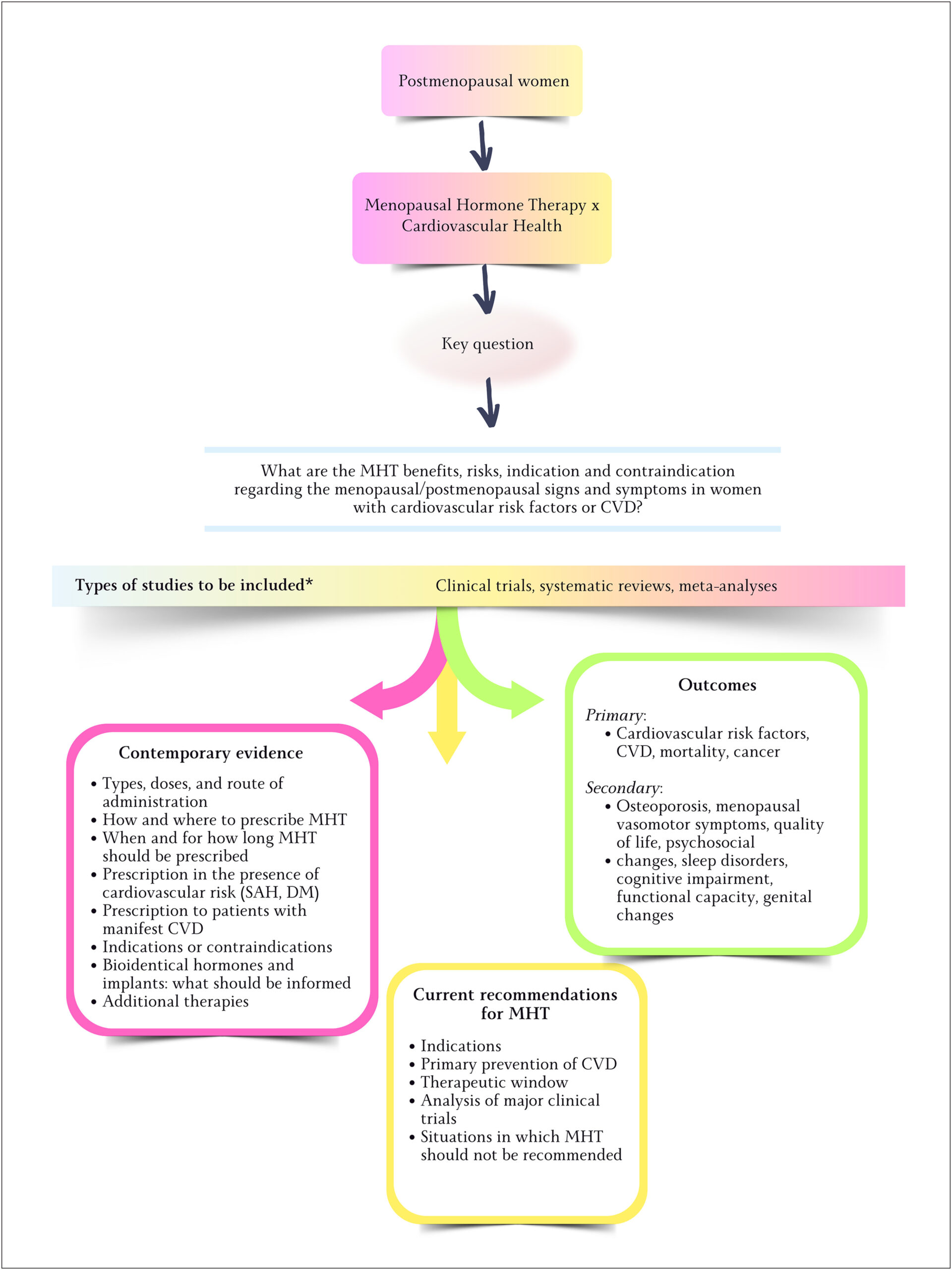
Brazilian Guideline on Menopausal Cardiovascular Health – 2024

Gláucia Maria Moraes de Oliveira et al. Maria Cristina Costa de Almeida Carolina María Artucio Arcelus Larissa Neto Espíndola … Maria Alayde Mendonça Rivera Agnaldo Lopes da Silva-Filho Celi Marques-Santos César Eduardo Fernandes Carlos Japhet da Matta Albuquerque Claudia Maria Vilas Freire Maria Cristina de Oliveira Izar Maria Elizabeth Navegantes Caetano Costa Marildes Luiza de Castro Viviana de Mello Guzzo Lemke Alexandre Jorge Gomes de Lucena Andréa Araujo Brandão Ariane Vieira Scarlatelli Macedo Carisi Anne Polanczyk Carla Janice Baister Lantieri Eliana Petri Nahas Elizabeth Regina Giunco Alexandre Erika Maria Gonçalves Campana Érika Olivier Vilela Bragança Fernanda Marciano Consolim Colombo Imara Correia de Queiroz Barbosa Ivan Romero Rivera Jaime Kulak Lidia Ana Zytynski Moura Luciano de Mello Pompei Luiz Francisco Cintra Baccaro Marcia Melo Barbosa Marcio Alexandre Hipólito Rodrigues Marco Aurelio Albernaz Maria Sotera Paniagua de Decoud Maria Sanali Moura de Oliveira Paiva Martha Beatriz Sanchez-Zambrano Milena dos Santos Barros Campos Monica Acevedo Monica Susana Ramirez Olga Ferreira de Souza Orlando Otávio de Medeiros Regina Coeli Marques de Carvalho Rogerio Bonassi Machado Sheyla Cristina Tonheiro Ferro da Silva Thais de Carvalho Vieira Rodrigues Walkiria Samuel Avila Lucia Helena Simões da Costa-Paiva Maria Celeste Osorio Wender

1. Introduction

After the publication of the results from the Women’s Health Initiative (WHI) clinical trial in 2002 showing more risks than benefits to female health with estrogen (alone or combined with progestin) use to control menopausal signs and symptoms, there has been a progressive and sustained decline in the prescription of those drugs.–

In the United States, there was an increase in the prescription of menopausal hormone therapy (MHT) from 16 million in 1966 to 90 million in 1999,– so that, by the end of the 1990s, 25% of 45–74-year-old women and more than 40% of those aged 50-69 years were on that therapy.–

[…]

Read Full Article
Creative Commons Attribution (CC BY) Creative Commons license
16/08/2024 DOI: 10.36660/abc.20240478i Views 1
New Incremental Model for Predicting Mortality in Pre-Capillary Pulmonary Hypertension
Original Article

New Incremental Model for Predicting Mortality in Pre-Capillary Pulmonary Hypertension

Andressa Alves de Carvalho et al. Wanessa Alves de Carvalho Eliauria Rosa Martins Agostinho Hermes de Medeiros Neto … Fernando Bacal Marcelo Dantas Tavares de Melo

Abstract

Background:

In pulmonary hypertension (PH), the identification of easily obtainable prognostic markers associated with right ventricular (RV) dysfunction and survival is needed.

Objective:

To evaluate the association of red cell distribution width (RDW) with clinical, echocardiographic parameters and survival in patients with pre-capillary PH, with the development of a mortality prediction model.

Methods:

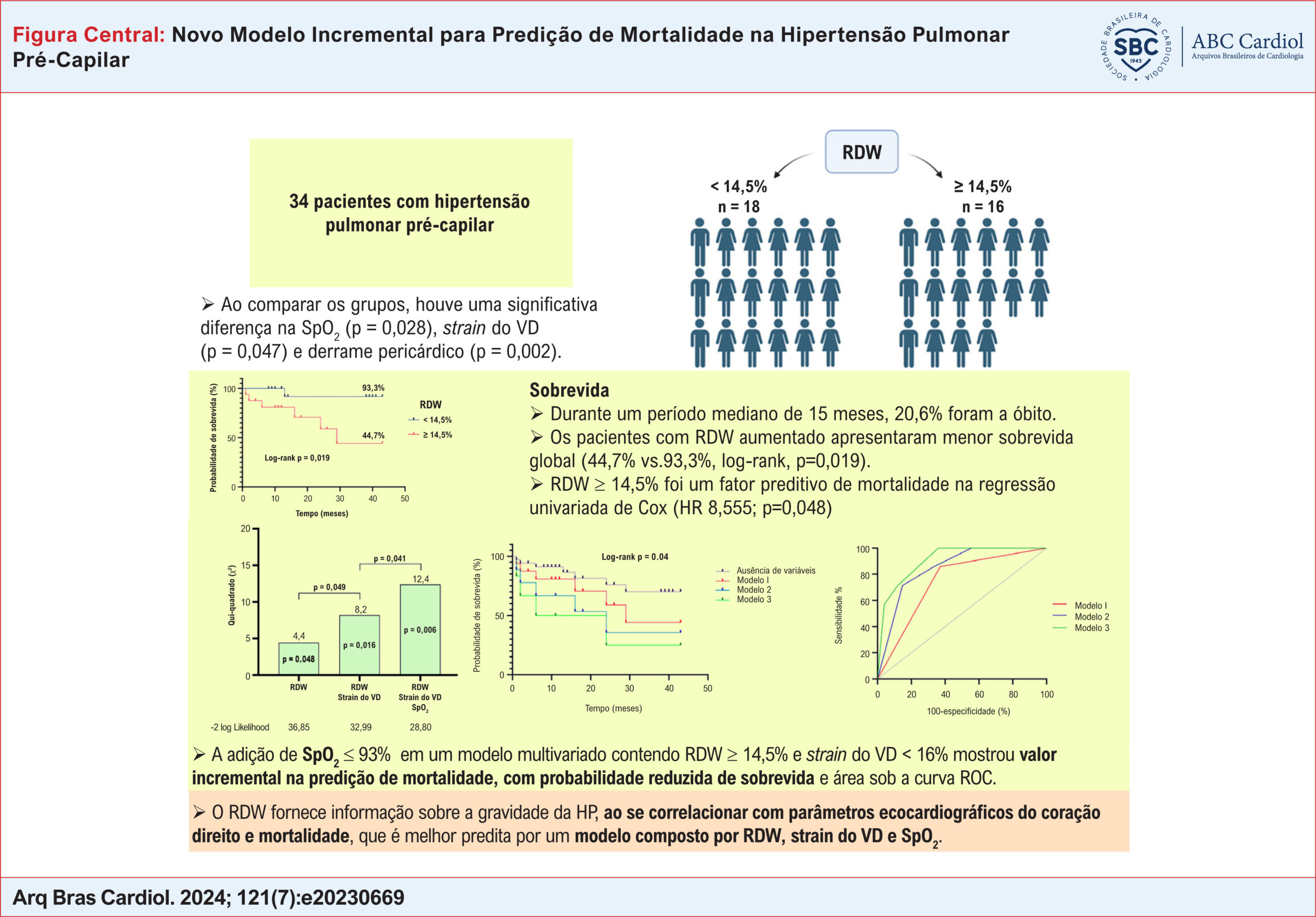
Observational, longitudinal, and prospective study conducted from May 2019 to December 2022. Thirty-four patients with pre-capillary PH underwent two-dimensional echocardiography and complete blood count. A cutoff point of 14.5% was considered to define RDW as altered (≥14.5%) or normal (<14.5%). P values <0.05 were considered significant.

Results:

The median RDW was 14.4%. There was a significant difference in peripheral arterial oxygen saturation (SpO2) (p=0.028), RV strain (p=0.047), and pericardial effusion (p=0.002) between the normal and elevated RDW groups. During a median follow-up of 15 months, 20.6% died. Patients with increased RDW had a shorter overall survival (44.7%, log-rank p=0.019), which was a predictor of mortality in univariate Cox regression (HR 8.55, p=0.048). The addition of RV strain <16% and SpO2 ≤93% to the model including RDW alone showed incremental value in predicting mortality (χ2=8.2, p=0.049; χ2=12.4, p=0.041), with increased area under the receiver operating characteristic curve (0.729 vs. 0.837 vs. 0.909) and decreased probability of survival (44.7% vs. 35.6% vs. 25%, log-rank p=0.019).

Conclusions:

RDW provides information on the severity of pre-capillary PH by correlating with echocardiographic parameters of RV dysfunction and mortality, which is best predicted by a model including RDW, RV strain and SpO2.

  • Erythrocytes
  • Global Longitudinal Strain
  • Pulmonary Hypertension
Read Full Article
Creative Commons Attribution (CC BY) Creative Commons license
12/08/2024 DOI: 10.36660/abc.20240026i
Editorial

Unlocking Transcatheter Aortic Valve Replacement Expertise in Brazil: Lessons from National Data

Sofia Cabral

Procedural outcomes in cardiology, as in other fields in Medicine, are influenced by numerous factors, including patient characteristics, procedural intricacy, operator proficiency, available technological differentiation, and healthcare resources. Higher volume centers report better results for many procedures, though the extent of that benefit varies depending on the procedure’s complexity. The more complex the procedure the higher the relationship between experience and outcomes. Additionally, each procedure has its learning curve (LC), both at individual and group levels, which adds density to the assessment. From an academic standpoint, an LC defines the relationship between performance (learning) and practice (effort). In health training, this learning process typically follows a non-linear pattern initially marked by a steep slope as the basics of the procedure are acquired, followed by an inflection point where the learning rate decelerates. Eventually, it reaches an asymptotic expression, representing the plateau phase of high proficiency. Understanding how a procedure’s LC behaves is important because it provides valuable insights for scientific societies and healthcare regulatory authorities in defining the competency requirements for practitioners and assisting decision-makers in effective resource allocation. Most importantly, it plays a critical role in maintaining high standards of care.

In the field of cardiovascular interventions, the LC phenomenon has extensively been verified, from cardiac surgery to coronary percutaneous intervention, and more recently, transcatheter aortic valve replacement (TAVR).4-7 Despite conflicting results from different series, researchers have consistently recognized a pattern in the LC of TAVR. This pattern depicts an early phase where procedure efficiency and safety outcomes steeply increase with increasing experience, followed by flattening out and eventual consolidation phases.

[…]

  • Brazil
  • Learning Curve
  • Transcatheter Aortic Valve Replacement
Read Full Article
Creative Commons Attribution (CC BY) Creative Commons license
12/08/2024 DOI: 10.36660/abc.20240302i Views 1
Figure 1
Research Letter

Carotid Sinus Syndrome Associated with Carcinoma Ex-Pleomorphic Adenoma: What Is the Role of Artificial Cardiac Stimulation?

Vanessa Sanson Lani et al. Jorge Elias Neto Márcio Augusto Silva Helena Alves de Andrade … Elisama Pimentel Zamian Cotias Fernando Luiz Torres Gomes

Introduction

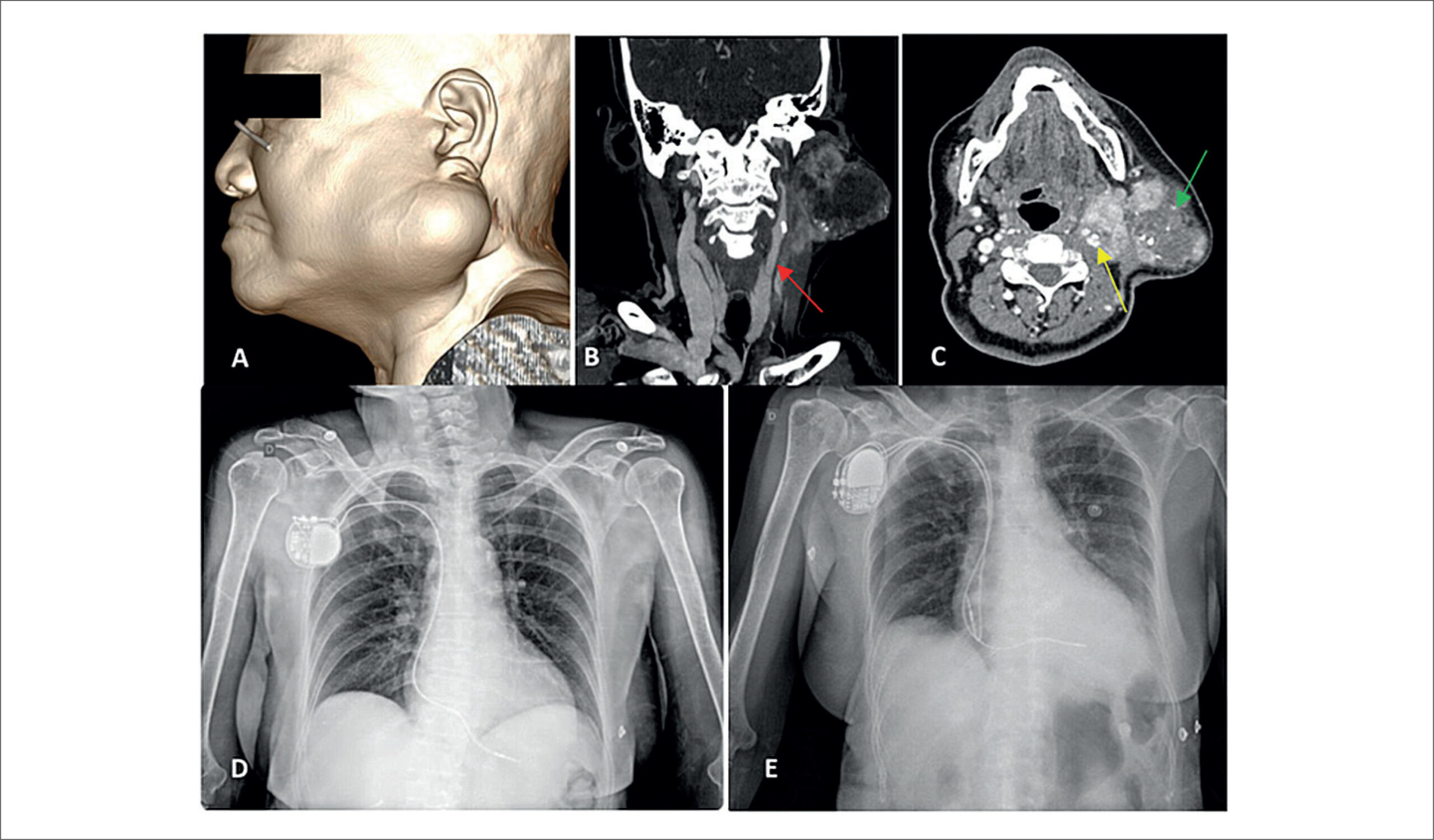
Carotid sinus syndrome (CSS) is defined as syncope or pre-syncope associated with at least 3 seconds of asystole (cardioinhibitory response) and/or a drop of at least 50 mmHg in arterial systolic blood pressure (vasodepressor response) in response to stimulation of the carotid sinus. First recognized by Weiss and Baker in 1933, there have been since then reports of the association between neck masses and the occurrence of syncope. Among its causes is carcinoma ex-pleomorphic adenoma (CXAP), a rare malignant neoplasm that develops from a primary or recurrent pleomorphic adenoma. It represents 3.6% of all salivary gland neoplasms and 11.6% of all malignant neoplasms of these glands. CSS caused by neck masses is due to compression and invasion of the carotid sinus and nerve branches. This syndrome has 3 subtypes: cardioinhibitory, vasodepressor, and the mixed type. A fourth type of “cerebral response” has been previously described in the literature, in which direct compression of the carotid artery causes ipsilateral cerebral ischemia leading to seizures.

[…]

  • Adenoma Pleomorphic
  • Cardiac Pacing, Artificial
  • Carotid sinus
  • Head and Neck Neoplasms
  • Syncope
Read Full Article
Creative Commons Attribution (CC BY) Creative Commons license
12/08/2024 DOI: 10.36660/abc.20240026i Views 2
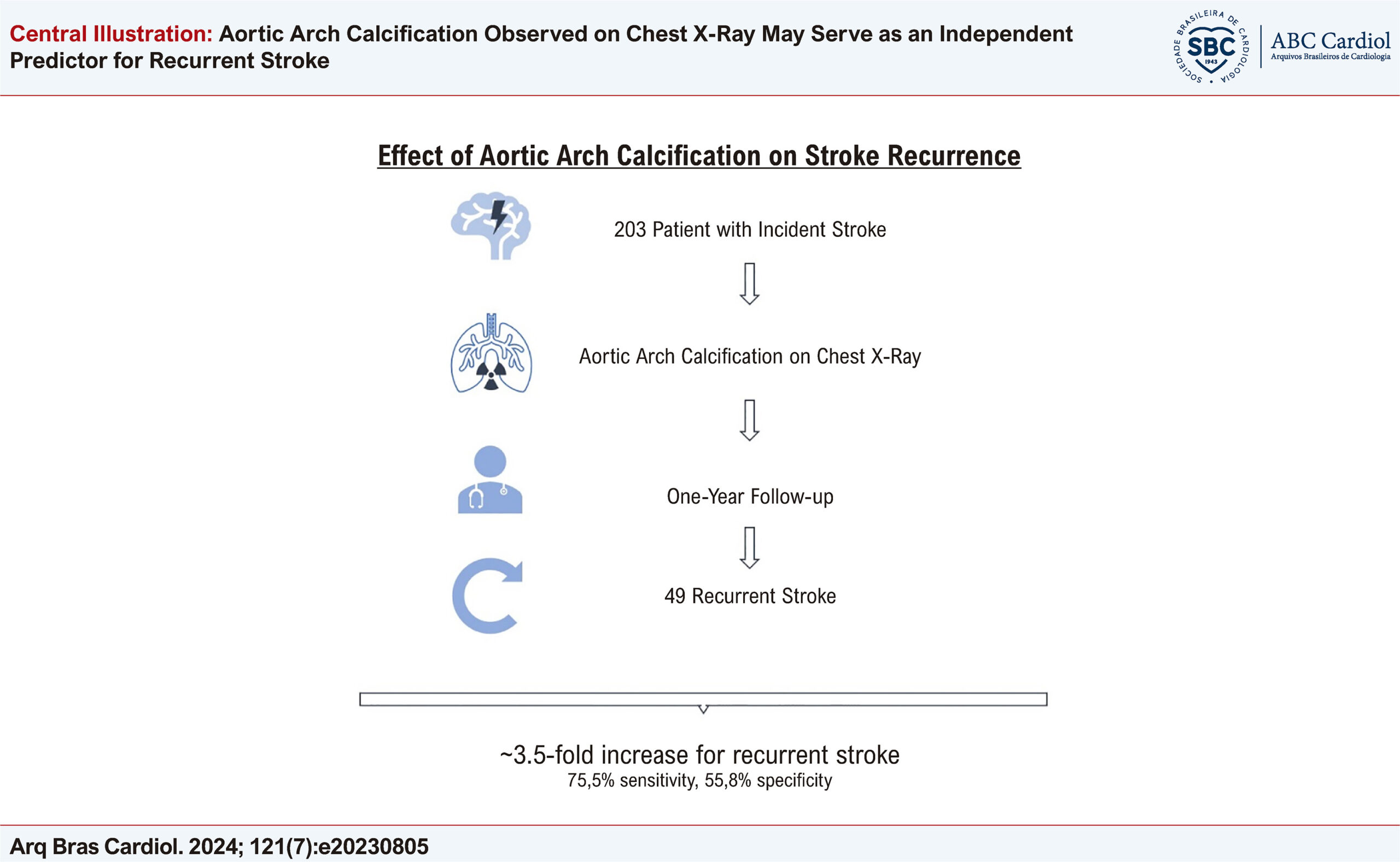
Aortic Arch Calcification Observed on Chest X-Ray May Serve as an Independent Predictor for Recurrent Stroke
Artigo Original

Aortic Arch Calcification Observed on Chest X-Ray May Serve as an Independent Predictor for Recurrent Stroke

Fahri Çakan et al. Asli Sert Sunal Adem Adar Orhan Onalan

Abstract

Background

Despite advances in diagnostic and treatment modalities, there is a need for predictive markers for recurrent strokes.

Objectives

This study aimed to investigate the relationship between aortic arch calcification (AAC) and stroke recurrence in stroke patients during a one-year follow-up.

Methods

All stroke patients who experienced their first event were evaluated for participation in the study. Patients who experienced recurrent strokes during the one-year follow-up were recorded. AAC was assessed by chest radiography. Based on the occurrence of recurrent strokes the patients were divided into two groups. AAC was classified into four categories according to its degree, and the presence of AAC was included in the statistical analysis. The relationship between AAC and recurrent stroke was assessed using a receiver operating characteristic curve. A significance level of <0.05 was deemed acceptable for all statistical analyses.

Results

A total of 203 patients were included in the study (46.8% female, mean age 69±12.3). Recurrent stroke was detected in 49 patients. AAC, hypertension, and atrial fibrillation were more frequent in patients with recurrent stroke. Patients with recurrent stroke had a lower glomerular filtration rate and a higher red cell distribution width (RDW). In multivariate regression analysis, AAC (hazard ratio [HR], 3.544; 95% CI:1.653-7.598, p=0.001) and RDW (HR,1.214; 95% CI:1.053-1.400, p=0.008) were identified as independent predictors of recurrent stroke.

Conclusion

The presence of AAC (≥ grade 1) and RDW were found to be significantly associated with the development of recurrent stroke within one year. These findings may have prognostic significance in the follow-up of stroke patients.

  • Erythrocytes
  • Stroke
  • Thoracic aorta
Read Full Article
Creative Commons Attribution (CC BY) Creative Commons license
29/07/2024 DOI: 10.36660/abc.20230805i Views 2
Long-Term Effects of Pulmonary Valve Implantation and Prosthesis Evolution in Patients with Repaired Tetralogy of Fallot
Original Article

Long-Term Effects of Pulmonary Valve Implantation and Prosthesis Evolution in Patients with Repaired Tetralogy of Fallot

Luiz Fernando Caneo et al. Aida Luiza Ribeiro Turquetto Matheus Negri Boschiero Luciana Patrick Amato … Walther Yoshiharu Ishikawa Fabiana Padilha Hodas Melissa Ganeko Ligeiro Daniela Regina Agostinho Leonardo Augusto Miana Carla Tanamati Rilvani Cavalcante Gonçalves Juliano Gomes Penha Maria Raquel Brigoni Massoti Marcelo Biscegli Jatene Fabio Biscegli Jatene

Abstract

Background

Pulmonary valve regurgitation is a significant long-term complication in patients with tetralogy of Fallot (TOF).

Objective

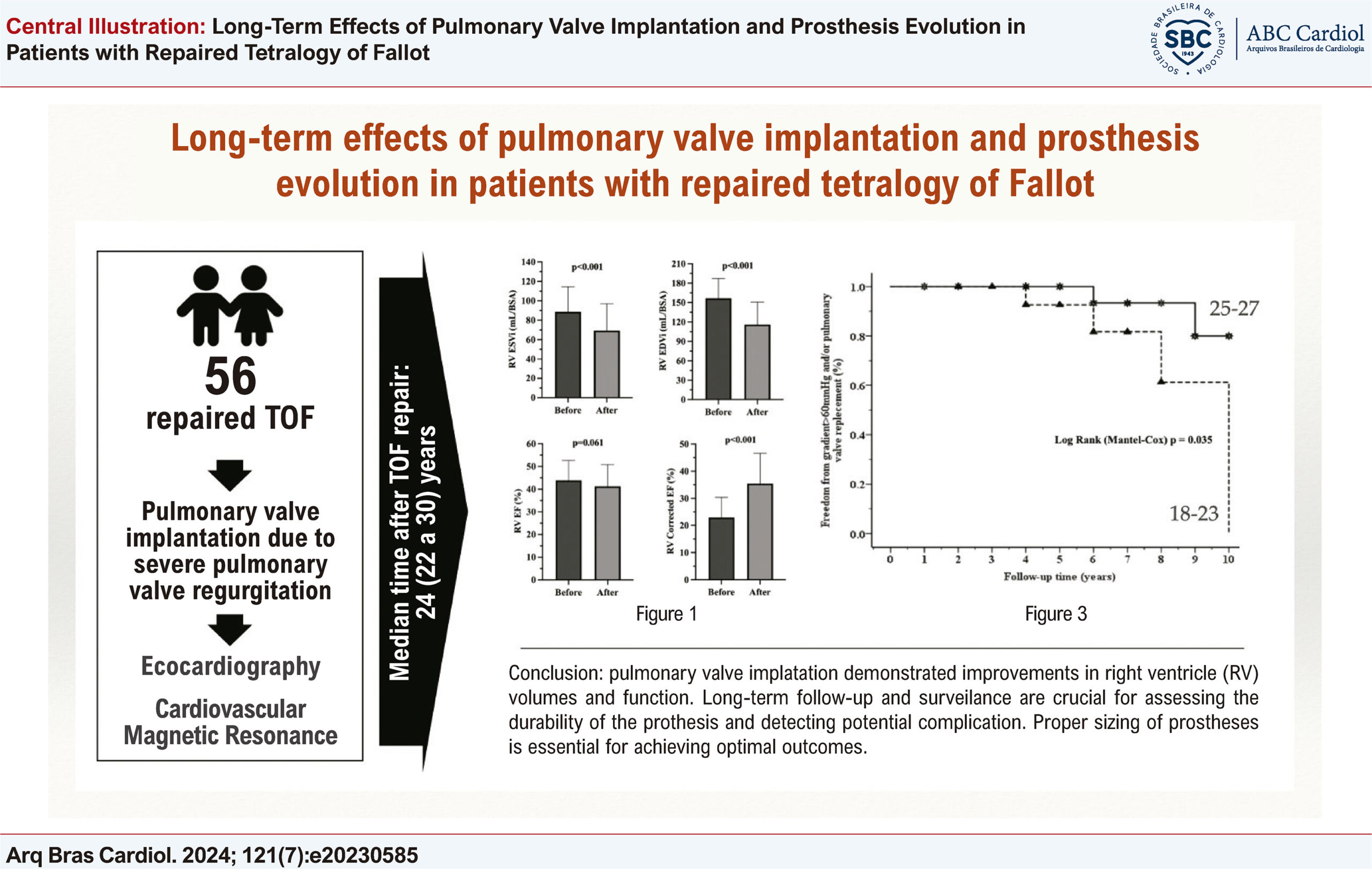
This study aims to investigate the effects of pulmonary valve implantation (PVI) on the anatomy and function of the right ventricle (RV) and the long-term evolution of the implanted prosthesis in the pulmonary position.

Methods

A single-center retrospective cohort analysis was performed in 56 consecutive patients with TOF who underwent PVI. The study included patients of both sexes, aged ≥ 12 years, and involved assessing clinical and surgical data, pre- and post-operative cardiovascular magnetic resonance imaging, and echocardiogram data more than 1 year after PVI.

Results

After PVI, there was a significant decrease in RV end-systolic volume indexed by body surface area (BSA), from 89 mL/BSA to 69 mL/BSA (p < 0.001) and indexed RV end-diastolic volume, from 157 mL/BSA to 116 mL/BSA (p < 0.001). Moreover, there was an increase in corrected RV ejection fraction [] from 23% to 35% (p 60 mmHg compared to larger prostheses (sizes 25 to 27; p = 0.029; confidence interval: 1.18 to 17.8).

Conclusion

As expected, PVI demonstrated improvements in RV volumes and function. Long-term follow-up and surveillance are crucial for assessing the durability of the prosthesis and detecting potential complications. Proper sizing of prostheses is essential for improved prosthesis longevity.

  • Biomarkers
  • Genetic Risk Score
  • Right Ventricular Function
  • Tetralogy of Fallot
Read Full Article
Creative Commons Attribution (CC BY) Creative Commons license
26/07/2024 DOI: 10.36660/abc.20230585i Views 1
Direct Oral Anticoagulants versus Vitamin K Antagonists for Left Ventricular Thrombus: A Meta-Analysis with Trial Sequential Analysis
Original Article

Direct Oral Anticoagulants versus Vitamin K Antagonists for Left Ventricular Thrombus: A Meta-Analysis with Trial Sequential Analysis

Eric Pasqualotto et al. Douglas Mesadri Gewehr Rafael Oliva Morgado Ferreira Matheus Pedrotti Chavez … Caroliny Hellen Silva Sara Almeida Cruz Jhonny Limachi-Choque Amanda Park Mário Sérgio Soares de Azeredo Coutinho Luiz Fernando Kubrusly

Abstract

Background

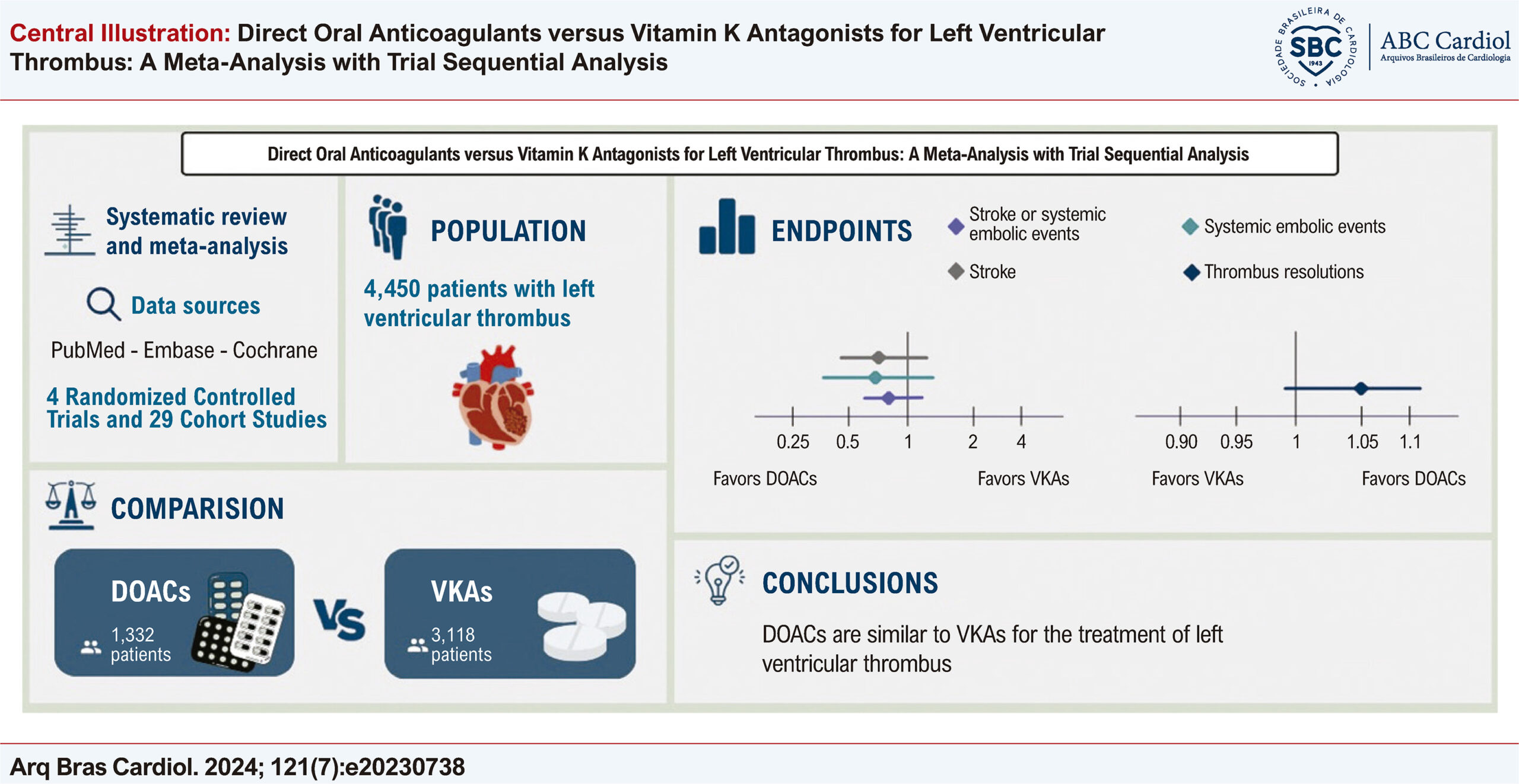
Vitamin K antagonists (VKAs) are the recommended first-line treatment for left ventricular thrombus (LVT); however, direct oral anticoagulants (DOACs) have been considered an alternative therapy.

Objectives

To evaluate the efficacy and safety of DOACs compared with VKAs therapy in patients with LVT.

Methods

PubMed, Embase, and Cochrane were systematically searched for randomized clinical trials or cohort studies that compared DOACs versus VKAs for LVT. Risk ratios (RRs) were computed for binary endpoints, with 95% confidence intervals (95% CIs). Statistical significance was defined as p value < 0.05.

Results

A total of 4 randomized clinical trials and 29 cohort studies were included, with 4,450 patients assigned to either DOACs or VKAs. There was no significant difference between groups for stroke or systemic embolic (SSE) events (RR 0.84; 95% CI 0.65 to 1.07; p = 0.157), stroke (RR 0.73; 95% CI 0.48 to 1.11; p = 0.140), systemic embolic (SE) events (RR 0.69; 95% CI 0.40 to 1.17; p = 0.166), thrombus resolution (RR 1.05; 95% CI 0.99 to 1.11; p = 0.077), any bleeding (RR 0.78; 95% CI 0.60 to 1.00; p = 0.054), clinically relevant bleeding (RR 0.69; 95% CI 0.46 to 1.03; p = 0.066), minor bleeding (RR 0.73; 95% CI 0.43 to 1.23; p = 0.234), major bleeding (RR 0.87; 95% CI 0.42 to 1.80; p = 0.705), and all-cause mortality (RR 1.05; 95% CI 0.79 to 1.39; p = 0.752). Compared with VKAs, rivaroxaban significantly reduced SSE events (RR 0.35; 95% CI 0.16 to 0.91; p = 0.029) and SE events (RR 0.39; 95% CI 0.16 to 0.95; p = 0.037).

Conclusions

DOACs had a similar rate of thromboembolic and hemorrhagic events, as well as thrombus resolution, compared to VKAs in the treatment of LVTs. Rivaroxaban therapy had a significant reduction in thromboembolic events, compared to VKAs.

  • Factor Xa Inhibitors
  • Thrombosis
  • Warfarin
Read Full Article
Creative Commons Attribution (CC BY) Creative Commons license
26/07/2024 DOI: 10.36660/abc.20230738i Views 1

Could not load more articles. Please try again.

How to cite this article

EndNote RIS

Electronic Document Format (Vancouver)

Ribeiro J. A Fresh Glimpse on Chest X-Ray: Revealing Significance of Aortic Arch Calcifications for Stroke Recurrence. Arquivos Brasileiros de Cardiologia 2024;121(7):e20240404.

Electronic Document Format (ABNT)

Ribeiro, José. A Fresh Glimpse on Chest X-Ray: Revealing Significance of Aortic Arch Calcifications for Stroke Recurrence. Arquivos Brasileiros de Cardiologia, v. 121, n. 7, e20240404, Nov. 2024.

Electronic Document Format (APA)

Ribeiro, J. (2024). A Fresh Glimpse on Chest X-Ray: Revealing Significance of Aortic Arch Calcifications for Stroke Recurrence. Arquivos Brasileiros de Cardiologia, 121(7), e20240404.

Electronic Document Format (ISO)

Ribeiro, José. A Fresh Glimpse on Chest X-Ray: Revealing Significance of Aortic Arch Calcifications for Stroke Recurrence. Arquivos Brasileiros de Cardiologia [online]. 2024, vol. 121, n. 7, [cited 2026-10-15], e20240404. Available from: <https://journals.cardiol.br/en/article/a-fresh-glimpse-on-chest-x-ray-revealing-significance-of-aortic-arch-calcifications-for-stroke-recurrence/>. ISSN 0066-782X

EndNote RIS

Electronic Document Format (Vancouver)

Carvalho PEP. Advancing the Use of Direct Oral Anticoagulants in Left Ventricular Thrombus Management. Arquivos Brasileiros de Cardiologia 2024;121(7):e20240409.

Electronic Document Format (ABNT)

Carvalho, Pedro E. P.. Advancing the Use of Direct Oral Anticoagulants in Left Ventricular Thrombus Management. Arquivos Brasileiros de Cardiologia, v. 121, n. 7, e20240409, Nov. 2024.

Electronic Document Format (APA)

Carvalho, P. E. P. (2024). Advancing the Use of Direct Oral Anticoagulants in Left Ventricular Thrombus Management. Arquivos Brasileiros de Cardiologia, 121(7), e20240409.

Electronic Document Format (ISO)

Carvalho, Pedro E. P.. Advancing the Use of Direct Oral Anticoagulants in Left Ventricular Thrombus Management. Arquivos Brasileiros de Cardiologia [online]. 2024, vol. 121, n. 7, [cited 2026-10-15], e20240409. Available from: <https://journals.cardiol.br/en/article/advancing-the-use-of-direct-oral-anticoagulants-in-left-ventricular-thrombus-management/>. ISSN 0066-782X

EndNote RIS

Electronic Document Format (Vancouver)

Nascimento MAL, Ferreira LGR, Alves TVG, Rios DRA. Inflammatory Hematological Indices, Cardiovascular Disease and Mortality: A Narrative Review. Arquivos Brasileiros de Cardiologia 2024;121(7):e20230752.

Electronic Document Format (ABNT)

Nascimento, Marcela Aparecida Lopes; Ferreira, Leticia Gonçalves Resende; Alves, Taluane Vívian Gomes; Rios, Danyelle Romana Alves. Inflammatory Hematological Indices, Cardiovascular Disease and Mortality: A Narrative Review. Arquivos Brasileiros de Cardiologia, v. 121, n. 7, e20230752, Nov. 2024.

Electronic Document Format (APA)

Nascimento, M. A. L., Ferreira, L. G. R., Alves, T. V. G., & Rios, D. R. A. (2024). Inflammatory Hematological Indices, Cardiovascular Disease and Mortality: A Narrative Review. Arquivos Brasileiros de Cardiologia, 121(7), e20230752.

Electronic Document Format (ISO)

Nascimento, Marcela Aparecida Lopes and Ferreira, Leticia Gonçalves Resende and Alves, Taluane Vívian Gomes and Rios, Danyelle Romana Alves. Inflammatory Hematological Indices, Cardiovascular Disease and Mortality: A Narrative Review. Arquivos Brasileiros de Cardiologia [online]. 2024, vol. 121, n. 7, [cited 2026-10-15], e20230752. Available from: <https://journals.cardiol.br/en/article/inflammatory-hematological-indices-cardiovascular-disease-and-mortality-a-narrative-review/>. ISSN 0066-782X

EndNote RIS

Electronic Document Format (Vancouver)

Póvoa R. Hypertension and Cardiovascular Risk: Direct Association with Blood Pressure Values. Arquivos Brasileiros de Cardiologia 2024;121(7):e20240459.

Electronic Document Format (ABNT)

Póvoa, Rui. Hypertension and Cardiovascular Risk: Direct Association with Blood Pressure Values. Arquivos Brasileiros de Cardiologia, v. 121, n. 7, e20240459, Sep. 2024.

Electronic Document Format (APA)

Póvoa, R. (2024). Hypertension and Cardiovascular Risk: Direct Association with Blood Pressure Values. Arquivos Brasileiros de Cardiologia, 121(7), e20240459.

Electronic Document Format (ISO)

Póvoa, Rui. Hypertension and Cardiovascular Risk: Direct Association with Blood Pressure Values. Arquivos Brasileiros de Cardiologia [online]. 2024, vol. 121, n. 7, [cited 2026-10-15], e20240459. Available from: <https://journals.cardiol.br/en/article/hypertension-and-cardiovascular-risk-direct-association-with-blood-pressure-values/>. ISSN 0066-782X

EndNote RIS

Electronic Document Format (Vancouver)

Ojopi EPB, Tonon CR, Okoshi K, Okoshi MP. Pulmonary Arterial Hypertension and Cardioprotective Interventions. Arquivos Brasileiros de Cardiologia 2024;121(7):e20240445.

Electronic Document Format (ABNT)

Ojopi, Elida Paula Benquique; Tonon, Carolina Rodrigues; Okoshi, Katashi; Okoshi, Marina Politi. Pulmonary Arterial Hypertension and Cardioprotective Interventions. Arquivos Brasileiros de Cardiologia, v. 121, n. 7, e20240445, Sep. 2024.

Electronic Document Format (APA)

Ojopi, E. P. B., Tonon, C. R., Okoshi, K., & Okoshi, M. P. (2024). Pulmonary Arterial Hypertension and Cardioprotective Interventions. Arquivos Brasileiros de Cardiologia, 121(7), e20240445.

Electronic Document Format (ISO)

Ojopi, Elida Paula Benquique and Tonon, Carolina Rodrigues and Okoshi, Katashi and Okoshi, Marina Politi. Pulmonary Arterial Hypertension and Cardioprotective Interventions. Arquivos Brasileiros de Cardiologia [online]. 2024, vol. 121, n. 7, [cited 2026-10-15], e20240445. Available from: <https://journals.cardiol.br/en/article/pulmonary-arterial-hypertension-and-cardioprotective-interventions/>. ISSN 0066-782X

EndNote RIS

Electronic Document Format (Vancouver)

Martins WA. Diuretic in Decompensated Heart Failure: With or Without Salt?. Arquivos Brasileiros de Cardiologia 2024;121(7):e20240393.

Electronic Document Format (ABNT)

Martins, Wolney de Andrade. Diuretic in Decompensated Heart Failure: With or Without Salt?. Arquivos Brasileiros de Cardiologia, v. 121, n. 7, e20240393, Aug. 2024.

Electronic Document Format (APA)

Martins, W. A. (2024). Diuretic in Decompensated Heart Failure: With or Without Salt?. Arquivos Brasileiros de Cardiologia, 121(7), e20240393.

Electronic Document Format (ISO)

Martins, Wolney de Andrade. Diuretic in Decompensated Heart Failure: With or Without Salt?. Arquivos Brasileiros de Cardiologia [online]. 2024, vol. 121, n. 7, [cited 2026-10-15], e20240393. Available from: <https://journals.cardiol.br/en/article/diuretic-in-decompensated-heart-failure-with-or-without-salt/>. ISSN 0066-782X

EndNote RIS

Electronic Document Format (Vancouver)

Frigotto KG, Costa WLB, Ferreira LA, Silva DRA, Garcia GSB, Aguiar LF, Paolino BS, et al. Transient Ischemic Attack in a Patient with Vascular Kinking of the Subclavian and Right Common Carotid Arteries – A Case Report. Arquivos Brasileiros de Cardiologia 2024;121(7):e20230520.

Electronic Document Format (ABNT)

Frigotto, Katia Gleicielly; Costa, Washington Luiz Batista da; Ferreira, Lais Antonucci; Silva, Daniela Roberta Alves; Garcia, Giovana Salviano Braga; Aguiar, Luciano de Figueiredo; Paolino, Bruno de Souza. Transient Ischemic Attack in a Patient with Vascular Kinking of the Subclavian and Right Common Carotid Arteries – A Case Report. Arquivos Brasileiros de Cardiologia, v. 121, n. 7, e20230520, Aug. 2024.

Electronic Document Format (APA)

Frigotto, K. G., Costa, W. L. B. , Ferreira, L. A., Silva, D. R. A., Garcia, G. S. B., Aguiar, L. F., & Paolino, B. S. (2024). Transient Ischemic Attack in a Patient with Vascular Kinking of the Subclavian and Right Common Carotid Arteries – A Case Report. Arquivos Brasileiros de Cardiologia, 121(7), e20230520.

Electronic Document Format (ISO)

Frigotto, Katia Gleicielly and Costa, Washington Luiz Batista da and Ferreira, Lais Antonucci and Silva, Daniela Roberta Alves and Garcia, Giovana Salviano Braga and Aguiar, Luciano de Figueiredo and Paolino, Bruno de Souza. Transient Ischemic Attack in a Patient with Vascular Kinking of the Subclavian and Right Common Carotid Arteries – A Case Report. Arquivos Brasileiros de Cardiologia [online]. 2024, vol. 121, n. 7, [cited 2026-10-15], e20230520. Available from: <https://journals.cardiol.br/en/article/transient-ischemic-attack-in-a-patient-with-vascular-kinking-of-the-subclavian-and-right-common-carotid-arteries-a-case-report/>. ISSN 0066-782X

EndNote RIS

Electronic Document Format (Vancouver)

Sonsöz MR, Demirhan UO, Bes C. Unveiling Arrhythmogenic Right Ventricular Cardiomyopathy in Scleroderma. Arquivos Brasileiros de Cardiologia 2024;121(7):e20230815.

Electronic Document Format (ABNT)

Sonsöz, Mehmet Rasih; Demirhan, Uğur Ozan; Bes, Cemal. Unveiling Arrhythmogenic Right Ventricular Cardiomyopathy in Scleroderma. Arquivos Brasileiros de Cardiologia, v. 121, n. 7, e20230815, Aug. 2024.

Electronic Document Format (APA)

Sonsöz, M. R., Demirhan, U. O., & Bes, C. (2024). Unveiling Arrhythmogenic Right Ventricular Cardiomyopathy in Scleroderma. Arquivos Brasileiros de Cardiologia, 121(7), e20230815.

Electronic Document Format (ISO)

Sonsöz, Mehmet Rasih and Demirhan, Uğur Ozan and Bes, Cemal. Unveiling Arrhythmogenic Right Ventricular Cardiomyopathy in Scleroderma. Arquivos Brasileiros de Cardiologia [online]. 2024, vol. 121, n. 7, [cited 2026-10-15], e20230815. Available from: <https://journals.cardiol.br/en/article/unveiling-arrhythmogenic-right-ventricular-cardiomyopathy-in-scleroderma/>. ISSN 0066-782X

EndNote RIS

Electronic Document Format (Vancouver)

Hortegal RA, Feres F. Advancing the Diagnosis and Management of Heart Failure with Preserved Ejection Fraction: A Call for Exercise Hemodynamics. Arquivos Brasileiros de Cardiologia 2024;121(7):e20230845.

Electronic Document Format (ABNT)

Hortegal, Renato de Aguiar; Feres, Fausto. Advancing the Diagnosis and Management of Heart Failure with Preserved Ejection Fraction: A Call for Exercise Hemodynamics. Arquivos Brasileiros de Cardiologia, v. 121, n. 7, e20230845, Aug. 2024.

Electronic Document Format (APA)

Hortegal, R. A., & Feres, F. (2024). Advancing the Diagnosis and Management of Heart Failure with Preserved Ejection Fraction: A Call for Exercise Hemodynamics. Arquivos Brasileiros de Cardiologia, 121(7), e20230845.

Electronic Document Format (ISO)

Hortegal, Renato de Aguiar and Feres, Fausto. Advancing the Diagnosis and Management of Heart Failure with Preserved Ejection Fraction: A Call for Exercise Hemodynamics. Arquivos Brasileiros de Cardiologia [online]. 2024, vol. 121, n. 7, [cited 2026-10-15], e20230845. Available from: <https://journals.cardiol.br/en/article/advancing-the-diagnosis-and-management-of-heart-failure-with-preserved-ejection-fraction-a-call-for-exercise-hemodynamics/>. ISSN 0066-782X

EndNote RIS

Electronic Document Format (Vancouver)

Cesena FY, Generoso G, Santos IS, Pereira AC, Bittencourt MS, Santos RD, Lotufo PA, et al. The WHO Cardiovascular Disease Risk (Non-Laboratory-Based) in a Selected Brazilian Population: Percentiles of Distribution And Agreement With Laboratory-Based Scores. Arquivos Brasileiros de Cardiologia 2024;121(7):e20240002.

Electronic Document Format (ABNT)

Cesena, Fernando Yue; Generoso, Giuliano; Santos, Itamar de S.; Pereira, Alexandre C.; Bittencourt, Marcio S.; Santos, Raul D.; Lotufo, Paulo A.; Benseñor, Isabela M.. The WHO Cardiovascular Disease Risk (Non-Laboratory-Based) in a Selected Brazilian Population: Percentiles of Distribution And Agreement With Laboratory-Based Scores. Arquivos Brasileiros de Cardiologia, v. 121, n. 7, e20240002, Aug. 2024.

Electronic Document Format (APA)

Cesena, F. Y., Generoso, G., Santos, I. S., Pereira, A. C., Bittencourt, M. S., Santos, R. D., Lotufo, P. A., & Benseñor, I. M. (2024). The WHO Cardiovascular Disease Risk (Non-Laboratory-Based) in a Selected Brazilian Population: Percentiles of Distribution And Agreement With Laboratory-Based Scores. Arquivos Brasileiros de Cardiologia, 121(7), e20240002.

Electronic Document Format (ISO)

Cesena, Fernando Yue and Generoso, Giuliano and Santos, Itamar de S. and Pereira, Alexandre C. and Bittencourt, Marcio S. and Santos, Raul D. and Lotufo, Paulo A. and Benseñor, Isabela M.. The WHO Cardiovascular Disease Risk (Non-Laboratory-Based) in a Selected Brazilian Population: Percentiles of Distribution And Agreement With Laboratory-Based Scores. Arquivos Brasileiros de Cardiologia [online]. 2024, vol. 121, n. 7, [cited 2026-10-15], e20240002. Available from: <https://journals.cardiol.br/en/article/the-who-cardiovascular-disease-risk-non-laboratory-based-in-a-selected-brazilian-population-percentiles-of-distribution-and-agreement-with-laboratory-based-scores/>. ISSN 0066-782X

EndNote RIS

Electronic Document Format (Vancouver)

Manfro AG, Franco RF, Manfro RC, Clausell N, Goldraich LA. Staged Heart-Kidney Transplantation with Renal Pulsatile Preservation: A Viable Approach for Combined Transplantation. Arquivos Brasileiros de Cardiologia 2024;121(7):e20240007.

Electronic Document Format (ABNT)

Manfro, Arthur Gus; Franco, Rodrigo Fontanive; Manfro, Roberto Ceratti; Clausell, Nadine; Goldraich, Livia Adams. Staged Heart-Kidney Transplantation with Renal Pulsatile Preservation: A Viable Approach for Combined Transplantation. Arquivos Brasileiros de Cardiologia, v. 121, n. 7, e20240007, Aug. 2024.

Electronic Document Format (APA)

Manfro, A. G., Franco, R. F., Manfro, R. C., Clausell, N., & Goldraich, L. A. (2024). Staged Heart-Kidney Transplantation with Renal Pulsatile Preservation: A Viable Approach for Combined Transplantation. Arquivos Brasileiros de Cardiologia, 121(7), e20240007.

Electronic Document Format (ISO)

Manfro, Arthur Gus and Franco, Rodrigo Fontanive and Manfro, Roberto Ceratti and Clausell, Nadine and Goldraich, Livia Adams. Staged Heart-Kidney Transplantation with Renal Pulsatile Preservation: A Viable Approach for Combined Transplantation. Arquivos Brasileiros de Cardiologia [online]. 2024, vol. 121, n. 7, [cited 2026-10-15], e20240007. Available from: <https://journals.cardiol.br/en/article/staged-heart-kidney-transplantation-with-renal-pulsatile-preservation-a-viable-approach-for-combined-transplantation/>. ISSN 0066-782X

EndNote RIS

Electronic Document Format (Vancouver)

Brito L, Sahade V, Marcadenti A, Torreglosa CR, Weber B, Bersch-Ferreira C, Rodrigues IG, et al. Dietary Adequacy of Individuals with Cardiovascular Disease According to Clinical Guidelines in the Brazilian Cardioprotective Nutritional (BALANCE). Arquivos Brasileiros de Cardiologia 2024;121(7):e20230705.

Electronic Document Format (ABNT)

Brito, Luciana; Sahade, Viviane; Marcadenti, Aline; Torreglosa, Camila Ragne; Weber, Bernardete; Bersch-Ferreira, Ângela Cristine; Rodrigues, Isa Galvão; Sousa, Antônio Carlos Sobral; Gomes, Adriana Barros; Pinheiro, Josilene Maria Ferreira; Vasconcelos, Sandra Mary Lima; Carlos, Daniele Maria de Oliveira; Figueiredo Neto, José Albuquerque de; Dantas, Clenise de Farias; Daltro, Carla. Dietary Adequacy of Individuals with Cardiovascular Disease According to Clinical Guidelines in the Brazilian Cardioprotective Nutritional (BALANCE). Arquivos Brasileiros de Cardiologia, v. 121, n. 7, e20230705, Aug. 2024.

Electronic Document Format (APA)

Brito, L., Sahade, V., Marcadenti, A., Torreglosa, C. R., Weber, B., Bersch-Ferreira, C., Rodrigues, I. G., Sousa, A. C. S., Gomes, A. B., Pinheiro, J. M. F., Vasconcelos, S. M. L., Carlos, D. M. O., Figueiredo Neto, J. A. , Dantas, C. F., & Daltro, C. (2024). Dietary Adequacy of Individuals with Cardiovascular Disease According to Clinical Guidelines in the Brazilian Cardioprotective Nutritional (BALANCE). Arquivos Brasileiros de Cardiologia, 121(7), e20230705.

Electronic Document Format (ISO)

Brito, Luciana and Sahade, Viviane and Marcadenti, Aline and Torreglosa, Camila Ragne and Weber, Bernardete and Bersch-Ferreira, Ângela Cristine and Rodrigues, Isa Galvão and Sousa, Antônio Carlos Sobral and Gomes, Adriana Barros and Pinheiro, Josilene Maria Ferreira and Vasconcelos, Sandra Mary Lima and Carlos, Daniele Maria de Oliveira and Figueiredo Neto, José Albuquerque de and Dantas, Clenise de Farias and Daltro, Carla. Dietary Adequacy of Individuals with Cardiovascular Disease According to Clinical Guidelines in the Brazilian Cardioprotective Nutritional (BALANCE). Arquivos Brasileiros de Cardiologia [online]. 2024, vol. 121, n. 7, [cited 2026-10-15], e20230705. Available from: <https://journals.cardiol.br/en/article/dietary-adequacy-of-individuals-with-cardiovascular-disease-according-to-clinical-guidelines-in-the-brazilian-cardioprotective-nutritional-balance/>. ISSN 0066-782X

EndNote RIS

Electronic Document Format (Vancouver)

Lu Q, Xie H, Gao X. The Association of Blood Pressure Defined by the 2017 ACC/AHA Guidelines and Cardiovascular Disease Risk for Middle-Aged and Elderly People in China: A Cohort Study. Arquivos Brasileiros de Cardiologia 2024;121(7):e20230785.

Electronic Document Format (ABNT)

Lu, Qingyang; Xie, Haijing; Gao, Xuefeng. The Association of Blood Pressure Defined by the 2017 ACC/AHA Guidelines and Cardiovascular Disease Risk for Middle-Aged and Elderly People in China: A Cohort Study. Arquivos Brasileiros de Cardiologia, v. 121, n. 7, e20230785, Aug. 2024.

Electronic Document Format (APA)

Lu, Q., Xie, H., & Gao, X. (2024). The Association of Blood Pressure Defined by the 2017 ACC/AHA Guidelines and Cardiovascular Disease Risk for Middle-Aged and Elderly People in China: A Cohort Study. Arquivos Brasileiros de Cardiologia, 121(7), e20230785.

Electronic Document Format (ISO)

Lu, Qingyang and Xie, Haijing and Gao, Xuefeng. The Association of Blood Pressure Defined by the 2017 ACC/AHA Guidelines and Cardiovascular Disease Risk for Middle-Aged and Elderly People in China: A Cohort Study. Arquivos Brasileiros de Cardiologia [online]. 2024, vol. 121, n. 7, [cited 2026-10-15], e20230785. Available from: <https://journals.cardiol.br/en/article/the-association-of-blood-pressure-defined-by-the-2017-acc-aha-guidelines-and-cardiovascular-disease-risk-for-middle-aged-and-elderly-people-in-china-a-cohort-study/>. ISSN 0066-782X

EndNote RIS

Electronic Document Format (Vancouver)

Özkan C. High-Sensitivity Troponin in Non-Cardiac Surgery. Arquivos Brasileiros de Cardiologia 2024;121(7):e20240312.

Electronic Document Format (ABNT)

Özkan, Can. High-Sensitivity Troponin in Non-Cardiac Surgery. Arquivos Brasileiros de Cardiologia, v. 121, n. 7, e20240312, Aug. 2024.

Electronic Document Format (APA)

Özkan, C. (2024). High-Sensitivity Troponin in Non-Cardiac Surgery. Arquivos Brasileiros de Cardiologia, 121(7), e20240312.

Electronic Document Format (ISO)

Özkan, Can. High-Sensitivity Troponin in Non-Cardiac Surgery. Arquivos Brasileiros de Cardiologia [online]. 2024, vol. 121, n. 7, [cited 2026-10-15], e20240312. Available from: <https://journals.cardiol.br/en/article/high-sensitivity-troponin-in-non-cardiac-surgery/>. ISSN 0066-782X

EndNote RIS

Electronic Document Format (Vancouver)

Wan H, Feng J, Ji P, Chen W, Zhang J. Levosimendan and Atrial Fibrillation: A Meta-Analysis of Randomized Controlled Trials. Arquivos Brasileiros de Cardiologia 2024;121(7):e20230856.

Electronic Document Format (ABNT)

Wan, Huan; Feng, Jihua; Ji, Pan; Chen, Wei; Zhang, Jianfeng. Levosimendan and Atrial Fibrillation: A Meta-Analysis of Randomized Controlled Trials. Arquivos Brasileiros de Cardiologia, v. 121, n. 7, e20230856, Aug. 2024.

Electronic Document Format (APA)

Wan, H., Feng, J., Ji, P., Chen, W., & Zhang, J. (2024). Levosimendan and Atrial Fibrillation: A Meta-Analysis of Randomized Controlled Trials. Arquivos Brasileiros de Cardiologia, 121(7), e20230856.

Electronic Document Format (ISO)

Wan, Huan and Feng, Jihua and Ji, Pan and Chen, Wei and Zhang, Jianfeng. Levosimendan and Atrial Fibrillation: A Meta-Analysis of Randomized Controlled Trials. Arquivos Brasileiros de Cardiologia [online]. 2024, vol. 121, n. 7, [cited 2026-10-15], e20230856. Available from: <https://journals.cardiol.br/en/article/levosimendan-and-atrial-fibrillation-a-meta-analysis-of-randomized-controlled-trials/>. ISSN 0066-782X

EndNote RIS

Electronic Document Format (Vancouver)

Dias LF, Carvalho AM. Promotion of Healthy Diets to Address Cardiovascular Diseases in Brazil: The Importance of Nutritional Guidelines and Public Policies. Arquivos Brasileiros de Cardiologia 2024;121(7):e20240378.

Electronic Document Format (ABNT)

Dias, Laís Ferreira; Carvalho, Aline Martins de. Promotion of Healthy Diets to Address Cardiovascular Diseases in Brazil: The Importance of Nutritional Guidelines and Public Policies. Arquivos Brasileiros de Cardiologia, v. 121, n. 7, e20240378, Aug. 2024.

Electronic Document Format (APA)

Dias, L. F., & Carvalho, A. M. (2024). Promotion of Healthy Diets to Address Cardiovascular Diseases in Brazil: The Importance of Nutritional Guidelines and Public Policies. Arquivos Brasileiros de Cardiologia, 121(7), e20240378.

Electronic Document Format (ISO)

Dias, Laís Ferreira and Carvalho, Aline Martins de. Promotion of Healthy Diets to Address Cardiovascular Diseases in Brazil: The Importance of Nutritional Guidelines and Public Policies. Arquivos Brasileiros de Cardiologia [online]. 2024, vol. 121, n. 7, [cited 2026-10-15], e20240378. Available from: <https://journals.cardiol.br/en/article/promotion-of-healthy-diets-to-address-cardiovascular-diseases-in-brazil-the-importance-of-nutritional-guidelines-and-public-policies/>. ISSN 0066-782X

EndNote RIS

Electronic Document Format (Vancouver)

Alencar JN, McLaren JTT. The Price of Delay: Socioeconomic Disparities and Diagnostic Oversights in Occlusion Myocardial Infarction Care. Arquivos Brasileiros de Cardiologia 2024;121(7):e20240311.

Electronic Document Format (ABNT)

Alencar, José Nunes de; McLaren, Jesse T. T.. The Price of Delay: Socioeconomic Disparities and Diagnostic Oversights in Occlusion Myocardial Infarction Care. Arquivos Brasileiros de Cardiologia, v. 121, n. 7, e20240311, Aug. 2024.

Electronic Document Format (APA)

Alencar, J. N. , & McLaren, J. T. T. (2024). The Price of Delay: Socioeconomic Disparities and Diagnostic Oversights in Occlusion Myocardial Infarction Care. Arquivos Brasileiros de Cardiologia, 121(7), e20240311.

Electronic Document Format (ISO)

Alencar, José Nunes de and McLaren, Jesse T. T.. The Price of Delay: Socioeconomic Disparities and Diagnostic Oversights in Occlusion Myocardial Infarction Care. Arquivos Brasileiros de Cardiologia [online]. 2024, vol. 121, n. 7, [cited 2026-10-15], e20240311. Available from: <https://journals.cardiol.br/en/article/the-price-of-delay-socioeconomic-disparities-and-diagnostic-oversights-in-occlusion-myocardial-infarction-care/>. ISSN 0066-782X

EndNote RIS

Electronic Document Format (Vancouver)

Oliveira GMM, Almeida MCC, Arcelus CMA, Espíndola LN, Rivera MAM, Silva-Filho AL, Marques-Santos C, et al. Brazilian Guideline on Menopausal Cardiovascular Health – 2024. Arquivos Brasileiros de Cardiologia 2024;121(7):e20240478.

Electronic Document Format (ABNT)

Oliveira, Gláucia Maria Moraes de; Almeida, Maria Cristina Costa de; Arcelus, Carolina María Artucio; Espíndola, Larissa Neto; Rivera, Maria Alayde Mendonça; Silva-Filho, Agnaldo Lopes da; Marques-Santos, Celi; Fernandes, César Eduardo; Albuquerque, Carlos Japhet da Matta; Freire, Claudia Maria Vilas; Izar, Maria Cristina de Oliveira; Costa, Maria Elizabeth Navegantes Caetano; Castro, Marildes Luiza de; Lemke, Viviana de Mello Guzzo; Lucena, Alexandre Jorge Gomes de; Brandão, Andréa Araujo; Macedo, Ariane Vieira Scarlatelli; Polanczyk, Carisi Anne; Lantieri, Carla Janice Baister; Nahas, Eliana Petri; Alexandre, Elizabeth Regina Giunco; Campana, Erika Maria Gonçalves; Bragança, Érika Olivier Vilela; Colombo, Fernanda Marciano Consolim; Barbosa, Imara Correia de Queiroz; Rivera, Ivan Romero; Kulak, Jaime; Moura, Lidia Ana Zytynski; Pompei, Luciano de Mello; Baccaro, Luiz Francisco Cintra; Barbosa, Marcia Melo; Rodrigues, Marcio Alexandre Hipólito; Albernaz, Marco Aurelio; Decoud, Maria Sotera Paniagua de; Paiva, Maria Sanali Moura de Oliveira; Sanchez-Zambrano, Martha Beatriz; Campos, Milena dos Santos Barros; Acevedo, Monica; Ramirez, Monica Susana; Souza, Olga Ferreira de; Medeiros, Orlando Otávio de; Carvalho, Regina Coeli Marques de; Machado, Rogerio Bonassi; Silva, Sheyla Cristina Tonheiro Ferro da; Rodrigues, Thais de Carvalho Vieira; Avila, Walkiria Samuel; Costa-Paiva, Lucia Helena Simões da; Wender, Maria Celeste Osorio. Brazilian Guideline on Menopausal Cardiovascular Health – 2024. Arquivos Brasileiros de Cardiologia, v. 121, n. 7, e20240478, Aug. 2024.

Electronic Document Format (APA)

Oliveira, G. M. M. , Almeida, M. C. C. , Arcelus, C. M. A., Espíndola, L. N., Rivera, M. A. M., Silva-Filho, A. L. , Marques-Santos, C., Fernandes, C. E., Albuquerque, C. J. M., Freire, C. M. V., Izar, M. C. O., Costa, M. E. N. C., Castro, M. L. , Lemke, V. M. G., Lucena, A. J. G. , Brandão, A. A., Macedo, A. V. S., Polanczyk, C. A., Lantieri, C. J. B., Nahas, E. P., Alexandre, E. R. G., Campana, E. M. G., Bragança, O. V., Colombo, F. M. C., Barbosa, I. C. Q., Rivera, I. R., Kulak, J., Moura, L. A. Z., Pompei, L. M., Baccaro, L. F. C., Barbosa, M. M., Rodrigues, M. A. H., Albernaz, M. A., Decoud, M. S. P. , Paiva, M. S. M. O., Sanchez-Zambrano, M. B., Campos, M. S. B., Acevedo, M., Ramirez, M. S., Souza, O. F. , Medeiros, O. O. , Carvalho, R. C. M. , Machado, R. B., Silva, S. C. T. F. , Rodrigues, T. C. V., Avila, W. S., Costa-Paiva, L. H. S. , & Wender, M. C. O. (2024). Brazilian Guideline on Menopausal Cardiovascular Health – 2024. Arquivos Brasileiros de Cardiologia, 121(7), e20240478.

Electronic Document Format (ISO)

Oliveira, Gláucia Maria Moraes de and Almeida, Maria Cristina Costa de and Arcelus, Carolina María Artucio and Espíndola, Larissa Neto and Rivera, Maria Alayde Mendonça and Silva-Filho, Agnaldo Lopes da and Marques-Santos, Celi and Fernandes, César Eduardo and Albuquerque, Carlos Japhet da Matta and Freire, Claudia Maria Vilas and Izar, Maria Cristina de Oliveira and Costa, Maria Elizabeth Navegantes Caetano and Castro, Marildes Luiza de and Lemke, Viviana de Mello Guzzo and Lucena, Alexandre Jorge Gomes de and Brandão, Andréa Araujo and Macedo, Ariane Vieira Scarlatelli and Polanczyk, Carisi Anne and Lantieri, Carla Janice Baister and Nahas, Eliana Petri and Alexandre, Elizabeth Regina Giunco and Campana, Erika Maria Gonçalves and Bragança, Érika Olivier Vilela and Colombo, Fernanda Marciano Consolim and Barbosa, Imara Correia de Queiroz and Rivera, Ivan Romero and Kulak, Jaime and Moura, Lidia Ana Zytynski and Pompei, Luciano de Mello and Baccaro, Luiz Francisco Cintra and Barbosa, Marcia Melo and Rodrigues, Marcio Alexandre Hipólito and Albernaz, Marco Aurelio and Decoud, Maria Sotera Paniagua de and Paiva, Maria Sanali Moura de Oliveira and Sanchez-Zambrano, Martha Beatriz and Campos, Milena dos Santos Barros and Acevedo, Monica and Ramirez, Monica Susana and Souza, Olga Ferreira de and Medeiros, Orlando Otávio de and Carvalho, Regina Coeli Marques de and Machado, Rogerio Bonassi and Silva, Sheyla Cristina Tonheiro Ferro da and Rodrigues, Thais de Carvalho Vieira and Avila, Walkiria Samuel and Costa-Paiva, Lucia Helena Simões da and Wender, Maria Celeste Osorio. Brazilian Guideline on Menopausal Cardiovascular Health – 2024. Arquivos Brasileiros de Cardiologia [online]. 2024, vol. 121, n. 7, [cited 2026-10-15], e20240478. Available from: <https://journals.cardiol.br/en/article/brazilian-guideline-on-menopausal-cardiovascular-health-2024/>. ISSN 0066-782X

EndNote RIS

Electronic Document Format (Vancouver)

Carvalho AA, Carvalho WA, Martins ER, Medeiros Neto AH, Bacal F, Melo MDT. New Incremental Model for Predicting Mortality in Pre-Capillary Pulmonary Hypertension. Arquivos Brasileiros de Cardiologia 2024;121(7):e20230669.

Electronic Document Format (ABNT)

Carvalho, Andressa Alves de; Carvalho, Wanessa Alves de; Martins, Eliauria Rosa; Medeiros Neto, Agostinho Hermes de; Bacal, Fernando; Melo, Marcelo Dantas Tavares de. New Incremental Model for Predicting Mortality in Pre-Capillary Pulmonary Hypertension. Arquivos Brasileiros de Cardiologia, v. 121, n. 7, e20230669, Aug. 2024.

Electronic Document Format (APA)

Carvalho, A. A. , Carvalho, W. A. , Martins, E. R., Medeiros Neto, A. H. , Bacal, F., & Melo, M. D. T. (2024). New Incremental Model for Predicting Mortality in Pre-Capillary Pulmonary Hypertension. Arquivos Brasileiros de Cardiologia, 121(7), e20230669.

Electronic Document Format (ISO)

Carvalho, Andressa Alves de and Carvalho, Wanessa Alves de and Martins, Eliauria Rosa and Medeiros Neto, Agostinho Hermes de and Bacal, Fernando and Melo, Marcelo Dantas Tavares de. New Incremental Model for Predicting Mortality in Pre-Capillary Pulmonary Hypertension. Arquivos Brasileiros de Cardiologia [online]. 2024, vol. 121, n. 7, [cited 2026-10-15], e20230669. Available from: <https://journals.cardiol.br/en/article/new-incremental-model-for-predicting-mortality-in-pre-capillary-pulmonary-hypertension/>. ISSN 0066-782X

EndNote RIS

Electronic Document Format (Vancouver)

Cabral S. Unlocking Transcatheter Aortic Valve Replacement Expertise in Brazil: Lessons from National Data. Arquivos Brasileiros de Cardiologia 2024;121(7):e20240302.

Electronic Document Format (ABNT)

Cabral, Sofia. Unlocking Transcatheter Aortic Valve Replacement Expertise in Brazil: Lessons from National Data. Arquivos Brasileiros de Cardiologia, v. 121, n. 7, e20240302, Aug. 2024.

Electronic Document Format (APA)

Cabral, S. (2024). Unlocking Transcatheter Aortic Valve Replacement Expertise in Brazil: Lessons from National Data. Arquivos Brasileiros de Cardiologia, 121(7), e20240302.

Electronic Document Format (ISO)

Cabral, Sofia. Unlocking Transcatheter Aortic Valve Replacement Expertise in Brazil: Lessons from National Data. Arquivos Brasileiros de Cardiologia [online]. 2024, vol. 121, n. 7, [cited 2026-10-15], e20240302. Available from: <https://journals.cardiol.br/en/article/unlocking-transcatheter-aortic-valve-replacement-expertise-in-brazil-lessons-from-national-data/>. ISSN 0066-782X

EndNote RIS

Electronic Document Format (Vancouver)

Lani VS, Elias Neto J, Silva MA, Andrade HA, Cotias EPZ, Gomes FLT. Carotid Sinus Syndrome Associated with Carcinoma Ex-Pleomorphic Adenoma: What Is the Role of Artificial Cardiac Stimulation?. Arquivos Brasileiros de Cardiologia 2024;121(7):e20240026.

Electronic Document Format (ABNT)

Lani, Vanessa Sanson; Elias Neto, Jorge; Silva, Márcio Augusto; Andrade, Helena Alves de; Cotias, Elisama Pimentel Zamian; Gomes, Fernando Luiz Torres. Carotid Sinus Syndrome Associated with Carcinoma Ex-Pleomorphic Adenoma: What Is the Role of Artificial Cardiac Stimulation?. Arquivos Brasileiros de Cardiologia, v. 121, n. 7, e20240026, Aug. 2024.

Electronic Document Format (APA)

Lani, V. S., Elias Neto, J., Silva, M. A., Andrade, H. A. , Cotias, E. P. Z., & Gomes, F. L. T. (2024). Carotid Sinus Syndrome Associated with Carcinoma Ex-Pleomorphic Adenoma: What Is the Role of Artificial Cardiac Stimulation?. Arquivos Brasileiros de Cardiologia, 121(7), e20240026.

Electronic Document Format (ISO)

Lani, Vanessa Sanson and Elias Neto, Jorge and Silva, Márcio Augusto and Andrade, Helena Alves de and Cotias, Elisama Pimentel Zamian and Gomes, Fernando Luiz Torres. Carotid Sinus Syndrome Associated with Carcinoma Ex-Pleomorphic Adenoma: What Is the Role of Artificial Cardiac Stimulation?. Arquivos Brasileiros de Cardiologia [online]. 2024, vol. 121, n. 7, [cited 2026-10-15], e20240026. Available from: <https://journals.cardiol.br/en/article/carotid-sinus-syndrome-associated-with-carcinoma-ex-pleomorphic-adenoma-what-is-the-role-of-artificial-cardiac-stimulation/>. ISSN 0066-782X

EndNote RIS

Electronic Document Format (Vancouver)

Çakan F, Sunal AS, Adar A, Onalan O. Aortic Arch Calcification Observed on Chest X-Ray May Serve as an Independent Predictor for Recurrent Stroke. Arquivos Brasileiros de Cardiologia 2024;121(7):e20230805.

Electronic Document Format (ABNT)

Çakan, Fahri; Sunal, Asli Sert; Adar, Adem; Onalan, Orhan. Aortic Arch Calcification Observed on Chest X-Ray May Serve as an Independent Predictor for Recurrent Stroke. Arquivos Brasileiros de Cardiologia, v. 121, n. 7, e20230805, Jul. 2024.

Electronic Document Format (APA)

Çakan, F., Sunal, A. S., Adar, A., & Onalan, O. (2024). Aortic Arch Calcification Observed on Chest X-Ray May Serve as an Independent Predictor for Recurrent Stroke. Arquivos Brasileiros de Cardiologia, 121(7), e20230805.

Electronic Document Format (ISO)

Çakan, Fahri and Sunal, Asli Sert and Adar, Adem and Onalan, Orhan. Aortic Arch Calcification Observed on Chest X-Ray May Serve as an Independent Predictor for Recurrent Stroke. Arquivos Brasileiros de Cardiologia [online]. 2024, vol. 121, n. 7, [cited 2026-10-15], e20230805. Available from: <https://journals.cardiol.br/en/article/aortic-arch-calcification-observed-on-chest-x-ray-may-serve-as-an-independent-predictor-for-recurrent-stroke/>. ISSN 0066-782X

EndNote RIS

Electronic Document Format (Vancouver)

Caneo LF, Turquetto ALR, Boschiero MN, Amato LP, Ishikawa WY, Hodas FP, Ligeiro MG, et al. Long-Term Effects of Pulmonary Valve Implantation and Prosthesis Evolution in Patients with Repaired Tetralogy of Fallot. Arquivos Brasileiros de Cardiologia 2024;121(7):e20230585.

Electronic Document Format (ABNT)

Caneo, Luiz Fernando; Turquetto, Aida Luiza Ribeiro; Boschiero, Matheus Negri; Amato, Luciana Patrick; Ishikawa, Walther Yoshiharu; Hodas, Fabiana Padilha; Ligeiro, Melissa Ganeko; Agostinho, Daniela Regina; Miana, Leonardo Augusto; Tanamati, Carla; Gonçalves, Rilvani Cavalcante; Penha, Juliano Gomes; Massoti, Maria Raquel Brigoni; Jatene, Marcelo Biscegli; Jatene, Fabio Biscegli. Long-Term Effects of Pulmonary Valve Implantation and Prosthesis Evolution in Patients with Repaired Tetralogy of Fallot. Arquivos Brasileiros de Cardiologia, v. 121, n. 7, e20230585, Jul. 2024.

Electronic Document Format (APA)

Caneo, L. F., Turquetto, A. L. R., Boschiero, M. N., Amato, L. P., Ishikawa, W. Y., Hodas, F. P., Ligeiro, M. G., Agostinho, D. R., Miana, L. A., Tanamati, C., Gonçalves, R. C., Penha, J. G., Massoti, M. R. B., Jatene, M. B., & Jatene, F. B. (2024). Long-Term Effects of Pulmonary Valve Implantation and Prosthesis Evolution in Patients with Repaired Tetralogy of Fallot. Arquivos Brasileiros de Cardiologia, 121(7), e20230585.

Electronic Document Format (ISO)

Caneo, Luiz Fernando and Turquetto, Aida Luiza Ribeiro and Boschiero, Matheus Negri and Amato, Luciana Patrick and Ishikawa, Walther Yoshiharu and Hodas, Fabiana Padilha and Ligeiro, Melissa Ganeko and Agostinho, Daniela Regina and Miana, Leonardo Augusto and Tanamati, Carla and Gonçalves, Rilvani Cavalcante and Penha, Juliano Gomes and Massoti, Maria Raquel Brigoni and Jatene, Marcelo Biscegli and Jatene, Fabio Biscegli. Long-Term Effects of Pulmonary Valve Implantation and Prosthesis Evolution in Patients with Repaired Tetralogy of Fallot. Arquivos Brasileiros de Cardiologia [online]. 2024, vol. 121, n. 7, [cited 2026-10-15], e20230585. Available from: <https://journals.cardiol.br/en/article/long-term-effects-of-pulmonary-valve-implantation-and-prosthesis-evolution-in-patients-with-repaired-tetralogy-of-fallot/>. ISSN 0066-782X

EndNote RIS

Electronic Document Format (Vancouver)

Pasqualotto E, Gewehr DM, Ferreira ROM, Chavez MP, Silva CH, Cruz SA, Limachi-Choque J, et al. Direct Oral Anticoagulants versus Vitamin K Antagonists for Left Ventricular Thrombus: A Meta-Analysis with Trial Sequential Analysis. Arquivos Brasileiros de Cardiologia 2024;121(7):e20230738.

Electronic Document Format (ABNT)

Pasqualotto, Eric; Gewehr, Douglas Mesadri; Ferreira, Rafael Oliva Morgado; Chavez, Matheus Pedrotti; Silva, Caroliny Hellen; Cruz, Sara Almeida; Limachi-Choque, Jhonny; Park, Amanda; Coutinho, Mário Sérgio Soares de Azeredo; Kubrusly, Luiz Fernando. Direct Oral Anticoagulants versus Vitamin K Antagonists for Left Ventricular Thrombus: A Meta-Analysis with Trial Sequential Analysis. Arquivos Brasileiros de Cardiologia, v. 121, n. 7, e20230738, Jul. 2024.

Electronic Document Format (APA)

Pasqualotto, E., Gewehr, D. M., Ferreira, R. O. M., Chavez, M. P., Silva, C. H., Cruz, S. A., Limachi-Choque, J., Park, A., Coutinho, M. S. S. A., & Kubrusly, L. F. (2024). Direct Oral Anticoagulants versus Vitamin K Antagonists for Left Ventricular Thrombus: A Meta-Analysis with Trial Sequential Analysis. Arquivos Brasileiros de Cardiologia, 121(7), e20230738.

Electronic Document Format (ISO)

Pasqualotto, Eric and Gewehr, Douglas Mesadri and Ferreira, Rafael Oliva Morgado and Chavez, Matheus Pedrotti and Silva, Caroliny Hellen and Cruz, Sara Almeida and Limachi-Choque, Jhonny and Park, Amanda and Coutinho, Mário Sérgio Soares de Azeredo and Kubrusly, Luiz Fernando. Direct Oral Anticoagulants versus Vitamin K Antagonists for Left Ventricular Thrombus: A Meta-Analysis with Trial Sequential Analysis. Arquivos Brasileiros de Cardiologia [online]. 2024, vol. 121, n. 7, [cited 2026-10-15], e20230738. Available from: <https://journals.cardiol.br/en/article/direct-oral-anticoagulants-versus-vitamin-k-antagonists-for-left-ventricular-thrombus-a-meta-analysis-with-trial-sequential-analysis/>. ISSN 0066-782X

Sede – Rio de Janeiro
Av. Marechal Câmara, 160
3º andar – Sala: 330 – Centro
Rio de Janeiro – CEP: 20020-907
Tel.: (55 +21) 3478-2700
ou (21) 99386-3961
E-mail: revista@cardiol.br

Sede – São Paulo
Alameda Santos, 705 – 11º andar
Cerqueira César | São Paulo
CEP: 01419-001
Tel.: (55 +11) 3411-5500
E-mail: revista@cardiol.br

  • About the Journal
  • Internal Regulation
  • Editors Section
  • Editorial Board
  • History
  • SBC Award

  • Guidelines for Publication
  • Editorial Policy
  • Ethics Policy
  • Policy on the Use of Artificial Intelligence
  • Mandatory Publication Form
  • Publication Fee

Issues

SBC Guidelines

  • How to Publish an Abstract Supplement?
  • Supplements from the Brazilian Congress of Cardiology