Fernando Yue Cesena et al. Giuliano Generoso Itamar de S. Santos Alexandre C. Pereira … Marcio S. Bittencourt Raul D. Santos Paulo A. Lotufo Isabela M. Benseñor
Introduction
In 2019, the World Health Organization (WHO) published revised charts for estimating the 10-year risk of cardiovascular disease (CVD). Two models are proposed: one based on laboratory tests including plasma total cholesterol and presence or absence of diabetes mellitus as predictors, and another based on the body mass index (BMI). In low-resource and office settings, when cholesterol levels and information on diabetes are not available, the BMI-based score can be used.
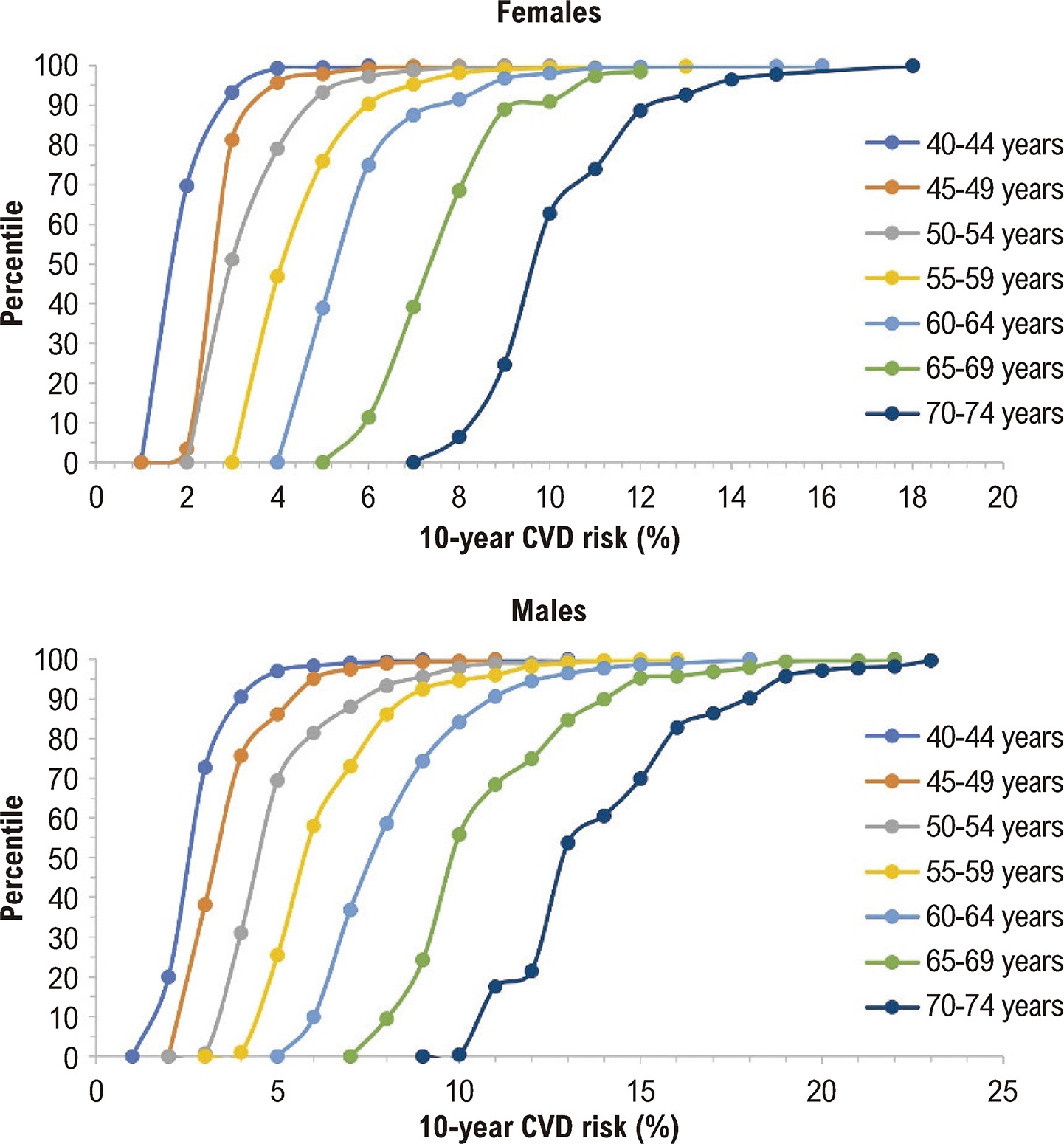
In a previous study, we determined laboratory-based percentiles of the WHO CVD risk distribution, according to sex and age, in the Brazilian Longitudinal Study of Adult Health (ELSA-Brasil) baseline population. These percentiles were associated with the calculated risk of atherosclerotic CVD up to 75 years, regardless of the estimated 10-year risk. Expressing the risk percentile has been proposed to increase risk awareness and improve adherence to preventive measures.–
[…]