ABC Family Arquivos Brasileiros de Cardiologia International Journal of Cardiovascular Sciences ABC Heart Failure & Cardiomyopathy ABC Imagem Cardiovascular
Português English
ABC Family
Português English
  • About
    • About ABC Family
    • Internal Regulation
    • Editorial Board
    • Brazilian Society of Cardiology (SBC)
  • Issues
  • SBC Guidelines
  • Content
    • Videos
    • Podcasts
    • News
  • About
    • About ABC Family
    • Internal Regulation
    • Editorial Board
    • Brazilian Society of Cardiology (SBC)
  • Issues
  • SBC Guidelines
  • Content
    • Videos
    • Podcasts
    • News

ABC Family

  • ABC Family
  • Arquivos Brasileiros de Cardiologia
  • International Journal of Cardiovascular Sciences
  • ABC Heart Failure & Cardiomyopathy
  • ABC Imagem Cardiovascular
Search in

No content found.

Journals
Ordering
Article types
Others

  1. Home
  2. Keyword: Warfarin
Association Between Functional Health Literacy and the Quality of Oral Anticogulation
IJCS
Original Article

Association Between Functional Health Literacy and the Quality of Oral Anticogulation

Gustavo Chaves de Souza et al. Josiane Moreira da Costa Mayara Cristina Oliveira Ortiz Philipe Dias de Avila Lima … Pollyanna Evelyn de Freitas Nogueira Carla Jorge Machado Maria Auxiliadora Parreiras Martins

Abstract

Background:

Low functional health literacy in anticoagulated patients using warfarin has been widely discussed in medical literature.

Objective:

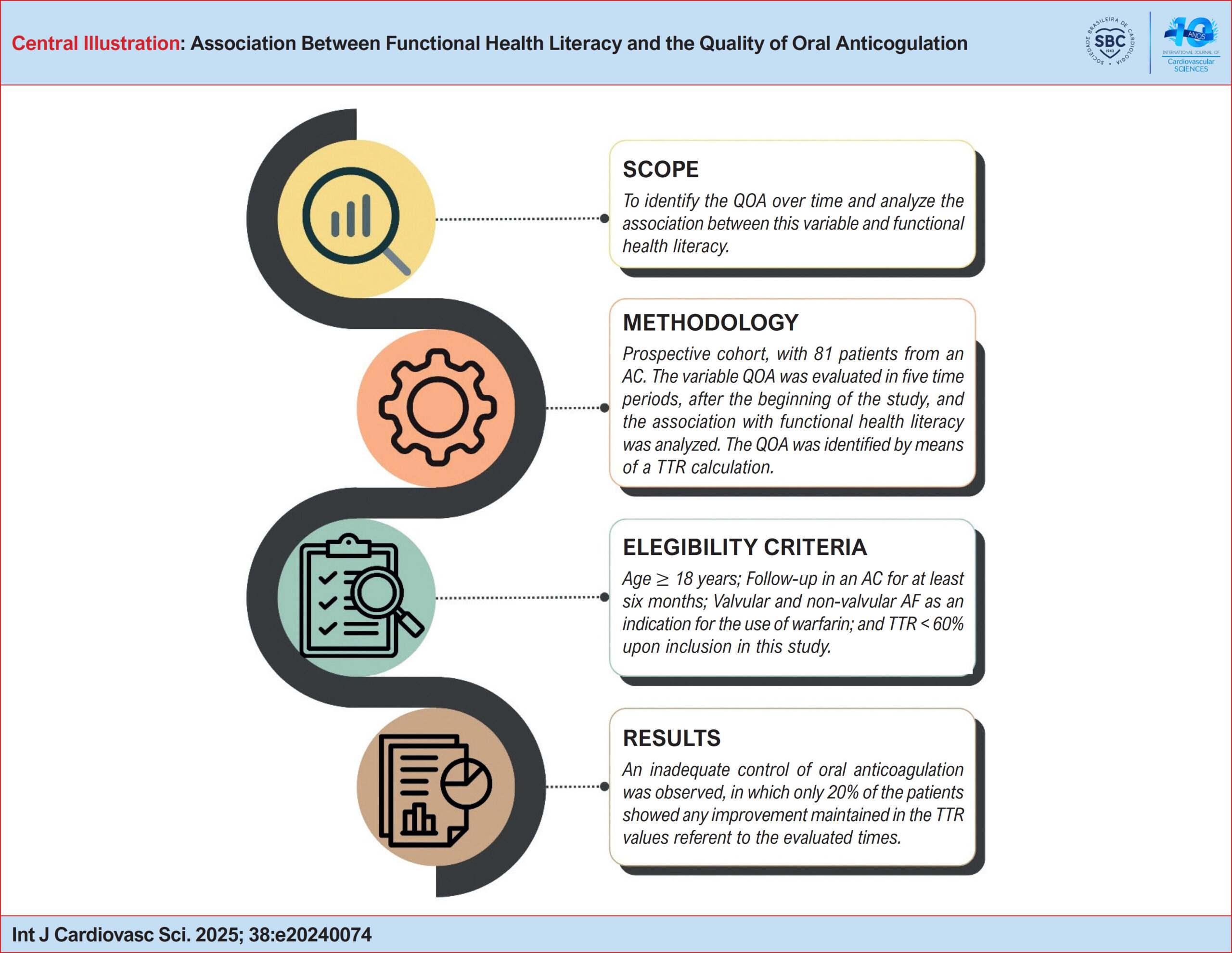
To identify the quality of oral anticoagulation (QOA) over time and to analyze the association between this variable and functional health literacy.

Methods:

Prospective cohort study conducted at an anticoagulation clinic (AC) in Minas Gerais, in a high-complexity hospital. The study included 81 patients, whose data were collected by direct consultation of medical records or by asking questions while patients were waiting for care. The QOA was assessed at 6, 9, 12, 15, and 18 months after the beginning of this study, and analyses of the association between this variable and functional health literacy were performed at the different time points. The QOA was identified by calculating the Therapeutic Time Range (TTR), with good quality being obtained with TTR values >59%. The incidence analysis of the TTR was performed for each of the five time points of the study through univariate Poisson regression. The significance level adopted in the statistical analysis was 5%.

Results:

Throughout the study, inadequate control of oral anticoagulation was observed, with only 20% of the patients showing persistent improvement in TTR values. No statistically significant association was identified at the different measurement times between TTR and functional health literacy.

Conclusion:

There was no direct association between the QOA and functional health literacy. However, the low incidence of persistent quality of anticoagulation in patients with low literacy suggests the development of specific educational actions for this subgroup of patients.
  • Anticoagulants
  • Health Care Evaluation Mechanisms
  • Health Literacy
  • Warfarin
Read Full Article
Creative Commons Attribution (CC BY) Creative Commons license
28/04/2025 DOI: 10.36660/ijcs.20240074 Views 1
ABC
Editorial

Oral Anticoagulation with VKAs: Quality Above All!

Letícia Braga Ferreira et al. André Assis Lopes do Carmo

Since their first Food and Drug Administration approval in 2010, direct oral anticoagulants (DOACs) have grown in use worldwide and have become the most common initially prescribed oral anticoagulation drug for patients with newly diagnosed atrial fibrillation. However, the high costs still hinder their utilization, especially in low and middle-income countries. Furthermore, in certain conditions, especially mechanical heart valves and rheumatic mitral stenosis, vitamin K antagonists (VKAs) remain the only drugs with established safety and efficacy.,

Data from more than 400.000 patients from the United States show that after 2019, nearly 48% of patients with atrial fibrillation were prescribed DOAC, and only 17,7% were using warfarin. Such precise data about warfarin and DOAC utilization in Brazil are lacking but it is estimated that a higher proportion of patients are using VKAs.

[…]

  • Atrial Fibrillation
  • DOAC
  • Vitamin K Antagonists
  • Warfarin
Read Full Article
Creative Commons Attribution (CC BY) Creative Commons license
17/03/2025 DOI: 10.36660/abc.20240795i
Incidence and Predictors of Clinical Outcomes in Patients with Valvular and Nonvalvular Atrial Fibrillation Using Vitamin K Antagonists
ABC
Original Article

Incidence and Predictors of Clinical Outcomes in Patients with Valvular and Nonvalvular Atrial Fibrillation Using Vitamin K Antagonists

Idelzuita Leandro Liporace et al. Gustavo Bernardes F. Oliveira Lucas Bassolli de Oliveira Alves Nadia Marchiori Galassi … Andreia Dias Jeronimo Fernanda Maria Lopes Gregory Y. H. Lip Álvaro Avezum

Abstract

Background

Vitamin K antagonists (VKA) represent an important therapeutic strategy offered by the Brazilian Unified Public Health System to patients with atrial fibrillation (AF). However, predictors of relevant clinical outcomes are understudied in the real world.

Objective

To determine the incidence and independent predictors of clinical outcomes in patients with valvular and nonvalvular AF treated with VKA.

Methods

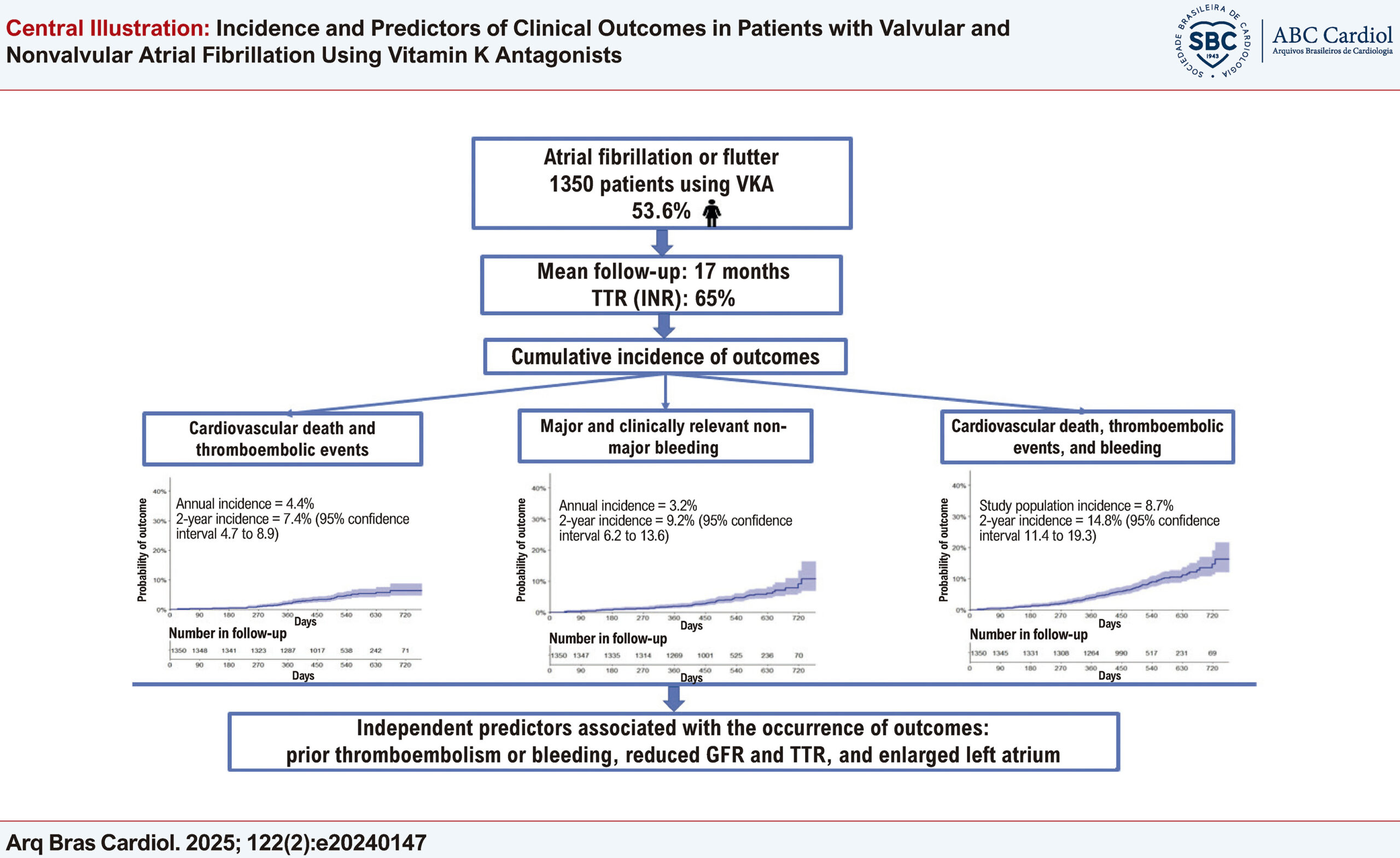
This prospective cohort included patients with valvular and nonvalvular AF receiving VKA for ≥ 1 year. The primary outcomes were cardiovascular death, thromboembolic events, and major and clinically relevant non-major bleeding, separately and as a composite outcome. The outcomes were independently adjudicated. P values < 0.05 were considered statistically significant.

Results

The study included 1,350 patients, with a mean age of 69.2 (± 11.8) years, 53.6% female, followed up for 17 (15 – 19) months. The annual incidence of thromboembolic events and cardiovascular death was 4.4%, and predictors were prior thromboembolism (hazard ratio [HR] 2.12; 95% confidence interval [CI] 1.22 – 3.67), time in therapeutic range (TTR) < 50% (HR 1.98; 95% CI 1.16 – 3.37), and glomerular filtration rate (GFR) < 45 mL/min/1.73 m2 (HR 2.76; 95% CI 4.82 – 1.58). The rate of major and clinically relevant non-major bleeding was 3.24% per year (95% CI 2.47 – 4.14), and predictors were prior bleeding (HR 2.60; 95% CI 1.47 – 4.61) and mechanical prosthesis (HR 1.91; 95% CI 1.15 – 3.15). The composite outcome was 8.7% per year, and predictors were prior bleeding (HR 1.70; 95% CI 1.07 – 2.70), TTR 44 mm (HR 1.97; 95% CI 3.26 – 1.19).

Conclusions

Prior thromboembolism or bleeding, reduced GFR and TTR levels, and enlarged left atrium were predictors of clinical outcomes in patients with AF treated with VKA.

  • Atrial Fibrillation
  • Hemorrhage
  • Stroke
  • Thromboembolism
  • Warfarin
Read Full Article
Creative Commons Attribution (CC BY) Creative Commons license
10/02/2025 DOI: 10.36660/abc.20240147i Views 2
IJCS
Original Article

Factors Associated with Variation in Time in Therapeutic Range in Two Anticoagulation Clinics in Brazil

Josiane Moreira da Costa et al. Milena S. Marcolino Carla Jorge Machado Leandro Pinheiro Cintra … Izabella Fernanda Bastos Siqueira Daniel Dias Ribeiro Maria Auxiliadora Parreiras Martins

Abstract

Background

Time in therapeutic range (TTR) plays an important role in the effectiveness of anticoagulant therapy with vitamin K antagonists.

Objective

To identify factors associated with variation in TTR.

Methods

The study sites were anticoagulation clinics at two university hospitals in Minas Gerais, with a total of 1357 patients studied. TTR was calculated using the Rosendaal method. Binary logistic regressions were carried out with the study variables, followed by multiple regression with those that were significant for the model, adopting a significance level of 5%.

Results

The outpatient clinics presented different values in mean TTR; one corresponded to the expected percentage, while the other did not. Multiple regression identified the variable male sex as a protective factor in relation to TTR < 60% (odds ratio [OR]: 0.42; p = 0).

Conclusion

The identification of variables associated with inadequate TTR contributes to identifying weaknesses in the care process and implementing improvement actions in the hospitals studied.

  • Anticoagulants
  • Heart Diseases
  • Warfarin
Read Full Article
Creative Commons Attribution (CC BY) Creative Commons license
19/08/2024 DOI: 10.36660/ijcs.20230172
Direct Oral Anticoagulants versus Vitamin K Antagonists for Left Ventricular Thrombus: A Meta-Analysis with Trial Sequential Analysis
ABC
Original Article

Direct Oral Anticoagulants versus Vitamin K Antagonists for Left Ventricular Thrombus: A Meta-Analysis with Trial Sequential Analysis

Eric Pasqualotto et al. Douglas Mesadri Gewehr Rafael Oliva Morgado Ferreira Matheus Pedrotti Chavez … Caroliny Hellen Silva Sara Almeida Cruz Jhonny Limachi-Choque Amanda Park Mário Sérgio Soares de Azeredo Coutinho Luiz Fernando Kubrusly

Abstract

Background

Vitamin K antagonists (VKAs) are the recommended first-line treatment for left ventricular thrombus (LVT); however, direct oral anticoagulants (DOACs) have been considered an alternative therapy.

Objectives

To evaluate the efficacy and safety of DOACs compared with VKAs therapy in patients with LVT.

Methods

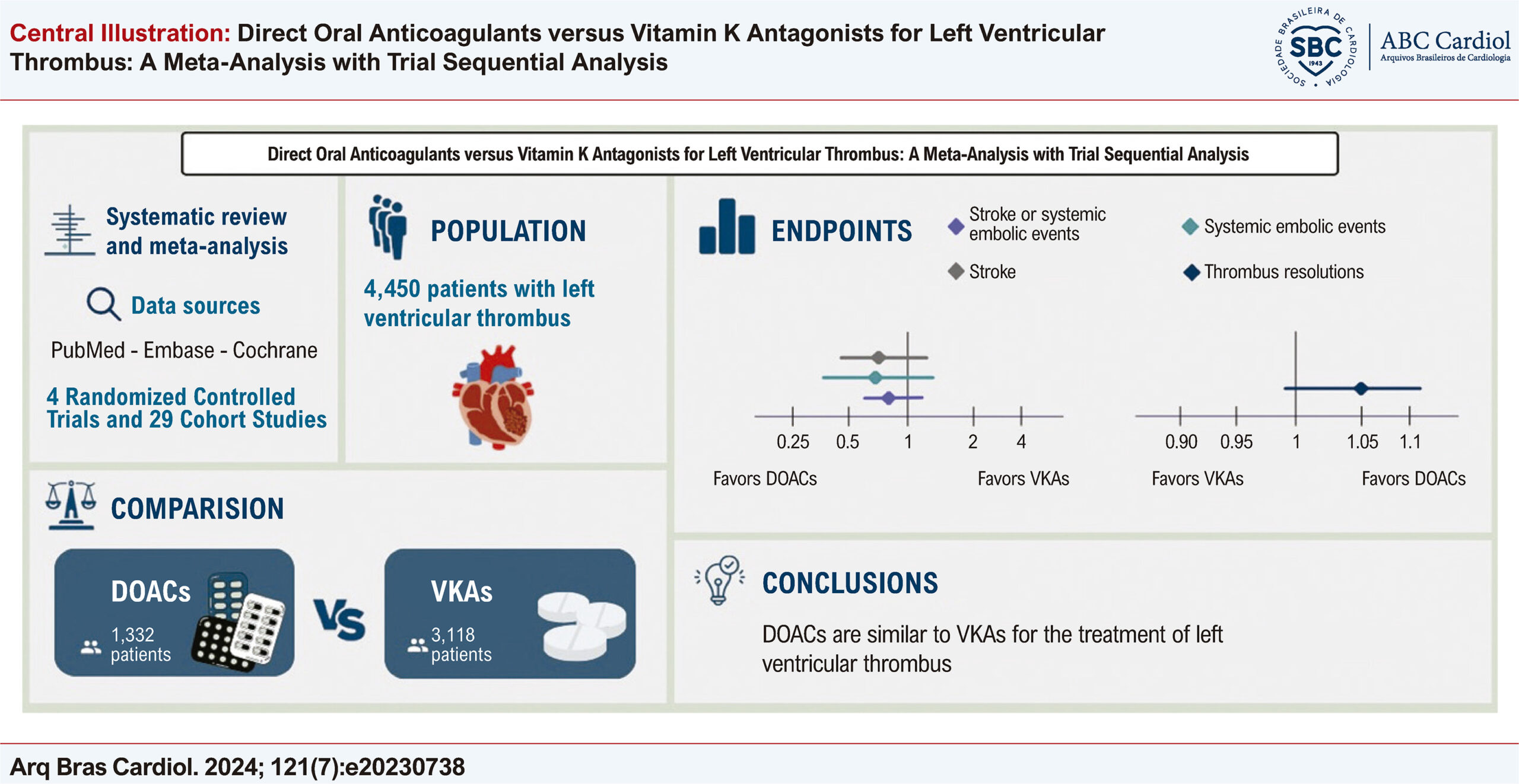
PubMed, Embase, and Cochrane were systematically searched for randomized clinical trials or cohort studies that compared DOACs versus VKAs for LVT. Risk ratios (RRs) were computed for binary endpoints, with 95% confidence intervals (95% CIs). Statistical significance was defined as p value < 0.05.

Results

A total of 4 randomized clinical trials and 29 cohort studies were included, with 4,450 patients assigned to either DOACs or VKAs. There was no significant difference between groups for stroke or systemic embolic (SSE) events (RR 0.84; 95% CI 0.65 to 1.07; p = 0.157), stroke (RR 0.73; 95% CI 0.48 to 1.11; p = 0.140), systemic embolic (SE) events (RR 0.69; 95% CI 0.40 to 1.17; p = 0.166), thrombus resolution (RR 1.05; 95% CI 0.99 to 1.11; p = 0.077), any bleeding (RR 0.78; 95% CI 0.60 to 1.00; p = 0.054), clinically relevant bleeding (RR 0.69; 95% CI 0.46 to 1.03; p = 0.066), minor bleeding (RR 0.73; 95% CI 0.43 to 1.23; p = 0.234), major bleeding (RR 0.87; 95% CI 0.42 to 1.80; p = 0.705), and all-cause mortality (RR 1.05; 95% CI 0.79 to 1.39; p = 0.752). Compared with VKAs, rivaroxaban significantly reduced SSE events (RR 0.35; 95% CI 0.16 to 0.91; p = 0.029) and SE events (RR 0.39; 95% CI 0.16 to 0.95; p = 0.037).

Conclusions

DOACs had a similar rate of thromboembolic and hemorrhagic events, as well as thrombus resolution, compared to VKAs in the treatment of LVTs. Rivaroxaban therapy had a significant reduction in thromboembolic events, compared to VKAs.

  • Factor Xa Inhibitors
  • Thrombosis
  • Warfarin
Read Full Article
Creative Commons Attribution (CC BY) Creative Commons license
26/07/2024 DOI: 10.36660/abc.20230738i Views 1
IJCS
Editorial

Challenging Health Literacy, Patient Knowledge, and Adherence to Oral Anticoagulation in Primary Care Units

Alfredo José Mansur

Care of patients and therapeutics in clinical practice has evolved based on scientific and technological advances, mainly in patients living in societies with appropriate social, educational, and economic conditions, as well as supported facilities that are able to be elicited when needed. However social disparities, whether in social and economic background or in education can vary among population subsets in a way that may hinder the proper care necessary to fulfill expected results. These disparities influence adherence that may be less than optimal. Health literacy is a public concern recognized by different agencies, including the World Health Organization (WHO). Moreover, the healthcare network in different countries may vary.

In Brazil, reports of experiences in primary care facilities, which present interesting opportunities to add to the clinical experience, were evaluated in the city of Divinópolis, in the southeastern region of Brazil, with estimated population of 242,505 inhabitants. Primary care facilities in Divinópolis are organized in 43 primary care units. In the current study, the authors evaluated 162 participants (mean age 64.8±12.7 years-old, 55.6% women) concerning chronic treatments with warfarin, 50% of which were identified due to nonvalvular atrial fibrillation or venous thromboembolism. Participants were evaluated with tests devised to check for oral anticoagulation knowledge, adherence to treatment, health literacy, and the medication complexity index. The relationship of the studied variables with the therapeutic range of INR was unclear; the sample size may well have been a key limitation to estimating associations. The mean follow-up time was 16.5 months after recruitment in March 2020. There were 16 deaths, two of which may have been related to hemorrhage and two possibly related to thromboembolism. The study revealed insufficient knowledge about warfarin therapy and low health literacy in primary care facilities.

[…]

  • Fibrinolytic Agents
  • Health Education
  • Health Status Disparities
  • medication adherence
  • Oral Anticoagulants
  • Warfarin
Read Full Article
Creative Commons Attribution (CC BY) Creative Commons license
15/09/2023 DOI: 10.36660/ijcs.20230095
IJCS
Original Article

Health Literacy, Patient Knowledge and Adherence to Oral Anticoagulation in Primary Care

Milena Soriano Marcolino et al. Thaís Lorenna Souza Sales João Antônio de Oliveira Danyelle Romana Alves Rios … Thaís Marques Pedroso Laura Caetano de Sá Maria Auxiliadora Martins Antonio Luiz Pinho Ribeiro

Abstract

Background

Warfarin is the only oral anticoagulant available in the Brazilian public health system. Health knowledge and treatment are essential to achieving the desirable therapeutic effect. However, data on these aspects among primary care patients are still lacking.

Objective

To assess health literacy, patient knowledge, and adherence to oral anticoagulation with warfarin, as well as the medication regimen complexity in primary health units in the municipality of Divinópolis, Minas Gerais, Brazil.

Methods

This cross-sectional study included patients using warfarin from primary care settings. Sociodemographic and clinical data were collected from medical records. Short Assessment of Health Literacy for Portuguese-Speaking Adults (SAHLPA-18), Oral Anticoagulation Knowledge (OAK), adaptation of the Measure of Adherence to Treatment (MAT-adapted) to oral anticoagulation, and Medication Regimen Complexity Index (MRCI) were applied, and the time in therapeutic range (TTR) was calculated. Patients were stratified in two groups (TTR < 60% and TTR ≥ 60%) and compared using Fisher's exact test at a significance level of p < 0.050.

Results

Analysis included 162 patients (64.8 ± 12.7 years old, 55.6% women). Nonvalvular atrial fibrillation (26.5%) and venous thromboembolism (24.1%) were the main indications for warfarin, and 67.9%, 88.3%, and 16.7% of the patients had inadequate health literacy, insufficient knowledge regarding anticoagulant therapy, and non-adherence to warfarin therapy, respectively. There was no significant association of these parameters in relation to TTR. MRCI showed high pharmacotherapy complexity between the drug prescriptions.

Conclusion

This study showed alarming insufficient knowledge about warfarin therapy and low health literacy in primary care patients.

  • Anticoagulants
  • Cardiovascular Diseases
  • Health Literacy
  • Primary Health Care
  • Warfarin
Read Full Article
Creative Commons Attribution (CC BY) Creative Commons license
25/08/2023 DOI: 10.36660/ijcs.20220158 Views 1
ABC
Editorial

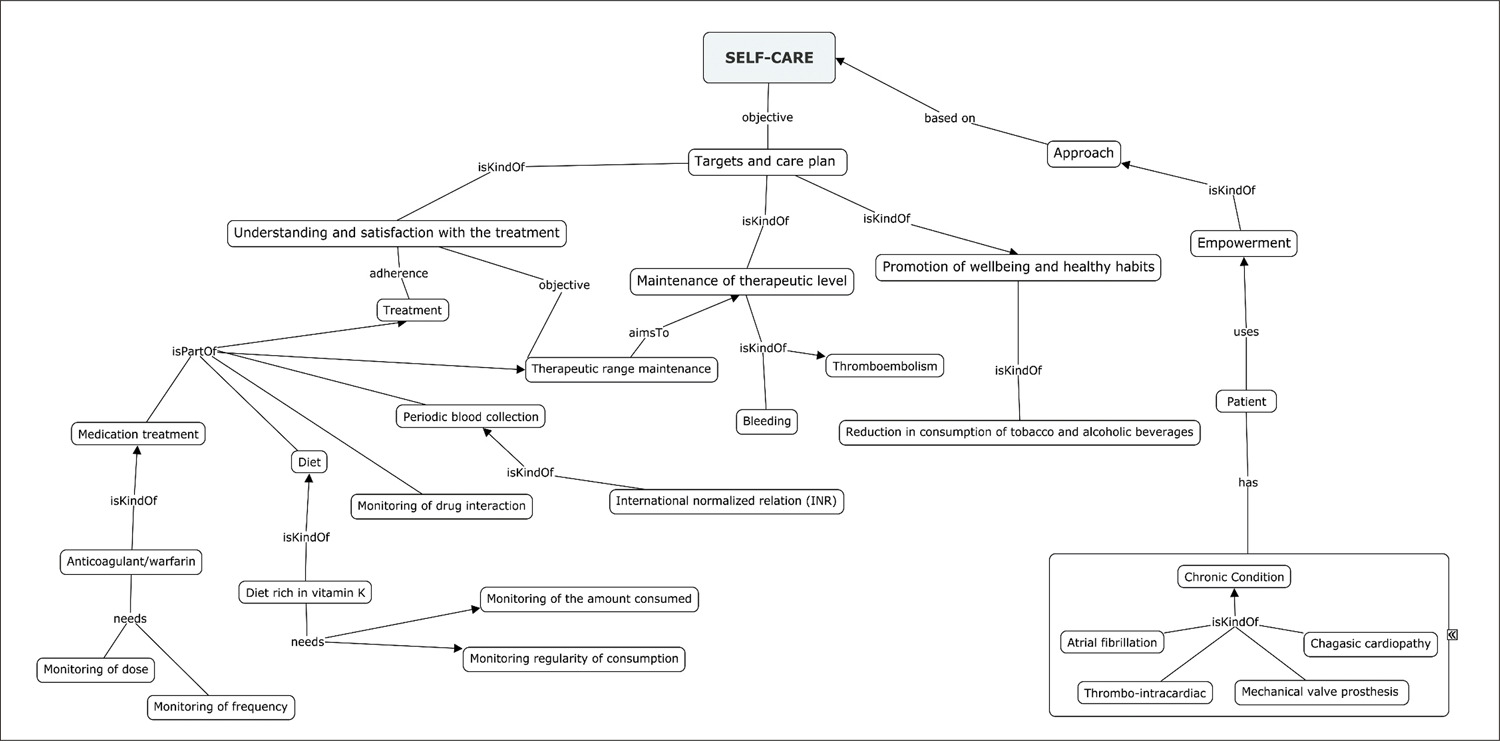
Use of Warfarin in Oral Anticoagulation Therapy: Challenges and EmpoderACO Strategy for Promoting Patient Empowerment in Self-Care

Carina Carvalho Silvestre et al. Sabrina Cerqueira-Santos

Warfarin is an oral anticoagulant widely used for primary and secondary prevention of thromboembolism that belongs to the class of vitamin K antagonists., In Brazil, warfarin is still the main oral anticoagulant distributed free of charge by the Unified Health System. According to the Institute for Safe Practices in the Use of Medicines (ISMP – Brazil), warfarin is classified as a high-alert or potentially dangerous drug since it has a low therapeutic index and its use requires constant attention for the drug to act in the prevention of thromboembolic events without increasing the risk of hemorrhages., Furthermore, it appears as one of the drugs that should be the target of priority actions for the prevention of damage, according to the Third Global Patient Safety Challenge of the World Health Organization Health.

Management of anticoagulant therapy with warfarin is a challenge for many patients. It requires procedures that are considered complex, such as the regular measurement of the international normalized ratio (INR), the interpretation of the results to adjust the drug dose by the responsible team, as well as the adequate understanding of the factors that may influence its effectiveness and safety, such as adverse reactions and interactions with other drugs and foods., Thus, strategies are needed to help in the proper and safe use of the medication and contribute to understanding its use process and consequent adherence to treatment.

[…]

  • Anticoagulants
  • Empowerment for Health
  • Health Behavior
  • Health Education
  • Warfarin
Read Full Article
Creative Commons Attribution (CC BY) Creative Commons license
30/06/2023 DOI: 10.36660/abc.20230335 Views 1
Figure 1
ABC
Original Article

Construction and Validation of a Protocol Targeting Patients on Oral Anticoagulation with Warfarin

Hannah Cardoso Barbosa et al. Heloisa de Carvalho Torres João Antônio de Queiroz Oliveira Rebeca Priscila de Melo Santos … Josiane Moreira da Costa Leonardo Gonçalves Miranda Adriana Silvina Pagano Marcus Fernando da Silva Praxedes Maria Auxiliadora Parreiras Martins

Abstract

Background

Warfarin is an oral anticoagulant that is very useful in preventing thromboembolism, though it is considered a drug with a high risk of causing adverse events. Considering the practical challenges in controlling oral anticoagulation, the patients on warfarin could benefit from educational strategies aimed at behavioral changes, active participation in self-care, and adherence to drug therapy.

Objective

The aim was to construct and validate the EmpoderACO protocol for behavioral changes in warfarin patients.

Methods

The methodological steps were: definition of concepts and domains of self-care, identification of objectives, construction and selection of items, assessment of content validity, and pre-test in the target population.

Results

Relevance, adequacy, clarity, and internal reliability of the instrument’s items were assessed by a multidisciplinary judges committee (JC) through the E-surv web platform, obtaining an average agreement of ≥0.91. The understanding of the instrument measured by the target population revealed adequate clarity with a coefficient average of 0.96.

Conclusion

EmpoderACO can aid in qualifying the communication process between medical professionals and patients, as well as in improving adherence to both treatment and clinical outcomes, and can be replicated in healthcare settings.

  • Anticoagulants
  • Health Behavior
  • Health Education
  • Warfarin
Read Full Article
Creative Commons Attribution (CC BY) Creative Commons license
30/06/2023 DOI: 10.36660/abc.20220576 Views 1
Figure 1
ABC
Original Article

Quality of Oral Anticoagulation in Atrial Fibrillation Patients at a Tertiary Hospital in Brazil

Karina Nogueira Dias Secco Malagutte et al. Caroline Ferreira da Silva Mazeto Pupo da Silveira Fabrício Moreira Reis Daniele Andreza Antonelli Rossi … João Carlos Hueb Katashi Okoshi Hélio Rubens de Carvalho Nunes Luis Cuadrado Martin Rodrigo Bazan Silméia Garcia Zanati Bazan

Abstract

Background

Atrial fibrillation (AF) affects 0.5% to 2.0% of the general population and is usually associated with cardiac structural diseases, hemodynamic damage, and thromboembolic complications. Oral anticoagulation prevents thromboembolic events and is monitored by the international normalized ratio (INR).

Objectives

To evaluate INR stability in nonvalvular AF patients treated with warfarin anticoagulation, to evaluate thromboembolic or hemorrhagic complications, and to identify the group at higher risk for thromboembolic or hemorrhagic events.

Methods

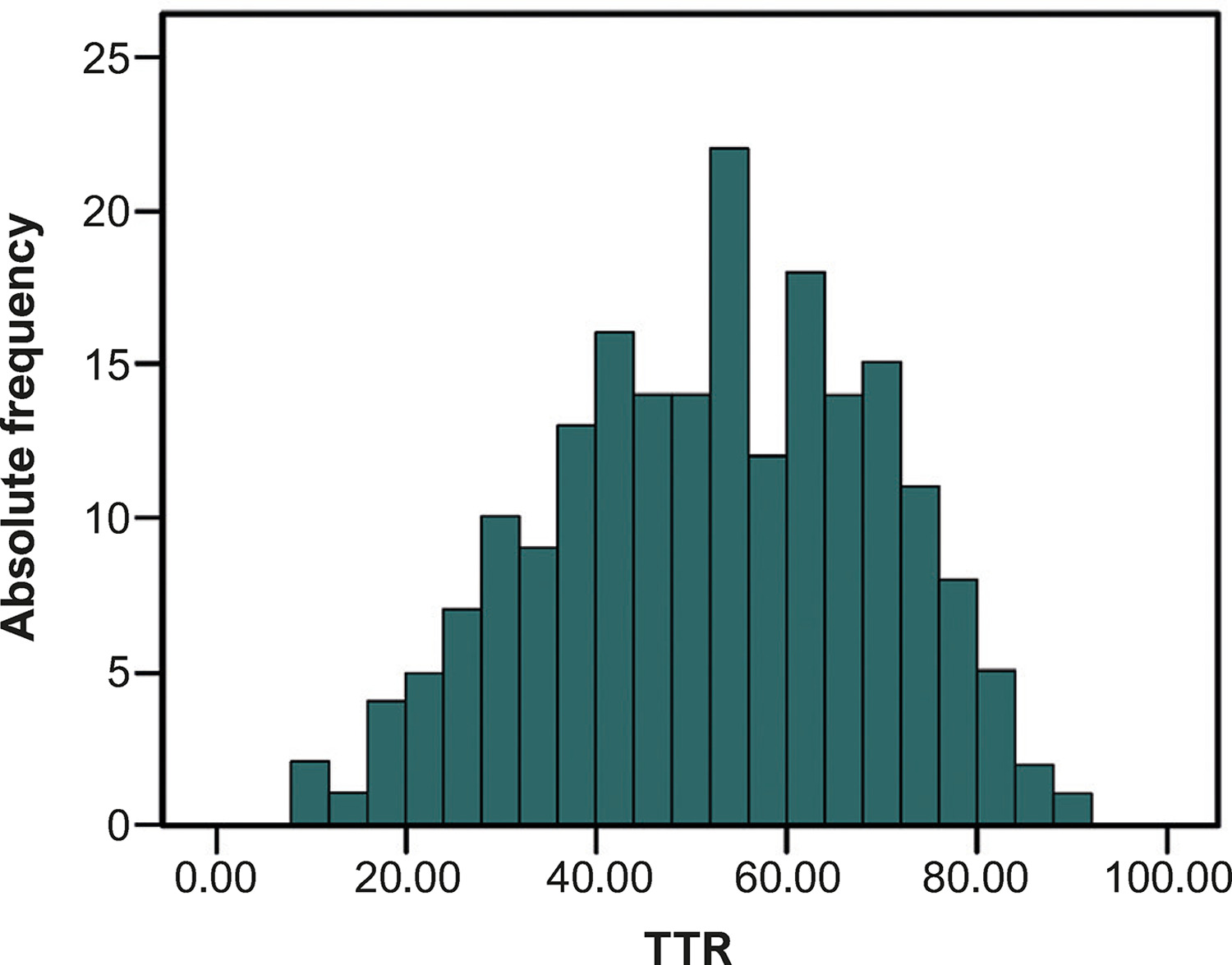
Data from the medical records of 203 patients who received medical care at a tertiary hospital in Brazil were reviewed, and the time in therapeutic range (TTR) was calculated using the Rosendaal method. The possible TTR influencing factors were then analyzed, and the relationship between the TTR and thromboembolic or hemorrhagic events was calculated. The level of significance was 5%.

Results

The mean TTR was 52.2%. Patients with INR instability in the adaptation phase had a lower mean TTR (46.8%) than those without instability (53.9%). Among the studied patients, 6.9% suffered hemorrhagic events, and 8.4% had a stroke. The higher risk group for stroke and bleeding consisted of patients with INR instability in the adaptation phase.

Conclusions

The quality of anticoagulation in this tertiary hospital in Brazil is similar to that in centers in developing countries. Patients with greater INR instability in the adaptation phase evolved to a lower mean TTR during follow-up, had a 4.94-fold greater chance of stroke, and had a 3.35-fold greater chance of bleeding. Thus, for this patient group, individualizing the choice of anticoagulation therapy would be advised, considering the cost-benefit ratio.

  • Atrial Fibrillation
  • Hemorrhage
  • Stroke
  • Warfarin
Read Full Article
Creative Commons Attribution (CC BY) Creative Commons license
27/06/2022 DOI: 10.36660/abc.20210805 Views 2
ABC
Original Article

Economy- and Social-Based Strategies for Anticoagulation of Patients with Atrial Fibrillation

Andressa Zulmira Avila Guerrero et al. Enia Lucia Coutinho Marcos Bosi Ferraz Claudio Cirenza … Marcelo Cincotto Esteves dos Santos José Roberto Ferraro Angelo Amato Vincenzo de Paola

Abstract

Background:

Atrial fibrillation is a public health problem associated with a fivefold increased risk of stroke or death. Analyzing costs is important when introducing new therapies and must be reconsidered in special situations, such as the novel coronavirus pandemic of 2020.

Objective:

This study aimed to evaluate the costs related to anticoagulant therapy in a one-year period, and the quality of life of atrial fibrillation patients treated in a public university hospital.

Methods:

Patient costs were those related to the anticoagulation and calculated by the average monthly costs of warfarin or direct oral anticoagulants (DOACs). Patient non-medical costs (eg., food and transportation) were calculated from data obtained by questionnaires. The Brazilian SF-6D was used to measure the quality of life. P-values < 0.05 were considered statistically significant.

Results:

The study population consisted of 90 patients, 45 in each arm (warfarin vs direct oral anticoagulants). Costs were 20% higher in the DOAC group ($55,532.62 vs $46,385.88), and mainly related to drug price ($23,497.16 vs $1,903.27). Hospital costs were higher in the warfarin group ($31,088.41 vs $24,604.74) and related to outpatient visits. Additionally, non-medical costs were almost twice higher in the warfarin group ($13,394.20 vs $7,430.72). Equivalence of price between the two drugs could be achieved by a 39% reduction in the price of DOACs. There were no significant group differences regarding quality of life.

Conclusions:

Total costs were higher in the group of patients taking DOACs than those taking warfarin. However, a nearly 40% reduction in the price of DOACs could make it feasible to incorporate these drugs into the Brazilian public health system.

  • Anticoagulants
  • Atrial Fibrillation
  • Health Care Costs
  • Warfarin
Read Full Article
Creative Commons Attribution (CC BY) Creative Commons license
21/02/2022 DOI: 10.36660/abc.20200921
Figure 1
IJCS
Original Article

Predictors of Hospitalization in Vitamin K Antagonist Users Presenting with Bleeding at the Emergency Department

Alan Fabiani Chiaparini et al. Paola Stefania Bohrer Rabaioli João Vitor Slaviero Cinthia Scatolin Tem-Pass … Hugo Antonio Fontana Filho Iran Castro Eduardo Dytz Almeida Tiago Luiz Luz Leiria

Abstract

Background

Vitamin K antagonists (VKA) are indicated for the prevention of thromboembolic events and reduction of mortality in patients with atrial fibrillation and patients with valvular prostheses. However, their use is associated with bleeding complications and hospitalizations. Predictors of hospital admission for bleeding in these patients are poorly known.

Objectives

To define the predictors for hospitalization of VKA users who seek emergency care due to bleeding.

Methods

Single-center, cross-sectional study, with retrospective analysis of electronic medical records from 03/01/2012 to 02/27/2017. Clinical and laboratory variables were compared between patients who were hospitalized and those who were not. A logistic regression model as used, in which the variables were included using the Backward stepwise method, with a p value of 0.05 as the input criterion, a removal value of 0.20 and a confidence interval of 95%. The p-value was considered statistically significant when <0.05.

Results

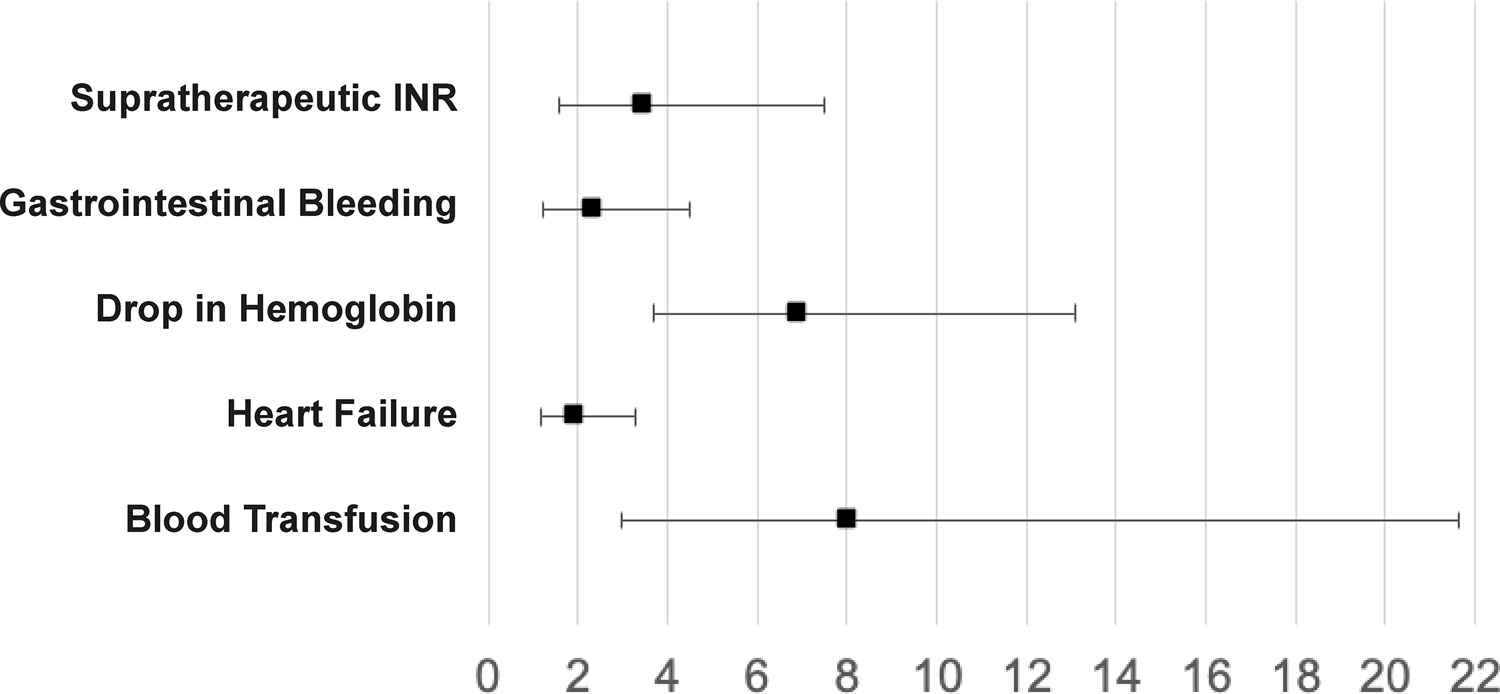
A total of 510 patients with bleeding were included, of whom 158 were hospitalized. Predictors of hospitalization were: INR at supratherapeutic levels (OR 3.45; P <0.01; 95% CI 1.58 – 7.51), gastrointestinal bleeding (OR 2.36; P <0.01; CI 95% 1.24 – 4.50), drop in hemoglobin (OR 6.93; P <0.01; 95% CI 3.67 – 13.07), heart failure (OR 1.96; P 0.01; 95% CI 1.16 – 3.30) and need for blood transfusion (OR 8.03; P <0.01; 95% CI 2.98 – 21.64).

Conclusion

Drop in hemoglobin, heart failure, INR at supratherapeutic levels, gastrointestinal bleeding and need for blood transfusion were associated with hospitalization. Identification of these factors in the initial evaluation would help to define which patients will demand more intensive care.

  • Emergencies
  • Hemorrhage
  • Platelet Aggregation
  • Warfarin
Read Full Article
Creative Commons Attribution (CC BY) Creative Commons license
03/09/2021 DOI: 10.36660/ijcs.20200320 Views 2
Figure 1
IJCS
Original Article

Atrial Fibrillation and Use of Rivaroxaban: Performance of the Prothrombin Time / INR as a Function of Time After Blood Collection

Rita Carolina Figueiredo Duarte et al. Priscila Samara Sérgio Moreira Cláudia Natália Ferreira Estevão Lanna Figueiredo … Eduardo Sternick Francisco Rezende Silveira Luan Carlos Vieira Alves Ana Paula Lucas Mota Edna Afonso Reis Maria das Graças Carvalho Helton José dos Reis

Abstract

Background

Traditionally, the most effective therapy in the prevention of stroke in patients with atrial fibrillation (AF) has been oral anticoagulation with vitamin K inhibitors, particularly warfarin, whose disadvantages and adverse effects have led to their replacement by “direct oral anticoagulants”, as factor X inhibitor.

Objectives

This study aimed to conduct a brief approach on atrial fibrillation (AF) and use of Rivaroxaban, and to comparatively evaluate the prothrombin time / International Normalized Ratio (PT/INR) in patients with AF in use of this oral anticoagulant, depending on the time elapsed between the last administration of the drug and the time of blood sample venipuncture.

Methods

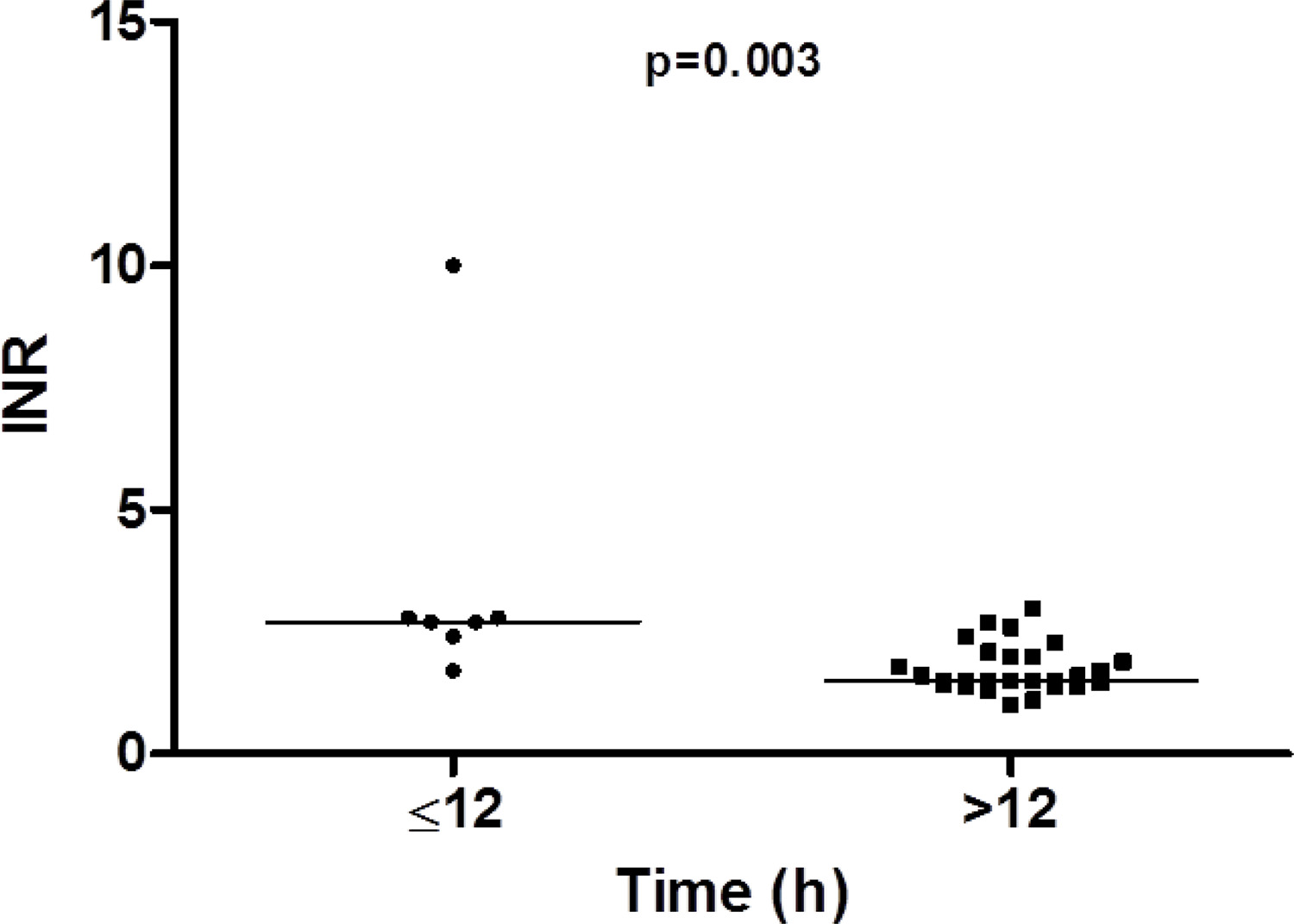
We evaluated 34 patients with AF in use of Rivaroxaban by using PT / INR, distributed into a subgroup with blood collection time ≤ 12 hours (n = 7) and > 12 hours after the last drug intake (n = 27). Mann-Whitney test was used to compare the groups and p < 0.05 was considered significant.

Results

An analysis as a function of time between the Rivaroxaban intake and blood collection, revealed that PT / INR suffers the greatest effect up to 12 hours after ingestion of the drug, dropping to levels close to normal in subsequent hours before the next dose.

Conclusion

We concluded that, in contrast to warfarin, the knowledge of the time interval between drug intake and blood collection from patients taking Rivaroxaban is essential to properly interpret a laboratory test to assess hemostasis, particularly PT and its derivatives. Int J Cardiovasc Sci. 2020; [online].ahead print, PP.0-0

  • Anticoagulants
  • Atrial Fibrillation
  • blood coagulation
  • Embolism
  • Hemorrhage/physiopathology
  • Risk Assessment
  • Rivaroxaban
  • Stroke
  • Warfarin
Read Full Article
Creative Commons Attribution (CC BY) Creative Commons license
06/11/2020 DOI: 10.36660/ijcs.20190141 Views 1
Figure 1
IJCS
Original Article

Drug Interactions and Adverse Events in a Cohort of Warfarin Users Attending Public Health Clinics

Christiane de Fátima Colet et al. Tania Alves Amador Isabela Heineck

Abstract

Background:

Warfarin is an oral anticoagulant involved in important interactions with foods and other drugs.

Objectives:

To evaluate the occurrence of adverse events reported by warfarin users and their relationship with drug interactions.

Methods:

This was an open cohort, prospective study conducted in an 18-month period with warfarin users attending public health clinics of the city of Ijuí, Brazil. Data were collected by means of interviews administered at patients’ home every month. Patients’ responses were confirmed by review of medical records when patients sought medical care. Data were analyzed by descriptive statistics. Potential drug interactions were evaluated in a database and vitamin K consumption was quantified using a validated method.

Results:

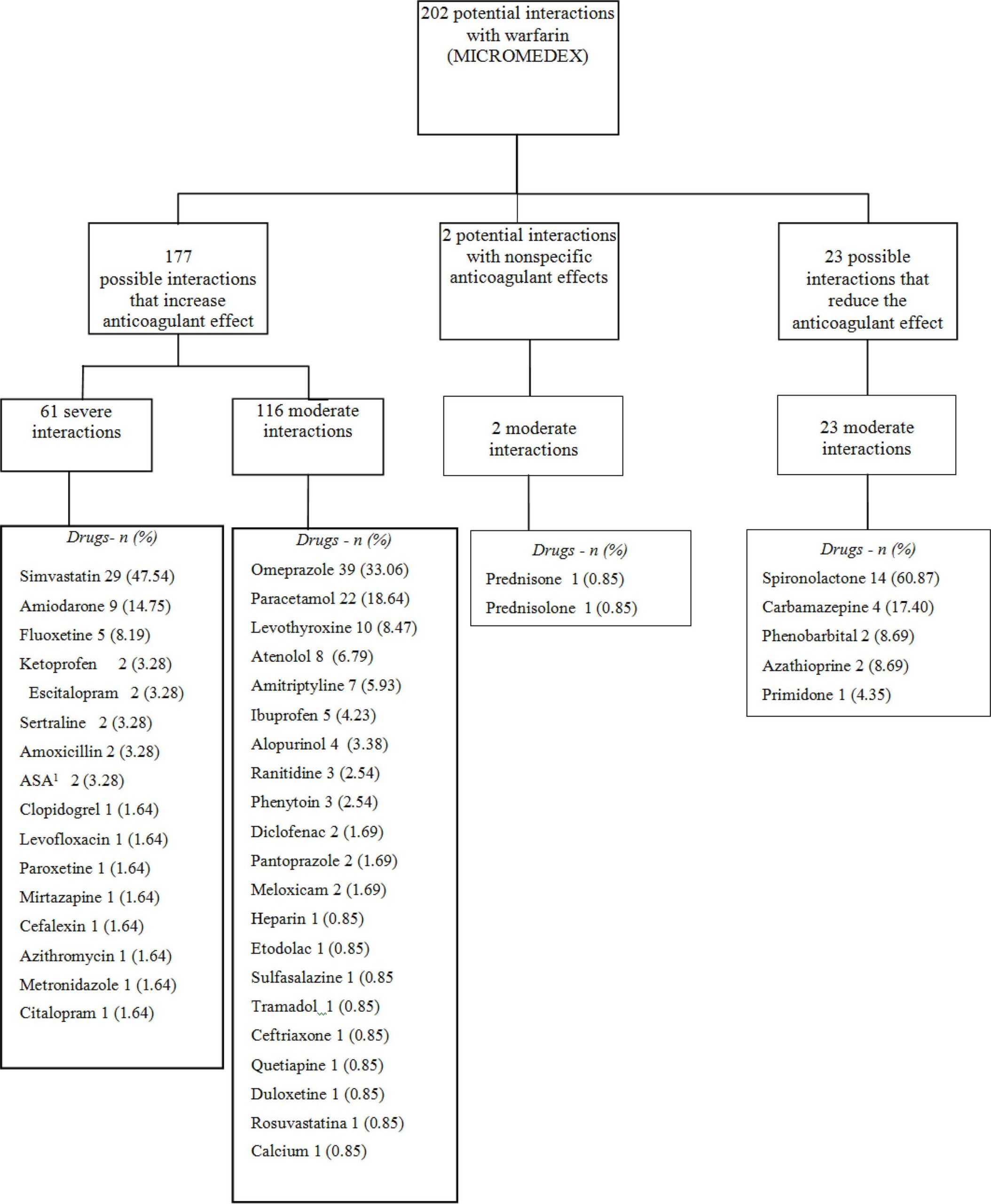
A total of 68 patients were followed-up; 63 completed the study and 5 died in the study period. Mean number of medications taken by the patients was 9.6 ± 4.5, and mean number of interactions involving warfarin was 2.91 ± 1.52. Most potential interactions increased the risk of bleeding, 61 of them severe interactions and 116 moderate interactions. Eighty-seven episodes of bleeding and 4 episodes of thrombosis were reported by a total of 37 and 4 patients, respectively. At the occurrence of these events, 56.5% of warfarin users were also taking omeprazole, 35.9% were taking simvastatin and 25.0% paracetamol. Most patients had a low vitamin K intake.

Conclusions:

A high frequency of potential interactions between warfarin and other drugs was detected, but a low intake of foods that could possibly affect the effects of warfarin was observed. Based on our results, it seems prudent to follow patients on warfarin therapy for drug-drug interactions, aiming to control adverse effects and to promote a safe and effective therapy.

  • Acetaminophen
  • Anticoagulants / adverse effects
  • Delivery Health Care/statistics & numeral data
  • Drug Incompatibility
  • drug interactions
  • Omeprazole
  • Pharmacovigilance
  • simvastatin
  • Vitamin K
  • Warfarin
Read Full Article
Creative Commons Attribution (CC BY) Creative Commons license
17/12/2018 DOI: 10.5935/2359-4802.20180091 Views 2
Figure 1
ABC
Original Article

Evaluation of the Bleeding Intensity of Patients Anticoagulated with Warfarin or Dabigatran Undergoing Dental Procedures

Marcus Vinicius Santos Andrade et al. Luciana Azevedo Prata Andrade Alan Freitas Bispo Luana de Alencar Freitas … Milena Quadros Sampaio Andrade Gilson Soares Feitosa Gilson Soares Feitosa-Filho

Abstract

Background:

Thrombotic disorders remain one of the leading causes of death in the Western world. Dabigatran appeared as an alternative to warfarin for anticoagulation in the treatment of atrial fibrillation (AF). The risk associated with bleeding due to its use has been documented in several randomized clinical trials, but no large study has examined in detail the risk of bleeding during dental extraction and other dental procedures involving bleeding.

Objective:

To compare the intensity of bleeding in individuals taking dabigatran or vitamin K antagonist (warfarin) and undergoing dental procedures.

Methods:

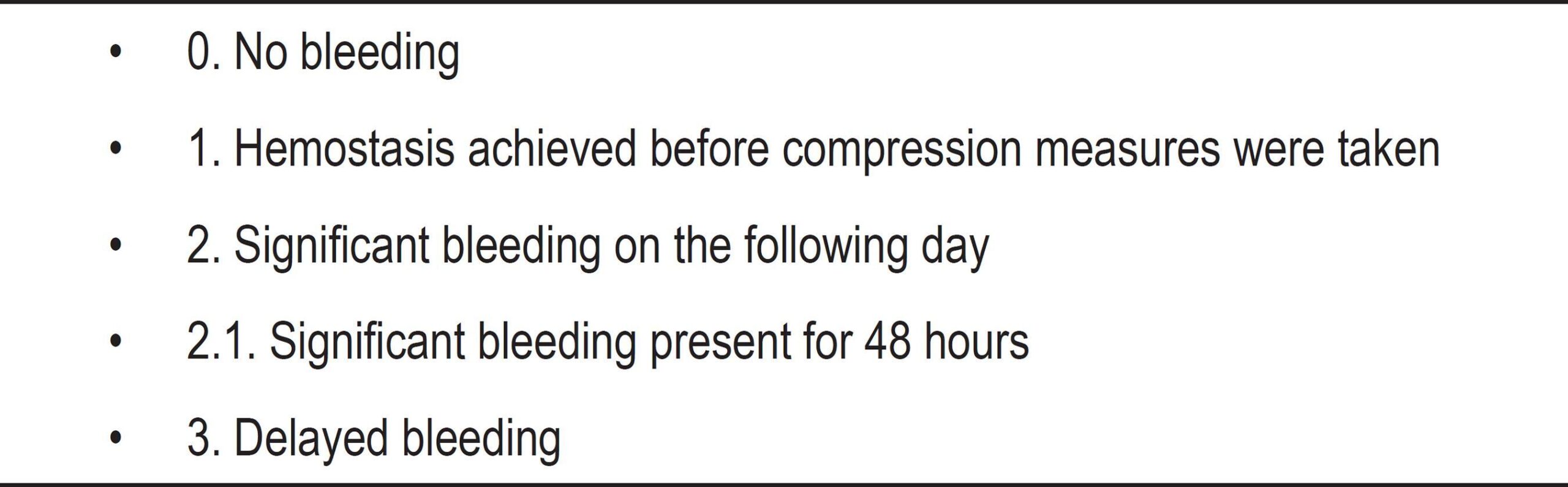
Prospective, single-center, controlled study with one single observer. Patients diagnosed with nonvalvular AF, on warfarin or dabigatran, cared for at a cardiology referral center, and requiring single or multiple dental extractions, were evaluated up to seven days post-extraction. The following outcomes were assessed: bleeding time between the beginning and the end of suture and complete hemostasis; bleeding before the procedure, after 24 hours, 48 hours, 7 days, during and after suture removal (late); p<0.05 was defined as of statistical relevance.

Results:

We evaluated 37 individuals, 25 in the warfarin group and 12 in the dabigatran group. Age, sex, weight, height, blood pressure, color, schooling, family income and comorbidities were similar between the two groups. Regarding bleeding after 24 hours of the procedure, no one in the dabigatran group had bleeding, whereas 32% in the warfarin group had documented bleeding (p = 0.028). The other variables analyzed did not differ between the groups.

Conclusions:

This study suggests that, regarding dental extraction, there is no statistically significant difference in the intensity of bleeding of patients taking dabigatran as compared to those taking warfarin. Bleeding 24 hours after the procedure was less frequent among patients on dabigatran.

  • Anticoagulants
  • Bleeding Time
  • Dabigatran
  • Hemorrhage/complications
  • Oral Surgical Procedures
  • Warfarin
Read Full Article
Creative Commons Attribution (CC BY) Creative Commons license
06/08/2018 DOI: 10.5935/abc.20180137 Views 2
Figure 1
ABC
Original Article

SAMe-TT2R2 Score in the Outpatient Anticoagulation Clinic to Predict Time in Therapeutic Range and Adverse Events

Fernando Pivatto Júnior et al. Rafael Selbach Scheffel Lucas Ries Ricardo Roitman Wolkind … Roberta Marobin Sabrina Sigal Barkan Luís Carlos Amon Andréia Biolo

Abstract

Background:

The SAMe-TT2R2 score was developed to predict which patients on oral anticoagulation with vitamin K antagonists (VKAs) will reach an adequate time in therapeutic range (TTR) (> 65%-70%). Studies have reported a relationship between this score and the occurrence of adverse events.

Objective:

To describe the TTR according to the score, in addition to relating the score obtained with the occurrence of adverse events in patients with nonvalvular atrial fibrillation (AF) on oral anticoagulation with VKAs.

Methods:

Retrospective cohort study including patients with nonvalvular AF attending an outpatient anticoagulation clinic of a tertiary hospital. Visits to the outpatient clinic and emergency, as well as hospital admissions to the institution, during 2014 were evaluated. The TTR was calculated through the Rosendaal´s method.

Results:

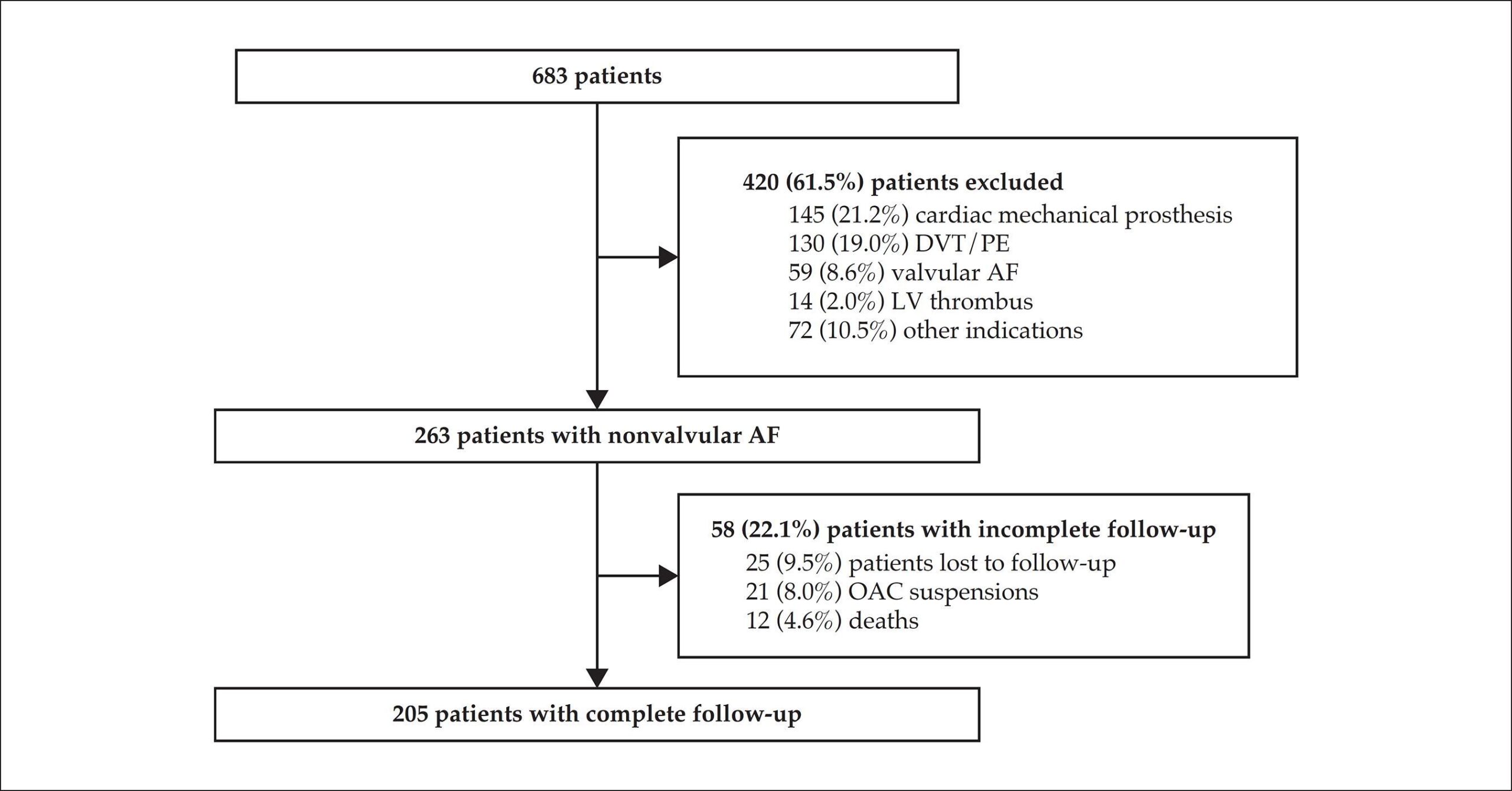
We analyzed 263 patients (median TTR, 62.5%). The low-risk group (score 0-1) had a better median TTR as compared with the high-risk group (score ≥ 2): 69.2% vs. 56.3%, p = 0.002. Similarly, the percentage of patients with TTR ≥ 60%, 65% or 70% was higher in the low-risk group (p < 0.001, p = 0.001 and p = 0.003, respectively). The high-risk group had a higher percentage of adverse events (11.2% vs. 7.2%), although not significant (p = 0.369).

Conclusions:

The SAMe-TT2R2 score proved to be effective to predict patients with a better TTR, but was not associated with adverse events.

  • Anticoagulants / adverse effects
  • Atrial Fibrillation
  • Decision Support Techniques
  • Phenprocoumon
  • Vitamin K
  • Warfarin
Read Full Article
Creative Commons Attribution (CC BY) Creative Commons license
01/04/2017 DOI: 10.5935/abc.20170052 Views 1
Safety of ablation for atrial fibrillation with therapeutic INR: comparison with transition to low-molecular-weight heparin
ABC
Artigo Original

Safety of ablation for atrial fibrillation with therapeutic INR: comparison with transition to low-molecular-weight heparin

Eduardo B. Saad et al. Ieda P. Costa Rodrigo E. da Costa Luiz Antônio O. Inácio Jr … Charles Slater Angelina Camiletti Dario G. de Moura Neto Paulo Maldonado Luiz Eduardo Camanho Carisi A. Polanczyk

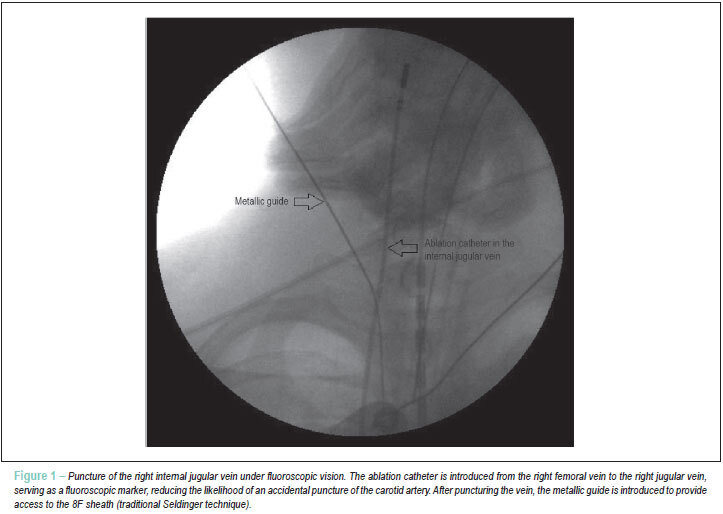
BACKGROUND: The ideal management of oral anticoagulation (OAC) before and after catheter ablation for atrial fibrillation (AF) is still controversial. OBJECTIVE: To compare two anticoagulation strategies for catheter ablation for AF: warfarin withholding and use of low-molecular-weight heparin (LMWH); and maintenance of warfarin and therapeutic INR (between 2.0 and 3.0). METHODS: 140 patients (pt) with persistent/permanent AF undergoing catheter ablation for AF were divided into two groups: Group I (70 pt), in which warfarin was withheld five days prior to the procedure and transition to LMWH was used (enoxaparin: 1 mg/kg 2x/day before ablation, and 0.5 mg/kg 2x/day after ablation); Group II (70 pt), in which warfarin was not withheld and the procedure was performed with therapeutic INR. Both groups received intravenous heparin (ACT > 350 seconds) during ablation. RESULTS: In Group I, one pt (1.4%) had a major hemorrhagic complication and four pts (5.7%) had minor hemorrhagic complications. In Group II, two pts (2.8%) had minor hemorrhagic complications and one pt had a major bleeding, which occurred after using LMWH due to INR < 2.0. None of the groups had thromboembolic complications or cardiovascular death over a period of 16 ± 8 months. CONCLUSION: Catheter ablation for AF without withholding OAC and with therapeutic INR is a strategy that has similar safety and efficacy when compared with the traditional transition to LMWH, avoiding the potentially inadequate anticoagulation of the initial post-ablation period.

  • Atrial Fibrillation
  • Catheter Ablation
  • heparin, low-molecular-weight
  • Treatment Outcome
  • Warfarin
  • withholding treatment
Read Full Article
Creative Commons Attribution (CC BY) Creative Commons license
19/08/2011 DOI: 10.1590/S0066-782X2011005000088 Views 3
Warfarin or Aspirin in embolism prevention in patients with mitral valvulopathy and atrial fibrillation
ABC
Artigo Original

Warfarin or Aspirin in embolism prevention in patients with mitral valvulopathy and atrial fibrillation

Paulo de Lara Lavitola et al. Roney Orismar Sampaio Walter Amorim de Oliveira Berta Napchan Bôer … Flavio Tarasoutchi Guilherme Sobreira Spina Max Grinberg

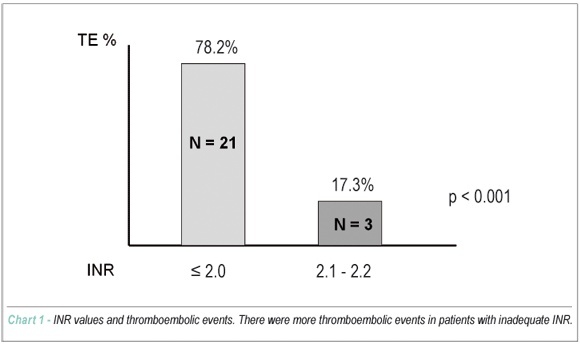
BACKGROUND: Atrial fibrillation (AF) associated to rheumatic mitral valve disease (RMVD) increases the incidence of thromboembolism (TE), with warfarin being the standard therapy, in spite of difficulties in treatment adherence and therapeutic control. OBJECTIVE: To compare the effectiveness of Aspirin vs Warfarin in TE prevention in patients with AF and RMVD. METHODS: A total of 229 patients (pts) with AF and RMVD were followed in a prospective and randomized study. The first group consisted of 110 pts receiving Aspirin – 200 mg/day (Group Aspirin – GA) and the second group consisted of 119 pts receiving Warfarin at individually-adjusted doses (Group Warfarin – GW). RESULTS: There were 15 embolic events in GA and 24 in GW (p = 0.187), of which 21 presented INR < 2.0. Thus, after excluding patients with inadequate INR, there was a higher number of embolic events in GA than in GW (15 vs 3) (p < 0.0061). The GW showed lower treatment adherence (p = 0.001). Neither group presented episodes of major bleeding. Small bleeding episodes were more frequent in the GW (p < 0.01). Increased serum levels of cholesterol and triglycerides constituted a risk factor for a higher number of thromboembolic events in the studied population, with no difference between the groups. CONCLUSION: In patients presenting RMVD with AF for less than a year and no previous embolism, Aspirin is little effective in preventing TE. Patients with lower-risk mitral valvulopathy (mitral regurgitation and mitral biological prosthesis), especially in cases presenting contraindication to or low adherence to Warfarin, Aspirin use can present some benefit in TE prevention.

  • Aspirin
  • Atrial Fibrillation
  • Mitral Valve
  • Tromboembolism
  • Warfarin
Read Full Article
Creative Commons Attribution (CC BY) Creative Commons license
22/10/2010 DOI: 10.1590/S0066-782X2010005000140 Views 2
Iliopsoas muscle hematoma during treatment with warfarin
ABC
Relato de Caso

Iliopsoas muscle hematoma during treatment with warfarin

Gabriel Zago et al. Marcelo Campos Appel-da-Silva Luiz Claudio Danzmann

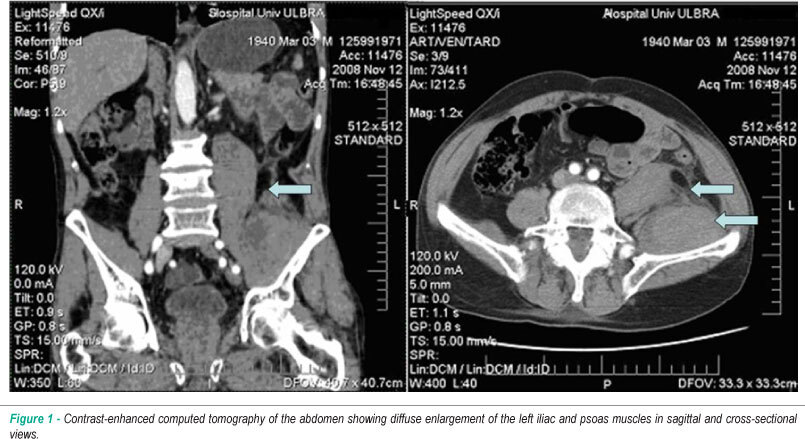
Warfarin is a widely used drug for the prevention of thromboembolic events. Knowledge of its adverse effects is necessary for patient follow-up. Although the development of blood dyscrasias is a potential complication in these patients, retroperitoneal bleeding is rare. This article reports the case of a patient who developed iliopsoas muscle hematoma during treatment with warfarin after implantation of a metallic prosthetic aortic valve. The clinical manifestations involved important differential diagnoses.

  • blood coagulation
  • Hematoma
  • psoas muscles
  • retroperitoneal space
  • Warfarin
Read Full Article
Creative Commons Attribution (CC BY) Creative Commons license
22/09/2010 DOI: 10.1590/S0066-782X2010000100023 Views 1
Warfarin and phenprocoumon: experience of an outpatient anticoagulation clinic
ABC
Artigo Original

Warfarin and phenprocoumon: experience of an outpatient anticoagulation clinic

Tiago Luiz Luz Leiria et al. Lucia Pellanda Marcelo Haertel Miglioranza Roberto Tofani Sant'Anna … Lucas S. Becker Eros Magalhães Gustavo Glotz de Lima

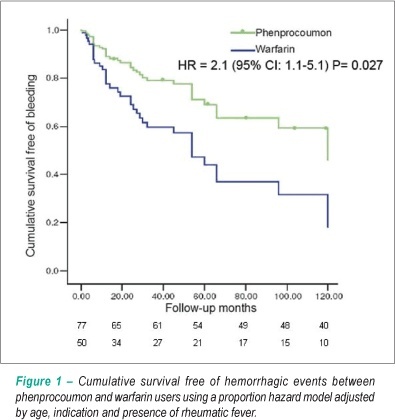
BACKGROUND: Oral anticoagulants are broadly used in cardiology. However, it is still necessary to evaluate their use in clinical practice. OBJECTIVES: To describe the differences in the maintenance of anticoagulation control, as well as the incidence of hemorrhagic and thromboembolic events among users of warfarin and phenprocoumon. METHODS: Non-concurrent cohort study of 127 patients using oral anticoagulation. RESULTS: Phenprocoumon was the most frequently used anticoagulant in 60% of the patients. The prevalence of RNI<2 at the last medical appointment was higher among warfarin users (46% vs. 19.5%; p<0.001). During the follow-up, Phenprocoumon users were within the therapeutic range during 60.7% of the period, in comparison with 45.6% of warfarin users (OR:1.84; 95%CI:1.59-2.13; P<0.001). The incidence of bleeding was 5.3/100 patients/year in the phenprocoumon group versus 18.8/100 patients/year in the warfarin group (RR: 3.5; 95%CI: 1.87-6.48; P<0.001). CONCLUSION: Patients that used Warfarin remained at subtherapeutic levels for a longer period; however, they also presented more hemorrhagic events. Phenprocoumon users were younger and had been using oral anticoagulation for longer periods, presenting fewer drug-related adverse events.

  • Anticoagulants
  • Hemorrhage
  • phenprocumon
  • Warfarin
Read Full Article
Creative Commons Attribution (CC BY) Creative Commons license
22/09/2010 DOI: 10.1590/S0066-782X2010000100008
Comparison between international normalized ratio using a portable device and conventional methodology
ABC
Artigo Original

Comparison between international normalized ratio using a portable device and conventional methodology

Luciana Pereira Almeida De Piano et al. Célia Maria Cássaro Strunz Antonio de Pádua Mansur Roberto Abi Rached

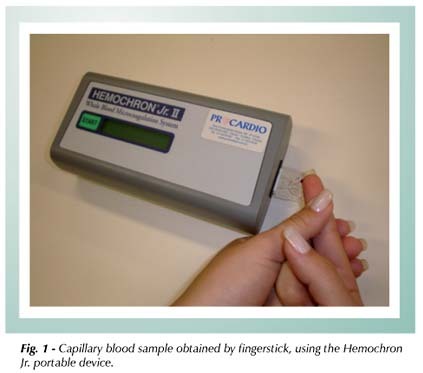
OBJECTIVE: to compare the international normalized ratio (INR) measured by a point-of-care (POC) testing device with that measured by the conventional method in patients undergoing anticoagulation therapy with warfarin sodium. METHODS: The INR of 383 warfarin-treated patients (mean age: 56.5 years; 207 female) was measured in capillary blood using the Hemochron Jr. device and compared with that of venous plasma samples determined by the conventional method performed in a Coag-A-Mate analyzer. Results were evaluated globally and for the following subgroups: INR 3.5. RESULTS: Using both methods, the comparison between INR values yielded a correlation coefficient (r) of 0.86. However, mean differences in INR in both tests, considering the three subgroups, proved to be statistically significant (p <0.001): 0.14 ± 0.21 (INR< 2.0); 0.54 ± 0.31 (2.0 < INR 3.5). Paired Student’s t-test analysis revealed a p value < 0.001 for the three subgroups studied. CONCLUSION: The use of point-of-care testing for monitoring oral anticoagulation has some limitations. Anticoagulation intensity was underestimated by this method in the three subgroups studied.

  • blood coagulation tests
  • Warfarin
Read Full Article
Creative Commons Attribution (CC BY) Creative Commons license
07/03/2007 DOI: 10.1590/S0066-782X2007000100005
ABC
Original Article

Evaluation of the marker of hypercoagulability prothrombin fragment F 1+2 in patients with mechanical or biological heart valve prostheses

Claudia Natália Ferreira et al. Lauro Mello Vieira Luci Maria Sant'Ana Dusse Carlos Faria Santos Amaral … William Antônio de Magalhães Esteves Lúcia Maria Amorim Fenelon Maria das Graças Carvalho

OBJECTIVE: To investigate whether patients with heart valve prostheses and similar International Normalized Ratios (INR) have the same level of protection against thromboembolic events, that is, whether the anticoagulation intensity is related to the intensity of hypercoagulability supression. METHODS: INR and plasma levels of prothrombin fragment 1+2 (F1+2) were assessed in blood samples of 27 patients (7 with mechanical heart valves and 20 with biological heart valves) and 27 blood samples from healthy donors that were not taking any medication. RESULTS: Increased levels of F1+2 were observed in blood samples of 5 patients with heart valve prostheses taking warfarin. These findings reinforce the idea that even though patients may have INRs, within the therapeutic spectrum, they are not free from new thromboembolic events. CONCLUSION: Determination of the hypercoagulability marker F1+2 might result in greater efficacy and safety for the use of oral anticoagulants, resulting in improved quality of life for patients.

  • Heart Valve Prostheses
  • prothrombin fragment 1+2
  • Warfarin
Read Full Article
Creative Commons Attribution (CC BY) Creative Commons license
17/12/2002 DOI: 10.1590/S0066-782X2002001400008 Views 1

How to cite this article

EndNote RIS

Electronic Document Format (Vancouver)

Souza GC, Costa JM, Ortiz MCO, Lima PDA, Nogueira PEF, Machado CJ, Martins MAP, et al. Association Between Functional Health Literacy and the Quality of Oral Anticogulation. International Journal of Cardiovascular Sciences 2025;38:e20240074.

Electronic Document Format (ABNT)

Souza, Gustavo Chaves de; Costa, Josiane Moreira da; Ortiz, Mayara Cristina Oliveira; Lima, Philipe Dias de Avila; Nogueira, Pollyanna Evelyn de Freitas; Machado, Carla Jorge; Martins, Maria Auxiliadora Parreiras. Association Between Functional Health Literacy and the Quality of Oral Anticogulation. International Journal of Cardiovascular Sciences, v. 38, e20240074, Apr. 2025.

Electronic Document Format (APA)

Souza, G. C. , Costa, J. M. , Ortiz, M. C. O., Lima, P. D. A., Nogueira, P. E. F., Machado, C. J., & Martins, M. A. P. (2025). Association Between Functional Health Literacy and the Quality of Oral Anticogulation. International Journal of Cardiovascular Sciences, 38, e20240074.

Electronic Document Format (ISO)

Souza, Gustavo Chaves de and Costa, Josiane Moreira da and Ortiz, Mayara Cristina Oliveira and Lima, Philipe Dias de Avila and Nogueira, Pollyanna Evelyn de Freitas and Machado, Carla Jorge and Martins, Maria Auxiliadora Parreiras. Association Between Functional Health Literacy and the Quality of Oral Anticogulation. International Journal of Cardiovascular Sciences [online]. 2025, vol. 38, [cited 2026-10-14], e20240074. Available from: <https://journals.cardiol.br/en/article/association-between-functional-health-literacy-and-the-quality-of-oral-anticogulation/>. ISSN 2359-4802

EndNote RIS

Electronic Document Format (Vancouver)

Ferreira LB, Carmo AAL. Oral Anticoagulation with VKAs: Quality Above All!. Arquivos Brasileiros de Cardiologia 2025;122(2):e20240795.

Electronic Document Format (ABNT)

Ferreira, Letícia Braga; Carmo, André Assis Lopes do. Oral Anticoagulation with VKAs: Quality Above All!. Arquivos Brasileiros de Cardiologia, v. 122, n. 2, e20240795, Mar. 2025.

Electronic Document Format (APA)

Ferreira, L. B., & Carmo, A. A. L. (2025). Oral Anticoagulation with VKAs: Quality Above All!. Arquivos Brasileiros de Cardiologia, 122(2), e20240795.

Electronic Document Format (ISO)

Ferreira, Letícia Braga and Carmo, André Assis Lopes do. Oral Anticoagulation with VKAs: Quality Above All!. Arquivos Brasileiros de Cardiologia [online]. 2025, vol. 122, n. 2, [cited 2026-10-14], e20240795. Available from: <https://journals.cardiol.br/en/article/oral-anticoagulation-with-vkas-quality-above-all/>. ISSN 0066-782X

EndNote RIS

Electronic Document Format (Vancouver)

Liporace IL, Oliveira GBF, Alves LBO, Galassi NM, Jeronimo AD, Lopes FM, Lip GYH, et al. Incidence and Predictors of Clinical Outcomes in Patients with Valvular and Nonvalvular Atrial Fibrillation Using Vitamin K Antagonists. Arquivos Brasileiros de Cardiologia 2025;122(2):e20240147.

Electronic Document Format (ABNT)

Liporace, Idelzuita Leandro; Oliveira, Gustavo Bernardes F.; Alves, Lucas Bassolli de Oliveira; Galassi, Nadia Marchiori; Jeronimo, Andreia Dias; Lopes, Fernanda Maria; Lip, Gregory Y. H.; Avezum, Álvaro. Incidence and Predictors of Clinical Outcomes in Patients with Valvular and Nonvalvular Atrial Fibrillation Using Vitamin K Antagonists. Arquivos Brasileiros de Cardiologia, v. 122, n. 2, e20240147, Feb. 2025.

Electronic Document Format (APA)

Liporace, I. L., Oliveira, G. B. F., Alves, L. B. O., Galassi, N. M., Jeronimo, A. D., Lopes, F. M., Lip, G. Y. H., & Avezum, (2025). Incidence and Predictors of Clinical Outcomes in Patients with Valvular and Nonvalvular Atrial Fibrillation Using Vitamin K Antagonists. Arquivos Brasileiros de Cardiologia, 122(2), e20240147.

Electronic Document Format (ISO)

Liporace, Idelzuita Leandro and Oliveira, Gustavo Bernardes F. and Alves, Lucas Bassolli de Oliveira and Galassi, Nadia Marchiori and Jeronimo, Andreia Dias and Lopes, Fernanda Maria and Lip, Gregory Y. H. and Avezum, Álvaro. Incidence and Predictors of Clinical Outcomes in Patients with Valvular and Nonvalvular Atrial Fibrillation Using Vitamin K Antagonists. Arquivos Brasileiros de Cardiologia [online]. 2025, vol. 122, n. 2, [cited 2026-10-14], e20240147. Available from: <https://journals.cardiol.br/en/article/incidence-and-predictors-of-clinical-outcomes-in-patients-with-valvular-and-nonvalvular-atrial-fibrillation-using-vitamin-k-antagonists/>. ISSN 0066-782X

EndNote RIS

Electronic Document Format (Vancouver)

Costa JM, Marcolino MS, Machado CJ, Cintra LP, Siqueira IFB, Ribeiro DD, Martins MAP, et al. Factors Associated with Variation in Time in Therapeutic Range in Two Anticoagulation Clinics in Brazil. International Journal of Cardiovascular Sciences 2024;37:e20230172.

Electronic Document Format (ABNT)

Costa, Josiane Moreira da; Marcolino, Milena S.; Machado, Carla Jorge; Cintra, Leandro Pinheiro; Siqueira, Izabella Fernanda Bastos; Ribeiro, Daniel Dias; Martins, Maria Auxiliadora Parreiras. Factors Associated with Variation in Time in Therapeutic Range in Two Anticoagulation Clinics in Brazil. International Journal of Cardiovascular Sciences, v. 37, e20230172, Aug. 2024.

Electronic Document Format (APA)

Costa, J. M. , Marcolino, M. S., Machado, C. J., Cintra, L. P., Siqueira, I. F. B., Ribeiro, D. D., & Martins, M. A. P. (2024). Factors Associated with Variation in Time in Therapeutic Range in Two Anticoagulation Clinics in Brazil. International Journal of Cardiovascular Sciences, 37, e20230172.

Electronic Document Format (ISO)

Costa, Josiane Moreira da and Marcolino, Milena S. and Machado, Carla Jorge and Cintra, Leandro Pinheiro and Siqueira, Izabella Fernanda Bastos and Ribeiro, Daniel Dias and Martins, Maria Auxiliadora Parreiras. Factors Associated with Variation in Time in Therapeutic Range in Two Anticoagulation Clinics in Brazil. International Journal of Cardiovascular Sciences [online]. 2024, vol. 37, [cited 2026-10-14], e20230172. Available from: <https://journals.cardiol.br/en/article/factors-associated-with-variation-in-time-in-therapeutic-range-in-two-anticoagulation-clinics-in-brazil/>. ISSN 2359-4802

EndNote RIS

Electronic Document Format (Vancouver)

Pasqualotto E, Gewehr DM, Ferreira ROM, Chavez MP, Silva CH, Cruz SA, Limachi-Choque J, et al. Direct Oral Anticoagulants versus Vitamin K Antagonists for Left Ventricular Thrombus: A Meta-Analysis with Trial Sequential Analysis. Arquivos Brasileiros de Cardiologia 2024;121(7):e20230738.

Electronic Document Format (ABNT)

Pasqualotto, Eric; Gewehr, Douglas Mesadri; Ferreira, Rafael Oliva Morgado; Chavez, Matheus Pedrotti; Silva, Caroliny Hellen; Cruz, Sara Almeida; Limachi-Choque, Jhonny; Park, Amanda; Coutinho, Mário Sérgio Soares de Azeredo; Kubrusly, Luiz Fernando. Direct Oral Anticoagulants versus Vitamin K Antagonists for Left Ventricular Thrombus: A Meta-Analysis with Trial Sequential Analysis. Arquivos Brasileiros de Cardiologia, v. 121, n. 7, e20230738, Jul. 2024.

Electronic Document Format (APA)

Pasqualotto, E., Gewehr, D. M., Ferreira, R. O. M., Chavez, M. P., Silva, C. H., Cruz, S. A., Limachi-Choque, J., Park, A., Coutinho, M. S. S. A., & Kubrusly, L. F. (2024). Direct Oral Anticoagulants versus Vitamin K Antagonists for Left Ventricular Thrombus: A Meta-Analysis with Trial Sequential Analysis. Arquivos Brasileiros de Cardiologia, 121(7), e20230738.

Electronic Document Format (ISO)

Pasqualotto, Eric and Gewehr, Douglas Mesadri and Ferreira, Rafael Oliva Morgado and Chavez, Matheus Pedrotti and Silva, Caroliny Hellen and Cruz, Sara Almeida and Limachi-Choque, Jhonny and Park, Amanda and Coutinho, Mário Sérgio Soares de Azeredo and Kubrusly, Luiz Fernando. Direct Oral Anticoagulants versus Vitamin K Antagonists for Left Ventricular Thrombus: A Meta-Analysis with Trial Sequential Analysis. Arquivos Brasileiros de Cardiologia [online]. 2024, vol. 121, n. 7, [cited 2026-10-14], e20230738. Available from: <https://journals.cardiol.br/en/article/direct-oral-anticoagulants-versus-vitamin-k-antagonists-for-left-ventricular-thrombus-a-meta-analysis-with-trial-sequential-analysis/>. ISSN 0066-782X

EndNote RIS

Electronic Document Format (Vancouver)

Mansur AJ. Challenging Health Literacy, Patient Knowledge, and Adherence to Oral Anticoagulation in Primary Care Units. International Journal of Cardiovascular Sciences 2023;36:e20230095.

Electronic Document Format (ABNT)

Mansur, Alfredo José. Challenging Health Literacy, Patient Knowledge, and Adherence to Oral Anticoagulation in Primary Care Units. International Journal of Cardiovascular Sciences, v. 36, e20230095, Sep. 2023.

Electronic Document Format (APA)

Mansur, A. J. (2023). Challenging Health Literacy, Patient Knowledge, and Adherence to Oral Anticoagulation in Primary Care Units. International Journal of Cardiovascular Sciences, 36, e20230095.

Electronic Document Format (ISO)

Mansur, Alfredo José. Challenging Health Literacy, Patient Knowledge, and Adherence to Oral Anticoagulation in Primary Care Units. International Journal of Cardiovascular Sciences [online]. 2023, vol. 36, [cited 2026-10-14], e20230095. Available from: <https://journals.cardiol.br/en/article/challenging-health-literacy-patient-knowledge-and-adherence-to-oral-anticoagulation-in-primary-care-units/>. ISSN 2359-4802

EndNote RIS

Electronic Document Format (Vancouver)

Marcolino MS, Sales TLS, Oliveira JA, Rios DRA, Pedroso TM, Sá LC, Martins MA, et al. Health Literacy, Patient Knowledge and Adherence to Oral Anticoagulation in Primary Care. International Journal of Cardiovascular Sciences 2023;36:e20220158.

Electronic Document Format (ABNT)

Marcolino, Milena Soriano; Sales, Thaís Lorenna Souza; Oliveira, João Antônio de; Rios, Danyelle Romana Alves; Pedroso, Thaís Marques; Sá, Laura Caetano de; Martins, Maria Auxiliadora; Ribeiro, Antonio Luiz Pinho. Health Literacy, Patient Knowledge and Adherence to Oral Anticoagulation in Primary Care. International Journal of Cardiovascular Sciences, v. 36, e20220158, Aug. 2023.

Electronic Document Format (APA)

Marcolino, M. S., Sales, T. L. S., Oliveira, J. A. , Rios, D. R. A., Pedroso, T. M., Sá, L. C. , Martins, M. A., & Ribeiro, A. L. P. (2023). Health Literacy, Patient Knowledge and Adherence to Oral Anticoagulation in Primary Care. International Journal of Cardiovascular Sciences, 36, e20220158.

Electronic Document Format (ISO)

Marcolino, Milena Soriano and Sales, Thaís Lorenna Souza and Oliveira, João Antônio de and Rios, Danyelle Romana Alves and Pedroso, Thaís Marques and Sá, Laura Caetano de and Martins, Maria Auxiliadora and Ribeiro, Antonio Luiz Pinho. Health Literacy, Patient Knowledge and Adherence to Oral Anticoagulation in Primary Care. International Journal of Cardiovascular Sciences [online]. 2023, vol. 36, [cited 2026-10-14], e20220158. Available from: <https://journals.cardiol.br/en/article/health-literacy-patient-knowledge-and-adherence-to-oral-anticoagulation-in-primary-care/>. ISSN 2359-4802

EndNote RIS

Electronic Document Format (Vancouver)

Silvestre CC, Cerqueira-Santos S. Use of Warfarin in Oral Anticoagulation Therapy: Challenges and EmpoderACO Strategy for Promoting Patient Empowerment in Self-Care. Arquivos Brasileiros de Cardiologia 2023;120(6):e20230335.

Electronic Document Format (ABNT)

Silvestre, Carina Carvalho; Cerqueira-Santos, Sabrina. Use of Warfarin in Oral Anticoagulation Therapy: Challenges and EmpoderACO Strategy for Promoting Patient Empowerment in Self-Care. Arquivos Brasileiros de Cardiologia, v. 120, n. 6, e20230335, Jun. 2023.

Electronic Document Format (APA)

Silvestre, C. C., & Cerqueira-Santos, S. (2023). Use of Warfarin in Oral Anticoagulation Therapy: Challenges and EmpoderACO Strategy for Promoting Patient Empowerment in Self-Care. Arquivos Brasileiros de Cardiologia, 120(6), e20230335.

Electronic Document Format (ISO)

Silvestre, Carina Carvalho and Cerqueira-Santos, Sabrina. Use of Warfarin in Oral Anticoagulation Therapy: Challenges and EmpoderACO Strategy for Promoting Patient Empowerment in Self-Care. Arquivos Brasileiros de Cardiologia [online]. 2023, vol. 120, n. 6, [cited 2026-10-14], e20230335. Available from: <https://journals.cardiol.br/en/article/use-of-warfarin-in-oral-anticoagulation-therapy-challenges-and-empoderaco-strategy-for-promoting-patient-empowerment-in-self-care/>. ISSN 0066-782X

EndNote RIS

Electronic Document Format (Vancouver)

Barbosa HC, Torres HC, Oliveira JAQ, Santos RPM, Costa JM, Miranda LG, Pagano AS, et al. Construction and Validation of a Protocol Targeting Patients on Oral Anticoagulation with Warfarin. Arquivos Brasileiros de Cardiologia 2023;120(6):e20220576.

Electronic Document Format (ABNT)

Barbosa, Hannah Cardoso; Torres, Heloisa de Carvalho; Oliveira, João Antônio de Queiroz; Santos, Rebeca Priscila de Melo; Costa, Josiane Moreira da; Miranda, Leonardo Gonçalves; Pagano, Adriana Silvina; Praxedes, Marcus Fernando da Silva; Martins, Maria Auxiliadora Parreiras. Construction and Validation of a Protocol Targeting Patients on Oral Anticoagulation with Warfarin. Arquivos Brasileiros de Cardiologia, v. 120, n. 6, e20220576, Jun. 2023.

Electronic Document Format (APA)

Barbosa, H. C., Torres, H. C., Oliveira, J. A. Q., Santos, R. P. M., Costa, J. M. , Miranda, L. G., Pagano, A. S., Praxedes, M. F. S., & Martins, M. A. P. (2023). Construction and Validation of a Protocol Targeting Patients on Oral Anticoagulation with Warfarin. Arquivos Brasileiros de Cardiologia, 120(6), e20220576.

Electronic Document Format (ISO)

Barbosa, Hannah Cardoso and Torres, Heloisa de Carvalho and Oliveira, João Antônio de Queiroz and Santos, Rebeca Priscila de Melo and Costa, Josiane Moreira da and Miranda, Leonardo Gonçalves and Pagano, Adriana Silvina and Praxedes, Marcus Fernando da Silva and Martins, Maria Auxiliadora Parreiras. Construction and Validation of a Protocol Targeting Patients on Oral Anticoagulation with Warfarin. Arquivos Brasileiros de Cardiologia [online]. 2023, vol. 120, n. 6, [cited 2026-10-14], e20220576. Available from: <https://journals.cardiol.br/en/article/construction-and-validation-of-a-protocol-targeting-patients-on-oral-anticoagulation-with-warfarin/>. ISSN 0066-782X

EndNote RIS

Electronic Document Format (Vancouver)

Malagutte KNDS, Silveira CFSMP, Reis FM, Rossi DAA, Hueb JC, Okoshi K, Nunes HRC, et al. Quality of Oral Anticoagulation in Atrial Fibrillation Patients at a Tertiary Hospital in Brazil. Arquivos Brasileiros de Cardiologia 2022;119(3):363-9.

Electronic Document Format (ABNT)

Malagutte, Karina Nogueira Dias Secco; Silveira, Caroline Ferreira da Silva Mazeto Pupo da; Reis, Fabrício Moreira; Rossi, Daniele Andreza Antonelli; Hueb, João Carlos; Okoshi, Katashi; Nunes, Hélio Rubens de Carvalho; Martin, Luis Cuadrado; Bazan, Rodrigo; Bazan, Silméia Garcia Zanati. Quality of Oral Anticoagulation in Atrial Fibrillation Patients at a Tertiary Hospital in Brazil. Arquivos Brasileiros de Cardiologia, v. 119, n. 3, p. 363-369, Jun. 2022.

Electronic Document Format (APA)

Malagutte, K. N. D. S., Silveira, C. F. S. M. P. , Reis, F. M., Rossi, D. A. A., Hueb, J. C., Okoshi, K., Nunes, H. R. C., Martin, L. C., Bazan, R., & Bazan, S. G. Z. (2022). Quality of Oral Anticoagulation in Atrial Fibrillation Patients at a Tertiary Hospital in Brazil. Arquivos Brasileiros de Cardiologia, 119(3), 363-369.

Electronic Document Format (ISO)

Malagutte, Karina Nogueira Dias Secco and Silveira, Caroline Ferreira da Silva Mazeto Pupo da and Reis, Fabrício Moreira and Rossi, Daniele Andreza Antonelli and Hueb, João Carlos and Okoshi, Katashi and Nunes, Hélio Rubens de Carvalho and Martin, Luis Cuadrado and Bazan, Rodrigo and Bazan, Silméia Garcia Zanati. Quality of Oral Anticoagulation in Atrial Fibrillation Patients at a Tertiary Hospital in Brazil. Arquivos Brasileiros de Cardiologia [online]. 2022, vol. 119, n. 3, [cited 2026-10-14], pp. 363-369. Available from: <https://journals.cardiol.br/en/article/quality-of-oral-anticoagulation-in-atrial-fibrillation-patients-at-a-tertiary-hospital-in-brazil/>. ISSN 0066-782X

EndNote RIS

Electronic Document Format (Vancouver)

Guerrero AZA, Coutinho EL, Ferraz MB, Cirenza C, Santos MCE, Ferraro JR, Paola AAV, et al. Economy- and Social-Based Strategies for Anticoagulation of Patients with Atrial Fibrillation. Arquivos Brasileiros de Cardiologia 2022;118(1):88-94.

Electronic Document Format (ABNT)

Guerrero, Andressa Zulmira Avila; Coutinho, Enia Lucia; Ferraz, Marcos Bosi; Cirenza, Claudio; Santos, Marcelo Cincotto Esteves dos; Ferraro, José Roberto; Paola, Angelo Amato Vincenzo de. Economy- and Social-Based Strategies for Anticoagulation of Patients with Atrial Fibrillation. Arquivos Brasileiros de Cardiologia, v. 118, n. 1, p. 88-94, Feb. 2022.

Electronic Document Format (APA)

Guerrero, A. Z. A., Coutinho, E. L., Ferraz, M. B., Cirenza, C., Santos, M. C. E. , Ferraro, J. R., & Paola, A. A. V. (2022). Economy- and Social-Based Strategies for Anticoagulation of Patients with Atrial Fibrillation. Arquivos Brasileiros de Cardiologia, 118(1), 88-94.

Electronic Document Format (ISO)

Guerrero, Andressa Zulmira Avila and Coutinho, Enia Lucia and Ferraz, Marcos Bosi and Cirenza, Claudio and Santos, Marcelo Cincotto Esteves dos and Ferraro, José Roberto and Paola, Angelo Amato Vincenzo de. Economy- and Social-Based Strategies for Anticoagulation of Patients with Atrial Fibrillation. Arquivos Brasileiros de Cardiologia [online]. 2022, vol. 118, n. 1, [cited 2026-10-14], pp. 88-94. Available from: <https://journals.cardiol.br/en/article/economy-and-social-based-strategies-for-anticoagulation-of-patients-with-atrial-fibrillation/>. ISSN 0066-782X

EndNote RIS

Electronic Document Format (Vancouver)

Chiaparini AF, Rabaioli PSB, Slaviero JV, Tem-Pass CS, Fontana Filho HA, Castro I, Almeida ED, et al. Predictors of Hospitalization in Vitamin K Antagonist Users Presenting with Bleeding at the Emergency Department. International Journal of Cardiovascular Sciences 2021;35(1):88-94.

Electronic Document Format (ABNT)

Chiaparini, Alan Fabiani; Rabaioli, Paola Stefania Bohrer; Slaviero, João Vitor; Tem-Pass, Cinthia Scatolin; Fontana Filho, Hugo Antonio; Castro, Iran; Almeida, Eduardo Dytz; Leiria, Tiago Luiz Luz. Predictors of Hospitalization in Vitamin K Antagonist Users Presenting with Bleeding at the Emergency Department. International Journal of Cardiovascular Sciences, v. 35, n. 1, p. 88-94, Sep. 2021.

Electronic Document Format (APA)

Chiaparini, A. F., Rabaioli, P. S. B., Slaviero, J. V., Tem-Pass, C. S., Fontana Filho, H. A., Castro, I., Almeida, E. D., & Leiria, T. L. L. (2021). Predictors of Hospitalization in Vitamin K Antagonist Users Presenting with Bleeding at the Emergency Department. International Journal of Cardiovascular Sciences, 35(1), 88-94.

Electronic Document Format (ISO)

Chiaparini, Alan Fabiani and Rabaioli, Paola Stefania Bohrer and Slaviero, João Vitor and Tem-Pass, Cinthia Scatolin and Fontana Filho, Hugo Antonio and Castro, Iran and Almeida, Eduardo Dytz and Leiria, Tiago Luiz Luz. Predictors of Hospitalization in Vitamin K Antagonist Users Presenting with Bleeding at the Emergency Department. International Journal of Cardiovascular Sciences [online]. 2021, vol. 35, n. 1, [cited 2026-10-14], pp. 88-94. Available from: <https://journals.cardiol.br/en/article/predictors-of-hospitalization-in-vitamin-k-antagonist-users-presenting-with-bleeding-at-the-emergency-department/>. ISSN 2359-4802

EndNote RIS

Electronic Document Format (Vancouver)

Duarte RCF, Moreira PSS, Ferreira CN, Figueiredo EL, Sternick E, Silveira FR, Alves LCV, et al. Atrial Fibrillation and Use of Rivaroxaban: Performance of the Prothrombin Time / INR as a Function of Time After Blood Collection. International Journal of Cardiovascular Sciences 2020;34(2):116-21.

Electronic Document Format (ABNT)

Duarte, Rita Carolina Figueiredo; Moreira, Priscila Samara Sérgio; Ferreira, Cláudia Natália; Figueiredo, Estevão Lanna; Sternick, Eduardo; Silveira, Francisco Rezende; Alves, Luan Carlos Vieira; Mota, Ana Paula Lucas; Reis, Edna Afonso; Carvalho, Maria das Graças; Reis, Helton José dos. Atrial Fibrillation and Use of Rivaroxaban: Performance of the Prothrombin Time / INR as a Function of Time After Blood Collection. International Journal of Cardiovascular Sciences, v. 34, n. 2, p. 116-121, Nov. 2020.

Electronic Document Format (APA)

Duarte, R. C. F., Moreira, P. S. S., Ferreira, C. N., Figueiredo, E. L., Sternick, E., Silveira, F. R., Alves, L. C. V., Mota, A. P. L., Reis, E. A., Carvalho, M. G., & Reis, H. J. (2020). Atrial Fibrillation and Use of Rivaroxaban: Performance of the Prothrombin Time / INR as a Function of Time After Blood Collection. International Journal of Cardiovascular Sciences, 34(2), 116-121.

Electronic Document Format (ISO)

Duarte, Rita Carolina Figueiredo and Moreira, Priscila Samara Sérgio and Ferreira, Cláudia Natália and Figueiredo, Estevão Lanna and Sternick, Eduardo and Silveira, Francisco Rezende and Alves, Luan Carlos Vieira and Mota, Ana Paula Lucas and Reis, Edna Afonso and Carvalho, Maria das Graças and Reis, Helton José dos. Atrial Fibrillation and Use of Rivaroxaban: Performance of the Prothrombin Time / INR as a Function of Time After Blood Collection. International Journal of Cardiovascular Sciences [online]. 2020, vol. 34, n. 2, [cited 2026-10-14], pp. 116-121. Available from: <https://journals.cardiol.br/en/article/atrial-fibrillation-and-use-of-rivaroxaban-performance-of-the-prothrombin-time-inr-as-a-function-of-time-after-blood-collection/>. ISSN 2359-4802

EndNote RIS

Electronic Document Format (Vancouver)

Colet CF, Amador TA, Heineck I. Drug Interactions and Adverse Events in a Cohort of Warfarin Users Attending Public Health Clinics. International Journal of Cardiovascular Sciences 2018;32(2):110-7.

Electronic Document Format (ABNT)

Colet, Christiane de Fátima; Amador, Tania Alves; Heineck, Isabela. Drug Interactions and Adverse Events in a Cohort of Warfarin Users Attending Public Health Clinics. International Journal of Cardiovascular Sciences, v. 32, n. 2, p. 110-117, Dec. 2018.

Electronic Document Format (APA)

Colet, C. F., Amador, T. A., & Heineck, I. (2018). Drug Interactions and Adverse Events in a Cohort of Warfarin Users Attending Public Health Clinics. International Journal of Cardiovascular Sciences, 32(2), 110-117.

Electronic Document Format (ISO)

Colet, Christiane de Fátima and Amador, Tania Alves and Heineck, Isabela. Drug Interactions and Adverse Events in a Cohort of Warfarin Users Attending Public Health Clinics. International Journal of Cardiovascular Sciences [online]. 2018, vol. 32, n. 2, [cited 2026-10-14], pp. 110-117. Available from: <https://journals.cardiol.br/en/article/drug-interactions-and-adverse-events-in-a-cohort-of-warfarin-users-attending-public-health-clinics/>. ISSN 2359-4802

EndNote RIS

Electronic Document Format (Vancouver)

Andrade MVS, Andrade LAP, Bispo AF, Freitas LA, Andrade MQS, Feitosa GS, Feitosa-Filho GS, et al. Evaluation of the Bleeding Intensity of Patients Anticoagulated with Warfarin or Dabigatran Undergoing Dental Procedures. Arquivos Brasileiros de Cardiologia 2018;111(3):394-9.

Electronic Document Format (ABNT)

Andrade, Marcus Vinicius Santos; Andrade, Luciana Azevedo Prata; Bispo, Alan Freitas; Freitas, Luana de Alencar; Andrade, Milena Quadros Sampaio; Feitosa, Gilson Soares; Feitosa-Filho, Gilson Soares. Evaluation of the Bleeding Intensity of Patients Anticoagulated with Warfarin or Dabigatran Undergoing Dental Procedures. Arquivos Brasileiros de Cardiologia, v. 111, n. 3, p. 394-399, Aug. 2018.

Electronic Document Format (APA)

Andrade, M. V. S., Andrade, L. A. P., Bispo, A. F., Freitas, L. A., Andrade, M. Q. S., Feitosa, G. S., & Feitosa-Filho, G. S. (2018). Evaluation of the Bleeding Intensity of Patients Anticoagulated with Warfarin or Dabigatran Undergoing Dental Procedures. Arquivos Brasileiros de Cardiologia, 111(3), 394-399.

Electronic Document Format (ISO)

Andrade, Marcus Vinicius Santos and Andrade, Luciana Azevedo Prata and Bispo, Alan Freitas and Freitas, Luana de Alencar and Andrade, Milena Quadros Sampaio and Feitosa, Gilson Soares and Feitosa-Filho, Gilson Soares. Evaluation of the Bleeding Intensity of Patients Anticoagulated with Warfarin or Dabigatran Undergoing Dental Procedures. Arquivos Brasileiros de Cardiologia [online]. 2018, vol. 111, n. 3, [cited 2026-10-14], pp. 394-399. Available from: <https://journals.cardiol.br/en/article/evaluation-of-the-bleeding-intensity-of-patients-anticoagulated-with-warfarin-or-dabigatran-undergoing-dental-procedures/>. ISSN 0066-782X

EndNote RIS

Electronic Document Format (Vancouver)

Pivatto Júnior F, Scheffel RS, Ries L, Wolkind RR, Marobin R, Barkan SS, Amon LC, et al. SAMe-TT2R2 Score in the Outpatient Anticoagulation Clinic to Predict Time in Therapeutic Range and Adverse Events. Arquivos Brasileiros de Cardiologia 2017;108(4):290-6.

Electronic Document Format (ABNT)

Pivatto Júnior, Fernando; Scheffel, Rafael Selbach; Ries, Lucas; Wolkind, Ricardo Roitman; Marobin, Roberta; Barkan, Sabrina Sigal; Amon, Luís Carlos; Biolo, Andréia. SAMe-TT2R2 Score in the Outpatient Anticoagulation Clinic to Predict Time in Therapeutic Range and Adverse Events. Arquivos Brasileiros de Cardiologia, v. 108, n. 4, p. 290-296, Mar. 2017.

Electronic Document Format (APA)

Pivatto Júnior, F., Scheffel, R. S., Ries, L., Wolkind, R. R., Marobin, R., Barkan, S. S., Amon, L. C., & Biolo, A. (2017). SAMe-TT2R2 Score in the Outpatient Anticoagulation Clinic to Predict Time in Therapeutic Range and Adverse Events. Arquivos Brasileiros de Cardiologia, 108(4), 290-296.

Electronic Document Format (ISO)

Pivatto Júnior, Fernando and Scheffel, Rafael Selbach and Ries, Lucas and Wolkind, Ricardo Roitman and Marobin, Roberta and Barkan, Sabrina Sigal and Amon, Luís Carlos and Biolo, Andréia. SAMe-TT2R2 Score in the Outpatient Anticoagulation Clinic to Predict Time in Therapeutic Range and Adverse Events. Arquivos Brasileiros de Cardiologia [online]. 2017, vol. 108, n. 4, [cited 2026-10-14], pp. 290-296. Available from: <https://journals.cardiol.br/en/article/same-tt2r2-score-in-the-outpatient-anticoagulation-clinic-to-predict-time-in-therapeutic-range-and-adverse-events/>. ISSN 0066-782X

EndNote RIS

Electronic Document Format (Vancouver)

Saad EB, Costa IP, Costa RE, Inácio Jr LAO, Slater C, Camiletti A, Moura Neto DG, et al. Safety of ablation for atrial fibrillation with therapeutic INR: comparison with transition to low-molecular-weight heparin. Arquivos Brasileiros de Cardiologia 2011;97(4):289-96.

Electronic Document Format (ABNT)

Saad, Eduardo B.; Costa, Ieda P.; Costa, Rodrigo E. da; Inácio Jr, Luiz Antônio O.; Slater, Charles; Camiletti, Angelina; Moura Neto, Dario G. de; Maldonado, Paulo; Camanho, Luiz Eduardo; Polanczyk, Carisi A.. Safety of ablation for atrial fibrillation with therapeutic INR: comparison with transition to low-molecular-weight heparin. Arquivos Brasileiros de Cardiologia, v. 97, n. 4, p. 289-296, Aug. 2011.

Electronic Document Format (APA)

Saad, E. B., Costa, I. P., Costa, R. E. , Inácio Jr, L. A. O., Slater, C., Camiletti, A., Moura Neto, D. G. , Maldonado, P., Camanho, L. E., & Polanczyk, C. A. (2011). Safety of ablation for atrial fibrillation with therapeutic INR: comparison with transition to low-molecular-weight heparin. Arquivos Brasileiros de Cardiologia, 97(4), 289-296.

Electronic Document Format (ISO)

Saad, Eduardo B. and Costa, Ieda P. and Costa, Rodrigo E. da and Inácio Jr, Luiz Antônio O. and Slater, Charles and Camiletti, Angelina and Moura Neto, Dario G. de and Maldonado, Paulo and Camanho, Luiz Eduardo and Polanczyk, Carisi A.. Safety of ablation for atrial fibrillation with therapeutic INR: comparison with transition to low-molecular-weight heparin. Arquivos Brasileiros de Cardiologia [online]. 2011, vol. 97, n. 4, [cited 2026-10-14], pp. 289-296. Available from: <https://journals.cardiol.br/en/article/safety-of-ablation-for-atrial-fibrillation-with-therapeutic-inr-comparison-with-transition-to-low-molecular-weight-heparin/>. ISSN 0066-782X

EndNote RIS

Electronic Document Format (Vancouver)

Lavitola PL, Sampaio RO, Oliveira WA, Bôer BN, Tarasoutchi F, Spina GS, Grinberg M, et al. Warfarin or Aspirin in embolism prevention in patients with mitral valvulopathy and atrial fibrillation. Arquivos Brasileiros de Cardiologia 2010;95(6):749-55.

Electronic Document Format (ABNT)

Lavitola, Paulo de Lara; Sampaio, Roney Orismar; Oliveira, Walter Amorim de; Bôer, Berta Napchan; Tarasoutchi, Flavio; Spina, Guilherme Sobreira; Grinberg, Max. Warfarin or Aspirin in embolism prevention in patients with mitral valvulopathy and atrial fibrillation. Arquivos Brasileiros de Cardiologia, v. 95, n. 6, p. 749-755, Oct. 2010.

Electronic Document Format (APA)

Lavitola, P. L., Sampaio, R. O., Oliveira, W. A. , Bôer, B. N., Tarasoutchi, F., Spina, G. S., & Grinberg, M. (2010). Warfarin or Aspirin in embolism prevention in patients with mitral valvulopathy and atrial fibrillation. Arquivos Brasileiros de Cardiologia, 95(6), 749-755.

Electronic Document Format (ISO)

Lavitola, Paulo de Lara and Sampaio, Roney Orismar and Oliveira, Walter Amorim de and Bôer, Berta Napchan and Tarasoutchi, Flavio and Spina, Guilherme Sobreira and Grinberg, Max. Warfarin or Aspirin in embolism prevention in patients with mitral valvulopathy and atrial fibrillation. Arquivos Brasileiros de Cardiologia [online]. 2010, vol. 95, n. 6, [cited 2026-10-14], pp. 749-755. Available from: <https://journals.cardiol.br/en/article/warfarin-or-aspirin-in-embolism-prevention-in-patients-with-mitral-valvulopathy-and-atrial-fibrillation/>. ISSN 0066-782X

EndNote RIS

Electronic Document Format (Vancouver)

Zago G, Appel-da-Silva MC, Danzmann LC. Iliopsoas muscle hematoma during treatment with warfarin. Arquivos Brasileiros de Cardiologia 2010;94(1):e1-3.

Electronic Document Format (ABNT)

Zago, Gabriel; Appel-da-Silva, Marcelo Campos; Danzmann, Luiz Claudio. Iliopsoas muscle hematoma during treatment with warfarin. Arquivos Brasileiros de Cardiologia, v. 94, n. 1, p. e1-e3, Sep. 2010.

Electronic Document Format (APA)

Zago, G., Appel-da-Silva, M. C., & Danzmann, L. C. (2010). Iliopsoas muscle hematoma during treatment with warfarin. Arquivos Brasileiros de Cardiologia, 94(1), e1-e3.

Electronic Document Format (ISO)

Zago, Gabriel and Appel-da-Silva, Marcelo Campos and Danzmann, Luiz Claudio. Iliopsoas muscle hematoma during treatment with warfarin. Arquivos Brasileiros de Cardiologia [online]. 2010, vol. 94, n. 1, [cited 2026-10-14], pp. e1-e3. Available from: <https://journals.cardiol.br/en/article/iliopsoas-muscle-hematoma-during-treatment-with-warfarin/>. ISSN 0066-782X

EndNote RIS

Electronic Document Format (Vancouver)

Leiria TLL, Pellanda L, Miglioranza MH, Sant’Anna RT, Becker LS, Magalhães E, Lima GG, et al. Warfarin and phenprocoumon: experience of an outpatient anticoagulation clinic. Arquivos Brasileiros de Cardiologia 2010;94(1):41-5.

Electronic Document Format (ABNT)

Leiria, Tiago Luiz Luz; Pellanda, Lucia; Miglioranza, Marcelo Haertel; Sant’Anna, Roberto Tofani; Becker, Lucas S.; Magalhães, Eros; Lima, Gustavo Glotz de. Warfarin and phenprocoumon: experience of an outpatient anticoagulation clinic. Arquivos Brasileiros de Cardiologia, v. 94, n. 1, p. 41-45, Sep. 2010.

Electronic Document Format (APA)

Leiria, T. L. L., Pellanda, L., Miglioranza, M. H., Sant’Anna, R. T., Becker, L. S., Magalhães, E., & Lima, G. G. (2010). Warfarin and phenprocoumon: experience of an outpatient anticoagulation clinic. Arquivos Brasileiros de Cardiologia, 94(1), 41-45.

Electronic Document Format (ISO)

Leiria, Tiago Luiz Luz and Pellanda, Lucia and Miglioranza, Marcelo Haertel and Sant’Anna, Roberto Tofani and Becker, Lucas S. and Magalhães, Eros and Lima, Gustavo Glotz de. Warfarin and phenprocoumon: experience of an outpatient anticoagulation clinic. Arquivos Brasileiros de Cardiologia [online]. 2010, vol. 94, n. 1, [cited 2026-10-14], pp. 41-45. Available from: <https://journals.cardiol.br/en/article/warfarin-and-phenprocoumon-experience-of-an-outpatient-anticoagulation-clinic/>. ISSN 0066-782X

EndNote RIS

Electronic Document Format (Vancouver)

Piano LPAD, Strunz CMC, Mansur AP, Rached RA. Comparison between international normalized ratio using a portable device and conventional methodology. Arquivos Brasileiros de Cardiologia 2007;88(1):31-4.

Electronic Document Format (ABNT)

Piano, Luciana Pereira Almeida De; Strunz, Célia Maria Cássaro; Mansur, Antonio de Pádua; Rached, Roberto Abi. Comparison between international normalized ratio using a portable device and conventional methodology. Arquivos Brasileiros de Cardiologia, v. 88, n. 1, p. 31-34, Mar. 2007.

Electronic Document Format (APA)

Piano, L. P. A. D., Strunz, C. M. C., Mansur, A. P., & Rached, R. A. (2007). Comparison between international normalized ratio using a portable device and conventional methodology. Arquivos Brasileiros de Cardiologia, 88(1), 31-34.

Electronic Document Format (ISO)

Piano, Luciana Pereira Almeida De and Strunz, Célia Maria Cássaro and Mansur, Antonio de Pádua and Rached, Roberto Abi. Comparison between international normalized ratio using a portable device and conventional methodology. Arquivos Brasileiros de Cardiologia [online]. 2007, vol. 88, n. 1, [cited 2026-10-14], pp. 31-34. Available from: <https://journals.cardiol.br/en/article/comparison-between-international-normalized-ratio-using-a-portable-device-and-conventional-methodology/>. ISSN 0066-782X

EndNote RIS

Electronic Document Format (Vancouver)

Ferreira CN, Vieira LM, Dusse LMS, Amaral CFS, Esteves WAM, Fenelon LMA, Carvalho MG, et al. Evaluation of the marker of hypercoagulability prothrombin fragment F 1+2 in patients with mechanical or biological heart valve prostheses. Arquivos Brasileiros de Cardiologia 2002;79(5):505-9.

Electronic Document Format (ABNT)

Ferreira, Claudia Natália; Vieira, Lauro Mello; Dusse, Luci Maria Sant’Ana; Amaral, Carlos Faria Santos; Esteves, William Antônio de Magalhães; Fenelon, Lúcia Maria Amorim; Carvalho, Maria das Graças. Evaluation of the marker of hypercoagulability prothrombin fragment F 1+2 in patients with mechanical or biological heart valve prostheses. Arquivos Brasileiros de Cardiologia, v. 79, n. 5, p. 505-509, Dec. 2002.

Electronic Document Format (APA)

Ferreira, C. N., Vieira, L. M., Dusse, L. M. S., Amaral, C. F. S., Esteves, W. A. M., Fenelon, L. M. A., & Carvalho, M. G. (2002). Evaluation of the marker of hypercoagulability prothrombin fragment F 1+2 in patients with mechanical or biological heart valve prostheses. Arquivos Brasileiros de Cardiologia, 79(5), 505-509.

Electronic Document Format (ISO)

Ferreira, Claudia Natália and Vieira, Lauro Mello and Dusse, Luci Maria Sant’Ana and Amaral, Carlos Faria Santos and Esteves, William Antônio de Magalhães and Fenelon, Lúcia Maria Amorim and Carvalho, Maria das Graças. Evaluation of the marker of hypercoagulability prothrombin fragment F 1+2 in patients with mechanical or biological heart valve prostheses. Arquivos Brasileiros de Cardiologia [online]. 2002, vol. 79, n. 5, [cited 2026-10-14], pp. 505-509. Available from: <https://journals.cardiol.br/en/article/evaluation-of-the-marker-of-hypercoagulability-prothrombin-fragment-f-12-in-patients-with-mechanical-or-biological-heart-valve-prostheses/>. ISSN 0066-782X

  • About ABC Family
  • Internal Regulation
  • Editorial Board
  • Brazilian Society of Cardiology (SBC)

Issues

SBC Guidelines

  • Videos
  • Podcasts
  • News