ABC Family Arquivos Brasileiros de Cardiologia International Journal of Cardiovascular Sciences ABC Heart Failure & Cardiomyopathy ABC Imagem Cardiovascular
Português English
ABC Family
Português English
  • About
    • About ABC Family
    • Internal Regulation
    • Editorial Board
    • Brazilian Society of Cardiology (SBC)
  • Issues
  • SBC Guidelines
  • Content
    • Videos
    • Podcasts
    • News
  • About
    • About ABC Family
    • Internal Regulation
    • Editorial Board
    • Brazilian Society of Cardiology (SBC)
  • Issues
  • SBC Guidelines
  • Content
    • Videos
    • Podcasts
    • News

ABC Family

  • ABC Family
  • Arquivos Brasileiros de Cardiologia
  • International Journal of Cardiovascular Sciences
  • ABC Heart Failure & Cardiomyopathy
  • ABC Imagem Cardiovascular
Search in

No content found.

Journals
Ordering
Article types
Others

  1. Home
  2. Keyword: Venous Thromboembolism
Influence of Obesity on the Safety and Efficacy of Antithrombotic Therapy: A Systematic Review and Meta-Analysis
ABC
Original Article

Influence of Obesity on the Safety and Efficacy of Antithrombotic Therapy: A Systematic Review and Meta-Analysis

Beatriz Rocha Darzé et al. Queila Oliveira Borges Mateus S. Viana Eduardo Sahade Darzé Luiz Eduardo Fonteles Ritt

Abstract

Background

Obese individuals have been historically underrepresented in clinical trials. Considering their association with a higher risk of venous thromboembolism (VTE) and acute coronary syndrome (ACS), it is necessary to establish a more suitable anticoagulation regimen for this group of patients.

Objectives

To evaluate the influence of obesity on the safety and efficacy of antithrombotic therapy in patients with ACS or VTE.

Methods

This is a systematic review and meta-analysis that used 5 main international databases. We selected clinical trials or observational studies that compared the occurrence of clinical outcomes (mortality or bleeding) between obese and non-obese patients using parenteral anticoagulants for the treatment of ACS or VTE. P value < 0.05 was used for all analyses.

Results

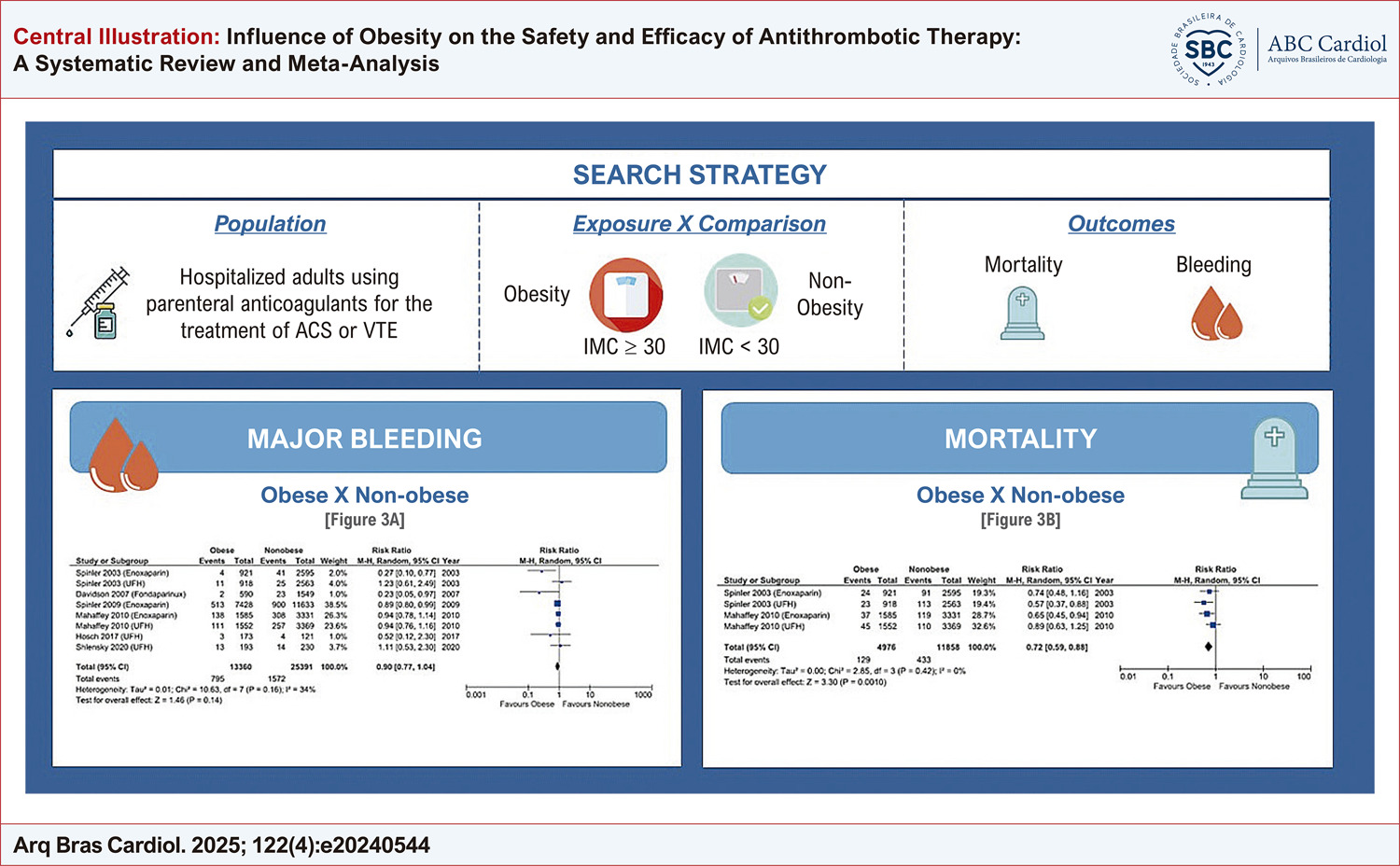
Six articles, with a total of 40,939 patients, were eligible, being 3 randomized clinical trials and 3 retrospective cohorts. Of the patients, 87.7% had ACS. The incidence of major bleeding was similar between groups (relative risk [RR]: 0.90, 95% confidence interval [CI]: 0.77 to 1.04, p = 0.14). The outcome remained comparable when studies were analyzed separately by anticoagulant: enoxaparin (RR: 0.87, 95% CI, 0.70 to 1.08, p = 0.21) or unfractionated heparin (RR: 0.96, 95% CI, 0.79 to 1.17, p = 0.67). The mortality rate was measured in only 2 studies, both in ACS, and it was lower in obese patients (RR: 0.71, 95% CI 0.59 to 0.87, p = 0.0007).

Conclusion

In patients treated for VTE or ACS, rates of bleeding were comparable between obese and non-obese patients, regardless of the anticoagulant used. The lower mortality rate observed in obese patients may represent the effect of unaccounted confounding.
  • Acute coronary syndrome
  • Fibrinolytic Agents
  • Obesity
  • Prognosis
  • Venous Thromboembolism
Read Full Article
Creative Commons Attribution (CC BY) Creative Commons license
26/05/2025 DOI: 10.36660/abc.20240544i Views 1
ABC
Editorial

Advancing the Use of Direct Oral Anticoagulants in Left Ventricular Thrombus Management

Pedro E. P. Carvalho

Direct oral anticoagulants (DOACs) are preferred over Vitamin K Antagonists (VKAs) in numerous clinical scenarios, such as preventing thromboembolic events in patients with atrial fibrillation and treating venous thromboembolism.– In contrast, DOACs are contraindicated in patients with mechanical heart valves, valvular AF due to mitral stenosis, and antiphospholipid syndrome.– In patients with left ventricular thrombus (LVT), however, the efficacy and safety of DOACs remain uncertain.

LVT is a common complication following an acute myocardial infarction (MI). The incidence of LVT post-acute MI has declined due to increased primary percutaneous coronary intervention (PCI) and advanced antithrombotic therapies. In the primary PCI era, LVT incidence is up to 6.3% in STEMI patients, rising to 19.2% in those with anterior STEMI and reduced left ventricular ejection fraction. Data from the SWEDEHEART registry indicated an incidence as high as 38%, suggesting underestimation and the need for follow-up to assess LVT formation in these patients. In addition, the choice of imaging modality significantly impacts LVT detection, with cardiac magnetic resonance having higher sensitivity compared with echocardiography. Therefore, there is an unmet need for LVT prevention, detection, and treatment.

[…]

  • Factor Xa Inhibitors
  • Myocardial Infarction
  • Venous Thromboembolism
Read Full Article
Creative Commons Attribution (CC BY) Creative Commons license
22/11/2024 DOI: 10.36660/abc.20240409i Views 1
Figure 1
IJCS
Original Article

SAMe-TT2R2 Score: A Useful Tool in Oral Anticoagulation Decision-Making for Venous Thromboembolism Patients?

Fernando Pivatto Júnior et al. Rafaela Fenalti Salla Lísia Cunha Cé Andréia Biolo … André Luís Ferreira Azeredo da Silva Bruno Führ Luís Carlos Amon Marina Bergamini Blaya Rafael Selbach Scheffel

Abstract

Background:

The SAMe-TT2R2 score was introduced to identify atrial fibrillation patients with a high risk of not achieving a good time in therapeutic range (TTR) during vitamin K antagonists (VKA) therapy.

Objective:

The aim of this study was to evaluate this score in venous thromboembolism (VTE) patients.

Patients and methods:

A retrospective cohort study of patients receiving care at the outpatient anticoagulation clinic of a tertiary care teaching hospital. Patients were classified as having low (score 0-1) or high risk (score ≥ 2) of not achieving a good TTR. The area under the ROC curve was calculated to assess the ability of the score to predict a TTR ≥ 65%. Adverse event-free survival curves according to the SAMe-TT2R2 score were calculated by the Kaplan-Meier method and compared by the log-rank test. A p-value < 0.05 was considered statistically significant.

Results:

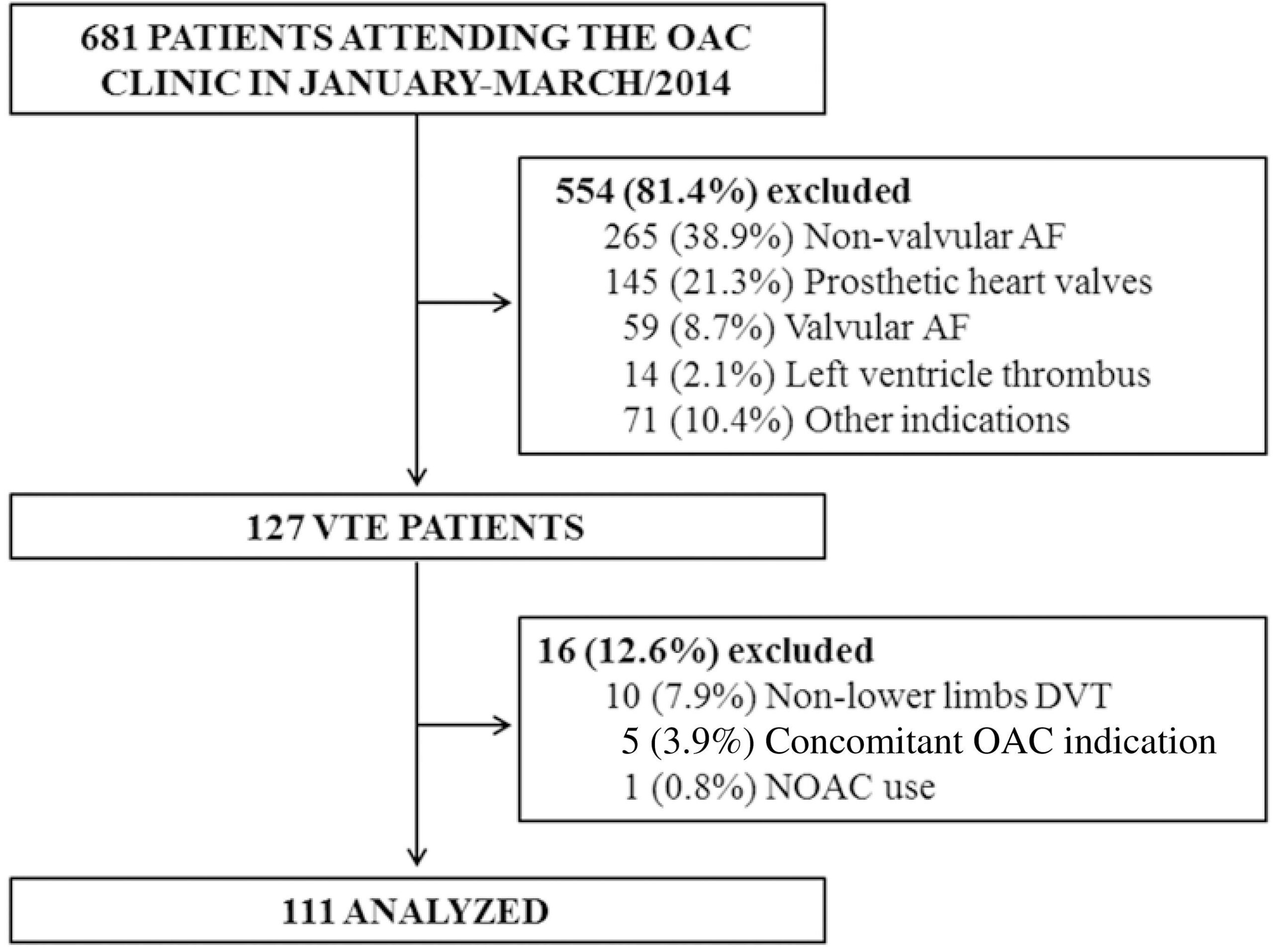
We investigated 111 patients during a median follow-up of 2.3 (0.7-6.4) years. Mean age was 54.1 ± 15.7 years and 71 (64.0%) were women. Low- and high-risk groups had similar mean TTR (51.9 vs. 49.6%; p = 0.593). The two groups did not differ significantly in the percentage of patients achieving a TTR ≥ 65% (35.6 vs. 25.8%; p = 0.370). The c-statistic was 0.595 (p = 0.113) for TTR ≥ 65%. Adverse event-free survival during anticoagulation was also similar in both groups (p = 0.136).

Conclusions:

The SAMe-TT2R2 score does not seem to be a useful tool in oral anticoagulation decision-making for patients with VTE and should not be used in this setting.

  • Anticoagulants
  • Decision Support Techniques
  • Pulmonary embolism
  • Venous Thromboembolism
  • Venous Thrombosis
Read Full Article
Creative Commons Attribution (CC BY) Creative Commons license
19/07/2018 DOI: 10.5935/2359-4802.20180044 Views 1

How to cite this article

EndNote RIS

Electronic Document Format (Vancouver)

Darzé BR, Borges QO, Viana MS, Darzé ES, Ritt LEF. Influence of Obesity on the Safety and Efficacy of Antithrombotic Therapy: A Systematic Review and Meta-Analysis. Arquivos Brasileiros de Cardiologia 2025;122(4):e20240544.

Electronic Document Format (ABNT)

Darzé, Beatriz Rocha; Borges, Queila Oliveira; Viana, Mateus S.; Darzé, Eduardo Sahade; Ritt, Luiz Eduardo Fonteles. Influence of Obesity on the Safety and Efficacy of Antithrombotic Therapy: A Systematic Review and Meta-Analysis. Arquivos Brasileiros de Cardiologia, v. 122, n. 4, e20240544, May. 2025.

Electronic Document Format (APA)

Darzé, B. R., Borges, Q. O., Viana, M. S., Darzé, E. S., & Ritt, L. E. F. (2025). Influence of Obesity on the Safety and Efficacy of Antithrombotic Therapy: A Systematic Review and Meta-Analysis. Arquivos Brasileiros de Cardiologia, 122(4), e20240544.

Electronic Document Format (ISO)

Darzé, Beatriz Rocha and Borges, Queila Oliveira and Viana, Mateus S. and Darzé, Eduardo Sahade and Ritt, Luiz Eduardo Fonteles. Influence of Obesity on the Safety and Efficacy of Antithrombotic Therapy: A Systematic Review and Meta-Analysis. Arquivos Brasileiros de Cardiologia [online]. 2025, vol. 122, n. 4, [cited 2026-10-14], e20240544. Available from: <https://journals.cardiol.br/en/article/influence-of-obesity-on-the-safety-and-efficacy-of-antithrombotic-therapy-a-systematic-review-and-meta-analysis/>. ISSN 0066-782X

EndNote RIS

Electronic Document Format (Vancouver)

Carvalho PEP. Advancing the Use of Direct Oral Anticoagulants in Left Ventricular Thrombus Management. Arquivos Brasileiros de Cardiologia 2024;121(7):e20240409.

Electronic Document Format (ABNT)

Carvalho, Pedro E. P.. Advancing the Use of Direct Oral Anticoagulants in Left Ventricular Thrombus Management. Arquivos Brasileiros de Cardiologia, v. 121, n. 7, e20240409, Nov. 2024.

Electronic Document Format (APA)

Carvalho, P. E. P. (2024). Advancing the Use of Direct Oral Anticoagulants in Left Ventricular Thrombus Management. Arquivos Brasileiros de Cardiologia, 121(7), e20240409.

Electronic Document Format (ISO)

Carvalho, Pedro E. P.. Advancing the Use of Direct Oral Anticoagulants in Left Ventricular Thrombus Management. Arquivos Brasileiros de Cardiologia [online]. 2024, vol. 121, n. 7, [cited 2026-10-14], e20240409. Available from: <https://journals.cardiol.br/en/article/advancing-the-use-of-direct-oral-anticoagulants-in-left-ventricular-thrombus-management/>. ISSN 0066-782X

EndNote RIS

Electronic Document Format (Vancouver)

Pivatto Júnior F, Salla RF, Cé LC, Biolo A, Silva ALFA, Führ B, Amon LC, et al. SAMe-TT2R2 Score: A Useful Tool in Oral Anticoagulation Decision-Making for Venous Thromboembolism Patients?. International Journal of Cardiovascular Sciences 2018;31(5):483-91.

Electronic Document Format (ABNT)

Pivatto Júnior, Fernando; Salla, Rafaela Fenalti; Cé, Lísia Cunha; Biolo, Andréia; Silva, André Luís Ferreira Azeredo da; Führ, Bruno; Amon, Luís Carlos; Blaya, Marina Bergamini; Scheffel, Rafael Selbach. SAMe-TT2R2 Score: A Useful Tool in Oral Anticoagulation Decision-Making for Venous Thromboembolism Patients?. International Journal of Cardiovascular Sciences, v. 31, n. 5, p. 483-491, Jul. 2018.

Electronic Document Format (APA)

Pivatto Júnior, F., Salla, R. F., Cé, L. C., Biolo, A., Silva, A. L. F. A. , Führ, B., Amon, L. C., Blaya, M. B., & Scheffel, R. S. (2018). SAMe-TT2R2 Score: A Useful Tool in Oral Anticoagulation Decision-Making for Venous Thromboembolism Patients?. International Journal of Cardiovascular Sciences, 31(5), 483-491.

Electronic Document Format (ISO)

Pivatto Júnior, Fernando and Salla, Rafaela Fenalti and Cé, Lísia Cunha and Biolo, Andréia and Silva, André Luís Ferreira Azeredo da and Führ, Bruno and Amon, Luís Carlos and Blaya, Marina Bergamini and Scheffel, Rafael Selbach. SAMe-TT2R2 Score: A Useful Tool in Oral Anticoagulation Decision-Making for Venous Thromboembolism Patients?. International Journal of Cardiovascular Sciences [online]. 2018, vol. 31, n. 5, [cited 2026-10-14], pp. 483-491. Available from: <https://journals.cardiol.br/en/article/same-tt2r2-score-a-useful-tool-in-oral-anticoagulation-decision-making-for-venous-thromboembolism-patients/>. ISSN 2359-4802

  • About ABC Family
  • Internal Regulation
  • Editorial Board
  • Brazilian Society of Cardiology (SBC)

Issues

SBC Guidelines

  • Videos
  • Podcasts
  • News