
ABC Family Arquivos Brasileiros de Cardiologia International Journal of Cardiovascular Sciences ABC Heart Failure & Cardiomyopathy ABC Imagem Cardiovascular
Português English
ABC Family
Português English
  • About
    • About ABC Family
    • Internal Regulation
    • Editorial Board
    • Brazilian Society of Cardiology (SBC)
  • Issues
  • SBC Guidelines
  • Content
    • Videos
    • Podcasts
    • News
  • About
    • About ABC Family
    • Internal Regulation
    • Editorial Board
    • Brazilian Society of Cardiology (SBC)
  • Issues
  • SBC Guidelines
  • Content
    • Videos
    • Podcasts
    • News

ABC Family

  • ABC Family
  • Arquivos Brasileiros de Cardiologia
  • International Journal of Cardiovascular Sciences
  • ABC Heart Failure & Cardiomyopathy
  • ABC Imagem Cardiovascular
Search in

No content found.

Journals
Ordering
Article types
Others

  1. Home
  2. Keyword: Strain
Figure 1
ABCIC
Case Report

Important Constrictive Pericarditis in a Patient with Schistosomiasis: A Case Report

Djair Brindeiro Filho et al. José Maria Del Castillo Fábio Antonio Amando Granja

Introduction

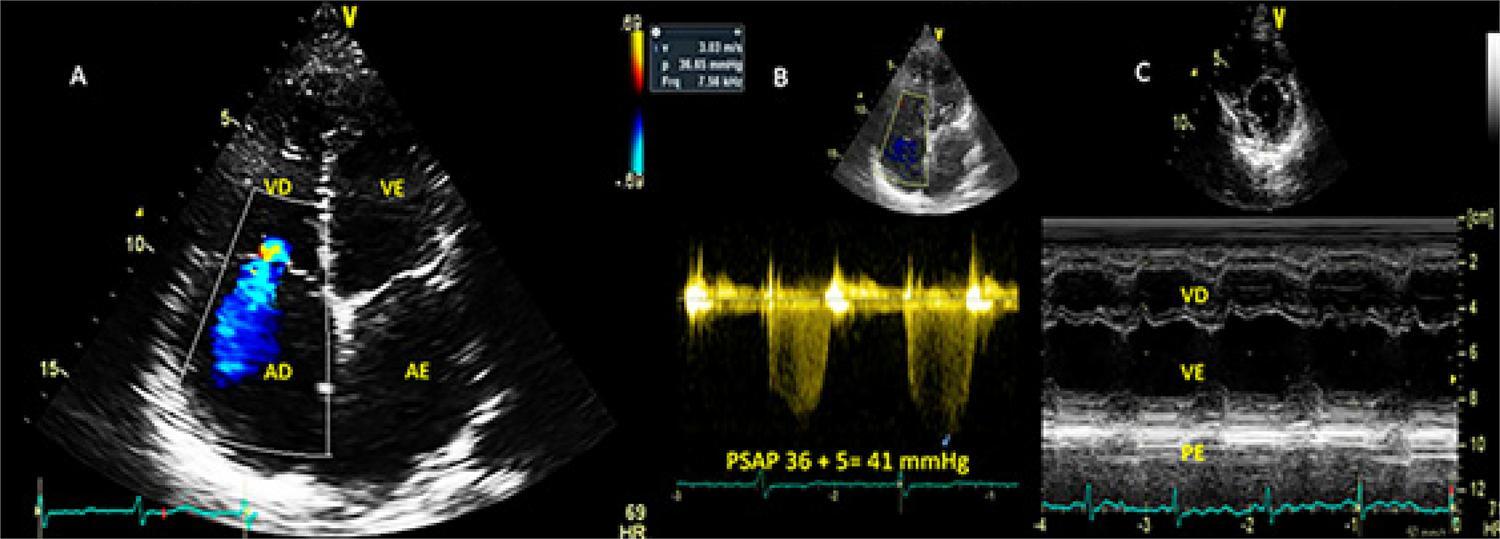
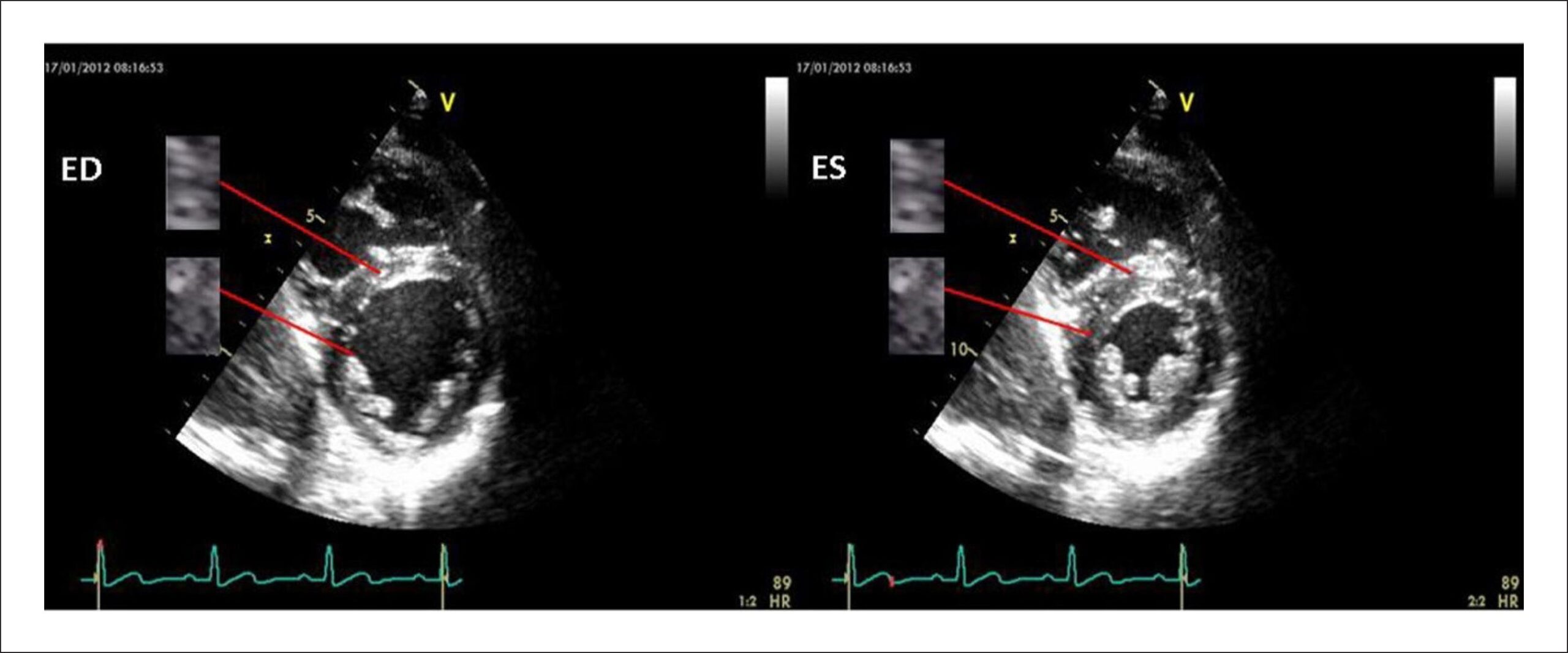
Schistosomiasis mansoni (SM) is one of the most common causes of pulmonary hypertension and is often associated with the hepatosplenic form of the disease. However, constrictive pericarditis (CP) is not cited in the medical literature as a consequence of SM., One single case report, published in 1979, associating CP with schistosomiasis, presented the etiologic agent of Schistosoma haematobium. The present study described a rare case of CP in a patient with chronic hepatosplenic SM, with a significant improvement in the parameters of ventricular filling and myocardial deformation after surgery, illustrating the importance of the echocardiogram in the detection of complications caused by this disease.

[…]

  • Constrictive pericarditis
  • Echocardiography
  • Pericardiectomy
  • schistosomiais
  • Strain
Read Full Article
Creative Commons Attribution (CC BY) Creative Commons license
24/05/2023 DOI: 10.36660/abcimg.2023378i
Figure 1
ABCIC
Original Article

Global Longitudinal Strain as Predictor of Chemotherapy-Induced Cardiotoxicity

Monica Samuel Avila et al. Marco Stephan Lofrano Alves Silvia Moreira Ayub-Ferreira Mauro Rogerio de Barros Wanderley Junior … Fatima das Dores Cruz Sara Michelly Gonçalves Brandão Ludhmila Abrahão Hajjar Roberto Kalil Filho Cecilia Beatriz Bittencourt Viana Cruz Maria Cristina Abduch Danilo Bora Moleta Edimar Alcides Bocchi

Abstract

Background

Chemotherapy-induced cardiotoxicity (ChC) is an important complication among patients receiving anthracyclines. Biomarkers and imaging parameters have been studied for their ability to identify patients at risk of developing ChC. Left ventricular global longitudinal strain (LV-GLS) is a sensitive parameter for detecting systolic dysfunction despite the presence of preserved left ventricular ejection fraction (LVEF).

Objective

To evaluate the role of the LV-GLS as a predictor of ChC.

Methods

This was a post-hoc analysis of the Carvedilol for Prevention of Chemotherapy-Related Cardiotoxicity trial, which evaluated the primary prevention of cardiotoxicity with carvedilol during doxorubicin chemotherapy in a population of patients with breast cancer. Cardiotoxicity was defined as a reduction ≥10% in LVEF. LV-GLS was determined before chemotherapy in patients with no prior cardiovascular disease or echocardiogram abnormalities.

Results

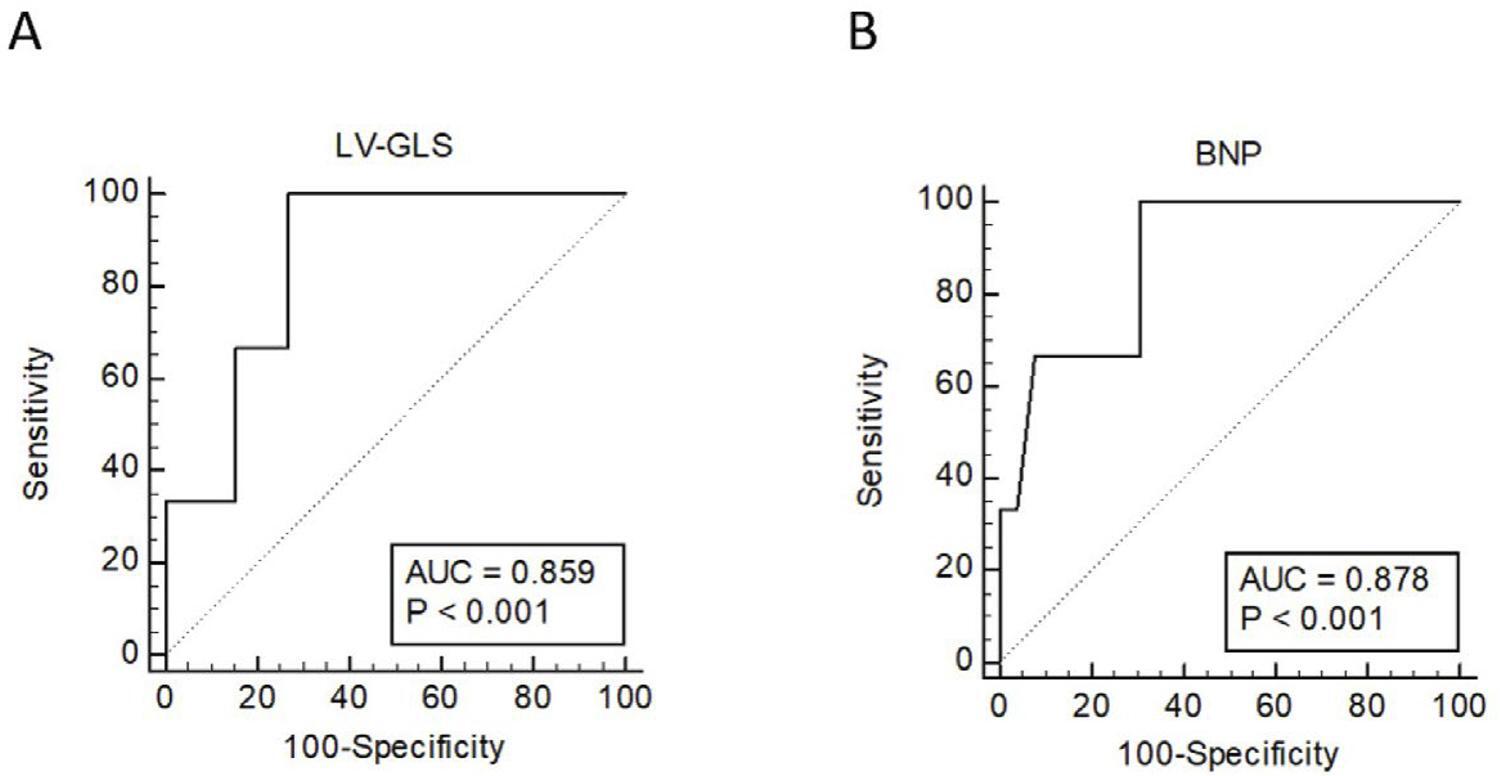
Thirty-one patients for whom a complete echocardiography study including measurement of LV-GLS was performed before chemotherapy were included in this analysis. An absolute LV-GLS<16.9% before chemotherapy showed 100% sensitivity and 73% specificity for predicting cardiotoxicity (area under the curve [AUC], 0.85; 95% confidence interval [CI], 0.680–0.959; p<0.001). In this population, LVEF values before chemotherapy did not predict ChC (95% CI, 0.478 to -0.842; p=0.17). The association of low LV-GLS (17 pg/mL) at 2 months after chemotherapy increased the accuracy for detecting early-onset ChC (100% sensitivity, 88% specificity; AUC, 0.94; 95% CI, 0.781–0.995; p<0.0001).

Conclusions

Our data suggest that LV-GLS is a potential predictor of ChC. Larger studies are needed to confirm its clinical relevance in this clinical setting.

  • Cardiotoxicity
  • Chemotherapy
  • Echocardiogram
  • Prevention
  • Strain
  • β-blockers
Read Full Article
Creative Commons Attribution (CC BY) Creative Commons license
21/12/2022 DOI: 10.47593/2675-312X/20223504eabc340i Views 1
Figure 1
ABCIC
Case Report

Left Ventricular Longitudinal Strain Echocardiogram and Handgrip: A Useful Tool for Detecting Ischemia in the Emergency Room

Ana Paula Torres Guimarães de Freitas et al. Natalia Marcusso Massoni Rodrigo Bellio de Mattos Barretto

Introduction

Acute coronary syndrome is among the greatest diagnostic challenges for emergency room physicians. Non-invasive imaging tests such as echocardiography (ECHO) are useful in the etiological diagnosis of chest pain. In cases of suspected ischemia, when electrocardiography (ECG) and myocardial necrosis markers (MNM) are inconclusive, ECHO can be performed at the time of pain or immediately after. The use of advanced techniques such as myocardial deformation analysis (strain) provides greater accuracy in identifying the coronary artery disease territory.

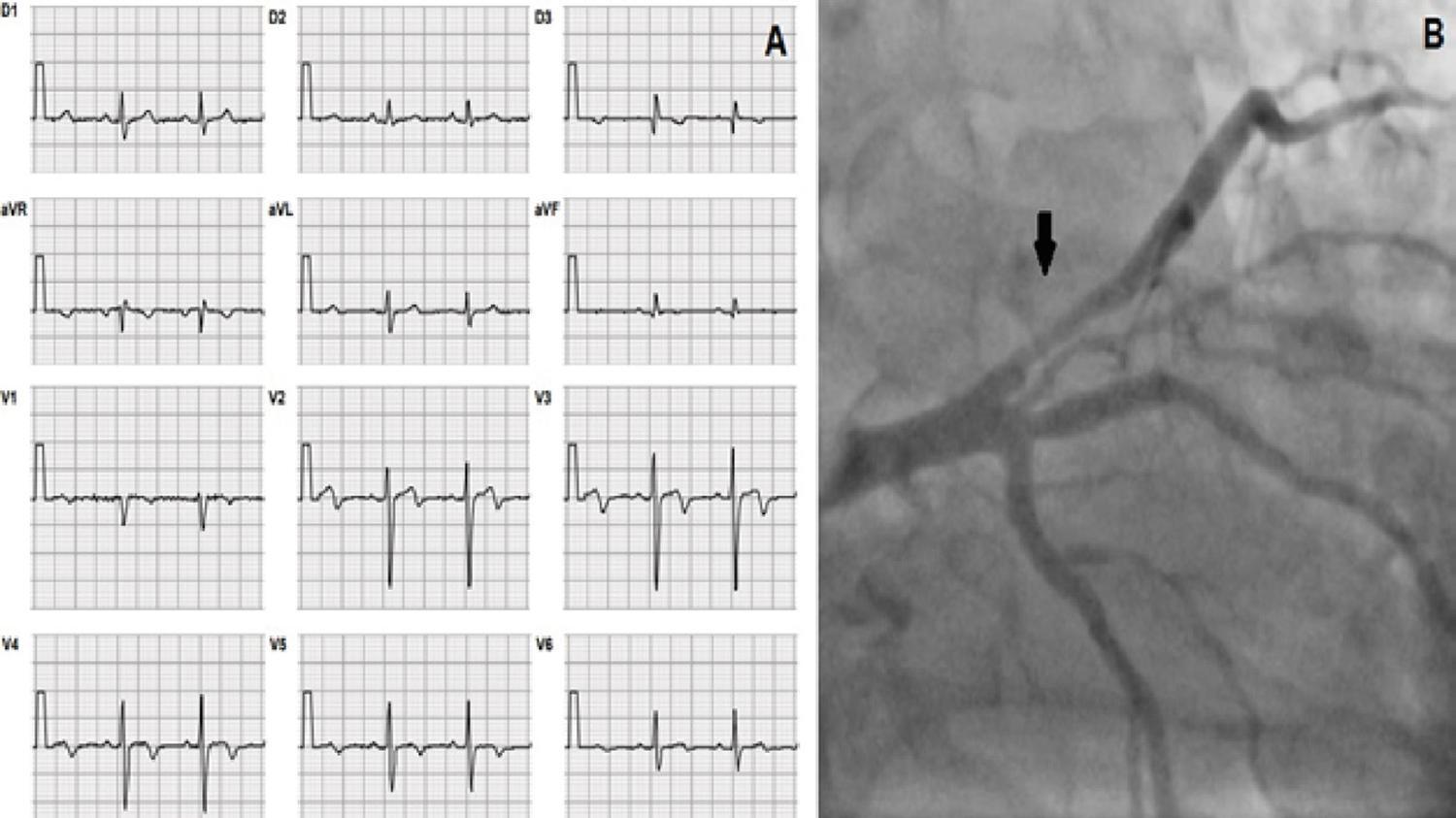
This report describes a case of a patient with chest pain without segmental changes on initial ECHO in the emergency room. Significant coronary artery disease (CAD) changes were evident on additional tools (handgrip, strain, and postsystolic peak) as showed on the subsequent coronary angiography.

[…]

  • Chest Pain
  • Echocardiography
  • Emergencies
  • Strain
Read Full Article
Creative Commons Attribution (CC BY) Creative Commons license
25/03/2022 DOI: 10.47593/2675-312X/20213404eabc238 Views 3
ABCIC
Editorial

Applications of Myocardial Strain Study Using Two-Dimensional Speckle-Tracking in Pediatrics

Laura Mercer-Rosa

[…]

  • Myocardial deformation
  • Pediatrics
  • Revision
  • Strain
Read Full Article
Creative Commons Attribution (CC BY) Creative Commons license
14/01/2022 DOI: 10.5935/2318-8219.20190032
ABCIC
Brief Communication

Evaluation of Functional Risk Area by Myocardial Strain Analysis in Unstable Angina

Pedro Henrique Albuquerque et al. José Maria Del Castillo Luciano Borba Carlos Romério Ferro … Cyro Cabral Júnior Antônio Everaldo Filho Ricardo César Cavalcanti

[…]

  • Ischemia
  • Strain
  • Unstable Angina
Read Full Article
Creative Commons Attribution (CC BY) Creative Commons license
14/01/2022 DOI: 10.5935/2318-8219.20200039 Views 1
ABCIC
Editorial

What Does the Cardiologist Expect from the Echocardiogram in Amyloidosis?

Aristóteles Comte de Alencar Neto et al. Fabio Fernandes

[…]

  • Diastole
  • Early diagnosis
  • Strain
Read Full Article
Creative Commons Attribution (CC BY) Creative Commons license
14/01/2022 DOI: 10.5935/2318-8219.20200016
ABCIC
Editorial

My Approach to Assessing Right Ventricular Strain

Marcela Momesso et al. Cintia Galhardo Tressino Rodrigo Bellio de Mattos Barretto David Le Bihan

[…]

  • Echocardiography
  • Strain
  • Ventricular Dysfunction Right
Read Full Article
Creative Commons Attribution (CC BY) Creative Commons license
17/12/2021 DOI: 10.47593/2675-312X/20203304ecom14
Figure 1
IJCS
Original Article

Subclinical Systolic Dysfunction during Chemotherapy for Breast Cancer

Geanne Maria Holanda de Menezes Barroso et al. Júlio César Oliveira Costa Teles Paulo Victor de Jesus Silva Karin Yasmin Santos Fonseca … Vinícius Antônio Santos Aragão Marília Marques Aquino Enaldo Vieira de Melo Karina Oliveira Ferreira Ronnei José Feitosa de Assis Michel Fabiano Silva Alves Antônio Carlos Sobral Sousa Joselina Luzia Menezes Oliveira

Abstract

Background

Cardiotoxicity is the main complication related to cancer therapy. Studies indicate that global longitudinal strain is an early detector of subclinical dysfunction of the left ventricle, preceding the decline in ejection fraction (EF). However, the reproducibility of such methodology has not been tested outside specialized centers.

Objectives

To assess the frequency of subclinical cardiotoxicity and to compare global longitudinal strain and EF measurements during the clinical course of patients undergoing chemotherapy for breast cancer.

Methods

This was an observational prospective study of 78 adult women who underwent serial echocardiograms (baseline and 1, 3, and 6 months after the beginning of chemotherapy), to evaluate biplane and 3D EF and global longitudinal strain. Cardiotoxicity and subclinical dysfunction were defined according to American Society of Echocardiography/European Association of Cardiovascular Imaging criteria. Statistical significance was set at p < 0.05.

Results

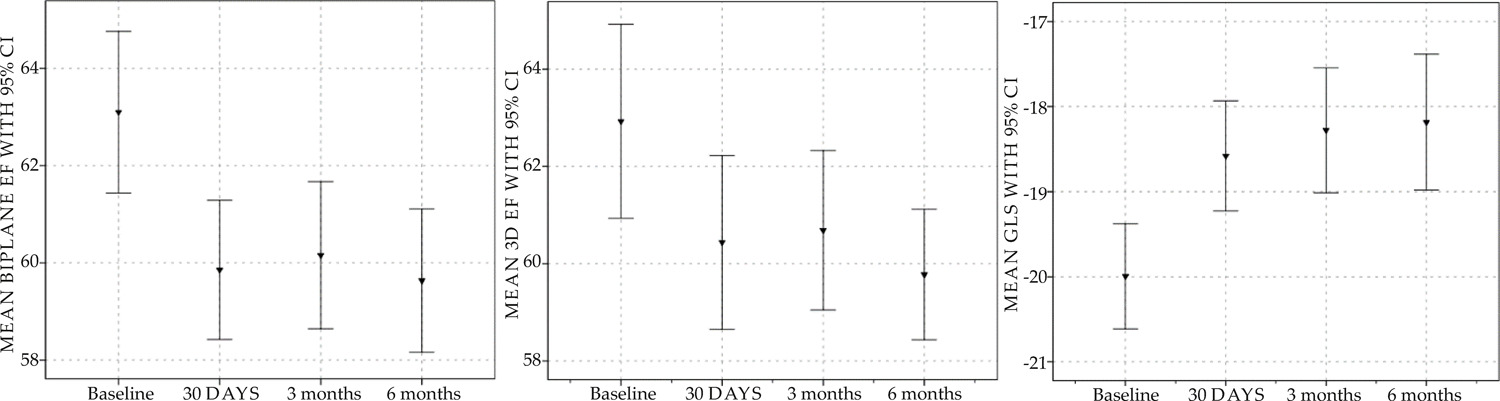
The mean age of the patients was 50.1 ± 11.48 years. The frequency of subclinical cardiotoxicity (defined by global longitudinal strain) was 14.9% after 30 days of chemotherapy, 16.7% after 3 months, and 19.7% after 6 months, compared to 4.5%, 3%, and 6.6%, respectively, when clinical cardiotoxicity was determined according to EF. The group that developed subclinical cardiotoxicity by 30 days (group A) had a higher frequency of clinical cardiotoxicity at 3 months (p=0.028) and a lower mean biplane EF after 30 days (p= 0.036) than the group that showed no evidence of subclinical cardiotoxicity (group B).

Conclusion

Subclinical cardiotoxicity was frequent and began early, being associated with a drop in EF during the clinical course.

  • Breast Neoplasms
  • Drug Therapy
  • Echocardiography/methods
  • Strain
  • Ventricular Dysfunction
Read Full Article
Creative Commons Attribution (CC BY) Creative Commons license
13/12/2021 DOI: 10.36660/ijcs.20210089
Figure 1
ABC
Editorial

Cardiovascular Manifestations in the Pediatric Population with COVID-19, What is the Real Relevance?

Andressa Mussi Soares et al. Bernardo Mussi Soares

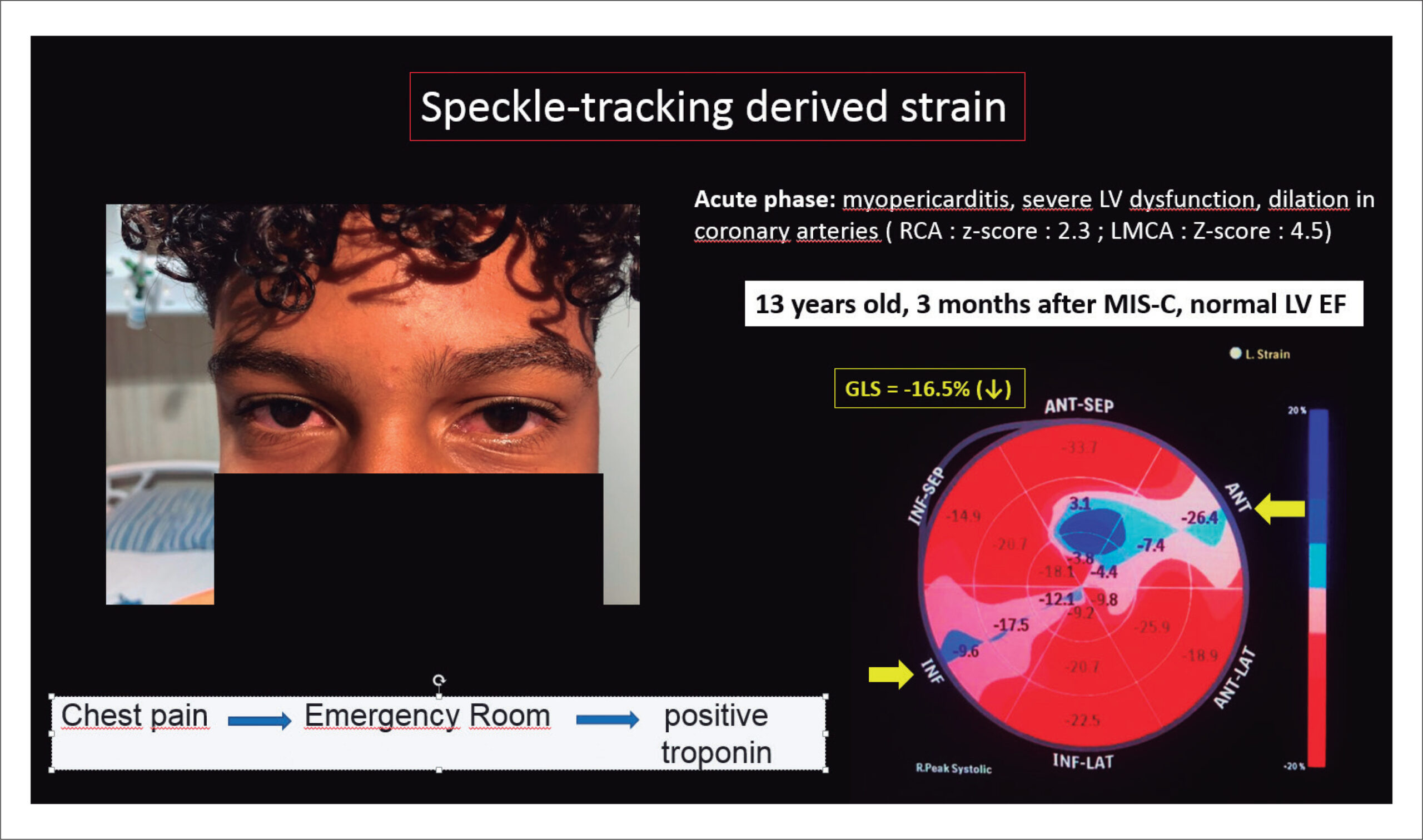
Although COVID-19 usually has mild manifestations in children, multisystem inflammatory syndrome (MIS) may occur in 0.6% of the cases. MIS in children (MIS-C), already well defined by the World Health Organization (WHO), is characterized by hyperinflammation with cytokine storm and high levels of myocardial injury markers, with involvement of one or more organs of the cardiac, renal, respiratory, gastrointestinal or neurological systems.

The combination of the timing of MIS-C cases with positive serology and negative PCR in most patients suggests that MIS-C is a post-infectious (up to six weeks after the insult), immune-mediated complication rather than of the acute infection. The pathophysiology of MIS-C is thought to be due to a hyperimmune response to the virus in a genetically susceptible child. The symptoms of MIS-C can overlap with those of Kawasaki disease, toxic shock syndrome, macrophage activation syndrome, bacterial sepsis, and cytokine release syndrome (“cytokine storm”). Cytokine storm is characterized by persistent fever, and markedly elevated inflammatory markers and pro-inflammatory cytokines such as interleukin. There increasing evidence on cardiovascular involvement in COVID-19 and MIS-C.,

[…]

  • Biomarkers
  • Cardiovascular Dseases
  • Child
  • Coronavirus
  • COVID-19
  • Echocardiography/methods
  • Inflammatory Syndrome
  • Strain
Read Full Article
Creative Commons Attribution (CC BY) Creative Commons license
22/11/2021 DOI: 10.36660/abc.20210835 Views 1
Figure 1
ABC
Original Article

Impaired Right Ventricular Function in Heart Transplant Rejection

Luciana J. B. M. Carrion et al. Alice Sperotto Raffaela Nazario Livia A. Goldraich … Nadine Clausell Luís Eduardo Rohde Angela Barreto Santiago Santos

Abstract

Background:

The practice of screening for complications has provided high survival rates among heart transplantation (HTx) recipients.

Objectives:

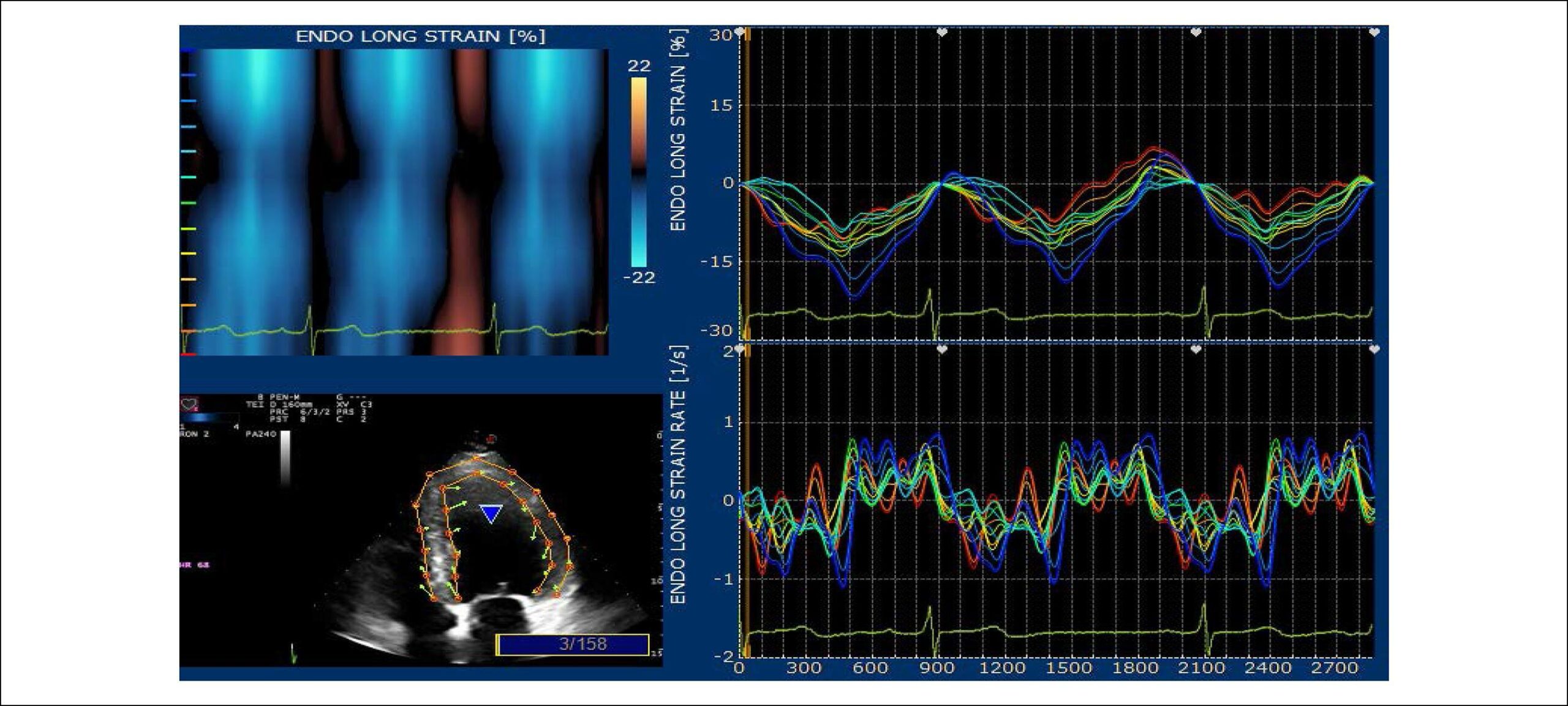
Our aim was to assess whether changes in left ventricular (LV) and right ventricular (RV) global longitudinal strain (GLS) are associated with cellular rejection.

Methods:

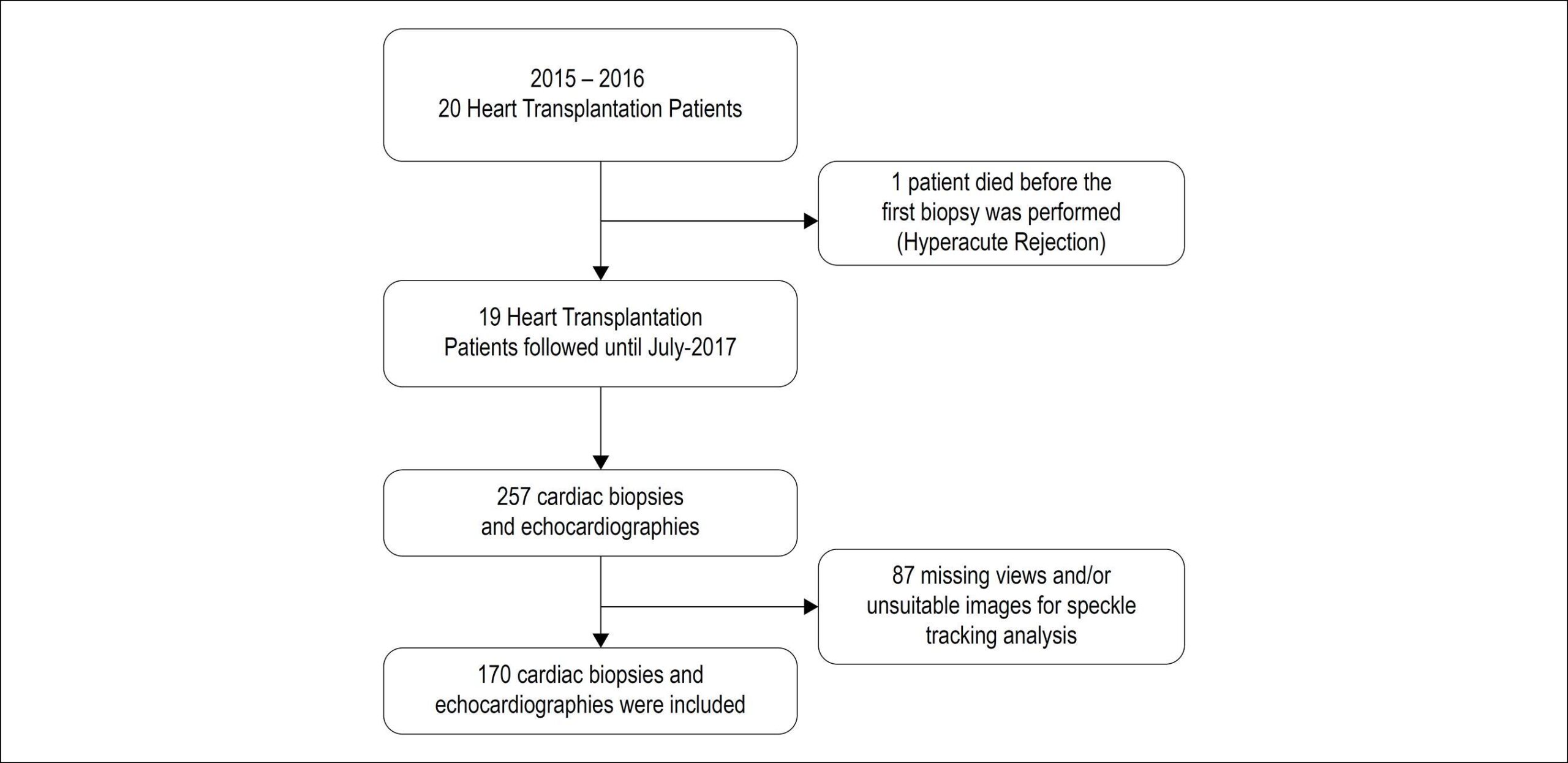
Patients who underwent HTx in a single center (2015 – 2016; n = 19) were included in this retrospective analysis. A total of 170 biopsies and corresponding echocardiograms were evaluated. Comparisons were made among biopsy/echocardiogram pairs with no or mild (0R/1R) evidence of cellular rejection (n = 130 and n = 25, respectively) and those with moderate (2R) rejection episodes (n=15). P-values < 0.05 were considered statistically significant

Results:

Most patients were women (58%) with 48 ± 12.4 years of age. Compared with echocardiograms from patients with 0R/1R rejection, those of patients with 2R biopsies showed greater LV posterior wall thickness, E/e’ ratio, and E/A ratio compared to the other group. LV systolic function did not differ between groups. On the other hand, RV systolic function was more reduced in the 2R group than in the other group, when evaluated by TAPSE, S wave, and RV fractional area change (all p < 0.05). Furthermore, RV GLS (−23.0 ± 4.4% in the 0R/1R group vs. −20.6 ± 4.9% in the 2R group, p = 0.038) was more reduced in the 2R group than in the 0R/1R group.

Conclusion:

In HTx recipients, moderate acute cellular rejection is associated with RV systolic dysfunction as evaluated by RV strain, as well as by conventional echocardiographic parameters. Several echocardiographic parameters may be used to screen for cellular rejection.

  • Echocardiography/methods
  • Graft Rejection
  • Heart Transplantation
  • Speckle Tracking
  • Strain
  • Ventricular Dysfunction Right
Read Full Article
Creative Commons Attribution (CC BY) Creative Commons license
14/02/2020 DOI: 10.36660/abc.20190054
ABC
Letter to the Editor

Left Ventricle Mass Index, a Confounding Variable of Global Longitudinal Strain to be Noticed

Eduardo Thadeu de Oliveira Correia et al. Letícia Mara dos Santos Barbetta

Dear Editor,

We read with great interest the article entitled as “Strain Analysis of Left Ventricular Function in the Association of Hypertrophic Cardiomyopathy and Systemic Arterial Hypertension”. In this paper, the authors evaluated the global longitudinal strain (GLS) of the left ventricle (LV) in two distinct groups: patients with hypertrophic cardiomyopathy (HCM) and patients with HCM and systemic arterial hypertension (SAH) and demonstrated that GLS was lower in the second group. This important finding may indicate greater impairment of LV function in patients with SAH and HCM.

[…]

  • Cardiomyopathy, Hypertrophic
  • Heart Failure
  • Hypertension
  • Hypertrophy Left Ventricular
  • Strain
  • Ventricular Function, Left
Read Full Article
Creative Commons Attribution (CC BY) Creative Commons license
10/02/2020 DOI: 10.36660/abc.20190708 Views 1
ABC
Editorial

Real-Time Three-Dimensional Echocardiography and Myocardial Strain: Ready for Use in Clinical Practice

Frederico Jose Neves Mancuso

The ability of echocardiography to quantify volumes and to evaluate the contractile function of cardiac chambers has evolved greatly in recent years, particularly due to the development of real-time three-dimensional echocardiography (echo3D) and the possibility myocardial deformation (Strain) analysis by the speckle tracking technique.–

Unlike two-dimensional echocardiography, where geometric inferences and mathematical calculations are required, the echo3D allows direct measurement of ventricular and atrial volumes, from which function data such as left and right ventricular ejection fraction, and left atrial function, including total emptying fraction and active emptying fraction parameters.–

[…]

  • Echocardiography, Three-Dimensional
  • Reference Values
  • Speckle Tracking
  • Strain
  • Ventricular Function, Left
Read Full Article
Creative Commons Attribution (CC BY) Creative Commons license
02/12/2019 DOI: 10.5935/abc.20190179
ABC
Editorial

Are Myocardium Deformation Indices Influenced by Cardiac Load, Age or Body Mass Index?

Vera Maria Cury Salemi et al. Marcelo Dantas Tavares de Melo

The typical findings of myocardium deformation indices (MDI) in many cardiac diseases, the low cost of the echocardiographic exam, the large availability, the vast implementation of this tool for clinical practice and the prognostic value has allowed the detection of earlier myocardium dysfunction than the traditional measurement of left ventricular (LV) ejection fraction. Moreover, there are typical MDI patterns in different forms of hypertrophy: decreased values in septum MDI in hypertrophic cardiomyopathy (HCM) or where hypertrophy is more accentuated, or a segmental decrease in mutation carriers in a pre-clinical phase of disease, before development of hypertrophy; apical sparing in amyloidosis; striped pattern of myocardium deformation in glycogen storage cardiomyopathy (PRKAG2); and decrease in subepicardial longitudinal strain in Anderson-Fabry disease. In hypertension with concentric and eccentric hypertrophy, the MDI patterns are related to different geometric patterns, but they are frequently preserved in athletes.

The question whether MDI would be reliable in different machines and vendors was demonstrated that the accuracy of these indices were better than conventional echocardiography measurements and they are reliable for daily echocardiographic practice.

[…]

  • Echocardiography/methods
  • Heart Failure
  • Hypertension
  • Hypertrophic Cardiomyopathy
  • Myocardium Deformation
  • Strain
Read Full Article
Creative Commons Attribution (CC BY) Creative Commons license
04/11/2019 DOI: 10.5935/abc.20190211
Figure 1
ABC
Original Article

The Use of Two-Dimensional Strain Measured by Speckle Tracking in the Identification of Incipient Ventricular Dysfunction in HIV-Infected Patients on Antiretroviral Therapy, Untreated HIV Patients and Healthy Controls

Ronaldo Campos Rodrigues et al. Katia Martins Lopes de Azevedo Samuel Datum Moscavitch Sergio Setubal Claudio Tinoco Mesquita

Abstract

Background:

Most cardiovascular abnormalities in patients infected with the human immunodeficiency virus (HIV) have been associated with myocardial damage directly caused by the virus. Some cases, however, may be associated with adverse effects from antiretroviral therapy (ART). New ventricular function assessment techniques are capable of detecting early changes in the cardiac function of HIV-infected patients using or not using ART. The usefulness of these techniques has been little employed in these patients.

Objectives:

To investigate the potential influence of antiretroviral therapy (ART) on the occurrence of subclinical left ventricular systolic dysfunction evaluated by myocardial strain rate analysis using two-dimensional speckle tracking echocardiography (2-D Echo) in treated HIV patients compared to untreated patients and healthy individuals.

Methods:

Sixty-eight HIV-infected patients with no cardiovascular symptoms, normal left ventricular (LV) ejection fraction (> 0.55 on 2-D Echo) were divided into three groups: 11 patients not using antiretroviral therapy (NT), 24 using protease inhibitor (PI) and 33 using non-nucleoside reverse transcriptase inhibitor (NNRTI). We also studied 30 normal non-HIV infected individuals (Ctrl). Demographic, clinical, biochemical and anthropometric data were collected. Preliminary transthoracic echocardiography included study of myocardial strain using two-dimensional speckle tracking. We studied strain and strain rate in the seventeen left ventricular (LV) myocardial segments in the longitudinal, circumferential and radial axes. Statistical analysis of the data was done with IBM SPSS – version 20 for Windows. Upon analysis of the data, namely the normality of independent variables in the different groups and the homogeneity of the variances between the groups, Kruskal-Wallis’ non-parametric test was done, followed by Dunn’s multiple comparison tests to test the significance of the differences between the values measured in the study groups. A significance level of 5% was adopted for decision-making on statistical tests.

Results:

The mean age of HIV patients was 40 ± 8.65 years and the mean age of controls was 50 ± 11.6 years (p < 0.001). Median LV global longitudinal strain (GLS) of NT patients (-17.70%), PI patients (-18.27%) and NNRTIs (-18.47%) were significantly lower than that of the Ctrl group (-20.77%; p = 0.001). There was no significant difference in mean SLG between treated patients (PI, NNRTI) and untreated (NT) patients. No significant differences were observed in mean circumferential and radial strain, nor on circumferential and radial strain rates between the NT, PI, NNRTI and Ctrl groups.

Conclusion:

The data suggest that HIV patients present, on myocardial strain measured by speckle tracking, signs of early LV systolic dysfunction that seem to be unrelated to the presence of ART. The prognostic significance of this condition in these patients deserves further studies.

  • Acquired Immunodeficiency Syndrome
  • Antiretroviral Therapy
  • Echocardiography, Doppler
  • Highly Active
  • HIV
  • Speckle Tracking
  • Strain
  • Ventricular Disfunction,Left
Read Full Article
Creative Commons Attribution (CC BY) Creative Commons license
02/09/2019 DOI: 10.5935/abc.20190169
Figure 1
ABC
Original Article

Strain Analysis of Left Ventricular Function in the Association of Hypertrophic Cardiomyopathy and Systemic Arterial Hypertension

Thereza Cristina Pereira Gil et al. Marcia Bueno Castier Alyne Freitas Pereira Gondar Ana Ferreira Sales … Marceli de Oliveira Santos Fernanda Cristina da Silva de Lima Ricardo Mourilhe-Rocha

Abstract

Background:

Hypertrophic cardiomyopathy (HCM) is the most common heart disease of genetic origin in the world population, with a prevalence of at least 1/500. The association with systemic arterial hypertension (SAH) is not uncommon, as it affects approximately 25% of the world population. Most studies aim at the differential diagnosis between these diseases, but little is known about the magnitude of this association.

Objective:

To compare left ventricular global longitudinal strain (GLS) in HCM patients with and without associated SAH.

Methods:

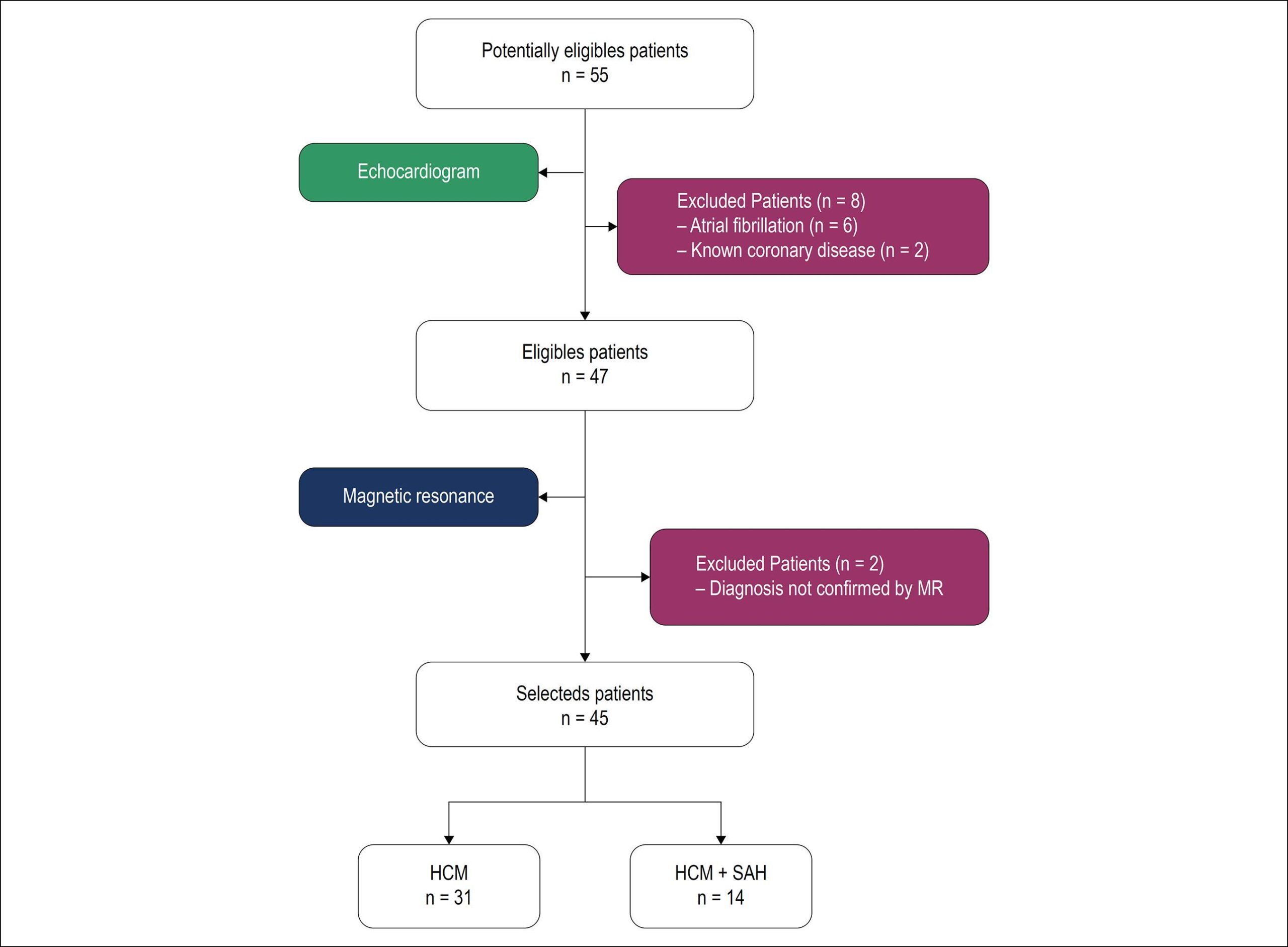
Retrospective cross-sectional study that included 45 patients with HCM and preserved ejection fraction, with diagnosis confirmed by magnetic resonance imaging, including 14 hypertensive patients. Transthoracic echocardiography was performed, with emphasis on left ventricular myocardial strain analysis using GLS. In this study, p < 0.05 was considered statistically significant.

Results:

Left ventricular strain was significantly lower in hypertensive individuals compared to normotensive individuals (-10.29 ± 2.46 vs. -12.35% ± 3.55%, p = 0.0303), indicating greater impairment of ventricular function in that group. Mean age was also significantly higher in hypertensive patients (56.1 ± 13.9 vs. 40.2 ± 12.7 years, p = 0.0001). Diastolic dysfunction was better characterized in hypertensive patients (p = 0.0242).

Conclusion:

Myocardial strain was significantly lower in the group of patients with HCM and SAH, suggesting greater impairment of ventricular function. This finding may be related to a worse prognosis with early evolution to heart failure. Prospective studies are required to confirm this hypothesis.

  • Cardiomyopathy, Hypertrophic
  • Heart Failure
  • Hypertension
  • Strain
  • Ventricular Function, Left
Read Full Article
Creative Commons Attribution (CC BY) Creative Commons license
02/09/2019 DOI: 10.5935/abc.20190176
Figure 1
ABC
Original Article

3-Dimensional Echocardiography and 2-D Strain Analysis of Left Ventricular, Left Atrial and Right Ventricular Function in Healthy Brazilian Volunteers

Roberto M. Saraiva et al. Eliza Maria B. Scolin Nicole P. Pacheco Maria Eduarda Bouret … Mauro Felippe Felix Mediano Marcelo T. Holanda Andréa R. da Costa

Abstract

Background:

New echocardiographic techniques are used in the diagnosis and prognosis of many heart diseases. However, reference values in different populations are still needed for several of these new indexes. We studied these new echocardiographic parameters in a group of Brazilians with no known cardiovascular disease.

Objective:

To study values for new echocardiographic indexes in Brazilians without known cardiovascular disease and their correlation with age.

Methods:

Cross-sectional study that included healthy individuals who underwent three-dimensional echocardiography (3DE) and two-dimensional speckle tracking echocardiography (STE) strain (e) analysis. Left atrial (LA) and left ventricular (LV) function were analyzed by 3DE and STE, and right ventricular (RV) function by STE. P values < 0.05 were considered significant.

Results:

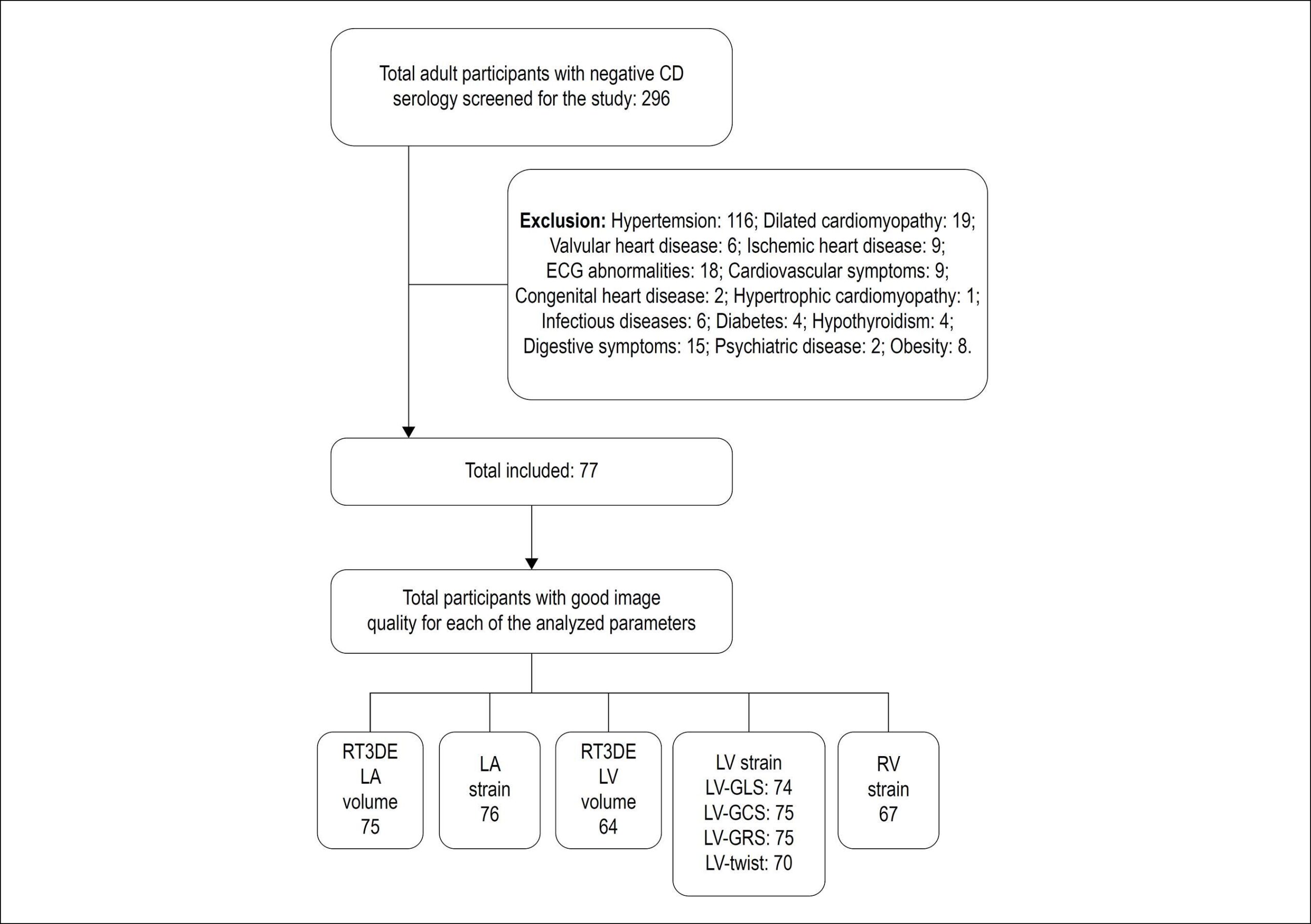
Seventy-seven subjects (46.7% men; 40.4 ± 10.4 years) were included. Maximum, minimum and pre-atrial contraction (pre-A) LA volumes (ml/m2) were 21.2 ± 5.5, 7.8 ± 2.5, and 11.0 ± 3.1, respectively. Peak positive global LA e (LAScd), peak negative global LA e and total global LA e (LASr) were 17.4 ± 5.2%, -13.2 ± 2.0% and 30.5 ± 5.9%, respectively. LV end-diastolic and end-systolic volumes (ml/m2) measured 57 ± 12 and 24 ± 6, and 3D LV ejection fraction measured 58 ± 6%. Global LV longitudinal, circumferential and radial e were -19 ± 2%, -19 ± 3%, and 46 ± 12%, respectively. LV torsion measured 1.6 ± 0.70 /cm. Global longitudinal RV e (RV-GLS) and RV free wall strain were -22 ± 3% and -24 ± 5%. Minimum LA and pre-A volumes, LV apical rotation, torsion and RV-GLS increased with age, while total and passive LA emptying fractions, LAScd, LASr, LV end-diastolic and end-systolic volumes decreased with age.

Conclusion:

Values for new echocardiographic indexes in Brazilians without known cardiovascular disease and their correlation with age are presented.

  • Cardiovascular Diseases
  • Echocardiography, Three-Dimensional
  • Left Ventricular Function
  • Reference Values
  • Right Ventricular Function
  • Speckle Tracking
  • Strain
Read Full Article
Creative Commons Attribution (CC BY) Creative Commons license
29/08/2019 DOI: 10.5935/abc.20190155
ABC
Editorial

Right Ventricular Evaluation with Speckle Tracking Echocardiography in COPD after a Pulmonary Rehabilitation Program

Djair Brindeiro Filho

Chronic obstructive pulmonary disease (COPD) is a serious public health problem, and is often related to smoking. In advanced stages of COPD, the presence of PAH is a common development. PAH progression rate in COPD is usually slow (an increase of < 1 mmHg per year). However, the presence of even moderate PAH is a strong predictor of mortality. During stable periods of the disease, the increase in mean pulmonary artery pressure is usually mild to moderate. However, severe PAH may occasionally occur in COPD patients COPD.

Conventional two-dimensional (2D) echo parameters allow a reasonable assessment of RV Function. In the 1990s, the use of tissue Doppler (TD) to measure the intramyocardial velocity gradient allowed measuring the rate of myocardial strain and its percentage (strain rate and strain). About ten years ago, the speckle tracking technique, based on the tracking of the speckles which two-dimensional echo images, allowed assessing myocardial strain without limitation by the DT insonation angle. 2D-STE strain can not only quantify the overall RV function, but it can also identify discrete, localized contractile losses, providing information regarding the pathophysiological mechanisms that lead to right ventricular failure. In a heterogeneous group of patients, RV lateral wall longitudinal strain showed a strong correlation with RV ejection fraction calculated by cardiac magnetic resonance. Peak longitudinal strain is a significant prognostic determinant in PAH patients, with greater value compared to other known clinical and echocardiographic predictors of mortality.

[…]

  • Chronic obstructive pulmonary disease (COPD)
  • Pulmonary Rehabilitation
  • Speckle Tracking
  • Strain
  • Two-dimensional Echo
Read Full Article
Creative Commons Attribution (CC BY) Creative Commons license
01/09/2018 DOI: 10.5935/abc.20180183
ABC
Editorial

Right Ventricular Dysfunction in Lupus Patients With Pulmonary Hypertension

Silvio Henrique Barberato

The importance of the right ventricle in cardiovascular physiology has been underestimated for decades. Previously considered a mere conduit, the right ventricle is currently known to play a major role in maintaining global cardiac function intact. In parallel, right ventricular (RV) systolic function has been shown to be an essential determinant of clinical outcomes in several scenarios, and should thus be considered in the individualized management of patients. The need to diagnose RV dysfunction is evident. Because of its wide availability, echocardiography is the most frequently used imaging test in clinical practice to assess RV size and function. That assessment can be hindered by the complex RV anatomy; thus, important international societies of cardiovascular imaging have recommended the routine and systematic addition of several echocardiographic measurements and techniques., That approach includes conventional parameters, such as RV basal diameter (normal ≤ 41 mm) and tricuspid annular plane systolic excursion (TAPSE – normal ≥ 17 mm), as well as advanced parameters, such as the s wave of the RV free wall on tissue Doppler (normal ≥ 9.5 cm/s), ejection fraction on 3D echocardiography (normal ≥ 45%) and longitudinal strain of the RV free wall (normal ≥ -20%).

In this scenario, strain (systolic shortening percentage) and strain rate (shortening rate), calculated by speckle tracking on two-dimensional echocardiography (2D speckle tracking or 2D-STE), emerge as alternatives in the RV systolic function analysis. The longitudinal strain of the RV free wall, excluding the ventricular septum, showed prognostic value in patients with signs and symptoms of cardiopulmonary disease, such as heart failure, myocardial infarction, pulmonary hypertension, congenital heart diseases, RV arrhythmogenic cardiomyopathy and amyloidosis. Right ventricular longitudinal strain is a parameter less dependent on the angle, with less intra- and interobserver variability, that can apparently detect early RV dysfunction. Its drawbacks include the high dependence on image quality and the variability of the software of the equipment available in the market. Recently an international consensus has been reached to standardize the use of 2D-STE to obtain RV strain. The specific use of right-ventricle-focused apical 4-chamber view is recommended for correct strain measurement. Extreme care should be taken to define the region of interest (ROI) of the endocardial border (suggested ROI: 5 mm), because of the RV shape and thin walls. The pericardium should be excluded from the analysis, because of the risk of strain underestimation.

[…]

  • Cardiovascular Diseases
  • Echocardiography
  • Hypertension Pulmonary
  • Lung Diseases
  • Lupus Erythematosus
  • Strain
  • Strain Rate
  • Ventricular Dysfunction Right
Read Full Article
Creative Commons Attribution (CC BY) Creative Commons license
01/07/2018 DOI: 10.5935/abc.20180125
ABC
Editorial

Speckle-Tracking Echocardiography – Ready for Use in Acute Coronary Syndrome?

Brivaldo Markman Filho

Population aging and the increase of risk factors such as arterial hypertension and diabetes, mainly associated with obesity, have greatly contributed to increased hospitalizations of patients with acute coronary syndrome (ACS)., Patients with ACS may have different prognosis and, for this reason, risk stratification of ACS, including unstable angina (UA), is mandatory., In this context, anatomical definition of culprit artery using coronary cineangiography and percutaneous intervention has been the first choice for patients at moderate-to-high risk. Doppler echocardiography has a key role at the emergency room to assess left ventricle function and to rule out other conditions that may influence the diagnosis.

Recently, the use of two-dimensional speckle-tracking echocardiography (2D-STE) for measurement of myocardial strain has gained importance for its applicability in the clinical practice. Its high sensitivity to measure systolic function and identify left ventricular subclinical dysfunction, as compared with left ventricular ejection fraction, extends its applicability and makes it a test of additional value in many areas of cardiology.

[…]

  • Acute coronary syndrome
  • Echocardiography
  • Echocardiography, Doppler
  • Risk Factors/prevalence
  • Speckle Tracking
  • Strain
Read Full Article
Creative Commons Attribution (CC BY) Creative Commons license
01/04/2018 DOI: 10.5935/abc.20180061
Figure 1
ABC
Original Article

Applicability of Longitudinal Strain of Left Ventricle in Unstable Angina

Natasha Soares Simões dos Santos et al. Andrea de Andrade Vilela Rodrigo Bellio de Mattos Barretto Marcela Paganelli do Vale … Mariana Oliveira Rezende Murilo Castro Ferreira Alexandre José Aguiar Andrade Nelson Henrique Goes Scorsioni Olívia Ximenes de Queiroga David Le Bihan

Abstract

Background:

Unstable angina (UA) is a common cause of hospital admission; risk stratification helps determine strategies for treatment.

Objective:

To determine the applicability of two-dimensional longitudinal strain (SL2D) for the identification of myocardial ischemia in patients with UA.

Methods:

Cross-sectional, descriptive, observational study lasting 60 days. The sample consisted of 78 patients, of which fifteen (19.2%) were eligible for longitudinal strain analysis. The value of p < 0.05 was considered significant.

Results:

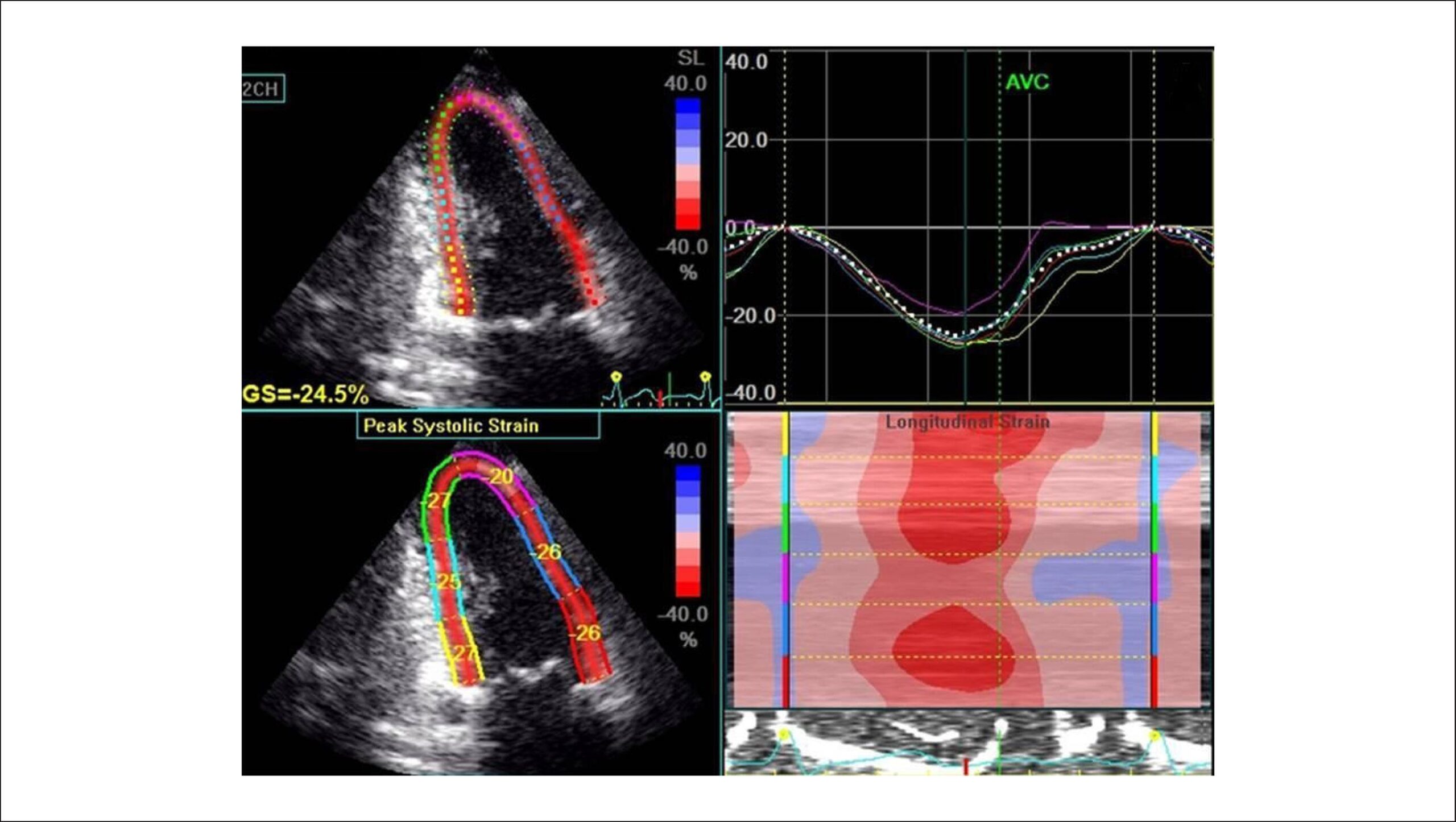
The group of ineligible patients presented: a lower proportion of women, a higher prevalence of diabetes mellitus (DM), use of ASA, statins and beta-blockers and larger cavity diameters. The main causes of non-applicability were: presence of previous infarction (56.4%), previous CTA (22.1%), previous MRI (11.5%) or both (16.7%) and the presence of specific electrocardiographic abnormalities (12.8%). SL2D assessment revealed a lower global strain value in those with stenosis greater than 70% in some epicardial coronary arteries (17.1 [3.1] versus 20.2 [6.7], with p = 0.014). Segmental strain assessment showed an association between severe CX and RD lesions with longitudinal strain reduction of lateral and inferior walls basal segments; (14 [5] versus 21 [10], with p = 0.04) and (12.5 [6] versus 19 [8], respectively).

Conclusion:

There was very low SL2D applicability to assess ischemia in the studied population. However, the global strain showed a correlation with the presence of significant coronary lesion, which could be included in the UA diagnostic arsenal in the future.

  • Angina, unstable / physiopathology
  • Echocardiography/methods
  • Myocardial Ischemia / physiopathology
  • Strain
  • Ventricular Dysfunction, Left
Read Full Article
Creative Commons Attribution (CC BY) Creative Commons license
01/04/2018 DOI: 10.5935/abc.20180062
Figure 1
ABC
Original Article

Global Longitudinal Strain or Left Ventricular Twist and Torsion? Which Correlates Best with Ejection Fraction?

Marcio Silva Miguel Lima et al. Hector R Villarraga Maria Cristina Donadio Abduch Marta Fernandes Lima … Cecilia Beatriz Bittencourt Viana Cruz João Cesar Nunes Sbano Mariana Callil Voos Wilson Mathias Junior Jeane Mike Tsutsui

Abstract

Background:

Estimative of left ventricular ejection fraction (LVEF) is a major indication for echocardiography. Speckle tracking echocardiography (STE) allows analysis of LV contraction mechanics which includes global longitudinal strain (GLS) and twist/torsion, both the most widely used. Direct comparison of correlations between these novel parameters and LVEF has never been done before.

Objective:

This study aims to check which one has the highest correlation with LVEF.

Methods:

Patients with normal LVEF (> 0,55) and systolic dysfunction (LVEF <0,55) were prospectively enrolled, and underwent echocardiogram with STE analysis. Correlation of variables was performed by linear regression analysis. In addition, correlation among levels of LV systolic impairment was also tested.

Results:

A total of 131 patients were included (mean age, 46 ± 14y; 43%, men). LVEF and GLS showed a strong correlation (r = 0.95; r2 = 0.89; p < 0.001), more evident in groups with LV systolic dysfunction than those with preserved LVEF. Good correlation was also found with global longitudinal strain rate (r = 0.85; r2 = 0.73; p < 0.001). Comparing to GLS, correlation of LVEF and torsional mechanics was weaker: twist (r = 0.78; r2 = 0.60; p < 0.001); torsion (r = 0.75; r2 = 0.56; p < 0.001).

Conclusion:

GLS of the left ventricle have highly strong positive correlation with the classical parameter of ejection fraction, especially in cases with LV systolic impairment. Longitudinal strain rate also demonstrated a good correlation. GLS increments analysis of LV systolic function. On the other hand, although being a cornerstone of LV mechanics, twist and torsion have a weaker correlation with LV ejection, comparing to GLS.

  • Echocardiography,Doppler
  • Strain
  • Stroke Volume
  • Torsion Abnormality
  • Torsion,Mechanical
  • Ventricular Dysfunction, Left
Read Full Article
Creative Commons Attribution (CC BY) Creative Commons license
29/06/2017 DOI: 10.5935/abc.20170085 Views 1
Figure 1
ABC
Review Article

Cardiac Mechanics Evaluated by Speckle Tracking Echocardiography

Maria Cristina Donadio Abduch et al. Adriano Mesquita Alencar Wilson Mathias Jr. Marcelo Luiz de Campos Vieira

Natural myocardial markers, or speckles, originated from constructive and destructive interference of ultrasound in the tissues may provide early diagnosis of myocardial changes and be used in the prediction of some cardiac events. Due to its relatively temporal stability, speckles can be tracked by dedicated software along the cardiac cycle, enabling the analysis of the systolic and diastolic function. They are identified by either conventional 2D grey scale and by 3D echo, conferring independence of the insonation angle, thus allowing assessment of cardiac mechanics in the three spatial planes: longitudinal, circumferential, and radial. The purposes of the present paper are: to discuss the role and the meaning of cardiac strain obtained by speckle tracking during the evaluation of cardiac physiology and to discuss clinical applications of this novel echocardiographic technology.

  • Echocardiography/methods
  • Heart Diseases
  • Speckle Tracking
  • Strain
  • torsion
Read Full Article
Creative Commons Attribution (CC BY) Creative Commons license
01/01/2014 DOI: 10.5935/abc.20140041

How to cite this article

EndNote RIS

Electronic Document Format (Vancouver)

Brindeiro Filho D, Castillo JMD, Granja FAA. Important Constrictive Pericarditis in a Patient with Schistosomiasis: A Case Report. ABC Imagem Cardiovascular 2023;36(2):e2023378.

Electronic Document Format (ABNT)

Brindeiro Filho, Djair; Castillo, José Maria Del; Granja, Fábio Antonio Amando. Important Constrictive Pericarditis in a Patient with Schistosomiasis: A Case Report. ABC Imagem Cardiovascular, v. 36, n. 2, e2023378, May. 2023.

Electronic Document Format (APA)

Brindeiro Filho, D., Castillo, J. M. D., & Granja, F. A. A. (2023). Important Constrictive Pericarditis in a Patient with Schistosomiasis: A Case Report. ABC Imagem Cardiovascular, 36(2), e2023378.

Electronic Document Format (ISO)

Brindeiro Filho, Djair and Castillo, José Maria Del and Granja, Fábio Antonio Amando. Important Constrictive Pericarditis in a Patient with Schistosomiasis: A Case Report. ABC Imagem Cardiovascular [online]. 2023, vol. 36, n. 2, [cited 2026-10-14], e2023378. Available from: <https://journals.cardiol.br/en/article/important-constrictive-pericarditis-in-a-patient-with-schistosomiasis-a-case-report/>. ISSN 2318-8219

EndNote RIS

Electronic Document Format (Vancouver)

Avila MS, Alves MSL, Ayub-Ferreira SM, Wanderley Junior MRB, Cruz FD, Brandão SMG, Hajjar LA, et al. Global Longitudinal Strain as Predictor of Chemotherapy-Induced Cardiotoxicity. ABC Imagem Cardiovascular 2022;35(4):eabc340.

Electronic Document Format (ABNT)

Avila, Monica Samuel; Alves, Marco Stephan Lofrano; Ayub-Ferreira, Silvia Moreira; Wanderley Junior, Mauro Rogerio de Barros; Cruz, Fatima das Dores; Brandão, Sara Michelly Gonçalves; Hajjar, Ludhmila Abrahão; Kalil Filho, Roberto; Cruz, Cecilia Beatriz Bittencourt Viana; Abduch, Maria Cristina; Moleta, Danilo Bora; Bocchi, Edimar Alcides. Global Longitudinal Strain as Predictor of Chemotherapy-Induced Cardiotoxicity. ABC Imagem Cardiovascular, v. 35, n. 4, eabc340, Dec. 2022.

Electronic Document Format (APA)

Avila, M. S., Alves, M. S. L., Ayub-Ferreira, S. M., Wanderley Junior, M. R. B., Cruz, F. D., Brandão, S. M. G., Hajjar, L. A., Kalil Filho, R., Cruz, C. B. B. V., Abduch, M. C., Moleta, D. B., & Bocchi, E. A. (2022). Global Longitudinal Strain as Predictor of Chemotherapy-Induced Cardiotoxicity. ABC Imagem Cardiovascular, 35(4), eabc340.

Electronic Document Format (ISO)

Avila, Monica Samuel and Alves, Marco Stephan Lofrano and Ayub-Ferreira, Silvia Moreira and Wanderley Junior, Mauro Rogerio de Barros and Cruz, Fatima das Dores and Brandão, Sara Michelly Gonçalves and Hajjar, Ludhmila Abrahão and Kalil Filho, Roberto and Cruz, Cecilia Beatriz Bittencourt Viana and Abduch, Maria Cristina and Moleta, Danilo Bora and Bocchi, Edimar Alcides. Global Longitudinal Strain as Predictor of Chemotherapy-Induced Cardiotoxicity. ABC Imagem Cardiovascular [online]. 2022, vol. 35, n. 4, [cited 2026-10-14], eabc340. Available from: <https://journals.cardiol.br/en/article/global-longitudinal-strain-as-predictor-of-chemotherapy-induced-cardiotoxicity/>. ISSN 2318-8219

EndNote RIS

Electronic Document Format (Vancouver)

Freitas APTG, Massoni NM, Barretto RBM. Left Ventricular Longitudinal Strain Echocardiogram and Handgrip: A Useful Tool for Detecting Ischemia in the Emergency Room. Arquivos Brasileiros de Cardiologia Imagem cardiovascular 2022;34(4):eabc238.

Electronic Document Format (ABNT)

Freitas, Ana Paula Torres Guimarães de; Massoni, Natalia Marcusso; Barretto, Rodrigo Bellio de Mattos. Left Ventricular Longitudinal Strain Echocardiogram and Handgrip: A Useful Tool for Detecting Ischemia in the Emergency Room. Arquivos Brasileiros de Cardiologia Imagem cardiovascular, v. 34, n. 4, eabc238, Mar. 2022.

Electronic Document Format (APA)

Freitas, A. P. T. G. , Massoni, N. M., & Barretto, R. B. M. (2022). Left Ventricular Longitudinal Strain Echocardiogram and Handgrip: A Useful Tool for Detecting Ischemia in the Emergency Room. Arquivos Brasileiros de Cardiologia Imagem cardiovascular, 34(4), eabc238.

Electronic Document Format (ISO)

Freitas, Ana Paula Torres Guimarães de and Massoni, Natalia Marcusso and Barretto, Rodrigo Bellio de Mattos. Left Ventricular Longitudinal Strain Echocardiogram and Handgrip: A Useful Tool for Detecting Ischemia in the Emergency Room. Arquivos Brasileiros de Cardiologia Imagem cardiovascular [online]. 2022, vol. 34, n. 4, [cited 2026-10-14], eabc238. Available from: <https://journals.cardiol.br/en/article/left-ventricular-longitudinal-strain-echocardiogram-and-handgrip-a-useful-tool-for-detecting-ischemia-in-the-emergency-room/>. ISSN 2318-8219

EndNote RIS

Electronic Document Format (Vancouver)

Mercer-Rosa L. Applications of Myocardial Strain Study Using Two-Dimensional Speckle-Tracking in Pediatrics. Arquivos Brasileiros de Cardiologia Imagem cardiovascular 2022;32(3):151.

Electronic Document Format (ABNT)

Mercer-Rosa, Laura. Applications of Myocardial Strain Study Using Two-Dimensional Speckle-Tracking in Pediatrics. Arquivos Brasileiros de Cardiologia Imagem cardiovascular, v. 32, n. 3, p. 151-151, Jan. 2022.

Electronic Document Format (APA)

Mercer-Rosa, L. (2022). Applications of Myocardial Strain Study Using Two-Dimensional Speckle-Tracking in Pediatrics. Arquivos Brasileiros de Cardiologia Imagem cardiovascular, 32(3), 151-151.

Electronic Document Format (ISO)

Mercer-Rosa, Laura. Applications of Myocardial Strain Study Using Two-Dimensional Speckle-Tracking in Pediatrics. Arquivos Brasileiros de Cardiologia Imagem cardiovascular [online]. 2022, vol. 32, n. 3, [cited 2026-10-14], pp. 151-151. Available from: <https://journals.cardiol.br/en/article/applications-of-myocardial-strain-study-using-two-dimensional-speckle-tracking-in-pediatrics/>. ISSN 2318-8219

EndNote RIS

Electronic Document Format (Vancouver)

Albuquerque PH, Castillo JMD, Borba L, Ferro CR, Cabral Júnior C, Everaldo Filho A, Cavalcanti RC, et al. Evaluation of Functional Risk Area by Myocardial Strain Analysis in Unstable Angina. Arquivos Brasileiros de Cardiologia Imagem cardiovascular 2022;33(3):1-4.

Electronic Document Format (ABNT)

Albuquerque, Pedro Henrique; Castillo, José Maria Del; Borba, Luciano; Ferro, Carlos Romério; Cabral Júnior, Cyro; Everaldo Filho, Antônio; Cavalcanti, Ricardo César. Evaluation of Functional Risk Area by Myocardial Strain Analysis in Unstable Angina. Arquivos Brasileiros de Cardiologia Imagem cardiovascular, v. 33, n. 3, p. 1-4, Jan. 2022.

Electronic Document Format (APA)

Albuquerque, P. H., Castillo, J. M. D., Borba, L., Ferro, C. R., Cabral Júnior, C., Everaldo Filho, A., & Cavalcanti, R. C. (2022). Evaluation of Functional Risk Area by Myocardial Strain Analysis in Unstable Angina. Arquivos Brasileiros de Cardiologia Imagem cardiovascular, 33(3), 1-4.

Electronic Document Format (ISO)

Albuquerque, Pedro Henrique and Castillo, José Maria Del and Borba, Luciano and Ferro, Carlos Romério and Cabral Júnior, Cyro and Everaldo Filho, Antônio and Cavalcanti, Ricardo César. Evaluation of Functional Risk Area by Myocardial Strain Analysis in Unstable Angina. Arquivos Brasileiros de Cardiologia Imagem cardiovascular [online]. 2022, vol. 33, n. 3, [cited 2026-10-14], pp. 1-4. Available from: <https://journals.cardiol.br/article/evaluation-of-functional-risk-area-by-myocardial-strain-analysis-in-unstable-angina/>. ISSN 2318-8219

EndNote RIS

Electronic Document Format (Vancouver)

Alencar Neto AC, Fernandes F. What Does the Cardiologist Expect from the Echocardiogram in Amyloidosis?. Arquivos Brasileiros de Cardiologia Imagem cardiovascular 2022;33(2):1-4.

Electronic Document Format (ABNT)

Alencar Neto, Aristóteles Comte de; Fernandes, Fabio. What Does the Cardiologist Expect from the Echocardiogram in Amyloidosis?. Arquivos Brasileiros de Cardiologia Imagem cardiovascular, v. 33, n. 2, p. 1-4, Jan. 2022.

Electronic Document Format (APA)

Alencar Neto, A. C. , & Fernandes, F. (2022). What Does the Cardiologist Expect from the Echocardiogram in Amyloidosis?. Arquivos Brasileiros de Cardiologia Imagem cardiovascular, 33(2), 1-4.

Electronic Document Format (ISO)

Alencar Neto, Aristóteles Comte de and Fernandes, Fabio. What Does the Cardiologist Expect from the Echocardiogram in Amyloidosis?. Arquivos Brasileiros de Cardiologia Imagem cardiovascular [online]. 2022, vol. 33, n. 2, [cited 2026-10-14], pp. 1-4. Available from: <https://journals.cardiol.br/en/article/what-does-the-cardiologist-expect-from-the-echocardiogram-in-amyloidosis/>. ISSN 2318-8219

EndNote RIS

Electronic Document Format (Vancouver)

Momesso M, Tressino CG, Barretto RBM, Bihan DL. My Approach to Assessing Right Ventricular Strain. Arquivos Brasileiros de Cardiologia Imagem cardiovascular 2021;33(4):1-5.

Electronic Document Format (ABNT)

Momesso, Marcela; Tressino, Cintia Galhardo; Barretto, Rodrigo Bellio de Mattos; Bihan, David Le. My Approach to Assessing Right Ventricular Strain. Arquivos Brasileiros de Cardiologia Imagem cardiovascular, v. 33, n. 4, p. 1-5, Dec. 2021.

Electronic Document Format (APA)

Momesso, M., Tressino, C. G., Barretto, R. B. M., & Bihan, D. L. (2021). My Approach to Assessing Right Ventricular Strain. Arquivos Brasileiros de Cardiologia Imagem cardiovascular, 33(4), 1-5.

Electronic Document Format (ISO)

Momesso, Marcela and Tressino, Cintia Galhardo and Barretto, Rodrigo Bellio de Mattos and Bihan, David Le. My Approach to Assessing Right Ventricular Strain. Arquivos Brasileiros de Cardiologia Imagem cardiovascular [online]. 2021, vol. 33, n. 4, [cited 2026-10-14], pp. 1-5. Available from: <https://journals.cardiol.br/en/article/my-approach-to-assessing-right-ventricular-strain/>. ISSN 2318-8219

EndNote RIS

Electronic Document Format (Vancouver)

Barroso GMHM, Teles JCOC, Silva PVJ, Fonseca KYS, Aragão VAS, Aquino MM, Melo EV, et al. Subclinical Systolic Dysfunction during Chemotherapy for Breast Cancer. International Journal of Cardiovascular Sciences 2021;35(2):220-9.

Electronic Document Format (ABNT)

Barroso, Geanne Maria Holanda de Menezes; Teles, Júlio César Oliveira Costa; Silva, Paulo Victor de Jesus; Fonseca, Karin Yasmin Santos; Aragão, Vinícius Antônio Santos; Aquino, Marília Marques; Melo, Enaldo Vieira de; Ferreira, Karina Oliveira; Assis, Ronnei José Feitosa de; Alves, Michel Fabiano Silva; Sousa, Antônio Carlos Sobral; Oliveira, Joselina Luzia Menezes. Subclinical Systolic Dysfunction during Chemotherapy for Breast Cancer. International Journal of Cardiovascular Sciences, v. 35, n. 2, p. 220-229, Dec. 2021.

Electronic Document Format (APA)

Barroso, G. M. H. M., Teles, J. C. O. C., Silva, P. V. J., Fonseca, K. Y. S., Aragão, V. A. S., Aquino, M. M., Melo, E. V. , Ferreira, K. O., Assis, R. J. F. , Alves, M. F. S., Sousa, A. C. S., & Oliveira, J. L. M. (2021). Subclinical Systolic Dysfunction during Chemotherapy for Breast Cancer. International Journal of Cardiovascular Sciences, 35(2), 220-229.

Electronic Document Format (ISO)

Barroso, Geanne Maria Holanda de Menezes and Teles, Júlio César Oliveira Costa and Silva, Paulo Victor de Jesus and Fonseca, Karin Yasmin Santos and Aragão, Vinícius Antônio Santos and Aquino, Marília Marques and Melo, Enaldo Vieira de and Ferreira, Karina Oliveira and Assis, Ronnei José Feitosa de and Alves, Michel Fabiano Silva and Sousa, Antônio Carlos Sobral and Oliveira, Joselina Luzia Menezes. Subclinical Systolic Dysfunction during Chemotherapy for Breast Cancer. International Journal of Cardiovascular Sciences [online]. 2021, vol. 35, n. 2, [cited 2026-10-14], pp. 220-229. Available from: <https://journals.cardiol.br/en/article/subclinical-systolic-dysfunction-during-chemotherapy-for-breast-cancer/>. ISSN 2359-4802

EndNote RIS

Electronic Document Format (Vancouver)

Soares AM, Soares BM. Cardiovascular Manifestations in the Pediatric Population with COVID-19, What is the Real Relevance?. Arquivos Brasileiros de Cardiologia 2021;117(5):965-7.

Electronic Document Format (ABNT)

Soares, Andressa Mussi; Soares, Bernardo Mussi. Cardiovascular Manifestations in the Pediatric Population with COVID-19, What is the Real Relevance?. Arquivos Brasileiros de Cardiologia, v. 117, n. 5, p. 965-967, Nov. 2021.

Electronic Document Format (APA)

Soares, A. M., & Soares, B. M. (2021). Cardiovascular Manifestations in the Pediatric Population with COVID-19, What is the Real Relevance?. Arquivos Brasileiros de Cardiologia, 117(5), 965-967.

Electronic Document Format (ISO)

Soares, Andressa Mussi and Soares, Bernardo Mussi. Cardiovascular Manifestations in the Pediatric Population with COVID-19, What is the Real Relevance?. Arquivos Brasileiros de Cardiologia [online]. 2021, vol. 117, n. 5, [cited 2026-10-14], pp. 965-967. Available from: <https://journals.cardiol.br/en/article/cardiovascular-manifestations-in-the-pediatric-population-with-covid-19-what-is-the-real-relevance/>. ISSN 0066-782X

EndNote RIS

Electronic Document Format (Vancouver)

Carrion LJBM, Sperotto A, Nazario R, Goldraich LA, Clausell N, Rohde LE, Santos ABS, et al. Impaired Right Ventricular Function in Heart Transplant Rejection. Arquivos Brasileiros de Cardiologia 2020;114(4):638-44.

Electronic Document Format (ABNT)

Carrion, Luciana J. B. M.; Sperotto, Alice; Nazario, Raffaela; Goldraich, Livia A.; Clausell, Nadine; Rohde, Luís Eduardo; Santos, Angela Barreto Santiago. Impaired Right Ventricular Function in Heart Transplant Rejection. Arquivos Brasileiros de Cardiologia, v. 114, n. 4, p. 638-644, Feb. 2020.

Electronic Document Format (APA)

Carrion, L. J. B. M., Sperotto, A., Nazario, R., Goldraich, L. A., Clausell, N., Rohde, L. E., & Santos, A. B. S. (2020). Impaired Right Ventricular Function in Heart Transplant Rejection. Arquivos Brasileiros de Cardiologia, 114(4), 638-644.

Electronic Document Format (ISO)

Carrion, Luciana J. B. M. and Sperotto, Alice and Nazario, Raffaela and Goldraich, Livia A. and Clausell, Nadine and Rohde, Luís Eduardo and Santos, Angela Barreto Santiago. Impaired Right Ventricular Function in Heart Transplant Rejection. Arquivos Brasileiros de Cardiologia [online]. 2020, vol. 114, n. 4, [cited 2026-10-14], pp. 638-644. Available from: <https://journals.cardiol.br/en/article/impaired-right-ventricular-function-in-heart-transplant-rejection/>. ISSN 0066-782X

EndNote RIS

Electronic Document Format (Vancouver)

Correia ETO, Barbetta LMS. Left Ventricle Mass Index, a Confounding Variable of Global Longitudinal Strain to be Noticed. Arquivos Brasileiros de Cardiologia 2020;114(1):136.

Electronic Document Format (ABNT)

Correia, Eduardo Thadeu de Oliveira; Barbetta, Letícia Mara dos Santos. Left Ventricle Mass Index, a Confounding Variable of Global Longitudinal Strain to be Noticed. Arquivos Brasileiros de Cardiologia, v. 114, n. 1, p. 136-136, Feb. 2020.

Electronic Document Format (APA)

Correia, E. T. O., & Barbetta, L. M. S. (2020). Left Ventricle Mass Index, a Confounding Variable of Global Longitudinal Strain to be Noticed. Arquivos Brasileiros de Cardiologia, 114(1), 136-136.

Electronic Document Format (ISO)

Correia, Eduardo Thadeu de Oliveira and Barbetta, Letícia Mara dos Santos. Left Ventricle Mass Index, a Confounding Variable of Global Longitudinal Strain to be Noticed. Arquivos Brasileiros de Cardiologia [online]. 2020, vol. 114, n. 1, [cited 2026-10-14], pp. 136-136. Available from: <https://journals.cardiol.br/en/article/left-ventricle-mass-index-a-confounding-variable-of-global-longitudinal-strain-to-be-noticed/>. ISSN 0066-782X

EndNote RIS

Electronic Document Format (Vancouver)

Mancuso FJN. Real-Time Three-Dimensional Echocardiography and Myocardial Strain: Ready for Use in Clinical Practice. Arquivos Brasileiros de Cardiologia 2019;113(5):946-7.

Electronic Document Format (ABNT)

Mancuso, Frederico Jose Neves. Real-Time Three-Dimensional Echocardiography and Myocardial Strain: Ready for Use in Clinical Practice. Arquivos Brasileiros de Cardiologia, v. 113, n. 5, p. 946-947, Dec. 2019.

Electronic Document Format (APA)

Mancuso, F. J. N. (2019). Real-Time Three-Dimensional Echocardiography and Myocardial Strain: Ready for Use in Clinical Practice. Arquivos Brasileiros de Cardiologia, 113(5), 946-947.

Electronic Document Format (ISO)

Mancuso, Frederico Jose Neves. Real-Time Three-Dimensional Echocardiography and Myocardial Strain: Ready for Use in Clinical Practice. Arquivos Brasileiros de Cardiologia [online]. 2019, vol. 113, n. 5, [cited 2026-10-14], pp. 946-947. Available from: <https://journals.cardiol.br/en/article/real-time-three-dimensional-echocardiography-and-myocardial-strain-ready-for-use-in-clinical-practice/>. ISSN 0066-782X

EndNote RIS

Electronic Document Format (Vancouver)

Salemi VMC, Melo MDT. Are Myocardium Deformation Indices Influenced by Cardiac Load, Age or Body Mass Index?. Arquivos Brasileiros de Cardiologia 2019;113(4):685-6.

Electronic Document Format (ABNT)

Salemi, Vera Maria Cury; Melo, Marcelo Dantas Tavares de. Are Myocardium Deformation Indices Influenced by Cardiac Load, Age or Body Mass Index?. Arquivos Brasileiros de Cardiologia, v. 113, n. 4, p. 685-686, Nov. 2019.

Electronic Document Format (APA)

Salemi, V. M. C., & Melo, M. D. T. (2019). Are Myocardium Deformation Indices Influenced by Cardiac Load, Age or Body Mass Index?. Arquivos Brasileiros de Cardiologia, 113(4), 685-686.

Electronic Document Format (ISO)

Salemi, Vera Maria Cury and Melo, Marcelo Dantas Tavares de. Are Myocardium Deformation Indices Influenced by Cardiac Load, Age or Body Mass Index?. Arquivos Brasileiros de Cardiologia [online]. 2019, vol. 113, n. 4, [cited 2026-10-14], pp. 685-686. Available from: <https://journals.cardiol.br/en/article/are-myocardium-deformation-indices-influenced-by-cardiac-load-age-or-body-mass-index/>. ISSN 0066-782X

EndNote RIS

Electronic Document Format (Vancouver)

Rodrigues RC, Azevedo KML, Moscavitch SD, Setubal S, Mesquita CT. The Use of Two-Dimensional Strain Measured by Speckle Tracking in the Identification of Incipient Ventricular Dysfunction in HIV-Infected Patients on Antiretroviral Therapy, Untreated HIV Patients and Healthy Controls. Arquivos Brasileiros de Cardiologia 2019;113(4):737-45.

Electronic Document Format (ABNT)

Rodrigues, Ronaldo Campos; Azevedo, Katia Martins Lopes de; Moscavitch, Samuel Datum; Setubal, Sergio; Mesquita, Claudio Tinoco. The Use of Two-Dimensional Strain Measured by Speckle Tracking in the Identification of Incipient Ventricular Dysfunction in HIV-Infected Patients on Antiretroviral Therapy, Untreated HIV Patients and Healthy Controls. Arquivos Brasileiros de Cardiologia, v. 113, n. 4, p. 737-745, Sep. 2019.

Electronic Document Format (APA)

Rodrigues, R. C., Azevedo, K. M. L. , Moscavitch, S. D., Setubal, S., & Mesquita, C. T. (2019). The Use of Two-Dimensional Strain Measured by Speckle Tracking in the Identification of Incipient Ventricular Dysfunction in HIV-Infected Patients on Antiretroviral Therapy, Untreated HIV Patients and Healthy Controls. Arquivos Brasileiros de Cardiologia, 113(4), 737-745.

Electronic Document Format (ISO)

Rodrigues, Ronaldo Campos and Azevedo, Katia Martins Lopes de and Moscavitch, Samuel Datum and Setubal, Sergio and Mesquita, Claudio Tinoco. The Use of Two-Dimensional Strain Measured by Speckle Tracking in the Identification of Incipient Ventricular Dysfunction in HIV-Infected Patients on Antiretroviral Therapy, Untreated HIV Patients and Healthy Controls. Arquivos Brasileiros de Cardiologia [online]. 2019, vol. 113, n. 4, [cited 2026-10-14], pp. 737-745. Available from: <https://journals.cardiol.br/en/article/the-use-of-two-dimensional-strain-measured-by-speckle-tracking-in-the-identification-of-incipient-ventricular-dysfunction-in-hiv-infected-patients-on-antiretroviral-therapy-untreated-hiv-patients-and/>. ISSN 0066-782X

EndNote RIS

Electronic Document Format (Vancouver)

Gil TCP, Castier MB, Gondar AFP, Sales AF, Santos MO, Lima FCS, Mourilhe-Rocha R, et al. Strain Analysis of Left Ventricular Function in the Association of Hypertrophic Cardiomyopathy and Systemic Arterial Hypertension. Arquivos Brasileiros de Cardiologia 2019;113(4):677-84.

Electronic Document Format (ABNT)

Gil, Thereza Cristina Pereira; Castier, Marcia Bueno; Gondar, Alyne Freitas Pereira; Sales, Ana Ferreira; Santos, Marceli de Oliveira; Lima, Fernanda Cristina da Silva de; Mourilhe-Rocha, Ricardo. Strain Analysis of Left Ventricular Function in the Association of Hypertrophic Cardiomyopathy and Systemic Arterial Hypertension. Arquivos Brasileiros de Cardiologia, v. 113, n. 4, p. 677-684, Sep. 2019.

Electronic Document Format (APA)

Gil, T. C. P., Castier, M. B., Gondar, A. F. P., Sales, A. F., Santos, M. O., Lima, F. C. S. , & Mourilhe-Rocha, R. (2019). Strain Analysis of Left Ventricular Function in the Association of Hypertrophic Cardiomyopathy and Systemic Arterial Hypertension. Arquivos Brasileiros de Cardiologia, 113(4), 677-684.

Electronic Document Format (ISO)

Gil, Thereza Cristina Pereira and Castier, Marcia Bueno and Gondar, Alyne Freitas Pereira and Sales, Ana Ferreira and Santos, Marceli de Oliveira and Lima, Fernanda Cristina da Silva de and Mourilhe-Rocha, Ricardo. Strain Analysis of Left Ventricular Function in the Association of Hypertrophic Cardiomyopathy and Systemic Arterial Hypertension. Arquivos Brasileiros de Cardiologia [online]. 2019, vol. 113, n. 4, [cited 2026-10-14], pp. 677-684. Available from: <https://journals.cardiol.br/en/article/strain-analysis-of-left-ventricular-function-in-the-association-of-hypertrophic-cardiomyopathy-and-systemic-arterial-hypertension/>. ISSN 0066-782X

EndNote RIS

Electronic Document Format (Vancouver)

Saraiva RM, Scolin EMB, Pacheco NP, Bouret ME, Mediano MFF, Holanda MT, Costa AR, et al. 3-Dimensional Echocardiography and 2-D Strain Analysis of Left Ventricular, Left Atrial and Right Ventricular Function in Healthy Brazilian Volunteers. Arquivos Brasileiros de Cardiologia 2019;113(5):935-4.

Electronic Document Format (ABNT)

Saraiva, Roberto M.; Scolin, Eliza Maria B.; Pacheco, Nicole P.; Bouret, Maria Eduarda; Mediano, Mauro Felippe Felix; Holanda, Marcelo T.; Costa, Andréa R. da. 3-Dimensional Echocardiography and 2-D Strain Analysis of Left Ventricular, Left Atrial and Right Ventricular Function in Healthy Brazilian Volunteers. Arquivos Brasileiros de Cardiologia, v. 113, n. 5, p. 935-945, Aug. 2019.

Electronic Document Format (APA)

Saraiva, R. M., Scolin, E. M. B., Pacheco, N. P., Bouret, M. E., Mediano, M. F. F., Holanda, M. T., & Costa, A. R. (2019). 3-Dimensional Echocardiography and 2-D Strain Analysis of Left Ventricular, Left Atrial and Right Ventricular Function in Healthy Brazilian Volunteers. Arquivos Brasileiros de Cardiologia, 113(5), 935-945.

Electronic Document Format (ISO)

Saraiva, Roberto M. and Scolin, Eliza Maria B. and Pacheco, Nicole P. and Bouret, Maria Eduarda and Mediano, Mauro Felippe Felix and Holanda, Marcelo T. and Costa, Andréa R. da. 3-Dimensional Echocardiography and 2-D Strain Analysis of Left Ventricular, Left Atrial and Right Ventricular Function in Healthy Brazilian Volunteers. Arquivos Brasileiros de Cardiologia [online]. 2019, vol. 113, n. 5, [cited 2026-10-14], pp. 935-945. Available from: <https://journals.cardiol.br/en/article/3-dimensional-echocardiography-and-2-d-strain-analysis-of-left-ventricular-left-atrial-and-right-ventricular-function-in-healthy-brazilian-volunteers/>. ISSN 0066-782X

EndNote RIS

Electronic Document Format (Vancouver)

Brindeiro Filho D. Right Ventricular Evaluation with Speckle Tracking Echocardiography in COPD after a Pulmonary Rehabilitation Program. Arquivos Brasileiros de Cardiologia 2018;111(3):382-3.

Electronic Document Format (ABNT)

Brindeiro Filho, Djair. Right Ventricular Evaluation with Speckle Tracking Echocardiography in COPD after a Pulmonary Rehabilitation Program. Arquivos Brasileiros de Cardiologia, v. 111, n. 3, p. 382-383, Aug. 2018.

Electronic Document Format (APA)

Brindeiro Filho, D. (2018). Right Ventricular Evaluation with Speckle Tracking Echocardiography in COPD after a Pulmonary Rehabilitation Program. Arquivos Brasileiros de Cardiologia, 111(3), 382-383.

Electronic Document Format (ISO)

Brindeiro Filho, Djair. Right Ventricular Evaluation with Speckle Tracking Echocardiography in COPD after a Pulmonary Rehabilitation Program. Arquivos Brasileiros de Cardiologia [online]. 2018, vol. 111, n. 3, [cited 2026-10-14], pp. 382-383. Available from: <https://journals.cardiol.br/en/article/right-ventricular-evaluation-with-speckle-tracking-echocardiography-in-copd-after-a-pulmonary-rehabilitation-program/>. ISSN 0066-782X

EndNote RIS

Electronic Document Format (Vancouver)

Barberato SH. Right Ventricular Dysfunction in Lupus Patients With Pulmonary Hypertension. Arquivos Brasileiros de Cardiologia 2018;111(1):82-3.

Electronic Document Format (ABNT)

Barberato, Silvio Henrique. Right Ventricular Dysfunction in Lupus Patients With Pulmonary Hypertension. Arquivos Brasileiros de Cardiologia, v. 111, n. 1, p. 82-83, Jun. 2018.

Electronic Document Format (APA)

Barberato, S. H. (2018). Right Ventricular Dysfunction in Lupus Patients With Pulmonary Hypertension. Arquivos Brasileiros de Cardiologia, 111(1), 82-83.

Electronic Document Format (ISO)

Barberato, Silvio Henrique. Right Ventricular Dysfunction in Lupus Patients With Pulmonary Hypertension. Arquivos Brasileiros de Cardiologia [online]. 2018, vol. 111, n. 1, [cited 2026-10-14], pp. 82-83. Available from: <https://journals.cardiol.br/en/article/right-ventricular-dysfunction-in-lupus-patients-with-pulmonary-hypertension/>. ISSN 0066-782X

EndNote RIS

Electronic Document Format (Vancouver)

Markman Filho B. Speckle-Tracking Echocardiography – Ready for Use in Acute Coronary Syndrome?. Arquivos Brasileiros de Cardiologia 2018;110(4):362-3.

Electronic Document Format (ABNT)

Markman Filho, Brivaldo. Speckle-Tracking Echocardiography – Ready for Use in Acute Coronary Syndrome?. Arquivos Brasileiros de Cardiologia, v. 110, n. 4, p. 362-363, Mar. 2018.

Electronic Document Format (APA)

Markman Filho, B. (2018). Speckle-Tracking Echocardiography – Ready for Use in Acute Coronary Syndrome?. Arquivos Brasileiros de Cardiologia, 110(4), 362-363.

Electronic Document Format (ISO)

Markman Filho, Brivaldo. Speckle-Tracking Echocardiography – Ready for Use in Acute Coronary Syndrome?. Arquivos Brasileiros de Cardiologia [online]. 2018, vol. 110, n. 4, [cited 2026-10-14], pp. 362-363. Available from: <https://journals.cardiol.br/en/article/speckle-tracking-echocardiography-ready-for-use-in-acute-coronary-syndrome/>. ISSN 0066-782X

EndNote RIS

Electronic Document Format (Vancouver)

Santos NSS, Vilela AA, Barretto RBM, Vale MP, Rezende MO, Ferreira MC, Andrade AJA, et al. Applicability of Longitudinal Strain of Left Ventricle in Unstable Angina. Arquivos Brasileiros de Cardiologia 2018;110(4):354-61.

Electronic Document Format (ABNT)

Santos, Natasha Soares Simões dos; Vilela, Andrea de Andrade; Barretto, Rodrigo Bellio de Mattos; Vale, Marcela Paganelli do; Rezende, Mariana Oliveira; Ferreira, Murilo Castro; Andrade, Alexandre José Aguiar; Scorsioni, Nelson Henrique Goes; Queiroga, Olívia Ximenes de; Bihan, David Le. Applicability of Longitudinal Strain of Left Ventricle in Unstable Angina. Arquivos Brasileiros de Cardiologia, v. 110, n. 4, p. 354-361, Mar. 2018.

Electronic Document Format (APA)

Santos, N. S. S. , Vilela, A. A., Barretto, R. B. M., Vale, M. P. , Rezende, M. O., Ferreira, M. C., Andrade, A. J. A., Scorsioni, N. H. G., Queiroga, O. X. , & Bihan, D. L. (2018). Applicability of Longitudinal Strain of Left Ventricle in Unstable Angina. Arquivos Brasileiros de Cardiologia, 110(4), 354-361.

Electronic Document Format (ISO)

Santos, Natasha Soares Simões dos and Vilela, Andrea de Andrade and Barretto, Rodrigo Bellio de Mattos and Vale, Marcela Paganelli do and Rezende, Mariana Oliveira and Ferreira, Murilo Castro and Andrade, Alexandre José Aguiar and Scorsioni, Nelson Henrique Goes and Queiroga, Olívia Ximenes de and Bihan, David Le. Applicability of Longitudinal Strain of Left Ventricle in Unstable Angina. Arquivos Brasileiros de Cardiologia [online]. 2018, vol. 110, n. 4, [cited 2026-10-14], pp. 354-361. Available from: <https://journals.cardiol.br/en/article/applicability-of-longitudinal-strain-of-left-ventricle-in-unstable-angina/>. ISSN 0066-782X

EndNote RIS

Electronic Document Format (Vancouver)

Lima MSM, Villarraga HR, Abduch MCD, Lima MF, Cruz CBBV, Sbano JCN, Voos MC, et al. Global Longitudinal Strain or Left Ventricular Twist and Torsion? Which Correlates Best with Ejection Fraction?. Arquivos Brasileiros de Cardiologia 2017;109(1):23-9.

Electronic Document Format (ABNT)

Lima, Marcio Silva Miguel; Villarraga, Hector R; Abduch, Maria Cristina Donadio; Lima, Marta Fernandes; Cruz, Cecilia Beatriz Bittencourt Viana; Sbano, João Cesar Nunes; Voos, Mariana Callil; Mathias Junior, Wilson; Tsutsui, Jeane Mike. Global Longitudinal Strain or Left Ventricular Twist and Torsion? Which Correlates Best with Ejection Fraction?. Arquivos Brasileiros de Cardiologia, v. 109, n. 1, p. 23-29, Jun. 2017.

Electronic Document Format (APA)

Lima, M. S. M., Villarraga, H. R., Abduch, M. C. D., Lima, M. F., Cruz, C. B. B. V., Sbano, J. C. N., Voos, M. C., Mathias Junior, W., & Tsutsui, J. M. (2017). Global Longitudinal Strain or Left Ventricular Twist and Torsion? Which Correlates Best with Ejection Fraction?. Arquivos Brasileiros de Cardiologia, 109(1), 23-29.

Electronic Document Format (ISO)

Lima, Marcio Silva Miguel and Villarraga, Hector R and Abduch, Maria Cristina Donadio and Lima, Marta Fernandes and Cruz, Cecilia Beatriz Bittencourt Viana and Sbano, João Cesar Nunes and Voos, Mariana Callil and Mathias Junior, Wilson and Tsutsui, Jeane Mike. Global Longitudinal Strain or Left Ventricular Twist and Torsion? Which Correlates Best with Ejection Fraction?. Arquivos Brasileiros de Cardiologia [online]. 2017, vol. 109, n. 1, [cited 2026-10-14], pp. 23-29. Available from: <https://journals.cardiol.br/en/article/global-longitudinal-strain-or-left-ventricular-twist-and-torsion-which-correlates-best-with-ejection-fraction/>. ISSN 0066-782X

EndNote RIS

Electronic Document Format (Vancouver)

Abduch MCD, Alencar AM, Mathias Jr. W, Vieira MLC. Cardiac Mechanics Evaluated by Speckle Tracking Echocardiography. Arquivos Brasileiros de Cardiologia 2014;102(4):403-12.

Electronic Document Format (ABNT)

Abduch, Maria Cristina Donadio; Alencar, Adriano Mesquita; Mathias Jr., Wilson; Vieira, Marcelo Luiz de Campos. Cardiac Mechanics Evaluated by Speckle Tracking Echocardiography. Arquivos Brasileiros de Cardiologia, v. 102, n. 4, p. 403-412, Dec. 2013.

Electronic Document Format (APA)

Abduch, M. C. D., Alencar, A. M., Mathias Jr., W., & Vieira, M. L. C. (2014). Cardiac Mechanics Evaluated by Speckle Tracking Echocardiography. Arquivos Brasileiros de Cardiologia, 102(4), 403-412.

Electronic Document Format (ISO)

Abduch, Maria Cristina Donadio and Alencar, Adriano Mesquita and Mathias Jr., Wilson and Vieira, Marcelo Luiz de Campos. Cardiac Mechanics Evaluated by Speckle Tracking Echocardiography. Arquivos Brasileiros de Cardiologia [online]. 2014, vol. 102, n. 4, [cited 2026-10-14], pp. 403-412. Available from: <https://journals.cardiol.br/en/article/cardiac-mechanics-evaluated-by-speckle-tracking-echocardiography/>. ISSN 0066-782X

  • About ABC Family
  • Internal Regulation
  • Editorial Board
  • Brazilian Society of Cardiology (SBC)

Issues

SBC Guidelines

  • Videos
  • Podcasts
  • News