| ABC
ABC Family Arquivos Brasileiros de Cardiologia International Journal of Cardiovascular Sciences ABC Heart Failure & Cardiomyopathy ABC Imagem Cardiovascular
Português English
ABC Family | ABC
Português English
  • About
    • About the Journal
    • Internal Regulation
    • Editors Section
    • Editorial Board
    • History
    • SBC Award
  • Instructions to Authors
    • Guidelines for Publication
    • Editorial Policy
    • Ethics Policy
    • Policy on the Use of Artificial Intelligence
    • Mandatory Publication Form
    • Publication Fee
  • Issues
  • SBC Guidelines
  • Abstracts
    • How to Publish an Abstract Supplement?
    • Supplements from the Brazilian Congress of Cardiology
  • About
    • About the Journal
    • Internal Regulation
    • Editors Section
    • Editorial Board
    • History
    • SBC Award
  • Instructions to Authors
    • Guidelines for Publication
    • Editorial Policy
    • Ethics Policy
    • Policy on the Use of Artificial Intelligence
    • Mandatory Publication Form
    • Publication Fee
  • Issues
  • SBC Guidelines
  • Abstracts
    • How to Publish an Abstract Supplement?
    • Supplements from the Brazilian Congress of Cardiology

ABC Family

  • ABC Family
  • Arquivos Brasileiros de Cardiologia
  • International Journal of Cardiovascular Sciences
  • ABC Heart Failure & Cardiomyopathy
  • ABC Imagem Cardiovascular
Search in

No content found.

Journals
Ordering
Article types
Others

  1. Home
  2. ABC
  3. Issues
  4. 2026, Volume 123, Number 4
Editorial

iCardio And Business Intelligence-Based Tools: Opportunities in Public Health

Fernando Yue Cesena

We have witnessed an explosion of data generation in every field over the last decades. In healthcare, the widespread use of electronic medical records and the advent of wearable monitoring devices, for instance, have contributed to the generation of huge volumes of health data. In public health, it is now easier than before to use computational methods to create datasets with morbidity and mortality data. One challenge is that data collection methods and population characteristics, such as the age pyramid, vary across countries and over time, making it difficult to compare and analyze temporal trends. This is the task of the Global Burden of Disease (), which standardizes indicators of more than 400 health outcomes and risk factors in more than 200 countries and territories, allowing fair comparisons between countries and trends in epidemiological data over time, including in Brazil., Another challenge is that information is often fragmented in distinct datasets. This is the task of the so-called Business Intelligence, which may be used to create tools that transform fragmented, raw data frequently collected from different sources into visual insights, often dynamic, interactive, that allow real-time updates, facilitating whole data interpretation and supporting the decision-making process.

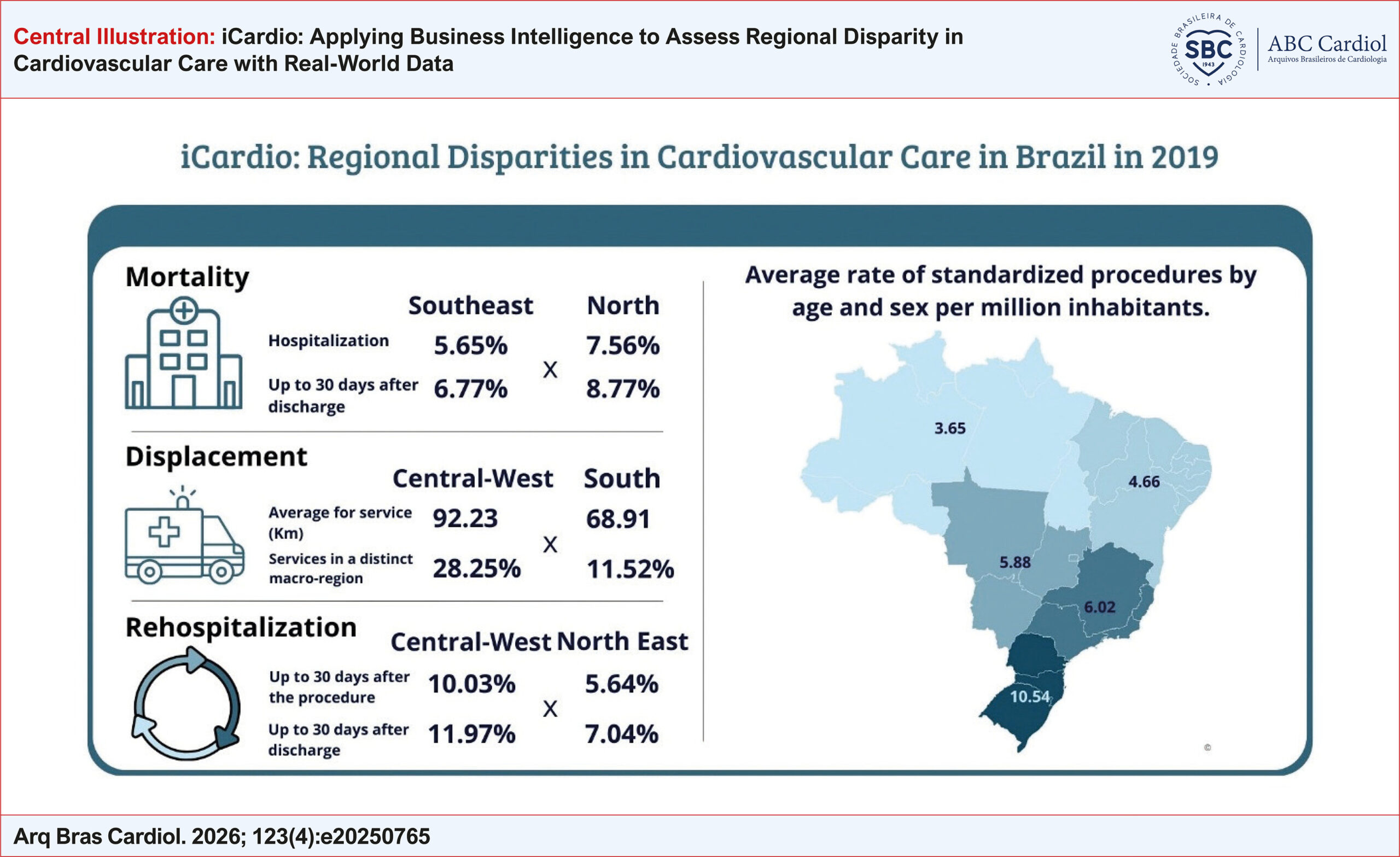
In this issue of Arquivos Brasileiros de Cardiologia, Souza et al. report a study using iCardio, an online platform that leverages Business Intelligence to visualize epidemiological data in interventional cardiology and heart surgery from DATASUS in Brazil (). iCardio, which is part of a project sponsored by the National Council for Scientific and Technological Development (Portuguese: Conselho Nacional de Desenvolvimento Científico e Tecnológico [CNPq]), was developed with data from the Hospital Information System (Portuguese: Sistema de Informações Hospitalares [SIH]) and Information System of Mortality (Portuguese: Sistema de Informação sobre Mortalidade [SIM]). The indicators include the number of high-complexity procedures and hospitalizations, the number of procedures per inhabitants, the geographical location where medical care was provided, the average displacement to the healthcare facility, the hospitalization length of stay, the re-hospitalization rate, the rates of in-hospital mortality and mortality up to 30 days after the procedure or hospital discharge, and costs. Importantly, data may be stratified per sex, age range, race/skin color, location, type of care (urgent/elective), diagnosis, and procedure.,

[…]
  • Cardiovascular Diseases
  • Information Management
  • Public Health
Read Full Article
Creative Commons Attribution (CC BY) Creative Commons license
27/07/2026 DOI: 10.36660/abc.20260419i Views 1
Editorial

Beyond Remission: The Cardiometabolic Burden of ANCA-Associated Vasculitis

Manuela Fiuza

The intersection between systemic inflammation and cardiometabolic disease has emerged as a defining paradigm in contemporary medicine. Antineutrophil cytoplasmic antibody (ANCA)-associated vasculitides (AAV)—including granulomatosis with polyangiitis (GPA), microscopic polyangiitis (MPA), and eosinophilic granulomatosis with polyangiitis (EGPA)—represent a particularly compelling model where immune-mediated vascular injury coexists with a substantial and often underrecognized metabolic burden. In this issue, Bezerra et al. provide important data regarding the prevalence and predictors of metabolic syndrome (MetS) within this population.

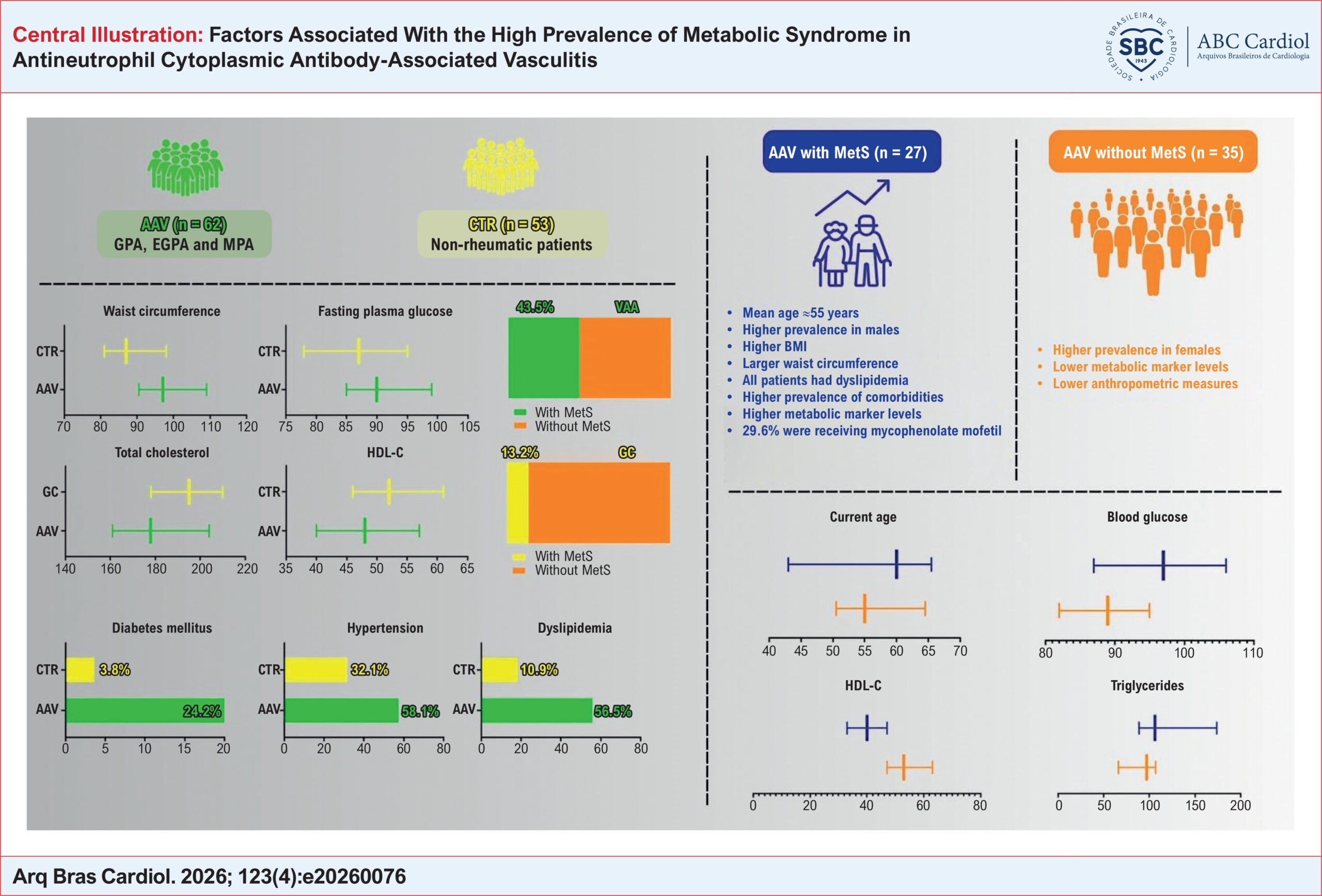
Using the NCEP ATP III criteria, the authors report a MetS prevalence of 43.5% in a cohort of 62 consecutive AAV patients followed at a Brazilian tertiary referral center, compared with only 13.2% in age- and sex-matched controls (p=0.001). In multivariable analysis restricted to AAV patients, male sex (OR=11.43; 95%CI=2.81–46.52) and higher body mass index (OR=1.13; 95%CI=1.02–1.25) emerged as independent predictors of MetS. These findings align with prior reports in AAV populations, where MetS prevalence has ranged from 43% to 51%,– mirroring patterns seen across a broad spectrum of systemic autoimmune rheumatic diseases, including systemic lupus erythematosus, rheumatoid arthritis, and systemic sclerosis.,

[…]

  • body mass index
  • Metabolic Syndrome
  • rheumatic diseases
  • vasculitis
Read Full Article
Creative Commons Attribution (CC BY) Creative Commons license
20/07/2026 DOI: 10.36660/abc.20260373i Views 1
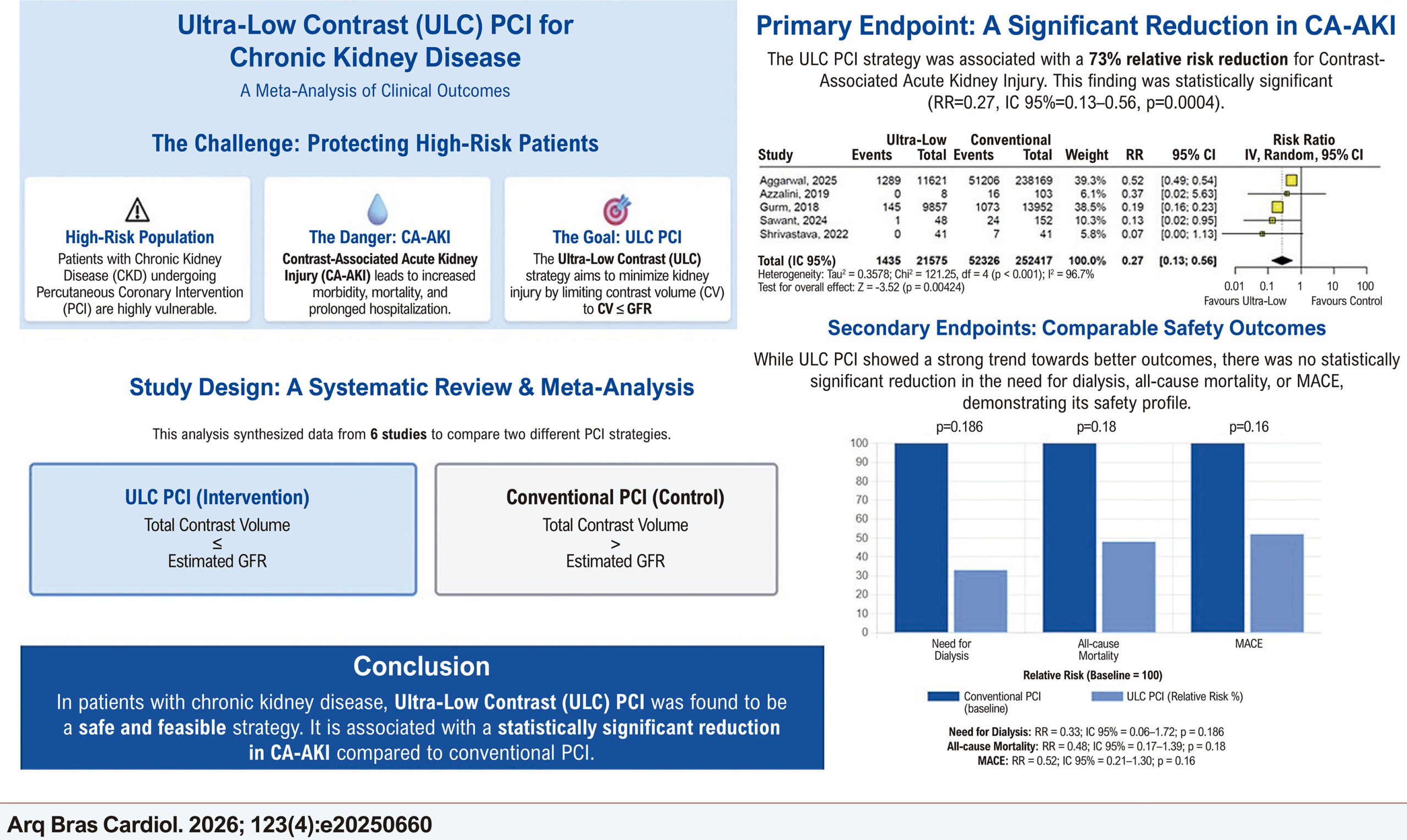
Ultra-Low Contrast versus Conventional Percutaneous Coronary Intervention for Patients with Baseline Renal Impairment: A Systematic Review and Meta-Analysis of Clinical Outcomes
Original Article

Ultra-Low Contrast versus Conventional Percutaneous Coronary Intervention for Patients with Baseline Renal Impairment: A Systematic Review and Meta-Analysis of Clinical Outcomes

Marcos Danillo Oliveira et al. Ricardo Fonseca Oliveira Suruagy-Motta Leonardo Dexheimer da Silva Karlos Daniell Araújo dos Santos Adriano Caixeta

Abstract

Background

Contrast-associated acute kidney injury (CA-AKI) results in increased morbidity and mortality, prolonged hospitalization, and worse clinical outcomes. Prior studies have shown that limiting contrast volume (CV) to less than 3 times the estimated glomerular filtration rate (eGFR) implies a lower risk of CA-AKI, and both efficacy and superior outcomes are associated with ultra-low contrast (ULC) volume coronary procedures (total CV ≤ eGFR).

Objectives

This systematic review and meta-analysis aimed to compare clinical outcomes of ULC versus conventional percutaneous coronary intervention (PCI) in patients with chronic kidney disease.

Methods

The search was conducted in the databases PubMed/MEDLINE, Cochrane, Embase, Scopus, and Web of Science, including all studies reporting clinical outcomes of ULC PCI. The primary efficacy endpoint was the incidence of CA-AKI, and secondary endpoints were need for dialysis, all-cause mortality, and major adverse cardiovascular events (MACE), defined as the composite endpoint of all-cause mortality, non-fatal myocardial infarction, and clinically driven target lesion revascularization.

Results

Six studies met the inclusion criteria and were included in the final analysis, encompassing a total of 274,102 patients. ULC PCI was associated with a statistically significant reduction of CA-AKI (risk ratio=0.27; 95% CI=0.13–0.56; p=0.0004). In turn, ULC PCI did not result in statistically significant reduction of need for dialysis (risk ratio=0.33; 95% CI=0.06–1.72; p=0.186), all-cause mortality (risk ratio=0.48; 95% CI=0.17–1.39; p=0.18), and MACE (risk ratio=0.52; 95% CI= 0.21–1.30; p=0.16).

Conclusions

ULC, as compared to conventional PCI, in patients with chronic kidney disease, was found to be safe, feasible, and associated with a statistically significant reduction of CA-AKI. Further, larger, well-powered, randomized, and controlled trials are warranted in order to reassure these findings.

  • Acute Kidney Injury
  • Contrast Media
  • Meta-Analysis
  • Percutaneous Coronary Intervention
  • systematic review
Read Full Article
Creative Commons Attribution (CC BY) Creative Commons license
20/07/2026 DOI: 10.36660/abc.20250660i Views 2
Figure 1
Research Letter

Infective Endocarditis: A Never-Ending Ordeal?

Catarina Gregório et al. Ana Beatriz Garcia Susana Gonçalves Nuno Guerra … Fausto J. Pinto Catarina Sousa

Introduction

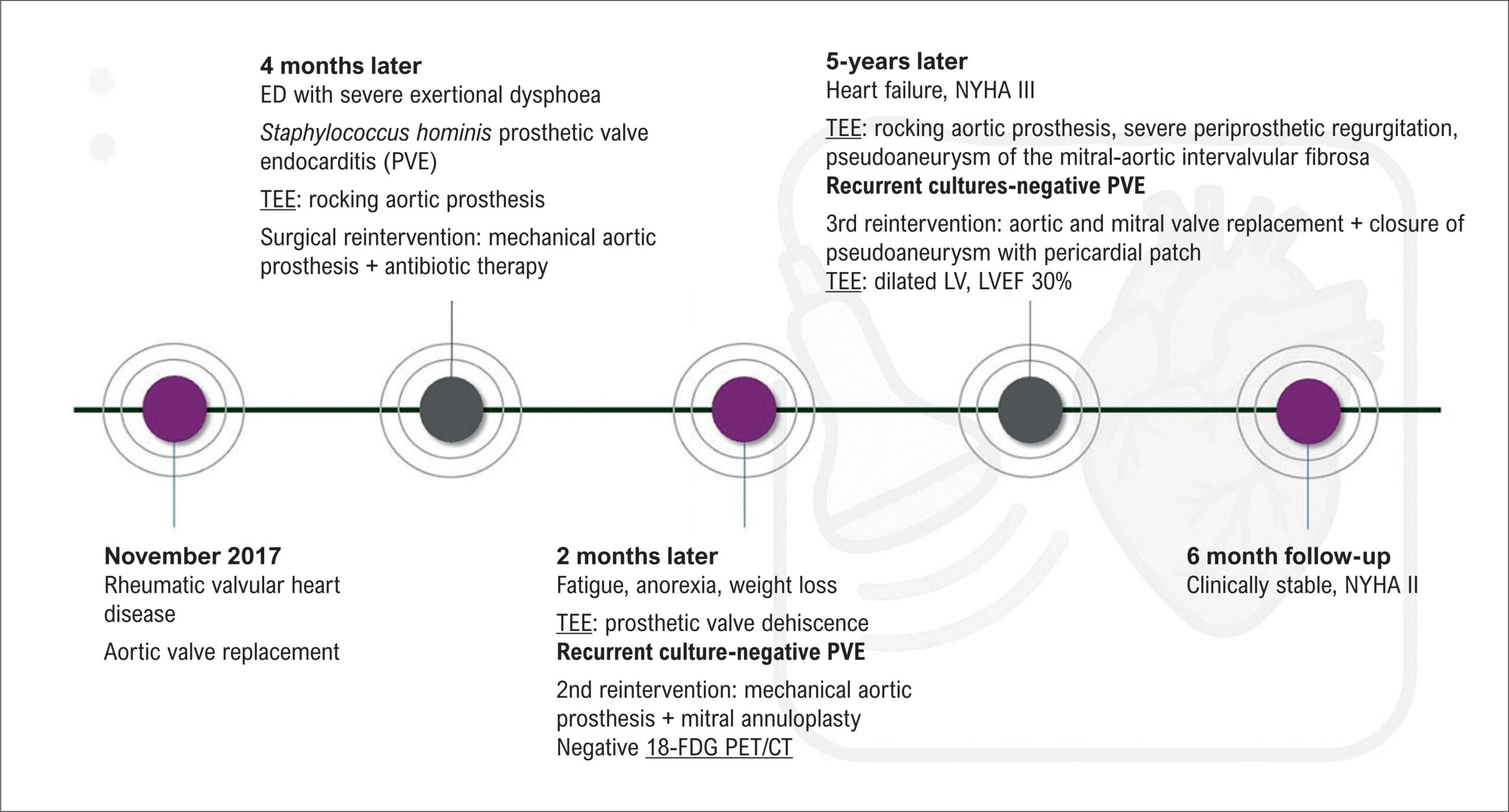
Prosthetic valve endocarditis (PVE) is an uncommon but life-threatening condition. This report describes a challenging case of recurrent PVE with paravalvular complications requiring multiple surgical interventions.

[…]

  • Cardiac Surgery
  • Multimodality imaging
  • Prosthetic Valve Endocarditis
  • Pseudoaneurysm
  • Recurrent Infective Endocarditis
Read Full Article
Creative Commons Attribution (CC BY) Creative Commons license
20/07/2026 DOI: 10.36660/abc.20250665i
Investigating the Causal Role of Inflammatory Cytokines in the Development of Cardiovascular, Kidney, and Metabolic Diseases
Original Article

Investigating the Causal Role of Inflammatory Cytokines in the Development of Cardiovascular, Kidney, and Metabolic Diseases

Mengjin Hu et al. Zhaoting Gong Xiaosong Li Chunlin Yin

Abstract

Background

Observational studies have linked inflammatory cytokines to cardiometabolic disorders; however, whether these associations reflect causal effects across interconnected organ systems remains unclear.

Objectives

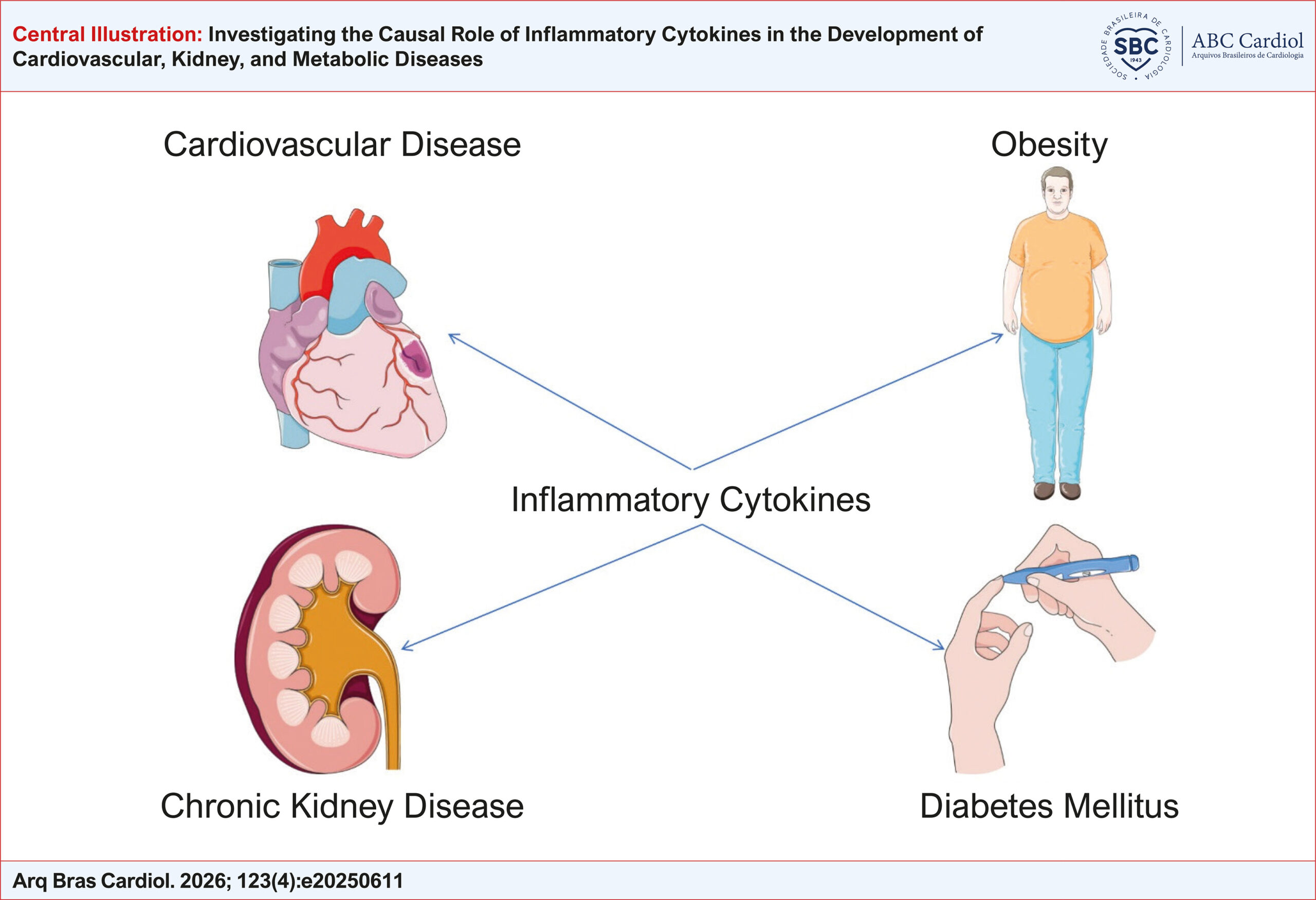
This Mendelian randomization (MR) study investigates causality between 91 inflammatory cytokines and multiorgan dysfunction across cardiovascular, kidney, and metabolic systems in the cardiovascular-kidney-metabolic (CKM) syndrome era.

Methods

Genetic instruments associated with 91 inflammatory cytokines were obtained from the Olink Target Inflammation panel across 11 European-ancestry cohorts. The inverse variance weighting (IVW) method was considered as the main analysis, complemented by sensitivity analyses including MR-Egger and weighted median methods.

Results

Genetically predicted levels of inflammatory cytokines showed widespread causal associations across CKM-related traits. Specifically, 31 cytokines were associated with cardiovascular outcomes, 26 with kidney traits, 10 with obesity-related traits, and 21 with diabetes-related traits, yielding a total of 60 cytokines with at least one significant association. Notably, FGF5 and IL6 emerged as paradoxical regulators, exerting opposing effects across different organ systems, while MCSF was consistently identified as a pan-vascular risk amplifier for cardiovascular diseases.

Conclusions

This comprehensive MR analysis reveals substantial causal heterogeneity in inflammatory cytokine effects across cardiovascular, kidney, and metabolic systems. These findings highlight the clinical importance of tissue- and context-specific inflammatory modulation, supporting the development of precision therapeutic strategies for CKM syndrome.

  • Cardiovascular Diseases
  • chronic renal insufficiency
  • Cytokines
  • Inflammation
  • Interleukin-6
  • Mendelian Randomization Analysis
Read Full Article
Creative Commons Attribution (CC BY) Creative Commons license
06/07/2026 DOI: 10.36660/abc.20250611i Views 2
Systematic Review: Mineralocorticoid Receptor Antagonists in Heart Failure with Preserved and Mildly Reduced Ejection Fraction
Review Article

Systematic Review: Mineralocorticoid Receptor Antagonists in Heart Failure with Preserved and Mildly Reduced Ejection Fraction

Marcus Vinicius Simões et al. Luiz Claudio Danzmann Sílvia Marinho Martins José Albuquerque de Figueiredo Neto … Fabiana G. Marcondes-Braga Ricardo Mourilhe-Rocha Denilson Campos de Albuquerque Mucio Tavares de Oliveira Jr Lidia Ana Zytynski Moura

Abstract

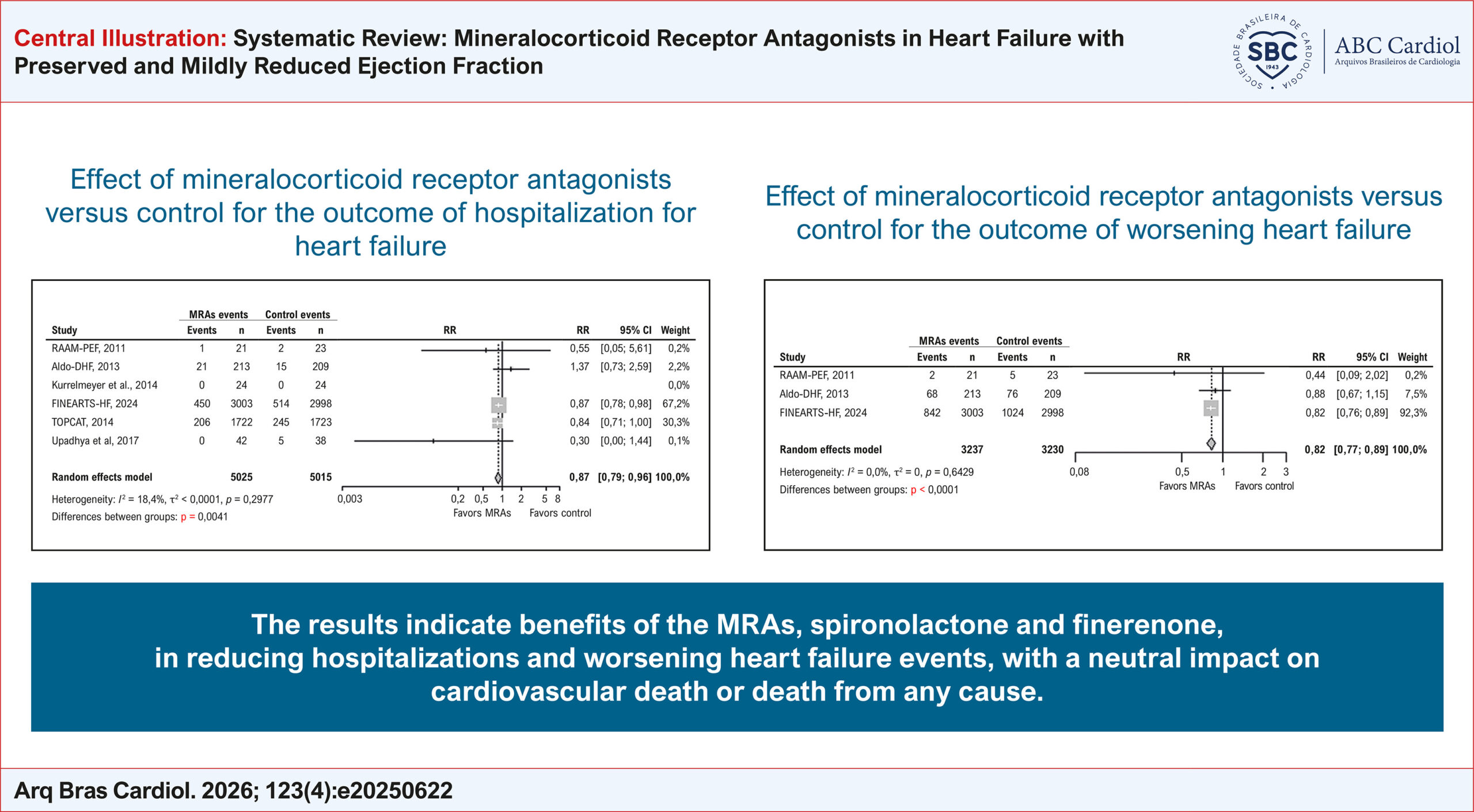
Heart failure with preserved ejection fraction (HFpEF) or mildly reduced ejection fraction (HFmrEF) is a prevalent condition associated with significant morbidity and mortality, and the benefits of mineralocorticoid receptor antagonists (MRAs) remain unclear. To develop a systematic review on the use of MRAs in patients with HFpEF or HFmrEF, a systematic review and meta-analysis were conducted using a broad search strategy in the following databases: MEDLINE, Embase, and Cochrane Central Register of Controlled Trials (CENTRAL). Randomized controlled trials that evaluated the use of MRAs in patients with HFpEF compared to control groups were included. The quality of evidence and the strength of the recommendation were assessed according to the Grading of Recommendations Assessment, Development, and Evaluation (GRADE) methodology. Eight studies were included. No statistically significant differences were observed for the outcomes of overall mortality and cardiovascular mortality compared to the control group for any of the MRAs. A benefit was observed with a reduced risk of hospitalization for heart failure (relative risk: 0.87; 95% confidence interval: 0.79 to 0.96; moderate certainty of evidence) and of worsening heart failure events (relative risk: 0.83; 95% confidence interval: 0.77 to 0.89; high certainty of evidence). The results of the meta-analysis indicate a significant benefit from MRAs, spironolactone or finerenone, to reduce hospitalizations and worsening heart failure events in patients with HFpEF or HFmrEF. Mineralocorticoid Receptor Antagonists; Diastolic Heart Failure; Systolic Heart Failure; Systematic Review; Meta-Analysis.

  • Diastolic Heart Failure
  • Meta-Analysis
  • Mineralocorticoid Receptor Antagonists
  • systematic review
  • Systolic Heart Failure
Read Full Article
Creative Commons Attribution (CC BY) Creative Commons license
06/07/2026 DOI: 10.36660/abc.20250622i
Editorial

Surgery is the Means, Not the End: Late Follow-Up of Coronary Artery Bypass Graft Surgery

João Carlos Ferreira Leal et al. Rafael Alessandro Ferreira Gomes Walter J. Gomes

Coronary artery bypass grafting (CABG) remains a leading treatment for coronary artery disease (CAD), particularly in high-risk patient subgroups such as those with multivessel disease, left ventricular dysfunction, diabetes mellitus, and high ischemic burden, as evidenced by decades of scientific evidence and its consistent long-term results.

Coronary artery disease (CAD) has a progressive, systemic, and chronic evolution, which makes long-term follow-up essential for interpreting the results in therapeutic strategies. Therefore, outcomes after coronary artery bypass grafting (CABG) cannot be limited solely to the technical success of the procedure or to in-hospital outcomes but must encompass a broader and more integrative long-term perspective.

[…]

  • Coronary Artery Disease
  • Myocardial Revascularization
  • Prognosis
Read Full Article
Creative Commons Attribution (CC BY) Creative Commons license
06/07/2026 DOI: 10.36660/abc.20260351i
Artificial Intelligence–Driven Detection, Characterization, and Risk Stratification in Patients with Severe Tricuspid Regurgitation
Original Article

Artificial Intelligence–Driven Detection, Characterization, and Risk Stratification in Patients with Severe Tricuspid Regurgitation

Luna Varela do Carmo et al. Auristela Isabel de Oliveira Ramos Dorival Julio Della Togna Eduardo da Silva Farias Dimytri Alexandre de Alvim Siqueira

Abstract

Background:

Tricuspid regurgitation (TR) is prevalent and challenging to manage. There is a high mortality rate associated with isolated surgery and late referral for intervention. Additionally, there has been a recent expansion of transcatheter therapies. In Brazil, there is a lack of data and validation of prognostic tools.

Objective:

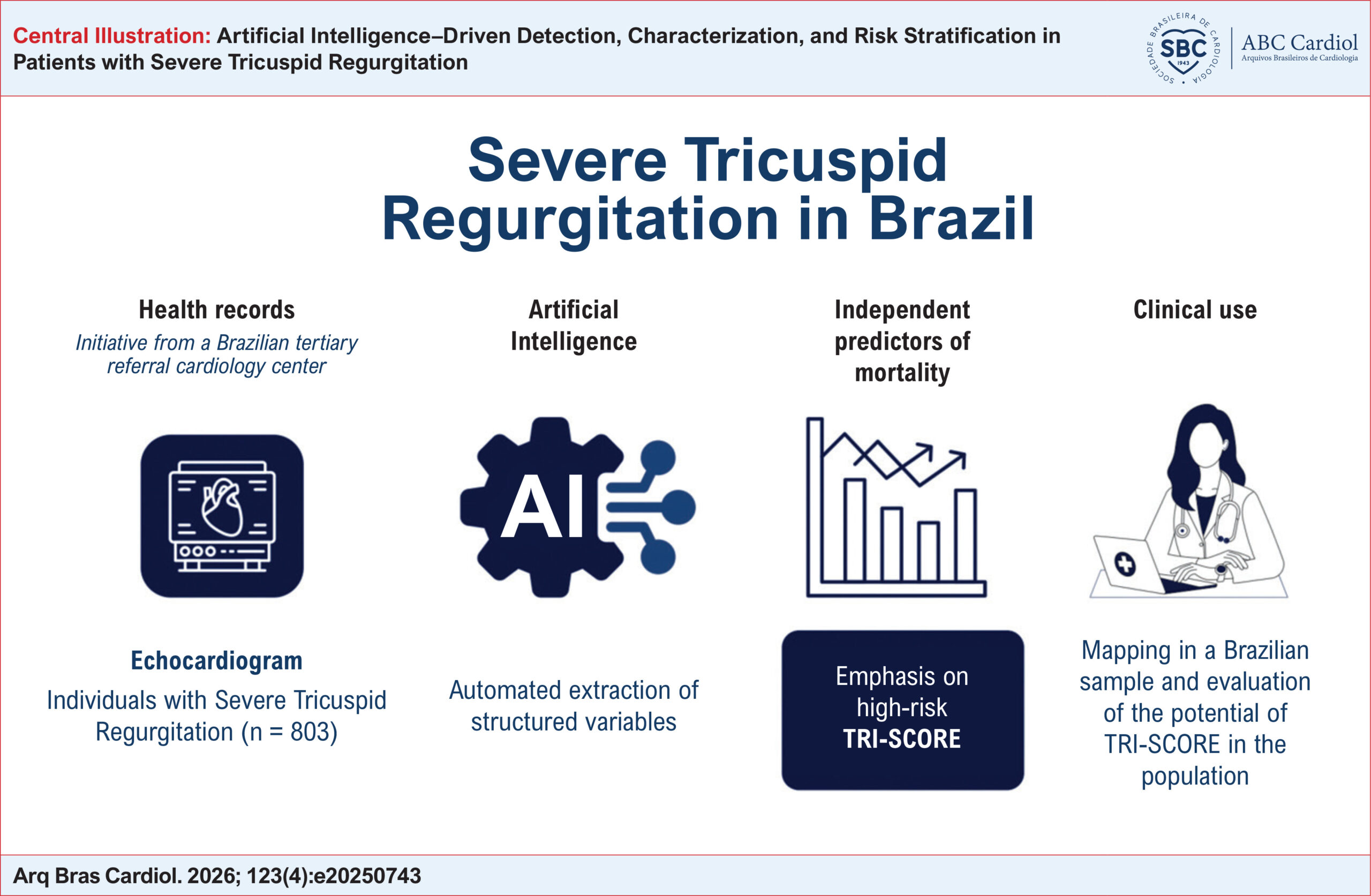
To investigate and define clinical, laboratory, and echocardiographic data from patients with severe TR based on variables collected through the training of an artificial intelligence (AI) model.

Methods:

This observational, single-center, non-interventional, retrospective study was based on 71,911 echocardiographic reports performed between 2021 and 2024. A natural language processing (NLP) model was developed in Python to identify cases of severe TR, extract variables, and perform automated calculation of the TRI-SCORE and EuroSCORE II, which were subsequently reviewed. A two-tailed p-value < 0.05 was considered statistically significant.

Results:

A total of 803 patients with severe TR were identified. The mean age was 68.8 ± 13.5 years, and 64.1% were female. Hypertension (71.7%) and atrial fibrillation (69.4%) were the most prevalent comorbidities. Secondary etiology predominated (96.8%), mainly associated with mitral valve disease (68.5%). Surgical risk was high (medians: EuroSCORE II = 13.4%; TRI-SCORE = 7). Mortality was 17.1%. In the secondary mortality analysis, multivariable regression identified independent predictors, such as high-risk TRI-SCORE (relative risk [RR] 2.19; 95% CI 1.14-4.21) and increased creatinine (RR 3.13; 95% CI 1.91-5.14).

Conclusions:

In the largest Brazilian cohort of severe TR, constructed with the aid of AI, the disease demonstrated high clinical and prognostic complexity. The application of NLP to large echocardiographic databases proved to be efficient and may support multicenter studies.

  • Artificial Intelligence
  • Heart Failure
  • Heart Valve Diseases
  • Tricuspid Valve Insufficiency
Read Full Article
Creative Commons Attribution (CC BY) Creative Commons license
06/07/2026 DOI: 10.36660/abc.20250743i Views 1
iCardio: Applying Business Intelligence to Assess Regional Disparity in Cardiovascular Care with Real-World Data
Original Article

iCardio: Applying Business Intelligence to Assess Regional Disparity in Cardiovascular Care with Real-World Data

Letícia Cunha Pereira de Souza et al. Miriam Allein Zago Marcolino Pedro Henrique Engster Yohan Casiraghi … Thiago Brusca da Costa Linn Jerry Eduardo de Almeida de Bairos Luciana Rodrigues de Lara Nayê Balzan Schneider Ana Paula Beck da Silva Etges Carisi Anne Polanczyk

Abstract

Background

The assessment of cardiovascular care in Brazil is challenged by the country’s vast territory and the large volume of data. Business Intelligence (BI) tools may enhance the visualization and utilization of such information to support public health decision-making.

Objectives

To demonstrate the practical application of the interactive dashboard iCardio in analyzing regional inequalities in high-complexity cardiovascular care in Brazil.

Methods

Descriptive study based on secondary data made available by the iCardio dashboard, which integrates healthcare information from the Brazilian Unified Health System (SUS). Variables from 2019 were analyzed by region, considering service volume, mortality rates, hospital readmissions, and patient travel distance.

Results

Analyses of cardiovascular surgery and interventional cardiology procedures indicated that the Southeast region exhibited the lowest mortality rates (in-hospital: 5.65%, 30 days after procedure: 5.73%, and 30 days after discharge: 6.77%). The North had the highest mortality rates (in-hospital: 7.56%, within 30 days after the procedure: 7.7%, and within 30 days after discharge: 8.7%). The South and Central-West regions registered the highest readmission rates within 30 days after the procedure (9.79% and 10.3%, respectively) and within 30 days after discharge (11.7% and 11.97%, respectively). The South also presented the highest standardized procedure rate (10.54), nearly double that of the Southeast (6.02). The Northeast showed the longest mean patient travel distance (94.59 km).

Conclusions

The use of BI through the iCardio dashboard enables rapid and accessible analysis of healthcare data, with the potential to inform evidence-based decision-making, optimize resource allocation, and identify regional disparities in cardiovascular care.

  • Cardiology
  • Health Care Quality Indicators
  • Routinely Collected Health Data
Read Full Article
Creative Commons Attribution (CC BY) Creative Commons license
06/07/2026 DOI: 10.36660/abc.20250765i Views 1
Editorial

From Coronary Artery to Kidney: Redefining the Goals of Intracoronary Imaging–Optimized Percutaneous Coronary Intervention

José Mariani Junior et al. Stefano Garzon Dias Lemos Pedro Alves Lemos Neto

Contrast-associated nephropathy has long been treated as an acceptable trade-off in interventional cardiology — a complication acknowledged but rarely prioritized. For decades, the field has lived with the uncomfortable reality that a technically flawless cardiac procedure can leave a patient with measurably worse function in another organ – the kidney – sometimes permanently. In current days, when diabetes, hypertension, and chronic kidney disease (CKD) are reaching “pandemic” levels, that resignation is no longer defensible. The most direct modifiable determinant of this injury — contrast volume — is now addressable, and intravascular ultrasound (IVUS) sits at the center of that solution.

The case for IVUS in complex coronary intervention is well established. It redefines how we size stents, assess expansion, and identify underexpansion, malapposition, edge dissections, and residual plaque burden. But its value extends beyond the technicalities of lesion complexity: in the right hands and with deliberate intent, IVUS transforms the same procedure into a substantially more renal-sparing one. The tool that optimizes coronary angioplasty can simultaneously protect the kidney — provided we choose to use it that way.

[…]

  • Complex Angioplasty
  • Contrast-Induced Nephropathy
  • Intracoronary Ultrasound
Read Full Article
Creative Commons Attribution (CC BY) Creative Commons license
06/07/2026 DOI: 10.36660/abc.20260329i
Viewpoint

Pre-Participation Evaluation in Football: A Strategic Pillar for the 2026 and 2027 World Cups

Ricardo Stein

Two major events on the immediate sporting horizon will redefine the demands of high-performance football: the expanded format of the FIFA World Cup 2026™ and the FIFA Women’s World Cup Brazil 2027™, which symbolizes the consolidation of the sport. In this context, the pre-participation evaluation (PPE) of footballers is no longer just a mandatory clinical protocol, but rather, it plays a central strategic role in athletic performance and career sustainability.

In particular, the 2026 World Cup presents an extreme challenge: 48 teams, 104 matches, and continental travel across the United States, Canada, and Mexico, all within a condensed schedule. Above all, the tournament will be a test of endurance unlike anything in its history. Thus, PPE cannot be limited to traditional cardiological and orthopedic checkups. A continuous, integrated monitoring model is necessary and should include a detailed analysis of the athlete’s workload over the previous 12 months. This analysis aims to identify athletes at the threshold of overload. It also includes an assessment of mental resilience and stress tolerance, which are decisive factors in prolonged, high-pressure competitions. Additionally, biomolecular monitoring is necessary for the early detection of accumulated fatigue and injury risk. This proactive approach is the first line of defense in preparing athletes for a “marathon” where physical integrity is as important as technical ability.

[…]

  • Athletes
  • Soccer
  • Triage
Read Full Article
Creative Commons Attribution (CC BY) Creative Commons license
06/07/2026 DOI: 10.36660/abc.20260084i Views 1
Factors Associated With the High Prevalence of Metabolic Syndrome in Antineutrophil Cytoplasmic Antibody-Associated Vasculitis
Original Article

Factors Associated With the High Prevalence of Metabolic Syndrome in Antineutrophil Cytoplasmic Antibody-Associated Vasculitis

Marina Lamas Figueredo et al. Matheus Alves Amaral de Lima Alexandre Moura dos Santos Samuel Katsuyuki Shinjo

Abstract

Background:

Metabolic syndrome (MetS) remains incompletely characterized in antineutrophil cytoplasmic antibody-associated vasculitis (AAV). This study aimed to determine the prevalence of MetS in patients with AAV and to identify factors associated with its presence.

Methods:

This single-center, cross-sectional study included 62 patients with AAV (42 with granulomatosis with polyangiitis, 15 with eosinophilic granulomatosis with polyangiitis, and five with microscopic polyangiitis) who were under regular follow-up at a tertiary referral hospital. Patients were matched by age and sex with 53 controls. MetS was defined according to the National Cholesterol Education Program Adult Treatment Panel III criteria. Statistical significance was set at p < 0.05.

Results:

The median age of the patients was 56.1 years (interquartile range, 45.6-65.5); 53.2% were women, and 85.5% were White. The prevalence of MetS was significantly higher in the AAV group than in controls (43.5% vs 13.2%; p = 0.001). Diabetes mellitus, hypertension, and a family history of cardiovascular disease were more frequent among patients with AAV, whereas body mass index (BMI) and physical inactivity did not differ between groups. In multivariable analysis, MetS (odds ratio [OR], 4.52; 95%CI, 1.66-12.27; p = 0.003) and a family history of cardiovascular disease (OR, 3.81; 95%CI, 1.09-13.34; p < 0.05) were independently associated with AAV. Among patients with AAV, no differences were observed between those with and without MetS in terms of subtype of AAV, anthropometric measures, disease activity, family history, physical inactivity, or current treatment. In a multivariable analysis restricted to patients with AAV, MetS was independently associated with male sex (OR, 11.43; 95%CI, 2.81-46.52; p = 0.001) and higher BMI (OR, 1.13; 95%CI, 1.02-1.25; p = 0.022).

Conclusions:

MetS was highly prevalent among patients with AAV and was associated with male sex and higher BMI, contributing to an unfavorable cardiometabolic risk profile in this single-center cohort.

  • Anti-Neutrophil Cytoplasmic Antibody-Associated Vasculitis
  • Cardiovascular Diseases
  • Metabolic Syndrome
  • Systemic Vasculitis
Read Full Article
Creative Commons Attribution (CC BY) Creative Commons license
06/07/2026 DOI: 10.36660/abc.20260076i Views 2
Letter to the Editor

Does HFpEF Really Exist? From Mimics to Misclassification in Clinical Practice

Maria Giulia Bellicini

Dear Editor,

I read with interest the recent article by Villacorta et al. addressing the distinction between “true” heart failure with preserved ejection fraction (HFpEF) and conditions that merely mimic it. Their effort to clarify this conceptual ambiguity is commendable and timely. However, I believe the issue extends further, even when HFpEF mimics such as amyloidosis, constrictive pericarditis, or severe valvular disease are carefully excluded, the clinical entity known as HFpEF often dissolves under closer scrutiny.

[…]

  • Diastolic Heart Failure
  • Dyspnea
  • Heart Valve Diseases
Read Full Article
Creative Commons Attribution (CC BY) Creative Commons license
22/06/2026 DOI: 10.36660/abc.20250379i Views 1
Figure 1
Editorial

Eugene Braunwald: Lessons and Stories from the Father of Modern Cardiology

Marcus Vinicius Bolivar Malachias

On April 22, 2026, we received the news of the death of Eugene Braunwald in Boston at the age of 96, leaving orphaned thousands of cardiologists around the world who, like me, unanimously regard him as the father of modern cardiology. Upon receiving the honorable invitation from the Editor of the Arquivos Brasileiros de Cardiologia , Glaucia Maria Moraes de Oliveira, to write this editorial, I was faced with the difficult challenge of summarizing, in a few words, his trajectory, his teachings, and his importance to our specialty—a task I undertake from the personal perspective of a cardiologist.

I came to know Braunwald through books. During my Internal Medicine residency, I devoured Harrison’s Principles of Internal Medicine , in which Braunwald was the lead editor. Later, during my Cardiology residency, our bible was his Braunwald’s Heart Disease .

[…]

  • Cardiology
  • Cardiovascular Diseases
  • History
Read Full Article
Creative Commons Attribution (CC BY) Creative Commons license
22/06/2026 DOI: 10.36660/abc.20260349i
Figure 1
Research Letter

Premature Atrial Contractions Originating from the Inferior Vena Cava: A Rare Arrhythmogenic Source Amenable to Ablation

Ningning Zheng et al. Yiyuan Chen Feng Xue Fangfang Zhang … Lin Ling Tingbo Jiang

Introduction

Premature atrial contractions (PACs) are common cardiac arrhythmias that are typically associated with trigger mechanisms. PACs originating from pulmonary veins (PVs) are considered important triggers for atrial fibrillation (AF), and pulmonary vein isolation (PVI) has been widely used as a treatment. However, the inferior vena cava (IVC) is generally regarded as an electrically quiescent region, and studies of ectopic discharges originating from the IVC are relatively rare. In this study, we present a case of PACs originating from the IVC, aiming to provide new insights into the pathophysiological mechanisms of these arrhythmias.

[…]

  • Atrial Premature Complexes
  • Inferior vena cava
  • Radiofrequency Ablation
Read Full Article
Creative Commons Attribution (CC BY) Creative Commons license
22/06/2026 DOI: 10.36660/abc.20250555i Views 1
Statement

Positioning Statement on the Use of Point-of-Care Ultrasound in Cardiovascular Medicine – 2026

Monica Luiza de Alcantara et al. Marcos Paulo Lacerda Bernardo Adenalva Lima de Souza Beck Simone Nascimento Santos … Samira Saady Morhy Edgar Bezerra de Lira Filho Alex dos Santos Felix Daniel Goldwasser Maria Estefânia Bosco Otto Angelo Antunes Salgado Ana Paula dos Reis Velloso Siciliano Fernando Melo Netto Claudia Maria Vilas Freire Ana Cristina Lopes Albricker Rafael Modesto Fernandes Frederico José Neves Mancuso Dalton de Souza Barros Hatem Soliman Aboumarie Marcelo Haertel Miglioranza Salomon Israel do Amaral Marcelo Dantas Tavares de Melo Marcio Mendes Pereira Antonio Tito Paladin Filho Lidia Ana Zytynski Moura Pedro Gabriel Melo de Barros e Silva Alexandre de Matos Soeiro Carlos Eduardo Lucena Montenegro Luiz Cláudio Danzmann João Ricardo Cordeiro Fernandes Silvio Henrique Barberato

Table of contents

[…]

Read Full Article
Creative Commons Attribution (CC BY) Creative Commons license
15/06/2026 DOI: 10.36660/abc.20260222i Views 2
Diretrizes

Guideline on Stress Echocardiography – 2026

Ana Cristina Camarozano et al. Salvador Vicente Spina José Roberto Matos Souza Marcelo Dantas Tavares de Melo … Daniela do Carmo Rassi Frota Silvio Henrique Barberato Fabio Villaça Guimarães Filho Harry Acquatella Vera Márcia Lopes Gimenes Jorge Alfredo Lowenstein Ricardo H Pignatelli José Maria Del Castillo Joselina Luiza Menezes Oliveira José Sebastião de Abreu José Luis de Castro e Silva Pretto Issam Shehadeh Alex dos Santos Felix Mercedes Maldonado Andrade Antônio Carlos Sobral Sousa Maria Estefânia Bosco Otto Andrea de Andrade Vilela Pedro Gutierrez Fajardo Liz Andréa Villela Baroncini Cristiano Vieira Machado Fábio Cañellas Moreira José María Hernández Hernández Marco Stephan Lofrano Alves Samira Saady Morhy Márcio Silva Miguel Lima Miguel Osman Dias Aguiar Wilson Mathias Junior Letícia dos Santos de Oliveira Rocha João César Nunes Sbano Barbara Athayde Linhares Martins Vrandecic Fabio Roston Arnaldo Rabischoffsky Juliana Paixão Etto Rolim Raphael Aparecido Barreto da Silva Guilherme de Rossi Kamila Fernanda Staszko Jolie Britt Marcelo Luiz Campos Vieira

Table of contents

[…]

Read Full Article
Creative Commons Attribution (CC BY) Creative Commons license
15/06/2026 DOI: 10.36660/abc.20260223i Views 3
Accuracy and Prognosis of Electrocardiographic and Echocardiographic Left Ventricular Hypertrophy in Brazilian Adults - ELSA-Brasil Study
Original Article

Accuracy and Prognosis of Electrocardiographic and Echocardiographic Left Ventricular Hypertrophy in Brazilian Adults – ELSA-Brasil Study

Marcelo M. Pinto-Filho et al. Lillian Guimarães de Faria Murilo Foppa Angela Barreto Santiago Santos … Sandhi Maria Barreto Antonio Luiz Pinho Ribeiro

Abstract

Background

Left ventricular hypertrophy (LVH), defined by increased left ventricular mass, is an independent predictor of cardiovascular mortality. Evidence suggests that LVH identified by electrocardiogram (ECG) and echocardiography represents distinct entities with potentially different prognostic implications.

Objectives

Assess the diagnostic accuracy of electrocardiographic criteria for LVH compared with transthoracic echocardiogram (TTE) and to evaluate their predictive value for fatal cardiovascular outcomes.

Methods

We conducted a cross-sectional diagnostic accuracy analysis and a prospective follow-up within the Longitudinal Study of Adult Health. LVH on ECG was defined by Minnesota Code criteria, and LVH on TTE by increased calculated left ventricular mass. Significance level was defined at 0,05.

Results

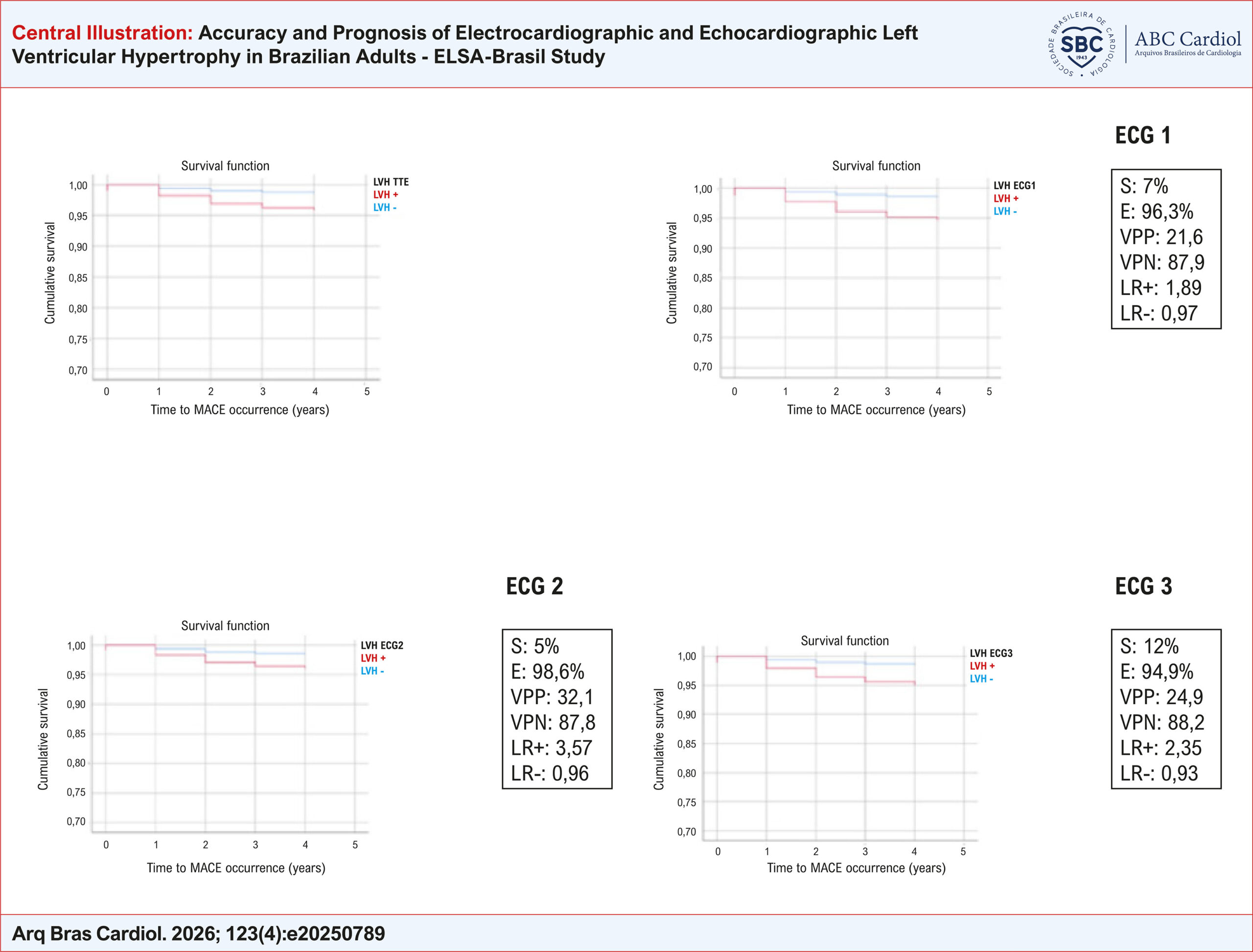
Among 2,849 participants (43.6% male), median age 62 years, 12.5% had LVH by TTE and 5.9% by ECG criteria. ECG-defined LVH showed, from different criteria, very low sensitivity (5–12%) but high specificity (95–99%) compared with TTE. In prognostic analyses, TTE-defined LVH was associated with significant fatal adverse cardiovascular events (FMACE) (HR 3.2, 95% CI 1.7–5.9). ECG-defined LVH also predicted FMACE, with HR close to 3.5 across the different MC criteria in multivariate regression analysis. The predictive capacity remained significant after further adjustment for hypertrophy defined by either of the methods.

Conclusions

Although electrocardiographic criteria demonstrated poor diagnostic accuracy for LVH compared with TTE, both modalities were independently associated with adverse cardiovascular outcomes. These findings suggest that ECG-defined and TTE-defined LVH provide complementary prognostic information and may reflect distinct pathophysiological processes.

  • Electrocardiography
  • Left Ventricular Hypertrophy
  • Longitudinal Studies
  • Prognosis
Read Full Article
Creative Commons Attribution (CC BY) Creative Commons license
12/06/2026 DOI: 10.36660/abc.20250789i Views 1
Artificial Intelligence-Derived ECG-Age as a Predictor of Mortality and Cardiovascular Events: A Systematic Review and Meta-Analysis
Original Article

Artificial Intelligence-Derived ECG-Age as a Predictor of Mortality and Cardiovascular Events: A Systematic Review and Meta-Analysis

Isadora Cristine Reis Sguizzato Bozzi et al. Maria Clara de Araujo Gontijo Lima Antonio Luiz Pinho Ribeiro Gabriela Miana de Mattos Paixão

Abstract

Background

Artificial intelligence (AI)-derived electrocardiographic age (ECG-age) and the difference between ECG-age and chronological age (delta-age) are emerging biomarkers of cardiovascular aging and adverse outcomes, but their prognostic value remains unclear.

Objectives

We performed a systematic review and meta-analysis to evaluate associations between AI-derived ECG-age or delta-age and clinical outcomes.

Methods

Nine databases were searched through May 1, 2025. Eligible studies evaluated mortality or cardiovascular events and reported measures of association. Pooled hazard ratios (pHRs) with 95% confidence intervals (CIs) were calculated via fixed- or random-effects models, with statistical significance set at p < 0.05. The protocol was registered in PROSPERO (CRD420251042467).

Results

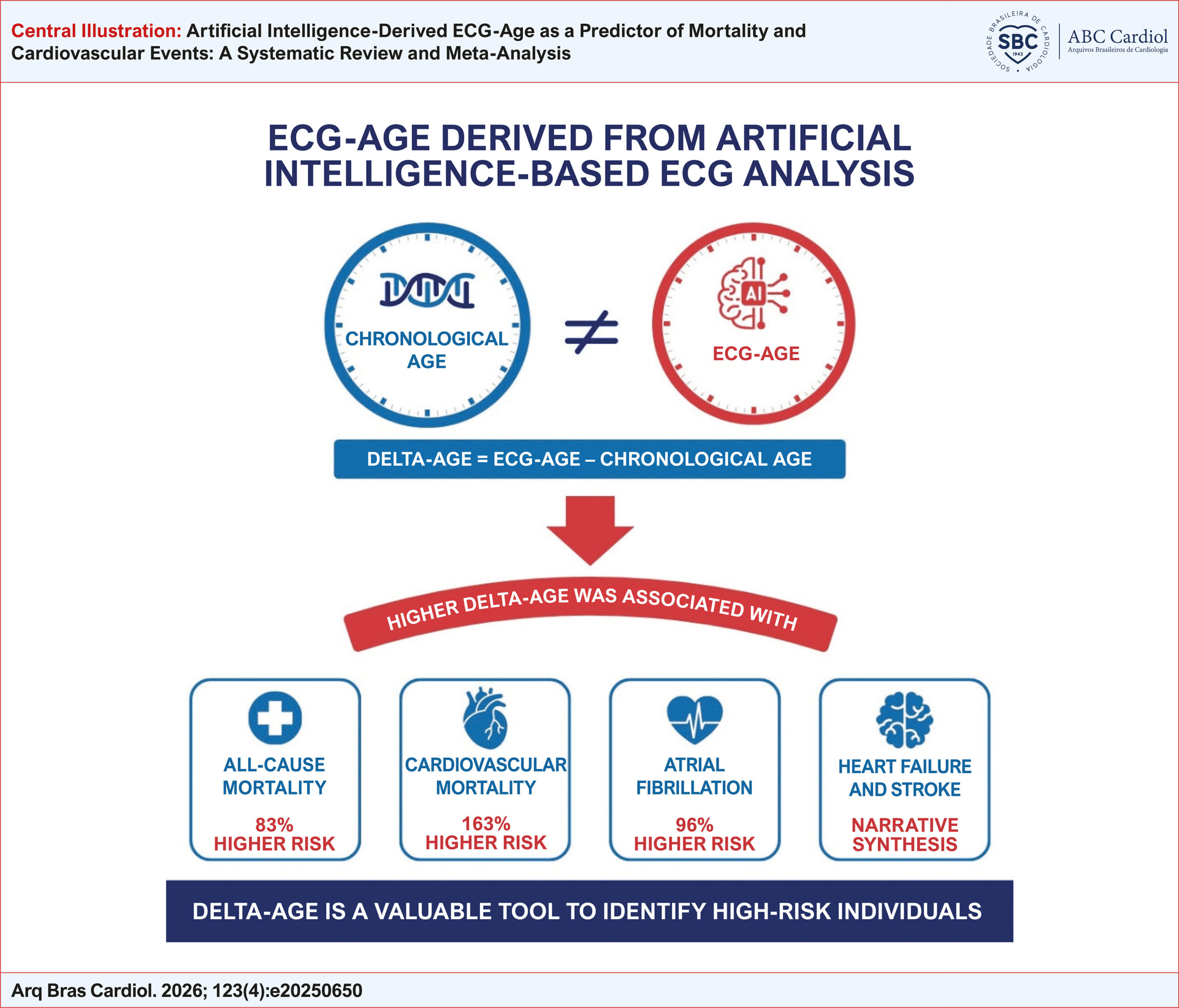
Ten studies (2021–2025) with over 550,000 participants from East Asia, the Americas, and the UK were included. Most used convolutional neural networks to estimate ECG-age; delta-age was calculated as ECG-age minus chronological age. Elevated delta-age was associated with increased all-cause mortality (pHR = 1.83, 95% CI: 1.45–2.32) and cardiovascular mortality (pHR = 2.63, 95% CI: 1.93–3.58). Three studies reported increased risk of atrial fibrillation (pHR = 1.96, 95% CI: 1.43–2.69), although data were limited and heterogeneous. Descriptive analyses suggested that greater delta-age predicts incident heart failure and stroke.

Conclusions

AI-derived ECG-age, particularly delta-age, is associated with all-cause and cardiovascular mortality, supporting its role as a noninvasive biomarker of cardiovascular aging. Evidence for atrial fibrillation is suggestive but limited. Standardized algorithms, robust external validation, and prospective multicenter studies are needed to confirm clinical utility and integrate ECG-age into risk stratification, even in asymptomatic individuals.

  • Artificial Intelligence
  • Deep Learning
  • Electrocardiography
  • Machine Learning
  • Prognosis
Read Full Article
Creative Commons Attribution (CC BY) Creative Commons license
12/06/2026 DOI: 10.36660/abc.20250650i
Five-Year Mortality among Survivors of Coronary Artery Bypass Graft Surgery: A Retrospective Study from a Tertiary Center
Original Article

Five-Year Mortality among Survivors of Coronary Artery Bypass Graft Surgery: A Retrospective Study from a Tertiary Center

Eduardo Martelli Moreira et al. Bernadette Cunha Waldvogel Eduardo Bello Martins Desiderio Favarato … Eduardo Gomes Lima Fabio Grunspun Pitta Fabiana Hanna Rached Henrique Trombini Pinesi Omar Asdrúbal Vilca Mejia Carlos Vicente Serrano Jr

Background

Long-term outcome data following Coronary Artery Bypass Graft (CABG) surgery in Brazil remain limited, yet are essential for informing public health policies and guiding clinical practice.

Objectives

To estimate five-year all-cause and cause-specific mortality rates in patients undergoing CABG and to identify associated risk factors.

Methods

A retrospective analysis of 6,933 patients who underwent CABG at the Heart Institute, Faculty of Medicine, University of São Paulo, between 2007 and 2018. Mortality data up to 2018 were retrieved from government databases. A significance level of 5% was adopted.

Results

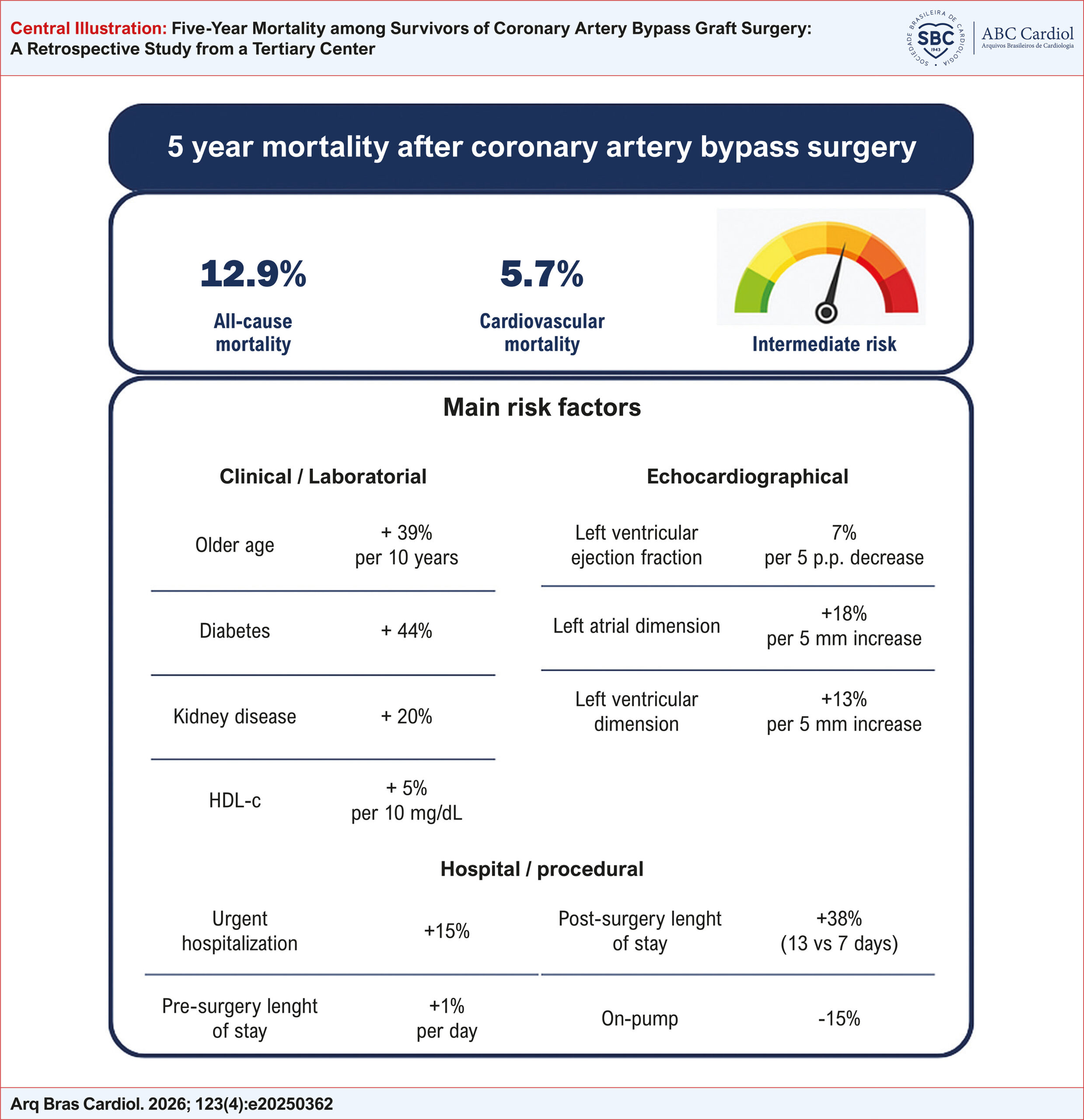
The study cohort included 4,854 men (72%) with a median age of 63 years (IQR: 57–70). Diabetes mellitus was present in 2,984 patients (43%), and 1,918 (29%) had chronic kidney disease. During follow-up, 1,075 deaths occurred, of which 506 (47.1%) were attributed to cardiovascular causes. The 5-year all-cause mortality rate was 12.9% (95% CI: 11.9–13.9), and the cardiovascular mortality rate was 5.7% (95% CI: 5.1–6.4). The leading cause of cardiovascular death was ischemic heart disease (290 deaths, 57.3%), followed by cerebrovascular disease (84 deaths, 16.6%). Factors significantly associated with all-cause mortality included older age, diabetes mellitus, glomerular filtration rate, HDL-cholesterol, left ventricular ejection fraction, left atrial and left ventricular diastolic dimensions, urgent hospitalization, on-pump surgery, and length of hospital stay.

Conclusion

Patients undergoing CABG at a tertiary care center exhibited moderate 5-year all-cause and cardiovascular mortality rates. These findings highlight key prognostic factors that may support risk stratification and guide postoperative management strategies.

  • Angina Pectoris
  • Descriptive Epidemiology
  • Myocardial Revascularization
Read Full Article
Creative Commons Attribution (CC BY) Creative Commons license
12/06/2026 DOI: 10.36660/abc.20250362i
Letter to the Editor

Volume-Independent Renal Injury: Why Contrast-Induced Nephropathy Can Occur Even at Ultra-Low Contrast Doses

Fahri Çakan

Dear Editor,

I reviewed with great interest the article titled “Impact of Contrast Volume Used After Percutaneous Coronary Procedures in Patients at Risk for Contrast-Induced Nephropathy,” authored by Freitas et al. This post-hoc subgroup analysis, designed to assess contrast-induced nephropathy (CIN) risk management, provides clinically valuable data on the interaction between contrast type and volume, particularly in high-risk patient populations (n=2,268).

[…]

  • Acute Kidney Injury
  • Contrast Media
  • Kidney, Diseases
  • Percutaneous Coronary Intervention
Read Full Article
Creative Commons Attribution (CC BY) Creative Commons license
01/06/2026 DOI: 10.36660/abc.20260016i Views 1
Figure 1
Letter to the Editor

The End of "Left Atrial Overload"

José Nunes de Alencar et al. Daniel Teixeira de Campos e Barreiro Adrian Baranchuk

To the Editor,

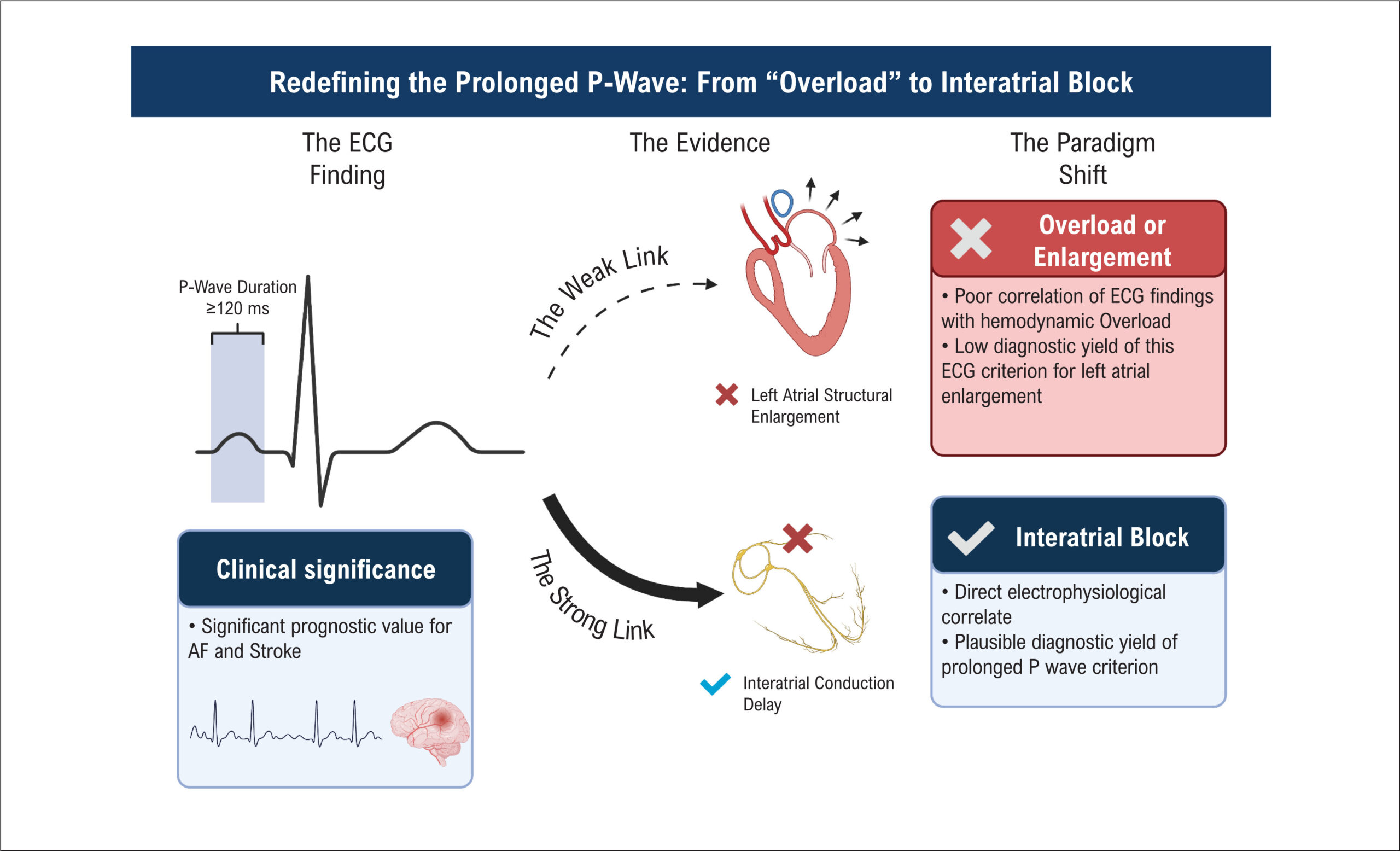
We read with great interest the article by Oliveira et al. The authors are to be commended for conducting a study of this magnitude and rigor. While previous literature relied on smaller sample sizes or non-standard/obsolete echocardiographic cutoffs for left atrial enlargement (LAE),– the ELSA-Brasil cohort provides the statistical power necessary to settle a longstanding debate in clinical cardiology. We believe this research is destined to become a reference point in standard electrocardiography textbooks.

[…]

  • Diagnosis
  • Electrocardiography
  • Heart Atria
Read Full Article
Creative Commons Attribution (CC BY) Creative Commons license
01/06/2026 DOI: 10.36660/abc.20250814i Views 1
Letter to the Editor

Prognostic Value of the Inflammatory Burden Index (IBI) in Coronary Events

Luis Antonio Cavalcanti Matias et al. Pedro Pereira Tenório

Dear Editor,

We read with great interest the original article entitled “Cardiac CT-Detected Vulnerable Plaques and Risk of Future Acute Myocardial Infarction: Predictive Value of CAC Scores and Inflammatory Burden Index”. We want to congratulate the authors, Ömür et al., on their timely investigation into the integration of anatomical and inflammatory markers for predicting acute coronary events.

[…]

  • Atherosclerotic Plaque
  • Myocardial Infarction
  • X-Ray Computed Tomography
Read Full Article
Creative Commons Attribution (CC BY) Creative Commons license
01/06/2026 DOI: 10.36660/abc.20260174i Views 2
Figure 1
Case Report

Hereditary Transthyretin Cardiac Amyloidosis Associated with Two Pathogenic Variants in the TTR Gene

Victor Hugo Bonfim et al. Matheus Martins Monteiro Moisés Abtibol Machado Orlando Pereira da Silva Junior … Katia do Nascimento Couceiro Fábio Fernandes João Marcos Bemfica Barbosa Ferreira

Introduction

Amyloidosis encompasses a group of rare diseases characterized by the accumulation of amyloidosis. Amyloidosis is an abnormal formation of misfolded proteins in tissues and organs. These proteins adopt a highly stable beta-sheet structure, forming insoluble fibrils that are deposited in the extracellular space. Amyloidosis is classified according to the precursor protein and the type of polymer formed, resulting in different subtypes of the disease, each with distinct clinical manifestations.

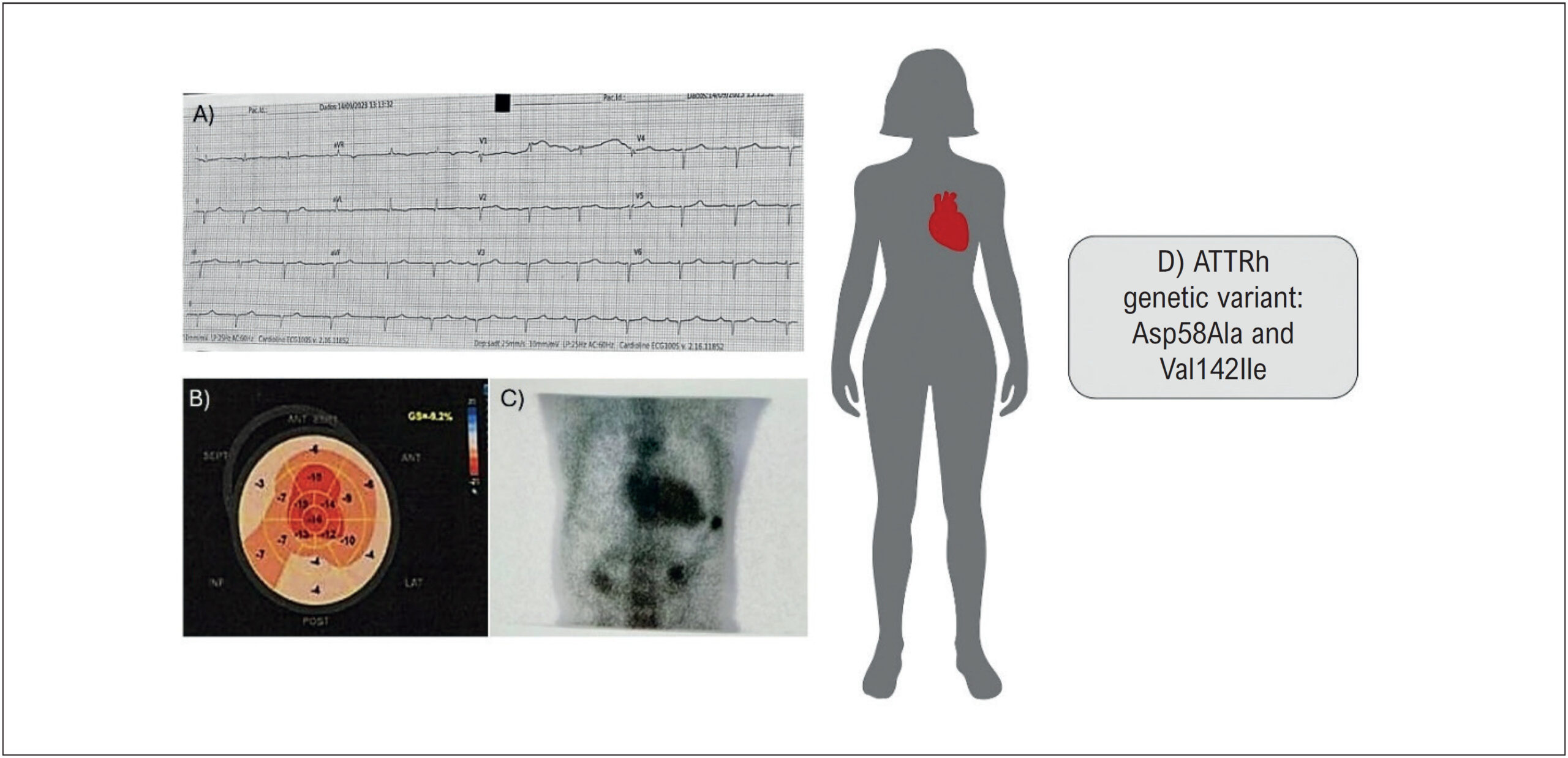
Transthyretin amyloidosis (ATTR) has two primary subtypes: wild-type ATTR (wild-type ATTR, or ATTRw), formerly called “senile,” and variant ATTR (hereditary ATTR, or ATTRh), where individuals possess pathological variants in the transthyretin gene. To date, more than 120 variants have been identified. Clinical symptoms may present primarily as neuropathic, cardiac, or a combination of both.

[…]

  • Amyloidosis
  • Genes
  • mutation
Read Full Article
Creative Commons Attribution (CC BY) Creative Commons license
01/06/2026 DOI: 10.36660/abc.20250651i Views 1

Could not load more articles. Please try again.

How to cite this article

EndNote RIS

Electronic Document Format (Vancouver)

Cesena FY. iCardio And Business Intelligence-Based Tools: Opportunities in Public Health. Arquivos Brasileiros de Cardiologia 2026;123(4):e20260419.

Electronic Document Format (ABNT)

Cesena, Fernando Yue. iCardio And Business Intelligence-Based Tools: Opportunities in Public Health. Arquivos Brasileiros de Cardiologia, v. 123, n. 4, e20260419, Jul. 2026.

Electronic Document Format (APA)

Cesena, F. Y. (2026). iCardio And Business Intelligence-Based Tools: Opportunities in Public Health. Arquivos Brasileiros de Cardiologia, 123(4), e20260419.

Electronic Document Format (ISO)

Cesena, Fernando Yue. iCardio And Business Intelligence-Based Tools: Opportunities in Public Health. Arquivos Brasileiros de Cardiologia [online]. 2026, vol. 123, n. 4, [cited 2026-10-14], e20260419. Available from: <https://journals.cardiol.br/en/article/icardio-and-business-intelligence-based-tools-opportunities-in-public-health/>. ISSN 0066-782X

EndNote RIS

Electronic Document Format (Vancouver)

Fiuza M. Beyond Remission: The Cardiometabolic Burden of ANCA-Associated Vasculitis. Arquivos Brasileiros de Cardiologia 2026;123(4):e20260373.

Electronic Document Format (ABNT)

Fiuza, Manuela. Beyond Remission: The Cardiometabolic Burden of ANCA-Associated Vasculitis. Arquivos Brasileiros de Cardiologia, v. 123, n. 4, e20260373, Jul. 2026.

Electronic Document Format (APA)

Fiuza, M. (2026). Beyond Remission: The Cardiometabolic Burden of ANCA-Associated Vasculitis. Arquivos Brasileiros de Cardiologia, 123(4), e20260373.

Electronic Document Format (ISO)

Fiuza, Manuela. Beyond Remission: The Cardiometabolic Burden of ANCA-Associated Vasculitis. Arquivos Brasileiros de Cardiologia [online]. 2026, vol. 123, n. 4, [cited 2026-10-14], e20260373. Available from: <https://journals.cardiol.br/en/article/beyond-remission-the-cardiometabolic-burden-of-anca-associated-vasculitis/>. ISSN 0066-782X

EndNote RIS

Electronic Document Format (Vancouver)

Oliveira MD, Suruagy-Motta RFO, Silva LD, Santos KDA, Caixeta A. Ultra-Low Contrast versus Conventional Percutaneous Coronary Intervention for Patients with Baseline Renal Impairment: A Systematic Review and Meta-Analysis of Clinical Outcomes. Arquivos Brasileiros de Cardiologia 2026;123(4):e20250660.

Electronic Document Format (ABNT)

Oliveira, Marcos Danillo; Suruagy-Motta, Ricardo Fonseca Oliveira; Silva, Leonardo Dexheimer da; Santos, Karlos Daniell Araújo dos; Caixeta, Adriano. Ultra-Low Contrast versus Conventional Percutaneous Coronary Intervention for Patients with Baseline Renal Impairment: A Systematic Review and Meta-Analysis of Clinical Outcomes. Arquivos Brasileiros de Cardiologia, v. 123, n. 4, e20250660, Jul. 2026.

Electronic Document Format (APA)

Oliveira, M. D., Suruagy-Motta, R. F. O., Silva, L. D. , Santos, K. D. A. , & Caixeta, A. (2026). Ultra-Low Contrast versus Conventional Percutaneous Coronary Intervention for Patients with Baseline Renal Impairment: A Systematic Review and Meta-Analysis of Clinical Outcomes. Arquivos Brasileiros de Cardiologia, 123(4), e20250660.

Electronic Document Format (ISO)

Oliveira, Marcos Danillo and Suruagy-Motta, Ricardo Fonseca Oliveira and Silva, Leonardo Dexheimer da and Santos, Karlos Daniell Araújo dos and Caixeta, Adriano. Ultra-Low Contrast versus Conventional Percutaneous Coronary Intervention for Patients with Baseline Renal Impairment: A Systematic Review and Meta-Analysis of Clinical Outcomes. Arquivos Brasileiros de Cardiologia [online]. 2026, vol. 123, n. 4, [cited 2026-10-14], e20250660. Available from: <https://journals.cardiol.br/en/article/ultra-low-contrast-versus-conventional-percutaneous-coronary-intervention-for-patients-with-baseline-renal-impairment-a-systematic-review-and-meta-analysis-of-clinical-outcomes/>. ISSN 0066-782X

EndNote RIS

Electronic Document Format (Vancouver)

Gregório C, Garcia AB, Gonçalves S, Guerra N, Pinto FJ, Sousa C. Infective Endocarditis: A Never-Ending Ordeal?. Arquivos Brasileiros de Cardiologia 2026;123(4):e20250665.

Electronic Document Format (ABNT)

Gregório, Catarina; Garcia, Ana Beatriz; Gonçalves, Susana; Guerra, Nuno; Pinto, Fausto J.; Sousa, Catarina. Infective Endocarditis: A Never-Ending Ordeal?. Arquivos Brasileiros de Cardiologia, v. 123, n. 4, e20250665, Jul. 2026.

Electronic Document Format (APA)

Gregório, C., Garcia, A. B., Gonçalves, S., Guerra, N., Pinto, F. J., & Sousa, C. (2026). Infective Endocarditis: A Never-Ending Ordeal?. Arquivos Brasileiros de Cardiologia, 123(4), e20250665.

Electronic Document Format (ISO)

Gregório, Catarina and Garcia, Ana Beatriz and Gonçalves, Susana and Guerra, Nuno and Pinto, Fausto J. and Sousa, Catarina. Infective Endocarditis: A Never-Ending Ordeal?. Arquivos Brasileiros de Cardiologia [online]. 2026, vol. 123, n. 4, [cited 2026-10-14], e20250665. Available from: <https://journals.cardiol.br/en/article/infective-endocarditis-a-never-ending-ordeal/>. ISSN 0066-782X

EndNote RIS

Electronic Document Format (Vancouver)

Hu M, Gong Z, Li X, Yin C. Investigating the Causal Role of Inflammatory Cytokines in the Development of Cardiovascular, Kidney, and Metabolic Diseases. Arquivos Brasileiros de Cardiologia 2026;123(4):e20250611.

Electronic Document Format (ABNT)

Hu, Mengjin; Gong, Zhaoting; Li, Xiaosong; Yin, Chunlin. Investigating the Causal Role of Inflammatory Cytokines in the Development of Cardiovascular, Kidney, and Metabolic Diseases. Arquivos Brasileiros de Cardiologia, v. 123, n. 4, e20250611, Jul. 2026.

Electronic Document Format (APA)

Hu, M., Gong, Z., Li, X., & Yin, C. (2026). Investigating the Causal Role of Inflammatory Cytokines in the Development of Cardiovascular, Kidney, and Metabolic Diseases. Arquivos Brasileiros de Cardiologia, 123(4), e20250611.

Electronic Document Format (ISO)

Hu, Mengjin and Gong, Zhaoting and Li, Xiaosong and Yin, Chunlin. Investigating the Causal Role of Inflammatory Cytokines in the Development of Cardiovascular, Kidney, and Metabolic Diseases. Arquivos Brasileiros de Cardiologia [online]. 2026, vol. 123, n. 4, [cited 2026-10-14], e20250611. Available from: <https://journals.cardiol.br/en/article/investigating-the-causal-role-of-inflammatory-cytokines-in-the-development-of-cardiovascular-kidney-and-metabolic-diseases/>. ISSN 0066-782X

EndNote RIS

Electronic Document Format (Vancouver)

Simões MV, Danzmann LC, Martins SM, Figueiredo Neto JA, Marcondes-Braga FG, Mourilhe-Rocha R, Albuquerque DC, et al. Systematic Review: Mineralocorticoid Receptor Antagonists in Heart Failure with Preserved and Mildly Reduced Ejection Fraction. Arquivos Brasileiros de Cardiologia 2026;123(4):e20250622.

Electronic Document Format (ABNT)

Simões, Marcus Vinicius; Danzmann, Luiz Claudio; Martins, Sílvia Marinho; Figueiredo Neto, José Albuquerque de; Marcondes-Braga, Fabiana G.; Mourilhe-Rocha, Ricardo; Albuquerque, Denilson Campos de; Oliveira Jr, Mucio Tavares de; Moura, Lidia Ana Zytynski. Systematic Review: Mineralocorticoid Receptor Antagonists in Heart Failure with Preserved and Mildly Reduced Ejection Fraction. Arquivos Brasileiros de Cardiologia, v. 123, n. 4, e20250622, Jul. 2026.

Electronic Document Format (APA)

Simões, M. V., Danzmann, L. C., Martins, S. M., Figueiredo Neto, J. A. , Marcondes-Braga, F. G., Mourilhe-Rocha, R., Albuquerque, D. C. , Oliveira Jr, M. T. , & Moura, L. A. Z. (2026). Systematic Review: Mineralocorticoid Receptor Antagonists in Heart Failure with Preserved and Mildly Reduced Ejection Fraction. Arquivos Brasileiros de Cardiologia, 123(4), e20250622.

Electronic Document Format (ISO)

Simões, Marcus Vinicius and Danzmann, Luiz Claudio and Martins, Sílvia Marinho and Figueiredo Neto, José Albuquerque de and Marcondes-Braga, Fabiana G. and Mourilhe-Rocha, Ricardo and Albuquerque, Denilson Campos de and Oliveira Jr, Mucio Tavares de and Moura, Lidia Ana Zytynski. Systematic Review: Mineralocorticoid Receptor Antagonists in Heart Failure with Preserved and Mildly Reduced Ejection Fraction. Arquivos Brasileiros de Cardiologia [online]. 2026, vol. 123, n. 4, [cited 2026-10-14], e20250622. Available from: <https://journals.cardiol.br/en/article/systematic-review-mineralocorticoid-receptor-antagonists-in-heart-failure-with-preserved-and-mildly-reduced-ejection-fraction/>. ISSN 0066-782X

EndNote RIS

Electronic Document Format (Vancouver)

Leal JCF, Gomes RAF, Gomes WJ. Surgery is the Means, Not the End: Late Follow-Up of Coronary Artery Bypass Graft Surgery. Arquivos Brasileiros de Cardiologia 2026;123(4):e20260351.

Electronic Document Format (ABNT)

Leal, João Carlos Ferreira; Gomes, Rafael Alessandro Ferreira; Gomes, Walter J.. Surgery is the Means, Not the End: Late Follow-Up of Coronary Artery Bypass Graft Surgery. Arquivos Brasileiros de Cardiologia, v. 123, n. 4, e20260351, Jul. 2026.

Electronic Document Format (APA)

Leal, J. C. F., Gomes, R. A. F., & Gomes, W. J. (2026). Surgery is the Means, Not the End: Late Follow-Up of Coronary Artery Bypass Graft Surgery. Arquivos Brasileiros de Cardiologia, 123(4), e20260351.

Electronic Document Format (ISO)

Leal, João Carlos Ferreira and Gomes, Rafael Alessandro Ferreira and Gomes, Walter J.. Surgery is the Means, Not the End: Late Follow-Up of Coronary Artery Bypass Graft Surgery. Arquivos Brasileiros de Cardiologia [online]. 2026, vol. 123, n. 4, [cited 2026-10-14], e20260351. Available from: <https://journals.cardiol.br/en/article/surgery-is-the-means-not-the-end-late-follow-up-of-coronary-artery-bypass-graft-surgery/>. ISSN 0066-782X

EndNote RIS

Electronic Document Format (Vancouver)

Carmo LV, Ramos AIO, Togna DJD, Farias ES, Siqueira DAA. Artificial Intelligence–Driven Detection, Characterization, and Risk Stratification in Patients with Severe Tricuspid Regurgitation. Arquivos Brasileiros de Cardiologia 2026;123(4):e20250743.

Electronic Document Format (ABNT)

Carmo, Luna Varela do; Ramos, Auristela Isabel de Oliveira; Togna, Dorival Julio Della; Farias, Eduardo da Silva; Siqueira, Dimytri Alexandre de Alvim. Artificial Intelligence–Driven Detection, Characterization, and Risk Stratification in Patients with Severe Tricuspid Regurgitation. Arquivos Brasileiros de Cardiologia, v. 123, n. 4, e20250743, Jul. 2026.

Electronic Document Format (APA)

Carmo, L. V. , Ramos, A. I. O., Togna, D. J. D., Farias, E. S., & Siqueira, D. A. A. (2026). Artificial Intelligence–Driven Detection, Characterization, and Risk Stratification in Patients with Severe Tricuspid Regurgitation. Arquivos Brasileiros de Cardiologia, 123(4), e20250743.

Electronic Document Format (ISO)

Carmo, Luna Varela do and Ramos, Auristela Isabel de Oliveira and Togna, Dorival Julio Della and Farias, Eduardo da Silva and Siqueira, Dimytri Alexandre de Alvim. Artificial Intelligence–Driven Detection, Characterization, and Risk Stratification in Patients with Severe Tricuspid Regurgitation. Arquivos Brasileiros de Cardiologia [online]. 2026, vol. 123, n. 4, [cited 2026-10-14], e20250743. Available from: <https://journals.cardiol.br/en/article/artificial-intelligence-driven-detection-characterization-and-risk-stratification-in-patients-with-severe-tricuspid-regurgitation/>. ISSN 0066-782X

EndNote RIS

Electronic Document Format (Vancouver)

Souza LCP, Marcolino MAZ, Engster PH, Casiraghi Y, Linn TBC, Bairos JEA, Lara LR, et al. iCardio: Applying Business Intelligence to Assess Regional Disparity in Cardiovascular Care with Real-World Data. Arquivos Brasileiros de Cardiologia 2026;123(4):e20250765.

Electronic Document Format (ABNT)

Souza, Letícia Cunha Pereira de; Marcolino, Miriam Allein Zago; Engster, Pedro Henrique; Casiraghi, Yohan; Linn, Thiago Brusca da Costa; Bairos, Jerry Eduardo de Almeida de; Lara, Luciana Rodrigues de; Schneider, Nayê Balzan; Etges, Ana Paula Beck da Silva; Polanczyk, Carisi Anne. iCardio: Applying Business Intelligence to Assess Regional Disparity in Cardiovascular Care with Real-World Data. Arquivos Brasileiros de Cardiologia, v. 123, n. 4, e20250765, Jul. 2026.

Electronic Document Format (APA)

Souza, L. C. P. , Marcolino, M. A. Z., Engster, P. H., Casiraghi, Y., Linn, T. B. C., Bairos, J. E. A. , Lara, L. R. , Schneider, N. B., Etges, A. P. B. S., & Polanczyk, C. A. (2026). iCardio: Applying Business Intelligence to Assess Regional Disparity in Cardiovascular Care with Real-World Data. Arquivos Brasileiros de Cardiologia, 123(4), e20250765.

Electronic Document Format (ISO)

Souza, Letícia Cunha Pereira de and Marcolino, Miriam Allein Zago and Engster, Pedro Henrique and Casiraghi, Yohan and Linn, Thiago Brusca da Costa and Bairos, Jerry Eduardo de Almeida de and Lara, Luciana Rodrigues de and Schneider, Nayê Balzan and Etges, Ana Paula Beck da Silva and Polanczyk, Carisi Anne. iCardio: Applying Business Intelligence to Assess Regional Disparity in Cardiovascular Care with Real-World Data. Arquivos Brasileiros de Cardiologia [online]. 2026, vol. 123, n. 4, [cited 2026-10-14], e20250765. Available from: <https://journals.cardiol.br/en/article/icardio-applying-business-intelligence-to-assess-regional-disparity-in-cardiovascular-care-with-real-world-data/>. ISSN 0066-782X

EndNote RIS

Electronic Document Format (Vancouver)

Mariani Junior J, Lemos SGD, Lemos Neto PA. From Coronary Artery to Kidney: Redefining the Goals of Intracoronary Imaging–Optimized Percutaneous Coronary Intervention. Arquivos Brasileiros de Cardiologia 2026;123(4):e20260329.

Electronic Document Format (ABNT)

Mariani Junior, José; Lemos, Stefano Garzon Dias; Lemos Neto, Pedro Alves. From Coronary Artery to Kidney: Redefining the Goals of Intracoronary Imaging–Optimized Percutaneous Coronary Intervention. Arquivos Brasileiros de Cardiologia, v. 123, n. 4, e20260329, Jul. 2026.

Electronic Document Format (APA)

Mariani Junior, J., Lemos, S. G. D., & Lemos Neto, P. A. (2026). From Coronary Artery to Kidney: Redefining the Goals of Intracoronary Imaging–Optimized Percutaneous Coronary Intervention. Arquivos Brasileiros de Cardiologia, 123(4), e20260329.

Electronic Document Format (ISO)

Mariani Junior, José and Lemos, Stefano Garzon Dias and Lemos Neto, Pedro Alves. From Coronary Artery to Kidney: Redefining the Goals of Intracoronary Imaging–Optimized Percutaneous Coronary Intervention. Arquivos Brasileiros de Cardiologia [online]. 2026, vol. 123, n. 4, [cited 2026-10-14], e20260329. Available from: <https://journals.cardiol.br/en/article/from-coronary-artery-to-kidney-redefining-the-goals-of-intracoronary-imaging-optimized-percutaneous-coronary-intervention/>. ISSN 0066-782X

EndNote RIS

Electronic Document Format (Vancouver)

Stein R. Pre-Participation Evaluation in Football: A Strategic Pillar for the 2026 and 2027 World Cups. Arquivos Brasileiros de Cardiologia 2026;123(4):e20260084.

Electronic Document Format (ABNT)

Stein, Ricardo. Pre-Participation Evaluation in Football: A Strategic Pillar for the 2026 and 2027 World Cups. Arquivos Brasileiros de Cardiologia, v. 123, n. 4, e20260084, Jul. 2026.

Electronic Document Format (APA)

Stein, R. (2026). Pre-Participation Evaluation in Football: A Strategic Pillar for the 2026 and 2027 World Cups. Arquivos Brasileiros de Cardiologia, 123(4), e20260084.

Electronic Document Format (ISO)

Stein, Ricardo. Pre-Participation Evaluation in Football: A Strategic Pillar for the 2026 and 2027 World Cups. Arquivos Brasileiros de Cardiologia [online]. 2026, vol. 123, n. 4, [cited 2026-10-14], e20260084. Available from: <https://journals.cardiol.br/en/article/pre-participation-evaluation-in-football-a-strategic-pillar-for-the-2026-and-2027-world-cups/>. ISSN 0066-782X

EndNote RIS

Electronic Document Format (Vancouver)

Figueredo ML, Lima MAA, Santos AM, Shinjo SK. Factors Associated With the High Prevalence of Metabolic Syndrome in Antineutrophil Cytoplasmic Antibody-Associated Vasculitis. Arquivos Brasileiros de Cardiologia 2026;123(4):e20260076.

Electronic Document Format (ABNT)

Figueredo, Marina Lamas; Lima, Matheus Alves Amaral de; Santos, Alexandre Moura dos; Shinjo, Samuel Katsuyuki. Factors Associated With the High Prevalence of Metabolic Syndrome in Antineutrophil Cytoplasmic Antibody-Associated Vasculitis. Arquivos Brasileiros de Cardiologia, v. 123, n. 4, e20260076, Jul. 2026.

Electronic Document Format (APA)

Figueredo, M. L., Lima, M. A. A. , Santos, A. M. , & Shinjo, S. K. (2026). Factors Associated With the High Prevalence of Metabolic Syndrome in Antineutrophil Cytoplasmic Antibody-Associated Vasculitis. Arquivos Brasileiros de Cardiologia, 123(4), e20260076.

Electronic Document Format (ISO)

Figueredo, Marina Lamas and Lima, Matheus Alves Amaral de and Santos, Alexandre Moura dos and Shinjo, Samuel Katsuyuki. Factors Associated With the High Prevalence of Metabolic Syndrome in Antineutrophil Cytoplasmic Antibody-Associated Vasculitis. Arquivos Brasileiros de Cardiologia [online]. 2026, vol. 123, n. 4, [cited 2026-10-14], e20260076. Available from: <https://journals.cardiol.br/en/article/factors-associated-with-the-high-prevalence-of-metabolic-syndrome-in-antineutrophil-cytoplasmic-antibody-associated-vasculitis/>. ISSN 0066-782X

EndNote RIS

Electronic Document Format (Vancouver)

Bellicini MG. Does HFpEF Really Exist? From Mimics to Misclassification in Clinical Practice. Arquivos Brasileiros de Cardiologia 2026;123(4):e20250379.

Electronic Document Format (ABNT)

Bellicini, Maria Giulia. Does HFpEF Really Exist? From Mimics to Misclassification in Clinical Practice. Arquivos Brasileiros de Cardiologia, v. 123, n. 4, e20250379, Jun. 2026.

Electronic Document Format (APA)

Bellicini, M. G. (2026). Does HFpEF Really Exist? From Mimics to Misclassification in Clinical Practice. Arquivos Brasileiros de Cardiologia, 123(4), e20250379.

Electronic Document Format (ISO)

Bellicini, Maria Giulia. Does HFpEF Really Exist? From Mimics to Misclassification in Clinical Practice. Arquivos Brasileiros de Cardiologia [online]. 2026, vol. 123, n. 4, [cited 2026-10-14], e20250379. Available from: <https://journals.cardiol.br/en/article/does-hfpef-really-exist-from-mimics-to-misclassification-in-clinical-practice/>. ISSN 0066-782X

EndNote RIS

Electronic Document Format (Vancouver)

Malachias MVB. Eugene Braunwald: Lessons and Stories from the Father of Modern Cardiology. Arquivos Brasileiros de Cardiologia 2026;123(4):e20260349.

Electronic Document Format (ABNT)

Malachias, Marcus Vinicius Bolivar. Eugene Braunwald: Lessons and Stories from the Father of Modern Cardiology. Arquivos Brasileiros de Cardiologia, v. 123, n. 4, e20260349, Jun. 2026.

Electronic Document Format (APA)

Malachias, M. V. B. (2026). Eugene Braunwald: Lessons and Stories from the Father of Modern Cardiology. Arquivos Brasileiros de Cardiologia, 123(4), e20260349.

Electronic Document Format (ISO)

Malachias, Marcus Vinicius Bolivar. Eugene Braunwald: Lessons and Stories from the Father of Modern Cardiology. Arquivos Brasileiros de Cardiologia [online]. 2026, vol. 123, n. 4, [cited 2026-10-14], e20260349. Available from: <https://journals.cardiol.br/en/article/eugene-braunwald-lessons-and-stories-from-the-father-of-modern-cardiology/>. ISSN 0066-782X

EndNote RIS

Electronic Document Format (Vancouver)

Zheng N, Chen Y, Xue F, Zhang F, Ling L, Jiang T. Premature Atrial Contractions Originating from the Inferior Vena Cava: A Rare Arrhythmogenic Source Amenable to Ablation. Arquivos Brasileiros de Cardiologia 2026;123(4):e20250555.

Electronic Document Format (ABNT)

Zheng, Ningning; Chen, Yiyuan; Xue, Feng; Zhang, Fangfang; Ling, Lin; Jiang, Tingbo. Premature Atrial Contractions Originating from the Inferior Vena Cava: A Rare Arrhythmogenic Source Amenable to Ablation. Arquivos Brasileiros de Cardiologia, v. 123, n. 4, e20250555, Jun. 2026.

Electronic Document Format (APA)

Zheng, N., Chen, Y., Xue, F., Zhang, F., Ling, L., & Jiang, T. (2026). Premature Atrial Contractions Originating from the Inferior Vena Cava: A Rare Arrhythmogenic Source Amenable to Ablation. Arquivos Brasileiros de Cardiologia, 123(4), e20250555.

Electronic Document Format (ISO)

Zheng, Ningning and Chen, Yiyuan and Xue, Feng and Zhang, Fangfang and Ling, Lin and Jiang, Tingbo. Premature Atrial Contractions Originating from the Inferior Vena Cava: A Rare Arrhythmogenic Source Amenable to Ablation. Arquivos Brasileiros de Cardiologia [online]. 2026, vol. 123, n. 4, [cited 2026-10-14], e20250555. Available from: <https://journals.cardiol.br/en/article/premature-atrial-contractions-originating-from-the-inferior-vena-cava-a-rare-arrhythmogenic-source-amenable-to-ablation/>. ISSN 0066-782X

EndNote RIS

Electronic Document Format (Vancouver)

Alcantara ML, Bernardo MPL, Beck ALS, Santos SN, Morhy SS, Lira Filho EB, Felix AS, et al. Positioning Statement on the Use of Point-of-Care Ultrasound in Cardiovascular Medicine – 2026. Arquivos Brasileiros de Cardiologia 2026;123(4):e20260222.

Electronic Document Format (ABNT)

Alcantara, Monica Luiza de; Bernardo, Marcos Paulo Lacerda; Beck, Adenalva Lima de Souza; Santos, Simone Nascimento; Morhy, Samira Saady; Lira Filho, Edgar Bezerra de; Felix, Alex dos Santos; Goldwasser, Daniel; Otto, Maria Estefânia Bosco; Salgado, Angelo Antunes; Siciliano, Ana Paula dos Reis Velloso; Netto, Fernando Melo; Freire, Claudia Maria Vilas; Albricker, Ana Cristina Lopes; Fernandes, Rafael Modesto; Mancuso, Frederico José Neves; Barros, Dalton de Souza; Aboumarie, Hatem Soliman; Miglioranza, Marcelo Haertel; Amaral, Salomon Israel do; Melo, Marcelo Dantas Tavares de; Pereira, Marcio Mendes; Paladin Filho, Antonio Tito; Moura, Lidia Ana Zytynski; Silva, Pedro Gabriel Melo de Barros e; Soeiro, Alexandre de Matos; Montenegro, Carlos Eduardo Lucena; Danzmann, Luiz Cláudio; Fernandes, João Ricardo Cordeiro; Barberato, Silvio Henrique. Positioning Statement on the Use of Point-of-Care Ultrasound in Cardiovascular Medicine – 2026. Arquivos Brasileiros de Cardiologia, v. 123, n. 4, e20260222, Jun. 2026.

Electronic Document Format (APA)

Alcantara, M. L. , Bernardo, M. P. L., Beck, A. L. S., Santos, S. N., Morhy, S. S., Lira Filho, E. B. , Felix, A. S., Goldwasser, D., Otto, M. E. B., Salgado, A. A., Siciliano, A. P. R. V., Netto, F. M., Freire, C. M. V., Albricker, A. C. L., Fernandes, R. M., Mancuso, F. J. N., Barros, D. S., Aboumarie, H. S., Miglioranza, M. H., Amaral, S. I. , Melo, M. D. T. , Pereira, M. M., Paladin Filho, A. T., Moura, L. A. Z., Silva, P. G. M. B. , Soeiro, A. M., Montenegro, C. E. L., Danzmann, L. C., Fernandes, J. R. C., & Barberato, S. H. (2026). Positioning Statement on the Use of Point-of-Care Ultrasound in Cardiovascular Medicine – 2026. Arquivos Brasileiros de Cardiologia, 123(4), e20260222.

Electronic Document Format (ISO)

Alcantara, Monica Luiza de and Bernardo, Marcos Paulo Lacerda and Beck, Adenalva Lima de Souza and Santos, Simone Nascimento and Morhy, Samira Saady and Lira Filho, Edgar Bezerra de and Felix, Alex dos Santos and Goldwasser, Daniel and Otto, Maria Estefânia Bosco and Salgado, Angelo Antunes and Siciliano, Ana Paula dos Reis Velloso and Netto, Fernando Melo and Freire, Claudia Maria Vilas and Albricker, Ana Cristina Lopes and Fernandes, Rafael Modesto and Mancuso, Frederico José Neves and Barros, Dalton de Souza and Aboumarie, Hatem Soliman and Miglioranza, Marcelo Haertel and Amaral, Salomon Israel do and Melo, Marcelo Dantas Tavares de and Pereira, Marcio Mendes and Paladin Filho, Antonio Tito and Moura, Lidia Ana Zytynski and Silva, Pedro Gabriel Melo de Barros e and Soeiro, Alexandre de Matos and Montenegro, Carlos Eduardo Lucena and Danzmann, Luiz Cláudio and Fernandes, João Ricardo Cordeiro and Barberato, Silvio Henrique. Positioning Statement on the Use of Point-of-Care Ultrasound in Cardiovascular Medicine – 2026. Arquivos Brasileiros de Cardiologia [online]. 2026, vol. 123, n. 4, [cited 2026-10-14], e20260222. Available from: <https://journals.cardiol.br/en/article/positioning-statement-on-the-use-of-point-of-care-ultrasound-in-cardiovascular-medicine-2026/>. ISSN 0066-782X

EndNote RIS

Electronic Document Format (Vancouver)

Camarozano AC, Spina SV, Souza JRM, Melo MDT, Frota DCR, Barberato SH, Guimarães Filho FV, et al. Guideline on Stress Echocardiography – 2026. Arquivos Brasileiros de Cardiologia 2026;123(4):e20260223.

Electronic Document Format (ABNT)

Camarozano, Ana Cristina; Spina, Salvador Vicente; Souza, José Roberto Matos; Melo, Marcelo Dantas Tavares de; Frota, Daniela do Carmo Rassi; Barberato, Silvio Henrique; Guimarães Filho, Fabio Villaça; Acquatella, Harry; Gimenes, Vera Márcia Lopes; Lowenstein, Jorge Alfredo; Pignatelli, Ricardo H; Castillo, José Maria Del; Oliveira, Joselina Luiza Menezes; Abreu, José Sebastião de; Pretto, José Luis de Castro e Silva; Shehadeh, Issam; Felix, Alex dos Santos; Andrade, Mercedes Maldonado; Sousa, Antônio Carlos Sobral; Otto, Maria Estefânia Bosco; Vilela, Andrea de Andrade; Fajardo, Pedro Gutierrez; Baroncini, Liz Andréa Villela; Machado, Cristiano Vieira; Moreira, Fábio Cañellas; Hernández, José María; Alves, Marco Stephan Lofrano; Morhy, Samira Saady; Lima, Márcio Silva Miguel; Aguiar, Miguel Osman Dias; Mathias Junior, Wilson; Rocha, Letícia dos Santos de Oliveira; Sbano, João César Nunes; Vrandecic, Barbara Athayde Linhares Martins; Roston, Fabio; Rabischoffsky, Arnaldo; Rolim, Juliana Paixão Etto; Silva, Raphael Aparecido Barreto da; Rossi, Guilherme de; Staszko, Kamila Fernanda; Britt, Jolie; Vieira, Marcelo Luiz Campos. Guideline on Stress Echocardiography – 2026. Arquivos Brasileiros de Cardiologia, v. 123, n. 4, e20260223, Jun. 2026.

Electronic Document Format (APA)

Camarozano, A. C., Spina, S. V., Souza, J. R. M., Melo, M. D. T. , Frota, D. C. R., Barberato, S. H., Guimarães Filho, F. V., Acquatella, H., Gimenes, V. M. L., Lowenstein, J. A., Pignatelli, R. H., Castillo, J. M. D., Oliveira, J. L. M., Abreu, J. S. , Pretto, J. L. C. S., Shehadeh, I., Felix, A. S., Andrade, M. M., Sousa, A. C. S., Otto, M. E. B., Vilela, A. A., Fajardo, P. G., Baroncini, L. A. V., Machado, C. V., Moreira, F. C., Hernández, J. M., Alves, M. S. L., Morhy, S. S., Lima, M. S. M., Aguiar, M. O. D., Mathias Junior, W., Rocha, L. S. O., Sbano, J. C. N., Vrandecic, B. A. L. M., Roston, F., Rabischoffsky, A., Rolim, J. P. E., Silva, R. A. B. , Rossi, G. , Staszko, K. F., Britt, J., & Vieira, M. L. C. (2026). Guideline on Stress Echocardiography – 2026. Arquivos Brasileiros de Cardiologia, 123(4), e20260223.

Electronic Document Format (ISO)

Camarozano, Ana Cristina and Spina, Salvador Vicente and Souza, José Roberto Matos and Melo, Marcelo Dantas Tavares de and Frota, Daniela do Carmo Rassi and Barberato, Silvio Henrique and Guimarães Filho, Fabio Villaça and Acquatella, Harry and Gimenes, Vera Márcia Lopes and Lowenstein, Jorge Alfredo and Pignatelli, Ricardo H and Castillo, José Maria Del and Oliveira, Joselina Luiza Menezes and Abreu, José Sebastião de and Pretto, José Luis de Castro e Silva and Shehadeh, Issam and Felix, Alex dos Santos and Andrade, Mercedes Maldonado and Sousa, Antônio Carlos Sobral and Otto, Maria Estefânia Bosco and Vilela, Andrea de Andrade and Fajardo, Pedro Gutierrez and Baroncini, Liz Andréa Villela and Machado, Cristiano Vieira and Moreira, Fábio Cañellas and Hernández, José María and Alves, Marco Stephan Lofrano and Morhy, Samira Saady and Lima, Márcio Silva Miguel and Aguiar, Miguel Osman Dias and Mathias Junior, Wilson and Rocha, Letícia dos Santos de Oliveira and Sbano, João César Nunes and Vrandecic, Barbara Athayde Linhares Martins and Roston, Fabio and Rabischoffsky, Arnaldo and Rolim, Juliana Paixão Etto and Silva, Raphael Aparecido Barreto da and Rossi, Guilherme de and Staszko, Kamila Fernanda and Britt, Jolie and Vieira, Marcelo Luiz Campos. Guideline on Stress Echocardiography – 2026. Arquivos Brasileiros de Cardiologia [online]. 2026, vol. 123, n. 4, [cited 2026-10-14], e20260223. Available from: <https://journals.cardiol.br/en/article/guideline-on-stress-echocardiography-2026/>. ISSN 0066-782X

EndNote RIS

Electronic Document Format (Vancouver)

Pinto-Filho MM, Faria LG, Foppa M, Santos ABS, Barreto SM, Ribeiro ALP. Accuracy and Prognosis of Electrocardiographic and Echocardiographic Left Ventricular Hypertrophy in Brazilian Adults – ELSA-Brasil Study. Arquivos Brasileiros de Cardiologia 2026;123(4):e20250789.

Electronic Document Format (ABNT)

Pinto-Filho, Marcelo M.; Faria, Lillian Guimarães de; Foppa, Murilo; Santos, Angela Barreto Santiago; Barreto, Sandhi Maria; Ribeiro, Antonio Luiz Pinho. Accuracy and Prognosis of Electrocardiographic and Echocardiographic Left Ventricular Hypertrophy in Brazilian Adults – ELSA-Brasil Study. Arquivos Brasileiros de Cardiologia, v. 123, n. 4, e20250789, Jun. 2026.

Electronic Document Format (APA)

Pinto-Filho, M. M., Faria, L. G. , Foppa, M., Santos, A. B. S., Barreto, S. M., & Ribeiro, A. L. P. (2026). Accuracy and Prognosis of Electrocardiographic and Echocardiographic Left Ventricular Hypertrophy in Brazilian Adults – ELSA-Brasil Study. Arquivos Brasileiros de Cardiologia, 123(4), e20250789.

Electronic Document Format (ISO)

Pinto-Filho, Marcelo M. and Faria, Lillian Guimarães de and Foppa, Murilo and Santos, Angela Barreto Santiago and Barreto, Sandhi Maria and Ribeiro, Antonio Luiz Pinho. Accuracy and Prognosis of Electrocardiographic and Echocardiographic Left Ventricular Hypertrophy in Brazilian Adults – ELSA-Brasil Study. Arquivos Brasileiros de Cardiologia [online]. 2026, vol. 123, n. 4, [cited 2026-10-14], e20250789. Available from: <https://journals.cardiol.br/en/article/accuracy-and-prognosis-of-electrocardiographic-and-echocardiographic-left-ventricular-hypertrophy-in-brazilian-adults-elsa-brasil-study/>. ISSN 0066-782X

EndNote RIS

Electronic Document Format (Vancouver)

Bozzi ICRS, Lima MCAG, Ribeiro ALP, Paixão GMM. Artificial Intelligence-Derived ECG-Age as a Predictor of Mortality and Cardiovascular Events: A Systematic Review and Meta-Analysis. Arquivos Brasileiros de Cardiologia 2026;123(4):e20250650.

Electronic Document Format (ABNT)

Bozzi, Isadora Cristine Reis Sguizzato; Lima, Maria Clara de Araujo Gontijo; Ribeiro, Antonio Luiz Pinho; Paixão, Gabriela Miana de Mattos. Artificial Intelligence-Derived ECG-Age as a Predictor of Mortality and Cardiovascular Events: A Systematic Review and Meta-Analysis. Arquivos Brasileiros de Cardiologia, v. 123, n. 4, e20250650, Jun. 2026.

Electronic Document Format (APA)

Bozzi, I. C. R. S., Lima, M. C. A. G., Ribeiro, A. L. P., & Paixão, G. M. M. (2026). Artificial Intelligence-Derived ECG-Age as a Predictor of Mortality and Cardiovascular Events: A Systematic Review and Meta-Analysis. Arquivos Brasileiros de Cardiologia, 123(4), e20250650.

Electronic Document Format (ISO)

Bozzi, Isadora Cristine Reis Sguizzato and Lima, Maria Clara de Araujo Gontijo and Ribeiro, Antonio Luiz Pinho and Paixão, Gabriela Miana de Mattos. Artificial Intelligence-Derived ECG-Age as a Predictor of Mortality and Cardiovascular Events: A Systematic Review and Meta-Analysis. Arquivos Brasileiros de Cardiologia [online]. 2026, vol. 123, n. 4, [cited 2026-10-14], e20250650. Available from: <https://journals.cardiol.br/en/article/artificial-intelligence-derived-ecg-age-as-a-predictor-of-mortality-and-cardiovascular-events-a-systematic-review-and-meta-analysis/>. ISSN 0066-782X

EndNote RIS

Electronic Document Format (Vancouver)

Moreira EM, Waldvogel BC, Martins EB, Favarato D, Lima EG, Pitta FG, Rached FH, et al. Five-Year Mortality among Survivors of Coronary Artery Bypass Graft Surgery: A Retrospective Study from a Tertiary Center. Arquivos Brasileiros de Cardiologia 2026;123(4):e20250362.

Electronic Document Format (ABNT)

Moreira, Eduardo Martelli; Waldvogel, Bernadette Cunha; Martins, Eduardo Bello; Favarato, Desiderio; Lima, Eduardo Gomes; Pitta, Fabio Grunspun; Rached, Fabiana Hanna; Pinesi, Henrique Trombini; Mejia, Omar Asdrúbal Vilca; Serrano Jr, Carlos Vicente. Five-Year Mortality among Survivors of Coronary Artery Bypass Graft Surgery: A Retrospective Study from a Tertiary Center. Arquivos Brasileiros de Cardiologia, v. 123, n. 4, e20250362, Jun. 2026.

Electronic Document Format (APA)

Moreira, E. M., Waldvogel, B. C., Martins, E. B., Favarato, D., Lima, E. G., Pitta, F. G., Rached, F. H., Pinesi, H. T., Mejia, O. A. V., & Serrano Jr, C. V. (2026). Five-Year Mortality among Survivors of Coronary Artery Bypass Graft Surgery: A Retrospective Study from a Tertiary Center. Arquivos Brasileiros de Cardiologia, 123(4), e20250362.

Electronic Document Format (ISO)

Moreira, Eduardo Martelli and Waldvogel, Bernadette Cunha and Martins, Eduardo Bello and Favarato, Desiderio and Lima, Eduardo Gomes and Pitta, Fabio Grunspun and Rached, Fabiana Hanna and Pinesi, Henrique Trombini and Mejia, Omar Asdrúbal Vilca and Serrano Jr, Carlos Vicente. Five-Year Mortality among Survivors of Coronary Artery Bypass Graft Surgery: A Retrospective Study from a Tertiary Center. Arquivos Brasileiros de Cardiologia [online]. 2026, vol. 123, n. 4, [cited 2026-10-14], e20250362. Available from: <https://journals.cardiol.br/en/article/five-year-mortality-among-survivors-of-coronary-artery-bypass-graft-surgery-a-retrospective-study-from-a-tertiary-center/>. ISSN 0066-782X

EndNote RIS

Electronic Document Format (Vancouver)

Çakan F. Volume-Independent Renal Injury: Why Contrast-Induced Nephropathy Can Occur Even at Ultra-Low Contrast Doses. Arquivos Brasileiros de Cardiologia 2026;123(4):e20260016.

Electronic Document Format (ABNT)

Çakan, Fahri. Volume-Independent Renal Injury: Why Contrast-Induced Nephropathy Can Occur Even at Ultra-Low Contrast Doses. Arquivos Brasileiros de Cardiologia, v. 123, n. 4, e20260016, May. 2026.

Electronic Document Format (APA)

Çakan, F. (2026). Volume-Independent Renal Injury: Why Contrast-Induced Nephropathy Can Occur Even at Ultra-Low Contrast Doses. Arquivos Brasileiros de Cardiologia, 123(4), e20260016.

Electronic Document Format (ISO)

Çakan, Fahri. Volume-Independent Renal Injury: Why Contrast-Induced Nephropathy Can Occur Even at Ultra-Low Contrast Doses. Arquivos Brasileiros de Cardiologia [online]. 2026, vol. 123, n. 4, [cited 2026-10-14], e20260016. Available from: <https://journals.cardiol.br/en/article/volume-independent-renal-injury-why-contrast-induced-nephropathy-can-occur-even-at-ultra-low-contrast-doses/>. ISSN 0066-782X

EndNote RIS

Electronic Document Format (Vancouver)

Alencar JN, Barreiro DTC, Baranchuk A. The End of “Left Atrial Overload”. Arquivos Brasileiros de Cardiologia 2026;123(4):e20250814.

Electronic Document Format (ABNT)

Alencar, José Nunes de; Barreiro, Daniel Teixeira de Campos e; Baranchuk, Adrian. The End of “Left Atrial Overload”. Arquivos Brasileiros de Cardiologia, v. 123, n. 4, e20250814, May. 2026.

Electronic Document Format (APA)

Alencar, J. N. , Barreiro, D. T. C. , & Baranchuk, A. (2026). The End of “Left Atrial Overload”. Arquivos Brasileiros de Cardiologia, 123(4), e20250814.

Electronic Document Format (ISO)

Alencar, José Nunes de and Barreiro, Daniel Teixeira de Campos e and Baranchuk, Adrian. The End of “Left Atrial Overload”. Arquivos Brasileiros de Cardiologia [online]. 2026, vol. 123, n. 4, [cited 2026-10-14], e20250814. Available from: <https://journals.cardiol.br/en/article/the-end-of-left-atrial-overload/>. ISSN 0066-782X

EndNote RIS

Electronic Document Format (Vancouver)

Matias LAC, Tenório PP. Prognostic Value of the Inflammatory Burden Index (IBI) in Coronary Events. Arquivos Brasileiros de Cardiologia 2026;123(4):e20260174.

Electronic Document Format (ABNT)

Matias, Luis Antonio Cavalcanti; Tenório, Pedro Pereira. Prognostic Value of the Inflammatory Burden Index (IBI) in Coronary Events. Arquivos Brasileiros de Cardiologia, v. 123, n. 4, e20260174, May. 2026.

Electronic Document Format (APA)

Matias, L. A. C., & Tenório, P. P. (2026). Prognostic Value of the Inflammatory Burden Index (IBI) in Coronary Events. Arquivos Brasileiros de Cardiologia, 123(4), e20260174.

Electronic Document Format (ISO)

Matias, Luis Antonio Cavalcanti and Tenório, Pedro Pereira. Prognostic Value of the Inflammatory Burden Index (IBI) in Coronary Events. Arquivos Brasileiros de Cardiologia [online]. 2026, vol. 123, n. 4, [cited 2026-10-14], e20260174. Available from: <https://journals.cardiol.br/en/article/prognostic-value-of-the-inflammatory-burden-index-ibi-in-coronary-events/>. ISSN 0066-782X

EndNote RIS

Electronic Document Format (Vancouver)

Bonfim VH, Monteiro MM, Machado MA, Silva Junior OP, Couceiro KN, Fernandes F, Ferreira JMBB, et al. Hereditary Transthyretin Cardiac Amyloidosis Associated with Two Pathogenic Variants in the TTR Gene. Arquivos Brasileiros de Cardiologia 2026;123(4):e20250651.

Electronic Document Format (ABNT)

Bonfim, Victor Hugo; Monteiro, Matheus Martins; Machado, Moisés Abtibol; Silva Junior, Orlando Pereira da; Couceiro, Katia do Nascimento; Fernandes, Fábio; Ferreira, João Marcos Bemfica Barbosa. Hereditary Transthyretin Cardiac Amyloidosis Associated with Two Pathogenic Variants in the TTR Gene. Arquivos Brasileiros de Cardiologia, v. 123, n. 4, e20250651, May. 2026.

Electronic Document Format (APA)

Bonfim, V. H., Monteiro, M. M., Machado, M. A., Silva Junior, O. P. , Couceiro, K. N., Fernandes, F., & Ferreira, J. M. B. B. (2026). Hereditary Transthyretin Cardiac Amyloidosis Associated with Two Pathogenic Variants in the TTR Gene. Arquivos Brasileiros de Cardiologia, 123(4), e20250651.

Electronic Document Format (ISO)

Bonfim, Victor Hugo and Monteiro, Matheus Martins and Machado, Moisés Abtibol and Silva Junior, Orlando Pereira da and Couceiro, Katia do Nascimento and Fernandes, Fábio and Ferreira, João Marcos Bemfica Barbosa. Hereditary Transthyretin Cardiac Amyloidosis Associated with Two Pathogenic Variants in the TTR Gene. Arquivos Brasileiros de Cardiologia [online]. 2026, vol. 123, n. 4, [cited 2026-10-14], e20250651. Available from: <https://journals.cardiol.br/en/article/hereditary-transthyretin-cardiac-amyloidosis-associated-with-two-pathogenic-variants-in-the-ttr-gene/>. ISSN 0066-782X

Sede – Rio de Janeiro
Av. Marechal Câmara, 160
3º andar – Sala: 330 – Centro
Rio de Janeiro – CEP: 20020-907
Tel.: (55 +21) 3478-2700
ou (21) 99386-3961
E-mail: revista@cardiol.br

Sede – São Paulo
Alameda Santos, 705 – 11º andar
Cerqueira César | São Paulo
CEP: 01419-001
Tel.: (55 +11) 3411-5500
E-mail: revista@cardiol.br

  • About the Journal
  • Internal Regulation
  • Editors Section
  • Editorial Board
  • History
  • SBC Award

  • Guidelines for Publication
  • Editorial Policy
  • Ethics Policy
  • Policy on the Use of Artificial Intelligence
  • Mandatory Publication Form
  • Publication Fee

Issues

SBC Guidelines

  • How to Publish an Abstract Supplement?
  • Supplements from the Brazilian Congress of Cardiology