ABC Family Arquivos Brasileiros de Cardiologia International Journal of Cardiovascular Sciences ABC Heart Failure & Cardiomyopathy ABC Imagem Cardiovascular
Português English
ABC Family
Português English
  • About
    • About ABC Family
    • Internal Regulation
    • Editorial Board
    • Brazilian Society of Cardiology (SBC)
  • Issues
  • SBC Guidelines
  • Content
    • Videos
    • Podcasts
    • News
  • About
    • About ABC Family
    • Internal Regulation
    • Editorial Board
    • Brazilian Society of Cardiology (SBC)
  • Issues
  • SBC Guidelines
  • Content
    • Videos
    • Podcasts
    • News

ABC Family

  • ABC Family
  • Arquivos Brasileiros de Cardiologia
  • International Journal of Cardiovascular Sciences
  • ABC Heart Failure & Cardiomyopathy
  • ABC Imagem Cardiovascular
Search in

No content found.

Journals
Ordering
Article types
Others

  1. Home
  2. Keyword: Interleukin-6
Investigating the Causal Role of Inflammatory Cytokines in the Development of Cardiovascular, Kidney, and Metabolic Diseases
ABC
Original Article

Investigating the Causal Role of Inflammatory Cytokines in the Development of Cardiovascular, Kidney, and Metabolic Diseases

Mengjin Hu et al. Zhaoting Gong Xiaosong Li Chunlin Yin

Abstract

Background

Observational studies have linked inflammatory cytokines to cardiometabolic disorders; however, whether these associations reflect causal effects across interconnected organ systems remains unclear.

Objectives

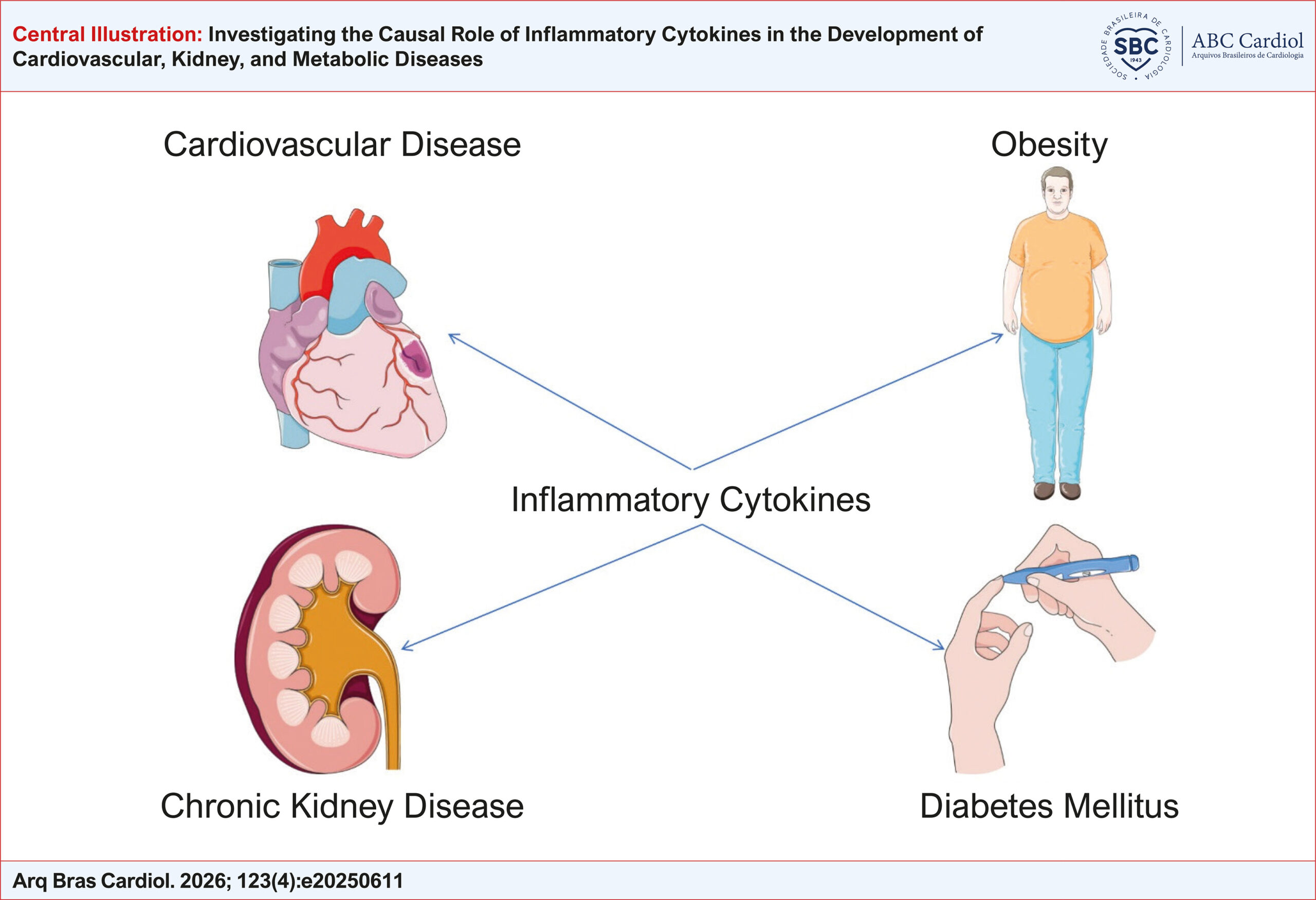
This Mendelian randomization (MR) study investigates causality between 91 inflammatory cytokines and multiorgan dysfunction across cardiovascular, kidney, and metabolic systems in the cardiovascular-kidney-metabolic (CKM) syndrome era.

Methods

Genetic instruments associated with 91 inflammatory cytokines were obtained from the Olink Target Inflammation panel across 11 European-ancestry cohorts. The inverse variance weighting (IVW) method was considered as the main analysis, complemented by sensitivity analyses including MR-Egger and weighted median methods.

Results

Genetically predicted levels of inflammatory cytokines showed widespread causal associations across CKM-related traits. Specifically, 31 cytokines were associated with cardiovascular outcomes, 26 with kidney traits, 10 with obesity-related traits, and 21 with diabetes-related traits, yielding a total of 60 cytokines with at least one significant association. Notably, FGF5 and IL6 emerged as paradoxical regulators, exerting opposing effects across different organ systems, while MCSF was consistently identified as a pan-vascular risk amplifier for cardiovascular diseases.

Conclusions

This comprehensive MR analysis reveals substantial causal heterogeneity in inflammatory cytokine effects across cardiovascular, kidney, and metabolic systems. These findings highlight the clinical importance of tissue- and context-specific inflammatory modulation, supporting the development of precision therapeutic strategies for CKM syndrome.
  • Cardiovascular Diseases
  • chronic renal insufficiency
  • Cytokines
  • Inflammation
  • Interleukin-6
  • Mendelian Randomization Analysis
Read Full Article
Creative Commons Attribution (CC BY) Creative Commons license
06/07/2026 DOI: 10.36660/abc.20250611i Views 2
Graphic 1
IJCS
Review Article

Inflammation in Cardiovascular Disease: Current Status and Future Perspectives

Francisco Antonio Helfenstein Fonseca et al. Maria Cristina Izar

Abstract

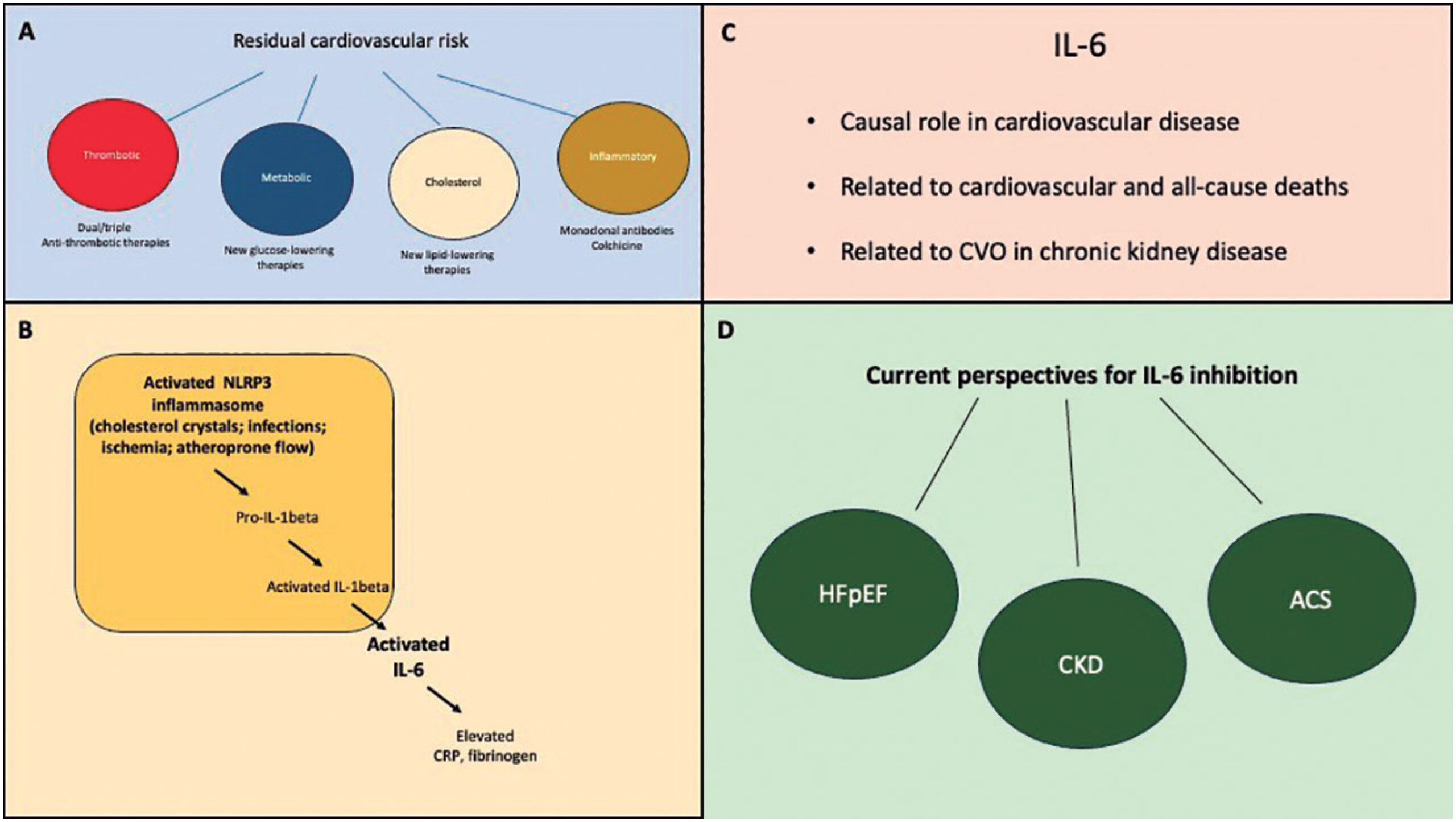
Atherosclerosis has been defined as an inflammatory disease. Three decades of research have pointed to a pivotal role of interleukin 6 for many aspects of cardiovascular disease, not the least of which is atherosclerosis. In this review, experimental and clinical studies are reported on a timeline, exploring mechanisms and possible explanations that form the basis of current knowledge. Some successful clinical trials were proof of concept studies, showing that not only inflammatory biomarkers are related to cardiovascular outcomes, but also that decreasing inflammation can reduce cardiovascular events. Great advances have been made in the management of residual cardiovascular risk due to cholesterol, thrombosis, and metabolic diseases, but the next frontier now seems to be targeting inflammation. In the upcoming years, the importance of inflammation will be evaluated in high-risk patients with chronic kidney disease, after acute coronary heart disease or heart failure with preserved ejection fraction. Inflammation seems to precede the development of cardiovascular risk factors. Moreover, counseling for a heathy lifestyle and, when necessary, the use of cardiometabolic therapies capable of decreasing inflammation, might be important.

  • C-Reactive Protein
  • Cytokines
  • Inflammasomes
  • Interleukin-6
  • Lymphocytes
Read Full Article
Creative Commons Attribution (CC BY) Creative Commons license
28/08/2023 DOI: 10.36660/ijcs.20230072 Views 1
Figure 1
ABC
Original Article

Persistent Inflammatory Activity in Blood Cells and Artery Tissue from Patients with Previous Bare Metal Stent

Pedro Silvio Farsky et al. Mario H. Hirata Renato Tambellini Arnoni Antonio Flavio Sanches Almeida … Mario Issa Paula Helena Ortiz Lima Maria de Lourdes Higuchi Hui T Lin-Wang

Abstract

Background:

Studies have pointed out a higher mortality after coronary artery bypass surgery (CABG) in patients with stent.

Objective:

To evaluate inflammatory markers in peripheral blood cells and in coronary artery tissue samples obtained during CABG in patients with stent compared to controls.

Methods:

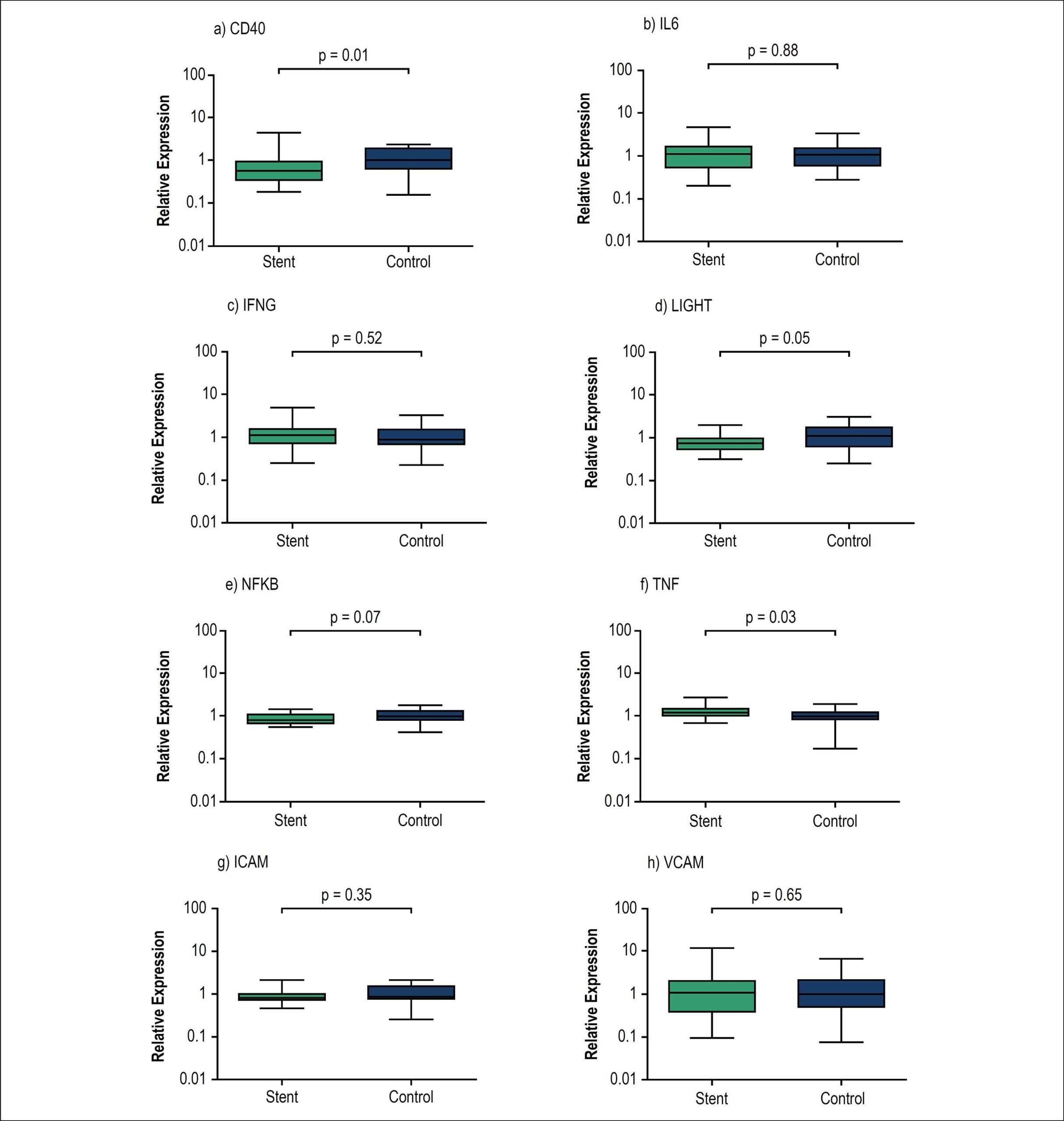
The case series consisted of two groups, one with previous stent implantation (n = 41) and one control (n = 26). The expression of the LIGHT, IL-6, ICAM, VCAM, CD40, NFKB, TNF, IFNG genes was analyzed in peripheral blood cells collected preoperatively. The coronary artery was evaluated for: interleukin-6, ICAM, VCAM, CD40, NFKB, TNF-alpha and IFN-gamma by immunohistochemistry. A total of 176 tissue samples were grouped for analysis in: A1- arteries with stent (n = 38); A2- native arteries from patients with stent in another artery (n = 68); and A3- arteries without stent from controls undergoing routinely CABG surgery (n = 70). A significance level of 0.05 was adopted.

Results:

Patients with stent showed higher TNF (p = 0.03) and lower CD40 gene expression (p = 0.01) in peripheral blood cells than controls without stent. In coronary artery samples, the TNF-alpha protein staining was higher in the group A1, not only in the intima-media layer (5.16 ± 5.05 vs 1.90 ± 2.27; p = 0.02), but also in the adipose tissue (6.69 ± 3.87 vs 2.27 ± 4.00; p < 0.001). Furthermore, group A1 had a higher interleukin-6 protein staining in adipose tissue than group A3 (p = 0.04).

Conclusion:

We observed a persistently higher systemic TNF expression associated with exacerbated TNF-alpha and interleukin-6 local production in patients with stents. This finding may contribute to a worse clinical outcome.

  • Blood Cells
  • Immunohistochemistry
  • Inflammation
  • Interleukin-6
  • Percutaneous Coronary Intervention
  • Polymerase Chain Reaction
  • Stents
  • Tumor Necrosis Factor-alpha
Read Full Article
Creative Commons Attribution (CC BY) Creative Commons license
16/07/2018 DOI: 10.5935/abc.20180119 Views 1
Figure 1
ABC
Original Article

Hypomethylation of Interleukin-6 Promoter is Associated with the Risk of Coronary Heart Disease

Hong-Peng Zuo et al. Ying-Yu Guo Lin Che Xian-Zheng Wu

Abstract

Background:

Interleukin-6 (IL-6) is implicated in the pathogenesis of coronary heart disease (CHD), and IL-6 expression has associated with reduced DNA methylation of its gene promoter. However, there are no data on IL-6 promoter methylation and the risk of CHD.

Objective:

To examine whether IL-6 promoter methylation measured in blood leukocyte DNA is associated with CHD risk.

Methods:

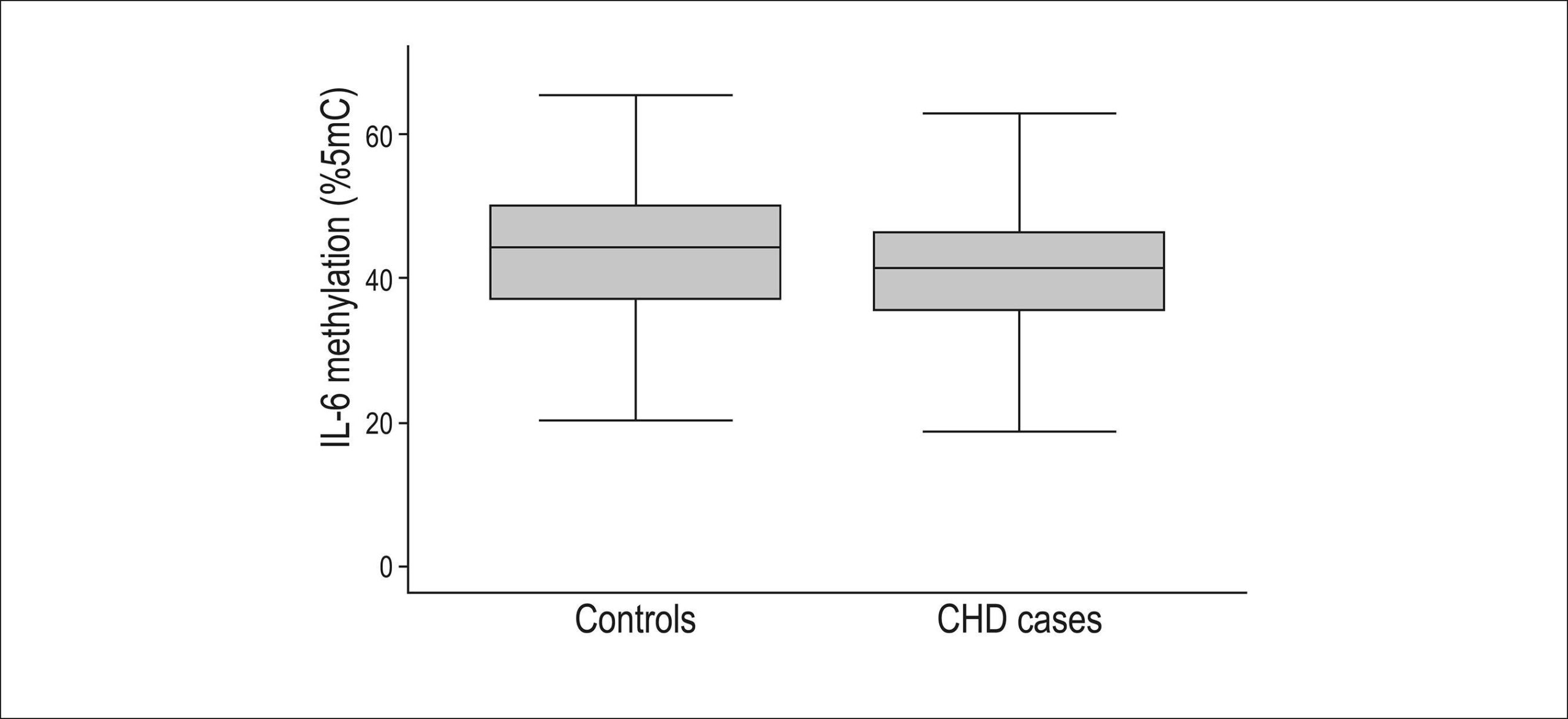
A total of 212 cases with CHD and 218 controls were enrolled. Methylation at two CpG sites in IL-6 promoter was measured by bisulfite pyrosequencing, and the mean IL-6 methylation was calculated by averaging the methylation measures of the two CpGs.

Results:

Mean methylation level in IL-6 promoter in CHD cases was significantly lower than that in controls (p = 0.023). Logistic regression analysis showed that IL-6 methylation was inversely associated with the risk of CHD. The odds ratios (ORs) of CHD for subjects in the second and first (lowest) tertile of IL-6 methylation were 1.87 (95% CI = 1.10‑3.20) and 2.01 (95% CI = 1.19-3.38) (ptrend = 0.013), respectively, compared to subjects in the third (highest) tertile. The IL-6 hypomethylation-related risk estimates tended to be stronger for acute myocardial infarction (ptrend = 0.006). CpG position-specific analysis showed that hypomethylation of position 1 conferred a more pronounced increase in CHD risk than that of position 2.

Conclusion:

These findings suggest that DNA hypomethylation of IL-6 promoter is associated with the increased risk for CHD, especially for acute myocardial infarction. The two distinct CpGs in IL-6 may contribute differently to the development of CHD.

  • Coronary Artery Disease
  • DNA Methylation
  • Epigenetic Repression
  • Interleukin-6
Read Full Article
Creative Commons Attribution (CC BY) Creative Commons license
01/08/2016 DOI: 10.5935/abc.20160124 Views 1
Evaluation of the degree of vascular inflammation in patients with metabolic syndrome
ABC
Artigo Original

Evaluation of the degree of vascular inflammation in patients with metabolic syndrome

Adriana Silva Monteiro Junqueira et al. Luiz José Martins Romêo Filho Camillo de Léllis Carneiro Junqueira

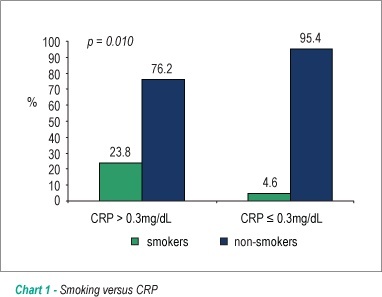
BACKGROUND: Metabolic Syndrome (MS) is defined as a set of cardiovascular risk factors related to visceral obesity and insulin resistance that lead to an increase in general mortality, especially cardiovascular. The inflammatory markers are considered emergent risk factors and can be potentially used in the clinical stratification of cardiovascular diseases, establishing prognostic values. OBJECTIVE: This study aims at evaluating which components of the MS present an increase of IL-6 and hs-CRP, identifying the marker that better expresses the degree of inflammation and which isolate component presents a higher degree of interference on the studied inflammatory markers, in order to identify other important risk factors when determining arterial inflammation. METHODS: A total of 87 hypertensive, diabetic and dyslipidemic patients were selected, aged 26 to 85 years, who met the necessary criteria for the positive diagnosis of MS. The patients were assessed through 24-hour ambulatory blood pressure monitoring (ABPM) and underwent hs-CRP and IL-6 measurements, among other metabolic variables. RESULTS: The patients that presented CRP > 0.3mg/dl showed a significant correlation (p102/88 cm in 83.7%, glycemia > 110mg/dl in 88% and BMI > 30kg/m²in60.5% of the studied individuals. CONCLUSION: We concluded that the CRP was the inflammatory marker with the highest expression regarding the studied variables, with smoking, albuminuria, previous personal history of cardiopathy, BMI, abdominal perimeter and hyperglycemia being the ones with the highest statistical significance. Interleukin-6 did not present a correlation with any of the studied variables.

  • C-Reactive Protein
  • Interleukin-6
  • Metabolic Syndrome
Read Full Article
Creative Commons Attribution (CC BY) Creative Commons license
24/11/2009 DOI: 10.1590/S0066-782X2009001000008
Serum levels of interleukin-6 (Il-6), interleukin-18 (Il-18) and C-reactive protein (CRP) in patients with type-2 diabetes and acute coronary syndrome without ST-segment elevation
ABC
Artigo Original

Serum levels of interleukin-6 (Il-6), interleukin-18 (Il-18) and C-reactive protein (CRP) in patients with type-2 diabetes and acute coronary syndrome without ST-segment elevation

José Roberto Matos Souza et al. Romulo Tadeu Oliveira Maria Heloisa S. L. Blotta Otávio Rizzi Coelho

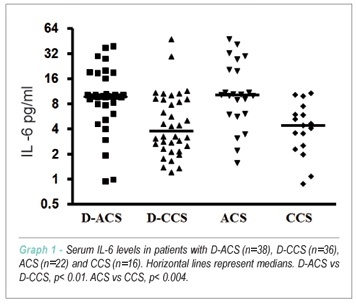
BACKGROUND: Atherosclerosis is an inflammatory disease, and serum levels of inflammatory markers such as interleukin 6 (IL-6), interleukin 18 (IL-18) and C-reactive protein (CRP) are used to evaluate patients with coronary artery disease. In patients with type-2 diabetes, atherosclerosis is related to a larger number of events such as myocardial infarction and death, when compared with patients without diabetes. OBJECTIVE: To evaluate the inflammatory response in patients with diabetes and acute events of coronary instability. METHODS: Two groups of patients were primarily selected. The first group was comprised of diabetic outpatients with stable angina (D-CCS) and presence of coronary artery disease on coronary angiography (n=36). The second group was comprised of diabetic patients seen in the emergency room with acute coronary syndrome (D-ACS) without ST-segment elevation (n=38). Non-diabetic patients with ACS (n=22) and CCS (n=16) comprised the control group. Serum levels of CRP, IL-6 and IL-18 were determined using nephelometry (CRP) and ELISA (IL-6 and IL-18) techniques. RESULTS: Higher serum IL-6 levels were found in diabetic or non-diabetic patients with ACS than in the group with CCS. On the other hand, diabetic patients with ACS had higher CRP levels in comparison with the other groups. Serum IL-18 levels were not significantly different among the patients studied. CONCLUSION: our findings suggest a more intense inflammatory activity in patients with coronary instability. This inflammatory activity, as measured by CRP, seems to be even more intense in diabetic patients.

  • coronary arteriosclerosis
  • Diabetes Mellitus
  • Interleukin-18
  • Interleukin-6
Read Full Article
Creative Commons Attribution (CC BY) Creative Commons license
28/04/2008 DOI: 10.1590/S0066-782X2008000200004

How to cite this article

EndNote RIS

Electronic Document Format (Vancouver)

Hu M, Gong Z, Li X, Yin C. Investigating the Causal Role of Inflammatory Cytokines in the Development of Cardiovascular, Kidney, and Metabolic Diseases. Arquivos Brasileiros de Cardiologia 2026;123(4):e20250611.

Electronic Document Format (ABNT)

Hu, Mengjin; Gong, Zhaoting; Li, Xiaosong; Yin, Chunlin. Investigating the Causal Role of Inflammatory Cytokines in the Development of Cardiovascular, Kidney, and Metabolic Diseases. Arquivos Brasileiros de Cardiologia, v. 123, n. 4, e20250611, Jul. 2026.

Electronic Document Format (APA)

Hu, M., Gong, Z., Li, X., & Yin, C. (2026). Investigating the Causal Role of Inflammatory Cytokines in the Development of Cardiovascular, Kidney, and Metabolic Diseases. Arquivos Brasileiros de Cardiologia, 123(4), e20250611.

Electronic Document Format (ISO)

Hu, Mengjin and Gong, Zhaoting and Li, Xiaosong and Yin, Chunlin. Investigating the Causal Role of Inflammatory Cytokines in the Development of Cardiovascular, Kidney, and Metabolic Diseases. Arquivos Brasileiros de Cardiologia [online]. 2026, vol. 123, n. 4, [cited 2026-10-14], e20250611. Available from: <https://journals.cardiol.br/en/article/investigating-the-causal-role-of-inflammatory-cytokines-in-the-development-of-cardiovascular-kidney-and-metabolic-diseases/>. ISSN 0066-782X

EndNote RIS

Electronic Document Format (Vancouver)

Fonseca FAH, Izar MC. Inflammation in Cardiovascular Disease: Current Status and Future Perspectives. International Journal of Cardiovascular Sciences 2023;36:e20230072.

Electronic Document Format (ABNT)

Fonseca, Francisco Antonio Helfenstein; Izar, Maria Cristina. Inflammation in Cardiovascular Disease: Current Status and Future Perspectives. International Journal of Cardiovascular Sciences, v. 36, e20230072, Aug. 2023.

Electronic Document Format (APA)

Fonseca, F. A. H., & Izar, M. C. (2023). Inflammation in Cardiovascular Disease: Current Status and Future Perspectives. International Journal of Cardiovascular Sciences, 36, e20230072.

Electronic Document Format (ISO)

Fonseca, Francisco Antonio Helfenstein and Izar, Maria Cristina. Inflammation in Cardiovascular Disease: Current Status and Future Perspectives. International Journal of Cardiovascular Sciences [online]. 2023, vol. 36, [cited 2026-10-14], e20230072. Available from: <https://journals.cardiol.br/en/article/inflammation-in-cardiovascular-disease-current-status-and-future-perspectives/>. ISSN 2359-4802

EndNote RIS

Electronic Document Format (Vancouver)

Farsky PS, Hirata MH, Arnoni RT, Almeida AFS, Issa M, Lima PHO, Higuchi ML, et al. Persistent Inflammatory Activity in Blood Cells and Artery Tissue from Patients with Previous Bare Metal Stent. Arquivos Brasileiros de Cardiologia 2018;111(2):134-41.

Electronic Document Format (ABNT)

Farsky, Pedro Silvio; Hirata, Mario H.; Arnoni, Renato Tambellini; Almeida, Antonio Flavio Sanches; Issa, Mario; Lima, Paula Helena Ortiz; Higuchi, Maria de Lourdes; Lin-Wang, Hui T. Persistent Inflammatory Activity in Blood Cells and Artery Tissue from Patients with Previous Bare Metal Stent. Arquivos Brasileiros de Cardiologia, v. 111, n. 2, p. 134-141, Jul. 2018.

Electronic Document Format (APA)

Farsky, P. S., Hirata, M. H., Arnoni, R. T., Almeida, A. F. S., Issa, M., Lima, P. H. O., Higuchi, M. L., & Lin-Wang, H. T. (2018). Persistent Inflammatory Activity in Blood Cells and Artery Tissue from Patients with Previous Bare Metal Stent. Arquivos Brasileiros de Cardiologia, 111(2), 134-141.

Electronic Document Format (ISO)

Farsky, Pedro Silvio and Hirata, Mario H. and Arnoni, Renato Tambellini and Almeida, Antonio Flavio Sanches and Issa, Mario and Lima, Paula Helena Ortiz and Higuchi, Maria de Lourdes and Lin-Wang, Hui T. Persistent Inflammatory Activity in Blood Cells and Artery Tissue from Patients with Previous Bare Metal Stent. Arquivos Brasileiros de Cardiologia [online]. 2018, vol. 111, n. 2, [cited 2026-10-14], pp. 134-141. Available from: <https://journals.cardiol.br/en/article/persistent-inflammatory-activity-in-blood-cells-and-artery-tissue-from-patients-with-previous-bare-metal-stent-2/>. ISSN 0066-782X

EndNote RIS

Electronic Document Format (Vancouver)

Zuo H, Guo Y, Che L, Wu X. Hypomethylation of Interleukin-6 Promoter is Associated with the Risk of Coronary Heart Disease. Arquivos Brasileiros de Cardiologia 2016;107(2):131-6.

Electronic Document Format (ABNT)

Zuo, Hong-Peng; Guo, Ying-Yu; Che, Lin; Wu, Xian-Zheng. Hypomethylation of Interleukin-6 Promoter is Associated with the Risk of Coronary Heart Disease. Arquivos Brasileiros de Cardiologia, v. 107, n. 2, p. 131-136, Jul. 2016.

Electronic Document Format (APA)

Zuo, H., Guo, Y., Che, L., & Wu, X. (2016). Hypomethylation of Interleukin-6 Promoter is Associated with the Risk of Coronary Heart Disease. Arquivos Brasileiros de Cardiologia, 107(2), 131-136.

Electronic Document Format (ISO)

Zuo, Hong-Peng and Guo, Ying-Yu and Che, Lin and Wu, Xian-Zheng. Hypomethylation of Interleukin-6 Promoter is Associated with the Risk of Coronary Heart Disease. Arquivos Brasileiros de Cardiologia [online]. 2016, vol. 107, n. 2, [cited 2026-10-14], pp. 131-136. Available from: <https://journals.cardiol.br/en/article/hypomethylation-of-interleukin-6-promoter-is-associated-with-the-risk-of-coronary-heart-disease/>. ISSN 0066-782X

EndNote RIS

Electronic Document Format (Vancouver)

Junqueira ASM, Romêo Filho LJM, Junqueira CLC. Evaluation of the degree of vascular inflammation in patients with metabolic syndrome. Arquivos Brasileiros de Cardiologia 2009;93(4):360-6.

Electronic Document Format (ABNT)

Junqueira, Adriana Silva Monteiro; Romêo Filho, Luiz José Martins; Junqueira, Camillo de Léllis Carneiro. Evaluation of the degree of vascular inflammation in patients with metabolic syndrome. Arquivos Brasileiros de Cardiologia, v. 93, n. 4, p. 360-366, Nov. 2009.

Electronic Document Format (APA)

Junqueira, A. S. M., Romêo Filho, L. J. M., & Junqueira, C. L. C. (2009). Evaluation of the degree of vascular inflammation in patients with metabolic syndrome. Arquivos Brasileiros de Cardiologia, 93(4), 360-366.

Electronic Document Format (ISO)

Junqueira, Adriana Silva Monteiro and Romêo Filho, Luiz José Martins and Junqueira, Camillo de Léllis Carneiro. Evaluation of the degree of vascular inflammation in patients with metabolic syndrome. Arquivos Brasileiros de Cardiologia [online]. 2009, vol. 93, n. 4, [cited 2026-10-14], pp. 360-366. Available from: <https://journals.cardiol.br/en/article/evaluation-of-the-degree-of-vascular-inflammation-in-patients-with-metabolic-syndrome/>. ISSN 0066-782X

EndNote RIS

Electronic Document Format (Vancouver)

Souza JRM, Oliveira RT, Blotta MHSL, Coelho OR. Serum levels of interleukin-6 (Il-6), interleukin-18 (Il-18) and C-reactive protein (CRP) in patients with type-2 diabetes and acute coronary syndrome without ST-segment elevation. Arquivos Brasileiros de Cardiologia 2008;90(2):94-9.

Electronic Document Format (ABNT)

Souza, José Roberto Matos; Oliveira, Romulo Tadeu; Blotta, Maria Heloisa S. L.; Coelho, Otávio Rizzi. Serum levels of interleukin-6 (Il-6), interleukin-18 (Il-18) and C-reactive protein (CRP) in patients with type-2 diabetes and acute coronary syndrome without ST-segment elevation. Arquivos Brasileiros de Cardiologia, v. 90, n. 2, p. 94-99, Apr. 2008.

Electronic Document Format (APA)

Souza, J. R. M., Oliveira, R. T., Blotta, M. H. S. L., & Coelho, O. R. (2008). Serum levels of interleukin-6 (Il-6), interleukin-18 (Il-18) and C-reactive protein (CRP) in patients with type-2 diabetes and acute coronary syndrome without ST-segment elevation. Arquivos Brasileiros de Cardiologia, 90(2), 94-99.

Electronic Document Format (ISO)

Souza, José Roberto Matos and Oliveira, Romulo Tadeu and Blotta, Maria Heloisa S. L. and Coelho, Otávio Rizzi. Serum levels of interleukin-6 (Il-6), interleukin-18 (Il-18) and C-reactive protein (CRP) in patients with type-2 diabetes and acute coronary syndrome without ST-segment elevation. Arquivos Brasileiros de Cardiologia [online]. 2008, vol. 90, n. 2, [cited 2026-10-14], pp. 94-99. Available from: <https://journals.cardiol.br/en/article/serum-levels-of-interleukin-6-il-6-interleukin-18-il-18-and-c-reactive-protein-crp-in-patients-with-type-2-diabetes-and-acute-coronary-syndrome-without-st-segment-elevation/>. ISSN 0066-782X

  • About ABC Family
  • Internal Regulation
  • Editorial Board
  • Brazilian Society of Cardiology (SBC)

Issues

SBC Guidelines

  • Videos
  • Podcasts
  • News