ABC Family Arquivos Brasileiros de Cardiologia International Journal of Cardiovascular Sciences ABC Heart Failure & Cardiomyopathy ABC Imagem Cardiovascular
Português English
ABC Family
Português English
  • About
    • About ABC Family
    • Internal Regulation
    • Editorial Board
    • Brazilian Society of Cardiology (SBC)
  • Issues
  • SBC Guidelines
  • Content
    • Videos
    • Podcasts
    • News
  • About
    • About ABC Family
    • Internal Regulation
    • Editorial Board
    • Brazilian Society of Cardiology (SBC)
  • Issues
  • SBC Guidelines
  • Content
    • Videos
    • Podcasts
    • News

ABC Family

  • ABC Family
  • Arquivos Brasileiros de Cardiologia
  • International Journal of Cardiovascular Sciences
  • ABC Heart Failure & Cardiomyopathy
  • ABC Imagem Cardiovascular
Search in

No content found.

Journals
Ordering
Article types
Others

  1. Home
  2. Keyword: mutation
Figure 1
ABC
Case Report

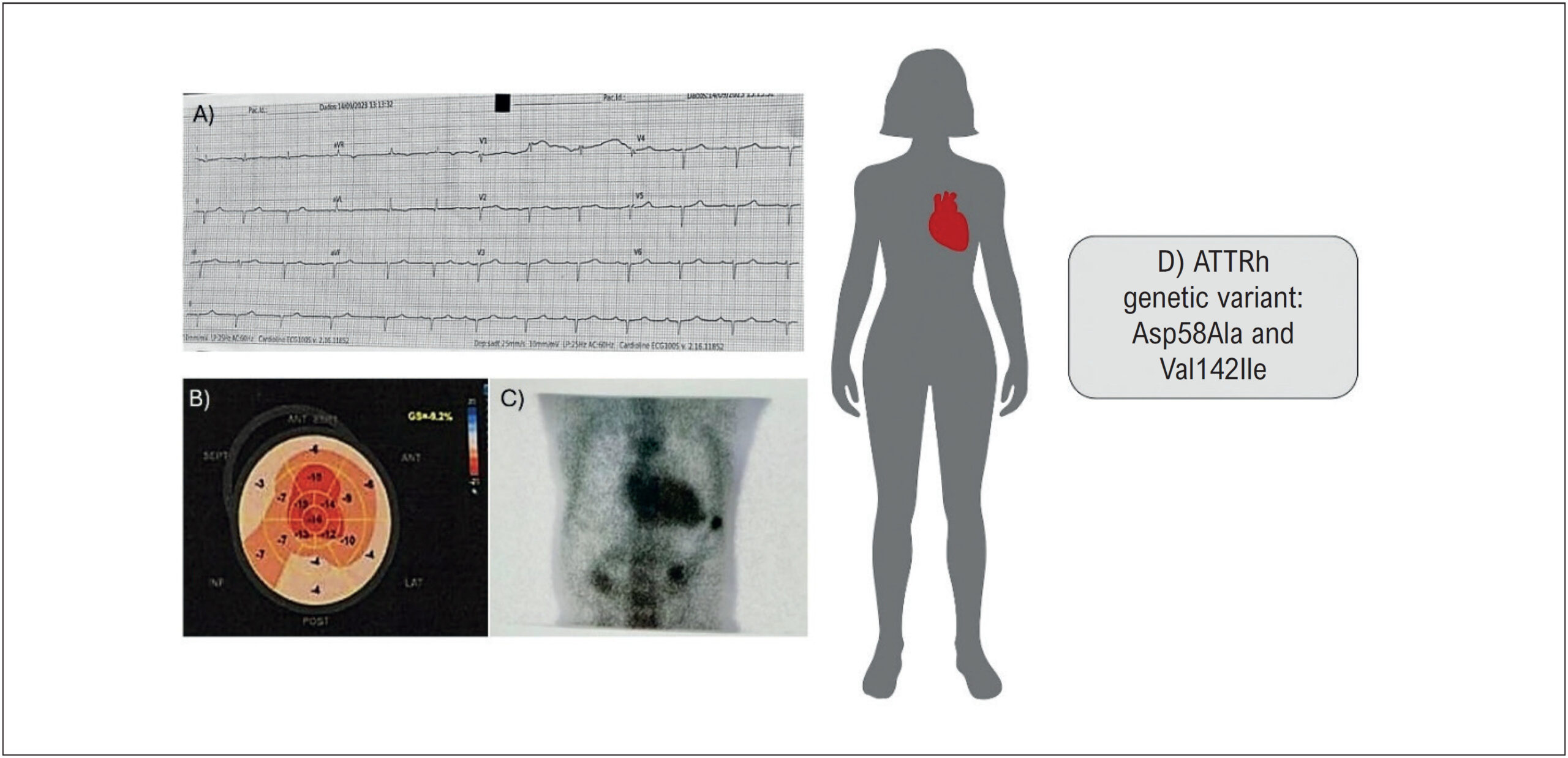
Hereditary Transthyretin Cardiac Amyloidosis Associated with Two Pathogenic Variants in the TTR Gene

Victor Hugo Bonfim et al. Matheus Martins Monteiro Moisés Abtibol Machado Orlando Pereira da Silva Junior … Katia do Nascimento Couceiro Fábio Fernandes João Marcos Bemfica Barbosa Ferreira

Introduction

Amyloidosis encompasses a group of rare diseases characterized by the accumulation of amyloidosis. Amyloidosis is an abnormal formation of misfolded proteins in tissues and organs. These proteins adopt a highly stable beta-sheet structure, forming insoluble fibrils that are deposited in the extracellular space. Amyloidosis is classified according to the precursor protein and the type of polymer formed, resulting in different subtypes of the disease, each with distinct clinical manifestations.

Transthyretin amyloidosis (ATTR) has two primary subtypes: wild-type ATTR (wild-type ATTR, or ATTRw), formerly called “senile,” and variant ATTR (hereditary ATTR, or ATTRh), where individuals possess pathological variants in the transthyretin gene. To date, more than 120 variants have been identified. Clinical symptoms may present primarily as neuropathic, cardiac, or a combination of both.

[…]
  • Amyloidosis
  • Genes
  • mutation
Read Full Article
Creative Commons Attribution (CC BY) Creative Commons license
01/06/2026 DOI: 10.36660/abc.20250651i Views 1
Investigation of ion channel gene variants in patients with long QT syndrome
ABC
Artigo Original

Investigation of ion channel gene variants in patients with long QT syndrome

Ernesto Curty et al. Fernando Eugênio dos Santos Cruz Fabiane Santos Lima Jorge Luiz Albuquerque Coutinho … Rosane Silva Turán Peter Ürményi Antônio Carlos Campos Carvalho Edson Rondinelli

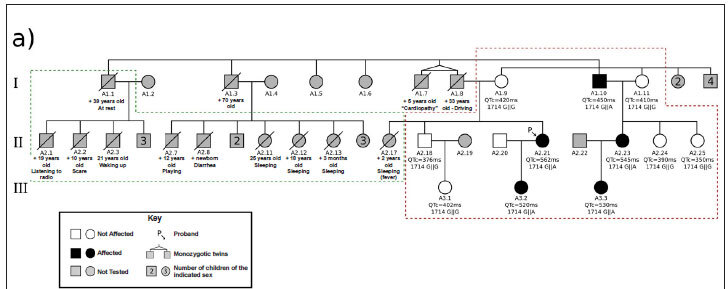
BACKGROUND: The long QT syndrome (LQTS) is an inherited arrhythmia syndrome with increased QT interval and risk of sudden death. Mutations in genes KCNQ1, KCNH2 and SCN5A account for 90% of cases with genotype determined, and genotyping is informative for genetic counseling and better disease management. OBJECTIVE: Molecular investigation and computational analysis of gene variants of KCNQ1, KCNH2 and SCN5A associated with LQTS, in families with the disease. METHODS: The coding regions of genes KCNQ1, KCNH2 and SCN5A in patients with LQTS and their family members were sequenced and analyzed using Geneious ProTM software. RESULTS: Two families with clinical criteria for LQTS were investigated. The proband of Family A had QTC = 562 ms, Schwartz Score = 5.5. The genotyping identified the G1714A mutation in the KCNH2 gene. QTC = 521 ± 42 ms was observed in family members carrying the mutation against QTC = 391 ± 21 ms for non-carriers. The proband of Family B had QTc = 551 ms, Schwartz Score = 5.5. The genotyping identified the G1600T mutation, in the same gene. The analysis of family members revealed QTC = 497 ± 42 ms in mutation carriers, compared with QTC = 404 ± 29 ms in non-carriers. CONCLUSION: Two gene variants previously associated with LQTS were found in two families clinically diagnosed with LQTS. The prolongation of the QT interval was observed in all family members carrying the mutations. A strategy was developed to identify variants of genes KCNQ1, KCNH2 and SCN5A, making it possible to train technical staff for future application to diagnosis routine.

  • Death, Sudden, Cardiac
  • ion channels
  • Long QT Syndrome
  • mutation
Read Full Article
Creative Commons Attribution (CC BY) Creative Commons license
04/02/2011 DOI: 10.1590/S0066-782X2011005000015
Research of markers for the genes of the heavy chain of cardiac beta-myosin and myosin binding protein C in relatives of patients with hypertrophic cardiomyopathy
ABC
Artigo Original

Research of markers for the genes of the heavy chain of cardiac beta-myosin and myosin binding protein C in relatives of patients with hypertrophic cardiomyopathy

Adriana Paula Tirone et al. Edmundo Arteaga Alexandre da Costa Pereira José Eduardo Krieger … Paula de Cássia Buck Barbara Maria Ianni Charles Mady

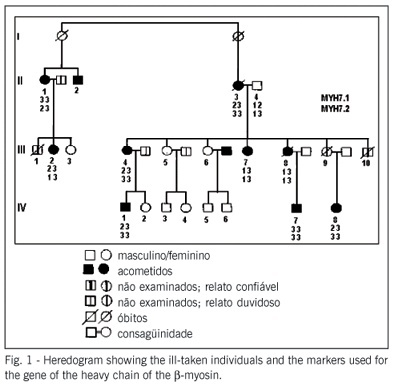
OBJECTIVE: To study the molecular markers for the genes of the heavy chain of cardiac beta-myosin and the myosin binding protein C in relatives of carriers of hypertrophic cardiomyopathy. METHODS: Twelve families who had anamnesis, physical exam, electrocardiogram, echocardiogram and blood collection for the genetic study through the chain reaction of polymerase. RESULTS: From the 227 relatives, 25% were ill-taken, with 51% men, with an average age of 35±19 (2 to 95) years old. The genetic analysis showed a connection with the gene of the cardiac b-myosin in a family and, in another, a connection with the gene of the myosin-binding protein C. In five families, the connections with the two genes were excluded; in two, the connection with the gene of the myosin-binding protein C, but for the b-myosin gene the results were non-conclusive; in two families, the results were non-conclusive for both genes and in one the connection for the b-myosin gene was excluded. The results were non-conclusive for the gene of the myosin-binding protein C. CONCLUSION: In our environment, other genes, different from those described in the literature, may prevail, or there are other genetic differences related to the origin of our population and/or environmental factors.

  • beta-myosin
  • gene of the myosin-binding protein C
  • Genetics
  • Hypertrophic Cardiomyopathy
  • mutation
Read Full Article
Creative Commons Attribution (CC BY) Creative Commons license
28/06/2005 DOI: 10.1590/S0066-782X2005000600007

How to cite this article

EndNote RIS

Electronic Document Format (Vancouver)

Bonfim VH, Monteiro MM, Machado MA, Silva Junior OP, Couceiro KN, Fernandes F, Ferreira JMBB, et al. Hereditary Transthyretin Cardiac Amyloidosis Associated with Two Pathogenic Variants in the TTR Gene. Arquivos Brasileiros de Cardiologia 2026;123(4):e20250651.

Electronic Document Format (ABNT)

Bonfim, Victor Hugo; Monteiro, Matheus Martins; Machado, Moisés Abtibol; Silva Junior, Orlando Pereira da; Couceiro, Katia do Nascimento; Fernandes, Fábio; Ferreira, João Marcos Bemfica Barbosa. Hereditary Transthyretin Cardiac Amyloidosis Associated with Two Pathogenic Variants in the TTR Gene. Arquivos Brasileiros de Cardiologia, v. 123, n. 4, e20250651, May. 2026.

Electronic Document Format (APA)

Bonfim, V. H., Monteiro, M. M., Machado, M. A., Silva Junior, O. P. , Couceiro, K. N., Fernandes, F., & Ferreira, J. M. B. B. (2026). Hereditary Transthyretin Cardiac Amyloidosis Associated with Two Pathogenic Variants in the TTR Gene. Arquivos Brasileiros de Cardiologia, 123(4), e20250651.

Electronic Document Format (ISO)

Bonfim, Victor Hugo and Monteiro, Matheus Martins and Machado, Moisés Abtibol and Silva Junior, Orlando Pereira da and Couceiro, Katia do Nascimento and Fernandes, Fábio and Ferreira, João Marcos Bemfica Barbosa. Hereditary Transthyretin Cardiac Amyloidosis Associated with Two Pathogenic Variants in the TTR Gene. Arquivos Brasileiros de Cardiologia [online]. 2026, vol. 123, n. 4, [cited 2026-10-14], e20250651. Available from: <https://journals.cardiol.br/en/article/hereditary-transthyretin-cardiac-amyloidosis-associated-with-two-pathogenic-variants-in-the-ttr-gene/>. ISSN 0066-782X

EndNote RIS

Electronic Document Format (Vancouver)

Curty E, Cruz FES, Lima FS, Coutinho JLA, Silva R, Ürményi TP, Carvalho ACC, et al. Investigation of ion channel gene variants in patients with long QT syndrome. Arquivos Brasileiros de Cardiologia 2011;96(3):172-8.

Electronic Document Format (ABNT)

Curty, Ernesto; Cruz, Fernando Eugênio dos Santos; Lima, Fabiane Santos; Coutinho, Jorge Luiz Albuquerque; Silva, Rosane; Ürményi, Turán Peter; Carvalho, Antônio Carlos Campos; Rondinelli, Edson. Investigation of ion channel gene variants in patients with long QT syndrome. Arquivos Brasileiros de Cardiologia, v. 96, n. 3, p. 172-178, Feb. 2011.

Electronic Document Format (APA)

Curty, E., Cruz, F. E. S., Lima, F. S., Coutinho, J. L. A., Silva, R., Ürményi, T. P., Carvalho, A. C. C., & Rondinelli, E. (2011). Investigation of ion channel gene variants in patients with long QT syndrome. Arquivos Brasileiros de Cardiologia, 96(3), 172-178.

Electronic Document Format (ISO)

Curty, Ernesto and Cruz, Fernando Eugênio dos Santos and Lima, Fabiane Santos and Coutinho, Jorge Luiz Albuquerque and Silva, Rosane and Ürményi, Turán Peter and Carvalho, Antônio Carlos Campos and Rondinelli, Edson. Investigation of ion channel gene variants in patients with long QT syndrome. Arquivos Brasileiros de Cardiologia [online]. 2011, vol. 96, n. 3, [cited 2026-10-14], pp. 172-178. Available from: <https://journals.cardiol.br/en/article/investigation-of-ion-channel-gene-variants-in-patients-with-long-qt-syndrome/>. ISSN 0066-782X

EndNote RIS

Electronic Document Format (Vancouver)

Tirone AP, Arteaga E, Pereira AC, Krieger JE, Buck PC, Ianni BM, Mady C, et al. Research of markers for the genes of the heavy chain of cardiac beta-myosin and myosin binding protein C in relatives of patients with hypertrophic cardiomyopathy. Arquivos Brasileiros de Cardiologia 2005;84(6):467-72.

Electronic Document Format (ABNT)

Tirone, Adriana Paula; Arteaga, Edmundo; Pereira, Alexandre da Costa; Krieger, José Eduardo; Buck, Paula de Cássia; Ianni, Barbara Maria; Mady, Charles. Research of markers for the genes of the heavy chain of cardiac beta-myosin and myosin binding protein C in relatives of patients with hypertrophic cardiomyopathy. Arquivos Brasileiros de Cardiologia, v. 84, n. 6, p. 467-472, Jun. 2005.

Electronic Document Format (APA)

Tirone, A. P., Arteaga, E., Pereira, A. C., Krieger, J. E., Buck, P. C., Ianni, B. M., & Mady, C. (2005). Research of markers for the genes of the heavy chain of cardiac beta-myosin and myosin binding protein C in relatives of patients with hypertrophic cardiomyopathy. Arquivos Brasileiros de Cardiologia, 84(6), 467-472.

Electronic Document Format (ISO)

Tirone, Adriana Paula and Arteaga, Edmundo and Pereira, Alexandre da Costa and Krieger, José Eduardo and Buck, Paula de Cássia and Ianni, Barbara Maria and Mady, Charles. Research of markers for the genes of the heavy chain of cardiac beta-myosin and myosin binding protein C in relatives of patients with hypertrophic cardiomyopathy. Arquivos Brasileiros de Cardiologia [online]. 2005, vol. 84, n. 6, [cited 2026-10-14], pp. 467-472. Available from: <https://journals.cardiol.br/en/article/research-of-markers-for-the-genes-of-the-heavy-chain-of-cardiac-beta-myosin-and-myosin-binding-protein-c-in-relatives-of-patients-with-hypertrophic-cardiomyopathy/>. ISSN 0066-782X

  • About ABC Family
  • Internal Regulation
  • Editorial Board
  • Brazilian Society of Cardiology (SBC)

Issues

SBC Guidelines

  • Videos
  • Podcasts
  • News