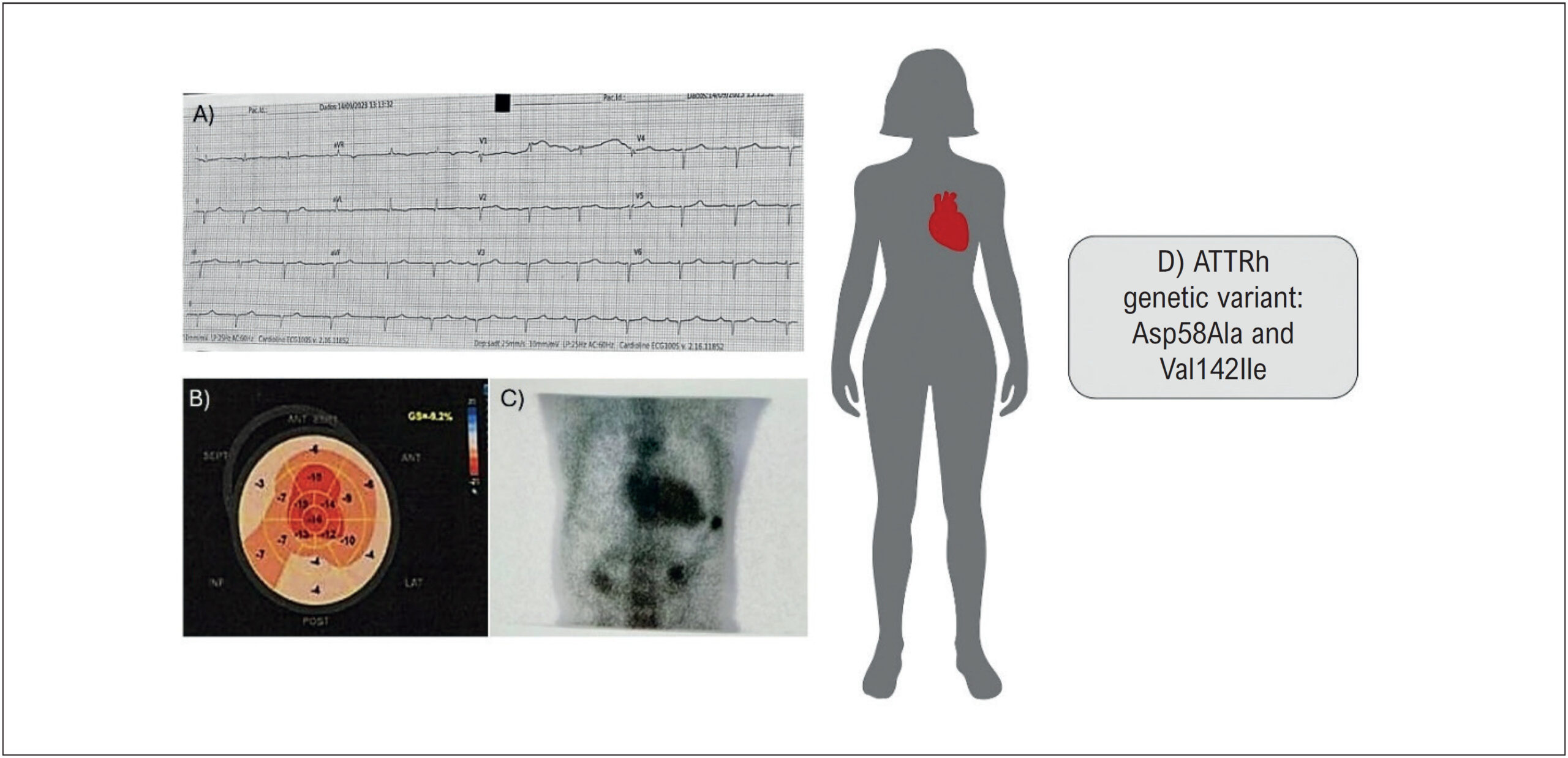
Hereditary Transthyretin Cardiac Amyloidosis Associated with Two Pathogenic Variants in the TTR Gene
Victor Hugo Bonfim et al. Matheus Martins Monteiro Moisés Abtibol Machado Orlando Pereira da Silva Junior … Katia do Nascimento Couceiro Fábio Fernandes João Marcos Bemfica Barbosa Ferreira
Introduction
Amyloidosis encompasses a group of rare diseases characterized by the accumulation of amyloidosis. Amyloidosis is an abnormal formation of misfolded proteins in tissues and organs. These proteins adopt a highly stable beta-sheet structure, forming insoluble fibrils that are deposited in the extracellular space. Amyloidosis is classified according to the precursor protein and the type of polymer formed, resulting in different subtypes of the disease, each with distinct clinical manifestations.
Transthyretin amyloidosis (ATTR) has two primary subtypes: wild-type ATTR (wild-type ATTR, or ATTRw), formerly called “senile,” and variant ATTR (hereditary ATTR, or ATTRh), where individuals possess pathological variants in the transthyretin gene. To date, more than 120 variants have been identified. Clinical symptoms may present primarily as neuropathic, cardiac, or a combination of both.
[…]