Eduardo Martelli Moreira et al. Bernadette Cunha Waldvogel Eduardo Bello Martins Desiderio Favarato … Eduardo Gomes Lima Fabio Grunspun Pitta Fabiana Hanna Rached Henrique Trombini Pinesi Omar Asdrúbal Vilca Mejia Carlos Vicente Serrano Jr
Background
Long-term outcome data following Coronary Artery Bypass Graft (CABG) surgery in Brazil remain limited, yet are essential for informing public health policies and guiding clinical practice.
Objectives
To estimate five-year all-cause and cause-specific mortality rates in patients undergoing CABG and to identify associated risk factors.
Methods
A retrospective analysis of 6,933 patients who underwent CABG at the Heart Institute, Faculty of Medicine, University of São Paulo, between 2007 and 2018. Mortality data up to 2018 were retrieved from government databases. A significance level of 5% was adopted.
Results
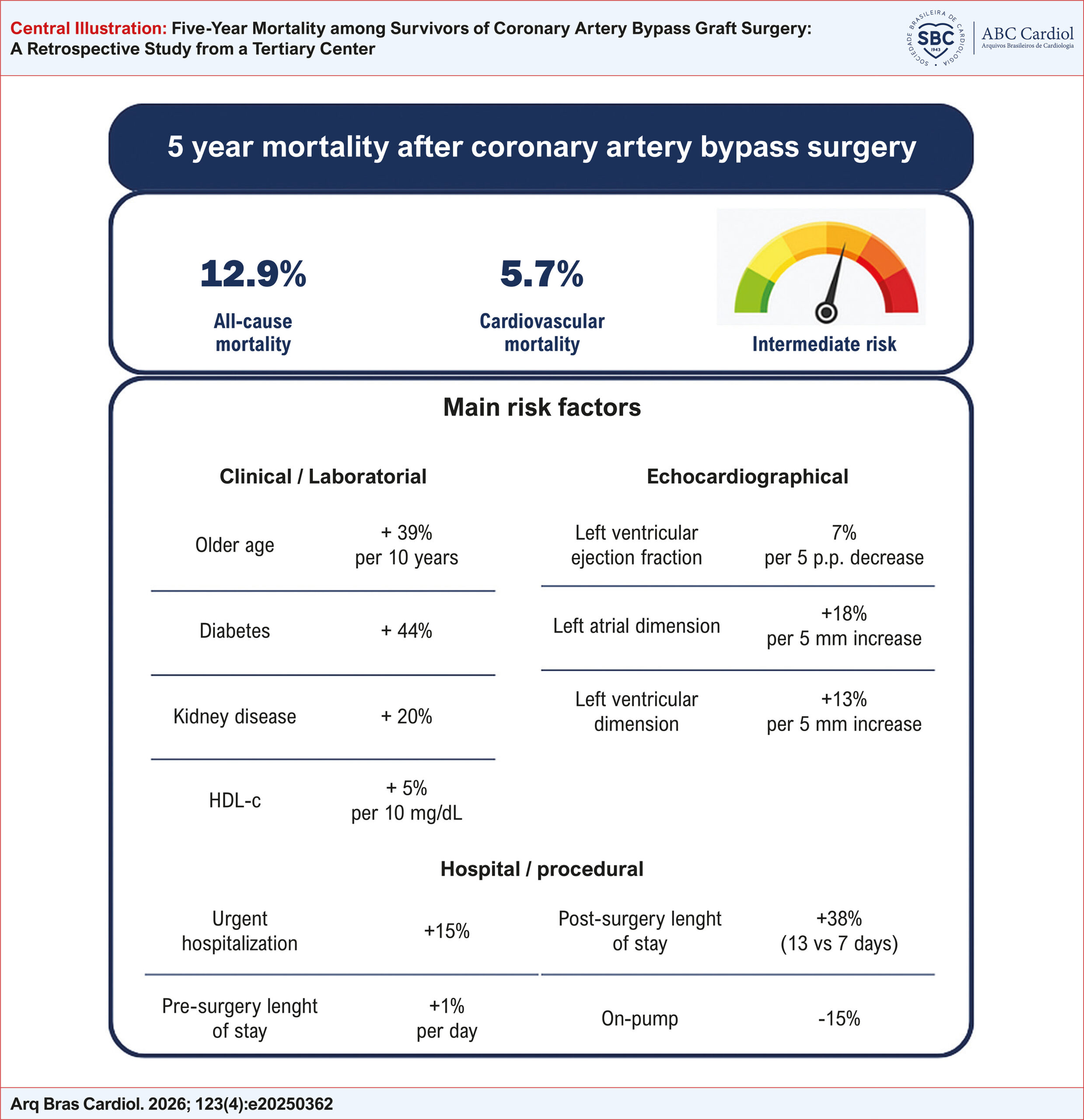
The study cohort included 4,854 men (72%) with a median age of 63 years (IQR: 57–70). Diabetes mellitus was present in 2,984 patients (43%), and 1,918 (29%) had chronic kidney disease. During follow-up, 1,075 deaths occurred, of which 506 (47.1%) were attributed to cardiovascular causes. The 5-year all-cause mortality rate was 12.9% (95% CI: 11.9–13.9), and the cardiovascular mortality rate was 5.7% (95% CI: 5.1–6.4). The leading cause of cardiovascular death was ischemic heart disease (290 deaths, 57.3%), followed by cerebrovascular disease (84 deaths, 16.6%). Factors significantly associated with all-cause mortality included older age, diabetes mellitus, glomerular filtration rate, HDL-cholesterol, left ventricular ejection fraction, left atrial and left ventricular diastolic dimensions, urgent hospitalization, on-pump surgery, and length of hospital stay.
Conclusion
Patients undergoing CABG at a tertiary care center exhibited moderate 5-year all-cause and cardiovascular mortality rates. These findings highlight key prognostic factors that may support risk stratification and guide postoperative management strategies.