| ABC
ABC Family Arquivos Brasileiros de Cardiologia International Journal of Cardiovascular Sciences ABC Heart Failure & Cardiomyopathy ABC Imagem Cardiovascular
Português English
ABC Family | ABC
Português English
  • About
    • About the Journal
    • Internal Regulation
    • Editors Section
    • Editorial Board
    • History
    • SBC Award
  • Instructions to Authors
    • Guidelines for Publication
    • Editorial Policy
    • Ethics Policy
    • Policy on the Use of Artificial Intelligence
    • Mandatory Publication Form
    • Publication Fee
  • Issues
  • SBC Guidelines
  • Abstracts
    • How to Publish an Abstract Supplement?
    • Supplements from the Brazilian Congress of Cardiology
  • About
    • About the Journal
    • Internal Regulation
    • Editors Section
    • Editorial Board
    • History
    • SBC Award
  • Instructions to Authors
    • Guidelines for Publication
    • Editorial Policy
    • Ethics Policy
    • Policy on the Use of Artificial Intelligence
    • Mandatory Publication Form
    • Publication Fee
  • Issues
  • SBC Guidelines
  • Abstracts
    • How to Publish an Abstract Supplement?
    • Supplements from the Brazilian Congress of Cardiology

ABC Family

  • ABC Family
  • Arquivos Brasileiros de Cardiologia
  • International Journal of Cardiovascular Sciences
  • ABC Heart Failure & Cardiomyopathy
  • ABC Imagem Cardiovascular
Search in

No content found.

Journals
Ordering
Article types
Others

  1. Home
  2. ABC
  3. Issues
  4. 2024, Volume 121, Number 5
In-Hospital Outcomes in the Brazilian Registry of Transcatheter Aortic Valve Implantation – 14-Year Analysis
Original Article

In-Hospital Outcomes in the Brazilian Registry of Transcatheter Aortic Valve Implantation – 14-Year Analysis

Maria Cristina Meira Ferreira et al. Viviana de Mello Guzzo Lemke Maria Sanali Moura de Oliveira Paiva Emilia Matos do Nascimento … Basílio de Bragança Pereira Gláucia Maria Moraes de Oliveira

Abstract

Background

Transcatheter aortic valve implantation (TAVI) has had an exponential increase of its indication, being incorporated into the Brazilian Unified Public Health System in 2022, thus requiring assessment of its use in Brazil.

Objeticve

To assess the factors associated with in-hospital mortality and non-fatal complications in both genders in the Brazilian Registry of Transcatheter Aortic Valve Implantation and New Technologies (RIBAC-NT) population.

Method

Analysis of the RIBAC-NT database from 2008 to 2022 was performed. Logistic models and machine learning were used for statistical assessment of the association between variables and outcomes. The software R was used and a 5% significance level, adopted.

Results

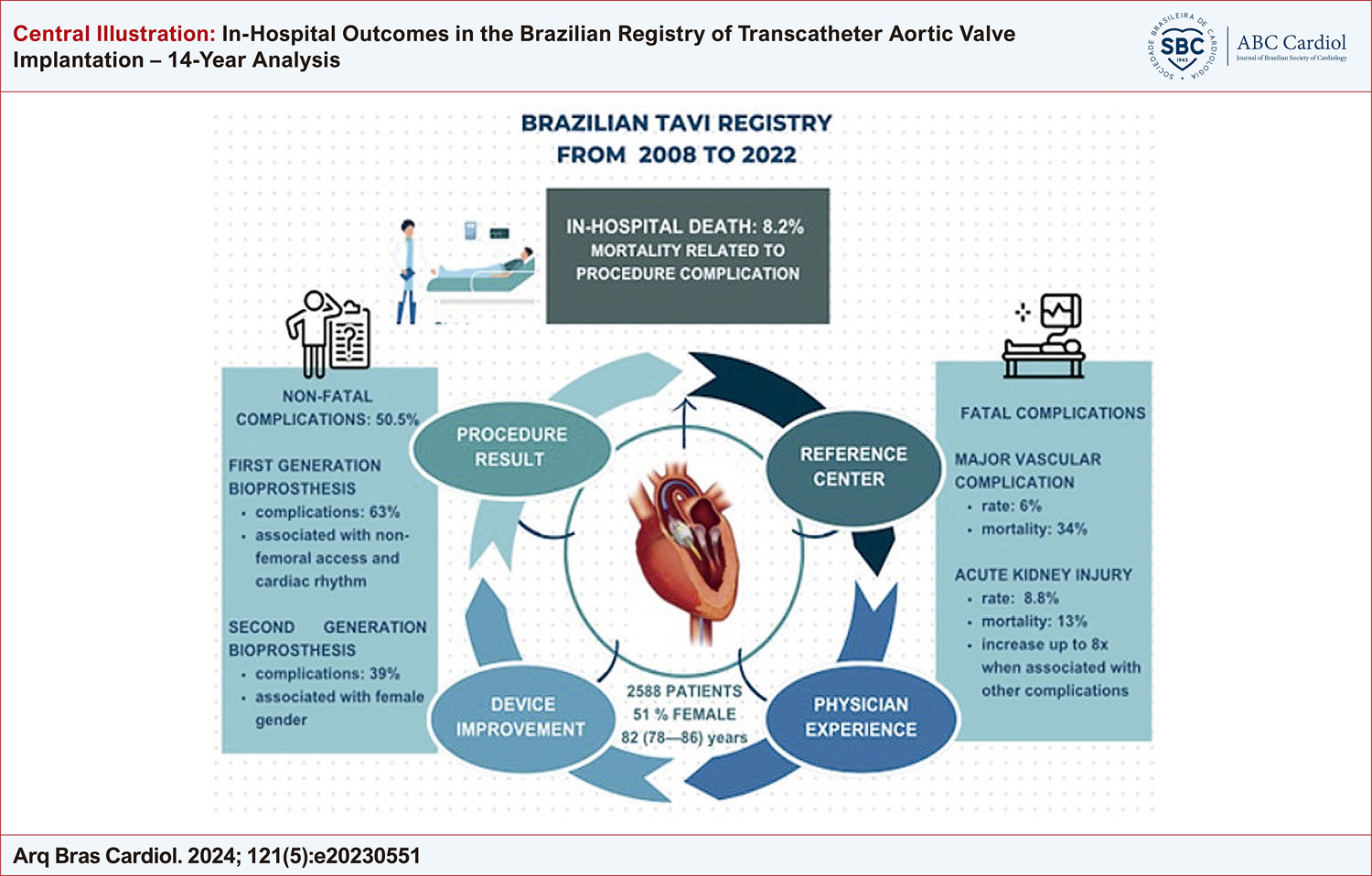
Analysis of 2588 patients (women, 51.2%; in-hospital death, 8.2%). Mortality was associated with procedural complications, of which major vascular complication (VC) and acute kidney injury (AKI) stood out (p<0.001). Major VC occurred in 6% of the patients, with 34% mortality; AKI occurred in 8.8%, with 13% mortality, which increased up to 8 times when AKI coexisted with other complications. Non-fatal complications occurred in 50.5% of all patients, affecting 63% of those with 1st generation (1G) bioprosthesis and 39% of those with 2nd generation (2G) bioprosthesis (p<0,001). Non-femoral access and heart rhythm influenced non-fatal complications in patients with 1G prostheses, while complications in patients with 2G prosthesis associated with the female gender (39.6% vs. 30.4%, p=0.003).

Conclusion

In-hospital mortality in the RIBAC-NT population was directly associated with procedural complications, mainly major VC and AKI. The occurrence of non-fatal complications differed according to gender and bioprosthesis type.
  • Aortic Valve Disease
  • Aortic Valve Stenosis
  • Heart Valve Prosthesis
  • Heart Valve Prosthesis Implantation
  • Transcatheter Aortic Valve Replacement
Read Full Article
Creative Commons Attribution (CC BY) Creative Commons license
14/10/2024 DOI: 10.36660/abc.20230551i
Figure 1
Case Report

Marfan Syndrome, Hypertrophic Cardiomyopathy And Long QT A Rare Association Causing Sudden Death

Diana Carvalho et al. Simão Carvalho Adriana Pacheco Carlos Costa … Pedro Carvalho Raquel Ferreira Ana Briosa

Introduction

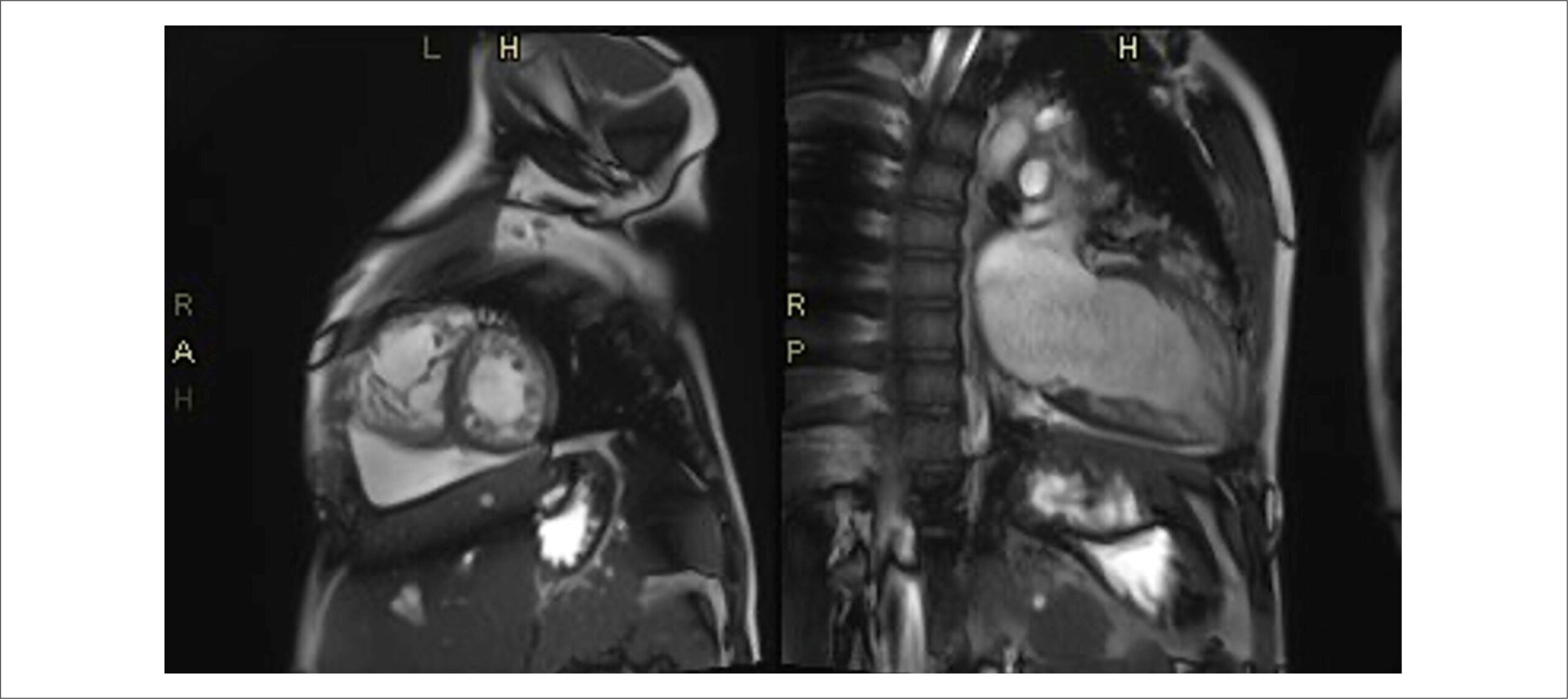
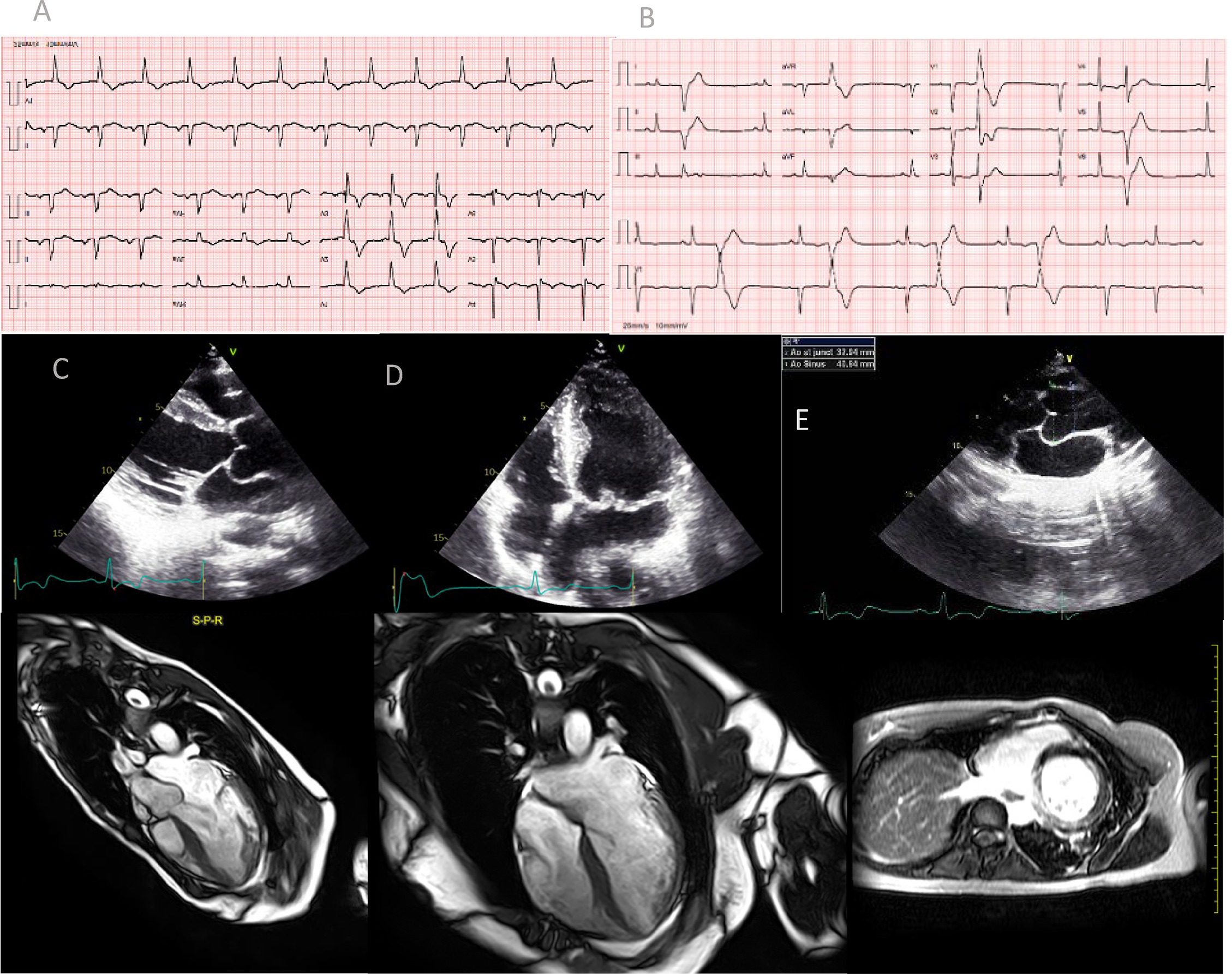
Marfan syndrome (MS) is a systemic disease of the connective tissue with an autosomal dominant transmission, usually associated with a mutation in the fibrillin 1 gene (FBN1). The estimated prevalence is 6.5/100,000. According to the revised Ghent criteria, mutation in the FBN1 gene, lens ectopy, and aortic root dilation are the key factors for the diagnosis of MS., Life expectancy is essentially determined by cardiovascular complications, particularly aortopathy.

[…]

  • Cardiac Arrhythmias
  • Cardiac Sudden Death
  • Hypertrophic Cardiomyopathy
  • Marfan syndrome
  • Mitral Valve Prolapse
Read Full Article
Creative Commons Attribution (CC BY) Creative Commons license
14/10/2024 DOI: 10.36660/abc.20230489i Views 1
Prognostic Value of PRECİSE DAPT Score on Short- and Long-Term Outcomes in MINOCA Patients with Acute Coronary Syndrome
Original Article

Prognostic Value of PRECİSE DAPT Score on Short- and Long-Term Outcomes in MINOCA Patients with Acute Coronary Syndrome

Tolga Onuk et al. Fuat Polat Bariş Yaylak Ali Nazmi Çalik … Semih Eren Şükrü Akyüz

Abstract

Background

Myocardial infarction with non-obstructive coronary arteries (MINOCA) constitutes a significant subset of acute myocardial infarctions (AMI) with uncertain prognostic markers. Early risk assessment is crucial to identify MINOCA patients at risk of adverse outcomes.

Objectives

This study aimed to evaluate the predictive capacity of the PRECISE-DAPT score in assessing short- and long-term prognoses in MINOCA patients presenting with ST-segment elevation myocardial infarction (STEMI) or non-ST-elevation myocardial infarction (NSTEMI).

Methods

Among 741 MINOCA patients, the PRECISE-DAPT score was computed to analyze its association with in-hospital and follow-up major adverse cardiovascular events (MACE). Parameters showing significance in MACE (+) groups underwent statistical analysis: univariate logistic regression for in-hospital events and univariate Cox regression for follow-up events. For statistical significance, a predefined level of α = 0.05 was adopted. Parameters demonstrating significance proceeded to multiple logistic regression for in-hospital events and multivariate Cox regression for follow-up events.

Results

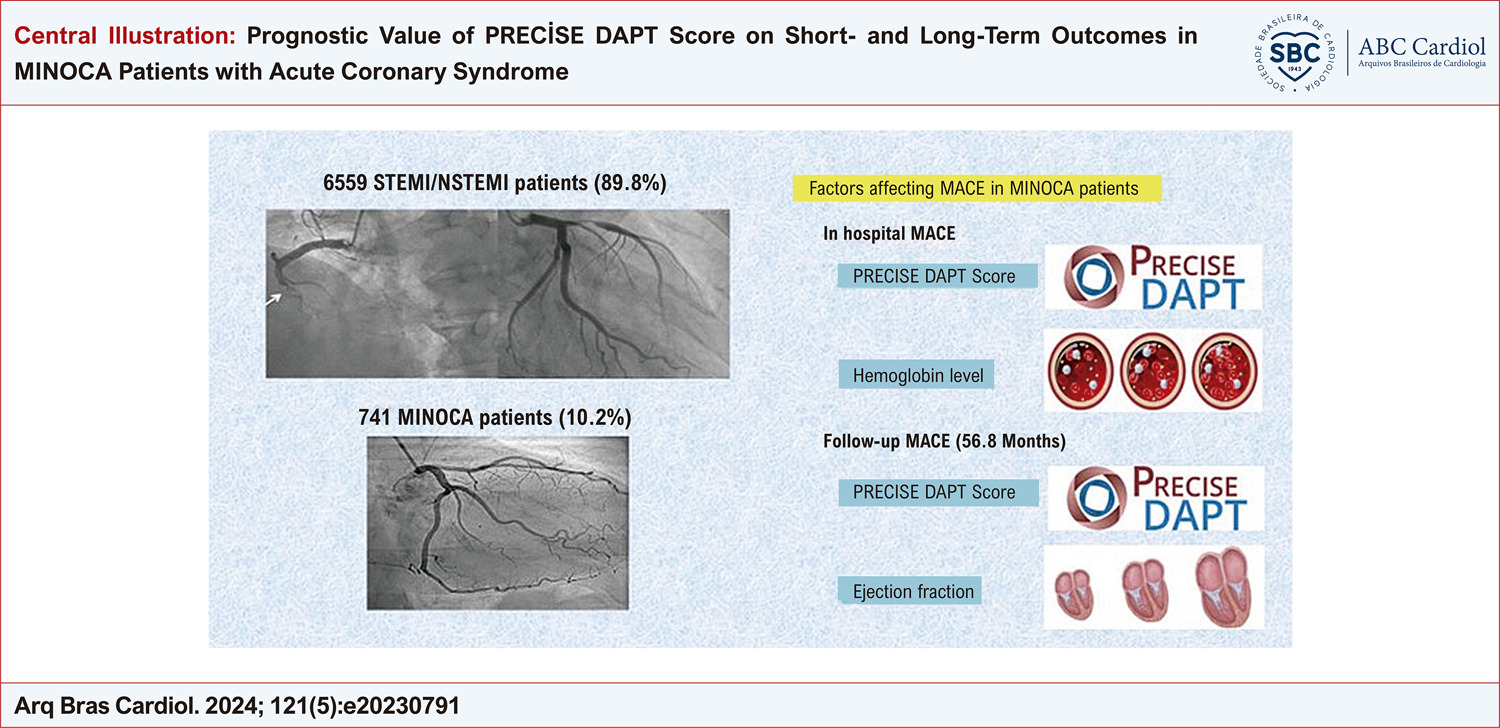
In-hospital MACE occurred in 4.1% of patients, while 58% experienced follow-up MACE. Hemoglobin levels and the PRECISE-DAPT Score were identified as independent parameters for in-hospital MACE. Furthermore, ejection fraction (EF%) and the PRECISE-DAPT Score emerged as independent predictors of follow-up MACE.

Conclusions

The study revealed that a higher PRECISE-DAPT score was significantly associated with increased risks of both in-hospital and long-term major adverse cardiovascular events in MINOCA patients presenting with acute coronary syndrome (ACS), underscoring the score’s potential in risk stratification for this patient cohort.

  • Atrial Fibrillation
  • Dual Anti-Platelet Therapy
  • MINOCA
  • Myocardial Infarction
Read Full Article
Creative Commons Attribution (CC BY) Creative Commons license
14/10/2024 DOI: 10.36660/abc.20230791i
Registry of Percutaneous Closure of Patent Foramen Ovale in the Secondary Prevention of Stroke
Original Article

Registry of Percutaneous Closure of Patent Foramen Ovale in the Secondary Prevention of Stroke

Eduardo S. Silveira et al. Guilherme P. Machado Julia K. Teixeira Felipe Fuchs … Antonio F. Pinotti Sheila Martins Marco V. Wainstein

Abstract

Background

The foramen ovale remains patent in about 25% of the adult population. In adult life, thrombi form in the venous circulation and can cross the interatrial septum and trigger an ischemic stroke – called paradoxical embolism. The treatment can be performed through percutaneous closure of the patent foramen ovale (PFO), but still rarely performed in Brazil because it is not available in the public health care.

Objectives

To evaluate the reproducibility of clinical trial results in real-life studies due to the low number of records published about the topic.

Methods

This study is a retrospective cohort study including 121 patients who underwent percutaneous PFO closure for secondary prophylaxis of ischemic stroke between January 2012 and June 2022.

Results

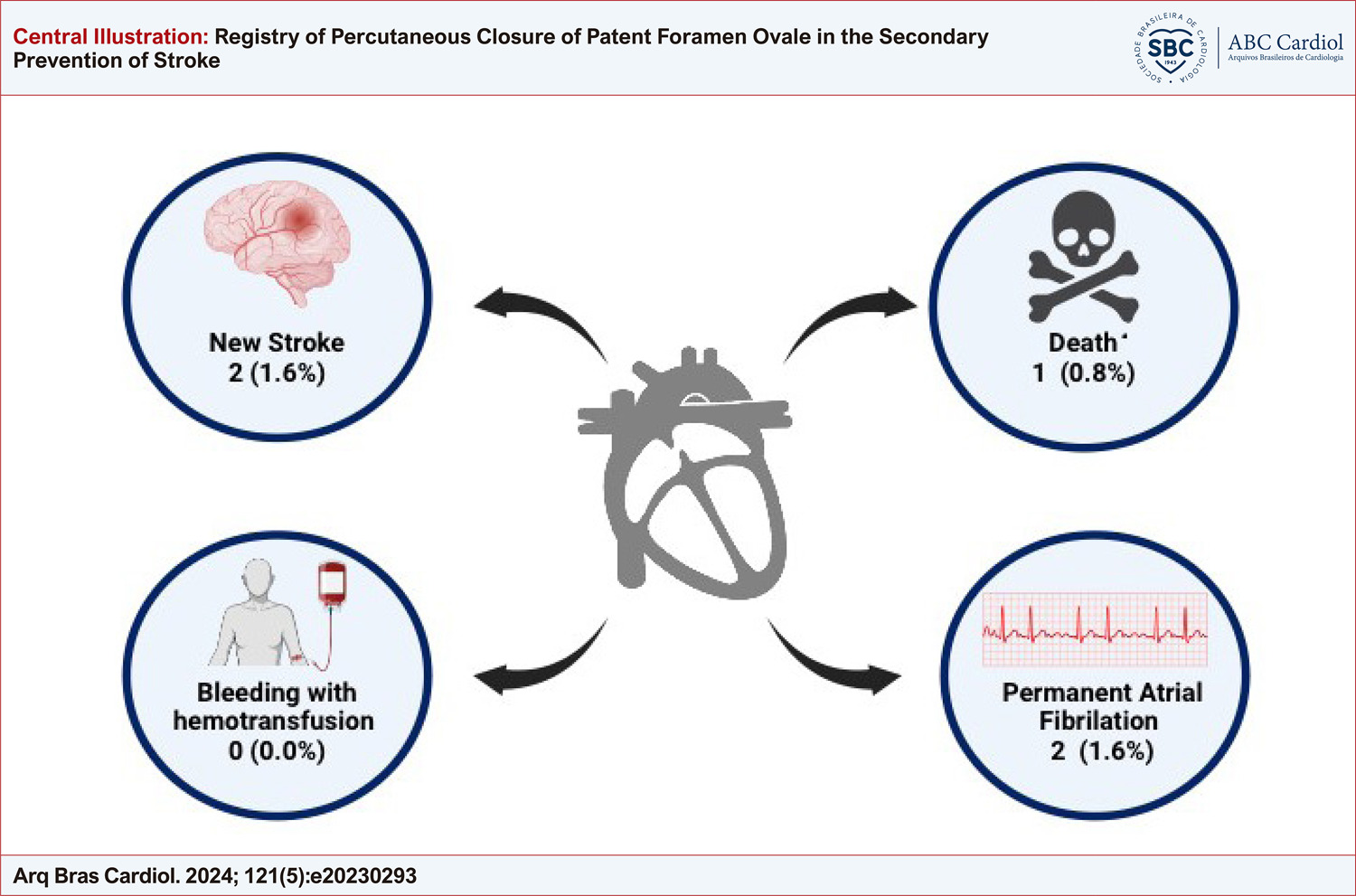
We observed a mean age of 50.3 years and most females . Severe interatrial shunt was observed in 82.6% and the presence of atrial septal aneurysm in 84.2%. After 6 months of the procedure, no patient still had a residual shunt. There were no serious bleeding or vascular complications. Recurrence of a new cerebrovascular event occurred in 1.6% of patients.

Conclusion

We observed a low recurrence of new ischemic neurological events and lack major complications related to the procedure.

  • Atrial Septum
  • Foramen Ovale
  • Ischemic Stroke
Read Full Article
Creative Commons Attribution (CC BY) Creative Commons license
14/10/2024 DOI: 10.36660/abc.20230293i Views 2
Resting Heart Rate Variability is Independently Associated with Visceral Fat Rating Scores in Saudi Adult Males
Original Article

Resting Heart Rate Variability is Independently Associated with Visceral Fat Rating Scores in Saudi Adult Males

Syed Shahid Habib et al. Shaea Alkahtani Nouf Aljawini Syed Mohammad Habib Andrew A. Flatt

Abstract

Background

Visceral adipose tissue (VAT) may be a specific modifiable contributor to body composition-related autonomic impairment.

Objectives

To compare heart rate variability (HRV) between groups stratified by visceral fat rating (VFR) and compare associations between HRV and body composition metrics.

Methods

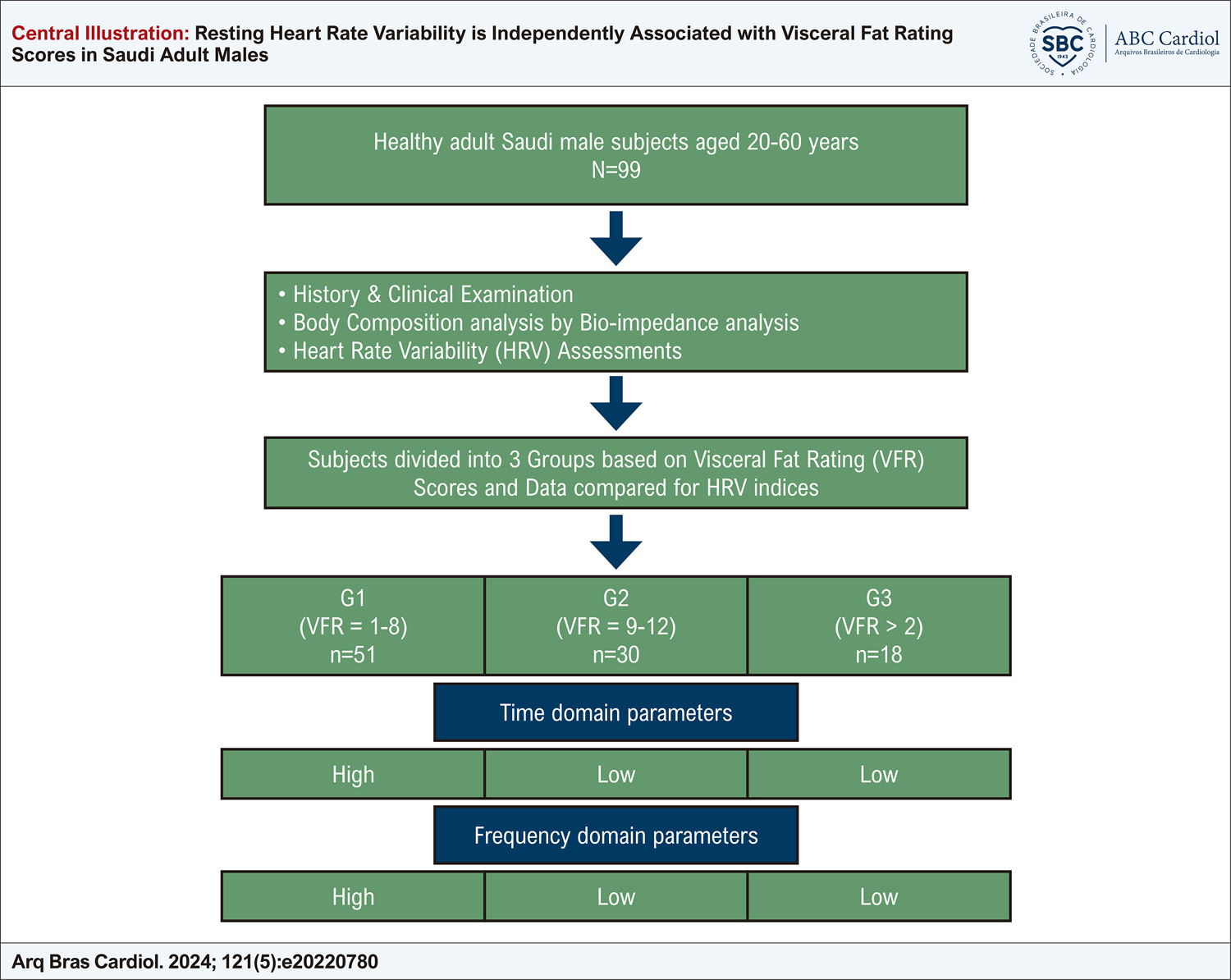
A cross-sectional study was conducted on healthy men (n=99,age=37.8±13.4 years, body mass index [BMI]=26.9±4.6 kg/m2). HRV was derived from 5-minute electrocardiographic recordings. Body composition (body fat percentage, VFR, and muscle mass to visceral fat ratio [MMVFR]) was estimated using tetrapolar bioelectrical impedance analysis. Participants were categorized into groups according to VFR: G1 (VFR=1-8); G2(VFR=9-12); and G3(VFR>12). Age-adjusted comparisons were made between groups. Independent associations were quantified with multiple linear regressions. P <0.05 was significant.

Results

Root-mean square of successive differences (RMSSD) and standard deviation of normal RR intervals (SDNN) were higher for G1 vs. G2 and G3 (p<0.05). Low-frequency power (LF) was higher in G1 than in G2 (p<0.05). VFR and MMVFR were negatively associated with SDNN, RMSSD, LF, and HF (p<0.05). After adjusting for age, BMI, and systolic and diastolic blood pressure, VFR was significantly predictive of RMSSD, SDNN, and HF (p=0.002,–0.027), and MMVFR was significantly predictive of RMSSD and SDNN (p=0.020,–0.023).

Conclusions

Men in the lowest VFR category had the highest HRV. VFR was more strongly associated with HRV than body fat percentage and MMVR. Time domain parameters were more sensitive to VAT than frequency domain parameters. HRV parameters could be the primary parameters of interest in tracking cardiac-autonomic status in response to interventions targeting VAT reduction.

  • Autonomic Nervous System
  • Heart Rate
  • Intra-Abdominal Fat
Read Full Article
Creative Commons Attribution (CC BY) Creative Commons license
14/10/2024 DOI: 10.36660/abc.20220780i
Editorial

Importance of Clinical Examination in the Assessment of Hemodynamic Profiles and Their Relationship with Outcomes in Patients with Acute Heart Failure

Suellen Rodrigues Rangel Siqueira et al. Vera Maria Cury Salemi

Cardiovascular diseases are the main causes of mortality in Brazil and worldwide and heart failure (HF) is one of the most prevalent causes of morbidity and mortality. In the last three months, we had a monthly average of 15,406 hospitalizations for HF in Brazil according to data collected in DATASUS. It is a public health concern due to its high morbidity, mortality, and cost associated with frequent hospitalizations. Therefore, it is of fundamental importance that the diagnosis is rapid so that treatment is effective.

The first Brazilian registry of acute HF included 1263 patients from 51 Brazilian centers. BREATH showed that the main etiologies are ischemic, hypertensive, and dilated cardiomyopathy, followed by valvular and Chagas disease. The prevalence of etiologies is similar to international records, except for Chagas disease. The main cause of rehospitalization was poor medication adherence, in addition, the study showed a high in-hospital mortality rate. Such a prevalent and fatal disease requires a careful and systematic approach to avoid failures during treatment.

[…]

  • Heart Failure/physiopathology
  • Hemodynamic
  • medical examination
  • Mortality
  • Prognosis
Read Full Article
Creative Commons Attribution (CC BY) Creative Commons license
12/08/2024 DOI: 10.36660/abc.20240308i
Editorial

Monitoring Systemic Congestion in Heart Failure: Is Clinical Evaluation Sufficient?

Silvia Moreira Ayub-Ferreira et al. Danielle Louvet Guazzelli

The management of acute decompensated heart failure (ADHF) remains a significant challenge in cardiology, particularly in preventing hospital readmissions. In this context, signs and symptoms related to congestion are among the most common causes of hospitalization for heart failure and subsequent readmissions.

In this edition of Arquivos Brasileiros de Cardiologia the authors present a cohort study that incorporates the use of the VExUS score to assess residual venous congestion before hospital discharge (VExUS Score at Hospital Discharge as a Predictor of Readmission in Patients with Acutely Decompensated Heart Failure: A Cohort Study). This study highlights the complexity of managing patients with heart failure and suggests a potentially useful tool to improve clinical outcomes.

[…]

  • Heart Failure
  • Hospitalization
  • Patient Readmission
  • Ultrasonography
Read Full Article
Creative Commons Attribution (CC BY) Creative Commons license
02/08/2024 DOI: 10.36660/abc.20240354i Views 1
Editorial

Prognostic Value of PRECİSE DAPT Score in MINOCA Patients with Acute Coronary Syndrome

Henrique Tria Bianco

In recent decades, the therapeutic management of acute myocardial infarction (AMI) has progressed substantially due to increasing innovations. Thus, the development and understanding of biomarkers, such as troponin, has emerged as a more accurate diagnostic marker of myocardial injury and is now the cornerstone of contemporary definitions of AMI. development of reperfusion therapies for ST-segment elevation myocardial infarction (STEMI), initially involving intravenous thrombolytic therapy and later primary percutaneous coronary interventions when the former found to have less effect on restoring coronary blood flow. angiography and improving clinical results. However, approximately 5% to 6% of AMI cases present with coronary arteries without obstructive lesions (i.e., lesions with more than 50% stenosis), hereinafter referred to as MINOCA, myocardial infarction with nonobstructive coronary arteries. Data from large registries suggest a prevalence of MINOCA between 2 and 10%, depending on the cohort studied and the diagnostic criteria used. The largest of these studies examined patients with STEMI from the CRUSADE registry and reported that female sex and younger age were the only independent clinical predictors of MINOCA.–

An important aspect in the evaluation of patients with apparent MINOCA is to exclude non-ischemic causes, such as pulmonary embolism, chronic renal failure, chronic heart failure, myocarditis, cardiomyopathies (infiltrative, takotsubo, peripartum…), stroke, septic shock, syndrome from acute respiratory distress, cardiac trauma (including iatrogenic), severe burns, chemotherapy agents, and strenuous exercise. Coronary artery spasm is another important cause of transient occlusion of an epicardial artery and the hallmark of variant or vasospastic angina. The presence of transient ST-segment changes during chest pain that responds to nitrate therapy is consistent with the diagnosis. Clearly, more studies are needed in this area, especially because vasospastic angina is associated with an increased risk of AMI/death.–

[…]

  • Acute coronary syndrome
  • MINOCA
  • Myocardial Infarction
Read Full Article
Creative Commons Attribution (CC BY) Creative Commons license
15/07/2024 DOI: 10.36660/abc.20240307i Views 1
Beyond STEMI-NSTEMI Paradigm: Dante Pazzanese's Proposal for Occlusion Myocardial Infarction Diagnosis
Review Article

Beyond STEMI-NSTEMI Paradigm: Dante Pazzanese's Proposal for Occlusion Myocardial Infarction Diagnosis

José Nunes De Alencar et al. Fausto Feres Mariana Fuziy Nogueira De Marchi Kleber Gomes Franchini … Matheus Kiszka Scheffer Sandro Pinelli Felicioni Ana Carolina Muniz Costa Rinaldo Carvalho Fernandes Hugo Ribeiro Ramadan Pendell Meyers Stephen W. Smith

Abstract

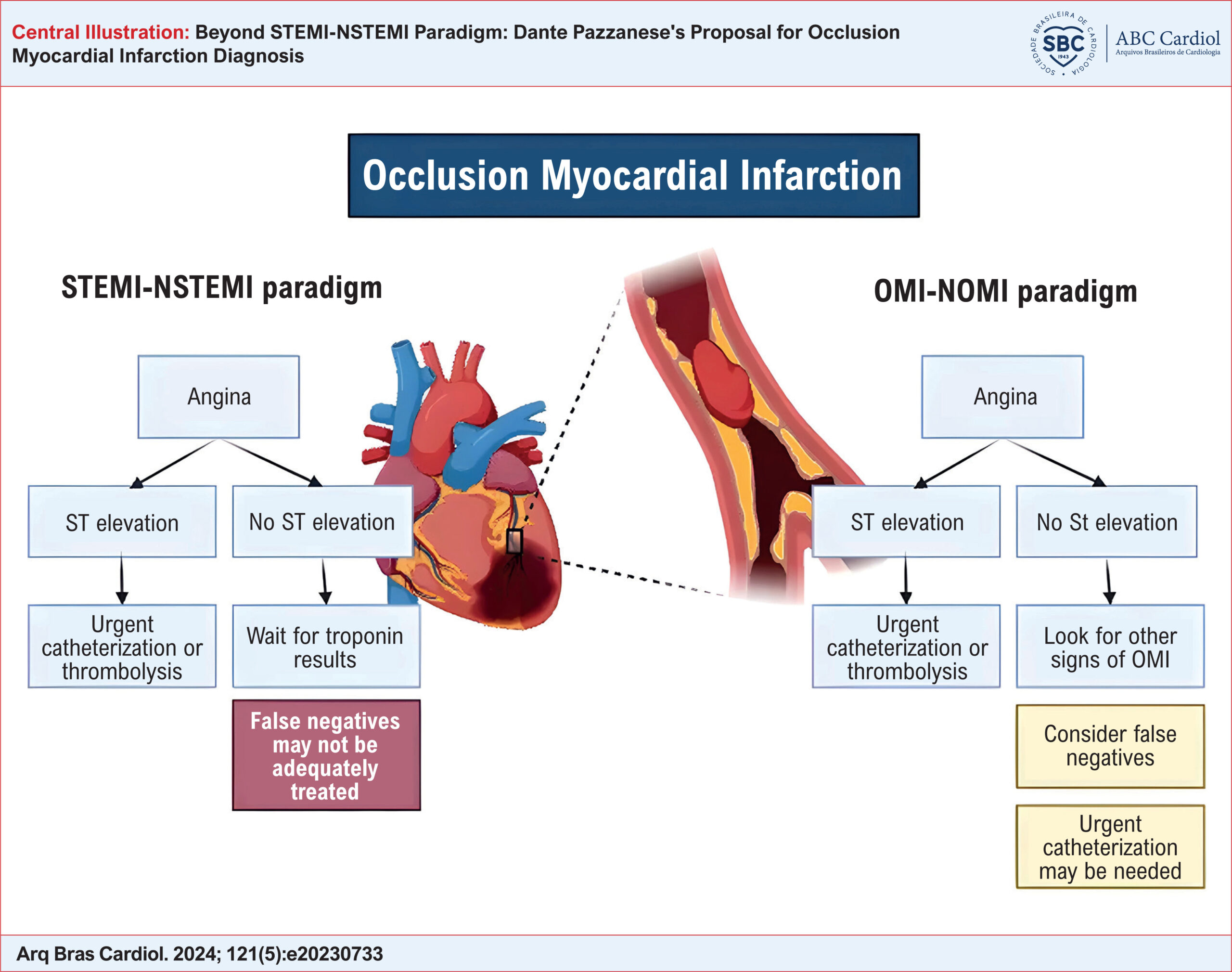
Although the existing framework for classifying acute myocardial infarction (AMI) into STEMI and NSTEMI has been beneficial, it is now considered to be falling short in addressing the complexity of acute coronary syndromes.

The study aims to scrutinize the current STEMI-NSTEMI paradigm and advocate for a more nuanced framework, termed as occlusion myocardial infarction (OMI) and non-occlusion myocardial infarction (NOMI), for a more accurate diagnosis and management of AMI.

A comprehensive analysis of existing medical literature was conducted, with a focus on the limitations of the STEMI-NSTEMI model. The study also outlines a new diagnostic approach for patients presenting with chest pain in emergency settings.

The traditional STEMI-NSTEMI model falls short in diagnostic precision and effective treatment, especially in identifying acute coronary artery occlusions. The OMI-NOMI framework offers a more anatomically and physiologically accurate model, backed by a wealth of clinical research and expert opinion. It underscores the need for quick ECG assessments and immediate reperfusion therapies for suspected OMI cases, aiming to improve patient outcomes.

The OMI-NOMI framework offers a new avenue for future research and clinical application. It advocates for a more comprehensive understanding of the underlying mechanisms of acute coronary syndromes, leading to individualized treatment plans. This novel approach is expected to ignite further scholarly debate and research, particularly in the Brazilian cardiology sector, with the goal of enhancing diagnostic accuracy and treatment effectiveness in AMI patients.

  • Coronary Occlusion
  • Electrocardiography
  • Myocardial Infarction
Read Full Article
Creative Commons Attribution (CC BY) Creative Commons license
15/07/2024 DOI: 10.36660/abc.20230733i Views 2
Letter to the Editor

The Challenge of Effective Secondary Stroke Prophylaxis in Chagas Patients

Vinícius Viana Abreu Montanaro

The recent update on the guideline for the management of cardiomyopathy in Chagas disease brings several significant improvements. The evidence on etiological stroke investigation, management of secondary prophylaxis, and overall epidemiology are all of vital importance for clinicians to improve treatment for these patients.

One concern that arises from the guideline pertains to the indication of oral anticoagulation, particularly the suggestion that any previous ischemic stroke would warrant such intervention.

[…]

  • Chagas´
  • Prophylaxis
  • secondary
  • Stroke
Read Full Article
Creative Commons Attribution (CC BY) Creative Commons license
15/07/2024 DOI: 10.36660/abc.20240008i
Editorial

Understanding the Link between Visceral Fat and Heart Health

Nuno Bettencourt

Cardiovascular disease (CVD) remains a significant global health concern, with obesity and its associated metabolic abnormalities contributing substantially to CVD risk. In recent years, research has increasingly focused on the role of visceral adipose tissue (VAT) in cardiovascular health, recognizing its unique contribution to metabolic dysfunction and cardiovascular risk.,

Heart rate variability (HRV) is a measure of the variation in the time intervals between consecutive heartbeats, reflecting the balance between the sympathetic and parasympathetic nervous systems – and, therefore, serving as a valuable indicator of autonomic function and cardiovascular health. Reduced HRV is associated with increased cardiovascular risk, making it a potentially useful tool for risk assessment and monitoring in different clinical scenarios.–

[…]

  • Heart Rate Variability
  • Visceral Adipose Tissue
Read Full Article
Creative Commons Attribution (CC BY) Creative Commons license
15/07/2024 DOI: 10.36660/abc.20240288i
Figure 1
Original Article

Incidence of Cardiovascular Complications in Pediatric Patients Treated with Anthracyclines at a Brazilian Cancer Center

Cristina Chaves dos Santos de Guerra et al. Geisa Sant'Ana Osório Luiz Rangel de Almeida

Abstract

Background:

The introduction of anthracyclines in the treatment of children and adolescents with cancer has promoted a significant increase in survival, but also in morbidity and mortality rates due to cardiovascular (CV) complications.

Objectives:

To determine the cardiovascular profile of pediatric patients treated with anthracyclines at a cancer center in Brazil and the incidence of CV complications.

Methods:

The following data were collected from the medical records of patients of both sexes, aged younger than 19 years – frequency and form of clinical presentation of general CV complications (G1) and CV complications related to ventricular dysfunction (G2) – and correlated with risk factors, age range and vital status, cardiovascular and cardioprotective medications. A p<0.05 was considered statistically significant.

Results:

A total of 326 patients were included, 214 (65.6%) were younger than 10 years and 192 (58.9%) of male sex. G1 complications occurred in 141 (43.3%) patients, and the most frequent was systemic arterial hypertension; G2 complications occurred in 84 patients (25.8%). Cumulative dose (CD) of anthracyclines > 250mg/m2 was used in 26.7% of patients and the association of G2 complications with this CD was not statistically significant (p=0.305; OR=1.330 and [95% CI = 0.770- 2.296]). The most used cardiac medications were diuretics (34.7% of patients).

Conclusions:

In accordance with literature, the study showed a high incidence of CV complications in the treatment of children and adolescents with cancer, with general CV complications as the most prevalent.

  • Anthracyclines
  • Cardiotoxicity
  • Child
  • Drug Therapy
  • Neoplasms
Read Full Article
Creative Commons Attribution (CC BY) Creative Commons license
24/06/2024 DOI: 10.36660/abc.20210352i Views 2
Figure 1
Case Report

FLNC Associated Restrictive Cardiomyopathy and Hypertrabeculation, a Rare Association

Ana M. Aristizabal et al. Carlos Alberto Guzmán-Serrano María Isabel Lizcano Walter Mosquera … Juliana Lores Harry Pachajoa Cesar Cely

Abstract

A six-year-old girl with restrictive cardiomyopathy and hypertrabeculation, due to the early onset of her disease, whole exome sequencing was conducted, revealing the presence of a novel heterozygous missense variant in the FLNC gene. The same gene variant was also identified in her father, who, at an adult age, displayed normal imaging results and was symptom-free. This variant has not been reported in population databases or current medical literature and is classified as likely pathogenic.

  • Filamins
  • Genetics
  • Restrictive cardiomyopathy
Read Full Article
Creative Commons Attribution (CC BY) Creative Commons license
24/06/2024 DOI: 10.36660/abc.20230790i Views 1
Association between Hemodynamic Profile at Hospital Admission and Mortality in Acute Heart Failure Patients Included in the Best Practice in Cardiology Program in Brazil
Original Article

Association between Hemodynamic Profile at Hospital Admission and Mortality in Acute Heart Failure Patients Included in the Best Practice in Cardiology Program in Brazil

André Silva Rodrigues et al. Fábio Morato de Castilho Aloisio Joaquim Freitas Ribeiro Luiz Guilherme Passaglia … Fabio Papa Taniguchi Antonio L. Ribeiro

Abstract

Background:

Heart failure (HF) contributes to a high burden of hospitalization, and its form of presentation is associated with disease prognosis.

Objectives:

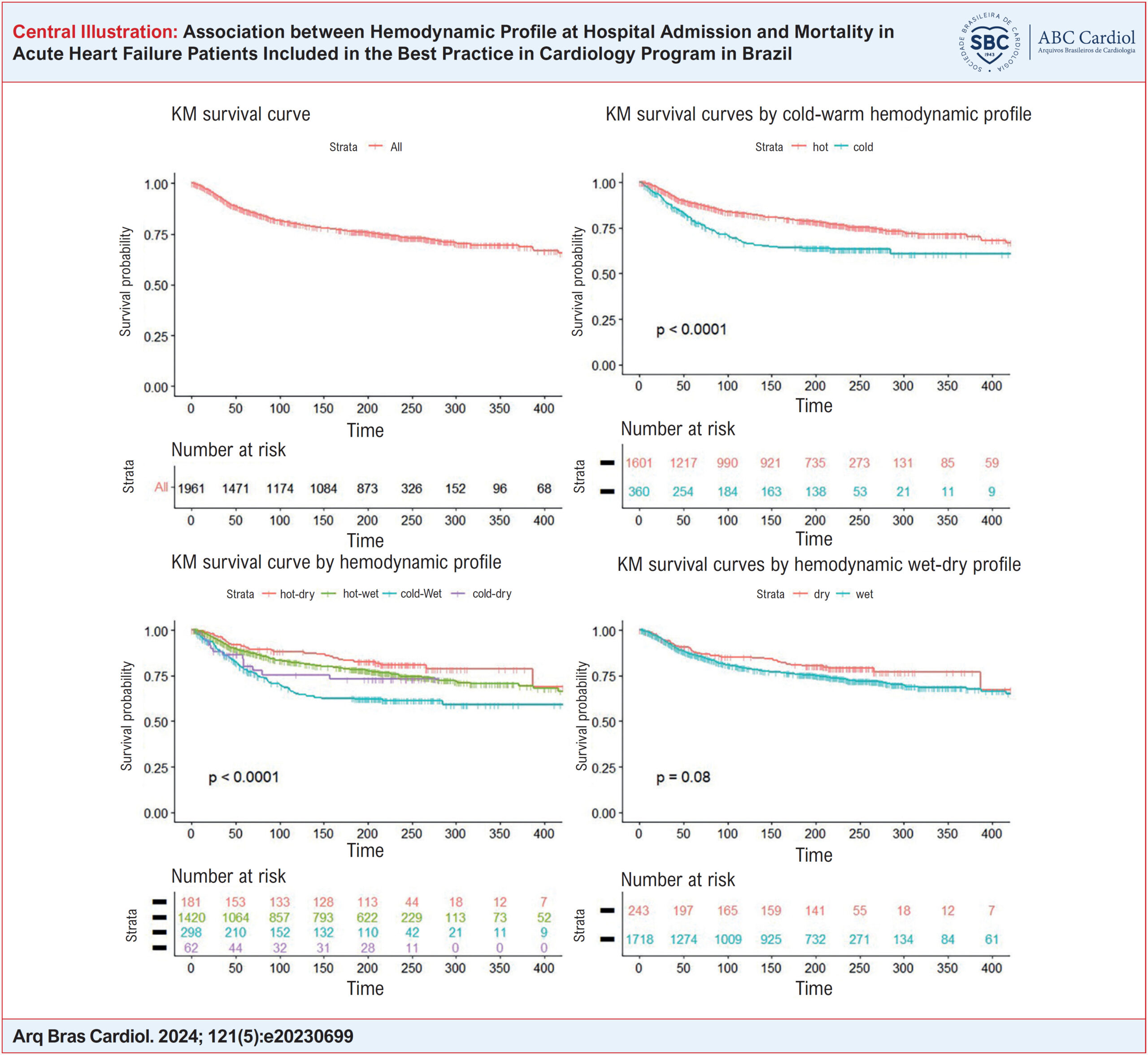
To describe the association of hemodynamic profile of acute HF patients at hospital admission, based on congestion (wet/dry) and perfusion (cold/warm), with mortality, hospital length of stay and risk of readmission.

Methods:

Cohort study, with patients participating in the “Best Practice in Cardiology” program, admitted for acute HF in Brazilian public hospitals between March 2016 and December 2019, with a six-month follow-up. Characteristics of the population and hemodynamic profile at admission were analyzed, in addition to survival analysis using Cox proportional hazard model for associations between hemodynamic profile at admission and mortality, and logistic regression for the risk of rehospitalization, using a statistical significance level of 5%.

Results:

A total of 1,978 patients were assessed, with mean age of 60.2 (±14.8) years and mean left ventricular ejection fraction of 39.8% (±17.3%). A high six-month mortality rate (22%) was observed, with an association of cold hemodynamic profiles with in-hospital mortality (HR=1.72, 95%CI 1.27-2.31; p < 0.001) and six-month mortality (HR= 1.61, 95%CI 1.29-2.02). Six-month rehospitalization rate was 22%, and higher among patients with wet profiles (OR 2.30; 95%CI 1.45-3.65; p < 0.001).

Conclusions:

Acute HF is associated with high mortality and rehospitalization rates. Patient hemodynamic profile at admission is a good prognostic marker of this condition.

  • Heart Failure
  • Hospitalization
  • Mortality
Read Full Article
Creative Commons Attribution (CC BY) Creative Commons license
24/06/2024 DOI: 10.36660/abc.20230699i Views 2
Editorial

Vitamin D and the Cardiovascular System

Claudio Leinig Pereira da Cunha

Vitamin D (or calciferol) is a fat-soluble vitamin. It is a generic term and refers to a group of fat-soluble compounds with a four-ring cholesterol structure. Dermal synthesis, under the action of UV-B light on the skin, is the main natural source of this vitamin, as very few foods contain vitamin D naturally (fatty fish, such as salmon, tuna, sardines, trout, are the exception). This vitamin D, whether derived from the diet or dermal synthesis, is biologically inactive. It is presented as vitamin D3 (cholecalciferol) and vitamin D2 (ergocalciferol), which are enzymatically converted in the liver into 25(OH)D (25-hydroxyvitamin D = calcidiol), the main circulating form of vitamin D. Then, in the kidney, calcidiol is converted into calcitriol (1,25-dihydroxyvitamin D), the active form of vitamin D, which increases intestinal absorption of calcium, increases bone reabsorption and decreases renal excretion of calcium and phosphate.

The best laboratory indicator of vitamin D adequacy is the serum 25(OH)D concentration. However, there is no consensus on the ideal concentration; the National Academy of Medicine indicated that 20 ng/ml is suficiente, but most experts (Endocrine Society, National Osteoporosis Foundation, International Osteoporosis Foundation, American Geriatrics Society) suggest that a minimum level of 30ng/ml is necessary for adults.

[…]

  • Cardiovascular System
  • Cholecalciferol
  • Fat Soluble Vitamins
  • Vitamin D
Read Full Article
Creative Commons Attribution (CC BY) Creative Commons license
17/06/2024 DOI: 10.36660/abc.20240189i
Viewpoint

Frailty and Atrial Fibrillation: A Closer Look at the FRAIL-AF Trial

Roberto Muniz Ferreira

Introduction

Although evidence-based medicine (EBM) has contributed to establishing the foundations of patient care for over 40 years, scientific principles are still often disregarded in clinical decision-making. As a result, EBM may be mistakenly characterized as a barrier that limits the applicability of poorly recognized concepts, otherwise perceived as thoroughly supported by medical literature. The critical analysis of medical publications should not rely on methods estranged from the scientific realm, and EBM provides the means to limit such hazardous misconceptions.

Despite the continuous progress in medical knowledge, numerous areas of uncertainty persist in clinical practice. In such cases, decision-making typically depends on information originating from dissimilar scenarios, unsuitably designed research or personal experience, and alternatives that are inherently fragile as supporting evidence. Indeed, frailty is a problem that most physicians ultimately have to manage, whether referring to scientific evidence or patient profiles. Greater difficulties arise when both are a source of fragility since misjudged decisions tend to have even poorer outcomes. Atrial fibrillation (AF) is a topic where this association potentially occurs.

[…]

  • Anticoagulants
  • Atrial Fibrillation
  • Evidence-Based Medicine
  • Frail Elderly
Read Full Article
Creative Commons Attribution (CC BY) Creative Commons license
17/06/2024 DOI: 10.36660/abc.20230671i Views 1
VExUS Score at Discharge as a Predictor of Readmission in Patients with Acute Decompensated Heart Failure: A Cohort Study
Original Article

VExUS Score at Discharge as a Predictor of Readmission in Patients with Acute Decompensated Heart Failure: A Cohort Study

Paulo Maciel Rinaldi et al. Marcos Frata Rihl Márcio Manozzo Boniatti

Abstract

Background

Residual venous congestion is a major contributor to readmission of patients with heart failure, and the venous excess ultrasound (VExUS) score is a potentially useful tool to evaluate systemic congestion.

Objectives

To investigate the association between VExUS score before hospital discharge among patients with heart failure and the risk of readmission due to acute decompensated heart failure (ADHF) within 90 days after discharge.

Methods

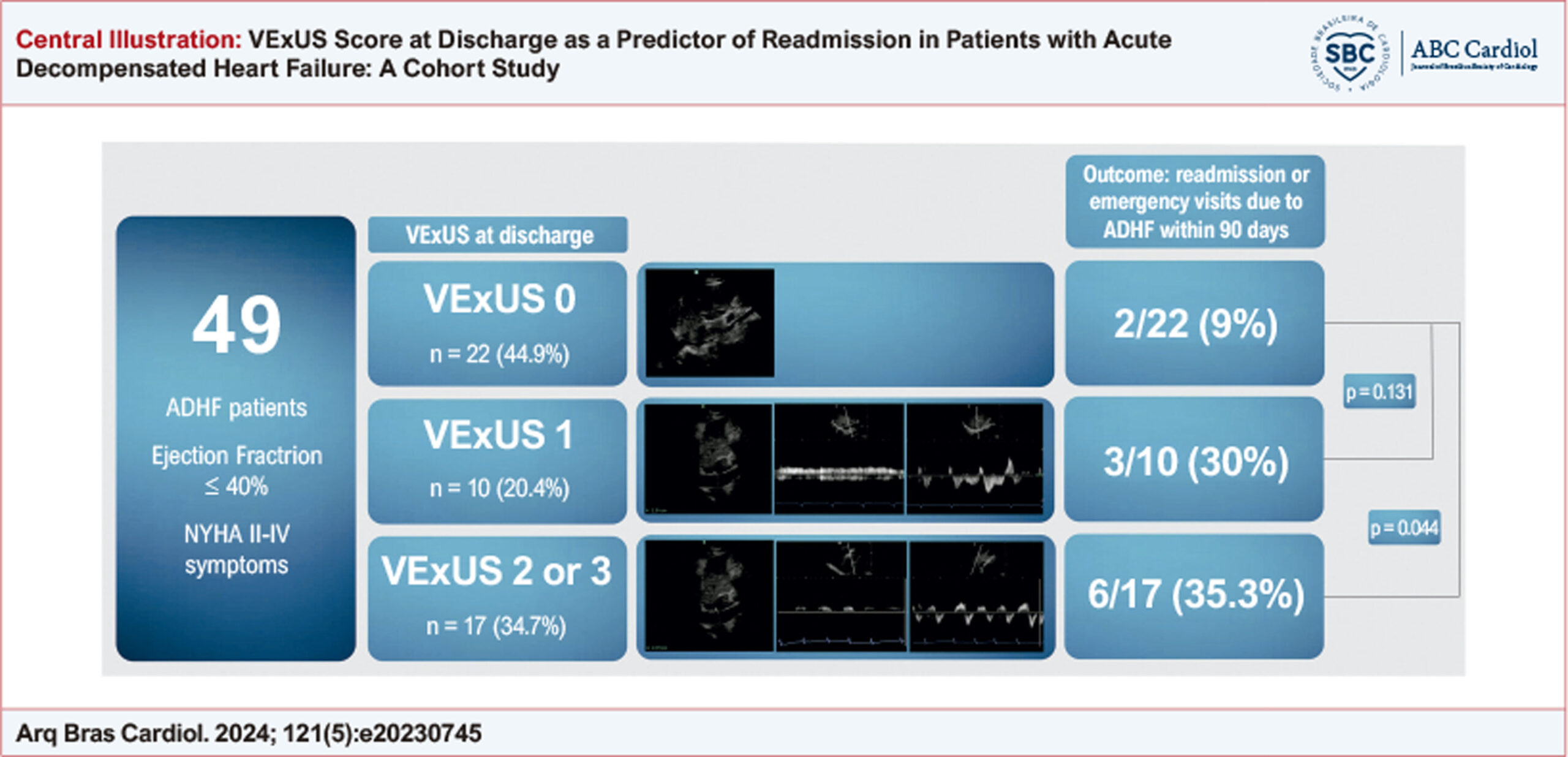
This prospective cohort study enrolled adults with signs and symptoms of ADHF, left ventricular ejection fraction of 40% or below (heart failure with reduced ejection fraction), New York Heart Association functional class II to IV symptoms, and clinical evidence of venous congestion necessitating intravenous diuretics. Just prior to discharge, we conducted VExUS score evaluation. The primary outcome was a composite endpoint of readmission or emergency visits due to ADHF within 90 days following hospital discharge. Statistical significance was set at p < 0.05.

Results

The cohort comprised 49 individuals, 11 (22.4%) of whom experienced the primary outcome. At discharge, 34.7% of participants had VExUS score 2 or 3. Patients with VExUS 2 and 3 had a higher proportion of the primary outcome when compared with patients with VExUS of 0 (35.3% versus 9%, p = 0.044).

Conclusions

A significant proportion of patients with heart failure with reduced ejection fraction admitted for ADHF presented clinical and ultrasound signs of residual congestion at discharge. Patients with VExUS score of 2 or 3 at the time of hospital discharge were found to be at higher risk of readmissions or emergency visits due to ADHF after 90 days.

  • Heart Failure
  • Patient Readmission
  • Quality of life
Read Full Article
Creative Commons Attribution (CC BY) Creative Commons license
17/06/2024 DOI: 10.36660/abc.20230745i
Figure 1
Image

Importance of the Internal Thoracic Artery as the Source of Collateral Circulation in CABG Patients with Leriche Syndrome

Pedro Silvio Farsky et al. Marcela Dalla Bernardina Sena Janayna Thaina Rabelato Ana Cláudia Gomes Pereira Petisco Renato Tambelini Arnoni

Abstract

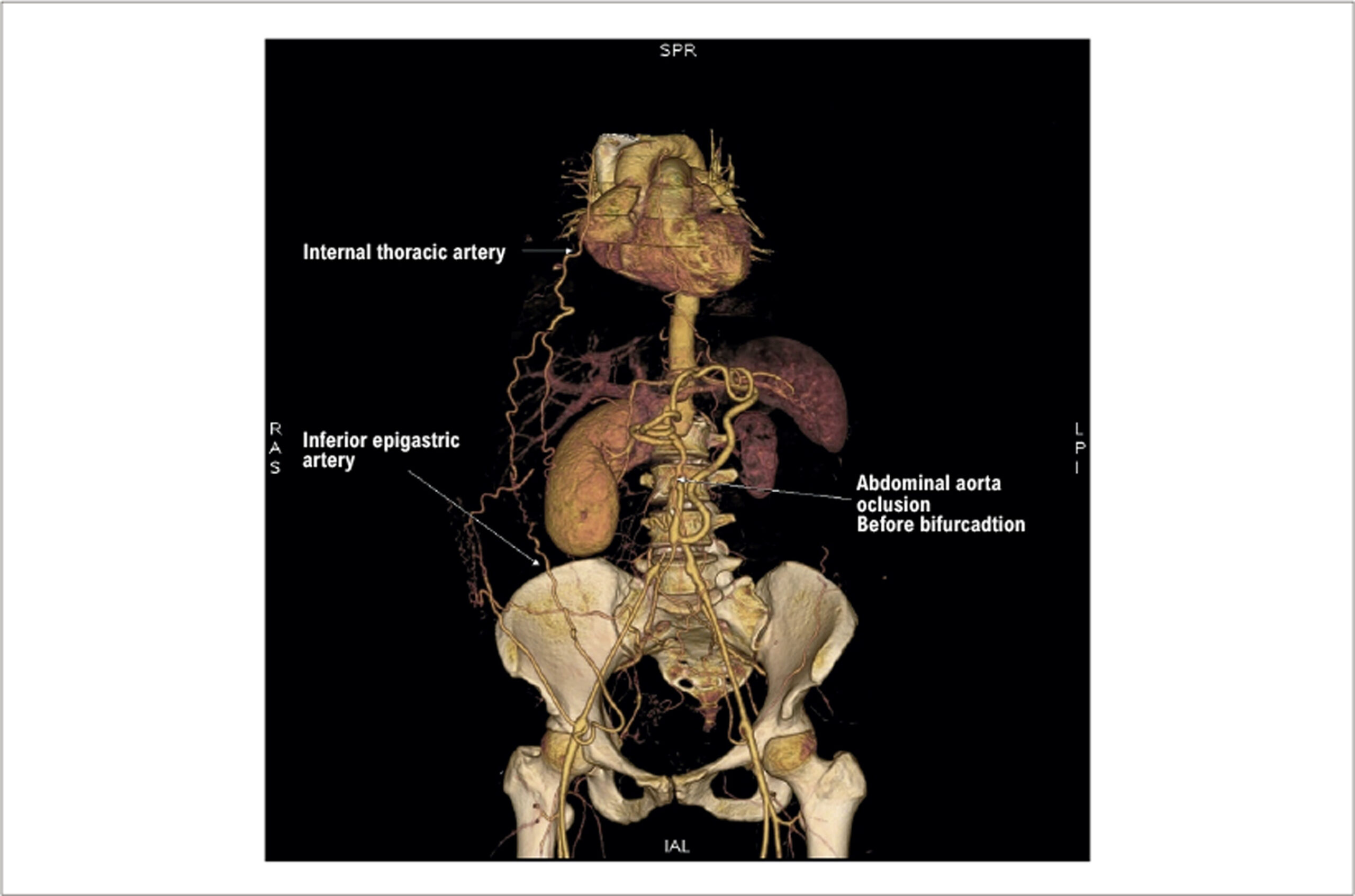
In coronary artery bypass grafting (CABG) the use of the internal thoracic artery (ITA), is a Class I indication for the left anterior descending (LAD) artery.

Atherosclerosis is a systemic disease, and peripheral arterial disease (PAD) is an important complicator of CABG, present in about one-third of the patients with coronary disease. In Leriche Syndrome, ITA can be the source of collateral circulation for arteries below the level of occlusion. Its inadvertent use can lead to serious ischemic complications in the dependent territories.

  • CABG
  • Internal thoracic artery
  • Leriche Syndrome
Read Full Article
Creative Commons Attribution (CC BY) Creative Commons license
17/06/2024 DOI: 10.36660/abc.20230780i Views 2
Figure 1
Case Report

Idiopathic Constrictive Pericarditis with Restrictive "Vertical Double Ring" Structure in a Patient with Right Ventricular Outflow Tract Stenosis

Ying Jiang et al. Haisong Bu

Introduction

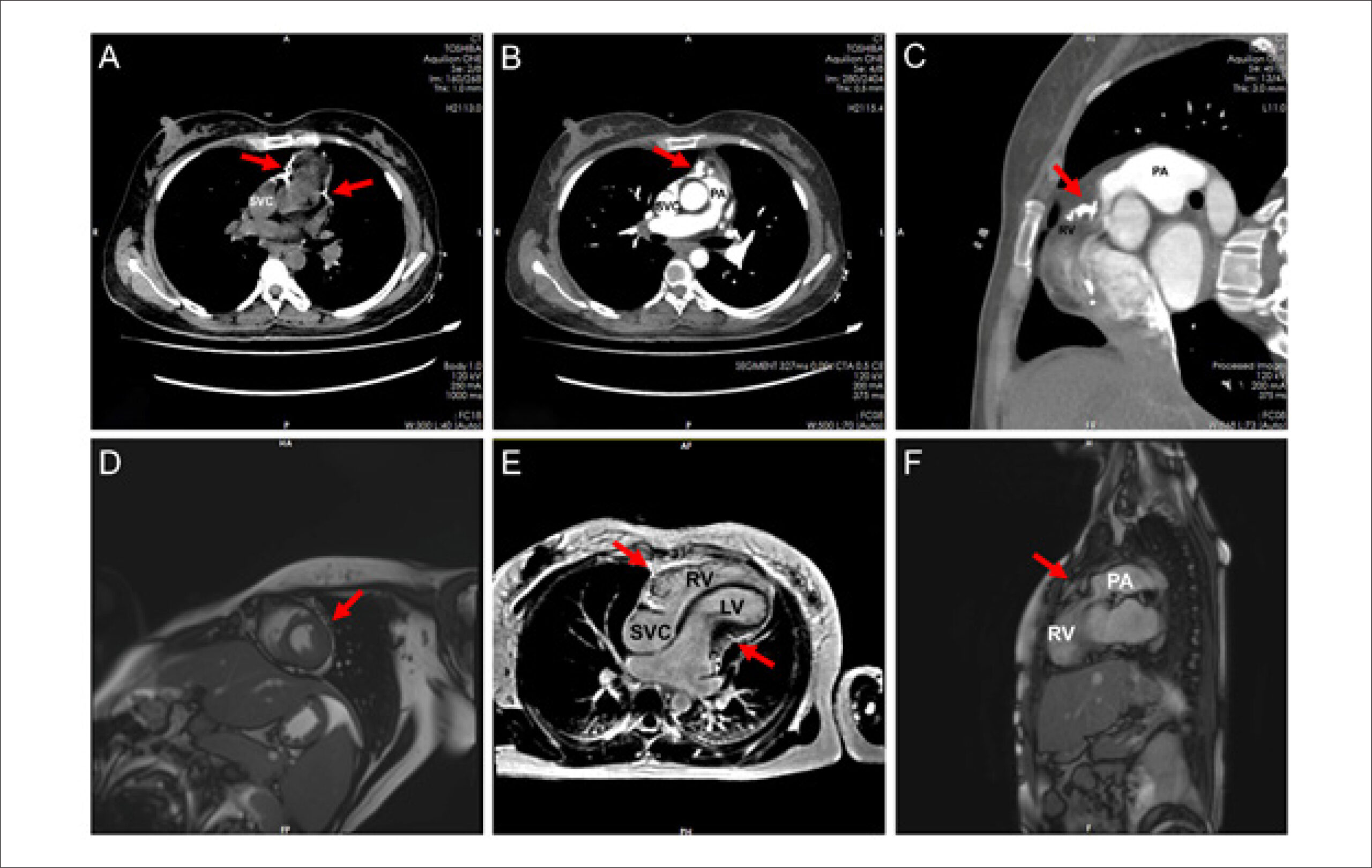
Constrictive pericarditis is defined as an inflammatory process of the fibrous and serous layers of the pericardium that leads to pericardial thickening and compression of the cardiac chambers, ultimately resulting in a significant reduction in cardiac function. Tuberculous pericarditis remains the leading cause of constrictive pericarditis worldwide, especially in the remote rural areas of eastern countries where the level of health care and services is relatively backward. Other causes include postcardiotomy, connective tissue diseases, postmediastinal irradiation, uremia, and idiopathic. Herein, we present a rare case of idiopathic constrictive pericarditis with severe right ventricular outflow tract (RVOT) stenosis. The thickened tissue formed a restrictive “vertical double ring” structure, involving the atrioventricular sulcus and ventricles that led to compression of the cardiac chambers.

[…]

  • Idiopathic
  • Pericarditis
  • Right Ventricular Outflow Tract Stenosis
  • Surgery
Read Full Article
Creative Commons Attribution (CC BY) Creative Commons license
17/06/2024 DOI: 10.36660/abc.20230576i
Temporal Trends in Transcatheter Aortic Valve Implantation: 10-Year Analysis of the TAVIDOR Registry
Original Article

Temporal Trends in Transcatheter Aortic Valve Implantation: 10-Year Analysis of the TAVIDOR Registry

Vinicius Esteves et al. Pedro Beraldo de Andrade Cleverson Neves Zukowski Edmur Araujo … Cristiano Guedes Bezerra Adriano Dourado Oliveira Eduardo Pessoa de Melo Gustavo Gama Rodrigo Cantarelli Luiz Alberto Piva e Mattos Angelo Tedeschi Vitor Alves Loures Vitor Vahle Guilherme Barreto Gameiro Silva Miguel Antonio Neves Rati Augusto Celso Lopes Nilson de Moura Fé Filho Gustavo Alves Sérgio Costa Tavares Filho Sergio Kreimer Marden Tebet Felipe Maia Maurício Sales de Oliveira Alberto Fonseca Angelina Camiletti Denilson Campos de Albuquerque Olga Ferreira de Souza

Abstract

Background

Transcatheter aortic valve implantation (TAVI) has established itself as the preferential strategy to approach severe aortic stenosis. Information on procedural improvements and nationwide results obtained with the technique throughout the past decade are unknown.

Objectives

To assess the temporal variation of the demographic profile, procedural characteristics, and in-hospital outcomes of patients undergoing TAVI procedures at the Rede D’Or São Luiz.

Methods

Observational registry comprising 29 national institutions, comparing the characteristics of the TAVI procedures performed from 2012 to 2017 (Group 1) to those performed from 2018 to 2023 (Group 2). The statistical significance level adopted was p < 0.05.

Results

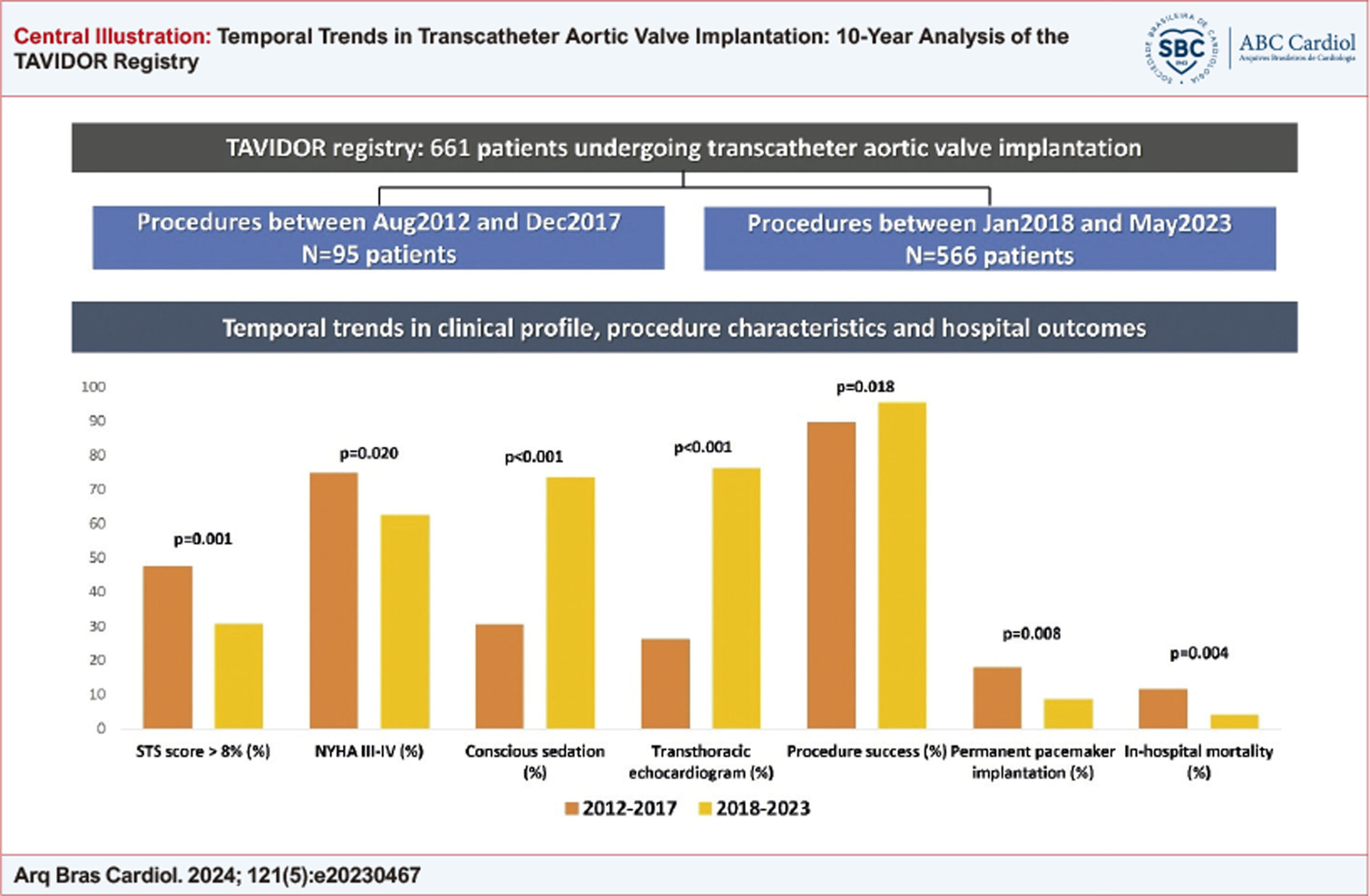
This study assessed 661 patients, 95 in Group 1 and 566 in Group 2, with a mean age of 81.1 years. Group 1 patients had a higher prevalence of New York Heart Association functional class III or IV and STS risk score > 8%. In addition, they more often underwent general anesthesia, transesophageal echocardiographic monitoring, and access through femoral dissection. Group 2 patients had a higher success rate of the TAVI procedure (95.4% versus 89.5%; p = 0.018), lower mortality (3.9% versus 11.6%; p = 0.004), and less often needed permanent pacemaker implantation (8.5% versus 17.9%; p = 0.008).

Conclusions

The 10-year temporal trends analysis of the TAVIDOR Registry shows a reduction in patients’ clinical complexity over time. Furthermore, the advance to minimalistic implantation techniques, added to the technological evolution of the devices, may have contributed to the favorable outcomes observed among those whose implantation occurred in the last 5 years studied.

  • Aged
  • Aortic Valve Stenosis
  • Spatio-Temporal Analysis
  • Transcatheter Aortic Valve Replacement
Read Full Article
Creative Commons Attribution (CC BY) Creative Commons license
17/06/2024 DOI: 10.36660/abc.202300467i
Editorial

Inflammation and No-Reflow: Can it be a Game-Changer?

Ana Teresa Timóteo

No-reflow (NR) is a possible complication during percutaneous coronary intervention (PCI), particularly in the context of ST-segment elevation myocardial infarction (STEMI). It is highly dynamic in nature, develops gradually (over hours) following coronary blood flow restoration, and persists over days to weeks depending on severity, duration, and extent of myocardial ischemia and application of therapeutic measures aiming to prevent or alleviate ischemia/reperfusion injury. NR impacts negatively on the benefits provided by reperfusion therapy and contributes to poor clinical outcomes.,

The main pathophysiological mechanism of NR is microvascular obstruction developing as a consequence of myocardial ischemia, distal embolization, and reperfusion-related injury. The frequency of NR after primary PCI differs widely depending on the sensitivity of the tools used for diagnosis and the timing of examination. Coronary angiography is the most convenient, but it underestimates the true frequency of NR. Cardiac magnetic resonance (CMR) imaging is the most sensitive method in the clinical setting, providing information on the presence, localization, and extent of microvascular obstruction. With CMR, microvascular obstruction is diagnosed in up to 95% of patients with STEMI and restored TIMI flow grade 3, and in 57% of patients with STEMI within 7 days after primary PCI. Other techniques, such as ST-segment resolution and catheter-based coronary physiology tests are less sensitive or technically demanding.

[…]

  • Inflammation
  • No-Reflow Phenomenon
  • Percutaneous Coronary Intervention
Read Full Article
Creative Commons Attribution (CC BY) Creative Commons license
17/06/2024 DOI: 10.36660/abc.20240119i
Central Illustration
Original Article

The Clinical and Economic Impact of Delayed Reperfusion Therapy: Real-World Evidence

Silvio Gioppatto et al. Paulo Sousa Prado Mariana Araújo Lima Elias Verônica Homem de Carvalho … Caio Resende da Costa Paiva Gustavo de Almeida Alexim Ricardo Torres Bispo Reis Ana Claudia Cavalcante Nogueira Alexandre Anderson de Sousa Munhoz Soares Wilson Nadruz Luiz Sergio F. de Carvalho Andrei C. Sposito

Abstract

Background:

Early reperfusion therapy is acknowledged as the most effective approach for reducing case fatality rates in patients with ST-segment elevation myocardial infarction (STEMI).

Objective:

Estimate the clinical and economic consequences of delaying reperfusion in patients with STEMI.

Methods:

This retrospective cohort study evaluated mortality rates and the total expenses incurred by delaying reperfusion therapy among 2622 individuals with STEMI. Costs of in-hospital care and lost productivity due to death or disability were estimated from the perspective of the Brazilian Unified Health System indexed in international dollars (Int$) adjusted by purchase power parity. A p < 0.05 was considered statistically significant.

Results:

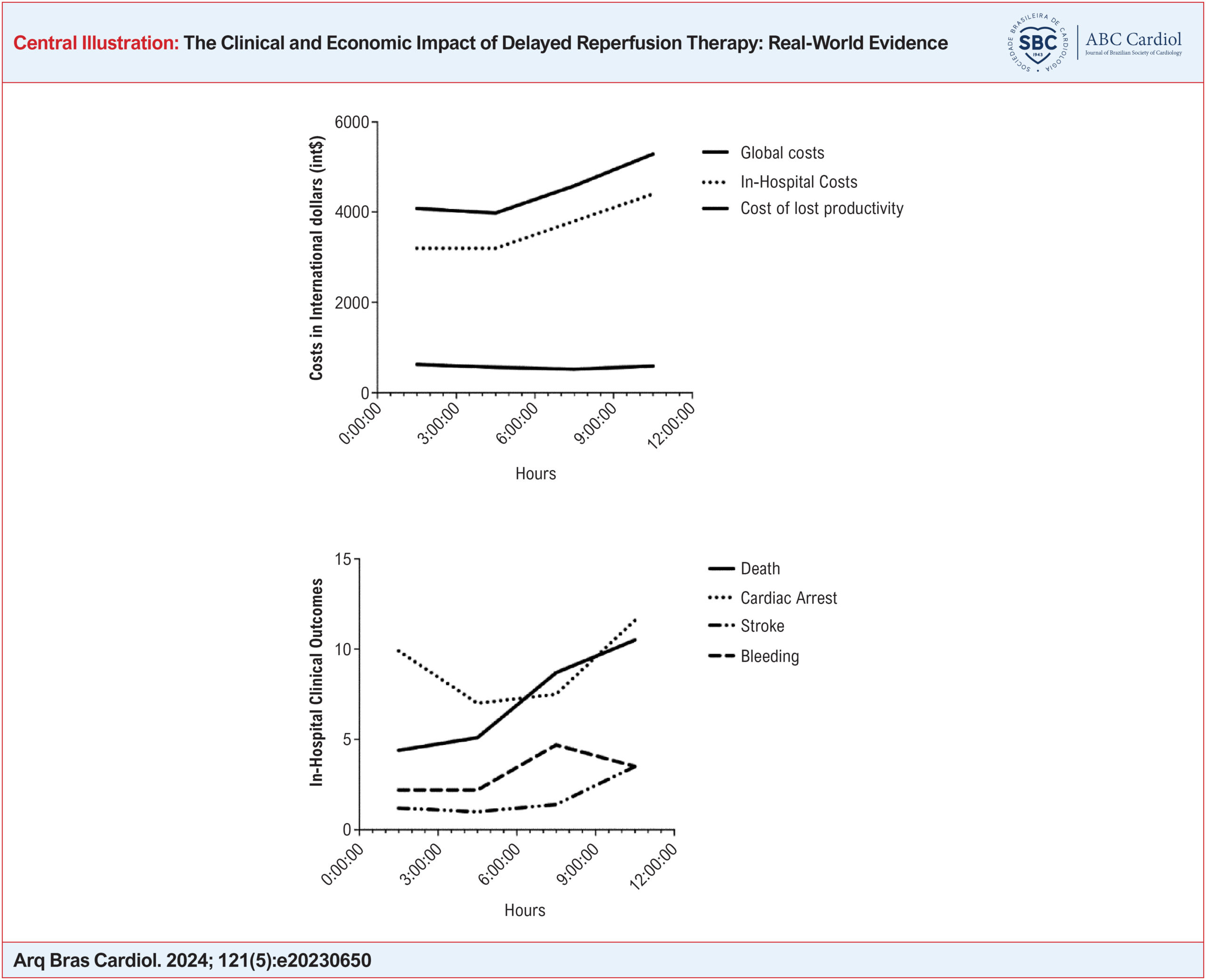
Each additional hour of delay in reperfusion therapy was associated with a 6.2% increase (95% CI: 0.3% to 11.8%, p = 0.032) in the risk of in-hospital mortality. The overall expenses were 45% higher among individuals who received treatment after 9 hours compared to those who were treated within the first 3 hours, primarily driven by in-hospital costs (p = 0.005). A multivariate linear regression model indicated that for every 3-hour delay in thrombolysis, there was an increase in in-hospital costs of Int$497 ± 286 (p = 0.003).

Conclusions:

The findings of our study offer further evidence that emphasizes the crucial role of prompt reperfusion therapy in saving lives and preserving public health resources. These results underscore the urgent need for implementing a network to manage STEMI cases.

  • Acute coronary syndrome
  • Percutaneous Coronary Intervention
  • Reperfusion
  • ST Elevation Myocardial Infarction
Read Full Article
Creative Commons Attribution (CC BY) Creative Commons license
13/05/2024 DOI: 10.36660/abc.20230650i Views 2
Effects of Vitamin D Supplementation on Central Hemodynamic Parameters and Autonomic Nervous System in Obese or Overweight Individuals
Original Article

Effects of Vitamin D Supplementation on Central Hemodynamic Parameters and Autonomic Nervous System in Obese or Overweight Individuals

Adriana C. C. Faria et al. Caroline Lyra Moreira Michelle Rabello da Cunha Samanta Mattos … Wille Oigman Mario Fritsch Neves

Abstract

Background

Previous studies have been inconsistent in demonstrating beneficial cardiovascular effects of vitamin D supplementation.

Objective

To evaluate the effects of vitamin D3 supplementation on central hemodynamic parameters and autonomic activity in obese/overweight individuals with low vitamin D levels (<30ng/dl).

Methods

Adults 40-65 years old with body mass index ≥25<40 kg/m2 were enrolled in this prospective, randomized, double-blind clinical trial (NCT 05689632). Central hemodynamics was assessed using the oscillometric method (Mobil-O-Graph®), and heart rate variability using a Polar heart rate monitor (Kubios® software). Patients (n=53) received a placebo in the control group (CO, n=25) or vitamin D3 (VD, n=28) 7000 IU/day, and were evaluated before (W0) and after 8 weeks (W8) with a significance level of 0.05.

Results

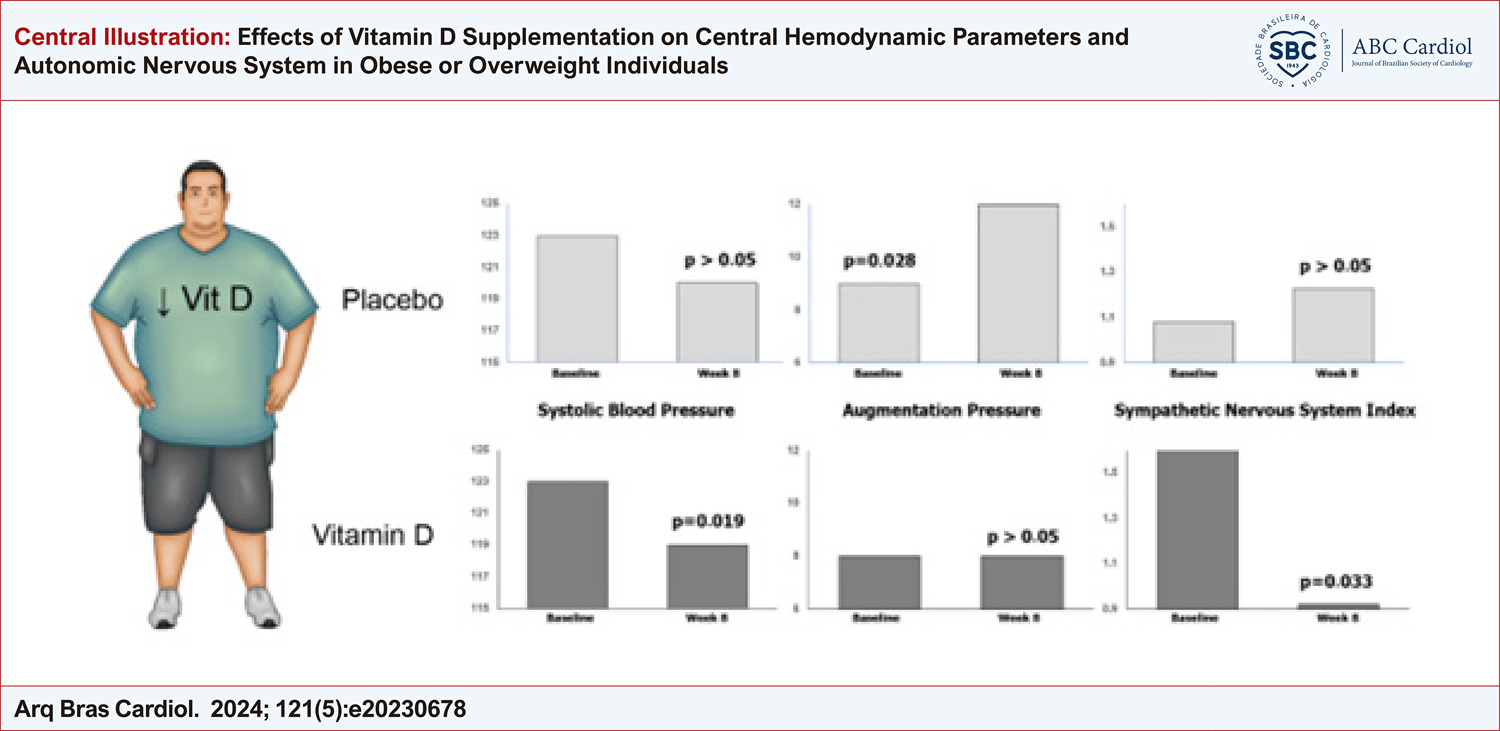
The groups were homogeneous regarding age (51±6 vs 52±6 years, p=0.509) and vitamin D levels (22.8±4.9 vs 21.7±4.5ng/ml, p=0.590). At W8, the VD group had significantly higher levels of vitamin D (22.5 vs 35.6ng/ml, p0.05). VD group showed an increase in the parasympathetic nervous system index (PNSi) (-0.64±0.94 vs -0.16±1.10, p=0.028) and the R-R interval (866±138 vs 924±161 ms, p= 0.026).

Conclusion

In this sample, eight weeks of daily vitamin D supplementation resulted in an improvement in blood pressure levels and autonomic balance.

  • Autonomic Nervous System
  • Hemodynamics
  • Vitamin D
Read Full Article
Creative Commons Attribution (CC BY) Creative Commons license
13/05/2024 DOI: 10.36660/abc.20230678i Views 1

How to cite this article

EndNote RIS

Electronic Document Format (Vancouver)

Ferreira MCM, Lemke VMG, Paiva MSMO, Nascimento EM, Pereira BB, Oliveira GMM. In-Hospital Outcomes in the Brazilian Registry of Transcatheter Aortic Valve Implantation – 14-Year Analysis. Arquivos Brasileiros de Cardiologia 2024;121(5):e20230551.

Electronic Document Format (ABNT)

Ferreira, Maria Cristina Meira; Lemke, Viviana de Mello Guzzo; Paiva, Maria Sanali Moura de Oliveira; Nascimento, Emilia Matos do; Pereira, Basílio de Bragança; Oliveira, Gláucia Maria Moraes de. In-Hospital Outcomes in the Brazilian Registry of Transcatheter Aortic Valve Implantation – 14-Year Analysis. Arquivos Brasileiros de Cardiologia, v. 121, n. 5, e20230551, Oct. 2024.

Electronic Document Format (APA)

Ferreira, M. C. M., Lemke, V. M. G., Paiva, M. S. M. O., Nascimento, E. M. , Pereira, B. B., & Oliveira, G. M. M. (2024). In-Hospital Outcomes in the Brazilian Registry of Transcatheter Aortic Valve Implantation – 14-Year Analysis. Arquivos Brasileiros de Cardiologia, 121(5), e20230551.

Electronic Document Format (ISO)

Ferreira, Maria Cristina Meira and Lemke, Viviana de Mello Guzzo and Paiva, Maria Sanali Moura de Oliveira and Nascimento, Emilia Matos do and Pereira, Basílio de Bragança and Oliveira, Gláucia Maria Moraes de. In-Hospital Outcomes in the Brazilian Registry of Transcatheter Aortic Valve Implantation – 14-Year Analysis. Arquivos Brasileiros de Cardiologia [online]. 2024, vol. 121, n. 5, [cited 2026-10-14], e20230551. Available from: <https://journals.cardiol.br/en/article/in-hospital-outcomes-in-the-brazilian-registry-of-transcatheter-aortic-valve-implantation-14-year-analysis/>. ISSN 0066-782X

EndNote RIS

Electronic Document Format (Vancouver)

Carvalho D, Carvalho S, Pacheco A, Costa C, Carvalho P, Ferreira R, Briosa A, et al. Marfan Syndrome, Hypertrophic Cardiomyopathy And Long QT A Rare Association Causing Sudden Death. Arquivos Brasileiros de Cardiologia 2024;121(5):e20230489.

Electronic Document Format (ABNT)

Carvalho, Diana; Carvalho, Simão; Pacheco, Adriana; Costa, Carlos; Carvalho, Pedro; Ferreira, Raquel; Briosa, Ana. Marfan Syndrome, Hypertrophic Cardiomyopathy And Long QT A Rare Association Causing Sudden Death. Arquivos Brasileiros de Cardiologia, v. 121, n. 5, e20230489, Oct. 2024.

Electronic Document Format (APA)

Carvalho, D., Carvalho, S., Pacheco, A., Costa, C., Carvalho, P., Ferreira, R., & Briosa, A. (2024). Marfan Syndrome, Hypertrophic Cardiomyopathy And Long QT A Rare Association Causing Sudden Death. Arquivos Brasileiros de Cardiologia, 121(5), e20230489.

Electronic Document Format (ISO)

Carvalho, Diana and Carvalho, Simão and Pacheco, Adriana and Costa, Carlos and Carvalho, Pedro and Ferreira, Raquel and Briosa, Ana. Marfan Syndrome, Hypertrophic Cardiomyopathy And Long QT A Rare Association Causing Sudden Death. Arquivos Brasileiros de Cardiologia [online]. 2024, vol. 121, n. 5, [cited 2026-10-14], e20230489. Available from: <https://journals.cardiol.br/en/article/marfan-syndrome-hypertrophic-cardiomyopathy-and-long-qt-a-rare-association-causing-sudden-death/>. ISSN 0066-782X

EndNote RIS

Electronic Document Format (Vancouver)

Onuk T, Polat F, Yaylak B, Çalik AN, Eren S, Akyüz . Prognostic Value of PRECİSE DAPT Score on Short- and Long-Term Outcomes in MINOCA Patients with Acute Coronary Syndrome. Arquivos Brasileiros de Cardiologia 2024;121(5):e20230791.

Electronic Document Format (ABNT)

Onuk, Tolga; Polat, Fuat; Yaylak, Bariş; Çalik, Ali Nazmi; Eren, Semih; Akyüz, Şükrü. Prognostic Value of PRECİSE DAPT Score on Short- and Long-Term Outcomes in MINOCA Patients with Acute Coronary Syndrome. Arquivos Brasileiros de Cardiologia, v. 121, n. 5, e20230791, Oct. 2024.

Electronic Document Format (APA)

Onuk, T., Polat, F., Yaylak, B., Çalik, A. N., Eren, S., & Akyüz, (2024). Prognostic Value of PRECİSE DAPT Score on Short- and Long-Term Outcomes in MINOCA Patients with Acute Coronary Syndrome. Arquivos Brasileiros de Cardiologia, 121(5), e20230791.

Electronic Document Format (ISO)

Onuk, Tolga and Polat, Fuat and Yaylak, Bariş and Çalik, Ali Nazmi and Eren, Semih and Akyüz, Şükrü. Prognostic Value of PRECİSE DAPT Score on Short- and Long-Term Outcomes in MINOCA Patients with Acute Coronary Syndrome. Arquivos Brasileiros de Cardiologia [online]. 2024, vol. 121, n. 5, [cited 2026-10-14], e20230791. Available from: <https://journals.cardiol.br/en/article/prognostic-value-of-precise-dapt-score-on-short-and-long-term-outcomes-in-minoca-patients-with-acute-coronary-syndrome/>. ISSN 0066-782X

EndNote RIS

Electronic Document Format (Vancouver)

Silveira ES, Machado GP, Teixeira JK, Fuchs F, Pinotti AF, Martins S, Wainstein MV, et al. Registry of Percutaneous Closure of Patent Foramen Ovale in the Secondary Prevention of Stroke. Arquivos Brasileiros de Cardiologia 2024;121(5):e20230293.

Electronic Document Format (ABNT)

Silveira, Eduardo S.; Machado, Guilherme P.; Teixeira, Julia K.; Fuchs, Felipe; Pinotti, Antonio F.; Martins, Sheila; Wainstein, Marco V.. Registry of Percutaneous Closure of Patent Foramen Ovale in the Secondary Prevention of Stroke. Arquivos Brasileiros de Cardiologia, v. 121, n. 5, e20230293, Oct. 2024.

Electronic Document Format (APA)

Silveira, E. S., Machado, G. P., Teixeira, J. K., Fuchs, F., Pinotti, A. F., Martins, S., & Wainstein, M. V. (2024). Registry of Percutaneous Closure of Patent Foramen Ovale in the Secondary Prevention of Stroke. Arquivos Brasileiros de Cardiologia, 121(5), e20230293.

Electronic Document Format (ISO)

Silveira, Eduardo S. and Machado, Guilherme P. and Teixeira, Julia K. and Fuchs, Felipe and Pinotti, Antonio F. and Martins, Sheila and Wainstein, Marco V.. Registry of Percutaneous Closure of Patent Foramen Ovale in the Secondary Prevention of Stroke. Arquivos Brasileiros de Cardiologia [online]. 2024, vol. 121, n. 5, [cited 2026-10-14], e20230293. Available from: <https://journals.cardiol.br/en/article/registry-of-percutaneous-closure-of-patent-foramen-ovale-in-the-secondary-prevention-of-stroke/>. ISSN 0066-782X

EndNote RIS

Electronic Document Format (Vancouver)

Habib SS, Alkahtani S, Aljawini N, Habib SM, Flatt AA. Resting Heart Rate Variability is Independently Associated with Visceral Fat Rating Scores in Saudi Adult Males. Arquivos Brasileiros de Cardiologia 2024;121(5):e20220780.

Electronic Document Format (ABNT)

Habib, Syed Shahid; Alkahtani, Shaea; Aljawini, Nouf; Habib, Syed Mohammad; Flatt, Andrew A.. Resting Heart Rate Variability is Independently Associated with Visceral Fat Rating Scores in Saudi Adult Males. Arquivos Brasileiros de Cardiologia, v. 121, n. 5, e20220780, Oct. 2024.

Electronic Document Format (APA)

Habib, S. S., Alkahtani, S., Aljawini, N., Habib, S. M., & Flatt, A. A. (2024). Resting Heart Rate Variability is Independently Associated with Visceral Fat Rating Scores in Saudi Adult Males. Arquivos Brasileiros de Cardiologia, 121(5), e20220780.

Electronic Document Format (ISO)

Habib, Syed Shahid and Alkahtani, Shaea and Aljawini, Nouf and Habib, Syed Mohammad and Flatt, Andrew A.. Resting Heart Rate Variability is Independently Associated with Visceral Fat Rating Scores in Saudi Adult Males. Arquivos Brasileiros de Cardiologia [online]. 2024, vol. 121, n. 5, [cited 2026-10-14], e20220780. Available from: <https://journals.cardiol.br/en/article/resting-heart-rate-variability-is-independently-associated-with-visceral-fat-rating-scores-in-saudi-adult-males/>. ISSN 0066-782X

EndNote RIS

Electronic Document Format (Vancouver)

Siqueira SRR, Salemi VMC. Importance of Clinical Examination in the Assessment of Hemodynamic Profiles and Their Relationship with Outcomes in Patients with Acute Heart Failure. Arquivos Brasileiros de Cardiologia 2024;121(5):e20240308.

Electronic Document Format (ABNT)

Siqueira, Suellen Rodrigues Rangel; Salemi, Vera Maria Cury. Importance of Clinical Examination in the Assessment of Hemodynamic Profiles and Their Relationship with Outcomes in Patients with Acute Heart Failure. Arquivos Brasileiros de Cardiologia, v. 121, n. 5, e20240308, Aug. 2024.

Electronic Document Format (APA)

Siqueira, S. R. R., & Salemi, V. M. C. (2024). Importance of Clinical Examination in the Assessment of Hemodynamic Profiles and Their Relationship with Outcomes in Patients with Acute Heart Failure. Arquivos Brasileiros de Cardiologia, 121(5), e20240308.

Electronic Document Format (ISO)

Siqueira, Suellen Rodrigues Rangel and Salemi, Vera Maria Cury. Importance of Clinical Examination in the Assessment of Hemodynamic Profiles and Their Relationship with Outcomes in Patients with Acute Heart Failure. Arquivos Brasileiros de Cardiologia [online]. 2024, vol. 121, n. 5, [cited 2026-10-14], e20240308. Available from: <https://journals.cardiol.br/en/article/importance-of-clinical-examination-in-the-assessment-of-hemodynamic-profiles-and-their-relationship-with-outcomes-in-patients-with-acute-heart-failure/>. ISSN 0066-782X

EndNote RIS

Electronic Document Format (Vancouver)

Ayub-Ferreira SM, Guazzelli DL. Monitoring Systemic Congestion in Heart Failure: Is Clinical Evaluation Sufficient?. Arquivos Brasileiros de Cardiologia 2024;121(5):e20240354.

Electronic Document Format (ABNT)

Ayub-Ferreira, Silvia Moreira; Guazzelli, Danielle Louvet. Monitoring Systemic Congestion in Heart Failure: Is Clinical Evaluation Sufficient?. Arquivos Brasileiros de Cardiologia, v. 121, n. 5, e20240354, Aug. 2024.

Electronic Document Format (APA)

Ayub-Ferreira, S. M., & Guazzelli, D. L. (2024). Monitoring Systemic Congestion in Heart Failure: Is Clinical Evaluation Sufficient?. Arquivos Brasileiros de Cardiologia, 121(5), e20240354.

Electronic Document Format (ISO)

Ayub-Ferreira, Silvia Moreira and Guazzelli, Danielle Louvet. Monitoring Systemic Congestion in Heart Failure: Is Clinical Evaluation Sufficient?. Arquivos Brasileiros de Cardiologia [online]. 2024, vol. 121, n. 5, [cited 2026-10-14], e20240354. Available from: <https://journals.cardiol.br/en/article/monitoring-systemic-congestion-in-heart-failure-is-clinical-evaluation-sufficient/>. ISSN 0066-782X

EndNote RIS

Electronic Document Format (Vancouver)

Bianco HT. Prognostic Value of PRECİSE DAPT Score in MINOCA Patients with Acute Coronary Syndrome. Arquivos Brasileiros de Cardiologia 2024;121(5):e20240307.

Electronic Document Format (ABNT)

Bianco, Henrique Tria. Prognostic Value of PRECİSE DAPT Score in MINOCA Patients with Acute Coronary Syndrome. Arquivos Brasileiros de Cardiologia, v. 121, n. 5, e20240307, Jul. 2024.

Electronic Document Format (APA)

Bianco, H. T. (2024). Prognostic Value of PRECİSE DAPT Score in MINOCA Patients with Acute Coronary Syndrome. Arquivos Brasileiros de Cardiologia, 121(5), e20240307.

Electronic Document Format (ISO)

Bianco, Henrique Tria. Prognostic Value of PRECİSE DAPT Score in MINOCA Patients with Acute Coronary Syndrome. Arquivos Brasileiros de Cardiologia [online]. 2024, vol. 121, n. 5, [cited 2026-10-14], e20240307. Available from: <https://journals.cardiol.br/en/article/prognostic-value-of-precise-dapt-score-in-minoca-patients-with-acute-coronary-syndrome/>. ISSN 0066-782X

EndNote RIS

Electronic Document Format (Vancouver)

Alencar JND, Feres F, Marchi MFND, Franchini KG, Scheffer MK, Felicioni SP, Costa ACM, et al. Beyond STEMI-NSTEMI Paradigm: Dante Pazzanese’s Proposal for Occlusion Myocardial Infarction Diagnosis. Arquivos Brasileiros de Cardiologia 2024;121(5):e20230733.

Electronic Document Format (ABNT)

Alencar, José Nunes De; Feres, Fausto; Marchi, Mariana Fuziy Nogueira De; Franchini, Kleber Gomes; Scheffer, Matheus Kiszka; Felicioni, Sandro Pinelli; Costa, Ana Carolina Muniz; Fernandes, Rinaldo Carvalho; Ramadan, Hugo Ribeiro; Meyers, Pendell; Smith, Stephen W.. Beyond STEMI-NSTEMI Paradigm: Dante Pazzanese’s Proposal for Occlusion Myocardial Infarction Diagnosis. Arquivos Brasileiros de Cardiologia, v. 121, n. 5, e20230733, Jul. 2024.

Electronic Document Format (APA)

Alencar, J. N. D., Feres, F., Marchi, M. F. N. D., Franchini, K. G., Scheffer, M. K., Felicioni, S. P., Costa, A. C. M., Fernandes, R. C., Ramadan, H. R., Meyers, P., & Smith, S. W. (2024). Beyond STEMI-NSTEMI Paradigm: Dante Pazzanese’s Proposal for Occlusion Myocardial Infarction Diagnosis. Arquivos Brasileiros de Cardiologia, 121(5), e20230733.

Electronic Document Format (ISO)

Alencar, José Nunes De and Feres, Fausto and Marchi, Mariana Fuziy Nogueira De and Franchini, Kleber Gomes and Scheffer, Matheus Kiszka and Felicioni, Sandro Pinelli and Costa, Ana Carolina Muniz and Fernandes, Rinaldo Carvalho and Ramadan, Hugo Ribeiro and Meyers, Pendell and Smith, Stephen W.. Beyond STEMI-NSTEMI Paradigm: Dante Pazzanese’s Proposal for Occlusion Myocardial Infarction Diagnosis. Arquivos Brasileiros de Cardiologia [online]. 2024, vol. 121, n. 5, [cited 2026-10-14], e20230733. Available from: <https://journals.cardiol.br/en/article/beyond-stemi-nstemi-paradigm-dante-pazzaneses-proposal-for-occlusion-myocardial-infarction-diagnosis/>. ISSN 0066-782X

EndNote RIS

Electronic Document Format (Vancouver)

Montanaro VVA. The Challenge of Effective Secondary Stroke Prophylaxis in Chagas Patients. Arquivos Brasileiros de Cardiologia 2024;121(5):e20240008.

Electronic Document Format (ABNT)

Montanaro, Vinícius Viana Abreu. The Challenge of Effective Secondary Stroke Prophylaxis in Chagas Patients. Arquivos Brasileiros de Cardiologia, v. 121, n. 5, e20240008, Jul. 2024.

Electronic Document Format (APA)

Montanaro, V. V. A. (2024). The Challenge of Effective Secondary Stroke Prophylaxis in Chagas Patients. Arquivos Brasileiros de Cardiologia, 121(5), e20240008.

Electronic Document Format (ISO)

Montanaro, Vinícius Viana Abreu. The Challenge of Effective Secondary Stroke Prophylaxis in Chagas Patients. Arquivos Brasileiros de Cardiologia [online]. 2024, vol. 121, n. 5, [cited 2026-10-14], e20240008. Available from: <https://journals.cardiol.br/en/article/the-challenge-of-effective-secondary-stroke-prophylaxis-in-chagas-patients/>. ISSN 0066-782X

EndNote RIS

Electronic Document Format (Vancouver)

Bettencourt N. Understanding the Link between Visceral Fat and Heart Health. Arquivos Brasileiros de Cardiologia 2024;121(5):e20240288.

Electronic Document Format (ABNT)

Bettencourt, Nuno. Understanding the Link between Visceral Fat and Heart Health. Arquivos Brasileiros de Cardiologia, v. 121, n. 5, e20240288, Jul. 2024.

Electronic Document Format (APA)

Bettencourt, N. (2024). Understanding the Link between Visceral Fat and Heart Health. Arquivos Brasileiros de Cardiologia, 121(5), e20240288.

Electronic Document Format (ISO)

Bettencourt, Nuno. Understanding the Link between Visceral Fat and Heart Health. Arquivos Brasileiros de Cardiologia [online]. 2024, vol. 121, n. 5, [cited 2026-10-14], e20240288. Available from: <https://journals.cardiol.br/en/article/understanding-the-link-between-visceral-fat-and-heart-health/>. ISSN 0066-782X

EndNote RIS

Electronic Document Format (Vancouver)

Guerra CCS, Sant’Ana G, Almeida OLR. Incidence of Cardiovascular Complications in Pediatric Patients Treated with Anthracyclines at a Brazilian Cancer Center. Arquivos Brasileiros de Cardiologia 2024;121(5):e20210352.

Electronic Document Format (ABNT)

Guerra, Cristina Chaves dos Santos de; Sant’Ana, Geisa; Almeida, Osório Luiz Rangel de. Incidence of Cardiovascular Complications in Pediatric Patients Treated with Anthracyclines at a Brazilian Cancer Center. Arquivos Brasileiros de Cardiologia, v. 121, n. 5, e20210352, Jun. 2024.

Electronic Document Format (APA)

Guerra, C. C. S. , Sant’Ana, G., & Almeida, O. L. R. (2024). Incidence of Cardiovascular Complications in Pediatric Patients Treated with Anthracyclines at a Brazilian Cancer Center. Arquivos Brasileiros de Cardiologia, 121(5), e20210352.

Electronic Document Format (ISO)

Guerra, Cristina Chaves dos Santos de and Sant’Ana, Geisa and Almeida, Osório Luiz Rangel de. Incidence of Cardiovascular Complications in Pediatric Patients Treated with Anthracyclines at a Brazilian Cancer Center. Arquivos Brasileiros de Cardiologia [online]. 2024, vol. 121, n. 5, [cited 2026-10-14], e20210352. Available from: <https://journals.cardiol.br/en/article/incidence-of-cardiovascular-complications-in-pediatric-patients-treated-with-anthracyclines-at-a-brazilian-cancer-center/>. ISSN 0066-782X

EndNote RIS

Electronic Document Format (Vancouver)

Aristizabal AM, Guzmán-Serrano CA, Lizcano MI, Mosquera W, Lores J, Pachajoa H, Cely C, et al. FLNC Associated Restrictive Cardiomyopathy and Hypertrabeculation, a Rare Association. Arquivos Brasileiros de Cardiologia 2024;121(5):e20230790.

Electronic Document Format (ABNT)

Aristizabal, Ana M.; Guzmán-Serrano, Carlos Alberto; Lizcano, María Isabel; Mosquera, Walter; Lores, Juliana; Pachajoa, Harry; Cely, Cesar. FLNC Associated Restrictive Cardiomyopathy and Hypertrabeculation, a Rare Association. Arquivos Brasileiros de Cardiologia, v. 121, n. 5, e20230790, Jun. 2024.

Electronic Document Format (APA)

Aristizabal, A. M., Guzmán-Serrano, C. A., Lizcano, M. I., Mosquera, W., Lores, J., Pachajoa, H., & Cely, C. (2024). FLNC Associated Restrictive Cardiomyopathy and Hypertrabeculation, a Rare Association. Arquivos Brasileiros de Cardiologia, 121(5), e20230790.

Electronic Document Format (ISO)

Aristizabal, Ana M. and Guzmán-Serrano, Carlos Alberto and Lizcano, María Isabel and Mosquera, Walter and Lores, Juliana and Pachajoa, Harry and Cely, Cesar. FLNC Associated Restrictive Cardiomyopathy and Hypertrabeculation, a Rare Association. Arquivos Brasileiros de Cardiologia [online]. 2024, vol. 121, n. 5, [cited 2026-10-14], e20230790. Available from: <https://journals.cardiol.br/en/article/flnc-associated-restrictive-cardiomyopathy-and-hypertrabeculation-a-rare-association/>. ISSN 0066-782X

EndNote RIS

Electronic Document Format (Vancouver)

Rodrigues AS, Castilho FM, Ribeiro AJF, Passaglia LG, Taniguchi FP, Ribeiro AL. Association between Hemodynamic Profile at Hospital Admission and Mortality in Acute Heart Failure Patients Included in the Best Practice in Cardiology Program in Brazil. Arquivos Brasileiros de Cardiologia 2024;121(5):e20230699.

Electronic Document Format (ABNT)

Rodrigues, André Silva; Castilho, Fábio Morato de; Ribeiro, Aloisio Joaquim Freitas; Passaglia, Luiz Guilherme; Taniguchi, Fabio Papa; Ribeiro, Antonio L.. Association between Hemodynamic Profile at Hospital Admission and Mortality in Acute Heart Failure Patients Included in the Best Practice in Cardiology Program in Brazil. Arquivos Brasileiros de Cardiologia, v. 121, n. 5, e20230699, Jun. 2024.

Electronic Document Format (APA)

Rodrigues, A. S., Castilho, F. M. , Ribeiro, A. J. F., Passaglia, L. G., Taniguchi, F. P., & Ribeiro, A. L. (2024). Association between Hemodynamic Profile at Hospital Admission and Mortality in Acute Heart Failure Patients Included in the Best Practice in Cardiology Program in Brazil. Arquivos Brasileiros de Cardiologia, 121(5), e20230699.

Electronic Document Format (ISO)

Rodrigues, André Silva and Castilho, Fábio Morato de and Ribeiro, Aloisio Joaquim Freitas and Passaglia, Luiz Guilherme and Taniguchi, Fabio Papa and Ribeiro, Antonio L.. Association between Hemodynamic Profile at Hospital Admission and Mortality in Acute Heart Failure Patients Included in the Best Practice in Cardiology Program in Brazil. Arquivos Brasileiros de Cardiologia [online]. 2024, vol. 121, n. 5, [cited 2026-10-14], e20230699. Available from: <https://journals.cardiol.br/en/article/association-between-hemodynamic-profile-at-hospital-admission-and-mortality-in-acute-heart-failure-patients-included-in-the-best-practice-in-cardiology-program-in-brazil/>. ISSN 0066-782X

EndNote RIS

Electronic Document Format (Vancouver)

Cunha CLP. Vitamin D and the Cardiovascular System. Arquivos Brasileiros de Cardiologia 2024;121(5):e20240189.

Electronic Document Format (ABNT)

Cunha, Claudio Leinig Pereira da. Vitamin D and the Cardiovascular System. Arquivos Brasileiros de Cardiologia, v. 121, n. 5, e20240189, Jun. 2024.

Electronic Document Format (APA)

Cunha, C. L. P. (2024). Vitamin D and the Cardiovascular System. Arquivos Brasileiros de Cardiologia, 121(5), e20240189.

Electronic Document Format (ISO)

Cunha, Claudio Leinig Pereira da. Vitamin D and the Cardiovascular System. Arquivos Brasileiros de Cardiologia [online]. 2024, vol. 121, n. 5, [cited 2026-10-14], e20240189. Available from: <https://journals.cardiol.br/en/article/vitamin-d-and-the-cardiovascular-system/>. ISSN 0066-782X

EndNote RIS

Electronic Document Format (Vancouver)

Ferreira RM. Frailty and Atrial Fibrillation: A Closer Look at the FRAIL-AF Trial. Arquivos Brasileiros de Cardiologia 2024;121(5):e20230671.

Electronic Document Format (ABNT)

Ferreira, Roberto Muniz. Frailty and Atrial Fibrillation: A Closer Look at the FRAIL-AF Trial. Arquivos Brasileiros de Cardiologia, v. 121, n. 5, e20230671, Jun. 2024.

Electronic Document Format (APA)

Ferreira, R. M. (2024). Frailty and Atrial Fibrillation: A Closer Look at the FRAIL-AF Trial. Arquivos Brasileiros de Cardiologia, 121(5), e20230671.

Electronic Document Format (ISO)

Ferreira, Roberto Muniz. Frailty and Atrial Fibrillation: A Closer Look at the FRAIL-AF Trial. Arquivos Brasileiros de Cardiologia [online]. 2024, vol. 121, n. 5, [cited 2026-10-14], e20230671. Available from: <https://journals.cardiol.br/en/article/frailty-and-atrial-fibrillation-a-closer-look-at-the-frail-af-trial/>. ISSN 0066-782X

EndNote RIS

Electronic Document Format (Vancouver)

Rinaldi PM, Rihl MF, Boniatti MM. VExUS Score at Discharge as a Predictor of Readmission in Patients with Acute Decompensated Heart Failure: A Cohort Study. Arquivos Brasileiros de Cardiologia 2024;121(5):e20230745.

Electronic Document Format (ABNT)

Rinaldi, Paulo Maciel; Rihl, Marcos Frata; Boniatti, Márcio Manozzo. VExUS Score at Discharge as a Predictor of Readmission in Patients with Acute Decompensated Heart Failure: A Cohort Study. Arquivos Brasileiros de Cardiologia, v. 121, n. 5, e20230745, Jun. 2024.

Electronic Document Format (APA)

Rinaldi, P. M., Rihl, M. F., & Boniatti, M. M. (2024). VExUS Score at Discharge as a Predictor of Readmission in Patients with Acute Decompensated Heart Failure: A Cohort Study. Arquivos Brasileiros de Cardiologia, 121(5), e20230745.

Electronic Document Format (ISO)

Rinaldi, Paulo Maciel and Rihl, Marcos Frata and Boniatti, Márcio Manozzo. VExUS Score at Discharge as a Predictor of Readmission in Patients with Acute Decompensated Heart Failure: A Cohort Study. Arquivos Brasileiros de Cardiologia [online]. 2024, vol. 121, n. 5, [cited 2026-10-14], e20230745. Available from: <https://journals.cardiol.br/en/article/vexus-score-at-discharge-as-a-predictor-of-readmission-in-patients-with-acute-decompensated-heart-failure-a-cohort-study/>. ISSN 0066-782X

EndNote RIS

Electronic Document Format (Vancouver)

Farsky PS, Sena MDB, Rabelato JT, Petisco ACGP, Arnoni RT. Importance of the Internal Thoracic Artery as the Source of Collateral Circulation in CABG Patients with Leriche Syndrome. Arquivos Brasileiros de Cardiologia 2024;121(5):e20230780.

Electronic Document Format (ABNT)

Farsky, Pedro Silvio; Sena, Marcela Dalla Bernardina; Rabelato, Janayna Thaina; Petisco, Ana Cláudia Gomes Pereira; Arnoni, Renato Tambelini. Importance of the Internal Thoracic Artery as the Source of Collateral Circulation in CABG Patients with Leriche Syndrome. Arquivos Brasileiros de Cardiologia, v. 121, n. 5, e20230780, Jun. 2024.

Electronic Document Format (APA)

Farsky, P. S., Sena, M. D. B., Rabelato, J. T., Petisco, A. C. G. P., & Arnoni, R. T. (2024). Importance of the Internal Thoracic Artery as the Source of Collateral Circulation in CABG Patients with Leriche Syndrome. Arquivos Brasileiros de Cardiologia, 121(5), e20230780.

Electronic Document Format (ISO)

Farsky, Pedro Silvio and Sena, Marcela Dalla Bernardina and Rabelato, Janayna Thaina and Petisco, Ana Cláudia Gomes Pereira and Arnoni, Renato Tambelini. Importance of the Internal Thoracic Artery as the Source of Collateral Circulation in CABG Patients with Leriche Syndrome. Arquivos Brasileiros de Cardiologia [online]. 2024, vol. 121, n. 5, [cited 2026-10-14], e20230780. Available from: <https://journals.cardiol.br/en/article/importance-of-the-internal-thoracic-artery-as-the-source-of-collateral-circulation-in-cabg-patients-with-leriche-syndrome/>. ISSN 0066-782X

EndNote RIS

Electronic Document Format (Vancouver)

Jiang Y, Bu H. Idiopathic Constrictive Pericarditis with Restrictive “Vertical Double Ring” Structure in a Patient with Right Ventricular Outflow Tract Stenosis. Arquivos Brasileiros de Cardiologia 2024;121(5):e20230576.

Electronic Document Format (ABNT)

Jiang, Ying; Bu, Haisong. Idiopathic Constrictive Pericarditis with Restrictive “Vertical Double Ring” Structure in a Patient with Right Ventricular Outflow Tract Stenosis. Arquivos Brasileiros de Cardiologia, v. 121, n. 5, e20230576, Jun. 2024.

Electronic Document Format (APA)

Jiang, Y., & Bu, H. (2024). Idiopathic Constrictive Pericarditis with Restrictive “Vertical Double Ring” Structure in a Patient with Right Ventricular Outflow Tract Stenosis. Arquivos Brasileiros de Cardiologia, 121(5), e20230576.

Electronic Document Format (ISO)

Jiang, Ying and Bu, Haisong. Idiopathic Constrictive Pericarditis with Restrictive “Vertical Double Ring” Structure in a Patient with Right Ventricular Outflow Tract Stenosis. Arquivos Brasileiros de Cardiologia [online]. 2024, vol. 121, n. 5, [cited 2026-10-14], e20230576. Available from: <https://journals.cardiol.br/en/article/idiopathic-constrictive-pericarditis-with-restrictive-vertical-double-ring-structure-in-a-patient-with-right-ventricular-outflow-tract-stenosis/>. ISSN 0066-782X

EndNote RIS

Electronic Document Format (Vancouver)

Esteves V, Andrade PB, Zukowski CN, Araujo E, Bezerra CG, Oliveira AD, Melo EP, et al. Temporal Trends in Transcatheter Aortic Valve Implantation: 10-Year Analysis of the TAVIDOR Registry. Arquivos Brasileiros de Cardiologia 2024;121(5):e20230467.

Electronic Document Format (ABNT)

Esteves, Vinicius; Andrade, Pedro Beraldo de; Zukowski, Cleverson Neves; Araujo, Edmur; Bezerra, Cristiano Guedes; Oliveira, Adriano Dourado; Melo, Eduardo Pessoa de; Gama, Gustavo; Cantarelli, Rodrigo; Mattos, Luiz Alberto Piva e; Tedeschi, Angelo; Loures, Vitor Alves; Vahle, Vitor; Silva, Guilherme Barreto Gameiro; Rati, Miguel Antonio Neves; Lopes, Augusto Celso; Fé Filho, Nilson de Moura; Alves, Gustavo; Tavares Filho, Sérgio Costa; Kreimer, Sergio; Tebet, Marden; Maia, Felipe; Oliveira, Maurício Sales de; Fonseca, Alberto; Camiletti, Angelina; Albuquerque, Denilson Campos de; Souza, Olga Ferreira de. Temporal Trends in Transcatheter Aortic Valve Implantation: 10-Year Analysis of the TAVIDOR Registry. Arquivos Brasileiros de Cardiologia, v. 121, n. 5, e20230467, Jun. 2024.

Electronic Document Format (APA)

Esteves, V., Andrade, P. B. , Zukowski, C. N., Araujo, E., Bezerra, C. G., Oliveira, A. D., Melo, E. P. , Gama, G., Cantarelli, R., Mattos, L. A. P. , Tedeschi, A., Loures, V. A., Vahle, V., Silva, G. B. G., Rati, M. A. N., Lopes, A. C., Fé Filho, N. M., Alves, G., Tavares Filho, S. C., Kreimer, S., Tebet, M., Maia, F., Oliveira, M. S. , Fonseca, A., Camiletti, A., Albuquerque, D. C. , & Souza, O. F. (2024). Temporal Trends in Transcatheter Aortic Valve Implantation: 10-Year Analysis of the TAVIDOR Registry. Arquivos Brasileiros de Cardiologia, 121(5), e20230467.

Electronic Document Format (ISO)

Esteves, Vinicius and Andrade, Pedro Beraldo de and Zukowski, Cleverson Neves and Araujo, Edmur and Bezerra, Cristiano Guedes and Oliveira, Adriano Dourado and Melo, Eduardo Pessoa de and Gama, Gustavo and Cantarelli, Rodrigo and Mattos, Luiz Alberto Piva e and Tedeschi, Angelo and Loures, Vitor Alves and Vahle, Vitor and Silva, Guilherme Barreto Gameiro and Rati, Miguel Antonio Neves and Lopes, Augusto Celso and Fé Filho, Nilson de Moura and Alves, Gustavo and Tavares Filho, Sérgio Costa and Kreimer, Sergio and Tebet, Marden and Maia, Felipe and Oliveira, Maurício Sales de and Fonseca, Alberto and Camiletti, Angelina and Albuquerque, Denilson Campos de and Souza, Olga Ferreira de. Temporal Trends in Transcatheter Aortic Valve Implantation: 10-Year Analysis of the TAVIDOR Registry. Arquivos Brasileiros de Cardiologia [online]. 2024, vol. 121, n. 5, [cited 2026-10-14], e20230467. Available from: <https://journals.cardiol.br/en/article/temporal-trends-in-transcatheter-aortic-valve-implantation-10-year-analysis-of-the-tavidor-registry/>. ISSN 0066-782X

EndNote RIS

Electronic Document Format (Vancouver)

Timóteo AT. Inflammation and No-Reflow: Can it be a Game-Changer?. Arquivos Brasileiros de Cardiologia 2024;121(5):e20240119.

Electronic Document Format (ABNT)

Timóteo, Ana Teresa. Inflammation and No-Reflow: Can it be a Game-Changer?. Arquivos Brasileiros de Cardiologia, v. 121, n. 5, e20240119, Jun. 2024.

Electronic Document Format (APA)

Timóteo, A. T. (2024). Inflammation and No-Reflow: Can it be a Game-Changer?. Arquivos Brasileiros de Cardiologia, 121(5), e20240119.

Electronic Document Format (ISO)

Timóteo, Ana Teresa. Inflammation and No-Reflow: Can it be a Game-Changer?. Arquivos Brasileiros de Cardiologia [online]. 2024, vol. 121, n. 5, [cited 2026-10-14], e20240119. Available from: <https://journals.cardiol.br/en/article/inflammation-and-no-reflow-can-it-be-a-game-changer/>. ISSN 0066-782X

EndNote RIS

Electronic Document Format (Vancouver)

Gioppatto S, Prado PS, Elias MAL, Carvalho VH, Paiva CRC, Alexim GA, Reis RTB, et al. The Clinical and Economic Impact of Delayed Reperfusion Therapy: Real-World Evidence. Arquivos Brasileiros de Cardiologia 2024;121(5):e20230650.

Electronic Document Format (ABNT)

Gioppatto, Silvio; Prado, Paulo Sousa; Elias, Mariana Araújo Lima; Carvalho, Verônica Homem de; Paiva, Caio Resende da Costa; Alexim, Gustavo de Almeida; Reis, Ricardo Torres Bispo; Nogueira, Ana Claudia Cavalcante; Soares, Alexandre Anderson de Sousa Munhoz; Nadruz, Wilson; Carvalho, Luiz Sergio F. de; Sposito, Andrei C.. The Clinical and Economic Impact of Delayed Reperfusion Therapy: Real-World Evidence. Arquivos Brasileiros de Cardiologia, v. 121, n. 5, e20230650, May. 2024.

Electronic Document Format (APA)

Gioppatto, S., Prado, P. S., Elias, M. A. L., Carvalho, V. H. , Paiva, C. R. C., Alexim, G. A., Reis, R. T. B., Nogueira, A. C. C., Soares, A. A. S. M., Nadruz, W., Carvalho, L. S. F. , & Sposito, A. C. (2024). The Clinical and Economic Impact of Delayed Reperfusion Therapy: Real-World Evidence. Arquivos Brasileiros de Cardiologia, 121(5), e20230650.

Electronic Document Format (ISO)

Gioppatto, Silvio and Prado, Paulo Sousa and Elias, Mariana Araújo Lima and Carvalho, Verônica Homem de and Paiva, Caio Resende da Costa and Alexim, Gustavo de Almeida and Reis, Ricardo Torres Bispo and Nogueira, Ana Claudia Cavalcante and Soares, Alexandre Anderson de Sousa Munhoz and Nadruz, Wilson and Carvalho, Luiz Sergio F. de and Sposito, Andrei C.. The Clinical and Economic Impact of Delayed Reperfusion Therapy: Real-World Evidence. Arquivos Brasileiros de Cardiologia [online]. 2024, vol. 121, n. 5, [cited 2026-10-14], e20230650. Available from: <https://journals.cardiol.br/en/article/the-clinical-and-economic-impact-of-delayed-reperfusion-therapy-real-world-evidence/>. ISSN 0066-782X

EndNote RIS

Electronic Document Format (Vancouver)

Faria ACC, Moreira CL, Cunha MR, Mattos S, Oigman W, Neves MF. Effects of Vitamin D Supplementation on Central Hemodynamic Parameters and Autonomic Nervous System in Obese or Overweight Individuals. Arquivos Brasileiros de Cardiologia 2024;121(5):e20230678.

Electronic Document Format (ABNT)

Faria, Adriana C. C.; Moreira, Caroline Lyra; Cunha, Michelle Rabello da; Mattos, Samanta; Oigman, Wille; Neves, Mario Fritsch. Effects of Vitamin D Supplementation on Central Hemodynamic Parameters and Autonomic Nervous System in Obese or Overweight Individuals. Arquivos Brasileiros de Cardiologia, v. 121, n. 5, e20230678, May. 2024.

Electronic Document Format (APA)

Faria, A. C. C., Moreira, C. L., Cunha, M. R. , Mattos, S., Oigman, W., & Neves, M. F. (2024). Effects of Vitamin D Supplementation on Central Hemodynamic Parameters and Autonomic Nervous System in Obese or Overweight Individuals. Arquivos Brasileiros de Cardiologia, 121(5), e20230678.

Electronic Document Format (ISO)

Faria, Adriana C. C. and Moreira, Caroline Lyra and Cunha, Michelle Rabello da and Mattos, Samanta and Oigman, Wille and Neves, Mario Fritsch. Effects of Vitamin D Supplementation on Central Hemodynamic Parameters and Autonomic Nervous System in Obese or Overweight Individuals. Arquivos Brasileiros de Cardiologia [online]. 2024, vol. 121, n. 5, [cited 2026-10-14], e20230678. Available from: <https://journals.cardiol.br/en/article/effects-of-vitamin-d-supplementation-on-central-hemodynamic-parameters-and-autonomic-nervous-system-in-obese-or-overweight-individuals/>. ISSN 0066-782X

Sede – Rio de Janeiro
Av. Marechal Câmara, 160
3º andar – Sala: 330 – Centro
Rio de Janeiro – CEP: 20020-907
Tel.: (55 +21) 3478-2700
ou (21) 99386-3961
E-mail: revista@cardiol.br

Sede – São Paulo
Alameda Santos, 705 – 11º andar
Cerqueira César | São Paulo
CEP: 01419-001
Tel.: (55 +11) 3411-5500
E-mail: revista@cardiol.br

  • About the Journal
  • Internal Regulation
  • Editors Section
  • Editorial Board
  • History
  • SBC Award

  • Guidelines for Publication
  • Editorial Policy
  • Ethics Policy
  • Policy on the Use of Artificial Intelligence
  • Mandatory Publication Form
  • Publication Fee

Issues

SBC Guidelines

  • How to Publish an Abstract Supplement?
  • Supplements from the Brazilian Congress of Cardiology