ABC Family Arquivos Brasileiros de Cardiologia International Journal of Cardiovascular Sciences ABC Heart Failure & Cardiomyopathy ABC Imagem Cardiovascular
Português English
ABC Family
Português English
  • About
    • About ABC Family
    • Internal Regulation
    • Editorial Board
    • Brazilian Society of Cardiology (SBC)
  • Issues
  • SBC Guidelines
  • Content
    • Videos
    • Podcasts
    • News
  • About
    • About ABC Family
    • Internal Regulation
    • Editorial Board
    • Brazilian Society of Cardiology (SBC)
  • Issues
  • SBC Guidelines
  • Content
    • Videos
    • Podcasts
    • News

ABC Family

  • ABC Family
  • Arquivos Brasileiros de Cardiologia
  • International Journal of Cardiovascular Sciences
  • ABC Heart Failure & Cardiomyopathy
  • ABC Imagem Cardiovascular
Search in

No content found.

Journals
Ordering
Article types
Others

  1. Home
  2. Keyword: Restrictive cardiomyopathy
Central Illustration
ABCHF
Review Article

Filamin C and Cardiomyopathies: Linking Genetic Variants to Their Phenotypic Impact

Natália Olivetti et al. Márya Pagotti Bruno Moreira Santos Marjorie Mizuta … Bianca Linnenkamp Paula de Mendonça Senra Fernanda Andrade Mariana Lombardi Peres de Carvalho Luciana Sacilotto José Eduardo Krieger

Abstract

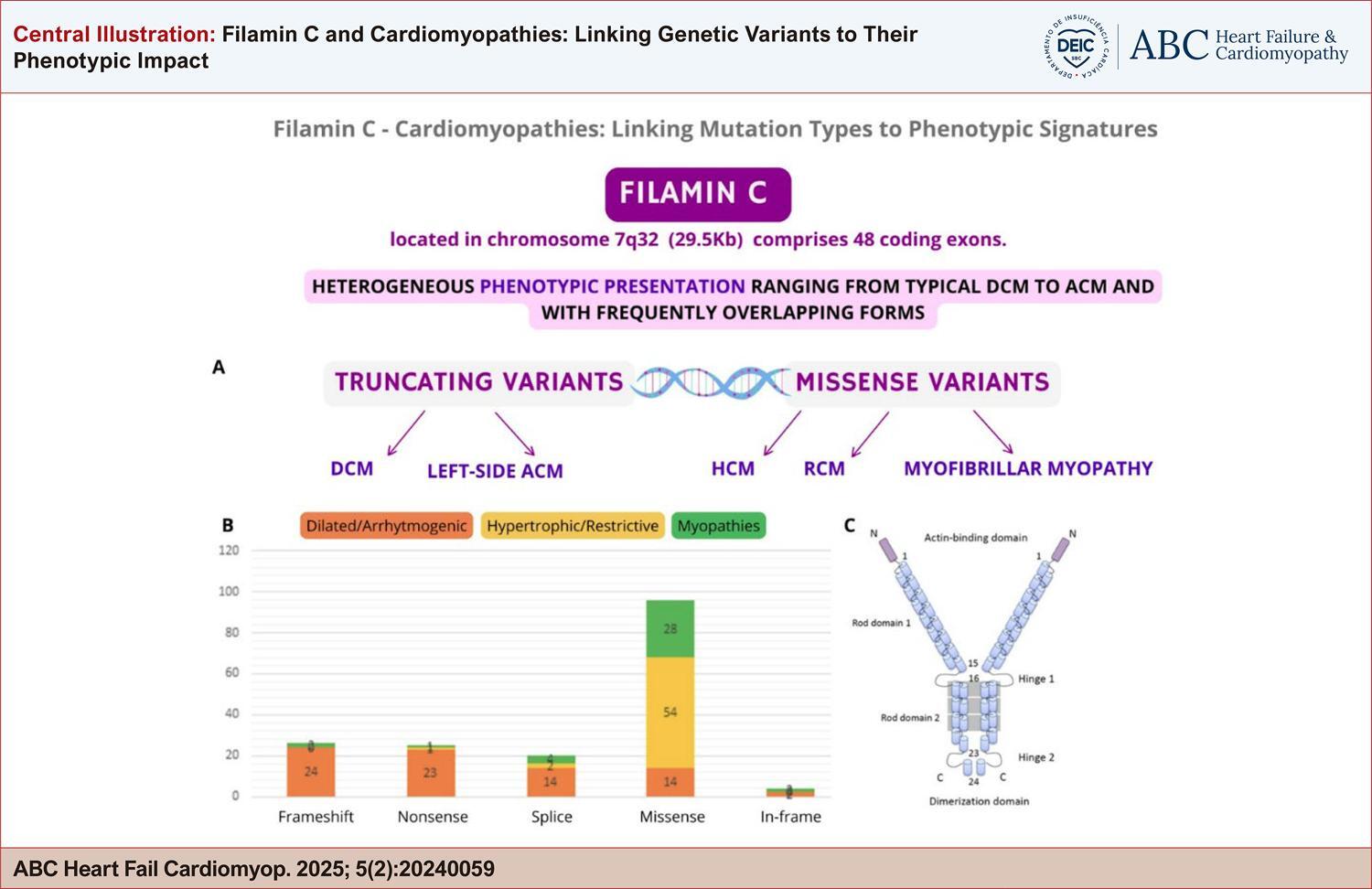
Filamin C (FLNC) plays a critical role in maintaining the structural integrity of muscle cells, particularly within the cardiac sarcomere. Pathogenic variants in the FLNC gene are increasingly recognized as significant contributors to a diverse range of cardiomyopathies, including dilated (DCM), hypertrophic (HCM), arrhythmogenic (ACM), and restrictive cardiomyopathy (RCM). This review explores the genotype-phenotype correlations in FLNC-related cardiomyopathies, emphasizing how the type and location of genetic variants influence the clinical presentation. Truncating variants are primarily associated with DCM and ACM, characterized by a high risk of arrhythmic events and severe outcomes, while missense variants often lead to HCM and RCM, with unique phenotypic features. The review also discusses the inheritance patterns, molecular mechanisms, and clinical phenotypes of FLNC-associated myopathies, highlighting the need for genetic testing in risk stratification and management. Future perspectives emphasize the importance of expanding research into the underlying mechanisms of FLNC variants and their interactions with other genetic and environmental factors. This integrated understanding is critical for improving the clinical management of patients with FLNC-related cardiomyopathies.
  • Arrhythmogenic right ventricular dysplasia;
  • Dilated Cardiomyopathy
  • Filamins
  • Hypertrophic Cardiomyopathy
  • Restrictive cardiomyopathy
Read Full Article
Creative Commons Attribution (CC BY) Creative Commons license
05/06/2025 DOI: 10.36660/abchf.20240059i
Cardiac Abnormalities in Hypereosinophilic Syndromes
ABC
Review Article

Cardiac Abnormalities in Hypereosinophilic Syndromes

Viviane Tiemi Hotta et al. Rafael Ruas Nastari Gardênia da Silva Lobo Oishi Alexandre Eiji Kayano … Juliana Alzira Gonzales Oliveira Ruiza Gonçalves Rocha Ana Olga Mocumbi Fernanda Salles Seguro José Eduardo Krieger Fábio Fernandes Vera Maria Cury Salemi

Abstract

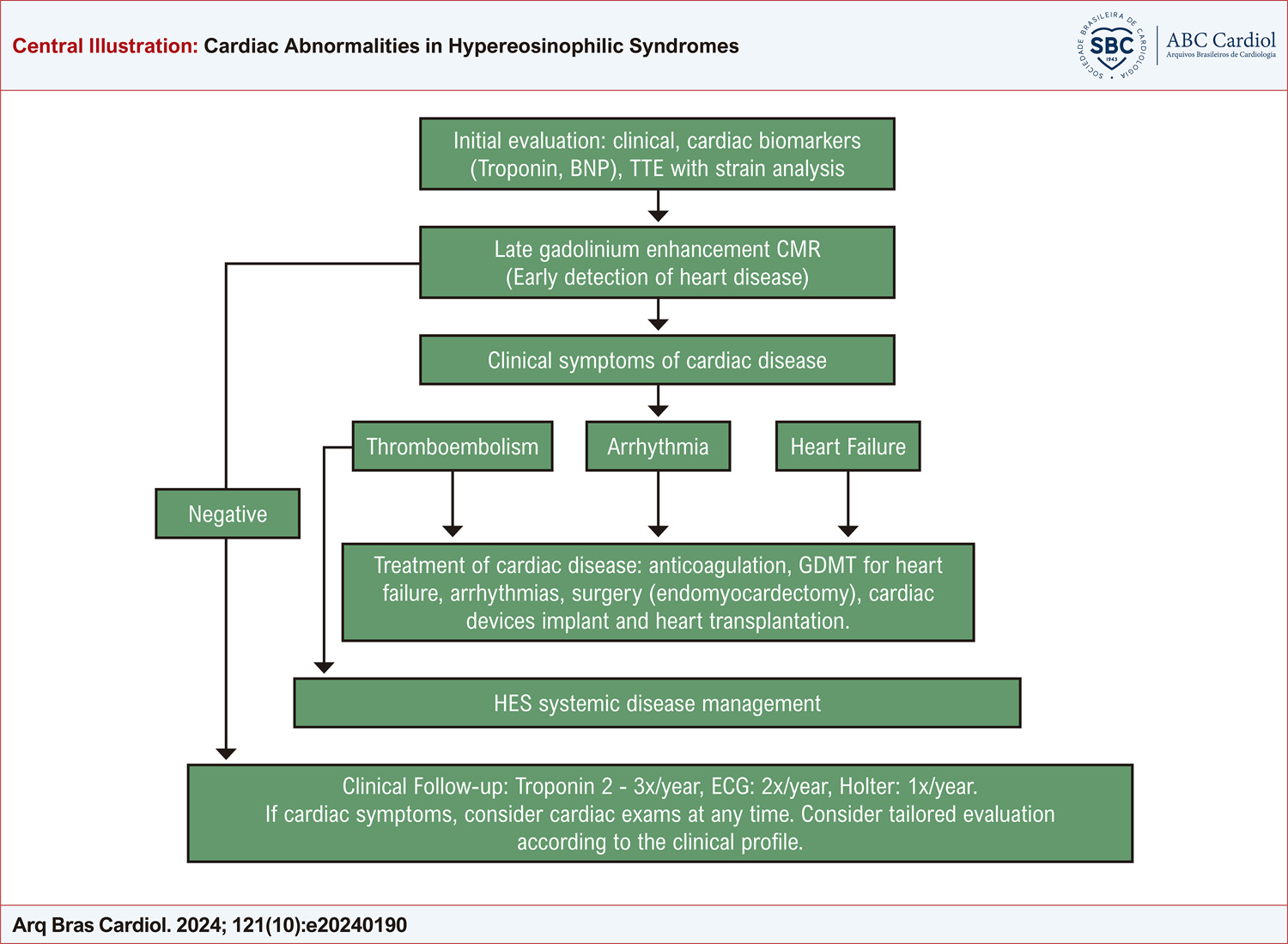
Hypereosinophilia (HE) is defined as an eosinophil count exceeding 1500 cells/microL in peripheral blood in two tests, performed with an interval of at least one month and/or anatomopathological confirmation of HE, with eosinophils comprising more than 20% of all nucleated cells in the bone marrow. Hypereosinophilic syndrome (HES) indicates the presence of HE with organ involvement due to eosinophil action, which can be classified as primary (or neoplastic), secondary (or reactive), and idiopathic. Cardiac involvement occurs in up to 5% of cases in the acute phase and 20% of the chronic phase of the disease, ranging from oligosymptomatic cases to fulminant acute myocarditis or chronic restrictive cardiomyopathy (Loeffler endomyocarditis). However, the degree of cardiac dysfunction does not directly correlate with the degree of eosinophilia. The cardiac involvement of HES occurs in three phases: initial necrotic, thrombotic, and finally necrotic. It can manifest as heart failure, arrhythmias, and thromboembolic phenomena. The diagnosis of cardiopathy is based on multimodality imaging, with an emphasis on the importance of echocardiography (echo) as the primary examination. TTE with enhanced ultrasound agents can be used for better visualization, allowing greater accuracy in assessing ventricular apex, and myocardial deformation indices, such as longitudinal strain, may be reduced, especially in the ventricular apex (reverse apical sparing). Cardiac magnetic resonance imaging allows the characterization of subendocardial late gadolinium enhancement, and endomyocardial biopsy is considered the gold standard in diagnosing cardiopathy. Treatment is based on the etiology of HES.

  • eosinophils
  • Heart Failure
  • Hypereosinophilic Syndrome
  • Restrictive cardiomyopathy
Read Full Article
Creative Commons Attribution (CC BY) Creative Commons license
25/11/2024 DOI: 10.36660/abc.20240190i Views 1
Figure 1
ABC
Case Report

FLNC Associated Restrictive Cardiomyopathy and Hypertrabeculation, a Rare Association

Ana M. Aristizabal et al. Carlos Alberto Guzmán-Serrano María Isabel Lizcano Walter Mosquera … Juliana Lores Harry Pachajoa Cesar Cely

Abstract

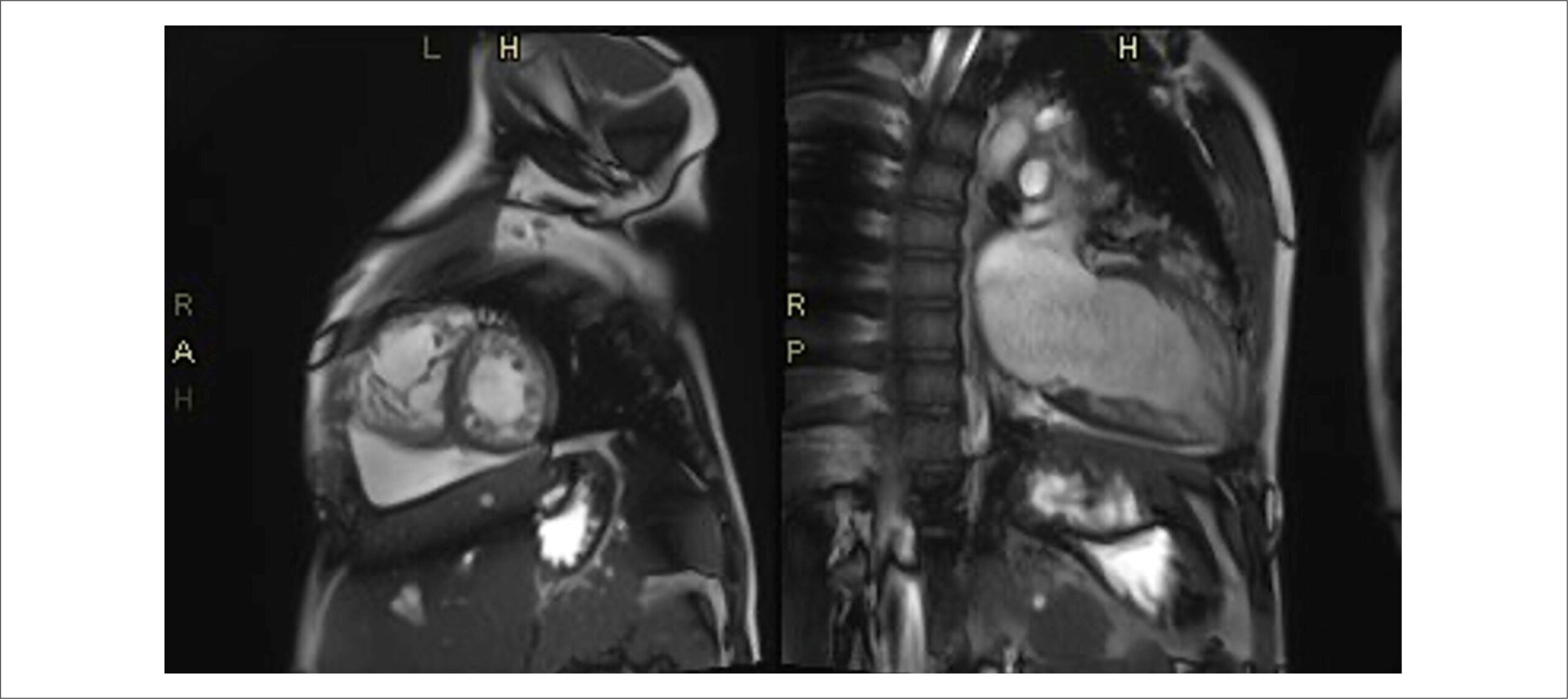
A six-year-old girl with restrictive cardiomyopathy and hypertrabeculation, due to the early onset of her disease, whole exome sequencing was conducted, revealing the presence of a novel heterozygous missense variant in the FLNC gene. The same gene variant was also identified in her father, who, at an adult age, displayed normal imaging results and was symptom-free. This variant has not been reported in population databases or current medical literature and is classified as likely pathogenic.

  • Filamins
  • Genetics
  • Restrictive cardiomyopathy
Read Full Article
Creative Commons Attribution (CC BY) Creative Commons license
24/06/2024 DOI: 10.36660/abc.20230790i Views 1
Figure 1
ABCHF
Viewpoint

Restrictive Cardiomyopathies: What’s New on the War Front?

Luiz Claudio Danzmann et al. Liciani de Mello Feliciano Elisa Kalil Paula Loredo Siminovich Marianna de Moura Nora

A rare – or not so rare – condition?

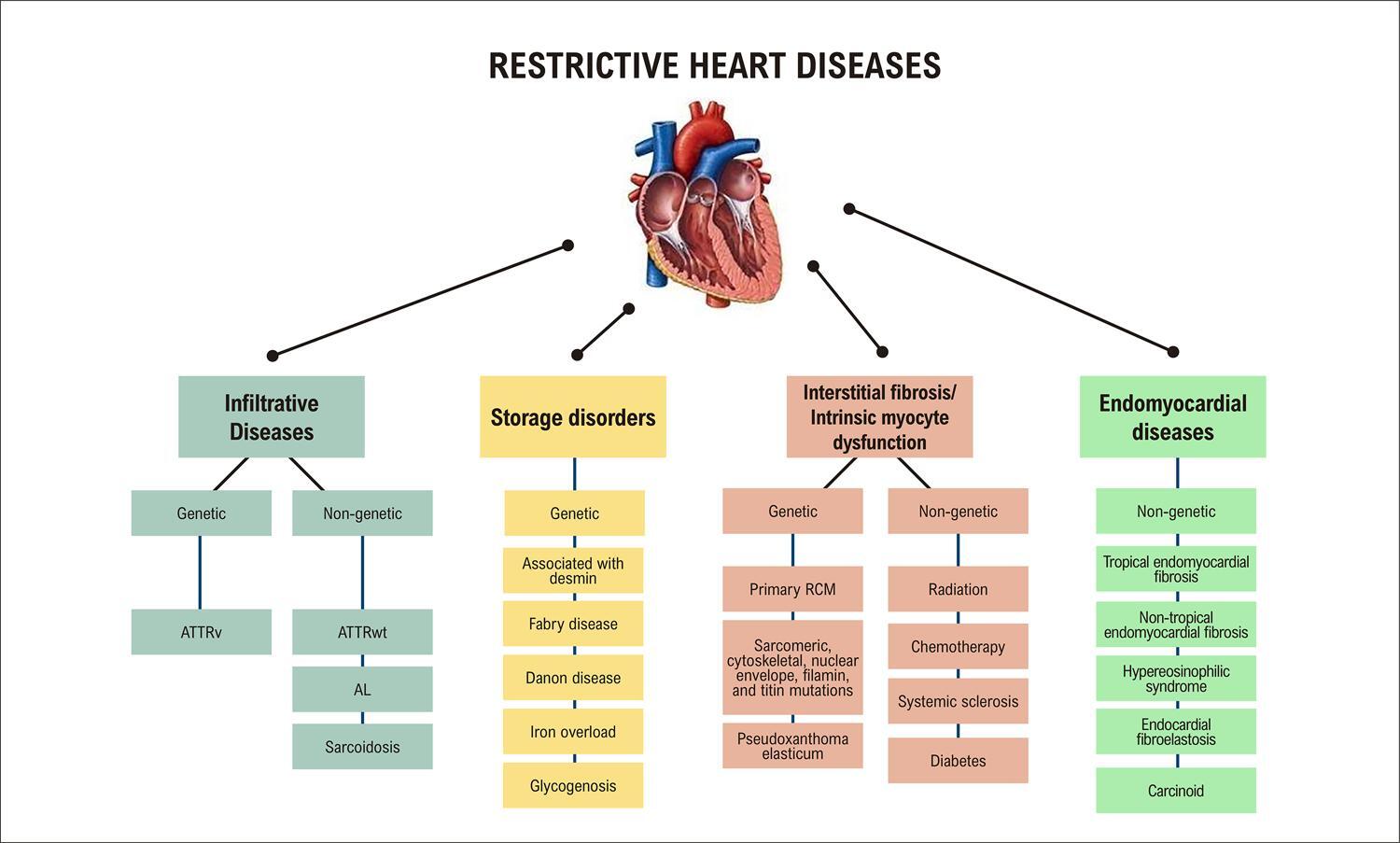
Restrictive cardiomyopathies, caused by primary pathologies of the heart muscle, are considered rare diseases, corresponding to about 5% of all cardiomyopathies. The most frequent form of restrictive cardiomyopathy is cardiac amyloidosis (CA), which can be considered a benchmark since, with the availability of diagnostic technologies, its detection has been made much more frequent, associated with the fact that there are effective treatment possibilities.

[…]

  • Amyloidosis
  • Diastolic Heart Failure
  • Restrictive cardiomyopathy
  • Sarcoidosis
Read Full Article
Creative Commons Attribution (CC BY) Creative Commons license
10/07/2023 DOI: 10.36660/abchf.20230018 Views 1
Figure 1
ABCHF
Editorial

Amyloidosis: Rare or Underdiagnosed Disease?

Mariano Napoli Llobera et al. Atilio Costa Vitali

Transthyretin amyloidosis

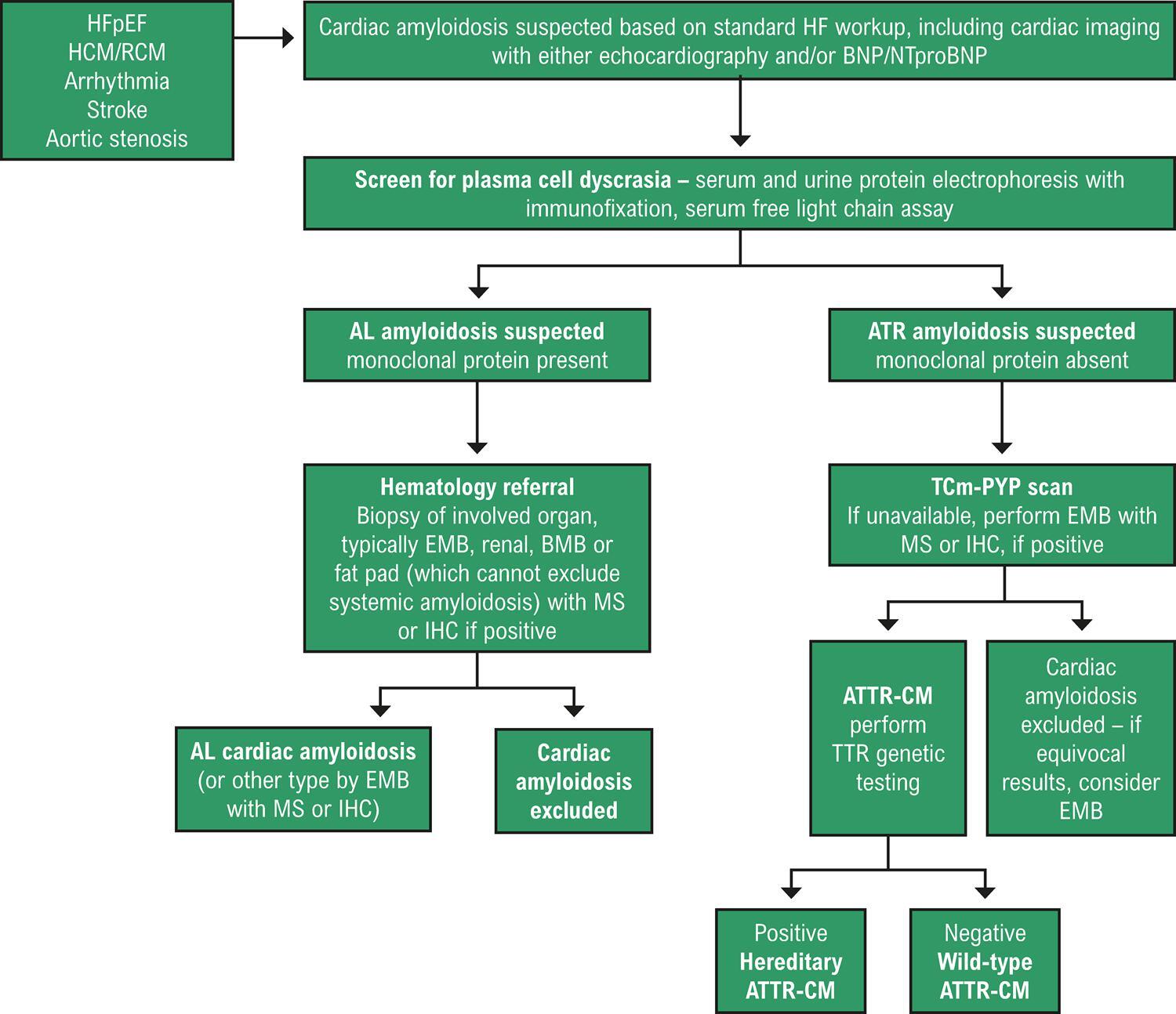
Transthyretin amyloidosis (ATTR) is caused by the deposition of transthyretin (TTR), a protein synthesized by the liver, which has a stable tetrameric structure and whose function is the transport of thyroid hormones and retinol. TTR can dissociate into monomers and oligomers and then be deposited as amyloid fibrils, in a natural (wtATTR or “wild type”, previously known as senile systemic amyloidosis) or genetic manner (hATTR or “hereditary”).

The number of patients diagnosed with ATTR has increased over the years, and it has come to be considered that it may be more prevalent than AL.

[…]

  • Amyloidosis
  • Heart Failure
  • Restrictive cardiomyopathy
Read Full Article
Creative Commons Attribution (CC BY) Creative Commons license
10/12/2021 DOI: 10.36660/abchf.20210019
Figure 1
ABCHF
Case Report

Familial Transthyretin Cardiac Amyloidosis with Homozygous Val122Ile Mutation Mimicking Hypertrophic Cardiomyopathy

Caio Rebouças Fonseca Cafezeiro et al. Aristoteles Comte de Alencar Neto Bruno Vaz Kerges Bueno João Henrique Rissato … André Luiz Dabarian Viviane Tiemi Hotta Fábio Fernandes

Abstract

Systemic amyloidosis is a group of diseases caused by the deposition of an amyloid protein that forms fibrils and deposits in tissues. With respect to age and phenotype, patients with the Val122Ile transthyretin (TTR) mutation are similar to those with wild-type cardiac amyloidosis, causing a late-onset restrictive cardiomyopathy with minimal neuropathy, whose median age of onset is 69 years. Homozygous mutation is rare. We report the case of a male patient who had recent-onset heart failure and phenotype of hypertrophic cardiomyopathy. Technetium scintigraphy showed cardiac uptake and absence of circulating immunoglobulins, suggesting TTR cardiac amyloidosis. Genetic analysis confirmed cardiac amyloidosis caused by the homozygous Val122Ile mutant TTR protein.

  • Amyloidosis
  • Heart Failure
  • Hypertrophic Cardiomyopathy
  • Restrictive cardiomyopathy
Read Full Article
Creative Commons Attribution (CC BY) Creative Commons license
10/12/2021 DOI: 10.36660/abchf.20210023 Views 1
Figure 1
ABCHF
Case Report

Sustained Ventricular Tachycardia as an Isolated Presentation of Transthyretin Amyloidosis Cardiomyopathy – Val50Met

Edileide de Barros Correia et al. Larissa Ventura Ribeiro Bruscky Kelin Chen Priscila Cestari Quagliato … Yoná Afonso Francisco Líria Maria Lima da Silva Ana Cristina de Souza Murta

Introduction

Amyloidosis is characterized by extracellular deposition of insoluble proteins (amyloid deposition) in multiple organs and progressive organ dysfunction. It is classified by the type of protein that is deposited, including transthyretin amyloidosis (ATTR), which can occur due to a genetic variant and aging. Approximately 120 genetic variants have been recognized to cause ATTR; one of the most common is Val50Met. The phenotypic presentation of ATTR due to the Val50Met mutation is mostly neurological, known as familial amyloidotic polyneuropathy (FAP), but cardiac involvement is being increasingly recognized. Sporadic cases with strictly cardiac manifestation, causing ventricular wall hypertrophy, dysfunction diastolic, and conduction disturbances have already been described in the literature.

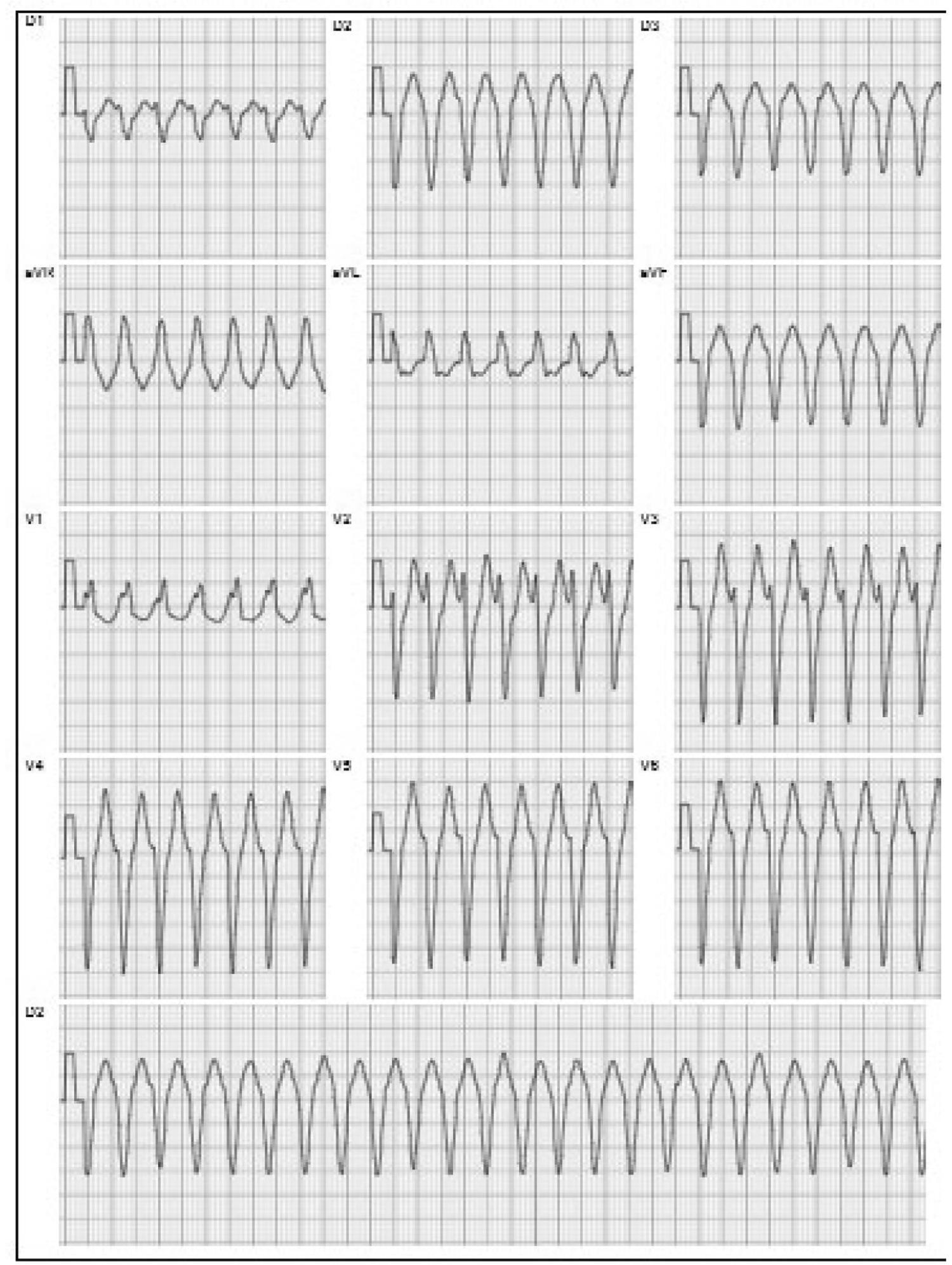
In this article, we report a case of ATTR due to the Val50Met mutation, with the phenotypic expression of cardiac involvement, with sustained ventricular tachycardia as an isolated presentation.

[…]

  • Familial Amyloidosis
  • Restrictive cardiomyopathy
  • Ventricular tachycardia
Read Full Article
Creative Commons Attribution (CC BY) Creative Commons license
10/12/2021 DOI: 10.36660/abchf.20210015
Figure 1
ABCHF
Viewpoint

What is the Importance of Clinical Clues, and How can we Avoid Mistakes in Following Them?

Salvador Rassi et al. Daniela do Carmo Rassi Aguinaldo Figueiredo Freitas Junior

Approximately half of patients with heart failure (HF) have preserved ejection fraction (EF), and approximately half of these patients have increased left ventricular (LV) wall thickness . This increase in LV wall thickness is usually attributed to left ventricular hypertrophy induced by arterial hypertension (AH). However, cardiac amyloid fibril infiltration also increases ventricular wall thickness, and it can lead to a clinical syndrome of HF with preserved EF (HFpEF).

Light chain amyloidosis (AL) cardiomyopathy occurs in patients with AL or primary amyloidosis, which is a hematologic disease with specific hematologic treatment. Both hereditary transthyretin (hATTR) and wild-type (ATTRwt) amyloidosis can cause transthyretin amyloid cardiomyopathy (ATTR-CM).

[…]

  • Amyloidosis
  • Heart Failure
  • Restrictive cardiomyopathy
Read Full Article
Creative Commons Attribution (CC BY) Creative Commons license
10/12/2021 DOI: 10.36660/abchf.20210020
Figure 1
ABCIC
Case Report

Cardiac Amyloidosis: Infiltrative Cardiomyopathy with Restrictive Hemodynamic Behavior – Case Report

José Leonardo Gomes Rocha Júnior et al. Ivan Lucas Rocha Liberato Larissa Ferreira Lopes Letícia Maria Queiroz Rocha Christiane Bezerra Rocha Liberato

Abstract

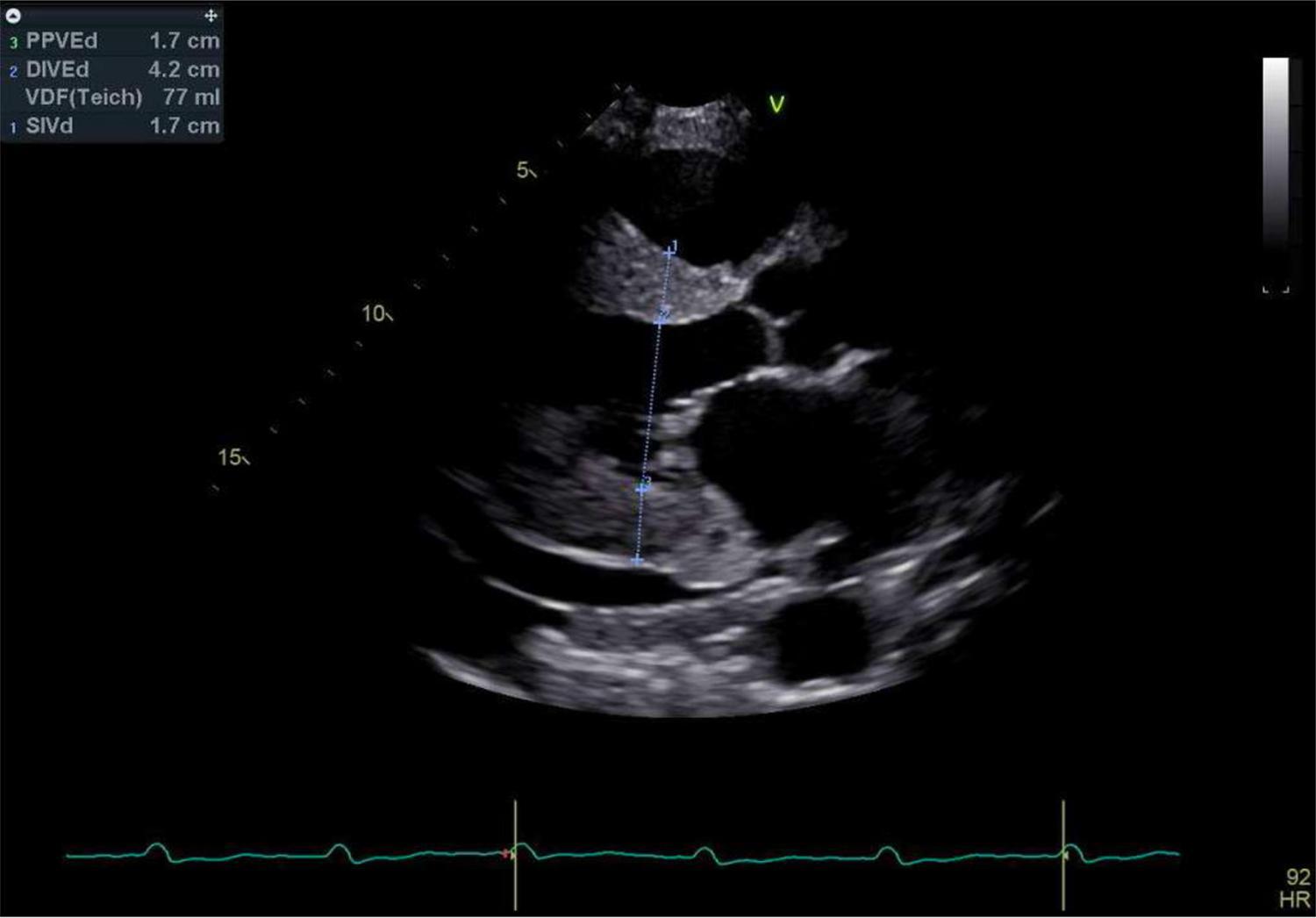
Amyloidosis is a rare heterogeneous group of disorders that occur with the extracellular deposition of fibrillar protein aggregates in the tissues and organs. Here we report the case of a 76-year-old with a 2-month history of progressive dyspnea on minimal effort. In the investigation, a global cardiac increase was observed, and echocardiography showed infiltrative restrictive heart disease and a pericardial effusion. Cardiac magnetic resonance imaging findings were highly suggestive of cardiac amyloidosis. Thus, as reported here, cardiac involvement primarily manifests as restrictive cardiomyopathy, a chronic heart failure with a difficult-to-diagnose etiology in patients over 50 years of age and a very poor prognosis. Thus, although it remains a diagnostic challenge for clinicians, cardiac amyloidosis must always be considered in the absence of another cause of such findings.

  • Amyloidosis
  • Echocardiography
  • Restrictive cardiomyopathy
Read Full Article
Creative Commons Attribution (CC BY) Creative Commons license
15/06/2021 DOI: 10.47593/2675-312X/20213402eabc162
Figure 1
ABC
Research Letter

Emerging Topics in Heart Failure: New Paradigms in Cardiac Amyloidosis

Marcus Vinicius Simões et al. Silvia Marinho Martins Alves Fabio Fernandes Otávio Rizzi Coelho Filho Sandrigo Mangini

Abstract

Recent evidence suggests cardiac amyloidosis (CA) is a mostly underdiagnosed condition, particularly in the transthyretin-mediated form, and is a frequent cause of heart failure with preserved ejection fraction (HFpEF) in the elderly. New paradigms about CA also involve the development of disease-modifying specific therapies. This article summarizes these new concepts.

  • Amyloidosis
  • Cardiovascular disease
  • Cardiovascular Imaging
  • Heart Failure
  • Restrictive cardiomyopathy
Read Full Article
Creative Commons Attribution (CC BY) Creative Commons license
07/12/2020 DOI: 10.36660/abc.20201126 Views 1
Atrioventricular block pathology in cardiomyopathy by desmin deposition
ABC
Case Report

Atrioventricular block pathology in cardiomyopathy by desmin deposition

Luiz Alberto Benvenuti et al. Vera Dermarchi Aiello Breno Alencar Araripe Falcão Silvia Gelás Lage

Generally, restrictive cardiomyopathy due to desmin deposition is characterized by restriction to ventricular diastolic filling and different degrees of atrioventricular block (AVB). In this report, we describe the pathological changes of the cardiac conduction system related to AVB. The sinus node, the compact node, and the penetrating bundle (bundle of His) had no abnormalities, however, there was extensive fibrosis of the terminal portions of the branching bundle and the beginning of the left and right bundles at the top of the ventricular septum. The pathogenesis of this fibrous replacement is probably the same that leads to extensive fibrosis of the working ventricular myocardium, and remains to be elucidated.

  • Atrioventricular block
  • desmin
  • Heart Conduction, System
  • Restrictive cardiomyopathy
Read Full Article
Creative Commons Attribution (CC BY) Creative Commons license
08/02/2012 DOI: 10.1590/S0066-782X2012000100017

How to cite this article

EndNote RIS

Electronic Document Format (Vancouver)

Olivetti N, Pagotti M, Santos BM, Mizuta M, Linnenkamp B, Senra PM, Andrade F, et al. Filamin C and Cardiomyopathies: Linking Genetic Variants to Their Phenotypic Impact. ABC Heart Fail Cardiomyop 2025;5(2):20240059.

Electronic Document Format (ABNT)

Olivetti, Natália; Pagotti, Márya; Santos, Bruno Moreira; Mizuta, Marjorie; Linnenkamp, Bianca; Senra, Paula de Mendonça; Andrade, Fernanda; Carvalho, Mariana Lombardi Peres de; Sacilotto, Luciana; Krieger, José Eduardo. Filamin C and Cardiomyopathies: Linking Genetic Variants to Their Phenotypic Impact. ABC Heart Fail Cardiomyop, v. 5, n. 2, 20240059, Jun. 2025.

Electronic Document Format (APA)

Olivetti, N., Pagotti, M., Santos, B. M., Mizuta, M., Linnenkamp, B., Senra, P. M., Andrade, F., Carvalho, M. L. P. , Sacilotto, L., & Krieger, J. E. (2025). Filamin C and Cardiomyopathies: Linking Genetic Variants to Their Phenotypic Impact. ABC Heart Fail Cardiomyop, 5(2), 20240059.

Electronic Document Format (ISO)

Olivetti, Natália and Pagotti, Márya and Santos, Bruno Moreira and Mizuta, Marjorie and Linnenkamp, Bianca and Senra, Paula de Mendonça and Andrade, Fernanda and Carvalho, Mariana Lombardi Peres de and Sacilotto, Luciana and Krieger, José Eduardo. Filamin C and Cardiomyopathies: Linking Genetic Variants to Their Phenotypic Impact. ABC Heart Fail Cardiomyop [online]. 2025, vol. 5, n. 2, [cited 2026-10-14], 20240059. Available from: <https://journals.cardiol.br/en/article/filamin-c-and-cardiomyopathies-linking-genetic-variants-to-their-phenotypic-impact/>

EndNote RIS

Electronic Document Format (Vancouver)

Hotta VT, Nastari RR, Oishi GSL, Kayano AE, Oliveira JAG, Rocha RG, Mocumbi AO, et al. Cardiac Abnormalities in Hypereosinophilic Syndromes. Arquivos Brasileiros de Cardiologia 2024;121(10):e20240190.

Electronic Document Format (ABNT)

Hotta, Viviane Tiemi; Nastari, Rafael Ruas; Oishi, Gardênia da Silva Lobo; Kayano, Alexandre Eiji; Oliveira, Juliana Alzira Gonzales; Rocha, Ruiza Gonçalves; Mocumbi, Ana Olga; Seguro, Fernanda Salles; Krieger, José Eduardo; Fernandes, Fábio; Salemi, Vera Maria Cury. Cardiac Abnormalities in Hypereosinophilic Syndromes. Arquivos Brasileiros de Cardiologia, v. 121, n. 10, e20240190, Nov. 2024.

Electronic Document Format (APA)

Hotta, V. T., Nastari, R. R., Oishi, G. S. L., Kayano, A. E., Oliveira, J. A. G., Rocha, R. G., Mocumbi, A. O., Seguro, F. S., Krieger, J. E., Fernandes, F., & Salemi, V. M. C. (2024). Cardiac Abnormalities in Hypereosinophilic Syndromes. Arquivos Brasileiros de Cardiologia, 121(10), e20240190.

Electronic Document Format (ISO)

Hotta, Viviane Tiemi and Nastari, Rafael Ruas and Oishi, Gardênia da Silva Lobo and Kayano, Alexandre Eiji and Oliveira, Juliana Alzira Gonzales and Rocha, Ruiza Gonçalves and Mocumbi, Ana Olga and Seguro, Fernanda Salles and Krieger, José Eduardo and Fernandes, Fábio and Salemi, Vera Maria Cury. Cardiac Abnormalities in Hypereosinophilic Syndromes. Arquivos Brasileiros de Cardiologia [online]. 2024, vol. 121, n. 10, [cited 2026-10-14], e20240190. Available from: <https://journals.cardiol.br/en/article/cardiac-abnormalities-in-hypereosinophilic-syndromes/>. ISSN 0066-782X

EndNote RIS

Electronic Document Format (Vancouver)

Aristizabal AM, Guzmán-Serrano CA, Lizcano MI, Mosquera W, Lores J, Pachajoa H, Cely C, et al. FLNC Associated Restrictive Cardiomyopathy and Hypertrabeculation, a Rare Association. Arquivos Brasileiros de Cardiologia 2024;121(5):e20230790.

Electronic Document Format (ABNT)

Aristizabal, Ana M.; Guzmán-Serrano, Carlos Alberto; Lizcano, María Isabel; Mosquera, Walter; Lores, Juliana; Pachajoa, Harry; Cely, Cesar. FLNC Associated Restrictive Cardiomyopathy and Hypertrabeculation, a Rare Association. Arquivos Brasileiros de Cardiologia, v. 121, n. 5, e20230790, Jun. 2024.

Electronic Document Format (APA)

Aristizabal, A. M., Guzmán-Serrano, C. A., Lizcano, M. I., Mosquera, W., Lores, J., Pachajoa, H., & Cely, C. (2024). FLNC Associated Restrictive Cardiomyopathy and Hypertrabeculation, a Rare Association. Arquivos Brasileiros de Cardiologia, 121(5), e20230790.

Electronic Document Format (ISO)

Aristizabal, Ana M. and Guzmán-Serrano, Carlos Alberto and Lizcano, María Isabel and Mosquera, Walter and Lores, Juliana and Pachajoa, Harry and Cely, Cesar. FLNC Associated Restrictive Cardiomyopathy and Hypertrabeculation, a Rare Association. Arquivos Brasileiros de Cardiologia [online]. 2024, vol. 121, n. 5, [cited 2026-10-14], e20230790. Available from: <https://journals.cardiol.br/en/article/flnc-associated-restrictive-cardiomyopathy-and-hypertrabeculation-a-rare-association/>. ISSN 0066-782X

EndNote RIS

Electronic Document Format (Vancouver)

Danzmann LC, Feliciano LM, Kalil E, Siminovich PL, Nora MM. Restrictive Cardiomyopathies: What’s New on the War Front?. ABC Heart Fail Cardiomyop 2023;3(1):e20230018.

Electronic Document Format (ABNT)

Danzmann, Luiz Claudio; Feliciano, Liciani de Mello; Kalil, Elisa; Siminovich, Paula Loredo; Nora, Marianna de Moura. Restrictive Cardiomyopathies: What’s New on the War Front?. ABC Heart Fail Cardiomyop, v. 3, n. 1, e20230018, Jul. 2023.

Electronic Document Format (APA)

Danzmann, L. C., Feliciano, L. M., Kalil, E., Siminovich, P. L., & Nora, M. M. (2023). Restrictive Cardiomyopathies: What’s New on the War Front?. ABC Heart Fail Cardiomyop, 3(1), e20230018.

Electronic Document Format (ISO)

Danzmann, Luiz Claudio and Feliciano, Liciani de Mello and Kalil, Elisa and Siminovich, Paula Loredo and Nora, Marianna de Moura. Restrictive Cardiomyopathies: What’s New on the War Front?. ABC Heart Fail Cardiomyop [online]. 2023, vol. 3, n. 1, [cited 2026-10-14], e20230018. Available from: <https://journals.cardiol.br/en/article/restrictive-cardiomyopathies-whats-new-on-the-war-front/>

EndNote RIS

Electronic Document Format (Vancouver)

Llobera MN, Vitali AC. Amyloidosis: Rare or Underdiagnosed Disease?. Phenomenology, Humanities and Sciences – Fenomenologia, Humanidades e Ciências 2021;1(2):76-9.

Electronic Document Format (ABNT)

Llobera, Mariano Napoli; Vitali, Atilio Costa. Amyloidosis: Rare or Underdiagnosed Disease?. Phenomenology, Humanities and Sciences – Fenomenologia, Humanidades e Ciências, v. 1, n. 2, p. 76-79, Dec. 2021.

Electronic Document Format (APA)

Llobera, M. N., & Vitali, A. C. (2021). Amyloidosis: Rare or Underdiagnosed Disease?. Phenomenology, Humanities and Sciences – Fenomenologia, Humanidades e Ciências, 1(2), 76-79.

Electronic Document Format (ISO)

Llobera, Mariano Napoli and Vitali, Atilio Costa. Amyloidosis: Rare or Underdiagnosed Disease?. Phenomenology, Humanities and Sciences – Fenomenologia, Humanidades e Ciências [online]. 2021, vol. 1, n. 2, [cited 2026-10-14], pp. 76-79. Available from: <https://journals.cardiol.br/en/article/amyloidosis-rare-or-underdiagnosed-disease/>

EndNote RIS

Electronic Document Format (Vancouver)

Cafezeiro CRF, Alencar Neto AC, Bueno BVK, Rissato JH, Dabarian AL, Hotta VT, Fernandes F, et al. Familial Transthyretin Cardiac Amyloidosis with Homozygous Val122Ile Mutation Mimicking Hypertrophic Cardiomyopathy. Phenomenology, Humanities and Sciences – Fenomenologia, Humanidades e Ciências 2021;1(2):157-60.

Electronic Document Format (ABNT)

Cafezeiro, Caio Rebouças Fonseca; Alencar Neto, Aristoteles Comte de; Bueno, Bruno Vaz Kerges; Rissato, João Henrique; Dabarian, André Luiz; Hotta, Viviane Tiemi; Fernandes, Fábio. Familial Transthyretin Cardiac Amyloidosis with Homozygous Val122Ile Mutation Mimicking Hypertrophic Cardiomyopathy. Phenomenology, Humanities and Sciences – Fenomenologia, Humanidades e Ciências, v. 1, n. 2, p. 157-160, Dec. 2021.

Electronic Document Format (APA)

Cafezeiro, C. R. F., Alencar Neto, A. C. , Bueno, B. V. K., Rissato, J. H., Dabarian, A. L., Hotta, V. T., & Fernandes, F. (2021). Familial Transthyretin Cardiac Amyloidosis with Homozygous Val122Ile Mutation Mimicking Hypertrophic Cardiomyopathy. Phenomenology, Humanities and Sciences – Fenomenologia, Humanidades e Ciências, 1(2), 157-160.

Electronic Document Format (ISO)

Cafezeiro, Caio Rebouças Fonseca and Alencar Neto, Aristoteles Comte de and Bueno, Bruno Vaz Kerges and Rissato, João Henrique and Dabarian, André Luiz and Hotta, Viviane Tiemi and Fernandes, Fábio. Familial Transthyretin Cardiac Amyloidosis with Homozygous Val122Ile Mutation Mimicking Hypertrophic Cardiomyopathy. Phenomenology, Humanities and Sciences – Fenomenologia, Humanidades e Ciências [online]. 2021, vol. 1, n. 2, [cited 2026-10-14], pp. 157-160. Available from: <https://journals.cardiol.br/en/article/familial-transthyretin-cardiac-amyloidosis-with-homozygous-val122ile-mutation-mimicking-hypertrophic-cardiomyopathy/>

EndNote RIS

Electronic Document Format (Vancouver)

Correia EB, Bruscky LVR, Chen K, Quagliato PC, Francisco YA, Silva LML, Murta ACS, et al. Sustained Ventricular Tachycardia as an Isolated Presentation of Transthyretin Amyloidosis Cardiomyopathy – Val50Met. Phenomenology, Humanities and Sciences – Fenomenologia, Humanidades e Ciências 2021;1(2):153-6.

Electronic Document Format (ABNT)

Correia, Edileide de Barros; Bruscky, Larissa Ventura Ribeiro; Chen, Kelin; Quagliato, Priscila Cestari; Francisco, Yoná Afonso; Silva, Líria Maria Lima da; Murta, Ana Cristina de Souza. Sustained Ventricular Tachycardia as an Isolated Presentation of Transthyretin Amyloidosis Cardiomyopathy – Val50Met. Phenomenology, Humanities and Sciences – Fenomenologia, Humanidades e Ciências, v. 1, n. 2, p. 153-156, Dec. 2021.

Electronic Document Format (APA)

Correia, E. B., Bruscky, L. V. R., Chen, K., Quagliato, P. C., Francisco, Y. A., Silva, L. M. L. , & Murta, A. C. S. (2021). Sustained Ventricular Tachycardia as an Isolated Presentation of Transthyretin Amyloidosis Cardiomyopathy – Val50Met. Phenomenology, Humanities and Sciences – Fenomenologia, Humanidades e Ciências, 1(2), 153-156.

Electronic Document Format (ISO)

Correia, Edileide de Barros and Bruscky, Larissa Ventura Ribeiro and Chen, Kelin and Quagliato, Priscila Cestari and Francisco, Yoná Afonso and Silva, Líria Maria Lima da and Murta, Ana Cristina de Souza. Sustained Ventricular Tachycardia as an Isolated Presentation of Transthyretin Amyloidosis Cardiomyopathy – Val50Met. Phenomenology, Humanities and Sciences – Fenomenologia, Humanidades e Ciências [online]. 2021, vol. 1, n. 2, [cited 2026-10-14], pp. 153-156. Available from: <https://journals.cardiol.br/en/article/sustained-ventricular-tachycardia-as-an-isolated-presentation-of-transthyretin-amyloidosis-cardiomyopathy-val50met/>

EndNote RIS

Electronic Document Format (Vancouver)

Rassi S, Rassi DC, Freitas Junior AF. What is the Importance of Clinical Clues, and How can we Avoid Mistakes in Following Them?. Phenomenology, Humanities and Sciences – Fenomenologia, Humanidades e Ciências 2021;1(2):124-6.

Electronic Document Format (ABNT)

Rassi, Salvador; Rassi, Daniela do Carmo; Freitas Junior, Aguinaldo Figueiredo. What is the Importance of Clinical Clues, and How can we Avoid Mistakes in Following Them?. Phenomenology, Humanities and Sciences – Fenomenologia, Humanidades e Ciências, v. 1, n. 2, p. 124-126, Dec. 2021.

Electronic Document Format (APA)

Rassi, S., Rassi, D. C., & Freitas Junior, A. F. (2021). What is the Importance of Clinical Clues, and How can we Avoid Mistakes in Following Them?. Phenomenology, Humanities and Sciences – Fenomenologia, Humanidades e Ciências, 1(2), 124-126.

Electronic Document Format (ISO)

Rassi, Salvador and Rassi, Daniela do Carmo and Freitas Junior, Aguinaldo Figueiredo. What is the Importance of Clinical Clues, and How can we Avoid Mistakes in Following Them?. Phenomenology, Humanities and Sciences – Fenomenologia, Humanidades e Ciências [online]. 2021, vol. 1, n. 2, [cited 2026-10-14], pp. 124-126. Available from: <https://journals.cardiol.br/en/article/what-is-the-importance-of-clinical-clues-and-how-can-we-avoid-mistakes-in-following-them/>

EndNote RIS

Electronic Document Format (Vancouver)

Rocha Júnior JLG, Liberato ILR, Lopes LF, Rocha LMQ, Liberato CBR. Cardiac Amyloidosis: Infiltrative Cardiomyopathy with Restrictive Hemodynamic Behavior – Case Report. ABC Imagem Cardiovascular 2021;34(2):eabc162.

Electronic Document Format (ABNT)

Rocha Júnior, José Leonardo Gomes; Liberato, Ivan Lucas Rocha; Lopes, Larissa Ferreira; Rocha, Letícia Maria Queiroz; Liberato, Christiane Bezerra Rocha. Cardiac Amyloidosis: Infiltrative Cardiomyopathy with Restrictive Hemodynamic Behavior – Case Report. ABC Imagem Cardiovascular, v. 34, n. 2, eabc162, Jun. 2021.

Electronic Document Format (APA)

Rocha Júnior, J. L. G., Liberato, I. L. R., Lopes, L. F., Rocha, L. M. Q., & Liberato, C. B. R. (2021). Cardiac Amyloidosis: Infiltrative Cardiomyopathy with Restrictive Hemodynamic Behavior – Case Report. ABC Imagem Cardiovascular, 34(2), eabc162.

Electronic Document Format (ISO)

Rocha Júnior, José Leonardo Gomes and Liberato, Ivan Lucas Rocha and Lopes, Larissa Ferreira and Rocha, Letícia Maria Queiroz and Liberato, Christiane Bezerra Rocha. Cardiac Amyloidosis: Infiltrative Cardiomyopathy with Restrictive Hemodynamic Behavior – Case Report. ABC Imagem Cardiovascular [online]. 2021, vol. 34, n. 2, [cited 2026-10-14], eabc162. Available from: <https://journals.cardiol.br/en/article/cardiac-amyloidosis-infiltrative-cardiomyopathy-with-restrictive-hemodynamic-behavior-case-report/>. ISSN 2318-8219

EndNote RIS

Electronic Document Format (Vancouver)

Simões MV, Alves SMM, Fernandes F, Coelho Filho OR, Mangini S. Emerging Topics in Heart Failure: New Paradigms in Cardiac Amyloidosis. Arquivos Brasileiros de Cardiologia 2020;115(5):945-8.

Electronic Document Format (ABNT)

Simões, Marcus Vinicius; Alves, Silvia Marinho Martins; Fernandes, Fabio; Coelho Filho, Otávio Rizzi; Mangini, Sandrigo. Emerging Topics in Heart Failure: New Paradigms in Cardiac Amyloidosis. Arquivos Brasileiros de Cardiologia, v. 115, n. 5, p. 945-948, Dec. 2020.

Electronic Document Format (APA)

Simões, M. V., Alves, S. M. M., Fernandes, F., Coelho Filho, O. R., & Mangini, S. (2020). Emerging Topics in Heart Failure: New Paradigms in Cardiac Amyloidosis. Arquivos Brasileiros de Cardiologia, 115(5), 945-948.

Electronic Document Format (ISO)

Simões, Marcus Vinicius and Alves, Silvia Marinho Martins and Fernandes, Fabio and Coelho Filho, Otávio Rizzi and Mangini, Sandrigo. Emerging Topics in Heart Failure: New Paradigms in Cardiac Amyloidosis. Arquivos Brasileiros de Cardiologia [online]. 2020, vol. 115, n. 5, [cited 2026-10-14], pp. 945-948. Available from: <https://journals.cardiol.br/en/article/emerging-topics-in-heart-failure-new-paradigms-in-cardiac-amyloidosis/>. ISSN 0066-782X

EndNote RIS

Electronic Document Format (Vancouver)

Benvenuti LA, Aiello VD, Falcão BAA, Lage SG. Atrioventricular block pathology in cardiomyopathy by desmin deposition. Arquivos Brasileiros de Cardiologia 2012;98(1):e3-6.

Electronic Document Format (ABNT)

Benvenuti, Luiz Alberto; Aiello, Vera Dermarchi; Falcão, Breno Alencar Araripe; Lage, Silvia Gelás. Atrioventricular block pathology in cardiomyopathy by desmin deposition. Arquivos Brasileiros de Cardiologia, v. 98, n. 1, p. e3-e6, Feb. 2012.

Electronic Document Format (APA)

Benvenuti, L. A., Aiello, V. D., Falcão, B. A. A., & Lage, S. G. (2012). Atrioventricular block pathology in cardiomyopathy by desmin deposition. Arquivos Brasileiros de Cardiologia, 98(1), e3-e6.

Electronic Document Format (ISO)

Benvenuti, Luiz Alberto and Aiello, Vera Dermarchi and Falcão, Breno Alencar Araripe and Lage, Silvia Gelás. Atrioventricular block pathology in cardiomyopathy by desmin deposition. Arquivos Brasileiros de Cardiologia [online]. 2012, vol. 98, n. 1, [cited 2026-10-14], pp. e3-e6. Available from: <https://journals.cardiol.br/en/article/atrioventricular-block-pathology-in-cardiomyopathy-by-desmin-deposition/>. ISSN 0066-782X

  • About ABC Family
  • Internal Regulation
  • Editorial Board
  • Brazilian Society of Cardiology (SBC)

Issues

SBC Guidelines

  • Videos
  • Podcasts
  • News