ABC Family Arquivos Brasileiros de Cardiologia International Journal of Cardiovascular Sciences ABC Heart Failure & Cardiomyopathy ABC Imagem Cardiovascular
Português English
ABC Family
Português English
  • About
    • About ABC Family
    • Internal Regulation
    • Editorial Board
    • Brazilian Society of Cardiology (SBC)
  • Issues
  • SBC Guidelines
  • Content
    • Videos
    • Podcasts
    • News
  • About
    • About ABC Family
    • Internal Regulation
    • Editorial Board
    • Brazilian Society of Cardiology (SBC)
  • Issues
  • SBC Guidelines
  • Content
    • Videos
    • Podcasts
    • News

ABC Family

  • ABC Family
  • Arquivos Brasileiros de Cardiologia
  • International Journal of Cardiovascular Sciences
  • ABC Heart Failure & Cardiomyopathy
  • ABC Imagem Cardiovascular
Search in

No content found.

Journals
Ordering
Article types
Others

  1. Home
  2. Keyword: Cholecalciferol
ABC
Editorial

Vitamin D and the Cardiovascular System

Claudio Leinig Pereira da Cunha

Vitamin D (or calciferol) is a fat-soluble vitamin. It is a generic term and refers to a group of fat-soluble compounds with a four-ring cholesterol structure. Dermal synthesis, under the action of UV-B light on the skin, is the main natural source of this vitamin, as very few foods contain vitamin D naturally (fatty fish, such as salmon, tuna, sardines, trout, are the exception). This vitamin D, whether derived from the diet or dermal synthesis, is biologically inactive. It is presented as vitamin D3 (cholecalciferol) and vitamin D2 (ergocalciferol), which are enzymatically converted in the liver into 25(OH)D (25-hydroxyvitamin D = calcidiol), the main circulating form of vitamin D. Then, in the kidney, calcidiol is converted into calcitriol (1,25-dihydroxyvitamin D), the active form of vitamin D, which increases intestinal absorption of calcium, increases bone reabsorption and decreases renal excretion of calcium and phosphate.

The best laboratory indicator of vitamin D adequacy is the serum 25(OH)D concentration. However, there is no consensus on the ideal concentration; the National Academy of Medicine indicated that 20 ng/ml is suficiente, but most experts (Endocrine Society, National Osteoporosis Foundation, International Osteoporosis Foundation, American Geriatrics Society) suggest that a minimum level of 30ng/ml is necessary for adults.

[…]

  • Cardiovascular System
  • Cholecalciferol
  • Fat Soluble Vitamins
  • Vitamin D
Read Full Article
Creative Commons Attribution (CC BY) Creative Commons license
17/06/2024 DOI: 10.36660/abc.20240189i
Figure 1
IJCS
Original Article

Increased Left Atrial Volume and Its Relationship to Vitamin D in Primary Care

Erica de Abreu Macedo et al. Maria Luiza Garcia Rosa Antônio José Lagoeiro Jorge Adson Renato Leite … Leivys Henrique Silva Santos Juliana Salge Vieira

Abstract

Background:

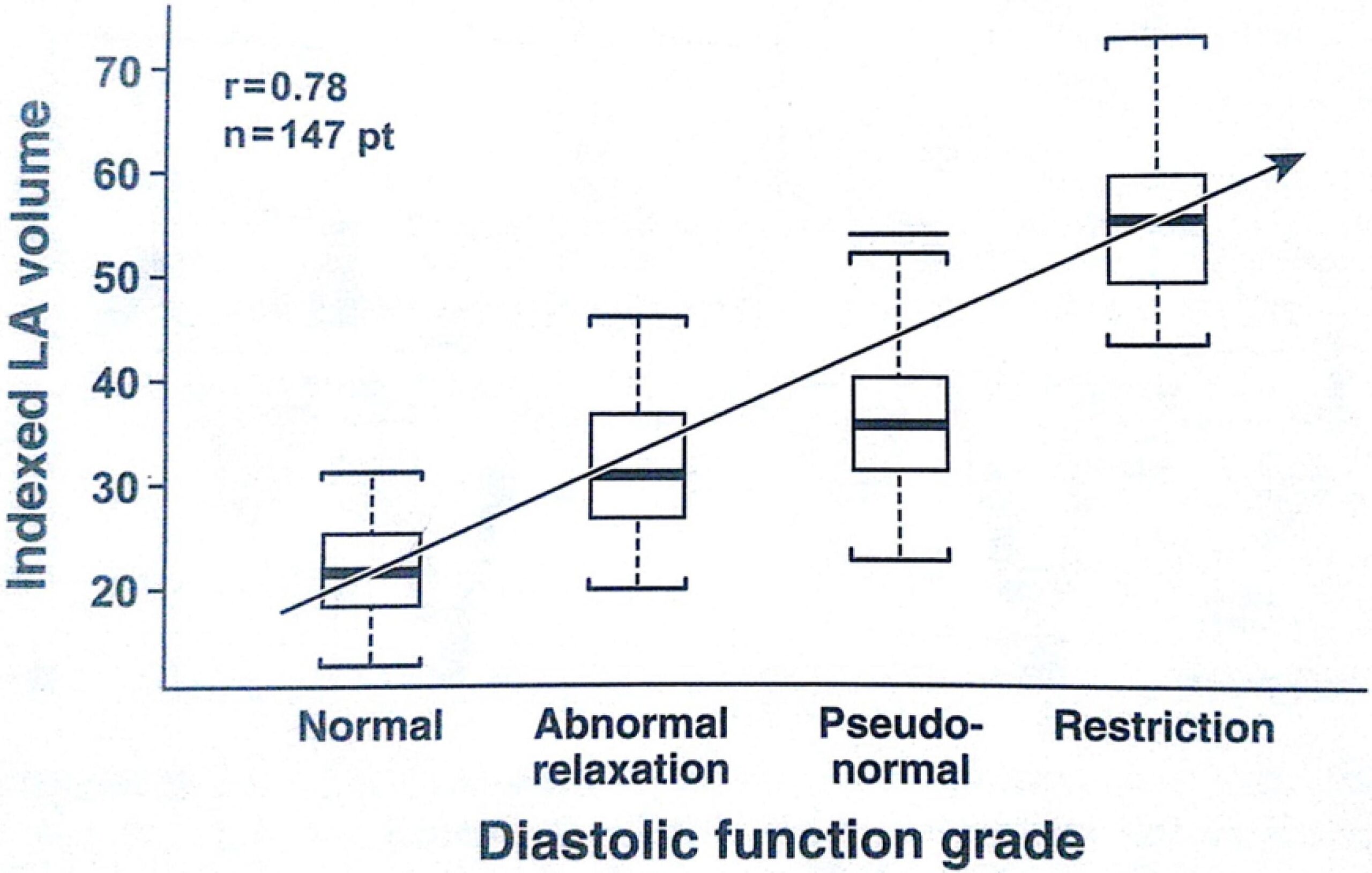
The study is based on the fact that left atrial (LA) volume measurement is a marker of the presence of diastolic dysfunction and that Vitamin D deficiency may be associated with ventricular remodeling, worsening of left ventricular (LV) diastolic and systolic function, and activation of the renin-angiotensin-aldosterone system.

Objective:

To evaluate whether LAV changes are related to vitamin D deficiency.

Method:

A cross-sectional, population-based, unicentric study in which 640 patients over 45 years of age enrolled in the Niterói’s Médico de Família program, RJ, were evaluated. Patients were submitted to tissue Doppler echocardiography to evaluate the parameters of diastolic and systolic function and vitamin D dosage. The presence or absence of hypovitaminosis D associated with structural and functional cardiac changes was compared between each group. A p < 0.05 value was considered as an indicator of statistical significance.

Results:

Of the 640 individuals analyzed, hypovitaminosis D was confirmed in 39.2% of the patients, of whom 34.8% had diastolic dysfunction. The most relevant echocardiographic parameters that were statistically significant were non-indexed AEDs and LAV, E’/A’ and E wave deceleration time, which were associated with the presence of hypovitaminosis D (P < 0.01).

Conclusion:

The study of the association of hypovitaminosis D and the appearance of structural and functional cardiac abnormalities may contribute to the discussion of the adoption of one more criterion to select individuals at risk of developing clinical cardiac insufficiency in primary care since, with the use of echocardiography, the subclinical condition of cardiac involvement, with prognostic and treatment implications for the referred patients with hypovitaminosis D, can be identified early.

  • Atrial Function
  • Cholecalciferol
  • Echocardiography
  • Heart Atria
  • Heart Failure
  • Primary Health Care
Read Full Article
Creative Commons Attribution (CC BY) Creative Commons license
08/08/2019 DOI: 10.5935/2359-4802.20190043

How to cite this article

EndNote RIS

Electronic Document Format (Vancouver)

Cunha CLP. Vitamin D and the Cardiovascular System. Arquivos Brasileiros de Cardiologia 2024;121(5):e20240189.

Electronic Document Format (ABNT)

Cunha, Claudio Leinig Pereira da. Vitamin D and the Cardiovascular System. Arquivos Brasileiros de Cardiologia, v. 121, n. 5, e20240189, Jun. 2024.

Electronic Document Format (APA)

Cunha, C. L. P. (2024). Vitamin D and the Cardiovascular System. Arquivos Brasileiros de Cardiologia, 121(5), e20240189.

Electronic Document Format (ISO)

Cunha, Claudio Leinig Pereira da. Vitamin D and the Cardiovascular System. Arquivos Brasileiros de Cardiologia [online]. 2024, vol. 121, n. 5, [cited 2026-10-14], e20240189. Available from: <https://journals.cardiol.br/en/article/vitamin-d-and-the-cardiovascular-system/>. ISSN 0066-782X

EndNote RIS

Electronic Document Format (Vancouver)

Macedo EA, Rosa MLG, Jorge AJL, Leite AR, Santos LHS, Vieira JS. Increased Left Atrial Volume and Its Relationship to Vitamin D in Primary Care. International Journal of Cardiovascular Sciences 2019;32(5):508-16.

Electronic Document Format (ABNT)

Macedo, Erica de Abreu; Rosa, Maria Luiza Garcia; Jorge, Antônio José Lagoeiro; Leite, Adson Renato; Santos, Leivys Henrique Silva; Vieira, Juliana Salge. Increased Left Atrial Volume and Its Relationship to Vitamin D in Primary Care. International Journal of Cardiovascular Sciences, v. 32, n. 5, p. 508-516, Aug. 2019.

Electronic Document Format (APA)

Macedo, E. A., Rosa, M. L. G., Jorge, A. J. L., Leite, A. R., Santos, L. H. S., & Vieira, J. S. (2019). Increased Left Atrial Volume and Its Relationship to Vitamin D in Primary Care. International Journal of Cardiovascular Sciences, 32(5), 508-516.

Electronic Document Format (ISO)

Macedo, Erica de Abreu and Rosa, Maria Luiza Garcia and Jorge, Antônio José Lagoeiro and Leite, Adson Renato and Santos, Leivys Henrique Silva and Vieira, Juliana Salge. Increased Left Atrial Volume and Its Relationship to Vitamin D in Primary Care. International Journal of Cardiovascular Sciences [online]. 2019, vol. 32, n. 5, [cited 2026-10-14], pp. 508-516. Available from: <https://journals.cardiol.br/en/article/increased-left-atrial-volume-and-its-relationship-to-vitamin-d-in-primary-care/>. ISSN 2359-4802

  • About ABC Family
  • Internal Regulation
  • Editorial Board
  • Brazilian Society of Cardiology (SBC)

Issues

SBC Guidelines

  • Videos
  • Podcasts
  • News