ABC Family Arquivos Brasileiros de Cardiologia International Journal of Cardiovascular Sciences ABC Heart Failure & Cardiomyopathy ABC Imagem Cardiovascular
Português English
ABC Family
Português English
  • About
    • About ABC Family
    • Internal Regulation
    • Editorial Board
    • Brazilian Society of Cardiology (SBC)
  • Issues
  • SBC Guidelines
  • Content
    • Videos
    • Podcasts
    • News
  • About
    • About ABC Family
    • Internal Regulation
    • Editorial Board
    • Brazilian Society of Cardiology (SBC)
  • Issues
  • SBC Guidelines
  • Content
    • Videos
    • Podcasts
    • News

ABC Family

  • ABC Family
  • Arquivos Brasileiros de Cardiologia
  • International Journal of Cardiovascular Sciences
  • ABC Heart Failure & Cardiomyopathy
  • ABC Imagem Cardiovascular
Search in

No content found.

Journals
Ordering
Article types
Others

  1. Home
  2. Keyword: Evidence-Based Medicine
ABC
Viewpoint

Frailty and Atrial Fibrillation: A Closer Look at the FRAIL-AF Trial

Roberto Muniz Ferreira

Introduction

Although evidence-based medicine (EBM) has contributed to establishing the foundations of patient care for over 40 years, scientific principles are still often disregarded in clinical decision-making. As a result, EBM may be mistakenly characterized as a barrier that limits the applicability of poorly recognized concepts, otherwise perceived as thoroughly supported by medical literature. The critical analysis of medical publications should not rely on methods estranged from the scientific realm, and EBM provides the means to limit such hazardous misconceptions.

Despite the continuous progress in medical knowledge, numerous areas of uncertainty persist in clinical practice. In such cases, decision-making typically depends on information originating from dissimilar scenarios, unsuitably designed research or personal experience, and alternatives that are inherently fragile as supporting evidence. Indeed, frailty is a problem that most physicians ultimately have to manage, whether referring to scientific evidence or patient profiles. Greater difficulties arise when both are a source of fragility since misjudged decisions tend to have even poorer outcomes. Atrial fibrillation (AF) is a topic where this association potentially occurs.

[…]

  • Anticoagulants
  • Atrial Fibrillation
  • Evidence-Based Medicine
  • Frail Elderly
Read Full Article
Creative Commons Attribution (CC BY) Creative Commons license
17/06/2024 DOI: 10.36660/abc.20230671i Views 1
ABCHF
Editorial

Where are the Benefits of Treating Acute HF in Light of Evidence-Based Medicine?

Carlos Eduardo Lucena Montenegro et al. Marcely Bonatto Jefferson Luis Vieira Fabiana G. Marcondes-Braga Lídia Ana Zytynski Moura

Over the last 35 years, cardiology, especially the field of heart failure (HF), has witnessed a true therapeutic revolution based on scientific evidence. First, with vasodilators, moving on to the neurohumoral pathophysiological hypothesis with ACE inhibitors (ACEI), beta-blockers, mineralocorticoid antagonists, and, more recently, neprilysin inhibitors and SGLT2 inhibitors, caused a reduction in morbimortality rarely seen in the history of medicine. However, virtually all evidence associated with this impressive reduction in events comes at the expense of benefits in patients with chronic HF. The treatment of acute HF, despite its unequivocal biological plausibility, did not demonstrate the same success when tested in light of the best scientific evidence. Nevertheless, where has evidence-based medicine failed?

The first point to be discussed is the heterogeneity of patients with acute HF. In this spectrum, we can range from individuals with sudden changes in blood pressure or patients with acute myocardial infarction, leading to ventricular dysfunction, to patients with chronic ventricular dysfunction, with recent decompensation of the compensatory mechanisms of their disease. Still on this topic, we need to understand that the same syndrome can involve everything from extremely congested cases to people with hypovolemia, hypertensive emergencies, or extreme states of poor perfusion, leading each phenotype to different treatments and prognoses.

[…]

  • Evidence-Based Medicine
  • Heart Failure
Read Full Article
Creative Commons Attribution (CC BY) Creative Commons license
31/12/2023 DOI: 10.36660/abchf.20230085 Views 4
ABC
Editorial

Our Patients Deserve More

Roberto Muniz Ferreira

Clinical decision-making implies that multiple options are possible for any given medical situation. Fortunately, science is constantly evolving and will continue to do so incrementally. Thus, physicians should routinely analyze previous outcomes of similar circumstances to increase the probability of selecting the most appropriate alternative. Discerning data that may assist in decision-making from inconsistent scientific information is a fundamental requirement of evidence-based medicine (EBM).

For over 40 years, EBM has been the cornerstone of clinical practice, improving the efficacy and safety involved with medical decisions, according to the most current scientific knowledge. Nevertheless, publications do not always adhere to validated methodological concepts and may rely solely on non-scientific motivations. When personal beliefs overshadow medical science, it invariably occurs to the detriment of patient care. Conversely, EBM provides a systematic and organized method to appraise scientific information in various medical literature forms.

[…]

  • Azithromycine
  • Betacoronavirus
  • Coronavirus infections
  • COVID-19
  • Evidence-Based Medicine
  • Hydroxychloroquine
  • Pandemics
Read Full Article
Creative Commons Attribution (CC BY) Creative Commons license
20/10/2023 DOI: 10.36660/abc.20230626 Views 1
Figure 1
ABC
Original Article

Deduction, Induction and the Art of Clinical Reasoning in Medical Education: Systematic Review and Bayesian Proposal

Marcos Roberto de-Sousa et al. Túlio Roberto Xavier de Aguiar

Abstract

Background

Clinical reasoning is at the core of medical practice and entangled in a conceptual confusion. The duality theory in probability allows to evaluate its objective and subjective aspects.

Objectives

To conduct a systematic review of the literature about clinical reasoning in decision making in medical education and to propose a “reasoning based on the Bayesian rule” (RBBR).

Methods

A systematic review on PubMed was conducted (until February 27, 2022), following a strict methodology, by a researcher experienced in systematic review. The RBBR, presented in the discussion section, was constructed in his undergraduate dissertation in Philosophy at Minas Gerais Federal University. Heart failure was used as example.

Results

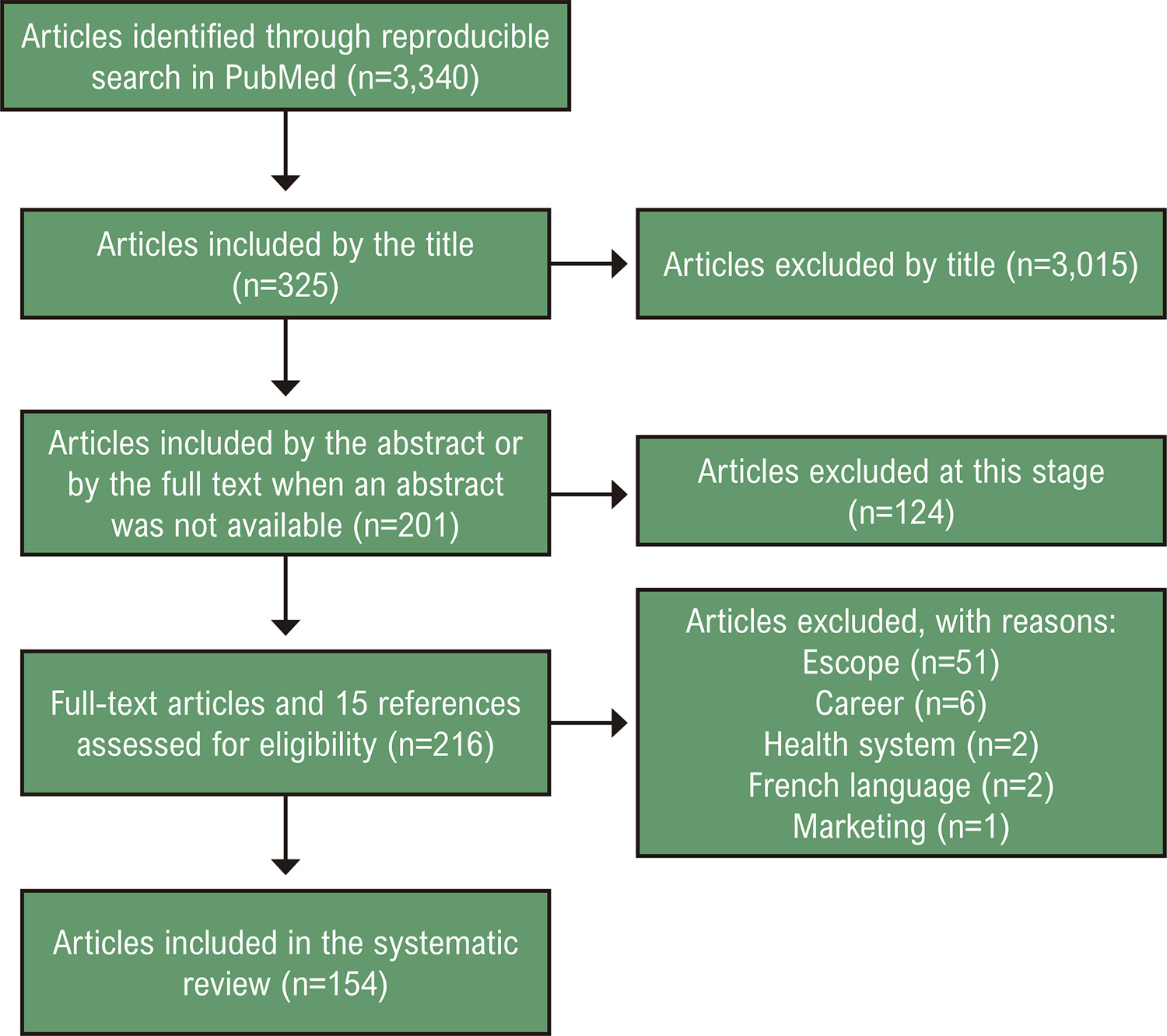
Of 3,340 articles retrieved, 154 were included: 24 discussing the uncertainty condition, 87 on vague concepts (case discussion, heuristics, list of cognitive biases, choosing wisely) subsumed under the term “art”, and 43 discussing the general idea of inductive or deductive reasoning. RBBR provides coherence and reproducibility rules, inference under uncertainty, and learning rule, and can incorporate those vague terms classified as “art”, arguments and evidence, from a subjective perspective about probability.

Conclusions

This systematic review shows that reasoning is grounded in uncertainty, predominantly probabilistic, and reviews possible errors of the hypothetico-deductive reasoning. RBBR is a two-step probabilistic reasoning that can be taught. The Bayes theorem is a linguistic tool, a general rule of reasoning, diagnosis, scientific communication and review of medical knowledge according to new evidence.

  • Bayes Theorem
  • Clinical Decision – Making
  • Education, Medical
  • Evidence-Based Medicine
  • Learning
  • Problem Solving
  • systematic review
Read Full Article
Creative Commons Attribution (CC BY) Creative Commons license
25/11/2022 DOI: 10.36660/abc.20220405 Views 1
ABC
Editorial

COVID-19 and Uncertainty: Lessons from the Frontline for Promoting Shared Decision Making

José Augusto Soares Barreto-Filho et al. André Veiga Luis Claudio Correia

COVID-19 has already become the largest and deadliest epidemic of the past hundred years. On a daily basis, healthcare professionals in the frontline are called upon to give answers and make decisions that directly affect the lives of infected patients, and scientists are summoned to the Herculean task of providing “effective medications” in record time for a recently discovered virus with devastating potential mortality. With a hitherto unseen avalanche of information, the debate on how to treat patients with COVID-19 has gone beyond the limits of the technical arena, taking on ideological and political aspects as well.

Science is based on facts. The fact is that we do not currently have an etiological treatment with proven efficacy and safety to combat SARS-CoV-2. At the moment, there are only promises in the pipeline. To exemplify, the most emblematic case of lack of rationality and scientific thinking is the polemic regarding chloroquine/hydroxychloroquine (CQ/HCQ) for treatment of COVID-19. CQ/HCQ is a drug that has been widely and successfully used in patients with malaria and systemic lupus erythematosus. Against COVID-19, the drug inhibits replication of SARS-CoV-2 in vitro , and it modulates the inflammatory cascade triggered by the virus. In vitro data demonstrate biological plausibility, but plausibility does not mean likelihood that a hypothesis is true. CQ/HCQ was, nevertheless, promoted to the category of “magic bullet” by a publication from France, whose methodology was characterized by high risk of bias and random error, meaning that it could not be defined as “scientific evidence.” This notwithstanding, the publication was overestimated, in an ideological manner, by the individuals who were least faithful to the precepts of the liturgy of science. Contaminated by this fallacy, feeling obligated to solve the pandemic magically, even presidents took on the role of drug advertisers, thus helping to viralize pseudoscience and amplify the false information problem.

[…]

  • Bioethics
  • Clinical Decision – Making
  • Coronavirus
  • COVID-19
  • Decision Making,Shared
  • Evidence-Based Medicine
  • Off Label Use
  • Pandemics
Read Full Article
Creative Commons Attribution (CC BY) Creative Commons license
28/08/2020 DOI: 10.36660/abc.20200582 Views 3
Figure 1
ABC
Review Article

Network Meta-analysis to Synthesize Evidence for Decision Making in Cardiovascular Research

Leonardo Roever et al. Giuseppe Biondi-Zoccai

Abstract

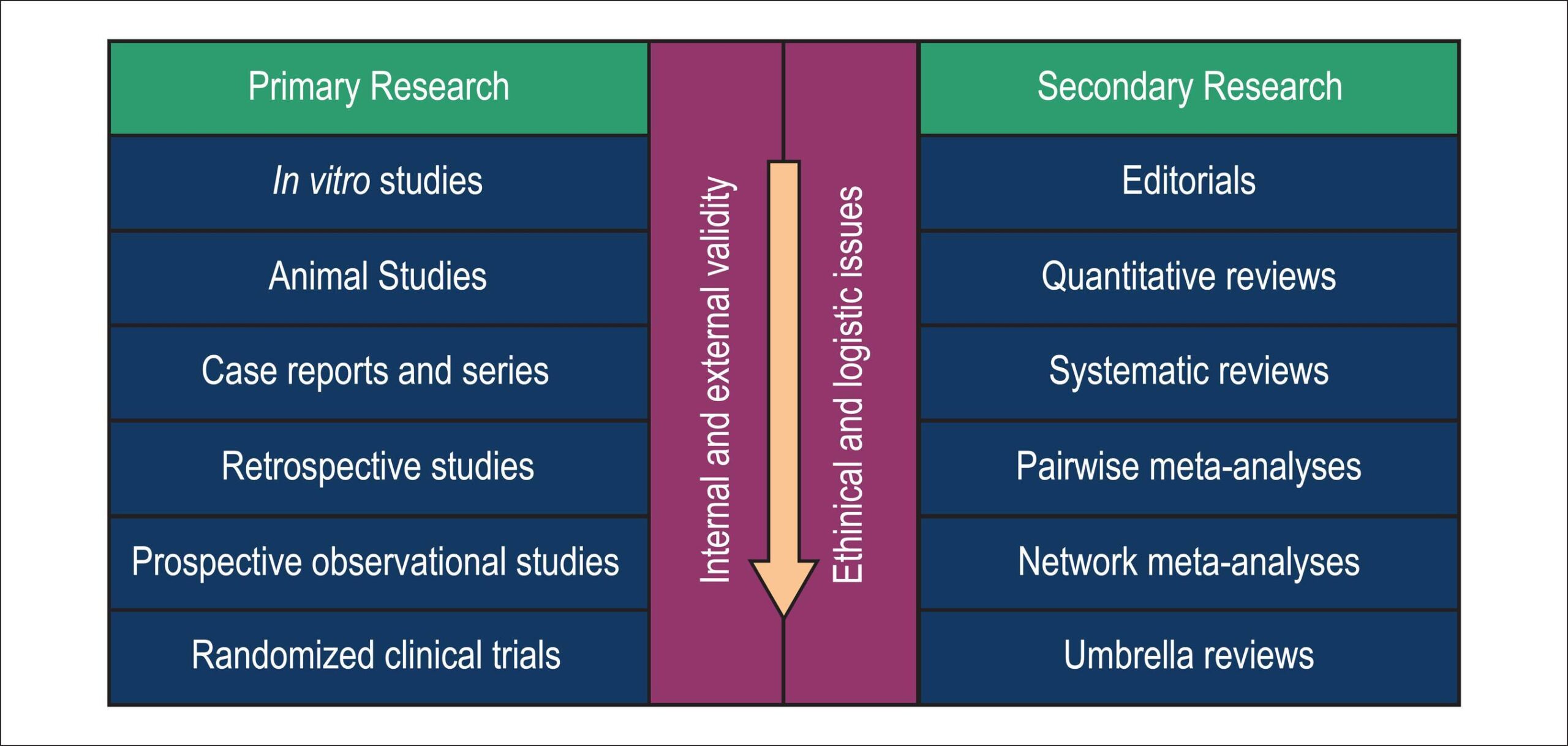
Clinical decision-making requires synthesis of evidence from literature reviews focused on a specific theme. Evidence synthesis is performed with qualitative assessments and systematic reviews of randomized clinical trials, typically covering statistical pooling with pairwise meta-analyses. These methods include adjusted indirect comparison meta-analysis, network meta-analysis, and mixed-treatment comparison. These tools allow synthesis of evidence and comparison of effectiveness in cardiovascular research.

  • Cardiovascular Diseases
  • Comparative Study
  • Evidence-Based Medicine
  • Meta-Analysis
  • Research
  • Review
Read Full Article
Creative Commons Attribution (CC BY) Creative Commons license
01/04/2016 DOI: 10.5935/abc.20160052
Nutritional interventions in Metabolic Syndrome: a systematic review
ABC
Review Article

Nutritional interventions in Metabolic Syndrome: a systematic review

Leila Sicupira Carneiro de Souza Leão et al. Milena Miranda de Moraes Giulia Xavier de Carvalho Rosalina Jorge Koifman

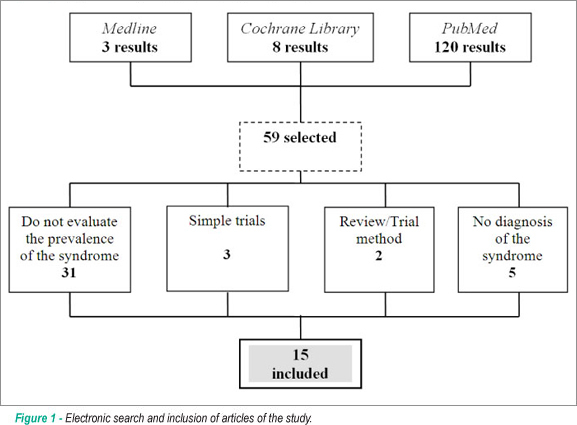
There is no consensus on the most appropriate nutritional strategy for treating metabolic syndrome (MS), such that cardiovascular risk is reduced. This study was designed to assess the strength of evidence of the benefits of various nutritional interventions in MS remission. Performed in Medline, Cochrane Library and PubMed databases, the virtual search consisted of randomized clinical trials published between 1999 and 2009 in any language, studies involving individuals aged 18 or older and diagnosed with MS, regardless of the criterion. The Boolean operator and was used in the combination of the MeSH terms “Metabolic Syndrome”, “Metabolic x Syndrome” and “Metabolic Syndrome X”, the entry terms “Dysmetabolic Syndrome X”, Metabolic Cardiovascular Syndrome,” “Metabolic X Syndrome” and “Syndrome X, Metabolic”, plus the terms “diet”, “intervention and diet”, “treatment and diet” and “supplementation”. For each study included in the review, we estimated the prevalence of MS and the calculation of effectiveness after the follow-up period. Relative risk measures for each study were described by Forest Plot. We identified 131 articles, which, after eligibility criteria, resulted in 15 studies. These studies were divided into four groups: normocaloric diet associated with exercise; isolated normocaloric diet, low-calorie diet combined with exercises; and isolated low-calorie diet. Tests with low-calorie diet associated with exercising revealed higher efficiency values, helping to emphasize the global aspects of lifestyle change in the treatment of MS, in which healthy and low-calorie diet should be complemented with the practice of physical activity.

  • clinical trials
  • diet fat-restricted
  • Evidence-Based Medicine
  • Exercise
  • Metabolic Syndrome
Read Full Article
Creative Commons Attribution (CC BY) Creative Commons license
21/10/2011 DOI: 10.1590/S0066-782X2011001200012 Views 1
ABC
Point of view

Prevention of cardiovascular diseases in perimenopausal women and the influence of hormone replacement therapy: an evidence-based guideline

Otavio C. E. Gebara et al. Cesar Fernandes Marcelo C. Bertolami

POINT OF VIEW

Prevention of cardiovascular diseases in perimenopausal women and the influence of hormone replacement therapy: an evidence-based guideline

[…]

  • Cardiovascular disease
  • climateric
  • Climaterio
  • Directriz
  • Enfermedades Cardiovasculares
  • Evidence-Based Medicine
  • guideline
  • hormone replacement therapy
  • Medicina Basada en Evidencias
  • Terapia de Reposición Hormonal
Read Full Article
Creative Commons Attribution (CC BY) Creative Commons license
11/01/2010 DOI: 10.1590/S0066-782X2009001100026 Views 1
Treatment of a cohort of patients with acute myocardial infarction and ST-segment elevation
ABC
Artigo Original

Treatment of a cohort of patients with acute myocardial infarction and ST-segment elevation

Jamil da Silva Soares et al. Nelson Robson Mendes de Souza Jair Nogueira Filho Cristiane C. Cunha … Georgina Severo Ribeiro Ronald Souza Peixoto Carlos Eduardo C. Soares Leandro C. Soares Aldo Franklyn Reis Carlos Augusto Cardozo de Faria

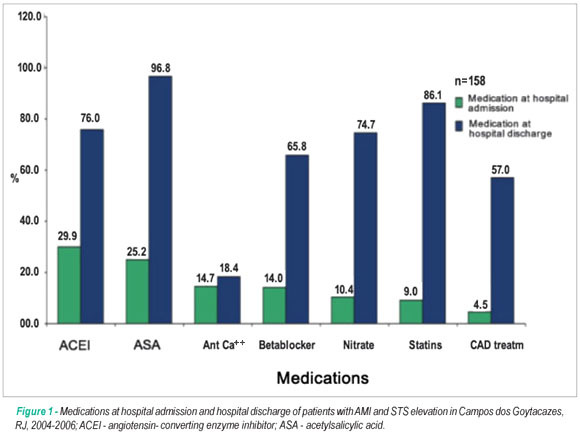
BACKGROUND: Although thrombolysis and primary CTA are well-established procedures, they are not administered in a large proportion of the patients with STEMI who arrive to the emergency rooms. OBJECTIVE: Describe initial and final the results in a cohort of STEMI patients METHODS: The study included, from hospital admission to the discharge, 158 patients diagnosed with STEMI, from a total of 351 patients with ACS admitted to hospitals in Campos dos Goytacazes, RJ, Brazil, between 2004 and 2006. RESULTS: Of the 158 patients with STEMI, 67.7% arrived to the hospital within 180 minutes, 81.3% within 360 minutes, and 8.4% after twelve hours from the symptoms. Cinecoronariographic studies (148) were performed (93,7%). Lesions of over 70% were observed in 266 artery territories. The initial treatment was CTA in 41 (26%), thrombolytics in 50 (32%), 80% of success. Clinical treatment in 67 (42%). Approximately 35% of the patients should have undergone thrombolysis, but they didn´t. During the final treatment, 93 CTAs were performed: 89 with angiographic success (95.7%), bleeding 2 (2.2%), subacute occlusion 2 (2.2%), trunk dissection 1 (1.1%), pseudoaneurism 1 (1.1%). No deaths during angioplasty; during evolution, there were two deaths (2.1%). Twelve patients underwent myocardial revascularization surgery (MRS), while 53 underwent clinical treatment, with 11 deaths (20.7%). Global lethality was 9.5%, considering the three types of treatment. CONCLUSIONS: Patients were suitable for reperfusion, but one third of them did not have the procedure. Two deaths during evolution. The most predominant treatment was CTA, with low morbidity. Low global lethality.

  • Evidence-Based Medicine
  • Health Profile
  • lethality
  • Myocardial Infarction
  • Thrombolytic Therapy
Read Full Article
Creative Commons Attribution (CC BY) Creative Commons license
17/07/2009 DOI: 10.1590/S0066-782X2009000600009 Views 1

How to cite this article

EndNote RIS

Electronic Document Format (Vancouver)

Ferreira RM. Frailty and Atrial Fibrillation: A Closer Look at the FRAIL-AF Trial. Arquivos Brasileiros de Cardiologia 2024;121(5):e20230671.

Electronic Document Format (ABNT)

Ferreira, Roberto Muniz. Frailty and Atrial Fibrillation: A Closer Look at the FRAIL-AF Trial. Arquivos Brasileiros de Cardiologia, v. 121, n. 5, e20230671, Jun. 2024.

Electronic Document Format (APA)

Ferreira, R. M. (2024). Frailty and Atrial Fibrillation: A Closer Look at the FRAIL-AF Trial. Arquivos Brasileiros de Cardiologia, 121(5), e20230671.

Electronic Document Format (ISO)

Ferreira, Roberto Muniz. Frailty and Atrial Fibrillation: A Closer Look at the FRAIL-AF Trial. Arquivos Brasileiros de Cardiologia [online]. 2024, vol. 121, n. 5, [cited 2026-10-14], e20230671. Available from: <https://journals.cardiol.br/en/article/frailty-and-atrial-fibrillation-a-closer-look-at-the-frail-af-trial/>. ISSN 0066-782X

EndNote RIS

Electronic Document Format (Vancouver)

Montenegro CEL, Bonatto M, Vieira JL, Marcondes-Braga FG, Moura LAZ. Where are the Benefits of Treating Acute HF in Light of Evidence-Based Medicine?. ABC Heart Fail Cardiomyop 2023;3(2):e20230085.

Electronic Document Format (ABNT)

Montenegro, Carlos Eduardo Lucena; Bonatto, Marcely; Vieira, Jefferson Luis; Marcondes-Braga, Fabiana G.; Moura, Lídia Ana Zytynski. Where are the Benefits of Treating Acute HF in Light of Evidence-Based Medicine?. ABC Heart Fail Cardiomyop, v. 3, n. 2, e20230085, Dec. 2023.

Electronic Document Format (APA)

Montenegro, C. E. L., Bonatto, M., Vieira, J. L., Marcondes-Braga, F. G., & Moura, L. A. Z. (2023). Where are the Benefits of Treating Acute HF in Light of Evidence-Based Medicine?. ABC Heart Fail Cardiomyop, 3(2), e20230085.

Electronic Document Format (ISO)

Montenegro, Carlos Eduardo Lucena and Bonatto, Marcely and Vieira, Jefferson Luis and Marcondes-Braga, Fabiana G. and Moura, Lídia Ana Zytynski. Where are the Benefits of Treating Acute HF in Light of Evidence-Based Medicine?. ABC Heart Fail Cardiomyop [online]. 2023, vol. 3, n. 2, [cited 2026-10-14], e20230085. Available from: <https://journals.cardiol.br/en/article/where-are-the-benefits-of-treating-acute-hf-in-light-of-evidence-based-medicine/>

EndNote RIS

Electronic Document Format (Vancouver)

Ferreira RM. Our Patients Deserve More. Arquivos Brasileiros de Cardiologia 2023;120(9):e20230626.

Electronic Document Format (ABNT)

Ferreira, Roberto Muniz. Our Patients Deserve More. Arquivos Brasileiros de Cardiologia, v. 120, n. 9, e20230626, Oct. 2023.

Electronic Document Format (APA)

Ferreira, R. M. (2023). Our Patients Deserve More. Arquivos Brasileiros de Cardiologia, 120(9), e20230626.

Electronic Document Format (ISO)

Ferreira, Roberto Muniz. Our Patients Deserve More. Arquivos Brasileiros de Cardiologia [online]. 2023, vol. 120, n. 9, [cited 2026-10-14], e20230626. Available from: <https://journals.cardiol.br/en/article/our-patients-deserve-more/>. ISSN 0066-782X

EndNote RIS

Electronic Document Format (Vancouver)

de-Sousa MR, Aguiar TRX. Deduction, Induction and the Art of Clinical Reasoning in Medical Education: Systematic Review and Bayesian Proposal. Arquivos Brasileiros de Cardiologia 2022;119(5 suppl 1):27-34.

Electronic Document Format (ABNT)

de-Sousa, Marcos Roberto; Aguiar, Túlio Roberto Xavier de. Deduction, Induction and the Art of Clinical Reasoning in Medical Education: Systematic Review and Bayesian Proposal. Arquivos Brasileiros de Cardiologia, v. 119, n. 5 suppl 1, p. 27-34, Nov. 2022.

Electronic Document Format (APA)

de-Sousa, M. R., & Aguiar, T. R. X. (2022). Deduction, Induction and the Art of Clinical Reasoning in Medical Education: Systematic Review and Bayesian Proposal. Arquivos Brasileiros de Cardiologia, 119(5 suppl 1), 27-34.

Electronic Document Format (ISO)

de-Sousa, Marcos Roberto and Aguiar, Túlio Roberto Xavier de. Deduction, Induction and the Art of Clinical Reasoning in Medical Education: Systematic Review and Bayesian Proposal. Arquivos Brasileiros de Cardiologia [online]. 2022, vol. 119, n. 5 suppl 1, [cited 2026-10-14], pp. 27-34. Available from: <https://journals.cardiol.br/en/article/deduction-induction-and-the-art-of-clinical-reasoning-in-medical-education-systematic-review-and-bayesian-proposal/>. ISSN 0066-782X

EndNote RIS

Electronic Document Format (Vancouver)

Barreto-Filho JAS, Veiga A, Correia LC. COVID-19 and Uncertainty: Lessons from the Frontline for Promoting Shared Decision Making. Arquivos Brasileiros de Cardiologia 2020;115(2):149-51.

Electronic Document Format (ABNT)

Barreto-Filho, José Augusto Soares; Veiga, André; Correia, Luis Claudio. COVID-19 and Uncertainty: Lessons from the Frontline for Promoting Shared Decision Making. Arquivos Brasileiros de Cardiologia, v. 115, n. 2, p. 149-151, Aug. 2020.

Electronic Document Format (APA)

Barreto-Filho, J. A. S., Veiga, A., & Correia, L. C. (2020). COVID-19 and Uncertainty: Lessons from the Frontline for Promoting Shared Decision Making. Arquivos Brasileiros de Cardiologia, 115(2), 149-151.

Electronic Document Format (ISO)

Barreto-Filho, José Augusto Soares and Veiga, André and Correia, Luis Claudio. COVID-19 and Uncertainty: Lessons from the Frontline for Promoting Shared Decision Making. Arquivos Brasileiros de Cardiologia [online]. 2020, vol. 115, n. 2, [cited 2026-10-14], pp. 149-151. Available from: <https://journals.cardiol.br/en/article/covid-19-and-uncertainty-lessons-from-the-frontline-for-promoting-shared-decision-making/>. ISSN 0066-782X

EndNote RIS

Electronic Document Format (Vancouver)

Roever L, Biondi-Zoccai G. Network Meta-analysis to Synthesize Evidence for Decision Making in Cardiovascular Research. Arquivos Brasileiros de Cardiologia 2016;106(4):333-7.

Electronic Document Format (ABNT)

Roever, Leonardo; Biondi-Zoccai, Giuseppe. Network Meta-analysis to Synthesize Evidence for Decision Making in Cardiovascular Research. Arquivos Brasileiros de Cardiologia, v. 106, n. 4, p. 333-337, Mar. 2016.

Electronic Document Format (APA)

Roever, L., & Biondi-Zoccai, G. (2016). Network Meta-analysis to Synthesize Evidence for Decision Making in Cardiovascular Research. Arquivos Brasileiros de Cardiologia, 106(4), 333-337.

Electronic Document Format (ISO)

Roever, Leonardo and Biondi-Zoccai, Giuseppe. Network Meta-analysis to Synthesize Evidence for Decision Making in Cardiovascular Research. Arquivos Brasileiros de Cardiologia [online]. 2016, vol. 106, n. 4, [cited 2026-10-14], pp. 333-337. Available from: <https://journals.cardiol.br/en/article/network-meta-analysis-to-synthesize-evidence-for-decision-making-in-cardiovascular-research/>. ISSN 0066-782X

EndNote RIS

Electronic Document Format (Vancouver)

Leão LSCS, Moraes MM, Carvalho GX, Koifman RJ. Nutritional interventions in Metabolic Syndrome: a systematic review. Arquivos Brasileiros de Cardiologia 2011;97(3):260-5.

Electronic Document Format (ABNT)

Leão, Leila Sicupira Carneiro de Souza; Moraes, Milena Miranda de; Carvalho, Giulia Xavier de; Koifman, Rosalina Jorge. Nutritional interventions in Metabolic Syndrome: a systematic review. Arquivos Brasileiros de Cardiologia, v. 97, n. 3, p. 260-265, Oct. 2011.

Electronic Document Format (APA)

Leão, L. S. C. S., Moraes, M. M. , Carvalho, G. X. , & Koifman, R. J. (2011). Nutritional interventions in Metabolic Syndrome: a systematic review. Arquivos Brasileiros de Cardiologia, 97(3), 260-265.

Electronic Document Format (ISO)

Leão, Leila Sicupira Carneiro de Souza and Moraes, Milena Miranda de and Carvalho, Giulia Xavier de and Koifman, Rosalina Jorge. Nutritional interventions in Metabolic Syndrome: a systematic review. Arquivos Brasileiros de Cardiologia [online]. 2011, vol. 97, n. 3, [cited 2026-10-14], pp. 260-265. Available from: <https://journals.cardiol.br/en/article/nutritional-interventions-in-metabolic-syndrome-a-systematic-review/>. ISSN 0066-782X

EndNote RIS

Electronic Document Format (Vancouver)

Gebara OCE, Fernandes C, Bertolami MC. Prevention of cardiovascular diseases in perimenopausal women and the influence of hormone replacement therapy: an evidence-based guideline. Arquivos Brasileiros de Cardiologia 2010;93(5):e86-8.

Electronic Document Format (ABNT)

Gebara, Otavio C. E.; Fernandes, Cesar; Bertolami, Marcelo C.. Prevention of cardiovascular diseases in perimenopausal women and the influence of hormone replacement therapy: an evidence-based guideline. Arquivos Brasileiros de Cardiologia, v. 93, n. 5, p. e86-e88, Jan. 2010.

Electronic Document Format (APA)

Gebara, O. C. E., Fernandes, C., & Bertolami, M. C. (2010). Prevention of cardiovascular diseases in perimenopausal women and the influence of hormone replacement therapy: an evidence-based guideline. Arquivos Brasileiros de Cardiologia, 93(5), e86-e88.

Electronic Document Format (ISO)

Gebara, Otavio C. E. and Fernandes, Cesar and Bertolami, Marcelo C.. Prevention of cardiovascular diseases in perimenopausal women and the influence of hormone replacement therapy: an evidence-based guideline. Arquivos Brasileiros de Cardiologia [online]. 2010, vol. 93, n. 5, [cited 2026-10-14], pp. e86-e88. Available from: <https://journals.cardiol.br/en/article/prevention-of-cardiovascular-diseases-in-perimenopausal-women-and-the-influence-of-hormone-replacement-therapy-an-evidence-based-guideline/>. ISSN 0066-782X

EndNote RIS

Electronic Document Format (Vancouver)

Soares JS, Souza NRM, Nogueira Filho J, Cunha CC, Ribeiro GS, Peixoto RS, Soares CEC, et al. Treatment of a cohort of patients with acute myocardial infarction and ST-segment elevation. Arquivos Brasileiros de Cardiologia 2009;92(6):464-71.

Electronic Document Format (ABNT)

Soares, Jamil da Silva; Souza, Nelson Robson Mendes de; Nogueira Filho, Jair; Cunha, Cristiane C.; Ribeiro, Georgina Severo; Peixoto, Ronald Souza; Soares, Carlos Eduardo C.; Soares, Leandro C.; Reis, Aldo Franklyn; Faria, Carlos Augusto Cardozo de. Treatment of a cohort of patients with acute myocardial infarction and ST-segment elevation. Arquivos Brasileiros de Cardiologia, v. 92, n. 6, p. 464-471, Jul. 2009.

Electronic Document Format (APA)

Soares, J. S., Souza, N. R. M. , Nogueira Filho, J., Cunha, C. C., Ribeiro, G. S., Peixoto, R. S., Soares, C. E. C., Soares, L. C., Reis, A. F., & Faria, C. A. C. (2009). Treatment of a cohort of patients with acute myocardial infarction and ST-segment elevation. Arquivos Brasileiros de Cardiologia, 92(6), 464-471.

Electronic Document Format (ISO)

Soares, Jamil da Silva and Souza, Nelson Robson Mendes de and Nogueira Filho, Jair and Cunha, Cristiane C. and Ribeiro, Georgina Severo and Peixoto, Ronald Souza and Soares, Carlos Eduardo C. and Soares, Leandro C. and Reis, Aldo Franklyn and Faria, Carlos Augusto Cardozo de. Treatment of a cohort of patients with acute myocardial infarction and ST-segment elevation. Arquivos Brasileiros de Cardiologia [online]. 2009, vol. 92, n. 6, [cited 2026-10-14], pp. 464-471. Available from: <https://journals.cardiol.br/en/article/treatment-of-a-cohort-of-patients-with-acute-myocardial-infarction-and-st-segment-elevation/>. ISSN 0066-782X

  • About ABC Family
  • Internal Regulation
  • Editorial Board
  • Brazilian Society of Cardiology (SBC)

Issues

SBC Guidelines

  • Videos
  • Podcasts
  • News