ABC Family Arquivos Brasileiros de Cardiologia International Journal of Cardiovascular Sciences ABC Heart Failure & Cardiomyopathy ABC Imagem Cardiovascular
Português English
ABC Family
Português English
  • About
    • About ABC Family
    • Internal Regulation
    • Editorial Board
    • Brazilian Society of Cardiology (SBC)
  • Issues
  • SBC Guidelines
  • Content
    • Videos
    • Podcasts
    • News
  • About
    • About ABC Family
    • Internal Regulation
    • Editorial Board
    • Brazilian Society of Cardiology (SBC)
  • Issues
  • SBC Guidelines
  • Content
    • Videos
    • Podcasts
    • News

ABC Family

  • ABC Family
  • Arquivos Brasileiros de Cardiologia
  • International Journal of Cardiovascular Sciences
  • ABC Heart Failure & Cardiomyopathy
  • ABC Imagem Cardiovascular
Search in

No content found.

Journals
Ordering
Article types
Others

  1. Home
  2. Keyword: Atrial Septum
Figure 1
ABCIC
Image

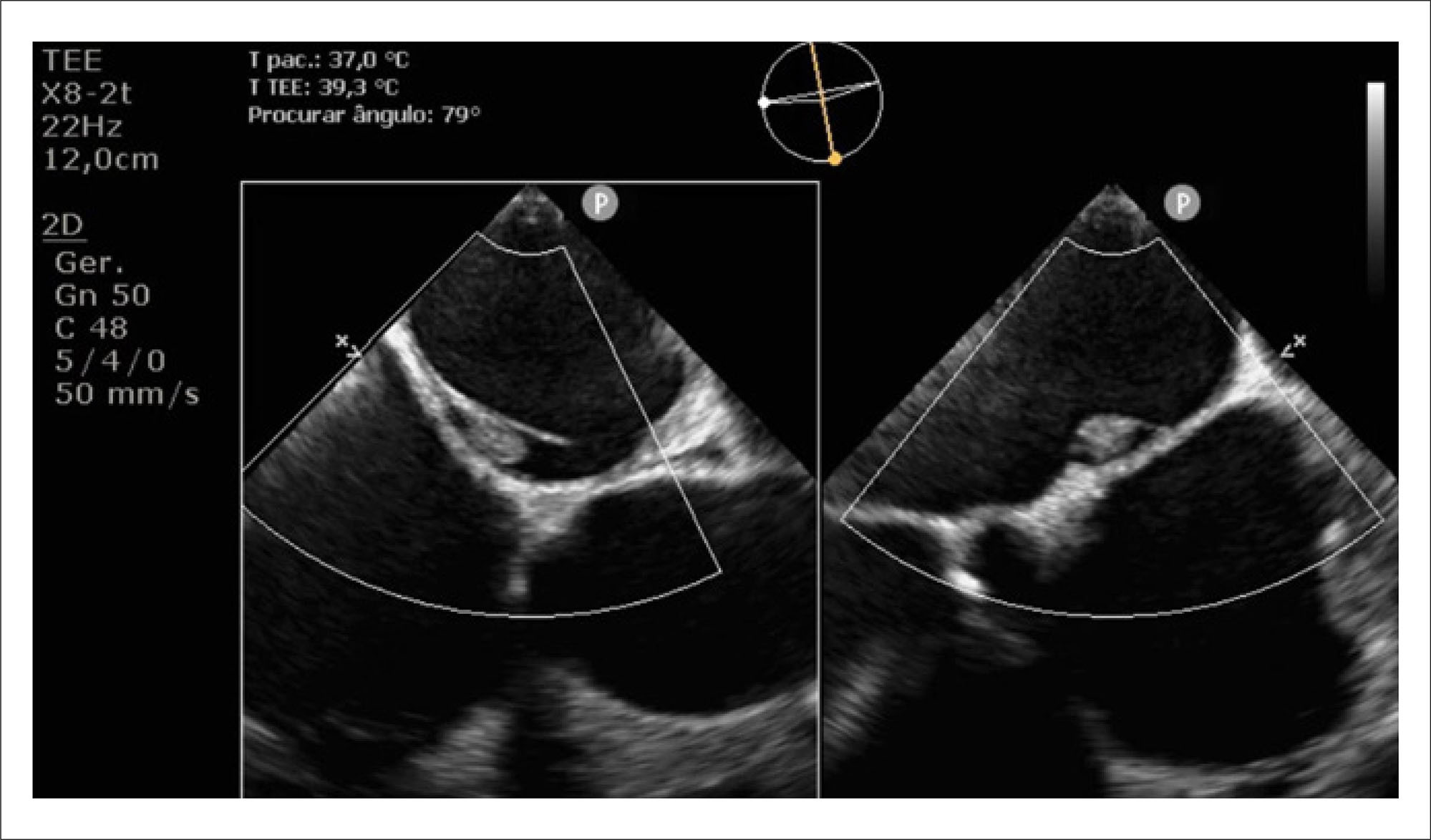
Left Atrial Septal Pouch Thrombosis Detected Before Electrical Cardioversion: a Rare Source of Embolism

Andre Barcellos Amon et al. Mariana De Castro Lopes Marina Petersen Saadi Willian R. Menegazzo Angela Barreto Santiago Santos

A 59-year-old male patient with a history of systemic arterial hypertension was admitted to the emergency department with a seven-day history of chest pain and palpitations. On examination, he was hypotensive (93/70 mmHg) and tachycardic (150 bpm). A prominent systolic–diastolic murmur was heard along the right upper sternal border.

The initial investigation included electrocardiography (ECG) and Transthoracic Echocardiography (TTE). The ECG revealed atrial flutter, and the TTE showed biventricular dilation [Left Ventricular (LV) end-diastolic/end-systolic diameters: 60/51 mm; right ventricular (RV) basal diameter: 54 mm] and severe systolic dysfunction (LV ejection fraction: 19%; RV fractional area change: 16%). Additionally, a bicuspid aortic valve with mixed disease was identified: low-flow, low-gradient aortic stenosis (peak velocity: 3.1 m/s; peak/mean gradients: 39/23 mmHg; velocity ratio: 0.15; valve area: 0.7 cm, stroke volume index: 17 ml/m) and severe aortic regurgitation (pressure half-time: 170 ms; holodiastolic reversal in the descending aorta, end-diastolic velocity: 24 cm/s).

[…]
  • Atrial Septum
  • Thrombosis
  • Transesophageal echocardiography
Read Full Article
Creative Commons Attribution (CC BY) Creative Commons license
03/02/2026 DOI: 10.36660/abcimg.20250075i
Central Illustration
ABCIC
Original Article

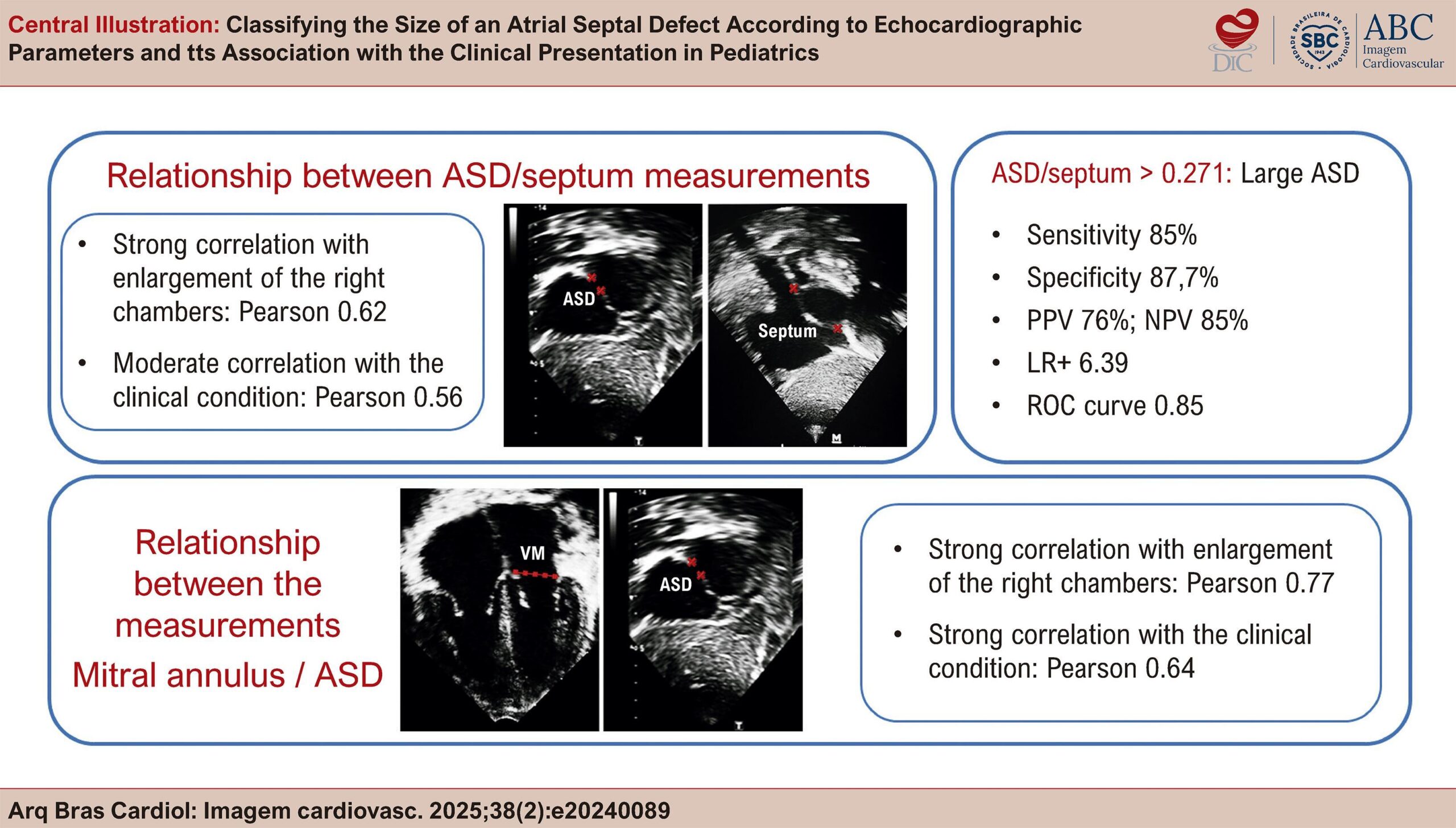
Classifying the Size of an Atrial Septal Defect According to Echocardiographic Parameters and its Association with the Clinical Presentation in Pediatrics

Lívia de Castro Ribeiro et al. Rose Mary Ferreira Lisboa da Silva Henrique de Assis Fonseca Tonelli Adriana Furletti Machado Guimarães … Fátima Derlene da Rocha Araújo Zilda Maria Alves Meira Sandra Regina Tolentino Castilho Alan Alvarez Conde Lícia Campos Valadares

Abstract

Background

Few studies are using linear echocardiographic measurements for classifying the size of Atrial Septal Defect (ASD).

Objectives

Investigate the relationship between ASD hemodynamic repercussions and ASD diameter to the mitral annulus diameter (MI/ASD) ratio and ASD diameter to the interatrial septum diameter (ASD/septum) ratio, and describe cutoff points to classify the size of the defect.

Methods

An observational, prospective, cross-sectional study, including subjects aged 1 month and 18 years diagnosed with isolated ASD. Hemodynamic repercussion was quantified by clinical evaluation, tricuspid annulus (TA) Z-score, subjective estimation of the enlargement of the right chambers, and the relationship between systemic and pulmonary flows (QP/QS) on echocardiography. Its association with ASD/septum and MI/ASD measurements was also studied. A value of p < 0.05 was considered statistically significant.

Results

Thirty-five subjects, mean age 6.3 years, 69% female, mean ASD 13.5 mm. There was a correlation between MI/ASD and the clinical classification of ASD (Pearson: -0.61; p < 0.001), ASD/septum (Pearson: -0.80; p < 0.001), and QP/QS (-0.76; p < 0.001). There was a correlation between ASD/septum and the clinical classification of ASD (Pearson: 0.56; p < 0.001), QP/QS (0.63; p = 0.001), subjective assessment of the right chambers (0.62; p < 0.001), and a weak correlation with the TA Z-score (0.35; p = 0.04). According to the operating characteristic curve for the stable variable classification of ASD according to the subjective right chamber’s size, an area of 0.85 was obtained for ASD/septum (p = 0.001). The cutoff point of 0.27 for large ASD showed sensitivity of 85%, specificity of 86.7%, positive predictive value (PPV) of 86%, negative predictive value (NPV) of 85.2%, and positive likelihood ratio of 6.39.

Conclusions

ASD/septum was associated with the hemodynamic repercussion of ASD and was useful in detecting large ASD.

  • Atrial Heart Septal Defects
  • Atrial Septum
  • Echocardiography
  • Tricuspid Valve
Read Full Article
Creative Commons Attribution (CC BY) Creative Commons license
15/05/2025 DOI: 10.36660/abcimg.20240089i Views 1
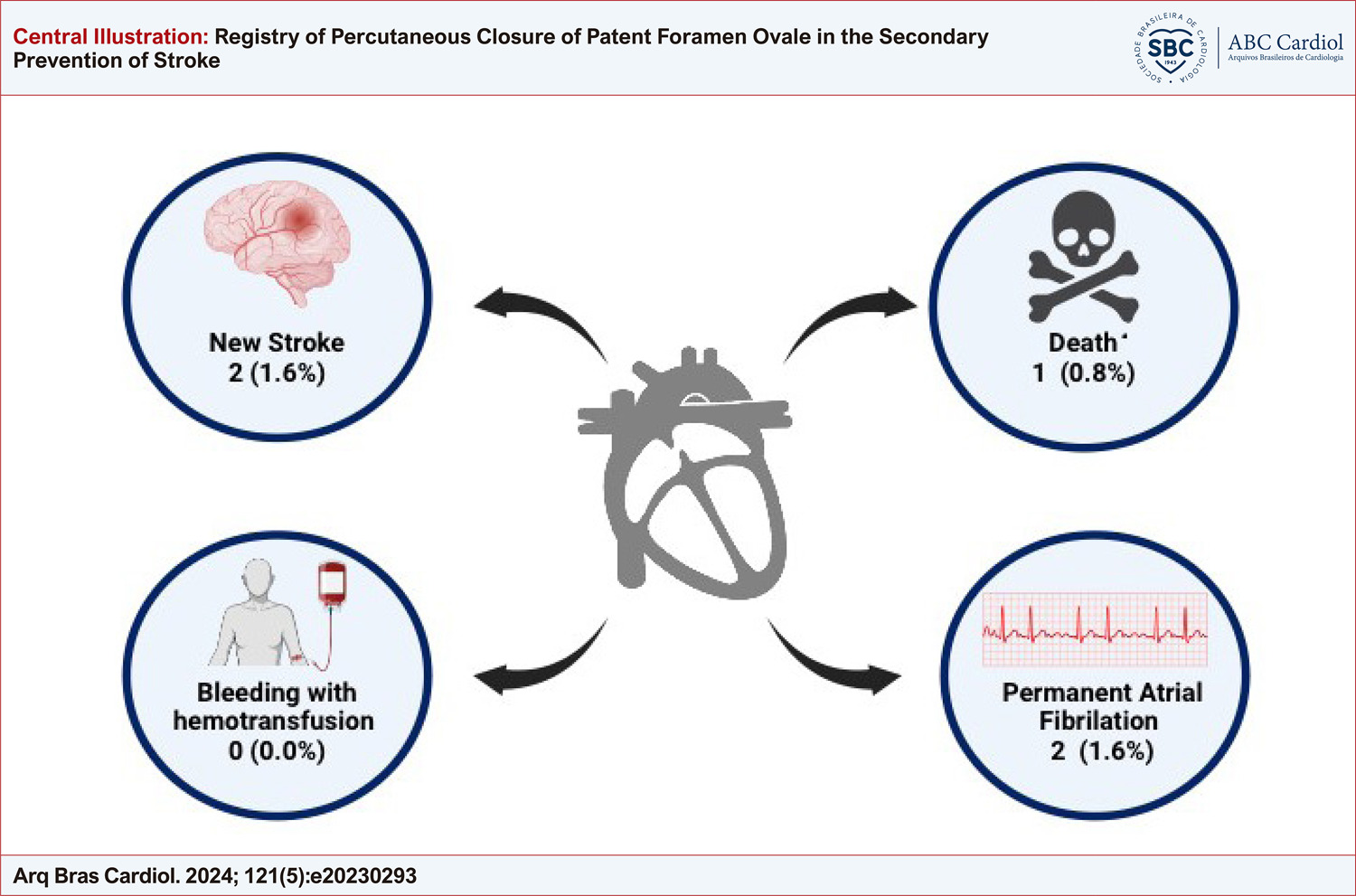
Registry of Percutaneous Closure of Patent Foramen Ovale in the Secondary Prevention of Stroke
ABC
Original Article

Registry of Percutaneous Closure of Patent Foramen Ovale in the Secondary Prevention of Stroke

Eduardo S. Silveira et al. Guilherme P. Machado Julia K. Teixeira Felipe Fuchs … Antonio F. Pinotti Sheila Martins Marco V. Wainstein

Abstract

Background

The foramen ovale remains patent in about 25% of the adult population. In adult life, thrombi form in the venous circulation and can cross the interatrial septum and trigger an ischemic stroke – called paradoxical embolism. The treatment can be performed through percutaneous closure of the patent foramen ovale (PFO), but still rarely performed in Brazil because it is not available in the public health care.

Objectives

To evaluate the reproducibility of clinical trial results in real-life studies due to the low number of records published about the topic.

Methods

This study is a retrospective cohort study including 121 patients who underwent percutaneous PFO closure for secondary prophylaxis of ischemic stroke between January 2012 and June 2022.

Results

We observed a mean age of 50.3 years and most females . Severe interatrial shunt was observed in 82.6% and the presence of atrial septal aneurysm in 84.2%. After 6 months of the procedure, no patient still had a residual shunt. There were no serious bleeding or vascular complications. Recurrence of a new cerebrovascular event occurred in 1.6% of patients.

Conclusion

We observed a low recurrence of new ischemic neurological events and lack major complications related to the procedure.

  • Atrial Septum
  • Foramen Ovale
  • Ischemic Stroke
Read Full Article
Creative Commons Attribution (CC BY) Creative Commons license
14/10/2024 DOI: 10.36660/abc.20230293i Views 2
ABCIC
Case Report

Noblestitch Failure After Percutaneous Patent Foramen Ovale Closure in a Case Of Platypnea-Orthodeoxia Syndrome: Is this Device Suitable for All Patients?

Ana Rita Moura et al. Mariana Silva Alberto Rodrigues João Carlos Silva … José Ribeiro Daniel Caeiro Jorge Casanova Ricardo Fontes-Carvalho

Introduction

Patent foramen ovale (PFO) is a common congenital cardiac lesion corresponding to a normal fetal interatrial communication that typically closes after birth with the fusion of the atrial septum primum to the septum secundum . When the foramen ovale persists, it is usually asymptomatic and benign, with no need for treatment. In rare cases, it can be implicated in the pathogenesis of some medical conditions, such as platypnea-orthodeoxia syndrome (POS). In this context, PFO closure may be indicated.

Several occluder devices, traditionally based on a double-disc design, have shown that percutaneous PFO closure is possible. Despite the proven efficacy, their use is not technically feasible for some patients. In addition, they have the potential to cause some complications. NobleStitch EL (NS) is an alternative percutaneous PFO closure technique available in Europe, European Commission (EC) marked for cardiovascular suturing and PFO closure, and in the US, with Food and Drug Administration (FDA) clearance for vascular and cardiovascular suturing. It consists of a “deviceless” system with two dedicated suture delivery catheters. , To date, the experience with the NS device is limited, and we still lack information about its failure determinants, which could help select patients. –

[…]

  • Atrial Septum
  • Foramen Ovale, Patent
  • Heart Defects, Congenital
  • NobleStich/methods
  • Platypneia-Ortthodeoxia Syndrome
Read Full Article
Creative Commons Attribution (CC BY) Creative Commons license
06/03/2023 DOI: 10.36660/abcimg.2022309i

How to cite this article

EndNote RIS

Electronic Document Format (Vancouver)

Amon AB, Lopes MDC, Saadi MP, Menegazzo WR, Santos ABS. Left Atrial Septal Pouch Thrombosis Detected Before Electrical Cardioversion: a Rare Source of Embolism. ABC Imagem Cardiovascular 2026;38(4):e20250075.

Electronic Document Format (ABNT)

Amon, Andre Barcellos; Lopes, Mariana De Castro; Saadi, Marina Petersen; Menegazzo, Willian R.; Santos, Angela Barreto Santiago. Left Atrial Septal Pouch Thrombosis Detected Before Electrical Cardioversion: a Rare Source of Embolism. ABC Imagem Cardiovascular, v. 38, n. 4, e20250075, Feb. 2026.

Electronic Document Format (APA)

Amon, A. B., Lopes, M. D. C., Saadi, M. P., Menegazzo, W. R., & Santos, A. B. S. (2026). Left Atrial Septal Pouch Thrombosis Detected Before Electrical Cardioversion: a Rare Source of Embolism. ABC Imagem Cardiovascular, 38(4), e20250075.

Electronic Document Format (ISO)

Amon, Andre Barcellos and Lopes, Mariana De Castro and Saadi, Marina Petersen and Menegazzo, Willian R. and Santos, Angela Barreto Santiago. Left Atrial Septal Pouch Thrombosis Detected Before Electrical Cardioversion: a Rare Source of Embolism. ABC Imagem Cardiovascular [online]. 2026, vol. 38, n. 4, [cited 2026-10-14], e20250075. Available from: <https://journals.cardiol.br/en/article/left-atrial-septal-pouch-thrombosis-detected-before-electrical-cardioversion-a-rare-source-of-embolism/>. ISSN 2318-8219

EndNote RIS

Electronic Document Format (Vancouver)

Ribeiro LC, Silva RMFL, Tonelli HAF, Guimarães AFM, Araújo FDR, Meira ZMA, Castilho SRT, et al. Classifying the Size of an Atrial Septal Defect According to Echocardiographic Parameters and its Association with the Clinical Presentation in Pediatrics. ABC Imagem Cardiovascular 2025;38(2):e20240089.

Electronic Document Format (ABNT)

Ribeiro, Lívia de Castro; Silva, Rose Mary Ferreira Lisboa da; Tonelli, Henrique de Assis Fonseca; Guimarães, Adriana Furletti Machado; Araújo, Fátima Derlene da Rocha; Meira, Zilda Maria Alves; Castilho, Sandra Regina Tolentino; Conde, Alan Alvarez; Valadares, Lícia Campos. Classifying the Size of an Atrial Septal Defect According to Echocardiographic Parameters and its Association with the Clinical Presentation in Pediatrics. ABC Imagem Cardiovascular, v. 38, n. 2, e20240089, May. 2025.

Electronic Document Format (APA)

Ribeiro, L. C., Silva, R. M. F. L. , Tonelli, H. A. F., Guimarães, A. F. M., Araújo, F. D. R., Meira, Z. M. A., Castilho, S. R. T., Conde, A. A., & Valadares, L. C. (2025). Classifying the Size of an Atrial Septal Defect According to Echocardiographic Parameters and its Association with the Clinical Presentation in Pediatrics. ABC Imagem Cardiovascular, 38(2), e20240089.

Electronic Document Format (ISO)

Ribeiro, Lívia de Castro and Silva, Rose Mary Ferreira Lisboa da and Tonelli, Henrique de Assis Fonseca and Guimarães, Adriana Furletti Machado and Araújo, Fátima Derlene da Rocha and Meira, Zilda Maria Alves and Castilho, Sandra Regina Tolentino and Conde, Alan Alvarez and Valadares, Lícia Campos. Classifying the Size of an Atrial Septal Defect According to Echocardiographic Parameters and its Association with the Clinical Presentation in Pediatrics. ABC Imagem Cardiovascular [online]. 2025, vol. 38, n. 2, [cited 2026-10-14], e20240089. Available from: <https://journals.cardiol.br/en/article/classifying-the-size-of-an-atrial-septal-defect-according-to-echocardiographic-parameters-and-its-association-with-the-clinical-presentation-in-pediatrics/>. ISSN 2318-8219

EndNote RIS

Electronic Document Format (Vancouver)

Silveira ES, Machado GP, Teixeira JK, Fuchs F, Pinotti AF, Martins S, Wainstein MV, et al. Registry of Percutaneous Closure of Patent Foramen Ovale in the Secondary Prevention of Stroke. Arquivos Brasileiros de Cardiologia 2024;121(5):e20230293.

Electronic Document Format (ABNT)

Silveira, Eduardo S.; Machado, Guilherme P.; Teixeira, Julia K.; Fuchs, Felipe; Pinotti, Antonio F.; Martins, Sheila; Wainstein, Marco V.. Registry of Percutaneous Closure of Patent Foramen Ovale in the Secondary Prevention of Stroke. Arquivos Brasileiros de Cardiologia, v. 121, n. 5, e20230293, Oct. 2024.

Electronic Document Format (APA)

Silveira, E. S., Machado, G. P., Teixeira, J. K., Fuchs, F., Pinotti, A. F., Martins, S., & Wainstein, M. V. (2024). Registry of Percutaneous Closure of Patent Foramen Ovale in the Secondary Prevention of Stroke. Arquivos Brasileiros de Cardiologia, 121(5), e20230293.

Electronic Document Format (ISO)

Silveira, Eduardo S. and Machado, Guilherme P. and Teixeira, Julia K. and Fuchs, Felipe and Pinotti, Antonio F. and Martins, Sheila and Wainstein, Marco V.. Registry of Percutaneous Closure of Patent Foramen Ovale in the Secondary Prevention of Stroke. Arquivos Brasileiros de Cardiologia [online]. 2024, vol. 121, n. 5, [cited 2026-10-14], e20230293. Available from: <https://journals.cardiol.br/en/article/registry-of-percutaneous-closure-of-patent-foramen-ovale-in-the-secondary-prevention-of-stroke/>. ISSN 0066-782X

EndNote RIS

Electronic Document Format (Vancouver)

Moura AR, Silva M, Rodrigues A, Silva JC, Ribeiro J, Caeiro D, Casanova J, et al. Noblestitch Failure After Percutaneous Patent Foramen Ovale Closure in a Case Of Platypnea-Orthodeoxia Syndrome: Is this Device Suitable for All Patients?. ABC Imagem Cardiovascular 2023;36(1):e309.

Electronic Document Format (ABNT)

Moura, Ana Rita; Silva, Mariana; Rodrigues, Alberto; Silva, João Carlos; Ribeiro, José; Caeiro, Daniel; Casanova, Jorge; Fontes-Carvalho, Ricardo. Noblestitch Failure After Percutaneous Patent Foramen Ovale Closure in a Case Of Platypnea-Orthodeoxia Syndrome: Is this Device Suitable for All Patients?. ABC Imagem Cardiovascular, v. 36, n. 1, e309, Mar. 2023.

Electronic Document Format (APA)

Moura, A. R., Silva, M., Rodrigues, A., Silva, J. C., Ribeiro, J., Caeiro, D., Casanova, J., & Fontes-Carvalho, R. (2023). Noblestitch Failure After Percutaneous Patent Foramen Ovale Closure in a Case Of Platypnea-Orthodeoxia Syndrome: Is this Device Suitable for All Patients?. ABC Imagem Cardiovascular, 36(1), e309.

Electronic Document Format (ISO)

Moura, Ana Rita and Silva, Mariana and Rodrigues, Alberto and Silva, João Carlos and Ribeiro, José and Caeiro, Daniel and Casanova, Jorge and Fontes-Carvalho, Ricardo. Noblestitch Failure After Percutaneous Patent Foramen Ovale Closure in a Case Of Platypnea-Orthodeoxia Syndrome: Is this Device Suitable for All Patients?. ABC Imagem Cardiovascular [online]. 2023, vol. 36, n. 1, [cited 2026-10-14], e309. Available from: <https://journals.cardiol.br/en/article/noblestitch-failure-after-percutaneous-patent-foramen-ovale-closure-in-a-case-of-platypnea-orthodeoxia-syndrome-is-this-device-suitable-for-all-patients/>. ISSN 2318-8219

  • About ABC Family
  • Internal Regulation
  • Editorial Board
  • Brazilian Society of Cardiology (SBC)

Issues

SBC Guidelines

  • Videos
  • Podcasts
  • News