| ABC
ABC Family Arquivos Brasileiros de Cardiologia International Journal of Cardiovascular Sciences ABC Heart Failure & Cardiomyopathy ABC Imagem Cardiovascular
Português English
ABC Family | ABC
Português English
  • About
    • About the Journal
    • Internal Regulation
    • Editors Section
    • Editorial Board
    • History
    • SBC Award
  • Instructions to Authors
    • Guidelines for Publication
    • Editorial Policy
    • Ethics Policy
    • Policy on the Use of Artificial Intelligence
    • Mandatory Publication Form
    • Publication Fee
  • Issues
  • SBC Guidelines
  • Abstracts
    • How to Publish an Abstract Supplement?
    • Supplements from the Brazilian Congress of Cardiology
  • About
    • About the Journal
    • Internal Regulation
    • Editors Section
    • Editorial Board
    • History
    • SBC Award
  • Instructions to Authors
    • Guidelines for Publication
    • Editorial Policy
    • Ethics Policy
    • Policy on the Use of Artificial Intelligence
    • Mandatory Publication Form
    • Publication Fee
  • Issues
  • SBC Guidelines
  • Abstracts
    • How to Publish an Abstract Supplement?
    • Supplements from the Brazilian Congress of Cardiology

ABC Family

  • ABC Family
  • Arquivos Brasileiros de Cardiologia
  • International Journal of Cardiovascular Sciences
  • ABC Heart Failure & Cardiomyopathy
  • ABC Imagem Cardiovascular
Search in

No content found.

Journals
Ordering
Article types
Others

  1. Home
  2. ABC
  3. Issues
  4. 2024, Volume 121, Number 10
Editorial

Is it Fair to Contraindicate Cardiac Defibrillator Implantation for Patients with Socioeconomic or Psychological Vulnerability?

Marcelo de Paula Martins Monteiro et al. Helena Nogueira Brasil Carlos Roberto Martins Rodrigues Sobrinho Eduardo Arrais Rocha

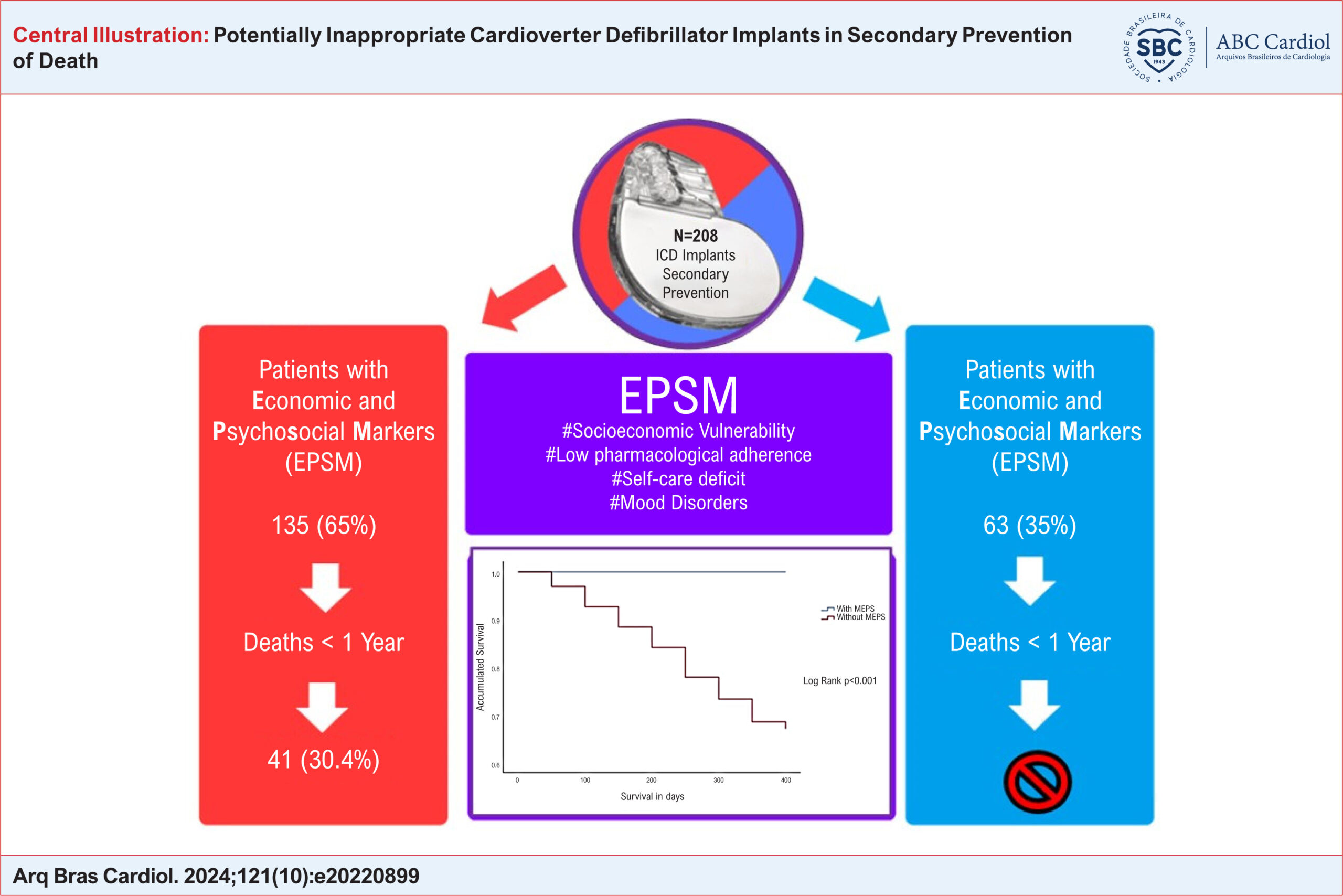
The authors Cavalcanti et al. published an article demonstrating that patients undergoing implantation of internal cardiac defibrillators (ICD) for secondary prevention, with ejection fraction (EF) <50%, and who had high socioeconomic or psychological vulnerability presented high mortality in 1 year. The authors analyzed four variables of economic and psychosocial markers (EPSM): 1-socioeconomic vulnerability; 2-self-care capacity; 3-pharmacological adherence; 4- mood disorders. There were no deaths in 1 year in the group without the presence of these variables. The study encompassed a multidisciplinary network of pre-implant analysis called Device-team.

The importance of the study lies in identifying some new markers of worse prognosis after this procedure, particularly in certain population areas. Factors that are subject to modification must be rigorously monitored and modified, enabling evolutionary improvement and ensuring the benefit of increased survival that ICDs provide.

[…]
  • Cardiac Defibrillator
  • Health Vulnerability
  • Heart Failure
Read Full Article
Creative Commons Attribution (CC BY) Creative Commons license
02/12/2024 DOI: 10.36660/abc.20240643i Views 1
Editorial

Heart Failure in Brazil: How Can We Improve its Natural History?

Filipe Ferrari et al. Arthur Proença Rossi Igor Rafael Miranda Ferreira Santander

Heart failure (HF) is a complex syndrome with high morbidity and mortality rates worldwide., Despite significant efforts, including several recent clinical trials involving tens of thousands of patients and various pharmacologic therapies,– reducing the burden of HF remains a challenge.

As of 2021, epidemiological data estimated that approximately 57 million people were affected by HF globally, and its prevalence is projected to rise by 34% in the coming decades. Patients hospitalized due to worsening HF are among the highest-risk groups, facing elevated rates of readmission and mortality, particularly during the vulnerable period shortly after discharge. The economic burden of HF is also significant; by 2030, HF-related costs in the U.S. are projected to exceed $70 billion annually.

[…]

  • Brazil
  • Heart Failure
  • Systolic Heart Failure
Read Full Article
Creative Commons Attribution (CC BY) Creative Commons license
02/12/2024 DOI: 10.36660/abc.20240644i Views 1
Editorial

Long Non-Coding RNA CCAT2 and Pathological Cardiac Remodeling

Gustavo Augusto Ferreira Mota et al. Mariana Gatto Claudia Maria Silva Cyrino Silvio Assis de Oliveira Júnior Marina Politi Okoshi

Despite advances in cardiovascular medicine, heart disease is a serious public health problem due to its high prevalence, elevated cost, and high morbidity and mortality. Therefore, it is necessary to improve the understanding of molecular mechanisms involved in the pathophysiology of cardiovascular disease.

Following cardiac injury, the heart undergoes a remodeling process, initially characterized by alterations in the genome expression. The changes lead to molecular, cellular, and interstitial modifications that manifest clinically as variations in the size, shape, and function of the heart. Cardiac remodeling is usually accompanied by activation of neurohormonal systems. Under physiological conditions, the renin-angiotensin system plays a fundamental role in regulating blood pressure and fluid-electrolyte balance. However, when excessively activated, it induces deleterious effects on the heart, such as myocyte hypertrophy and death and interstitial myocardial fibrosis.

[…]

  • Cardiovascular Diseases
  • Renin-Angiotensin System
  • Systems Biology
  • Ventricular Remodeling
Read Full Article
Creative Commons Attribution (CC BY) Creative Commons license
02/12/2024 DOI: 10.36660/abc.20240698i Views 1
Editorial

Impact of Technological Innovation in the Treatment and Prognosis of Heart Failure

João Marcos Bemfica Barbosa Ferreira et al. Maria Helena Costa de Vasconcelos Andreza Araújo de Oliveira Maria Eduarda da Silva Corrêa

The manuscript entitled “Assessment of Pulmonary Congestion According to Ultrasound and Remote Dielectric Sensing (ReDS) in Patients Hospitalized With Heart Failure” brings us an important contribution to the adequate evaluation of patients with heart failure (HF) who present pulmonary congestion, which represents a frequent cause of decompensation and hospitalization in patients with HF.

HF, both with preserved and reduced ejection fraction, has a high prevalence, with an increase due to the aging of the population. Furthermore, it presents high mortality even with the advent of new drugs and new therapeutic targets.

[…]

  • Epidemiology
  • Heart Failure
  • Prognosis
Read Full Article
Creative Commons Attribution (CC BY) Creative Commons license
02/12/2024 DOI: 10.36660/abc.20240680i
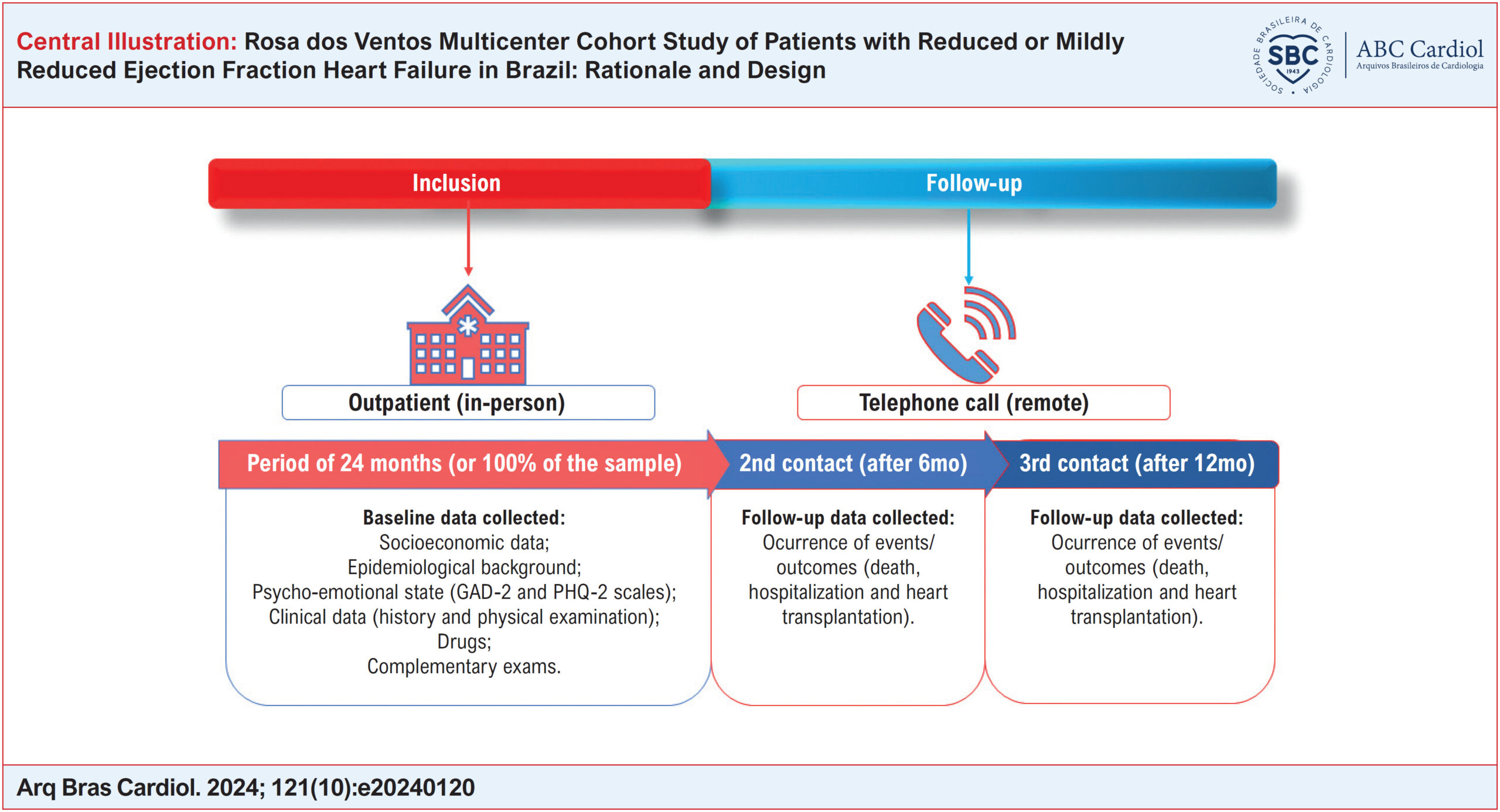
Rosa dos Ventos Multicenter Cohort Study of Patients with Reduced or Mildly Reduced Ejection Fraction Heart Failure in Brazil: Rationale and Design
Original Article

Rosa dos Ventos Multicenter Cohort Study of Patients with Reduced or Mildly Reduced Ejection Fraction Heart Failure in Brazil: Rationale and Design

Dhayn Cassi de Almeida Freitas et al. Larissa Maria de Paula Rebouças da Costa Wilson Nadruz Jr. Fabiana G. Marcondes-Braga … Jefferson Luis Vieira Sabrina Bernardez-Pereira Wilson Rodrigues Barbosa Neto Silvia Marinho Martins Alves Gabriela Arcoverde Wanderley Camila Nogueira Leandro Lira Lucas Yugi de Souza Terui Ana Luísa Guedes de França e Silva Alana de Oliveira Castro Aguinaldo F. Freitas Jr. José Albuquerque de Figueiredo Neto Renato D. Lopes Miguel Morita Fernandes-Silva Odilson Marcos Silvestre

Abstract

Background:

Brazil is a country with different biomes and social disparities. There are limited data available on regional differences and prognosis of heart failure (HF) in the country.

Objective:

The Rosa dos Ventos study aims to investigate regional differences and the current prognosis of HF outpatients with reduced or mildly reduced ejection fraction in Brazil.

Methods:

This is a prospective, multicenter, observational cohort study that will include outpatients older than 18 years with HF and an ejection fraction < 50% in 30 public and private centers distributed in all Brazilian regions. A total of 2,500 patients will be enrolled from June 2021 and October 2023, with a 12-month follow-up period. We will collect data on socioeconomic and clinical status, medical prescription and results of cardiology tests. Follow-up phone calls will be made at 6 and 12 months after inclusion to collect information regarding emergency room visits, hospitalization and mortality.

Conclusion:

The Rosa dos Ventos study will allow a more accurate characterization of chronic HF in Brazil. This initiative will provide relevant information for the development of effective management strategies to mitigate the impact of this condition on patients and the healthcare system.

  • Brasil
  • Health Strategies
  • Heart Failure
  • Prognosis
Read Full Article
Creative Commons Attribution (CC BY) Creative Commons license
02/12/2024 DOI: 10.36660/abc.20240120i Views 2
Cardiac Abnormalities in Hypereosinophilic Syndromes
Review Article

Cardiac Abnormalities in Hypereosinophilic Syndromes

Viviane Tiemi Hotta et al. Rafael Ruas Nastari Gardênia da Silva Lobo Oishi Alexandre Eiji Kayano … Juliana Alzira Gonzales Oliveira Ruiza Gonçalves Rocha Ana Olga Mocumbi Fernanda Salles Seguro José Eduardo Krieger Fábio Fernandes Vera Maria Cury Salemi

Abstract

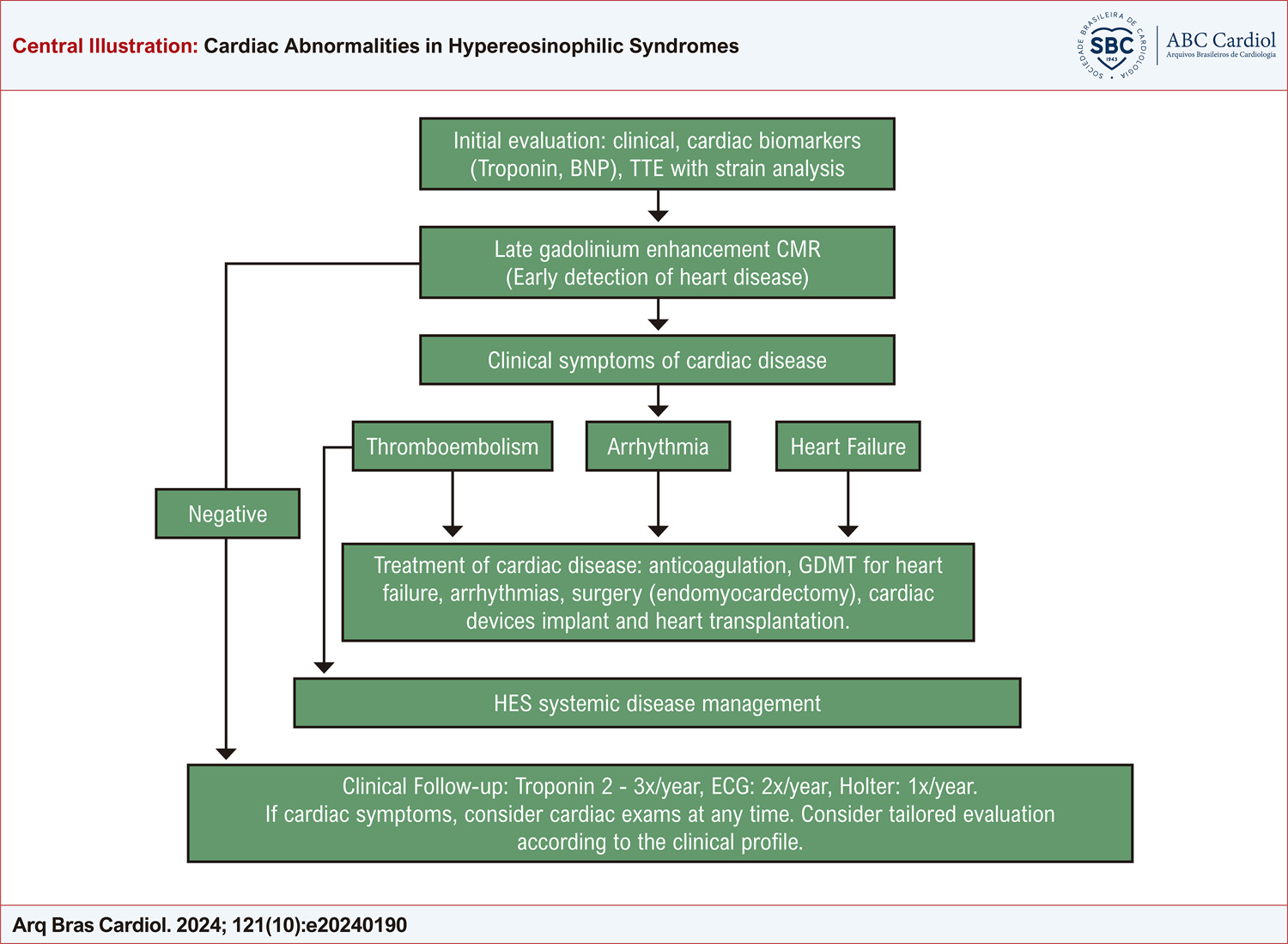
Hypereosinophilia (HE) is defined as an eosinophil count exceeding 1500 cells/microL in peripheral blood in two tests, performed with an interval of at least one month and/or anatomopathological confirmation of HE, with eosinophils comprising more than 20% of all nucleated cells in the bone marrow. Hypereosinophilic syndrome (HES) indicates the presence of HE with organ involvement due to eosinophil action, which can be classified as primary (or neoplastic), secondary (or reactive), and idiopathic. Cardiac involvement occurs in up to 5% of cases in the acute phase and 20% of the chronic phase of the disease, ranging from oligosymptomatic cases to fulminant acute myocarditis or chronic restrictive cardiomyopathy (Loeffler endomyocarditis). However, the degree of cardiac dysfunction does not directly correlate with the degree of eosinophilia. The cardiac involvement of HES occurs in three phases: initial necrotic, thrombotic, and finally necrotic. It can manifest as heart failure, arrhythmias, and thromboembolic phenomena. The diagnosis of cardiopathy is based on multimodality imaging, with an emphasis on the importance of echocardiography (echo) as the primary examination. TTE with enhanced ultrasound agents can be used for better visualization, allowing greater accuracy in assessing ventricular apex, and myocardial deformation indices, such as longitudinal strain, may be reduced, especially in the ventricular apex (reverse apical sparing). Cardiac magnetic resonance imaging allows the characterization of subendocardial late gadolinium enhancement, and endomyocardial biopsy is considered the gold standard in diagnosing cardiopathy. Treatment is based on the etiology of HES.

  • eosinophils
  • Heart Failure
  • Hypereosinophilic Syndrome
  • Restrictive cardiomyopathy
Read Full Article
Creative Commons Attribution (CC BY) Creative Commons license
25/11/2024 DOI: 10.36660/abc.20240190i Views 1
Risk of Adverse Health Outcomes in Patients with Poor Adherence to Cardiovascular Medication Treatment: A Systematic Review
Original Article

Risk of Adverse Health Outcomes in Patients with Poor Adherence to Cardiovascular Medication Treatment: A Systematic Review

Marcus Vinícius Bolívar Malachias et al. Sergio Emanuel Kaiser Denilson Campos de Albuquerque Andrea Araújo Brandão … Andrei Carvalho Sposito Lidia Zytysnky Moura Lucélia Batista Neves Cunha Magalhães Marco Antonio Mota-Gomes Nadine Clausell Paulo César Veiga Jardim Wilson Nadruz Bruno Monteiro Barros Leonardo Castro Luna Weimar Kunz Sebba Barroso

Abstract

Background

Cardiovascular diseases (CVD) remain the leading cause of mortality worldwide. Medication adherence is an important issue in managing chronic CVD, directly influencing outcomes and healthcare costs.

Objectives

This systematic review, supported by the Brazilian Society of Cardiology, evaluates the impact of poor adherence to cardiovascular medications on critical clinical outcomes such as death and cardiovascular events.

Methods

A comprehensive search was conducted across four databases, including Medline, Embase, Lilacs, and the Cochrane Library. The review included systematic reviews with meta-analyses that reported risk estimates for adherence to cardiovascular medications. Four systematic reviews, each incorporating observational studies, were selected.

Results

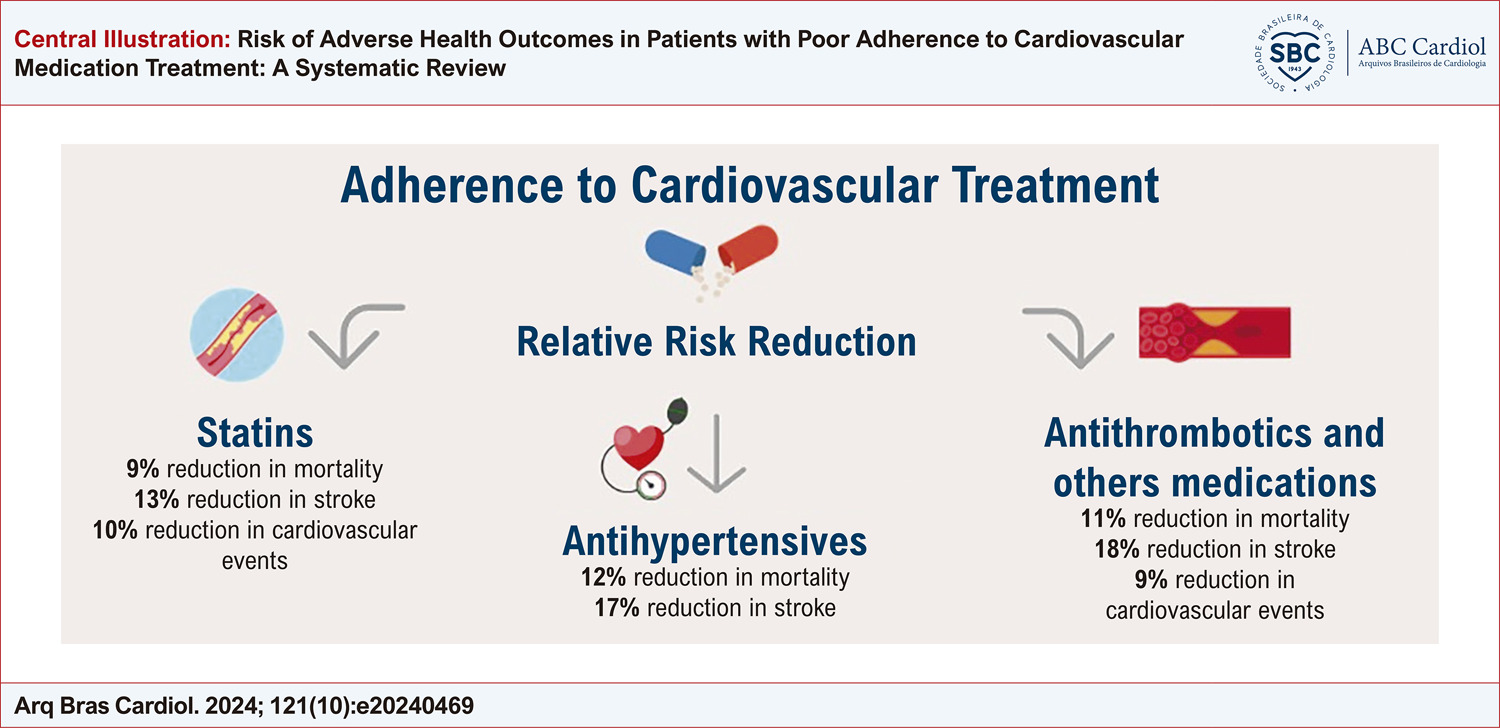
An increase in adherence to medications significantly reduces the risk of cardiovascular events, stroke, and all-cause death. Specifically, a 20% improvement in adherence to antihypertensive, lipid-lowering, and other cardiovascular medications correlated with reductions in cardiovascular events by 7%, 10%, and 9%, respectively; stroke by 17%, 13%, and 18%; and death by 12%, 9%, and 10%. The certainty of the evidence was moderate, suggesting that these effects are likely present. These findings emphasize the importance of enhancing medication adherence to improve clinical outcomes in CVD management.

Conclusions

Evidence has demonstrated reductions in hard endpoints in both primary and secondary prevention through the control of conditions such as hypertension and elevated LDL cholesterol concentrations, as well as the benefits of antiplatelet therapy in atherosclerotic disease. However, additional studies are needed to better elucidate the relationship between adherence to cardiovascular medications and the improvement of critical clinical outcomes.

  • Cardiovascular Diseases
  • medication adherence
  • Patient Compliance
Read Full Article
Creative Commons Attribution (CC BY) Creative Commons license
22/11/2024 DOI: 10.36660/abc.20240469i Views 2
Erratum
Errata

Erratum

Arq Bras Cardiol. 2024; 121(7):e20240478

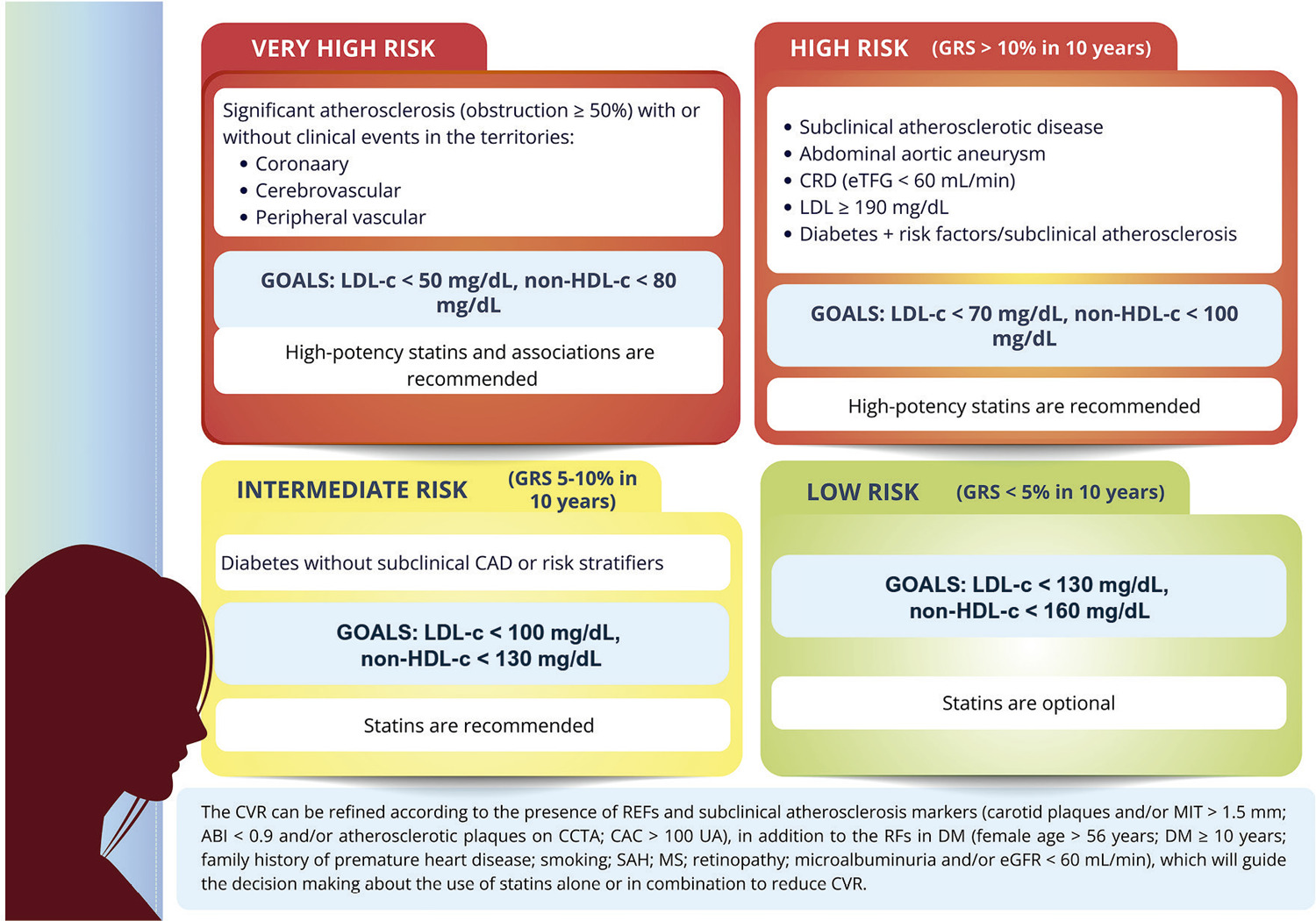
In the “Brazilian Guideline on Menopausal Cardiovascular Health – 2024,” with DOI number: https://doi.org/10.36660/abc.20240478i, published in the journal Arquivos Brasileiros de Cardiologia, Arq Bras Cardiol. 2024; 121(7):e20240478, on page 23, Figure 4.1, in the green box “LOW RISK,” please correct “GOALS: LDL-c < 100 mg/dL, non-HDL-c < 130 mg/dL” to “GOALS: LDL-c < 130 mg/dL, non-HDL-c < 160 mg/dL.”

[…]

Read Full Article
Creative Commons Attribution (CC BY) Creative Commons license
22/11/2024 DOI: 10.36660/abc.20240681i
Figure 1
Research Letter

Lyme Carditis: An Infectious Cause of Atrioventricular Block – A Case Report

Eduardo Dan Itaya et al. Danilo Hantschick Fernandes Monteiro Gabriela Coelho Itaya Nathan Kong Andre d’Avila

Introduction

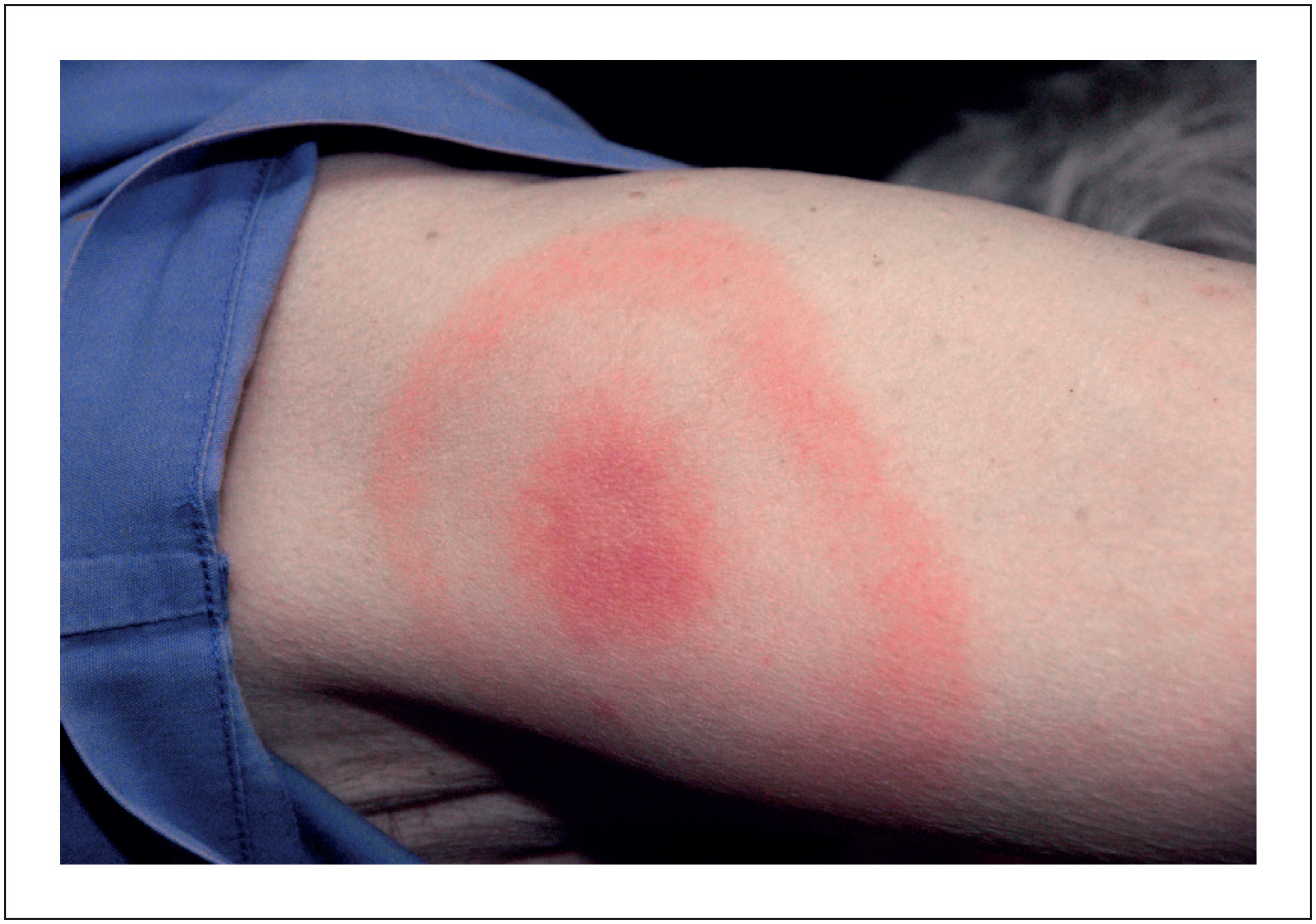
Lyme disease (LD) is the most common tick-borne illness in the United States, caused by the spirochete Borrelia burgdorferi. The most common presentation is the erythema migrans skin rash, observed in over 90% of cases during the early localized stage., Weeks to months post-tick bite, the disease may progress to extracutaneous manifestations in the early disseminated phase, leading to cardiac, neurologic, and joint symptoms.,

Lyme carditis (LC) is a rare complication of LD, occurring in 0.3% to 4% of untreated adults., The most prominent manifestations are conduction system disturbances involving the atrioventricular (AV) node, often presenting as high-degree AV block (AVB).

[…]

  • Atrioventricular block
  • Borrelia
  • Lyme Disease
Read Full Article
Creative Commons Attribution (CC BY) Creative Commons license
15/11/2024 DOI: 10.36660/abc.20240301i Views 1
Figure 1
Editorial

Is This a Causal Relationship? Mendelian Randomization as a Statistical Method for Unraveling Connections

Lucas Vieira Lacerda Pires

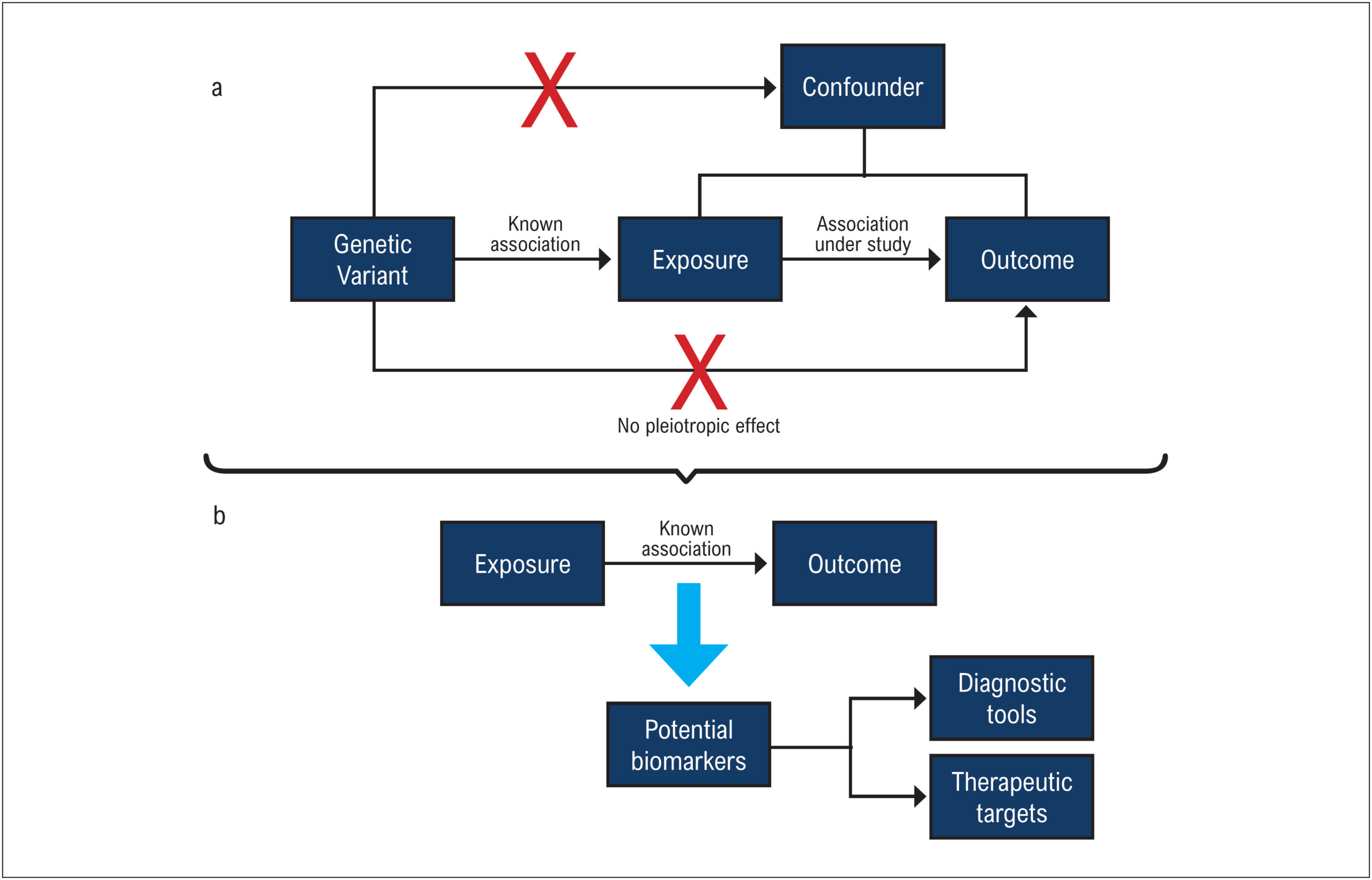
Mendelian Randomization (MR) is a powerful statistical tool to infer a causal relationship between the presence of genetic variants and different traits and phenotypes., It is particularly useful when trying to elucidate causal relationships between exposures and outcomes based on observational data. This method bases itself on the principle of randomness of how genetic variants might segregate during the process of meiosis, the Mendelian principle of independent assortment.

Since past decades, as our knowledge about the genetic architecture of human beings has been enhanced, the challenge is to understand how genetic variants may contribute to the development of phenotypes and traits. We have learned from this growing comprehension that as the genetic complexity of a specific trait rises, it may be less inheritable, and our predictive power reduces.

[…]

  • Cardiovascular Diseases
  • Mendelian Randomization Analysis
  • Sedentary Behavior
Read Full Article
Creative Commons Attribution (CC BY) Creative Commons license
15/11/2024 DOI: 10.36660/abc.20240606i Views 3
Editorial

Impact of Pulsed Field Ablation on Atrial Fibrillation

Mauricio Scanavacca et al. Cristiano Pisani

Atrial fibrillation (AF) is the most common cardiac arrhythmia in clinical practice, with an increasing incidence in more elderly patients. It is well known that AF is a substantial risk factor for cardiovascular events, increasing morbidity and mortality among affected patients, in addition to causing reduced physical and cognitive capacity and quality of life.– Current treatment of AF is based on modification of aggravating clinical factors, introduction of anticoagulants based on individualized risk-benefit ratio, medications to control heart rate and antiarrhythmics to control rhythm, and electrical cardioversion in patients with persistent AF.

In patients who are refractory or intolerant to medical treatment, catheter ablation with electrical pulmonary vein isolation has been recommended with increasing enthusiasm by international guidelines. In fact, technological adjustments achieved in recent years in point-to-point radiofrequency ablation and balloon cryoablation have promoted greater effectiveness of the procedure and increased safety with both technologies, as demonstrated in numerous recent comparative scientific studies.,

[…]

  • Atrial Fibrillation
  • Catheter Ablation
  • Electroporation
  • Pulsed Field Ablation
Read Full Article
Creative Commons Attribution (CC BY) Creative Commons license
15/11/2024 DOI: 10.36660/abc.20240565i Views 1
Editorial

Atrial Cardiomyopathy and Hypertension: Connections between Arterial Stiffness and Subclinical Atrial Arrhythmias

Ronaldo Altenburg Gismondi et al. Mario Fritsch Neves

Systemic arterial hypertension (SAH) is the primary risk factor for cardiovascular disease, promoting activation of the renin-angiotensin-aldosterone system (RAAS), endothelial dysfunction, arterial stiffness, fibrosis, and myocardial hypertrophy. Prospective studies show that the consequences include left ventricular hypertrophy (LVH), left atrial (LA) overload, and a higher risk of atrial fibrillation (AF). In the classic Framingham study, hypertension was an independent predictor of AF and, on its own, accounted for more cases of this arrhythmia than any other risk factor.

The recognition of a “pre-AF” phase, where atrial functional changes have not yet translated into dilation or clinically manifest AF, is of utmost importance in modern cardiology, as early recognition allows for therapeutic interventions before the condition evolves into an established disease. Functional and structural changes in the LA are predictors of atrial arrhythmias during rhythm monitoring, and these, in turn, are predictors of a higher risk of AF.,

[…]

  • Cardiac Arrhythmias
  • Hypertension
  • Vascular Stiffness
Read Full Article
Creative Commons Attribution (CC BY) Creative Commons license
11/11/2024 DOI: 10.36660/abc.20240598i Views 1
Figure 1
Brief Communication

Intrarater Reliability and Agreement of Blood Pressure, Arterial Stiffness, and Heart Rate Variability Assessments in Patients With Parkinson’s Disease

Verônica de Fátima Souza Lima et al. Rafael Yokoyama Fecchio Maria Elisa Pimentel Piemonte Marilia de Almeida Correia … Hélcio Kanegusuku Raphael Mendes Ritti-Dias

Abstract

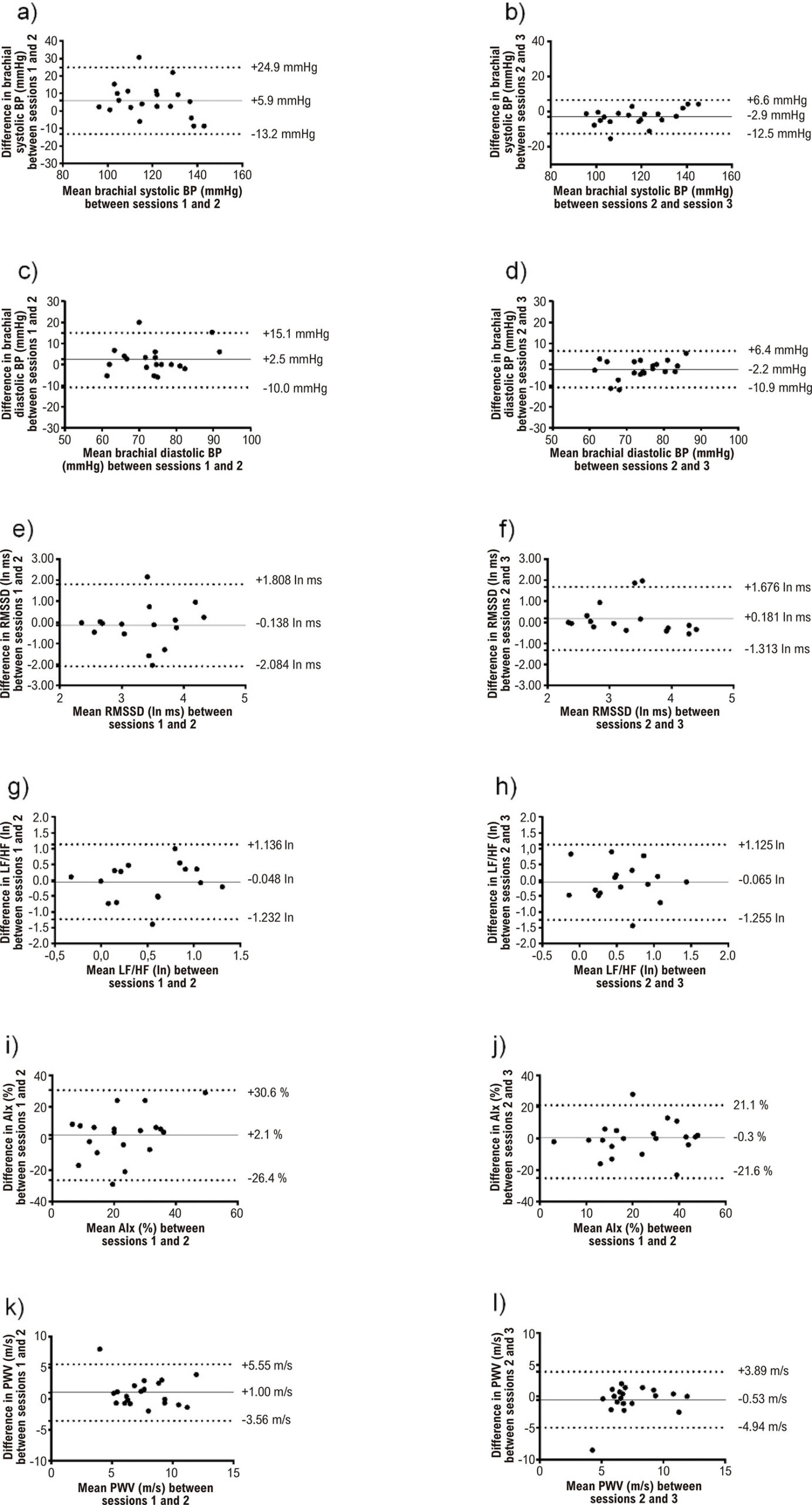
To assess the intrarater reliability and agreement of blood pressure (BP), arterial stiffness, and heart rate variability (HRV) assessments in patients with Parkinson`s disease (PD). Twenty patients with PD visited the laboratory three times, during which brachial and central BP (auscultatory and applanation tonometry, respectively), arterial stiffness (carotid-femoral pulse wave velocity and augmentation index), and HRV assessments were performed at rest. Brachial and central systolic BP presented greater values on visit 1 when compared to visits 2 and 3 (122±13 vs. 116±16 vs. 120±15, p=0.029). There were no significant differences (p>0.05) among the experimental visits for other parameters. Brachial and central BP showed an intraclass correlation coefficient (ICC) above 0.842 and a standard error of measurement (SEM) lower than 5.0%. Bland–Altman plots indicated low agreement between visits 1 and 2 and good agreement between visits 2 and 3. Arterial stiffness indices exhibited ICC values between 0.781 and 0.886, and SEM ranged from 7.3% to 25.2%. Bland–Altman plots indicated moderate to good agreement among visits for arterial stiffness parameters. HRV indices presented ICC values ranging from 0.558 to 0.854 and SEM values ranging from 5.1% to 76.0%. Bland–Altman plots indicated moderate agreement among visits for HRV parameters. In PD patients, brachial and central BP present low intrarater reliability and agreement between visits 1 and 2 and good intrarater reliability and agreement between visits 2 and 3. In general, arterial stiffness and HRV assessments present acceptable intrarater reliability and agreement among visits, except for cardiac sympathovagal balance.

  • Blood Pressure
  • Heart Rate
  • Parkinson Disease
  • Vascular Stiffness
Read Full Article
Creative Commons Attribution (CC BY) Creative Commons license
11/11/2024 DOI: 10.36660/abc.20240132i Views 1
LncRNA CCAT2 Knockdown Alleviates Pressure Overload or Ang II-Induced Cardiac Hypertrophy Via Disruption of the Wnt/β-Catenin Signaling
Original Article

LncRNA CCAT2 Knockdown Alleviates Pressure Overload or Ang II-Induced Cardiac Hypertrophy Via Disruption of the Wnt/β-Catenin Signaling

Xiaojun Zhang et al. Zhen Chen Ning Zhang Bo Yu … Wei Li Mengli Zhang Xian Wu Ganzhe Liu Meizhen Dong

Abstract

Background

Sustained pathological cardiac hypertrophy (CH) is an independent risk factor for increased incidence and mortality of cardiovascular events.

Objectives

This research was designed to unravel the role of long non-coding RNA (LncRNA) CCAT2 in CH progression.

Methods

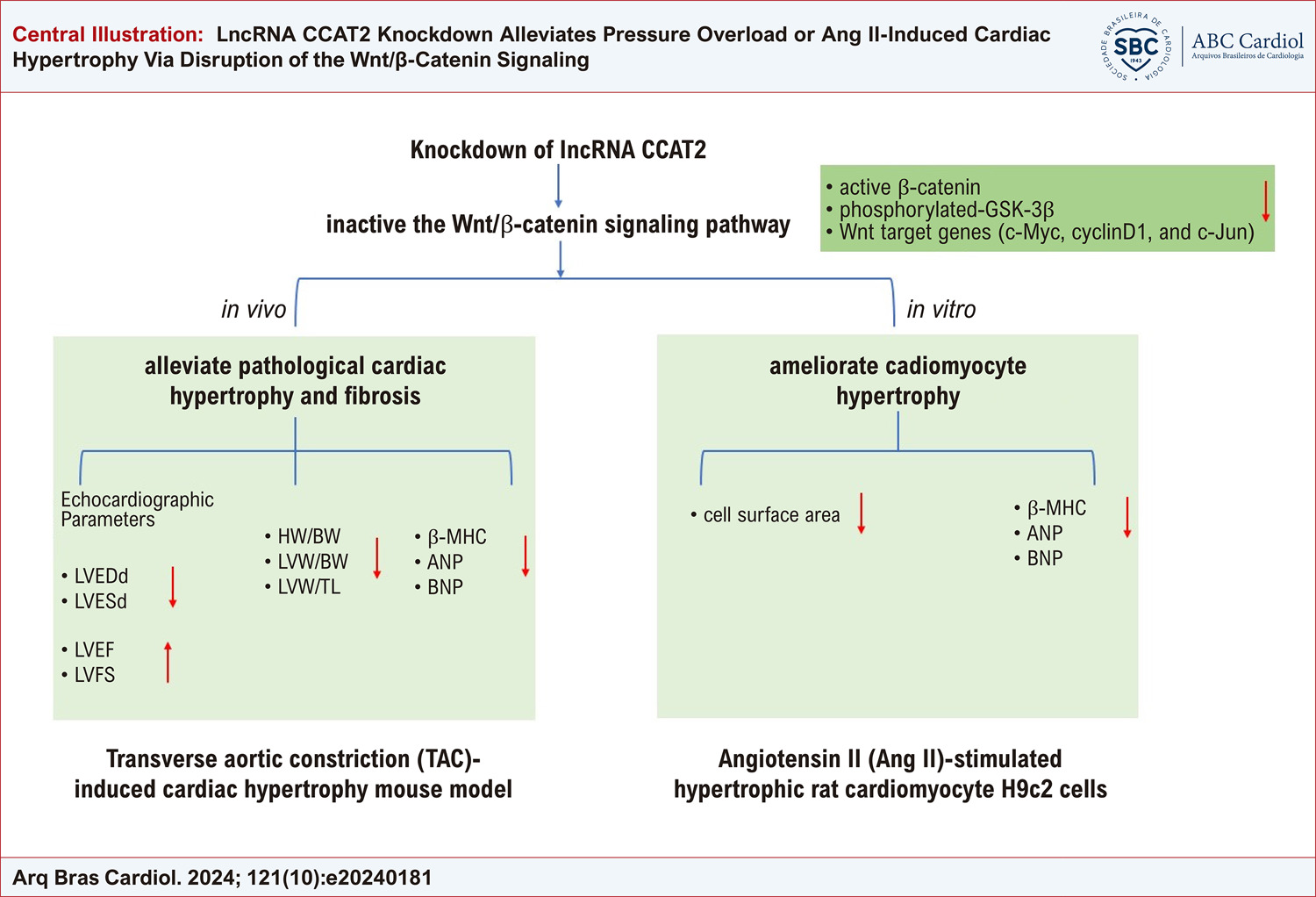
Transverse aortic constriction (TAC) procedures were conducted to construct a pressure overload-induced in vivo CH model. Angiotensin II (Ang II) treatment was utilized to induce hypertrophic rat cardiomyocyte H9c2 cells.

Results

In vivo results showed that silencing of CCAT2 reduced cardiomyocyte surface area, alleviated cardiac fibrosis, and decreased β-MHC, ANP, and BNP levels in CH mouse models. In vitro results revealed that CCAT2 knockdown reduced cell surface area and attenuated β-MHC, ANP, and BNP levels in hypertrophic H9c2 cells. Besides, CCAT2 silencing decreased the levels of active β-catenin, phosphorylated-GSK-3β, and Wnt target genes (c-Myc, cyclinD1, and c-Jun) in CH mice and hypertrophic H9c2 cells. Importantly, treatment with the Wnt/β-catenin pathway activator LiCl reversed the suppression of CCAT2 knockdown on H9c2 cell surface area and MHC, ANP, and BNP levels.

Conclusions

Collectively, CCAT2 silencing plays a protective role against CH through inactivating the Wnt/β-catenin signaling, which suggests that CCAT2 might become a promising therapeutic target for CH.

  • angiotensin II
  • Cardiomegaly
  • Catenins
Read Full Article
Creative Commons Attribution (CC BY) Creative Commons license
11/11/2024 DOI: 10.36660/abc.20240181i Views 1
Potentially Inappropriate Cardioverter Defibrillator Implants in Secondary Prevention of Death
Original Article

Potentially Inappropriate Cardioverter Defibrillator Implants in Secondary Prevention of Death

William Neves de Carvalho et al. Tainá Teixeira Viana Clara Salles Figueiredo Fernanda Martins Luiz Carlos Santana Passos

Abstract

Background:

Implantable cardioverter defibrillators (ICDs) are recommended for patients experiencing malignant tachyarrhythmias due to irreversible causes, who are clinically stable, and have a life expectancy exceeding one year. However, adverse socioeconomic and psychosocial conditions can adversely affect short-term survival and may render implantation inappropriate.

Objective:

To assess whether economic and psychosocial markers (EPSM) are associated with higher mortality in the first year (indicating potentially inappropriate implants) following ICD implantation.

Methods:

A prospective cohort study conducted between 2017 and 2021 included patients with heart failure and left ventricular ejection fraction (LVEF) < 50% who underwent ICD implantation for secondary prophylaxis. Prior to the procedure, patients were evaluated by an MDT, which examined four EPSM variables, namely socioeconomic vulnerability, self-care capacity, pharmacological adherence, and mood disorders. The participants were monitored for at least 12 months. Statistical significance was considered to be p-values < 0.05.

Results:

A total of 208 individuals were included, with 144 (68.9%) being male. The mean LVEF was 32% ±9 and 107 (51%) had Chagas disease etiology. The mortality rate in the first year was 54/208 (25.8%). All patients who died had at least one of the EPSM and there no deaths were reported among the 73 (35.4%) who did not have EPSM. In multivariate analysis, having EPSM and LVEF were the only independent predictors of mortality under 1 year: RR 20.48 (2.75 – 52.29); p=0.003 and RR 0.97 (0.93 – 0.99); p=0.047, respectively.

Conclusion:

Socioeconomic and psychosocial conditions should be identified and, where possible, resolved before implantation, as they may make device implantation a potentially inappropriate procedure.

  • Implantable Defibrillators
  • medication adherence
  • Patient Care Team
  • Social Vulnerability
  • Treatment Adherence and Compliance
Read Full Article
Creative Commons Attribution (CC BY) Creative Commons license
11/11/2024 DOI: 10.36660/abc.20220899i
Risk Factors, Management, and Evolution after the First Acute Myocardial Infarction: A Real-World Study Comparing Cohorts of Women and Men in the TriNetX Network
Original Article

Risk Factors, Management, and Evolution after the First Acute Myocardial Infarction: A Real-World Study Comparing Cohorts of Women and Men in the TriNetX Network

Camila Mota Guida et al. Eduardo Juvenal de Souza Leandro Menezes Alves da Costa Thiago Luis Scudeler … Rafael Amorim Belo Nunes Gustavo Bernardes de Figueiredo Oliveira

Abstract

Background:

International cohort studies have consistently demonstrated an unfavorable prognosis in female patients after the first acute myocardial infarction (AMI) over the past decades. However, national data on this topic are limited.

Objectives:

This study aims to compare national cohorts of men and women hospitalized due to the first acute myocardial infarction, examining long-term outcomes.

Methods:

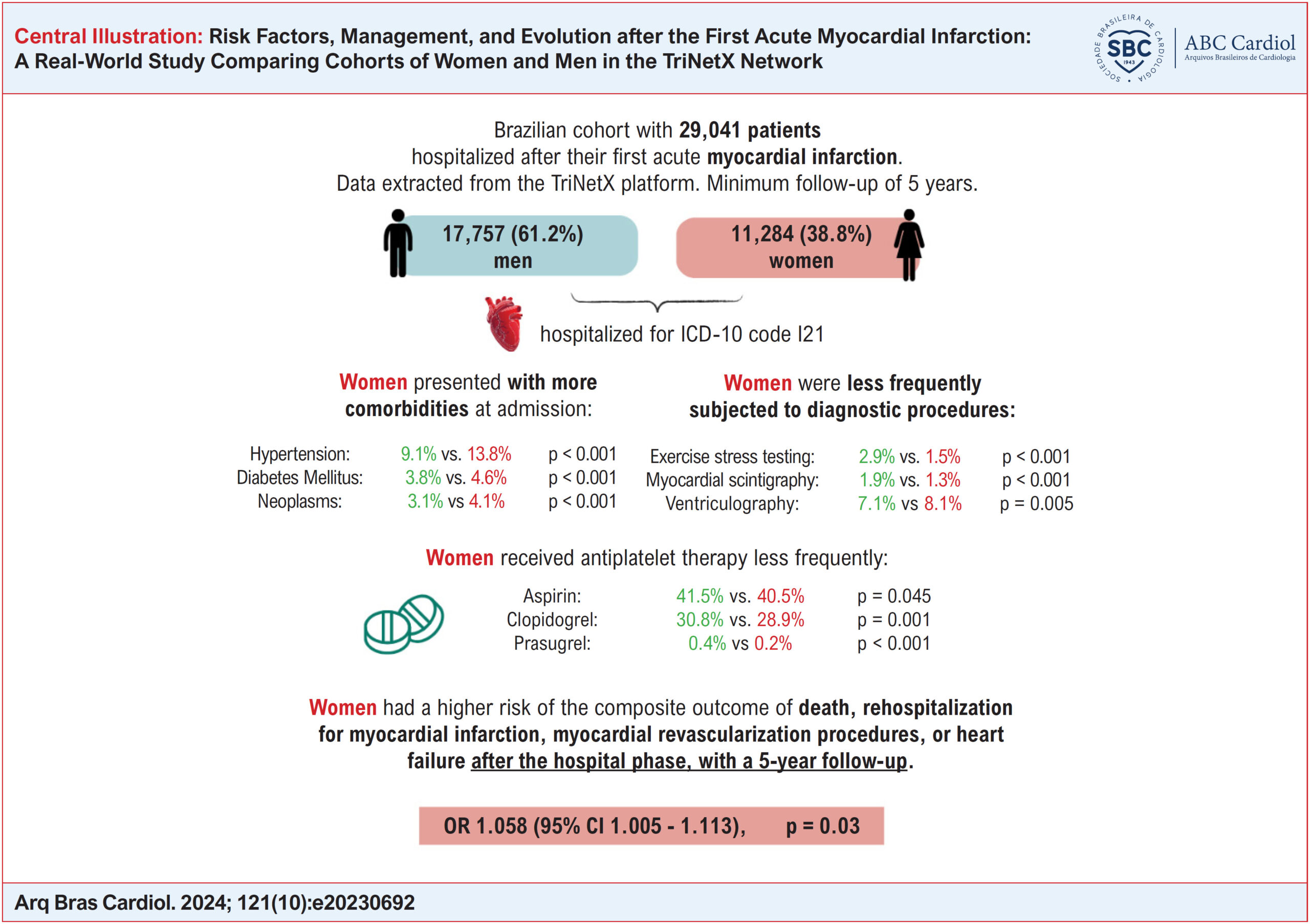
A retrospective, observational study using real-world data extracted from the global TriNetX platform, including patients of both sexes with a confirmed diagnosis of AMI according to the International Classification of Diseases (ICD), version 11, code I21. The level of statistical significance adopted in the analysis was 5% (0.05). The primary outcome assessed was a composite of death, new hospitalization for AMI, myocardial revascularization procedures, or heart failure after the hospital phase with a 5-year follow-up.

Results:

Data from 29,041 patients were evaluated, of which 11,284 (38.4%) were women. The mean age of the female and male populations was 64.4 and 59.8 years, respectively. The group of women showed a higher occurrence of the composite outcome of death, new hospitalization for AMI, myocardial revascularization procedures, or heart failure after the hospital phase with a 5-year follow-up (OR 1.058; CI 1.005 – 1.113; p = 0.03).

Conclusions:

In this large Brazilian cohort, the female sex was associated with a higher occurrence of cardiovascular events within 5 years after hospital discharge.

  • Acute Myocardial Infarction
  • Cardiovascular Disease in Women
  • Risk Factors
Read Full Article
Creative Commons Attribution (CC BY) Creative Commons license
28/10/2024 DOI: 10.36660/abc.20230692i
Figure 1
Brief Communication

Endomyocardial Biopsy Using Rigid Bioptome Technique and the Risk of Tricuspid Regurgitation after Heart Transplantation

Luís Beck-da-Silva et al. Leonardo Hennig Bridi Bruno S. Matte Felipe Homem Valle

Abstract

Endomyocardial biopsy (EB) is the preferred procedure for post-heart transplant rejection diagnosis. The rigid bioptome technique has been used due to its greater simplicity and has been criticized for the potential risk of tricuspid regurgitation (TR). We aimed to review all the EBs performed by this technique in a tertiary center and estimate the rate of complications and/or aggravation of TR.

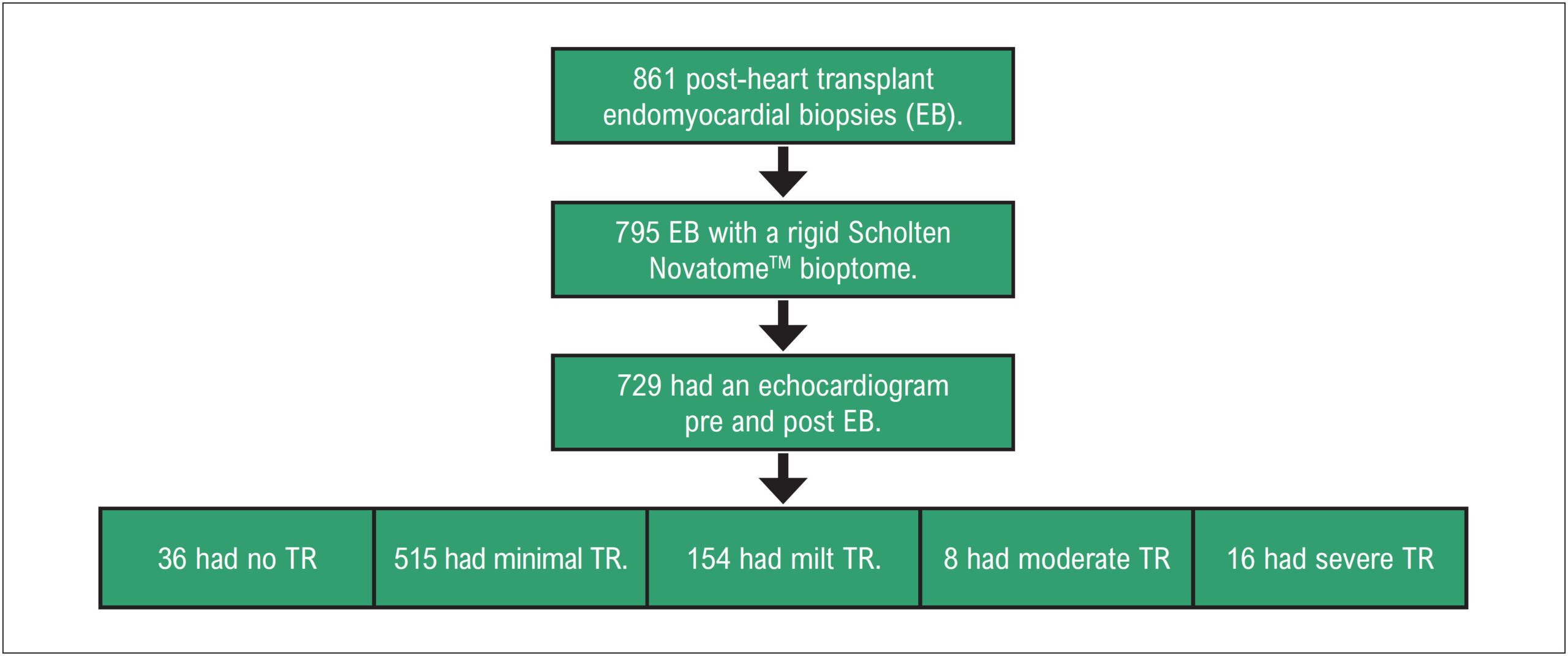
Cross-sectional, retrospective, anterograde study. Data were collected from 729 EBs performed in 55 post-heart transplant patients with a rigid Scholten Novatome™ bioptome between September 2012 to March 2022. All EBs were performed via the right jugular vein under local anesthesia and through micro-puncture and ultrasound guidance. A total of 729 procedures had an echocardiography performed before and after the procedures. The estimate of TR was categorized as absent, minimal, mild, moderate, and severe. McNemar’s chi-square test was used to analyze the degree of pre- and post-EB TR.

There was a worsening enough to become moderate or severe post-biopsy TR in two (0.27%) procedures, and there was a slight change in TR from minimal to mild TR in 25 (3.42%) procedures. In 729 percutaneous EBs performed with a rigid bioptome, there was no myocardial perforation, cardiac tamponade or pneumothorax. One death occurred within 24 hours after the procedure for an unknown reason.

EB using a rigid bioptome is safe and has not been associated with worsening TR in a follow-up of 729 EBs performed after cardiac transplantation.

The overall complication rate, including moderate to severe TR, was 0.81%. The mortality rate was 0.14%.

  • Bioptome
  • endomyocardial biopsy
  • Rigid
Read Full Article
Creative Commons Attribution (CC BY) Creative Commons license
28/10/2024 DOI: 10.36660/abc.20240223i Views 1
Causal Relationship between Television Viewing Time, Cardiovascular Diseases, and Potential Mechanisms
Original Article

Causal Relationship between Television Viewing Time, Cardiovascular Diseases, and Potential Mechanisms

Mengjin Hu et al. Boyu Li Jinggang Xia Chunlin Yin Yuejin Yang

Abstract

Background:

As the predominant leisure-time sedentary behavior, television viewing was documented to increase cardiovascular diseases in observational studies, yet the causal relationship and potential mechanisms remain to be determined.

Objectives:

To systematically investigate the causal relationship between television viewing time, cardiovascular diseases, and potential mechanisms.

Methods:

We conducted a two-sample Mendelian randomization (MR) analysis to estimate causal associations with cardiovascular diseases and biomarkers of cardiometabolic risk. The random inverse-variance weighted method was used as the primary estimate. To account for multiple comparisons, a Bonferroni correction p value for cardiovascular diseases and biomarkers of cardiometabolic risk was 0.0045 and 0.0024, respectively.

Results:

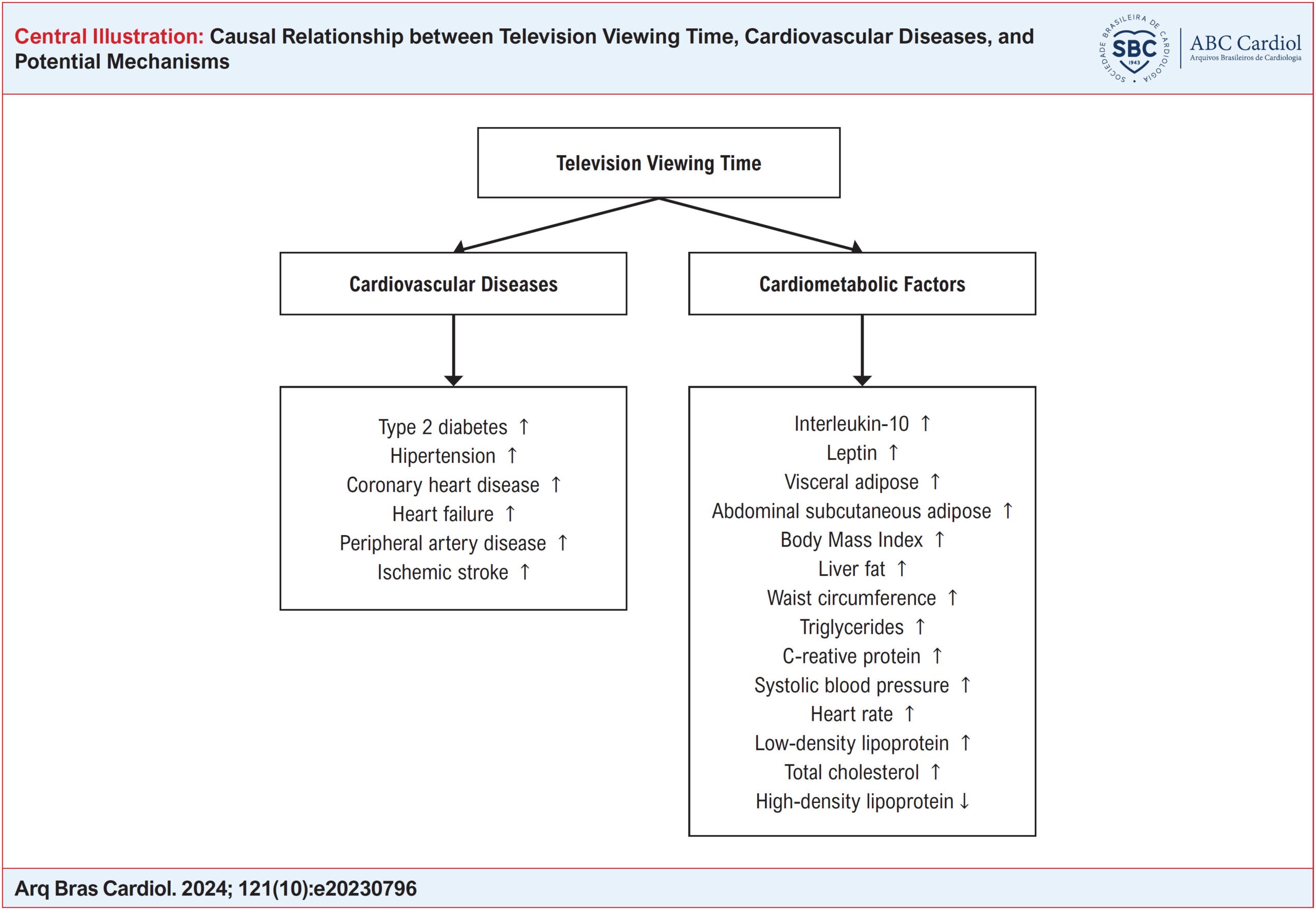
Genetically instrumented television viewing time was associated with higher risks of type 2 diabetes (odd ratio [OR]=2.51; 95% confidence interval [CI]: 1.89-3.33; p<0.00001), hypertension (OR=2.11; 95% CI: 1.67-2.66; p<0.00001), coronary heart disease (OR=1.53; 95% CI: 1.23-1.91; p=0.00015), and heart failure (OR=1.42; 95% CI: 1.18-1.70; p=0.00017). Suggestive evidence of harmful associations was also observed for peripheral artery disease (OR=1.58; 95% CI: 1.07-2.34; p=0.02253) and ischemic stroke (OR=1.34; 95% CI: 1.10-1.63; p=0.00328). Biomarkers of cardiometabolic risk, including interleukin 10, leptin, visceral adipose, abdominal subcutaneous adipose, liver fat, body mass index, waist circumference, triglycerides, and C-reactive protein, were increased. Systolic blood pressure, heart rate, low-density lipoprotein, and total cholesterol were potentially increased while high-density lipoprotein was decreased. However, television viewing time had no effect on venous thromboembolism or pulmonary embolism.

Conclusion:

Television viewing time was causally associated with increased risks of cardiovascular diseases, which may be explained by metabolic and inflammatory mechanisms.

  • Cardiometabolic Risk Factors
  • Cardiovascular Diseases
  • Inflammation
  • Mendelian Randomization Analysis
  • television
Read Full Article
Creative Commons Attribution (CC BY) Creative Commons license
28/10/2024 DOI: 10.36660/abc.20230796i Views 1
Predictive Factors for Bleeding Risk in Patients Undergoing Valvular Surgery
Original Article

Predictive Factors for Bleeding Risk in Patients Undergoing Valvular Surgery

Alef de Carvalho Vieira et al. Renato Tambellini Arnoni Ana Beatriz Silva Barbosa Attila Santos Berriel … Rafael Guimarães Vianna Mario Issa

Abstract

Background:

The postoperative period of heart valve surgery is challenging due to the risk of bleeding, leading to complications and increased morbidity and mortality.

Objective:

To develop a risk score to predict bleeding in patients after valve surgery.

Methods:

Retrospective study of patients operated on between 2021 and 2022. Patients with major bleeding were selected based on the BARC and Bojar criteria. A logistic regression analysis was performed for factors related to bleeding and a nomogram of scores was created. For statistical significance, p<0.05 and a 95% confidence interval were considered. The study was approved by the CEP.

Results:

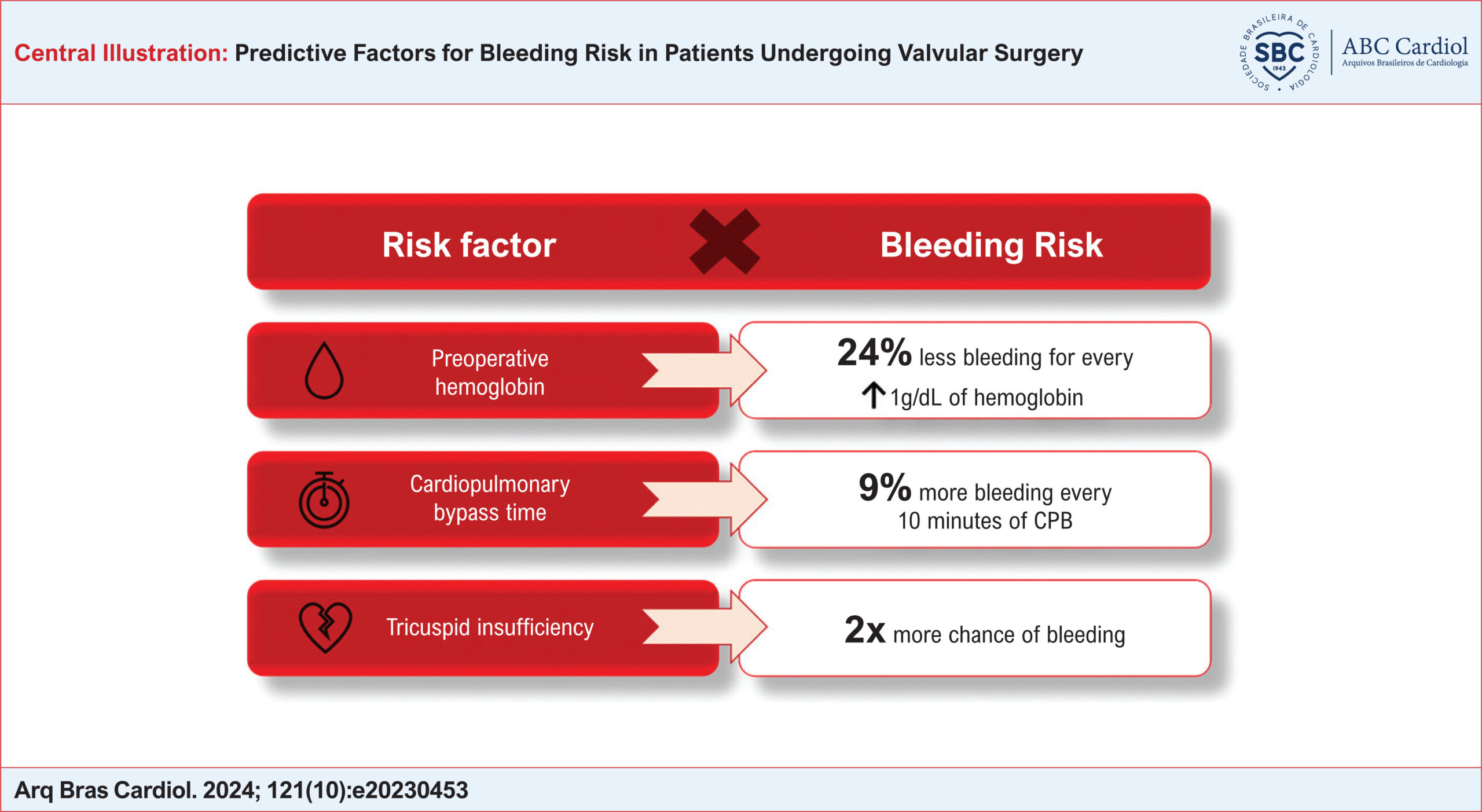
525 patients were analyzed, with a mean age of 56 years and a predominance of females. The most common valve disease was mitral insufficiency, 8.8% had increased bleeding and 4.3% had surgical reoperations. The variables with statistical significance were tricuspid insufficiency (OR 3.31, p < 0.001), chronic kidney disease/acute kidney injury (OR 2.97, p = 0.006), preoperative hemoglobin (OR 0.73, p < 0.001), reoperations (OR 2, 5, p = 0.003), cardiopulmonary bypass (CPB) time (OR 1.12, p < 0.001), 2-valve approach OR of 2.23 (p = 0.013), use of packed red blood cells OR of 2.8 (p = 0.001). In the multiple model, tricuspid insufficiency, CPB time and preoperative hemoglobin reached statistical significance.

Conclusion:

CPB time, preoperative hemoglobin and tricuspid insufficiency were independently associated with postoperative bleeding. The proposed scale is plausible and can help predict the risk of bleeding.

  • Cardiovascular Surgery
  • Postoperative Bleeding
  • risk score
  • Valvular heart disease
Read Full Article
Creative Commons Attribution (CC BY) Creative Commons license
18/10/2024 DOI: 10.36660/abc.20230453i Views 1
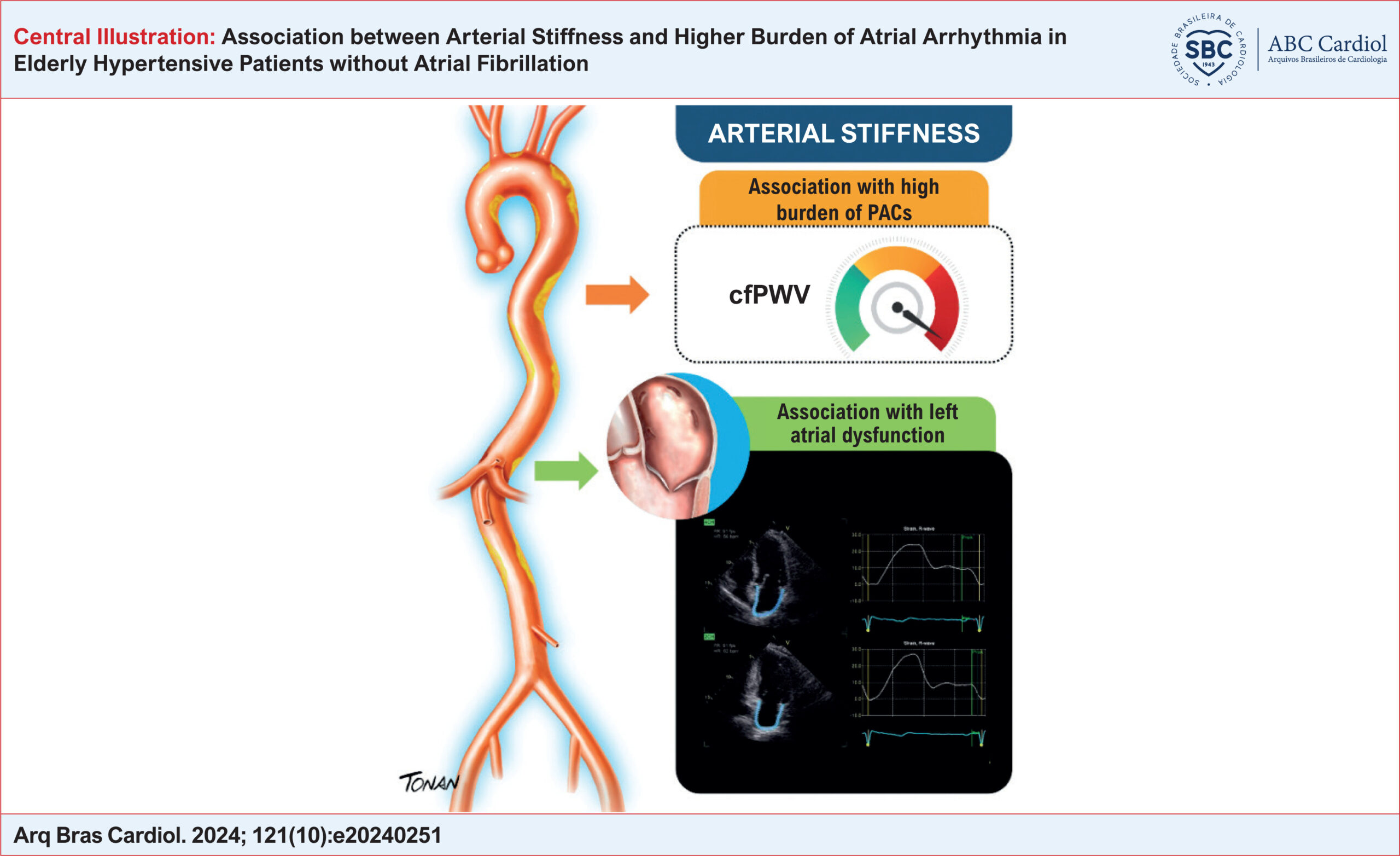
Association between Arterial Stiffness and Higher Burden of Atrial Arrhythmia in Elderly Hypertensive Patients without Atrial Fibrillation
Original Article

Association between Arterial Stiffness and Higher Burden of Atrial Arrhythmia in Elderly Hypertensive Patients without Atrial Fibrillation

João Gabriel B. Lage et al. Alexandre L. Bortolotto Luiz A. Bortolotto Renata G. S. Verardino … Gabrielle D. Pessente David C. S. Le Bihan Rodrigo B. M. Barretto Fernanda M. Consolim-Colombo Denise T. Hachul Luciana Sacilotto Tan C. Wu Sávia C. P. Bueno Esteban W. R. Rivarola César J. Gruppi Silvio A. Barbosa Juliana B. S. Alves Wilson Mathias Maurício I. Scanavacca Francisco C.C. Darrieux

Abstract

Background:

Increased arterial stiffness is currently an independent risk factor for atrial fibrillation, but the pathophysiological mechanisms of this arrhythmia remain an area of knowledge gap to be explored.

Objectives:

To investigate the existence of an association between arterial stiffness and the density of premature atrial contractions (PACs) in hypertensive individuals without atrial fibrillation.

Methods:

Cross-sectional study with hypertensive patients without diagnosed atrial fibrillation, who were studied with speckle-tracking echocardiography to assess left atrial (LA) strain and carotid-femoral pulse wave velocity (cfPWV) to assess arterial stiffness. All patients underwent 24h-ECG Holter and laboratory tests. Significance level was set at p<0.05.

Results:

Seventy participants from a single centre without overt cardiovascular disease were included. The cfPWV was correlated with higher density of PACs in 24h-Holter monitoring, independently of LV mass index (1.48 [1.08-2.03], p-value 0.005). Increased cfPWV was correlated with decreased LA strain values, with Spearman correlation coefficients of −0.27 (p-value 0.027) and −0.29 (p-value 0.018) for reservoir and conduit 2D Strain, respectively.

Conclusions:

In this study with hypertensive patients, it was possible to demonstrate an association between arterial stiffness and higher density of atrial arrhythmias. Furthermore, arterial stiffness was associated with lower left atrial strain values for reservoir and conduit functions.

  • Cardiomyopathies
  • Left Atrial Function
  • Vascular Stiffness
Read Full Article
Creative Commons Attribution (CC BY) Creative Commons license
18/10/2024 DOI: 10.36660/abc.20240251i Views 1
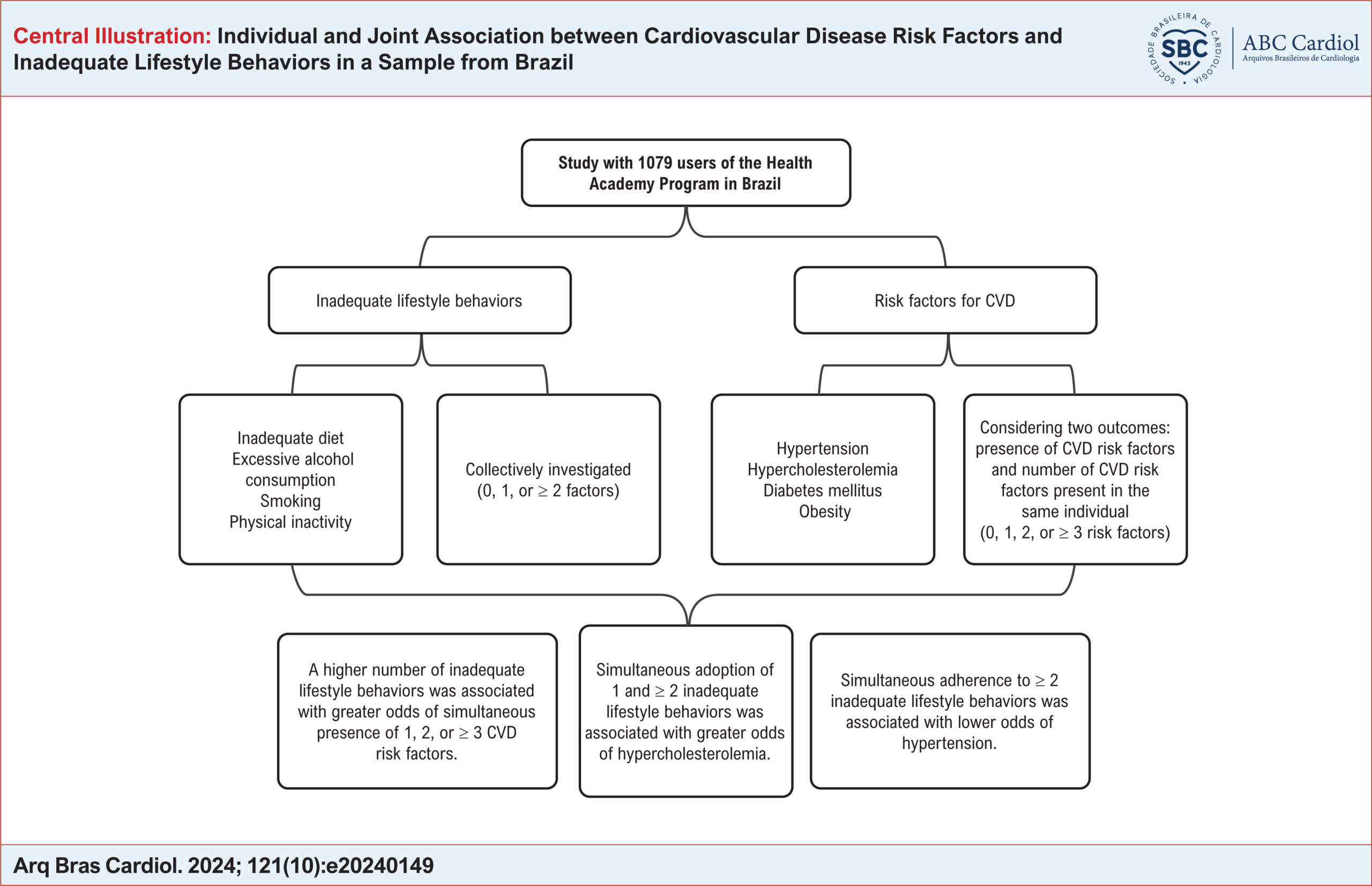
Individual and Joint Association between Cardiovascular Disease Risk Factors and Inadequate Lifestyle Behaviors in a Sample from Brazil
Original Article

Individual and Joint Association between Cardiovascular Disease Risk Factors and Inadequate Lifestyle Behaviors in a Sample from Brazil

Letícia Gonçalves et al. Suellem Zanlorenci Andreia Pelegrini Tiago Rodrigues de Lima Diego Augusto Santos Silva

Abstract

Background:

Cardiovascular diseases (CVD) are often influenced by modifiable factors, notably individuals’ lifestyle choices, which play a crucial role in modulating cardiovascular risk.

Objective:

To investigate the individual and simultaneous association between inadequate lifestyle behaviors and risk factors for CVD in adults and older adults.

Method:

A cross-sectional study with 1079 users of the Health Academy Program in Brazil. Information related to inadequate diet, excessive alcohol consumption, smoking, and physical inactivity were individually and collectively investigated (0, 1, or ≥ 2 factors) in association with CVD risk factors (hypertension, hypercholesterolemia, diabetes mellitus, and obesity), considering the following two outcomes: presence of CVD risk factors and number of CVD risk factors present in the same individual (0, 1, 2, or ≥ 3 risk factors). Logistic and multinomial logistic regression analyses were used. The statistical significance adopted was 5%.

Results:

A higher number of inadequate lifestyle behavior was associated with greater odds of simultaneous presence of 1, 2, or ≥ 3 CVD risk factors. The simultaneous adoption of 1 and ≥ 2 inadequate lifestyle behaviors was associated with greater odds of hypercholesterolemia. Simultaneous adherence to ≥ 2 inadequate lifestyle behaviors was associated with lower odds of hypertension.

Conclusion:

A greater number of inadequate lifestyle behaviors was associated with higher odds of simultaneous presence of multiple CVD risk factors.

  • Adult Health
  • Health of the Elderly
  • Health Risk Behaviors
  • Heart Disease Risk Factors
Read Full Article
Creative Commons Attribution (CC BY) Creative Commons license
18/10/2024 DOI: 10.36660/abc.20240149i Views 1
Figure 1
Research Letter

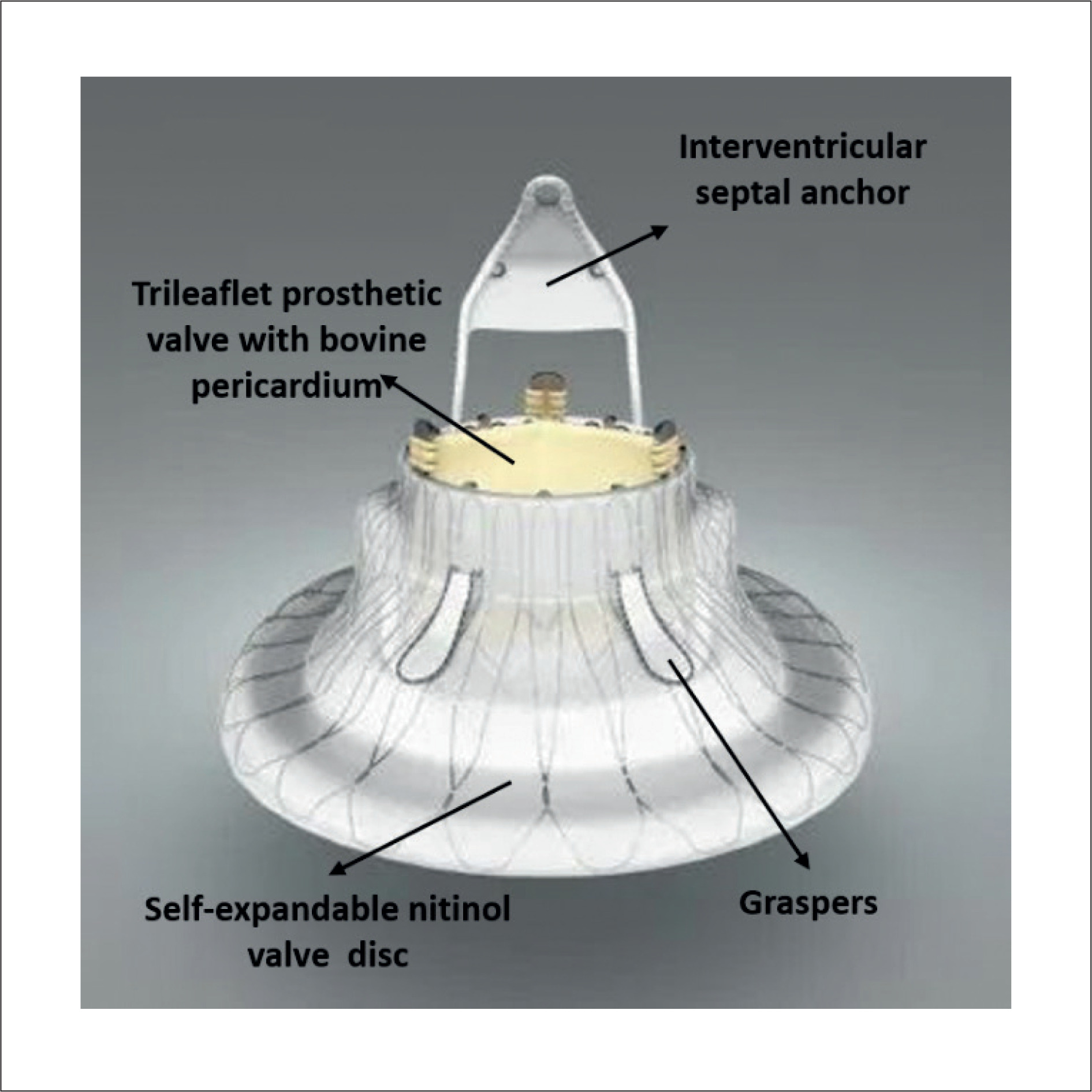
First Performance of Transjugular Transcatheter Tricuspid Valve Replacement with the Lux-Valve Plus System in Latin America. A Case Report

Vinicius Esteves et al. Pedro Beraldo de Andrade Sergio Kreimer Fernanda Almeida Esteves … Francisco Monteiro de Almeida Magalhães Thomas Modine

Introduction

The prevalence of tricuspid regurgitation (TR) increases with age, concomitant left-side heart disease, and chronic atrial fibrillation. Moderate or severe TR is associated with excess mortality and poor outcomes. The interventional treatment of choice is tricuspid valve repair, with a prosthetic ring capable of reducing the tricuspid annulus diameter, improving valve leaflet coaptation, and correcting regurgitation. Valve replacement is reserved for patients who do not have anatomical conditions for repair. However, an isolated surgical approach to the tricuspid valve continues to be rarely indicated, and there are still no data showing improved survival with TR surgical treatment alone, making this condition undertreated in clinical practice, despite the increased mortality rate in patients with moderate to severe TR clinically-only managed.

Based on these observations, the treatment of TR has recently been shifting from a conservative to a more interventional approach. This shift has led to first-in-human attempts at transcatheter tricuspid valve interventions (TTVI). Several devices have been developed, with strategies based on reducing the valve annulus, improving coaptation between the leaflets, or valve replacement. In a propensity-matched case-control study, TTVI was associated with 40% greater survival and freedom from heart failure rehospitalization.

[…]

  • Heart Failure
  • Heart Valve Prosthesis Implantation
  • Tricuspid Valve Insufficiency
Read Full Article
Creative Commons Attribution (CC BY) Creative Commons license
18/10/2024 DOI: 10.36660/abc.20240201i Views 2

How to cite this article

EndNote RIS

Electronic Document Format (Vancouver)

Monteiro MPM, Brasil HN, Sobrinho CRMR, Rocha EA. Is it Fair to Contraindicate Cardiac Defibrillator Implantation for Patients with Socioeconomic or Psychological Vulnerability?. Arquivos Brasileiros de Cardiologia 2024;121(10):e20240643.

Electronic Document Format (ABNT)

Monteiro, Marcelo de Paula Martins; Brasil, Helena Nogueira; Sobrinho, Carlos Roberto Martins Rodrigues; Rocha, Eduardo Arrais. Is it Fair to Contraindicate Cardiac Defibrillator Implantation for Patients with Socioeconomic or Psychological Vulnerability?. Arquivos Brasileiros de Cardiologia, v. 121, n. 10, e20240643, Dec. 2024.

Electronic Document Format (APA)

Monteiro, M. P. M., Brasil, H. N., Sobrinho, C. R. M. R., & Rocha, E. A. (2024). Is it Fair to Contraindicate Cardiac Defibrillator Implantation for Patients with Socioeconomic or Psychological Vulnerability?. Arquivos Brasileiros de Cardiologia, 121(10), e20240643.

Electronic Document Format (ISO)

Monteiro, Marcelo de Paula Martins and Brasil, Helena Nogueira and Sobrinho, Carlos Roberto Martins Rodrigues and Rocha, Eduardo Arrais. Is it Fair to Contraindicate Cardiac Defibrillator Implantation for Patients with Socioeconomic or Psychological Vulnerability?. Arquivos Brasileiros de Cardiologia [online]. 2024, vol. 121, n. 10, [cited 2026-10-14], e20240643. Available from: <https://journals.cardiol.br/en/article/is-it-fair-to-contraindicate-cardiac-defibrillator-implantation-for-patients-with-socioeconomic-or-psychological-vulnerability/>. ISSN 0066-782X

EndNote RIS

Electronic Document Format (Vancouver)

Ferrari F, Rossi AP, Santander IRMF. Heart Failure in Brazil: How Can We Improve its Natural History?. Arquivos Brasileiros de Cardiologia 2024;121(10):e20240644.

Electronic Document Format (ABNT)

Ferrari, Filipe; Rossi, Arthur Proença; Santander, Igor Rafael Miranda Ferreira. Heart Failure in Brazil: How Can We Improve its Natural History?. Arquivos Brasileiros de Cardiologia, v. 121, n. 10, e20240644, Dec. 2024.

Electronic Document Format (APA)

Ferrari, F., Rossi, A. P., & Santander, I. R. M. F. (2024). Heart Failure in Brazil: How Can We Improve its Natural History?. Arquivos Brasileiros de Cardiologia, 121(10), e20240644.

Electronic Document Format (ISO)

Ferrari, Filipe and Rossi, Arthur Proença and Santander, Igor Rafael Miranda Ferreira. Heart Failure in Brazil: How Can We Improve its Natural History?. Arquivos Brasileiros de Cardiologia [online]. 2024, vol. 121, n. 10, [cited 2026-10-14], e20240644. Available from: <https://journals.cardiol.br/en/article/heart-failure-in-brazil-how-can-we-improve-its-natural-history/>. ISSN 0066-782X

EndNote RIS

Electronic Document Format (Vancouver)

Mota GAF, Gatto M, Cyrino CMS, Oliveira Júnior SA, Okoshi MP. Long Non-Coding RNA CCAT2 and Pathological Cardiac Remodeling. Arquivos Brasileiros de Cardiologia 2024;121(10):e20240698.

Electronic Document Format (ABNT)

Mota, Gustavo Augusto Ferreira; Gatto, Mariana; Cyrino, Claudia Maria Silva; Oliveira Júnior, Silvio Assis de; Okoshi, Marina Politi. Long Non-Coding RNA CCAT2 and Pathological Cardiac Remodeling. Arquivos Brasileiros de Cardiologia, v. 121, n. 10, e20240698, Dec. 2024.

Electronic Document Format (APA)

Mota, G. A. F., Gatto, M., Cyrino, C. M. S., Oliveira Júnior, S. A. , & Okoshi, M. P. (2024). Long Non-Coding RNA CCAT2 and Pathological Cardiac Remodeling. Arquivos Brasileiros de Cardiologia, 121(10), e20240698.

Electronic Document Format (ISO)

Mota, Gustavo Augusto Ferreira and Gatto, Mariana and Cyrino, Claudia Maria Silva and Oliveira Júnior, Silvio Assis de and Okoshi, Marina Politi. Long Non-Coding RNA CCAT2 and Pathological Cardiac Remodeling. Arquivos Brasileiros de Cardiologia [online]. 2024, vol. 121, n. 10, [cited 2026-10-14], e20240698. Available from: <https://journals.cardiol.br/en/article/long-non-coding-rna-ccat2-and-pathological-cardiac-remodeling/>. ISSN 0066-782X

EndNote RIS

Electronic Document Format (Vancouver)

Ferreira JMBB, Vasconcelos MHC, Oliveira AA, Corrêa MES. Impact of Technological Innovation in the Treatment and Prognosis of Heart Failure. Arquivos Brasileiros de Cardiologia 2024;121(10):e20240680.

Electronic Document Format (ABNT)

Ferreira, João Marcos Bemfica Barbosa; Vasconcelos, Maria Helena Costa de; Oliveira, Andreza Araújo de; Corrêa, Maria Eduarda da Silva. Impact of Technological Innovation in the Treatment and Prognosis of Heart Failure. Arquivos Brasileiros de Cardiologia, v. 121, n. 10, e20240680, Dec. 2024.

Electronic Document Format (APA)

Ferreira, J. M. B. B., Vasconcelos, M. H. C. , Oliveira, A. A. , & Corrêa, M. E. S. (2024). Impact of Technological Innovation in the Treatment and Prognosis of Heart Failure. Arquivos Brasileiros de Cardiologia, 121(10), e20240680.

Electronic Document Format (ISO)

Ferreira, João Marcos Bemfica Barbosa and Vasconcelos, Maria Helena Costa de and Oliveira, Andreza Araújo de and Corrêa, Maria Eduarda da Silva. Impact of Technological Innovation in the Treatment and Prognosis of Heart Failure. Arquivos Brasileiros de Cardiologia [online]. 2024, vol. 121, n. 10, [cited 2026-10-14], e20240680. Available from: <https://journals.cardiol.br/en/article/impact-of-technological-innovation-in-the-treatment-and-prognosis-of-heart-failure/>. ISSN 0066-782X

EndNote RIS

Electronic Document Format (Vancouver)

Freitas DCA, Costa LMPR, Nadruz Jr. W, Marcondes-Braga FG, Vieira JL, Bernardez-Pereira S, Barbosa Neto WR, et al. Rosa dos Ventos Multicenter Cohort Study of Patients with Reduced or Mildly Reduced Ejection Fraction Heart Failure in Brazil: Rationale and Design. Arquivos Brasileiros de Cardiologia 2024;121(10):e20240120.

Electronic Document Format (ABNT)

Freitas, Dhayn Cassi de Almeida; Costa, Larissa Maria de Paula Rebouças da; Nadruz Jr., Wilson; Marcondes-Braga, Fabiana G.; Vieira, Jefferson Luis; Bernardez-Pereira, Sabrina; Barbosa Neto, Wilson Rodrigues; Alves, Silvia Marinho Martins; Wanderley, Gabriela Arcoverde; Lira, Camila Nogueira Leandro; Terui, Lucas Yugi de Souza; Silva, Ana Luísa Guedes de França e; Castro, Alana de Oliveira; Freitas Jr., Aguinaldo F.; Figueiredo Neto, José Albuquerque de; Lopes, Renato D.; Fernandes-Silva, Miguel Morita; Silvestre, Odilson Marcos. Rosa dos Ventos Multicenter Cohort Study of Patients with Reduced or Mildly Reduced Ejection Fraction Heart Failure in Brazil: Rationale and Design. Arquivos Brasileiros de Cardiologia, v. 121, n. 10, e20240120, Dec. 2024.

Electronic Document Format (APA)

Freitas, D. C. A., Costa, L. M. P. R. , Nadruz Jr., W., Marcondes-Braga, F. G., Vieira, J. L., Bernardez-Pereira, S., Barbosa Neto, W. R., Alves, S. M. M., Wanderley, G. A., Lira, C. N. L., Terui, L. Y. S., Silva, A. L. G. F. , Castro, A. O., Freitas Jr., A. F., Figueiredo Neto, J. A. , Lopes, R. D., Fernandes-Silva, M. M., & Silvestre, O. M. (2024). Rosa dos Ventos Multicenter Cohort Study of Patients with Reduced or Mildly Reduced Ejection Fraction Heart Failure in Brazil: Rationale and Design. Arquivos Brasileiros de Cardiologia, 121(10), e20240120.

Electronic Document Format (ISO)

Freitas, Dhayn Cassi de Almeida and Costa, Larissa Maria de Paula Rebouças da and Nadruz Jr., Wilson and Marcondes-Braga, Fabiana G. and Vieira, Jefferson Luis and Bernardez-Pereira, Sabrina and Barbosa Neto, Wilson Rodrigues and Alves, Silvia Marinho Martins and Wanderley, Gabriela Arcoverde and Lira, Camila Nogueira Leandro and Terui, Lucas Yugi de Souza and Silva, Ana Luísa Guedes de França e and Castro, Alana de Oliveira and Freitas Jr., Aguinaldo F. and Figueiredo Neto, José Albuquerque de and Lopes, Renato D. and Fernandes-Silva, Miguel Morita and Silvestre, Odilson Marcos. Rosa dos Ventos Multicenter Cohort Study of Patients with Reduced or Mildly Reduced Ejection Fraction Heart Failure in Brazil: Rationale and Design. Arquivos Brasileiros de Cardiologia [online]. 2024, vol. 121, n. 10, [cited 2026-10-14], e20240120. Available from: <https://journals.cardiol.br/en/article/rosa-dos-ventos-multicenter-cohort-study-of-patients-with-reduced-or-mildly-reduced-ejection-fraction-heart-failure-in-brazil-rationale-and-design/>. ISSN 0066-782X

EndNote RIS

Electronic Document Format (Vancouver)

Hotta VT, Nastari RR, Oishi GSL, Kayano AE, Oliveira JAG, Rocha RG, Mocumbi AO, et al. Cardiac Abnormalities in Hypereosinophilic Syndromes. Arquivos Brasileiros de Cardiologia 2024;121(10):e20240190.

Electronic Document Format (ABNT)

Hotta, Viviane Tiemi; Nastari, Rafael Ruas; Oishi, Gardênia da Silva Lobo; Kayano, Alexandre Eiji; Oliveira, Juliana Alzira Gonzales; Rocha, Ruiza Gonçalves; Mocumbi, Ana Olga; Seguro, Fernanda Salles; Krieger, José Eduardo; Fernandes, Fábio; Salemi, Vera Maria Cury. Cardiac Abnormalities in Hypereosinophilic Syndromes. Arquivos Brasileiros de Cardiologia, v. 121, n. 10, e20240190, Nov. 2024.

Electronic Document Format (APA)

Hotta, V. T., Nastari, R. R., Oishi, G. S. L., Kayano, A. E., Oliveira, J. A. G., Rocha, R. G., Mocumbi, A. O., Seguro, F. S., Krieger, J. E., Fernandes, F., & Salemi, V. M. C. (2024). Cardiac Abnormalities in Hypereosinophilic Syndromes. Arquivos Brasileiros de Cardiologia, 121(10), e20240190.

Electronic Document Format (ISO)

Hotta, Viviane Tiemi and Nastari, Rafael Ruas and Oishi, Gardênia da Silva Lobo and Kayano, Alexandre Eiji and Oliveira, Juliana Alzira Gonzales and Rocha, Ruiza Gonçalves and Mocumbi, Ana Olga and Seguro, Fernanda Salles and Krieger, José Eduardo and Fernandes, Fábio and Salemi, Vera Maria Cury. Cardiac Abnormalities in Hypereosinophilic Syndromes. Arquivos Brasileiros de Cardiologia [online]. 2024, vol. 121, n. 10, [cited 2026-10-14], e20240190. Available from: <https://journals.cardiol.br/en/article/cardiac-abnormalities-in-hypereosinophilic-syndromes/>. ISSN 0066-782X

EndNote RIS

Electronic Document Format (Vancouver)

Malachias MVB, Kaiser SE, Albuquerque DC, Brandão AA, Sposito AC, Moura LZ, Magalhães LBNC, et al. Risk of Adverse Health Outcomes in Patients with Poor Adherence to Cardiovascular Medication Treatment: A Systematic Review. Arquivos Brasileiros de Cardiologia 2024;121(10):e20240469.

Electronic Document Format (ABNT)

Malachias, Marcus Vinícius Bolívar; Kaiser, Sergio Emanuel; Albuquerque, Denilson Campos de; Brandão, Andrea Araújo; Sposito, Andrei Carvalho; Moura, Lidia Zytysnky; Magalhães, Lucélia Batista Neves Cunha; Mota-Gomes, Marco Antonio; Clausell, Nadine; Jardim, Paulo César Veiga; Nadruz, Wilson; Barros, Bruno Monteiro; Luna, Leonardo Castro; Barroso, Weimar Kunz Sebba. Risk of Adverse Health Outcomes in Patients with Poor Adherence to Cardiovascular Medication Treatment: A Systematic Review. Arquivos Brasileiros de Cardiologia, v. 121, n. 10, e20240469, Nov. 2024.

Electronic Document Format (APA)

Malachias, M. V. B., Kaiser, S. E., Albuquerque, D. C. , Brandão, A. A., Sposito, A. C., Moura, L. Z., Magalhães, L. B. N. C., Mota-Gomes, M. A., Clausell, N., Jardim, P. C. V., Nadruz, W., Barros, B. M., Luna, L. C., & Barroso, W. K. S. (2024). Risk of Adverse Health Outcomes in Patients with Poor Adherence to Cardiovascular Medication Treatment: A Systematic Review. Arquivos Brasileiros de Cardiologia, 121(10), e20240469.

Electronic Document Format (ISO)

Malachias, Marcus Vinícius Bolívar and Kaiser, Sergio Emanuel and Albuquerque, Denilson Campos de and Brandão, Andrea Araújo and Sposito, Andrei Carvalho and Moura, Lidia Zytysnky and Magalhães, Lucélia Batista Neves Cunha and Mota-Gomes, Marco Antonio and Clausell, Nadine and Jardim, Paulo César Veiga and Nadruz, Wilson and Barros, Bruno Monteiro and Luna, Leonardo Castro and Barroso, Weimar Kunz Sebba. Risk of Adverse Health Outcomes in Patients with Poor Adherence to Cardiovascular Medication Treatment: A Systematic Review. Arquivos Brasileiros de Cardiologia [online]. 2024, vol. 121, n. 10, [cited 2026-10-14], e20240469. Available from: <https://journals.cardiol.br/en/article/risk-of-adverse-health-outcomes-in-patients-with-poor-adherence-to-cardiovascular-medication-treatment-a-systematic-review/>. ISSN 0066-782X

EndNote RIS

Electronic Document Format (Vancouver)

. Erratum. Arquivos Brasileiros de Cardiologia 2024;121(10):e20240681.

Electronic Document Format (ABNT)

. Erratum. Arquivos Brasileiros de Cardiologia, v. 121, n. 10, e20240681, Nov. 2024.

Electronic Document Format (APA)

(2024). Erratum. Arquivos Brasileiros de Cardiologia, 121(10), e20240681.

Electronic Document Format (ISO)

. Erratum. Arquivos Brasileiros de Cardiologia [online]. 2024, vol. 121, n. 10, [cited 2026-10-14], e20240681. Available from: <https://journals.cardiol.br/en/article/erratum-47/>. ISSN 0066-782X

EndNote RIS

Electronic Document Format (Vancouver)

Itaya ED, Monteiro DHF, Itaya GC, Kong N, d’Avila A. Lyme Carditis: An Infectious Cause of Atrioventricular Block – A Case Report. Arquivos Brasileiros de Cardiologia 2024;121(10):e20240301.

Electronic Document Format (ABNT)

Itaya, Eduardo Dan; Monteiro, Danilo Hantschick Fernandes; Itaya, Gabriela Coelho; Kong, Nathan; d’Avila, Andre. Lyme Carditis: An Infectious Cause of Atrioventricular Block – A Case Report. Arquivos Brasileiros de Cardiologia, v. 121, n. 10, e20240301, Nov. 2024.

Electronic Document Format (APA)

Itaya, E. D., Monteiro, D. H. F., Itaya, G. C., Kong, N., & d’Avila, A. (2024). Lyme Carditis: An Infectious Cause of Atrioventricular Block – A Case Report. Arquivos Brasileiros de Cardiologia, 121(10), e20240301.

Electronic Document Format (ISO)

Itaya, Eduardo Dan and Monteiro, Danilo Hantschick Fernandes and Itaya, Gabriela Coelho and Kong, Nathan and d’Avila, Andre. Lyme Carditis: An Infectious Cause of Atrioventricular Block – A Case Report. Arquivos Brasileiros de Cardiologia [online]. 2024, vol. 121, n. 10, [cited 2026-10-14], e20240301. Available from: <https://journals.cardiol.br/en/article/lyme-carditis-an-infectious-cause-of-atrioventricular-block-a-case-report/>. ISSN 0066-782X

EndNote RIS

Electronic Document Format (Vancouver)

Pires LVL. Is This a Causal Relationship? Mendelian Randomization as a Statistical Method for Unraveling Connections. Arquivos Brasileiros de Cardiologia 2024;121(10):e20240606.

Electronic Document Format (ABNT)

Pires, Lucas Vieira Lacerda. Is This a Causal Relationship? Mendelian Randomization as a Statistical Method for Unraveling Connections. Arquivos Brasileiros de Cardiologia, v. 121, n. 10, e20240606, Nov. 2024.

Electronic Document Format (APA)

Pires, L. V. L. (2024). Is This a Causal Relationship? Mendelian Randomization as a Statistical Method for Unraveling Connections. Arquivos Brasileiros de Cardiologia, 121(10), e20240606.

Electronic Document Format (ISO)

Pires, Lucas Vieira Lacerda. Is This a Causal Relationship? Mendelian Randomization as a Statistical Method for Unraveling Connections. Arquivos Brasileiros de Cardiologia [online]. 2024, vol. 121, n. 10, [cited 2026-10-14], e20240606. Available from: <https://journals.cardiol.br/en/article/is-this-a-causal-relationship-mendelian-randomization-as-a-statistical-method-for-unraveling-connections/>. ISSN 0066-782X

EndNote RIS

Electronic Document Format (Vancouver)

Scanavacca M, Pisani C. Impact of Pulsed Field Ablation on Atrial Fibrillation. Arquivos Brasileiros de Cardiologia 2024;121(10):e20240565.

Electronic Document Format (ABNT)

Scanavacca, Mauricio; Pisani, Cristiano. Impact of Pulsed Field Ablation on Atrial Fibrillation. Arquivos Brasileiros de Cardiologia, v. 121, n. 10, e20240565, Nov. 2024.

Electronic Document Format (APA)

Scanavacca, M., & Pisani, C. (2024). Impact of Pulsed Field Ablation on Atrial Fibrillation. Arquivos Brasileiros de Cardiologia, 121(10), e20240565.

Electronic Document Format (ISO)

Scanavacca, Mauricio and Pisani, Cristiano. Impact of Pulsed Field Ablation on Atrial Fibrillation. Arquivos Brasileiros de Cardiologia [online]. 2024, vol. 121, n. 10, [cited 2026-10-14], e20240565. Available from: <https://journals.cardiol.br/en/article/impact-of-pulsed-field-ablation-on-atrial-fibrillation/>. ISSN 0066-782X

EndNote RIS

Electronic Document Format (Vancouver)

Gismondi RA, Neves MF. Atrial Cardiomyopathy and Hypertension: Connections between Arterial Stiffness and Subclinical Atrial Arrhythmias. Arquivos Brasileiros de Cardiologia 2024;121(10):e20240598.

Electronic Document Format (ABNT)

Gismondi, Ronaldo Altenburg; Neves, Mario Fritsch. Atrial Cardiomyopathy and Hypertension: Connections between Arterial Stiffness and Subclinical Atrial Arrhythmias. Arquivos Brasileiros de Cardiologia, v. 121, n. 10, e20240598, Nov. 2024.

Electronic Document Format (APA)

Gismondi, R. A., & Neves, M. F. (2024). Atrial Cardiomyopathy and Hypertension: Connections between Arterial Stiffness and Subclinical Atrial Arrhythmias. Arquivos Brasileiros de Cardiologia, 121(10), e20240598.

Electronic Document Format (ISO)

Gismondi, Ronaldo Altenburg and Neves, Mario Fritsch. Atrial Cardiomyopathy and Hypertension: Connections between Arterial Stiffness and Subclinical Atrial Arrhythmias. Arquivos Brasileiros de Cardiologia [online]. 2024, vol. 121, n. 10, [cited 2026-10-14], e20240598. Available from: <https://journals.cardiol.br/en/article/atrial-cardiomyopathy-and-hypertension-connections-between-arterial-stiffness-and-subclinical-atrial-arrhythmias/>. ISSN 0066-782X

EndNote RIS

Electronic Document Format (Vancouver)

Lima VFS, Fecchio RY, Piemonte MEP, Correia MA, Kanegusuku H, Ritti-Dias RM. Intrarater Reliability and Agreement of Blood Pressure, Arterial Stiffness, and Heart Rate Variability Assessments in Patients With Parkinson’s Disease. Arquivos Brasileiros de Cardiologia 2024;121(10):e20240132.

Electronic Document Format (ABNT)

Lima, Verônica de Fátima Souza; Fecchio, Rafael Yokoyama; Piemonte, Maria Elisa Pimentel; Correia, Marilia de Almeida; Kanegusuku, Hélcio; Ritti-Dias, Raphael Mendes. Intrarater Reliability and Agreement of Blood Pressure, Arterial Stiffness, and Heart Rate Variability Assessments in Patients With Parkinson’s Disease. Arquivos Brasileiros de Cardiologia, v. 121, n. 10, e20240132, Nov. 2024.

Electronic Document Format (APA)

Lima, V. F. S., Fecchio, R. Y., Piemonte, M. E. P., Correia, M. A., Kanegusuku, H., & Ritti-Dias, R. M. (2024). Intrarater Reliability and Agreement of Blood Pressure, Arterial Stiffness, and Heart Rate Variability Assessments in Patients With Parkinson’s Disease. Arquivos Brasileiros de Cardiologia, 121(10), e20240132.

Electronic Document Format (ISO)

Lima, Verônica de Fátima Souza and Fecchio, Rafael Yokoyama and Piemonte, Maria Elisa Pimentel and Correia, Marilia de Almeida and Kanegusuku, Hélcio and Ritti-Dias, Raphael Mendes. Intrarater Reliability and Agreement of Blood Pressure, Arterial Stiffness, and Heart Rate Variability Assessments in Patients With Parkinson’s Disease. Arquivos Brasileiros de Cardiologia [online]. 2024, vol. 121, n. 10, [cited 2026-10-14], e20240132. Available from: <https://journals.cardiol.br/en/article/intrarater-reliability-and-agreement-of-blood-pressure-arterial-stiffness-and-heart-rate-variability-assessments-in-patients-with-parkinsons-disease/>. ISSN 0066-782X

EndNote RIS

Electronic Document Format (Vancouver)

Zhang X, Chen Z, Zhang N, Yu B, Li W, Zhang M, Wu X, et al. LncRNA CCAT2 Knockdown Alleviates Pressure Overload or Ang II-Induced Cardiac Hypertrophy Via Disruption of the Wnt/β-Catenin Signaling. Arquivos Brasileiros de Cardiologia 2024;121(10):e20240181.

Electronic Document Format (ABNT)

Zhang, Xiaojun; Chen, Zhen; Zhang, Ning; Yu, Bo; Li, Wei; Zhang, Mengli; Wu, Xian; Liu, Ganzhe; Dong, Meizhen. LncRNA CCAT2 Knockdown Alleviates Pressure Overload or Ang II-Induced Cardiac Hypertrophy Via Disruption of the Wnt/β-Catenin Signaling. Arquivos Brasileiros de Cardiologia, v. 121, n. 10, e20240181, Nov. 2024.

Electronic Document Format (APA)

Zhang, X., Chen, Z., Zhang, N., Yu, B., Li, W., Zhang, M., Wu, X., Liu, G., & Dong, M. (2024). LncRNA CCAT2 Knockdown Alleviates Pressure Overload or Ang II-Induced Cardiac Hypertrophy Via Disruption of the Wnt/β-Catenin Signaling. Arquivos Brasileiros de Cardiologia, 121(10), e20240181.

Electronic Document Format (ISO)

Zhang, Xiaojun and Chen, Zhen and Zhang, Ning and Yu, Bo and Li, Wei and Zhang, Mengli and Wu, Xian and Liu, Ganzhe and Dong, Meizhen. LncRNA CCAT2 Knockdown Alleviates Pressure Overload or Ang II-Induced Cardiac Hypertrophy Via Disruption of the Wnt/β-Catenin Signaling. Arquivos Brasileiros de Cardiologia [online]. 2024, vol. 121, n. 10, [cited 2026-10-14], e20240181. Available from: <https://journals.cardiol.br/en/article/lncrna-ccat2-knockdown-alleviates-pressure-overload-or-ang-ii-induced-cardiac-hypertrophy-via-disruption-of-the-wnt-%ce%b2-catenin-signaling/>. ISSN 0066-782X

EndNote RIS

Electronic Document Format (Vancouver)

Carvalho WN, Viana TT, Figueiredo CS, Martins F, Passos LCS. Potentially Inappropriate Cardioverter Defibrillator Implants in Secondary Prevention of Death. Arquivos Brasileiros de Cardiologia 2024;121(10):e20220899.

Electronic Document Format (ABNT)

Carvalho, William Neves de; Viana, Tainá Teixeira; Figueiredo, Clara Salles; Martins, Fernanda; Passos, Luiz Carlos Santana. Potentially Inappropriate Cardioverter Defibrillator Implants in Secondary Prevention of Death. Arquivos Brasileiros de Cardiologia, v. 121, n. 10, e20220899, Nov. 2024.

Electronic Document Format (APA)

Carvalho, W. N. , Viana, T. T., Figueiredo, C. S., Martins, F., & Passos, L. C. S. (2024). Potentially Inappropriate Cardioverter Defibrillator Implants in Secondary Prevention of Death. Arquivos Brasileiros de Cardiologia, 121(10), e20220899.

Electronic Document Format (ISO)

Carvalho, William Neves de and Viana, Tainá Teixeira and Figueiredo, Clara Salles and Martins, Fernanda and Passos, Luiz Carlos Santana. Potentially Inappropriate Cardioverter Defibrillator Implants in Secondary Prevention of Death. Arquivos Brasileiros de Cardiologia [online]. 2024, vol. 121, n. 10, [cited 2026-10-14], e20220899. Available from: <https://journals.cardiol.br/en/article/potentially-inappropriate-cardioverter-defibrillator-implants-in-secondary-prevention-of-death/>. ISSN 0066-782X

EndNote RIS

Electronic Document Format (Vancouver)

Guida CM, Souza EJ, Costa LMA, Scudeler TL, Nunes RAB, Oliveira GBF. Risk Factors, Management, and Evolution after the First Acute Myocardial Infarction: A Real-World Study Comparing Cohorts of Women and Men in the TriNetX Network. Arquivos Brasileiros de Cardiologia 2024;121(10):e20230692.

Electronic Document Format (ABNT)

Guida, Camila Mota; Souza, Eduardo Juvenal de; Costa, Leandro Menezes Alves da; Scudeler, Thiago Luis; Nunes, Rafael Amorim Belo; Oliveira, Gustavo Bernardes de Figueiredo. Risk Factors, Management, and Evolution after the First Acute Myocardial Infarction: A Real-World Study Comparing Cohorts of Women and Men in the TriNetX Network. Arquivos Brasileiros de Cardiologia, v. 121, n. 10, e20230692, Oct. 2024.

Electronic Document Format (APA)

Guida, C. M., Souza, E. J. , Costa, L. M. A. , Scudeler, T. L., Nunes, R. A. B., & Oliveira, G. B. F. (2024). Risk Factors, Management, and Evolution after the First Acute Myocardial Infarction: A Real-World Study Comparing Cohorts of Women and Men in the TriNetX Network. Arquivos Brasileiros de Cardiologia, 121(10), e20230692.

Electronic Document Format (ISO)

Guida, Camila Mota and Souza, Eduardo Juvenal de and Costa, Leandro Menezes Alves da and Scudeler, Thiago Luis and Nunes, Rafael Amorim Belo and Oliveira, Gustavo Bernardes de Figueiredo. Risk Factors, Management, and Evolution after the First Acute Myocardial Infarction: A Real-World Study Comparing Cohorts of Women and Men in the TriNetX Network. Arquivos Brasileiros de Cardiologia [online]. 2024, vol. 121, n. 10, [cited 2026-10-14], e20230692. Available from: <https://journals.cardiol.br/en/article/risk-factors-management-and-evolution-after-the-first-acute-myocardial-infarction-a-real-world-study-comparing-cohorts-of-women-and-men-in-the-trinetx-network/>. ISSN 0066-782X

EndNote RIS

Electronic Document Format (Vancouver)

Beck-da-Silva L, Bridi LH, Matte BS, Valle FH. Endomyocardial Biopsy Using Rigid Bioptome Technique and the Risk of Tricuspid Regurgitation after Heart Transplantation. Arquivos Brasileiros de Cardiologia 2024;121(10):e20240223.

Electronic Document Format (ABNT)

Beck-da-Silva, Luís; Bridi, Leonardo Hennig; Matte, Bruno S.; Valle, Felipe Homem. Endomyocardial Biopsy Using Rigid Bioptome Technique and the Risk of Tricuspid Regurgitation after Heart Transplantation. Arquivos Brasileiros de Cardiologia, v. 121, n. 10, e20240223, Oct. 2024.

Electronic Document Format (APA)

Beck-da-Silva, L., Bridi, L. H., Matte, B. S., & Valle, F. H. (2024). Endomyocardial Biopsy Using Rigid Bioptome Technique and the Risk of Tricuspid Regurgitation after Heart Transplantation. Arquivos Brasileiros de Cardiologia, 121(10), e20240223.

Electronic Document Format (ISO)

Beck-da-Silva, Luís and Bridi, Leonardo Hennig and Matte, Bruno S. and Valle, Felipe Homem. Endomyocardial Biopsy Using Rigid Bioptome Technique and the Risk of Tricuspid Regurgitation after Heart Transplantation. Arquivos Brasileiros de Cardiologia [online]. 2024, vol. 121, n. 10, [cited 2026-10-14], e20240223. Available from: <https://journals.cardiol.br/en/article/endomyocardial-biopsy-using-rigid-bioptome-technique-and-the-risk-of-tricuspid-regurgitation-after-heart-transplantation/>. ISSN 0066-782X

EndNote RIS

Electronic Document Format (Vancouver)

Hu M, Li B, Xia J, Yin C, Yang Y. Causal Relationship between Television Viewing Time, Cardiovascular Diseases, and Potential Mechanisms. Arquivos Brasileiros de Cardiologia 2024;121(10):e20230796.

Electronic Document Format (ABNT)

Hu, Mengjin; Li, Boyu; Xia, Jinggang; Yin, Chunlin; Yang, Yuejin. Causal Relationship between Television Viewing Time, Cardiovascular Diseases, and Potential Mechanisms. Arquivos Brasileiros de Cardiologia, v. 121, n. 10, e20230796, Oct. 2024.

Electronic Document Format (APA)

Hu, M., Li, B., Xia, J., Yin, C., & Yang, Y. (2024). Causal Relationship between Television Viewing Time, Cardiovascular Diseases, and Potential Mechanisms. Arquivos Brasileiros de Cardiologia, 121(10), e20230796.

Electronic Document Format (ISO)

Hu, Mengjin and Li, Boyu and Xia, Jinggang and Yin, Chunlin and Yang, Yuejin. Causal Relationship between Television Viewing Time, Cardiovascular Diseases, and Potential Mechanisms. Arquivos Brasileiros de Cardiologia [online]. 2024, vol. 121, n. 10, [cited 2026-10-14], e20230796. Available from: <https://journals.cardiol.br/en/article/causal-relationship-between-television-viewing-time-cardiovascular-diseases-and-potential-mechanisms/>. ISSN 0066-782X

EndNote RIS

Electronic Document Format (Vancouver)

Vieira AC, Arnoni RT, Barbosa ABS, Berriel AS, Vianna RG, Issa M. Predictive Factors for Bleeding Risk in Patients Undergoing Valvular Surgery. Arquivos Brasileiros de Cardiologia 2024;121(10):e20230453.

Electronic Document Format (ABNT)

Vieira, Alef de Carvalho; Arnoni, Renato Tambellini; Barbosa, Ana Beatriz Silva; Berriel, Attila Santos; Vianna, Rafael Guimarães; Issa, Mario. Predictive Factors for Bleeding Risk in Patients Undergoing Valvular Surgery. Arquivos Brasileiros de Cardiologia, v. 121, n. 10, e20230453, Oct. 2024.

Electronic Document Format (APA)

Vieira, A. C., Arnoni, R. T., Barbosa, A. B. S., Berriel, A. S., Vianna, R. G., & Issa, M. (2024). Predictive Factors for Bleeding Risk in Patients Undergoing Valvular Surgery. Arquivos Brasileiros de Cardiologia, 121(10), e20230453.

Electronic Document Format (ISO)

Vieira, Alef de Carvalho and Arnoni, Renato Tambellini and Barbosa, Ana Beatriz Silva and Berriel, Attila Santos and Vianna, Rafael Guimarães and Issa, Mario. Predictive Factors for Bleeding Risk in Patients Undergoing Valvular Surgery. Arquivos Brasileiros de Cardiologia [online]. 2024, vol. 121, n. 10, [cited 2026-10-14], e20230453. Available from: <https://journals.cardiol.br/en/article/predictive-factors-for-bleeding-risk-in-patients-undergoing-valvular-surgery/>. ISSN 0066-782X

EndNote RIS

Electronic Document Format (Vancouver)

Lage JGB, Bortolotto AL, Bortolotto LA, Verardino RGS, Pessente GD, Bihan DCSL, Barretto RBM, et al. Association between Arterial Stiffness and Higher Burden of Atrial Arrhythmia in Elderly Hypertensive Patients without Atrial Fibrillation. Arquivos Brasileiros de Cardiologia 2024;121(10):e20240251.

Electronic Document Format (ABNT)

Lage, João Gabriel B.; Bortolotto, Alexandre L.; Bortolotto, Luiz A.; Verardino, Renata G. S.; Pessente, Gabrielle D.; Bihan, David C. S. Le; Barretto, Rodrigo B. M.; Consolim-Colombo, Fernanda M.; Hachul, Denise T.; Sacilotto, Luciana; Wu, Tan C.; Bueno, Sávia C. P.; Rivarola, Esteban W. R.; Gruppi, César J.; Barbosa, Silvio A.; Alves, Juliana B. S.; Mathias, Wilson; Scanavacca, Maurício I.; Darrieux, Francisco C.C.. Association between Arterial Stiffness and Higher Burden of Atrial Arrhythmia in Elderly Hypertensive Patients without Atrial Fibrillation. Arquivos Brasileiros de Cardiologia, v. 121, n. 10, e20240251, Oct. 2024.

Electronic Document Format (APA)

Lage, J. G. B., Bortolotto, A. L., Bortolotto, L. A., Verardino, R. G. S., Pessente, G. D., Bihan, D. C. S. L., Barretto, R. B. M., Consolim-Colombo, F. M., Hachul, D. T., Sacilotto, L., Wu, T. C., Bueno, S. C. P., Rivarola, E. W. R., Gruppi, C. J., Barbosa, S. A., Alves, J. B. S., Mathias, W., Scanavacca, M. I., & Darrieux, F. C. (2024). Association between Arterial Stiffness and Higher Burden of Atrial Arrhythmia in Elderly Hypertensive Patients without Atrial Fibrillation. Arquivos Brasileiros de Cardiologia, 121(10), e20240251.

Electronic Document Format (ISO)

Lage, João Gabriel B. and Bortolotto, Alexandre L. and Bortolotto, Luiz A. and Verardino, Renata G. S. and Pessente, Gabrielle D. and Bihan, David C. S. Le and Barretto, Rodrigo B. M. and Consolim-Colombo, Fernanda M. and Hachul, Denise T. and Sacilotto, Luciana and Wu, Tan C. and Bueno, Sávia C. P. and Rivarola, Esteban W. R. and Gruppi, César J. and Barbosa, Silvio A. and Alves, Juliana B. S. and Mathias, Wilson and Scanavacca, Maurício I. and Darrieux, Francisco C.C.. Association between Arterial Stiffness and Higher Burden of Atrial Arrhythmia in Elderly Hypertensive Patients without Atrial Fibrillation. Arquivos Brasileiros de Cardiologia [online]. 2024, vol. 121, n. 10, [cited 2026-10-14], e20240251. Available from: <https://journals.cardiol.br/en/article/association-between-arterial-stiffness-and-higher-burden-of-atrial-arrhythmia-in-elderly-hypertensive-patients-without-atrial-fibrillation/>. ISSN 0066-782X

EndNote RIS

Electronic Document Format (Vancouver)

Gonçalves L, Zanlorenci S, Pelegrini A, Lima TR, Silva DAS. Individual and Joint Association between Cardiovascular Disease Risk Factors and Inadequate Lifestyle Behaviors in a Sample from Brazil. Arquivos Brasileiros de Cardiologia 2024;121(10):e20240149.

Electronic Document Format (ABNT)

Gonçalves, Letícia; Zanlorenci, Suellem; Pelegrini, Andreia; Lima, Tiago Rodrigues de; Silva, Diego Augusto Santos. Individual and Joint Association between Cardiovascular Disease Risk Factors and Inadequate Lifestyle Behaviors in a Sample from Brazil. Arquivos Brasileiros de Cardiologia, v. 121, n. 10, e20240149, Oct. 2024.

Electronic Document Format (APA)

Gonçalves, L., Zanlorenci, S., Pelegrini, A., Lima, T. R. , & Silva, D. A. S. (2024). Individual and Joint Association between Cardiovascular Disease Risk Factors and Inadequate Lifestyle Behaviors in a Sample from Brazil. Arquivos Brasileiros de Cardiologia, 121(10), e20240149.

Electronic Document Format (ISO)

Gonçalves, Letícia and Zanlorenci, Suellem and Pelegrini, Andreia and Lima, Tiago Rodrigues de and Silva, Diego Augusto Santos. Individual and Joint Association between Cardiovascular Disease Risk Factors and Inadequate Lifestyle Behaviors in a Sample from Brazil. Arquivos Brasileiros de Cardiologia [online]. 2024, vol. 121, n. 10, [cited 2026-10-14], e20240149. Available from: <https://journals.cardiol.br/en/article/individual-and-joint-association-between-cardiovascular-disease-risk-factors-and-inadequate-lifestyle-behaviors-in-a-sample-from-brazil/>. ISSN 0066-782X

EndNote RIS

Electronic Document Format (Vancouver)

Esteves V, Andrade PB, Kreimer S, Esteves FA, Magalhães FMA, Modine T. First Performance of Transjugular Transcatheter Tricuspid Valve Replacement with the Lux-Valve Plus System in Latin America. A Case Report. Arquivos Brasileiros de Cardiologia 2024;121(10):e20240201.

Electronic Document Format (ABNT)

Esteves, Vinicius; Andrade, Pedro Beraldo de; Kreimer, Sergio; Esteves, Fernanda Almeida; Magalhães, Francisco Monteiro de Almeida; Modine, Thomas. First Performance of Transjugular Transcatheter Tricuspid Valve Replacement with the Lux-Valve Plus System in Latin America. A Case Report. Arquivos Brasileiros de Cardiologia, v. 121, n. 10, e20240201, Oct. 2024.

Electronic Document Format (APA)

Esteves, V., Andrade, P. B. , Kreimer, S., Esteves, F. A., Magalhães, F. M. A., & Modine, T. (2024). First Performance of Transjugular Transcatheter Tricuspid Valve Replacement with the Lux-Valve Plus System in Latin America. A Case Report. Arquivos Brasileiros de Cardiologia, 121(10), e20240201.

Electronic Document Format (ISO)

Esteves, Vinicius and Andrade, Pedro Beraldo de and Kreimer, Sergio and Esteves, Fernanda Almeida and Magalhães, Francisco Monteiro de Almeida and Modine, Thomas. First Performance of Transjugular Transcatheter Tricuspid Valve Replacement with the Lux-Valve Plus System in Latin America. A Case Report. Arquivos Brasileiros de Cardiologia [online]. 2024, vol. 121, n. 10, [cited 2026-10-14], e20240201. Available from: <https://journals.cardiol.br/en/article/first-performance-of-transjugular-transcatheter-tricuspid-valve-replacement-with-the-lux-valve-plus-system-in-latin-america-a-case-report/>. ISSN 0066-782X

Sede – Rio de Janeiro
Av. Marechal Câmara, 160
3º andar – Sala: 330 – Centro
Rio de Janeiro – CEP: 20020-907
Tel.: (55 +21) 3478-2700
ou (21) 99386-3961
E-mail: revista@cardiol.br

Sede – São Paulo
Alameda Santos, 705 – 11º andar
Cerqueira César | São Paulo
CEP: 01419-001
Tel.: (55 +11) 3411-5500
E-mail: revista@cardiol.br

  • About the Journal
  • Internal Regulation
  • Editors Section
  • Editorial Board
  • History
  • SBC Award

  • Guidelines for Publication
  • Editorial Policy
  • Ethics Policy
  • Policy on the Use of Artificial Intelligence
  • Mandatory Publication Form
  • Publication Fee

Issues

SBC Guidelines

  • How to Publish an Abstract Supplement?
  • Supplements from the Brazilian Congress of Cardiology