Causal Relationship between Television Viewing Time, Cardiovascular Diseases, and Potential Mechanisms
Abstract
Background:
As the predominant leisure-time sedentary behavior, television viewing was documented to increase cardiovascular diseases in observational studies, yet the causal relationship and potential mechanisms remain to be determined.
Objectives:
To systematically investigate the causal relationship between television viewing time, cardiovascular diseases, and potential mechanisms.
Methods:
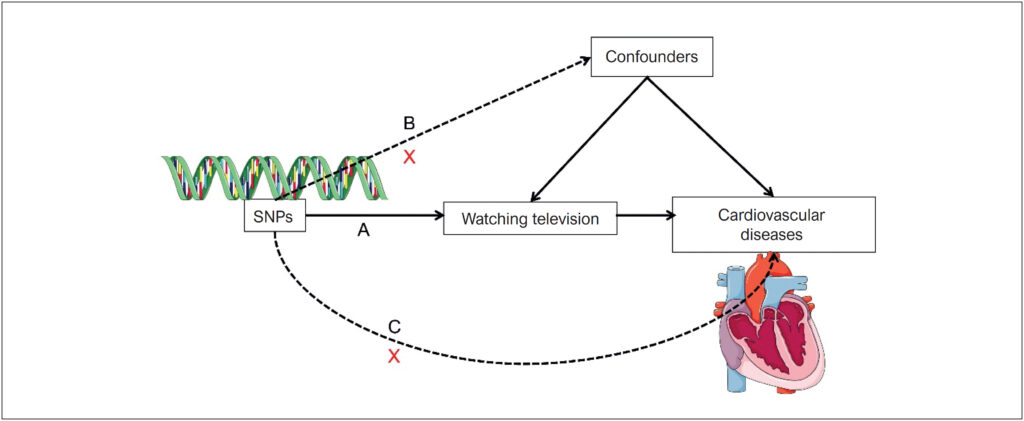
We conducted a two-sample Mendelian randomization (MR) analysis to estimate causal associations with cardiovascular diseases and biomarkers of cardiometabolic risk. The random inverse-variance weighted method was used as the primary estimate. To account for multiple comparisons, a Bonferroni correction p value for cardiovascular diseases and biomarkers of cardiometabolic risk was 0.0045 and 0.0024, respectively.
Results:
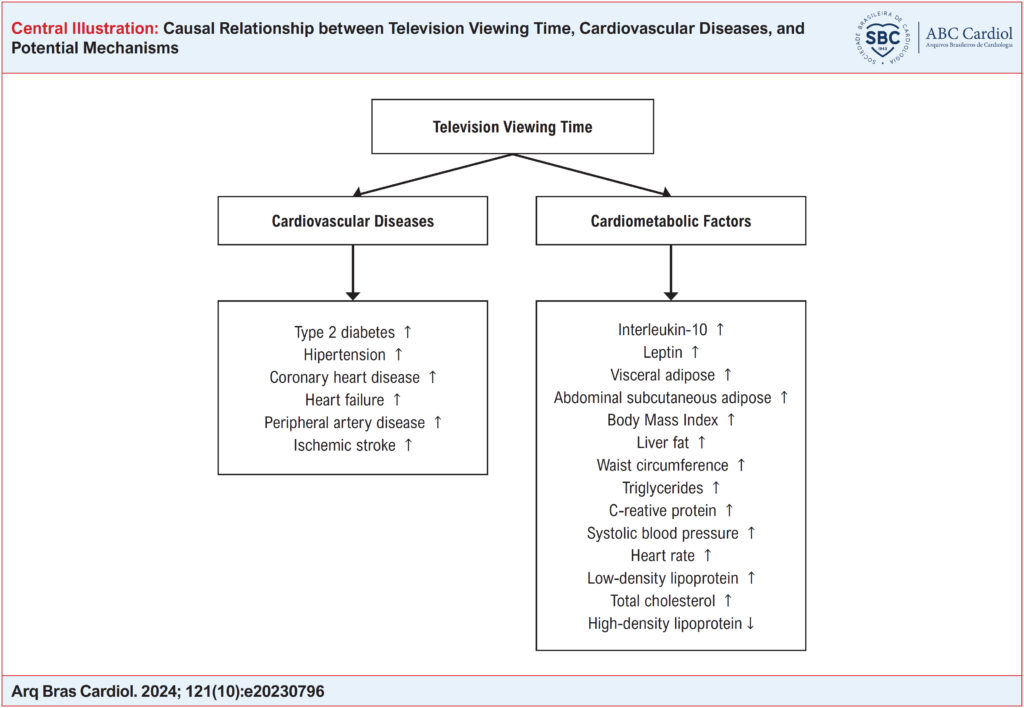
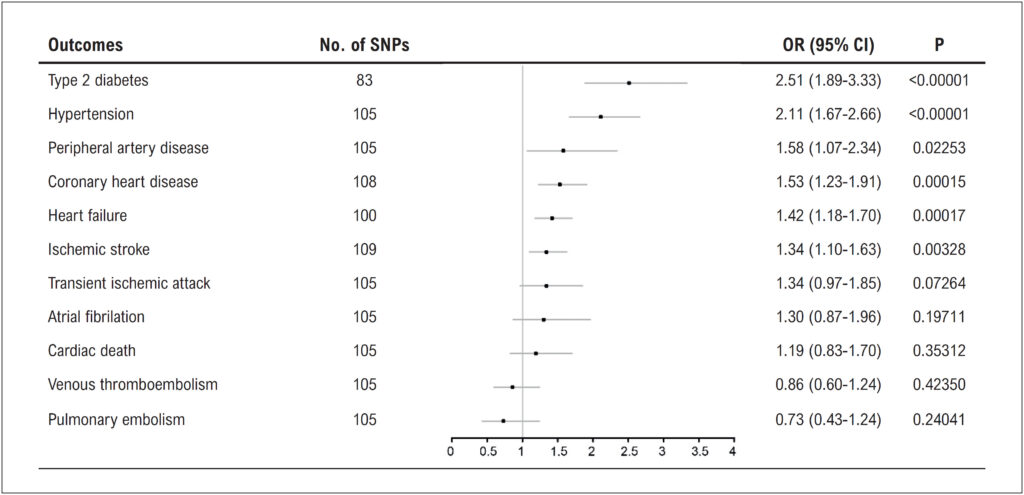
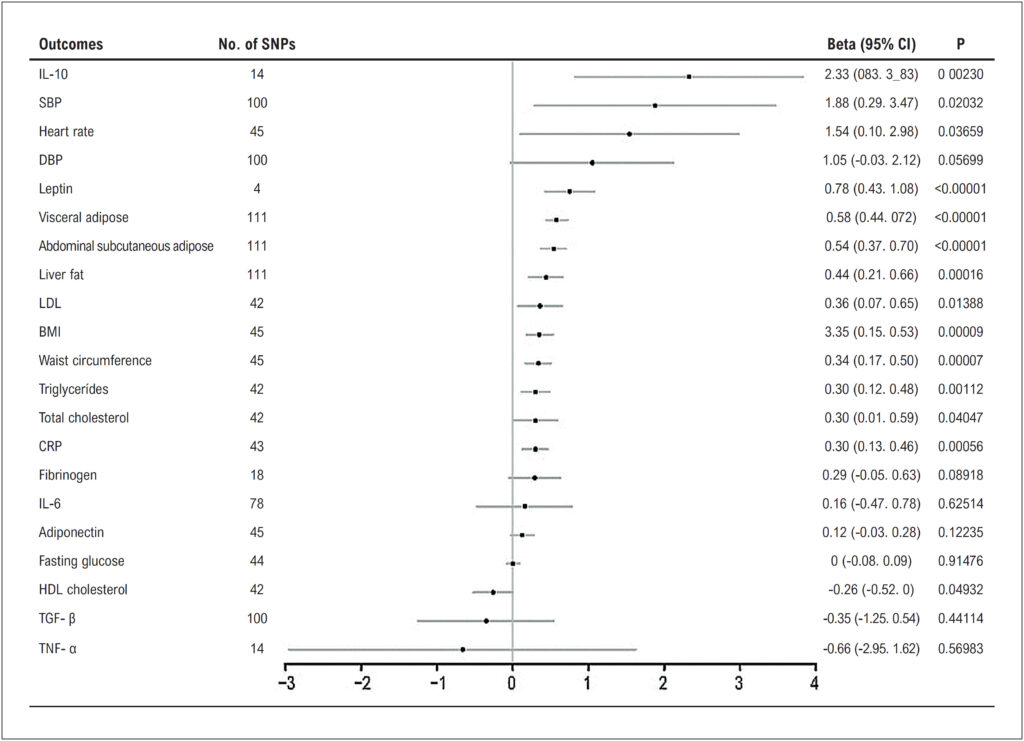
Genetically instrumented television viewing time was associated with higher risks of type 2 diabetes (odd ratio [OR]=2.51; 95% confidence interval [CI]: 1.89-3.33; p<0.00001), hypertension (OR=2.11; 95% CI: 1.67-2.66; p<0.00001), coronary heart disease (OR=1.53; 95% CI: 1.23-1.91; p=0.00015), and heart failure (OR=1.42; 95% CI: 1.18-1.70; p=0.00017). Suggestive evidence of harmful associations was also observed for peripheral artery disease (OR=1.58; 95% CI: 1.07-2.34; p=0.02253) and ischemic stroke (OR=1.34; 95% CI: 1.10-1.63; p=0.00328). Biomarkers of cardiometabolic risk, including interleukin 10, leptin, visceral adipose, abdominal subcutaneous adipose, liver fat, body mass index, waist circumference, triglycerides, and C-reactive protein, were increased. Systolic blood pressure, heart rate, low-density lipoprotein, and total cholesterol were potentially increased while high-density lipoprotein was decreased. However, television viewing time had no effect on venous thromboembolism or pulmonary embolism.
Conclusion:
Television viewing time was causally associated with increased risks of cardiovascular diseases, which may be explained by metabolic and inflammatory mechanisms.
Images
Image gallery fullscreen viewer
Comments are moderated by the editorial team before publication. Discussions should be evidence-based and use scientific language. Conflicts of interest should be declared.