ABC Family Arquivos Brasileiros de Cardiologia International Journal of Cardiovascular Sciences ABC Heart Failure & Cardiomyopathy ABC Imagem Cardiovascular
Português English
ABC Family
Português English
  • About
    • About ABC Family
    • Internal Regulation
    • Editorial Board
    • Brazilian Society of Cardiology (SBC)
  • Issues
  • SBC Guidelines
  • Content
    • Videos
    • Podcasts
    • News
  • About
    • About ABC Family
    • Internal Regulation
    • Editorial Board
    • Brazilian Society of Cardiology (SBC)
  • Issues
  • SBC Guidelines
  • Content
    • Videos
    • Podcasts
    • News

ABC Family

  • ABC Family
  • Arquivos Brasileiros de Cardiologia
  • International Journal of Cardiovascular Sciences
  • ABC Heart Failure & Cardiomyopathy
  • ABC Imagem Cardiovascular
Search in

No content found.

Journals
Ordering
Article types
Others

  1. Home
  2. Keyword: Patient Care Team
Potentially Inappropriate Cardioverter Defibrillator Implants in Secondary Prevention of Death
ABC
Original Article

Potentially Inappropriate Cardioverter Defibrillator Implants in Secondary Prevention of Death

William Neves de Carvalho et al. Tainá Teixeira Viana Clara Salles Figueiredo Fernanda Martins Luiz Carlos Santana Passos

Abstract

Background:

Implantable cardioverter defibrillators (ICDs) are recommended for patients experiencing malignant tachyarrhythmias due to irreversible causes, who are clinically stable, and have a life expectancy exceeding one year. However, adverse socioeconomic and psychosocial conditions can adversely affect short-term survival and may render implantation inappropriate.

Objective:

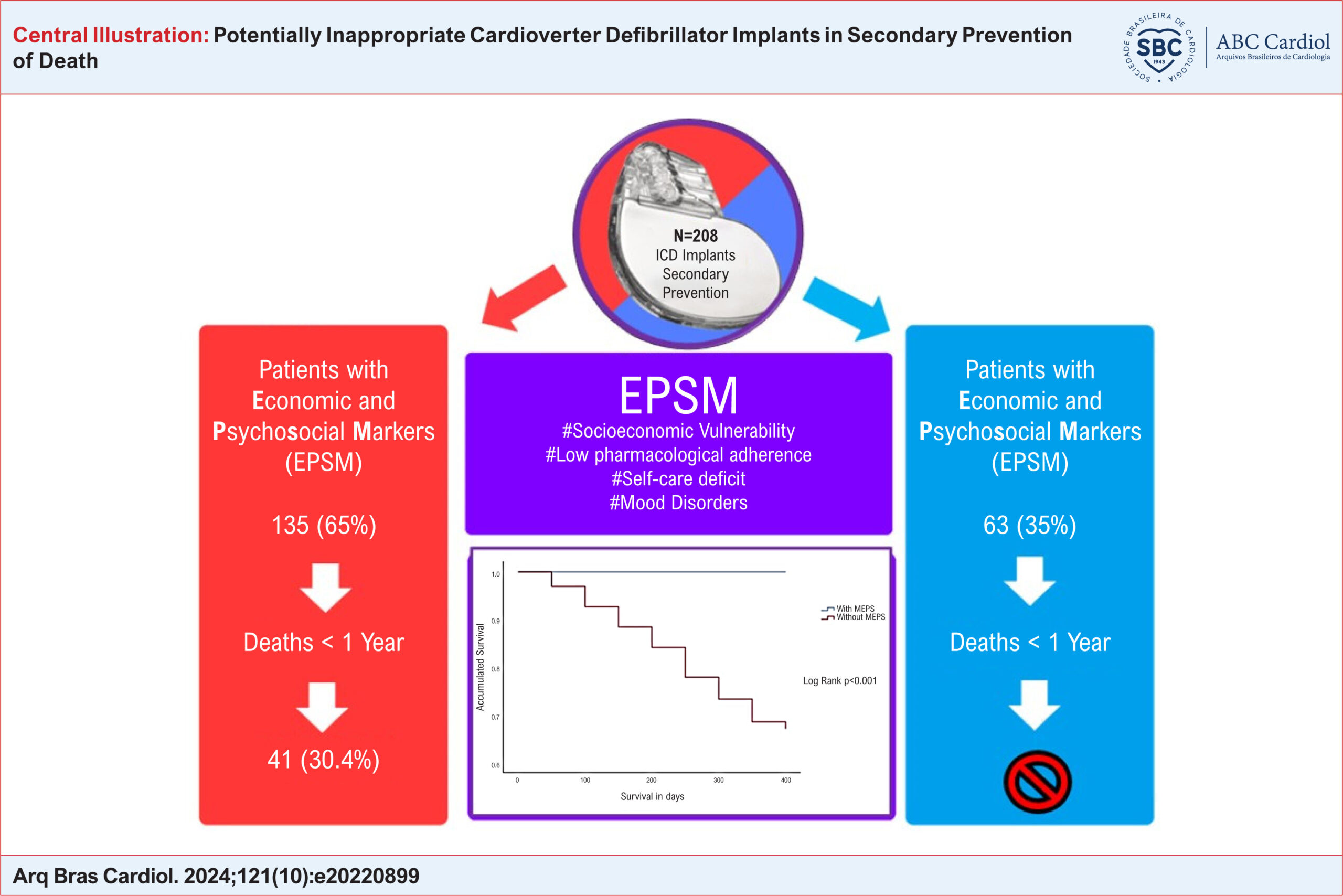
To assess whether economic and psychosocial markers (EPSM) are associated with higher mortality in the first year (indicating potentially inappropriate implants) following ICD implantation.

Methods:

A prospective cohort study conducted between 2017 and 2021 included patients with heart failure and left ventricular ejection fraction (LVEF) < 50% who underwent ICD implantation for secondary prophylaxis. Prior to the procedure, patients were evaluated by an MDT, which examined four EPSM variables, namely socioeconomic vulnerability, self-care capacity, pharmacological adherence, and mood disorders. The participants were monitored for at least 12 months. Statistical significance was considered to be p-values < 0.05.

Results:

A total of 208 individuals were included, with 144 (68.9%) being male. The mean LVEF was 32% ±9 and 107 (51%) had Chagas disease etiology. The mortality rate in the first year was 54/208 (25.8%). All patients who died had at least one of the EPSM and there no deaths were reported among the 73 (35.4%) who did not have EPSM. In multivariate analysis, having EPSM and LVEF were the only independent predictors of mortality under 1 year: RR 20.48 (2.75 – 52.29); p=0.003 and RR 0.97 (0.93 – 0.99); p=0.047, respectively.

Conclusion:

Socioeconomic and psychosocial conditions should be identified and, where possible, resolved before implantation, as they may make device implantation a potentially inappropriate procedure.
  • Implantable Defibrillators
  • medication adherence
  • Patient Care Team
  • Social Vulnerability
  • Treatment Adherence and Compliance
Read Full Article
Creative Commons Attribution (CC BY) Creative Commons license
11/11/2024 DOI: 10.36660/abc.20220899i
Figure 1
IJCS
Original Article

Interdisciplinary Group Intervention on Nutritional Profile, Quality of Life, and Stress During Cardiopulmonary Rehabilitation: A Randomized Clinical Trial

Giana de Freitas Rodrigues et al. Daniela da Rosa Vieira Patrícia Pereira Ruschel Cynthia Seelig … Christian Coronel Sandra Mari Barbiero

Abstract

Background:

Participating in therapeutic operative groups with nutritional and psychological interventions might influence the recovery of patients in cardiopulmonary rehabilitation programs.

Objective:

To evaluate the effectiveness of group interventions on the nutritional profile, stress, and quality of life of patients in cardiopulmonary rehabilitation.

Methods:

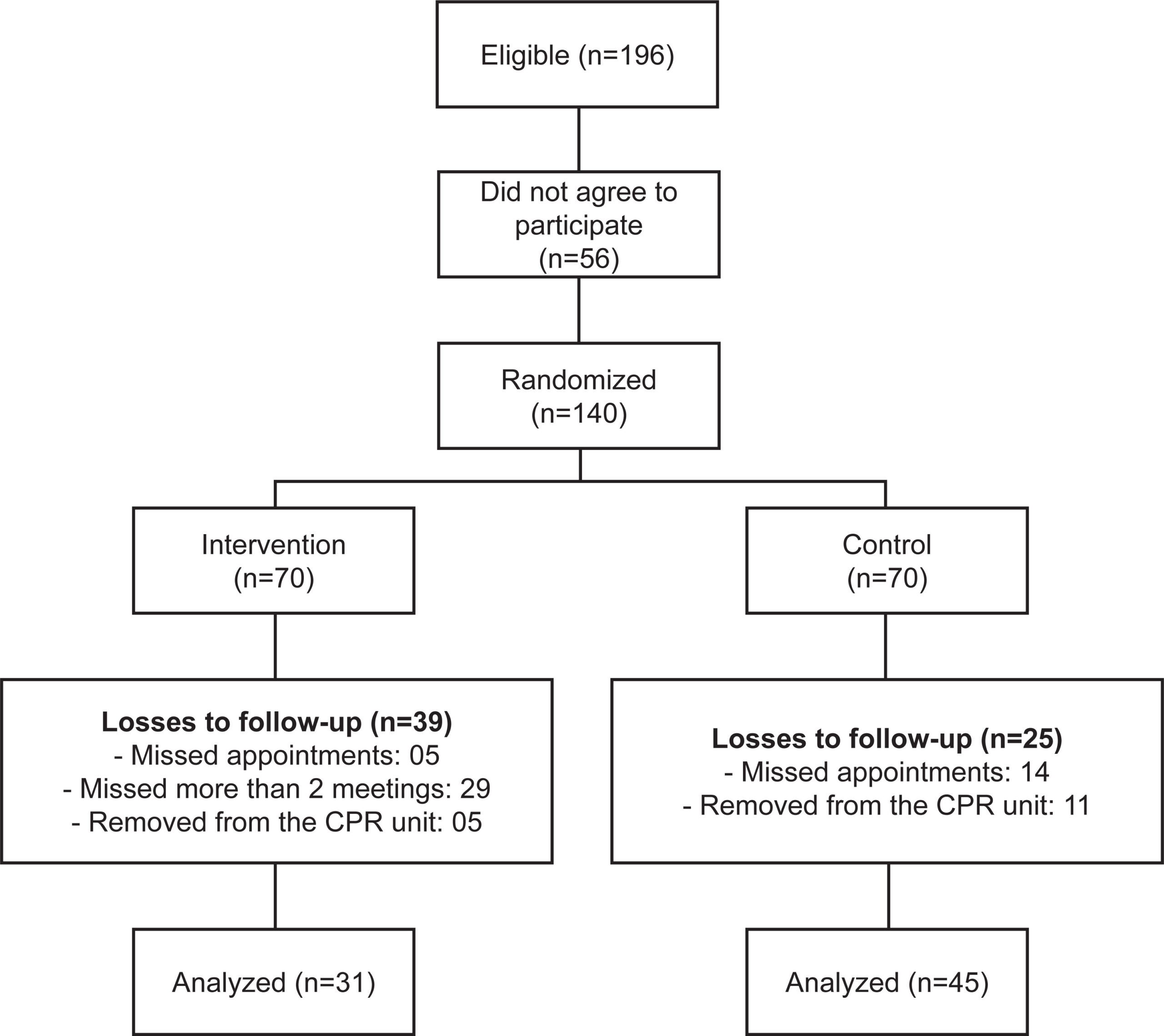
In this randomized clinical trial, adult patients of the Cardiopulmonary and Metabolic Rehabilitation (CPMR) unit were randomized into control group (CG), receiving standard follow-up assessment by the CPMR unit, and intervention group (IG), which additionally participated in 6 meetings of an interdisciplinary group with a nutritionist and a psychologist. Anthropometric data and results from a food frequency questionnaire (FFQ), Lipp’s Inventory of Stress Symptoms for Adults (ISSL), and the 12-Item Short Form Health Survey (SF-12) were analyzed. Student’s t-tests, Generalized Estimation Equations (GEE), Mann-Whitney tests, and Bonferroni tests were used for statistical analyses, with a significance level of 5%.

Results:

The sample consisted of 76 patients: 31 in the IG (64±9.2 years old) and 45 in the CG (61.4±11.8 years old). There was a significant reduction (p<0.001) in weight, body mass index, and waist circumference, and an increase (p=0.010) in the consumption of healthy food only in the IG. The consumption of unhealthy food was reduced in both groups (p<0.001), the physical aspect of quality of life improved (p=0.018), and women presented better physical (p=0.011) and mental results (p=0.008).

Conclusions:

This group intervention was effective regarding the nutritional status of patients in cardiopulmonary rehabilitation. The physical aspect of quality of life showed improvements in both groups.

  • Cardiac Rehabilitation
  • nutritional status
  • Patient Care Team
  • Psychological
  • Quality of life
  • Stress
Read Full Article
Creative Commons Attribution (CC BY) Creative Commons license
16/05/2022 DOI: 10.36660/ijcs.20200295 Views 1
ABC
Editorial

Heart Rate Control in Heart Failure

Mariana Janini Gomes et al. Luana Urbano Pagan

Heart failure (HF) is an important public health issue due to its high prevalence and the severity of clinical manifestations. , The increment in population longevity has increased the number of hospitalizations and deaths due to HF. Recent data by DATASUS (2020) show the occurrence of 26,482 deaths from HF.

This syndrome has a multifactorial characteristic and its treatment requires a multidisciplinary team to meet the recommendations proposed in the guidelines for the treatment of HF. Follow-up and monitoring of patients are essential for improving the clinical outcomes. –

[…]

  • Heart Failure/treatment
  • Heart Rate
  • medication adherence
  • Patient Care Team
Read Full Article
Creative Commons Attribution (CC BY) Creative Commons license
18/01/2021 DOI: 10.36660/abc.20200572
IJCS
Letter to the Editor

Effectiveness of Rapid Response Teams and the Importance of Preprints

Hermano Alexandre Lima Rocha et al. Sabrina Gabriele Maia Oliveira Rocha Antônia Célia de Castro Alcântara

To the Editor of the International Journal of Cardiovascular Sciences,

We have read with interest the Point of View: “Performance of the Rapid Response Systems in Health Care Improvement: Benefits and Perspectives” by Viviane Cordeiro Veiga and Salomón Soriano Ordinola Rojas, published ahead of print in the International Journal of Cardiovascular Sciences on April 15, 2019. Rapid response teams to treat trauma patients in Australia 30 years ago, in 1989. From the outset, the aim was to early recognize signs of deterioration and provide a quick response, hence the name of the methodology. The discussion about the activation criteria is relevant and up to date and was treated in a solid manner by the authors in the introduction of the point of view. Indeed, it is known that this is the cause of part of the heterogeneity of results found in studies on the subject.

[…]

  • Hospital Mortality
  • Hospital Rapid Response Team
  • Patient Care Team
  • Patient Safety
Read Full Article
Creative Commons Attribution (CC BY) Creative Commons license
25/11/2020 DOI: 10.36660/ijcs.20190084
IJCS
Viewpoint

Performance of the Rapid Response Systems in Health Care Improvement: Benefits and Perspectives

Viviane Cordeiro Veiga et al. Salomón Soriano Ordinola Rojas

Introduction

In the last two decades, the rapid response systems (RRS) have been explored as initiatives to increase the safety of hospitalized patients. The main function is to identify and treat patients at risk, or who are presenting signs of clinical instability, and to prevent adverse events during hospital stay, with a consequent reduction in in-hospital mortality. Every year in the United States, more than 200,000 intrahospital cardiac arrests (CAs) occur, most of which could be avoided. RRS are formed by two health care components called the afferent limb and the efferent limb. The afferent limb is represented by the health care team in the admission units, responsible for the care of hospitalized patients and trained to activate the afferent limb, when physiological changes that predict adverse events are detected, especially cardiac arrests. The efferent limb is represented by a team of health care professionals, who respond to codes, and may be headed by a physician, a nurse or a physiotherapist. The efferent limb is better known as the rapid response team (RRT). In addition to these health care components, the rapid response systems must also have two other components, namely the administrative arm, which provides the necessary documentation and is responsible for the systems daily activities and the quality and governance arm, which contributes to continuous improvement and reassessment of the system. These systems have been implemented around the globe, but still in a non-uniform way in institutions and health systems with different characteristics. However, in Brazil, there are few reports on this issue.,

[…]

  • Hospital Mortality
  • Hospital Rapid Response Team
  • Patient Care Team
  • Patient Safety
Read Full Article
Creative Commons Attribution (CC BY) Creative Commons license
15/04/2019 DOI: 10.5935/2359-4802.20180101 Views 2
ABC
Original Article

Multiprofessional Treatment of High Blood Pressure in Very Elderly Patients

Luciana Muniz Sanches Siqueira Veiga Jardim et al. Thiago Veiga Jardim Weimar Kunz Sebba Barroso de Souza Camila Dutra Pimenta … Ana Luiza Lima Sousa Paulo César Brandão Veiga Jardim

Abstract

Background:

As the world population ages, patients older than 80 years, known as very elderly, are more frequently found. There are no studies in this age group aimed at analyzing the multidisciplinary intervention in the treatment of systemic arterial hypertension (SAH) and some comorbidities.

Objectives:

To assess the effect of a multidisciplinary approach in very elderly hypertensives cared for at a specialized service.

Methods:

Longitudinal retrospective cohort study in a multidisciplinary service specialized in the SAH treatment in the Brazilian West-Central region. Patients aged 80 years and older by June 2015 were included. Data from the first (V1) and last visit (Vf) were assessed. Anthropometric variables, blood pressure (BP), renal function, pharmacological treatment, lifestyle, comorbidities and cardiovascular events were studied, comparing data from V1 and Vf. Controlled BP was defined as systolic blood pressure (SBP) lower than 140 mm Hg and diastolic blood pressure (DBP) lower than 90 mm Hg. Statistical analyses were performed with SPSSR software, version 21.0. Values of p<0,05 were considered significant.

Results:

Data of 71 patients were assessed with a mean follow-up time of 15,22 years. Their mean age at V1 was 69.2 years, and, at Vf, 84.53 years, and 26.8% of them were males. There was a significant reduction in mean SBP (157.3 x 142.1 mm Hg; p<0.001) and DBP (95.1 x 77.8 mm Hg; p<0.001), with an increase in BP control rates from V1 to Vf (36.6 x 83.1%; p<0.001). The number of antihypertensive drugs used increased (1.49 x 2.85; p<0.001), with an increase in the use of angiotensin-converting enzyme inhibitors (22.5 x 46.5%; p=0.004), angiotensin II receptor blockers (4.2 x 35.2%; p<0.001) and calcium-channel blockers (18.3 x 67.6%; p<0.001). There was a reduction in total cholesterol (217.9 x 191 mg/dL; p<0.001) and LDL-cholesterol (139.6 x 119.0 mg/dL; p<0.001), but worsening of the glomerular filtration rate (62.5 x 45.4 mL/min; p<0.001).

Conclusion:

The multidisciplinary intervention in very elderly hypertensives increased BP control rate, with optimization of the pharmacological treatment.

  • Aged, 80 and Over
  • aging
  • Cohort Studies
  • Hypertension
  • Patient Care Team
Read Full Article
Creative Commons Attribution (CC BY) Creative Commons license
01/01/2017 DOI: 10.5935/abc.20160196 Views 2
ABC
Viewpoint

Is Heart Team Fundamental to Aortic Stenosis Transcatheter Treatment?

Vitor Emer Egypto Rosa et al. Antônio Sergio de Santis Andrade Lopes Tarso Augusto Duenhas Accorsi Pedro Alves Lemos Neto … Pablo Maria Alberto Pomerantzeff Flávio Tarasoutchi

Demographic projections have shown that the contingent of elderly people in Brazil will double within the next 20 years, with a consequent increase in the prevalence of aging-related diseases, such as degenerative aortic valve stenosis (AoS), diagnosed in 3% to 5% of the population older than 75 yeas , . New modalities of treatment for AoS have been recently developed, mainly represented by the transcatheter implantation of aortic prosthesis (TAVI – Transcatheter Aortic Valve Implantation), which has become a therapeutic option for patients whose conventional surgical treatment is not feasible. In the current scenario, characterized by the high demand of the increasing elderly population, the availability of new treatment methods provides clinical expertise for the accurate diagnosis of heart valve disease, assessment of the comorbidities and risks of interventions, in addition to the rationalization of resources, considering the complexity and high costs involved in TAVI.

Clinical practice has shown that the adequate selection of the best therapeutic method for high surgical-risk AoS requires multidisciplinary medical interaction, contemplating all the patients’ biopsychosocial characteristics. Thus, several medical centers have continuously incorporated the ‘Heart Team’ concept for decision-making. The Heart Team, a group composed by different specialists involved in managing heart valve disease, gathers opinions for the individualized analysis of those patients, from eligibility criteria and technical adequacy of the procedure to post-TAVI care. Each cardiological sub-specialty also plays particular roles in the procedure performance. The clinical cardiologist is responsible for patients’ selection and indication and for pre-and post-procedure follow-up. The cardiovascular surgeon is responsible for performing the transaortic and transapical procedure, helping with the transfemoral approach, and treating possible complications. The radiologist is responsible for assessing the access path and valve diameters, and helping choosing the adequate prosthesis. The echocardiographer is responsible for the anatomical and functional characterization of the valve disease and intraoperative assessment of the adequate position of the prosthesis and post-procedure complications. The interventional cardiologist is responsible for indicating the procedure and performing it. In addition, the Heart Team also comprises other professionals, such as nurses, physical therapists, nutritionists, and psychologists. Worldwide, there is an increasing incorporation of the Heart Team into cardiological centers, in accordance with the considerations of the last guidelines on heart valve diseases , . There is consensus about not encouraging the performance of TAVI at sites lacking a Heart Team, which emphasizes the importance of institutional alignment with the new recommendations.

[…]

  • Aortic valve stenosis / surgery
  • Heart Failure
  • Patient Care Team
Read Full Article
Creative Commons Attribution (CC BY) Creative Commons license
01/05/2014 DOI: 10.5935/abc.20140060

How to cite this article

EndNote RIS

Electronic Document Format (Vancouver)

Carvalho WN, Viana TT, Figueiredo CS, Martins F, Passos LCS. Potentially Inappropriate Cardioverter Defibrillator Implants in Secondary Prevention of Death. Arquivos Brasileiros de Cardiologia 2024;121(10):e20220899.

Electronic Document Format (ABNT)

Carvalho, William Neves de; Viana, Tainá Teixeira; Figueiredo, Clara Salles; Martins, Fernanda; Passos, Luiz Carlos Santana. Potentially Inappropriate Cardioverter Defibrillator Implants in Secondary Prevention of Death. Arquivos Brasileiros de Cardiologia, v. 121, n. 10, e20220899, Nov. 2024.

Electronic Document Format (APA)

Carvalho, W. N. , Viana, T. T., Figueiredo, C. S., Martins, F., & Passos, L. C. S. (2024). Potentially Inappropriate Cardioverter Defibrillator Implants in Secondary Prevention of Death. Arquivos Brasileiros de Cardiologia, 121(10), e20220899.

Electronic Document Format (ISO)

Carvalho, William Neves de and Viana, Tainá Teixeira and Figueiredo, Clara Salles and Martins, Fernanda and Passos, Luiz Carlos Santana. Potentially Inappropriate Cardioverter Defibrillator Implants in Secondary Prevention of Death. Arquivos Brasileiros de Cardiologia [online]. 2024, vol. 121, n. 10, [cited 2026-10-14], e20220899. Available from: <https://journals.cardiol.br/en/article/potentially-inappropriate-cardioverter-defibrillator-implants-in-secondary-prevention-of-death/>. ISSN 0066-782X

EndNote RIS

Electronic Document Format (Vancouver)

Rodrigues GF, Vieira DR, Ruschel PP, Seelig C, Coronel C, Barbiero SM. Interdisciplinary Group Intervention on Nutritional Profile, Quality of Life, and Stress During Cardiopulmonary Rehabilitation: A Randomized Clinical Trial. International Journal of Cardiovascular Sciences 2022;35(5):596-60.

Electronic Document Format (ABNT)

Rodrigues, Giana de Freitas; Vieira, Daniela da Rosa; Ruschel, Patrícia Pereira; Seelig, Cynthia; Coronel, Christian; Barbiero, Sandra Mari. Interdisciplinary Group Intervention on Nutritional Profile, Quality of Life, and Stress During Cardiopulmonary Rehabilitation: A Randomized Clinical Trial. International Journal of Cardiovascular Sciences, v. 35, n. 5, p. 596-606, May. 2022.

Electronic Document Format (APA)

Rodrigues, G. F., Vieira, D. R., Ruschel, P. P., Seelig, C., Coronel, C., & Barbiero, S. M. (2022). Interdisciplinary Group Intervention on Nutritional Profile, Quality of Life, and Stress During Cardiopulmonary Rehabilitation: A Randomized Clinical Trial. International Journal of Cardiovascular Sciences, 35(5), 596-606.

Electronic Document Format (ISO)

Rodrigues, Giana de Freitas and Vieira, Daniela da Rosa and Ruschel, Patrícia Pereira and Seelig, Cynthia and Coronel, Christian and Barbiero, Sandra Mari. Interdisciplinary Group Intervention on Nutritional Profile, Quality of Life, and Stress During Cardiopulmonary Rehabilitation: A Randomized Clinical Trial. International Journal of Cardiovascular Sciences [online]. 2022, vol. 35, n. 5, [cited 2026-10-14], pp. 596-606. Available from: <https://journals.cardiol.br/en/article/interdisciplinary-group-intervention-on-nutritional-profile-quality-of-life-and-stress-during-cardiopulmonary-rehabilitation-a-randomized-clinical-trial/>. ISSN 2359-4802

EndNote RIS

Electronic Document Format (Vancouver)

Gomes MJ, Pagan LU. Heart Rate Control in Heart Failure. Arquivos Brasileiros de Cardiologia 2021;115(6):1070-1.

Electronic Document Format (ABNT)

Gomes, Mariana Janini; Pagan, Luana Urbano. Heart Rate Control in Heart Failure. Arquivos Brasileiros de Cardiologia, v. 115, n. 6, p. 1070-1071, Jan. 2021.

Electronic Document Format (APA)

Gomes, M. J., & Pagan, L. U. (2021). Heart Rate Control in Heart Failure. Arquivos Brasileiros de Cardiologia, 115(6), 1070-1071.

Electronic Document Format (ISO)

Gomes, Mariana Janini and Pagan, Luana Urbano. Heart Rate Control in Heart Failure. Arquivos Brasileiros de Cardiologia [online]. 2021, vol. 115, n. 6, [cited 2026-10-14], pp. 1070-1071. Available from: <https://journals.cardiol.br/en/article/heart-rate-control-in-heart-failure/>. ISSN 0066-782X

EndNote RIS

Electronic Document Format (Vancouver)

Rocha HAL, Rocha SGMO, Alcântara ACC. Effectiveness of Rapid Response Teams and the Importance of Preprints. International Journal of Cardiovascular Sciences 2020;33(6):721-2.

Electronic Document Format (ABNT)

Rocha, Hermano Alexandre Lima; Rocha, Sabrina Gabriele Maia Oliveira; Alcântara, Antônia Célia de Castro. Effectiveness of Rapid Response Teams and the Importance of Preprints. International Journal of Cardiovascular Sciences, v. 33, n. 6, p. 721-722, Nov. 2020.

Electronic Document Format (APA)

Rocha, H. A. L., Rocha, S. G. M. O., & Alcântara, A. C. C. (2020). Effectiveness of Rapid Response Teams and the Importance of Preprints. International Journal of Cardiovascular Sciences, 33(6), 721-722.

Electronic Document Format (ISO)

Rocha, Hermano Alexandre Lima and Rocha, Sabrina Gabriele Maia Oliveira and Alcântara, Antônia Célia de Castro. Effectiveness of Rapid Response Teams and the Importance of Preprints. International Journal of Cardiovascular Sciences [online]. 2020, vol. 33, n. 6, [cited 2026-10-14], pp. 721-722. Available from: <https://journals.cardiol.br/en/article/effectiveness-of-rapid-response-teams-and-the-importance-of-preprints/>. ISSN 2359-4802

EndNote RIS

Electronic Document Format (Vancouver)

Veiga VC, Rojas SSO. Performance of the Rapid Response Systems in Health Care Improvement: Benefits and Perspectives. International Journal of Cardiovascular Sciences 2019;32(5):536-9.

Electronic Document Format (ABNT)

Veiga, Viviane Cordeiro; Rojas, Salomón Soriano Ordinola. Performance of the Rapid Response Systems in Health Care Improvement: Benefits and Perspectives. International Journal of Cardiovascular Sciences, v. 32, n. 5, p. 536-539, Apr. 2019.

Electronic Document Format (APA)

Veiga, V. C., & Rojas, S. S. O. (2019). Performance of the Rapid Response Systems in Health Care Improvement: Benefits and Perspectives. International Journal of Cardiovascular Sciences, 32(5), 536-539.

Electronic Document Format (ISO)

Veiga, Viviane Cordeiro and Rojas, Salomón Soriano Ordinola. Performance of the Rapid Response Systems in Health Care Improvement: Benefits and Perspectives. International Journal of Cardiovascular Sciences [online]. 2019, vol. 32, n. 5, [cited 2026-10-14], pp. 536-539. Available from: <https://journals.cardiol.br/en/article/performance-of-the-rapid-response-systems-in-health-care-improvement-benefits-and-perspectives/>. ISSN 2359-4802

EndNote RIS

Electronic Document Format (Vancouver)

Jardim LMSSV, Jardim TV, Souza WKSB, Pimenta CD, Sousa ALL, Jardim PCBV. Multiprofessional Treatment of High Blood Pressure in Very Elderly Patients. Arquivos Brasileiros de Cardiologia 2017;108(1):53-9.

Electronic Document Format (ABNT)

Jardim, Luciana Muniz Sanches Siqueira Veiga; Jardim, Thiago Veiga; Souza, Weimar Kunz Sebba Barroso de; Pimenta, Camila Dutra; Sousa, Ana Luiza Lima; Jardim, Paulo César Brandão Veiga. Multiprofessional Treatment of High Blood Pressure in Very Elderly Patients. Arquivos Brasileiros de Cardiologia, v. 108, n. 1, p. 53-59, Dec. 2016.

Electronic Document Format (APA)

Jardim, L. M. S. S. V., Jardim, T. V., Souza, W. K. S. B. , Pimenta, C. D., Sousa, A. L. L., & Jardim, P. C. B. V. (2017). Multiprofessional Treatment of High Blood Pressure in Very Elderly Patients. Arquivos Brasileiros de Cardiologia, 108(1), 53-59.

Electronic Document Format (ISO)

Jardim, Luciana Muniz Sanches Siqueira Veiga and Jardim, Thiago Veiga and Souza, Weimar Kunz Sebba Barroso de and Pimenta, Camila Dutra and Sousa, Ana Luiza Lima and Jardim, Paulo César Brandão Veiga. Multiprofessional Treatment of High Blood Pressure in Very Elderly Patients. Arquivos Brasileiros de Cardiologia [online]. 2017, vol. 108, n. 1, [cited 2026-10-14], pp. 53-59. Available from: <https://journals.cardiol.br/en/article/multiprofessional-treatment-of-high-blood-pressure-in-very-elderly-patients/>. ISSN 0066-782X

EndNote RIS

Electronic Document Format (Vancouver)

Rosa VEE, Lopes ASSA, Accorsi TAD, Lemos Neto PA, Pomerantzeff PMA, Tarasoutchi F. Is Heart Team Fundamental to Aortic Stenosis Transcatheter Treatment?. Arquivos Brasileiros de Cardiologia 2014;102(5):e55-6.

Electronic Document Format (ABNT)

Rosa, Vitor Emer Egypto; Lopes, Antônio Sergio de Santis Andrade; Accorsi, Tarso Augusto Duenhas; Lemos Neto, Pedro Alves; Pomerantzeff, Pablo Maria Alberto; Tarasoutchi, Flávio. Is Heart Team Fundamental to Aortic Stenosis Transcatheter Treatment?. Arquivos Brasileiros de Cardiologia, v. 102, n. 5, p. e55-e56, Apr. 2014.

Electronic Document Format (APA)

Rosa, V. E. E., Lopes, A. S. S. A., Accorsi, T. A. D., Lemos Neto, P. A., Pomerantzeff, P. M. A., & Tarasoutchi, F. (2014). Is Heart Team Fundamental to Aortic Stenosis Transcatheter Treatment?. Arquivos Brasileiros de Cardiologia, 102(5), e55-e56.

Electronic Document Format (ISO)

Rosa, Vitor Emer Egypto and Lopes, Antônio Sergio de Santis Andrade and Accorsi, Tarso Augusto Duenhas and Lemos Neto, Pedro Alves and Pomerantzeff, Pablo Maria Alberto and Tarasoutchi, Flávio. Is Heart Team Fundamental to Aortic Stenosis Transcatheter Treatment?. Arquivos Brasileiros de Cardiologia [online]. 2014, vol. 102, n. 5, [cited 2026-10-14], pp. e55-e56. Available from: <https://journals.cardiol.br/en/article/is-heart-team-fundamental-to-aortic-stenosis-transcatheter-treatment/>. ISSN 0066-782X

  • About ABC Family
  • Internal Regulation
  • Editorial Board
  • Brazilian Society of Cardiology (SBC)

Issues

SBC Guidelines

  • Videos
  • Podcasts
  • News