ABC Family Arquivos Brasileiros de Cardiologia International Journal of Cardiovascular Sciences ABC Heart Failure & Cardiomyopathy ABC Imagem Cardiovascular
Português English
ABC Family
Português English
  • About
    • About ABC Family
    • Internal Regulation
    • Editorial Board
    • Brazilian Society of Cardiology (SBC)
  • Issues
  • SBC Guidelines
  • Content
    • Videos
    • Podcasts
    • News
  • About
    • About ABC Family
    • Internal Regulation
    • Editorial Board
    • Brazilian Society of Cardiology (SBC)
  • Issues
  • SBC Guidelines
  • Content
    • Videos
    • Podcasts
    • News

ABC Family

  • ABC Family
  • Arquivos Brasileiros de Cardiologia
  • International Journal of Cardiovascular Sciences
  • ABC Heart Failure & Cardiomyopathy
  • ABC Imagem Cardiovascular
Search in

No content found.

Journals
Ordering
Article types
Others

  1. Home
  2. Keyword: Social Vulnerability
ABC
Editorial

Beyond Biological Factors: The Social Face of Cardiovascular Disease in Brazil

Lucas Borges Pereira et al. Maria Olívia Barboza Zanetti

Cardiovascular diseases (CVD), which include ischemic heart disease (IHD) and cerebrovascular diseases (CVD), represent the leading cause of death globally and in Brazil. Although significant advances have been made in prevention and treatment, CVD mortality still exhibits striking disparities, often correlated with socioeconomic and vulnerability indicators.–

Historically, understanding CVD risk factors has focused on biological aspects. However, evidence points to the crucial role of Social Determinants of Health (SDH), which encompass social, economic, cultural, ethnic, educational, and environmental conditions, in formulating strategies for comprehensive health care.–

[…]

  • Cardiovascular Diseases
  • Health Inequities
  • Mortality
  • Social Determinants of Health
  • Social Vulnerability
Read Full Article
Creative Commons Attribution (CC BY) Creative Commons license
03/10/2025 DOI: 10.36660/abc.20250550i Views 2
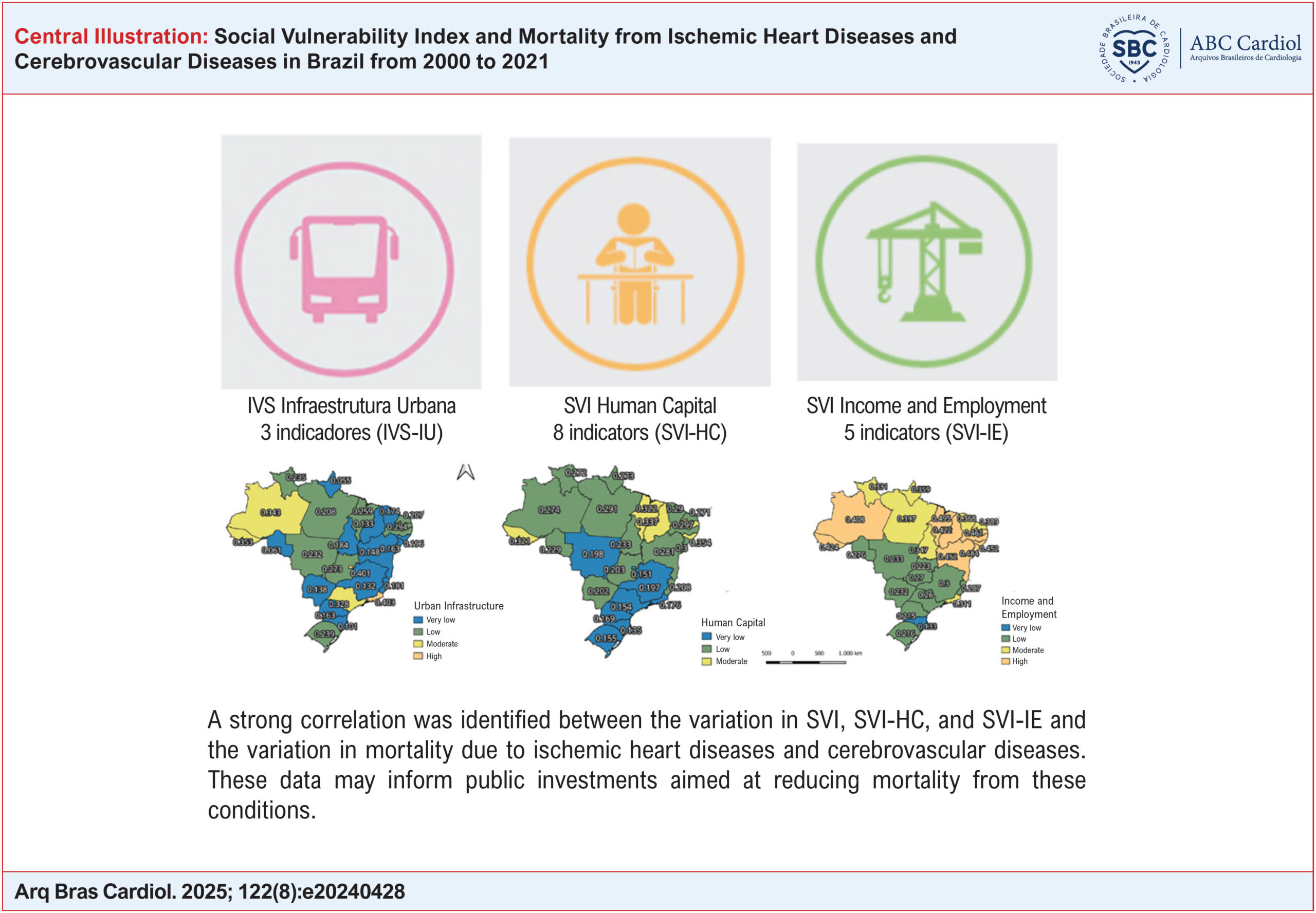
Social Vulnerability Index and Mortality from Ischemic Heart Diseases and Cerebrovascular Diseases in Brazil from 2000 to 2021
ABC
Original Article

Social Vulnerability Index and Mortality from Ischemic Heart Diseases and Cerebrovascular Diseases in Brazil from 2000 to 2021

José Lucas Bichara et al. Luiz Antônio Bastos Eric Delgado dos Santos Mafra Lino Paolo Blanco Villela Gláucia Maria Moraes de Oliveira

Abstract

Background:

Previous studies have observed a correlation between mortality rates from ischemic heart diseases (IHDs), cerebrovascular diseases (CBVDs), and the Social Vulnerability Index (SVI). However, doubts persist about the association between the overall SVI and its dimensions and mortality stratified by sex, ethnicity, and population clusters.

Objective:

To analyze the evolution of the overall SVI and its dimensions and correlate it with mortality rates due to IHD and CBVD in Brazil and its Federative Units (FUs) from 2000 to 2021.

Methods:

Ecological study of time series of standardized mortality rates (using the direct method with the Brazilian population in 2000) due to IHD and CBVD categorized by age, sex, and FUs between 2000 and 2021, correlated with the SVI and its dimensions. Data on the underlying causes of death were obtained from the Mortality Information System, while SVI data were sourced from the Social Vulnerability Atlas. Spearman correlation (considered significant if p<0.05) was employed to calculate each analyzed stratum.

Results:

The SVI and its Human Capital (SVI-HC) dimension and Income and Employment (SVI-IE) dimension in 2010 showed a strong correlation with variations in mortality rates due to CBVD and IHD (SVI x CBVD: Rho(p)=0.85; SVI x IHD: Rho(p)=0.75; SVI-HC x CBVD: Rho(p)=0.84; SVI-HC x IHD: Rho(p)=0.84; SVI-IE x CBVD: Rho(p)=0.81; SVI-IE x IHD: Rho(p)=0.71). The Urban Infrastructure dimension (SVI-UI) showed a weak correlation with CBVD and IHD, respectively (SVI-UI x CBVD: Rho(p)=0.33; SVI-UI x IHD: Rho(p)=0.25).

Conclusion:

Both SVI-HC and SVI-IE demonstrated strong correlations with variations in mortality rates from IHD and CBVD.

  • Cardiovascular Diseases
  • Cerebrovascular Disorders
  • Epidemiology
  • Myocardial Ischemia
  • Social Vulnerability
Read Full Article
Creative Commons Attribution (CC BY) Creative Commons license
19/09/2025 DOI: 10.36660/abc.20240428i Views 2
ABC
Editorial

Aiming for Health Equity: Why Does Diversity in Brazilian Medical Research Matter?

Christina Grüne de Souza e Silva

Over 35 years ago, Brazilian citizens earned their constitutional right to health. Guided by the fundamental principles of universality and equity, health access and actions provided by the Brazilian Unified Health System (Sistema Único de Saúde – SUS) are ever-since responsibilities of the State and should be, therefore, guaranteed by economic and social policies.

Since its creation, SUS has experienced significant improvements in disease prevention and health promotion. A dramatic drop in infant mortality and a significant increase in life expectancy are a couple of major outcomes that reflect the expansion in Brazilians’ population access to comprehensive health care. However, disparities across geographical regions and income groups persist, especially for vulnerable populations such as the quilombolas.

[…]

  • Diabetes Mellitus
  • Health Policy
  • Obesity
  • Risk Factors
  • Social Vulnerability
Read Full Article
Creative Commons Attribution (CC BY) Creative Commons license
13/01/2025 DOI: 10.36660/abc.20240731i Views 2
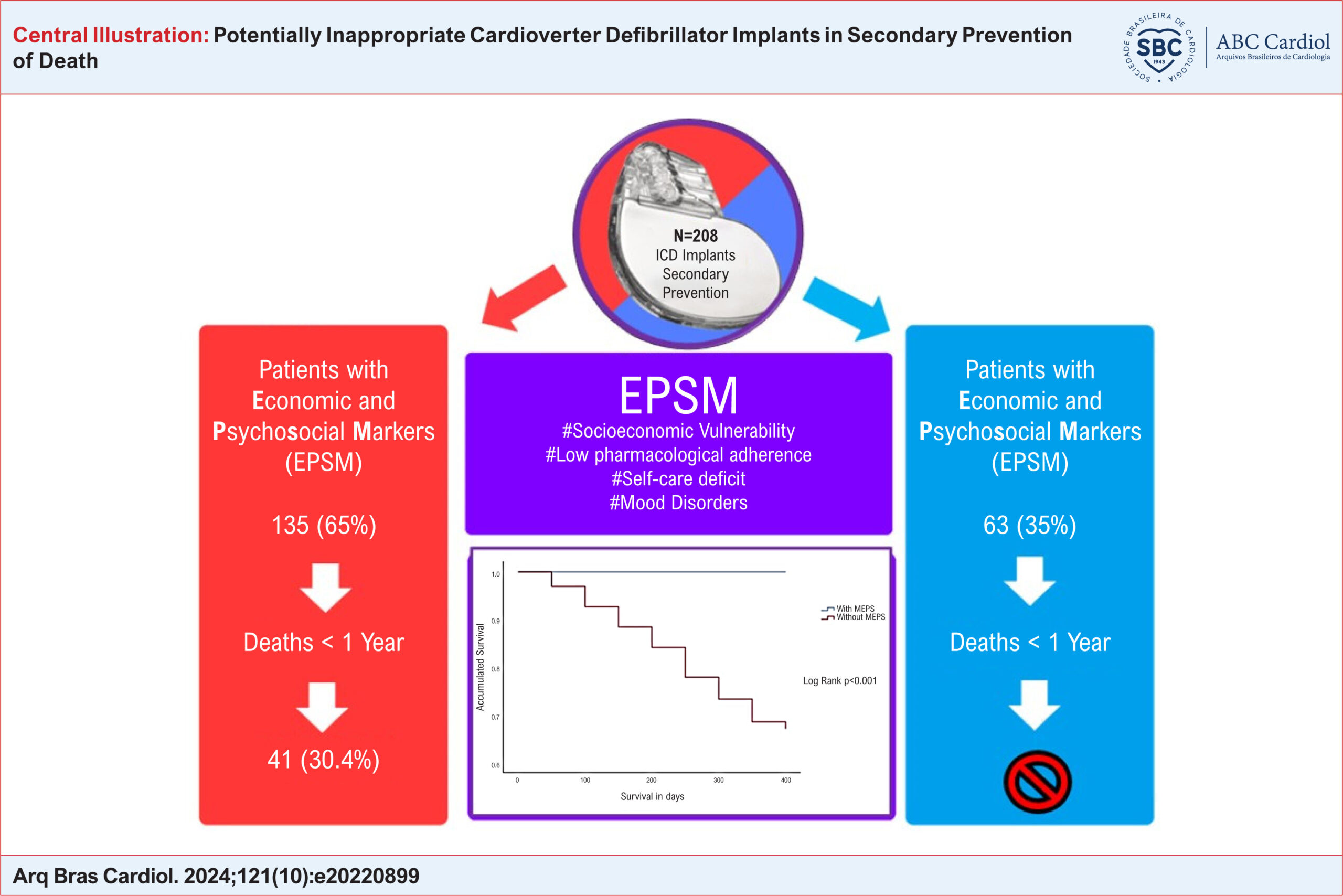
Potentially Inappropriate Cardioverter Defibrillator Implants in Secondary Prevention of Death
ABC
Original Article

Potentially Inappropriate Cardioverter Defibrillator Implants in Secondary Prevention of Death

William Neves de Carvalho et al. Tainá Teixeira Viana Clara Salles Figueiredo Fernanda Martins Luiz Carlos Santana Passos

Abstract

Background:

Implantable cardioverter defibrillators (ICDs) are recommended for patients experiencing malignant tachyarrhythmias due to irreversible causes, who are clinically stable, and have a life expectancy exceeding one year. However, adverse socioeconomic and psychosocial conditions can adversely affect short-term survival and may render implantation inappropriate.

Objective:

To assess whether economic and psychosocial markers (EPSM) are associated with higher mortality in the first year (indicating potentially inappropriate implants) following ICD implantation.

Methods:

A prospective cohort study conducted between 2017 and 2021 included patients with heart failure and left ventricular ejection fraction (LVEF) < 50% who underwent ICD implantation for secondary prophylaxis. Prior to the procedure, patients were evaluated by an MDT, which examined four EPSM variables, namely socioeconomic vulnerability, self-care capacity, pharmacological adherence, and mood disorders. The participants were monitored for at least 12 months. Statistical significance was considered to be p-values < 0.05.

Results:

A total of 208 individuals were included, with 144 (68.9%) being male. The mean LVEF was 32% ±9 and 107 (51%) had Chagas disease etiology. The mortality rate in the first year was 54/208 (25.8%). All patients who died had at least one of the EPSM and there no deaths were reported among the 73 (35.4%) who did not have EPSM. In multivariate analysis, having EPSM and LVEF were the only independent predictors of mortality under 1 year: RR 20.48 (2.75 – 52.29); p=0.003 and RR 0.97 (0.93 – 0.99); p=0.047, respectively.

Conclusion:

Socioeconomic and psychosocial conditions should be identified and, where possible, resolved before implantation, as they may make device implantation a potentially inappropriate procedure.

  • Implantable Defibrillators
  • medication adherence
  • Patient Care Team
  • Social Vulnerability
  • Treatment Adherence and Compliance
Read Full Article
Creative Commons Attribution (CC BY) Creative Commons license
11/11/2024 DOI: 10.36660/abc.20220899i
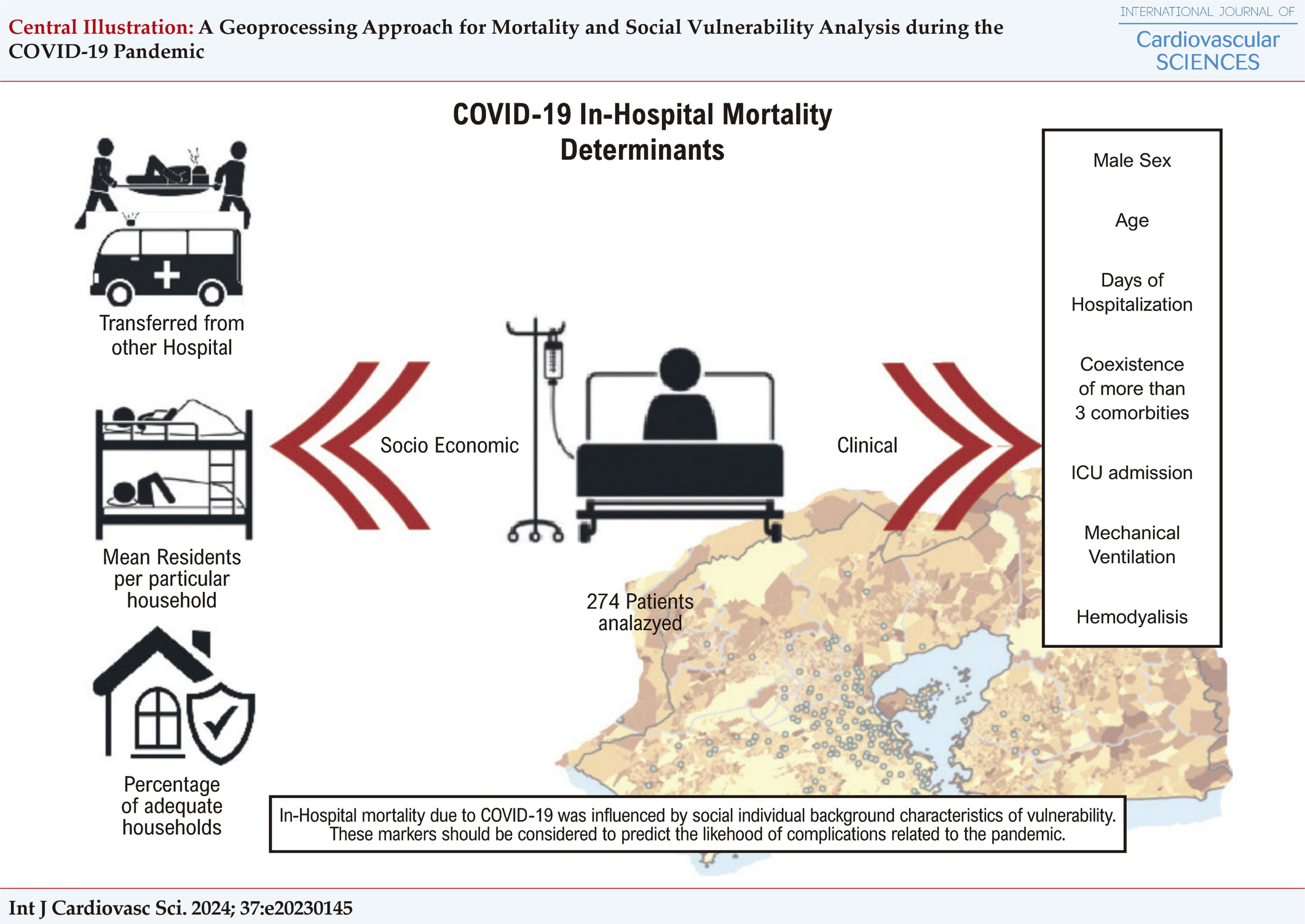
A Geoprocessing Approach for Mortality and Social Vulnerability Analysis during the COVID-19 Pandemic
IJCS
Original Article

A Geoprocessing Approach for Mortality and Social Vulnerability Analysis during the COVID-19 Pandemic

Andres Felipe Valencia Rendon et al. Isabela Mendes Volschan Manoella Novais Pereira Wagner Lima Monteiro … Alessandra de Freitas Pimentel Emilia Matos do Nascimento Basilio de Bragança Pereira Glaucia Maria Moraes de Oliveira

Abstract

Background

Brazil had high COVID-19 lethality/mortality with multiple social inequalities, where color/race was highly relevant, especially in Rio de Janeiro. Therefore, we hypothesize that COVID-19 hospitalized patients with a highly socially vulnerable background would have more significant in-hospital mortality.

Objective

To analyze the socioeconomic factors of social vulnerability and their association with COVID-19 mortality.

Methods

This work was a prospective study of 274 confirmed adult COVID-19 hospitalized patients in the University Hospital of Clementino Fraga Filho (HUCFF). The clinical features/blood chemistry information were collected from the clinical record. The ArcGIS Pro Software (Esri Gis mapping software, Redlands California-US) and a Python-based algorithm were used to determine in-app/in-map variable management relevance to the socioeconomic variables, inequity markers, and vulnerability. Our study also analyzed the transfers from other primary care institutions to our hospital in order to examine its potential delays in advanced medical care. Logistic regression and ROC curve were used to investigate in-hospital mortality for our statistical analysis. The significance level adopted in the statistical analysis was 5% Results: Male sex, total days of hospitalization, age, having more than three comorbidities, intensive care unit (ICU) admission, hemodialysis, and transfer from other hospitals showed statistical significance. Patients living in low-adequate households (p = 0.030) with high in-house individual agglomeration markers (p = 0.017) and transfers from another Primary Health Care (PHC) institution (p = 0.047) were associated with increased in-hospital mortality, with high ICU admission and mechanical ventilation.

Conclusions

In-hospital mortality due to COVID-19 was influenced by social individual background characteristics of vulnerability. Among other clinical parameters, these markers should be considered to predict the likelihood of complications related to the COVID-19 pandemic.

  • COVID-19
  • Hospital Mortality
  • SARS-CoV-2
  • Social Vulnerability
  • Socioeconomic Disparities in Health
Read Full Article
Creative Commons Attribution (CC BY) Creative Commons license
26/08/2024 DOI: 10.36660/ijcs.20230145 Views 1
Figure 1
ABC
Original Article

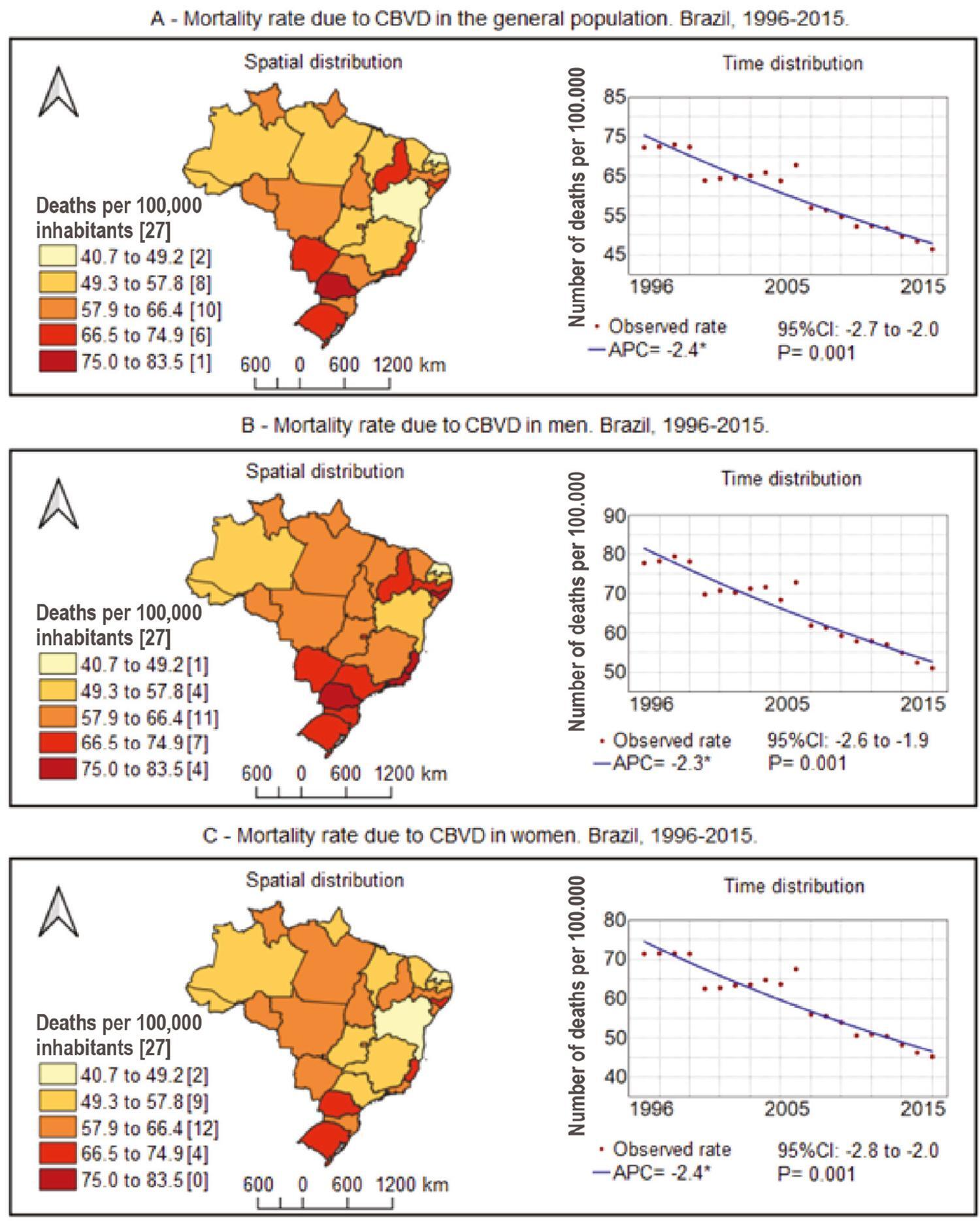
Cerebrovascular Disease Mortality Trend in Brazil (1996 To 2015) and Association with Human Development Index and Social Vulnerability

Carlos Dornels Freire de Souza et al. Denilson José de Oliveira Leonardo Feitosa da Silva Camila Damasceno dos Santos … Monaliza Coelho Pereira João Paulo Silva de Paiva Thiago Cavalcanti Leal Renato de Souza Mariano Amanda Karine Barros Ferreira de Araújo Jussara Almeida de Oliveira Baggio

Abstract

Background

Cerebrovascular diseases (CBVD) are the second major cause of death in the world.

Objective

To analyze the mortality trend of CBVD in Brazil (1996 to 2015) and its association with Human Development Index (HDI) and the Social Vulnerability Index (SVI).

Methods

This is an ecological study. We analyzed the mortality rate standardized by CBVD. Death data were obtained from the Mortality Information System (SIM) and populational data from the Brazilian Institute of Geography and Statistics (IBGE). The model of regression by inflection points (Joinpoint regression) was used to perform the temporal analysis, calculating the Annual Percent Change (APC) and Average Annual Percent Change (AAPC), with 95% of confidence interval and a significance of 5%. Trends were classified as increasing, decreasing or stationary. A multivariate regression model was used to analyze the association between mortality by CBVD, HDI and SVI.

Results

During this period, 1,850,811 deaths by CBVD were recorded. We observed a reduction in the national mortality rate (APC -2.4; p = 0.001). Twenty federation units showed a significant trend, of which 13 showed reduction, including all states in the Midwest (n=4), Southeast (n=4) and South (n=3). The HDI was positively associated and the SVI was negatively associated with mortality (p = 0.046 and p = 0.026, respectively).

Conclusion

An unequal epidemiological course of mortality was observed between the regions, being higher in the Southeast and South states, with a significative tendency of reduction, and lower in the North and Northeast states, but with a significative tendency of increase. HDI and SVI showed an association with mortality. (Arq Bras Cardiol. 2021; 116(1):89-99)

  • Brain Diseases/mortality
  • Community Development
  • Emergency Medical Emergencies/organization and administration
  • Epidemiology
  • Morbimortality
  • Social Vulnerability
  • Stroke / mortality
  • Time Seies Studies
Read Full Article
Creative Commons Attribution (CC BY) Creative Commons license
03/02/2021 DOI: 10.36660/abc.20190532

How to cite this article

EndNote RIS

Electronic Document Format (Vancouver)

Pereira LB, Zanetti MOB. Beyond Biological Factors: The Social Face of Cardiovascular Disease in Brazil. Arquivos Brasileiros de Cardiologia 2025;122(8):e20250550.

Electronic Document Format (ABNT)

Pereira, Lucas Borges; Zanetti, Maria Olívia Barboza. Beyond Biological Factors: The Social Face of Cardiovascular Disease in Brazil. Arquivos Brasileiros de Cardiologia, v. 122, n. 8, e20250550, Oct. 2025.

Electronic Document Format (APA)

Pereira, L. B., & Zanetti, M. O. B. (2025). Beyond Biological Factors: The Social Face of Cardiovascular Disease in Brazil. Arquivos Brasileiros de Cardiologia, 122(8), e20250550.

Electronic Document Format (ISO)

Pereira, Lucas Borges and Zanetti, Maria Olívia Barboza. Beyond Biological Factors: The Social Face of Cardiovascular Disease in Brazil. Arquivos Brasileiros de Cardiologia [online]. 2025, vol. 122, n. 8, [cited 2026-10-14], e20250550. Available from: <https://journals.cardiol.br/en/article/beyond-biological-factors-the-social-face-of-cardiovascular-disease-in-brazil/>. ISSN 0066-782X

EndNote RIS

Electronic Document Format (Vancouver)

Bichara JL, Bastos LA, Lino EDSM, Villela PB, Oliveira GMM. Social Vulnerability Index and Mortality from Ischemic Heart Diseases and Cerebrovascular Diseases in Brazil from 2000 to 2021. Arquivos Brasileiros de Cardiologia 2025;122(8):e20240428.

Electronic Document Format (ABNT)

Bichara, José Lucas; Bastos, Luiz Antônio; Lino, Eric Delgado dos Santos Mafra; Villela, Paolo Blanco; Oliveira, Gláucia Maria Moraes de. Social Vulnerability Index and Mortality from Ischemic Heart Diseases and Cerebrovascular Diseases in Brazil from 2000 to 2021. Arquivos Brasileiros de Cardiologia, v. 122, n. 8, e20240428, Sep. 2025.

Electronic Document Format (APA)

Bichara, J. L., Bastos, L. A., Lino, E. D. S. M., Villela, P. B., & Oliveira, G. M. M. (2025). Social Vulnerability Index and Mortality from Ischemic Heart Diseases and Cerebrovascular Diseases in Brazil from 2000 to 2021. Arquivos Brasileiros de Cardiologia, 122(8), e20240428.

Electronic Document Format (ISO)

Bichara, José Lucas and Bastos, Luiz Antônio and Lino, Eric Delgado dos Santos Mafra and Villela, Paolo Blanco and Oliveira, Gláucia Maria Moraes de. Social Vulnerability Index and Mortality from Ischemic Heart Diseases and Cerebrovascular Diseases in Brazil from 2000 to 2021. Arquivos Brasileiros de Cardiologia [online]. 2025, vol. 122, n. 8, [cited 2026-10-14], e20240428. Available from: <https://journals.cardiol.br/en/article/social-vulnerability-index-and-mortality-from-ischemic-heart-diseases-and-cerebrovascular-diseases-in-brazil-from-2000-to-2021/>. ISSN 0066-782X

EndNote RIS

Electronic Document Format (Vancouver)

Silva CGS. Aiming for Health Equity: Why Does Diversity in Brazilian Medical Research Matter?. Arquivos Brasileiros de Cardiologia 2025;121(11):e20240731.

Electronic Document Format (ABNT)

Silva, Christina Grüne de Souza e. Aiming for Health Equity: Why Does Diversity in Brazilian Medical Research Matter?. Arquivos Brasileiros de Cardiologia, v. 121, n. 11, e20240731, Jan. 2025.

Electronic Document Format (APA)

Silva, C. G. S. (2025). Aiming for Health Equity: Why Does Diversity in Brazilian Medical Research Matter?. Arquivos Brasileiros de Cardiologia, 121(11), e20240731.

Electronic Document Format (ISO)

Silva, Christina Grüne de Souza e. Aiming for Health Equity: Why Does Diversity in Brazilian Medical Research Matter?. Arquivos Brasileiros de Cardiologia [online]. 2025, vol. 121, n. 11, [cited 2026-10-14], e20240731. Available from: <https://journals.cardiol.br/en/article/aiming-for-health-equity-why-does-diversity-in-brazilian-medical-research-matter/>. ISSN 0066-782X

EndNote RIS

Electronic Document Format (Vancouver)

Carvalho WN, Viana TT, Figueiredo CS, Martins F, Passos LCS. Potentially Inappropriate Cardioverter Defibrillator Implants in Secondary Prevention of Death. Arquivos Brasileiros de Cardiologia 2024;121(10):e20220899.

Electronic Document Format (ABNT)

Carvalho, William Neves de; Viana, Tainá Teixeira; Figueiredo, Clara Salles; Martins, Fernanda; Passos, Luiz Carlos Santana. Potentially Inappropriate Cardioverter Defibrillator Implants in Secondary Prevention of Death. Arquivos Brasileiros de Cardiologia, v. 121, n. 10, e20220899, Nov. 2024.

Electronic Document Format (APA)

Carvalho, W. N. , Viana, T. T., Figueiredo, C. S., Martins, F., & Passos, L. C. S. (2024). Potentially Inappropriate Cardioverter Defibrillator Implants in Secondary Prevention of Death. Arquivos Brasileiros de Cardiologia, 121(10), e20220899.

Electronic Document Format (ISO)

Carvalho, William Neves de and Viana, Tainá Teixeira and Figueiredo, Clara Salles and Martins, Fernanda and Passos, Luiz Carlos Santana. Potentially Inappropriate Cardioverter Defibrillator Implants in Secondary Prevention of Death. Arquivos Brasileiros de Cardiologia [online]. 2024, vol. 121, n. 10, [cited 2026-10-14], e20220899. Available from: <https://journals.cardiol.br/en/article/potentially-inappropriate-cardioverter-defibrillator-implants-in-secondary-prevention-of-death/>. ISSN 0066-782X

EndNote RIS

Electronic Document Format (Vancouver)

Rendon AFV, Volschan IM, Pereira MN, Monteiro WL, Pimentel AF, Nascimento EM, Pereira BB, et al. A Geoprocessing Approach for Mortality and Social Vulnerability Analysis during the COVID-19 Pandemic. International Journal of Cardiovascular Sciences 2024;37:e20230145.

Electronic Document Format (ABNT)

Rendon, Andres Felipe Valencia; Volschan, Isabela Mendes; Pereira, Manoella Novais; Monteiro, Wagner Lima; Pimentel, Alessandra de Freitas; Nascimento, Emilia Matos do; Pereira, Basilio de Bragança; Oliveira, Glaucia Maria Moraes de. A Geoprocessing Approach for Mortality and Social Vulnerability Analysis during the COVID-19 Pandemic. International Journal of Cardiovascular Sciences, v. 37, e20230145, Aug. 2024.

Electronic Document Format (APA)

Rendon, A. F. V., Volschan, I. M., Pereira, M. N., Monteiro, W. L., Pimentel, A. F., Nascimento, E. M. , Pereira, B. B., & Oliveira, G. M. M. (2024). A Geoprocessing Approach for Mortality and Social Vulnerability Analysis during the COVID-19 Pandemic. International Journal of Cardiovascular Sciences, 37, e20230145.

Electronic Document Format (ISO)

Rendon, Andres Felipe Valencia and Volschan, Isabela Mendes and Pereira, Manoella Novais and Monteiro, Wagner Lima and Pimentel, Alessandra de Freitas and Nascimento, Emilia Matos do and Pereira, Basilio de Bragança and Oliveira, Glaucia Maria Moraes de. A Geoprocessing Approach for Mortality and Social Vulnerability Analysis during the COVID-19 Pandemic. International Journal of Cardiovascular Sciences [online]. 2024, vol. 37, [cited 2026-10-14], e20230145. Available from: <https://journals.cardiol.br/en/article/a-geoprocessing-approach-for-mortality-and-social-vulnerability-analysis-during-the-covid-19-pandemic/>. ISSN 2359-4802

EndNote RIS

Electronic Document Format (Vancouver)

Souza CDF, Oliveira DJ, Silva LF, Santos CD, Pereira MC, Paiva JPS, Leal TC, et al. Cerebrovascular Disease Mortality Trend in Brazil (1996 To 2015) and Association with Human Development Index and Social Vulnerability. Arquivos Brasileiros de Cardiologia 2021;116(1):89-9.

Electronic Document Format (ABNT)

Souza, Carlos Dornels Freire de; Oliveira, Denilson José de; Silva, Leonardo Feitosa da; Santos, Camila Damasceno dos; Pereira, Monaliza Coelho; Paiva, João Paulo Silva de; Leal, Thiago Cavalcanti; Mariano, Renato de Souza; Araújo, Amanda Karine Barros Ferreira de; Baggio, Jussara Almeida de Oliveira. Cerebrovascular Disease Mortality Trend in Brazil (1996 To 2015) and Association with Human Development Index and Social Vulnerability. Arquivos Brasileiros de Cardiologia, v. 116, n. 1, p. 89-99, Feb. 2021.

Electronic Document Format (APA)

Souza, C. D. F. , Oliveira, D. J. , Silva, L. F. , Santos, C. D. , Pereira, M. C., Paiva, J. P. S. , Leal, T. C., Mariano, R. S., Araújo, A. K. B. F. , & Baggio, J. A. O. (2021). Cerebrovascular Disease Mortality Trend in Brazil (1996 To 2015) and Association with Human Development Index and Social Vulnerability. Arquivos Brasileiros de Cardiologia, 116(1), 89-99.

Electronic Document Format (ISO)

Souza, Carlos Dornels Freire de and Oliveira, Denilson José de and Silva, Leonardo Feitosa da and Santos, Camila Damasceno dos and Pereira, Monaliza Coelho and Paiva, João Paulo Silva de and Leal, Thiago Cavalcanti and Mariano, Renato de Souza and Araújo, Amanda Karine Barros Ferreira de and Baggio, Jussara Almeida de Oliveira. Cerebrovascular Disease Mortality Trend in Brazil (1996 To 2015) and Association with Human Development Index and Social Vulnerability. Arquivos Brasileiros de Cardiologia [online]. 2021, vol. 116, n. 1, [cited 2026-10-14], pp. 89-99. Available from: <https://journals.cardiol.br/en/article/cerebrovascular-disease-mortality-trend-in-brazil-1996-to-2015-and-association-with-human-development-index-and-social-vulnerability/>. ISSN 0066-782X

  • About ABC Family
  • Internal Regulation
  • Editorial Board
  • Brazilian Society of Cardiology (SBC)

Issues

SBC Guidelines

  • Videos
  • Podcasts
  • News