ABC Family Arquivos Brasileiros de Cardiologia International Journal of Cardiovascular Sciences ABC Heart Failure & Cardiomyopathy ABC Imagem Cardiovascular
Português English
ABC Family
Português English
  • About
    • About ABC Family
    • Internal Regulation
    • Editorial Board
    • Brazilian Society of Cardiology (SBC)
  • Issues
  • SBC Guidelines
  • Content
    • Videos
    • Podcasts
    • News
  • About
    • About ABC Family
    • Internal Regulation
    • Editorial Board
    • Brazilian Society of Cardiology (SBC)
  • Issues
  • SBC Guidelines
  • Content
    • Videos
    • Podcasts
    • News

ABC Family

  • ABC Family
  • Arquivos Brasileiros de Cardiologia
  • International Journal of Cardiovascular Sciences
  • ABC Heart Failure & Cardiomyopathy
  • ABC Imagem Cardiovascular
Search in

No content found.

Journals
Ordering
Article types
Others

  1. Home
  2. Keyword: risk score
Predictive Factors for Bleeding Risk in Patients Undergoing Valvular Surgery
ABC
Original Article

Predictive Factors for Bleeding Risk in Patients Undergoing Valvular Surgery

Alef de Carvalho Vieira et al. Renato Tambellini Arnoni Ana Beatriz Silva Barbosa Attila Santos Berriel … Rafael Guimarães Vianna Mario Issa

Abstract

Background:

The postoperative period of heart valve surgery is challenging due to the risk of bleeding, leading to complications and increased morbidity and mortality.

Objective:

To develop a risk score to predict bleeding in patients after valve surgery.

Methods:

Retrospective study of patients operated on between 2021 and 2022. Patients with major bleeding were selected based on the BARC and Bojar criteria. A logistic regression analysis was performed for factors related to bleeding and a nomogram of scores was created. For statistical significance, p<0.05 and a 95% confidence interval were considered. The study was approved by the CEP.

Results:

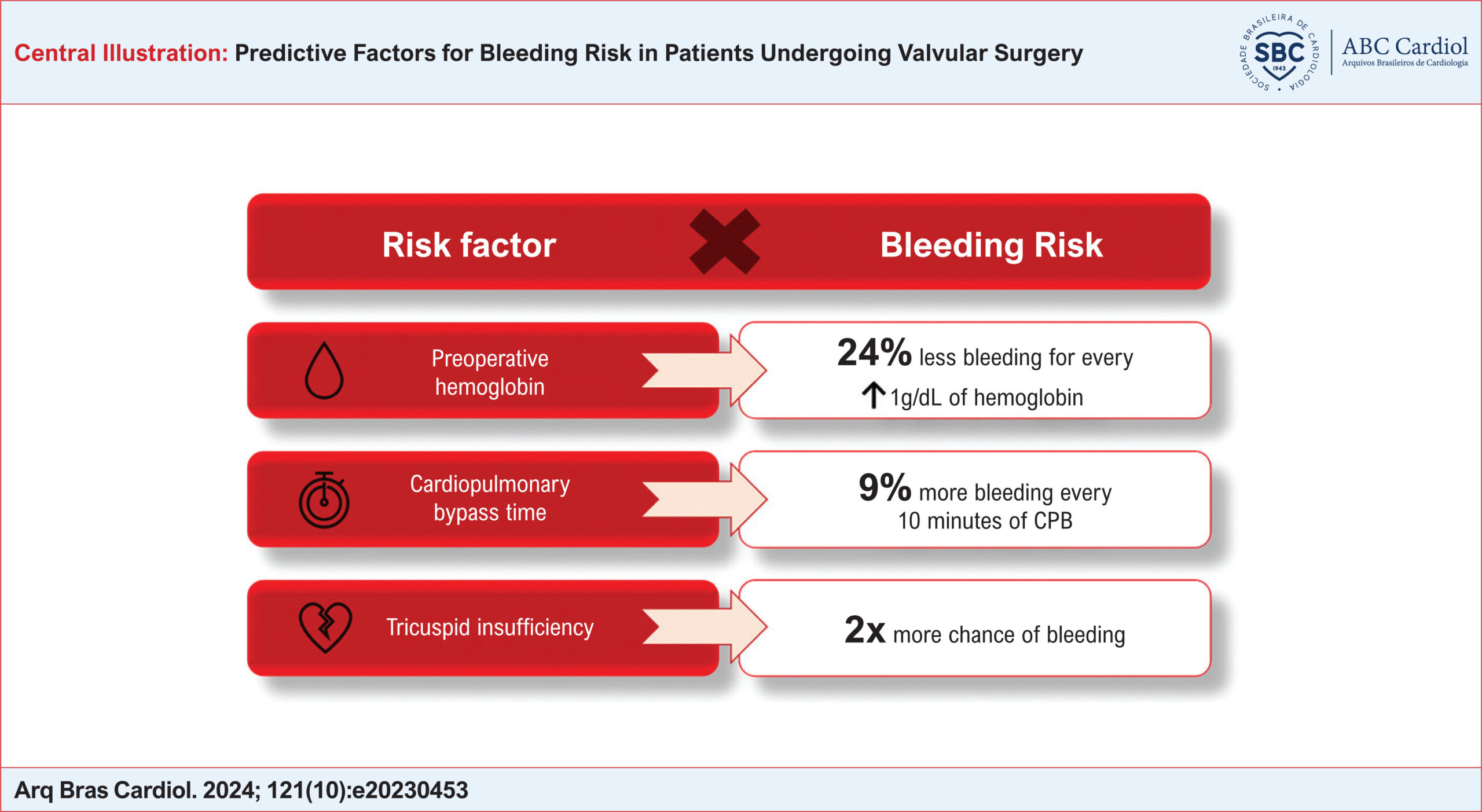
525 patients were analyzed, with a mean age of 56 years and a predominance of females. The most common valve disease was mitral insufficiency, 8.8% had increased bleeding and 4.3% had surgical reoperations. The variables with statistical significance were tricuspid insufficiency (OR 3.31, p < 0.001), chronic kidney disease/acute kidney injury (OR 2.97, p = 0.006), preoperative hemoglobin (OR 0.73, p < 0.001), reoperations (OR 2, 5, p = 0.003), cardiopulmonary bypass (CPB) time (OR 1.12, p < 0.001), 2-valve approach OR of 2.23 (p = 0.013), use of packed red blood cells OR of 2.8 (p = 0.001). In the multiple model, tricuspid insufficiency, CPB time and preoperative hemoglobin reached statistical significance.

Conclusion:

CPB time, preoperative hemoglobin and tricuspid insufficiency were independently associated with postoperative bleeding. The proposed scale is plausible and can help predict the risk of bleeding.
  • Cardiovascular Surgery
  • Postoperative Bleeding
  • risk score
  • Valvular heart disease
Read Full Article
Creative Commons Attribution (CC BY) Creative Commons license
18/10/2024 DOI: 10.36660/abc.20230453i Views 1
Figure 1
IJCS
Original Article

Internal Validation of a Risk Score for Prediction of Postoperative Atrial Fibrillation after Cardiac Surgery

Rafael de March Ronsoni et al. Tiago Luiz Luz Leiria Leonardo Martins Pires Marcelo Lapa Kruse … Edemar Pereira Rogerio Gomes da Silva Gustavo Glotz de Lima

Abstract

Background:

Postoperative atrial fibrillation (POAF) after cardiac surgery has great clinical and economic implications. Many attempts have been made to identify risk factors aiming at a better evaluation of prophylactic treatment strategies.

Objective:

To perform an internal validation of a risk score for POAF.

Methods:

A prospective cohort of 1,054 patients who underwent myocardial revascularization and/or valve surgery was included. The risk score model was developed in 448 patients, and its performance was tested in the remaining 606 patients. Variables with a significance level of 5% in the cohort were included and subjected to a multiple logistic regression model with backward selection. Performance statistics was performed using the c-statistic, the chi-square and the Hosmer-Lemeshow (HL) goodness-of-fit, Pearson’s correlation coefficient.

Results:

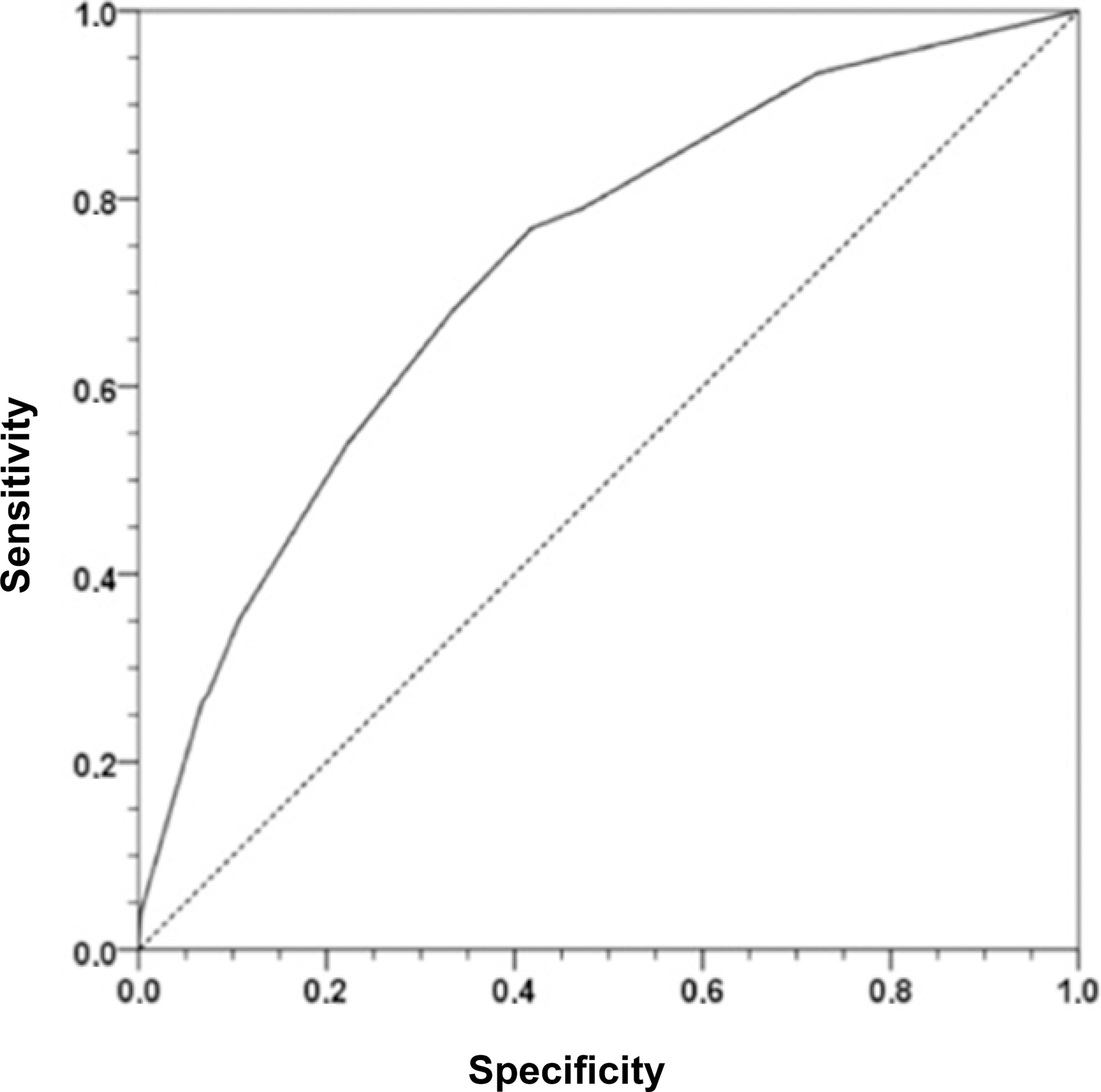
Four variables were considered predictors of outcome: age (≥ 70 years), mitral valve disease, the non-use or discontinuation of beta-blockers and a positive water balance (> 1,500 mL). The ROC curve was 0.76 (95% confidence interval [CI]: 0.72-0.79). The risk model showed a good ability according to the performance statistics – HL test x(2) = 0.93; p = 0.983 and r = 0.99 (Pearson’s coefficient). There was an increase in the frequency of POAF with the increase of the score: very low risk = 0.0%; low risk = 3.9%; intermediate risk = 10.9%; and high risk = 60.0%; p < 0.0001.

Conclusion:

The predictive variables of POAF allowed us to construct a simplified risk score. This scoring system showed good accuracy and can be used in routine clinical practice.

  • Atrial Fibrillation
  • Heart Valves/surgery
  • Myocardial Revascularization
  • Perioperative Care
  • Prevention and Control
  • risk score
Read Full Article
Creative Commons Attribution (CC BY) Creative Commons license
24/10/2019 DOI: 10.5935/2359-4802.20190085 Views 2
Quantifying the risk of coronary artery disease in a community: The Bambuí Project
ABC
Original Article

Quantifying the risk of coronary artery disease in a community: The Bambuí Project

Sandhi Maria Barreto et al. Valéria Maria Azeredo Passos Alisson Renê Aquino Cardoso Maria Fernanda Lima-Costa

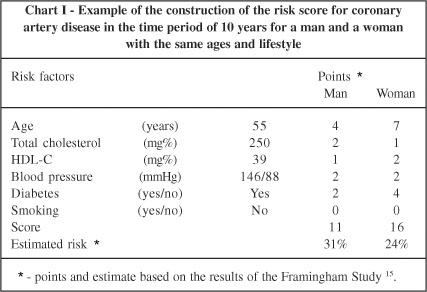
OBJECTIVE: To determine the coronary risk profile in adults and elderly in a community. METHODS: The study comprised a sample of adults (30-59 years, n=547) and the entire elderly population (60-74 years, n=1165) residing in Bambuí town, Brazil. The Framingham score based on sex, age, smoking, diabetes mellitus, systolic and diastolic blood pressure, total cholesterol, and HDL-C was used. The score based on age and sex was defined as “expected” and compared with the mean score obtained by the sum of all risk factors in each age group and sex (score “observed”). RESULTS: The difference between the scores “observed” and “expected” increased with aging in both sexes. Smoking increased the difference from 30 years of age onwards, in both sexes, and hypertension was important in men above the age of 30 years and in women above the age of 50 years. Diabetes and elevated total cholesterol increased the risk of the disease above the age of 50 years in both sexes. A higher level of HDL-C reduced the risk among men above the age of 30 years, with no significant difference among women. Less schooling (< 4 years versus ³ 4 years) was associated with a higher score in adults of both sexes, but not among the elderly. CONCLUSION: Based on these results, in the community studied, the risk of coronary artery disease may be reduced up to 44% in men and 38% in women.

  • Coronary Artery Disease
  • population-based study
  • risk score
Read Full Article
Creative Commons Attribution (CC BY) Creative Commons license
29/01/2004 DOI: 10.1590/S0066-782X2003001400002

How to cite this article

EndNote RIS

Electronic Document Format (Vancouver)

Vieira AC, Arnoni RT, Barbosa ABS, Berriel AS, Vianna RG, Issa M. Predictive Factors for Bleeding Risk in Patients Undergoing Valvular Surgery. Arquivos Brasileiros de Cardiologia 2024;121(10):e20230453.

Electronic Document Format (ABNT)

Vieira, Alef de Carvalho; Arnoni, Renato Tambellini; Barbosa, Ana Beatriz Silva; Berriel, Attila Santos; Vianna, Rafael Guimarães; Issa, Mario. Predictive Factors for Bleeding Risk in Patients Undergoing Valvular Surgery. Arquivos Brasileiros de Cardiologia, v. 121, n. 10, e20230453, Oct. 2024.

Electronic Document Format (APA)

Vieira, A. C., Arnoni, R. T., Barbosa, A. B. S., Berriel, A. S., Vianna, R. G., & Issa, M. (2024). Predictive Factors for Bleeding Risk in Patients Undergoing Valvular Surgery. Arquivos Brasileiros de Cardiologia, 121(10), e20230453.

Electronic Document Format (ISO)

Vieira, Alef de Carvalho and Arnoni, Renato Tambellini and Barbosa, Ana Beatriz Silva and Berriel, Attila Santos and Vianna, Rafael Guimarães and Issa, Mario. Predictive Factors for Bleeding Risk in Patients Undergoing Valvular Surgery. Arquivos Brasileiros de Cardiologia [online]. 2024, vol. 121, n. 10, [cited 2026-10-14], e20230453. Available from: <https://journals.cardiol.br/en/article/predictive-factors-for-bleeding-risk-in-patients-undergoing-valvular-surgery/>. ISSN 0066-782X

EndNote RIS

Electronic Document Format (Vancouver)

Ronsoni RM, Leiria TLL, Pires LM, Kruse ML, Pereira E, Silva RG, Lima GG, et al. Internal Validation of a Risk Score for Prediction of Postoperative Atrial Fibrillation after Cardiac Surgery. International Journal of Cardiovascular Sciences 2019;33(2):158-66.

Electronic Document Format (ABNT)

Ronsoni, Rafael de March; Leiria, Tiago Luiz Luz; Pires, Leonardo Martins; Kruse, Marcelo Lapa; Pereira, Edemar; Silva, Rogerio Gomes da; Lima, Gustavo Glotz de. Internal Validation of a Risk Score for Prediction of Postoperative Atrial Fibrillation after Cardiac Surgery. International Journal of Cardiovascular Sciences, v. 33, n. 2, p. 158-166, Oct. 2019.

Electronic Document Format (APA)

Ronsoni, R. M., Leiria, T. L. L., Pires, L. M., Kruse, M. L., Pereira, E., Silva, R. G. , & Lima, G. G. (2019). Internal Validation of a Risk Score for Prediction of Postoperative Atrial Fibrillation after Cardiac Surgery. International Journal of Cardiovascular Sciences, 33(2), 158-166.

Electronic Document Format (ISO)

Ronsoni, Rafael de March and Leiria, Tiago Luiz Luz and Pires, Leonardo Martins and Kruse, Marcelo Lapa and Pereira, Edemar and Silva, Rogerio Gomes da and Lima, Gustavo Glotz de. Internal Validation of a Risk Score for Prediction of Postoperative Atrial Fibrillation after Cardiac Surgery. International Journal of Cardiovascular Sciences [online]. 2019, vol. 33, n. 2, [cited 2026-10-14], pp. 158-166. Available from: <https://journals.cardiol.br/en/article/internal-validation-of-a-risk-score-for-prediction-of-postoperative-atrial-fibrillation-after-cardiac-surgery/>. ISSN 2359-4802

EndNote RIS

Electronic Document Format (Vancouver)

Barreto SM, Passos VMA, Cardoso ARA, Lima-Costa MF. Quantifying the risk of coronary artery disease in a community: The Bambuí Project. Arquivos Brasileiros de Cardiologia 2004;81(6):556-61.

Electronic Document Format (ABNT)

Barreto, Sandhi Maria; Passos, Valéria Maria Azeredo; Cardoso, Alisson Renê Aquino; Lima-Costa, Maria Fernanda. Quantifying the risk of coronary artery disease in a community: The Bambuí Project. Arquivos Brasileiros de Cardiologia, v. 81, n. 6, p. 556-561, Jan. 2004.

Electronic Document Format (APA)

Barreto, S. M., Passos, V. M. A., Cardoso, A. R. A., & Lima-Costa, M. F. (2004). Quantifying the risk of coronary artery disease in a community: The Bambuí Project. Arquivos Brasileiros de Cardiologia, 81(6), 556-561.

Electronic Document Format (ISO)

Barreto, Sandhi Maria and Passos, Valéria Maria Azeredo and Cardoso, Alisson Renê Aquino and Lima-Costa, Maria Fernanda. Quantifying the risk of coronary artery disease in a community: The Bambuí Project. Arquivos Brasileiros de Cardiologia [online]. 2004, vol. 81, n. 6, [cited 2026-10-14], pp. 556-561. Available from: <https://journals.cardiol.br/article/quantifying-the-risk-of-coronary-artery-disease-in-a-community-the-bambui-project/>. ISSN 0066-782X

  • About ABC Family
  • Internal Regulation
  • Editorial Board
  • Brazilian Society of Cardiology (SBC)

Issues

SBC Guidelines

  • Videos
  • Podcasts
  • News