| ABC
ABC Family Arquivos Brasileiros de Cardiologia International Journal of Cardiovascular Sciences ABC Heart Failure & Cardiomyopathy ABC Imagem Cardiovascular
Português English
ABC Family | ABC
Português English
  • About
    • About the Journal
    • Internal Regulation
    • Editors Section
    • Editorial Board
    • History
    • SBC Award
  • Instructions to Authors
    • Guidelines for Publication
    • Editorial Policy
    • Ethics Policy
    • Policy on the Use of Artificial Intelligence
    • Mandatory Publication Form
    • Publication Fee
  • Issues
  • SBC Guidelines
  • Abstracts
    • How to Publish an Abstract Supplement?
    • Supplements from the Brazilian Congress of Cardiology
  • About
    • About the Journal
    • Internal Regulation
    • Editors Section
    • Editorial Board
    • History
    • SBC Award
  • Instructions to Authors
    • Guidelines for Publication
    • Editorial Policy
    • Ethics Policy
    • Policy on the Use of Artificial Intelligence
    • Mandatory Publication Form
    • Publication Fee
  • Issues
  • SBC Guidelines
  • Abstracts
    • How to Publish an Abstract Supplement?
    • Supplements from the Brazilian Congress of Cardiology

ABC Family

  • ABC Family
  • Arquivos Brasileiros de Cardiologia
  • International Journal of Cardiovascular Sciences
  • ABC Heart Failure & Cardiomyopathy
  • ABC Imagem Cardiovascular
Search in

No content found.

Journals
Ordering
Article types
Others

  1. Home
  2. ABC
  3. Issues
  4. 2017, Volume 108, Number 3
Figure 1
Review Article

Genetic Evaluation, Familial Screening and Exercise

Ricardo Stein et al. Juan Pablo Trujillo Anderson Donelli da Silveira Arsonval Lamounier Júnior Lorenzo Monserrat Iglesias

Introduction

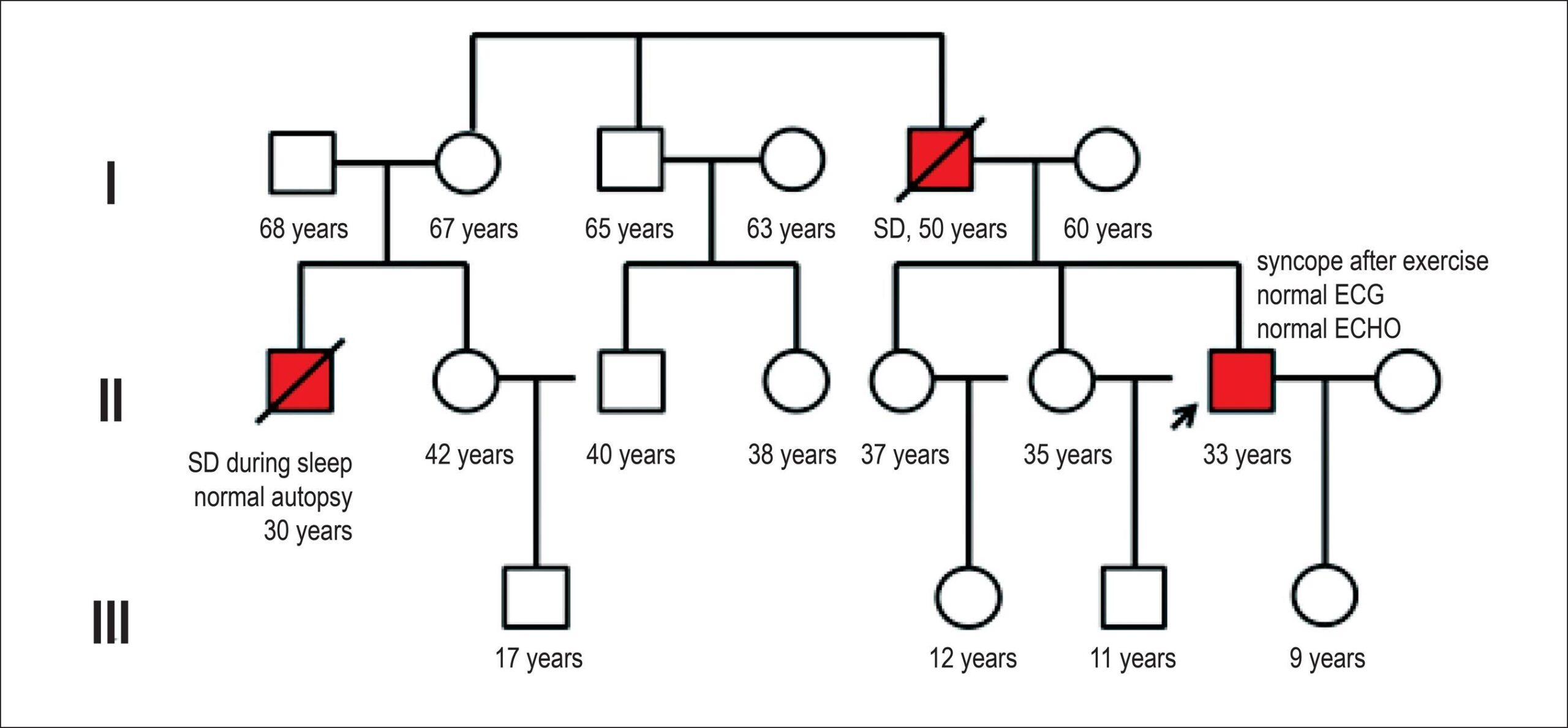
Regular physical activity practice benefits individuals of all ages, sexes and ethnicities. If on one hand the practice of moderate exercise is considered a healthy activity that favors the cardiovascular system, on the other, high-intensity exercise for a long period can increase the risk for sudden death (SD). Even considering the huge number of individuals exercising daily, SD in that context is rare. However, the prevention of SD can be difficult and it has significant repercussion, mainly among young practitioners of leisure exercise or athletes. From the epidemiological viewpoint, cardiac SD affects 200,000 to 400,000 individuals in the United States of America (USA) annually. In the sports scenario, around 200 athletes per year are estimated to have a fatal event. In Spain, the national registry of SD in athletes reported 180 cases from 1995 to 2007, suggesting an incidence of 15 to 20 cases per year.

For athletes, preparticipation evaluation (PPE) is indicated, and can be effective in preventing cardiac SD in that context. However, that type of screening has great variability between different countries and entities that perform it. In the sports context, genetic evaluation is performed only in specific cases.

[…]
  • Death, Sudden, Cardiac
  • Exercise
  • Genetics
  • Genotype
  • Heredity
  • Sports Medicine
Read Full Article
Creative Commons Attribution (CC BY) Creative Commons license
06/03/2017 DOI: 10.5935/abc.20170015 Views 3
Figure 1
Original Article

Effects and Mechanisms of Radiofrequency Ablation of Renal Sympathetic Nerve on Anti-Hypertension in Canine

Wei Chen et al. Xiaohong Tang Xiaofang Yang Chunyan Weng … Kan Yang Juan Wen Hong Liu Yang Wu

Abstract

Background:

Radiofrequency ablation of renal sympathetic nerve (RDN) shows effective BP reduction in hypertensive patients while the specific mechanisms remain unclear.

Objective:

We hypothesized that abnormal levels of norepinephrine (NE) and changes in NE-related enzymes and angiotensinconverting enzyme 2 (ACE2), angiotensin (Ang)-(1-7) and Mas receptor mediate the anti-hypertensive effects of RDN.

Methods:

Mean values of systolic blood pressure (SBP), diastolic blood pressure (DBP) and mean arterial pressure (MAP) were assessed at baseline and follow-up. Plasma and renal norepinephrine (NE) concentrations were determined using highperformance liquid chromatography with electrochemical detection, and levels of NE-related enzyme and ACE2-Ang(1-7)- Mas were measured using real time PCR, Western blot and immunohistochemistry or Elisa in a hypertensive canine model fed with high-fat diet and treated with RDN. The parameters were also determined in a sham group treated with renal arteriography and a control group fed with normal diet.

Results:

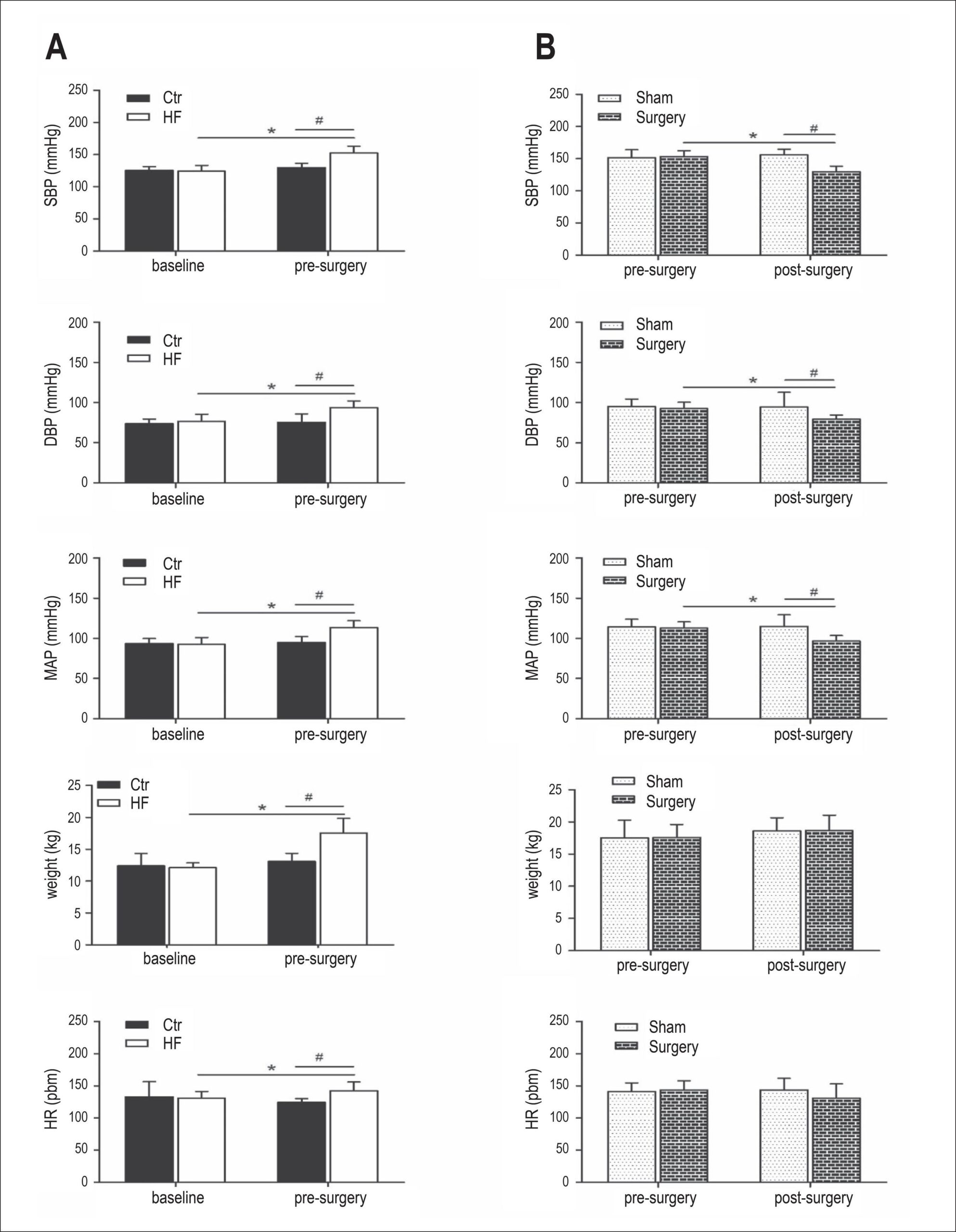
RDN decreased SBP, DBP, MAP, plasma and renal NE. Compared with the sham group, renal tyrosine hydroxylase (TH) expression was lower and renalase expression was higher in the RDN group. Compared with the control group, renal TH and catechol-o-methyl transferase (COMT) were higher and renalase was lower in the sham group. Moreover, renal ACE2, Ang-(1-7) and Mas levels of the RDN group were higher than those of the sham group, which were lower than those of the control group.

Conclusion:

RDN shows anti-hypertensive effect with reduced NE and activation of ACE2-Ang(1-7)-Mas, indicating that it may contribute to the anti-hypertensive effect of RDN.

  • Dogs
  • Hypertension
  • Radio Waves
  • Renal Insufficiency
  • Sympatectomy
Read Full Article
Creative Commons Attribution (CC BY) Creative Commons license
06/03/2017 DOI: 10.5935/abc.20170014 Views 1
Figure 1
Original Article

Ankle-Brachial Index as a Predictor of Mortality in Hemodialysis: A 5-Year Cohort Study

Jair Baptista Miguel et al. Jorge Paulo Strogoff de Matos Jocemir Ronaldo Lugon

Abstract

Background:

Abnormal ankle-brachial index (ABI) has been found to be a strong predictor of mortality in some hemodialysis populations in studies with relatively short periods of follow-up, lower than 2 years.

Objective:

This study aimed to assess the predictive value of abnormal ABI as a risk factor for death among patients on maintenance hemodialysis after a 5-year follow-up.

Methods:

A total of 478 patients on hemodialysis for at least 12 months were included in the study. ABI measurement was performed using a mercury column sphygmomanometer and portable Doppler. Patients were divided into 3 groups according to ABI (low: 1.3) and followed for a 60-month period.

Results:

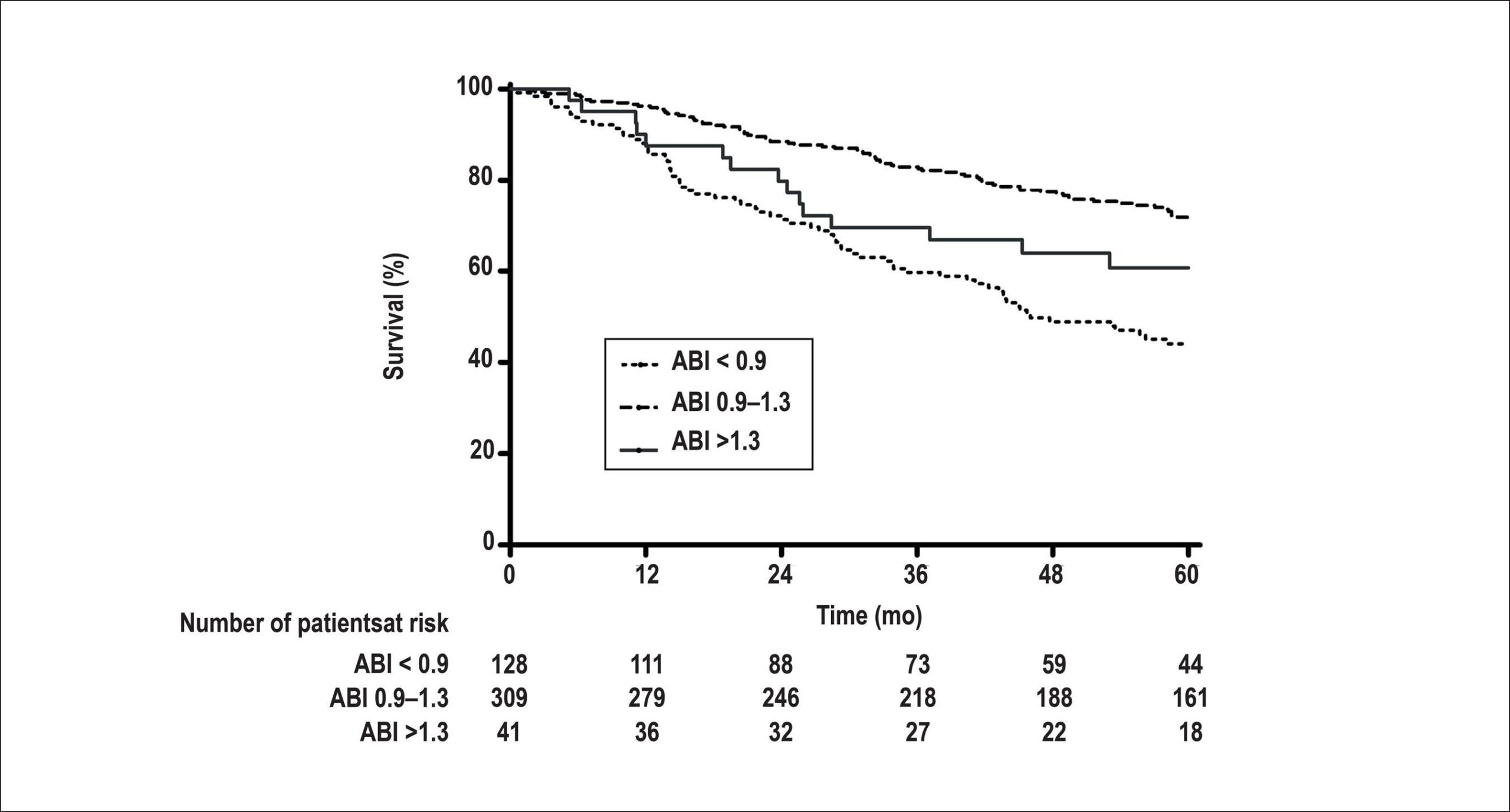
The prevalence rates of low, normal and high ABI were 26.8%, 64.6% and 8.6%, respectively. The 5-year survival rate was lower in the groups with low ABI (44.1%, P<0.0001) and high ABI (60.8%, P= 0.025) than in the group with normal ABI (71.7%). Cox regression was used to evaluate the association between ABI and mortality, adjusting for potential confounders. Using normal ABI as reference, a low, but not a high ABI was found to be an independent risk factor for all-cause mortality (HR2.57; 95% CI, 1.84-3.57 and HR 1.62; 95% CI, 0.93-2.83, respectively).

Conclusions:

long-term survival rates of patients with either low or high ABI were lower than the one from those with normal ABI. However, after adjustment for potential confounders, only low ABI persisted as an independent risk factor for all-cause mortality among hemodialysis patients.

  • Ankle Brachial Index / mortality
  • Arterial Pressure
  • Cohort Studies
  • Measures
  • renal dialysis
  • Renal Insufficiency, Chronic
Read Full Article
Creative Commons Attribution (CC BY) Creative Commons license
01/03/2017 DOI: 10.5935/abc.20170026 Views 2
Special Article

Positioning about the Flexibility of Fasting for Lipid Profiling

Marileia Scartezini et al. Carlos Eduardo dos Santos Ferreira Maria Cristina Oliveira Izar Marcello Bertoluci … Sergio Vencio Gustavo Aguiar Campana Nairo Massakazu Sumita Luiz Fernando Barcelos André A. Faludi Raul D. Santos Marcus Vinícius Bolívar Malachias Jerolino Lopes Aquino César Alex de Oliveira Galoro Cleide Sabino Maria Helane Costa Gurgel Luiz Alberto Andreotti Turatti Alexandre Hohl Tania Leme da Rocha Martinez

Justifications

The review of the need of fasting for lipid profile analysis (total cholesterol, LDL-C, HDL-C, non-HDL-C, and triglycerides [TG]) is based on the following grounds:

[…]

  • Fasting / metabolism
  • Lipid profile
  • Postprandial
  • Reference Values
  • Risk category
Read Full Article
Creative Commons Attribution (CC BY) Creative Commons license
01/03/2017 DOI: 10.5935/abc.20170039 Views 1
Original Article

Sensitivity, Specificity and Predictive Value of Heart Rate Variability Indices in Type 1 Diabetes Mellitus

Anne Kastelianne França da Silva et al. Diego Giuliano Destro Christofaro Aline Fernanda Barbosa Bernardo Franciele Marques Vanderlei Luiz Carlos Marques Vanderlei

Abstract

Background:

Heart rate variability (HRV) indices may detect autonomic changes with good diagnostic accuracy. Type diabetes mellitus (DM) individuals may have changes in autonomic modulation; however, studies of this nature in this population are still scarce.

Objective:

To compare HRV indices between and assess their prognostic value by measurements of sensitivity, specificity and predictive values in young individuals with type 1 DM and healthy volunteers.

Methods:

In this cross-sectional study, physical and clinical assessment was performed in 39 young patients with type 1 DM and 43 young healthy controls. For HRV analysis, beat-to-beat heart rate variability was measured in dorsal decubitus, using a Polar S810i heart rate monitor, for 30 minutes. The following indices were calculated: SDNN, RMSSD, PNN50, TINN, RRTri, LF ms2, HF ms2, LF un, HF un, LF/HF, SD1, SD2, SD1/SD2, and ApEn.

Results:

Type 1 DM subjects showed a decrease in sympathetic and parasympathetic activities, and overall variability of autonomic nervous system. The RMSSD, SDNN, PNN50, LF ms2, HF ms2, RRTri, SD1 and SD2 indices showed greater diagnostic accuracy in discriminating diabetic from healthy individuals.

Conclusion:

Type 1 DM individuals have changes in autonomic modulation. The SDNN, RMSSD, PNN50, RRtri, LF ms2, HF ms2, SD1 and SD2 indices may be alternative tools to discriminate individuals with type 1 DM.

  • Autonomic Nervous System
  • Diabetes Mellitus, Type 1, Predictive Value of Tests
  • Heart Rate
  • Sensitivity and Specificity
Read Full Article
Creative Commons Attribution (CC BY) Creative Commons license
01/03/2017 DOI: 10.5935/abc.20170024 Views 1
Figure 1
Original Article

A Single Resistance Exercise Session Improves Aortic Endothelial Function in Hypertensive Rats

Thaís de Oliveira Faria et al. Jhuli Keli Angeli Luiz Guilherme Marchesi Mello Gustavo Costa Pinto … Ivanita Stefanon Dalton Valentim Vassallo Juliana Hott de Fúcio Lizardo

Abstract

Background:

Physical exercise is an important tool for the improvement of endothelial function.

Objective:

To assess the effects of acute dynamic resistance exercise on the endothelial function of spontaneously hypertensive rats (SHR).

Methods:

Ten minutes after exercise, the aorta was removed to evaluate the expression of endothelial nitric oxide synthase (eNOS), phosphorylated endothelial nitric oxide synthase (p-eNOS1177) and inducible nitric oxide synthase (iNOS) and to generate concentration-response curves to acetylcholine (ACh) and to phenylephrine (PHE). The PHE protocol was also performed with damaged endothelium and before and after NG-nitro-L-arginine methyl ester (L-NAME) and indomethacin administration. The maximal response (Emax) and the sensitivity (EC50) to these drugs were evaluated.

Results:

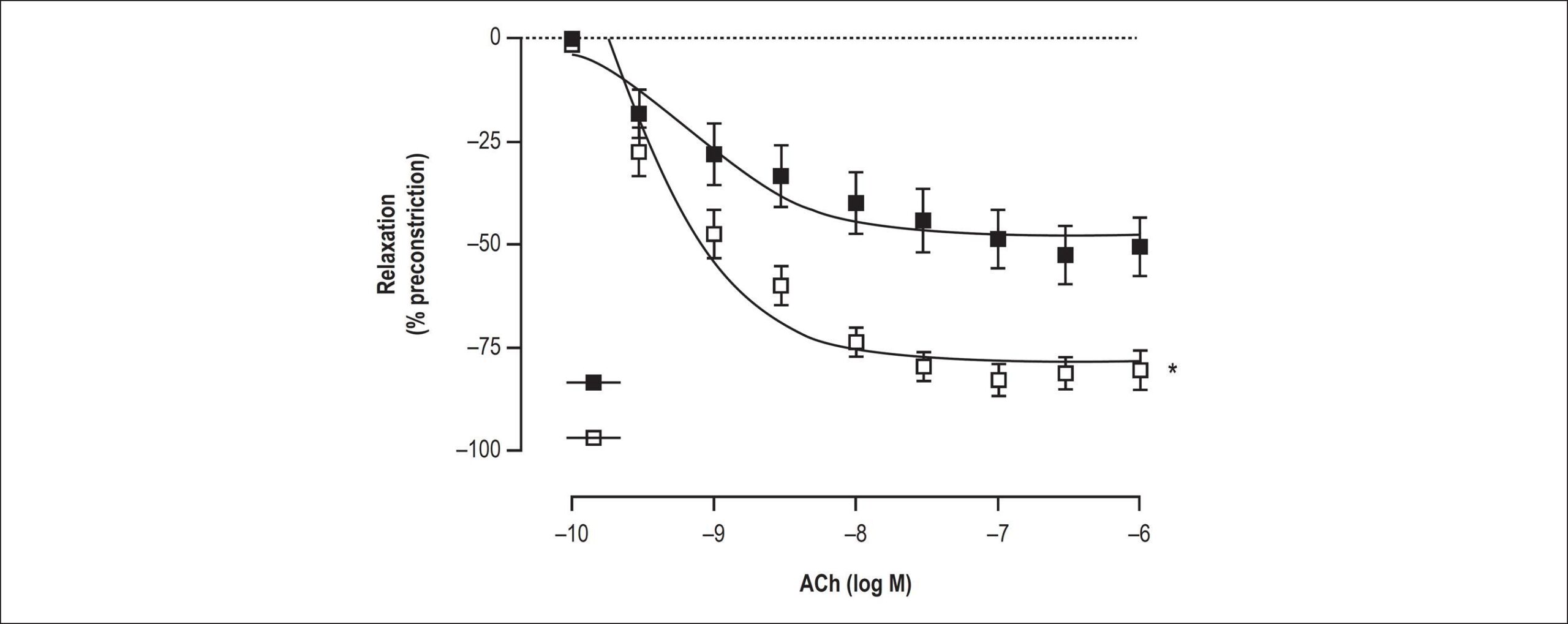
ACh-induced relaxation increased in the aortic rings of exercised (Ex) rats (Emax= -80 ± 4.6%, p < 0.05) when compared to those of controls (Ct) (Emax = -50 ± 6.8%). The Emax to PHE was decreased following exercise conditions (95 ± 7.9%, p < 0.05) when compared to control conditions (120 ± 4.2%). This response was abolished after L-NAME administration or endothelial damage. In the presence of indomethacin, the aortic rings' reactivity to PHE was decreased in both groups (EC50= Ex -5.9 ± 0.14 vs. Ct -6.6 ± 0.33 log µM, p < 0.05 / Emax = Ex 9.5 ± 2.9 vs. Ct 17 ± 6.2%, p < 0.05). Exercise did not alter the expression of eNOS and iNOS, but increased the level of p-eNOS.

Conclusion:

A single resistance exercise session improves endothelial function in hypertensive rats. This response seems to be mediated by increased NO production through eNOS activation.

  • Endothelium, Vascular
  • Exercise
  • Hypertension
  • Nitric Oxide
  • Rats
Read Full Article
Creative Commons Attribution (CC BY) Creative Commons license
01/03/2017 DOI: 10.5935/abc.20170023
Figure 1
Clinicoradiological Session

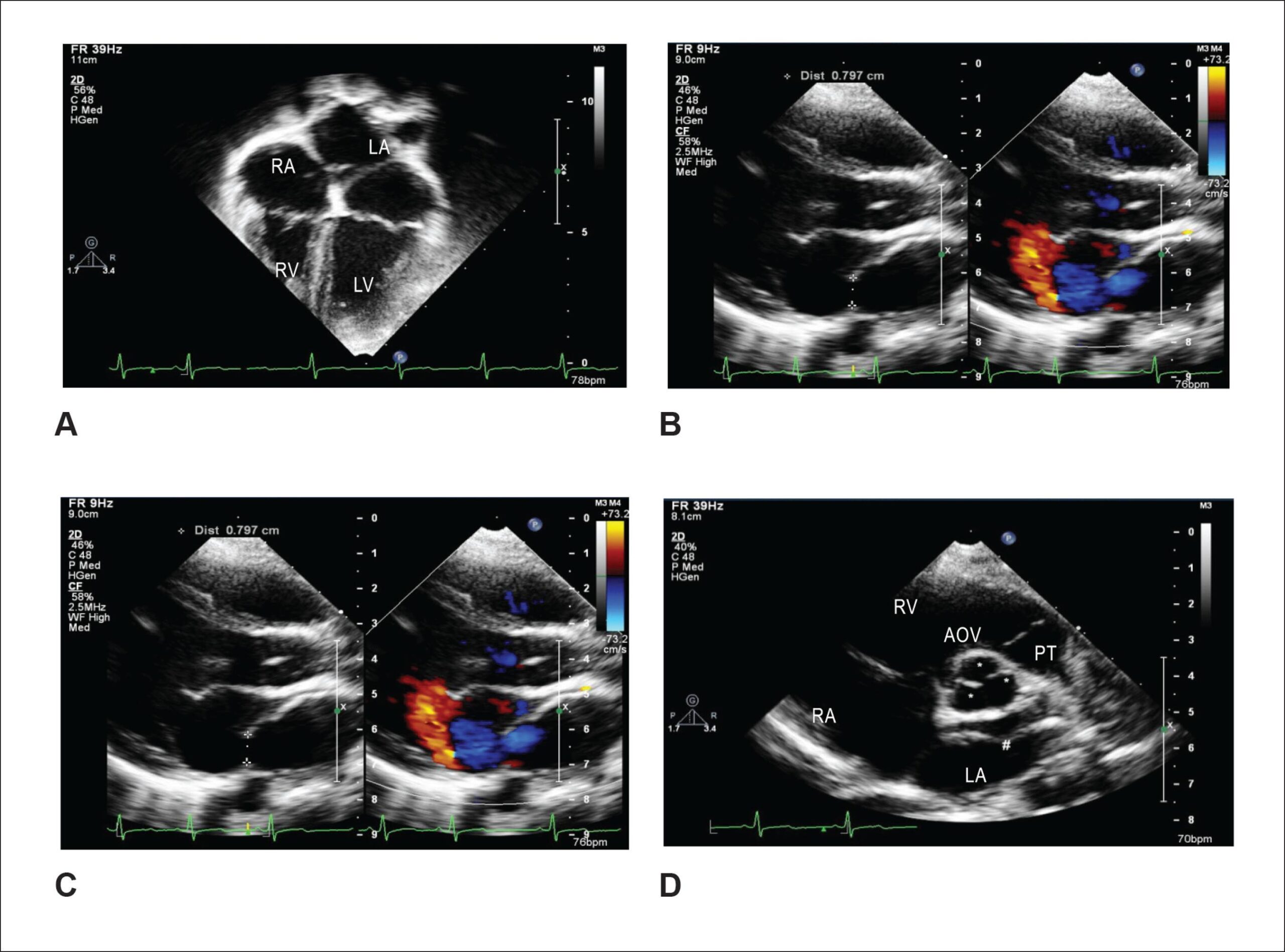
Case 2/2017 – Cor Triatriatum, without Clinical Manifestation, in A 6-Year-Old Girl

Edmar Atik et al. Gláucia M. P. Tavares

Complementary examinations

Electrocardiogram showed sinus rhythm and no signs of cavitary overload. The QRS complex had RS morphology in V1, qRs in V6. AP: +50°, AQRS: +80°, AT: +40°.

Chest X-ray showed normal cardiac area (cardiothoracic index: 0.46). The pulmonary vascular net was normal and the medial arch was rectified.

[…]

  • Congenital Abnormalities
  • Cor triatriatum
  • Echocardiography
  • Signs and Symptoms
Read Full Article
Creative Commons Attribution (CC BY) Creative Commons license
01/03/2017 DOI: 10.5935/abc.20170030
Viewpoint

Aerobic Exercise and The Heart: Discussing Doses

Claudio Gil Soares de Araújo et al. Claudia Lucia Barros de Castro João Felipe Franca Christina Grüne de Souza e Silva

Preliminary considerations

Free animals have been and will always be active, with confinement or sedentary styles considered unnatural. Humankind, as it is known today, was able to set off from central regions and, through its own means of locomotion (exercise) spread across far areas of the planet. Seeking food and water, running from predators, from childhood to old age, have always been linked to exercise. Indeed, a sedentary lifestyle is very recent in the history of humankind.

Before approaching the theme of exercise and the heart, it is important to conceptualize some terms ()., Among several terms, it is worth highlighting the difference between physical activity and exercise. While both involve movement and/or muscle contraction with energy expenditure, in exercise there is movement intention (physical activity) in a structured and repetitive manner, with the objective of maintenance or optimization of physical conditioning and/or health and/or body aesthetics.

[…]

  • Cardiovascular Diseases
  • Exercise
  • Longevity
  • Prevention
  • Running
Read Full Article
Creative Commons Attribution (CC BY) Creative Commons license
01/03/2017 DOI: 10.5935/abc.20170020
Letter to the Editor

Prognosis Determinants after Cardioverter-Defibrillators Implantation in Brazil

Arn Migowski et al. Regina Maria de Aquino Xavier

The study by Silva et al. presented the results of a series of cases from a single-center registry of implantable cardiac devices, including 28 implantations of isolated cardioverter defibrillators (ICD) and 14 associated to resynchronization (CRT-ICD), in addition to procedures for generator replacement and handling of electrode cable. ICD and CRT-ICD implantations were considered the strongest predictors of re-admission into the hospital during a six-month period after the surgical procedure, although it is not clear whether there was adjustment by functional class or left ventricular ejection fraction.

We have recently published the results of short, medium, and long term follow-ups of all ICD and CRT-ICD implantations funded by The Brazilian Unified Healthcare System (SUS) in all of Brazil, between 2001 and 2007, including 3,295 ICD implantations in 85 hospitals and 681 CRT-ICD implantations in 50 hospitals.

[…]

  • Brazil
  • Cardiac Resynchronization
  • Chagas Cardiomyopathy
  • Defibrillators, Implantable
  • Survival Analysis
  • Therapy Devices
Read Full Article
Creative Commons Attribution (CC BY) Creative Commons license
01/03/2017 DOI: 10.5935/abc.20170034
Editorial

Gramado Declaration: The Impact of 20 Years of Cardiovascular Prevention

Aloyzio Achutti et al. Ricardo Stein Lúcia Pellanda Bruce B. Duncan

From May 1st to 10th, 1997, the First Brazilian Seminar on Cardiovascular Epidemiology, was held in the city of Gramado (RS), in the manner in which the World Federation of Cardiology has been promoting in various parts of the world since 1968 with The title Ten-Day International Didactic Seminars on Cardiovascular Epidemiology and Prevention.

The initiative came from the Scientific Advisory Board of the Faculty of Medicine of the Universidade Federal of Rio Grande do Sul (UFRGS) and the Cardiology Clinical Department and of the Committe de Epidemiology and Public Health of the Sociedade Brasileira de Cardiologia (SBC), under the auspices of the Coordination of Higher Education for Personal Development (CAPES), the World Heart Federation (at that time still called the International Society and Federation of Cardiology) and the Inter-American Heart Foundation.

[…]

  • Cardiovascular Diseases / epidemiology
  • Cardiovascular Diseases / prevention & control
  • Cardiovascular Diseases / trends
Read Full Article
Creative Commons Attribution (CC BY) Creative Commons license
01/03/2017 DOI: 10.5935/abc.20170040
Figure 1
Case Report

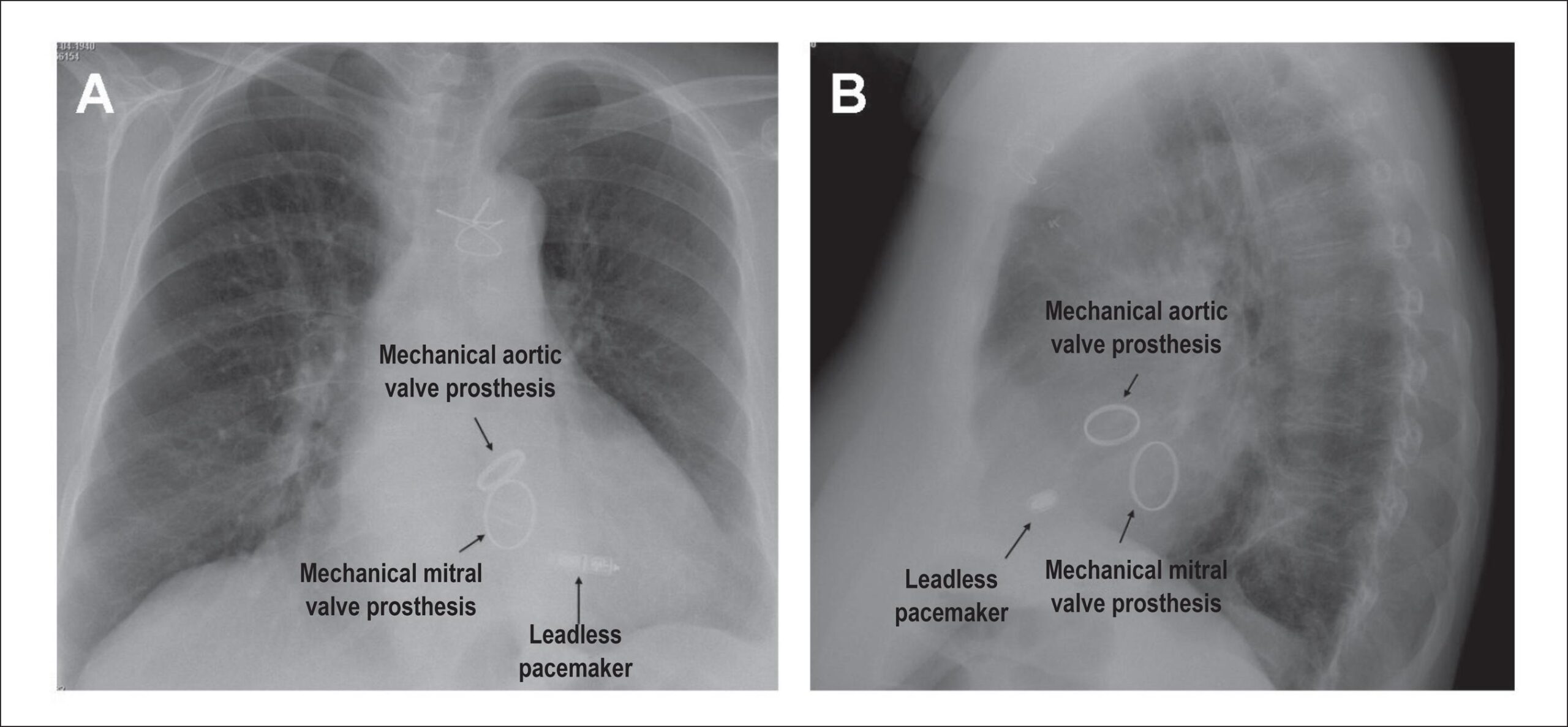
Miniaturized Transcatheter Leadless Pacemaker in a Patient with Double Mechanical Prosthesis

Marta Pachón et al. Alberto Puchol Finn Akerström Andrés Sánchez-Pérez Miguel A. Arias

Introduction

Despite technical advances and accumulated experience, complications continue being a concern for patients implanted with permanent pacemakers. Several leadless pacemaker systems have now been developed in order to reduce the rate of complications in patients implanted with conventional transvenous pacemaker.

[…]

  • Arrhythmias, Cardiac/therapy
  • Heart Valve Prosthesis
  • Pacemaker, Artificial/adverse effects
Read Full Article
Creative Commons Attribution (CC BY) Creative Commons license
01/03/2017 DOI: 10.5935/abc.20160192
Figure 1
Original Article

MMP-9 Levels and IMT of Carotid Arteries are Elevated in Obese Children and Adolescents Compared to Non-Obese

Claudio Andrade et al. Adriana Bosco Valeria Sandrim Francisco Silva

Abstract

Background:

Childhood obesity is associated with increased risk of atherosclerosis and cardiovascular disease in adulthood. Increased intima-media thickness (IMT) of the carotid artery is linked to the initiation and progression of the chronic inflammatory processes implicated in cardiovascular disease. Matrix metalloproteinase-9 (MMP-9) plays an important role in the degradation of the extracellular matrix and, consequently, in the development, morphogenesis, repair and remodeling of connective tissues.

Objectives:

(i) to determine and compare the concentrations of MMP-9, tissue inhibitor of metalloproteinase -1 (TIMP-1), and MMP-9/TIMP-1 ratio in obese and non-obese children and adolescents; (ii) to investigate the association of these markers with common and internal IMT of carotid arteries.

Methods:

Cross-sectional study involving 32 obese and 32 non-obese (control) individuals between 8 – 18 years of age.

Results:

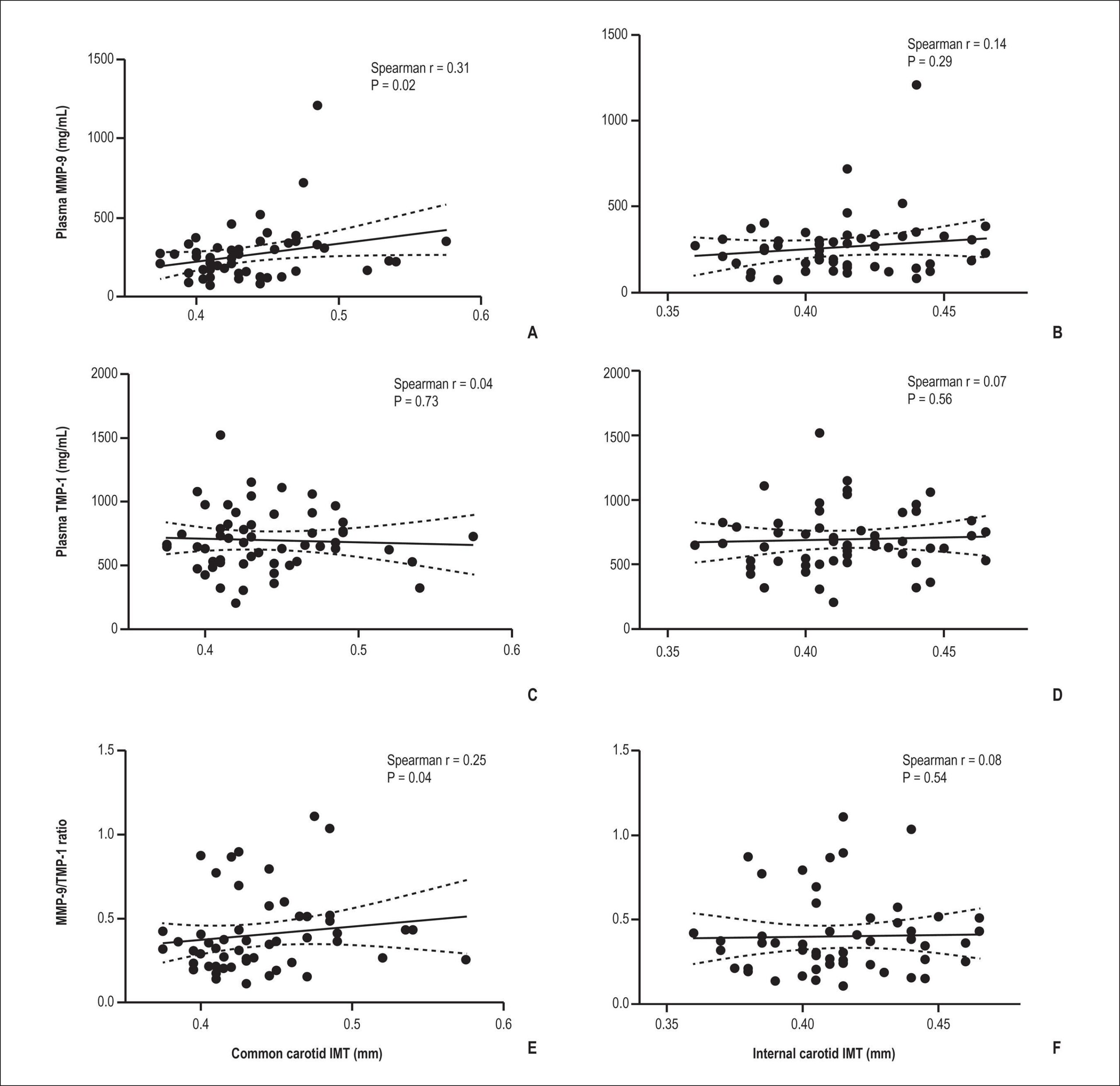
Significantly (p < 0.05) higher values of MMP-9 concentration, as well as a higher MMP-9/TIMP-1 ratio were detected in the obese group compared to control counterparts. Common and internal carotid IMT values were significantly higher (p < 0.001) in the obese group compared to the control group. Positive correlations were observed between the common carotid IMT values and MMP-9 concentrations as well as MMP-9/TIMP-1 ratio.

Conclusions:

Our data demonstrate that obese children and adolescents present higher mean IMT values, plasma MMP-9 and MMP-9/TIMP-1 ratio compared to the non-obese. Thus, these findings indicate that this group presents a risk profile for early atherosclerosis.

  • Atherosclerosis
  • Biomarkers
  • Pediatric Obesity
  • Tissue Inhibitor of Metalloproteinase
Read Full Article
Creative Commons Attribution (CC BY) Creative Commons license
01/03/2017 DOI: 10.5935/abc.20170025 Views 1
Figure 1
Image

Patient with Atrial Myxoma and Signs of Obstruction of the Left Ventricular Outflow Tract

Antonio Fernando Diniz Freire et al. Alexandre Anderson de Sousa Soares Tatiana de Carvalho Andreucci Torres Leal Mucio Tavares de Oliveira Junior Alexandre de Matos Soeiro

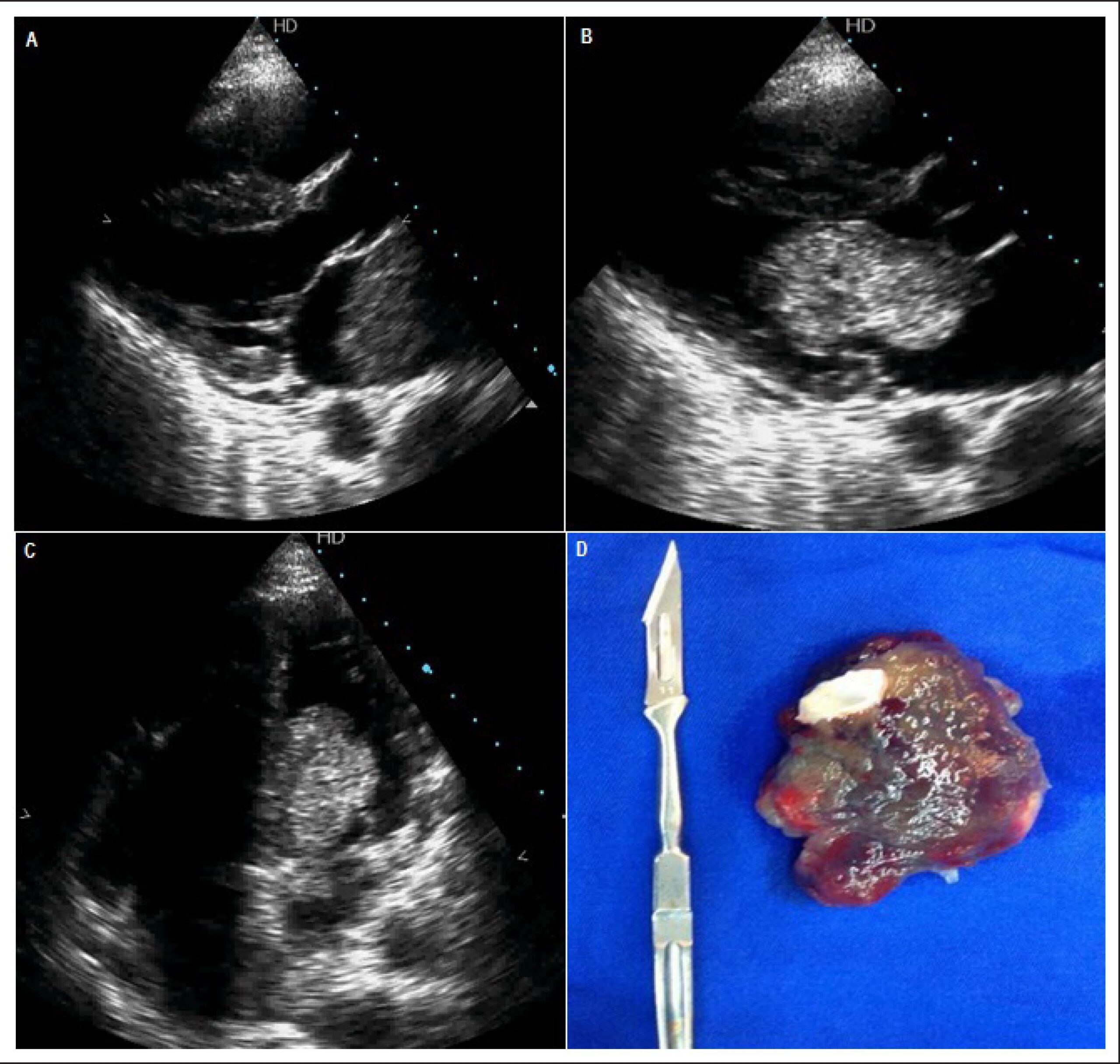
Female patient, 45 years-old, reported dyspnea on routine efforts with 6 months of evolution with dry cough. Previously healthy she refused to take regular medication. According to the physical examination, she had a heart rate of 105 bpm, blood pressure of 90x60mmHg, respiratory frequency 30 incursions per minute, arterial saturation of 88%, slow capillary filling time, rhythmic sounds, diastolic rumble murmur (+++/6) in mitral focus and bibasal pulmonary crepitations. Chest X-Ray showed a discreet widening of the mediastinum. Chest CT was performed to evaluate the mediastinum and pulmonary parenchyma and an intracardiac mass was found. It evolved with hypotension and worsening of pulmonary congestion.

Emergency echocardiogram showed a moving rounded hyperechoic image in the left atrium, measuring 66x36mm with a pedicle adhered to the membrane of the oval fossa dislocating to the left ventricle (LV) during systole causing hemodynamic repercussion (signs of LV outflow tract obstruction). The patient underwent emergency surgery. Retraction of the tumor revealed a cleft in the anterior cusp of the mitral valve and it was closed. In the immediate postoperative, the patient developed cardiogenic shock refractory to vasoactive drugs; an intra-aortic balloon was implanted, but the patient died 30 hours later. Anatomopathological confirmed the diagnosis of a myxoma: 7.5×4.6×3.4cm. In conclusion, the atrial myxoma with obstruction of the outflow tract of the LV is rare, its clinical manifestations can mislead the evaluator, clinical suspicion and the correct use of propaedeutic are essential for early diagnosis and successful clinical treatment.

[…]

  • Heart Atria/abnormalities
  • Hypotension
  • Myxoma/surgery
  • Tomography
Read Full Article
Creative Commons Attribution (CC BY) Creative Commons license
01/03/2017 DOI: 10.5935/abc.20170007
Figure 1
Original Article

Major Depression and Acute Coronary Syndrome-Related Factors

Jose Henrique Cunha Figueiredo et al. Nelson Albuquerque de Souza e Silva Basilio de Bragança Pereira Glaucia Maria Moraes de Oliveira

Abstract

Background:

Major Depressive Disorder (MDD) is one of the most common mental illnesses in psychiatry, being considered a risk factor for Acute Coronary Syndrome (ACS).

Objective:

To assess the prevalence of MDD in ACS patients, as well as to analyze associated factors through the interdependence of sociodemographic, lifestyle and clinical variables.

Methods:

Observational, descriptive, cross-sectional, case-series study conducted on patients hospitalized consecutively at the coronary units of three public hospitals in the city of Rio de Janeiro over a 24-month period. All participants answered a standardized questionnaire requesting sociodemographic, lifestyle and clinical data, as well as a structured diagnostic interview for the DSM-IV regarding ongoing major depressive episodes. A general log-linear model of multivariate analysis was employed to assess association and interdependence with a significance level of 5%.

Results:

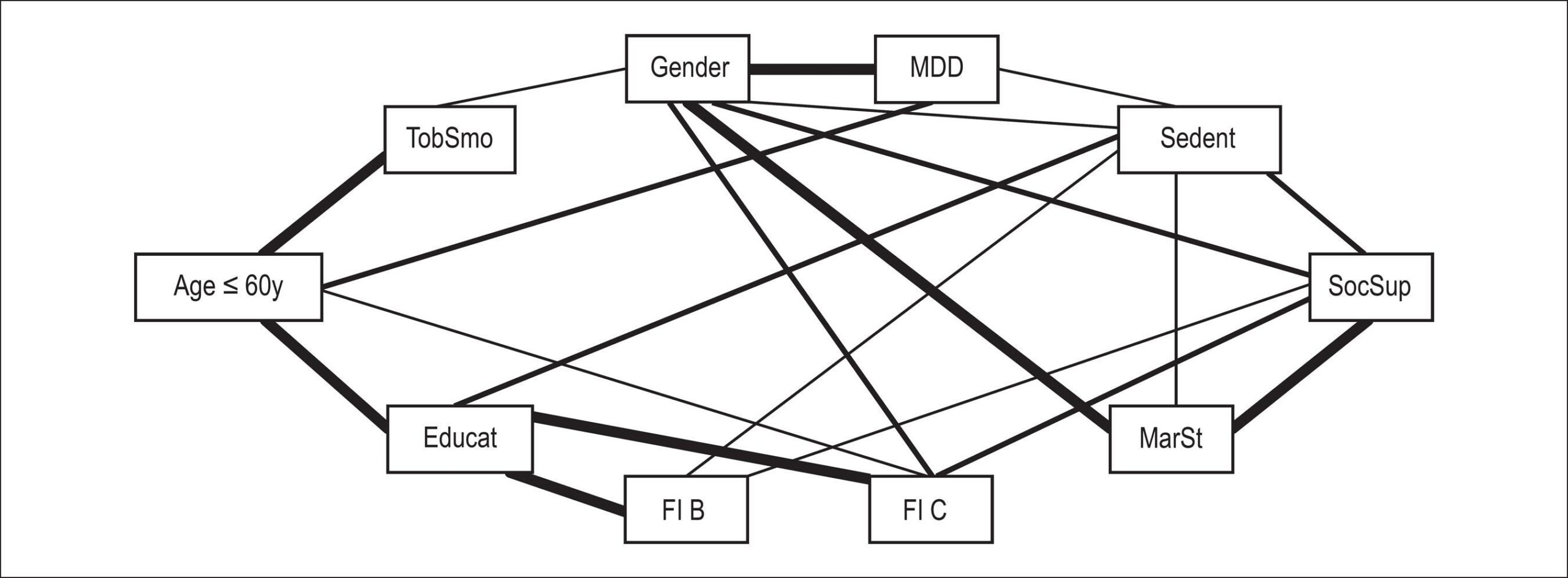
Analysis of 356 patients (229 men), with an average and median age of 60 years (SD ± 11.42, 27-89). We found an MDD point prevalence of 23%, and a significant association between MDD and gender, marital status, sedentary lifestyle, Killip classification, and MDD history. Controlling for gender, we found a statistically significant association between MDD and gender, age ≤ 60 years, sedentary lifestyle and MDD history. The log-linear model identified the variables MDD history, gender, sedentary lifestyle, and age ≤ 60 years as having the greatest association with MDD.

Conclusion:

Distinct approaches are required to diagnose and treat MDD in young women with ACS, history of MDD, sedentary lifestyle, and who are not in stable relationships.

  • Acute coronary syndrome
  • Depressive Disorder, Major
  • Life Style
  • Social Class
Read Full Article
Creative Commons Attribution (CC BY) Creative Commons license
01/03/2017 DOI: 10.5935/abc.20170028
Figure 1
Original Article

Prognostic Factors in Severe Chagasic Heart Failure

Sandra de Araújo Costa et al. Salvador Rassi Elis Marra da Madeira Freitas Natália da Silva Gutierrez … Fabiana Miranda Boaventura Larissa Pereira da Costa Sampaio João Bastista Masson Silva

Abstract

Background:

Prognostic factors are extensively studied in heart failure; however, their role in severe Chagasic heart failure have not been established.

Objectives:

To identify the association of clinical and laboratory factors with the prognosis of severe Chagasic heart failure, as well as the association of these factors with mortality and survival in a 7.5-year follow-up.

Methods:

60 patients with severe Chagasic heart failure were evaluated regarding the following variables: age, blood pressure, ejection fraction, serum sodium, creatinine, 6-minute walk test, non-sustained ventricular tachycardia, QRS width, indexed left atrial volume, and functional class.

Results:

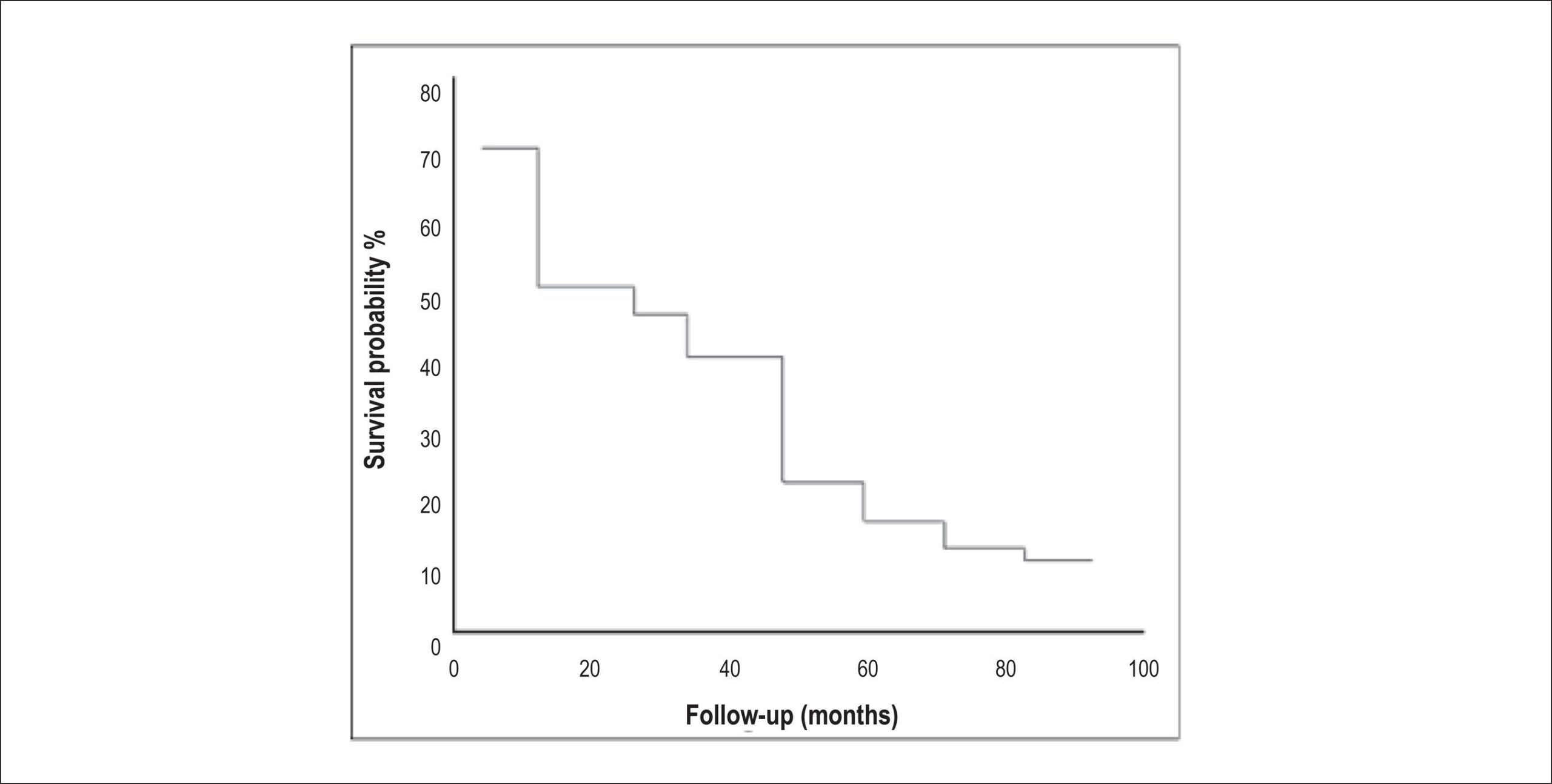
53 (88.3%) patients died during follow-up, and 7 (11.7%) remained alive. Cumulative overall survival probability was approximately 11%. Non-sustained ventricular tachycardia (HR = 2.11; 95% CI: 1.04 – 4.31; p<0.05) and indexed left atrial volume ≥ 72 mL/m2 (HR = 3.51; 95% CI: 1.63 – 7.52; p<0.05) were the only variables that remained as independent predictors of mortality.

Conclusions:

The presence of non-sustained ventricular tachycardia on Holter and indexed left atrial volume > 72 mL/m2 are independent predictors of mortality in severe Chagasic heart failure, with cumulative survival probability of only 11% in 7.5 years.

  • Chagas Cardiomyopathy
  • Chagas disease
  • Heart Failure / mortality
  • Prognosis
Read Full Article
Creative Commons Attribution (CC BY) Creative Commons license
01/03/2017 DOI: 10.5935/abc.20170027
Erratum

Erratum

July issue of 2016, vol. 107 (1), pages. 77-80

In the Case Report “Anatomopathological Aspects of Acute Chagas Myocarditis by Oral Transmission”, pages 77-80, by authors Dilma do Socorro Moraes de Souza, Marialva TF Araujo, Paulo da Silva Garcez, Julio Cesar Branco Furtado, Maria Tereza Sanches Figueiredo, Rui M.S. Povoa, please be aware that the correct spelling for Paulo da Silva Garcez is Paulo Roberto Silva Garcez dos Santos.

[…]

Read Full Article
Creative Commons Attribution (CC BY) Creative Commons license
01/03/2017 DOI: 10.5935/abc.20170038
Figure 1
Original Article

Effects of Chronic Exercise on Endothelial Progenitor Cells and Microparticles in Professional Runners

Célia Regina de Oliveira Bittencourt et al. Maria Cristina de Oliveira Izar Carolina Nunes França Valdir Lauro Schwerz … Rui Manuel dos Santos Póvoa Francisco Antonio Helfenstein Fonseca

Abstract

Background:

The effects of chronic exposure to exercise training on vascular biomarkers have been poorly explored.

Objective:

Our study aimed to compare the amounts of endothelial progenitor cells (EPCs), and endothelial (EMP) and platelet (PMP) microparticles between professional runners and healthy controls.

Methods:

Twenty-five half-marathon runners and 24 age- and gender-matched healthy controls were included in the study. EPCs (CD34+/KDR+, CD133+/KDR+, and CD34+/CD133+), EMP (CD51+) and PMP (CD42+/CD31+) were quantified by flow-cytometry. All blood samples were obtained after 12 h of fasting and the athletes were encouraged to perform their routine exercises on the day before.

Results:

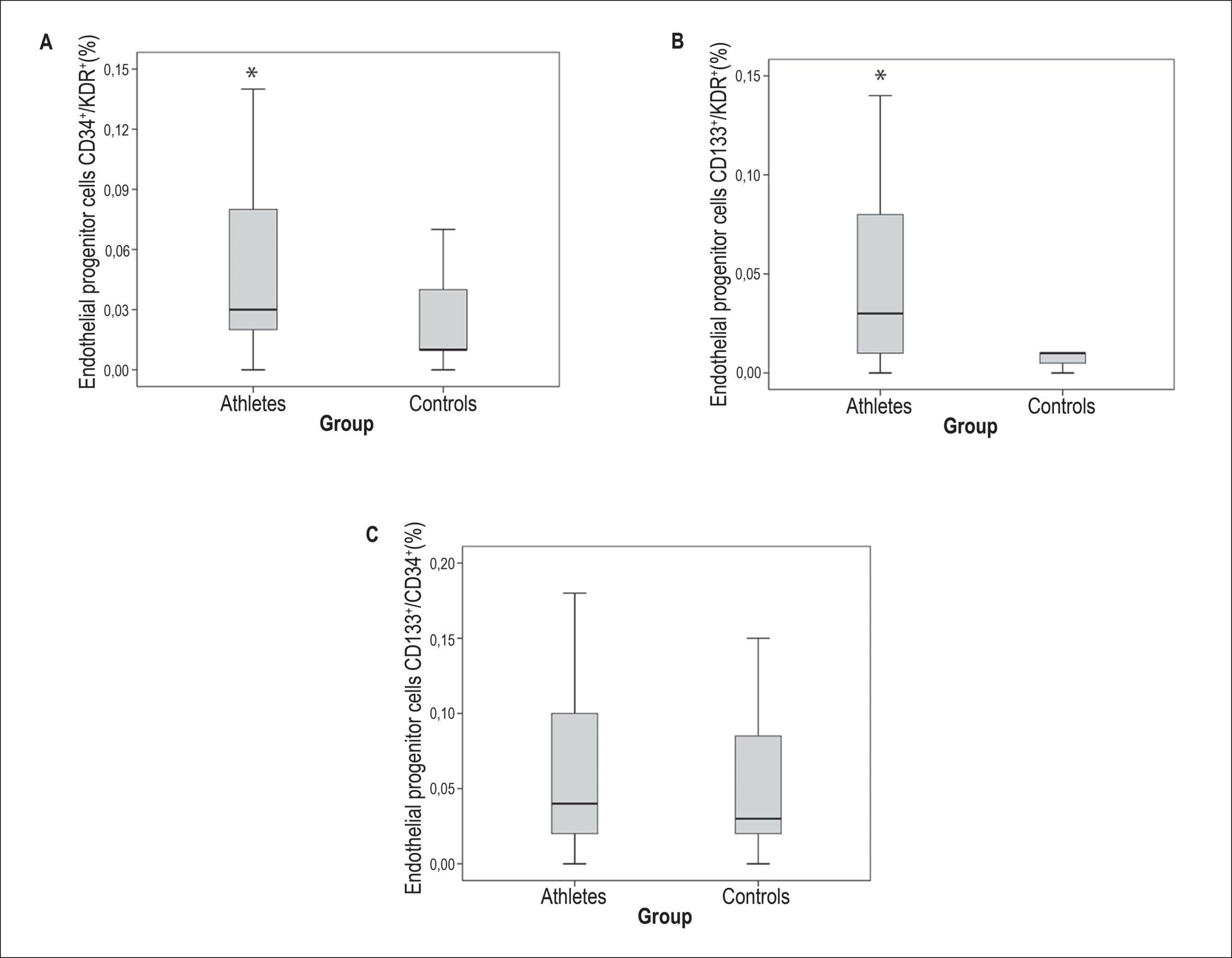
As compared with controls, the CD34+/KDR+ EPCs (p=0.038) and CD133+/KDR+ EPCs (p=0.018) were increased, whereas CD34+/CD133+ EPCs were not different (p=0.51) in athletes. In addition, there was no difference in MPs levels between the groups.

Conclusion:

Chronic exposure to exercise in professional runners was associated with higher percentage of EPCs. Taking into account the similar number of MPs in athletes and controls, the study suggests a favorable effect of exercise on these vascular biomarkers.

  • Athletes
  • Biomarkers
  • Endothelial Progenitor Cells
  • Running
  • Sports
Read Full Article
Creative Commons Attribution (CC BY) Creative Commons license
01/03/2017 DOI: 10.5935/abc.20170022 Views 1

How to cite this article

EndNote RIS

Electronic Document Format (Vancouver)

Stein R, Trujillo JP, Silveira AD, Lamounier Júnior A, Iglesias LM. Genetic Evaluation, Familial Screening and Exercise. Arquivos Brasileiros de Cardiologia 2017;108(3):263-70.

Electronic Document Format (ABNT)

Stein, Ricardo; Trujillo, Juan Pablo; Silveira, Anderson Donelli da; Lamounier Júnior, Arsonval; Iglesias, Lorenzo Monserrat. Genetic Evaluation, Familial Screening and Exercise. Arquivos Brasileiros de Cardiologia, v. 108, n. 3, p. 263-270, Mar. 2017.

Electronic Document Format (APA)

Stein, R., Trujillo, J. P., Silveira, A. D. , Lamounier Júnior, A., & Iglesias, L. M. (2017). Genetic Evaluation, Familial Screening and Exercise. Arquivos Brasileiros de Cardiologia, 108(3), 263-270.

Electronic Document Format (ISO)

Stein, Ricardo and Trujillo, Juan Pablo and Silveira, Anderson Donelli da and Lamounier Júnior, Arsonval and Iglesias, Lorenzo Monserrat. Genetic Evaluation, Familial Screening and Exercise. Arquivos Brasileiros de Cardiologia [online]. 2017, vol. 108, n. 3, [cited 2026-10-15], pp. 263-270. Available from: <https://journals.cardiol.br/en/article/genetic-evaluation-familial-screening-and-exercise/>. ISSN 0066-782X

EndNote RIS

Electronic Document Format (Vancouver)

Chen W, Tang X, Yang X, Weng C, Yang K, Wen J, Liu H, et al. Effects and Mechanisms of Radiofrequency Ablation of Renal Sympathetic Nerve on Anti-Hypertension in Canine. Arquivos Brasileiros de Cardiologia 2017;108(3):237-45.

Electronic Document Format (ABNT)

Chen, Wei; Tang, Xiaohong; Yang, Xiaofang; Weng, Chunyan; Yang, Kan; Wen, Juan; Liu, Hong; Wu, Yang. Effects and Mechanisms of Radiofrequency Ablation of Renal Sympathetic Nerve on Anti-Hypertension in Canine. Arquivos Brasileiros de Cardiologia, v. 108, n. 3, p. 237-245, Mar. 2017.

Electronic Document Format (APA)

Chen, W., Tang, X., Yang, X., Weng, C., Yang, K., Wen, J., Liu, H., & Wu, Y. (2017). Effects and Mechanisms of Radiofrequency Ablation of Renal Sympathetic Nerve on Anti-Hypertension in Canine. Arquivos Brasileiros de Cardiologia, 108(3), 237-245.

Electronic Document Format (ISO)

Chen, Wei and Tang, Xiaohong and Yang, Xiaofang and Weng, Chunyan and Yang, Kan and Wen, Juan and Liu, Hong and Wu, Yang. Effects and Mechanisms of Radiofrequency Ablation of Renal Sympathetic Nerve on Anti-Hypertension in Canine. Arquivos Brasileiros de Cardiologia [online]. 2017, vol. 108, n. 3, [cited 2026-10-15], pp. 237-245. Available from: <https://journals.cardiol.br/en/article/effects-and-mechanisms-of-radiofrequency-ablation-of-renal-sympathetic-nerve-on-anti-hypertension-in-canine/>. ISSN 0066-782X

EndNote RIS

Electronic Document Format (Vancouver)

Miguel JB, Matos JPS, Lugon JR. Ankle-Brachial Index as a Predictor of Mortality in Hemodialysis: A 5-Year Cohort Study. Arquivos Brasileiros de Cardiologia 2017;108(3):204-11.

Electronic Document Format (ABNT)

Miguel, Jair Baptista; Matos, Jorge Paulo Strogoff de; Lugon, Jocemir Ronaldo. Ankle-Brachial Index as a Predictor of Mortality in Hemodialysis: A 5-Year Cohort Study. Arquivos Brasileiros de Cardiologia, v. 108, n. 3, p. 204-211, Feb. 2017.

Electronic Document Format (APA)

Miguel, J. B., Matos, J. P. S. , & Lugon, J. R. (2017). Ankle-Brachial Index as a Predictor of Mortality in Hemodialysis: A 5-Year Cohort Study. Arquivos Brasileiros de Cardiologia, 108(3), 204-211.

Electronic Document Format (ISO)

Miguel, Jair Baptista and Matos, Jorge Paulo Strogoff de and Lugon, Jocemir Ronaldo. Ankle-Brachial Index as a Predictor of Mortality in Hemodialysis: A 5-Year Cohort Study. Arquivos Brasileiros de Cardiologia [online]. 2017, vol. 108, n. 3, [cited 2026-10-15], pp. 204-211. Available from: <https://journals.cardiol.br/en/article/ankle-brachial-index-as-a-predictor-of-mortality-in-hemodialysis-a-5-year-cohort-study/>. ISSN 0066-782X

EndNote RIS

Electronic Document Format (Vancouver)

Scartezini M, Ferreira CES, Izar MCO, Bertoluci M, Vencio S, Campana GA, Sumita NM, et al. Positioning about the Flexibility of Fasting for Lipid Profiling. Arquivos Brasileiros de Cardiologia 2017;108(3):195-7.

Electronic Document Format (ABNT)

Scartezini, Marileia; Ferreira, Carlos Eduardo dos Santos; Izar, Maria Cristina Oliveira; Bertoluci, Marcello; Vencio, Sergio; Campana, Gustavo Aguiar; Sumita, Nairo Massakazu; Barcelos, Luiz Fernando; Faludi, André A.; Santos, Raul D.; Malachias, Marcus Vinícius Bolívar; Aquino, Jerolino Lopes; Galoro, César Alex de Oliveira; Sabino, Cleide; Gurgel, Maria Helane Costa; Turatti, Luiz Alberto Andreotti; Hohl, Alexandre; Martinez, Tania Leme da Rocha. Positioning about the Flexibility of Fasting for Lipid Profiling. Arquivos Brasileiros de Cardiologia, v. 108, n. 3, p. 195-197, Feb. 2017.

Electronic Document Format (APA)

Scartezini, M., Ferreira, C. E. S., Izar, M. C. O., Bertoluci, M., Vencio, S., Campana, G. A., Sumita, N. M., Barcelos, L. F., Faludi, A. A., Santos, R. D., Malachias, M. V. B., Aquino, J. L., Galoro, C. A. O., Sabino, C., Gurgel, M. H. C., Turatti, L. A. A., Hohl, A., & Martinez, T. L. R. (2017). Positioning about the Flexibility of Fasting for Lipid Profiling. Arquivos Brasileiros de Cardiologia, 108(3), 195-197.

Electronic Document Format (ISO)

Scartezini, Marileia and Ferreira, Carlos Eduardo dos Santos and Izar, Maria Cristina Oliveira and Bertoluci, Marcello and Vencio, Sergio and Campana, Gustavo Aguiar and Sumita, Nairo Massakazu and Barcelos, Luiz Fernando and Faludi, André A. and Santos, Raul D. and Malachias, Marcus Vinícius Bolívar and Aquino, Jerolino Lopes and Galoro, César Alex de Oliveira and Sabino, Cleide and Gurgel, Maria Helane Costa and Turatti, Luiz Alberto Andreotti and Hohl, Alexandre and Martinez, Tania Leme da Rocha. Positioning about the Flexibility of Fasting for Lipid Profiling. Arquivos Brasileiros de Cardiologia [online]. 2017, vol. 108, n. 3, [cited 2026-10-15], pp. 195-197. Available from: <https://journals.cardiol.br/en/article/positioning-about-the-flexibility-of-fasting-for-lipid-profiling/>. ISSN 0066-782X

EndNote RIS

Electronic Document Format (Vancouver)

Silva AKF, Christofaro DGD, Bernardo AFB, Vanderlei FM, Vanderlei LCM. Sensitivity, Specificity and Predictive Value of Heart Rate Variability Indices in Type 1 Diabetes Mellitus. Arquivos Brasileiros de Cardiologia 2017;108(3):255-62.

Electronic Document Format (ABNT)

Silva, Anne Kastelianne França da; Christofaro, Diego Giuliano Destro; Bernardo, Aline Fernanda Barbosa; Vanderlei, Franciele Marques; Vanderlei, Luiz Carlos Marques. Sensitivity, Specificity and Predictive Value of Heart Rate Variability Indices in Type 1 Diabetes Mellitus. Arquivos Brasileiros de Cardiologia, v. 108, n. 3, p. 255-262, Feb. 2017.

Electronic Document Format (APA)

Silva, A. K. F. , Christofaro, D. G. D., Bernardo, A. F. B., Vanderlei, F. M., & Vanderlei, L. C. M. (2017). Sensitivity, Specificity and Predictive Value of Heart Rate Variability Indices in Type 1 Diabetes Mellitus. Arquivos Brasileiros de Cardiologia, 108(3), 255-262.

Electronic Document Format (ISO)

Silva, Anne Kastelianne França da and Christofaro, Diego Giuliano Destro and Bernardo, Aline Fernanda Barbosa and Vanderlei, Franciele Marques and Vanderlei, Luiz Carlos Marques. Sensitivity, Specificity and Predictive Value of Heart Rate Variability Indices in Type 1 Diabetes Mellitus. Arquivos Brasileiros de Cardiologia [online]. 2017, vol. 108, n. 3, [cited 2026-10-15], pp. 255-262. Available from: <https://journals.cardiol.br/en/article/sensitivity-specificity-and-predictive-value-of-heart-rate-variability-indices-in-type-1-diabetes-mellitus/>. ISSN 0066-782X

EndNote RIS

Electronic Document Format (Vancouver)

Faria TO, Angeli JK, Mello LGM, Pinto GC, Stefanon I, Vassallo DV, Lizardo JHF, et al. A Single Resistance Exercise Session Improves Aortic Endothelial Function in Hypertensive Rats. Arquivos Brasileiros de Cardiologia 2017;108(3):228-36.

Electronic Document Format (ABNT)

Faria, Thaís de Oliveira; Angeli, Jhuli Keli; Mello, Luiz Guilherme Marchesi; Pinto, Gustavo Costa; Stefanon, Ivanita; Vassallo, Dalton Valentim; Lizardo, Juliana Hott de Fúcio. A Single Resistance Exercise Session Improves Aortic Endothelial Function in Hypertensive Rats. Arquivos Brasileiros de Cardiologia, v. 108, n. 3, p. 228-236, Feb. 2017.

Electronic Document Format (APA)

Faria, T. O., Angeli, J. K., Mello, L. G. M., Pinto, G. C., Stefanon, I., Vassallo, D. V., & Lizardo, J. H. F. (2017). A Single Resistance Exercise Session Improves Aortic Endothelial Function in Hypertensive Rats. Arquivos Brasileiros de Cardiologia, 108(3), 228-236.

Electronic Document Format (ISO)

Faria, Thaís de Oliveira and Angeli, Jhuli Keli and Mello, Luiz Guilherme Marchesi and Pinto, Gustavo Costa and Stefanon, Ivanita and Vassallo, Dalton Valentim and Lizardo, Juliana Hott de Fúcio. A Single Resistance Exercise Session Improves Aortic Endothelial Function in Hypertensive Rats. Arquivos Brasileiros de Cardiologia [online]. 2017, vol. 108, n. 3, [cited 2026-10-15], pp. 228-236. Available from: <https://journals.cardiol.br/en/article/a-single-resistance-exercise-session-improves-aortic-endothelial-function-in-hypertensive-rats/>. ISSN 0066-782X

EndNote RIS

Electronic Document Format (Vancouver)

Atik E, Tavares GMP. Case 2/2017 – Cor Triatriatum, without Clinical Manifestation, in A 6-Year-Old Girl. Arquivos Brasileiros de Cardiologia 2017;108(3):276-8.

Electronic Document Format (ABNT)

Atik, Edmar; Tavares, Gláucia M. P.. Case 2/2017 – Cor Triatriatum, without Clinical Manifestation, in A 6-Year-Old Girl. Arquivos Brasileiros de Cardiologia, v. 108, n. 3, p. 276-278, Feb. 2017.

Electronic Document Format (APA)

Atik, E., & Tavares, G. M. P. (2017). Case 2/2017 – Cor Triatriatum, without Clinical Manifestation, in A 6-Year-Old Girl. Arquivos Brasileiros de Cardiologia, 108(3), 276-278.

Electronic Document Format (ISO)

Atik, Edmar and Tavares, Gláucia M. P.. Case 2/2017 – Cor Triatriatum, without Clinical Manifestation, in A 6-Year-Old Girl. Arquivos Brasileiros de Cardiologia [online]. 2017, vol. 108, n. 3, [cited 2026-10-15], pp. 276-278. Available from: <https://journals.cardiol.br/en/article/case-2-2017-cor-triatriatum-without-clinical-manifestation-in-a-6-year-old-girl/>. ISSN 0066-782X

EndNote RIS

Electronic Document Format (Vancouver)

Araújo CGS, Castro CLB, Franca JF, Silva CGS. Aerobic Exercise and The Heart: Discussing Doses. Arquivos Brasileiros de Cardiologia 2017;108(3):271-5.

Electronic Document Format (ABNT)

Araújo, Claudio Gil Soares de; Castro, Claudia Lucia Barros de; Franca, João Felipe; Silva, Christina Grüne de Souza e. Aerobic Exercise and The Heart: Discussing Doses. Arquivos Brasileiros de Cardiologia, v. 108, n. 3, p. 271-275, Feb. 2017.

Electronic Document Format (APA)

Araújo, C. G. S. , Castro, C. L. B. , Franca, J. F., & Silva, C. G. S. (2017). Aerobic Exercise and The Heart: Discussing Doses. Arquivos Brasileiros de Cardiologia, 108(3), 271-275.

Electronic Document Format (ISO)

Araújo, Claudio Gil Soares de and Castro, Claudia Lucia Barros de and Franca, João Felipe and Silva, Christina Grüne de Souza e. Aerobic Exercise and The Heart: Discussing Doses. Arquivos Brasileiros de Cardiologia [online]. 2017, vol. 108, n. 3, [cited 2026-10-15], pp. 271-275. Available from: <https://journals.cardiol.br/en/article/aerobic-exercise-and-the-heart-discussing-doses/>. ISSN 0066-782X

EndNote RIS

Electronic Document Format (Vancouver)

Migowski A, Xavier RMA. Prognosis Determinants after Cardioverter-Defibrillators Implantation in Brazil. Arquivos Brasileiros de Cardiologia 2017;108(3):283-4.

Electronic Document Format (ABNT)

Migowski, Arn; Xavier, Regina Maria de Aquino. Prognosis Determinants after Cardioverter-Defibrillators Implantation in Brazil. Arquivos Brasileiros de Cardiologia, v. 108, n. 3, p. 283-284, Feb. 2017.

Electronic Document Format (APA)

Migowski, A., & Xavier, R. M. A. (2017). Prognosis Determinants after Cardioverter-Defibrillators Implantation in Brazil. Arquivos Brasileiros de Cardiologia, 108(3), 283-284.

Electronic Document Format (ISO)

Migowski, Arn and Xavier, Regina Maria de Aquino. Prognosis Determinants after Cardioverter-Defibrillators Implantation in Brazil. Arquivos Brasileiros de Cardiologia [online]. 2017, vol. 108, n. 3, [cited 2026-10-15], pp. 283-284. Available from: <https://journals.cardiol.br/en/article/prognosis-determinants-after-cardioverter-defibrillators-implantation-in-brazil/>. ISSN 0066-782X

EndNote RIS

Electronic Document Format (Vancouver)

Achutti A, Stein R, Pellanda L, Duncan BB. Gramado Declaration: The Impact of 20 Years of Cardiovascular Prevention. Arquivos Brasileiros de Cardiologia 2017;108(3):193-4.

Electronic Document Format (ABNT)

Achutti, Aloyzio; Stein, Ricardo; Pellanda, Lúcia; Duncan, Bruce B.. Gramado Declaration: The Impact of 20 Years of Cardiovascular Prevention. Arquivos Brasileiros de Cardiologia, v. 108, n. 3, p. 193-194, Feb. 2017.

Electronic Document Format (APA)

Achutti, A., Stein, R., Pellanda, L., & Duncan, B. B. (2017). Gramado Declaration: The Impact of 20 Years of Cardiovascular Prevention. Arquivos Brasileiros de Cardiologia, 108(3), 193-194.

Electronic Document Format (ISO)

Achutti, Aloyzio and Stein, Ricardo and Pellanda, Lúcia and Duncan, Bruce B.. Gramado Declaration: The Impact of 20 Years of Cardiovascular Prevention. Arquivos Brasileiros de Cardiologia [online]. 2017, vol. 108, n. 3, [cited 2026-10-15], pp. 193-194. Available from: <https://journals.cardiol.br/en/article/gramado-declaration-the-impact-of-20-years-of-cardiovascular-prevention/>. ISSN 0066-782X

EndNote RIS

Electronic Document Format (Vancouver)

Pachón M, Puchol A, Akerström F, Sánchez-Pérez A, Arias MA. Miniaturized Transcatheter Leadless Pacemaker in a Patient with Double Mechanical Prosthesis. Arquivos Brasileiros de Cardiologia 2017;108(3):279-80.

Electronic Document Format (ABNT)

Pachón, Marta; Puchol, Alberto; Akerström, Finn; Sánchez-Pérez, Andrés; Arias, Miguel A.. Miniaturized Transcatheter Leadless Pacemaker in a Patient with Double Mechanical Prosthesis. Arquivos Brasileiros de Cardiologia, v. 108, n. 3, p. 279-280, Feb. 2017.

Electronic Document Format (APA)

Pachón, M., Puchol, A., Akerström, F., Sánchez-Pérez, A., & Arias, M. A. (2017). Miniaturized Transcatheter Leadless Pacemaker in a Patient with Double Mechanical Prosthesis. Arquivos Brasileiros de Cardiologia, 108(3), 279-280.

Electronic Document Format (ISO)

Pachón, Marta and Puchol, Alberto and Akerström, Finn and Sánchez-Pérez, Andrés and Arias, Miguel A.. Miniaturized Transcatheter Leadless Pacemaker in a Patient with Double Mechanical Prosthesis. Arquivos Brasileiros de Cardiologia [online]. 2017, vol. 108, n. 3, [cited 2026-10-15], pp. 279-280. Available from: <https://journals.cardiol.br/en/article/miniaturized-transcatheter-leadless-pacemaker-in-a-patient-with-double-mechanical-prosthesis/>. ISSN 0066-782X

EndNote RIS

Electronic Document Format (Vancouver)

Andrade C, Bosco A, Sandrim V, Silva F. MMP-9 Levels and IMT of Carotid Arteries are Elevated in Obese Children and Adolescents Compared to Non-Obese. Arquivos Brasileiros de Cardiologia 2017;108(3):198-203.

Electronic Document Format (ABNT)

Andrade, Claudio; Bosco, Adriana; Sandrim, Valeria; Silva, Francisco. MMP-9 Levels and IMT of Carotid Arteries are Elevated in Obese Children and Adolescents Compared to Non-Obese. Arquivos Brasileiros de Cardiologia, v. 108, n. 3, p. 198-203, Feb. 2017.

Electronic Document Format (APA)

Andrade, C., Bosco, A., Sandrim, V., & Silva, F. (2017). MMP-9 Levels and IMT of Carotid Arteries are Elevated in Obese Children and Adolescents Compared to Non-Obese. Arquivos Brasileiros de Cardiologia, 108(3), 198-203.

Electronic Document Format (ISO)

Andrade, Claudio and Bosco, Adriana and Sandrim, Valeria and Silva, Francisco. MMP-9 Levels and IMT of Carotid Arteries are Elevated in Obese Children and Adolescents Compared to Non-Obese. Arquivos Brasileiros de Cardiologia [online]. 2017, vol. 108, n. 3, [cited 2026-10-15], pp. 198-203. Available from: <https://journals.cardiol.br/en/article/mmp-9-levels-and-imt-of-carotid-arteries-are-elevated-in-obese-children-and-adolescents-compared-to-non-obese/>. ISSN 0066-782X

EndNote RIS

Electronic Document Format (Vancouver)

Freire AFD, Soares AAS, Leal TCAT, Oliveira Junior MT, Soeiro AM. Patient with Atrial Myxoma and Signs of Obstruction of the Left Ventricular Outflow Tract. Arquivos Brasileiros de Cardiologia 2017;108(3):281-2.

Electronic Document Format (ABNT)

Freire, Antonio Fernando Diniz; Soares, Alexandre Anderson de Sousa; Leal, Tatiana de Carvalho Andreucci Torres; Oliveira Junior, Mucio Tavares de; Soeiro, Alexandre de Matos. Patient with Atrial Myxoma and Signs of Obstruction of the Left Ventricular Outflow Tract. Arquivos Brasileiros de Cardiologia, v. 108, n. 3, p. 281-282, Feb. 2017.

Electronic Document Format (APA)

Freire, A. F. D., Soares, A. A. S., Leal, T. C. A. T., Oliveira Junior, M. T. , & Soeiro, A. M. (2017). Patient with Atrial Myxoma and Signs of Obstruction of the Left Ventricular Outflow Tract. Arquivos Brasileiros de Cardiologia, 108(3), 281-282.

Electronic Document Format (ISO)

Freire, Antonio Fernando Diniz and Soares, Alexandre Anderson de Sousa and Leal, Tatiana de Carvalho Andreucci Torres and Oliveira Junior, Mucio Tavares de and Soeiro, Alexandre de Matos. Patient with Atrial Myxoma and Signs of Obstruction of the Left Ventricular Outflow Tract. Arquivos Brasileiros de Cardiologia [online]. 2017, vol. 108, n. 3, [cited 2026-10-15], pp. 281-282. Available from: <https://journals.cardiol.br/en/article/patient-with-atrial-myxoma-and-signs-of-obstruction-of-the-left-ventricular-outflow-tract/>. ISSN 0066-782X

EndNote RIS

Electronic Document Format (Vancouver)

Figueiredo JHC, Silva NAS, Pereira BB, Oliveira GMM. Major Depression and Acute Coronary Syndrome-Related Factors. Arquivos Brasileiros de Cardiologia 2017;108(3):217-2.

Electronic Document Format (ABNT)

Figueiredo, Jose Henrique Cunha; Silva, Nelson Albuquerque de Souza e; Pereira, Basilio de Bragança; Oliveira, Glaucia Maria Moraes de. Major Depression and Acute Coronary Syndrome-Related Factors. Arquivos Brasileiros de Cardiologia, v. 108, n. 3, p. 217-227, Feb. 2017.

Electronic Document Format (APA)

Figueiredo, J. H. C., Silva, N. A. S. , Pereira, B. B., & Oliveira, G. M. M. (2017). Major Depression and Acute Coronary Syndrome-Related Factors. Arquivos Brasileiros de Cardiologia, 108(3), 217-227.

Electronic Document Format (ISO)

Figueiredo, Jose Henrique Cunha and Silva, Nelson Albuquerque de Souza e and Pereira, Basilio de Bragança and Oliveira, Glaucia Maria Moraes de. Major Depression and Acute Coronary Syndrome-Related Factors. Arquivos Brasileiros de Cardiologia [online]. 2017, vol. 108, n. 3, [cited 2026-10-15], pp. 217-227. Available from: <https://journals.cardiol.br/en/article/major-depression-and-acute-coronary-syndrome-related-factors/>. ISSN 0066-782X

EndNote RIS

Electronic Document Format (Vancouver)

Costa SA, Rassi S, Freitas EMM, Gutierrez NS, Boaventura FM, Sampaio LPC, Silva JBM, et al. Prognostic Factors in Severe Chagasic Heart Failure. Arquivos Brasileiros de Cardiologia 2017;108(3):246-54.

Electronic Document Format (ABNT)

Costa, Sandra de Araújo; Rassi, Salvador; Freitas, Elis Marra da Madeira; Gutierrez, Natália da Silva; Boaventura, Fabiana Miranda; Sampaio, Larissa Pereira da Costa; Silva, João Bastista Masson. Prognostic Factors in Severe Chagasic Heart Failure. Arquivos Brasileiros de Cardiologia, v. 108, n. 3, p. 246-254, Feb. 2017.

Electronic Document Format (APA)

Costa, S. A., Rassi, S., Freitas, E. M. M., Gutierrez, N. S., Boaventura, F. M., Sampaio, L. P. C., & Silva, J. B. M. (2017). Prognostic Factors in Severe Chagasic Heart Failure. Arquivos Brasileiros de Cardiologia, 108(3), 246-254.

Electronic Document Format (ISO)

Costa, Sandra de Araújo and Rassi, Salvador and Freitas, Elis Marra da Madeira and Gutierrez, Natália da Silva and Boaventura, Fabiana Miranda and Sampaio, Larissa Pereira da Costa and Silva, João Bastista Masson. Prognostic Factors in Severe Chagasic Heart Failure. Arquivos Brasileiros de Cardiologia [online]. 2017, vol. 108, n. 3, [cited 2026-10-15], pp. 246-254. Available from: <https://journals.cardiol.br/en/article/prognostic-factors-in-severe-chagasic-heart-failure/>. ISSN 0066-782X

EndNote RIS

Electronic Document Format (Vancouver)

. Erratum. Arquivos Brasileiros de Cardiologia 2017;108(3):285.

Electronic Document Format (ABNT)

. Erratum. Arquivos Brasileiros de Cardiologia, v. 108, n. 3, p. 285-285, Feb. 2017.

Electronic Document Format (APA)

(2017). Erratum. Arquivos Brasileiros de Cardiologia, 108(3), 285-285.

Electronic Document Format (ISO)

. Erratum. Arquivos Brasileiros de Cardiologia [online]. 2017, vol. 108, n. 3, [cited 2026-10-15], pp. 285-285. Available from: <https://journals.cardiol.br/en/article/erratum-11/>. ISSN 0066-782X

EndNote RIS

Electronic Document Format (Vancouver)

Bittencourt CRO, Izar MCO, França CN, Schwerz VL, Póvoa RMS, Fonseca FAH. Effects of Chronic Exercise on Endothelial Progenitor Cells and Microparticles in Professional Runners. Arquivos Brasileiros de Cardiologia 2017;108(3):212-6.

Electronic Document Format (ABNT)

Bittencourt, Célia Regina de Oliveira; Izar, Maria Cristina de Oliveira; França, Carolina Nunes; Schwerz, Valdir Lauro; Póvoa, Rui Manuel dos Santos; Fonseca, Francisco Antonio Helfenstein. Effects of Chronic Exercise on Endothelial Progenitor Cells and Microparticles in Professional Runners. Arquivos Brasileiros de Cardiologia, v. 108, n. 3, p. 212-216, Feb. 2017.

Electronic Document Format (APA)

Bittencourt, C. R. O., Izar, M. C. O., França, C. N., Schwerz, V. L., Póvoa, R. M. S., & Fonseca, F. A. H. (2017). Effects of Chronic Exercise on Endothelial Progenitor Cells and Microparticles in Professional Runners. Arquivos Brasileiros de Cardiologia, 108(3), 212-216.

Electronic Document Format (ISO)

Bittencourt, Célia Regina de Oliveira and Izar, Maria Cristina de Oliveira and França, Carolina Nunes and Schwerz, Valdir Lauro and Póvoa, Rui Manuel dos Santos and Fonseca, Francisco Antonio Helfenstein. Effects of Chronic Exercise on Endothelial Progenitor Cells and Microparticles in Professional Runners. Arquivos Brasileiros de Cardiologia [online]. 2017, vol. 108, n. 3, [cited 2026-10-15], pp. 212-216. Available from: <https://journals.cardiol.br/en/article/effects-of-chronic-exercise-on-endothelial-progenitor-cells-and-microparticles-in-professional-runners/>. ISSN 0066-782X

Sede – Rio de Janeiro
Av. Marechal Câmara, 160
3º andar – Sala: 330 – Centro
Rio de Janeiro – CEP: 20020-907
Tel.: (55 +21) 3478-2700
ou (21) 99386-3961
E-mail: revista@cardiol.br

Sede – São Paulo
Alameda Santos, 705 – 11º andar
Cerqueira César | São Paulo
CEP: 01419-001
Tel.: (55 +11) 3411-5500
E-mail: revista@cardiol.br

  • About the Journal
  • Internal Regulation
  • Editors Section
  • Editorial Board
  • History
  • SBC Award

  • Guidelines for Publication
  • Editorial Policy
  • Ethics Policy
  • Policy on the Use of Artificial Intelligence
  • Mandatory Publication Form
  • Publication Fee

Issues

SBC Guidelines

  • How to Publish an Abstract Supplement?
  • Supplements from the Brazilian Congress of Cardiology