ABC Family Arquivos Brasileiros de Cardiologia International Journal of Cardiovascular Sciences ABC Heart Failure & Cardiomyopathy ABC Imagem Cardiovascular
Português English
ABC Family
Português English
  • About
    • About ABC Family
    • Internal Regulation
    • Editorial Board
    • Brazilian Society of Cardiology (SBC)
  • Issues
  • SBC Guidelines
  • Content
    • Videos
    • Podcasts
    • News
  • About
    • About ABC Family
    • Internal Regulation
    • Editorial Board
    • Brazilian Society of Cardiology (SBC)
  • Issues
  • SBC Guidelines
  • Content
    • Videos
    • Podcasts
    • News

ABC Family

  • ABC Family
  • Arquivos Brasileiros de Cardiologia
  • International Journal of Cardiovascular Sciences
  • ABC Heart Failure & Cardiomyopathy
  • ABC Imagem Cardiovascular
Search in

No content found.

Journals
Ordering
Article types
Others

  1. Home
  2. Keyword: Radio Waves
Figure 1
ABC
Original Article

Reconnection Sites in Redo Ablation after Cryoballoon Pulmonary Vein Isolation in Patients with Paroxysmal Atrial Fibrillation

Rogelio Robledo Nolasco et al. Gerardo De Leon-Larios David Eduardo Bazzini-Carranza Elias Zavaleta Omar Calixto-Vargas

Abstract

Background

In paroxysmal atrial fibrillation (PAF), pulmonary vein isolation using cryoballoon (CB-PVI) has similar efficacy as radiofrequency ablation (RF-PVI) has. In redo ablation procedures following RF-PVI, PV reconnection is high, whereas in patients with redo following CB-PVI, information is scarce.

Objective

To determine the sites of PV reconnection in patients who underwent redo ablation after initial CB-PVI.

Methods

Patients who underwent an AF redo procedure, following an initial CB-PVI for PAF were included. LA electroanatomic mapping was used. A reconnection site was defined as the presence of a voltage of 0.3mV or greater in the PV and unidirectional or bidirectional conduction in the PV during sinus rhythm. Reconnections sites were identified using a clock-face view description and were ablated with radiofrequency afterwards.

Results

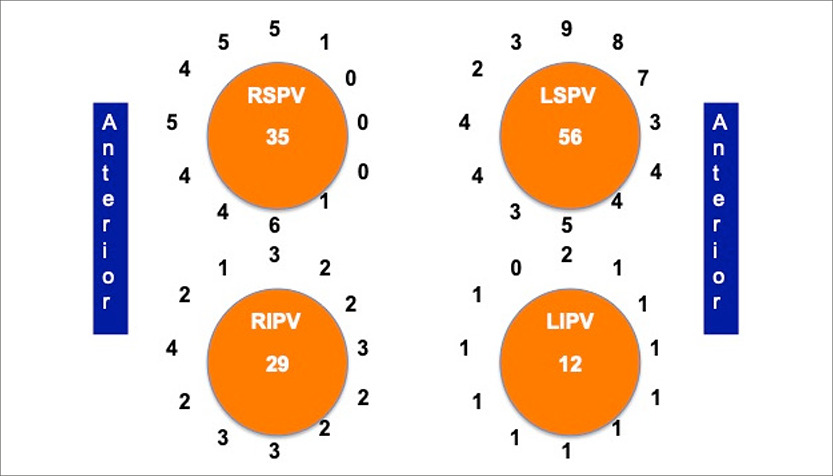
Out of the 165 patients who underwent initial PVI, 27 required redo ablations, of which 18 (66.6%) were males, with a mean age of 55+12.3 years. The time of recurrence was 8.9+6.4 months. PV reconnection was found in 21 (77.8%) patients. There was a total of 132 conduction gaps, six per patient, 3.6 per PV. A significant number of gaps were in the anterosuperior region of the left superior PV (LSPV), and in the septal and inferior regions of the right superior PV (RSPV).

Conclusions

The upper PVs had the most reconnection sites, mostly at the anterior region of the LSPV and the septal region of the RSPV. The reason behind this may be due to greater atrial wall thickness, and difficulty in achieving adequate cryoballoon contact.
  • Arrhythmias Cardiac
  • Atrial Fibrillation, Pulmonary Veins
  • Electrocardiography, Ambulatory
  • Electrocardiography/methods
  • Holter
  • Radio Waves
  • Tachycardia, Ectopic Atrial
Read Full Article
Creative Commons Attribution (CC BY) Creative Commons license
26/07/2021 DOI: 10.36660/abc.20190503
Figure 1
ABC
Original Article

Effects and Mechanisms of Radiofrequency Ablation of Renal Sympathetic Nerve on Anti-Hypertension in Canine

Wei Chen et al. Xiaohong Tang Xiaofang Yang Chunyan Weng … Kan Yang Juan Wen Hong Liu Yang Wu

Abstract

Background:

Radiofrequency ablation of renal sympathetic nerve (RDN) shows effective BP reduction in hypertensive patients while the specific mechanisms remain unclear.

Objective:

We hypothesized that abnormal levels of norepinephrine (NE) and changes in NE-related enzymes and angiotensinconverting enzyme 2 (ACE2), angiotensin (Ang)-(1-7) and Mas receptor mediate the anti-hypertensive effects of RDN.

Methods:

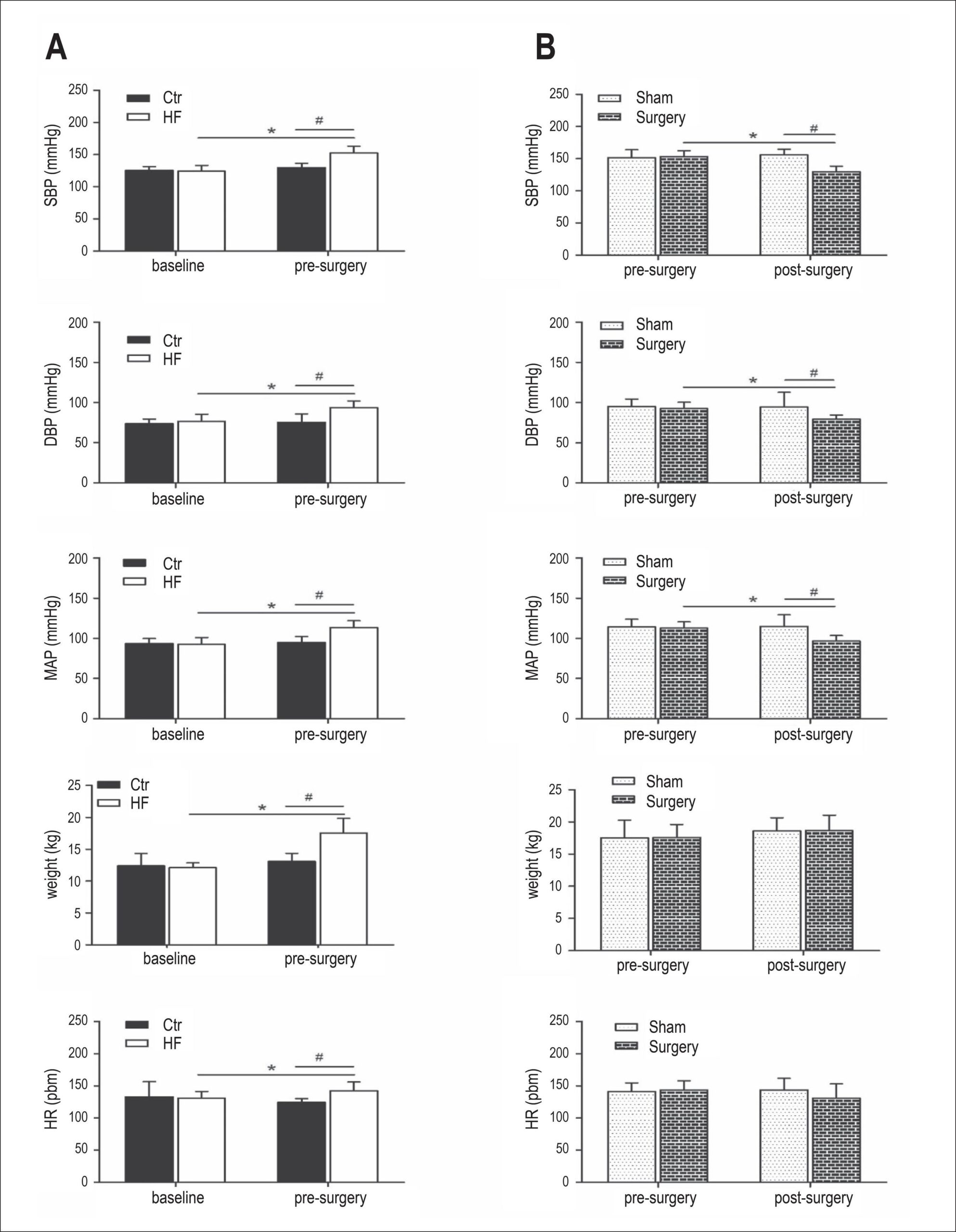
Mean values of systolic blood pressure (SBP), diastolic blood pressure (DBP) and mean arterial pressure (MAP) were assessed at baseline and follow-up. Plasma and renal norepinephrine (NE) concentrations were determined using highperformance liquid chromatography with electrochemical detection, and levels of NE-related enzyme and ACE2-Ang(1-7)- Mas were measured using real time PCR, Western blot and immunohistochemistry or Elisa in a hypertensive canine model fed with high-fat diet and treated with RDN. The parameters were also determined in a sham group treated with renal arteriography and a control group fed with normal diet.

Results:

RDN decreased SBP, DBP, MAP, plasma and renal NE. Compared with the sham group, renal tyrosine hydroxylase (TH) expression was lower and renalase expression was higher in the RDN group. Compared with the control group, renal TH and catechol-o-methyl transferase (COMT) were higher and renalase was lower in the sham group. Moreover, renal ACE2, Ang-(1-7) and Mas levels of the RDN group were higher than those of the sham group, which were lower than those of the control group.

Conclusion:

RDN shows anti-hypertensive effect with reduced NE and activation of ACE2-Ang(1-7)-Mas, indicating that it may contribute to the anti-hypertensive effect of RDN.

  • Dogs
  • Hypertension
  • Radio Waves
  • Renal Insufficiency
  • Sympatectomy
Read Full Article
Creative Commons Attribution (CC BY) Creative Commons license
06/03/2017 DOI: 10.5935/abc.20170014 Views 1
Radiofrequency catheter ablation of left accessory pathways by transeptal approach
ABC
Artigo Original

Radiofrequency catheter ablation of left accessory pathways by transeptal approach

Márcio Augusto Silva et al. Elenir Nadalin Alessandro Kraemmer Gel Roberto Marmitt Berardi … José Carlos Moura Jorge Cláudio L. Pereira da Cunha

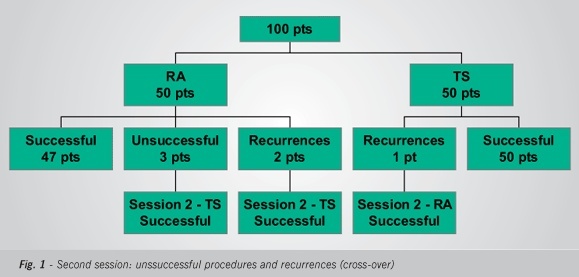
OBJECTIVE: To study a series of patients submitted to radiofrequency catheter ablation (RFA) of left accessory pathways (AP) using the transeptal approach (TSA) as compared to the conventional retrograde arterial approach (RAA). METHODS: One hundred consecutive patients (56 male; mean age of 34.3 ± 11 years) with 100 left APs (62 overt and 38 concealed) underwent catheter ablation using the TS method (50 patients) and the RA method (50 patients) in an alternate fashion. The analysis was performed according to the intention-to-treat principle. RESULTS: The transeptal puncture was successfully performed in 48 patients (96%). This access allowed primary success in the ablation in all the patients without any complication. When we compared this approach with the RAA there was no difference as regards the primary success (p = 0.2), recurrence rate (p = 1.0), fluoroscopy time (p = 0.63) and total time (p = 0.47). One patient in the RAA group presented a vascular complication. The TSA allowed shorter ablation times (p=0.01) and smaller number of radiofrequency applications (p = 0.003) as compared to the conventional RAA. The patients who had recurrence and unsuccessful ablation in the first session in each approach underwent another session with the opposite technique (cross-over), with a final ablation success rate of 100%. CONCLUSION: The TS and RA approaches showed similar efficacy and safety for the ablation of left accessory pathways. The TSA allowed shorter ablation times and smaller number of radiofrequency applications. When the techniques were used in a complementary fashion, they increased the final efficacy of the ablation.

  • Catheter Ablation
  • Heart Septum
  • Radio Waves
  • Tachycardia, Supraventricular
Read Full Article
Creative Commons Attribution (CC BY) Creative Commons license
29/05/2006 DOI: 10.1590/S0066-782X2006000500002 Views 1

How to cite this article

EndNote RIS

Electronic Document Format (Vancouver)

Nolasco RR, Leon-Larios GD, Bazzini-Carranza DE, Zavaleta E, Calixto-Vargas O. Reconnection Sites in Redo Ablation after Cryoballoon Pulmonary Vein Isolation in Patients with Paroxysmal Atrial Fibrillation. Arquivos Brasileiros de Cardiologia 2021;117(1):100-5.

Electronic Document Format (ABNT)

Nolasco, Rogelio Robledo; Leon-Larios, Gerardo De; Bazzini-Carranza, David Eduardo; Zavaleta, Elias; Calixto-Vargas, Omar. Reconnection Sites in Redo Ablation after Cryoballoon Pulmonary Vein Isolation in Patients with Paroxysmal Atrial Fibrillation. Arquivos Brasileiros de Cardiologia, v. 117, n. 1, p. 100-105, Jul. 2021.

Electronic Document Format (APA)

Nolasco, R. R., Leon-Larios, G. D., Bazzini-Carranza, D. E., Zavaleta, E., & Calixto-Vargas, O. (2021). Reconnection Sites in Redo Ablation after Cryoballoon Pulmonary Vein Isolation in Patients with Paroxysmal Atrial Fibrillation. Arquivos Brasileiros de Cardiologia, 117(1), 100-105.

Electronic Document Format (ISO)

Nolasco, Rogelio Robledo and Leon-Larios, Gerardo De and Bazzini-Carranza, David Eduardo and Zavaleta, Elias and Calixto-Vargas, Omar. Reconnection Sites in Redo Ablation after Cryoballoon Pulmonary Vein Isolation in Patients with Paroxysmal Atrial Fibrillation. Arquivos Brasileiros de Cardiologia [online]. 2021, vol. 117, n. 1, [cited 2026-10-14], pp. 100-105. Available from: <https://journals.cardiol.br/en/article/reconnection-sites-in-redo-ablation-after-cryoballoon-pulmonary-vein-isolation-in-patients-with-paroxysmal-atrial-fibrillation/>. ISSN 0066-782X

EndNote RIS

Electronic Document Format (Vancouver)

Chen W, Tang X, Yang X, Weng C, Yang K, Wen J, Liu H, et al. Effects and Mechanisms of Radiofrequency Ablation of Renal Sympathetic Nerve on Anti-Hypertension in Canine. Arquivos Brasileiros de Cardiologia 2017;108(3):237-45.

Electronic Document Format (ABNT)

Chen, Wei; Tang, Xiaohong; Yang, Xiaofang; Weng, Chunyan; Yang, Kan; Wen, Juan; Liu, Hong; Wu, Yang. Effects and Mechanisms of Radiofrequency Ablation of Renal Sympathetic Nerve on Anti-Hypertension in Canine. Arquivos Brasileiros de Cardiologia, v. 108, n. 3, p. 237-245, Mar. 2017.

Electronic Document Format (APA)

Chen, W., Tang, X., Yang, X., Weng, C., Yang, K., Wen, J., Liu, H., & Wu, Y. (2017). Effects and Mechanisms of Radiofrequency Ablation of Renal Sympathetic Nerve on Anti-Hypertension in Canine. Arquivos Brasileiros de Cardiologia, 108(3), 237-245.

Electronic Document Format (ISO)

Chen, Wei and Tang, Xiaohong and Yang, Xiaofang and Weng, Chunyan and Yang, Kan and Wen, Juan and Liu, Hong and Wu, Yang. Effects and Mechanisms of Radiofrequency Ablation of Renal Sympathetic Nerve on Anti-Hypertension in Canine. Arquivos Brasileiros de Cardiologia [online]. 2017, vol. 108, n. 3, [cited 2026-10-14], pp. 237-245. Available from: <https://journals.cardiol.br/en/article/effects-and-mechanisms-of-radiofrequency-ablation-of-renal-sympathetic-nerve-on-anti-hypertension-in-canine/>. ISSN 0066-782X

EndNote RIS

Electronic Document Format (Vancouver)

Silva MA, Nadalin E, Kraemmer A, Berardi GRM, Jorge JCM, Cunha CLP. Radiofrequency catheter ablation of left accessory pathways by transeptal approach. Arquivos Brasileiros de Cardiologia 2006;86(5):331-6.

Electronic Document Format (ABNT)

Silva, Márcio Augusto; Nadalin, Elenir; Kraemmer, Alessandro; Berardi, Gel Roberto Marmitt; Jorge, José Carlos Moura; Cunha, Cláudio L. Pereira da. Radiofrequency catheter ablation of left accessory pathways by transeptal approach. Arquivos Brasileiros de Cardiologia, v. 86, n. 5, p. 331-336, May. 2006.

Electronic Document Format (APA)

Silva, M. A., Nadalin, E., Kraemmer, A., Berardi, G. R. M., Jorge, J. C. M., & Cunha, C. L. P. (2006). Radiofrequency catheter ablation of left accessory pathways by transeptal approach. Arquivos Brasileiros de Cardiologia, 86(5), 331-336.

Electronic Document Format (ISO)

Silva, Márcio Augusto and Nadalin, Elenir and Kraemmer, Alessandro and Berardi, Gel Roberto Marmitt and Jorge, José Carlos Moura and Cunha, Cláudio L. Pereira da. Radiofrequency catheter ablation of left accessory pathways by transeptal approach. Arquivos Brasileiros de Cardiologia [online]. 2006, vol. 86, n. 5, [cited 2026-10-14], pp. 331-336. Available from: <https://journals.cardiol.br/en/article/radiofrequency-catheter-ablation-of-left-accessory-pathways-by-transeptal-approach/>. ISSN 0066-782X

  • About ABC Family
  • Internal Regulation
  • Editorial Board
  • Brazilian Society of Cardiology (SBC)

Issues

SBC Guidelines

  • Videos
  • Podcasts
  • News