ABC Family Arquivos Brasileiros de Cardiologia International Journal of Cardiovascular Sciences ABC Heart Failure & Cardiomyopathy ABC Imagem Cardiovascular
Português English
ABC Family
Português English
  • About
    • About ABC Family
    • Internal Regulation
    • Editorial Board
    • Brazilian Society of Cardiology (SBC)
  • Issues
  • SBC Guidelines
  • Content
    • Videos
    • Podcasts
    • News
  • About
    • About ABC Family
    • Internal Regulation
    • Editorial Board
    • Brazilian Society of Cardiology (SBC)
  • Issues
  • SBC Guidelines
  • Content
    • Videos
    • Podcasts
    • News

ABC Family

  • ABC Family
  • Arquivos Brasileiros de Cardiologia
  • International Journal of Cardiovascular Sciences
  • ABC Heart Failure & Cardiomyopathy
  • ABC Imagem Cardiovascular
Search in

No content found.

Journals
Ordering
Article types
Others

  1. Home
  2. Keyword: Sensitivity and Specificity
Figure 1
IJCS
Original Article

Determination of Shock Index and Age Shock Index Cut-Off Points in Patients with ST-Segment Elevation Myocardial Infarction: SEMI-CI Study

Masoumeh Sadeghi et al. Afsaneh Rahimizad Mehrbod Vakhshoori Niloofar Bondariyan … Shima Nasirian Davood Shafie

Abstract

Background

Shock index (SI) and age shock index (ASI) are less frequently used for assessment of major adverse cardiovascular events (MACE) among patients with ST-segment elevation myocardial infarction (STEMI), and their reported cut-off points are controversial.

Objectives

We aimed to define proper cut-off value of these indices for MACE prediction among Iranian patients with STEMI.

Methods

This study was in the context of the ST-Elevation Myocardial Infarction Cohort in Isfahan (SEMI-CI) study. SI and ASI were calculated by division of heart rate (HR) over systolic blood pressure (SBP) and age multiplied by SI, respectively, in 818 subjects with STEMI. Receiver operating characteristic (ROC) curve analysis was used to determine optimal SI and ASI cut-off values. Chi-square test, independent t test, and analysis of variance were employed for nominal and numerical variables, as appropriate, with consideration of p values < 0.05. MACE was defined as a composite of non-fatal reinfarction, heart failure (HF), recurrent percutaneous intervention (PCI), rehospitalization for cardiovascular diseases, and all-cause mortality.

Results

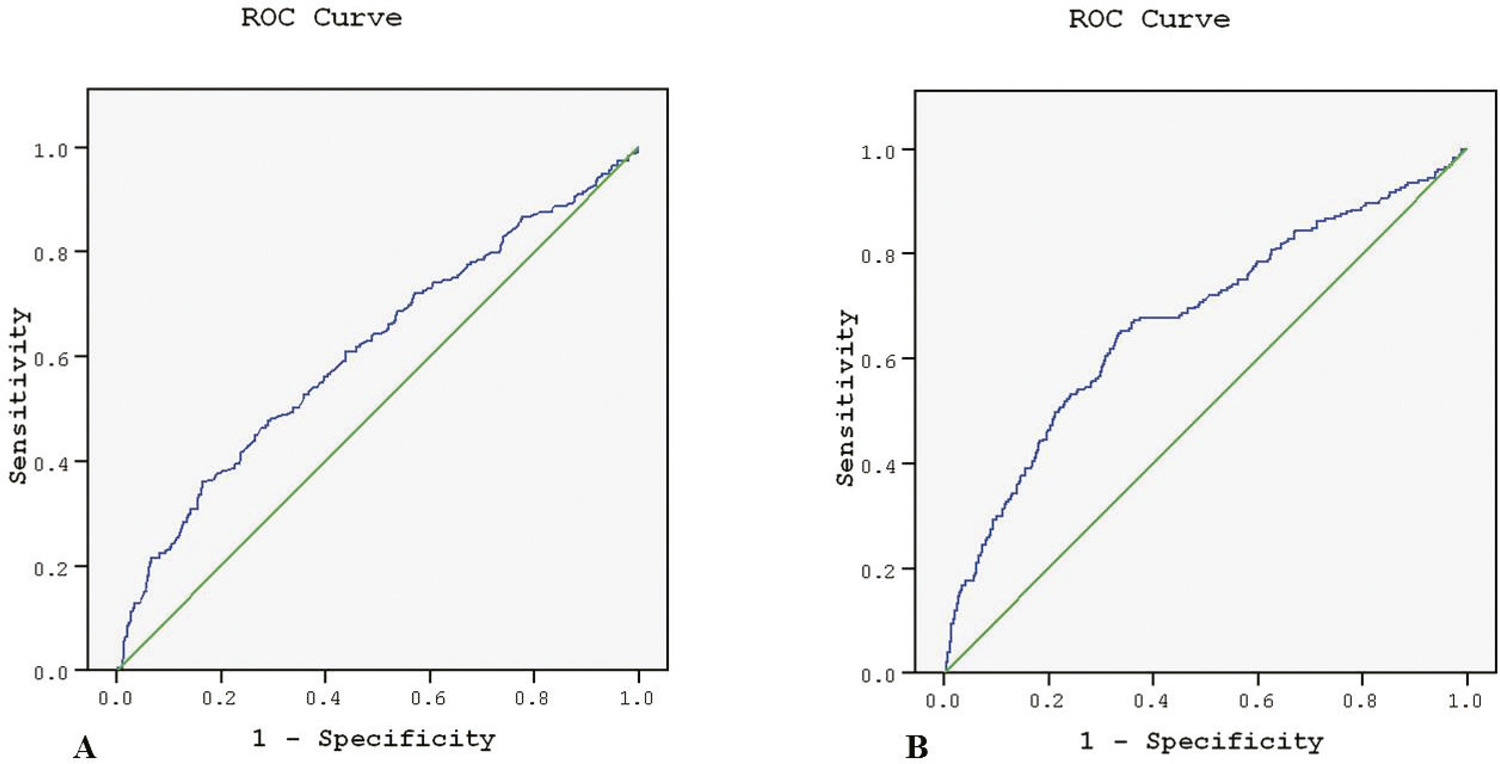
Mean age was 60.70 ± 12.79 years (males: 81.7%). Area under curve (AUC) values from ROC curve analysis for SI and ASI were 0.613 (95% confidence interval [CI]: 0.569 to 0.657, p < 0.001) and 0.672 (95% CI: 0.629 to 0.715, p < 0.001), respectively. Optimal SI and ASI cut-offs were 0.61 (sensitivity: 61%, specificity: 56%) and 39.5 (sensitivity: 65%, specificity: 66%), respectively. Individuals with SI ≥ 0.61 or within the highest quartile (SI ≥ 0.75) had significantly higher frequency of one-year MACE compared to the reference group (34.7% versus 22.2%, p < 0.001 and 42.4% versus 20.6%, p < 0.05, respectively). Similar relations were observed in terms of ASI values (ASI ≥ 39.5 versus ASI < 39.5: 43.6% versus 17.3%, p < 0.001, ASI Q4 ≥ 47.5 versus ASI Q1 ≤ 28.8: 49% versus 16.6%, p < 0.05).

Conclusions

SI and ASI cut-off values of 0.61 and 39.5 could reliably predict MACE occurrence among Iranian patients with STEMI.
  • Area Under Curve
  • Myocardial Infarction
  • ROC Curve
  • Sensitivity and Specificity
Read Full Article
Creative Commons Attribution (CC BY) Creative Commons license
15/07/2024 DOI: 10.36660/ijcs.20220137 Views 2
Figure 1
IJCS
Original Article

Comparison between Bruce and Ramp Protocols for Exercise Testing in the Diagnosis of Myocardial Ischemia

Thiago Teixeira da Silveira Fagundes et al. Carolina Christianini Mizzaci Susimeire Buglia Fabricio da Costa Wohnrath … Flavia Medina João França Rica Dodo Delmar Buchler Luiz Eduardo Mastrocola Romeu Sérgio Meneghelo

Abstract

Background:

Exercise tests are an important tool in the investigation of myocardial ischemia. The ramp protocol has gained increasing importance in clinical practice because of the possibility of individualizing its exercise intensity.

Objective:

To assess and compare the sensitivity, specificity, and accuracy of Bruce and ramp protocols for exercise testing in the diagnosis of myocardial ischemia considering myocardial perfusion scintigraphy as the reference standard. Secondary objectives included the assessment of hemodynamic profiles, functional capacity, and the incidence of arrhythmias in each of the protocols.

Methods:

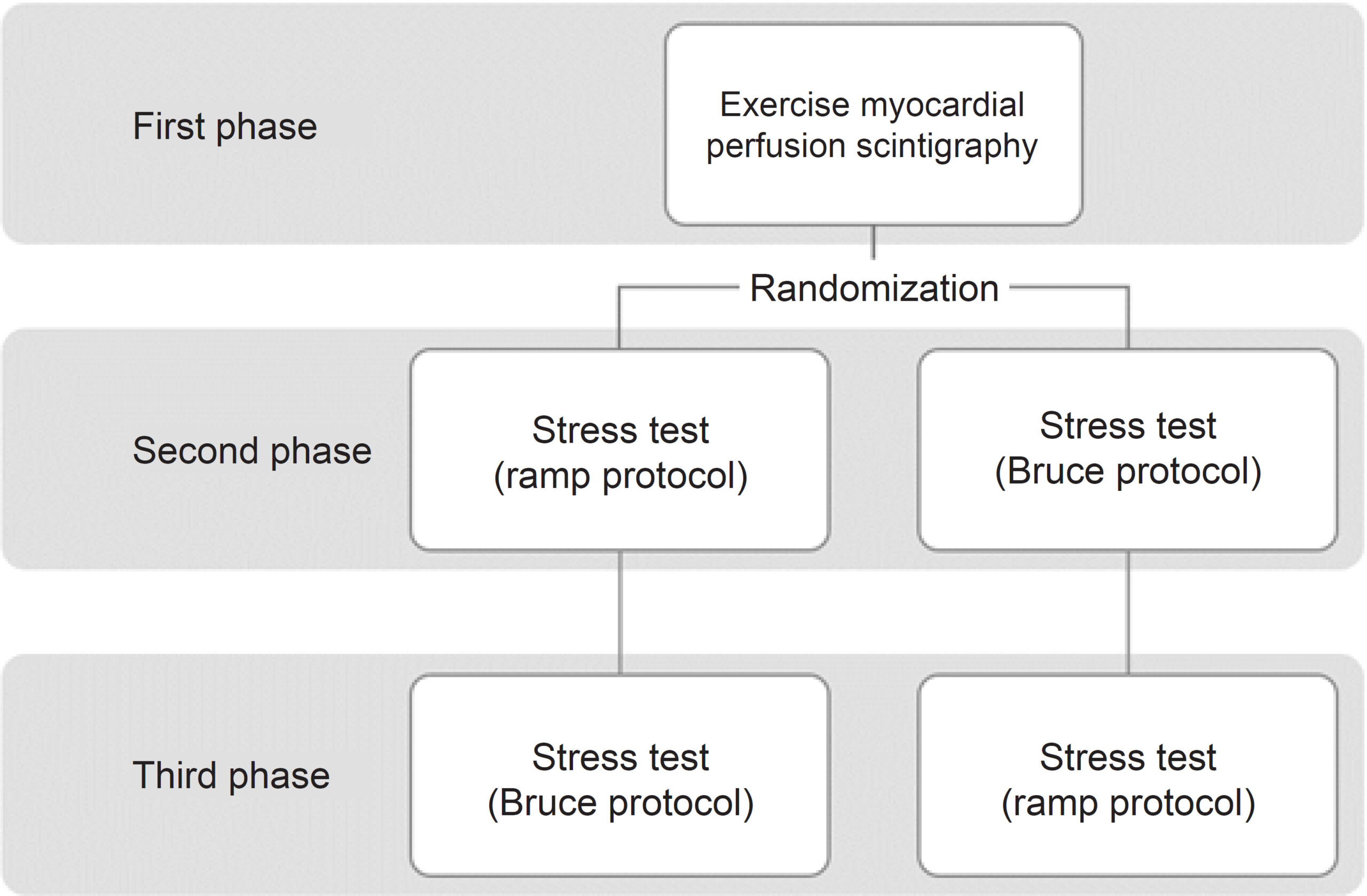
Participants underwent exercise testing using the ramp and Bruce protocols, and the tests’ diagnostic power was assessed. For testing the difference between data provided by both protocols, we used a paired Student’s t-test or Wilcoxon test, depending on the assumption of data normality. The level of significance adopted for all tests was 5%.

Results:

The ramp protocol showed sensitivity, specificity, and accuracy values of 55.6%, 82.4%, and 76.7%, respectively, whereas the Bruce protocol had results of 77.8%, 64.7%, and 67.4%, respectively. The maximum heart rate and double product at peak exercise were significantly higher in the Bruce protocol (p = 0.043 and p = 0.040, respectively). No differences were observed between the incidence of arrhythmias in both protocols.

Conclusion:

The Bruce protocol presented higher sensitivity for detecting ischemia on the exercise test, while the ramp protocol presented higher specificity and accuracy.

  • Coronary Artery Disease
  • Exercise
  • Exercise Test
  • Jogging
  • Myocardial Ischemia/diagnosis
  • Myocardial Perfusion Imaging
  • Sensitivity and Specificity
Read Full Article
Creative Commons Attribution (CC BY) Creative Commons license
09/08/2021 DOI: 10.36660/ijcs.20200403 Views 1
ABC
Original Article

Sensitivity, Specificity and Predictive Value of Heart Rate Variability Indices in Type 1 Diabetes Mellitus

Anne Kastelianne França da Silva et al. Diego Giuliano Destro Christofaro Aline Fernanda Barbosa Bernardo Franciele Marques Vanderlei Luiz Carlos Marques Vanderlei

Abstract

Background:

Heart rate variability (HRV) indices may detect autonomic changes with good diagnostic accuracy. Type diabetes mellitus (DM) individuals may have changes in autonomic modulation; however, studies of this nature in this population are still scarce.

Objective:

To compare HRV indices between and assess their prognostic value by measurements of sensitivity, specificity and predictive values in young individuals with type 1 DM and healthy volunteers.

Methods:

In this cross-sectional study, physical and clinical assessment was performed in 39 young patients with type 1 DM and 43 young healthy controls. For HRV analysis, beat-to-beat heart rate variability was measured in dorsal decubitus, using a Polar S810i heart rate monitor, for 30 minutes. The following indices were calculated: SDNN, RMSSD, PNN50, TINN, RRTri, LF ms2, HF ms2, LF un, HF un, LF/HF, SD1, SD2, SD1/SD2, and ApEn.

Results:

Type 1 DM subjects showed a decrease in sympathetic and parasympathetic activities, and overall variability of autonomic nervous system. The RMSSD, SDNN, PNN50, LF ms2, HF ms2, RRTri, SD1 and SD2 indices showed greater diagnostic accuracy in discriminating diabetic from healthy individuals.

Conclusion:

Type 1 DM individuals have changes in autonomic modulation. The SDNN, RMSSD, PNN50, RRtri, LF ms2, HF ms2, SD1 and SD2 indices may be alternative tools to discriminate individuals with type 1 DM.

  • Autonomic Nervous System
  • Diabetes Mellitus, Type 1, Predictive Value of Tests
  • Heart Rate
  • Sensitivity and Specificity
Read Full Article
Creative Commons Attribution (CC BY) Creative Commons license
01/03/2017 DOI: 10.5935/abc.20170024 Views 1
Body mass index as a marker of dyslipidemia in children
ABC
Artigo Original

Body mass index as a marker of dyslipidemia in children

Cláudia Cruz Lunardi et al. Édio Luiz Petroski

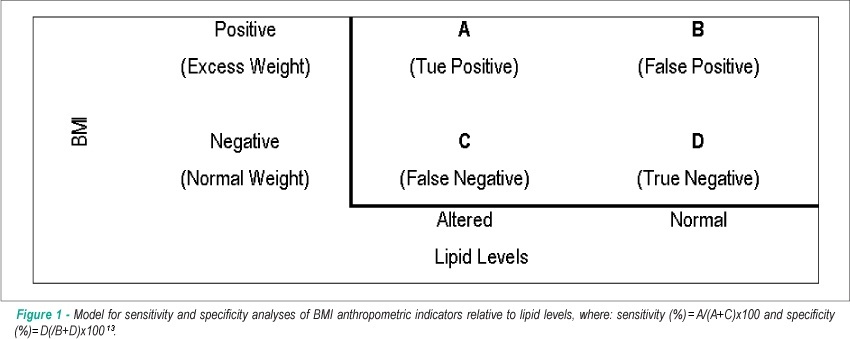
BACKGROUND: Obesity is very frequently associated with conditions such as dyslipidemia e diabetes. OBJECTIVE: To verify the diagnostic value of the cut-off points proposed by the International Obesity Task Force (IOTF) and Conde & Monteiro (C&M) for the screening and identification of dyslipidemia in children between 10 and 12 years of age. METHODS: The Body Mass Index (BMI) of 374 children of the school network of the city of Santa Maria-RS was ascertained. The children were selected in a stratified manner from a population of 4,083 children. Lipid levels (reference standard) were determined by means of analysis of total cholesterol (TC), LDL-C, HDL-C and triglycerides (TG). The cut-off points of the IOTF and C&M were used to classify the BMI. Descriptive statistics and analysis of sensitivity and specificity were employed. RESULTS: There was a statistical difference in excess weight prevalence between both proposals (24.7% and 28.6% for IOTF and C&M, respectively). A variation was observed in sensitivity (33% to 83%) and specificity (62% to 80%) between the cut-off points as to the detection of dyslipidemia. The percentage of false negatives was lower than the percentage of false positives. CONCLUSION: The proposals may be used to screen elevated TC and LDL-C in male individuals. Either the IOTF or the C&M classification may be used to identify subjects without dyslipidemia, as these proposals presented high specificity.

  • body mass index
  • dyslipidemia
  • Sensitivity and Specificity
  • students
Read Full Article
Creative Commons Attribution (CC BY) Creative Commons license
13/10/2009 DOI: 10.1590/S0066-782X2009000700005 Views 1

How to cite this article

EndNote RIS

Electronic Document Format (Vancouver)

Sadeghi M, Rahimizad A, Vakhshoori M, Bondariyan N, Nasirian S, Shafie D. Determination of Shock Index and Age Shock Index Cut-Off Points in Patients with ST-Segment Elevation Myocardial Infarction: SEMI-CI Study. International Journal of Cardiovascular Sciences 2024;37:e20220137.

Electronic Document Format (ABNT)

Sadeghi, Masoumeh; Rahimizad, Afsaneh; Vakhshoori, Mehrbod; Bondariyan, Niloofar; Nasirian, Shima; Shafie, Davood. Determination of Shock Index and Age Shock Index Cut-Off Points in Patients with ST-Segment Elevation Myocardial Infarction: SEMI-CI Study. International Journal of Cardiovascular Sciences, v. 37, e20220137, Jul. 2024.

Electronic Document Format (APA)

Sadeghi, M., Rahimizad, A., Vakhshoori, M., Bondariyan, N., Nasirian, S., & Shafie, D. (2024). Determination of Shock Index and Age Shock Index Cut-Off Points in Patients with ST-Segment Elevation Myocardial Infarction: SEMI-CI Study. International Journal of Cardiovascular Sciences, 37, e20220137.

Electronic Document Format (ISO)

Sadeghi, Masoumeh and Rahimizad, Afsaneh and Vakhshoori, Mehrbod and Bondariyan, Niloofar and Nasirian, Shima and Shafie, Davood. Determination of Shock Index and Age Shock Index Cut-Off Points in Patients with ST-Segment Elevation Myocardial Infarction: SEMI-CI Study. International Journal of Cardiovascular Sciences [online]. 2024, vol. 37, [cited 2026-10-14], e20220137. Available from: <https://journals.cardiol.br/en/article/determination-of-shock-index-and-age-shock-index-cut-off-points-in-patients-with-st-segment-elevation-myocardial-infarction-semi-ci-study/>. ISSN 2359-4802

EndNote RIS

Electronic Document Format (Vancouver)

Fagundes TTS, Mizzaci CC, Buglia S, Wohnrath FC, Medina F, França J, Buchler RDD, et al. Comparison between Bruce and Ramp Protocols for Exercise Testing in the Diagnosis of Myocardial Ischemia. International Journal of Cardiovascular Sciences 2021;35(1):28-36.

Electronic Document Format (ABNT)

Fagundes, Thiago Teixeira da Silveira; Mizzaci, Carolina Christianini; Buglia, Susimeire; Wohnrath, Fabricio da Costa; Medina, Flavia; França, João; Buchler, Rica Dodo Delmar; Mastrocola, Luiz Eduardo; Meneghelo, Romeu Sérgio. Comparison between Bruce and Ramp Protocols for Exercise Testing in the Diagnosis of Myocardial Ischemia. International Journal of Cardiovascular Sciences, v. 35, n. 1, p. 28-36, Aug. 2021.

Electronic Document Format (APA)

Fagundes, T. T. S., Mizzaci, C. C., Buglia, S., Wohnrath, F. C., Medina, F., França, J., Buchler, R. D. D., Mastrocola, L. E., & Meneghelo, R. S. (2021). Comparison between Bruce and Ramp Protocols for Exercise Testing in the Diagnosis of Myocardial Ischemia. International Journal of Cardiovascular Sciences, 35(1), 28-36.

Electronic Document Format (ISO)

Fagundes, Thiago Teixeira da Silveira and Mizzaci, Carolina Christianini and Buglia, Susimeire and Wohnrath, Fabricio da Costa and Medina, Flavia and França, João and Buchler, Rica Dodo Delmar and Mastrocola, Luiz Eduardo and Meneghelo, Romeu Sérgio. Comparison between Bruce and Ramp Protocols for Exercise Testing in the Diagnosis of Myocardial Ischemia. International Journal of Cardiovascular Sciences [online]. 2021, vol. 35, n. 1, [cited 2026-10-14], pp. 28-36. Available from: <https://journals.cardiol.br/en/article/comparison-between-bruce-and-ramp-protocols-for-exercise-testing-in-the-diagnosis-of-myocardial-ischemia/>. ISSN 2359-4802

EndNote RIS

Electronic Document Format (Vancouver)

Silva AKF, Christofaro DGD, Bernardo AFB, Vanderlei FM, Vanderlei LCM. Sensitivity, Specificity and Predictive Value of Heart Rate Variability Indices in Type 1 Diabetes Mellitus. Arquivos Brasileiros de Cardiologia 2017;108(3):255-62.

Electronic Document Format (ABNT)

Silva, Anne Kastelianne França da; Christofaro, Diego Giuliano Destro; Bernardo, Aline Fernanda Barbosa; Vanderlei, Franciele Marques; Vanderlei, Luiz Carlos Marques. Sensitivity, Specificity and Predictive Value of Heart Rate Variability Indices in Type 1 Diabetes Mellitus. Arquivos Brasileiros de Cardiologia, v. 108, n. 3, p. 255-262, Feb. 2017.

Electronic Document Format (APA)

Silva, A. K. F. , Christofaro, D. G. D., Bernardo, A. F. B., Vanderlei, F. M., & Vanderlei, L. C. M. (2017). Sensitivity, Specificity and Predictive Value of Heart Rate Variability Indices in Type 1 Diabetes Mellitus. Arquivos Brasileiros de Cardiologia, 108(3), 255-262.

Electronic Document Format (ISO)

Silva, Anne Kastelianne França da and Christofaro, Diego Giuliano Destro and Bernardo, Aline Fernanda Barbosa and Vanderlei, Franciele Marques and Vanderlei, Luiz Carlos Marques. Sensitivity, Specificity and Predictive Value of Heart Rate Variability Indices in Type 1 Diabetes Mellitus. Arquivos Brasileiros de Cardiologia [online]. 2017, vol. 108, n. 3, [cited 2026-10-14], pp. 255-262. Available from: <https://journals.cardiol.br/en/article/sensitivity-specificity-and-predictive-value-of-heart-rate-variability-indices-in-type-1-diabetes-mellitus/>. ISSN 0066-782X

EndNote RIS

Electronic Document Format (Vancouver)

Lunardi CC, Petroski L. Body mass index as a marker of dyslipidemia in children. Arquivos Brasileiros de Cardiologia 2009;93(1):22-7.

Electronic Document Format (ABNT)

Lunardi, Cláudia Cruz; Petroski, Édio Luiz. Body mass index as a marker of dyslipidemia in children. Arquivos Brasileiros de Cardiologia, v. 93, n. 1, p. 22-27, Oct. 2009.

Electronic Document Format (APA)

Lunardi, C. C., & Petroski, L. (2009). Body mass index as a marker of dyslipidemia in children. Arquivos Brasileiros de Cardiologia, 93(1), 22-27.

Electronic Document Format (ISO)

Lunardi, Cláudia Cruz and Petroski, Édio Luiz. Body mass index as a marker of dyslipidemia in children. Arquivos Brasileiros de Cardiologia [online]. 2009, vol. 93, n. 1, [cited 2026-10-14], pp. 22-27. Available from: <https://journals.cardiol.br/en/article/body-mass-index-as-a-marker-of-dyslipidemia-in-children/>. ISSN 0066-782X

  • About ABC Family
  • Internal Regulation
  • Editorial Board
  • Brazilian Society of Cardiology (SBC)

Issues

SBC Guidelines

  • Videos
  • Podcasts
  • News