| ABC
ABC Family Arquivos Brasileiros de Cardiologia International Journal of Cardiovascular Sciences ABC Heart Failure & Cardiomyopathy ABC Imagem Cardiovascular
Português English
ABC Family | ABC
Português English
  • About
    • About the Journal
    • Internal Regulation
    • Editors Section
    • Editorial Board
    • History
    • SBC Award
  • Instructions to Authors
    • Guidelines for Publication
    • Editorial Policy
    • Ethics Policy
    • Policy on the Use of Artificial Intelligence
    • Mandatory Publication Form
    • Publication Fee
  • Issues
  • SBC Guidelines
  • Abstracts
    • How to Publish an Abstract Supplement?
    • Supplements from the Brazilian Congress of Cardiology
  • About
    • About the Journal
    • Internal Regulation
    • Editors Section
    • Editorial Board
    • History
    • SBC Award
  • Instructions to Authors
    • Guidelines for Publication
    • Editorial Policy
    • Ethics Policy
    • Policy on the Use of Artificial Intelligence
    • Mandatory Publication Form
    • Publication Fee
  • Issues
  • SBC Guidelines
  • Abstracts
    • How to Publish an Abstract Supplement?
    • Supplements from the Brazilian Congress of Cardiology

ABC Family

  • ABC Family
  • Arquivos Brasileiros de Cardiologia
  • International Journal of Cardiovascular Sciences
  • ABC Heart Failure & Cardiomyopathy
  • ABC Imagem Cardiovascular
Search in

No content found.

Journals
Ordering
Article types
Others

  1. Home
  2. ABC
  3. Issues
  4. 2014, Volume 102, Number 3
Letter to the Editor

Dextroversion and Noncompaction

Josef Finsterer et al. Claudia Stöllberger

Dear Editor,

With interest we read the article by Gonçalves et al about a patient with dextrocardia and left-ventricular hypertrabeculation/noncompaction (LVHT). We have the following comments and concerns.

Dextrocardia in association with LVHT has been repeatedly reported.

[…]

  • Cardiomyopathies / pathology
  • Dextrocardia
  • Heart Failure
  • Stroke
Read Full Article
Creative Commons Attribution (CC BY) Creative Commons license
01/03/2014 DOI: 10.5935/abc.20140028
Figure 1
Review Article

Hypertrophic Cardiomyopathy: How do Mutations Lead to Disease?

Júlia Daher Carneiro Marsiglia et al. Alexandre Costa Pereira

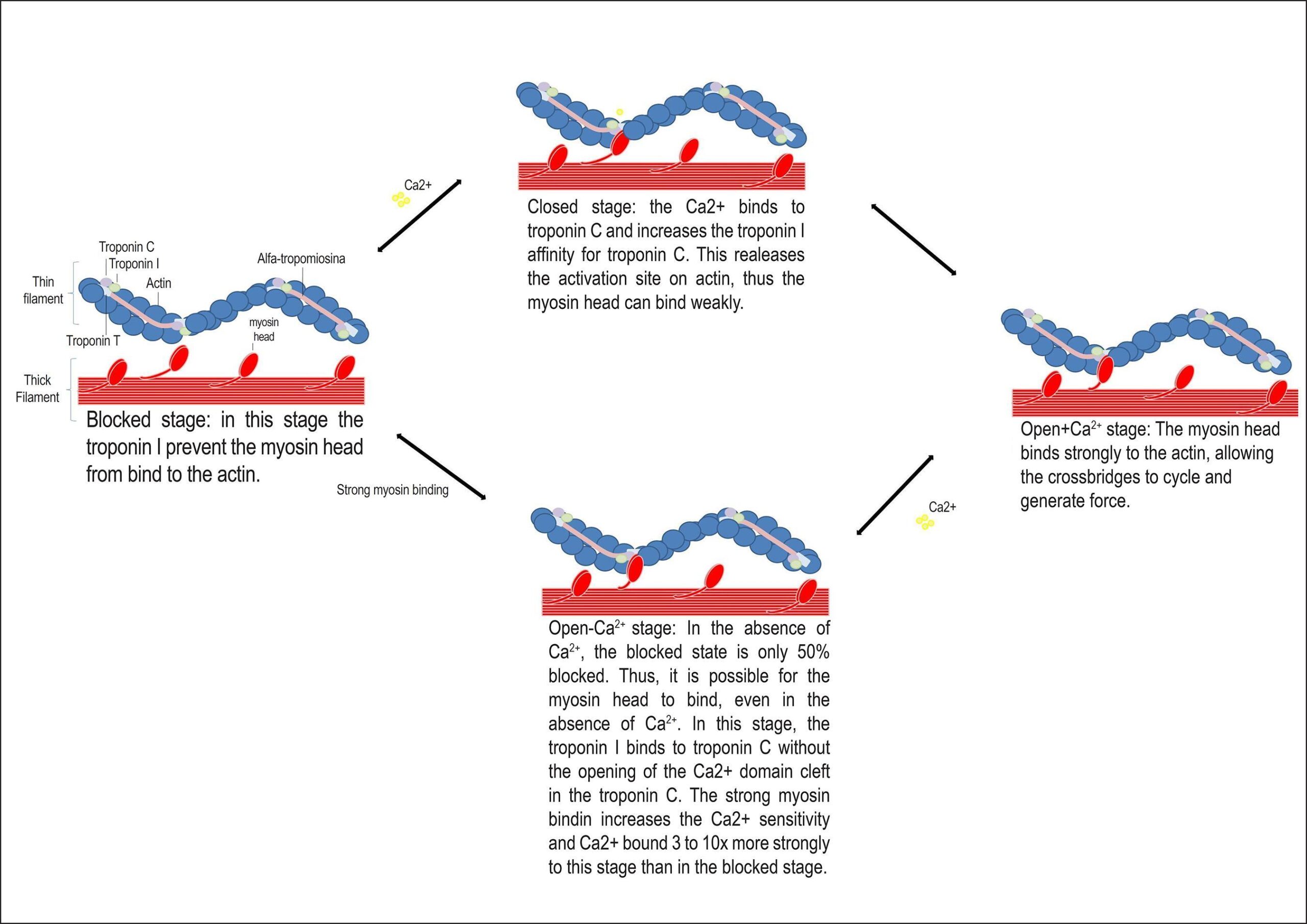
Hypertrophic cardiomyopathy (HCM) is the most common monogenic genetic cardiac disease, with an estimated prevalence of 1:500 in the general population. Clinically, HCM is characterized by hypertrophy of the left ventricle (LV) walls, especially the septum, usually asymmetric, in the absence of any cardiac or systemic disease that leads to a secondary hypertrophy. The clinical course of the disease has a large inter- and intrafamilial heterogeneity, ranging from mild symptoms of heart failure late in life to the onset of sudden cardiac death at a young age and is caused by a mutation in one of the genes that encode a protein from the sarcomere, Z-disc or intracellular calcium modulators. Although many genes and mutations are already known to cause HCM, the molecular pathways that lead to the phenotype are still unclear. This review focus on the molecular mechanisms of HCM, the pathways from mutation to clinical phenotype and how the disease’s genotype correlates with phenotype.

  • Cardiomyopathy, Hypertrophic
  • Genes
  • Genotype
  • Phenotype
  • Sarcomers
Read Full Article
Creative Commons Attribution (CC BY) Creative Commons license
01/03/2014 DOI: 10.5935/abc.20140022
Figure 1
Artigo Especial

I Brazilian Position Paper on Antihypertensive Drug Combination

Rui Póvoa et al. Weimar Sebba Barroso Andrea A Brandão Paulo Cesar Veiga Jardim … Oswaldo Barroso Oswaldo Passarelli Jr. João Roberto Gemelli Audes Feitosa Thiago Veiga Jardim Sergio Baiocchi Carneiro Celso Amodeo Osni Moreira Filho Armando da Rocha Nogueira Nelson Siqueira de Morais Luiz Cesar Nazário Scala Carolina Gonzaga Dilma do Socorro Moraes de Souza Annelise Machado Gomes de Paiva Marcus Vinicius Bolivar Malachias Décio Mion Jr. Marco Antônio Mota-Gomes Eduardo Costa Duarte Barbosa Marcio Gonçalves de Sousa Henrique Tria Bianco Francisco Antonio Helfenstein Fonseca Marcio Kalil Roberto Dischinger Miranda Carlos André Uehara Antônio Felipe Sanjuliani

Evidence of clinical trials

Data available have suggested that most of the hypertensive population requires combined therapy to achieve BP control goals. A meta-analysis of 354 double-blind randomized clinical trials has found mean BP reductions with monotherapy of only 9.1 mm Hg and 5.5 mm Hg for systolic BP (SBP) and diastolic BP (DBP), respectively. There were only few differences in the responses to the following drugs assessed: diuretics; beta-blockers (BBs); angiotensin-converting-enzyme inhibitors (ACEIs); type 1 angiotensin-receptor blockers (ARBs); and calcium channel antagonists (CCAs). In the ALLHAT, only 26% of the patients achieved the BP control goal with monotherapy, even considering the goal for diabetic patients (36% of the patients) of < 140/90 mm Hg, rather than 130/80 mm Hg as recommended by several guidelines at the time. In the HOT Study, only 33% of the patients met the DBP goal with monotherapy; 45% required two drugs and 22% needed three drugs to meet that goal. The mean SBP at the end of the HOT Study was 141 mm Hg, indicating that an even higher percentage of patients would have needed combined therapy to meet the goal of < 140 mmHg. In the LIFE Study, treatment to meet the recommended goal (<140/90 mmHg) was aggressively pursued in elderly patients with left ventricular hypertrophy (LVH). Considering an initial mean BP of 175/98 mm Hg, more than 90% need to use at least two antihypertensive drugs. The Strategies in Treatment of Hypertension (STRATHE) Study, in which treatment was initiated with a combination of low doses and compared to monotherapy, has found a greater percentage of individuals in the low-dose combination group who met the BP control goal (BP < 140/90 mm Hg) as compared to those receiving sequential monotherapy (62% vs. 49%, p = 0.02).

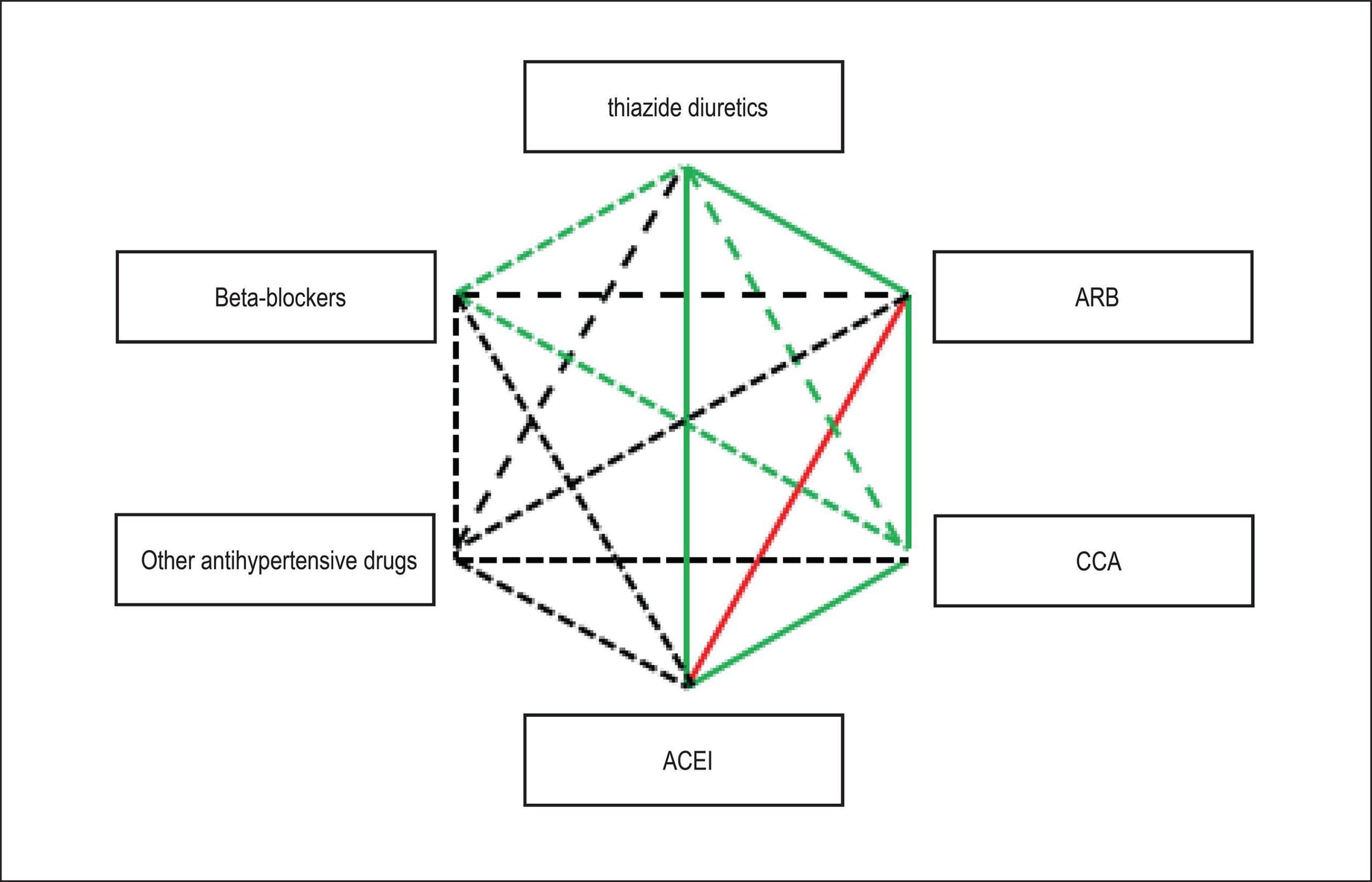
Based on the criteria of efficacy, tolerability, likelihood of higher adherence, evidence of CV and kidney protections, and safety, the associations of antihypertensive drugs can be divided as follows: preferential; acceptable; less usual; and unusual (). summarizes the current recommendations for drug association in AH treatment. It is worth noting that non-pharmacological measures of lifestyle change should be always emphasized to improve AH control and prevention of its complications.

[…]

  • Antihypertensive Agents / pharmacology
  • Antihypertensive Agents/therapeutic use
  • Hypertension/therapy
Read Full Article
Creative Commons Attribution (CC BY) Creative Commons license
01/03/2014 DOI: 10.5935/abc.20140023 Views 1
Figure 1
Viewpoint

Atypical Manifestation of Myocardial Ischemia in the Elderly

Marcelo E. Ochiai et al. Neusa Helena Lopes Carolina Giusti Buzo Humberto Pierri

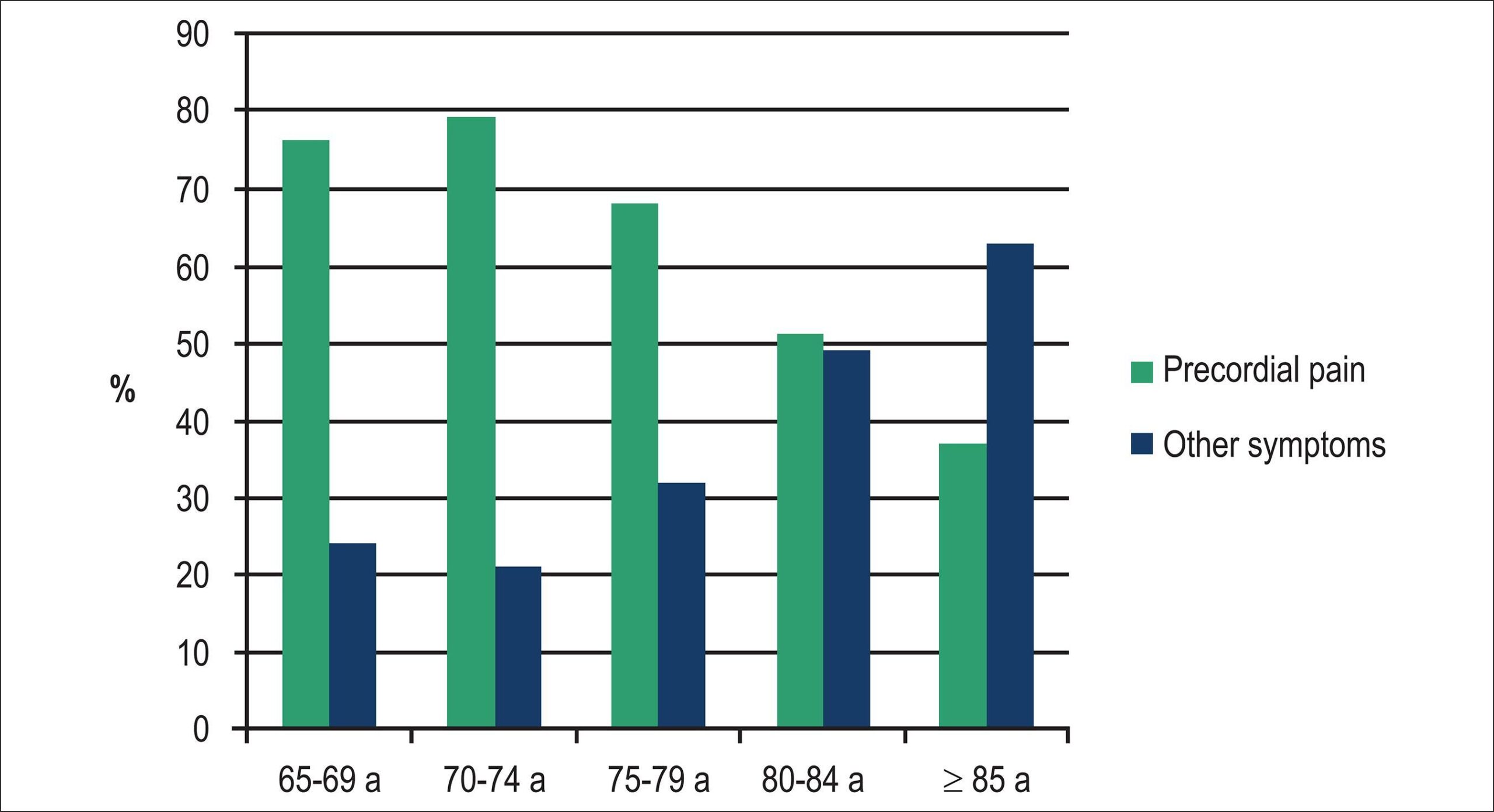
Often, elderly patients have atypical clinical picture for myocardial ischemia, or are asymptomatic. This review intends to re-examine the pathophysiology of atypical manifestation in elderly persons, its prognostic and therapeutic implications.

The coronary atherosclerotic disease is an increasing public health problem, of particular importance in higher age groups. Its prevalence increases significantly at the sixth decade of life, becoming the leading cause of death in older people, as well as the greatest responsible for hospitalization and invasive procedures.

[…]

  • Aged
  • Angina Pectoris
  • Coronary Artery Disease
  • Heart Failure
  • Myocardial Ischemia / physiopathology
Read Full Article
Creative Commons Attribution (CC BY) Creative Commons license
01/03/2014 DOI: 10.5935/abc.20140025
Erratum

September 2013 Issue, vol. 101 (4), Suppl. 1, pages 1-22

T

h

[…]

Read Full Article
Creative Commons Attribution (CC BY) Creative Commons license
01/03/2014 DOI: 10.5935/abc.2013S010e
Figure 1
Artigo Original

Heart Rate Recovery in the First Minute at the Six-Minute Walk Test in Patients with Heart Failure

Sabrina Lindemberg et al. Sergio Chermont Mônica Quintão Milena Derossi … Sergio Guilhon Sabrina Bernardez Luana Marchese Wolney Martins Antônio Claudio L. Nóbrega Evandro Tinoco Mesquita

Background:

Heart rate recovery at one minute of rest (HRR1) is a predictor of mortality in heart failure (HF), but its prognosis has not been assessed at six-minute walk test (6MWT) in these patients.

Objective:

This study aimed to determine the HRR1 at 6MWT in patients with HF and its correlation with six-minute walk distance (6MWD).

Methods:

Cross-sectional, controlled protocol with 161 individuals, 126 patients with stable systolic HF, allocated into 2 groups (G1 and G2) receiving or not β-blocker and 35 volunteers in control group (G3) had HRR1 recorded at the 6MWT.

Results:

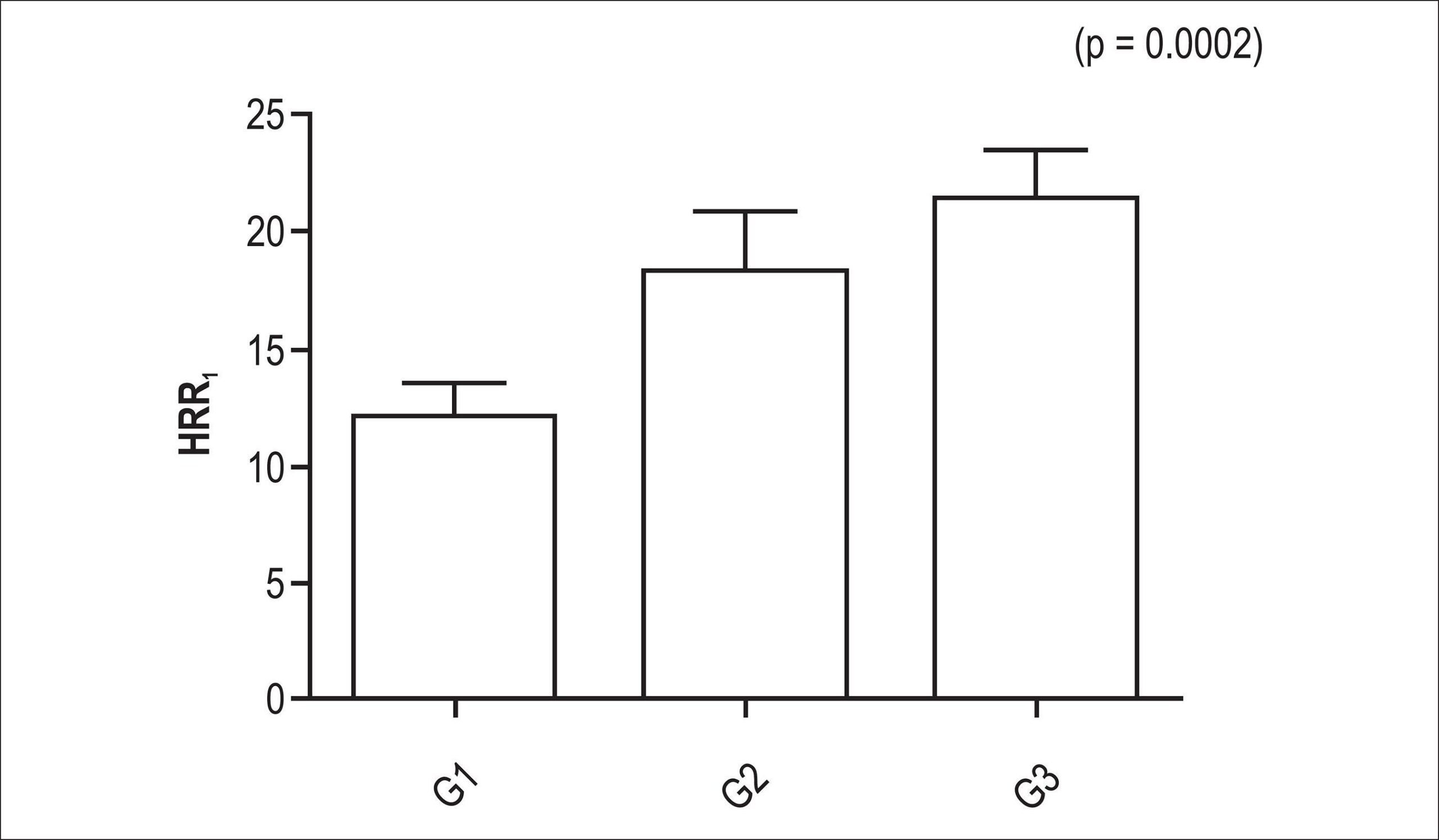
HRR1 and 6MWD were significantly different in the 3 groups. Mean values of HRR1 and 6MWD were: HRR1 = 12 ± 14 beat/min G1; 18 ± 16 beat/min G2 and 21 ± 13 beat/min G3; 6MWD = 423 ± 102 m G1; 396 ± 101m G2 and 484 ± 96 m G3 (p < 0.05). Results showed a correlation between HRR1 and 6MWD in G1(r = 0.3; p = 0.04) and in G3(r = 0.4; p= 0.03), but not in G2 (r= 0.12; p= 0.48).

Conclusion:

HRR1 response was attenuated in patients using βB and showed correlation with 6MWD, reflecting better exercise tolerance. HRR1 after 6MWT seems to represent an alternative when treadmill tests could not be tolerated.

  • Exercise
  • Heart Failure
  • Heart Rate
  • walking
Read Full Article
Creative Commons Attribution (CC BY) Creative Commons license
01/03/2014 DOI: 10.5935/abc.20140036 Views 1
Figure 1
Case Report

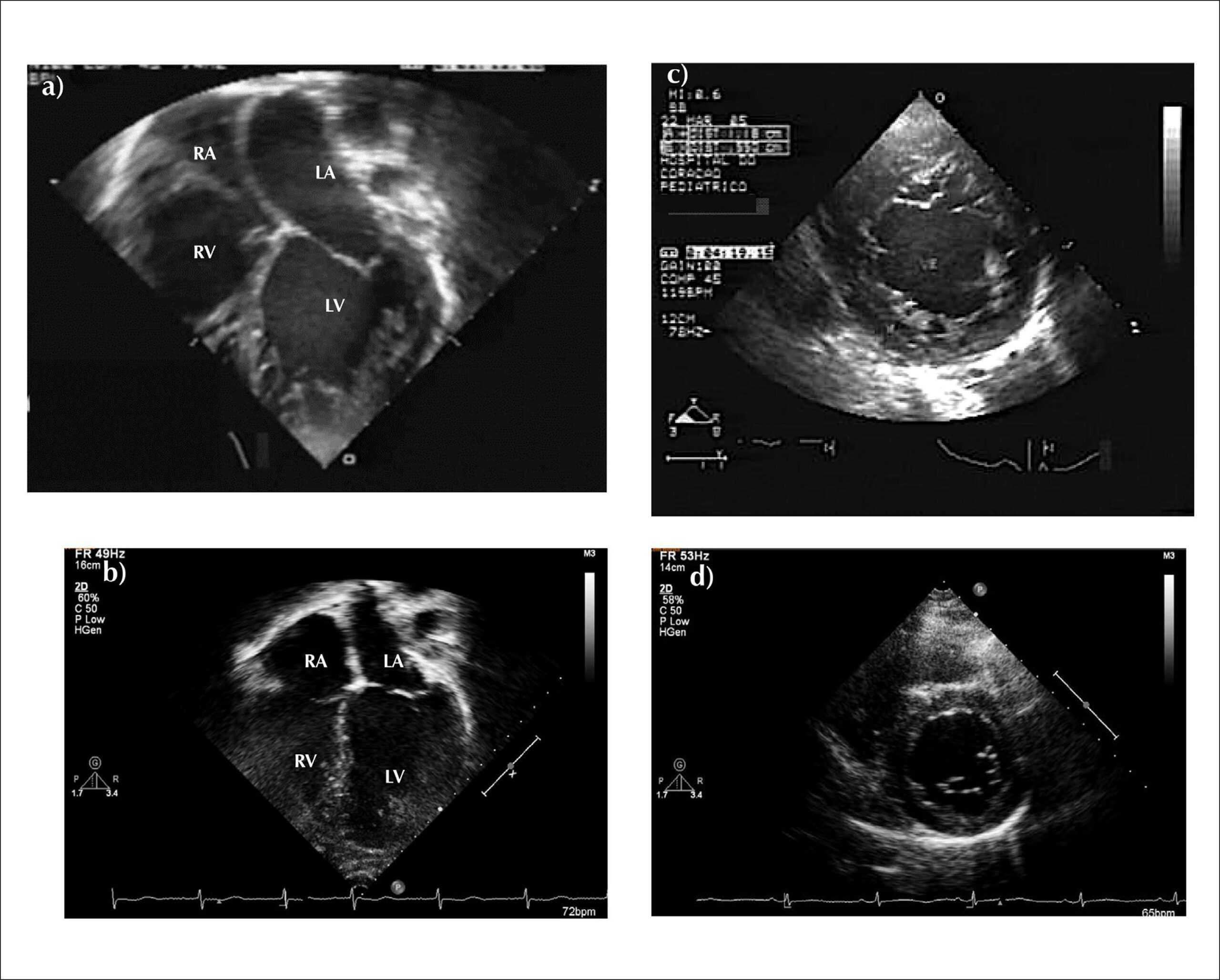
Sildenafil for Noncompaction Cardiomyopathy Treatment in a Child: Case Report

Ana Carolina Costa Redondo et al. Gabriela Fuenmayor Karen Saori Shiraishi Simone Rolim F Fontes … Patrícia Figueiredo Elias Rogerio Souza Ieda Biscegli Jatene

Introduction

Congestive heart failure (CHF) occurs when the heart can no longer maintain the baseline metabolic demand triggered by physiological venous pressure. In the pediatric population, it corresponds to a complex entity with multiple etiologies, depending on the age group assessed, being mainly associated with congenital structural malformations, cardiomyopathies, or secondary to arrhythmogenic, infectious, ischemic, toxic or infiltrative events.

The incidence of CHF in children also varies according to the underlying condition, ranging from 15% to 25% in patients with congenital heart defects. In structurally normal hearts, cardiomyopathy is the major factor associated with CHF, with a 40% incidence of CHF reported in those patients.

[…]

  • Cardiomyopathy, Dilated/complications
  • Heart Failure
  • Phosphodiesterase Inhibitors
Read Full Article
Creative Commons Attribution (CC BY) Creative Commons license
01/03/2014 DOI: 10.5935/abc.20140024 Views 2
Figure 1
Artigo Original

Physical Training as Non-Pharmacological Treatment of Neurocardiogenic Syncope

Vanessa Cristina Miranda Takahagi et al. Daniela Caetano Costa Júlio César Crescêncio Lourenço Gallo Junior

Background:

Characterized as a sudden and temporary loss of consciousness and postural tone, with quick and spontaneous recovery, syncope is caused by an acute reduction of systemic arterial pressure and, therefore, of cerebral blood flow. Unsatisfactory results with the use of drugs allowed the nonpharmacological treatment of neurocardiogenic syncope was contemplated as the first therapeutic option.

Objectives:

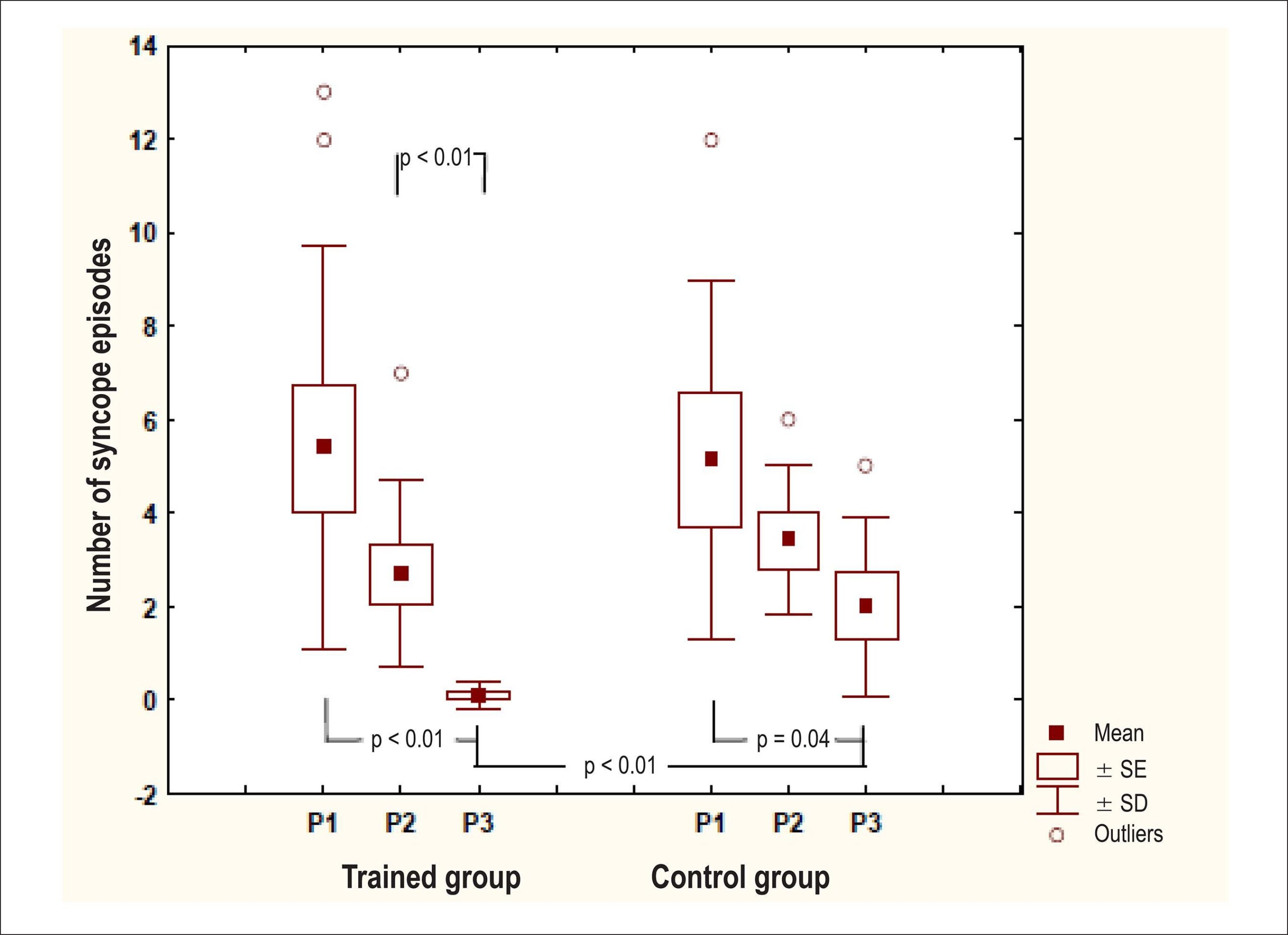
To compare, in patients with neurocardiogenic syncope, the impact of a moderate intensity aerobic physical training (AFT) and a control intervention on the positivity of head-up tilting test (HUT) and orthostatic tolerance time.

Methods:

Were studied 21 patients with a history of recurrent neurocardiogenic syncope and HUT. The patients were randomized into: trained group (TG), n = 11, and control group (CG), n = 10. The TG was submitted to 12 weeks of AFT supervised, in cycle ergometer, and the CG to a control procedure that consisted in 15 minutes of stretching and 15 minutes of light walk.

Results:

The TG had a positive effect to physical training, with a significant increase in peak oxygen consumption. The CG did not show any statistically significant change before and after the intervention. After the intervention period, 72.7% of the TG sample had negative results to the HUT, not having syncope in the revaluation.

Conclusion:

The program of supervised aerobic physical training for 12 weeks was able to reduce the number of positive HUT, as it was able to increase tolerance time in orthostatic position during the HUT after the intervention period.

  • Aerobic physical training
  • Head-up tilting test
  • neurocardiogenic syncope
Read Full Article
Creative Commons Attribution (CC BY) Creative Commons license
01/03/2014 DOI: 10.5935/abc.20140021 Views 1
Letter to the Editor

Assessment of Natriuretic Peptides: The Heart Should Be Evaluated as a Whole

Emre Yalcinkaya et al. Murat Celik Galip Buyukturan

Dear Editor,

We read with great interest the article by Rodrigues et al entitled “Right Ventricular Assessment by Tissue-Doppler Echocardiography in Acute Pulmonary Embolism”, which was published of the Arquivos Brasileiros de Cardiologia. The authors aimed to evaluate the right ventricular (RV) systolic function using two-dimensional tissue Doppler echocardiography in patients with acute pulmonary embolism (PE) and to analyze its correlation with atrial natriuretic peptide (BNP) levels. The authors concluded that increased BNP levels (≥ 50 pg/mL) were associated with a higher prevalence of RV systolic dysfunction in patients with PE. Although the current article is well-managed, and we commend the authors for the detailed and valuable information that they have provided, some comments may be beneficial.

[…]

  • Natriuretic Peptides
  • Pulmonary embolism
  • Ventricular Function, Right
Read Full Article
Creative Commons Attribution (CC BY) Creative Commons license
01/03/2014 DOI: 10.5935/abc.20140027 Views 1
Figure 1
Clinicoradiological Session

Case 2/2014 – 20-year-old Woman with Corrected Transposition, Pulmonary Atresia and Aortopulmonary Collateral Arteries

Edmar Atik

Complementary tests

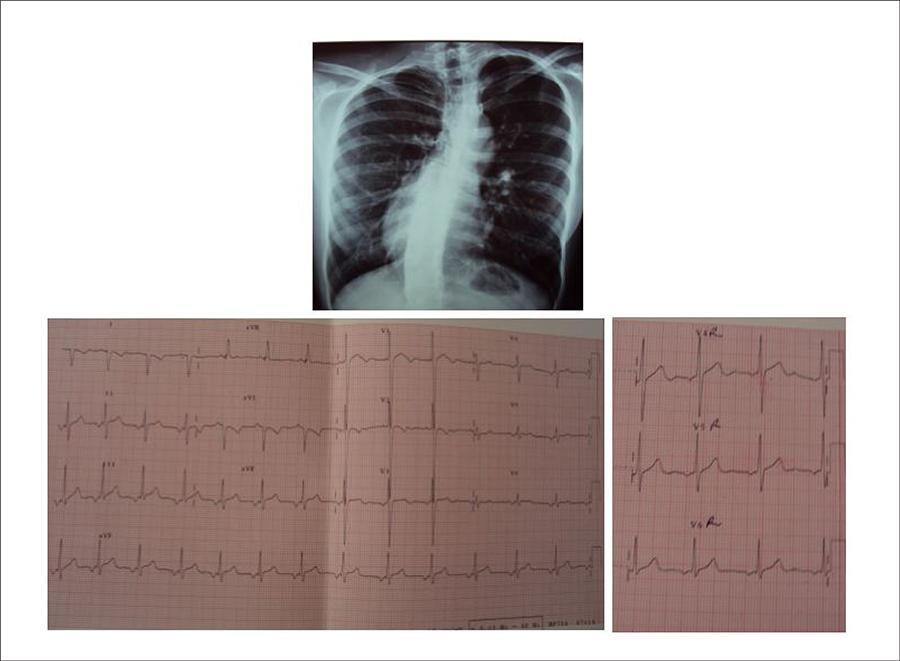
Electrocardiogram () showed junctional rhythm and signs of left ventricular overload on the right. The P wave was negative in II, III, aVF and precordial areas. The QRS complex morphology was RS in V1, rs in V6 and Rs in V6R. The T wave was negative in I, L and more positive in V6R than in V6. AQRS: +160º, AT: 120º, AP: −80º.

Chest radiography shows normal cardiac silhouette (cardiothoracic ratio = 0.45) on the right in situs solitus (gastric bubble on the left) with rounded right ventricular arch. The upper arch on the left was long. Normal pulmonary vasculature and moderate scoliosis ().

[…]

  • Corrected Transposition of Great Arteries
  • Heart Defects, Congenital
  • Hypertension Pulmonary
  • Pulmonary Atresia/surgery
Read Full Article
Creative Commons Attribution (CC BY) Creative Commons license
01/03/2014 DOI: 10.5935/abc.20140026
Artigo Original

Prognostic Score for Acute Coronary Syndrome in a Private Terciary Hospital

Edson Renato Romano et al. Ieda Maria Liguori Jorge Alcantara Farran Rosa Maria Pimentel do Egito … Marcelo Luz Pereira Romano Vinícius Avellar Werneck Marco Antonio Oliveira Barbosa Enilton Sergio Tabosa do Egito Alexandre Biasi Cavalcanti Leopoldo Soares Piegas

Background:

Available predictive models for acute coronary syndromes (ACS) have limitations as they have been elaborated some years ago or limitations with applicability.

Objectives:

To develop scores for predicting adverse events in 30 days and 6 months in ST-segment elevation and non-ST-segment elevation ACS patients admitted to private tertiary hospital.

Methods:

Prospective cohort of ACS patients admitted between August, 2009 and June, 2012. Our primary composite outcome for both the 30-day and 6-month models was death from any cause, myocardial infarction or re-infarction, cerebrovascular accident (CVA), cardiac arrest and major bleeding. Predicting variables were selected for clinical, laboratory, electrocardiographic and therapeutic data. The final model was obtained with multiple logistic regression and submitted to internal validation with bootstrap analysis.

Results:

We considered 760 patients for the development sample, of which 132 had ST-segment elevation ACS and 628 non-ST-segment elevation ACS. The mean age was 63.2 ± 11.7 years, and 583 were men (76.7%). The final model to predict 30-day events is comprised by five independent variables: age ≥ 70 years, history of cancer, left ventricular ejection fraction (LVEF) 12.4 ng /ml and chemical thrombolysis. In the internal validation, the model showed good discrimination with C-statistic of 0.71. The predictors in the 6-month event final model are: history of cancer, LVEF 14.3 ng/ml, serum creatinine>1.2 mg/dl, history of chronic obstructive pulmonary disease and hemoglobin < 13.5 g/dl. In the internal validation, the model had good performance with C-statistic of 0.69.

Conclusion:

We have developed easy to apply scores for predicting 30-day and 6-month adverse events in patients with ST-elevation and non-ST-elevation ACS.

  • Acute coronary syndrome
  • Hospitals, Private
  • Probability
  • Prognosis
  • Risk Factors
Read Full Article
Creative Commons Attribution (CC BY) Creative Commons license
10/02/2014 DOI: 10.5935/abc.20140012 Views 1
Figure 1
Artigo Original

Evaluation of Endothelial Function on Atherosclerosis using Perfusion Index from Pulse Oximeter

Igor Alexandre Côrtes de Menezes et al. Márcio Roberto Viana Santos Cláudio Leinig Pereira da Cunha

Background:

Endothelial dysfunction is vascular phenomenon that plays an important role in atherosclerosis development. With the purpose of improving the prevention and treatment of atherosclerotic diseases, the searching for accurate, practical and cheaper methods for evaluating endothelial function have become of interest.

Objectives:

Verify the potential of Peripheral Perfusion Index from pulse oximetry (IPP) as a method of endothelial dysfunction evaluation in patients with atherosclerotic diseases.

Methods:

There were recruited 18 control patients and 24 patients with atherosclerotic diseases under optimized treatment, in basic health units. The values of IPP were evaluated before and after an endothelial-dependent stimulus, the reactive hyperemia. The values of IPP were also evaluated in period which the major contribution of Nitric Oxide (NO) for the vasodilation occurs (IPP90-120). The results of IPP were discussed using the literature and estimating their diagnostic and prognostic potential

Results:

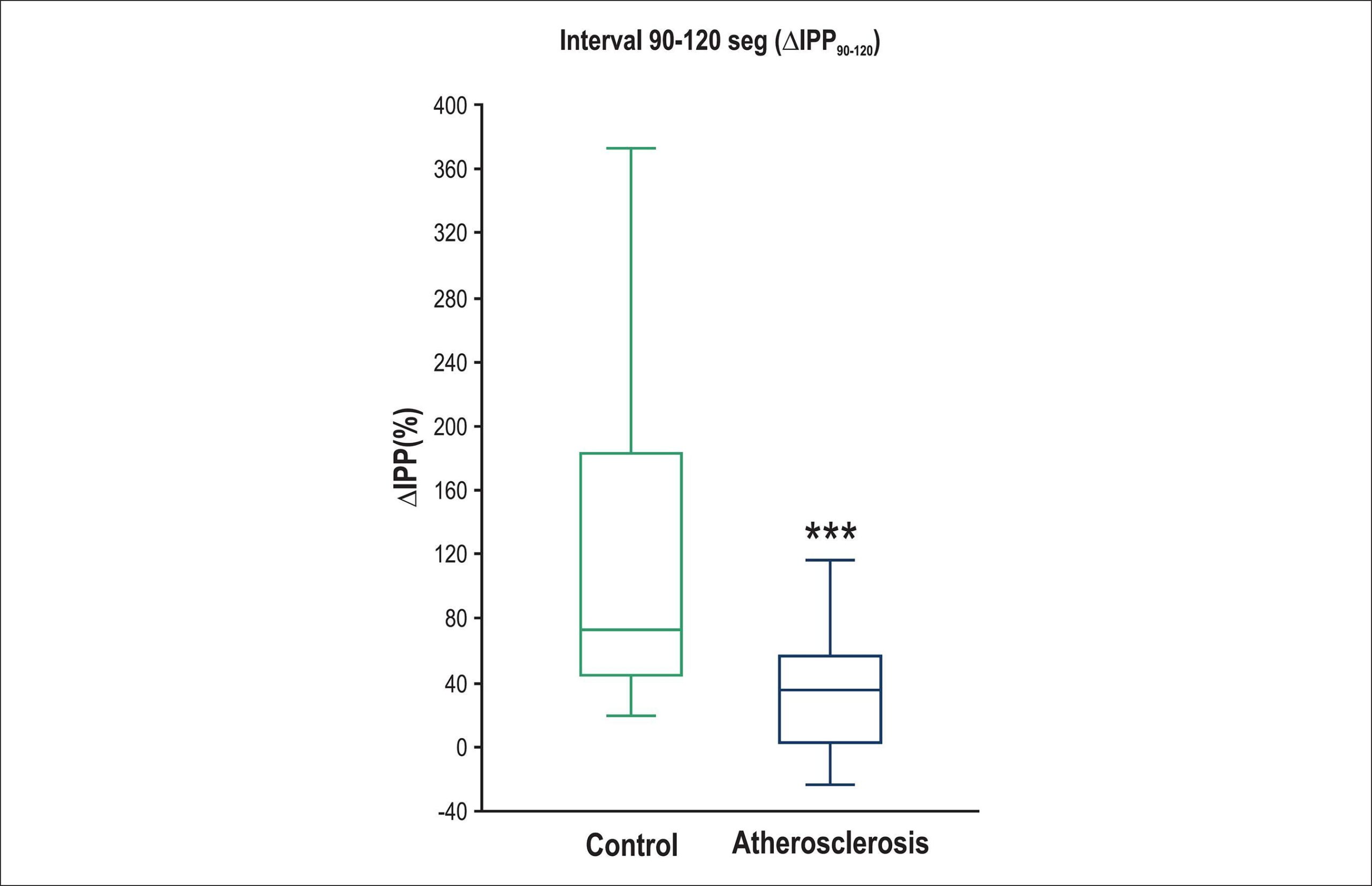
The endothelium-dependent vasodilatory response measured by IPP was significantly lower in patients with atherosclerosis compared to control group, since 45 seconds after reactive hyperemia. Also, the values of IPP90-120 were significantly lower in patients with atherosclerosis [35% (4 – 53%) vs 73% (55 – 169%); p<0,001]. Similarly, the IPP values were lower in atherosclerosis group when it was separated by gender.

Conclusion:

The results of this study, in association with the low cost of pulse oximeter, suggest a good potential for IPP as an endothelial dysfunction evaluation method. New studies must be done in order to clarify this potential and possibly contribute with the prevention and treatment of atherosclerotic diseases.

  • Atherosclerosis
  • Endothelium / physiopathology
  • Pulsatile Flow
Read Full Article
Creative Commons Attribution (CC BY) Creative Commons license
10/02/2014 DOI: 10.5935/abc.20140010 Views 1
Figure 1
Artigo Original

Minimally Invasive Procedures – Direct and Video-Assisted Forms in the Treatment of Heart Diseases

Josué Viana Castro Neto et al. Emanuel Carvalho Melo Juliana Fernandes Silva Leonardo Lemos Rebouças … Larissa Chagas Corrêa Amanda de Queiroz Germano João José Aquino Machado

Background:

Minimally invasive cardiovascular procedures have been progressively used in heart surgery.

Objective:

To describe the techniques and immediate results of minimally invasive procedures in 5 years.

Methods:

Prospective and descriptive study in which 102 patients were submitted to minimally invasive procedures in direct and video-assisted forms. Clinical and surgical variables were evaluated as well as the in hospital follow-up of the patients.

Results:

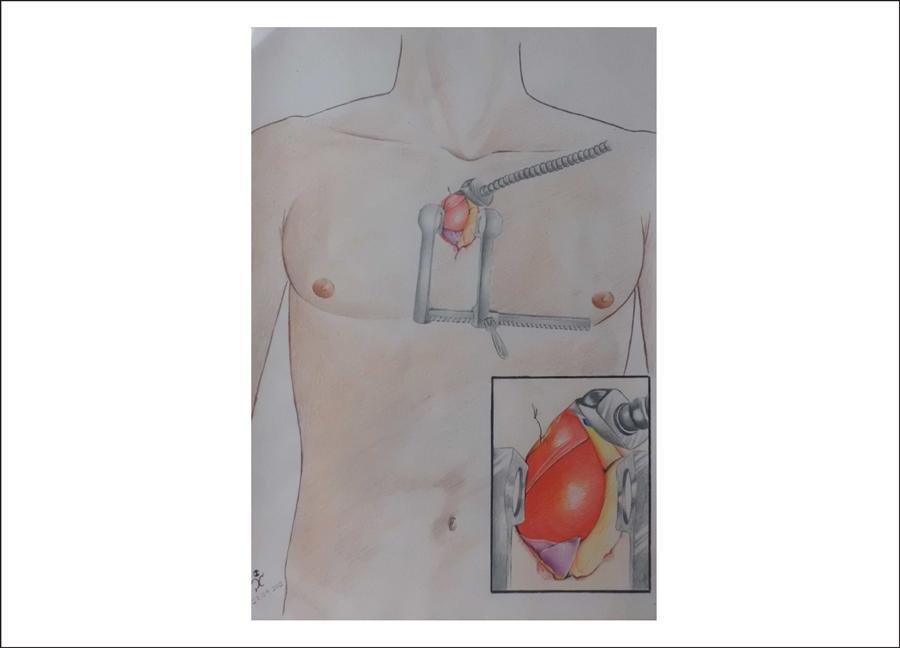
Fourteen patients were operated through the direct form and 88 through the video-assisted form. Between minimally invasive procedures in direct form, 13 had aortic valve disease. Between minimally invasive procedures in video-assisted forms, 43 had mitral valve disease, 41 atrial septal defect and four tumors. In relation to mitral valve disease, we replaced 26 and reconstructed 17 valves. Aortic clamp, extracorporeal and procedure times were, respectively, 91,6 ± 21,8, 112,7 ± 27,9 e 247,1 ± 20,3 minutes in minimally invasive procedures in direct form. Between minimally invasive procedures in video-assisted forms, 71,6 ± 29, 99,7 ± 32,6 e 226,1 ± 42,7 minutes. Considering intensive care and hospitalization times, these were 41,1 ± 14,7 hours and 4,6 ± 2 days in minimally invasive procedures in direct and 36,8 ± 16,3 hours and 4,3 ± 1,9 days in minimally invasive procedures in video-assisted forms procedures.

Conclusion:

Minimally invasive procedures were used in two forms – direct and video-assisted – with safety in the surgical treatment of video-assisted, atrial septal defect and tumors of the heart. These procedures seem to result in longer surgical variables. However, hospital recuperation was faster, independent of the access or pathology.

  • Heart Diseases
  • Surgical procedures, minimally invasive
  • video-assisted surgery
Read Full Article
Creative Commons Attribution (CC BY) Creative Commons license
10/02/2014 DOI: 10.5935/abc.20140004 Views 1
Chart 1
Artigo Original

Prevalence of Metabolic Syndrome in Elderly and Agreement among Four Diagnostic Criteria

Maria Auxiliadora Nogueira Saad et al. Gilberto Perez Cardoso Wolney de Andrade Martins Luis Guillermo Coca Velarde Rubens Antunes da Cruz Filho

Background:

Metabolic syndrome (MS) is an aggregation of risk factors that increase the incidence of cardiovascular events and diabetes mellitus (DM). Population aging is accompanied by higher prevalence of MS, which varies depending on the population studied and the diagnostic criteria used.

Objective:

To determine prevalence of MS in the elderly using four diagnostic criteria and agreement between them.

Methods:

Cross-sectional study on 243 patients older than 60 years (180 women) in Niterói, RJ. They were evaluated by clinical examination, fasting glucose, fasting insulin, lipid profile and anthropometric measurements – weight, height, waist circumference and waist/hip ratio. Prevalence of MS was estimated by World Health Organization (WHO) modified, National Cholesterol Education Program – Adult Treatment Panel III (NCEP-ATP III), International Diabetes Federation (IDF) and Joint Interim Statement (JIS) criteria.

Results:

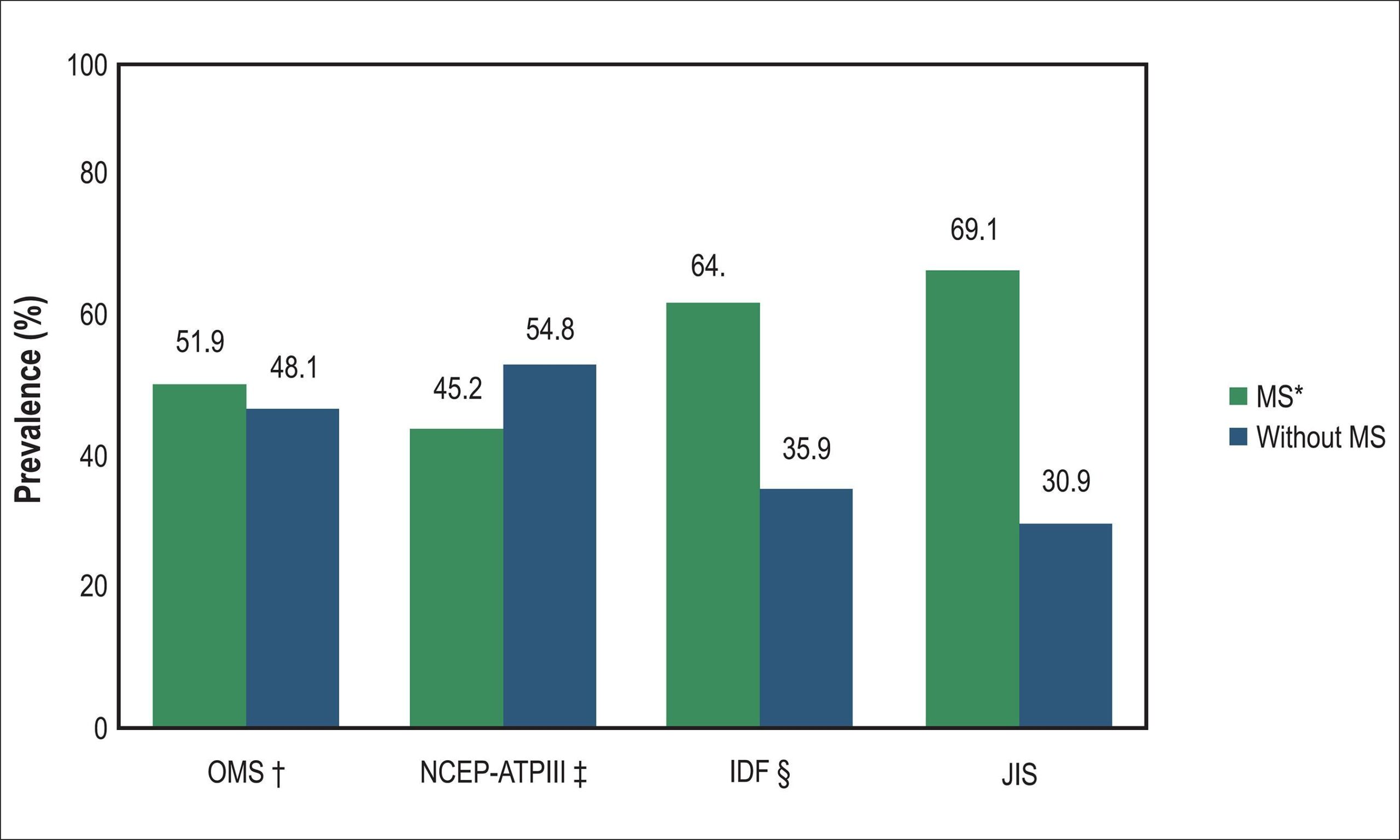
Prevalence was high with the four criteria WHO (51.9%), NCEP-ATPIII (45.2%), IDF (64.1%) and JIS (69.1%), and agreement between criteria by kappa was moderate in almost all comparisons WHO vs. IDF (k = 0.47;95% confidence interval (CI), 0.35 to 0.58); WHO vs. NCEP-ATPIII (k = 0.51; 95% CI, 0.40 to 0.61); WHO vs. JIS (k = 0.45; 95% CI, 0.33 to 0.56); IDF vs. NCEP-ATPIII (k = 0.55; 95% CI, 0.45 to 0.65) and NCEP-ATPIII vs. JIS (k = 0.53; 95% CI, 0.43-0.64), except between IDF vs. JIS (K = 0.89;95% CI, 0.83 to 0.95), which was considered good.

Conclusion:

Prevalence of MS was high with the four diagnostic criteria, mainly by JIS. There was good agreement between JIS and IDF criteria and moderate among the others.

  • abdominal circumference
  • Aged
  • Metabolic Syndrome
  • Obesity
  • Prevalence
  • Risk Factors
Read Full Article
Creative Commons Attribution (CC BY) Creative Commons license
10/02/2014 DOI: 10.5935/abc.20140013 Views 1
Figure 1
Artigo Original

Stress Alone or associated with Ethanol Induces Prostanoid Release in Rat Aorta via α2-Adrenoceptor

Rafaela de Fátima Ferreira Baptista et al. Elane de Fátima Taipeiro Regina Helena Costa Queiroz Agnaldo Bruno Chies Sandra Cordellini

Background:

Stress and ethanol are both, independently, important cardiovascular risk factors.

Objective:

To evaluate the cardiovascular risk of ethanol consumption and stress exposure, isolated and in association, in male adult rats.

Methods:

Rats were separated into 4 groups: Control, ethanol (20% in drinking water for 6 weeks), stress (immobilization 1h day/5 days a week for 6 weeks) and stress/ethanol. Concentration-responses curves to noradrenaline – in the absence and presence of yohimbine, L-NAME or indomethacin – or to phenylephrine were determined in thoracic aortas with and without endothelium. EC50 and maximum response (n=8-12) were compared using two-way ANOVA/Bonferroni method.

Results:

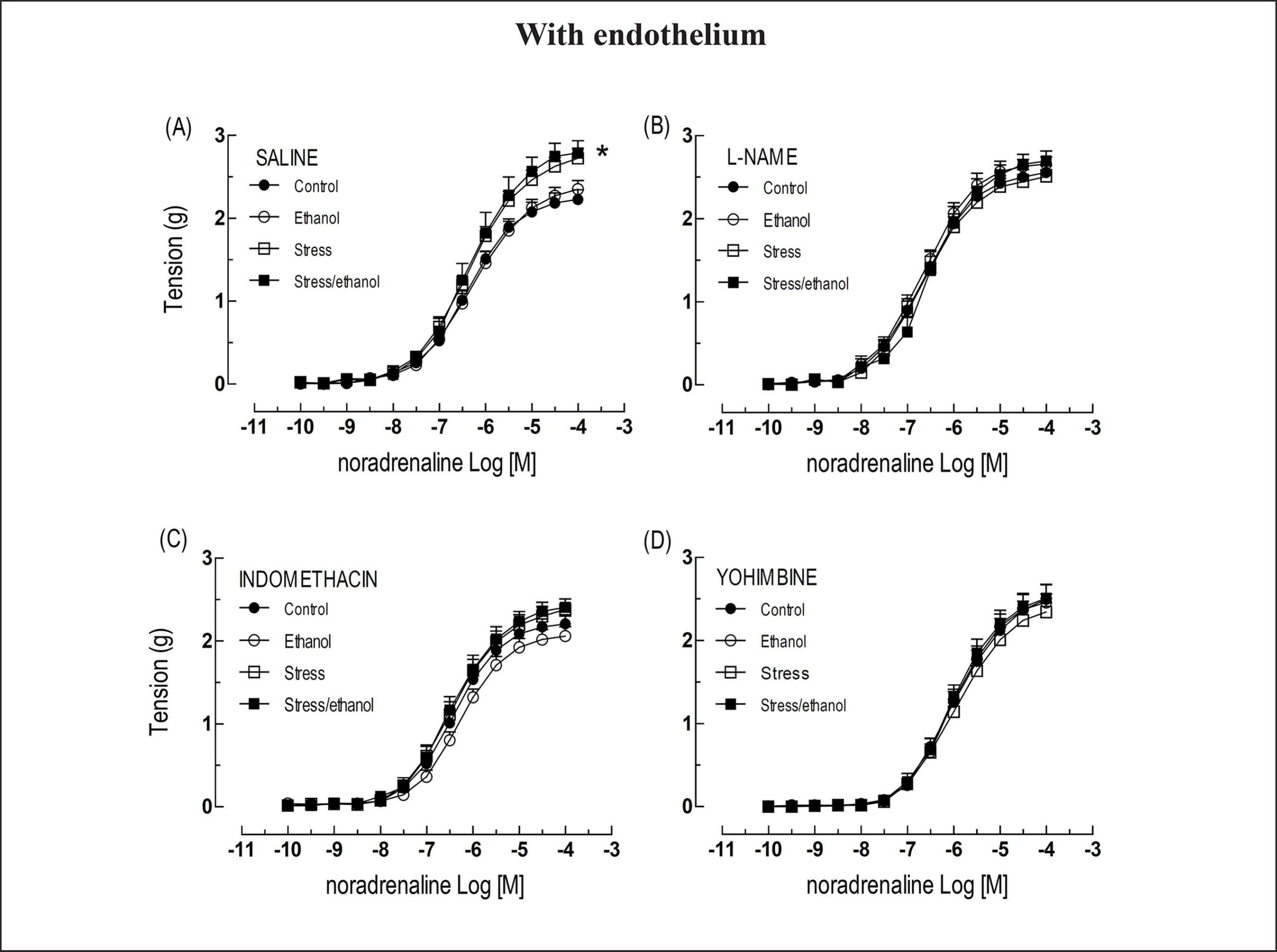
Either stress or stress in association with ethanol consumption increased the noradrenaline maximum responses in intact aortas. This hyper-reactivity was eliminated by endothelium removal or by the presence of either indomethacin or yohimbine, but was not altered by the presence of L-NAME. Meanwhile, ethanol consumption did not alter the reactivity to noradrenaline. The phenylephrine responses in aortas both with and without endothelium also remained unaffected regardless of protocol.

Conclusion:

Chronic stress increased rat aortic responses to noradrenaline. This effect is dependent upon the vascular endothelium and involves the release of vasoconstrictor prostanoids via stimulation of endothelial alpha-2 adrenoceptors. Moreover, chronic ethanol consumption appeared to neither influence noradrenaline responses in rat thoracic aorta, nor did it modify the increase of such responses observed as a consequence of stress exposure.

  • Adrenergic alpha-2 Receptor Agonists
  • Alcohol Drinking
  • Norepinephrine
  • Rats
  • Stress
Read Full Article
Creative Commons Attribution (CC BY) Creative Commons license
10/02/2014 DOI: 10.5935/abc.20140015
Figure 1
Artigo Original

Short-Term Thyroid Hormone Excess Affects the Heart but Does not Affect Adrenal Activity in Rats

Ariani Cavazzani Szkudlarek et al. Bruno Aldenucci Nelson Itiro Miyagui Ilana Kassouf Silva … Rosana Nogueira Moraes Helton Estrela Ramos Rosalva Tadeu Hochmuller Fogaça

Background:

Hyperthyroidism (Hy) exerts a broad range of influences on a variety of physiological parameters. Its disruptive effect on cardiovascular system is one of its most remarkable impacts. Moreover, Hy has been clinically associated with stress – induced hyperactivation of the hypothalamic-pituitary-adrenal axis.

Objective:

Evaluate the impact of short-term Hy on cardiac performance and adrenal activity of rats.

Methods:

Induction of Hy in Wistar rats through injections of T3 (150 µg/kg) for 10 days (hyperthyroid group – HG) or vehicle (control group). The cardiovascular performance was evaluated by: echocardiography (ECHO); heart weight/body weight (mg/gr) ratio; contractility of isolated papillary muscles (IPM) and direct measurement of blood pressures. Adrenal activity was evaluated by adrenal weight/body weight (mg/gr) ratio and 24-hour fecal corticosterone (FC) levels on the, 5th and 10th days of T3 treatment.

Results:

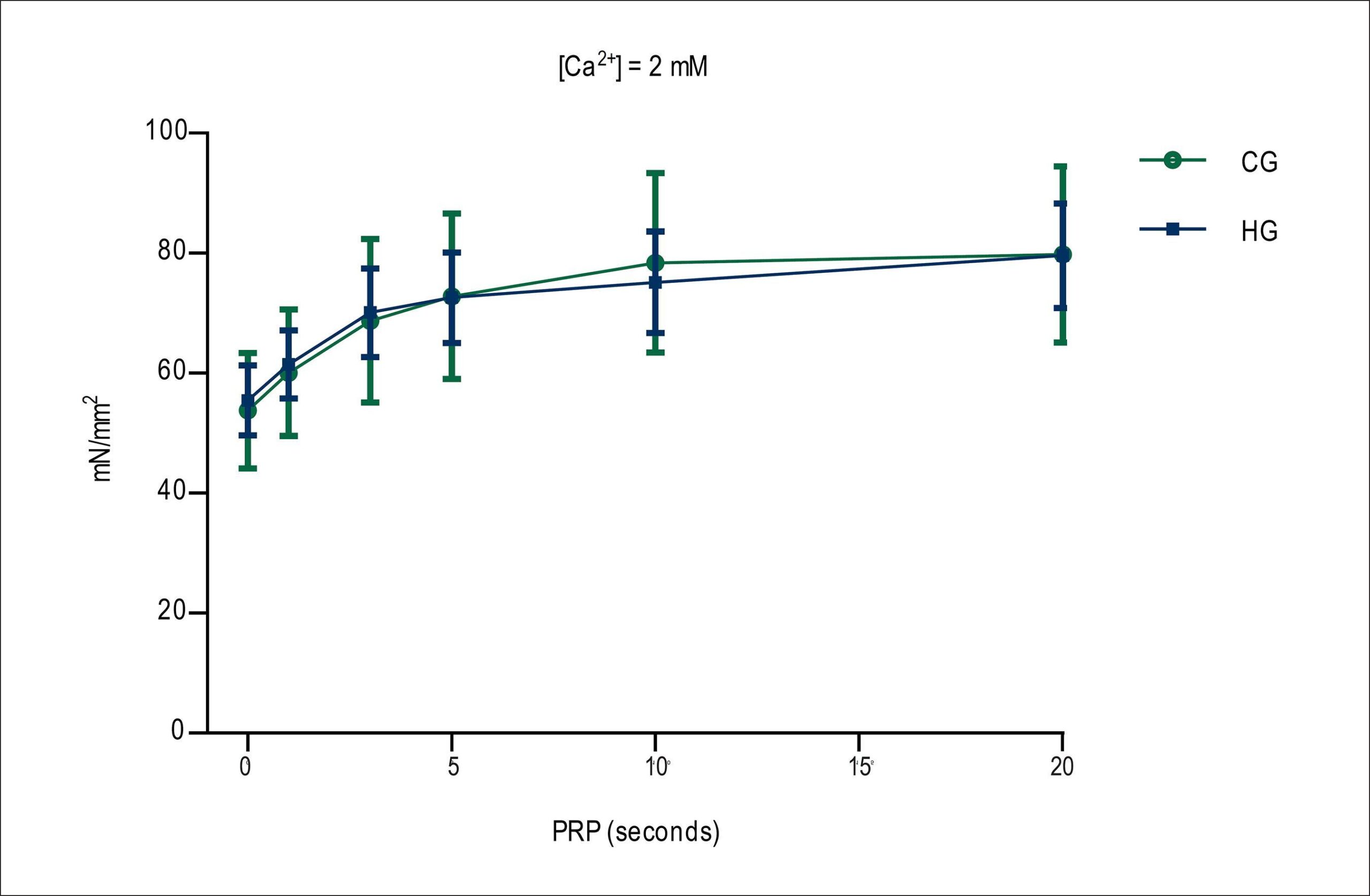
In HG, the ECHO showed reduction of the End Systolic and End Diastolic Volumes, Ejection, Total Diastolic and Isovolumic Relaxation Times, Diastolic and Systolic Areas and E/A ratio. Heart Rate, Ejection Fraction and Cardiac Output increased. The heart weight/body weight ratio was higher. Similarly, in IPM, the maximum rate of force decay during relaxation was higher in all extracellular calcium concentrations. Systolic blood pressure (SBP) levels were higher. (p ≤ 0.05). On the other hand, there was no difference in the adrenal weight/body weight ratio or in the 24-hour FC levels.

Conclusions:

Hy induces positive inotropic, chronotropic and lusitropic effects on the heart by direct effects of T3 and increases SBP. Those alterations are not correlated with changes in the adrenal activity.

  • Adrenal Glands
  • Cardiovascular Diseases
  • Hyperthyroidism / complications
  • Rats
  • Thyroid Hormones
Read Full Article
Creative Commons Attribution (CC BY) Creative Commons license
10/02/2014 DOI: 10.5935/abc.20140014 Views 1
Figure 1
Artigo Original

Echocardiographic Parameters and Survival in Chagas Heart Disease with Severe Systolic Dysfunction

Daniela do Carmo Rassi et al. Marcelo Luiz Campos Vieira Ana Lúcia Martins Arruda Viviane Tiemi Hotta … Rogério Gomes Furtado Danilo Teixeira Rassi Salvador Rassi

Background:

Echocardiography provides important information on the cardiac evaluation of patients with heart failure. The identification of echocardiographic parameters in severe Chagas heart disease would help implement treatment and assess prognosis.

Objective:

To correlate echocardiographic parameters with the endpoint cardiovascular mortality in patients with ejection fraction < 35%.

Methods:

Study with retrospective analysis of pre-specified echocardiographic parameters prospectively collected from 60 patients included in the Multicenter Randomized Trial of Cell Therapy in Patients with Heart Diseases (Estudo Multicêntrico Randomizado de Terapia Celular em Cardiopatias) – Chagas heart disease arm. The following parameters were collected: left ventricular systolic and diastolic diameters and volumes; ejection fraction; left atrial diameter; left atrial volume; indexed left atrial volume; systolic pulmonary artery pressure; integral of the aortic flow velocity; myocardial performance index; rate of increase of left ventricular pressure; isovolumic relaxation time; E, A, Em, Am and Sm wave velocities; E wave deceleration time; E/A and E/Em ratios; and mitral regurgitation.

Results:

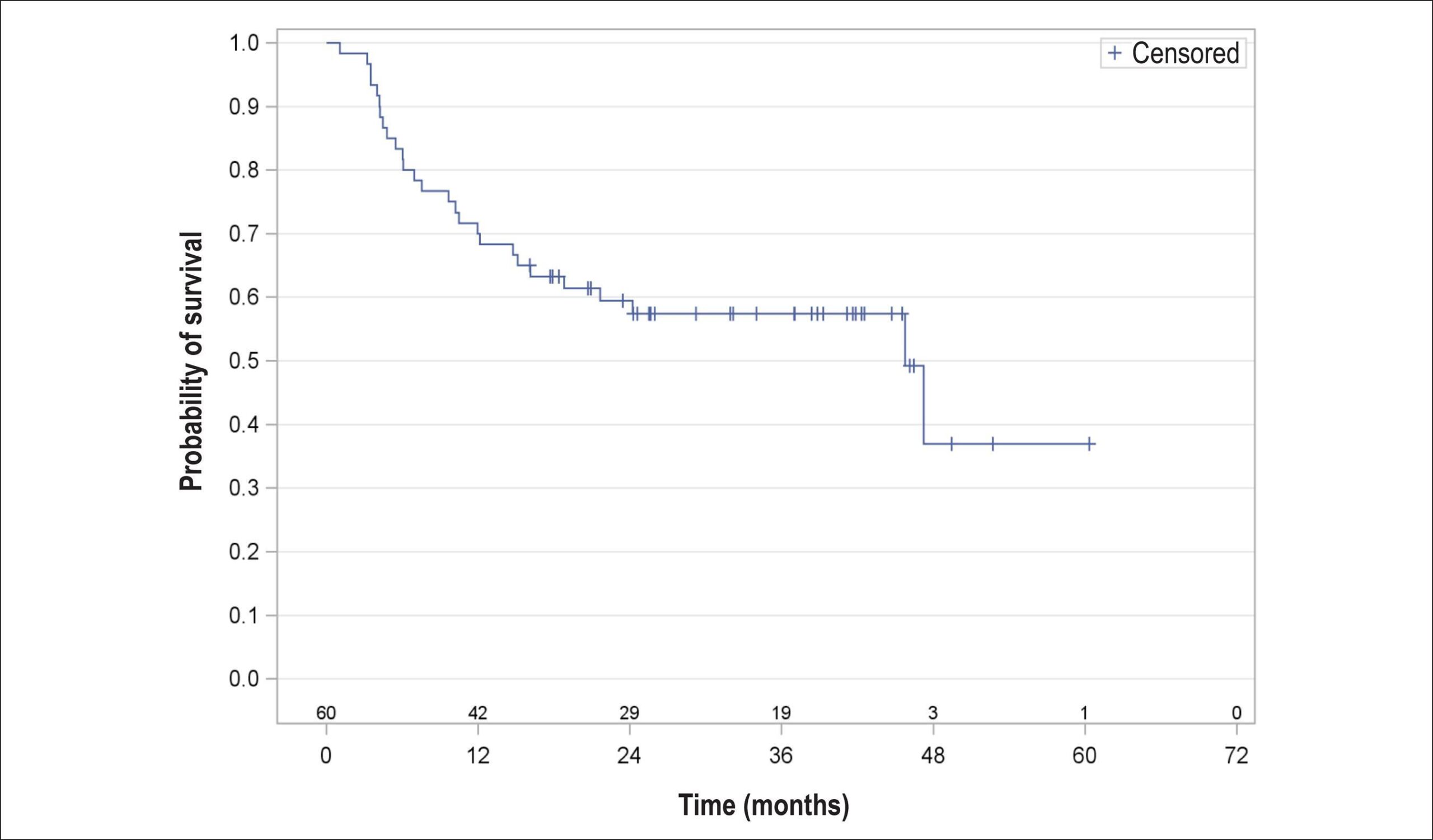
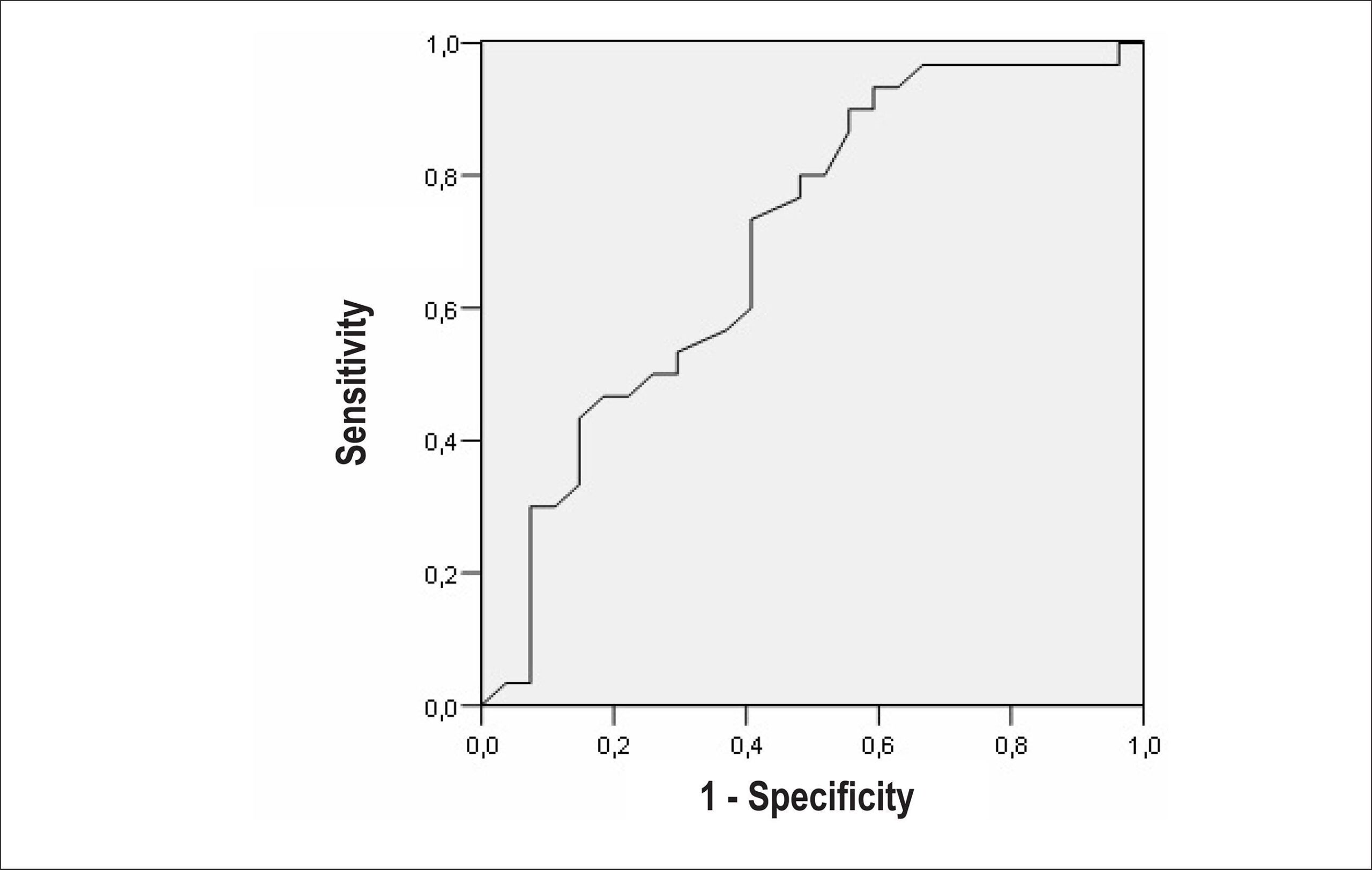
In the mean 24.18-month follow-up, 27 patients died. The mean ejection fraction was 26.6 ± 5.34%. In the multivariate analysis, the parameters ejection fraction (HR = 1.114; p = 0.3704), indexed left atrial volume (HR = 1.033; p 70.71 mL/m2 were associated with a significant increase in mortality (log rank p < 0.0001).

Conclusion:

The indexed left atrial volume was the only independent predictor of mortality in this population of Chagasic patients with severe systolic dysfunction.

  • Chagas Cardiomyopathy
  • Chagas disease
  • Echocardiography, Diagnosis
  • Survivorship (Public Health)
Read Full Article
Creative Commons Attribution (CC BY) Creative Commons license
10/02/2014 DOI: 10.5935/abc.20140003 Views 1
Figure 1
Artigo Original

Disturbed Left Atrial Function is Associated with Paroxysmal Atrial Fibrillation in Hypertension

Erhan Tenekecioglu et al. Fahriye Vatansever Agca Ozlem Arican Ozluk Kemal Karaagac … Serafettin Demir Tezcan Peker Mustafa Kuzeytemiz Muhammed Senturk Mustafa Yılmaz

Background:

Hypertension is the most prevalent and modifiable risk factor for atrial fibrillation. The pressure overload in the left atrium induces pathophysiological changes leading to alterations in contractile function and electrical properties.

Objective:

In this study our aim was to assess left atrial function in hypertensive patients to determine the association between left atrial function with paroxysmal atrial fibrillation (PAF).

Method:

We studied 57 hypertensive patients (age: 53±4 years; left ventricular ejection fraction: 76±6.7%), including 30 consecutive patients with PAF and 30 age-matched control subjects. Left atrial (LA) volumes were measured using the modified Simpson’s biplane method. Three types of LA volume were determined: maximal LA(LAVmax), preatrial contraction LA(LAVpreA) and minimal LA volume(LAVmin). LA emptying functions were calculated. LA total emptying volume = LAVmax−LAVmin and the LA total EF = (LAVmax-LAVmin )/LAVmax, LA passive emptying volume = LAVmax− LAVpreA and the LA passive EF = (LAVmax-LAVpreA)/LAVmax, LA active emptying volume = LAVpreA−LAVmin and LA active EF = (LAVpreA-LAVmin )/LAVpreA.

Results:

The hypertensive period is longer in hypertensive group with PAF. LAVmax significantly increased in hypertensive group with PAF when compared to hypertensive group without PAF (p=0.010). LAAEF was significantly decreased in hypertensive group with PAF as compared to hypertensive group without PAF (p=0.020). A’ was decreased in the hypertensive group with PAF when compared to those without PAF (p = 0.044).

Conclusion:

Increased LA volume and impaired LA active emptying function was associated with PAF in untreated hypertensive patients. Longer hypertensive period is associated with PAF.

  • Atrial Fibrillation/physiopathology
  • Atrial Function, Left
  • Hypertension
Read Full Article
Creative Commons Attribution (CC BY) Creative Commons license
01/02/2014 DOI: 10.5935/abc.20140009

How to cite this article

EndNote RIS

Electronic Document Format (Vancouver)

Finsterer J, Stöllberger C. Dextroversion and Noncompaction. Arquivos Brasileiros de Cardiologia 2014;102(3):307-8.

Electronic Document Format (ABNT)

Finsterer, Josef; Stöllberger, Claudia. Dextroversion and Noncompaction. Arquivos Brasileiros de Cardiologia, v. 102, n. 3, p. 307-308, Feb. 2014.

Electronic Document Format (APA)

Finsterer, J., & Stöllberger, C. (2014). Dextroversion and Noncompaction. Arquivos Brasileiros de Cardiologia, 102(3), 307-308.

Electronic Document Format (ISO)

Finsterer, Josef and Stöllberger, Claudia. Dextroversion and Noncompaction. Arquivos Brasileiros de Cardiologia [online]. 2014, vol. 102, n. 3, [cited 2026-10-14], pp. 307-308. Available from: <https://journals.cardiol.br/en/article/dextroversion-and-noncompaction/>. ISSN 0066-782X

EndNote RIS

Electronic Document Format (Vancouver)

Marsiglia JDC, Pereira AC. Hypertrophic Cardiomyopathy: How do Mutations Lead to Disease?. Arquivos Brasileiros de Cardiologia 2014;102(3):295-304.

Electronic Document Format (ABNT)

Marsiglia, Júlia Daher Carneiro; Pereira, Alexandre Costa. Hypertrophic Cardiomyopathy: How do Mutations Lead to Disease?. Arquivos Brasileiros de Cardiologia, v. 102, n. 3, p. 295-304, Feb. 2014.

Electronic Document Format (APA)

Marsiglia, J. D. C., & Pereira, A. C. (2014). Hypertrophic Cardiomyopathy: How do Mutations Lead to Disease?. Arquivos Brasileiros de Cardiologia, 102(3), 295-304.

Electronic Document Format (ISO)

Marsiglia, Júlia Daher Carneiro and Pereira, Alexandre Costa. Hypertrophic Cardiomyopathy: How do Mutations Lead to Disease?. Arquivos Brasileiros de Cardiologia [online]. 2014, vol. 102, n. 3, [cited 2026-10-14], pp. 295-304. Available from: <https://journals.cardiol.br/en/article/hypertrophic-cardiomyopathy-how-do-mutations-lead-to-disease/>. ISSN 0066-782X

EndNote RIS

Electronic Document Format (Vancouver)

Póvoa R, Barroso WS, Brandão AA, Jardim PCV, Barroso O, Passarelli Jr. O, Gemelli JR, et al. I Brazilian Position Paper on Antihypertensive Drug Combination. Arquivos Brasileiros de Cardiologia 2014;102(3):203-10.

Electronic Document Format (ABNT)

Póvoa, Rui; Barroso, Weimar Sebba; Brandão, Andrea A; Jardim, Paulo Cesar Veiga; Barroso, Oswaldo; Passarelli Jr., Oswaldo; Gemelli, João Roberto; Feitosa, Audes; Jardim, Thiago Veiga; Carneiro, Sergio Baiocchi; Amodeo, Celso; Moreira Filho, Osni; Nogueira, Armando da Rocha; Morais, Nelson Siqueira de; Scala, Luiz Cesar Nazário; Gonzaga, Carolina; Souza, Dilma do Socorro Moraes de; Paiva, Annelise Machado Gomes de; Malachias, Marcus Vinicius Bolivar; Mion Jr., Décio; Mota-Gomes, Marco Antônio; Barbosa, Eduardo Costa Duarte; Sousa, Marcio Gonçalves de; Bianco, Henrique Tria; Fonseca, Francisco Antonio Helfenstein; Kalil, Marcio; Miranda, Roberto Dischinger; Uehara, Carlos André; Sanjuliani, Antônio Felipe. I Brazilian Position Paper on Antihypertensive Drug Combination. Arquivos Brasileiros de Cardiologia, v. 102, n. 3, p. 203-210, Feb. 2014.

Electronic Document Format (APA)

Póvoa, R., Barroso, W. S., Brandão, A. A., Jardim, P. C. V., Barroso, O., Passarelli Jr., O., Gemelli, J. R., Feitosa, A., Jardim, T. V., Carneiro, S. B., Amodeo, C., Moreira Filho, O., Nogueira, A. R., Morais, N. S. , Scala, L. C. N., Gonzaga, C., Souza, D. S. M. , Paiva, A. M. G. , Malachias, M. V. B., Mion Jr., D., Mota-Gomes, M. A., Barbosa, E. C. D., Sousa, M. G. , Bianco, H. T., Fonseca, F. A. H., Kalil, M., Miranda, R. D., Uehara, C. A., & Sanjuliani, A. F. (2014). I Brazilian Position Paper on Antihypertensive Drug Combination. Arquivos Brasileiros de Cardiologia, 102(3), 203-210.

Electronic Document Format (ISO)

Póvoa, Rui and Barroso, Weimar Sebba and Brandão, Andrea A and Jardim, Paulo Cesar Veiga and Barroso, Oswaldo and Passarelli Jr., Oswaldo and Gemelli, João Roberto and Feitosa, Audes and Jardim, Thiago Veiga and Carneiro, Sergio Baiocchi and Amodeo, Celso and Moreira Filho, Osni and Nogueira, Armando da Rocha and Morais, Nelson Siqueira de and Scala, Luiz Cesar Nazário and Gonzaga, Carolina and Souza, Dilma do Socorro Moraes de and Paiva, Annelise Machado Gomes de and Malachias, Marcus Vinicius Bolivar and Mion Jr., Décio and Mota-Gomes, Marco Antônio and Barbosa, Eduardo Costa Duarte and Sousa, Marcio Gonçalves de and Bianco, Henrique Tria and Fonseca, Francisco Antonio Helfenstein and Kalil, Marcio and Miranda, Roberto Dischinger and Uehara, Carlos André and Sanjuliani, Antônio Felipe. I Brazilian Position Paper on Antihypertensive Drug Combination. Arquivos Brasileiros de Cardiologia [online]. 2014, vol. 102, n. 3, [cited 2026-10-14], pp. 203-210. Available from: <https://journals.cardiol.br/en/article/i-brazilian-position-paper-on-antihypertensive-drug-combination/>. ISSN 0066-782X

EndNote RIS

Electronic Document Format (Vancouver)

Ochiai ME, Lopes NH, Buzo CG, Pierri H. Atypical Manifestation of Myocardial Ischemia in the Elderly. Arquivos Brasileiros de Cardiologia 2014;102(3):31.

Electronic Document Format (ABNT)

Ochiai, Marcelo E.; Lopes, Neusa Helena; Buzo, Carolina Giusti; Pierri, Humberto. Atypical Manifestation of Myocardial Ischemia in the Elderly. Arquivos Brasileiros de Cardiologia, v. 102, n. 3, 31, Feb. 2014.

Electronic Document Format (APA)

Ochiai, M. E., Lopes, N. H., Buzo, C. G., & Pierri, H. (2014). Atypical Manifestation of Myocardial Ischemia in the Elderly. Arquivos Brasileiros de Cardiologia, 102(3), 31.

Electronic Document Format (ISO)

Ochiai, Marcelo E. and Lopes, Neusa Helena and Buzo, Carolina Giusti and Pierri, Humberto. Atypical Manifestation of Myocardial Ischemia in the Elderly. Arquivos Brasileiros de Cardiologia [online]. 2014, vol. 102, n. 3, [cited 2026-10-14], 31. Available from: <https://journals.cardiol.br/en/article/atypical-manifestation-of-myocardial-ischemia-in-the-elderly/>. ISSN 0066-782X

EndNote RIS

Electronic Document Format (Vancouver)

. September 2013 Issue, vol. 101 (4), Suppl. 1, pages 1-22. Arquivos Brasileiros de Cardiologia 2014;102(3):309.

Electronic Document Format (ABNT)

. September 2013 Issue, vol. 101 (4), Suppl. 1, pages 1-22. Arquivos Brasileiros de Cardiologia, v. 102, n. 3, p. 309-309, Feb. 2014.

Electronic Document Format (APA)

(2014). September 2013 Issue, vol. 101 (4), Suppl. 1, pages 1-22. Arquivos Brasileiros de Cardiologia, 102(3), 309-309.

Electronic Document Format (ISO)

. September 2013 Issue, vol. 101 (4), Suppl. 1, pages 1-22. Arquivos Brasileiros de Cardiologia [online]. 2014, vol. 102, n. 3, [cited 2026-10-14], pp. 309-309. Available from: <https://journals.cardiol.br/en/article/september-2013-issue-vol-101-4-suppl-1-pages-1-22/>. ISSN 0066-782X

EndNote RIS

Electronic Document Format (Vancouver)

Lindemberg S, Chermont S, Quintão M, Derossi M, Guilhon S, Bernardez S, Marchese L, et al. Heart Rate Recovery in the First Minute at the Six-Minute Walk Test in Patients with Heart Failure. Arquivos Brasileiros de Cardiologia 2014;102(3):279-87.

Electronic Document Format (ABNT)

Lindemberg, Sabrina; Chermont, Sergio; Quintão, Mônica; Derossi, Milena; Guilhon, Sergio; Bernardez, Sabrina; Marchese, Luana; Martins, Wolney; Nóbrega, Antônio Claudio L.; Mesquita, Evandro Tinoco. Heart Rate Recovery in the First Minute at the Six-Minute Walk Test in Patients with Heart Failure. Arquivos Brasileiros de Cardiologia, v. 102, n. 3, p. 279-287, Feb. 2014.

Electronic Document Format (APA)

Lindemberg, S., Chermont, S., Quintão, M., Derossi, M., Guilhon, S., Bernardez, S., Marchese, L., Martins, W., Nóbrega, A. C. L., & Mesquita, E. T. (2014). Heart Rate Recovery in the First Minute at the Six-Minute Walk Test in Patients with Heart Failure. Arquivos Brasileiros de Cardiologia, 102(3), 279-287.

Electronic Document Format (ISO)

Lindemberg, Sabrina and Chermont, Sergio and Quintão, Mônica and Derossi, Milena and Guilhon, Sergio and Bernardez, Sabrina and Marchese, Luana and Martins, Wolney and Nóbrega, Antônio Claudio L. and Mesquita, Evandro Tinoco. Heart Rate Recovery in the First Minute at the Six-Minute Walk Test in Patients with Heart Failure. Arquivos Brasileiros de Cardiologia [online]. 2014, vol. 102, n. 3, [cited 2026-10-14], pp. 279-287. Available from: <https://journals.cardiol.br/en/article/heart-rate-recovery-in-the-first-minute-at-the-six-minute-walk-test-in-patients-with-heart-failure/>. ISSN 0066-782X

EndNote RIS

Electronic Document Format (Vancouver)

Redondo ACC, Fuenmayor G, Shiraishi KS, Fontes SRF, Elias PF, Souza R, Jatene IB, et al. Sildenafil for Noncompaction Cardiomyopathy Treatment in a Child: Case Report. Arquivos Brasileiros de Cardiologia 2014;102(3):27.

Electronic Document Format (ABNT)

Redondo, Ana Carolina Costa; Fuenmayor, Gabriela; Shiraishi, Karen Saori; Fontes, Simone Rolim F; Elias, Patrícia Figueiredo; Souza, Rogerio; Jatene, Ieda Biscegli. Sildenafil for Noncompaction Cardiomyopathy Treatment in a Child: Case Report. Arquivos Brasileiros de Cardiologia, v. 102, n. 3, 27, Feb. 2014.

Electronic Document Format (APA)

Redondo, A. C. C., Fuenmayor, G., Shiraishi, K. S., Fontes, S. R. F., Elias, P. F., Souza, R., & Jatene, I. B. (2014). Sildenafil for Noncompaction Cardiomyopathy Treatment in a Child: Case Report. Arquivos Brasileiros de Cardiologia, 102(3), 27.

Electronic Document Format (ISO)

Redondo, Ana Carolina Costa and Fuenmayor, Gabriela and Shiraishi, Karen Saori and Fontes, Simone Rolim F and Elias, Patrícia Figueiredo and Souza, Rogerio and Jatene, Ieda Biscegli. Sildenafil for Noncompaction Cardiomyopathy Treatment in a Child: Case Report. Arquivos Brasileiros de Cardiologia [online]. 2014, vol. 102, n. 3, [cited 2026-10-14], 27. Available from: <https://journals.cardiol.br/en/article/sildenafil-for-noncompaction-cardiomyopathy-treatment-in-a-child-case-report/>. ISSN 0066-782X

EndNote RIS

Electronic Document Format (Vancouver)

Takahagi VCM, Costa DC, Crescêncio JC, Gallo Junior L. Physical Training as Non-Pharmacological Treatment of Neurocardiogenic Syncope. Arquivos Brasileiros de Cardiologia 2014;102(3):288-94.

Electronic Document Format (ABNT)

Takahagi, Vanessa Cristina Miranda; Costa, Daniela Caetano; Crescêncio, Júlio César; Gallo Junior, Lourenço. Physical Training as Non-Pharmacological Treatment of Neurocardiogenic Syncope. Arquivos Brasileiros de Cardiologia, v. 102, n. 3, p. 288-294, Feb. 2014.

Electronic Document Format (APA)

Takahagi, V. C. M., Costa, D. C., Crescêncio, J. C., & Gallo Junior, L. (2014). Physical Training as Non-Pharmacological Treatment of Neurocardiogenic Syncope. Arquivos Brasileiros de Cardiologia, 102(3), 288-294.

Electronic Document Format (ISO)

Takahagi, Vanessa Cristina Miranda and Costa, Daniela Caetano and Crescêncio, Júlio César and Gallo Junior, Lourenço. Physical Training as Non-Pharmacological Treatment of Neurocardiogenic Syncope. Arquivos Brasileiros de Cardiologia [online]. 2014, vol. 102, n. 3, [cited 2026-10-14], pp. 288-294. Available from: <https://journals.cardiol.br/en/article/physical-training-as-non-pharmacological-treatment-of-neurocardiogenic-syncope/>. ISSN 0066-782X

EndNote RIS

Electronic Document Format (Vancouver)

Yalcinkaya E, Celik M, Buyukturan G. Assessment of Natriuretic Peptides: The Heart Should Be Evaluated as a Whole. Arquivos Brasileiros de Cardiologia 2014;102(3):305-6.

Electronic Document Format (ABNT)

Yalcinkaya, Emre; Celik, Murat; Buyukturan, Galip. Assessment of Natriuretic Peptides: The Heart Should Be Evaluated as a Whole. Arquivos Brasileiros de Cardiologia, v. 102, n. 3, p. 305-306, Feb. 2014.

Electronic Document Format (APA)

Yalcinkaya, E., Celik, M., & Buyukturan, G. (2014). Assessment of Natriuretic Peptides: The Heart Should Be Evaluated as a Whole. Arquivos Brasileiros de Cardiologia, 102(3), 305-306.

Electronic Document Format (ISO)

Yalcinkaya, Emre and Celik, Murat and Buyukturan, Galip. Assessment of Natriuretic Peptides: The Heart Should Be Evaluated as a Whole. Arquivos Brasileiros de Cardiologia [online]. 2014, vol. 102, n. 3, [cited 2026-10-14], pp. 305-306. Available from: <https://journals.cardiol.br/en/article/assessment-of-natriuretic-peptides-the-heart-should-be-evaluated-as-a-whole/>. ISSN 0066-782X

EndNote RIS

Electronic Document Format (Vancouver)

Atik E. Case 2/2014 – 20-year-old Woman with Corrected Transposition, Pulmonary Atresia and Aortopulmonary Collateral Arteries. Arquivos Brasileiros de Cardiologia 2014;102(3):24.

Electronic Document Format (ABNT)

Atik, Edmar. Case 2/2014 – 20-year-old Woman with Corrected Transposition, Pulmonary Atresia and Aortopulmonary Collateral Arteries. Arquivos Brasileiros de Cardiologia, v. 102, n. 3, 24, Feb. 2014.

Electronic Document Format (APA)

Atik, E. (2014). Case 2/2014 – 20-year-old Woman with Corrected Transposition, Pulmonary Atresia and Aortopulmonary Collateral Arteries. Arquivos Brasileiros de Cardiologia, 102(3), 24.

Electronic Document Format (ISO)

Atik, Edmar. Case 2/2014 – 20-year-old Woman with Corrected Transposition, Pulmonary Atresia and Aortopulmonary Collateral Arteries. Arquivos Brasileiros de Cardiologia [online]. 2014, vol. 102, n. 3, [cited 2026-10-14], 24. Available from: <https://journals.cardiol.br/en/article/case-2-2014-20-year-old-woman-with-corrected-transposition-pulmonary-atresia-and-aortopulmonary-collateral-arteries/>. ISSN 0066-782X

EndNote RIS

Electronic Document Format (Vancouver)

Romano ER, Liguori IM, Farran JA, Egito RMP, Romano MLP, Werneck VA, Barbosa MAO, et al. Prognostic Score for Acute Coronary Syndrome in a Private Terciary Hospital. Arquivos Brasileiros de Cardiologia 2014;102(3):226-3.

Electronic Document Format (ABNT)

Romano, Edson Renato; Liguori, Ieda Maria; Farran, Jorge Alcantara; Egito, Rosa Maria Pimentel do; Romano, Marcelo Luz Pereira; Werneck, Vinícius Avellar; Barbosa, Marco Antonio Oliveira; Egito, Enilton Sergio Tabosa do; Cavalcanti, Alexandre Biasi; Piegas, Leopoldo Soares. Prognostic Score for Acute Coronary Syndrome in a Private Terciary Hospital. Arquivos Brasileiros de Cardiologia, v. 102, n. 3, p. 226-236, Feb. 2014.

Electronic Document Format (APA)

Romano, E. R., Liguori, I. M., Farran, J. A., Egito, R. M. P. , Romano, M. L. P., Werneck, V. A., Barbosa, M. A. O., Egito, E. S. T. , Cavalcanti, A. B., & Piegas, L. S. (2014). Prognostic Score for Acute Coronary Syndrome in a Private Terciary Hospital. Arquivos Brasileiros de Cardiologia, 102(3), 226-236.

Electronic Document Format (ISO)

Romano, Edson Renato and Liguori, Ieda Maria and Farran, Jorge Alcantara and Egito, Rosa Maria Pimentel do and Romano, Marcelo Luz Pereira and Werneck, Vinícius Avellar and Barbosa, Marco Antonio Oliveira and Egito, Enilton Sergio Tabosa do and Cavalcanti, Alexandre Biasi and Piegas, Leopoldo Soares. Prognostic Score for Acute Coronary Syndrome in a Private Terciary Hospital. Arquivos Brasileiros de Cardiologia [online]. 2014, vol. 102, n. 3, [cited 2026-10-14], pp. 226-236. Available from: <https://journals.cardiol.br/en/article/prognostic-score-for-acute-coronary-syndrome-in-a-private-terciary-hospital/>. ISSN 0066-782X

EndNote RIS

Electronic Document Format (Vancouver)

Menezes IAC, Santos MRV, Cunha CLP. Evaluation of Endothelial Function on Atherosclerosis using Perfusion Index from Pulse Oximeter. Arquivos Brasileiros de Cardiologia 2014;102(3):237-44.

Electronic Document Format (ABNT)

Menezes, Igor Alexandre Côrtes de; Santos, Márcio Roberto Viana; Cunha, Cláudio Leinig Pereira da. Evaluation of Endothelial Function on Atherosclerosis using Perfusion Index from Pulse Oximeter. Arquivos Brasileiros de Cardiologia, v. 102, n. 3, p. 237-244, Feb. 2014.

Electronic Document Format (APA)

Menezes, I. A. C. , Santos, M. R. V., & Cunha, C. L. P. (2014). Evaluation of Endothelial Function on Atherosclerosis using Perfusion Index from Pulse Oximeter. Arquivos Brasileiros de Cardiologia, 102(3), 237-244.

Electronic Document Format (ISO)

Menezes, Igor Alexandre Côrtes de and Santos, Márcio Roberto Viana and Cunha, Cláudio Leinig Pereira da. Evaluation of Endothelial Function on Atherosclerosis using Perfusion Index from Pulse Oximeter. Arquivos Brasileiros de Cardiologia [online]. 2014, vol. 102, n. 3, [cited 2026-10-14], pp. 237-244. Available from: <https://journals.cardiol.br/en/article/evaluation-of-endothelial-function-on-atherosclerosis-using-perfusion-index-from-pulse-oximeter/>. ISSN 0066-782X

EndNote RIS

Electronic Document Format (Vancouver)

Castro Neto JV, Melo EC, Silva JF, Rebouças LL, Corrêa LC, Germano AQ, Machado JJA, et al. Minimally Invasive Procedures – Direct and Video-Assisted Forms in the Treatment of Heart Diseases. Arquivos Brasileiros de Cardiologia 2014;102(3):219-25.

Electronic Document Format (ABNT)

Castro Neto, Josué Viana; Melo, Emanuel Carvalho; Silva, Juliana Fernandes; Rebouças, Leonardo Lemos; Corrêa, Larissa Chagas; Germano, Amanda de Queiroz; Machado, João José Aquino. Minimally Invasive Procedures – Direct and Video-Assisted Forms in the Treatment of Heart Diseases. Arquivos Brasileiros de Cardiologia, v. 102, n. 3, p. 219-225, Feb. 2014.

Electronic Document Format (APA)

Castro Neto, J. V., Melo, E. C., Silva, J. F., Rebouças, L. L., Corrêa, L. C., Germano, A. Q., & Machado, J. J. A. (2014). Minimally Invasive Procedures – Direct and Video-Assisted Forms in the Treatment of Heart Diseases. Arquivos Brasileiros de Cardiologia, 102(3), 219-225.

Electronic Document Format (ISO)

Castro Neto, Josué Viana and Melo, Emanuel Carvalho and Silva, Juliana Fernandes and Rebouças, Leonardo Lemos and Corrêa, Larissa Chagas and Germano, Amanda de Queiroz and Machado, João José Aquino. Minimally Invasive Procedures – Direct and Video-Assisted Forms in the Treatment of Heart Diseases. Arquivos Brasileiros de Cardiologia [online]. 2014, vol. 102, n. 3, [cited 2026-10-14], pp. 219-225. Available from: <https://journals.cardiol.br/en/article/minimally-invasive-procedures-direct-and-video-assisted-forms-in-the-treatment-of-heart-diseases/>. ISSN 0066-782X

EndNote RIS

Electronic Document Format (Vancouver)

Saad MAN, Cardoso GP, Martins WA, Velarde LGC, Cruz Filho RA. Prevalence of Metabolic Syndrome in Elderly and Agreement among Four Diagnostic Criteria. Arquivos Brasileiros de Cardiologia 2014;102(3):263-9.

Electronic Document Format (ABNT)

Saad, Maria Auxiliadora Nogueira; Cardoso, Gilberto Perez; Martins, Wolney de Andrade; Velarde, Luis Guillermo Coca; Cruz Filho, Rubens Antunes da. Prevalence of Metabolic Syndrome in Elderly and Agreement among Four Diagnostic Criteria. Arquivos Brasileiros de Cardiologia, v. 102, n. 3, p. 263-269, Feb. 2014.

Electronic Document Format (APA)

Saad, M. A. N., Cardoso, G. P., Martins, W. A., Velarde, L. G. C., & Cruz Filho, R. A. (2014). Prevalence of Metabolic Syndrome in Elderly and Agreement among Four Diagnostic Criteria. Arquivos Brasileiros de Cardiologia, 102(3), 263-269.

Electronic Document Format (ISO)

Saad, Maria Auxiliadora Nogueira and Cardoso, Gilberto Perez and Martins, Wolney de Andrade and Velarde, Luis Guillermo Coca and Cruz Filho, Rubens Antunes da. Prevalence of Metabolic Syndrome in Elderly and Agreement among Four Diagnostic Criteria. Arquivos Brasileiros de Cardiologia [online]. 2014, vol. 102, n. 3, [cited 2026-10-14], pp. 263-269. Available from: <https://journals.cardiol.br/en/article/prevalence-of-metabolic-syndrome-in-elderly-and-agreement-among-four-diagnostic-criteria/>. ISSN 0066-782X

EndNote RIS

Electronic Document Format (Vancouver)

Baptista RFF, Taipeiro EF, Queiroz RHC, Chies AB, Cordellini S. Stress Alone or associated with Ethanol Induces Prostanoid Release in Rat Aorta via α2-Adrenoceptor. Arquivos Brasileiros de Cardiologia 2014;102(3):211-8.

Electronic Document Format (ABNT)

Baptista, Rafaela de Fátima Ferreira; Taipeiro, Elane de Fátima; Queiroz, Regina Helena Costa; Chies, Agnaldo Bruno; Cordellini, Sandra. Stress Alone or associated with Ethanol Induces Prostanoid Release in Rat Aorta via α2-Adrenoceptor. Arquivos Brasileiros de Cardiologia, v. 102, n. 3, p. 211-218, Feb. 2014.

Electronic Document Format (APA)

Baptista, R. F. F., Taipeiro, E. F., Queiroz, R. H. C., Chies, A. B., & Cordellini, S. (2014). Stress Alone or associated with Ethanol Induces Prostanoid Release in Rat Aorta via α2-Adrenoceptor. Arquivos Brasileiros de Cardiologia, 102(3), 211-218.

Electronic Document Format (ISO)

Baptista, Rafaela de Fátima Ferreira and Taipeiro, Elane de Fátima and Queiroz, Regina Helena Costa and Chies, Agnaldo Bruno and Cordellini, Sandra. Stress Alone or associated with Ethanol Induces Prostanoid Release in Rat Aorta via α2-Adrenoceptor. Arquivos Brasileiros de Cardiologia [online]. 2014, vol. 102, n. 3, [cited 2026-10-14], pp. 211-218. Available from: <https://journals.cardiol.br/en/article/stress-alone-or-associated-with-ethanol-induces-prostanoid-release-in-rat-aorta-via-%ce%b12-adrenoceptor/>. ISSN 0066-782X

EndNote RIS

Electronic Document Format (Vancouver)

Szkudlarek AC, Aldenucci B, Miyagui NI, Silva IK, Moraes RN, Ramos HE, Fogaça RTH, et al. Short-Term Thyroid Hormone Excess Affects the Heart but Does not Affect Adrenal Activity in Rats. Arquivos Brasileiros de Cardiologia 2014;102(3):270-8.

Electronic Document Format (ABNT)

Szkudlarek, Ariani Cavazzani; Aldenucci, Bruno; Miyagui, Nelson Itiro; Silva, Ilana Kassouf; Moraes, Rosana Nogueira; Ramos, Helton Estrela; Fogaça, Rosalva Tadeu Hochmuller. Short-Term Thyroid Hormone Excess Affects the Heart but Does not Affect Adrenal Activity in Rats. Arquivos Brasileiros de Cardiologia, v. 102, n. 3, p. 270-278, Feb. 2014.

Electronic Document Format (APA)

Szkudlarek, A. C., Aldenucci, B., Miyagui, N. I., Silva, I. K., Moraes, R. N., Ramos, H. E., & Fogaça, R. T. H. (2014). Short-Term Thyroid Hormone Excess Affects the Heart but Does not Affect Adrenal Activity in Rats. Arquivos Brasileiros de Cardiologia, 102(3), 270-278.

Electronic Document Format (ISO)

Szkudlarek, Ariani Cavazzani and Aldenucci, Bruno and Miyagui, Nelson Itiro and Silva, Ilana Kassouf and Moraes, Rosana Nogueira and Ramos, Helton Estrela and Fogaça, Rosalva Tadeu Hochmuller. Short-Term Thyroid Hormone Excess Affects the Heart but Does not Affect Adrenal Activity in Rats. Arquivos Brasileiros de Cardiologia [online]. 2014, vol. 102, n. 3, [cited 2026-10-14], pp. 270-278. Available from: <https://journals.cardiol.br/en/article/short-term-thyroid-hormone-excess-affects-the-heart-but-does-not-affect-adrenal-activity-in-rats/>. ISSN 0066-782X

EndNote RIS

Electronic Document Format (Vancouver)

Rassi DC, Vieira MLC, Arruda ALM, Hotta VT, Furtado RG, Rassi DT, Rassi S, et al. Echocardiographic Parameters and Survival in Chagas Heart Disease with Severe Systolic Dysfunction. Arquivos Brasileiros de Cardiologia 2014;102(3):245-52.

Electronic Document Format (ABNT)

Rassi, Daniela do Carmo; Vieira, Marcelo Luiz Campos; Arruda, Ana Lúcia Martins; Hotta, Viviane Tiemi; Furtado, Rogério Gomes; Rassi, Danilo Teixeira; Rassi, Salvador. Echocardiographic Parameters and Survival in Chagas Heart Disease with Severe Systolic Dysfunction. Arquivos Brasileiros de Cardiologia, v. 102, n. 3, p. 245-252, Feb. 2014.

Electronic Document Format (APA)

Rassi, D. C., Vieira, M. L. C., Arruda, A. L. M., Hotta, V. T., Furtado, R. G., Rassi, D. T., & Rassi, S. (2014). Echocardiographic Parameters and Survival in Chagas Heart Disease with Severe Systolic Dysfunction. Arquivos Brasileiros de Cardiologia, 102(3), 245-252.

Electronic Document Format (ISO)

Rassi, Daniela do Carmo and Vieira, Marcelo Luiz Campos and Arruda, Ana Lúcia Martins and Hotta, Viviane Tiemi and Furtado, Rogério Gomes and Rassi, Danilo Teixeira and Rassi, Salvador. Echocardiographic Parameters and Survival in Chagas Heart Disease with Severe Systolic Dysfunction. Arquivos Brasileiros de Cardiologia [online]. 2014, vol. 102, n. 3, [cited 2026-10-14], pp. 245-252. Available from: <https://journals.cardiol.br/en/article/echocardiographic-parameters-and-survival-in-chagas-heart-disease-with-severe-systolic-dysfunction/>. ISSN 0066-782X

EndNote RIS

Electronic Document Format (Vancouver)

Tenekecioglu E, Agca FV, Ozluk OA, Karaagac K, Demir S, Peker T, Kuzeytemiz M, et al. Disturbed Left Atrial Function is Associated with Paroxysmal Atrial Fibrillation in Hypertension. Arquivos Brasileiros de Cardiologia 2014;102(3):253-62.

Electronic Document Format (ABNT)

Tenekecioglu, Erhan; Agca, Fahriye Vatansever; Ozluk, Ozlem Arican; Karaagac, Kemal; Demir, Serafettin; Peker, Tezcan; Kuzeytemiz, Mustafa; Senturk, Muhammed; Yılmaz, Mustafa. Disturbed Left Atrial Function is Associated with Paroxysmal Atrial Fibrillation in Hypertension. Arquivos Brasileiros de Cardiologia, v. 102, n. 3, p. 253-262, Jan. 2014.

Electronic Document Format (APA)

Tenekecioglu, E., Agca, F. V., Ozluk, O. A., Karaagac, K., Demir, S., Peker, T., Kuzeytemiz, M., Senturk, M., & Yılmaz, M. (2014). Disturbed Left Atrial Function is Associated with Paroxysmal Atrial Fibrillation in Hypertension. Arquivos Brasileiros de Cardiologia, 102(3), 253-262.

Electronic Document Format (ISO)

Tenekecioglu, Erhan and Agca, Fahriye Vatansever and Ozluk, Ozlem Arican and Karaagac, Kemal and Demir, Serafettin and Peker, Tezcan and Kuzeytemiz, Mustafa and Senturk, Muhammed and Yılmaz, Mustafa. Disturbed Left Atrial Function is Associated with Paroxysmal Atrial Fibrillation in Hypertension. Arquivos Brasileiros de Cardiologia [online]. 2014, vol. 102, n. 3, [cited 2026-10-14], pp. 253-262. Available from: <https://journals.cardiol.br/en/article/disturbed-left-atrial-function-is-associated-with-paroxysmal-atrial-fibrillation-in-hypertension/>. ISSN 0066-782X

Sede – Rio de Janeiro
Av. Marechal Câmara, 160
3º andar – Sala: 330 – Centro
Rio de Janeiro – CEP: 20020-907
Tel.: (55 +21) 3478-2700
ou (21) 99386-3961
E-mail: revista@cardiol.br

Sede – São Paulo
Alameda Santos, 705 – 11º andar
Cerqueira César | São Paulo
CEP: 01419-001
Tel.: (55 +11) 3411-5500
E-mail: revista@cardiol.br

  • About the Journal
  • Internal Regulation
  • Editors Section
  • Editorial Board
  • History
  • SBC Award

  • Guidelines for Publication
  • Editorial Policy
  • Ethics Policy
  • Policy on the Use of Artificial Intelligence
  • Mandatory Publication Form
  • Publication Fee

Issues

SBC Guidelines

  • How to Publish an Abstract Supplement?
  • Supplements from the Brazilian Congress of Cardiology