Stress Alone or associated with Ethanol Induces Prostanoid Release in Rat Aorta via α2-Adrenoceptor
Background:
Stress and ethanol are both, independently, important cardiovascular risk factors.
Objective:
To evaluate the cardiovascular risk of ethanol consumption and stress exposure, isolated and in association, in male adult rats.
Methods:
Rats were separated into 4 groups: Control, ethanol (20% in drinking water for 6 weeks), stress (immobilization 1h day/5 days a week for 6 weeks) and stress/ethanol. Concentration-responses curves to noradrenaline – in the absence and presence of yohimbine, L-NAME or indomethacin – or to phenylephrine were determined in thoracic aortas with and without endothelium. EC50 and maximum response (n=8-12) were compared using two-way ANOVA/Bonferroni method.
Results:
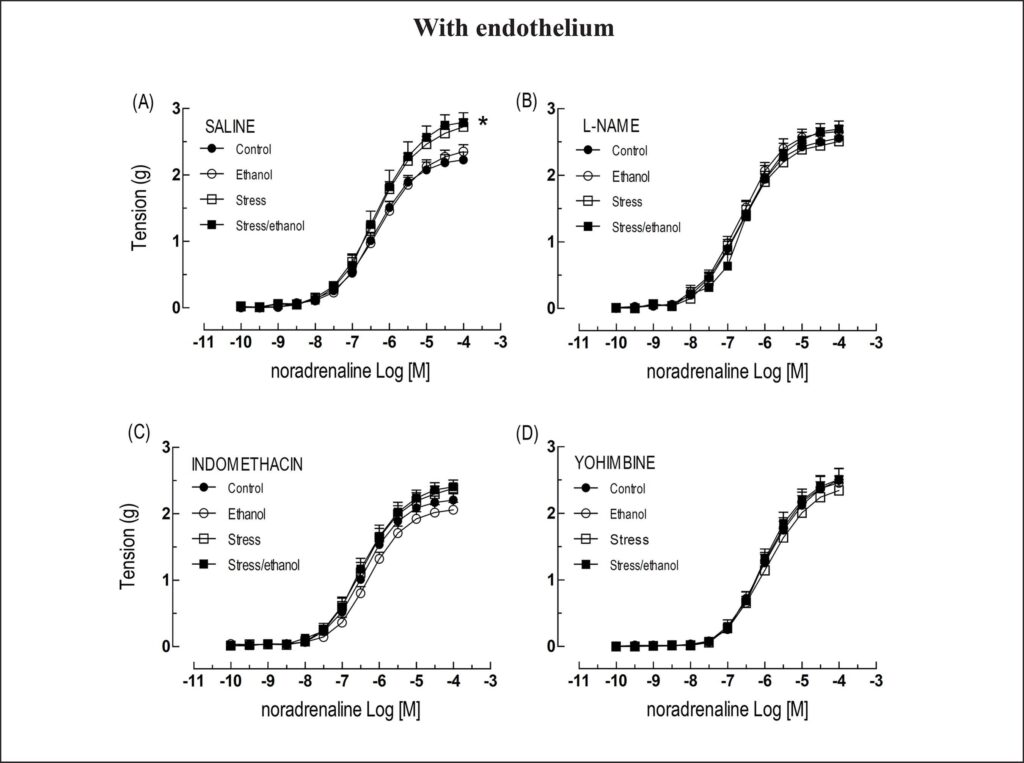
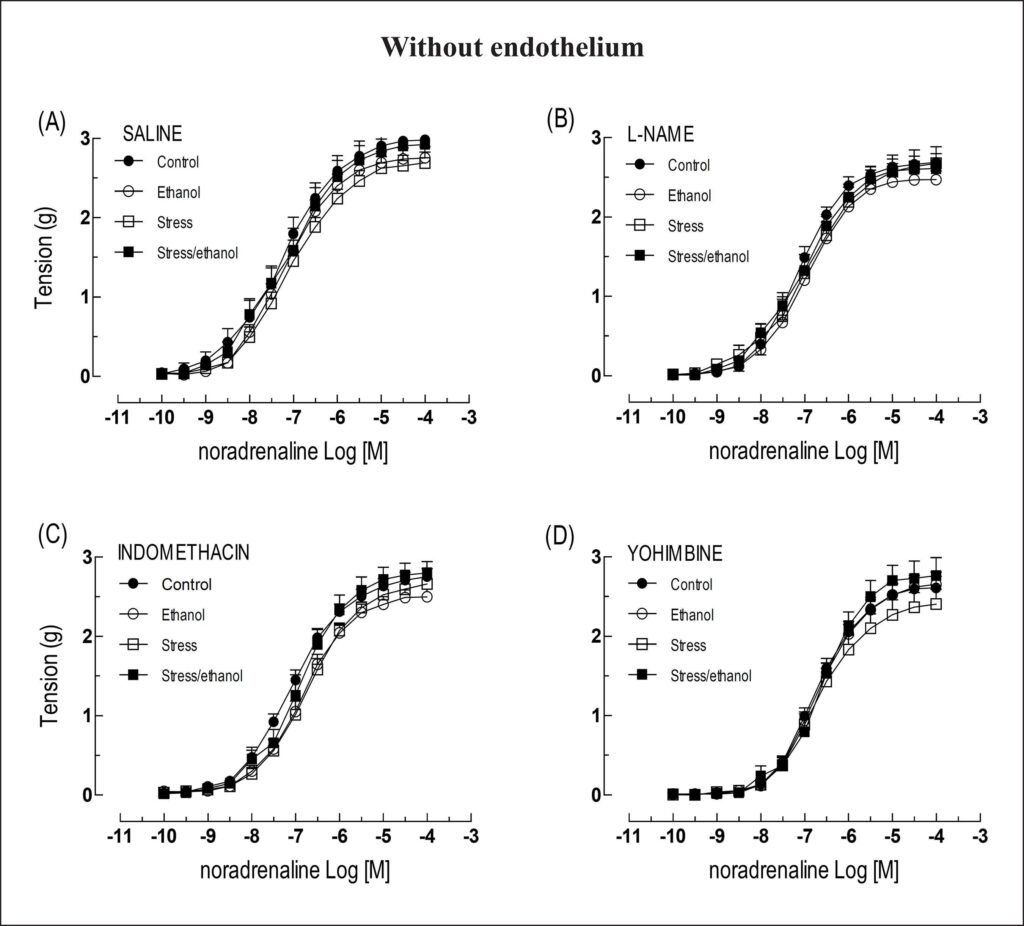
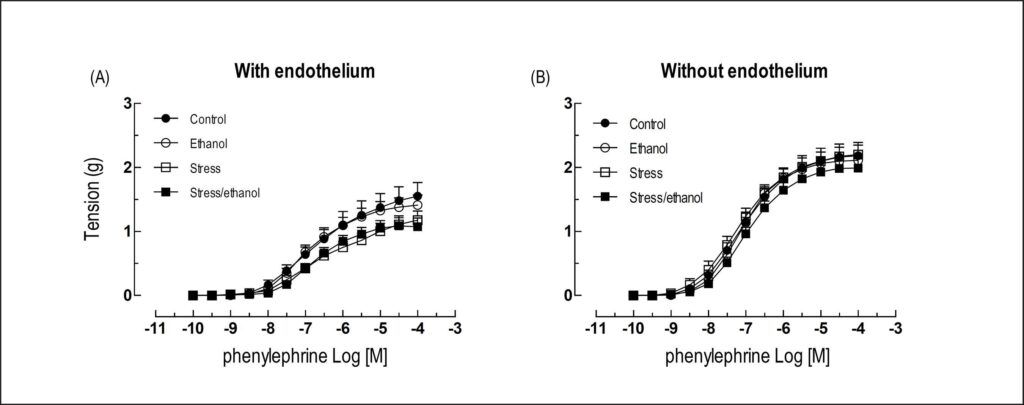
Either stress or stress in association with ethanol consumption increased the noradrenaline maximum responses in intact aortas. This hyper-reactivity was eliminated by endothelium removal or by the presence of either indomethacin or yohimbine, but was not altered by the presence of L-NAME. Meanwhile, ethanol consumption did not alter the reactivity to noradrenaline. The phenylephrine responses in aortas both with and without endothelium also remained unaffected regardless of protocol.
Conclusion:
Chronic stress increased rat aortic responses to noradrenaline. This effect is dependent upon the vascular endothelium and involves the release of vasoconstrictor prostanoids via stimulation of endothelial alpha-2 adrenoceptors. Moreover, chronic ethanol consumption appeared to neither influence noradrenaline responses in rat thoracic aorta, nor did it modify the increase of such responses observed as a consequence of stress exposure.
Images
Image gallery fullscreen viewer
Comments are moderated by the editorial team before publication. Discussions should be evidence-based and use scientific language. Conflicts of interest should be declared.