ABC Family Arquivos Brasileiros de Cardiologia International Journal of Cardiovascular Sciences ABC Heart Failure & Cardiomyopathy ABC Imagem Cardiovascular
Português English
ABC Family
Português English
  • About
    • About ABC Family
    • Internal Regulation
    • Editorial Board
    • Brazilian Society of Cardiology (SBC)
  • Issues
  • SBC Guidelines
  • Content
    • Videos
    • Podcasts
    • News
  • About
    • About ABC Family
    • Internal Regulation
    • Editorial Board
    • Brazilian Society of Cardiology (SBC)
  • Issues
  • SBC Guidelines
  • Content
    • Videos
    • Podcasts
    • News

ABC Family

  • ABC Family
  • Arquivos Brasileiros de Cardiologia
  • International Journal of Cardiovascular Sciences
  • ABC Heart Failure & Cardiomyopathy
  • ABC Imagem Cardiovascular
Search in

No content found.

Journals
Ordering
Article types
Others

  1. Home
  2. Keyword: Atrial Fibrillation/physiopathology
Figure 1
ABC
Original Article

Cardiac Autonomic Nervous System Remodeling May Play a Role in Atrial Fibrillation: A Study of the Autonomic Nervous System and Myocardial Receptors

Ítalo Martins de Oliveira et al. Evilásio Leobino da Silva Júnior Yasmin de Oliveira Martins Hermano Alexandre Lima Rocha … Maurício Ibrahim Scanavacca Paulo Sampaio Gutierrez

Abstract

Background

The primary factors that originate and perpetuate atrial fibrillation (AF) are electrical and anatomical substrate alterations. However, the central mechanisms governing AF perpetuation have not been elucidated yet, which is reflected on the modest results of the treatment in patients with long persistent AF.

Objective

To evaluate if human intrinsic cardiac autonomic nervous system (ICANS) remodeling, including nervous system fibers and muscarinic and β-adrenergic receptors, play a role in permanent AF.

Methods

Heart necropsy samples from thirteen patients with heart disease and permanent AF and thirteen controls without AF were used. By using immunoperoxidase and histomorphometry quantification, we identified the following: the density of all fibers of the ICANS, sympathetic and parasympathetic fibers; and the percentage of myocardium positive for β-adrenergic receptors 1, 2 and 3; G protein-coupled receptor kinase-5 (GRK-5); and muscarinic receptors M1 to M5. The results were compared using ANOVA and nested ANOVA and were adjusted according to the left atrium volume for all variables, and β-blocker use to evaluate the expression of β-receptors and GRK-5.

Results

There was an overall increase in the density of fibers of the ICANS (p=0.006), especially in atrial sympathetic nerve fibers (p=0.017). Only M1 muscarinic receptors were increased (5.87 vs 2.35, p=0.032). For adrenergic receptors, the results were positive for increased expression of β-3 (37.41 vs 34.18, p=0.039) and GRK-5 (51.16 vs 47.66; p<0.001). β-blocker use had no impact on β-receptor expression.

Conclusion

Increased ICANS innervation and remodeling receptor expression in regions prone to triggering AF may play a role in permanent AF.
  • Atrial Fibrillation/physiopathology
  • Autonomic Nervous System
  • Myocardium
  • Neurotransmitter Agents
Read Full Article
Creative Commons Attribution (CC BY) Creative Commons license
16/08/2021 DOI: 10.36660/abc.20200725 Views 1
ABC
Editorial

A Collaboration to Stop Smoking

Ricardo Vivacqua Cardoso Costa

The association between smoking and physical inactivity is an essential expression of morbidity and mortality in wide age groups.

The present study enhances the recognized risks of smoking, correlating it to the quality of sleep, and autonomic dysfunctions with levels of physical activity. Parameters considered as risk factors for cardiovascular pathologies. It is worth mentioning the accurate methodology contributing to the legitimacy of this study. In the most active group (p> 50), higher values of skeletal muscle mass were observed, related to better performance and influencing the reflex metabolite. Statistical treatment demonstrated significant correlations between smoking, sleep quality, and autonomic dysfunction. We believe that a higher number of candidates for the study can obtain stronger associations. We suggest, as a continuation of this study, to evaluate the recovery of heart rate in the first minute of post-exercise recovery, an indicator of parasympathetic autonomic adaptation of prognostic value in cardiovascular diseases. Also, a better quantification of physical activity that characterizes active or non-active behavior is also valid. The current bibliography deserves mention, with about 16% of authors from our country.

[…]

  • Arrhythmias Cardiac/physiopathology
  • Atrial Fibrillation/physiopathology
  • Combined Modality Therapy
  • Obesity
  • Risk Factors
  • Sedentarism
Read Full Article
Creative Commons Attribution (CC BY) Creative Commons license
03/02/2021 DOI: 10.36660/abc.20200458 Views 1
Figure 1
ABC
Review Article

Atrial Fibrillation (Part 1): Pathophysiology, Risk Factors, and Therapeutic Basis

Fatima Dumas Cintra et al. Marcio Jansen de Oliveira Figueiredo

Abstract

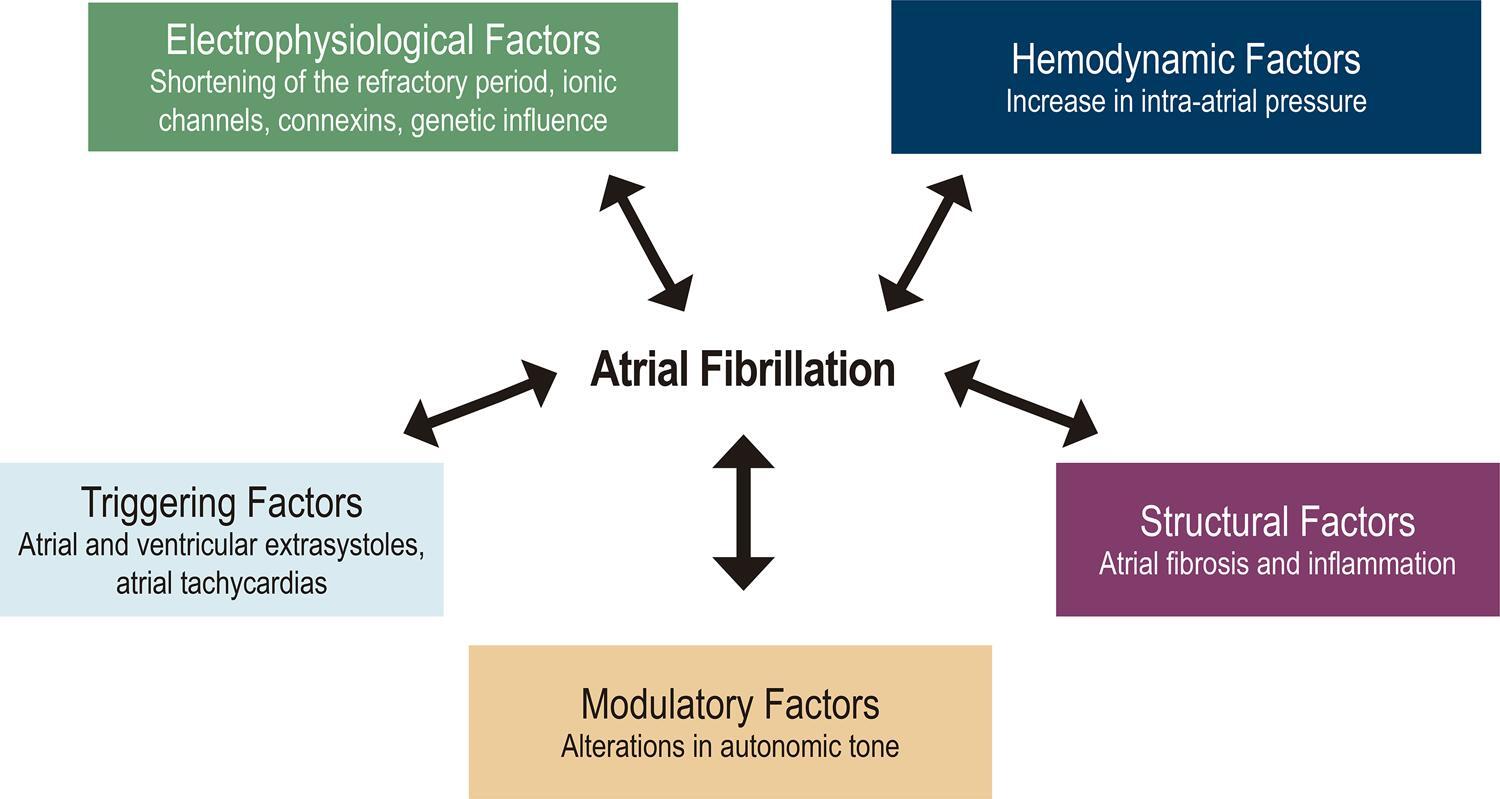
Atrial fibrillation is the most common sustained arrhythmia in clinical practice, with a preference for older age groups. Considering population ageing, the projections for the next decades are alarming. In addition to its epidemiological importance, atrial fibrillation is evidenced by its clinical repercussions, including thromboembolic phenomena, hospitalizations, and a higher mortality rate. Its pathophysiological mechanism is complex and involves an association of hemodynamic, structural, electrophysiological, and autonomic factors. Since the 1990s, the Framingham study of multivariate analyses has demonstrated that hypertension, diabetes, heart failure, and valvular disease are independent predictors of this rhythm abnormality along with age. However, various other risk factors have been recently implicated in an increase of atrial fibrillation cases, such as sedentary behavior, obesity, sleep disorders, tobacco use, and excessive alcohol use. Moreover, changes in quality of life indicate a reduction in atrial fibrillation recurrence, thus representing a new strategy for excellence in the treatment of this cardiac arrhythmia. Therapeutic management involves a broad knowledge of the patient’s health state and habits, comprehending 4 main pillars: lifestyle changes and rigorous treatment of risk factors; prevention of thromboembolic events; rate control; and rhythm control. Due to the dimension of factors involved in the care of patients with atrial fibrillation, integrated actions performed by interprofessional teams are associated with the best clinical results.

  • Arrhythmias Cardiac/physiopathology
  • Atrial Fibrillation/physiopathology
  • Combined Modality Therapy
  • Obesity
  • Risk Factors
  • Sedentarism
Read Full Article
Creative Commons Attribution (CC BY) Creative Commons license
03/02/2021 DOI: 10.36660/abc.20200485 Views 3
IJCS
Editorial

Postoperative Atrial Fibrillation: The Challenge of Risk Prediction

Luiz Eduardo Montenegro Camanho et al. Gustavo Vignoli dos Santos

Atrial fibrillation (AF) is the most common cardiac arrhythmia in clinical practice and is characterized by chaotic activation of the atrium, with f waves present on baseline electrocardiography. Postoperative atrial fibrillation (POAF) is a clinically important complication in patients who underwent heart surgery (coronary artery bypass grafting, or CABG surgery, or valvular surgery). The prevalence of POAF varies from 20 to 40%, with a peak incidence between days two and four after heart surgery., Studies suggest that patients undergoing CABG alone have lower incidence of POAF (10 to 40%) compared with those undergoing CABG combined with heart valve replacement (62%).

The most important risk factors associated with this condition are advanced age, heart failure, rheumatic heart disease, hypertension, previous history of AF, left atrial enlargement, chronic kidney failure, and chronic obstructive pulmonary disease (COPD).

[…]

  • Arrhytmias Cardiac/ complications
  • Atrial Fibrillation/physiopathology
  • Cardiac Surgery Procedures
  • postoperative complications
Read Full Article
Creative Commons Attribution (CC BY) Creative Commons license
24/10/2019 DOI: 10.5935/2359-4802.20190088
Figure 1
ABC
Original Article

Paroxysmal Atrial Fibrillation Catheter Ablation Outcome Depends on Pulmonary Veins Anatomy

Gabriel Odozynski et al. Alexander Romeno Janner Dal Forno Andrei Lewandowski Hélcio Garcia Nascimento André d'Avila

Abstract

Background:

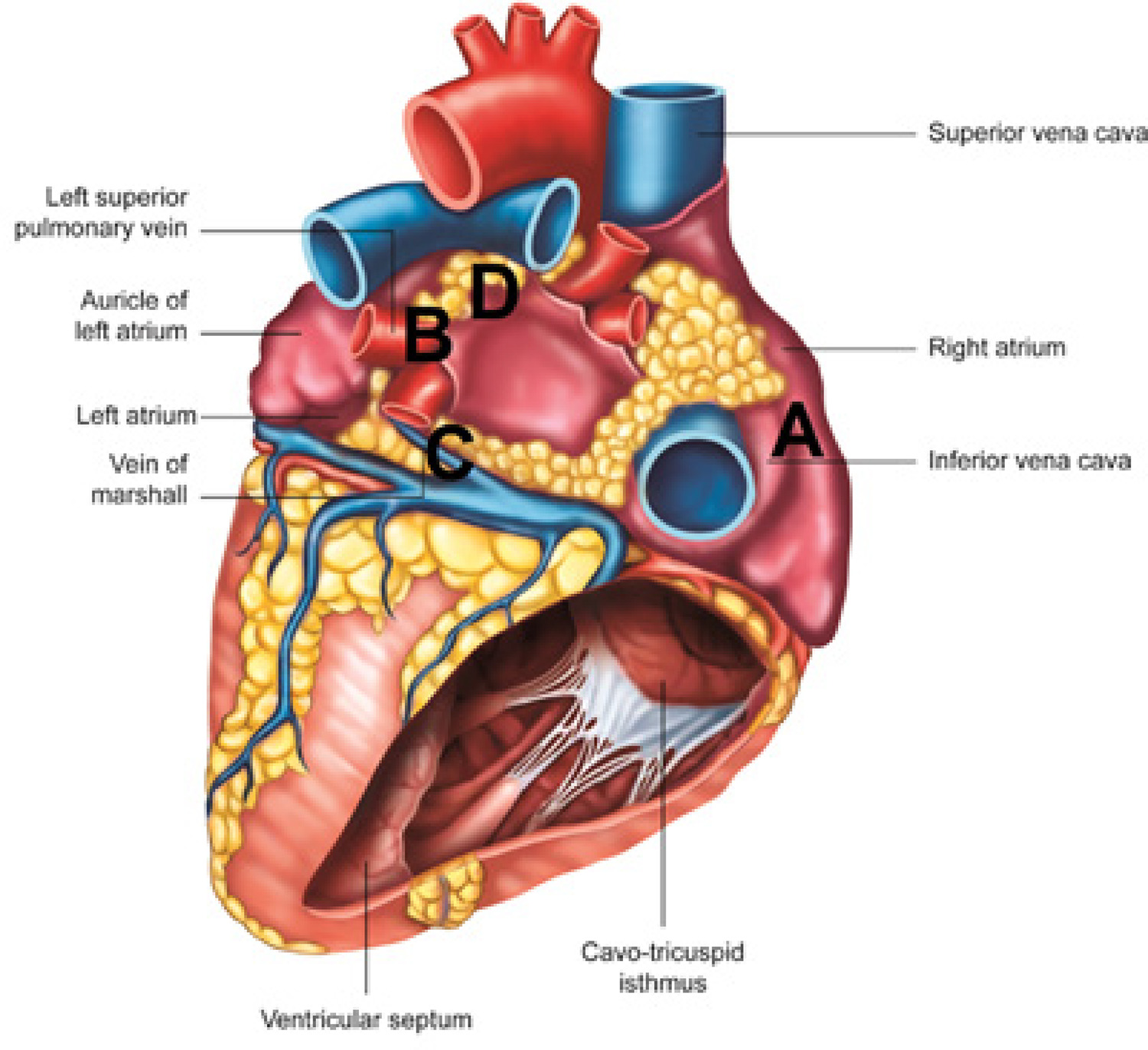
Pulmonary veins (PV) are often the trigger to atrial fibrillation (AF). Occasionally, left PVs converge on a common trunk (LCT) providing a simpler structure for catheter ablation.

Objective:

To compare the clinical characteristics and outcomes of ablation in paroxysmal atrial fibrillation (PAF) of patients with or without LCT.

Methods:

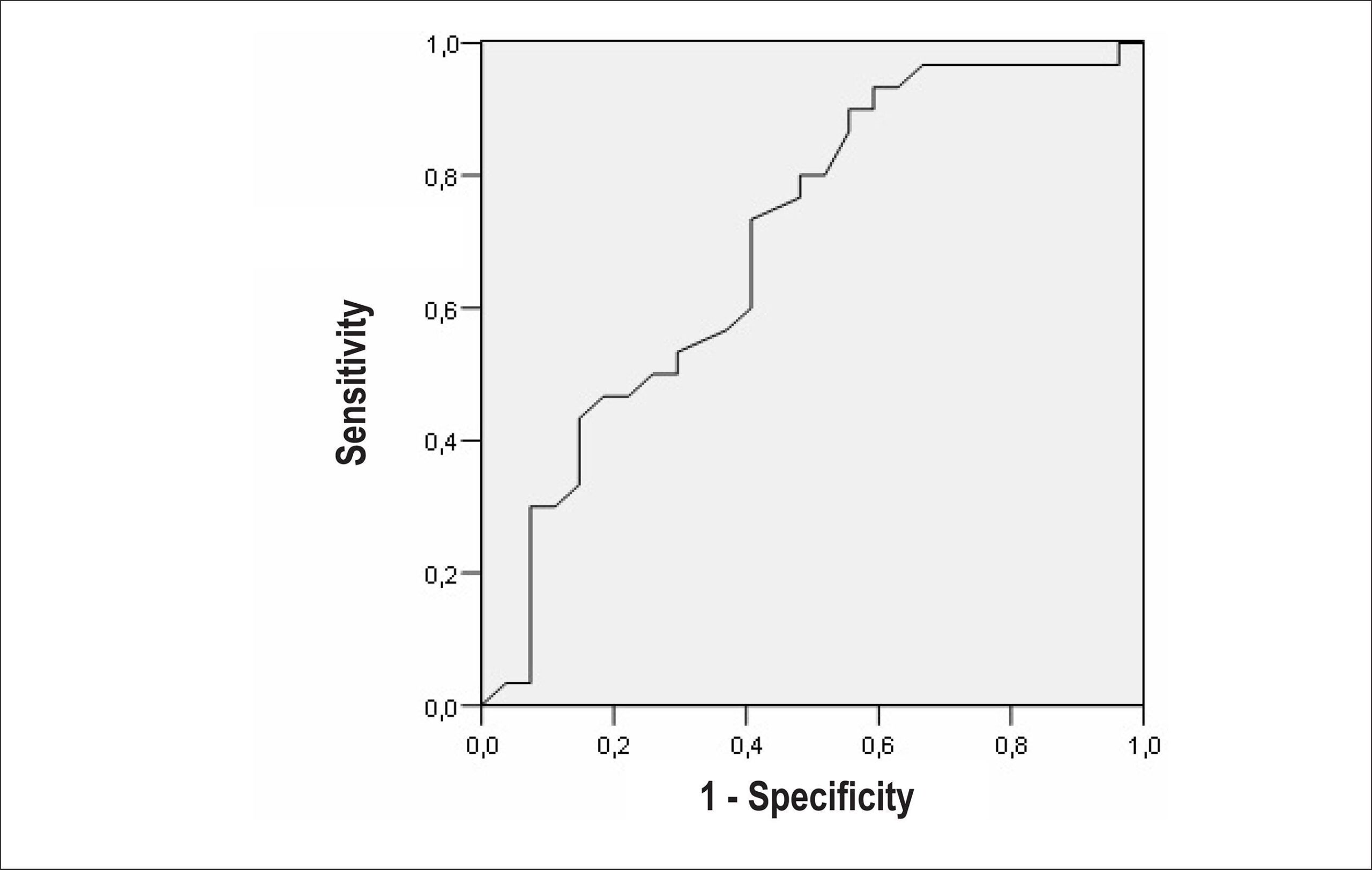
Case-control study of patients undergoing first-ever catheter ablation procedure for drug refractory PAF. The information was taken from patients’ records by means of a digital collection instrument, and indexed to an online database (Syscardio(r)). Clinical characteristics and procedures were compared between patients with or without LCT (LCT x n-LCT), adopting a level of statistical significance of 5%. The primary endpoint associated with efficacy was lack of atrial arrhythmia over the follow-up time.

Results:

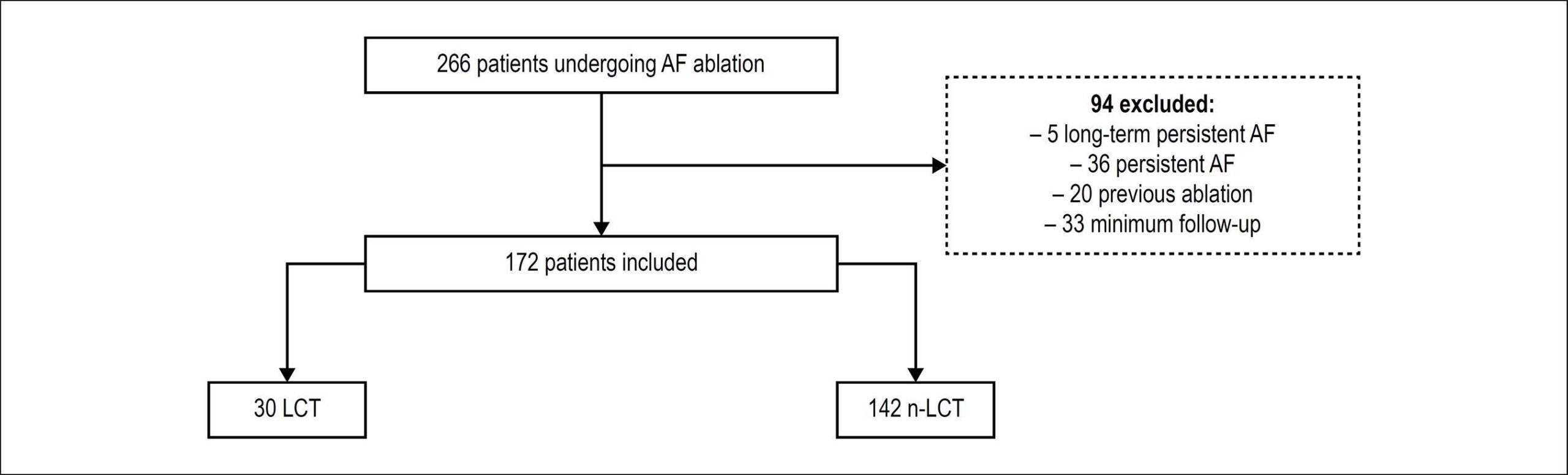
One hundred and seventy two patients with PAF were included in the study, 30 (17%) LCT and 142 (83%) n-LCT. The clinical characteristics, comorbidities, symptoms scale and risk scores did not differ between the groups. There was AF recurrence in 27% of PAF patients in the n-LCT group and only 10% of patients in the LCT group (OR: 3.4 p: 0.04) after a follow-up of 34 ± 17 months and 26 ± 15 months respectively.

Conclusion:

Patients with a LCT have a significantly lower recurrence rate when compared to patients without this structure. It is mandatory to report the results of AF catheter ablation as a PV anatomical variation function.

  • Arrhythmias Cardiac
  • Atrial Fibrillation/physiopathology
  • Catheter Ablation
  • Electrophysiologic Techniques, Cardiac
  • Pulmonary Veins/physiopathology
Read Full Article
Creative Commons Attribution (CC BY) Creative Commons license
18/10/2018 DOI: 10.5935/abc.20180181 Views 1
Figure 1
ABC
Artigo Original

Disturbed Left Atrial Function is Associated with Paroxysmal Atrial Fibrillation in Hypertension

Erhan Tenekecioglu et al. Fahriye Vatansever Agca Ozlem Arican Ozluk Kemal Karaagac … Serafettin Demir Tezcan Peker Mustafa Kuzeytemiz Muhammed Senturk Mustafa Yılmaz

Background:

Hypertension is the most prevalent and modifiable risk factor for atrial fibrillation. The pressure overload in the left atrium induces pathophysiological changes leading to alterations in contractile function and electrical properties.

Objective:

In this study our aim was to assess left atrial function in hypertensive patients to determine the association between left atrial function with paroxysmal atrial fibrillation (PAF).

Method:

We studied 57 hypertensive patients (age: 53±4 years; left ventricular ejection fraction: 76±6.7%), including 30 consecutive patients with PAF and 30 age-matched control subjects. Left atrial (LA) volumes were measured using the modified Simpson’s biplane method. Three types of LA volume were determined: maximal LA(LAVmax), preatrial contraction LA(LAVpreA) and minimal LA volume(LAVmin). LA emptying functions were calculated. LA total emptying volume = LAVmax−LAVmin and the LA total EF = (LAVmax-LAVmin )/LAVmax, LA passive emptying volume = LAVmax− LAVpreA and the LA passive EF = (LAVmax-LAVpreA)/LAVmax, LA active emptying volume = LAVpreA−LAVmin and LA active EF = (LAVpreA-LAVmin )/LAVpreA.

Results:

The hypertensive period is longer in hypertensive group with PAF. LAVmax significantly increased in hypertensive group with PAF when compared to hypertensive group without PAF (p=0.010). LAAEF was significantly decreased in hypertensive group with PAF as compared to hypertensive group without PAF (p=0.020). A’ was decreased in the hypertensive group with PAF when compared to those without PAF (p = 0.044).

Conclusion:

Increased LA volume and impaired LA active emptying function was associated with PAF in untreated hypertensive patients. Longer hypertensive period is associated with PAF.

  • Atrial Fibrillation/physiopathology
  • Atrial Function, Left
  • Hypertension
Read Full Article
Creative Commons Attribution (CC BY) Creative Commons license
01/02/2014 DOI: 10.5935/abc.20140009

How to cite this article

EndNote RIS

Electronic Document Format (Vancouver)

Oliveira M, Silva Júnior EL, Martins YO, Rocha HAL, Scanavacca MI, Gutierrez PS. Cardiac Autonomic Nervous System Remodeling May Play a Role in Atrial Fibrillation: A Study of the Autonomic Nervous System and Myocardial Receptors. Arquivos Brasileiros de Cardiologia 2021;117(5):999-1007.

Electronic Document Format (ABNT)

Oliveira, Ítalo Martins de; Silva Júnior, Evilásio Leobino da; Martins, Yasmin de Oliveira; Rocha, Hermano Alexandre Lima; Scanavacca, Maurício Ibrahim; Gutierrez, Paulo Sampaio. Cardiac Autonomic Nervous System Remodeling May Play a Role in Atrial Fibrillation: A Study of the Autonomic Nervous System and Myocardial Receptors. Arquivos Brasileiros de Cardiologia, v. 117, n. 5, p. 999-1007, Aug. 2021.

Electronic Document Format (APA)

Oliveira, M. , Silva Júnior, E. L. , Martins, Y. O., Rocha, H. A. L., Scanavacca, M. I., & Gutierrez, P. S. (2021). Cardiac Autonomic Nervous System Remodeling May Play a Role in Atrial Fibrillation: A Study of the Autonomic Nervous System and Myocardial Receptors. Arquivos Brasileiros de Cardiologia, 117(5), 999-1007.

Electronic Document Format (ISO)

Oliveira, Ítalo Martins de and Silva Júnior, Evilásio Leobino da and Martins, Yasmin de Oliveira and Rocha, Hermano Alexandre Lima and Scanavacca, Maurício Ibrahim and Gutierrez, Paulo Sampaio. Cardiac Autonomic Nervous System Remodeling May Play a Role in Atrial Fibrillation: A Study of the Autonomic Nervous System and Myocardial Receptors. Arquivos Brasileiros de Cardiologia [online]. 2021, vol. 117, n. 5, [cited 2026-10-14], pp. 999-1007. Available from: <https://journals.cardiol.br/en/article/cardiac-autonomic-nervous-system-remodeling-may-play-a-role-in-atrial-fibrillation-a-study-of-the-autonomic-nervous-system-and-myocardial-receptors/>. ISSN 0066-782X

EndNote RIS

Electronic Document Format (Vancouver)

Costa RVC. A Collaboration to Stop Smoking. Arquivos Brasileiros de Cardiologia 2021;116(1):36.

Electronic Document Format (ABNT)

Costa, Ricardo Vivacqua Cardoso. A Collaboration to Stop Smoking. Arquivos Brasileiros de Cardiologia, v. 116, n. 1, p. 36-36, Feb. 2021.

Electronic Document Format (APA)

Costa, R. V. C. (2021). A Collaboration to Stop Smoking. Arquivos Brasileiros de Cardiologia, 116(1), 36-36.

Electronic Document Format (ISO)

Costa, Ricardo Vivacqua Cardoso. A Collaboration to Stop Smoking. Arquivos Brasileiros de Cardiologia [online]. 2021, vol. 116, n. 1, [cited 2026-10-14], pp. 36-36. Available from: <https://journals.cardiol.br/en/article/a-collaboration-to-stop-smoking/>. ISSN 0066-782X

EndNote RIS

Electronic Document Format (Vancouver)

Cintra FD, Figueiredo MJO. Atrial Fibrillation (Part 1): Pathophysiology, Risk Factors, and Therapeutic Basis. Arquivos Brasileiros de Cardiologia 2021;116(1):129-3.

Electronic Document Format (ABNT)

Cintra, Fatima Dumas; Figueiredo, Marcio Jansen de Oliveira. Atrial Fibrillation (Part 1): Pathophysiology, Risk Factors, and Therapeutic Basis. Arquivos Brasileiros de Cardiologia, v. 116, n. 1, p. 129-139, Feb. 2021.

Electronic Document Format (APA)

Cintra, F. D., & Figueiredo, M. J. O. (2021). Atrial Fibrillation (Part 1): Pathophysiology, Risk Factors, and Therapeutic Basis. Arquivos Brasileiros de Cardiologia, 116(1), 129-139.

Electronic Document Format (ISO)

Cintra, Fatima Dumas and Figueiredo, Marcio Jansen de Oliveira. Atrial Fibrillation (Part 1): Pathophysiology, Risk Factors, and Therapeutic Basis. Arquivos Brasileiros de Cardiologia [online]. 2021, vol. 116, n. 1, [cited 2026-10-14], pp. 129-139. Available from: <https://journals.cardiol.br/en/article/atrial-fibrillation-part-1-pathophysiology-risk-factors-and-therapeutic-basis/>. ISSN 0066-782X

EndNote RIS

Electronic Document Format (Vancouver)

Camanho LEM, Santos GV. Postoperative Atrial Fibrillation: The Challenge of Risk Prediction. International Journal of Cardiovascular Sciences 2019;32(6):594-5.

Electronic Document Format (ABNT)

Camanho, Luiz Eduardo Montenegro; Santos, Gustavo Vignoli dos. Postoperative Atrial Fibrillation: The Challenge of Risk Prediction. International Journal of Cardiovascular Sciences, v. 32, n. 6, p. 594-595, Oct. 2019.

Electronic Document Format (APA)

Camanho, L. E. M., & Santos, G. V. (2019). Postoperative Atrial Fibrillation: The Challenge of Risk Prediction. International Journal of Cardiovascular Sciences, 32(6), 594-595.

Electronic Document Format (ISO)

Camanho, Luiz Eduardo Montenegro and Santos, Gustavo Vignoli dos. Postoperative Atrial Fibrillation: The Challenge of Risk Prediction. International Journal of Cardiovascular Sciences [online]. 2019, vol. 32, n. 6, [cited 2026-10-14], pp. 594-595. Available from: <https://journals.cardiol.br/en/article/postoperative-atrial-fibrillation-the-challenge-of-risk-prediction/>. ISSN 2359-4802

EndNote RIS

Electronic Document Format (Vancouver)

Odozynski G, Forno ARJD, Lewandowski A, Nascimento HG, d’Avila A. Paroxysmal Atrial Fibrillation Catheter Ablation Outcome Depends on Pulmonary Veins Anatomy. Arquivos Brasileiros de Cardiologia 2018;111(6):824-30.

Electronic Document Format (ABNT)

Odozynski, Gabriel; Forno, Alexander Romeno Janner Dal; Lewandowski, Andrei; Nascimento, Hélcio Garcia; d’Avila, André. Paroxysmal Atrial Fibrillation Catheter Ablation Outcome Depends on Pulmonary Veins Anatomy. Arquivos Brasileiros de Cardiologia, v. 111, n. 6, p. 824-830, Oct. 2018.

Electronic Document Format (APA)

Odozynski, G., Forno, A. R. J. D., Lewandowski, A., Nascimento, H. G., & d’Avila, A. (2018). Paroxysmal Atrial Fibrillation Catheter Ablation Outcome Depends on Pulmonary Veins Anatomy. Arquivos Brasileiros de Cardiologia, 111(6), 824-830.

Electronic Document Format (ISO)

Odozynski, Gabriel and Forno, Alexander Romeno Janner Dal and Lewandowski, Andrei and Nascimento, Hélcio Garcia and d’Avila, André. Paroxysmal Atrial Fibrillation Catheter Ablation Outcome Depends on Pulmonary Veins Anatomy. Arquivos Brasileiros de Cardiologia [online]. 2018, vol. 111, n. 6, [cited 2026-10-14], pp. 824-830. Available from: <https://journals.cardiol.br/en/article/paroxysmal-atrial-fibrillation-catheter-ablation-outcome-depends-on-pulmonary-veins-anatomy/>. ISSN 0066-782X

EndNote RIS

Electronic Document Format (Vancouver)

Tenekecioglu E, Agca FV, Ozluk OA, Karaagac K, Demir S, Peker T, Kuzeytemiz M, et al. Disturbed Left Atrial Function is Associated with Paroxysmal Atrial Fibrillation in Hypertension. Arquivos Brasileiros de Cardiologia 2014;102(3):253-62.

Electronic Document Format (ABNT)

Tenekecioglu, Erhan; Agca, Fahriye Vatansever; Ozluk, Ozlem Arican; Karaagac, Kemal; Demir, Serafettin; Peker, Tezcan; Kuzeytemiz, Mustafa; Senturk, Muhammed; Yılmaz, Mustafa. Disturbed Left Atrial Function is Associated with Paroxysmal Atrial Fibrillation in Hypertension. Arquivos Brasileiros de Cardiologia, v. 102, n. 3, p. 253-262, Jan. 2014.

Electronic Document Format (APA)

Tenekecioglu, E., Agca, F. V., Ozluk, O. A., Karaagac, K., Demir, S., Peker, T., Kuzeytemiz, M., Senturk, M., & Yılmaz, M. (2014). Disturbed Left Atrial Function is Associated with Paroxysmal Atrial Fibrillation in Hypertension. Arquivos Brasileiros de Cardiologia, 102(3), 253-262.

Electronic Document Format (ISO)

Tenekecioglu, Erhan and Agca, Fahriye Vatansever and Ozluk, Ozlem Arican and Karaagac, Kemal and Demir, Serafettin and Peker, Tezcan and Kuzeytemiz, Mustafa and Senturk, Muhammed and Yılmaz, Mustafa. Disturbed Left Atrial Function is Associated with Paroxysmal Atrial Fibrillation in Hypertension. Arquivos Brasileiros de Cardiologia [online]. 2014, vol. 102, n. 3, [cited 2026-10-14], pp. 253-262. Available from: <https://journals.cardiol.br/en/article/disturbed-left-atrial-function-is-associated-with-paroxysmal-atrial-fibrillation-in-hypertension/>. ISSN 0066-782X

  • About ABC Family
  • Internal Regulation
  • Editorial Board
  • Brazilian Society of Cardiology (SBC)

Issues

SBC Guidelines

  • Videos
  • Podcasts
  • News