I Brazilian Position Paper on Antihypertensive Drug Combination
Evidence of clinical trials
Data available have suggested that most of the hypertensive population requires combined therapy to achieve BP control goals. A meta-analysis of 354 double-blind randomized clinical trials has found mean BP reductions with monotherapy of only 9.1 mm Hg and 5.5 mm Hg for systolic BP (SBP) and diastolic BP (DBP), respectively. There were only few differences in the responses to the following drugs assessed: diuretics; beta-blockers (BBs); angiotensin-converting-enzyme inhibitors (ACEIs); type 1 angiotensin-receptor blockers (ARBs); and calcium channel antagonists (CCAs). In the ALLHAT, only 26% of the patients achieved the BP control goal with monotherapy, even considering the goal for diabetic patients (36% of the patients) of < 140/90 mm Hg, rather than 130/80 mm Hg as recommended by several guidelines at the time. In the HOT Study, only 33% of the patients met the DBP goal with monotherapy; 45% required two drugs and 22% needed three drugs to meet that goal. The mean SBP at the end of the HOT Study was 141 mm Hg, indicating that an even higher percentage of patients would have needed combined therapy to meet the goal of < 140 mmHg. In the LIFE Study, treatment to meet the recommended goal (<140/90 mmHg) was aggressively pursued in elderly patients with left ventricular hypertrophy (LVH). Considering an initial mean BP of 175/98 mm Hg, more than 90% need to use at least two antihypertensive drugs. The Strategies in Treatment of Hypertension (STRATHE) Study, in which treatment was initiated with a combination of low doses and compared to monotherapy, has found a greater percentage of individuals in the low-dose combination group who met the BP control goal (BP < 140/90 mm Hg) as compared to those receiving sequential monotherapy (62% vs. 49%, p = 0.02).
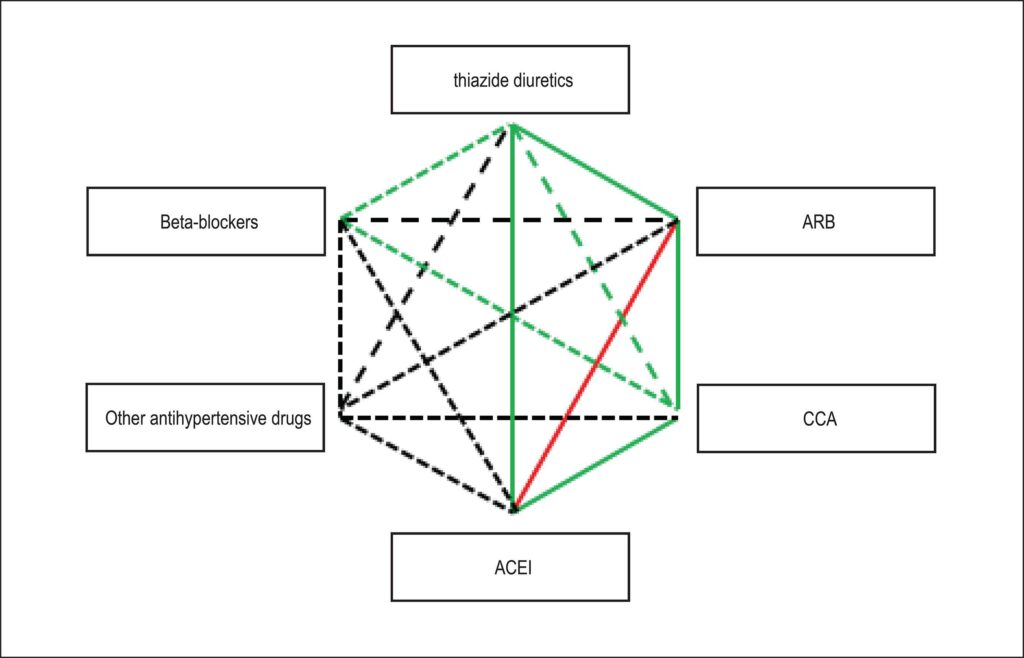
Based on the criteria of efficacy, tolerability, likelihood of higher adherence, evidence of CV and kidney protections, and safety, the associations of antihypertensive drugs can be divided as follows: preferential; acceptable; less usual; and unusual (). summarizes the current recommendations for drug association in AH treatment. It is worth noting that non-pharmacological measures of lifestyle change should be always emphasized to improve AH control and prevention of its complications.
[…]
Images
Image gallery fullscreen viewer
Comments are moderated by the editorial team before publication. Discussions should be evidence-based and use scientific language. Conflicts of interest should be declared.