ABC Family Arquivos Brasileiros de Cardiologia International Journal of Cardiovascular Sciences ABC Heart Failure & Cardiomyopathy ABC Imagem Cardiovascular
Português English
ABC Family
Português English
  • About
    • About ABC Family
    • Internal Regulation
    • Editorial Board
    • Brazilian Society of Cardiology (SBC)
  • Issues
  • SBC Guidelines
  • Content
    • Videos
    • Podcasts
    • News
  • About
    • About ABC Family
    • Internal Regulation
    • Editorial Board
    • Brazilian Society of Cardiology (SBC)
  • Issues
  • SBC Guidelines
  • Content
    • Videos
    • Podcasts
    • News

ABC Family

  • ABC Family
  • Arquivos Brasileiros de Cardiologia
  • International Journal of Cardiovascular Sciences
  • ABC Heart Failure & Cardiomyopathy
  • ABC Imagem Cardiovascular
Search in

No content found.

Journals
Ordering
Article types
Others

  1. Home
  2. Keyword: neurocardiogenic syncope
Figure 1
ABC
Artigo Original

Physical Training as Non-Pharmacological Treatment of Neurocardiogenic Syncope

Vanessa Cristina Miranda Takahagi et al. Daniela Caetano Costa Júlio César Crescêncio Lourenço Gallo Junior

Background:

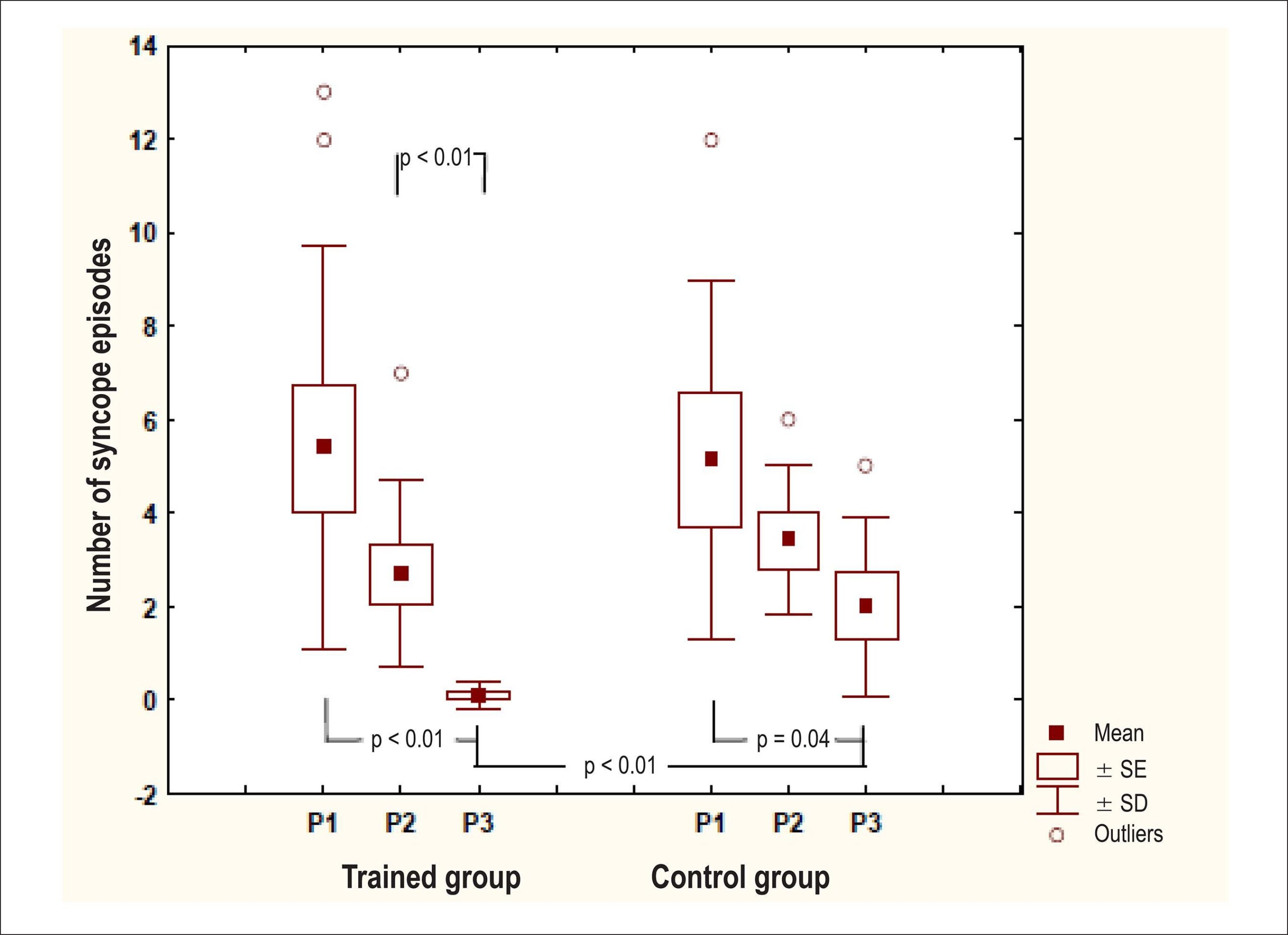
Characterized as a sudden and temporary loss of consciousness and postural tone, with quick and spontaneous recovery, syncope is caused by an acute reduction of systemic arterial pressure and, therefore, of cerebral blood flow. Unsatisfactory results with the use of drugs allowed the nonpharmacological treatment of neurocardiogenic syncope was contemplated as the first therapeutic option.

Objectives:

To compare, in patients with neurocardiogenic syncope, the impact of a moderate intensity aerobic physical training (AFT) and a control intervention on the positivity of head-up tilting test (HUT) and orthostatic tolerance time.

Methods:

Were studied 21 patients with a history of recurrent neurocardiogenic syncope and HUT. The patients were randomized into: trained group (TG), n = 11, and control group (CG), n = 10. The TG was submitted to 12 weeks of AFT supervised, in cycle ergometer, and the CG to a control procedure that consisted in 15 minutes of stretching and 15 minutes of light walk.

Results:

The TG had a positive effect to physical training, with a significant increase in peak oxygen consumption. The CG did not show any statistically significant change before and after the intervention. After the intervention period, 72.7% of the TG sample had negative results to the HUT, not having syncope in the revaluation.

Conclusion:

The program of supervised aerobic physical training for 12 weeks was able to reduce the number of positive HUT, as it was able to increase tolerance time in orthostatic position during the HUT after the intervention period.
  • Aerobic physical training
  • Head-up tilting test
  • neurocardiogenic syncope
Read Full Article
Creative Commons Attribution (CC BY) Creative Commons license
01/03/2014 DOI: 10.5935/abc.20140021 Views 1
Syncope in patients with right ventricle outflow tract premature beats and no apparent structural cardiopathy
ABC
Artigo Original

Syncope in patients with right ventricle outflow tract premature beats and no apparent structural cardiopathy

Ana Cristina Ludovice et al. Denise Tessariol Hachul Francisco Carlos Darrieux Silvana Cardoso Bastos … Eduardo Argentino Sosa Mauricio Ibrahim Scanavacca

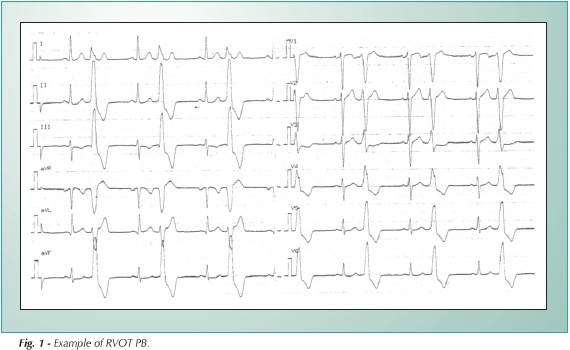
OBJECTIVE: Study the prevalence of neurocardiogenic etiology in patients with unexplained syncope and ventricular premature beats, with right ventricle outflow tract morphology (RVOT) and no apparent structural cardiopathy. METHODS: Ninety patients (66 women, mean age 40.2±16.95 years of age) with monomorphic premature beats originated at RVOT were evaluated prospectively. Fifty-four patients reported syncopes or near-syncopes associated to palpitations or not; twenty-seven presented palpitations with no pre-syncope or syncope, and nine were asymptomatic. All patients were submitted to echocardiogram, high resolution ECG and cardiac MRI to rule out structural cardiopathy, to exertion test to rule out adrenergic dependent ventricular tachycardia, and ECG prolonged outpatient monitoring (Holter and symptomatic events monitor) to correlate symptoms and ventricular arrhythmias. Investigation on the susceptibility to neurocardiogenic syncope was evaluated by Tilt Table Test (TTT). Groups were compared regarding gender, age, premature beats frequency and complexity, at exertion or not, TTT results and clinical course. RESULTS: In the syncope and pre-syncope groups, TTT was positive for 38% of cases, and in groups with palpitations and assymptomatics, it was positive for 11% (p = 0.0257). After recommendations and treatment of neurocardiogenic syncope, 85% of syncope and pre-syncope patients and positive TTT was asymptomatic along the 40-month follow-up. Two patients with syncope and negative TTT presented spontaneous, sustained ventricular tachycardia during clinic course. CONCLUSION: The prevalence of neurocardiogenic syncope in patients with idiopathic RVOT premature beats is high. Patients with recurrent, unexplained syncope and idiopathic VE must be kept under investigation.

  • neurocardiogenic syncope
  • ventricular arrhythmias
  • Ventricular premature beats
  • Ventricular tachycardia
Read Full Article
Creative Commons Attribution (CC BY) Creative Commons license
06/03/2007 DOI: 10.1590/S0066-782X2006001800004
Does a Role Exist for Tilting-Guided Therapy in the Management of Neurocardiogenic Syncope?
ABC
Original Article

Does a Role Exist for Tilting-Guided Therapy in the Management of Neurocardiogenic Syncope?

Denise Hachul et al. Mauricio Scanavacca Eduardo Sosa

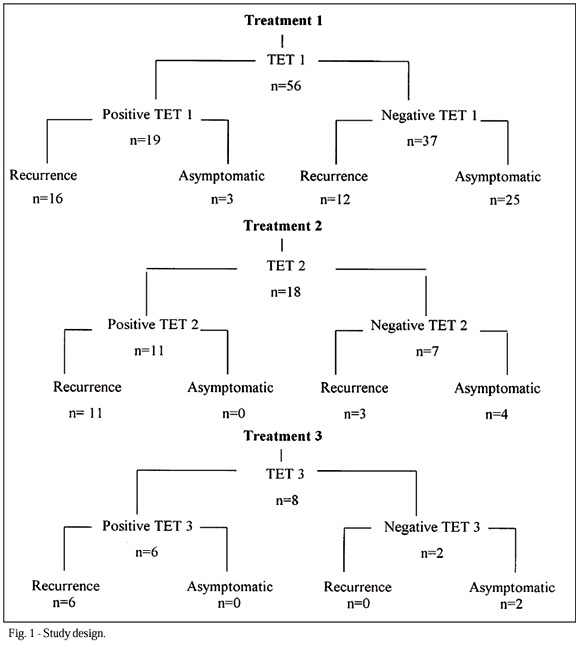
PURPOSE: Upright tilt-table testing (UTT) is an useful method for identifying patients with neurocardiogenic syncope, but its role in the evaluation of therapeutic efficacy is controversial. The aim of this study was to determine the correlation between negative UTT after therapy introduction (acute efficacy) and symptom recurrence during follow-up (chronic efficacy). METHODS: We studied 56 severely symptomatic patients (age 27±19 years) with recurrent (7±12 episodes) neurocardiogenic syncope (positive UTT). Once empirical pharmacological therapy was initiated, all patients underwent another UTT (therapeutic evaluation test – TET). Therapy was not modified after TET results. The probability of symptom recurrence was analyzed with the Kaplan-Meier method and compared by log-rank test in patients with negative and positive TET. RESULTS: Negative UTT after therapy was related to a significantly lower probability of recurrence during follow-up (4.9 versus 52.4% in 12 months, P<0.0001). CONCLUSION: A good correlation exists between acute and long-term efficacy of pharmacological therapy for neurocardiogenic syncope, so that serial UTT may be considered a good method for identifying an effective therapeutic strategy.

  • neurocardiogenic syncope
  • therapy
  • Tilt Table Test
Read Full Article
Creative Commons Attribution (CC BY) Creative Commons license
31/01/2007 DOI: 10.1590/S0066-782X2002000200005
ABC
Original Article

Diagnostic value of the tilt-table test for the assessment of syncope in children and adolescents

Tan Chen Wu et al. Denise Hachul Mauricio Scanavacca Eduardo Sosa

OBJECTIVE – To assess the diagnostic value, the characteristics, and feasibility of tilt-table testing in children and adolescents. METHODS – From August 1991 to June 1997, we retrospectively assessed 94 patients under the age of 18 years who had a history of recurring syncope and presyncope of unknown origin and who were referred for tilt-table testing. These patients were divided into 2 groups: group I (children) – 36 patients with ages ranging from 3 to 12 (mean of 9.19±2.31) years; group II (adolescents) – 58 patients with ages ranging from 13 to 18 (mean of 16.05±1.40) years. We compared the positivity rate, the type of hemodynamic response, and the time period required for the test to become positive in the 2 groups. RESULTS – The positivity rates were 41.6 % and 50% for groups I and II, respectively. The pattern of positive hemodynamic response that predominated in both groups was the mixed response. The mean time period required for the test to become positive was shorter in group I (11.0±7.23 min) than in group II (18.44±7.83 min). No patient experienced technical difficulty or complications. CONCLUSION – No difference was observed in regard to feasibility, positivity rate, and pattern of positive response for the tilt-table test in children and adolescents. Pediatric patients had earlier positive responses.

  • children and adolescents
  • neurocardiogenic syncope
  • Tilt Table Test
Read Full Article
Creative Commons Attribution (CC BY) Creative Commons license
14/01/2002 DOI: 10.1590/S0066-782X2001001200001

How to cite this article

EndNote RIS

Electronic Document Format (Vancouver)

Takahagi VCM, Costa DC, Crescêncio JC, Gallo Junior L. Physical Training as Non-Pharmacological Treatment of Neurocardiogenic Syncope. Arquivos Brasileiros de Cardiologia 2014;102(3):288-94.

Electronic Document Format (ABNT)

Takahagi, Vanessa Cristina Miranda; Costa, Daniela Caetano; Crescêncio, Júlio César; Gallo Junior, Lourenço. Physical Training as Non-Pharmacological Treatment of Neurocardiogenic Syncope. Arquivos Brasileiros de Cardiologia, v. 102, n. 3, p. 288-294, Feb. 2014.

Electronic Document Format (APA)

Takahagi, V. C. M., Costa, D. C., Crescêncio, J. C., & Gallo Junior, L. (2014). Physical Training as Non-Pharmacological Treatment of Neurocardiogenic Syncope. Arquivos Brasileiros de Cardiologia, 102(3), 288-294.

Electronic Document Format (ISO)

Takahagi, Vanessa Cristina Miranda and Costa, Daniela Caetano and Crescêncio, Júlio César and Gallo Junior, Lourenço. Physical Training as Non-Pharmacological Treatment of Neurocardiogenic Syncope. Arquivos Brasileiros de Cardiologia [online]. 2014, vol. 102, n. 3, [cited 2026-10-14], pp. 288-294. Available from: <https://journals.cardiol.br/en/article/physical-training-as-non-pharmacological-treatment-of-neurocardiogenic-syncope/>. ISSN 0066-782X

EndNote RIS

Electronic Document Format (Vancouver)

Ludovice AC, Hachul DT, Darrieux FC, Bastos SC, Sosa EA, Scanavacca MI. Syncope in patients with right ventricle outflow tract premature beats and no apparent structural cardiopathy. Arquivos Brasileiros de Cardiologia 2007;87(5):570-4.

Electronic Document Format (ABNT)

Ludovice, Ana Cristina; Hachul, Denise Tessariol; Darrieux, Francisco Carlos; Bastos, Silvana Cardoso; Sosa, Eduardo Argentino; Scanavacca, Mauricio Ibrahim. Syncope in patients with right ventricle outflow tract premature beats and no apparent structural cardiopathy. Arquivos Brasileiros de Cardiologia, v. 87, n. 5, p. 570-574, Mar. 2007.

Electronic Document Format (APA)

Ludovice, A. C., Hachul, D. T., Darrieux, F. C., Bastos, S. C., Sosa, E. A., & Scanavacca, M. I. (2007). Syncope in patients with right ventricle outflow tract premature beats and no apparent structural cardiopathy. Arquivos Brasileiros de Cardiologia, 87(5), 570-574.

Electronic Document Format (ISO)

Ludovice, Ana Cristina and Hachul, Denise Tessariol and Darrieux, Francisco Carlos and Bastos, Silvana Cardoso and Sosa, Eduardo Argentino and Scanavacca, Mauricio Ibrahim. Syncope in patients with right ventricle outflow tract premature beats and no apparent structural cardiopathy. Arquivos Brasileiros de Cardiologia [online]. 2007, vol. 87, n. 5, [cited 2026-10-14], pp. 570-574. Available from: <https://journals.cardiol.br/en/article/syncope-in-patients-with-right-ventricle-outflow-tract-premature-beats-and-no-apparent-structural-cardiopathy/>. ISSN 0066-782X

EndNote RIS

Electronic Document Format (Vancouver)

Hachul D, Scanavacca M, Sosa E. Does a Role Exist for Tilting-Guided Therapy in the Management of Neurocardiogenic Syncope?. Arquivos Brasileiros de Cardiologia 2007;78(2):167-71.

Electronic Document Format (ABNT)

Hachul, Denise; Scanavacca, Mauricio; Sosa, Eduardo. Does a Role Exist for Tilting-Guided Therapy in the Management of Neurocardiogenic Syncope?. Arquivos Brasileiros de Cardiologia, v. 78, n. 2, p. 167-171, Jan. 2007.

Electronic Document Format (APA)

Hachul, D., Scanavacca, M., & Sosa, E. (2007). Does a Role Exist for Tilting-Guided Therapy in the Management of Neurocardiogenic Syncope?. Arquivos Brasileiros de Cardiologia, 78(2), 167-171.

Electronic Document Format (ISO)

Hachul, Denise and Scanavacca, Mauricio and Sosa, Eduardo. Does a Role Exist for Tilting-Guided Therapy in the Management of Neurocardiogenic Syncope?. Arquivos Brasileiros de Cardiologia [online]. 2007, vol. 78, n. 2, [cited 2026-10-14], pp. 167-171. Available from: <https://journals.cardiol.br/en/article/does-a-role-exist-for-tilting-guided-therapy-in-the-management-of-neurocardiogenic-syncope/>. ISSN 0066-782X

EndNote RIS

Electronic Document Format (Vancouver)

Wu TC, Hachul D, Scanavacca M, Sosa E. Diagnostic value of the tilt-table test for the assessment of syncope in children and adolescents. Arquivos Brasileiros de Cardiologia 2002;77(6):505-8.

Electronic Document Format (ABNT)

Wu, Tan Chen; Hachul, Denise; Scanavacca, Mauricio; Sosa, Eduardo. Diagnostic value of the tilt-table test for the assessment of syncope in children and adolescents. Arquivos Brasileiros de Cardiologia, v. 77, n. 6, p. 505-508, Jan. 2002.

Electronic Document Format (APA)

Wu, T. C., Hachul, D., Scanavacca, M., & Sosa, E. (2002). Diagnostic value of the tilt-table test for the assessment of syncope in children and adolescents. Arquivos Brasileiros de Cardiologia, 77(6), 505-508.

Electronic Document Format (ISO)

Wu, Tan Chen and Hachul, Denise and Scanavacca, Mauricio and Sosa, Eduardo. Diagnostic value of the tilt-table test for the assessment of syncope in children and adolescents. Arquivos Brasileiros de Cardiologia [online]. 2002, vol. 77, n. 6, [cited 2026-10-14], pp. 505-508. Available from: <https://journals.cardiol.br/en/article/diagnostic-value-of-the-tilt-table-test-for-the-assessment-of-syncope-in-children-and-adolescents/>. ISSN 0066-782X

  • About ABC Family
  • Internal Regulation
  • Editorial Board
  • Brazilian Society of Cardiology (SBC)

Issues

SBC Guidelines

  • Videos
  • Podcasts
  • News