ABC Family Arquivos Brasileiros de Cardiologia International Journal of Cardiovascular Sciences ABC Heart Failure & Cardiomyopathy ABC Imagem Cardiovascular
Português English
ABC Family
Português English
  • About
    • About ABC Family
    • Internal Regulation
    • Editorial Board
    • Brazilian Society of Cardiology (SBC)
  • Issues
  • SBC Guidelines
  • Content
    • Videos
    • Podcasts
    • News
  • About
    • About ABC Family
    • Internal Regulation
    • Editorial Board
    • Brazilian Society of Cardiology (SBC)
  • Issues
  • SBC Guidelines
  • Content
    • Videos
    • Podcasts
    • News

ABC Family

  • ABC Family
  • Arquivos Brasileiros de Cardiologia
  • International Journal of Cardiovascular Sciences
  • ABC Heart Failure & Cardiomyopathy
  • ABC Imagem Cardiovascular
Search in

No content found.

Journals
Ordering
Article types
Others

  1. Home
  2. Keyword: Surgical procedures, minimally invasive
Figure 1
ABC
Editorial

Atrial Septal Defect in Adults: Does Repair Always Mean Cure?

Antônio Augusto Lopes et al. Sonia M. F. Mesquita

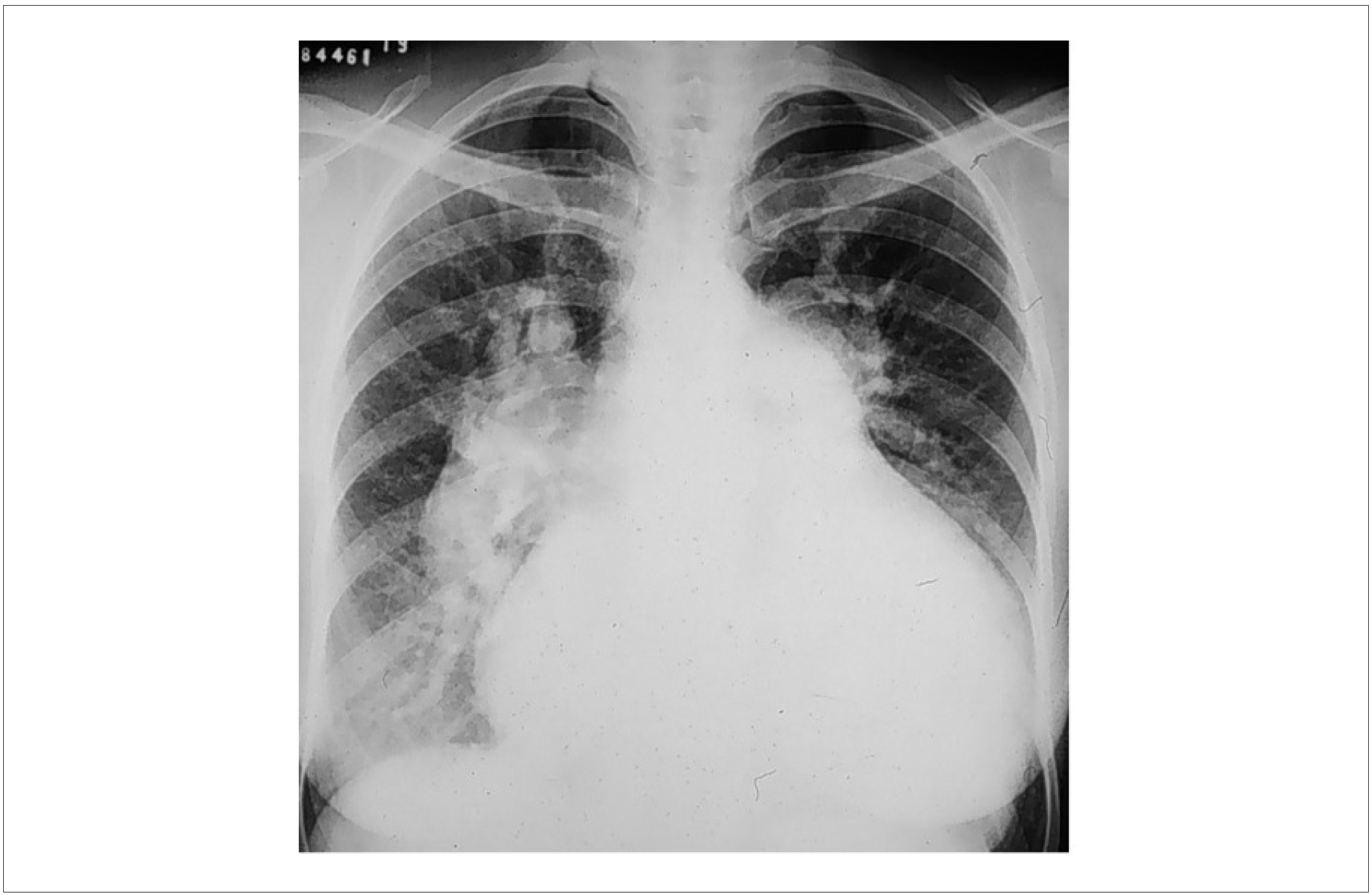
Atrial septal defect (ASD) is the most prevalent congenital cardiac anomaly in adults, accounting for ~35% of all congenital heart defects. Late presentation is due to the insidious development of right ventricular remodeling, with enlargement of right cardiac chambers. Patients may seek medical attention with symptoms related to right or global myocardial dysfunction, arrhythmias or thromboembolic events. Until recently, pulmonary vasculopathy was assumed to be a rare complication in ASD patients. However, with progressive knowledge and interest in treating pulmonary arterial hypertension (PAH), numbers are changing. Of 1877 adults with congenital heart disease followed up for five years in the European Union, 896 had ASD, with PAH prevalences of 12% and 34% for repaired and unrepaired defects respectively. Fifteen patients had the full picture of the Eisenmenger syndrome.

The fortunate side of the scenario is that the widespread use of echocardiography has allowed a big number of patients to be diagnosed early. Furthermore, transcatheter closure of secundum defects offers a less invasive alternative of repair to patients who fulfill anatomical and size criteria, and may be an appropriate therapeutic option for subjects with paradoxical embolism. Also minimally invasive video-assisted surgical techniques have allowed successful closure of the communications, and represent a new and promising therapeutic approach to patients with ASD. The dark side of the story is: with late presentation, treatments may allow patients to become free from the communications, but not from advanced right ventricular remodeling and failure, severe arrhythmias and pulmonary vasculopathy.

[…]

  • Heart Defects, Congenital
  • Heart Septal Defects, Atrial / surgery
  • Hypertension Pulmonary
  • Surgical procedures, minimally invasive
  • Ventricular Dysfunction Right
Read Full Article
Creative Commons Attribution (CC BY) Creative Commons license
01/12/2014 DOI: 10.5935/abc.20140201
Figure 1
ABC
Artigo Original

Renal Denervation Using an Irrigated Catheter in Patients with Resistant Hypertension: A Promising Strategy?

Luciana Armaganijan et al. Rodolfo Staico Aline Moraes Alexandre Abizaid … Dalmo Moreira Celso Amodeo Márcio Sousa Flávio Borelli Dikran Armaganijan J. Eduardo Sousa Amanda Sousa

Background:

Systemic hypertension is an important public health problem and a significant cause of cardiovascular mortality. Its high prevalence and the low rates of blood pressure control have resulted in the search for alternative therapeutic strategies. Percutaneous renal sympathetic denervation emerged as a perspective in the treatment of patients with resistant hypertension.

Objective:

To evaluate the feasibility and safety of renal denervation using an irrigated catheter.

Methods:

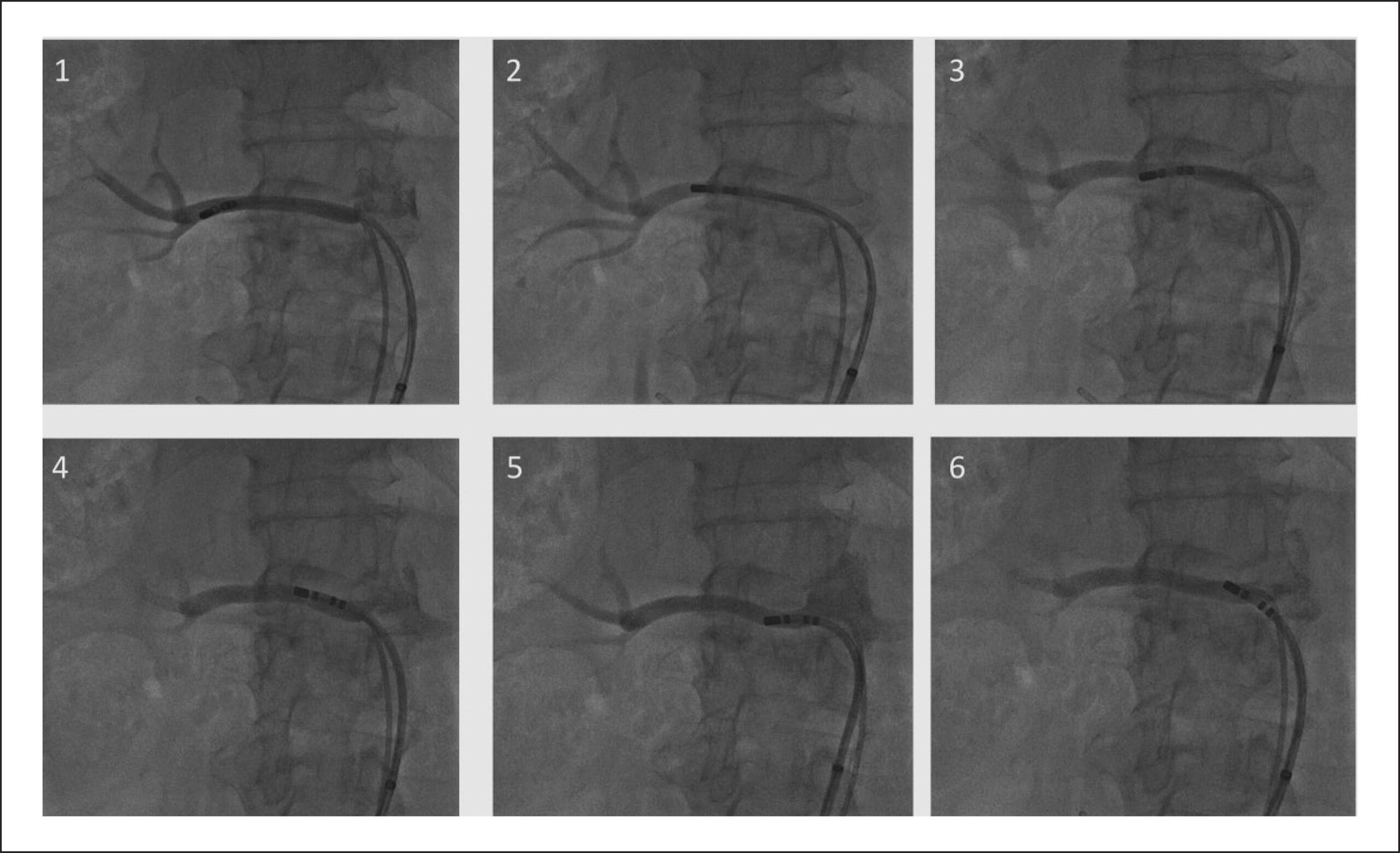
Ten patients with resistant hypertension underwent the procedure. The primary endpoint was safety, as assessed by periprocedural adverse events, renal function and renal vascular abnormalities at 6 months. The secondary endpoints were changes in blood pressure levels (office and ambulatory monitoring) and in the number of antihypertensive drugs at 6 months.

Results:

The mean age was 47.3 (± 12) years, and 90% of patients were women. In the first case, renal artery dissection occurred as a result of trauma due to the long sheath; no further cases were observed after technical adjustments, thus showing an effect of the learning curve. No cases of thrombosis/renal infarction or death were reported. Elevation of serum creatinine levels was not observed during follow-up. At 6 months, one case of significant renal artery stenosis with no clinical consequences was diagnosed. Renal denervation reduced office blood pressure levels by 14.6/6.6 mmHg, on average (p = 0.4 both for systolic and diastolic blood pressure). Blood pressure levels on ambulatory monitoring decreased by 28/17.6 mmHg (p = 0.02 and p = 0.07 for systolic and diastolic blood pressure, respectively). A mean reduction of 2.1 antihypertensive drugs was observed.

Conclusion:

Renal denervation is feasible and safe in the treatment of resistant systemic arterial hypertension. Larger studies are required to confirm our findings.

  • Catheter Ablation
  • Hypertension
  • Kidney / innervation
  • Surgical procedures, minimally invasive
  • Sympatectomy / methods
Read Full Article
Creative Commons Attribution (CC BY) Creative Commons license
17/02/2014 DOI: 10.5935/abc.20140034 Views 2
Figure 1
ABC
Artigo Original

Minimally Invasive Procedures – Direct and Video-Assisted Forms in the Treatment of Heart Diseases

Josué Viana Castro Neto et al. Emanuel Carvalho Melo Juliana Fernandes Silva Leonardo Lemos Rebouças … Larissa Chagas Corrêa Amanda de Queiroz Germano João José Aquino Machado

Background:

Minimally invasive cardiovascular procedures have been progressively used in heart surgery.

Objective:

To describe the techniques and immediate results of minimally invasive procedures in 5 years.

Methods:

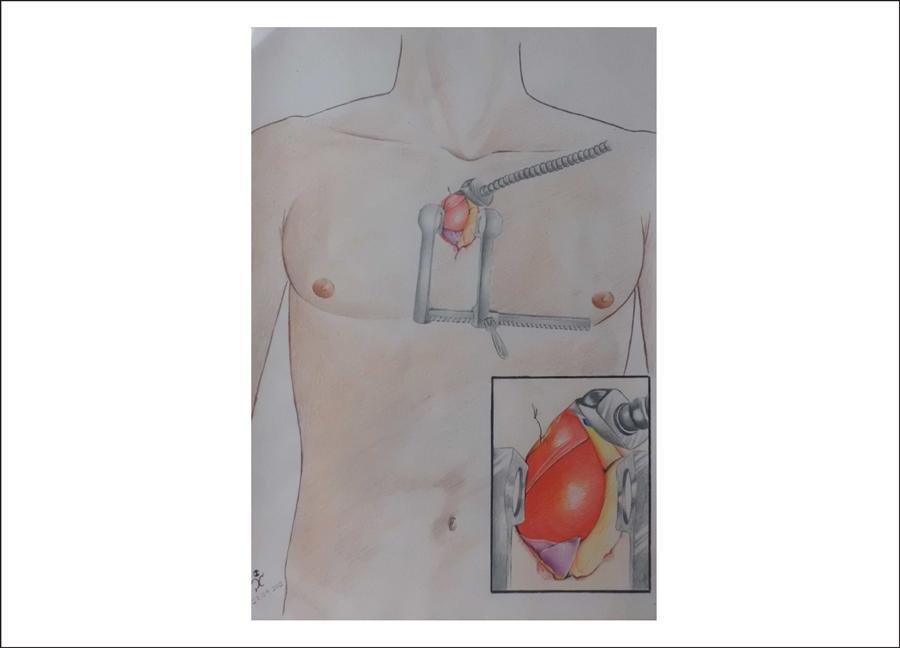
Prospective and descriptive study in which 102 patients were submitted to minimally invasive procedures in direct and video-assisted forms. Clinical and surgical variables were evaluated as well as the in hospital follow-up of the patients.

Results:

Fourteen patients were operated through the direct form and 88 through the video-assisted form. Between minimally invasive procedures in direct form, 13 had aortic valve disease. Between minimally invasive procedures in video-assisted forms, 43 had mitral valve disease, 41 atrial septal defect and four tumors. In relation to mitral valve disease, we replaced 26 and reconstructed 17 valves. Aortic clamp, extracorporeal and procedure times were, respectively, 91,6 ± 21,8, 112,7 ± 27,9 e 247,1 ± 20,3 minutes in minimally invasive procedures in direct form. Between minimally invasive procedures in video-assisted forms, 71,6 ± 29, 99,7 ± 32,6 e 226,1 ± 42,7 minutes. Considering intensive care and hospitalization times, these were 41,1 ± 14,7 hours and 4,6 ± 2 days in minimally invasive procedures in direct and 36,8 ± 16,3 hours and 4,3 ± 1,9 days in minimally invasive procedures in video-assisted forms procedures.

Conclusion:

Minimally invasive procedures were used in two forms – direct and video-assisted – with safety in the surgical treatment of video-assisted, atrial septal defect and tumors of the heart. These procedures seem to result in longer surgical variables. However, hospital recuperation was faster, independent of the access or pathology.

  • Heart Diseases
  • Surgical procedures, minimally invasive
  • video-assisted surgery
Read Full Article
Creative Commons Attribution (CC BY) Creative Commons license
10/02/2014 DOI: 10.5935/abc.20140004 Views 1
Mitral valve and atrial septal defect surgery: minimally invasive or sternotomy approach
ABC
Artigo Original

Mitral valve and atrial septal defect surgery: minimally invasive or sternotomy approach

Josué V. Castro Neto et al. Emanuel Melo Juliana Fernandes Regina Gomes … Caroline Freitas João Machado Francisco Martins Aloísio Barbosa Bernardo Oliveira Cesar Gondim

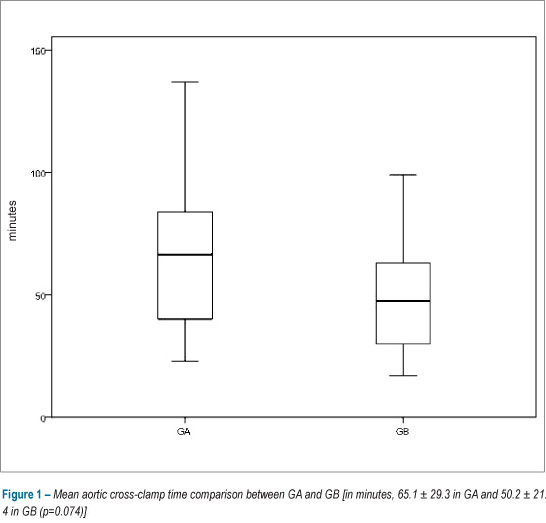
BACKGROUND: To decrease the surgical trauma in heart procedures, minimally invasive (MI) techniques were alternatively introduced. OBJECTIVE: To compare MI surgical access with median sternotomy (MS) for the treatment of mitral valve (MV) disease and atrial septal defect (ASD). METHODS: Forty patients underwent surgery for correction of MV disease or ASD. Patients were divided into group A (GA) (n=20), access by right minithoracotomy and video-assistance; and group B (GB) (n=20), access by full MS. Aortic cross-clamp and cardiopulmonary bypass time, intensive care unit (ICU) time, hospital stay and morbidity were compared in this prospective study . RESULTS: Fifteen patients were submitted to MV procedures and five to ASD corrections in each group. There were 9 mitral replacements (7 bioprostetic and 2 mechanical) and 6 repairs in GA, and 10 (all bioprostetic) and five in GB. The mean aortic cross-clamp and cardiopulmonary bypass time, in minutes, were 65.1 ± 29.3 in GA and 50.2 ± 21.4 in GB (p=0.074); and 91.8±35 in GA and 63.7±27.3 in GB ( p=0.008). The mean ICU time, in hours, were 51.7 ± 16.3 in GA and 55.8±17.5 in GB (p=0.45). The in hospital stay, in days, were 5.2 ± 1 in GA and 6.4±1.5 in GB (p=0.009). CONCLUSION: MI access for correction of the MV disease and ASD implicated in a longer cardiopulmonary bypass time for finalization of the main procedure, nevertheless it didn´t affect patient’s recuperation. MI treated patients were discharged earlier than sternotomy treated patients.

  • Heart Septal Defects, Atrial
  • Mitral Valve
  • Sternotomy
  • Surgical procedures, minimally invasive
Read Full Article
Creative Commons Attribution (CC BY) Creative Commons license
05/07/2012 DOI: 10.1590/S0066-782X2012005000064 Views 1

How to cite this article

EndNote RIS

Electronic Document Format (Vancouver)

Lopes AA, Mesquita SMF. Atrial Septal Defect in Adults: Does Repair Always Mean Cure?. Arquivos Brasileiros de Cardiologia 2014;103(6):446-8.

Electronic Document Format (ABNT)

Lopes, Antônio Augusto; Mesquita, Sonia M. F.. Atrial Septal Defect in Adults: Does Repair Always Mean Cure?. Arquivos Brasileiros de Cardiologia, v. 103, n. 6, p. 446-448, Nov. 2014.

Electronic Document Format (APA)

Lopes, A. A., & Mesquita, S. M. F. (2014). Atrial Septal Defect in Adults: Does Repair Always Mean Cure?. Arquivos Brasileiros de Cardiologia, 103(6), 446-448.

Electronic Document Format (ISO)

Lopes, Antônio Augusto and Mesquita, Sonia M. F.. Atrial Septal Defect in Adults: Does Repair Always Mean Cure?. Arquivos Brasileiros de Cardiologia [online]. 2014, vol. 103, n. 6, [cited 2026-10-14], pp. 446-448. Available from: <https://journals.cardiol.br/article/atrial-septal-defect-in-adults-does-repair-always-mean-cure/>. ISSN 0066-782X

EndNote RIS

Electronic Document Format (Vancouver)

Armaganijan L, Staico R, Moraes A, Abizaid A, Moreira D, Amodeo C, Sousa M, et al. Renal Denervation Using an Irrigated Catheter in Patients with Resistant Hypertension: A Promising Strategy?. Arquivos Brasileiros de Cardiologia 2014;102(4):355-63.

Electronic Document Format (ABNT)

Armaganijan, Luciana; Staico, Rodolfo; Moraes, Aline; Abizaid, Alexandre; Moreira, Dalmo; Amodeo, Celso; Sousa, Márcio; Borelli, Flávio; Armaganijan, Dikran; Sousa, J. Eduardo; Sousa, Amanda. Renal Denervation Using an Irrigated Catheter in Patients with Resistant Hypertension: A Promising Strategy?. Arquivos Brasileiros de Cardiologia, v. 102, n. 4, p. 355-363, Feb. 2014.

Electronic Document Format (APA)

Armaganijan, L., Staico, R., Moraes, A., Abizaid, A., Moreira, D., Amodeo, C., Sousa, M., Borelli, F., Armaganijan, D., Sousa, J. E., & Sousa, A. (2014). Renal Denervation Using an Irrigated Catheter in Patients with Resistant Hypertension: A Promising Strategy?. Arquivos Brasileiros de Cardiologia, 102(4), 355-363.

Electronic Document Format (ISO)

Armaganijan, Luciana and Staico, Rodolfo and Moraes, Aline and Abizaid, Alexandre and Moreira, Dalmo and Amodeo, Celso and Sousa, Márcio and Borelli, Flávio and Armaganijan, Dikran and Sousa, J. Eduardo and Sousa, Amanda. Renal Denervation Using an Irrigated Catheter in Patients with Resistant Hypertension: A Promising Strategy?. Arquivos Brasileiros de Cardiologia [online]. 2014, vol. 102, n. 4, [cited 2026-10-14], pp. 355-363. Available from: <https://journals.cardiol.br/en/article/renal-denervation-using-an-irrigated-catheter-in-patients-with-resistant-hypertension-a-promising-strategy/>. ISSN 0066-782X

EndNote RIS

Electronic Document Format (Vancouver)

Castro Neto JV, Melo EC, Silva JF, Rebouças LL, Corrêa LC, Germano AQ, Machado JJA, et al. Minimally Invasive Procedures – Direct and Video-Assisted Forms in the Treatment of Heart Diseases. Arquivos Brasileiros de Cardiologia 2014;102(3):219-25.

Electronic Document Format (ABNT)

Castro Neto, Josué Viana; Melo, Emanuel Carvalho; Silva, Juliana Fernandes; Rebouças, Leonardo Lemos; Corrêa, Larissa Chagas; Germano, Amanda de Queiroz; Machado, João José Aquino. Minimally Invasive Procedures – Direct and Video-Assisted Forms in the Treatment of Heart Diseases. Arquivos Brasileiros de Cardiologia, v. 102, n. 3, p. 219-225, Feb. 2014.

Electronic Document Format (APA)

Castro Neto, J. V., Melo, E. C., Silva, J. F., Rebouças, L. L., Corrêa, L. C., Germano, A. Q., & Machado, J. J. A. (2014). Minimally Invasive Procedures – Direct and Video-Assisted Forms in the Treatment of Heart Diseases. Arquivos Brasileiros de Cardiologia, 102(3), 219-225.

Electronic Document Format (ISO)

Castro Neto, Josué Viana and Melo, Emanuel Carvalho and Silva, Juliana Fernandes and Rebouças, Leonardo Lemos and Corrêa, Larissa Chagas and Germano, Amanda de Queiroz and Machado, João José Aquino. Minimally Invasive Procedures – Direct and Video-Assisted Forms in the Treatment of Heart Diseases. Arquivos Brasileiros de Cardiologia [online]. 2014, vol. 102, n. 3, [cited 2026-10-14], pp. 219-225. Available from: <https://journals.cardiol.br/en/article/minimally-invasive-procedures-direct-and-video-assisted-forms-in-the-treatment-of-heart-diseases/>. ISSN 0066-782X

EndNote RIS

Electronic Document Format (Vancouver)

Castro Neto JV, Melo E, Fernandes J, Gomes R, Freitas C, Machado J, Martins F, et al. Mitral valve and atrial septal defect surgery: minimally invasive or sternotomy approach. Arquivos Brasileiros de Cardiologia 2012;99(2):681-7.

Electronic Document Format (ABNT)

Castro Neto, Josué V.; Melo, Emanuel; Fernandes, Juliana; Gomes, Regina; Freitas, Caroline; Machado, João; Martins, Francisco; Barbosa, Aloísio; Oliveira, Bernardo; Gondim, Cesar. Mitral valve and atrial septal defect surgery: minimally invasive or sternotomy approach. Arquivos Brasileiros de Cardiologia, v. 99, n. 2, p. 681-687, Jul. 2012.

Electronic Document Format (APA)

Castro Neto, J. V., Melo, E., Fernandes, J., Gomes, R., Freitas, C., Machado, J., Martins, F., Barbosa, A., Oliveira, B., & Gondim, C. (2012). Mitral valve and atrial septal defect surgery: minimally invasive or sternotomy approach. Arquivos Brasileiros de Cardiologia, 99(2), 681-687.

Electronic Document Format (ISO)

Castro Neto, Josué V. and Melo, Emanuel and Fernandes, Juliana and Gomes, Regina and Freitas, Caroline and Machado, João and Martins, Francisco and Barbosa, Aloísio and Oliveira, Bernardo and Gondim, Cesar. Mitral valve and atrial septal defect surgery: minimally invasive or sternotomy approach. Arquivos Brasileiros de Cardiologia [online]. 2012, vol. 99, n. 2, [cited 2026-10-14], pp. 681-687. Available from: <https://journals.cardiol.br/en/article/mitral-valve-and-atrial-septal-defect-surgery-minimally-invasive-or-sternotomy-approach/>. ISSN 0066-782X

  • About ABC Family
  • Internal Regulation
  • Editorial Board
  • Brazilian Society of Cardiology (SBC)

Issues

SBC Guidelines

  • Videos
  • Podcasts
  • News