ABC Family Arquivos Brasileiros de Cardiologia International Journal of Cardiovascular Sciences ABC Heart Failure & Cardiomyopathy ABC Imagem Cardiovascular
Português English
ABC Family
Português English
  • About
    • About ABC Family
    • Internal Regulation
    • Editorial Board
    • Brazilian Society of Cardiology (SBC)
  • Issues
  • SBC Guidelines
  • Content
    • Videos
    • Podcasts
    • News
  • About
    • About ABC Family
    • Internal Regulation
    • Editorial Board
    • Brazilian Society of Cardiology (SBC)
  • Issues
  • SBC Guidelines
  • Content
    • Videos
    • Podcasts
    • News

ABC Family

  • ABC Family
  • Arquivos Brasileiros de Cardiologia
  • International Journal of Cardiovascular Sciences
  • ABC Heart Failure & Cardiomyopathy
  • ABC Imagem Cardiovascular
Search in

No content found.

Journals
Ordering
Article types
Others

  1. Home
  2. Keyword: video-assisted surgery
Figure 1
ABC
Artigo Original

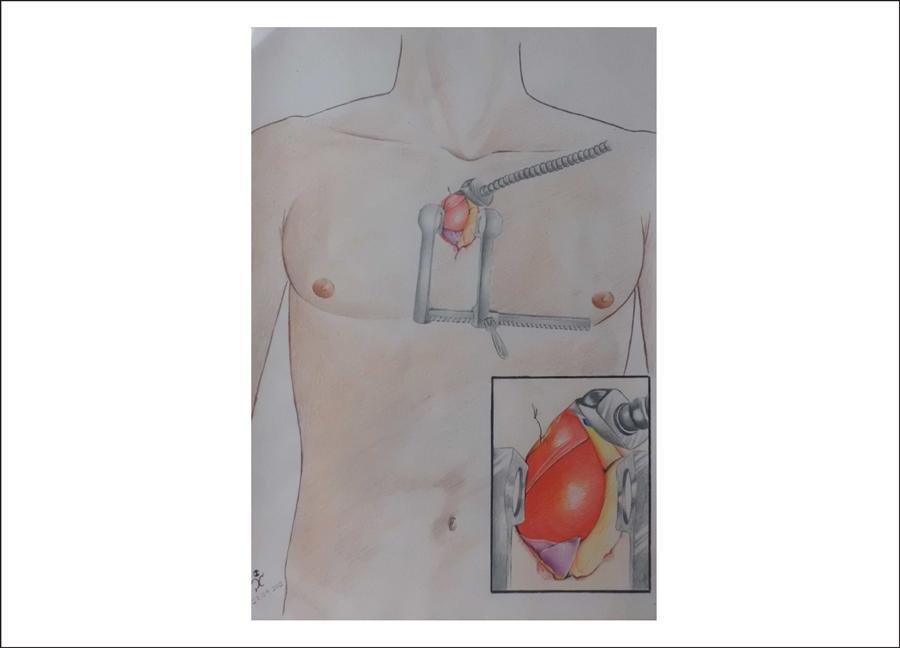
Minimally Invasive Procedures – Direct and Video-Assisted Forms in the Treatment of Heart Diseases

Josué Viana Castro Neto et al. Emanuel Carvalho Melo Juliana Fernandes Silva Leonardo Lemos Rebouças … Larissa Chagas Corrêa Amanda de Queiroz Germano João José Aquino Machado

Background:

Minimally invasive cardiovascular procedures have been progressively used in heart surgery.

Objective:

To describe the techniques and immediate results of minimally invasive procedures in 5 years.

Methods:

Prospective and descriptive study in which 102 patients were submitted to minimally invasive procedures in direct and video-assisted forms. Clinical and surgical variables were evaluated as well as the in hospital follow-up of the patients.

Results:

Fourteen patients were operated through the direct form and 88 through the video-assisted form. Between minimally invasive procedures in direct form, 13 had aortic valve disease. Between minimally invasive procedures in video-assisted forms, 43 had mitral valve disease, 41 atrial septal defect and four tumors. In relation to mitral valve disease, we replaced 26 and reconstructed 17 valves. Aortic clamp, extracorporeal and procedure times were, respectively, 91,6 ± 21,8, 112,7 ± 27,9 e 247,1 ± 20,3 minutes in minimally invasive procedures in direct form. Between minimally invasive procedures in video-assisted forms, 71,6 ± 29, 99,7 ± 32,6 e 226,1 ± 42,7 minutes. Considering intensive care and hospitalization times, these were 41,1 ± 14,7 hours and 4,6 ± 2 days in minimally invasive procedures in direct and 36,8 ± 16,3 hours and 4,3 ± 1,9 days in minimally invasive procedures in video-assisted forms procedures.

Conclusion:

Minimally invasive procedures were used in two forms – direct and video-assisted – with safety in the surgical treatment of video-assisted, atrial septal defect and tumors of the heart. These procedures seem to result in longer surgical variables. However, hospital recuperation was faster, independent of the access or pathology.
  • Heart Diseases
  • Surgical procedures, minimally invasive
  • video-assisted surgery
Read Full Article
Creative Commons Attribution (CC BY) Creative Commons license
10/02/2014 DOI: 10.5935/abc.20140004 Views 1
Minimally-invasive video-assisted coronary-artery bypass grafting
ABC
Artigo Original

Minimally-invasive video-assisted coronary-artery bypass grafting

Rodrigo Mussi Milani et al. Paulo Brofman Maximiliano Guimarães Márcia Olandoski … Hugo Meister Filho Thales Baggio Maria Fernanda Domingues Rodrigo Jardim Aline Sanches Francisco Maia

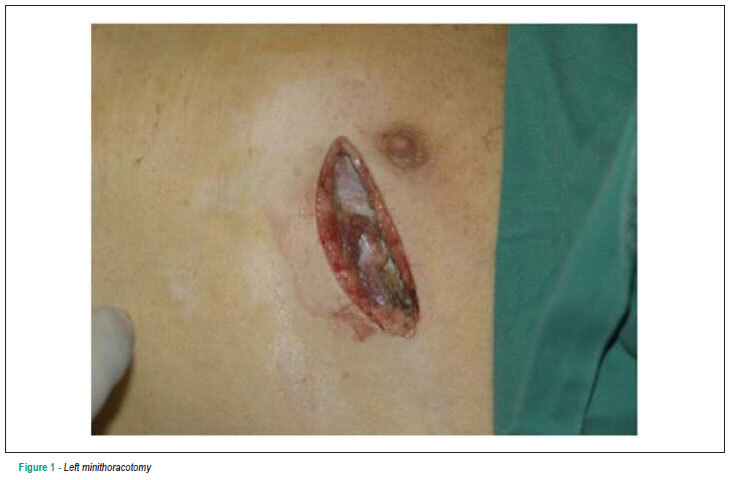
BACKGROUND: In general, surgeries currently tend to be less invasive and cardiac surgery has started to follow this trend. OBJECTIVE:To evaluate the evolution of one hundred patients undergoing minimally-invasive coronary artery bypass grafting. METHODS: Access to the heart was attained through a small; 6-cm thoracotomy, located in the 4th left intercostal space, starting at the nipple. Through the same intercostal space, 3 cm after the primary incision, a 6.5-mm optical device was inserted at 30º. Where the saphenous vein was used, the pericardium was opened above the aorta and the latter was partially clamped with a systolic pressure of 80 mmHg, with the proximal anastomosis being carried out in the conventional manner. The distal anastomoses were carried out in the conventional manner. The procedure was performed off-pump using single lung ventilation. RESULTS: The mean age was 63.9 ± 10.66 years. Sixty-eight (68%) patients were males. Fifty-three (53%) were in functional class III or IV. Left ventricular function was normal in fifty-three (53%) patients. Forty-two (42%) had undergone previous angioplasty. A total of 153 anastomoses were performed, ranging from 1 to 3. The average ventilation time was 4.06 ± 4.08 hours. Seventeen (17%) patients had atrial fibrillation and eight (8%) had pneumonia. There were two deaths in this series. CONCLUSION: Revascularization was safe with low mortality and morbidity. With the advent of new devices, this surgery may have a greater applicability.

  • Coronary Artery Bypass, Off-Pump
  • Myocardial Revascularization
  • video-assisted surgery
Read Full Article
Creative Commons Attribution (CC BY) Creative Commons license
07/06/2012 DOI: 10.1590/S0066-782X2012005000052 Views 1
Videothoracoscopy for isolated atrial fibrillation ablation through bipolar radiofrequency
ABC
Artigo Original

Videothoracoscopy for isolated atrial fibrillation ablation through bipolar radiofrequency

Alexandre Siciliano Colafranceschi et al. Andrey José de Oliveira Monteiro Eduardo Souza Leal Botelho Leonardo Secchin Canale … Arnaldo Rabischoffsky Ieda Prata Costa Fernando Eugênio dos Santos Cruz Filho Roberto Luiz Menssing da Silva Sá Ana Luiza Boechat Luis Alberto Oliveira Dallan

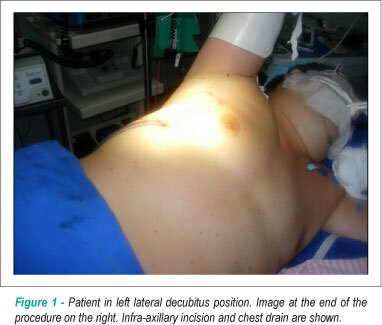
BACKGROUND: The prevalence of atrial fibrillation, expenses with the healthcare system and the associated high morbidity and mortality have justified the search for new therapeutic approaches. OBJECTIVE: To evaluate the reproducibility of the surgical technique, its safety and the initial outcome of the video-assisted surgery for the isolated atrial fibrillation ablation with bipolar radiofrequency. METHODS: Ten patients (90% men) with symptomatic atrial fibrillation (50% paroxystic type) that was refractory to drug therapy, with no heart disease that required concomitant surgical treatment, were submitted to arrhythmia ablation guided by thoracoscopy from May 2007 to May 2008. Clinical, laboratory and image variables were prospectively collected before, during surgery and at the postoperative follow-up. RESULTS: The surgery was carried out as planned in all patients. There was no intra-thoracic structure iatrogenic lesion or deaths. At the mean 6-month follow-up, 80% of the patients were free of atrial fibrillation. There was a significant improvement in the symptoms of New York Heart Association Functional Class heart failure (2.4 ± 0.5 to 1.6 ± 0.7; p=0.011). There was no evidence of pulmonary vein stenosis at the angiotomography in this series. CONCLUSION: The video-assisted surgery for the treatment of atrial fibrillation is reproducible and safe. There is a heart failure symptom evolution improvement after the surgery.

  • Atrial Fibrillation
  • Catheter Ablation
  • video-assisted surgery
Read Full Article
Creative Commons Attribution (CC BY) Creative Commons license
24/11/2009 DOI: 10.1590/S0066-782X2009001000005 Views 1

How to cite this article

EndNote RIS

Electronic Document Format (Vancouver)

Castro Neto JV, Melo EC, Silva JF, Rebouças LL, Corrêa LC, Germano AQ, Machado JJA, et al. Minimally Invasive Procedures – Direct and Video-Assisted Forms in the Treatment of Heart Diseases. Arquivos Brasileiros de Cardiologia 2014;102(3):219-25.

Electronic Document Format (ABNT)

Castro Neto, Josué Viana; Melo, Emanuel Carvalho; Silva, Juliana Fernandes; Rebouças, Leonardo Lemos; Corrêa, Larissa Chagas; Germano, Amanda de Queiroz; Machado, João José Aquino. Minimally Invasive Procedures – Direct and Video-Assisted Forms in the Treatment of Heart Diseases. Arquivos Brasileiros de Cardiologia, v. 102, n. 3, p. 219-225, Feb. 2014.

Electronic Document Format (APA)

Castro Neto, J. V., Melo, E. C., Silva, J. F., Rebouças, L. L., Corrêa, L. C., Germano, A. Q., & Machado, J. J. A. (2014). Minimally Invasive Procedures – Direct and Video-Assisted Forms in the Treatment of Heart Diseases. Arquivos Brasileiros de Cardiologia, 102(3), 219-225.

Electronic Document Format (ISO)

Castro Neto, Josué Viana and Melo, Emanuel Carvalho and Silva, Juliana Fernandes and Rebouças, Leonardo Lemos and Corrêa, Larissa Chagas and Germano, Amanda de Queiroz and Machado, João José Aquino. Minimally Invasive Procedures – Direct and Video-Assisted Forms in the Treatment of Heart Diseases. Arquivos Brasileiros de Cardiologia [online]. 2014, vol. 102, n. 3, [cited 2026-10-14], pp. 219-225. Available from: <https://journals.cardiol.br/en/article/minimally-invasive-procedures-direct-and-video-assisted-forms-in-the-treatment-of-heart-diseases/>. ISSN 0066-782X

EndNote RIS

Electronic Document Format (Vancouver)

Milani RM, Brofman P, Guimarães M, Olandoski M, Meister Filho H, Baggio T, Domingues MF, et al. Minimally-invasive video-assisted coronary-artery bypass grafting. Arquivos Brasileiros de Cardiologia 2012;99(1):596-604.

Electronic Document Format (ABNT)

Milani, Rodrigo Mussi; Brofman, Paulo; Guimarães, Maximiliano; Olandoski, Márcia; Meister Filho, Hugo; Baggio, Thales; Domingues, Maria Fernanda; Jardim, Rodrigo; Sanches, Aline; Maia, Francisco. Minimally-invasive video-assisted coronary-artery bypass grafting. Arquivos Brasileiros de Cardiologia, v. 99, n. 1, p. 596-604, Jun. 2012.

Electronic Document Format (APA)

Milani, R. M., Brofman, P., Guimarães, M., Olandoski, M., Meister Filho, H., Baggio, T., Domingues, M. F., Jardim, R., Sanches, A., & Maia, F. (2012). Minimally-invasive video-assisted coronary-artery bypass grafting. Arquivos Brasileiros de Cardiologia, 99(1), 596-604.

Electronic Document Format (ISO)

Milani, Rodrigo Mussi and Brofman, Paulo and Guimarães, Maximiliano and Olandoski, Márcia and Meister Filho, Hugo and Baggio, Thales and Domingues, Maria Fernanda and Jardim, Rodrigo and Sanches, Aline and Maia, Francisco. Minimally-invasive video-assisted coronary-artery bypass grafting. Arquivos Brasileiros de Cardiologia [online]. 2012, vol. 99, n. 1, [cited 2026-10-14], pp. 596-604. Available from: <https://journals.cardiol.br/en/article/minimally-invasive-video-assisted-coronary-artery-bypass-grafting/>. ISSN 0066-782X

EndNote RIS

Electronic Document Format (Vancouver)

Colafranceschi AS, Monteiro AJO, Botelho ESL, Canale LS, Rabischoffsky A, Costa IP, Cruz Filho FES, et al. Videothoracoscopy for isolated atrial fibrillation ablation through bipolar radiofrequency. Arquivos Brasileiros de Cardiologia 2009;93(4):334-42.

Electronic Document Format (ABNT)

Colafranceschi, Alexandre Siciliano; Monteiro, Andrey José de Oliveira; Botelho, Eduardo Souza Leal; Canale, Leonardo Secchin; Rabischoffsky, Arnaldo; Costa, Ieda Prata; Cruz Filho, Fernando Eugênio dos Santos; Sá, Roberto Luiz Menssing da Silva; Boechat, Ana Luiza; Dallan, Luis Alberto Oliveira. Videothoracoscopy for isolated atrial fibrillation ablation through bipolar radiofrequency. Arquivos Brasileiros de Cardiologia, v. 93, n. 4, p. 334-342, Nov. 2009.

Electronic Document Format (APA)

Colafranceschi, A. S., Monteiro, A. J. O., Botelho, E. S. L., Canale, L. S., Rabischoffsky, A., Costa, I. P., Cruz Filho, F. E. S., Sá, R. L. M. S., Boechat, A. L., & Dallan, L. A. O. (2009). Videothoracoscopy for isolated atrial fibrillation ablation through bipolar radiofrequency. Arquivos Brasileiros de Cardiologia, 93(4), 334-342.

Electronic Document Format (ISO)

Colafranceschi, Alexandre Siciliano and Monteiro, Andrey José de Oliveira and Botelho, Eduardo Souza Leal and Canale, Leonardo Secchin and Rabischoffsky, Arnaldo and Costa, Ieda Prata and Cruz Filho, Fernando Eugênio dos Santos and Sá, Roberto Luiz Menssing da Silva and Boechat, Ana Luiza and Dallan, Luis Alberto Oliveira. Videothoracoscopy for isolated atrial fibrillation ablation through bipolar radiofrequency. Arquivos Brasileiros de Cardiologia [online]. 2009, vol. 93, n. 4, [cited 2026-10-14], pp. 334-342. Available from: <https://journals.cardiol.br/en/article/videothoracoscopy-for-isolated-atrial-fibrillation-ablation-through-bipolar-radiofrequency/>. ISSN 0066-782X

  • About ABC Family
  • Internal Regulation
  • Editorial Board
  • Brazilian Society of Cardiology (SBC)

Issues

SBC Guidelines

  • Videos
  • Podcasts
  • News