| ABC
ABC Family Arquivos Brasileiros de Cardiologia International Journal of Cardiovascular Sciences ABC Heart Failure & Cardiomyopathy ABC Imagem Cardiovascular
Português English
ABC Family | ABC
Português English
  • About
    • About the Journal
    • Internal Regulation
    • Editors Section
    • Editorial Board
    • History
    • SBC Award
  • Instructions to Authors
    • Guidelines for Publication
    • Editorial Policy
    • Ethics Policy
    • Policy on the Use of Artificial Intelligence
    • Mandatory Publication Form
    • Publication Fee
  • Issues
  • SBC Guidelines
  • Abstracts
    • How to Publish an Abstract Supplement?
    • Supplements from the Brazilian Congress of Cardiology
  • About
    • About the Journal
    • Internal Regulation
    • Editors Section
    • Editorial Board
    • History
    • SBC Award
  • Instructions to Authors
    • Guidelines for Publication
    • Editorial Policy
    • Ethics Policy
    • Policy on the Use of Artificial Intelligence
    • Mandatory Publication Form
    • Publication Fee
  • Issues
  • SBC Guidelines
  • Abstracts
    • How to Publish an Abstract Supplement?
    • Supplements from the Brazilian Congress of Cardiology

ABC Family

  • ABC Family
  • Arquivos Brasileiros de Cardiologia
  • International Journal of Cardiovascular Sciences
  • ABC Heart Failure & Cardiomyopathy
  • ABC Imagem Cardiovascular
Search in

No content found.

Journals
Ordering
Article types
Others

  1. Home
  2. ABC
  3. Issues
  4. 2015, Volume 105, Number 4
Persistent Left Superior Vena Cava in Permanent Pacemaker Implantation
Image

Persistent Left Superior Vena Cava in Permanent Pacemaker Implantation

Jerson Hernando Quitián et al. José Julian Carvajal Mariana Soto Guillermo Mora

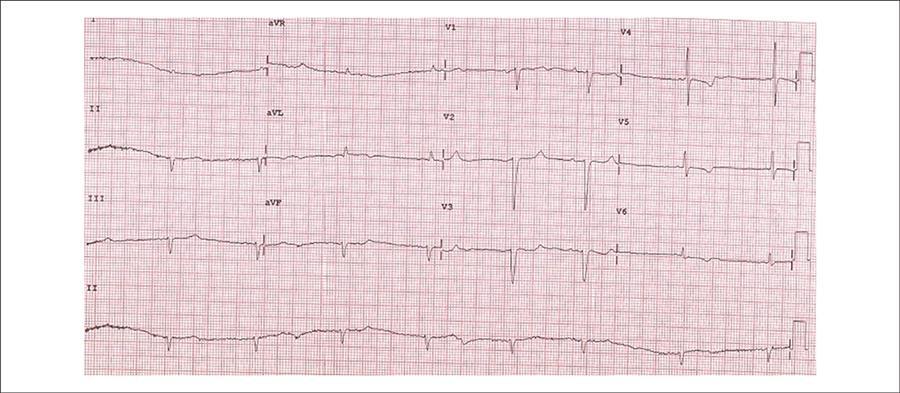
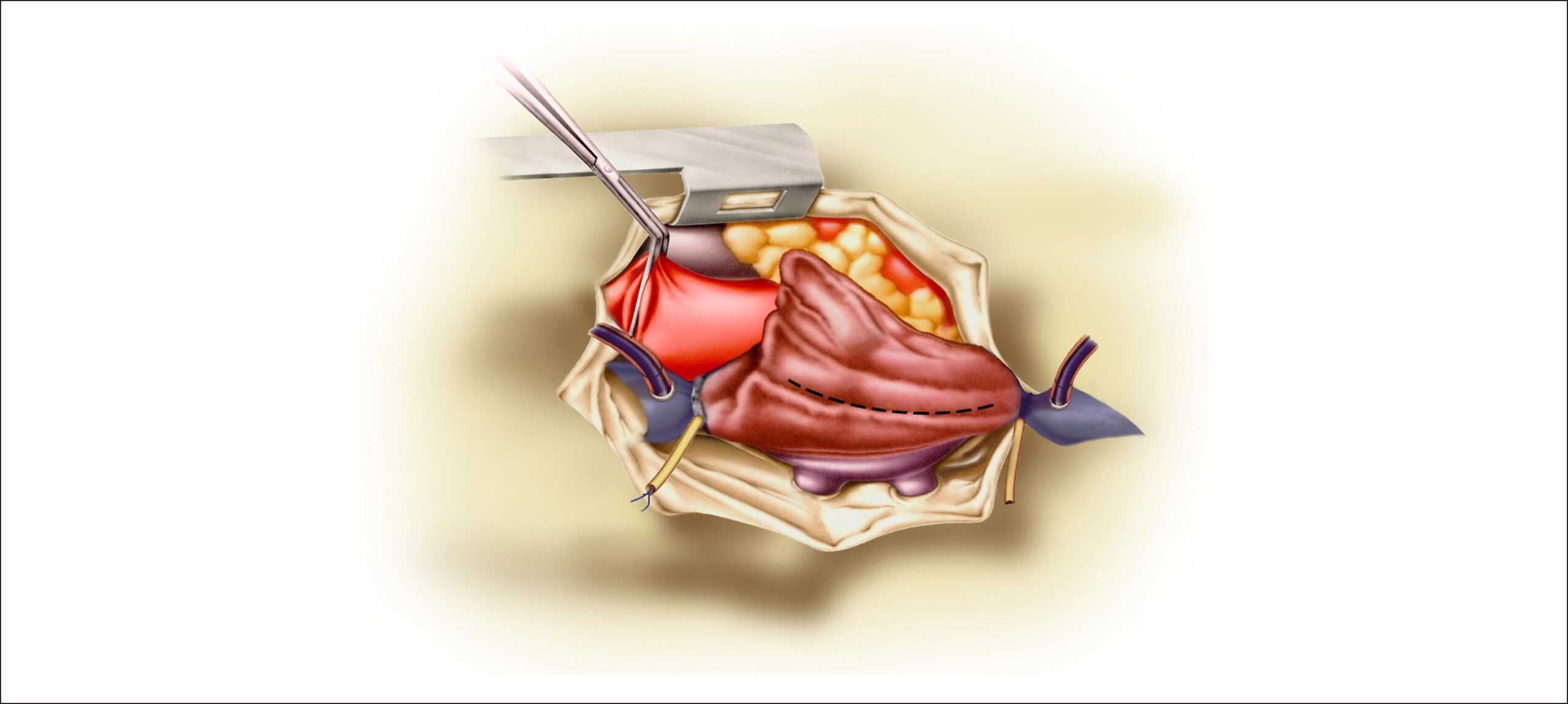
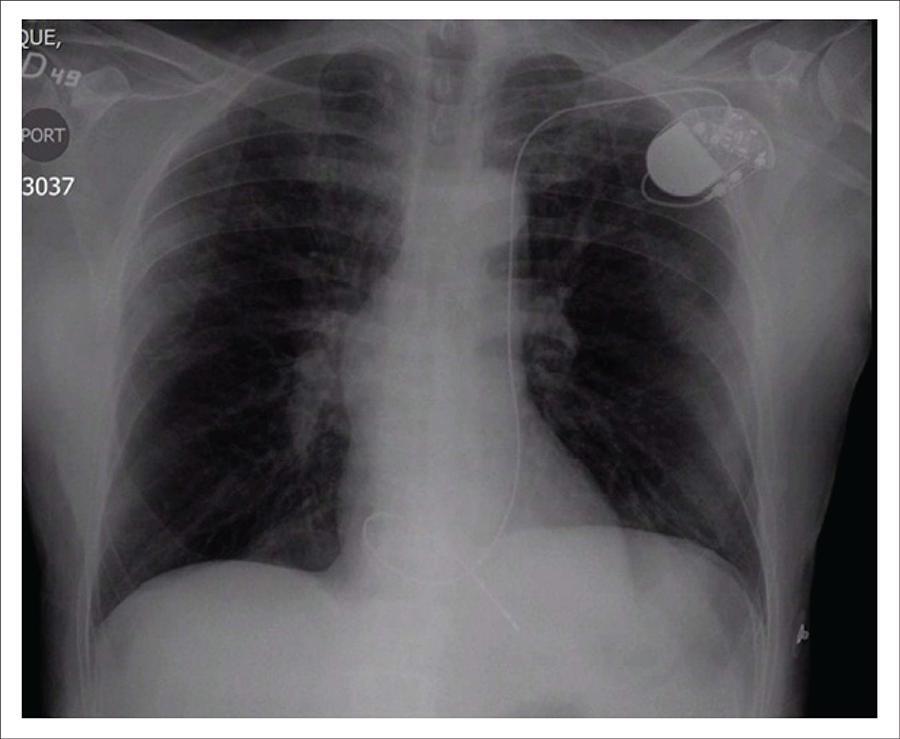
This was an 84-year-old male patient, with worsening functional class from NYHA III/IV to IV/IV and palpitations. No syncope. Physical examination revealed bradycardia, the rest was uneventful. Electrocardiogram showed Mobitz II atrioventricular block. Patient was scheduled for permanent pacemaker implantation.

Subclavian vein access was performed via direct puncture. The guide wire was advanced, entered the subclavian vein and descended parallel to the spine without crossing over to the right side. Subsequently, the guide wire traversed the coronary sinus and ended in the right atrium. Persistent left superior vena cava was diagnosed. During fluoroscopic observation, another feature that aids in the diagnosis is left paravertebral shadow above the aortic bow. The electrode was initially introduced with a straight guide reaching into the right atrium (RA). Afterwards, the straight guide was replaced by a conventional J guide and the electrode was pushed towards the anterolateral wall of the RA. The electrode tip was thus lying against the tricuspid valve. Subsequently, the guide was withdrawn 3 cm. The guide withdrawal, without moving the electrode, is associated with the passage of the electrode through the tricuspid valve. The electrode was advanced and finally the active fixation mechanism was deployed.

[…]
  • Cardiopatias Congênitas
  • Marca-Passo Artificial
  • Veia Cava Superior
Read Full Article
Creative Commons Attribution (CC BY) Creative Commons license
01/10/2015 DOI: 10.5935/abc.20150116
Figure 1
Original Article

Acute Coronary Syndrome Treatment Costs from the Perspective of the Supplementary Health System

Vanessa Teich et al. Tony Piha Lucas Fahham Haline Bianca Squiassi … Everton de Matos Paloni Paulo Miranda Denizar Vianna Araújo

Abstract

Background:

Acute coronary syndrome (ACS) is defined as a “group of clinical symptoms compatible with acute myocardial ischemia”, representing the leading cause of death worldwide, with a high clinical and financial impact. In this sense, the development of economic studies assessing the costs related to the treatment of ACS should be considered.

Objective:

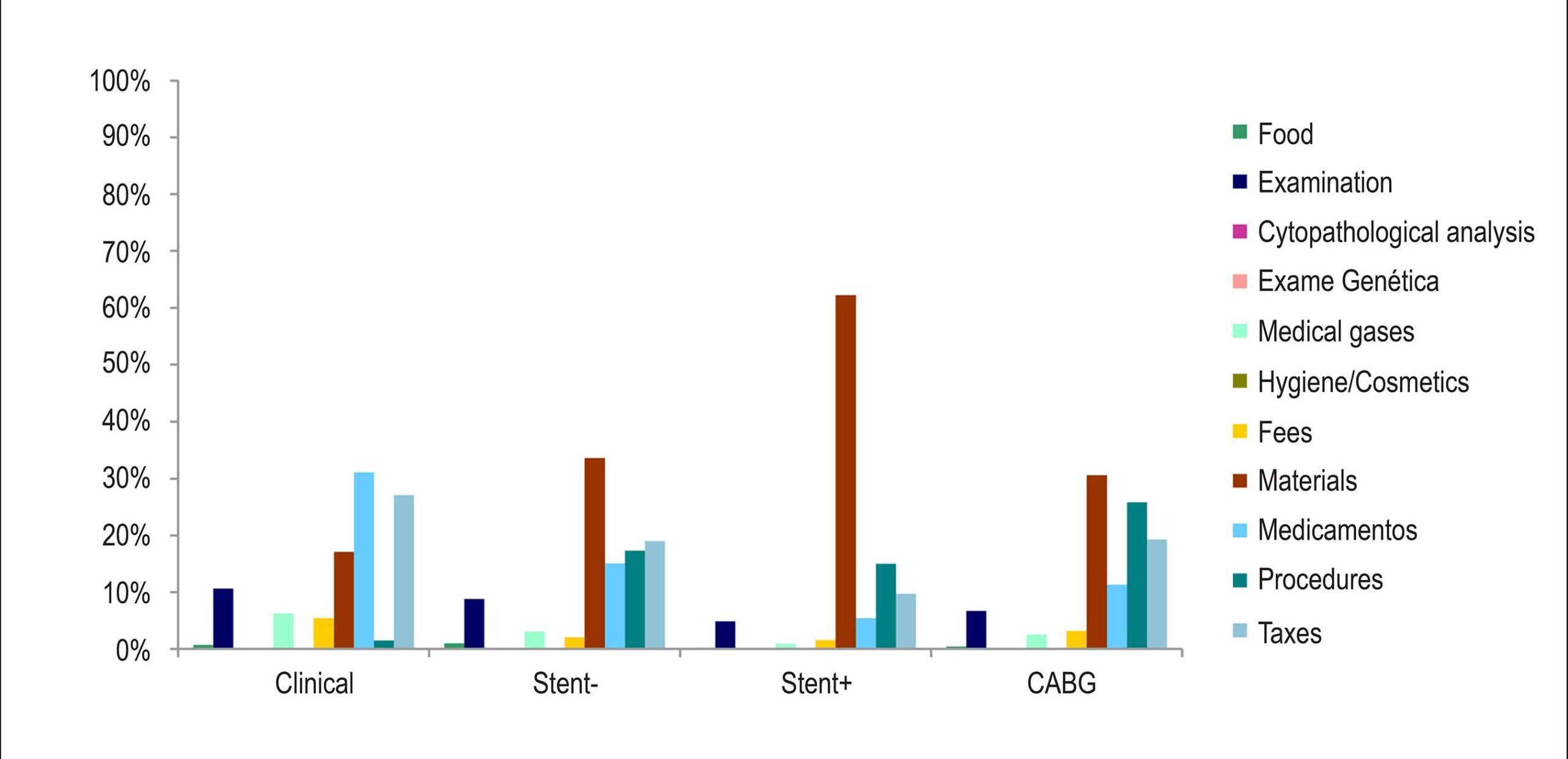
To evaluate costs and length of hospital stay between groups of patients treated for ACS undergoing angioplasty with or without stent implantation (stent+ / stent-), coronary artery bypass surgery (CABG) and treated only clinically (Clinical) from the perspective of the Brazilian Supplementary Health System (SHS).

Methods:

A retrospective analysis of medical claims of beneficiaries of health plans was performed considering hospitalization costs and length of hospital stay for management of patients undergoing different types of treatment for ACS, between Jan/2010 and Jun/2012.

Results:

The average costs per patient were R$ 18,261.77, R$ 30,611.07, R$ 37,454.94 and R$ 40,883.37 in the following groups: Clinical, stent-, stent+ and CABG, respectively. The average costs per day of hospitalization were R$ 1,987.03, R$ 4,024.72, R$ 6,033.40 and R$ 2,663.82, respectively. The average results for length of stay were 9.19 days, 7.61 days, 6.19 days and 15.20 days in these same groups. The differences were significant between all groups except Clinical and stent- and between stent + and CABG groups for cost analysis.

Conclusion:

Hospitalization costs of SCA are high in the Brazilian SHS, being significantly higher when interventional procedures are required.

  • Acute Coronary Syndrome / economy
  • Data Interpretation, Statistical
  • Health Care Costs
  • Health Expenditures
  • Prepaid Health Plans
Read Full Article
Creative Commons Attribution (CC BY) Creative Commons license
01/10/2015 DOI: 10.5935/abc.20150129 Views 2
Figure 1
Case Report

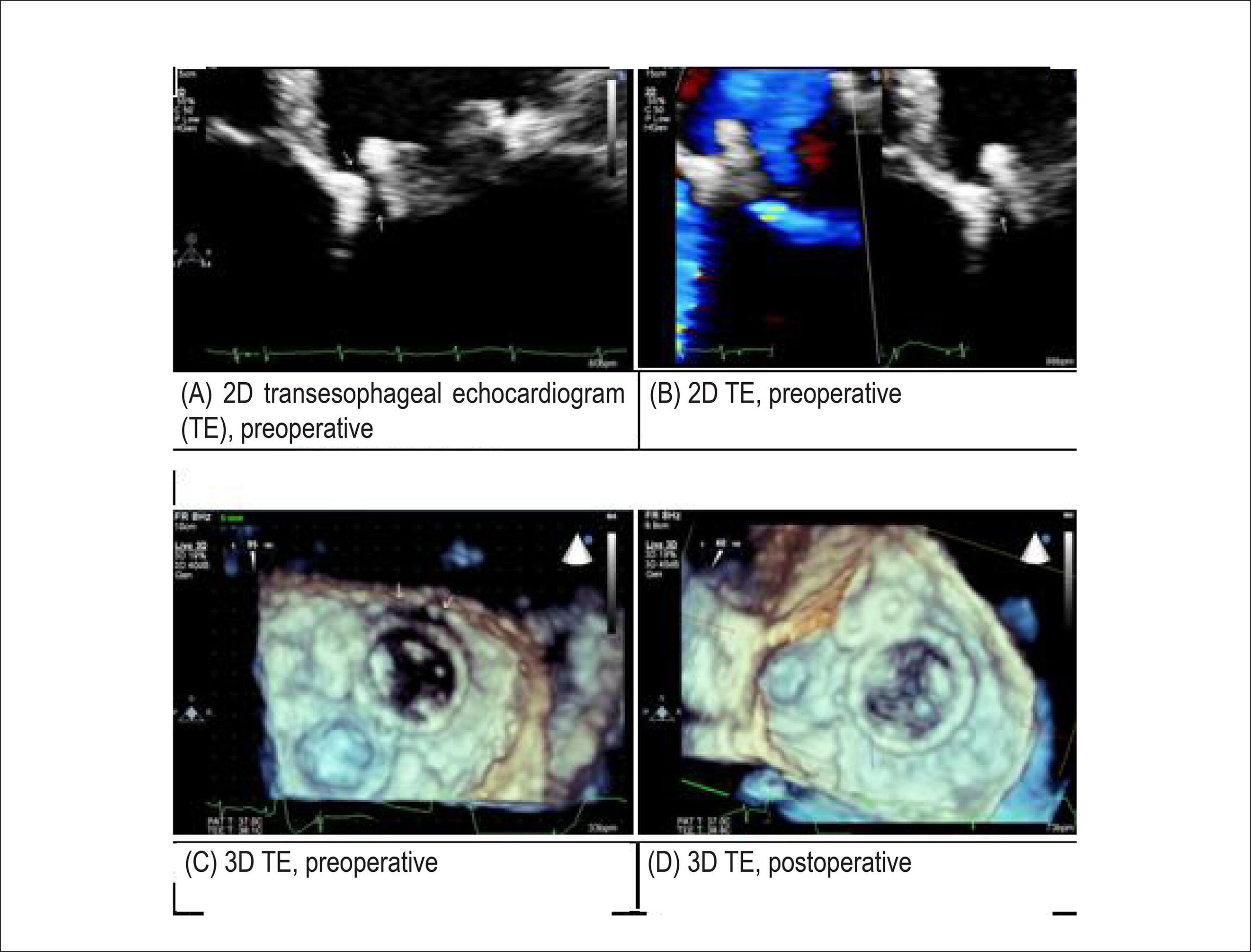
Percutaneous Treatment of Mitral Paraprosthetic Regurgitation: an Alternative to Surgery

Roney Orismar Sampaio et al. Alessandra Gomes de Oliveira George Barreto Miranda Pedro Alves Lemos Neto … Marcelo Luiz Campos Vieira Flávio Tarasoutchi

Introduction

Paraprosthetic regurgitation occurs in approximately 7%–17% of patients undergoing mitral valve replacement and 2%–10% of patients undergoing aortic valve replacement,. Typically, this regurgitation is discrete and does imply major clinical complications; however, when it is moderate or severe, the consequences can be serious, leading to heart failure and/or hemolysis,. It is estimated that approximately 1%–5% of cases develop to more clinically severe conditions,. The main causes of paraprosthetic regurgitation are calcification of the valvular annulus, infection, suture technique, and size and shape of the prosthesis,.

Usually, surgical treatment is considered as the first treatment option for symptomatic patients. In 1992, however, an alternative treatment via percutaneous occlusion of the paravalvular orifice was proposed for cases in which the patient faces high risk from surgical treatment–.

[…]

  • Atrioventricular block
  • Heart Failure
  • Heart Valve Prosthesis Implantation
  • Hemolysis
  • Mitral Valve/surgery
  • Prosthesis-Related Infections / complications
Read Full Article
Creative Commons Attribution (CC BY) Creative Commons license
01/10/2015 DOI: 10.5935/abc.20150115 Views 1
Editorial

Cardiovascular Risk Factors: From Consolidated Knowledge to a Call for Action

Guilherme Brasil Grezzana et al. Lucia Campos Pellanda

Since the decade of 1950, the most prominent journal in cardiology in Brazil, Arquivos Brasileiros de Cardiologia (ABC), has been indexed in Medline. A total of 7,102 articles have been published since then, on various subjects related to clinical, invasive, surgical cardiology, as well as diagnostic methods.

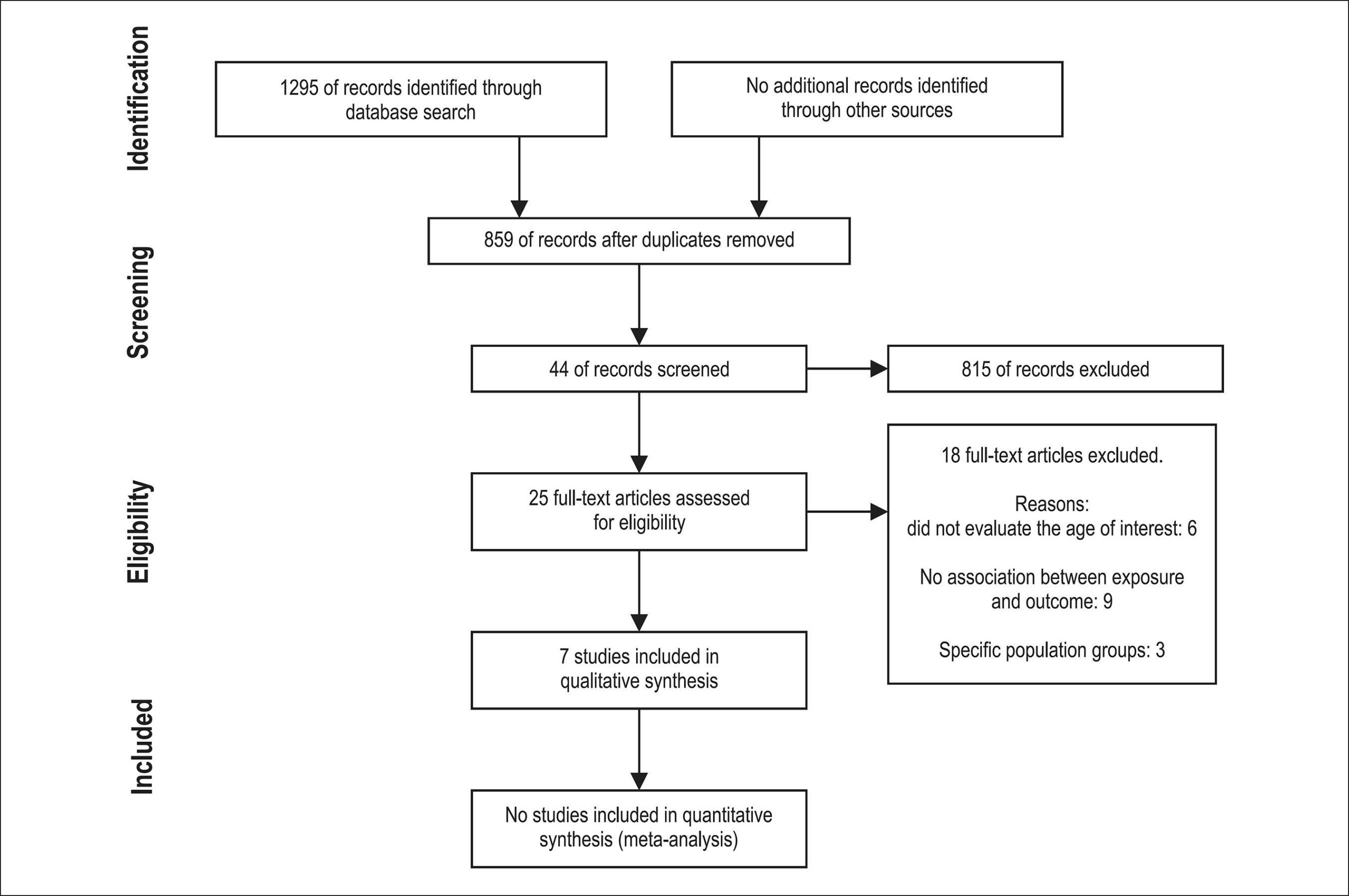
We performed a systematic review of articles published in ABC during the period from January 2001 to June 2015 containing the MeSH term “cardiovascular risk factors”. Of the 3,087 titles of articles published in the period, 116 articles were identified. The abstracts of these articles were reviewed, and 107 articles, in which assessment of cardiovascular risk factors was the main topic, were included. The sample was composed by 102 original articles, 3 letters and 2 editorials. When specific topics were assessed, “cardiovascular factor or cardiovascular risk” was generally described in 88 articles, 6 articles focused on quality of life and cardiovascular risk factor, 4 articles described epidemiological factors and risk factors, 5 articles specifically explored systemic arterial hypertension and risk factors, 3 were guidelines on risk factors and 1 articles related risk factor with public health. However, when we focused only on isolated risk factors, there has been a clear preponderance of articles involving arterial hypertension (18% between 2010 and 2013) and a trend of increase in the number of articles on diabetes (approximately 10%) published on ABC in the last years.

[…]

  • Cardiovascular Diseases
  • Data Interpretation, Statistical
  • epidemiologic studies
  • Journals Articles
  • Prevention
  • Risk Factors
Read Full Article
Creative Commons Attribution (CC BY) Creative Commons license
01/10/2015 DOI: 10.5935/abc.20150128 Views 2
Figure 1
Special Article

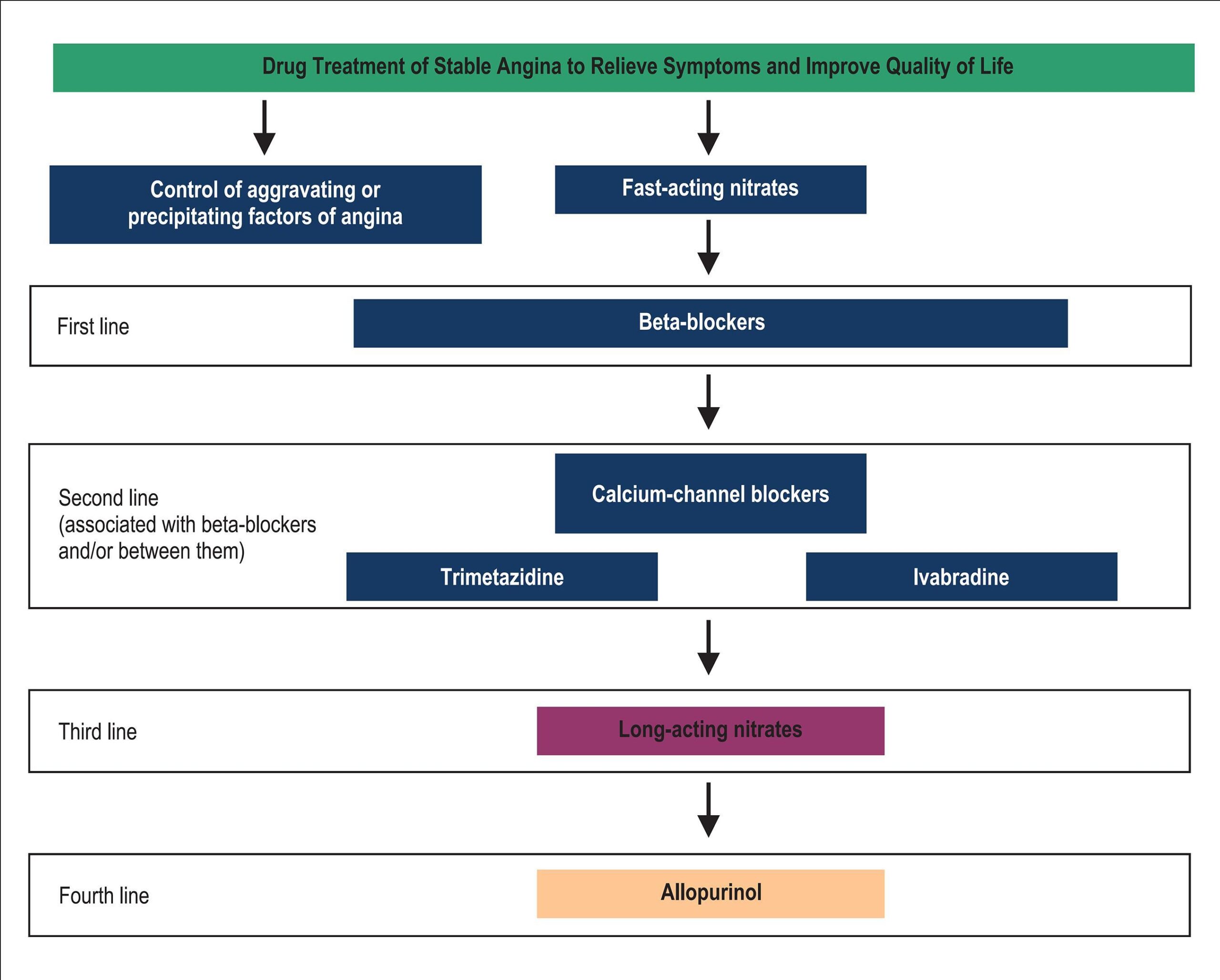
Executive Summary of the Guidelines on Stable Coronary Disease

Luiz Antonio Machado César et al. Antonio de Pádua Mansur João Fernando Monteiro Ferreira

Part I – Diagnosis and risk stratification

[…]

  • Atherosclerosis
  • Coronary Artery Disease
  • Diagnosis
  • Physical Examination
  • Risk Factors
Read Full Article
Creative Commons Attribution (CC BY) Creative Commons license
01/10/2015 DOI: 10.5935/abc.20150136 Views 1
Erratum

Erratum

January 2015 Issue, vol. 104 (1), pages 32-44

The original article “Cost-Effectiveness of High, Moderate and Low-Dose Statins in the Prevention of Vascular Events in the Brazilian Public Health System” published in the January 2015 issue of the Brazilian Archives of Cardiology [Arq Bras Cardiol. 2015; 104 (1): 32-44], was published in the Portuguese version as “Effectiveness of High, Moderate and Low-Dose Statins in the Prevention of Vascular Events in the Brazilian Public Health System”. A correction was made in the Portuguese version.

[…]

Read Full Article
Creative Commons Attribution (CC BY) Creative Commons license
01/10/2015 DOI: 10.5935/abc.20150138
Figure 1
Anatomopathological Session

Case 4 – A 79-Year-Old Man with Congestive Heart Failure Due to Restrictive Cardiomyopathy

Sumaia Mustafa et al. Alice Tatsuko Yamada Fabio Mitsuo Lima Valdemir Melechco Carvalho … Vera Demarchi Aiello Jussara Bianchi Castelli

Clinical Aspects

The patient JAB, a 79-year-old previous smoker and alcoholic man residing in São Paulo, attended an outpatient clinic at InCor due to heart failure which worsened progressively since 2012, requiring hospitalization for treatment.

Heart failure is a systemic and complex clinical syndrome, defined as a cardiac dysfunction that causes the blood supply to be insufficient to meet tissular metabolic demands, in the presence of a normal venous return, or which only meets the demands with high filling pressure.

[…]

  • ascites
  • Cardiomegaly
  • Cardiomyopathy, Restrictive
  • Heart Arrest
  • Heart Failure
Read Full Article
Creative Commons Attribution (CC BY) Creative Commons license
01/10/2015 DOI: 10.5935/abc.20150135 Views 1
Figure 1
Point of view

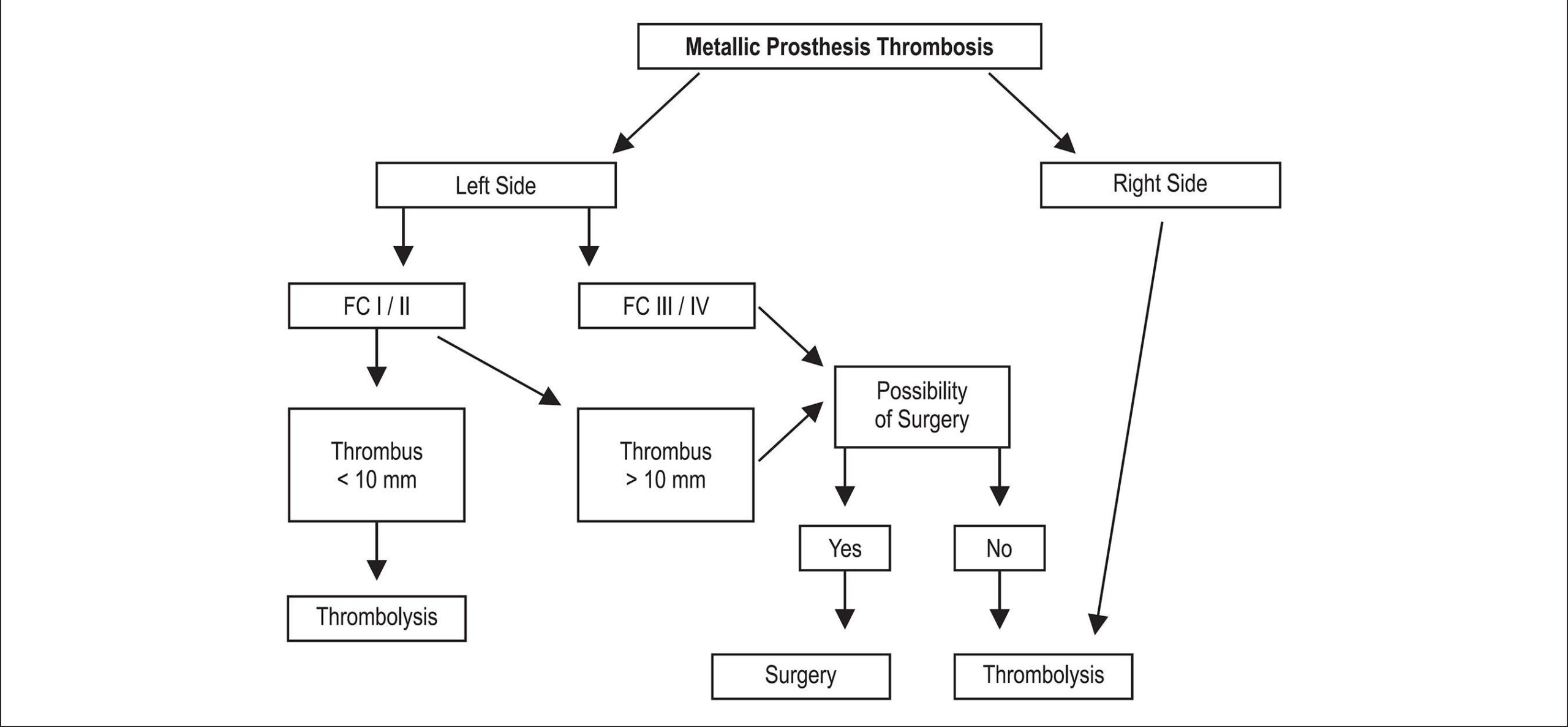
Patient Management with Metallic Valve Prosthesis during Pregnancy and Postpartum Period

Juliane Dantas Seabra Garcez et al. Vitor Emer Egypto Rosa Antonio Sergio de Santis Andrade Lopes Tarso Augusto Duenhas Accorsi … João Ricardo Cordeiro Fernandes Pablo Maria Pomerantzeff Walkiria Samuel Avila Flavio Tarasoutchi

Abstract

Prosthetic thrombosis is a rare complication, but it has high mortality and morbidity. Young women of childbearing age that have prosthetic heart valves are at increased risk of thrombosis during pregnancy due to changes in coagulation factors. Anticoagulation with adequate control and frequent follow-up if pregnancy occurs must be performed in order to prevent complications related to anticoagulant use. Surgery remains the treatment of choice for prosthetic heart valve thrombosis in most clinical conditions.

Patients with metallic prosthetic valves have an estimated 5% risk of thrombosis during pregnancy and maternal mortality of 1.5% related to the event. Anticoagulation with vitamin K antagonists during pregnancy is related to varying degrees of complications at each stage of the pregnancy and postpartum periods. Warfarin sodium crosses the placental barrier and when used in the first trimester of pregnancy is a teratogenic agent, causing 1-3% of malformations characterized by fetal warfarin syndrome and also constitutes a major cause of miscarriage in 10-30% of cases. In the third trimester and at delivery, the use of warfarin is associated with maternal and neonatal bleeding in approximately 5 to 15% of cases, respectively. On the other hand, inadequate anticoagulation, including the suspension of the oral anticoagulants aiming at fetal protection, carries a maternal risk of about 25% of metallic prosthesis thrombosis, particularly in the mitral valve. This fact is also due to the state of maternal hypercoagulability with activation of coagulation factors V, VI, VII, IX, X, platelet activity and fibrinogen synthesis, and decrease in protein S levels.

[…]

  • Abortion, Spontaneous
  • Anticoagulants / therapeutic use
  • Heart Valve Prosthesis
  • Mortality
  • Pregnancy
  • Thrombosis
Read Full Article
Creative Commons Attribution (CC BY) Creative Commons license
01/10/2015 DOI: 10.5935/abc.20150130 Views 2
Figure 1
Review Article

A Systematic Review on Sleep Duration and Dyslipidemia in Adolescents: Understanding Inconsistencies

Gabriela de Azevedo Abreu et al. Laura Augusta Barufaldi Katia Vergetti Bloch Moyses Szklo

Introduction

Although many questions about the role of sleep remain unanswered, it is known that sleep is not only a physiological function, but also performs an important role in promoting growth, maturation and general health of children and adolescents, contributing significantly to cognitive, emotional functions and school performance. Currently, there is a tendency for the young population to have irregular sleeping hours, with differences in bed and wake-up times between weekdays and weekends, especially as they get older–.

There is a growing interest about the impact of sleep and its disorders on regulation of inflammatory processes and morbidities, particularly in the context of metabolic and cardiovascular diseases (CVD) and their complications. In children and adolescents, cross-sectional– and prospective, studies have shown an association between overweight or obesity and few hours of sleep. In adults, there is evidence supporting this association, as well as correlations with insulin resistance, diabetes and cardiovascular diseases–.

[…]

  • Adolescent
  • Dyslipidemias
  • Review
  • Sleep
Read Full Article
Creative Commons Attribution (CC BY) Creative Commons license
25/09/2015 DOI: 10.5935/abc.20150121
Figure 1
Original Article

The Benefits of Prone SPECT Myocardial Perfusion Imaging in Reducing Both Artifact Defects and Patient Radiation Exposure

Maria Stathaki et al. Sophia Koukouraki Emmanouela Papadaki Angeliki Tsaroucha Nikolaos Karkavitsas

Abstract

Background:

Prone imaging has been demonstrated to minimize diaphragmatic and breast tissue attenuation.

Objectives:

To determine the role of prone imaging on the reduction of unnecessary rest perfusion studies and coronary angiographies performed, thus decreasing investigation time and radiation exposure.

Methods:

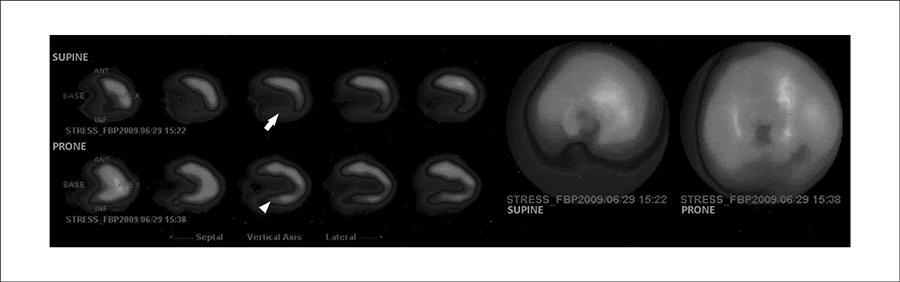
We examined 139 patients, 120 with an inferior wall and 19 with an anterior wall perfusion defect that might represented attenuation artifact. Post-stress images were acquired in both the supine and prone position. Coronary angiography was used as the “gold standard” for evaluating coronary artery patency. The study was terminated and rest imaging was obviated in the presence of complete improvement of the defect in the prone position. Quantitative interpretation was performed. Results were compared with clinical data and coronary angiographic findings.

Results:

Prone acquisition correctly revealed defect improvement in 89 patients (89/120) with inferior wall and 12 patients (12/19) with anterior wall attenuation artifact. Quantitative analysis demonstrated statistically significant difference in the mean summed stress scores (SSS) of supine and mean SSS of prone studies in patients with disappearing inferior wall defect in the prone position and patent right coronary artery (true negative results). The mean difference between SSS in supine and in prone position was higher with disappearing than with remaining defects.

Conclusion:

Technetium-99m (Tc-99m) tetrofosmin myocardial perfusion imaging with the patient in the prone position overcomes soft tissue attenuation; moreover it provides an inexpensive, accurate approach to limit the number of unnecessary rest perfusion studies and coronary angiographies performed.

  • myocardial perfusion
  • Prone Position
  • Radioactive Emission
  • SPECT instead of Tomography emission-computed single-photon
  • Technetium (Tc-99m) Tetrofosmin
Read Full Article
Creative Commons Attribution (CC BY) Creative Commons license
25/09/2015 DOI: 10.5935/abc.20150122
Figure 1
Original Article

A Novel Algorithm to Quantify Coronary Remodeling Using Inferred Normal Dimensions

Breno A. A. Falcão et al. João Luiz A. A. Falcão Gustavo R. Morais Rafael C. Silva … Augusto C. Lopes Paulo R. Soares José Mariani Jr Roberto Kalil-Filho Elazer R. Edelman Pedro A. Lemos

Background:

Vascular remodeling, the dynamic dimensional change in face of stress, can assume different directions as well as magnitudes in atherosclerotic disease. Classical measurements rely on reference to segments at a distance, risking inappropriate comparison between dislike vessel portions.

Objective:

to explore a new method for quantifying vessel remodeling, based on the comparison between a given target segment and its inferred normal dimensions.

Methods:

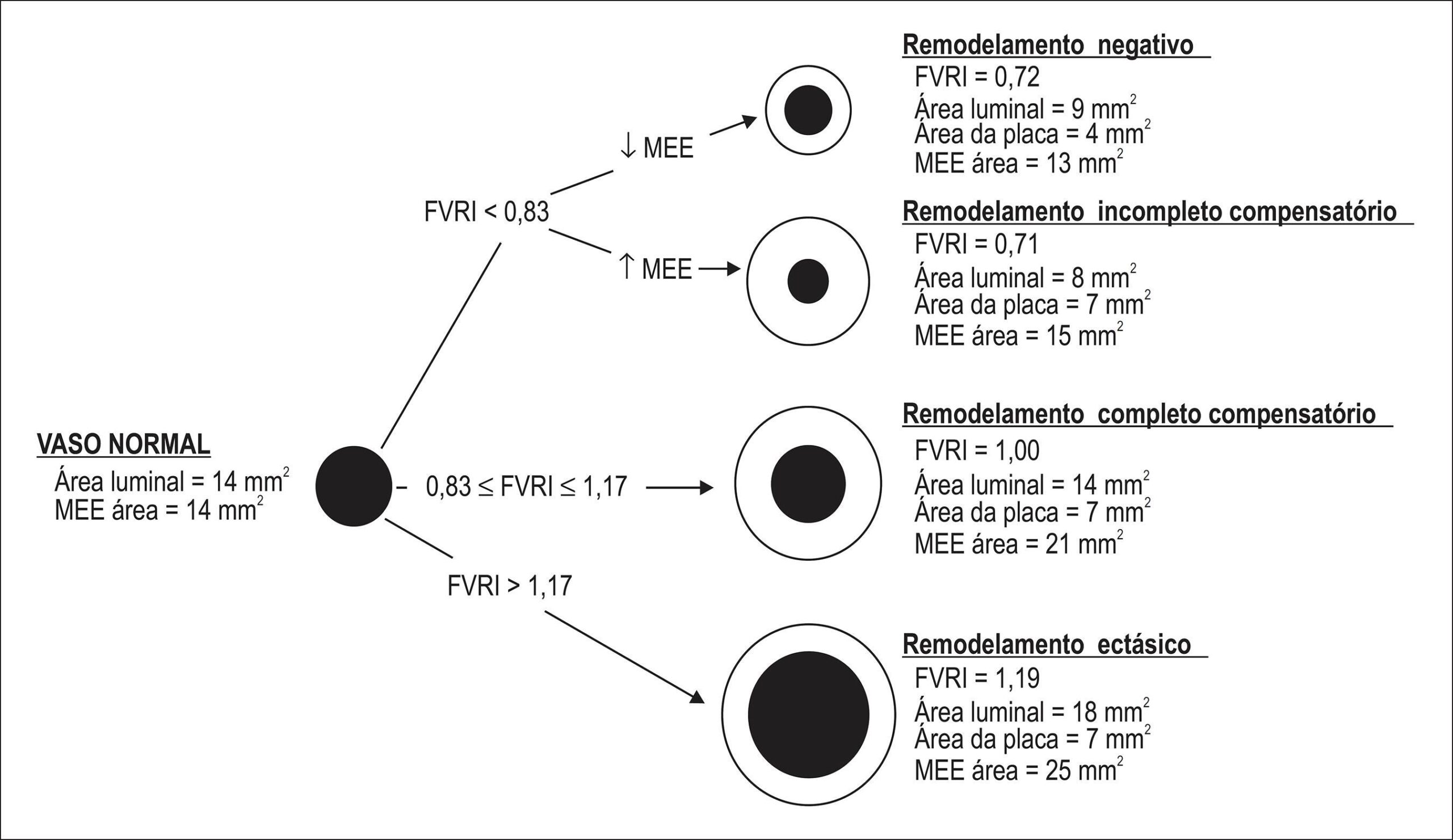
Geometric parameters and plaque composition were determined in 67 patients using three-vessel intravascular ultrasound with virtual histology (IVUS-VH). Coronary vessel remodeling at cross-section (n = 27.639) and lesion (n = 618) levels was assessed using classical metrics and a novel analytic algorithm based on the fractional vessel remodeling index (FVRI), which quantifies the total change in arterial wall dimensions related to the estimated normal dimension of the vessel. A prediction model was built to estimate the normal dimension of the vessel for calculation of FVRI.

Results:

According to the new algorithm, “Ectatic” remodeling pattern was least common, “Complete compensatory” remodeling was present in approximately half of the instances, and “Negative” and “Incomplete compensatory” remodeling types were detected in the remaining. Compared to a traditional diagnostic scheme, FVRI-based classification seemed to better discriminate plaque composition by IVUS-VH.

Conclusion:

Quantitative assessment of coronary remodeling using target segment dimensions offers a promising approach to evaluate the vessel response to plaque growth/regression.

  • Atherosclerosis / physiopathology
  • Coronary Artery Diseases
  • Neovascularization, Pathologic
  • Ultrasonography
  • Vascular Remodeling
Read Full Article
Creative Commons Attribution (CC BY) Creative Commons license
18/08/2015 DOI: 10.5935/abc.20150098 Views 4
Graph 1
Original Article

Mortality from Cardiovascular Diseases in the Elderly: Comparative Analysis of Two Five-year Periods

Grasiela Piuvezam et al. Wilton Rodrigues Medeiros Andressa Vellasco Costa Felipe Fonseca Emerenciano … Renata Cristina Santos Danilo Silveira Seabra

Background:

Cardiovascular diseases are the leading cause of death in Brazil. The better understanding of the spatial and temporal distribution of mortality from cardiovascular diseases in the Brazilian elderly population is essential to support more appropriate health actions for each region of the country.

Objective:

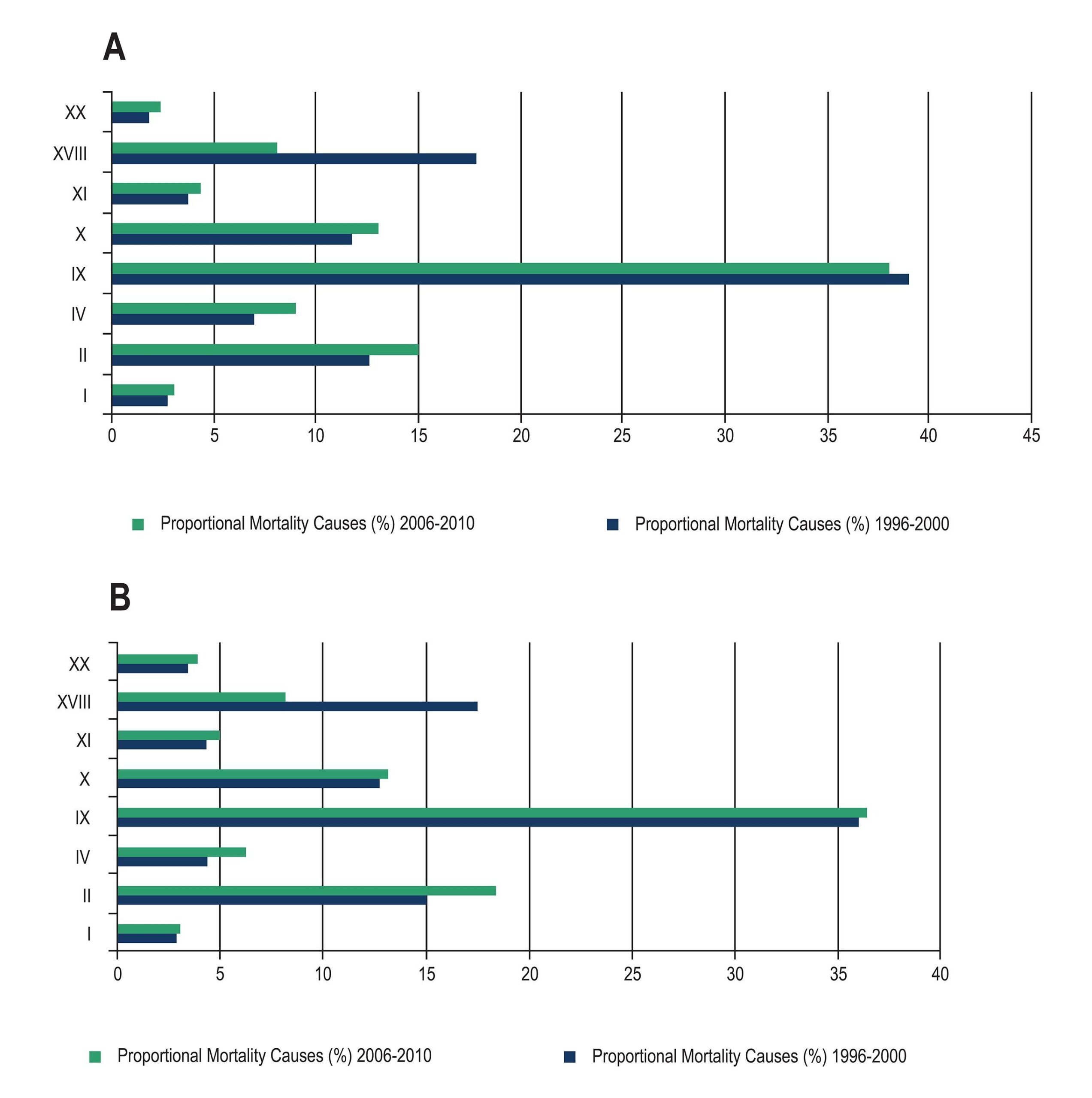
To describe and to compare geospatially the rates of mortality from cardiovascular disease in elderly individuals living in Brazil by gender in two 5-year periods: 1996 to 2000 and 2006 to 2010.

Methods:

This is an ecological study, for which rates of mortality were obtained from DATASUS and the population rates from the Brazilian Institute of Geography and Statistics (Instituto Brasileiro de Geografia e Estatística). An average mortality rate for cardiovascular disease in elderly by gender was calculated for each period. The spatial autocorrelation was evaluated by TerraView 4.2.0 through global Moran index and the formation of clusters by the index of local Moran-LISA.

Results:

There was an increase, in the second 5-year period, in the mortality rates in the Northeast and North regions, parallel to a decrease in the South, South-East and Midwest regions. Moreover, there was the formation of clusters with high mortality rates in the second period in Roraima among females, and in Ceará, Pernambuco and Roraima among males.

Conclusion:

The increase in mortality rates in the North and Northeast regions is probably related to the changing profile of mortality and improvement in the quality of information, a result of the increase in surveillance and health care measures in these regions.

  • Aged
  • Cardiovascular Diseases / epidemiology
  • Cardiovascular Diseases, mortality
  • Comparative Study
Read Full Article
Creative Commons Attribution (CC BY) Creative Commons license
18/08/2015 DOI: 10.5935/abc.20150096
Figure 1
Original Article

Palliative Senning in the Treatment of Congenital Heart Disease with Severe Pulmonary Hypertension

Juliano Gomes da Penha et al. Leina Zorzanelli Antonio Augusto Barbosa-Lopes Edimar Atik … Leonardo Augusto Miana Carla Tanamati Luiz Fernando Caneo Nana Miura Vera Demarchi Aiello Marcelo Biscegli Jatene

Background:

Transposition of the great arteries (TGA) is the most common cyanotic cardiopathy, with an incidence ranging between 0.2 and 0.4 per 1000 live births. Many patients not treated in the first few months of life may progress with severe pulmonary vascular disease. Treatment of these patients may include palliative surgery to redirect the flow at the atrial level.

Objective:

Report our institutional experience with the palliative Senning procedure in children diagnosed with TGA and double outlet right ventricle with severe pulmonary vascular disease, and to evaluate the early and late clinical progression of the palliative Senning procedure.

Methods:

Retrospective study based on the evaluation of medical records in the period of 1991 to 2014. Only patients without an indication for definitive surgical treatment of the cardiopathy due to elevated pulmonary pressure were included.

Results:

After one year of follow-up there was a mean increase in arterial oxygen saturation from 62.1% to 92.5% and a mean decrease in hematocrit from 49.4% to 36.3%. Lung histological analysis was feasible in 16 patients. In 8 patients, pulmonary biopsy grades 3 and 4 were evidenced.

Conclusion:

The palliative Senning procedure improved arterial oxygen saturation, reduced polycythemia, and provided a better quality of life for patients with TGA with ventricular septal defect, severe pulmonary hypertension, and poor prognosis.

  • Child
  • Heart Defects, Congenital
  • Pulmonary Hypertension
  • Transposition of the Great Vessels/surgery
Read Full Article
Creative Commons Attribution (CC BY) Creative Commons license
18/08/2015 DOI: 10.5935/abc.20150097 Views 1
Original Article

Anxiety, Depression, and General Psychological Distress in Patients with Coronary Slow Flow

Mehmet Baran Karataş et al. Ebru Şahan Kazım Serhan Özcan Yiğit Çanga … Barış Güngör Tolga Onuk Göktürk İpek Yasin Çakıllı Emre Arugaslan Osman Bolca

Abstract

Background:

The relationship between psychiatric illness and heart disease has been frequently discussed in the literature. The aim of the present study was to investigate the relationship between anxiety, depression and overall psychological distress, and coronary slow flow (CSF).

Methods:

In total, 44 patients with CSF and a control group of 50 patients with normal coronary arteries (NCA) were prospectively recruited. Clinical data, admission laboratory parameters, and echocardiographic and angiographic characteristics were recorded. Symptom Checklist 90 Revised (SCL-90-R), Beck Depression Inventory (BDI), and Beck Anxiety Inventory (BAI) scales were administered to each patient.

Results:

The groups were comparable with respect to age, sex, and atherosclerotic risk factors. In the CSF group, BAI score, BDI score, and general symptom index were significantly higher than controls (13 [18.7] vs. 7.5 [7], p = 0.01; 11 [14.7] vs. 6.5 [7], p = 0.01; 1.76 [0.81] vs. 1.1[0.24], p = 0.01; respectively). Patients with CSF in more than one vessel had the highest test scores. In univariate correlation analysis, mean thrombolysis in myocardial infarction (TIMI) frame counts were positively correlated with BAI (r = 0.56, p = 0.01), BDI (r = 0.47, p = 0.01), and general symptom index (r = 0.65, p = 0.01). The psychiatric tests were not correlated with risk factors for atherosclerosis.

Conclusion:

Our study revealed higher rates of depression, anxiety, and overall psychological distress in patients with CSF. This conclusion warrants further studies.

  • Anxiety Disorders
  • Coronary Artery Disease / psychology
  • coronary circulation
  • Depression
  • Stress, Psychological
Read Full Article
Creative Commons Attribution (CC BY) Creative Commons license
07/08/2015 DOI: 10.5935/abc.20150092
Chart 1
Original Article

Changes in Medical Management after Coronary CT Angiography

Vânia Mairi Naue et al. Gabriel Camargo Letícia Roberto Sabioni Ronaldo de Souza Leão Lima … Maria Eduarda Derenne Andréa Rocha de Lorenzo Monica Di Calafiori Freire Clério Francisco Azevedo Filho Elmiro Santos Resende Ilan Gottlieb

Abstract

Introduction:

Coronary computed tomography angiography (CCTA) allows for non-invasive coronary artery disease (CAD) phenotyping. There are still some uncertainties regarding the impact this knowledge has on the clinical care of patients.

Objective:

To determine whether CAD phenotyping by CCTA influences clinical decision making by the prescription of cardiovascular drugs and their impact on non-LDL cholesterol (NLDLC) levels.

Methods:

We analysed consecutive patients from 2008 to 2011 submitted to CCTA without previous diagnosis of CAD that had two serial measures of NLDLC, one up to 3 months before CCTA and the second from 3 to 6 months after.

Results:

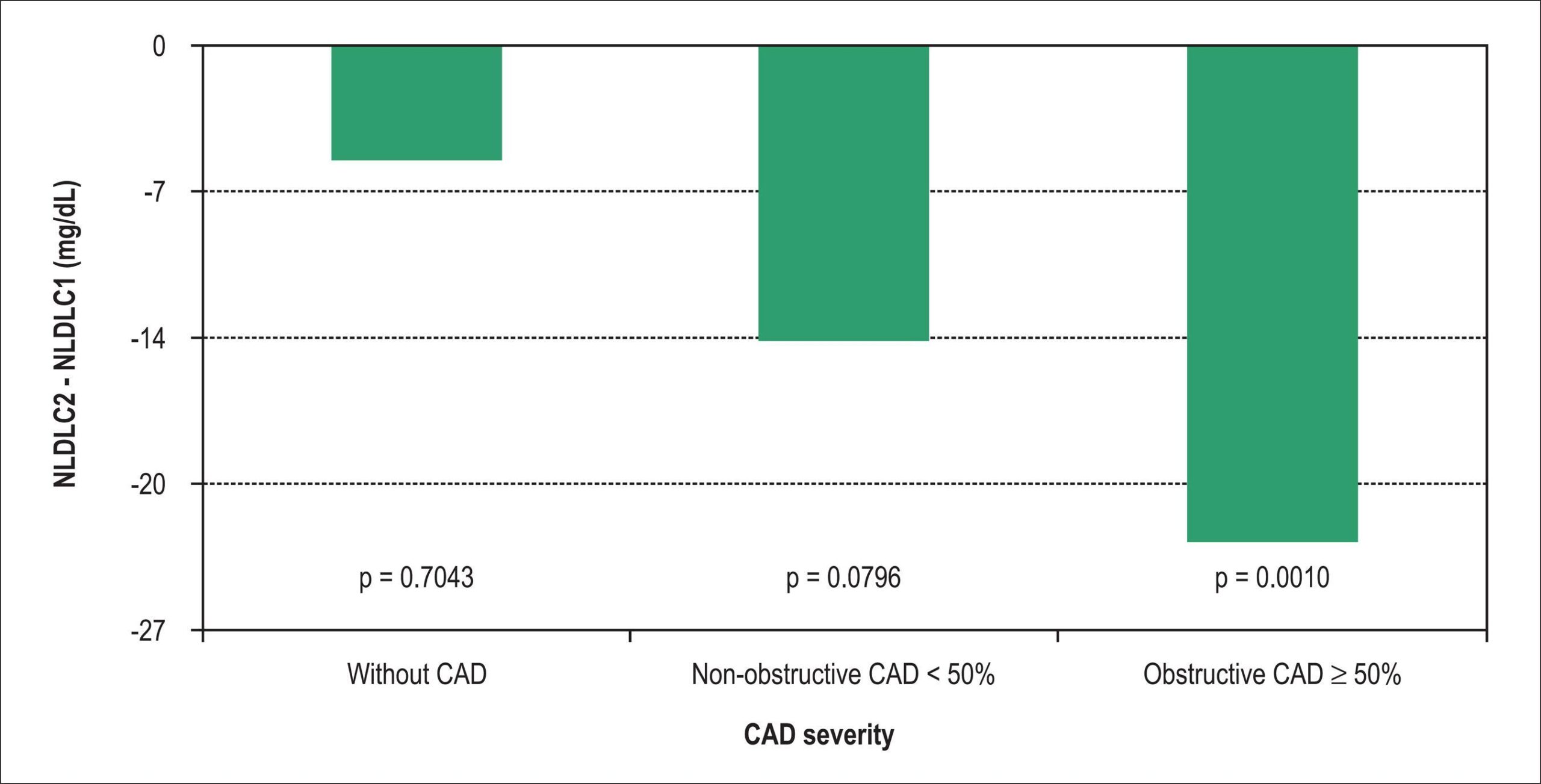
A total of 97 patients were included, of which 69% were men, mean age 64 ± 12 years. CCTA revealed that 18 (18%) patients had no CAD, 38 (39%) had non-obstructive (< 50%) lesions and 41 (42%) had at least one obstructive ≥ 50% lesion. NLDLC was similar at baseline between the grups (138 ± 52 mg/dL vs. 135 ± 42 mg/dL vs. 131 ± 44 mg/dL, respectively, p = 0.32). We found significative reduction in NLDLC among patients with obstrctive lesions (-18%, p = 0.001). We also found a positive relationship between clinical treatment intensification with aspirin and cholesterol reducing drugs and the severity of CAD.

Conclusion:

Our data suggest that CCTA results were used for cardiovascular clinical treatment titration, with especial intensification seen in patients with obstructive ≥50% CAD.

  • Atherosclerosis / physiopathology
  • Coronary Artery Disease
  • Diagnostic Imaging
  • Therapeutics
Read Full Article
Creative Commons Attribution (CC BY) Creative Commons license
07/08/2015 DOI: 10.5935/abc.20150088 Views 1
Figure 1
Original Article

Development and Validation of Predictive Models of Cardiac Mortality and Transplantation in Resynchronization Therapy

Eduardo Arrais Rocha et al. Francisca Tatiana Moreira Pereira José Sebastião Abreu José Wellington O. Lima … Marcelo de Paula Martins Monteiro Almino Cavalcante Rocha Neto Camilla Viana Arrais Goés Ana Gardênia P. Farias Carlos Roberto Martins Rodrigues Sobrinho Ana Rosa Pinto Quidute Maurício Ibrahim Scanavacca

Abstract

Background:

30-40% of cardiac resynchronization therapy cases do not achieve favorable outcomes.

Objective:

This study aimed to develop predictive models for the combined endpoint of cardiac death and transplantation (Tx) at different stages of cardiac resynchronization therapy (CRT).

Methods:

Prospective observational study of 116 patients aged 64.8 ± 11.1 years, 68.1% of whom had functional class (FC) III and 31.9% had ambulatory class IV. Clinical, electrocardiographic and echocardiographic variables were assessed by using Cox regression and Kaplan-Meier curves.

Results:

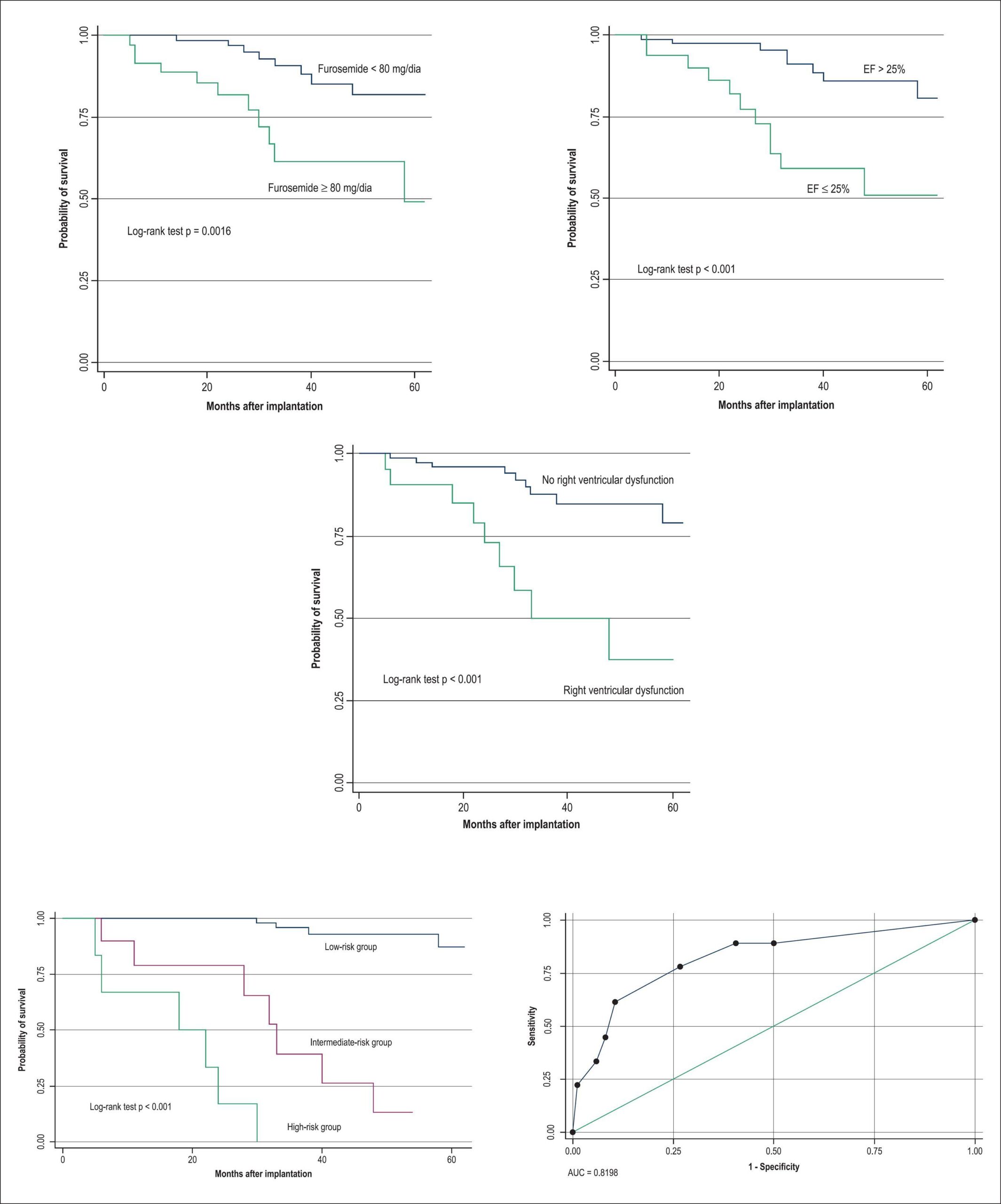
The cardiac mortality/Tx rate was 16.3% during the follow-up period of 34.0 ± 17.9 months. Prior to implantation, right ventricular dysfunction (RVD), ejection fraction < 25% and use of high doses of diuretics (HDD) increased the risk of cardiac death and Tx by 3.9-, 4.8-, and 5.9-fold, respectively. In the first year after CRT, RVD, HDD and hospitalization due to congestive heart failure increased the risk of death at hazard ratios of 3.5, 5.3, and 12.5, respectively. In the second year after CRT, RVD and FC III/IV were significant risk factors of mortality in the multivariate Cox model. The accuracy rates of the models were 84.6% at preimplantation, 93% in the first year after CRT, and 90.5% in the second year after CRT. The models were validated by bootstrapping.

Conclusion:

We developed predictive models of cardiac death and Tx at different stages of CRT based on the analysis of simple and easily obtainable clinical and echocardiographic variables. The models showed good accuracy and adjustment, were validated internally, and are useful in the selection, monitoring and counseling of patients indicated for CRT.

  • Cardiac Resynchronization Therapy
  • Follow-Up Studies
  • Heart Failure/physiopathology
  • Heart Transplantation / mortality
  • Pacemaker, Artificial
Read Full Article
Creative Commons Attribution (CC BY) Creative Commons license
07/08/2015 DOI: 10.5935/abc.20150093 Views 1
Figure 1
Original Article

Sex-Specific Equations to Estimate Maximum Oxygen Uptake in Cycle Ergometry

Christina G. de Souza e Silva et al. Claudio Gil S. Araújo

Abstract

Background:

Aerobic fitness, assessed by measuring VO2max in maximum cardiopulmonary exercise testing (CPX) or by estimating VO2max through the use of equations in exercise testing, is a predictor of mortality. However, the error resulting from this estimate in a given individual can be high, affecting clinical decisions.

Objective:

To determine the error of estimate of VO2max in cycle ergometry in a population attending clinical exercise testing laboratories, and to propose sex-specific equations to minimize that error.

Methods:

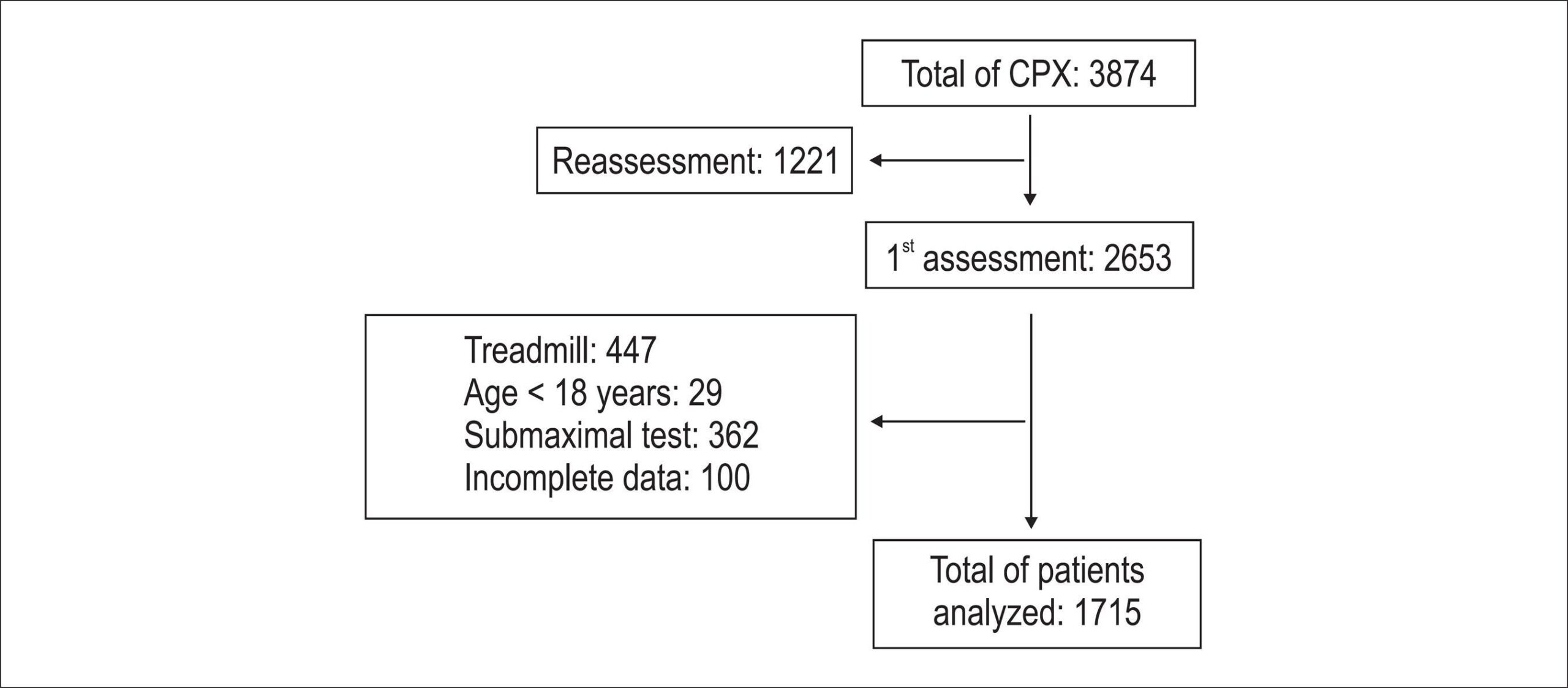
This study assessed 1715 adults (18 to 91 years, 68% men) undertaking maximum CPX in a lower limbs cycle ergometer (LLCE) with ramp protocol. The percentage error (E%) between measured VO2max and that estimated from the modified ACSM equation (Lang et al. MSSE, 1992) was calculated. Then, estimation equations were developed: 1) for all the population tested (C-GENERAL); and 2) separately by sex (C-MEN and C-WOMEN).

Results:

Measured VO2max was higher in men than in WOMEN: -29.4 ± 10.5 and 24.2 ± 9.2 mL.(kg.min)-1 (p < 0.01). The equations for estimating VO2max [in mL.(kg.min)-1] were: C-GENERAL = [final workload (W)/body weight (kg)] x 10.483 + 7; C-MEN = [final workload (W)/body weight (kg)] x 10.791 + 7; and C-WOMEN = [final workload (W)/body weight (kg)] x 9.820 + 7. The E% for MEN was: -3.4 ± 13.4% (modified ACSM); 1.2 ± 13.2% (C-GENERAL); and -0.9 ± 13.4% (C-MEN) (p < 0.01). For WOMEN: -14.7 ± 17.4% (modified ACSM); -6.3 ± 16.5% (C-GENERAL); and -1.7 ± 16.2% (C-WOMEN) (p < 0.01).

Conclusion:

The error of estimate of VO2max by use of sex-specific equations was reduced, but not eliminated, in exercise tests on LLCE.

  • Breathing Exercise / utilization
  • cardiopulmonary exercise testing
  • Demographic Data
  • Ergometry
  • Oxygen Consumption
  • Physical Exertion
Read Full Article
Creative Commons Attribution (CC BY) Creative Commons license
31/07/2015 DOI: 10.5935/abc.20150089 Views 2

How to cite this article

EndNote RIS

Electronic Document Format (Vancouver)

Quitián JH, Carvajal JJ, Soto M, Mora G. Persistent Left Superior Vena Cava in Permanent Pacemaker Implantation. Arquivos Brasileiros de Cardiologia 2015;105(4):443-4.

Electronic Document Format (ABNT)

Quitián, Jerson Hernando; Carvajal, José Julian; Soto, Mariana; Mora, Guillermo. Persistent Left Superior Vena Cava in Permanent Pacemaker Implantation. Arquivos Brasileiros de Cardiologia, v. 105, n. 4, p. 443-444, Sep. 2015.

Electronic Document Format (APA)

Quitián, J. H., Carvajal, J. J., Soto, M., & Mora, G. (2015). Persistent Left Superior Vena Cava in Permanent Pacemaker Implantation. Arquivos Brasileiros de Cardiologia, 105(4), 443-444.

Electronic Document Format (ISO)

Quitián, Jerson Hernando and Carvajal, José Julian and Soto, Mariana and Mora, Guillermo. Persistent Left Superior Vena Cava in Permanent Pacemaker Implantation. Arquivos Brasileiros de Cardiologia [online]. 2015, vol. 105, n. 4, [cited 2026-10-14], pp. 443-444. Available from: <https://journals.cardiol.br/en/article/persistent-left-superior-vena-cava-in-permanent-pacemaker-implantation/>. ISSN 0066-782X

EndNote RIS

Electronic Document Format (Vancouver)

Teich V, Piha T, Fahham L, Squiassi HB, Paloni EM, Miranda P, Araújo DV, et al. Acute Coronary Syndrome Treatment Costs from the Perspective of the Supplementary Health System. Arquivos Brasileiros de Cardiologia 2015;105(4):339-44.

Electronic Document Format (ABNT)

Teich, Vanessa; Piha, Tony; Fahham, Lucas; Squiassi, Haline Bianca; Paloni, Everton de Matos; Miranda, Paulo; Araújo, Denizar Vianna. Acute Coronary Syndrome Treatment Costs from the Perspective of the Supplementary Health System. Arquivos Brasileiros de Cardiologia, v. 105, n. 4, p. 339-344, Sep. 2015.

Electronic Document Format (APA)

Teich, V., Piha, T., Fahham, L., Squiassi, H. B., Paloni, E. M., Miranda, P., & Araújo, D. V. (2015). Acute Coronary Syndrome Treatment Costs from the Perspective of the Supplementary Health System. Arquivos Brasileiros de Cardiologia, 105(4), 339-344.

Electronic Document Format (ISO)

Teich, Vanessa and Piha, Tony and Fahham, Lucas and Squiassi, Haline Bianca and Paloni, Everton de Matos and Miranda, Paulo and Araújo, Denizar Vianna. Acute Coronary Syndrome Treatment Costs from the Perspective of the Supplementary Health System. Arquivos Brasileiros de Cardiologia [online]. 2015, vol. 105, n. 4, [cited 2026-10-14], pp. 339-344. Available from: <https://journals.cardiol.br/en/article/acute-coronary-syndrome-treatment-costs-from-the-perspective-of-the-supplementary-health-system/>. ISSN 0066-782X

EndNote RIS

Electronic Document Format (Vancouver)

Sampaio RO, Oliveira AG, Miranda GB, Lemos Neto PA, Vieira MLC, Tarasoutchi F. Percutaneous Treatment of Mitral Paraprosthetic Regurgitation: an Alternative to Surgery. Arquivos Brasileiros de Cardiologia 2015;105(4):440-2.

Electronic Document Format (ABNT)

Sampaio, Roney Orismar; Oliveira, Alessandra Gomes de; Miranda, George Barreto; Lemos Neto, Pedro Alves; Vieira, Marcelo Luiz Campos; Tarasoutchi, Flávio. Percutaneous Treatment of Mitral Paraprosthetic Regurgitation: an Alternative to Surgery. Arquivos Brasileiros de Cardiologia, v. 105, n. 4, p. 440-442, Sep. 2015.

Electronic Document Format (APA)

Sampaio, R. O., Oliveira, A. G. , Miranda, G. B., Lemos Neto, P. A., Vieira, M. L. C., & Tarasoutchi, F. (2015). Percutaneous Treatment of Mitral Paraprosthetic Regurgitation: an Alternative to Surgery. Arquivos Brasileiros de Cardiologia, 105(4), 440-442.

Electronic Document Format (ISO)

Sampaio, Roney Orismar and Oliveira, Alessandra Gomes de and Miranda, George Barreto and Lemos Neto, Pedro Alves and Vieira, Marcelo Luiz Campos and Tarasoutchi, Flávio. Percutaneous Treatment of Mitral Paraprosthetic Regurgitation: an Alternative to Surgery. Arquivos Brasileiros de Cardiologia [online]. 2015, vol. 105, n. 4, [cited 2026-10-14], pp. 440-442. Available from: <https://journals.cardiol.br/en/article/percutaneous-treatment-of-mitral-paraprosthetic-regurgitation-an-alternative-to-surgery/>. ISSN 0066-782X

EndNote RIS

Electronic Document Format (Vancouver)

Grezzana GB, Pellanda LC. Cardiovascular Risk Factors: From Consolidated Knowledge to a Call for Action. Arquivos Brasileiros de Cardiologia 2015;105(4):325-7.

Electronic Document Format (ABNT)

Grezzana, Guilherme Brasil; Pellanda, Lucia Campos. Cardiovascular Risk Factors: From Consolidated Knowledge to a Call for Action. Arquivos Brasileiros de Cardiologia, v. 105, n. 4, p. 325-327, Sep. 2015.

Electronic Document Format (APA)

Grezzana, G. B., & Pellanda, L. C. (2015). Cardiovascular Risk Factors: From Consolidated Knowledge to a Call for Action. Arquivos Brasileiros de Cardiologia, 105(4), 325-327.

Electronic Document Format (ISO)

Grezzana, Guilherme Brasil and Pellanda, Lucia Campos. Cardiovascular Risk Factors: From Consolidated Knowledge to a Call for Action. Arquivos Brasileiros de Cardiologia [online]. 2015, vol. 105, n. 4, [cited 2026-10-14], pp. 325-327. Available from: <https://journals.cardiol.br/en/article/cardiovascular-risk-factors-from-consolidated-knowledge-to-a-call-for-action/>. ISSN 0066-782X

EndNote RIS

Electronic Document Format (Vancouver)

César LAM, Mansur AP, Ferreira JFM. Executive Summary of the Guidelines on Stable Coronary Disease. Arquivos Brasileiros de Cardiologia 2015;105(4):328-3.

Electronic Document Format (ABNT)

César, Luiz Antonio Machado; Mansur, Antonio de Pádua; Ferreira, João Fernando Monteiro. Executive Summary of the Guidelines on Stable Coronary Disease. Arquivos Brasileiros de Cardiologia, v. 105, n. 4, p. 328-338, Sep. 2015.

Electronic Document Format (APA)

César, L. A. M., Mansur, A. P., & Ferreira, J. F. M. (2015). Executive Summary of the Guidelines on Stable Coronary Disease. Arquivos Brasileiros de Cardiologia, 105(4), 328-338.

Electronic Document Format (ISO)

César, Luiz Antonio Machado and Mansur, Antonio de Pádua and Ferreira, João Fernando Monteiro. Executive Summary of the Guidelines on Stable Coronary Disease. Arquivos Brasileiros de Cardiologia [online]. 2015, vol. 105, n. 4, [cited 2026-10-14], pp. 328-338. Available from: <https://journals.cardiol.br/en/article/executive-summary-of-the-guidelines-on-stable-coronary-disease/>. ISSN 0066-782X

EndNote RIS

Electronic Document Format (Vancouver)

. Erratum. Arquivos Brasileiros de Cardiologia 2015;105(4):445.

Electronic Document Format (ABNT)

. Erratum. Arquivos Brasileiros de Cardiologia, v. 105, n. 4, p. 445-445, Sep. 2015.

Electronic Document Format (APA)

(2015). Erratum. Arquivos Brasileiros de Cardiologia, 105(4), 445-445.

Electronic Document Format (ISO)

. Erratum. Arquivos Brasileiros de Cardiologia [online]. 2015, vol. 105, n. 4, [cited 2026-10-14], pp. 445-445. Available from: <https://journals.cardiol.br/en/article/erratum-27/>. ISSN 0066-782X

EndNote RIS

Electronic Document Format (Vancouver)

Mustafa S, Yamada AT, Lima FM, Carvalho VM, Aiello VD, Castelli JB. Case 4 – A 79-Year-Old Man with Congestive Heart Failure Due to Restrictive Cardiomyopathy. Arquivos Brasileiros de Cardiologia 2015;105(4):430-9.

Electronic Document Format (ABNT)

Mustafa, Sumaia; Yamada, Alice Tatsuko; Lima, Fabio Mitsuo; Carvalho, Valdemir Melechco; Aiello, Vera Demarchi; Castelli, Jussara Bianchi. Case 4 – A 79-Year-Old Man with Congestive Heart Failure Due to Restrictive Cardiomyopathy. Arquivos Brasileiros de Cardiologia, v. 105, n. 4, p. 430-439, Sep. 2015.

Electronic Document Format (APA)

Mustafa, S., Yamada, A. T., Lima, F. M., Carvalho, V. M., Aiello, V. D., & Castelli, J. B. (2015). Case 4 – A 79-Year-Old Man with Congestive Heart Failure Due to Restrictive Cardiomyopathy. Arquivos Brasileiros de Cardiologia, 105(4), 430-439.

Electronic Document Format (ISO)

Mustafa, Sumaia and Yamada, Alice Tatsuko and Lima, Fabio Mitsuo and Carvalho, Valdemir Melechco and Aiello, Vera Demarchi and Castelli, Jussara Bianchi. Case 4 – A 79-Year-Old Man with Congestive Heart Failure Due to Restrictive Cardiomyopathy. Arquivos Brasileiros de Cardiologia [online]. 2015, vol. 105, n. 4, [cited 2026-10-14], pp. 430-439. Available from: <https://journals.cardiol.br/en/article/case-4-a-79-year-old-man-with-congestive-heart-failure-due-to-restrictive-cardiomyopathy/>. ISSN 0066-782X

EndNote RIS

Electronic Document Format (Vancouver)

Garcez JDS, Rosa VEE, Lopes ASSA, Accorsi TAD, Fernandes JRC, Pomerantzeff PM, Avila WS, et al. Patient Management with Metallic Valve Prosthesis during Pregnancy and Postpartum Period. Arquivos Brasileiros de Cardiologia 2015;105(4):426-9.

Electronic Document Format (ABNT)

Garcez, Juliane Dantas Seabra; Rosa, Vitor Emer Egypto; Lopes, Antonio Sergio de Santis Andrade; Accorsi, Tarso Augusto Duenhas; Fernandes, João Ricardo Cordeiro; Pomerantzeff, Pablo Maria; Avila, Walkiria Samuel; Tarasoutchi, Flavio. Patient Management with Metallic Valve Prosthesis during Pregnancy and Postpartum Period. Arquivos Brasileiros de Cardiologia, v. 105, n. 4, p. 426-429, Sep. 2015.

Electronic Document Format (APA)

Garcez, J. D. S., Rosa, V. E. E., Lopes, A. S. S. A., Accorsi, T. A. D., Fernandes, J. R. C., Pomerantzeff, P. M., Avila, W. S., & Tarasoutchi, F. (2015). Patient Management with Metallic Valve Prosthesis during Pregnancy and Postpartum Period. Arquivos Brasileiros de Cardiologia, 105(4), 426-429.

Electronic Document Format (ISO)

Garcez, Juliane Dantas Seabra and Rosa, Vitor Emer Egypto and Lopes, Antonio Sergio de Santis Andrade and Accorsi, Tarso Augusto Duenhas and Fernandes, João Ricardo Cordeiro and Pomerantzeff, Pablo Maria and Avila, Walkiria Samuel and Tarasoutchi, Flavio. Patient Management with Metallic Valve Prosthesis during Pregnancy and Postpartum Period. Arquivos Brasileiros de Cardiologia [online]. 2015, vol. 105, n. 4, [cited 2026-10-14], pp. 426-429. Available from: <https://journals.cardiol.br/en/article/patient-management-with-metallic-valve-prosthesis-during-pregnancy-and-postpartum-period/>. ISSN 0066-782X

EndNote RIS

Electronic Document Format (Vancouver)

Abreu GA, Barufaldi LA, Bloch KV, Szklo M. A Systematic Review on Sleep Duration and Dyslipidemia in Adolescents: Understanding Inconsistencies. Arquivos Brasileiros de Cardiologia 2015;105(4):418-25.

Electronic Document Format (ABNT)

Abreu, Gabriela de Azevedo; Barufaldi, Laura Augusta; Bloch, Katia Vergetti; Szklo, Moyses. A Systematic Review on Sleep Duration and Dyslipidemia in Adolescents: Understanding Inconsistencies. Arquivos Brasileiros de Cardiologia, v. 105, n. 4, p. 418-425, Sep. 2015.

Electronic Document Format (APA)

Abreu, G. A., Barufaldi, L. A., Bloch, K. V., & Szklo, M. (2015). A Systematic Review on Sleep Duration and Dyslipidemia in Adolescents: Understanding Inconsistencies. Arquivos Brasileiros de Cardiologia, 105(4), 418-425.

Electronic Document Format (ISO)

Abreu, Gabriela de Azevedo and Barufaldi, Laura Augusta and Bloch, Katia Vergetti and Szklo, Moyses. A Systematic Review on Sleep Duration and Dyslipidemia in Adolescents: Understanding Inconsistencies. Arquivos Brasileiros de Cardiologia [online]. 2015, vol. 105, n. 4, [cited 2026-10-14], pp. 418-425. Available from: <https://journals.cardiol.br/en/article/a-systematic-review-on-sleep-duration-and-dyslipidemia-in-adolescents-understanding-inconsistencies/>. ISSN 0066-782X

EndNote RIS

Electronic Document Format (Vancouver)

Stathaki M, Koukouraki S, Papadaki E, Tsaroucha A, Karkavitsas N. The Benefits of Prone SPECT Myocardial Perfusion Imaging in Reducing Both Artifact Defects and Patient Radiation Exposure. Arquivos Brasileiros de Cardiologia 2015;105(4):345-52.

Electronic Document Format (ABNT)

Stathaki, Maria; Koukouraki, Sophia; Papadaki, Emmanouela; Tsaroucha, Angeliki; Karkavitsas, Nikolaos. The Benefits of Prone SPECT Myocardial Perfusion Imaging in Reducing Both Artifact Defects and Patient Radiation Exposure. Arquivos Brasileiros de Cardiologia, v. 105, n. 4, p. 345-352, Sep. 2015.

Electronic Document Format (APA)

Stathaki, M., Koukouraki, S., Papadaki, E., Tsaroucha, A., & Karkavitsas, N. (2015). The Benefits of Prone SPECT Myocardial Perfusion Imaging in Reducing Both Artifact Defects and Patient Radiation Exposure. Arquivos Brasileiros de Cardiologia, 105(4), 345-352.

Electronic Document Format (ISO)

Stathaki, Maria and Koukouraki, Sophia and Papadaki, Emmanouela and Tsaroucha, Angeliki and Karkavitsas, Nikolaos. The Benefits of Prone SPECT Myocardial Perfusion Imaging in Reducing Both Artifact Defects and Patient Radiation Exposure. Arquivos Brasileiros de Cardiologia [online]. 2015, vol. 105, n. 4, [cited 2026-10-14], pp. 345-352. Available from: <https://journals.cardiol.br/en/article/the-benefits-of-prone-spect-myocardial-perfusion-imaging-in-reducing-both-artifact-defects-and-patient-radiation-exposure/>. ISSN 0066-782X

EndNote RIS

Electronic Document Format (Vancouver)

Falcão BAA, Falcão JLAA, Morais GR, Silva RC, Lopes AC, Soares PR, Mariani Jr J, et al. A Novel Algorithm to Quantify Coronary Remodeling Using Inferred Normal Dimensions. Arquivos Brasileiros de Cardiologia 2015;105(4):390-8.

Electronic Document Format (ABNT)

Falcão, Breno A. A.; Falcão, João Luiz A. A.; Morais, Gustavo R.; Silva, Rafael C.; Lopes, Augusto C.; Soares, Paulo R.; Mariani Jr, José; Kalil-Filho, Roberto; Edelman, Elazer R.; Lemos, Pedro A.. A Novel Algorithm to Quantify Coronary Remodeling Using Inferred Normal Dimensions. Arquivos Brasileiros de Cardiologia, v. 105, n. 4, p. 390-398, Aug. 2015.

Electronic Document Format (APA)

Falcão, B. A. A., Falcão, J. L. A. A., Morais, G. R., Silva, R. C., Lopes, A. C., Soares, P. R., Mariani Jr, J., Kalil-Filho, R., Edelman, E. R., & Lemos, P. A. (2015). A Novel Algorithm to Quantify Coronary Remodeling Using Inferred Normal Dimensions. Arquivos Brasileiros de Cardiologia, 105(4), 390-398.

Electronic Document Format (ISO)

Falcão, Breno A. A. and Falcão, João Luiz A. A. and Morais, Gustavo R. and Silva, Rafael C. and Lopes, Augusto C. and Soares, Paulo R. and Mariani Jr, José and Kalil-Filho, Roberto and Edelman, Elazer R. and Lemos, Pedro A.. A Novel Algorithm to Quantify Coronary Remodeling Using Inferred Normal Dimensions. Arquivos Brasileiros de Cardiologia [online]. 2015, vol. 105, n. 4, [cited 2026-10-14], pp. 390-398. Available from: <https://journals.cardiol.br/en/article/a-novel-algorithm-to-quantify-coronary-remodeling-using-inferred-normal-dimensions/>. ISSN 0066-782X

EndNote RIS

Electronic Document Format (Vancouver)

Piuvezam G, Medeiros WR, Costa AV, Emerenciano FF, Santos RC, Seabra DS. Mortality from Cardiovascular Diseases in the Elderly: Comparative Analysis of Two Five-year Periods. Arquivos Brasileiros de Cardiologia 2015;105(4):371-80.

Electronic Document Format (ABNT)

Piuvezam, Grasiela; Medeiros, Wilton Rodrigues; Costa, Andressa Vellasco; Emerenciano, Felipe Fonseca; Santos, Renata Cristina; Seabra, Danilo Silveira. Mortality from Cardiovascular Diseases in the Elderly: Comparative Analysis of Two Five-year Periods. Arquivos Brasileiros de Cardiologia, v. 105, n. 4, p. 371-380, Aug. 2015.

Electronic Document Format (APA)

Piuvezam, G., Medeiros, W. R., Costa, A. V., Emerenciano, F. F., Santos, R. C., & Seabra, D. S. (2015). Mortality from Cardiovascular Diseases in the Elderly: Comparative Analysis of Two Five-year Periods. Arquivos Brasileiros de Cardiologia, 105(4), 371-380.

Electronic Document Format (ISO)

Piuvezam, Grasiela and Medeiros, Wilton Rodrigues and Costa, Andressa Vellasco and Emerenciano, Felipe Fonseca and Santos, Renata Cristina and Seabra, Danilo Silveira. Mortality from Cardiovascular Diseases in the Elderly: Comparative Analysis of Two Five-year Periods. Arquivos Brasileiros de Cardiologia [online]. 2015, vol. 105, n. 4, [cited 2026-10-14], pp. 371-380. Available from: <https://journals.cardiol.br/en/article/mortality-from-cardiovascular-diseases-in-the-elderly-comparative-analysis-of-two-five-year-periods/>. ISSN 0066-782X

EndNote RIS

Electronic Document Format (Vancouver)

Penha JG, Zorzanelli L, Barbosa-Lopes AA, Atik E, Miana LA, Tanamati C, Caneo LF, et al. Palliative Senning in the Treatment of Congenital Heart Disease with Severe Pulmonary Hypertension. Arquivos Brasileiros de Cardiologia 2015;105(4):353-61.

Electronic Document Format (ABNT)

Penha, Juliano Gomes da; Zorzanelli, Leina; Barbosa-Lopes, Antonio Augusto; Atik, Edimar; Miana, Leonardo Augusto; Tanamati, Carla; Caneo, Luiz Fernando; Miura, Nana; Aiello, Vera Demarchi; Jatene, Marcelo Biscegli. Palliative Senning in the Treatment of Congenital Heart Disease with Severe Pulmonary Hypertension. Arquivos Brasileiros de Cardiologia, v. 105, n. 4, p. 353-361, Aug. 2015.

Electronic Document Format (APA)

Penha, J. G. , Zorzanelli, L., Barbosa-Lopes, A. A., Atik, E., Miana, L. A., Tanamati, C., Caneo, L. F., Miura, N., Aiello, V. D., & Jatene, M. B. (2015). Palliative Senning in the Treatment of Congenital Heart Disease with Severe Pulmonary Hypertension. Arquivos Brasileiros de Cardiologia, 105(4), 353-361.

Electronic Document Format (ISO)

Penha, Juliano Gomes da and Zorzanelli, Leina and Barbosa-Lopes, Antonio Augusto and Atik, Edimar and Miana, Leonardo Augusto and Tanamati, Carla and Caneo, Luiz Fernando and Miura, Nana and Aiello, Vera Demarchi and Jatene, Marcelo Biscegli. Palliative Senning in the Treatment of Congenital Heart Disease with Severe Pulmonary Hypertension. Arquivos Brasileiros de Cardiologia [online]. 2015, vol. 105, n. 4, [cited 2026-10-14], pp. 353-361. Available from: <https://journals.cardiol.br/en/article/palliative-senning-in-the-treatment-of-congenital-heart-disease-with-severe-pulmonary-hypertension/>. ISSN 0066-782X

EndNote RIS

Electronic Document Format (Vancouver)

Karataş MB, Şahan E, Özcan KS, Çanga Y, Güngör B, Onuk T, İpek G, et al. Anxiety, Depression, and General Psychological Distress in Patients with Coronary Slow Flow. Arquivos Brasileiros de Cardiologia 2015;105(4):362-70.

Electronic Document Format (ABNT)

Karataş, Mehmet Baran; Şahan, Ebru; Özcan, Kazım Serhan; Çanga, Yiğit; Güngör, Barış; Onuk, Tolga; İpek, Göktürk; Çakıllı, Yasin; Arugaslan, Emre; Bolca, Osman. Anxiety, Depression, and General Psychological Distress in Patients with Coronary Slow Flow. Arquivos Brasileiros de Cardiologia, v. 105, n. 4, p. 362-370, Aug. 2015.

Electronic Document Format (APA)

Karataş, M. B., Şahan, E., Özcan, K. S., Çanga, Y., Güngör, B., Onuk, T., İpek, G., Çakıllı, Y., Arugaslan, E., & Bolca, O. (2015). Anxiety, Depression, and General Psychological Distress in Patients with Coronary Slow Flow. Arquivos Brasileiros de Cardiologia, 105(4), 362-370.

Electronic Document Format (ISO)

Karataş, Mehmet Baran and Şahan, Ebru and Özcan, Kazım Serhan and Çanga, Yiğit and Güngör, Barış and Onuk, Tolga and İpek, Göktürk and Çakıllı, Yasin and Arugaslan, Emre and Bolca, Osman. Anxiety, Depression, and General Psychological Distress in Patients with Coronary Slow Flow. Arquivos Brasileiros de Cardiologia [online]. 2015, vol. 105, n. 4, [cited 2026-10-14], pp. 362-370. Available from: <https://journals.cardiol.br/en/article/anxiety-depression-and-general-psychological-distress-in-patients-with-coronary-slow-flow/>. ISSN 0066-782X

EndNote RIS

Electronic Document Format (Vancouver)

Naue VM, Camargo G, Sabioni LR, Lima RSL, Derenne ME, Lorenzo AR, Freire MDC, et al. Changes in Medical Management after Coronary CT Angiography. Arquivos Brasileiros de Cardiologia 2015;105(4):410-7.

Electronic Document Format (ABNT)

Naue, Vânia Mairi; Camargo, Gabriel; Sabioni, Letícia Roberto; Lima, Ronaldo de Souza Leão; Derenne, Maria Eduarda; Lorenzo, Andréa Rocha de; Freire, Monica Di Calafiori; Azevedo Filho, Clério Francisco; Resende, Elmiro Santos; Gottlieb, Ilan. Changes in Medical Management after Coronary CT Angiography. Arquivos Brasileiros de Cardiologia, v. 105, n. 4, p. 410-417, Aug. 2015.

Electronic Document Format (APA)

Naue, V. M., Camargo, G., Sabioni, L. R., Lima, R. S. L., Derenne, M. E., Lorenzo, A. R. , Freire, M. D. C., Azevedo Filho, C. F., Resende, E. S., & Gottlieb, I. (2015). Changes in Medical Management after Coronary CT Angiography. Arquivos Brasileiros de Cardiologia, 105(4), 410-417.

Electronic Document Format (ISO)

Naue, Vânia Mairi and Camargo, Gabriel and Sabioni, Letícia Roberto and Lima, Ronaldo de Souza Leão and Derenne, Maria Eduarda and Lorenzo, Andréa Rocha de and Freire, Monica Di Calafiori and Azevedo Filho, Clério Francisco and Resende, Elmiro Santos and Gottlieb, Ilan. Changes in Medical Management after Coronary CT Angiography. Arquivos Brasileiros de Cardiologia [online]. 2015, vol. 105, n. 4, [cited 2026-10-14], pp. 410-417. Available from: <https://journals.cardiol.br/en/article/changes-in-medical-management-after-coronary-ct-angiography/>. ISSN 0066-782X

EndNote RIS

Electronic Document Format (Vancouver)

Rocha EA, Pereira FTM, Abreu JS, Lima JWO, Monteiro MPM, Rocha Neto AC, Goés CVA, et al. Development and Validation of Predictive Models of Cardiac Mortality and Transplantation in Resynchronization Therapy. Arquivos Brasileiros de Cardiologia 2015;105(4):399-40.

Electronic Document Format (ABNT)

Rocha, Eduardo Arrais; Pereira, Francisca Tatiana Moreira; Abreu, José Sebastião; Lima, José Wellington O.; Monteiro, Marcelo de Paula Martins; Rocha Neto, Almino Cavalcante; Goés, Camilla Viana Arrais; Farias, Ana Gardênia P.; Sobrinho, Carlos Roberto Martins Rodrigues; Quidute, Ana Rosa Pinto; Scanavacca, Maurício Ibrahim. Development and Validation of Predictive Models of Cardiac Mortality and Transplantation in Resynchronization Therapy. Arquivos Brasileiros de Cardiologia, v. 105, n. 4, p. 399-409, Aug. 2015.

Electronic Document Format (APA)

Rocha, E. A., Pereira, F. T. M., Abreu, J. S., Lima, J. W. O., Monteiro, M. P. M., Rocha Neto, A. C., Goés, C. V. A., Farias, A. G. P., Sobrinho, C. R. M. R., Quidute, A. R. P., & Scanavacca, M. I. (2015). Development and Validation of Predictive Models of Cardiac Mortality and Transplantation in Resynchronization Therapy. Arquivos Brasileiros de Cardiologia, 105(4), 399-409.

Electronic Document Format (ISO)

Rocha, Eduardo Arrais and Pereira, Francisca Tatiana Moreira and Abreu, José Sebastião and Lima, José Wellington O. and Monteiro, Marcelo de Paula Martins and Rocha Neto, Almino Cavalcante and Goés, Camilla Viana Arrais and Farias, Ana Gardênia P. and Sobrinho, Carlos Roberto Martins Rodrigues and Quidute, Ana Rosa Pinto and Scanavacca, Maurício Ibrahim. Development and Validation of Predictive Models of Cardiac Mortality and Transplantation in Resynchronization Therapy. Arquivos Brasileiros de Cardiologia [online]. 2015, vol. 105, n. 4, [cited 2026-10-14], pp. 399-409. Available from: <https://journals.cardiol.br/en/article/development-and-validation-of-predictive-models-of-cardiac-mortality-and-transplantation-in-resynchronization-therapy/>. ISSN 0066-782X

EndNote RIS

Electronic Document Format (Vancouver)

Silva CGS, Araújo CGS. Sex-Specific Equations to Estimate Maximum Oxygen Uptake in Cycle Ergometry. Arquivos Brasileiros de Cardiologia 2015;105(4):381-9.

Electronic Document Format (ABNT)

Silva, Christina G. de Souza e; Araújo, Claudio Gil S.. Sex-Specific Equations to Estimate Maximum Oxygen Uptake in Cycle Ergometry. Arquivos Brasileiros de Cardiologia, v. 105, n. 4, p. 381-389, Jul. 2015.

Electronic Document Format (APA)

Silva, C. G. S. , & Araújo, C. G. S. (2015). Sex-Specific Equations to Estimate Maximum Oxygen Uptake in Cycle Ergometry. Arquivos Brasileiros de Cardiologia, 105(4), 381-389.

Electronic Document Format (ISO)

Silva, Christina G. de Souza e and Araújo, Claudio Gil S.. Sex-Specific Equations to Estimate Maximum Oxygen Uptake in Cycle Ergometry. Arquivos Brasileiros de Cardiologia [online]. 2015, vol. 105, n. 4, [cited 2026-10-14], pp. 381-389. Available from: <https://journals.cardiol.br/en/article/sex-specific-equations-to-estimate-maximum-oxygen-uptake-in-cycle-ergometry/>. ISSN 0066-782X

Sede – Rio de Janeiro
Av. Marechal Câmara, 160
3º andar – Sala: 330 – Centro
Rio de Janeiro – CEP: 20020-907
Tel.: (55 +21) 3478-2700
ou (21) 99386-3961
E-mail: revista@cardiol.br

Sede – São Paulo
Alameda Santos, 705 – 11º andar
Cerqueira César | São Paulo
CEP: 01419-001
Tel.: (55 +11) 3411-5500
E-mail: revista@cardiol.br

  • About the Journal
  • Internal Regulation
  • Editors Section
  • Editorial Board
  • History
  • SBC Award

  • Guidelines for Publication
  • Editorial Policy
  • Ethics Policy
  • Policy on the Use of Artificial Intelligence
  • Mandatory Publication Form
  • Publication Fee

Issues

SBC Guidelines

  • How to Publish an Abstract Supplement?
  • Supplements from the Brazilian Congress of Cardiology