ABC Family Arquivos Brasileiros de Cardiologia International Journal of Cardiovascular Sciences ABC Heart Failure & Cardiomyopathy ABC Imagem Cardiovascular
Português English
ABC Family
Português English
  • About
    • About ABC Family
    • Internal Regulation
    • Editorial Board
    • Brazilian Society of Cardiology (SBC)
  • Issues
  • SBC Guidelines
  • Content
    • Videos
    • Podcasts
    • News
  • About
    • About ABC Family
    • Internal Regulation
    • Editorial Board
    • Brazilian Society of Cardiology (SBC)
  • Issues
  • SBC Guidelines
  • Content
    • Videos
    • Podcasts
    • News

ABC Family

  • ABC Family
  • Arquivos Brasileiros de Cardiologia
  • International Journal of Cardiovascular Sciences
  • ABC Heart Failure & Cardiomyopathy
  • ABC Imagem Cardiovascular
Search in

No content found.

Journals
Ordering
Article types
Others

  1. Home
  2. Keyword: epidemiologic studies
ABC
Letter to the Editor

Previous Chronic Diseases and their Relationship with COVID-19 Infection

Bruna Redivo de Souza et al. Eliane Mazzuco Layse Wiggers Kemper

Dear editor,

Due to the current global pandemic, the subject addressed is of great relevance. It is known that there is a certain urgency in the production and dissemination of scientific and epidemiological data about the new Coronavirus. Therefore, research that helps profile the population most vulnerable to this disease contributes to preventing an even greater number of deaths and sequelae resulting from COVID-19.

[…]

  • COVID-19
  • Diabetes Mellitus/prevalence
  • epidemiologic studies
  • Hypertension/prevalence
  • Pandemic
  • Primary Health Care
  • Risk Factors
  • Unified Health System
Read Full Article
Creative Commons Attribution (CC BY) Creative Commons license
05/08/2022 DOI: 10.36660/abc.20210859
Figure 1
IJCS
Original Article

Spatial Analysis and Mortality Trends Associated with Hypertensive Diseases in the States and Regions of Brazil from 2010 to 2014

Marcos Antonio Almeida-Santos et al. Beatriz Santana Prado Deyse Mirelle Souza Santos

Abstract

Background:

Systemic Arterial Hypertension (SAH) represents the most relevant worsening factor and one of the major risk factors for cardiovascular diseases.

Objectives:

To analyze trends in the mortality rate associated with hypertensive diseases in Brazil from 2010 to 2014, for states as well as regions.

Methods:

An epidemiological study was performed from aggregate data obtained in populational strata. Cartographic data of the Brazilian territory in “shapefile” were provided by IBGE. Records of mortality associated with arterial hypertension were obtained in DATASUS, through notifications filtered by category I.10 of the International Classification of Diseases (ICD-10). The criterion of statistical significance was a two-tailed p-value < 0.05.

Results:

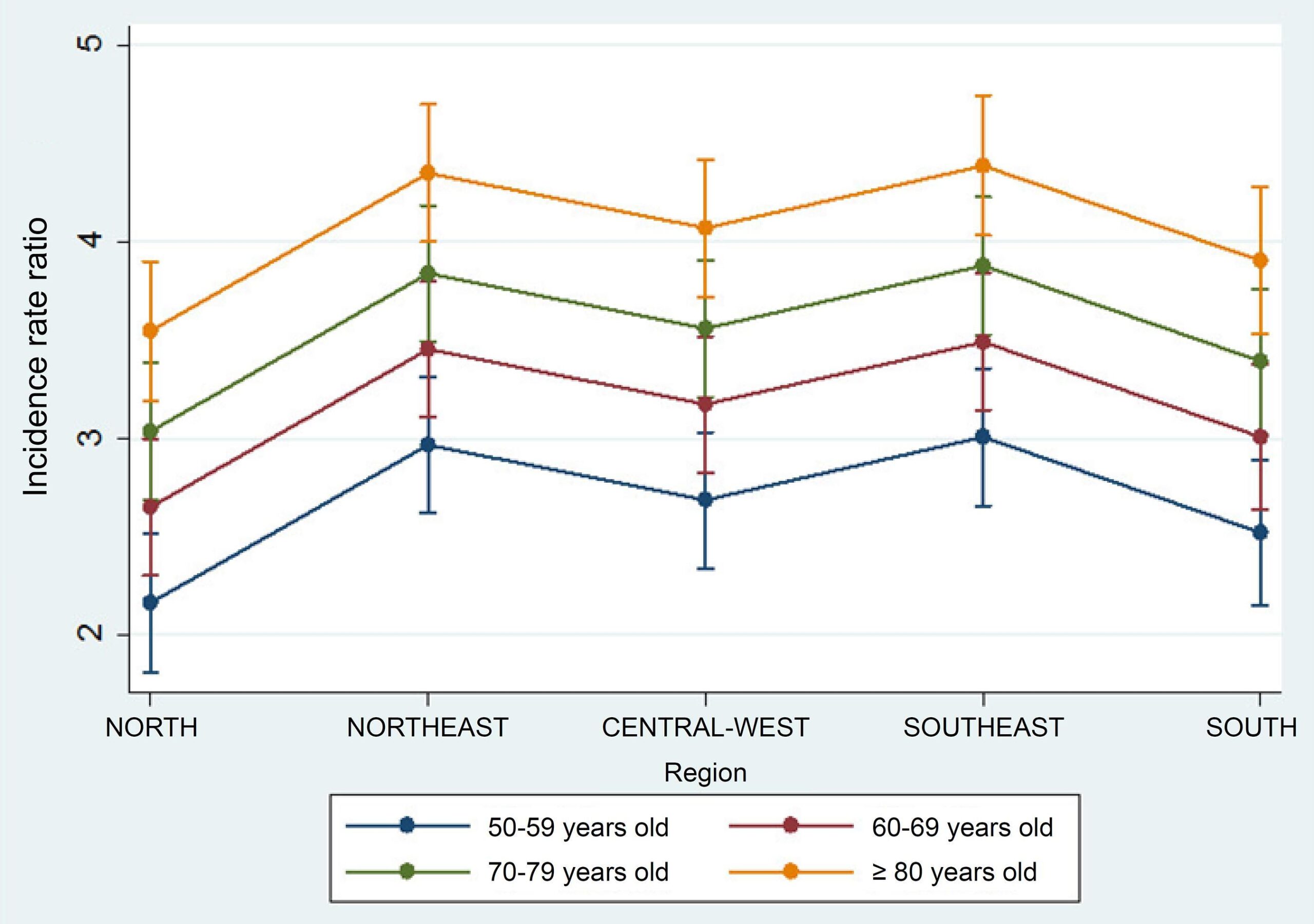
The increase in age was progressively associated with an increase in the mean number of deaths related to hypertensive diseases between the years 2010 and 2014. In the age groups between 50-59 years, 60-69 years, 70-79 years and 80 or more years, the mean and standard deviation for the mortality rate were, respectively: 15.11% (35.35); 24.14% (55.34); 35.07% (81.03) and 57.87% (139.08). The overall mortality rate per 10,000 inhabitants varied between the regions: north (1.25); northeast (2.69); center-west (2.06); southeast (2.48) and south (2.04).

Conclusions:

The mortality rate associated with hypertensive diseases was higher in the southeastern and northeastern states of Brazil, and remained stable between 2010 and 2014. Increased age and brown color were predictors of higher mortality.

  • Cardiovascular Diseases, mortality
  • epidemiologic studies
  • Ethnicity and Health
  • Hypertension / etiology
  • Hypertension/epidemiology
  • Stroke
Read Full Article
Creative Commons Attribution (CC BY) Creative Commons license
01/01/2018 DOI: 10.5935/2359-4802.20180017 Views 1
ABC
Editorial

Cardiovascular Risk Factors: From Consolidated Knowledge to a Call for Action

Guilherme Brasil Grezzana et al. Lucia Campos Pellanda

Since the decade of 1950, the most prominent journal in cardiology in Brazil, Arquivos Brasileiros de Cardiologia (ABC), has been indexed in Medline. A total of 7,102 articles have been published since then, on various subjects related to clinical, invasive, surgical cardiology, as well as diagnostic methods.

We performed a systematic review of articles published in ABC during the period from January 2001 to June 2015 containing the MeSH term “cardiovascular risk factors”. Of the 3,087 titles of articles published in the period, 116 articles were identified. The abstracts of these articles were reviewed, and 107 articles, in which assessment of cardiovascular risk factors was the main topic, were included. The sample was composed by 102 original articles, 3 letters and 2 editorials. When specific topics were assessed, “cardiovascular factor or cardiovascular risk” was generally described in 88 articles, 6 articles focused on quality of life and cardiovascular risk factor, 4 articles described epidemiological factors and risk factors, 5 articles specifically explored systemic arterial hypertension and risk factors, 3 were guidelines on risk factors and 1 articles related risk factor with public health. However, when we focused only on isolated risk factors, there has been a clear preponderance of articles involving arterial hypertension (18% between 2010 and 2013) and a trend of increase in the number of articles on diabetes (approximately 10%) published on ABC in the last years.

[…]
  • Cardiovascular Diseases
  • Data Interpretation, Statistical
  • epidemiologic studies
  • Journals Articles
  • Prevention
  • Risk Factors
Read Full Article
Creative Commons Attribution (CC BY) Creative Commons license
01/10/2015 DOI: 10.5935/abc.20150128 Views 2
ABC
Revisão

Blood pressure and interpersonal discrimination: systematic review of epidemiologic studies

Paulo Francisco Couto et al. Janaina Brugnera Goto João Luiz Bastos

The relationship between blood pressure and discrimination has been recently investigated, and there are conflicting debates in literature devoted to the topic. The objective of this study was to update previous literature reviews on discrimination and blood pressure. A bibliographic search was conducted in PubMed between January/2000 and December/2010, including epidemiological studies, assessing the relationship between interpersonal discrimination and blood pressure/hypertension. The 22 studies included originated from the United States; 96% of them used the cross-sectional design with convenience sample, comprising, in 59% of the studies, exclusively Black participants. The Everyday Discrimination Scale and the Perceived Racism Scale were the most frequently used instruments, emphasizing lifetime or chronic/everyday racial/ethnic discrimination. In the 22 studies assessed, the association between discrimination and blood pressure/hypertension was assessed 50 times. Twenty results (40%) showed no association between them, and only 15 (30%) revealed global positive associations, of which 67% were statistically significant. Eight negative associations were also observed, suggesting that higher exposure to discrimination would be associated with lower blood pressure/hypertension. The studies did not consistently support the hypothesis that discrimination is associated with higher blood pressure. These findings can be partially attributed to the limitations of the studies, especially those related to the measurement of discrimination and of factors that might modify its association with outcomes. To establish discrimination as an epidemiological risk factor, more rigorous methodological strategies should be used, and the theoretical frameworks that postulate causal relationships between discrimination and blood pressure should be reviewed.

  • Blood Pressure
  • epidemiologic studies
  • Prejudice
  • Review
Read Full Article
Creative Commons Attribution (CC BY) Creative Commons license
02/10/2012 DOI: 10.1590/S0066-782X2012005000090 Views 1
Accuracy of the Omron HEM-705 CP for blood pressure measurement in large epidemiologic studies
ABC
Artigo Original

Accuracy of the Omron HEM-705 CP for blood pressure measurement in large epidemiologic studies

Lina M. Vera-Cala et al. Myriam Orostegui Laura I. Valencia-Angel Nahyr López Leonelo E. Bautista

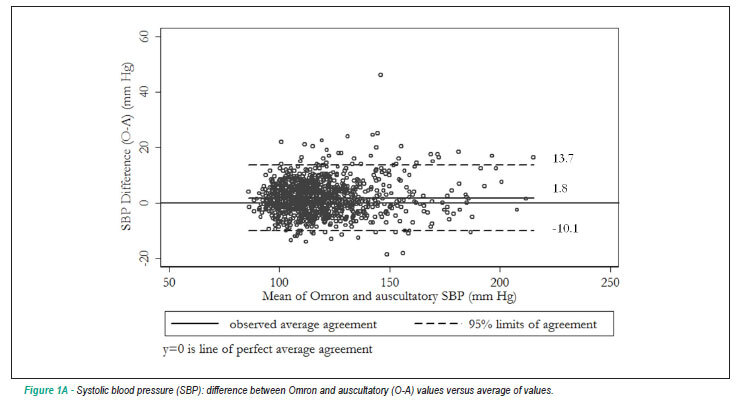
BACKGROUND: Accurate measurement of blood pressure is of utmost importance in hypertension research. In the context of epidemiologic and clinical studies, oscillometric devices offer important advantages to overcome some of the limitations of the auscultatory method. Even though their accuracy has been evaluated in multiple studies in the clinical setting, there is little evidence of their performance in large epidemiologic studies. OBJECTIVE: We evaluated the accuracy of the Omron HEM-705-CP, an automatic device for blood pressure (BP) measurement, as compared to the standard auscultatory method with a mercury sphygmomanometer in a large cohort study. METHODS: We made three auscultatory measurements, followed by two measurements with the Omron device in 1,084 subjects. Bias was estimated as the average of the two Omron minus the average of the last two auscultatory measurements, with its corresponding 95% limits of agreement (LA). RESULTS: The Omron overestimated systolic blood pressure (SBP) by 1.8 mmHg (LA:-10.1, 13.7) and underestimated diastolic blood pressure (DBP) by 1.6 mmHg (LA:-12.3, 9.2). Bias was significantly larger in men. Bias in SBP increased with age and decreased with BP level, while bias in DBP decreased with age and increased with BP level. The sensitivity and specificity of the Omron to detect hypertension were 88.2% and 98.6%, respectively. Minimum bias in the estimates of the effects of several factors resulted from the use of Omron measurements. CONCLUSION: Our results showed that the Omron HEM-705-CP could be used for measuring BP in large epidemiology studies without compromising study validity or precision.

  • Blood Pressure
  • clinical trials
  • epidemiologic studies
  • measurement equipment
Read Full Article
Creative Commons Attribution (CC BY) Creative Commons license
01/04/2011 DOI: 10.1590/S0066-782X2011005000038
Association of waist-stature ratio with hypertension and metabolic syndrome: population-based study
ABC
Artigo Original

Association of waist-stature ratio with hypertension and metabolic syndrome: population-based study

Sérgio Lamêgo Rodrigues et al. Marcelo Perim Baldo José Geraldo Mill

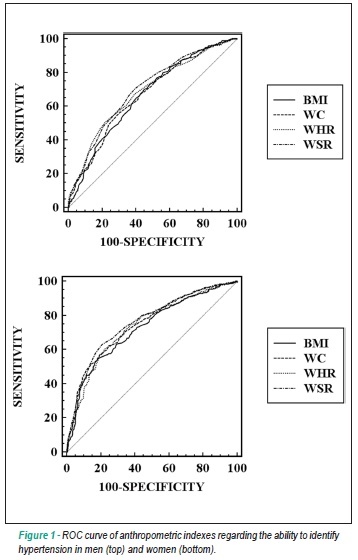
BACKGROUND: Hypertension and metabolic syndrome are cardiovascular risk factors associated with increased adiposity. In a previous study, waist-to-stature ratio (WSR) was identified as the best obesity index associated with left ventricular hypertrophy. OBJECTIVE: In this study we compared the ability of this index to identify hypertension and metabolic syndrome with other obesity indexes (body mass index – BMI; waist circumference – WC; and waist-to-hip ratio – WHR) by receiver operating characteristic (ROC) curve analyses. METHODS: 1,655 (45.8% men) participants of the MONICA-WHO/Vitoria Project, mean age 45 ± 11 y were investigated. Metabolic syndrome prevalence (ATP-III criteria) was 32.9%, hypertension was 42.4% and obesity was 19.2%. RESULTS: Regarding the ability to identify hypertension, there was a significant WSR superiority in relation to BMI and WC (p 0.05). In relation to the ability to identify metabolic syndrome, there was a significant WSR superiority in relation to WHR in men (p < 0.001), but BMI and WC (p = 0.16 and p = 0.9), respectively. However, in women WSR was significantly superior in relation to WHR (p < 0.001) and BMI (p = 0.025), but WC (p = 0.8). The optimal WSR cutoffs are 0.52 and 0.53 for hypertension and 0.53 and 0.54 for metabolic syndrome, for men and women, respectively. CONCLUSION: Abdominal obesity, identified by WSR as a surrogate, and not overall obesity (BMI as surrogate), is the simplest and best applicable obesity index associated to hypertension and metabolic syndrome in our population.

  • body mass index
  • epidemiologic studies
  • Hypertension
  • Metabolic Syndrome
  • Risk Factors
Read Full Article
Creative Commons Attribution (CC BY) Creative Commons license
18/06/2010 DOI: 10.1590/S0066-782X2010005000073
ABC
Artigo Original

Prospective double-blind crossover study of Camellia sinensis (green tea) in dyslipidemias

Gesiani de Almeida Pierin Batista et al. Cláudio L. Pereira da Cunha Mariléia Scartezini Raul von der Heyde … Murílo G Bitencourt Sandra Fabrício de Melo

BACKGROUND: Epidemiological studies have established an association between dyslipidemias and atherosclerosis. Nutritional therapy is a key point in the prevention strategy for individuals who present with risk factors for atherosclerotic disease. OBJECTIVES: To investigate the effects of green tea (Camellia sinensis) in patients with dyslipidemias. METHODS: The study included 33 patients aged between 21 and 71 years who had a low-fat diet (25-35% of total calories and 200 mg of cholesterol per day). They were randomized for two sequential treatments: 250-mg capsules of green tea dry extract or placebo for a total period of 16 weeks; each patient received green tea (Camellia sinensis) for eight weeks and placebo for another eight weeks. RESULTS: Baseline lipid values (mg/dL) were: HDL-cholesterol 60.7 ± 7.3; total cholesterol 255 ± 30.9; LDL-cholesterol 158.8 ± 29.0; triglycerides 169.0 ± 61.3 and Apo-B 120.2 ± 18.9. Mean lipid variations induced by the use of green tea (Camellia sinensis) showed a 3.9% reduction (p = 0.006) in total cholesterol concentrations and a 4.5% reduction (p = 0.026) in LDL-cholesterol. The intake of green tea did not significantly influence HDL-cholesterol, triglyceride, and Apo-B levels. Non-significant results were found in the assessment of blood lipids (total cholesterol and LDL-cholesterol) with the use of placebo. CONCLUSION: A beneficial effect of green tea (Camellia sinensis) was demonstrated, with a significant reduction of total cholesterol and LDL-cholesterol levels in eight weeks, in the patients studied.

  • Camellia sinensis
  • Case-Control Studies
  • Dyslipidemias
  • epidemiologic studies
  • phytotherapy
  • thea sinensis
Read Full Article
Creative Commons Attribution (CC BY) Creative Commons license
13/10/2009 DOI: 10.1590/S0066-782X2009000800010 Views 1

How to cite this article

EndNote RIS

Electronic Document Format (Vancouver)

Souza BR, Mazzuco E, Kemper LW. Previous Chronic Diseases and their Relationship with COVID-19 Infection. Arquivos Brasileiros de Cardiologia 2022;119(2):361-2.

Electronic Document Format (ABNT)

Souza, Bruna Redivo de; Mazzuco, Eliane; Kemper, Layse Wiggers. Previous Chronic Diseases and their Relationship with COVID-19 Infection. Arquivos Brasileiros de Cardiologia, v. 119, n. 2, p. 361-362, Aug. 2022.

Electronic Document Format (APA)

Souza, B. R. , Mazzuco, E., & Kemper, L. W. (2022). Previous Chronic Diseases and their Relationship with COVID-19 Infection. Arquivos Brasileiros de Cardiologia, 119(2), 361-362.

Electronic Document Format (ISO)

Souza, Bruna Redivo de and Mazzuco, Eliane and Kemper, Layse Wiggers. Previous Chronic Diseases and their Relationship with COVID-19 Infection. Arquivos Brasileiros de Cardiologia [online]. 2022, vol. 119, n. 2, [cited 2026-10-15], pp. 361-362. Available from: <https://journals.cardiol.br/en/article/previous-chronic-diseases-and-their-relationship-with-covid-19-infection/>. ISSN 0066-782X

EndNote RIS

Electronic Document Format (Vancouver)

Almeida-Santos MA, Prado BS, Santos DMS. Spatial Analysis and Mortality Trends Associated with Hypertensive Diseases in the States and Regions of Brazil from 2010 to 2014. International Journal of Cardiovascular Sciences 2018;31(3):250-7.

Electronic Document Format (ABNT)

Almeida-Santos, Marcos Antonio; Prado, Beatriz Santana; Santos, Deyse Mirelle Souza. Spatial Analysis and Mortality Trends Associated with Hypertensive Diseases in the States and Regions of Brazil from 2010 to 2014. International Journal of Cardiovascular Sciences, v. 31, n. 3, p. 250-257, Dec. 2017.

Electronic Document Format (APA)

Almeida-Santos, M. A., Prado, B. S., & Santos, D. M. S. (2018). Spatial Analysis and Mortality Trends Associated with Hypertensive Diseases in the States and Regions of Brazil from 2010 to 2014. International Journal of Cardiovascular Sciences, 31(3), 250-257.

Electronic Document Format (ISO)

Almeida-Santos, Marcos Antonio and Prado, Beatriz Santana and Santos, Deyse Mirelle Souza. Spatial Analysis and Mortality Trends Associated with Hypertensive Diseases in the States and Regions of Brazil from 2010 to 2014. International Journal of Cardiovascular Sciences [online]. 2018, vol. 31, n. 3, [cited 2026-10-15], pp. 250-257. Available from: <https://journals.cardiol.br/en/article/spatial-analysis-and-mortality-trends-associated-with-hypertensive-diseases-in-the-states-and-regions-of-brazil-from-2010-to-2014/>. ISSN 2359-4802

EndNote RIS

Electronic Document Format (Vancouver)

Grezzana GB, Pellanda LC. Cardiovascular Risk Factors: From Consolidated Knowledge to a Call for Action. Arquivos Brasileiros de Cardiologia 2015;105(4):325-7.

Electronic Document Format (ABNT)

Grezzana, Guilherme Brasil; Pellanda, Lucia Campos. Cardiovascular Risk Factors: From Consolidated Knowledge to a Call for Action. Arquivos Brasileiros de Cardiologia, v. 105, n. 4, p. 325-327, Sep. 2015.

Electronic Document Format (APA)

Grezzana, G. B., & Pellanda, L. C. (2015). Cardiovascular Risk Factors: From Consolidated Knowledge to a Call for Action. Arquivos Brasileiros de Cardiologia, 105(4), 325-327.

Electronic Document Format (ISO)

Grezzana, Guilherme Brasil and Pellanda, Lucia Campos. Cardiovascular Risk Factors: From Consolidated Knowledge to a Call for Action. Arquivos Brasileiros de Cardiologia [online]. 2015, vol. 105, n. 4, [cited 2026-10-15], pp. 325-327. Available from: <https://journals.cardiol.br/en/article/cardiovascular-risk-factors-from-consolidated-knowledge-to-a-call-for-action/>. ISSN 0066-782X

EndNote RIS

Electronic Document Format (Vancouver)

Couto PF, Goto JB, Bastos JL. Blood pressure and interpersonal discrimination: systematic review of epidemiologic studies. Arquivos Brasileiros de Cardiologia 2012;99(4):956-63.

Electronic Document Format (ABNT)

Couto, Paulo Francisco; Goto, Janaina Brugnera; Bastos, João Luiz. Blood pressure and interpersonal discrimination: systematic review of epidemiologic studies. Arquivos Brasileiros de Cardiologia, v. 99, n. 4, p. 956-963, Oct. 2012.

Electronic Document Format (APA)

Couto, P. F., Goto, J. B., & Bastos, J. L. (2012). Blood pressure and interpersonal discrimination: systematic review of epidemiologic studies. Arquivos Brasileiros de Cardiologia, 99(4), 956-963.

Electronic Document Format (ISO)

Couto, Paulo Francisco and Goto, Janaina Brugnera and Bastos, João Luiz. Blood pressure and interpersonal discrimination: systematic review of epidemiologic studies. Arquivos Brasileiros de Cardiologia [online]. 2012, vol. 99, n. 4, [cited 2026-10-15], pp. 956-963. Available from: <https://journals.cardiol.br/en/article/blood-pressure-and-interpersonal-discrimination-systematic-review-of-epidemiologic-studies/>. ISSN 0066-782X

EndNote RIS

Electronic Document Format (Vancouver)

Vera-Cala LM, Orostegui M, Valencia-Angel LI, López N, Bautista LE. Accuracy of the Omron HEM-705 CP for blood pressure measurement in large epidemiologic studies. Arquivos Brasileiros de Cardiologia 2011;96(5):393-8.

Electronic Document Format (ABNT)

Vera-Cala, Lina M.; Orostegui, Myriam; Valencia-Angel, Laura I.; López, Nahyr; Bautista, Leonelo E.. Accuracy of the Omron HEM-705 CP for blood pressure measurement in large epidemiologic studies. Arquivos Brasileiros de Cardiologia, v. 96, n. 5, p. 393-398, Mar. 2011.

Electronic Document Format (APA)

Vera-Cala, L. M., Orostegui, M., Valencia-Angel, L. I., López, N., & Bautista, L. E. (2011). Accuracy of the Omron HEM-705 CP for blood pressure measurement in large epidemiologic studies. Arquivos Brasileiros de Cardiologia, 96(5), 393-398.

Electronic Document Format (ISO)

Vera-Cala, Lina M. and Orostegui, Myriam and Valencia-Angel, Laura I. and López, Nahyr and Bautista, Leonelo E.. Accuracy of the Omron HEM-705 CP for blood pressure measurement in large epidemiologic studies. Arquivos Brasileiros de Cardiologia [online]. 2011, vol. 96, n. 5, [cited 2026-10-15], pp. 393-398. Available from: <https://journals.cardiol.br/en/article/accuracy-of-the-omron-hem-705-cp-for-blood-pressure-measurement-in-large-epidemiologic-studies/>. ISSN 0066-782X

EndNote RIS

Electronic Document Format (Vancouver)

Rodrigues SL, Baldo MP, Mill JG. Association of waist-stature ratio with hypertension and metabolic syndrome: population-based study. Arquivos Brasileiros de Cardiologia 2010;95(2):186-91.

Electronic Document Format (ABNT)

Rodrigues, Sérgio Lamêgo; Baldo, Marcelo Perim; Mill, José Geraldo. Association of waist-stature ratio with hypertension and metabolic syndrome: population-based study. Arquivos Brasileiros de Cardiologia, v. 95, n. 2, p. 186-191, Jun. 2010.

Electronic Document Format (APA)

Rodrigues, S. L., Baldo, M. P., & Mill, J. G. (2010). Association of waist-stature ratio with hypertension and metabolic syndrome: population-based study. Arquivos Brasileiros de Cardiologia, 95(2), 186-191.

Electronic Document Format (ISO)

Rodrigues, Sérgio Lamêgo and Baldo, Marcelo Perim and Mill, José Geraldo. Association of waist-stature ratio with hypertension and metabolic syndrome: population-based study. Arquivos Brasileiros de Cardiologia [online]. 2010, vol. 95, n. 2, [cited 2026-10-15], pp. 186-191. Available from: <https://journals.cardiol.br/en/article/association-of-waist-stature-ratio-with-hypertension-and-metabolic-syndrome-population-based-study/>. ISSN 0066-782X

EndNote RIS

Electronic Document Format (Vancouver)

Batista GAP, Cunha CLP, Scartezini M, Heyde R, Bitencourt MG, Melo SF. Prospective double-blind crossover study of Camellia sinensis (green tea) in dyslipidemias. Arquivos Brasileiros de Cardiologia 2009;93(2):128-34.

Electronic Document Format (ABNT)

Batista, Gesiani de Almeida Pierin; Cunha, Cláudio L. Pereira da; Scartezini, Mariléia; Heyde, Raul von der; Bitencourt, Murílo G; Melo, Sandra Fabrício de. Prospective double-blind crossover study of Camellia sinensis (green tea) in dyslipidemias. Arquivos Brasileiros de Cardiologia, v. 93, n. 2, p. 128-134, Oct. 2009.

Electronic Document Format (APA)

Batista, G. A. P., Cunha, C. L. P. , Scartezini, M., Heyde, R. , Bitencourt, M. G., & Melo, S. F. (2009). Prospective double-blind crossover study of Camellia sinensis (green tea) in dyslipidemias. Arquivos Brasileiros de Cardiologia, 93(2), 128-134.

Electronic Document Format (ISO)

Batista, Gesiani de Almeida Pierin and Cunha, Cláudio L. Pereira da and Scartezini, Mariléia and Heyde, Raul von der and Bitencourt, Murílo G and Melo, Sandra Fabrício de. Prospective double-blind crossover study of Camellia sinensis (green tea) in dyslipidemias. Arquivos Brasileiros de Cardiologia [online]. 2009, vol. 93, n. 2, [cited 2026-10-15], pp. 128-134. Available from: <https://journals.cardiol.br/en/article/prospective-double-blind-crossover-study-of-camellia-sinensis-green-tea-in-dyslipidemias/>. ISSN 0066-782X

  • About ABC Family
  • Internal Regulation
  • Editorial Board
  • Brazilian Society of Cardiology (SBC)

Issues

SBC Guidelines

  • Videos
  • Podcasts
  • News