ABC Family Arquivos Brasileiros de Cardiologia International Journal of Cardiovascular Sciences ABC Heart Failure & Cardiomyopathy ABC Imagem Cardiovascular
Português English
ABC Family
Português English
  • About
    • About ABC Family
    • Internal Regulation
    • Editorial Board
    • Brazilian Society of Cardiology (SBC)
  • Issues
  • SBC Guidelines
  • Content
    • Videos
    • Podcasts
    • News
  • About
    • About ABC Family
    • Internal Regulation
    • Editorial Board
    • Brazilian Society of Cardiology (SBC)
  • Issues
  • SBC Guidelines
  • Content
    • Videos
    • Podcasts
    • News

ABC Family

  • ABC Family
  • Arquivos Brasileiros de Cardiologia
  • International Journal of Cardiovascular Sciences
  • ABC Heart Failure & Cardiomyopathy
  • ABC Imagem Cardiovascular
Search in

No content found.

Journals
Ordering
Article types
Others

  1. Home
  2. Keyword: Sleep
IJCS
Editorial

Obstructive Sleep Apnea in Acute Myocardial Infarction: A Prognostic Risk Factor beyond Traditional Players?

Carlos Wollmann et al. Luciano F. Drager

The high prevalence of obstructive sleep apnea (OSA) and its worrisome association with various cardiovascular diseases, particularly ischemic heart disease, demand our attention. This common sleep disordered breathing, characterized by partial or complete upper airway obstructions during sleep, profoundly impacts overall health., In the cardiovascular context, intermittent hypoxia, sleep fragmentation, and intrathoracic pressure swings promoted by repeated respiratory events during sleep promote several potentially deleterious phenomena, including increased sympathetic activity, blood pressure fluctuations, chronic systemic inflammation, reactive oxygen species production, and endothelial dysfunction.– These factors create a fertile ground for the development and progression of atherosclerosis,, significantly increasing the likelihood of ischemic events if the condition remains undetected and untreated., However, the relationship between OSA and acute myocardial infarction (AMI) is complex. Patients with OSA often share risk factors that also increase AMI risk, notably age, male sex, and obesity. While some evidence suggests an independent role for OSA in the cardiovascular risk, its contribution remains controversial in high-risk patients with multiple comorbidities. Further research in this area is therefore warranted in order to provide additional insights.

In this issue of the International Journal of Cardiovascular Sciences, Carrijo et al. explore the complex relationship between OSA and traditional risk factors in 145 patients with ST-segment elevation myocardial infarction (STEMI). The authors used employed the widely used STOP-BANG questionnaire to assess OSA risk. The initial results were consistent with previous literature: a high frequency (58.6%) of patients exhibited a high risk for OSA. This highlights the urgent need for increased attention to this comorbidity, particularly in this specific patient population. In the multivariate analysis, the authors found an independent association of OSA with both male sex and hypertension in these patients. The presence of hypertension in OSA patients is not coincidental. Some of the aforementioned mechanisms associated with OSA directly contribute to elevated blood pressure, thereby increasing cardiovascular risk.,

[…]
  • Myocardial Infarction
  • Obstructive Sleep Apnea
  • Prognosis
  • Risk Factors
  • Sleep
Read Full Article
Creative Commons Attribution (CC BY) Creative Commons license
08/05/2025 DOI: 10.36660/ijcs.20250032 Views 2
ABC
Editorial

Sleep Duration, Genetics, and Atherosclerosis: Challenges and Opportunities

Ana Vitoria Vitoreti Martins et al. Larissa T. Krul Luciano F. Drager

Atherosclerosis, the unifying mechanism for most of the non-fatal and fatal myocardial infarction and stroke events, is a multifactorial process that has been increasing in prevalence worldwide. Traditional risk factors for atherosclerosis have been extensively studied, but recent evidence pointed out that they explained approximately only 40-50% of the variability of markers of arterial damage and atherosclerosis. Therefore, growing interest has been devoted to exploring the relative role of the “nontraditional’ risk factors. One of the promising candidates is sleep disorders. Indeed, the relationship between sleep and cardiovascular health has been increasingly explored in the literature., While most of the evidence relies on the impact of obstructive sleep apnea (OSA) on atherosclerosis, the potential atherogenic effects of extremes of sleep duration has been recently investigated,, considering its positive association with poor cardiovascular outcomes. Interestingly, previous evidence consistently showed that not only short but long sleep duration (usually defined as >8 or >9hs) increased the risk for these events, confirming a U-shaped association between sleep duration and cardiovascular outcomes. This previous evidence paves the way for exploring potential mechanisms by which sleep duration extremes may increase cardiovascular risk.

In this edition of the Arquivos Brasileiros de Cardiologia, Xu et al. evaluated the association between sleep duration and the risk of atherosclerosis using a Mendelian randomization (MR) approach with data from genome-wide association studies (GWAS). Two large cohorts from Europe were included for analysis. The main results indicated that contrary to the initial hypothesis, there is no significant causal association between sleep duration and atherosclerosis. The study concluded that genetically predicted sleep duration does not affect the risk of atherosclerosis and suggested further research to explore this relationship in greater detail. Strengths of the study include the large sample size and the use of a MR study. This strategy allows for avoiding common biases observed in observational studies. However, important limitations deserve appropriate comments precluding definitive conclusions in this important research area: 1) a subjective question defined sleep duration. It is not uncommon to find misperceptions about the real sleep duration; 2) the chosen Single Nucleotide Polymorphism (SNPs) only partially explain the variability of subjective sleep duration in this investigation. This fact may contribute to lower statistical power in identifying situations with poor correlations; 3) ‘atherosclerosis’ was identified by using the International Classification of Diseases (ICD) rather than objective measurements. There is certainly an underreport of the real burden of atherosclerosis in this population; 4) other sleep disorders (highlighting the role of OSA) are consistently associated with prevalent and incident markers of atherosclerosis– but were not studied in the present investigation; 5) the applicability of the results to non-European populations deserve further investigations.

[…]

  • Atherosclerosis
  • Cardiovascular disease
  • Genetics
  • Sleep
Read Full Article
Creative Commons Attribution (CC BY) Creative Commons license
22/11/2024 DOI: 10.36660/abc.20240593i Views 1
ABC
Editorial

Active Assessment of Sleep and Depression for elderly Patients in the Outpatient Cardiology Setting: What Are We Waiting for?

Ana Vitória Vitoreti Martins et al. Luciano F. Drager

The relationships between sleep disturbances, depression and cardiovascular disease have gained growing interest in the last decades. Most evidence available suggests that several sleep disturbances (including sleep deprivation, insomnia and obstructive sleep apnea) are not only innocent bystanders, but may contribute to increase the cardiovascular risk.– The prevalence and impact of sleep disorders may vary depending on some clinical characteristics (for instance: age, gender and comorbidities). Aging is clearly a risk factor for developing sleep disturbances; consistent evidence have shown greater number of complaints associated with sleep with aging, including insomnia and obstructive sleep apnea., The reduction in the number of hours of sleep and poor sleep quality may impair multiple domains related to the quality of life in the elderly.– Similarly, depression is associated with several cognitive and cardiovascular consequences. Based on the biological plausibility linking sleep disorders and depression with cardiovascular risk,, and the high prevalence of cardiovascular diseases among elderly, it is reasonable to assume that sleep disorders add to the high cardiovascular burden observed in this subset of patients.

In this issue of the Arquivos de Brasileiro de Cardiologia, Lopes et al. reported a prospective cohort study of 160 elderly patients (between 60 and 98 years old) aiming to estimate the risk of death and cardiovascular events after eight years of follow-up (from 2009 to 2017) in those who presented insomnia and excessive daytime sleepiness detected at baseline. Excessive daytime sleepiness, sleep quality and presence of depressive symptoms were evaluated by the Epworth Sleepiness scale, the Pittsburgh Sleep Quality Index and the Sheikh and Yesavage Geriatric Depression Scale, respectively.

[…]

  • Depression
  • Elderly
  • Sleep
Read Full Article
Creative Commons Attribution (CC BY) Creative Commons license
20/09/2021 DOI: 10.36660/abc.20210624
Figure 1
ABC
Original Article

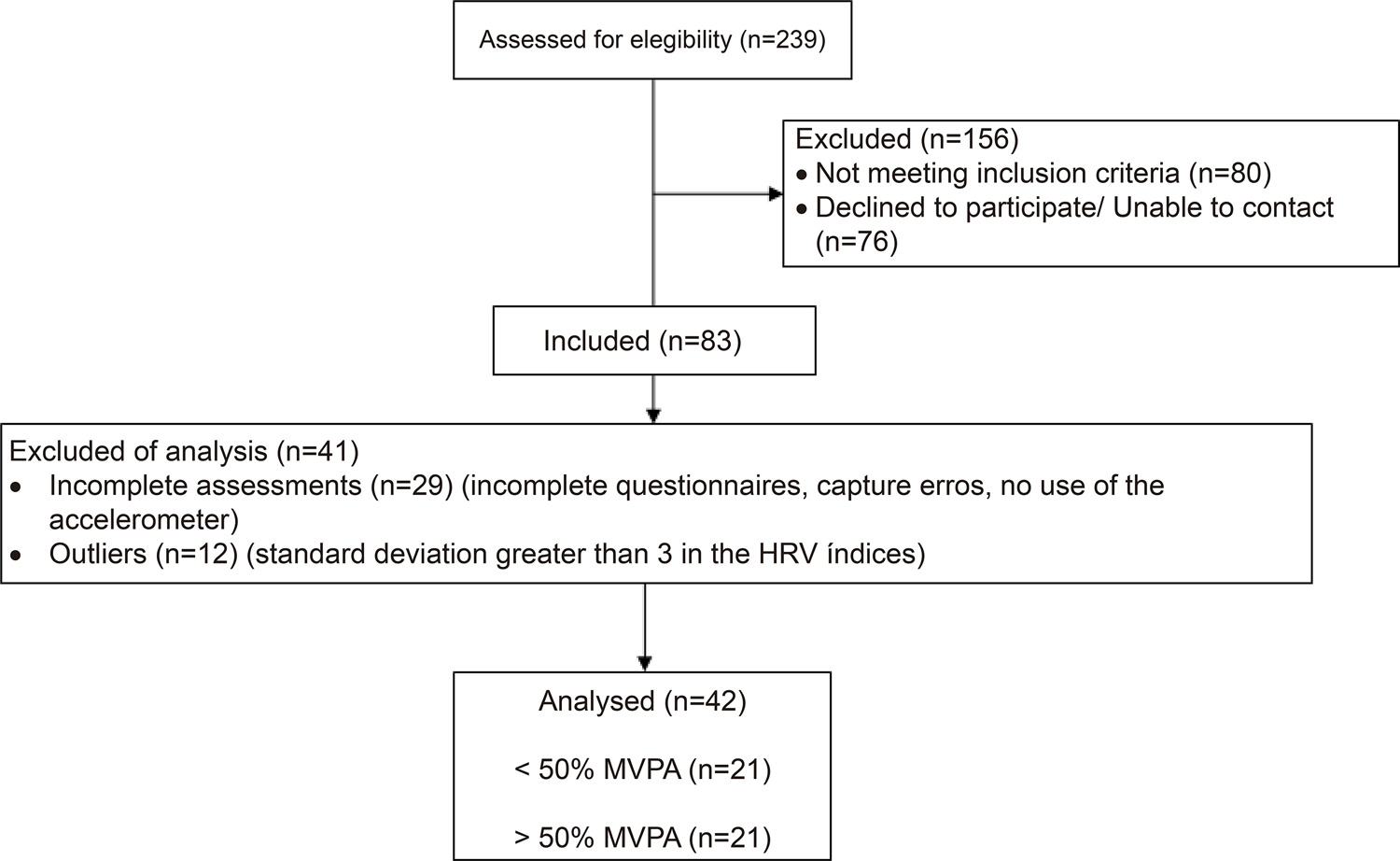
Sleep Quality Associated with Habitual Physical Activity Level and Autonomic Nervous System of Smokers

Iara Buriola Trevisan et al. Luiz Carlos Marques Vanderlei Mahara Proença Tiago V. Barreira … Caroline Pereira Santos Tamara Santos Gouveia Ercy Mara Cipulo Ramos Dionei Ramos

Abstract

Background

Few studies have examined the relationship of one’s habitual physical activity level and autonomic nervous system (ANS) modulation on sleep quality in smokers.

Objective

The aim of this study was to identify changes in the sleep quality of smokers and its relation with their habitual physical activity level and ANS modulation.

Methods

Forty-two smokers were divided into two groups according to the 50th percentile of the moderate-to-vigorous physical activity (MVPA). Sleep quality was assessed using the Mini-sleep Questionnaire, and ANS modulation was assessed by indices of heart rate variability (HRV). To examine the possible mean differences, the analysis of covariance (ANCOVA) was used, adjusted for age, sex, body composition, pack-years, beta-blockers, anxiety, and depression in log base 10, not including qualitative data, such as sex and beta-blockers. Correlations were made by using the Spearman rank correlation. The statistical significance was set at 5%

Results

The smokers who were less active showed poor sleep quality (p=0.048) and insomnia (p=0.045). Furthermore, the less active group presented decreased parasympathetic modulation [HF (un; p=0.049); RMSSD (ms; p=0.047) and SD1 (ms; p=0.047)] and an increased LF (un) index (p=0.033) and LF/HF ratio (p=0.040). A positive correlation between the total Mini-sleep score with LF (un) index (r=0.317, p=0.041) and LF/HF ratio (r=0.318, p=0.040) and negative correlation with HF (un) index (r= -0.322, p=0.038).

Conclusions

Smokers with lower levels of habitual physical activity showed poor sleep quality and alterations in autonomic nervous system modulation; (Arq Bras Cardiol. 2020; [online].ahead print, PP.0-0)

  • Autonomic Nervous System Diseases
  • Exercise Heart Rate
  • Sleep
  • Sleep,Quality
  • Tobacco Use Disorder
Read Full Article
Creative Commons Attribution (CC BY) Creative Commons license
16/12/2020 DOI: 10.36660/abc.20190522 Views 1
Figure 1
ABC
Editorial

Nocturnal Blood Pressure Dipping and the Autonomic Nervous System

Fernando Antonio de Almeida

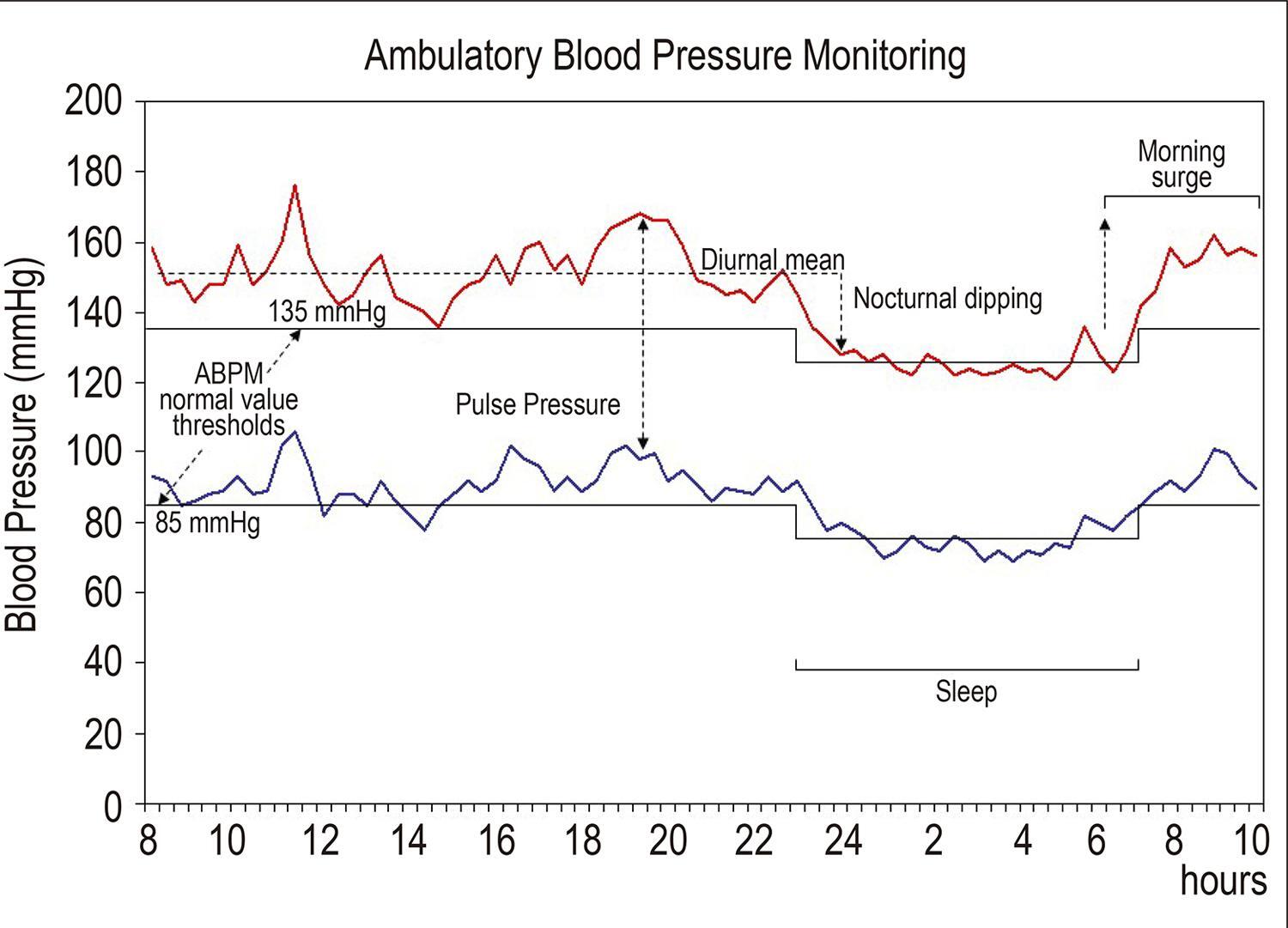
Blood Pressure (BP) is continuously controlled by complex mechanisms involving the structural characteristics of the arterial system, the autonomic nervous system (sympathetic and parasympathetic) integrated with the baroreceptor and chemoreceptor systems, the circulating volume and several vasoconstrictor and vasodilator hormone systems with systemic and local actions. The integration of these systems ensures that the blood pressure undergoes minimal variations in small intervals, but if we consider the whole day, there are times, such as during sleep and when getting up in the morning, when there are more intense variations in blood pressure, always around mean values. Ambulatory blood pressure monitoring (ABPM) allows this phenomenon to be recorded in clinical practice.

shows the ABPM graphical record of a person with arterial hypertension, indicating the main parameters evaluated in this exam. One of the most important phenomena that can be assessed by ABPM is the physiological BP dipping during sleep. This physiological behavior of BP during sleep occurs because many vasoconstrictor mechanisms are “disarmed” in this condition; among them, the autonomic nervous system is one of the most important. A direct consequence of this modulatory effect of the autonomic nervous system is that, in diseases or clinical conditions in which the system is affected, the absence of this modulatory effect is expressed by the absence of BP dipping during sleep. In some cases, there may even be an increase in BP during sleep. This is the classic example of individuals with diabetes mellitus with autonomic neuropathy. – These individuals frequently have postural hypotension, elevated BP at bedtime and absence of BP dipping during sleep. , , , The absence of BP dipping during sleep implies a higher pressure load on the circulatory system and increases the risk of cardiovascular events in the long-term. , There are other clinical conditions associated with the absence of BP dipping during sleep, but this is not the case of this discussion.

[…]

  • Autonomic Nervous System
  • Blood Pressure
  • Blood Pressure Monitoring, Ambulatory
  • Chagas disease
  • Diabetes Mellitus
  • Sleep
Read Full Article
Creative Commons Attribution (CC BY) Creative Commons license
29/05/2020 DOI: 10.36660/abc.20200280 Views 1
Figure 1
ABC
Review Article

A Systematic Review on Sleep Duration and Dyslipidemia in Adolescents: Understanding Inconsistencies

Gabriela de Azevedo Abreu et al. Laura Augusta Barufaldi Katia Vergetti Bloch Moyses Szklo

Introduction

Although many questions about the role of sleep remain unanswered, it is known that sleep is not only a physiological function, but also performs an important role in promoting growth, maturation and general health of children and adolescents, contributing significantly to cognitive, emotional functions and school performance. Currently, there is a tendency for the young population to have irregular sleeping hours, with differences in bed and wake-up times between weekdays and weekends, especially as they get older–.

There is a growing interest about the impact of sleep and its disorders on regulation of inflammatory processes and morbidities, particularly in the context of metabolic and cardiovascular diseases (CVD) and their complications. In children and adolescents, cross-sectional– and prospective, studies have shown an association between overweight or obesity and few hours of sleep. In adults, there is evidence supporting this association, as well as correlations with insulin resistance, diabetes and cardiovascular diseases–.

[…]

  • Adolescent
  • Dyslipidemias
  • Review
  • Sleep
Read Full Article
Creative Commons Attribution (CC BY) Creative Commons license
25/09/2015 DOI: 10.5935/abc.20150121
ABC
Original Article

Sleep Apnea and Nocturnal Cardiac Arrhythmia: A Populational Study

Fatima Dumas Cintra et al. Renata Pimentel Leite Luciana Julio Storti Lia Azeredo Bittencourt … Dalva Poyares Laura de Siqueira Castro Sergio Tufik Angelo de Paola

Background:

The mechanisms associated with the cardiovascular consequences of obstructive sleep apnea include abrupt changes in autonomic tone, which can trigger cardiac arrhythmias. The authors hypothesized that nocturnal cardiac arrhythmia occurs more frequently in patients with obstructive sleep apnea.

Objective:

To analyze the relationship between obstructive sleep apnea and abnormal heart rhythm during sleep in a population sample.

Methods:

Cross-sectional study with 1,101 volunteers, who form a representative sample of the city of São Paulo. The overnight polysomnography was performed using an EMBLA® S7000 digital system during the regular sleep schedule of the individual. The electrocardiogram channel was extracted, duplicated, and then analyzed using a Holter (Cardio Smart®) system.

Results:

A total of 767 participants (461 men) with a mean age of 42.00 ± 0.53 years, were included in the analysis. At least one type of nocturnal cardiac rhythm disturbance (atrial/ventricular arrhythmia or beat) was observed in 62.7% of the sample. The occurrence of nocturnal cardiac arrhythmias was more frequent with increased disease severity. Rhythm disturbance was observed in 53.3% of the sample without breathing sleep disorders, whereas 92.3% of patients with severe obstructive sleep apnea showed cardiac arrhythmia. Isolated atrial and ventricular ectopy was more frequent in patients with moderate/severe obstructive sleep apnea when compared to controls (p < 0.001). After controlling for potential confounding factors, age, sex and apnea-hypopnea index were associated with nocturnal cardiac arrhythmia.

Conclusion:

Nocturnal cardiac arrhythmia occurs more frequently in patients with obstructive sleep apnea and the prevalence increases with disease severity. Age, sex, and the Apnea-hypopnea index were predictors of arrhythmia in this sample.

  • Arrhythmias Cardiac
  • Sleep
  • Sleep apnea syndromes
  • Sleep Apnea, Obstructive
Read Full Article
Creative Commons Attribution (CC BY) Creative Commons license
23/09/2014 DOI: 10.5935/abc.20140142 Views 2
ABC
Brief Communication

Sleep duration and body mass index among southern Brazilian preschoolers

Maria Laura da Costa Louzada et al. Fernanda Rauber Paula Dal Bó Campagnolo Márcia Regina Vitolo

Prevention and treatment of overweight are particularly complex, reinforcing the importance of studies aimed at clarifying their range of causes and effects. Thus, the objective of this study was to evaluate the relationship between night sleep duration and anthropometric measurements. A cross-sectional analysis was performed from data from 348 children aged 3 and 4 years in São Leopoldo/RS. Night sleep duration was reported by their mothers and body mass index, waist circumference and skinfold thickness were measured according to standard protocol. The analyses were adjusted for energy intake and hours of television watching. Overweight children had, on average, 0.39 hours less sleep than those with normal weight (9.77 ± 1.44 versus 10.17 ± 1.34; 95% CI 0.03 to 0, 76). We observed an inverse association between night sleep duration and z score values of body mass index for age (B = -0.12 95% CI -0.22–0.02). Waist circumference and skinfold thickness showed an inverse relationship with sleep duration, but without any statistic differences. Among preschool children in southern Brazil, smaller night sleep duration was associated with higher body mass index

  • body mass index
  • child preschool
  • Skinfold Thickness
  • Sleep
  • Waist Circumference
Read Full Article
Creative Commons Attribution (CC BY) Creative Commons license
11/03/2013 DOI: 10.1590/S0066-782X2012001500013 Views 1
ABPM in COPD patients with sleep desaturation
ABC
Artigo Original

ABPM in COPD patients with sleep desaturation

Neila Anders Aidar et al. Márcio Alberto Carvalho da Silva César Augusto Melo e Silva Pedro Nery Ferreira Júnior Paulo Tavares

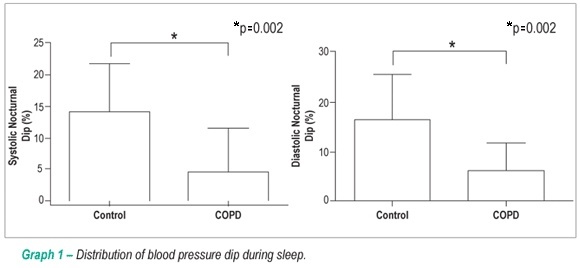
BACKGROUND: Sleep hypoxemia may change blood pressure by sympathetic activation. Few studies have analyzed blood pressure parameters in COPD patients who do not present sleep apnea, but do present sleep desaturation. OBJECTIVES: To analyze blood pressure parameters in COPD patients with sleep desaturation not caused by apnea. METHODS: Thirteen patients with COPD underwent spirometry, blood gas, polysomnography and ABPM for blood pressure evaluation. Fourteen patients without COPD underwent spirometry, oximetry and ABPM. Blood pressure analyses were carried out both during wakefulness and sleep. Both groups were comprised of patients with no history of hypertension. RESULTS: The two groups were similar as regards age, height, weight, and body mass index. A significant difference (p<0.05) was found between blood pressure levels during the wakefulness, sleep, 24-hour and sleep dip periods. Higher blood pressure levels were observed in patients with COPD, except for diastolic levels during wakefulness and maximum values during sleep and in the 24 hours. Sleep dip in the COPD group was attenuated, whereas physiological dip was observed in the control group, with lower blood pressure levels. CONCLUSIONS: Systolic and diastolic blood pressure levels in the COPD group were higher than those of the control group, with a significant difference found for all periods studied, except for diastolic levels during wakefulness and in the 24 hours. We can conclude that the group of COPD patients with sleep desaturation has significantly higher blood pressure levels than the control group.

  • Ambulatory
  • blood pressure monitoring
  • Chronic Obstructive
  • Polysomnography
  • Pulmonary Disease
  • Sleep
Read Full Article
Creative Commons Attribution (CC BY) Creative Commons license
22/10/2009 DOI: 10.1590/S0066-782X2009000900012 Views 2
The effect of siesta in parameters of cardiac structure and in interpretation of ambulatory arterial blood pressure monitoring
ABC
Original Article

The effect of siesta in parameters of cardiac structure and in interpretation of ambulatory arterial blood pressure monitoring

Marco A.M. Gomes et al. Angela M.G. Pierin Décio Mion Jr

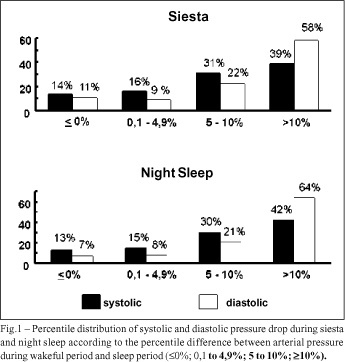
OBJECTIVE: To evaluate the influence of the siesta in ambulatory blood pressure (BP) monitoring and in cardiac structure parameters. METHODS: 1940 ambulatory arterial blood pressure monitoring tests were analyzed (Spacelabs 90207, 15/15 minutes from 7:00 to 22:00 hours and 20/20 minutes from 22:01 to 6.59hours) and 21% of the records indicated that the person had taken a siesta (263 woman, 52±14 years). The average duration of the siesta was 118±58 minutes. RESULTS: (average ± standard deviation) The average of systolic/diastolic pressures during wakefulness, including the napping period, was less than the average for the period not including the siesta (138±16/85±11 vs 139±16/86±11 mmHg, p<0.05); 2) pressure loads during wakefulness including the siesta, were less than those observed without the siesta); 3) the averages of nocturnal sleep blood pressures were similar to those of the siesta, 4) nocturnal sleep pressure drops were similar to those in the siesta including wakefulness with and without the siesta; 5) the averages of BP in men were higher (p5%. CONCLUSION: The siesta influenced the heart structure parameters and from a statistical point of view the average of systolic and diastolic pressures and the respective pressure loads of the wakeful period.

  • ambulatory arterial blood pressure monitoring
  • siesta
  • Sleep
Read Full Article
Creative Commons Attribution (CC BY) Creative Commons license
08/01/2002 DOI: 10.1590/S0066-782X2000000400002 Views 1

How to cite this article

EndNote RIS

Electronic Document Format (Vancouver)

Wollmann C, Drager LF. Obstructive Sleep Apnea in Acute Myocardial Infarction: A Prognostic Risk Factor beyond Traditional Players?. International Journal of Cardiovascular Sciences 2025;38:e20250032.

Electronic Document Format (ABNT)

Wollmann, Carlos; Drager, Luciano F.. Obstructive Sleep Apnea in Acute Myocardial Infarction: A Prognostic Risk Factor beyond Traditional Players?. International Journal of Cardiovascular Sciences, v. 38, e20250032, May. 2025.

Electronic Document Format (APA)

Wollmann, C., & Drager, L. F. (2025). Obstructive Sleep Apnea in Acute Myocardial Infarction: A Prognostic Risk Factor beyond Traditional Players?. International Journal of Cardiovascular Sciences, 38, e20250032.

Electronic Document Format (ISO)

Wollmann, Carlos and Drager, Luciano F.. Obstructive Sleep Apnea in Acute Myocardial Infarction: A Prognostic Risk Factor beyond Traditional Players?. International Journal of Cardiovascular Sciences [online]. 2025, vol. 38, [cited 2026-10-14], e20250032. Available from: <https://journals.cardiol.br/en/article/obstructive-sleep-apnea-in-acute-myocardial-infarction-a-prognostic-risk-factor-beyond-traditional-players/>. ISSN 2359-4802

EndNote RIS

Electronic Document Format (Vancouver)

Martins AVV, Krul LT, Drager LF. Sleep Duration, Genetics, and Atherosclerosis: Challenges and Opportunities. Arquivos Brasileiros de Cardiologia 2024;121(9):e20240593.

Electronic Document Format (ABNT)

Martins, Ana Vitoria Vitoreti; Krul, Larissa T.; Drager, Luciano F.. Sleep Duration, Genetics, and Atherosclerosis: Challenges and Opportunities. Arquivos Brasileiros de Cardiologia, v. 121, n. 9, e20240593, Nov. 2024.

Electronic Document Format (APA)

Martins, A. V. V., Krul, L. T., & Drager, L. F. (2024). Sleep Duration, Genetics, and Atherosclerosis: Challenges and Opportunities. Arquivos Brasileiros de Cardiologia, 121(9), e20240593.

Electronic Document Format (ISO)

Martins, Ana Vitoria Vitoreti and Krul, Larissa T. and Drager, Luciano F.. Sleep Duration, Genetics, and Atherosclerosis: Challenges and Opportunities. Arquivos Brasileiros de Cardiologia [online]. 2024, vol. 121, n. 9, [cited 2026-10-14], e20240593. Available from: <https://journals.cardiol.br/en/article/sleep-duration-genetics-and-atherosclerosis-challenges-and-opportunities/>. ISSN 0066-782X

EndNote RIS

Electronic Document Format (Vancouver)

Martins AVV, Drager LF. Active Assessment of Sleep and Depression for elderly Patients in the Outpatient Cardiology Setting: What Are We Waiting for?. Arquivos Brasileiros de Cardiologia 2021;117(3):455-6.

Electronic Document Format (ABNT)

Martins, Ana Vitória Vitoreti; Drager, Luciano F.. Active Assessment of Sleep and Depression for elderly Patients in the Outpatient Cardiology Setting: What Are We Waiting for?. Arquivos Brasileiros de Cardiologia, v. 117, n. 3, p. 455-456, Sep. 2021.

Electronic Document Format (APA)

Martins, A. V. V., & Drager, L. F. (2021). Active Assessment of Sleep and Depression for elderly Patients in the Outpatient Cardiology Setting: What Are We Waiting for?. Arquivos Brasileiros de Cardiologia, 117(3), 455-456.

Electronic Document Format (ISO)

Martins, Ana Vitória Vitoreti and Drager, Luciano F.. Active Assessment of Sleep and Depression for elderly Patients in the Outpatient Cardiology Setting: What Are We Waiting for?. Arquivos Brasileiros de Cardiologia [online]. 2021, vol. 117, n. 3, [cited 2026-10-14], pp. 455-456. Available from: <https://journals.cardiol.br/en/article/active-assessment-of-sleep-and-depression-for-elderly-patients-in-the-outpatient-cardiology-setting-what-are-we-waiting-for/>. ISSN 0066-782X

EndNote RIS

Electronic Document Format (Vancouver)

Trevisan IB, Vanderlei LCM, Proença M, Barreira TV, Santos CP, Gouveia TS, Ramos EMC, et al. Sleep Quality Associated with Habitual Physical Activity Level and Autonomic Nervous System of Smokers. Arquivos Brasileiros de Cardiologia 2020;116(1):26-35.

Electronic Document Format (ABNT)

Trevisan, Iara Buriola; Vanderlei, Luiz Carlos Marques; Proença, Mahara; Barreira, Tiago V.; Santos, Caroline Pereira; Gouveia, Tamara Santos; Ramos, Ercy Mara Cipulo; Ramos, Dionei. Sleep Quality Associated with Habitual Physical Activity Level and Autonomic Nervous System of Smokers. Arquivos Brasileiros de Cardiologia, v. 116, n. 1, p. 26-35, Dec. 2020.

Electronic Document Format (APA)

Trevisan, I. B., Vanderlei, L. C. M., Proença, M., Barreira, T. V., Santos, C. P., Gouveia, T. S., Ramos, E. M. C., & Ramos, D. (2020). Sleep Quality Associated with Habitual Physical Activity Level and Autonomic Nervous System of Smokers. Arquivos Brasileiros de Cardiologia, 116(1), 26-35.

Electronic Document Format (ISO)

Trevisan, Iara Buriola and Vanderlei, Luiz Carlos Marques and Proença, Mahara and Barreira, Tiago V. and Santos, Caroline Pereira and Gouveia, Tamara Santos and Ramos, Ercy Mara Cipulo and Ramos, Dionei. Sleep Quality Associated with Habitual Physical Activity Level and Autonomic Nervous System of Smokers. Arquivos Brasileiros de Cardiologia [online]. 2020, vol. 116, n. 1, [cited 2026-10-14], pp. 26-35. Available from: <https://journals.cardiol.br/en/article/sleep-quality-associated-with-habitual-physical-activity-level-and-autonomic-nervous-system-of-smokers/>. ISSN 0066-782X

EndNote RIS

Electronic Document Format (Vancouver)

Almeida FA. Nocturnal Blood Pressure Dipping and the Autonomic Nervous System. Arquivos Brasileiros de Cardiologia 2020;114(4):716-7.

Electronic Document Format (ABNT)

Almeida, Fernando Antonio de. Nocturnal Blood Pressure Dipping and the Autonomic Nervous System. Arquivos Brasileiros de Cardiologia, v. 114, n. 4, p. 716-717, May. 2020.

Electronic Document Format (APA)

Almeida, F. A. (2020). Nocturnal Blood Pressure Dipping and the Autonomic Nervous System. Arquivos Brasileiros de Cardiologia, 114(4), 716-717.

Electronic Document Format (ISO)

Almeida, Fernando Antonio de. Nocturnal Blood Pressure Dipping and the Autonomic Nervous System. Arquivos Brasileiros de Cardiologia [online]. 2020, vol. 114, n. 4, [cited 2026-10-14], pp. 716-717. Available from: <https://journals.cardiol.br/en/article/nocturnal-blood-pressure-dipping-and-the-autonomic-nervous-system/>. ISSN 0066-782X

EndNote RIS

Electronic Document Format (Vancouver)

Abreu GA, Barufaldi LA, Bloch KV, Szklo M. A Systematic Review on Sleep Duration and Dyslipidemia in Adolescents: Understanding Inconsistencies. Arquivos Brasileiros de Cardiologia 2015;105(4):418-25.

Electronic Document Format (ABNT)

Abreu, Gabriela de Azevedo; Barufaldi, Laura Augusta; Bloch, Katia Vergetti; Szklo, Moyses. A Systematic Review on Sleep Duration and Dyslipidemia in Adolescents: Understanding Inconsistencies. Arquivos Brasileiros de Cardiologia, v. 105, n. 4, p. 418-425, Sep. 2015.

Electronic Document Format (APA)

Abreu, G. A., Barufaldi, L. A., Bloch, K. V., & Szklo, M. (2015). A Systematic Review on Sleep Duration and Dyslipidemia in Adolescents: Understanding Inconsistencies. Arquivos Brasileiros de Cardiologia, 105(4), 418-425.

Electronic Document Format (ISO)

Abreu, Gabriela de Azevedo and Barufaldi, Laura Augusta and Bloch, Katia Vergetti and Szklo, Moyses. A Systematic Review on Sleep Duration and Dyslipidemia in Adolescents: Understanding Inconsistencies. Arquivos Brasileiros de Cardiologia [online]. 2015, vol. 105, n. 4, [cited 2026-10-14], pp. 418-425. Available from: <https://journals.cardiol.br/en/article/a-systematic-review-on-sleep-duration-and-dyslipidemia-in-adolescents-understanding-inconsistencies/>. ISSN 0066-782X

EndNote RIS

Electronic Document Format (Vancouver)

Cintra FD, Leite RP, Storti LJ, Bittencourt LA, Poyares D, Castro LS, Tufik S, et al. Sleep Apnea and Nocturnal Cardiac Arrhythmia: A Populational Study. Arquivos Brasileiros de Cardiologia 2014;103(5):368-74.

Electronic Document Format (ABNT)

Cintra, Fatima Dumas; Leite, Renata Pimentel; Storti, Luciana Julio; Bittencourt, Lia Azeredo; Poyares, Dalva; Castro, Laura de Siqueira; Tufik, Sergio; Paola, Angelo de. Sleep Apnea and Nocturnal Cardiac Arrhythmia: A Populational Study. Arquivos Brasileiros de Cardiologia, v. 103, n. 5, p. 368-374, Sep. 2014.

Electronic Document Format (APA)

Cintra, F. D., Leite, R. P., Storti, L. J., Bittencourt, L. A., Poyares, D., Castro, L. S., Tufik, S., & Paola, A. (2014). Sleep Apnea and Nocturnal Cardiac Arrhythmia: A Populational Study. Arquivos Brasileiros de Cardiologia, 103(5), 368-374.

Electronic Document Format (ISO)

Cintra, Fatima Dumas and Leite, Renata Pimentel and Storti, Luciana Julio and Bittencourt, Lia Azeredo and Poyares, Dalva and Castro, Laura de Siqueira and Tufik, Sergio and Paola, Angelo de. Sleep Apnea and Nocturnal Cardiac Arrhythmia: A Populational Study. Arquivos Brasileiros de Cardiologia [online]. 2014, vol. 103, n. 5, [cited 2026-10-14], pp. 368-374. Available from: <https://journals.cardiol.br/en/article/sleep-apnea-and-nocturnal-cardiac-arrhythmia-a-populational-study/>. ISSN 0066-782X

EndNote RIS

Electronic Document Format (Vancouver)

Louzada MLC, Rauber F, Campagnolo PDB, Vitolo MR. Sleep duration and body mass index among southern Brazilian preschoolers. Arquivos Brasileiros de Cardiologia 2013;99(6):1156-8.

Electronic Document Format (ABNT)

Louzada, Maria Laura da Costa; Rauber, Fernanda; Campagnolo, Paula Dal Bó; Vitolo, Márcia Regina. Sleep duration and body mass index among southern Brazilian preschoolers. Arquivos Brasileiros de Cardiologia, v. 99, n. 6, p. 1156-1158, Mar. 2013.

Electronic Document Format (APA)

Louzada, M. L. C., Rauber, F., Campagnolo, P. D. B., & Vitolo, M. R. (2013). Sleep duration and body mass index among southern Brazilian preschoolers. Arquivos Brasileiros de Cardiologia, 99(6), 1156-1158.

Electronic Document Format (ISO)

Louzada, Maria Laura da Costa and Rauber, Fernanda and Campagnolo, Paula Dal Bó and Vitolo, Márcia Regina. Sleep duration and body mass index among southern Brazilian preschoolers. Arquivos Brasileiros de Cardiologia [online]. 2013, vol. 99, n. 6, [cited 2026-10-14], pp. 1156-1158. Available from: <https://journals.cardiol.br/en/article/sleep-duration-and-body-mass-index-among-southern-brazilian-preschoolers/>. ISSN 0066-782X

EndNote RIS

Electronic Document Format (Vancouver)

Aidar NA, Silva MAC, Silva CAM, Ferreira Júnior PN, Tavares P. ABPM in COPD patients with sleep desaturation. Arquivos Brasileiros de Cardiologia 2009;93(3):275-82.

Electronic Document Format (ABNT)

Aidar, Neila Anders; Silva, Márcio Alberto Carvalho da; Silva, César Augusto Melo e; Ferreira Júnior, Pedro Nery; Tavares, Paulo. ABPM in COPD patients with sleep desaturation. Arquivos Brasileiros de Cardiologia, v. 93, n. 3, p. 275-282, Oct. 2009.

Electronic Document Format (APA)

Aidar, N. A., Silva, M. A. C. , Silva, C. A. M. , Ferreira Júnior, P. N., & Tavares, P. (2009). ABPM in COPD patients with sleep desaturation. Arquivos Brasileiros de Cardiologia, 93(3), 275-282.

Electronic Document Format (ISO)

Aidar, Neila Anders and Silva, Márcio Alberto Carvalho da and Silva, César Augusto Melo e and Ferreira Júnior, Pedro Nery and Tavares, Paulo. ABPM in COPD patients with sleep desaturation. Arquivos Brasileiros de Cardiologia [online]. 2009, vol. 93, n. 3, [cited 2026-10-14], pp. 275-282. Available from: <https://journals.cardiol.br/en/article/abpm-in-copd-patients-with-sleep-desaturation/>. ISSN 0066-782X

EndNote RIS

Electronic Document Format (Vancouver)

Gomes MA, Pierin AM, Mion Jr D. The effect of siesta in parameters of cardiac structure and in interpretation of ambulatory arterial blood pressure monitoring. Arquivos Brasileiros de Cardiologia 2002;74(4):314-8.

Electronic Document Format (ABNT)

Gomes, Marco A.M.; Pierin, Angela M.G.; Mion Jr, Décio. The effect of siesta in parameters of cardiac structure and in interpretation of ambulatory arterial blood pressure monitoring. Arquivos Brasileiros de Cardiologia, v. 74, n. 4, p. 314-318, Jan. 2002.

Electronic Document Format (APA)

Gomes, M. A., Pierin, A. M., & Mion Jr, D. (2002). The effect of siesta in parameters of cardiac structure and in interpretation of ambulatory arterial blood pressure monitoring. Arquivos Brasileiros de Cardiologia, 74(4), 314-318.

Electronic Document Format (ISO)

Gomes, Marco A.M. and Pierin, Angela M.G. and Mion Jr, Décio. The effect of siesta in parameters of cardiac structure and in interpretation of ambulatory arterial blood pressure monitoring. Arquivos Brasileiros de Cardiologia [online]. 2002, vol. 74, n. 4, [cited 2026-10-14], pp. 314-318. Available from: <https://journals.cardiol.br/en/article/the-effect-of-siesta-in-parameters-of-cardiac-structure-and-in-interpretation-of-ambulatory-arterial-blood-pressure-monitoring/>. ISSN 0066-782X

  • About ABC Family
  • Internal Regulation
  • Editorial Board
  • Brazilian Society of Cardiology (SBC)

Issues

SBC Guidelines

  • Videos
  • Podcasts
  • News