ABC Family Arquivos Brasileiros de Cardiologia International Journal of Cardiovascular Sciences ABC Heart Failure & Cardiomyopathy ABC Imagem Cardiovascular
Português English
ABC Family
Português English
  • About
    • About ABC Family
    • Internal Regulation
    • Editorial Board
    • Brazilian Society of Cardiology (SBC)
  • Issues
  • SBC Guidelines
  • Content
    • Videos
    • Podcasts
    • News
  • About
    • About ABC Family
    • Internal Regulation
    • Editorial Board
    • Brazilian Society of Cardiology (SBC)
  • Issues
  • SBC Guidelines
  • Content
    • Videos
    • Podcasts
    • News

ABC Family

  • ABC Family
  • Arquivos Brasileiros de Cardiologia
  • International Journal of Cardiovascular Sciences
  • ABC Heart Failure & Cardiomyopathy
  • ABC Imagem Cardiovascular
Search in

No content found.

Journals
Ordering
Article types
Others

  1. Home
  2. Keyword: Quality Improvement
A Nationwide Initiative to Improve Cardiology Quality: The Best Practice in Cardiology Program in Brazil
ABC
Original Article

A Nationwide Initiative to Improve Cardiology Quality: The Best Practice in Cardiology Program in Brazil

Fabio Papa Taniguchi et al. Sabrina Bernardez-Pereira Antônio Luiz Pinho Ribeiro Louise Morgan … Anne B. Curtis Kathryn Taubert Denilson Campos de Albuquerque Sidney C Smith Jr Angêlo Amato Vincenzo de Paola

Abstract

Background

Despite significant progress in improving the quality of cardiovascular care, persistent gaps remain in terms of inconsistent adherence to guideline recommendations.

Objective

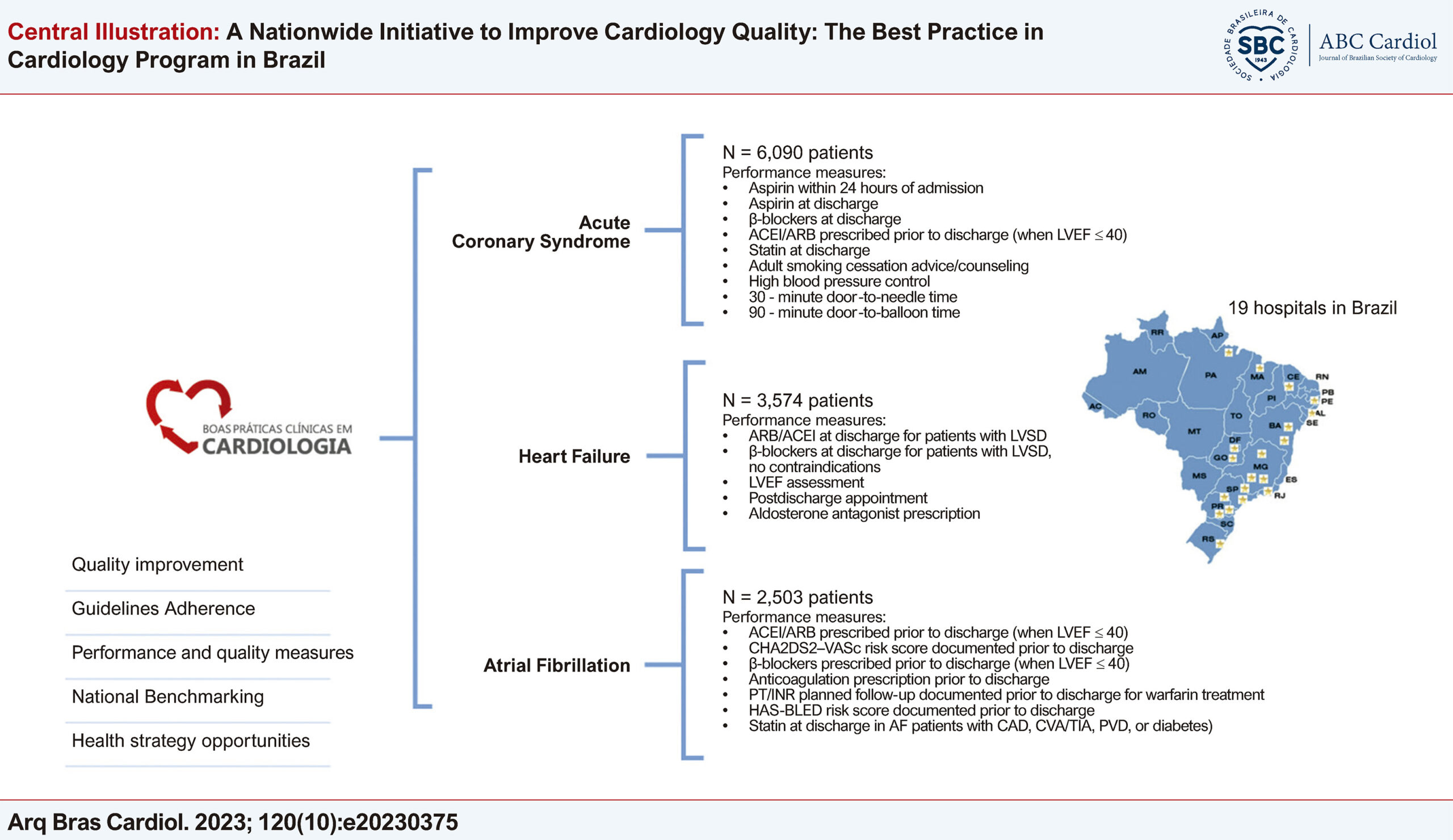
This study evaluates the effects of implementing a quality improvement program adapted from the American Heart Association’s Get with the Guidelines™ initiative on adherence to guideline-directed medical therapy for acute coronary syndrome (ACS), atrial fibrillation (AF), and heart failure (HF).

Methods

We examined demographics, quality measures, and short-term outcomes in patients hospitalized with ACS, AF, and HF enrolled in the Best Practice in Cardiology (BPC) Program from 2016 to 2022.

Results

This study included 12,167 patients in 19 hospitals in Brazil. Mean age was 62.5 [53.8-71] y/o; 61.1% were male, 68.7% had hypertension, 32.0% diabetes mellitus, and 24.1% had dyslipidemia. Composite score had a sustainable performance in the period from baseline to the last quarter: 65.8±36.2% to 73± 31.2% for AF (p=0.024), 81.0± 23.6% to 89.9 ± 19.3% for HF (p<0.001), and from 88.0 ± 19.1 to 91.2 ±14.9 for ACS (p<0.001).

Conclusions

The BPC program is a quality improvement program in Brazil in which real-time data, obtained using cardiology guideline metrics, were implemented in a quality improvement program resulting in an overall sustained improvement in AF, HF, and ACS management.
  • Cardiology
  • Evidence-Based Practice
  • Quality Improvement
Read Full Article
Creative Commons Attribution (CC BY) Creative Commons license
04/12/2023 DOI: 10.36660/abc.20230375 Views 1
Central Illustration
ABC
Original Article

Cardiovascular Statistics from the Good Practices in Cardiology Program – Data from a Brazilian Tertiary Public Hospital

Luiz Guilherme Passaglia et al. Marina Lírio Resende Cerqueira Mariana Martins Pires Lucas Vieira Chagas … Carolina Teixeira Cunha Erika Nunes de Oliveira Rodrigues Flávia Mariana Mendes Diniz Darkiane Fernandes Ferreira Monique Rocha Nogueira Gisia Teodoro Braga Fábio P. Taniguchi Antonio Luiz Pinho Ribeiro

Abstract

Background

The Good Practices in Cardiology Program is an initiative created by the Brazilian Society of Cardiology (SBC) to improve the quality of care of cardiovascular disease patients in Brazilian public hospitals.

Objectives

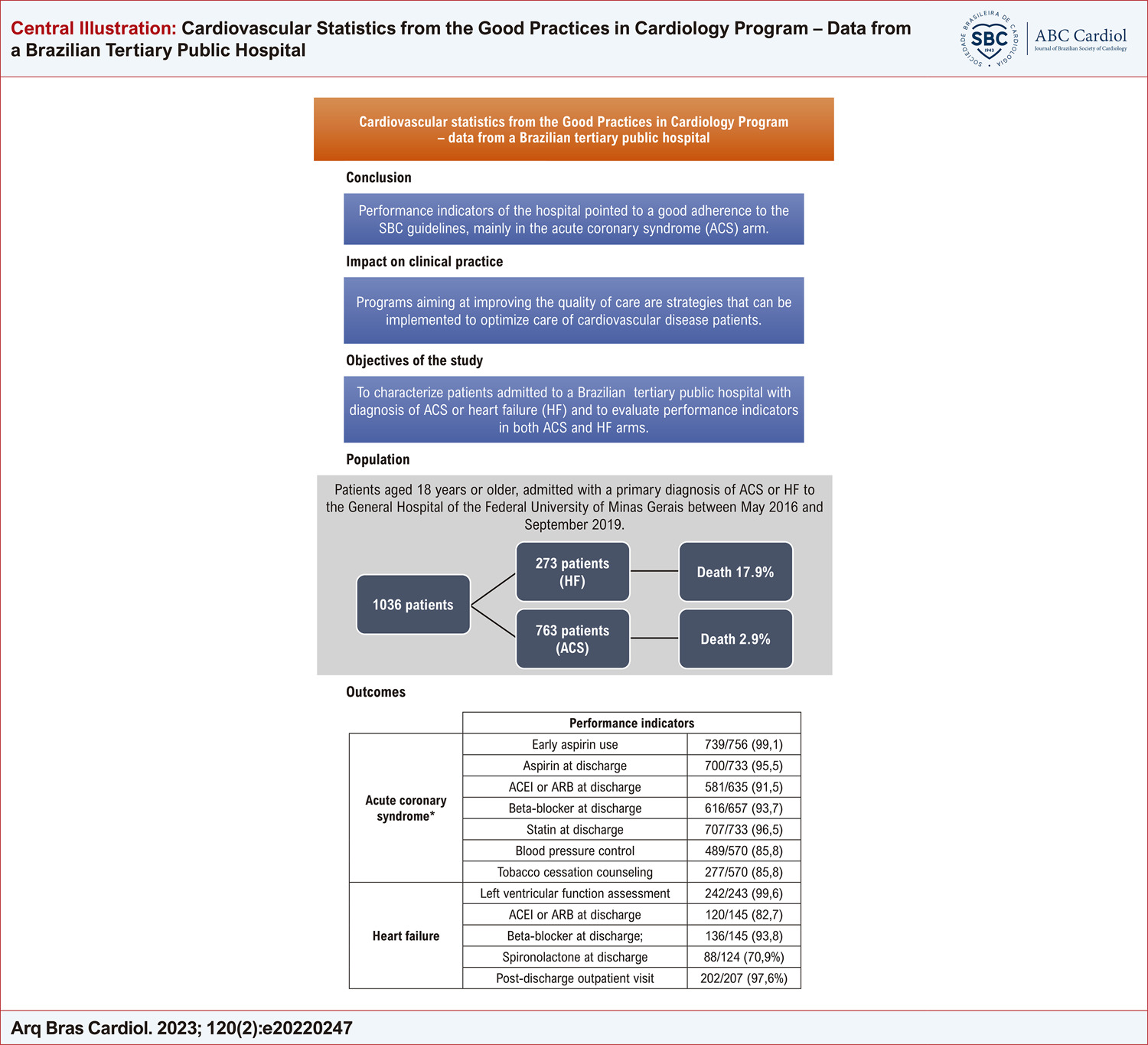
To characterize patients admitted to a tertiary public hospital with diagnosis of acute coronary syndrome (ACS) or heart failure (HF) and to evaluate performance indicators in both ACS and HF arms, with a pre-established target of 85% adherence to the SBC recommendations.

Methods

This was a descriptive cross-sectional study through data collection of patients hospitalized between May 2016 and September 2019.

Results

A total of 1,036 patients were included, 273 in the HF arm and 763 in the ACS arm. Mean age was 59.8 ± 12.0 years in the ACS and 57.0 ± 14.1 years in the HF, with a predominance of male patients in both groups. More than half of patients had some primary education and more than 90% reported a monthly income of less than five minimum wages. In ACS, the diagnosis of ACS with ST segment elevation was predominant (66.3%), and 2.9% of patients died. In HF, the most common etiology was Chagas disease (25.8%), and 17.9% died. Analysis of the performance indicators revealed an adherence rate higher than 85% to nine of the 12 indicators.

Conclusion

Quality programs are essential for improvement of quality of care. Performance indicators pointed to a good adherence to the SBC guidelines, mainly in the ACS arm.

  • Acute coronary syndrome
  • Cardiovascular Diseases
  • Heart Failure
  • Quality Improvement
Read Full Article
Creative Commons Attribution (CC BY) Creative Commons license
10/02/2023 DOI: 10.36660/abc.20220247
Figure 1
ABC
Research Letter

Preparing Patients And Optimizing Processes In The Perioperative Period Of Cardiac Surgery: How To Redesign The Flow Of Care After COVID-19

Omar Asdrúbal Vilca Mejia et al. Bruno Mahler Mioto Gabrielle Barbosa Borgomoni Juliana Mendanha Camilo … Danielle Misumi Watanabe Sirlei Pereira Nunes Vanessa Santos Sallai Maraina Pegorini Libório de Lima Jurema da Silva Herbas Palomo Helenice Moreira da Costa Elisandra Trevisan Arita Maria Ignêz Zanetti Feltrim Vera Coimbra Roger Daglius Dias Filomena Regina Barbosa Gomes Galas José Otávio Costa Auler Junior Fabio Biscegli Jatene

Introduction

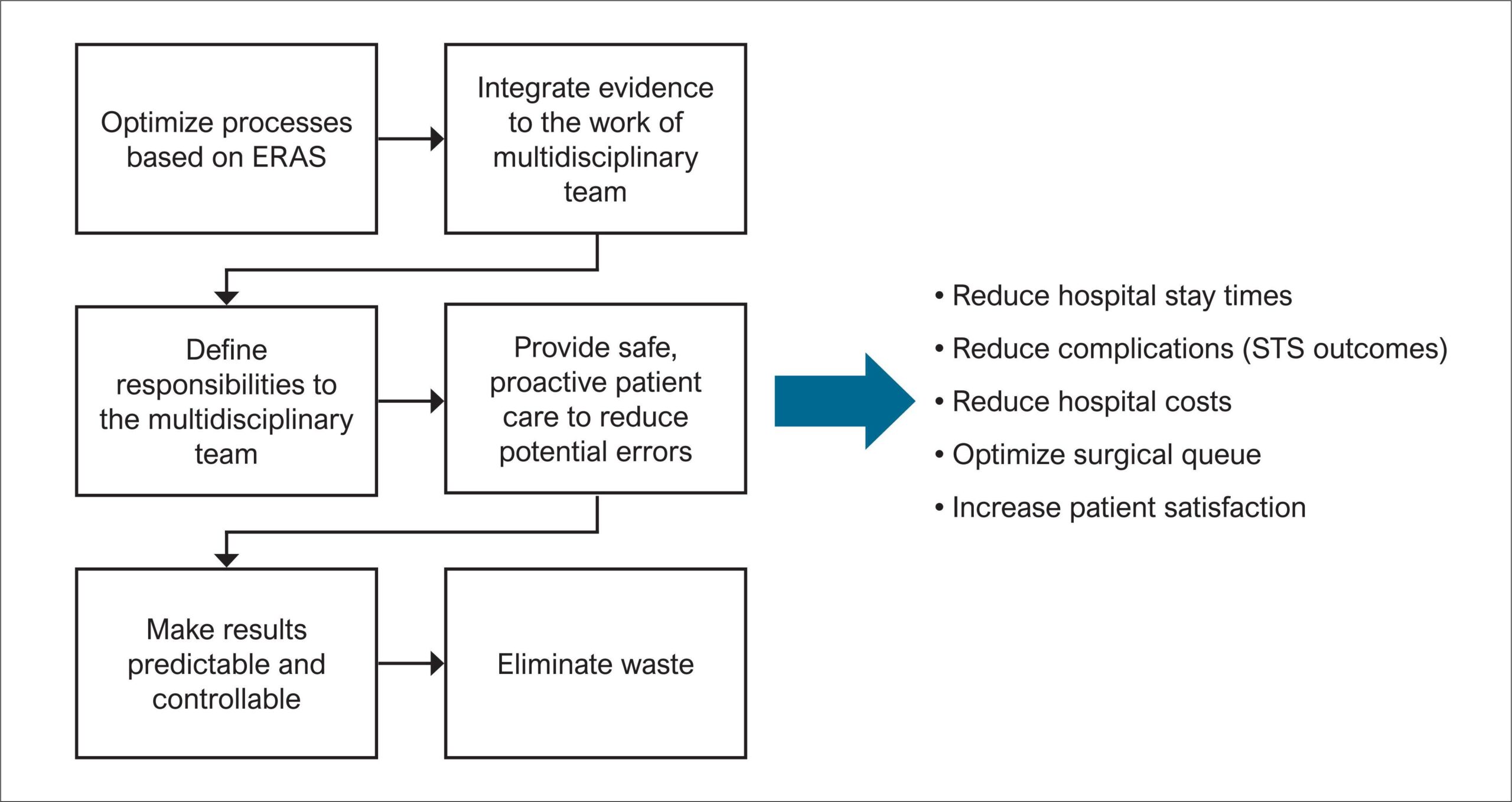
The lack of proactive care strategies influences the fragmentation of care, deparametrization of processes and extension of hospital times, while evidence has shown that multidisciplinary protocols based on evidence executed by synchronized teams, with standardized processes, proactivity and patient-centered care decrease complications, hospital times and hospital costs., In this context, care based on the Enhanced Recovery After Surgery (ERAS) concept revolutionizes traditional flows. Guidelines for cardiac surgery were recently published, producing encouraging results.,

This approach showed efficiency and safety in hospital discharge within three days after cardiac surgery,, which is promising in the COVID-19 era, in which surgical queues have grown due to procedural delays, enabling a greater number of visits in less time, reducing the risk of contamination and hospital costs.

[…]

  • Cardiovascular Surgical Procedures
  • COVID-19
  • Enhanced Recovery After Surgery
  • Patient Safety
  • Quality Improvement
Read Full Article
Creative Commons Attribution (CC BY) Creative Commons license
21/02/2022 DOI: 10.36660/abc.20210484 Views 2
ABC
Editorial

Implementation of Healthcare Quality Improvement Programs

Felix J. A. Ramires

The incidence and prevalence of cardiovascular disease are increasing worldwide. – This is partly due to population aging and the accumulation of risk factors associated with these diseases. In Brazil, the life expectancy of the population in 2019 was estimated at 76.6 years in a population of 211,652,819 people, assessed by IBGE. In the same year, approximately 12,168,390 hospitalizations were registered in the public healthcare system (in Brazil, SUS) — Ministry of Health — with approximately 1,200,000 due to cardiovascular diseases (10% of the total). In addition, the mortality related to cardiovascular diseases remains high, around 29% of the annual causes of death. Therefore, we observe the great impact of these diseases with regard to the occupation of hospital beds and mortality in Brazil. In this scenario, chronic disease management programs have shown that monitored and multidisciplinary monitoring improves adherence to pharmacological and non-pharmacological treatment determines optimization of therapy, decreases the number of hospitalizations directly related to the disease, promoting an important improvement in the quality of life and reduction of hospital costs. – Brazilian records have shown adherence to extremely low medical guidelines. The reasons for poor performance in implementing clinical guidelines include barriers related to the health system itself, medical commitment and improvement, multidisciplinary involvement and the patient’s own involvement in healthcare. Some studies suggest that about 30%–40% of patients do not receive healthcare according to the current scientific evidence, while 20% or more of the healthcare provided are not necessary or potentially harmful. The strategies developed to optimize adherence to current guidelines have demonstrated success in the management of these patients. This chronic disease management, focused on the quality of evidence-based care, can promote the reduction of clinical events. Some studies on management and quality improvement have shown reduced rates of hospital readmission in 30 days with the adoption of these measures. , Other models, in performance monitoring associated with strategies for implementing guidelines, promote the improvement of healthcare and reduction of outcomes. The encouragement of healthcare and quality measures are heterogeneous in different regions and among Brazilian institutions, resulting in extremely varied outcomes. The association of performance measures, detection of opportunities for improvement and development of strategies to increase adherence to good health practices are fundamental to optimize results.

In this scenario, the development of national protocols and studies on the management of cardiovascular diseases, focusing on the implementation of models and tools to improve the quality of healthcare and implementation of adherence to best practices, has a fundamental role in assessing feasibility and results.

[…]

  • aging
  • Bed Occupancy
  • Cardiovascular Diseases, mortality
  • Cost Savings
  • Drug Therapy
  • Guidelines as Topic
  • Prevalence
  • Quality Improvement
  • Risk Factors
Read Full Article
Creative Commons Attribution (CC BY) Creative Commons license
07/08/2020 DOI: 10.36660/abc.20200679 Views 2
Figure 1
ABC
Editorial

How Do We Know a Change is an Improvement? The (Not So) New Scientific Knowledge Every Physician Should Learn, Master and Lead

Alexandre Siciliano Colafranceschi

Cardiothoracic surgeons have a rich history of quality improvement and a strong ethos of transparency and innovation allowing for the rapid diffusion of standards, techniques, and benchmarks worldwide. Nationally, few medical specialties have contributed as much to the development of knowledge as the Brazilian cardiac surgery. From the hard work developed during decades by pioneering surgeons such as Euryclides Zerbini and Adib Jatene to the most contemporaneous leaders in the field, the Instituto do Coração do Hospital das Clínicas da Faculdade de Medicina da Universidade de São Paulo – InCor – is definitely at the heart of this journey. In this issue of Arquivos Brasileiros de Cardiologia the work by Mejia et al. has the merit of taking into account the evolution of the number of cardiovascular surgeries performed at InCor during a 35-year period. The total number is a remarkable one: over 100,000 open heart procedures were analyzed. After all, the mean number of procedures/year is 2,964, – or more than 11 procedures per workday. It is noteworthy the fact that the total number of procedures has been increasing, especially due to an increase in valvular operations and the correction of congenital cardiopathies. Also, of note, there is a 7% decrease in coronary artery bypass graft surgery volume in the most recent period studied.

Besides describing the volume of disease-specific open-heart surgical procedures throughout five different periods of time over the 35 years of data, another objective of the study by Mejia et al. was to evaluate the impact of the actions taken from a continuous quality improvement program on mortality from cardiovascular surgery. It is not clear, however, how the periods of time were selected for the analyses.

[…]

  • Cardiovascular Surgical Procedures/trends
  • Database
  • Hospital Mortality
  • Patient Safety
  • Quality Improvement
Read Full Article
Creative Commons Attribution (CC BY) Creative Commons license
29/05/2020 DOI: 10.36660/abc.20200249
Figure 1
ABC
Original Article

Analysis of >100,000 Cardiovascular Surgeries Performed at the Heart Institute and a New Era of Outcomes

Omar A.V. Mejia et al. Luiz Augusto Ferreira Lisboa Luiz Fernando Caneo Elisandra Trevisan Arita … Carlos Manuel de Almeida Brandão Ricardo Ribeiro Dias Roberto Costa Marcelo Biscegli Jatene Pablo Maria Alberto Pomerantzeff Luís Alberto Oliveira Dallan Fabio Biscegli Jatene

Abstract

Background:

The current challenge of cardiovascular surgery (CVS) is to improve the outcomes in increasingly severe patients. In this respect, continuous quality improvement (CQI) programs have had an impact on outcomes.

Objective:

To assess the evolution of the incidence and mortality due to CVS, as well as the current outcomes of the Hospital das Clínicas Heart Institute of the University of São Paulo Medical School (InCor-HCFMUSP).

Methods:

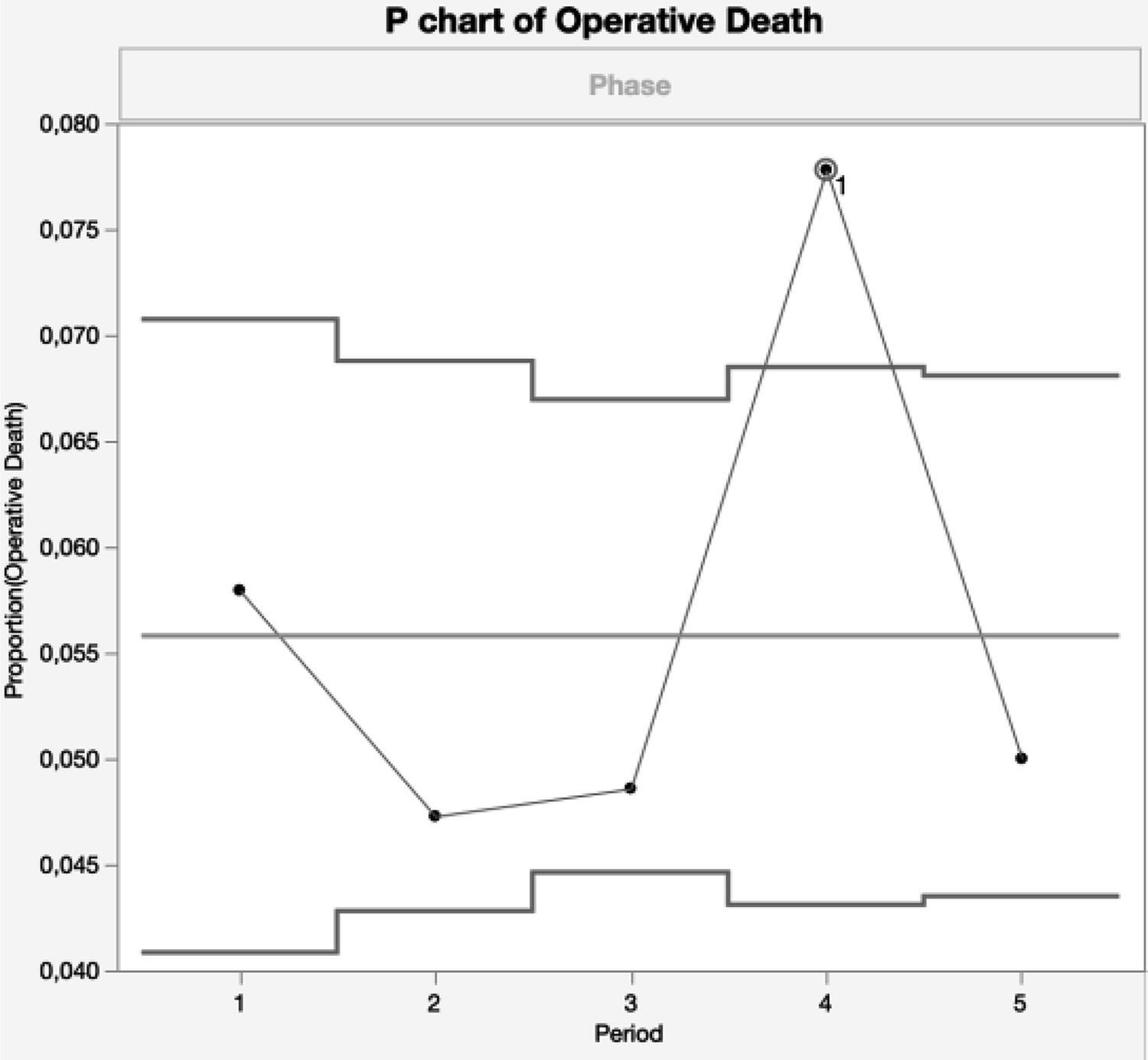
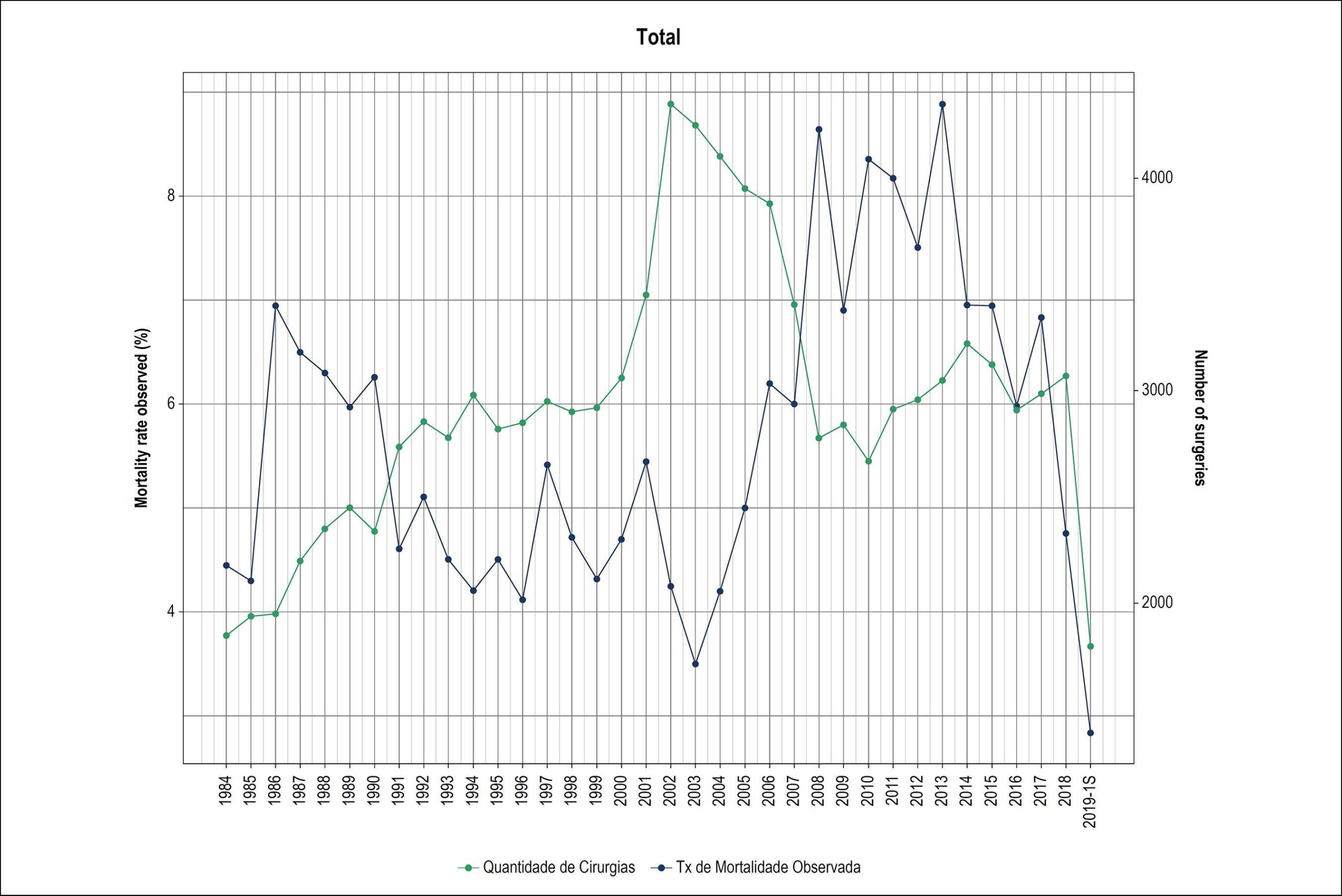
An outcome analysis of CVSs performed at the InCor, between January 1984 and June 2019. We observed the surgical volume and mortality rates in 5 time periods: 1st (1984-1989), 2nd (1990-1999), 3rd (2000-2007), 4th (2008-2015) and 5th (2016-2019). The CQI program was implemented between 2015 and 2016. The analysis included the total number of surgeries and the evolution of the most frequent procedures.

Results:

A total of 105,599 CCVs were performed, with an annual mean of 2,964 procedures and mortality of 5,63%. When comparing the 4th and the 5th periods, the average global volume of surgeries was increased from 2,943 to 3,139 (p = 0.368), bypass graft (CABG), from 638 to 597 (p = 0.214), heart valve surgery, from 372 to 465 (p = 0.201), and congenital heart disease surgery, from 530 to 615 (p = 0.125). The average global mortality went from 7.8% to 5% (p < 0.0001); in CABG surgery, from 5.8% to 3.1% (p < 0.0001); in heart valve surgery, from 14% to 7.5% (p < 0.0001) and in congenital heart disease surgery, from 12.1% to 9.6% (p < 0.0001).

Conclusion:

In spite of a recent trend towards increased surgical volume, there was a significant decrease in operative mortality in the groups studied. After the implementation of the CQI program, the mortality rates were closer to international standards.

  • Cardiovascular Surgical Procedures/trends
  • Database
  • Hospital Mortality
  • Patient Safety
  • Quality Improvement
Read Full Article
Creative Commons Attribution (CC BY) Creative Commons license
14/02/2020 DOI: 10.36660/abc.20190736 Views 2

How to cite this article

EndNote RIS

Electronic Document Format (Vancouver)

Taniguchi FP, Bernardez-Pereira S, Ribeiro ALP, Morgan L, Curtis AB, Taubert K, Albuquerque DC, et al. A Nationwide Initiative to Improve Cardiology Quality: The Best Practice in Cardiology Program in Brazil. Arquivos Brasileiros de Cardiologia 2023;120(10):e20230375.

Electronic Document Format (ABNT)

Taniguchi, Fabio Papa; Bernardez-Pereira, Sabrina; Ribeiro, Antônio Luiz Pinho; Morgan, Louise; Curtis, Anne B.; Taubert, Kathryn; Albuquerque, Denilson Campos de; Smith Jr, Sidney C; Paola, Angêlo Amato Vincenzo de. A Nationwide Initiative to Improve Cardiology Quality: The Best Practice in Cardiology Program in Brazil. Arquivos Brasileiros de Cardiologia, v. 120, n. 10, e20230375, Dec. 2023.

Electronic Document Format (APA)

Taniguchi, F. P., Bernardez-Pereira, S., Ribeiro, A. L. P., Morgan, L., Curtis, A. B., Taubert, K., Albuquerque, D. C. , Smith Jr, S. C., & Paola, A. A. V. (2023). A Nationwide Initiative to Improve Cardiology Quality: The Best Practice in Cardiology Program in Brazil. Arquivos Brasileiros de Cardiologia, 120(10), e20230375.

Electronic Document Format (ISO)

Taniguchi, Fabio Papa and Bernardez-Pereira, Sabrina and Ribeiro, Antônio Luiz Pinho and Morgan, Louise and Curtis, Anne B. and Taubert, Kathryn and Albuquerque, Denilson Campos de and Smith Jr, Sidney C and Paola, Angêlo Amato Vincenzo de. A Nationwide Initiative to Improve Cardiology Quality: The Best Practice in Cardiology Program in Brazil. Arquivos Brasileiros de Cardiologia [online]. 2023, vol. 120, n. 10, [cited 2026-10-15], e20230375. Available from: <https://journals.cardiol.br/en/article/a-nationwide-initiative-to-improve-cardiology-quality-the-best-practice-in-cardiology-program-in-brazil/>. ISSN 0066-782X

EndNote RIS

Electronic Document Format (Vancouver)

Passaglia LG, Cerqueira MLR, Pires MM, Chagas LV, Cunha CT, Rodrigues ENO, Diniz FMM, et al. Cardiovascular Statistics from the Good Practices in Cardiology Program – Data from a Brazilian Tertiary Public Hospital. Arquivos Brasileiros de Cardiologia 2023;120(2):e20220247.

Electronic Document Format (ABNT)

Passaglia, Luiz Guilherme; Cerqueira, Marina Lírio Resende; Pires, Mariana Martins; Chagas, Lucas Vieira; Cunha, Carolina Teixeira; Rodrigues, Erika Nunes de Oliveira; Diniz, Flávia Mariana Mendes; Ferreira, Darkiane Fernandes; Nogueira, Monique Rocha; Braga, Gisia Teodoro; Taniguchi, Fábio P.; Ribeiro, Antonio Luiz Pinho. Cardiovascular Statistics from the Good Practices in Cardiology Program – Data from a Brazilian Tertiary Public Hospital. Arquivos Brasileiros de Cardiologia, v. 120, n. 2, e20220247, Feb. 2023.

Electronic Document Format (APA)

Passaglia, L. G., Cerqueira, M. L. R., Pires, M. M., Chagas, L. V., Cunha, C. T., Rodrigues, E. N. O., Diniz, F. M. M., Ferreira, D. F., Nogueira, M. R., Braga, G. T., Taniguchi, F. P., & Ribeiro, A. L. P. (2023). Cardiovascular Statistics from the Good Practices in Cardiology Program – Data from a Brazilian Tertiary Public Hospital. Arquivos Brasileiros de Cardiologia, 120(2), e20220247.

Electronic Document Format (ISO)

Passaglia, Luiz Guilherme and Cerqueira, Marina Lírio Resende and Pires, Mariana Martins and Chagas, Lucas Vieira and Cunha, Carolina Teixeira and Rodrigues, Erika Nunes de Oliveira and Diniz, Flávia Mariana Mendes and Ferreira, Darkiane Fernandes and Nogueira, Monique Rocha and Braga, Gisia Teodoro and Taniguchi, Fábio P. and Ribeiro, Antonio Luiz Pinho. Cardiovascular Statistics from the Good Practices in Cardiology Program – Data from a Brazilian Tertiary Public Hospital. Arquivos Brasileiros de Cardiologia [online]. 2023, vol. 120, n. 2, [cited 2026-10-15], e20220247. Available from: <https://journals.cardiol.br/en/article/cardiovascular-statistics-from-the-good-practices-in-cardiology-program-data-from-a-brazilian-tertiary-public-hospital/>. ISSN 0066-782X

EndNote RIS

Electronic Document Format (Vancouver)

Mejia OAV, Mioto BM, Borgomoni GB, Camilo JM, Watanabe DM, Nunes SP, Sallai VS, et al. Preparing Patients And Optimizing Processes In The Perioperative Period Of Cardiac Surgery: How To Redesign The Flow Of Care After COVID-19. Arquivos Brasileiros de Cardiologia 2022;118(1):110-4.

Electronic Document Format (ABNT)

Mejia, Omar Asdrúbal Vilca; Mioto, Bruno Mahler; Borgomoni, Gabrielle Barbosa; Camilo, Juliana Mendanha; Watanabe, Danielle Misumi; Nunes, Sirlei Pereira; Sallai, Vanessa Santos; Lima, Maraina Pegorini Libório de; Palomo, Jurema da Silva Herbas; Costa, Helenice Moreira da; Arita, Elisandra Trevisan; Feltrim, Maria Ignêz Zanetti; Coimbra, Vera; Dias, Roger Daglius; Galas, Filomena Regina Barbosa Gomes; Auler Junior, José Otávio Costa; Jatene, Fabio Biscegli. Preparing Patients And Optimizing Processes In The Perioperative Period Of Cardiac Surgery: How To Redesign The Flow Of Care After COVID-19. Arquivos Brasileiros de Cardiologia, v. 118, n. 1, p. 110-114, Feb. 2022.

Electronic Document Format (APA)

Mejia, O. A. V., Mioto, B. M., Borgomoni, G. B., Camilo, J. M., Watanabe, D. M., Nunes, S. P., Sallai, V. S., Lima, M. P. L. , Palomo, J. S. H., Costa, H. M. , Arita, E. T., Feltrim, M. I. Z., Coimbra, V., Dias, R. D., Galas, F. R. B. G., Auler Junior, J. O. C., & Jatene, F. B. (2022). Preparing Patients And Optimizing Processes In The Perioperative Period Of Cardiac Surgery: How To Redesign The Flow Of Care After COVID-19. Arquivos Brasileiros de Cardiologia, 118(1), 110-114.

Electronic Document Format (ISO)

Mejia, Omar Asdrúbal Vilca and Mioto, Bruno Mahler and Borgomoni, Gabrielle Barbosa and Camilo, Juliana Mendanha and Watanabe, Danielle Misumi and Nunes, Sirlei Pereira and Sallai, Vanessa Santos and Lima, Maraina Pegorini Libório de and Palomo, Jurema da Silva Herbas and Costa, Helenice Moreira da and Arita, Elisandra Trevisan and Feltrim, Maria Ignêz Zanetti and Coimbra, Vera and Dias, Roger Daglius and Galas, Filomena Regina Barbosa Gomes and Auler Junior, José Otávio Costa and Jatene, Fabio Biscegli. Preparing Patients And Optimizing Processes In The Perioperative Period Of Cardiac Surgery: How To Redesign The Flow Of Care After COVID-19. Arquivos Brasileiros de Cardiologia [online]. 2022, vol. 118, n. 1, [cited 2026-10-15], pp. 110-114. Available from: <https://journals.cardiol.br/en/article/preparing-patients-and-optimizing-processes-in-the-perioperative-period-of-cardiac-surgery-how-to-redesign-the-flow-of-care-after-covid-19/>. ISSN 0066-782X

EndNote RIS

Electronic Document Format (Vancouver)

Ramires FJA. Implementation of Healthcare Quality Improvement Programs. Arquivos Brasileiros de Cardiologia 2020;115(1):100-1.

Electronic Document Format (ABNT)

Ramires, Felix J. A.. Implementation of Healthcare Quality Improvement Programs. Arquivos Brasileiros de Cardiologia, v. 115, n. 1, p. 100-101, Aug. 2020.

Electronic Document Format (APA)

Ramires, F. J. A. (2020). Implementation of Healthcare Quality Improvement Programs. Arquivos Brasileiros de Cardiologia, 115(1), 100-101.

Electronic Document Format (ISO)

Ramires, Felix J. A.. Implementation of Healthcare Quality Improvement Programs. Arquivos Brasileiros de Cardiologia [online]. 2020, vol. 115, n. 1, [cited 2026-10-15], pp. 100-101. Available from: <https://journals.cardiol.br/en/article/implementation-of-healthcare-quality-improvement-programs/>. ISSN 0066-782X

EndNote RIS

Electronic Document Format (Vancouver)

Colafranceschi AS. How Do We Know a Change is an Improvement? The (Not So) New Scientific Knowledge Every Physician Should Learn, Master and Lead. Arquivos Brasileiros de Cardiologia 2020;114(4):613-5.

Electronic Document Format (ABNT)

Colafranceschi, Alexandre Siciliano. How Do We Know a Change is an Improvement? The (Not So) New Scientific Knowledge Every Physician Should Learn, Master and Lead. Arquivos Brasileiros de Cardiologia, v. 114, n. 4, p. 613-615, May. 2020.

Electronic Document Format (APA)

Colafranceschi, A. S. (2020). How Do We Know a Change is an Improvement? The (Not So) New Scientific Knowledge Every Physician Should Learn, Master and Lead. Arquivos Brasileiros de Cardiologia, 114(4), 613-615.

Electronic Document Format (ISO)

Colafranceschi, Alexandre Siciliano. How Do We Know a Change is an Improvement? The (Not So) New Scientific Knowledge Every Physician Should Learn, Master and Lead. Arquivos Brasileiros de Cardiologia [online]. 2020, vol. 114, n. 4, [cited 2026-10-15], pp. 613-615. Available from: <https://journals.cardiol.br/en/article/how-do-we-know-a-change-is-an-improvement-the-not-so-new-scientific-knowledge-every-physician-should-learn-master-and-lead/>. ISSN 0066-782X

EndNote RIS

Electronic Document Format (Vancouver)

Mejia OA, Lisboa LAF, Caneo LF, Arita ET, Brandão CMA, Dias RR, Costa R, et al. Analysis of >100,000 Cardiovascular Surgeries Performed at the Heart Institute and a New Era of Outcomes. Arquivos Brasileiros de Cardiologia 2020;114(4):603-12.

Electronic Document Format (ABNT)

Mejia, Omar A.V.; Lisboa, Luiz Augusto Ferreira; Caneo, Luiz Fernando; Arita, Elisandra Trevisan; Brandão, Carlos Manuel de Almeida; Dias, Ricardo Ribeiro; Costa, Roberto; Jatene, Marcelo Biscegli; Pomerantzeff, Pablo Maria Alberto; Dallan, Luís Alberto Oliveira; Jatene, Fabio Biscegli. Analysis of >100,000 Cardiovascular Surgeries Performed at the Heart Institute and a New Era of Outcomes. Arquivos Brasileiros de Cardiologia, v. 114, n. 4, p. 603-612, Feb. 2020.

Electronic Document Format (APA)

Mejia, O. A., Lisboa, L. A. F., Caneo, L. F., Arita, E. T., Brandão, C. M. A., Dias, R. R., Costa, R., Jatene, M. B., Pomerantzeff, P. M. A., Dallan, L. A. O., & Jatene, F. B. (2020). Analysis of >100,000 Cardiovascular Surgeries Performed at the Heart Institute and a New Era of Outcomes. Arquivos Brasileiros de Cardiologia, 114(4), 603-612.

Electronic Document Format (ISO)

Mejia, Omar A.V. and Lisboa, Luiz Augusto Ferreira and Caneo, Luiz Fernando and Arita, Elisandra Trevisan and Brandão, Carlos Manuel de Almeida and Dias, Ricardo Ribeiro and Costa, Roberto and Jatene, Marcelo Biscegli and Pomerantzeff, Pablo Maria Alberto and Dallan, Luís Alberto Oliveira and Jatene, Fabio Biscegli. Analysis of >100,000 Cardiovascular Surgeries Performed at the Heart Institute and a New Era of Outcomes. Arquivos Brasileiros de Cardiologia [online]. 2020, vol. 114, n. 4, [cited 2026-10-15], pp. 603-612. Available from: <https://journals.cardiol.br/en/article/analysis-of-100000-cardiovascular-surgeries-performed-at-the-heart-institute-and-a-new-era-of-outcomes/>. ISSN 0066-782X

  • About ABC Family
  • Internal Regulation
  • Editorial Board
  • Brazilian Society of Cardiology (SBC)

Issues

SBC Guidelines

  • Videos
  • Podcasts
  • News