How Do We Know a Change is an Improvement? The (Not So) New Scientific Knowledge Every Physician Should Learn, Master and Lead
Cardiothoracic surgeons have a rich history of quality improvement and a strong ethos of transparency and innovation allowing for the rapid diffusion of standards, techniques, and benchmarks worldwide. Nationally, few medical specialties have contributed as much to the development of knowledge as the Brazilian cardiac surgery. From the hard work developed during decades by pioneering surgeons such as Euryclides Zerbini and Adib Jatene to the most contemporaneous leaders in the field, the Instituto do Coração do Hospital das Clínicas da Faculdade de Medicina da Universidade de São Paulo – InCor – is definitely at the heart of this journey. In this issue of Arquivos Brasileiros de Cardiologia the work by Mejia et al. has the merit of taking into account the evolution of the number of cardiovascular surgeries performed at InCor during a 35-year period. The total number is a remarkable one: over 100,000 open heart procedures were analyzed. After all, the mean number of procedures/year is 2,964, – or more than 11 procedures per workday. It is noteworthy the fact that the total number of procedures has been increasing, especially due to an increase in valvular operations and the correction of congenital cardiopathies. Also, of note, there is a 7% decrease in coronary artery bypass graft surgery volume in the most recent period studied.
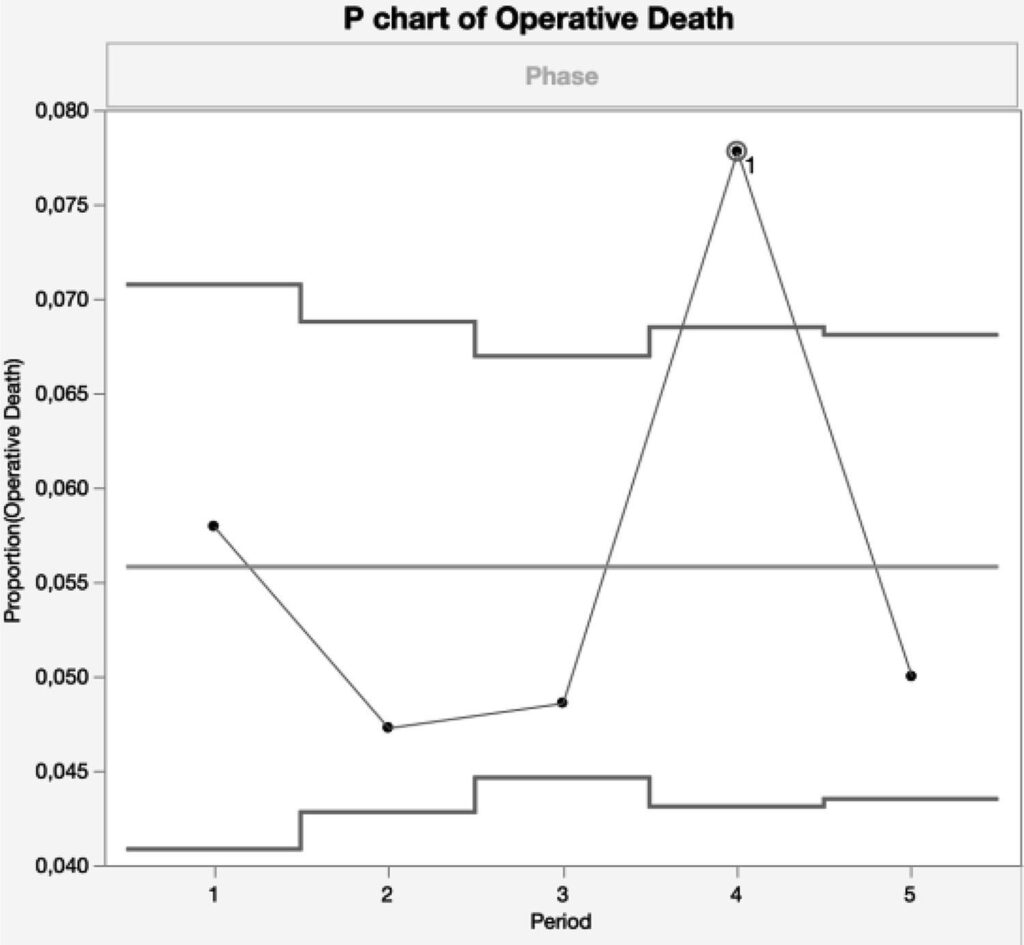
Besides describing the volume of disease-specific open-heart surgical procedures throughout five different periods of time over the 35 years of data, another objective of the study by Mejia et al. was to evaluate the impact of the actions taken from a continuous quality improvement program on mortality from cardiovascular surgery. It is not clear, however, how the periods of time were selected for the analyses.
[…]
Images
Image gallery fullscreen viewer
Comments are moderated by the editorial team before publication. Discussions should be evidence-based and use scientific language. Conflicts of interest should be declared.