ABC Family Arquivos Brasileiros de Cardiologia International Journal of Cardiovascular Sciences ABC Heart Failure & Cardiomyopathy ABC Imagem Cardiovascular
Português English
ABC Family
Português English
  • About
    • About ABC Family
    • Internal Regulation
    • Editorial Board
    • Brazilian Society of Cardiology (SBC)
  • Issues
  • SBC Guidelines
  • Content
    • Videos
    • Podcasts
    • News
  • About
    • About ABC Family
    • Internal Regulation
    • Editorial Board
    • Brazilian Society of Cardiology (SBC)
  • Issues
  • SBC Guidelines
  • Content
    • Videos
    • Podcasts
    • News

ABC Family

  • ABC Family
  • Arquivos Brasileiros de Cardiologia
  • International Journal of Cardiovascular Sciences
  • ABC Heart Failure & Cardiomyopathy
  • ABC Imagem Cardiovascular
Search in

No content found.

Journals
Ordering
Article types
Others

  1. Home
  2. Keyword: Sepsis
ABC
Editorial

Sepsis, Atrial Fibrillation, and Aging: A Dangerous Association

Evandro José Cesarino et al. Marildes Luiza de Castro Carolina Baraldi Araujo Restini

Atrial fibrillation (AF) is a common heart rhythm disorder often identified during sepsis’s progression.

Its prevalence increases in the general population with age, reaching 18% in the elderly over 85 years old.

[…]

  • Aged
  • Arrhythmias Cardiac
  • Atrial Fibrillation
  • Hospital Mortality
  • Mortality
  • Sepsis
Read Full Article
Creative Commons Attribution (CC BY) Creative Commons license
07/04/2023 DOI: 10.36660/abc.20230095 Views 1
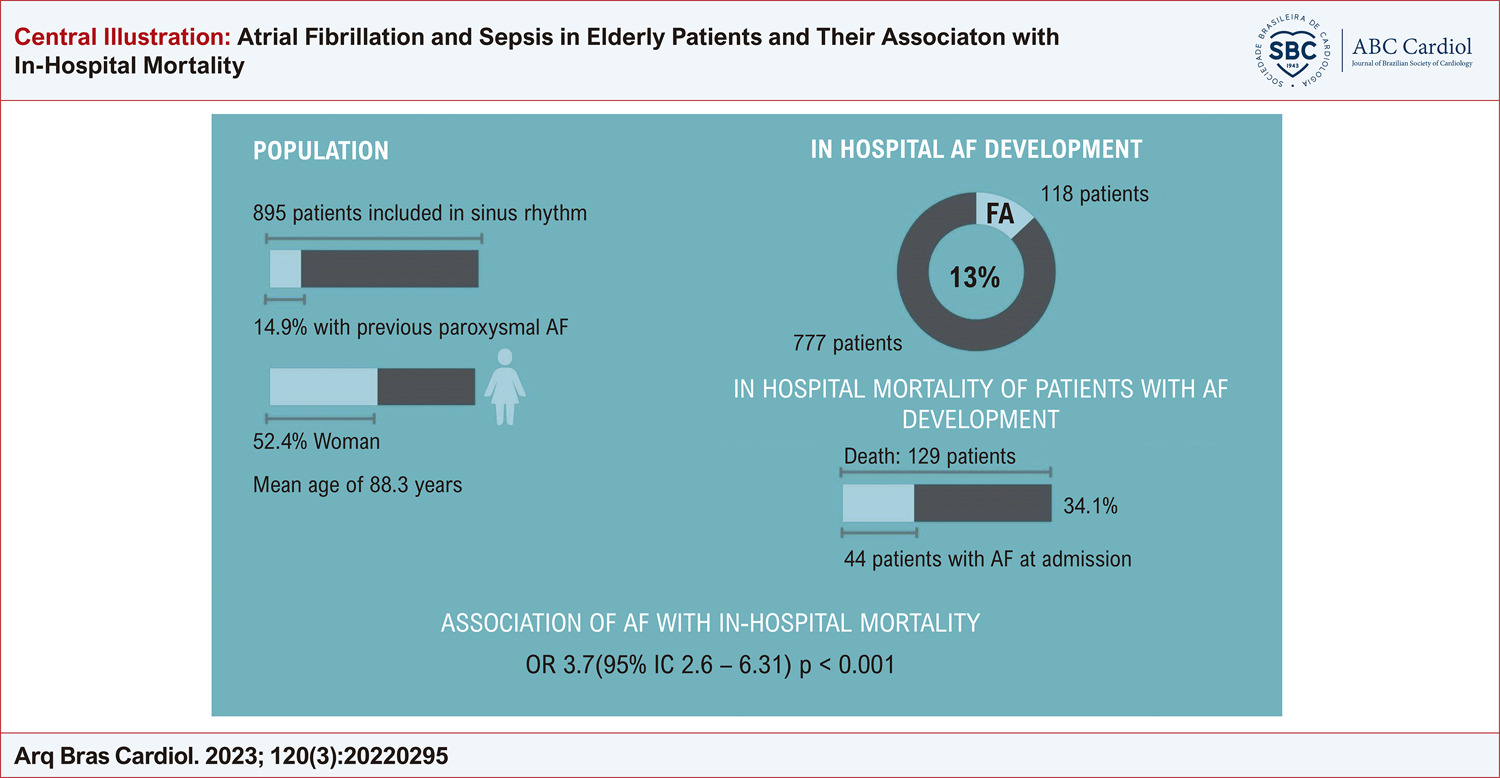
Central Illustration
ABC
Original Article

Atrial Fibrillation and Sepsis in Elderly Patients and Their Associaton with In-Hospital Mortality

Michele Ouriques Honorato et al. Juscelio Trajano de Sousa Filho Luiz Frederico Bezerra Honorato Junior Nathalia Watanabe … Gabriela Machado Goulart Rogério Ruscitto do Prado

Abstract

Background

Atrial fibrillation (AF) affects about 2% to 4% of the world population, and in patients hospitalized in intensive care units, this incidence can reach up to 23% in those with septic shock. The impact of AF in patients with sepsis is reflected in worse clinical outcomes, and the identification of the triggering factors can be a target for future prevention and treatment strategies.

Objectives

To verify the relationship between the development of AF and mortality in patients over 80 years of age included in the sepsis protocol and to identify the risk factors that contribute to the development of AF in this population.

Methods

Retrospective observational study, with a review of electronic medical records and inclusion of 895 patients aged 80 years or older, included in the sepsis protocol of a high-complexity private hospital in São Paulo, SP, from January 2018 to December 2020. All tests were performed with a significance level of 5%.

Results

The incidence of AF in the sample was 13%. After multivariate analysis, using multiple logistic regression, it was possible to demonstrate an association of mortality, in the studied population, with the SOFA score (odds ratio [OR] 1.21 [1.09 – 1.35]), higher values of C-reactive protein (OR 1.04 [1.01 – 1.06]), need for vasoactive drugs (OR 2.4 [1.38 – 4.18]), use of mechanical ventilation (OR 3.49 [1.82 – 6.71]), and mainly AF (OR 3.7 [2.16 – 6.31])

Conclusion

In very elderly patients (80 years of age and older) with sepsis, the development of AF was shown to be an independent risk factor for in-hospital mortality.

  • Arrhythmias Cardiac
  • Atrial Fibrillation
  • Hospital Mortality
  • Hospitalization
  • Sepsis
Read Full Article
Creative Commons Attribution (CC BY) Creative Commons license
10/03/2023 DOI: 10.36660/abc.20220295
IJCS
Case Report

Kounis Syndrome: Case Report in Goiânia/BR

Marília Pereira et al. Gabriela Lima Vieitas Anna Ilona Hunkar Freitas Karoly Gyula Olivas Hunkar

Abstract

22-year-old male patient with no heart disease, who was given an ambulatory medication with analgesics due to an acute renal crisis. After the drug administration, the patient presented dyspnea, cyanosis, and hemoptysis. There was suspicion of anaphylactic shock, which was treated, but there was no improvement in the clinical condition. The patient was referred to the Intensive Care Unit, where tests were performed showing elevated cardiac enzymes and Immunoglobulin E and Computed Tomography of Thoracic revealed alveolar hemorrhage. He developed clinical worsening and died after sepsis. The final diagnosis was of kounis syndrome due to the hypersensitivity reaction to the analgesics introduced in the patient, generating an acute coronary syndrome (ACS). The purpose of this case report was to highlight a syndrome that is little reported because it is not part of the differential diagnosis routines of ACS, but it generates important complications.

  • Acute coronary syndrome
  • Biomarkers
  • Diagnostic Imaging
  • Heart/drug effects
  • Hemorrhage
  • Immunoglobulins
  • Kounis Syndrome
  • Sepsis
  • Tramadol
Read Full Article
Creative Commons Attribution (CC BY) Creative Commons license
17/06/2021 DOI: 10.36660/ijcs.20200019 Views 1
ABC
Editorial

Infections of Cardiac Implantable Electronic Devices – A Growing, Worrying Reality

Eduardo Arrais Rocha et al. João Lins de Araújo Neto Ricardo Pereira Silva

Infection rates of Cardiac Implantable Electronic Devices (CIEDs) have been increasing, determining the need for a wide debate on the subject. Several reasons can justify the issue, such as: a greater number of devices implanted over the latest years, overaging of the population, new techniques and equipment, with more complex and prolonged procedures.

Maciel and Silva address this topic in a clear, objective manner, bringing an important contribution from the national literature, in a significant case selection, confirming those worrying findings and discussing their impacts, considering the high rates of morbidity and mortality and high costs involved, particularly in the cases of endocarditis and sepsis.

[…]

  • Cardiac Defibrillators
  • Ecotransesophageal
  • Endocarditis
  • Pacemakers
  • Positron-Emission Tomography
  • Sepsis
Read Full Article
Creative Commons Attribution (CC BY) Creative Commons license
14/06/2021 DOI: 10.36660/abc.20210151 Views 1
Figure 1
ABC
Anatomopathological Correlation

Case 1/2020 – A 56 Year-Old Woman Developed Heart Failure after a Presumed Diagnosis of Acute Myocardial Infarction and Mitral Valve Regurgitation with Rupture of Chordae Tendineae

Desiderio Favarato et al. Luiz Alberto Benvenuti

Clinical aspects

A 55-year-old patient with arterial hypertension and heart failure for one year and with chest pain, had a cardiorespiratory arrest five months before, developed heart failure and mitral regurgitation due to mitral valve prolapse and rupture of chordae tendineae.

The diagnostic impression is that heart failure due to mitral valve disease preceded the episode of precordial pain and severe dyspnea.

[…]

  • Heart Failure/physiopathology
  • Mitral Valve Prolapse/surgery
  • Myocardial Infarction
  • Postoperative Care
  • Renal Insufficiency
  • Sepsis
  • Shock, Cardiogenic
Read Full Article
Creative Commons Attribution (CC BY) Creative Commons license
18/05/2020 DOI: 10.36660/abc.20200024
Figure 1
IJCS
Review Article

From Echocardiographic Evaluation to Biomarkers Measurement: The Role of Myocardial Dysfunction in Mortality Associated with Sepsis

Márcio da Silva Campista et al. Wolney de Andrade Martins Mariana de Andrade Guedes Antonio José Lagoeiro Jorge

Abstract

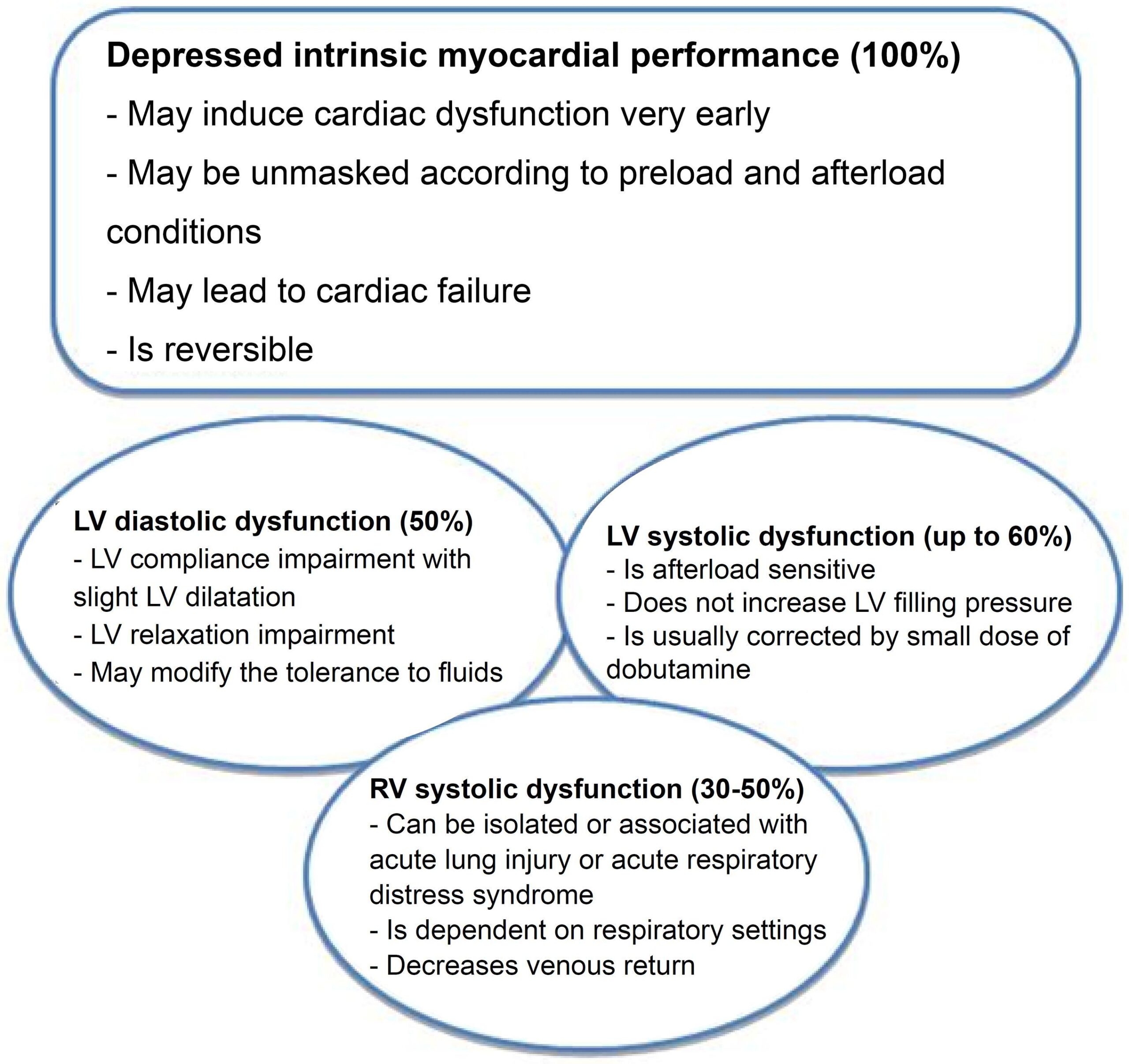
Sepsis remains the leading cause of mortality and critical illness worldwide. Myocardial dysfunction is one of the most clinically relevant manifestations of sepsis and results from a complex interaction among genetic, molecular, metabolic, and structural changes. Despite the prominence given to the occurrence of systolic dysfunction during sepsis, the association between diastolic dysfunction and mortality is controversial, while diastolic dysfunction and right ventricular dysfunction are identified as independent predictors of mortality in the most recent studies. Elevation of biomarkers during sepsis may result from several mechanisms, and although the role of the B-type natriuretic peptide (BNP) and the N-terminal portion of its prohormone (NT-proBNP) as independent predictors of mortality is well defined, the same cannot be said about cardiac troponins due to conflicting results among currently available studies.

The objective of the present review is to discuss the pathophysiological mechanisms of myocardial dysfunction induced by sepsis in adults and the role of echocardiography and cardiac biomarkers as tools for prognostic evaluation in this clinical setting.

  • Biomarkers
  • Cardiac Dysfunction
  • Mortality
  • Sepsis
Read Full Article
Creative Commons Attribution (CC BY) Creative Commons license
19/07/2018 DOI: 10.5935/2359-4802.20180045 Views 1
ABC
Editorial

Infections in Heart Failure – Impact on Mortality

Evandro Tinoco Mesquita

Infections represent an important emerging clinical problem that cause decompensation of heart failure (HF), and in many cases, life-threatening acute systemic disorder (sepsis) and septic shock. Cardiovascular system plays an important role in the development of multiorgan dysfunction in sepsis and refractory septic shock. Although intra-hospital death for sepsis decreased from 35% in 2000 to 18% in 2002, one third of patients die within one year after a septic event. Cardiovascular dysfunction significantly increases mortality rates in sepsis as compared with sepsis without cardiac dysfunction. Infection, per se, precipitates the occurrence of cardiac decompensation and is a direct marker of mortality in HF patients.

The study by Cardoso et al. report a high hospital infection rate (45.8%) and relevant mortality (21,5%) among patients with decompensated HF. Interestingly, during the first year after hospital discharge, mortality rate was lower in patients with infection as compared with those without infection (11.5%vs. 22.2%; p = 0.04).

[…]

  • Heart Failure / mortality
  • Hospitalization
  • Infection Control
  • Infections
  • Sepsis
  • Shock,Septic
Read Full Article
Creative Commons Attribution (CC BY) Creative Commons license
01/04/2018 DOI: 10.5935/abc.20180067 Views 1
ABC
Artigo Original

Sepsis in the postoperative period of cardiac surgery: problem description

Dinaldo Cavalcanti de Oliveira et al. João Bosco de Oliveira Filho Rogério Ferreira Silva Simone Soares Moura … Diego Janstk Silva Enilton Sergio Tabosa do Egito Stevan Krieger Martins Luis Carlos Bento Souza Adib Domingos Jatene Leopoldo Soares Piegas

BACKGROUND: In spite of the advances in sepsis diagnosis and treatment in the last years, the morbidity and mortality are still high. OBJECTIVE: To assess the prevalence, in-hospital evolution and prognosis of patients that presented sepsis in the postoperative period of cardiac surgery. METHODS: This is a prospective study that included patients (n = 7,332) submitted to cardiac surgery (valvular or coronary) between January 1995 and December 2007. The classic criteria of sepsis diagnosis were used to identify the patients that developed such condition and the preoperative comorbidities, in-hospital evolution and prognosis were evaluated. RESULTS: Sepsis occurred in 29 patients (prevalence = 0.39%). There was a predominance of the male when compared to the female sex (79% vs. 21%). Mean age was 69 ± 6.5 years. The main preoperative comorbidities were: systemic arterial hypertension (79%), dyslipidemia (48%) and family history of coronary artery disease (38%). The mean Apache score was 18 ± 7, whereas the Sofa score was 14.2 ± 3.8. The primary infectious focus was pulmonary in 19 patients (55%). There were 19 positive cultures and the mean IV hydration during the first 24 hours was 1,016 ± 803 ml. The main complications were acute renal failure (65%), low cardiac output syndrome (55%) and malignant ventricular arrhythmia (55%). Mortality was 79% (23 patients). CONCLUSION: The occurrence of sepsis after cardiac surgery was a rare event; however, its occurrence showed catastrophic clinical outcomes. The high morbidity and mortality showed the need to improve treatment, aiming at patients’ better clinical evolution.

  • Heart
  • Postoperative Care
  • Sepsis
  • Thoracic Surgery
Read Full Article
Creative Commons Attribution (CC BY) Creative Commons license
28/04/2010 DOI: 10.1590/S0066-782X2010000300012 Views 1
ABC
Artigo Original

Positive end-expiratory pressure and renal function influence B-type natriuretic peptide in patients with severe sepsis and septic shock

Victor Sarli Issa et al. Leandro Utino Taniguchi Marcelo Park Luiz Monteiro Cruz … Edimar Alcides Bocchi Irineu Tadeu Velasco Francisco Soriano

BACKGROUND: Myocardial dysfunction is a complication associated with a poor prognosis in septic patients. A biomarker of cardiac function providing prognostic information is of paramount interest. OBJECTIVE: We sought to determine the value of B-type natriuretic peptide in patients with severe sepsis/septic shock. METHODS: We performed a prospective study in patients with severe sepsis/septic shock in a medical intensive care unit. B-type natriuretic peptide level was determined within 24 hours after the diagnosis of severe sepsis/septic shock. We also analyzed mortality, and presence of association between B-type natriuretic peptide and clinical, hemodynamic and respiratory variables. RESULTS: 23 (9 women; 14 men) patients with ages ranging from 20-79 (mean 51.3±18.6) years old and APACHE score of 22.6±11.8 were included; 15 (65.2%) patients received pulmonary artery catheters, and 20 (87%) were mechanically ventilated. Multivariate analysis disclosed inverse association between B-type natriuretic peptide values with positive end-expiratory pressure values, and direct association with creatinine (beta 0.548 and 0.377, p 0.02 and 0.002, respectively), but not with mortality, clinical and hemodynamic parameters. CONCLUSION: This is the first report on an inverse association between positive end-expiratory pressure and BNP levels in patients with severe sepsis and septic shock. BNP and creatinine levels should be taken into consideration when analyzing B-type natriuretic peptide levels in this setting.

  • cardiac output, low
  • Natriuretic Peptide, B-Type
  • positive pressure respiration
  • Sepsis
  • Shock
Read Full Article
Creative Commons Attribution (CC BY) Creative Commons license
11/08/2008 DOI: 10.1590/S0066-782X2008001400008 Views 1
Correlation between oxygen consumption calculated using Fick's method and measured with indirect calorimetry in critically ill patients
ABC
Artigo Original

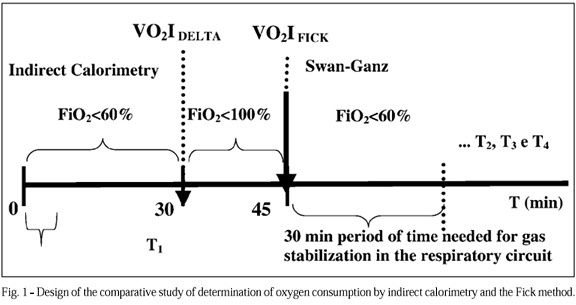
Correlation between oxygen consumption calculated using Fick's method and measured with indirect calorimetry in critically ill patients

Flávio Marson et al. Maria Auxiliadora Martins Francisco Antonio Coletto Antonio Dorival Campos Anibal Basile-Filho

OBJECTIVE: To compare the oxygen consumption index measured by using indirect calorimetry (VO2I Delta) with a portable metabolic cart and calculated according to Fick’s principle (VO2 I Fick) in critically ill patients. METHODS: Fourteen patients (10 men and 4 women, mean age 39.4 ± 5.4 years) were analyzed, 5 of them trauma victims and 9 sepsis victims. The following mean scores were obtained for these patients: APACHE II = 21.3±1.8, ISS = 24.8±6, and sepsis score = 19.6±2.3. The mortality risk (odds ratio), calculated from APACHE II, was 41.9±7.1%. All patients underwent mechanical ventilation and invasive hemodynamic monitoring with a Swan-Ganz catheter. VO2 was obtained using the 2 methods (VO2I Delta and VO2I Fick) at 4 different times (T1-T4). RESULTS: A good correlation was found between the 2 methods (r=0.77) for the mean of the 4 serial measurements. No statistically significant differences were observed between indirect calorimetry and Fick’s equation at T1 (VO2I Delta = 138±28 and VO2I Fick = 59±38 mL.min-2.m-2, P=0.10) and T3 (VO2I Delta = 144±26 and VO2I Fick = 158±35 mL.min-2.m-2, P=0.14), but a significant difference was observed at T2 (VO2I Delta = 141±27 and VO2I Fick = 155±26 mL.min-2.m-2, P=0.03) and T4 (VO2I Delta = 145±24 and VO2I Fick = 162±26 mL.min-2.m-2, P=0.01). CONCLUSION: We may state that indirect calorimetry can be used for oxygen consumption analysis in critically ill patients and is as efficient as Fick’s reverse equation, with the benefit of being a noninvasive and risk-free procedure.

  • Oxygen Consumption
  • Sepsis
  • trauma
Read Full Article
Creative Commons Attribution (CC BY) Creative Commons license
16/02/2004 DOI: 10.1590/S0066-782X2004000100007

How to cite this article

EndNote RIS

Electronic Document Format (Vancouver)

Cesarino EJ, Castro ML, Restini CBA. Sepsis, Atrial Fibrillation, and Aging: A Dangerous Association. Arquivos Brasileiros de Cardiologia 2023;120(3):e20230095.

Electronic Document Format (ABNT)

Cesarino, Evandro José; Castro, Marildes Luiza de; Restini, Carolina Baraldi Araujo. Sepsis, Atrial Fibrillation, and Aging: A Dangerous Association. Arquivos Brasileiros de Cardiologia, v. 120, n. 3, e20230095, Apr. 2023.

Electronic Document Format (APA)

Cesarino, E. J., Castro, M. L. , & Restini, C. B. A. (2023). Sepsis, Atrial Fibrillation, and Aging: A Dangerous Association. Arquivos Brasileiros de Cardiologia, 120(3), e20230095.

Electronic Document Format (ISO)

Cesarino, Evandro José and Castro, Marildes Luiza de and Restini, Carolina Baraldi Araujo. Sepsis, Atrial Fibrillation, and Aging: A Dangerous Association. Arquivos Brasileiros de Cardiologia [online]. 2023, vol. 120, n. 3, [cited 2026-10-14], e20230095. Available from: <https://journals.cardiol.br/en/article/sepsis-atrial-fibrillation-and-aging-a-dangerous-association/>. ISSN 0066-782X

EndNote RIS

Electronic Document Format (Vancouver)

Honorato MO, Sousa Filho JT, Honorato Junior LFB, Watanabe N, Goulart GM, Prado RR. Atrial Fibrillation and Sepsis in Elderly Patients and Their Associaton with In-Hospital Mortality. Arquivos Brasileiros de Cardiologia 2023;120(3):e20220295.

Electronic Document Format (ABNT)

Honorato, Michele Ouriques; Sousa Filho, Juscelio Trajano de; Honorato Junior, Luiz Frederico Bezerra; Watanabe, Nathalia; Goulart, Gabriela Machado; Prado, Rogério Ruscitto do. Atrial Fibrillation and Sepsis in Elderly Patients and Their Associaton with In-Hospital Mortality. Arquivos Brasileiros de Cardiologia, v. 120, n. 3, e20220295, Mar. 2023.

Electronic Document Format (APA)

Honorato, M. O., Sousa Filho, J. T. , Honorato Junior, L. F. B., Watanabe, N., Goulart, G. M., & Prado, R. R. (2023). Atrial Fibrillation and Sepsis in Elderly Patients and Their Associaton with In-Hospital Mortality. Arquivos Brasileiros de Cardiologia, 120(3), e20220295.

Electronic Document Format (ISO)

Honorato, Michele Ouriques and Sousa Filho, Juscelio Trajano de and Honorato Junior, Luiz Frederico Bezerra and Watanabe, Nathalia and Goulart, Gabriela Machado and Prado, Rogério Ruscitto do. Atrial Fibrillation and Sepsis in Elderly Patients and Their Associaton with In-Hospital Mortality. Arquivos Brasileiros de Cardiologia [online]. 2023, vol. 120, n. 3, [cited 2026-10-14], e20220295. Available from: <https://journals.cardiol.br/en/article/atrial-fibrillation-and-sepsis-in-elderly-patients-and-their-associaton-with-in-hospital-mortality/>. ISSN 0066-782X

EndNote RIS

Electronic Document Format (Vancouver)

Pereira M, Vieitas GL, Freitas AIH, Hunkar KGO. Kounis Syndrome: Case Report in Goiânia/BR. International Journal of Cardiovascular Sciences 2021;34(5 Supl 1):135-8.

Electronic Document Format (ABNT)

Pereira, Marília; Vieitas, Gabriela Lima; Freitas, Anna Ilona Hunkar; Hunkar, Karoly Gyula Olivas. Kounis Syndrome: Case Report in Goiânia/BR. International Journal of Cardiovascular Sciences, v. 34, n. 5 Supl 1, p. 135-138, Jun. 2021.

Electronic Document Format (APA)

Pereira, M., Vieitas, G. L., Freitas, A. I. H., & Hunkar, K. G. O. (2021). Kounis Syndrome: Case Report in Goiânia/BR. International Journal of Cardiovascular Sciences, 34(5 Supl 1), 135-138.

Electronic Document Format (ISO)

Pereira, Marília and Vieitas, Gabriela Lima and Freitas, Anna Ilona Hunkar and Hunkar, Karoly Gyula Olivas. Kounis Syndrome: Case Report in Goiânia/BR. International Journal of Cardiovascular Sciences [online]. 2021, vol. 34, n. 5 Supl 1, [cited 2026-10-14], pp. 135-138. Available from: <https://journals.cardiol.br/en/article/kounis-syndrome-case-report-in-goiania-br/>. ISSN 2359-4802

EndNote RIS

Electronic Document Format (Vancouver)

Rocha EA, Araújo Neto JL, Silva RP. Infections of Cardiac Implantable Electronic Devices – A Growing, Worrying Reality. Arquivos Brasileiros de Cardiologia 2021;116(6):1089-90.

Electronic Document Format (ABNT)

Rocha, Eduardo Arrais; Araújo Neto, João Lins de; Silva, Ricardo Pereira. Infections of Cardiac Implantable Electronic Devices – A Growing, Worrying Reality. Arquivos Brasileiros de Cardiologia, v. 116, n. 6, p. 1089-1090, Jun. 2021.

Electronic Document Format (APA)

Rocha, E. A., Araújo Neto, J. L. , & Silva, R. P. (2021). Infections of Cardiac Implantable Electronic Devices – A Growing, Worrying Reality. Arquivos Brasileiros de Cardiologia, 116(6), 1089-1090.

Electronic Document Format (ISO)

Rocha, Eduardo Arrais and Araújo Neto, João Lins de and Silva, Ricardo Pereira. Infections of Cardiac Implantable Electronic Devices – A Growing, Worrying Reality. Arquivos Brasileiros de Cardiologia [online]. 2021, vol. 116, n. 6, [cited 2026-10-14], pp. 1089-1090. Available from: <https://journals.cardiol.br/en/article/infections-of-cardiac-implantable-electronic-devices-a-growing-worrying-reality/>. ISSN 0066-782X

EndNote RIS

Electronic Document Format (Vancouver)

Favarato D, Benvenuti LA. Case 1/2020 – A 56 Year-Old Woman Developed Heart Failure after a Presumed Diagnosis of Acute Myocardial Infarction and Mitral Valve Regurgitation with Rupture of Chordae Tendineae. Arquivos Brasileiros de Cardiologia 2020;114(4 suppl 1):47-56.

Electronic Document Format (ABNT)

Favarato, Desiderio; Benvenuti, Luiz Alberto. Case 1/2020 – A 56 Year-Old Woman Developed Heart Failure after a Presumed Diagnosis of Acute Myocardial Infarction and Mitral Valve Regurgitation with Rupture of Chordae Tendineae. Arquivos Brasileiros de Cardiologia, v. 114, n. 4 suppl 1, p. 47-56, May. 2020.

Electronic Document Format (APA)

Favarato, D., & Benvenuti, L. A. (2020). Case 1/2020 – A 56 Year-Old Woman Developed Heart Failure after a Presumed Diagnosis of Acute Myocardial Infarction and Mitral Valve Regurgitation with Rupture of Chordae Tendineae. Arquivos Brasileiros de Cardiologia, 114(4 suppl 1), 47-56.

Electronic Document Format (ISO)

Favarato, Desiderio and Benvenuti, Luiz Alberto. Case 1/2020 – A 56 Year-Old Woman Developed Heart Failure after a Presumed Diagnosis of Acute Myocardial Infarction and Mitral Valve Regurgitation with Rupture of Chordae Tendineae. Arquivos Brasileiros de Cardiologia [online]. 2020, vol. 114, n. 4 suppl 1, [cited 2026-10-14], pp. 47-56. Available from: <https://journals.cardiol.br/en/article/case-1-2020-a-56-year-old-woman-developed-heart-failure-after-a-presumed-diagnosis-of-acute-myocardial-infarction-and-mitral-valve-regurgitation-with-rupture-of-chordae-tendineae/>. ISSN 0066-782X

EndNote RIS

Electronic Document Format (Vancouver)

Campista MS, Martins WA, Guedes MA, Jorge AJL. From Echocardiographic Evaluation to Biomarkers Measurement: The Role of Myocardial Dysfunction in Mortality Associated with Sepsis. International Journal of Cardiovascular Sciences 2018;31(6):643-51.

Electronic Document Format (ABNT)

Campista, Márcio da Silva; Martins, Wolney de Andrade; Guedes, Mariana de Andrade; Jorge, Antonio José Lagoeiro. From Echocardiographic Evaluation to Biomarkers Measurement: The Role of Myocardial Dysfunction in Mortality Associated with Sepsis. International Journal of Cardiovascular Sciences, v. 31, n. 6, p. 643-651, Jul. 2018.

Electronic Document Format (APA)

Campista, M. S., Martins, W. A., Guedes, M. A., & Jorge, A. J. L. (2018). From Echocardiographic Evaluation to Biomarkers Measurement: The Role of Myocardial Dysfunction in Mortality Associated with Sepsis. International Journal of Cardiovascular Sciences, 31(6), 643-651.

Electronic Document Format (ISO)

Campista, Márcio da Silva and Martins, Wolney de Andrade and Guedes, Mariana de Andrade and Jorge, Antonio José Lagoeiro. From Echocardiographic Evaluation to Biomarkers Measurement: The Role of Myocardial Dysfunction in Mortality Associated with Sepsis. International Journal of Cardiovascular Sciences [online]. 2018, vol. 31, n. 6, [cited 2026-10-14], pp. 643-651. Available from: <https://journals.cardiol.br/en/article/from-echocardiographic-evaluation-to-biomarkers-measurement-the-role-of-myocardial-dysfunction-in-mortality-associated-with-sepsis/>. ISSN 2359-4802

EndNote RIS

Electronic Document Format (Vancouver)

Mesquita ET. Infections in Heart Failure – Impact on Mortality. Arquivos Brasileiros de Cardiologia 2018;110(4):371-2.

Electronic Document Format (ABNT)

Mesquita, Evandro Tinoco. Infections in Heart Failure – Impact on Mortality. Arquivos Brasileiros de Cardiologia, v. 110, n. 4, p. 371-372, Mar. 2018.

Electronic Document Format (APA)

Mesquita, E. T. (2018). Infections in Heart Failure – Impact on Mortality. Arquivos Brasileiros de Cardiologia, 110(4), 371-372.

Electronic Document Format (ISO)

Mesquita, Evandro Tinoco. Infections in Heart Failure – Impact on Mortality. Arquivos Brasileiros de Cardiologia [online]. 2018, vol. 110, n. 4, [cited 2026-10-14], pp. 371-372. Available from: <https://journals.cardiol.br/en/article/infections-in-heart-failure-impact-on-mortality/>. ISSN 0066-782X

EndNote RIS

Electronic Document Format (Vancouver)

Oliveira DC, Oliveira Filho JB, Silva RF, Moura SS, Silva DJ, Egito EST, Martins SK, et al. Sepsis in the postoperative period of cardiac surgery: problem description. Arquivos Brasileiros de Cardiologia 2010;94(3):352-6.

Electronic Document Format (ABNT)

Oliveira, Dinaldo Cavalcanti de; Oliveira Filho, João Bosco de; Silva, Rogério Ferreira; Moura, Simone Soares; Silva, Diego Janstk; Egito, Enilton Sergio Tabosa do; Martins, Stevan Krieger; Souza, Luis Carlos Bento; Jatene, Adib Domingos; Piegas, Leopoldo Soares. Sepsis in the postoperative period of cardiac surgery: problem description. Arquivos Brasileiros de Cardiologia, v. 94, n. 3, p. 352-356, Apr. 2010.

Electronic Document Format (APA)

Oliveira, D. C. , Oliveira Filho, J. B. , Silva, R. F., Moura, S. S., Silva, D. J., Egito, E. S. T. , Martins, S. K., Souza, L. C. B., Jatene, A. D., & Piegas, L. S. (2010). Sepsis in the postoperative period of cardiac surgery: problem description. Arquivos Brasileiros de Cardiologia, 94(3), 352-356.

Electronic Document Format (ISO)

Oliveira, Dinaldo Cavalcanti de and Oliveira Filho, João Bosco de and Silva, Rogério Ferreira and Moura, Simone Soares and Silva, Diego Janstk and Egito, Enilton Sergio Tabosa do and Martins, Stevan Krieger and Souza, Luis Carlos Bento and Jatene, Adib Domingos and Piegas, Leopoldo Soares. Sepsis in the postoperative period of cardiac surgery: problem description. Arquivos Brasileiros de Cardiologia [online]. 2010, vol. 94, n. 3, [cited 2026-10-14], pp. 352-356. Available from: <https://journals.cardiol.br/en/article/sepsis-in-the-postoperative-period-of-cardiac-surgery-problem-description/>. ISSN 0066-782X

EndNote RIS

Electronic Document Format (Vancouver)

Issa VS, Taniguchi LU, Park M, Cruz LM, Bocchi EA, Velasco IT, Soriano F, et al. Positive end-expiratory pressure and renal function influence B-type natriuretic peptide in patients with severe sepsis and septic shock. Arquivos Brasileiros de Cardiologia 2008;91(2):119-25.

Electronic Document Format (ABNT)

Issa, Victor Sarli; Taniguchi, Leandro Utino; Park, Marcelo; Cruz, Luiz Monteiro; Bocchi, Edimar Alcides; Velasco, Irineu Tadeu; Soriano, Francisco. Positive end-expiratory pressure and renal function influence B-type natriuretic peptide in patients with severe sepsis and septic shock. Arquivos Brasileiros de Cardiologia, v. 91, n. 2, p. 119-125, Aug. 2008.

Electronic Document Format (APA)

Issa, V. S., Taniguchi, L. U., Park, M., Cruz, L. M., Bocchi, E. A., Velasco, I. T., & Soriano, F. (2008). Positive end-expiratory pressure and renal function influence B-type natriuretic peptide in patients with severe sepsis and septic shock. Arquivos Brasileiros de Cardiologia, 91(2), 119-125.

Electronic Document Format (ISO)

Issa, Victor Sarli and Taniguchi, Leandro Utino and Park, Marcelo and Cruz, Luiz Monteiro and Bocchi, Edimar Alcides and Velasco, Irineu Tadeu and Soriano, Francisco. Positive end-expiratory pressure and renal function influence B-type natriuretic peptide in patients with severe sepsis and septic shock. Arquivos Brasileiros de Cardiologia [online]. 2008, vol. 91, n. 2, [cited 2026-10-14], pp. 119-125. Available from: <https://journals.cardiol.br/en/article/positive-end-expiratory-pressure-and-renal-function-influence-b-type-natriuretic-peptide-in-patients-with-severe-sepsis-and-septic-shock/>. ISSN 0066-782X

EndNote RIS

Electronic Document Format (Vancouver)

Marson F, Martins MA, Coletto FA, Campos AD, Basile-Filho A. Correlation between oxygen consumption calculated using Fick’s method and measured with indirect calorimetry in critically ill patients. Arquivos Brasileiros de Cardiologia 2004;82(1):72-6.

Electronic Document Format (ABNT)

Marson, Flávio; Martins, Maria Auxiliadora; Coletto, Francisco Antonio; Campos, Antonio Dorival; Basile-Filho, Anibal. Correlation between oxygen consumption calculated using Fick’s method and measured with indirect calorimetry in critically ill patients. Arquivos Brasileiros de Cardiologia, v. 82, n. 1, p. 72-76, Feb. 2004.

Electronic Document Format (APA)

Marson, F., Martins, M. A., Coletto, F. A., Campos, A. D., & Basile-Filho, A. (2004). Correlation between oxygen consumption calculated using Fick’s method and measured with indirect calorimetry in critically ill patients. Arquivos Brasileiros de Cardiologia, 82(1), 72-76.

Electronic Document Format (ISO)

Marson, Flávio and Martins, Maria Auxiliadora and Coletto, Francisco Antonio and Campos, Antonio Dorival and Basile-Filho, Anibal. Correlation between oxygen consumption calculated using Fick’s method and measured with indirect calorimetry in critically ill patients. Arquivos Brasileiros de Cardiologia [online]. 2004, vol. 82, n. 1, [cited 2026-10-14], pp. 72-76. Available from: <https://journals.cardiol.br/en/article/correlation-between-oxygen-consumption-calculated-using-ficks-method-and-measured-with-indirect-calorimetry-in-critically-ill-patients/>. ISSN 0066-782X

  • About ABC Family
  • Internal Regulation
  • Editorial Board
  • Brazilian Society of Cardiology (SBC)

Issues

SBC Guidelines

  • Videos
  • Podcasts
  • News